

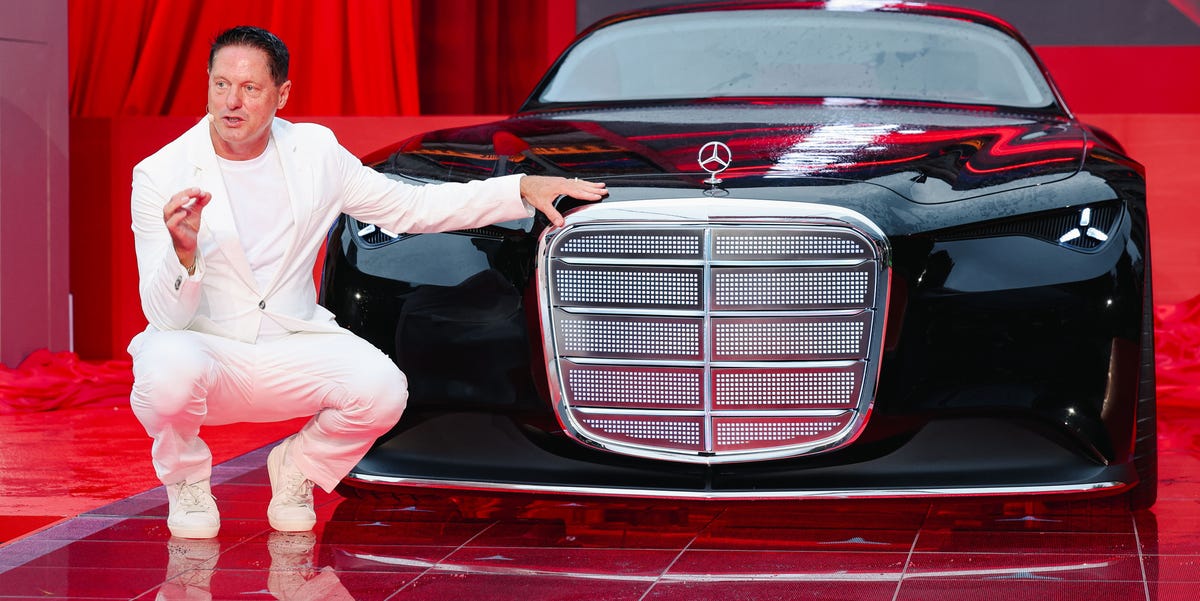
While he defends it, Wagener also concedes that the EQ is not among his picks for greatest hits. “When we started the pure electric cars, we wanted to do a purpose-built design and make them look different from combustion-engine cars, because we believed that’s what the customer was looking for. We wanted the electric cars to look futuristic, and aerodynamics was a big issue. It’s actually funny in the press that I get all the credit for the EQ as a generation, as if I were the only one deciding on these cars—like I was alone in the room, there were no board members there, no engineers, nobody [laughs].
“Coming from the F015 concept car that we presented in 2015, we wanted something that looked futuristic, new, aero, techy. That’s why we did the first generation of electric cars very differently. And I still believe they were super-progressive cars. Yes, they were not a representative three-box limousine. But they were never meant to be one. That wasn’t the spec. I think they’re very, very progressive cars.
We said that we would open the zipper into purpose electric design, and purpose combustion design. And now we close the zipper, because these days the powertrain doesn’t really matter. What matters is the brand. And therefore, in the future, it will just be a Mercedes, with the status proportion and everything you expect. For the future, I think that will be right. But at that time, I believe it was right to do a purpose-built EV design. Of course, it is a challenging segment, selling $100K electric cars. That’s another aspect.”