

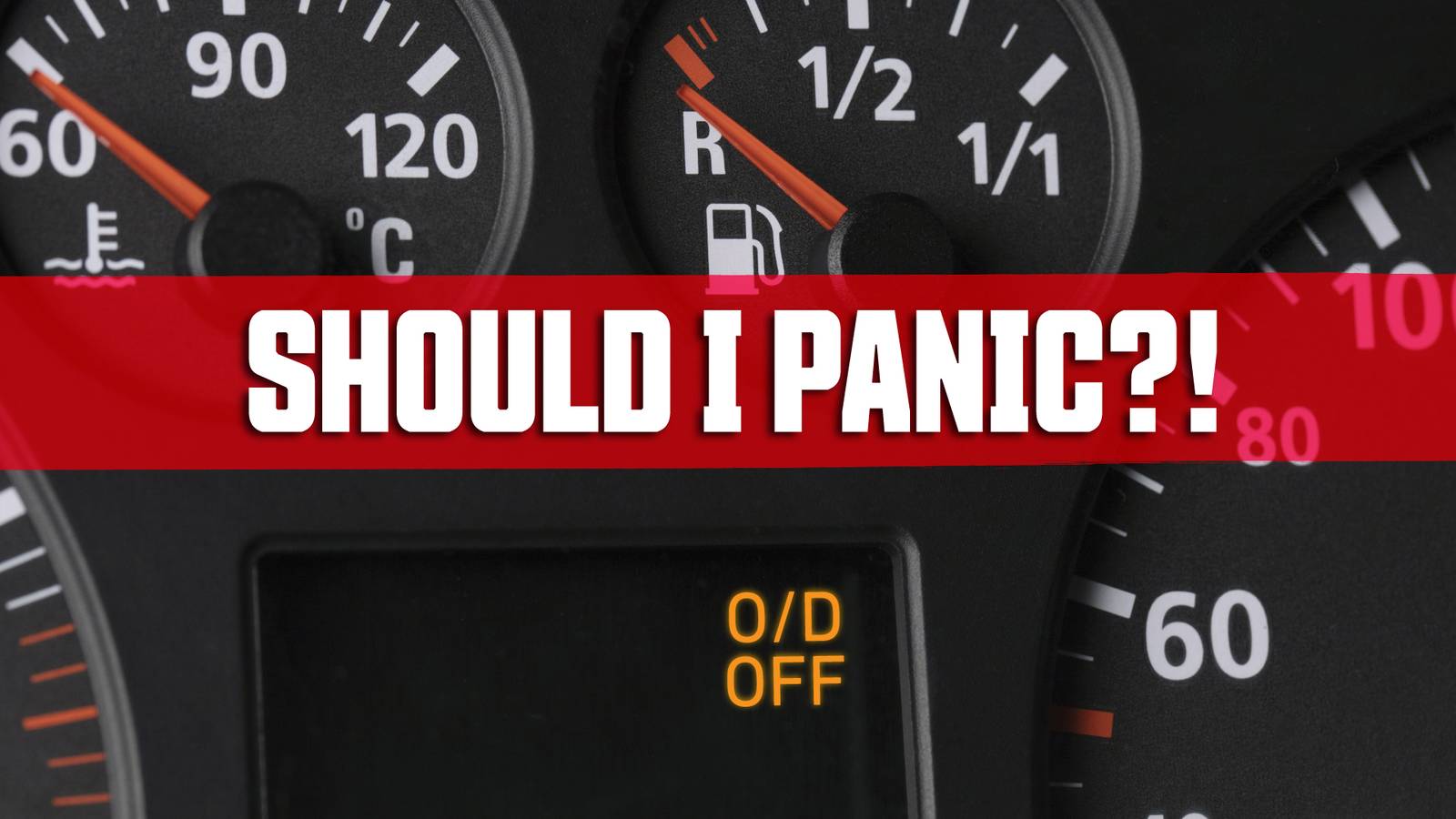
Chances are, you may have encountered the ‘O/D Off’ light appearing in the instrument cluster of your car, or in the very rare cases, the ‘O/D Off’ light flashing multiple times. Even among well-seasoned car owners, attempting to identify what this means with regard to the vehicle may confuse most people – some of whom may be alarmed that something is seriously wrong with the car itself. But the truth is, the ‘O/D Off’ light is nothing to be alarmed about. In fact, the light is tied to a specific function equipped with some automatic transmissions known as ‘Overdrive’ (commonly abbreviated as O/D). It may sound quite exciting, but Overdrive is simply a way by which older automatic transmissions could be more efficient, despite being limited by their minimal number of gears.
In the following piece, we’ll cover what the Overdrive function is, how it made its way into production vehicles, how it works, and then conclude why this feature has largely disappeared from most modern cars sold today.
What is ‘O/D’ AKA Overdrive Gear?
Overdrive, in simple terms, is the highest gear ratio, or top gear, of an automatic transmission. Normally, lower gears are preferred to utilize the highest power output and full torque range of the engine, which is great for optimized acceleration and performance. However, there are cases where this is not necessary; in other words, when the engine just needs to utilize one gear to maintain a constant state at a set speed. This is the idea behind Overdrive, as it serves as a ‘high’ gear mode that enables the engine and transmission to run at a lower gear ratio – typically a ratio less than 1:1. When overdrive is engaged, this allows the engine to run at a lower range of RPMS (revolutions per minute), whilst the vehicle continues to travel at a constant high speed.
“Automatic transmission cars have the Overdrive (O/D) function which allows a driver to drive faster on the road. The O/D is the highest gear in an automatic transmission. The Overdrive function reduces the engine’s revolutions per minute (RPM) down to a certain speed to aid in acceleration and make the vehicle more fuel-efficient.”
– Dustin Hawley, J.D. Power
The key benefit to take away from the use of Overdrive is that the vehicle can continue to travel at high speeds, typically around 70–80 mph, whilst keeping the total RPMs low (~2,000 RPM). This translates into a much smoother driving experience and better fuel efficiency.
Is OverDrive Also Used In Manual Transmissions?
Though the majority of references to an Overdrive mode/gear are made within the context of referring to an automatic transmission, Overdrive can be incorporated or found within conventional manual transmissions as well. When referring to Overdrive in a manual transmission, this is simply referred to as the highest gear possible that can be engaged by the driver – typically fourth, fifth, or sixth gear (depending on the type of manual transmission). The principles of Overdrive in an automatic transmission are the same – the highest gear in a manual allows the engine to run constantly at a low RPM range while traveling at high speeds for maximum efficiency. Naturally, given that more direct control from the driver is required to engage Overdrive in a manual transmission, the highest gear must be selected through the standard operation expected of a manual: including, but not limited to, operating the clutch carefully, being mindful of engine/wheel speed to avoid stalling or damage to the engine and transmission itself.
The History Of Overdrive Gear
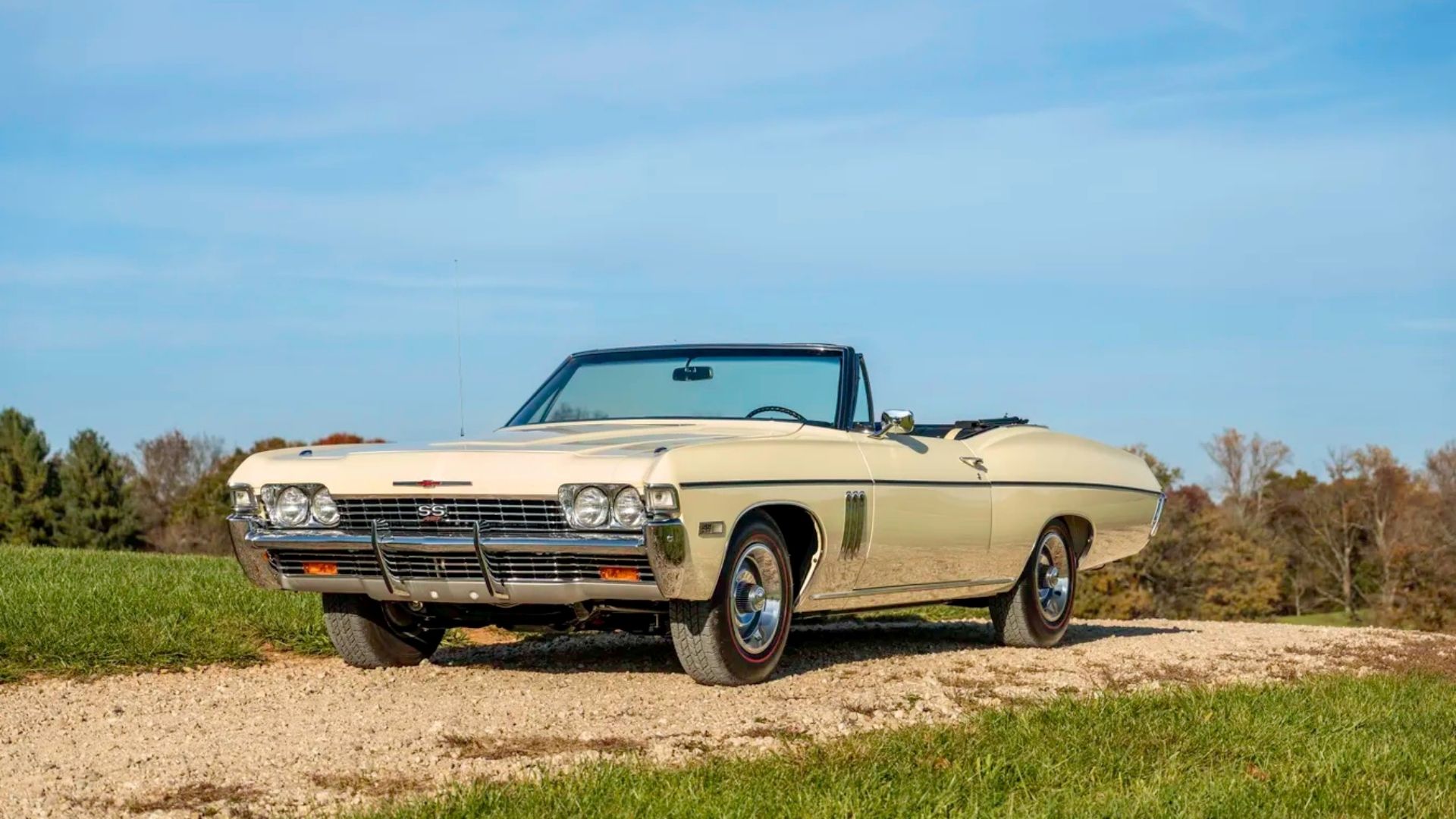
Overdrive first found its way into vehicles when automatic transmissions were still in their infancy, applied largely to some of the first mass production cars sold to the public as the automotive industry began to develop in the postwar economies. In this era of automobiles, most transmissions were limited to three or four fixed gears (not including reverse). This would often leave vehicles sitting at high revs when they reached the highest gear possible, resulting in more wear/damage to the engine from constantly running at the top rev range. The experience would also be discomforting for the driver and any additional occupants, with the cabin filled with the loud noise of the engine.
The practical solution would be to add more gears to allow the engine not to be as restrained at high speeds, but most manufacturers at the time could not afford to develop all-new transmissions from scratch to incorporate units that could accommodate this more ideal design. Instead, the best approach with the limited resources available was to add another gearing unit before the propshaft. This, in turn, led to the creation of ‘Overdrive’ as it’s known today.
William B. Barnes is credited as being the key engineer who first brought the Overdrive functionality to production vehicles, with his design pitched initially to American firm Borg-Warner, where it was further refined and first introduced in Chrysler products. Eventually, other manufacturers such as Ford and General Motors followed suit to implement similar functions in their transmissions, with the intention of maximizing fuel efficiency.
“Engineer William B. Barnes is credited with designing and mating a secondary Overdrive unit to a common three-speed manual transmission, using a planetary gearset to increase the output shaft speed. He shopped it to Borg-Warner’s Muncie Gear Division in 1932, where it was further developed and presented to Chrysler Corporation. Chrysler first made it available in 1934 Chrysler and De Soto Airflows to augment their gas mileage. Barnes’ original design required that the unit’s sun gear be held in place with a manual control to engage Overdrive. Subsequent development added electric components to control that function, resulting in what became known as “automatic electric” Overdrive. Simply known as “Overdrive” thereafter, it became a popular option on many cars and trucks during the 1930s and beyond.”
– Bob Palma, Hemmings.com
How Do You Use Overdrive Gear?

Depending on the era or type of vehicle, there may be several ways that allow the driver to activate the Overdrive function. Early iterations would engage their Overdrive mode when the driver took their foot off the accelerator pedal, and disengage it when force was reapplied onto the pedal. Some automatic transmissions are programmed to engage Overdrive on their own, as dictated by the ECU (electronic control unit) settings, while others require the driver to engage Overdrive manually through a dedicated button on the gear shift lever itself. Typically, on later models, an indicator would appear on the instrument cluster in the form of an Overdrive symbol/light to confirm that this mode is currently engaged.
To disengage Overdrive, depending on how the vehicle is set up, usually all the driver is required to do is press the same button on the shift lever that engages Overdrive, which will automatically disengage the mode and return it to its standard gear ratio settings. Alternatively, if available, the driver can also use the steering wheel-mounted paddle shifters, or on automatic transmissions with manual shift control, shift down to a lower ‘gear’/range, which will also disengage the Overdrive mode.
The ideal situations, or best environments to use Overdrive mode, are when the vehicle is traveling at a constant speed on a level road surface – namely at cruising speeds on highways. Upon entering a freeway and reaching a constant speed (~70–80 mph), Overdrive can be activated. The driver will notice these effects of Overdrive immediately, as the engine sounds and feels less strained despite the high traveling speed.
What Does The ‘O/D Off’ Light Mean In A Car?
When the ‘O/D Off’ light turns on, this means that the Overdrive gear is currently disabled. The vehicle then will not engage the Overdrive setting or engage the highest gear ratio, no matter what condition or environment the powertrain finds itself in.
“When the O/D OFF switch is pushed with the shift lever in the D (Drive) position, the O/D Off light in the instrument panel illuminates. To turn off the Overdrive off mode, push the O/D OFF switch again. The indicator light will turn off. Each time the engine is started, or when the shift lever is shifted to any position other than D(Drive), the Overdrive off mode will be automatically turned off.”
– Nissan NV200 Owner’s Manual
Scenarios where the driver may find it necessary to deactivate Overdrive are those that require the full power and torque band of the powertrain – including overtaking, traveling up a steep/elevated road surface, navigating off-road environments, or towing any number of cargo loads. If Overdrive is engaged, this restricts the maximum amount of available power/torque and may leave the vehicle underpowered in these environments. With Overdrive disengaged, the transmission will be able to kick down to lower gears as necessary, rather than be restricted to the highest gear available.
The Benefits Of Overdrive
Some of the advantages offered by Overdrive (O/D) include, but are not limited to:
- Better fuel efficiency
- Less wear and tear on the engine
- Smoother and quieter engine operation at high speeds
- Reduces stress on key powertrain components
Why Don’t Modern Cars Feature Overdrive?

With the small number of benefits of overdrive highlighted, some may wonder why it’s no longer seen as a standard feature in the latest generation of cars. This is largely down to the advancement of technology and automotive engineering, as transmissions that feature more gears (which demanded the creation of an Overdrive function in the first place) are now commonplace. Japanese, European, and American car brands now use transmissions with up to eight, nine, or even ten gears in total. As a result, Overdrive is no longer viewed as a necessity to ensure maximum efficiency and a more pleasant driving experience, with the idea of the ‘highest gear range possible’ now integrated into modern transmissions.
FAQs
What does the ‘O/D Off’ light mean in a car?
The O/D off warning light indicates the Overdrive gear setting is no longer engaged.
Is the appearance of the ‘O/D Off’ light a good or bad thing?
This depends on the context in which the ‘O/D Off’ light appears. If it shows upon deactivating Overdrive, there is nothing to be concerned about as it confirms it is no longer active. However, if it appears whilst Overdrive is active, it could point to a potential issue with the transmission or powertrain. This could include any number of the following causes:
- Faulty speed sensors
- Electrical issues
- Faulty solenoids
- Connection error (wiring) within Overdrive button
How do I turn O/D back on?
Turning Overdrive mode back on can be done via the same button on the gear lever used to turn it off.
Is it safe to drive with the ‘O/D Off’ light flashing?
A flashing ‘O/D Off’ light could hint at a potential fault with the Overdrive system, meaning it cannot be activated, or with the transmission itself. This could be due to multiple reasons, from faulty sensors/electricals to an indicator that there is a transmission fluid leak or the fluid is running low. Ideally, this would necessitate an immediate inspection by a technician to see if there are indeed any transmission issues; but if the vehicle has to be driven, drive carefully without any hard acceleration or activating Overdrive.
Sources: Hemmings, J.D. Power, Nissan