

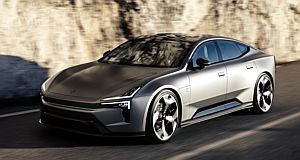

A SURVEY conducted by Polestar in Australia has found that EV owners can save nearly $100 per month on fuel compared to internal combustion vehicle drivers and that most motorists do not take journeys long enough to warrant genuine range anxiety concerns based on the average WLTP range of its model line-up.
Data was collected from 1015 Australian motorists via an online survey between 22 December 2025 and 20 January 2026. This included 810 ICE vehicle owners and 205 EV owners.
Crucially, Polestar noted in a media release that the survey took place prior to recent fuel price spikes caused by conflict in the Middle East.
The survey found that 62 per cent of EV owners are spending under $100 per month on recharging their vehicles, with a median monthly recharging cost of $60.
Meanwhile, petrol, diesel, and hybrid vehicle owners had a median monthly refuelling cost of $150.
Following the outbreak of conflict in the Middle East, these savings are likely to be even more significant, with national average retail petrol prices sitting at 240.1 cents per litre as of 5 April compared to 171 cents per litre on 22 February, according to data from the Australian Institute of Petroleum.
The data also revealed that 84 per cent of motorists drive up to 300km per week, with a median driving distance of 158km per week. The longest journey taken by most respondents within the previous year (72 per cent) was under 500km.
For reference, the average WLTP driving range of Polestar’s Australian model line-up is 605km. The shortest quoted WLTP range for any Polestar model offered locally is the Polestar 5 Performance at 558km while its standard Dual motor sibling is the portfolio range-leader at 678km.
Of course, not all Australian EV owners enjoy driving distances in-excess of 550km.
The BYD Atto 1 Essential model – the cheapest battery electric vehicle offered locally with a price tag of $23,990 before on-road costs – has a WLTP driving range of 220km. However, this is still significantly further than the 158km weekly median driving distance and 73.3 per cent of 300km weekly driving distance of most respondents.
“High oil prices are not the problem; they are the reality of a volatile system. Electric cars change that. The cost base is lower, more stable and increasingly local,” said Polestar CEO Michael Lohscheller.
“What used to be range anxiety is quickly becoming pump anxiety. People are moving away from unpredictable fuel costs to predictable electricity.”
Polestar will soon offer even greater choice for consumers looking to make the switch away from internal combustion power into an electric vehicle.
Earlier this year, Polestar announced a four-model expansion of its global portfolio within three years, with these new vehicles also slated for Australia.
These models include the Polestar 5 sedan, a new Polestar 4 SUV variant, the second-generation Polestar 2 liftback, and the yet-to-be-unveiled Polestar 7 compact SUV.
Australian deliveries of the Polestar 5 are expected to commence later this year, followed by the new Polestar 4 variant and the second-gen Polestar 2 in 2027, and the Polestar 7 in 2028.