

Close Menu
  • News
  • Featured
  • Electric Cars
  • Luxury Cars
  • Reviews
  • Advice

Subscribe to Updates

Get the latest creative news from Motor Fortune about Electric Cars, Luxury Cars, design and More.

What's Hot

Used Volkswagen Passat (Mk8, 2014-2021) review

June 4, 2026

DIY Automotive Air Conditioning Repair and Diagnostics Guide

June 4, 2026

CATL claims its lithium-air battery has energy density similar to gasoline

June 4, 2026
Facebook X (Twitter) Instagram
  • Contact
  • Privacy Policy
  • Terms & Conditions
Facebook X (Twitter) Instagram Pinterest Vimeo
Automotive MasterAutomotive Master
  • News
  • Featured
  • Electric Cars
  • Luxury Cars
  • Reviews
  • Advice
Subscribe
Automotive MasterAutomotive Master
Home»Electric car»Tesla Wants To Vacuum The Hot Air Out Of Cars To Improve Range
Electric car

Tesla Wants To Vacuum The Hot Air Out Of Cars To Improve Range

May 6, 2026No Comments3 Mins Read
Share Facebook Twitter Pinterest LinkedIn Tumblr Reddit Telegram Email
Share
Facebook Twitter LinkedIn Pinterest Email

  • Tesla patented a new way of cooling down your EV’s cabin in the summer heat.
  • Its new method involves using vacuums to suck up hot air and put it directly into the car’s HVAC system.
  • This would make cooling hot spots inside of cars much easier, potentially unlocking more range.

Car interiors get hot, and conditioning them (whether it be preconditioning before you get in, or just keeping it at the right temperature while scooting down the road) saps up a significant amount of juice that could have been translated into mileage instead.

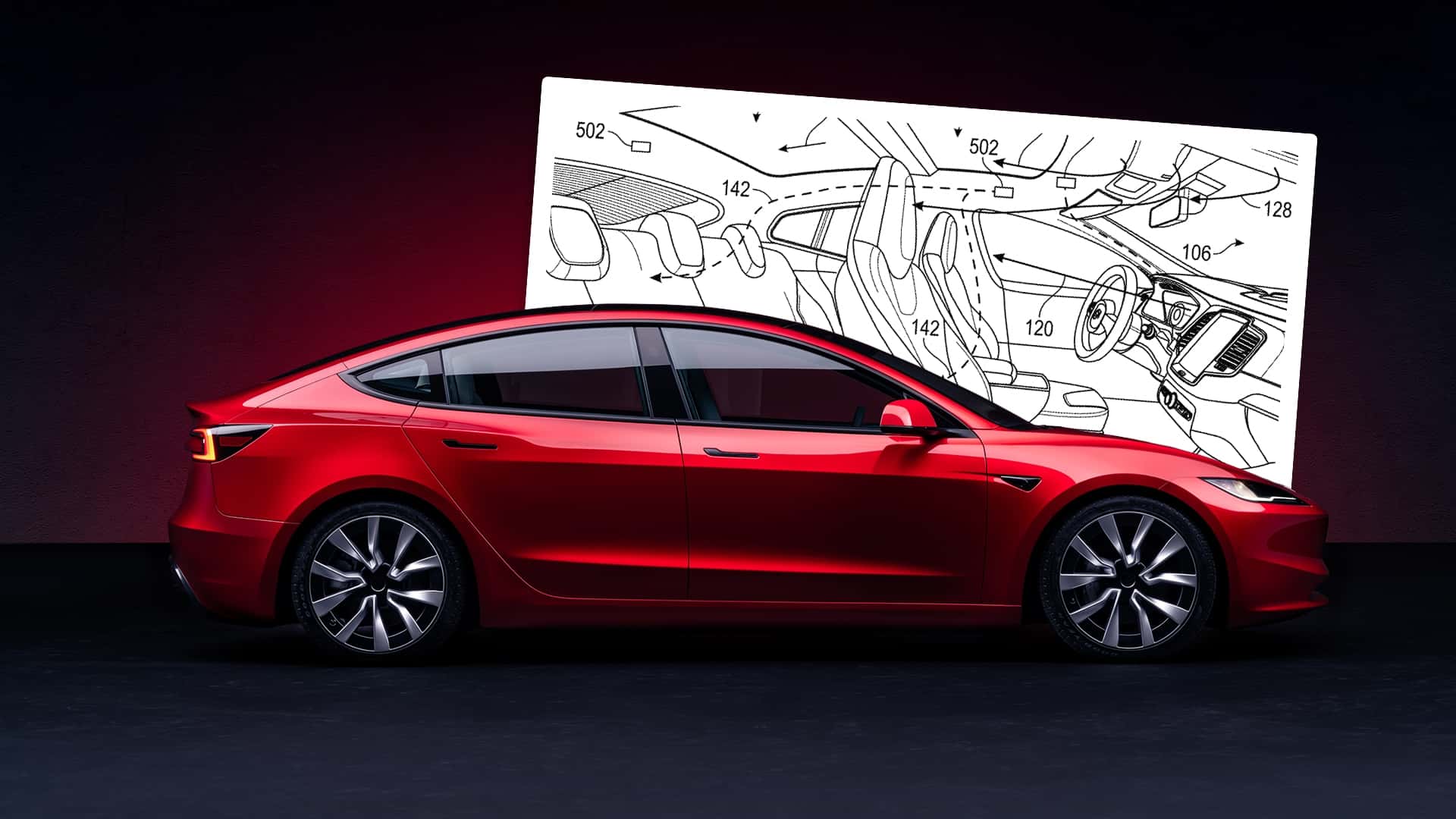
That’s what makes one of Tesla’s latest patents so interesting. Its invention proposes a new way of cooling down a car’s interior by targeting “hot air pockets” in the cabin. Here’s how it’s done.


Tesla HVAC Patent Interior

Photo by: Tesla

According to the patent, Tesla’s method involves installing a suction unit into the car’s HVAC system. This creates negative pressure (aka: vacuum) that can be applied to specific vents in the car near these pockets of hot air. The hot air is then sucked into the car’s HVAC system and conditioned with the rest of the cabin air before being recirculated back into the car.

A good example of this would be solar radiation. The sun beating down on the car’s glass roof is an easy way to heat up the cabin—I’m sure you’ve felt this before when getting into a car on a hot day, or even when feeling the sun hitting your arm or leg for an extended time while driving down the road. The larger the vehicle and its interior space (Think Model X compared to a Model 3), the more surface area and ambient cabin space that requires conditioning.

See also  2026 Toyota bZ Review: One Big Thing Missing

But Tesla’s idea is that this thermal conditioning can be a done a bit more efficiently. The goal, according to the patent, is to “maximize thermal comfort and minimize energy consumption”—basically, pull air from spaces that need to be cooled and more evenly distribute the temperature in the cabin.


Based on the data in the patent, Tesla shows that the tech could lower the power draw by as much as 7.4%. That might not seem like a lot, however, that’s a savings of around 127 watts when it’s 104 degrees outside. That cuts the peak power consumed by the HVAC down from 1,720 watts to just 1,593.

Tesla’s patent goes further by noting that the suction can be conditionally activated by sensing the temperature in the cabin and activating the suction only in areas that need to be conditioned.

The idea is admittedly pretty innovative. Of course, this is just a patent, so it may never actually make it into an actual production car. But this is a clever way of improving range without boosting battery capacity, playing with aerodynamics, or doing anything special to the powertrain. 

On a 100-degree day, for example, air conditioner use contributes to a range loss of up to 18%, a study from Recurrent found. If Tesla’s method is able to squeeze a bit more range out of its cars while also improving passenger comfort, that’s a win-win.


We want your opinion!

What would you like to see on Insideevs.com?

Take our 3 minute survey.

– The InsideEVs team

Source link

Air Cars hot Improve range Tesla vacuum
Share. Facebook Twitter Pinterest LinkedIn Tumblr Email
Previous ArticleThis Four-Cylinder Chevy Camaro’s 9.768-Second Quarter-Mile Is a New Record
Next Article Brand New 2026 Toyota RAV4 Reviewed

Related Posts

Advice

DIY Automotive Air Conditioning Repair and Diagnostics Guide

June 4, 2026
Electric car

CATL claims its lithium-air battery has energy density similar to gasoline

June 4, 2026
Electric car

State puts out call for heavy EV charging hubs as part of fuel security plan

June 3, 2026
Add A Comment
Leave A Reply Cancel Reply

Top Posts

Used Volkswagen Passat (Mk8, 2014-2021) review

June 4, 2026

Honda Civic Type R vs Audi RS 3: the ultimate hot hatch face-off

December 2, 2025

Lamborghini Diablo Buyers Guide – Exotic Car List

December 2, 2025
Stay In Touch
  • Facebook
  • YouTube
  • TikTok
  • WhatsApp
  • Twitter
  • Instagram
Latest Reviews
Reviews

Used Volkswagen Passat (Mk8, 2014-2021) review

June 4, 2026
Reviews

Why the 7.3L Is the One To Buy

June 2, 2026
Reviews

2026 Honda Passport Trailsport Review — New And Bigger

June 2, 2026

Subscribe to Updates

Get the latest creative news from Motor Fortune about Electric Cars, Luxury Cars, design and More.

Most Popular

What Driving Every Old Prelude Can Tell Us About the New One

January 30, 2026

Sea-Doo GTX 170 Review — Novice-Friendly Personal Watercraft

April 18, 2026

From the Diamond Eagle to AviNika Jewelry – duPont REGISTRY DriftBreath

February 4, 2026
From Our Sponsors

Subscribe to Updates

Get the latest creative news from Motor Fortune about Electric Cars, Luxury Cars, design and More.

Facebook X (Twitter) Instagram Pinterest
  • Contact
  • Privacy Policy
  • Terms & Conditions
© 2026 Engine Week - All rights reserved.

Type above and press Enter to search. Press Esc to cancel.