


THE IRAN WAR has seen Australian new car buyers shift rapidly towards the purchase of electrified vehicles with hybrid, plug-in hybrid, and battery electric sales accounting for 46 per cent of the overall count for the month of May.
Combined data from the Federal Chamber of Automotive Industries (FCAI) and the Electric Vehicle Council (EVC) show Australians purchased 106,887 new vehicles in May, down 2538 units on the month prior (-2.3 per cent).
The year-to-date tally for 2026 sits at 491,525 units from both sources, down 5168 units on the May 2025 (-1.0 per cent).
Across the segments, we note a further decline for the majority of passenger cars segments with the Micro passenger segment down a further 2.8 per cent YoY (to 562 units in May), the Small passenger under $45K segment down a whopping 18.9 per cent (to 3693 units), the Small passenger over $45K segment down 3.1 per cent (to 1424 units), and Large passenger vehicles on either side of the $70K price divide down 52.9 and 34.2 per cent respectively (to eight and 129 units).
The Light passenger segment bucked the trend rising 5.4 per cent YoY (to 2383 units), as did the Medium passenger vehicles on either side of the $60K barrier, up 18.7 and 35.3 per cent respectively (to 1795 and 1437 units), buoyed in no small part to the greater availability of new energy entrants from within the segment.
Upper Large segment passenger cars fell 50.0 per cent (to just 15 units) while People Movers under $70K fell 20.2 per cent (to 970 units). People movers over $70K increased by 26.6 per cent across May (to 214 units).
Perhaps indicating a holdback on discretionary spending, we note a decline across all Sports car segments in May. Sports cars under $90K fell 49.4 per cent (to 503 units), Sports cars over $90K dropped 34.0 per cent (to 246 units), and Sports cars over $200K slid 25.9 per cent (to 100 units even).
Shifting focus to SUV sales and we note more mixed results…
Light segment SUV sales fell 25.7 per cent (to 3350 units) YoY for the May period, while Small segment SUV under $45K sales rose 7.8 per cent (to 14,987 units). Small segment SUV over $45K sales fell 18.3 per cent (to 3076 units), while Medium segment SUV under $65K sales rose 26.9 per cent (to 23,406 units, the highest singular segment in May 2026).
Medium segment SUV over $65K sales were likewise up in May, rising 36.9 per cent (to 10,865 units), while Large segment SUV sales on either side of the $80K split sank, down 25.4 and 16.2 per cent respectively (to 9846 and 2030 units).
Upper Large SUV sales on both sides of the segment’s $120K division were also down, falling 27.0 and 9.6 per cent respectively (to 2017 and 44 units).
Light passenger buses were also down in May, the segment showing a decline in both the under and over 20-seat categories. Sales of lower capacity light passenger buses dropped a substantial 85.6 per cent in May (to 68 units), while higher capacity light passenger buses declined by 44.4 per cent (to 35 units).
Interestingly, counterpart light commercial vans rose incrementally across the same period, with vehicles in the sub-2.5t category up 13.1 per cent (to 138 units) and vehicles in the 2.5-3.5t category up 2.5 per cent to 2035 units.
Perennially popular light commercial utility vehicles faced a fall from form in May, with sales of two-wheel drive pick-up and cab-chassis models sliding 4.8 per cent (to 2008 units) and four-wheel drive pick-up and cab-chassis models slipping 18.0 per cent (to 14,891 units).
Despite the descent, pick-up and cab-chassis models remain high in the sales charts for May with the Ford Ranger (4474 units) and Toyota HiLux (4005 units) ranking in first- and second place for the month.
Countering the downward trend, Larger pick-up and cab-chassis models, those in the over $100K category, rose 44.2 per cent across May to achieve sales of 851 units. However, Heavy commercial vehicle sales elsewhere were down, falling 14.4 per cent (to 3362 units).
On a brand-by-brand basis, we note Toyota on top for May with sales of 16,342 units. That figure represents a year-on-year decline of 30.7 per cent (or 7234 units), reducing the Japanese brand’s market share to just 15.3 per cent.
BYD placed second in May with sales of 8211 units (up 7.7 per cent) ahead of Ford with 7195 units (down 15.0 per cent), Hyundai with 7007 units (up 4.5 per cent), Kia with 6761 units (down 2.1 per cent), and Tesla with 6433 units (up 65.1 per cent).
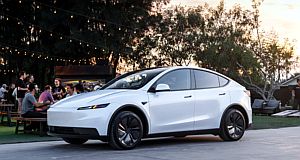
Top models for the month of May saw Tesla top the charts with 5605 registrations of its newly updated Model Y (up 56.6 per cent YoY), leading the four-wheel drive Ford Ranger with 4051 unit sales (down 9.6 per cent YoY), the Toyota RAV4 with 3865 unit sales (down 3.4 per cent YoY), the Toyota HiLux with 3685 units (down 12.4 per cent YoY), and the Hyundai Kona with 2291 unit sales (up 17.4 per cent YoY).
While economic challenges continue to take their toll on the new car market more broadly, we note steady sales from private buyers across passenger and SUV segments. Business buyers purchased more light commercial vehicles in May, while rental fleet buyers purchased more passenger and SUV models than government fleet purchasers.
Unsurprisingly, Chinese-made vehicles continued to lead as Australia’s preferred source of new vehicles in May with 37,229 units from the People’s Republic registered (up 74.1 per cent YoY). Japan trailed in second place with 22,823 registrations (down 28.9 per cent) ahead of third place Thailand with 17,552 units (down 22.1 per cent), fourth place South Korea with 13,184 units (up 5.2 per cent), and fifth place Germany with 4597 units (down 6.5 per cent).
As indicated at the outset, however, is a shift in Australian’s driveline preference that comes as a most significant alteration.
Spurred by fuel shortages as a result of the Iran War, Australians are rapidly changing the type of vehicles they purchase, with FCAI data showing a significant shift away from internal combustion power and towards electrified options.
In May, sales of plug-in hybrid electric vehicles (PHEVs) across all categories rose by 202.3 per cent year-on-year (to 9315 units). Traditional hybrid electric vehicle (HEV) sales jumped 11.3 per cent (to 19,024 units) while battery electric vehicle (BEV) sales shot up 111.7 per cent (to 21,303 units).
Despite a fall in popularity of 30.3 per cent, petrol-powered vehicles continued to prove the most popular overall in May with 28,692 unit sales, closely followed by diesel-powered vehicles with 25,191 units (down 26.2 per cent).
FCAI chief executive Tony Weber said the results demonstrated the pace of consumer adoption of lower-emission technologies in response to an international energy shock.
“The shift is particularly evident in the SUV segment, where consumer preferences are changing rapidly,” he said, while noting that more work was to be done on EV charging infrastructure if a greater update of PHEV and BEV models was to eventuate.
“Today’s SUV buyer is increasingly choosing hybrid, plug-in hybrid and electric options,” he noted.
“(But) as the number of EVs on the road continues to grow, charging infrastructure must become more of a priority.
“Continued investment and enabling policy settings will be essential to ensure infrastructure keeps pace with consumer adoption.”
Mr Weber said yesterday’s findings by Victoria’s parliamentary inquiry reinforce what consumers and industry have been saying for some time.
“Charging infrastructure rollout must accelerate if Australia is to maintain consumer confidence and support continued uptake,” stressed Mr Weber.
“The evidence increasingly demonstrates that NVES is encouraging manufacturers to bring more low emissions vehicles to Australia, increasing both consumer choice and technology availability.
“Regulatory stability and growth in public charging infrastructure is now critical to maintaining investment, consumer confidence and continued growth, particularly during a period of global economic uncertainty.”
Top 10 vehicle sales by make (May 2026)*:
|
Make |
Sales |
Share |
Variance |
|
Toyota |
16,342 |
15.3% |
-30.7% |
|
BYD |
8,211 |
7.7% |
+7.7% |
|
Ford |
7,195 |
6.7% |
-15.0% |
|
Hyundai |
7,007 |
6.6% |
+4.5% |
|
Kia |
6,761 |
6.3% |
-2.1% |
|
Tesla |
6,433 |
6.0% |
+65.1% |
|
Mazda |
5,698 |
5.3% |
-27.4% |
|
GWM |
4,660 |
4.4% |
+9.1% |
|
Chery |
4,401 |
4.1% |
+59.7% |
|
MG |
3,872 |
3.6% |
+18.4% |
|
Mitsubishi |
3,307 |
3.1% |
-30.6% |
Top 10 vehicle sales by model (May 2026)*:
|
Make/Model |
Sales |
Variance |
|
Tesla Model Y |
5,605 |
+56.6% |
|
Ford Ranger 4×4 |
4,051 |
-9.6% |
|
Toyota RAV4 |
3,865 |
-3.4% |
|
Toyota HiLux |
3,685 |
-12.4% |
|
Hyundai Kona |
2,291 |
+17.4% |
|
Hyundai Tucson |
2,287 |
+27.5% |
|
Omoda Jaecoo J5 |
2,172 |
New entrant |
|
Chery Tiggo 4 |
2,123 |
+23.1% |
|
Ford Everest |
1,876 |
-20.8% |
|
Geely EX5 |
1,814 |
+255.0% |
State-by-state sales (May 2026)*:
|
State/Territory |
Sales |
Variance |
|
Australian Capital Territory |
1,575 |
-1.5% |
|
New South Wales |
33,465 |
-0.4% |
|
Northern Territory |
821 |
-5.7% |
|
Queensland |
22,182 |
-6.2% |
|
South Australia |
6,737 |
+0.1% |
|
Tasmania |
1,667 |
+5.2% |
|
Victoria |
29,382 |
-1.6% |
|
Western Australia |
11,058 |
-4.4% |
*All sales data is supplied courtesy of the FCAI and the EVC.