

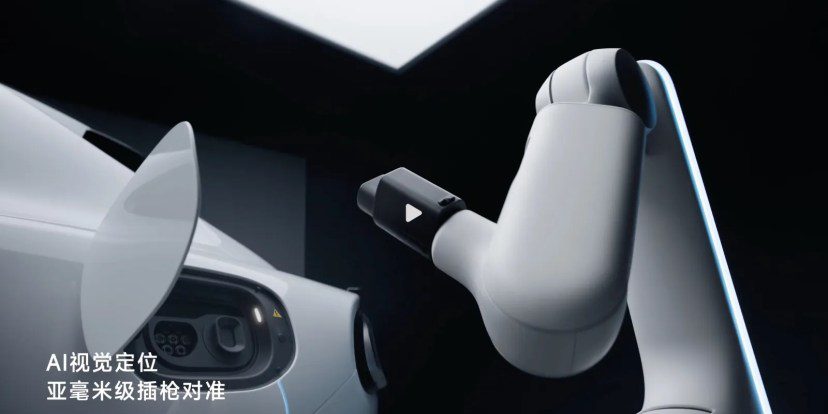
EV drivers love skipping the traditional gas station, but those who charge at home still have to manually plug in their vehicles almost every night. It’s not a dealbreaker really, but consumer technology giant Xiaomi wants to eliminate that last bit of physical effort. The company demonstrated a new home charging robotic arm that automates the entire process. This device takes care of both plugging in and unplugging EVs without any human intervention. Xiaomi says it is ready to launch this automated accessory on the retail market in the fourth quarter of 2026, targeting the residential garages where most EV owners recharge.
Xiaomi fulfills an old promise that the wider automotive industry failed to deliver. More than ten years ago, Tesla chief Elon Musk promised a similar solution for electric cars, describing a metal snake charger that would automatically extend from a wall. Tesla even revealed a working prototype in 2015, but the project quietly disappeared into the corporate graveyard. Instead, Tesla shifted its focus toward wireless inductive charging for models like the Cybercab robotaxi. Xiaomi decided to stick to the physical plug concept and make it production-ready.
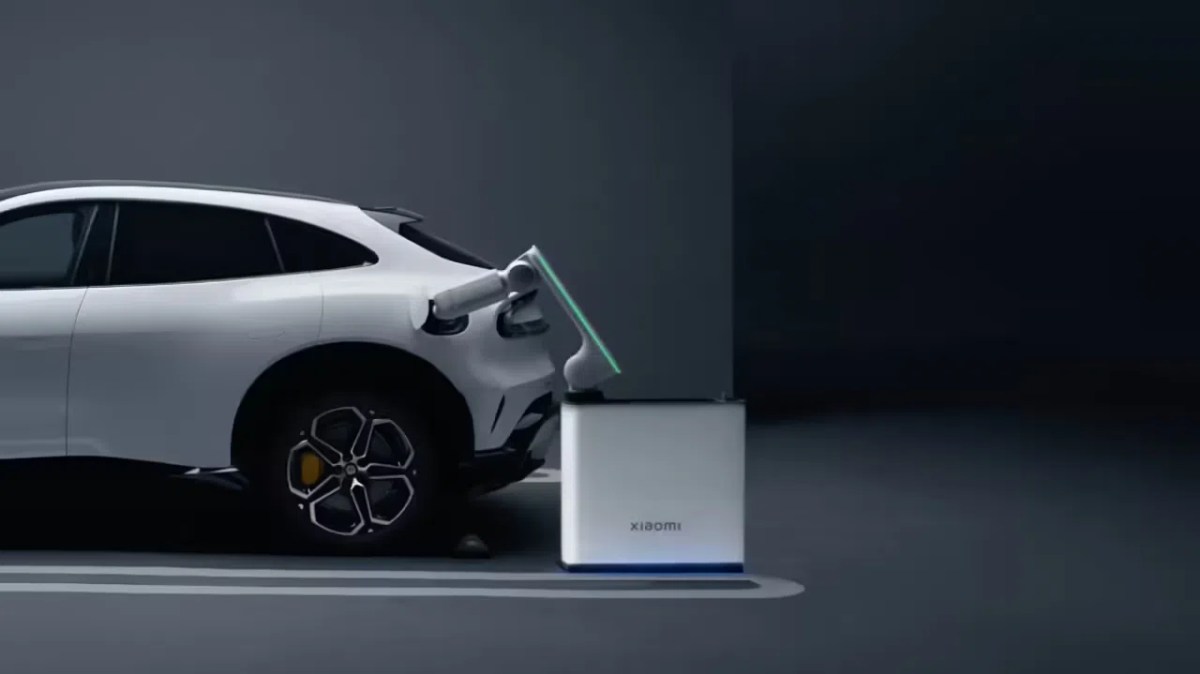
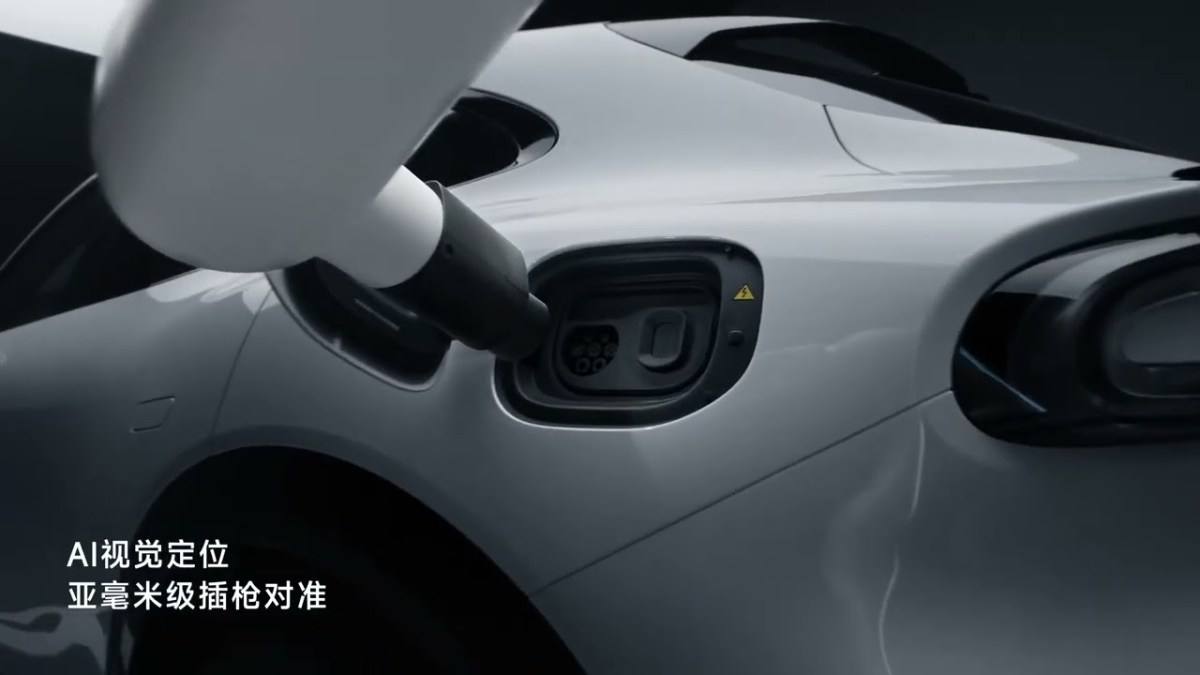
The physical design of the Xiaomi robotic arm is perfect for tight residential spaces. The housing measures exactly 6 inches wide, allowing it to fit easily next to vehicles in small home garages. The system uses advanced artificial intelligence vision recognition to guide the charging gun with sub-millimeter precision into the vehicle’s port. It also communicates directly with the car to trigger motorized charge port covers to open and close automatically. Owners can monitor and manage the system remotely through their smartphones, as the arm completely integrates into the brand’s existing smart home and vehicle ecosystem.
Automated mechanical arms solve a major technical issue that currently plagues wireless charging alternatives. Wireless pads remove the need for a physical cord, but they suffer from lower energy efficiency. Standard wireless inductive systems operate at an efficiency rate between 88 percent and 93 percent under perfect alignment. Direct physical plug-in systems operate at roughly 95 percent efficiency because they eliminate the air gap between the pad and the vehicle. On top of that, wireless charging under the common SAE J2954 standard generally tops out at 11 kW of power, whereas physical plugs can handle much higher rates.
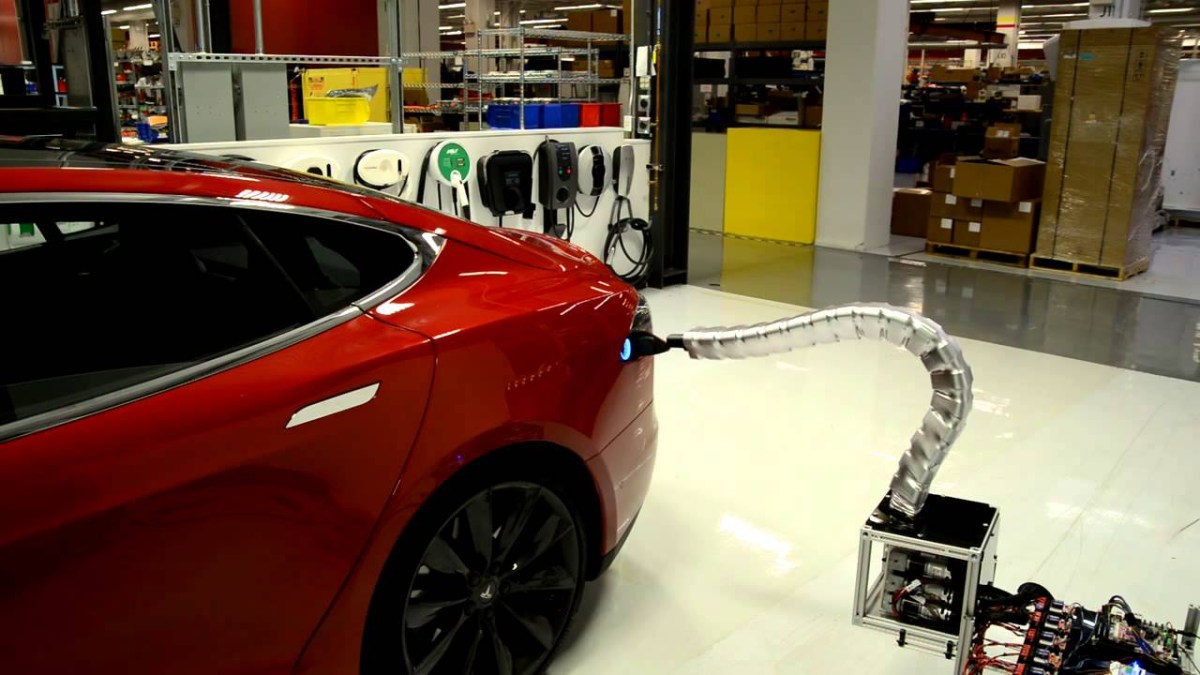
Tesla prototype from 2015
For owners of modern EVs, these small percentages make a financial difference over time. Wasted energy transforms into heat and increases electricity bills over the years of daily use. A mechanical system preserves the full efficiency of a direct connection while offering the exact same convenience as a wireless system. Additionally, owners do not need to install heavy or expensive hardware inside their electric cars to make it work. The robotic arm functions perfectly with any standard charging port already built into the vehicle.
Xiaomi has not confirmed a final price for the new accessory, which will join its current lineup of 7 kW and 11 kW wallbox chargers. Price will decide whether home consumers adopt the technology. The company faces rising competition in the automated charging sector, particularly within the Chinese market. Other automakers are rushing to develop similar hands-free systems for their own premium electric cars – Li Auto announced ongoing tests for its own automatic charging robot during the launch of the Li Auto i8 electric SUV.
Similarly, the Harmony Intelligent Mobility Alliance (HIMA from Huawei) revealed an automated charging system for the Aito M8. That setup allows drivers to use an off-vehicle parking feature to send the car into a bay, where a robotic arm opens the port and inserts the plug automatically. Beyond automotive brands, independent infrastructure companies are entering the race. Star Charge introduced its own fully automatic robotic system called Armstrong – it achieves millimeter-level accuracy, connects in under 40 seconds, supports liquid-cooled ultra-fast charging, and uses a patented adapter ring to fit various global plug standards.
Chinese manufacturers focus heavily on residential solutions, and global automakers are exploring public applications for this technology. Hyundai has been testing its own automatic charging robots at Incheon International Airport to assist travelers. Other companies are testing ceiling-rail-mounted robots that slide across commercial parking garages to service multiple vehicles. Because roughly 80 percent of EV charging takes place at home, Xiaomi’s compact garage-ready arm could give the company a meaningful advantage if the retail price is reasonable.
Via