

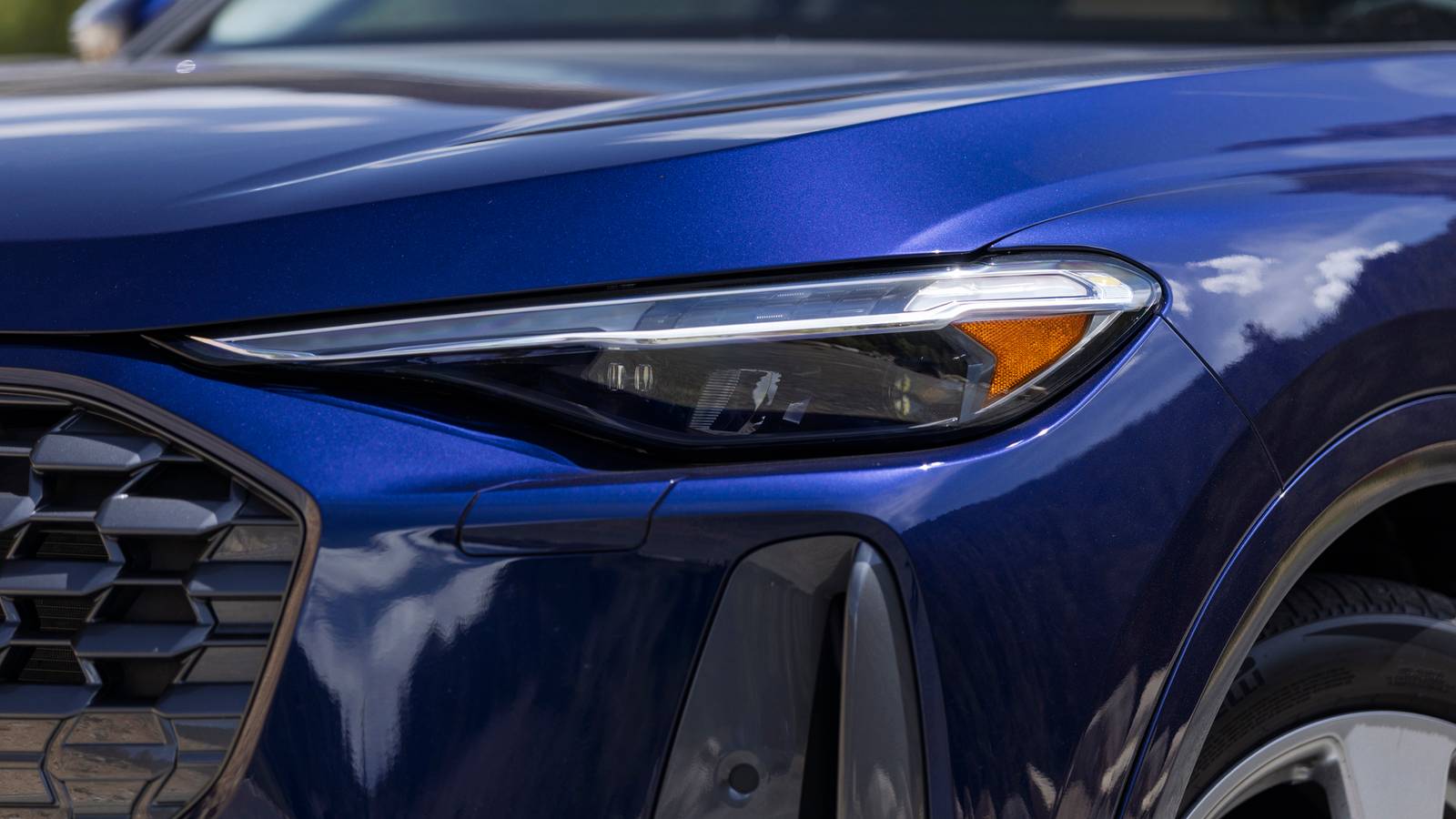
The Audi Q5 is one of the most popular models in one of the most popular segments in the USA. To say the compact luxury crossover is a hot market is an understatement. All the big luxury players have a compact luxury crossover, with each vying for the most sales possible, like the midsize sedans in the 1990s and 2000s.
While Audi has always been a popular player in the luxury market, they have mostly been playing third fiddle in sales to their main rivals, BMW and Mercedes-Benz. However, there is one segment that Audi has always managed to be one of, if not the most popular, and that is the compact luxury SUV. This is one of, if not the most, important segments in the car industry right now, and Audi’s Q5 has always been a huge player in the space. Now in its third generation, what are some things you should look out for when purchasing your Q5: what are common problems, and what are the best and worst years in terms of reliability?
This article explores the common problems, maintenance costs, and price of repairs as reported by owners and local authorities. Information is correct at the time of writing and your mileage may vary.
An Overview Of The Audi Q5
- Base Trim Engine
-
2L I4
- Base Trim Transmission
-
7-speed auto-shift manual
- Base Trim Drivetrain
-
All-Wheel Drive
Where research meets the right deal
First Generation: 8R

First announced at the 2008 Beijing Auto Show, the original Q5 launched in 2009 for the US market and lasted until 2015. It initially launched with a 3.2-liter V6 or 2.0-liter turbocharged four-cylinder. It was a global platform being sold all over the world. Rivals included the BMW X3 and the Mercedes-Benz GLK, and later the GLC. The Q5 followed the classic formula of leather, technology, and early connectivity with Audi’s MMI system featuring Bluetooth, iPod and satellite Radio. The Q5 was facelifted in 2012, with the Q5 getting an updated MMI system, fresher styling and an update to engines, replacing the 3.2-liter V6 with a more power efficient 3.0L turbo V6. It had a wide range of engines, including a diesel for a short period.
|
Engines |
||
|---|---|---|
|
Model |
Year |
Standard |
|
2.0 TFSI MHEV quattro |
2011–2018 |
8-speed Tiptronic |
|
2.0 TFSI quattro (211PS) |
2008–2012 |
8-speed Tiptronic |
|
2.0 TFSI quattro (225PS) |
2011–2018 |
8-speed Tiptronic |
|
3.2 FSI quattro |
2009–2012 |
6-speed Tiptronic |
|
3.0 TFSI quattro |
2012–2018 |
8-speed Tiptronic |
|
2.0 TDI quattro |
2012–2015 |
7-speed S tronic |
Second Generation: FY

Coming out in 2018 for the North American market, the second gen was produced in San José Chiapa, Puebla, México. The V6 was discontinued in favor of the 2.0 TFSI four-cylinder with an updated version of the quatro all-wheel-drive system that could now de-couple the front wheels to act as a rear-wheel-drive powertrain for efficiency. The TDI was dropped following the diesel-gate scandal, with all the focus on the four-pot. In 2019, heated front seats, rear electric child locks, seven-inch infotainment screen, and roof racks became standard equipment, with a plug-in hybrid variant coming the next year. A facelift came in 2021, updating the infotainment and exterior styling. 2022 was the best sales year for Q5, with 334,480 units sold.
|
Engines |
||
|---|---|---|
|
Model |
Year |
Standard |
|
2.0 TFSI Petrol |
2018–2020 |
7-speed S-Tronic |
|
2.0 TFSI Mild Hybrid |
2020–2025 |
7-speed S-Tronic |
|
2.0 TFSI Plug-in Hybrid |
2020–2025 |
7-speed S-Tronic |
Third Generation: 80A

To keep its compact crossover crown, Audi has made the third-generation Q5 bigger and better, and its engines have been further simplified. Being the first SUV model to run on the Premium Platform Combustion architecture, the new Q5 is a little sleeker, and has an even more tech-heavy interior. An 11.9-inch instrument cluster and a 14.5-inch infotainment touchscreen now come as standard, with a 10.9-inch passenger display screen available as an option. Audi made a large effort to limit road and wind noise with aerodynamic clad underbody and air curtains to direct airflow around the wheel arches, and air deflectors. The new Q5 now plays in the most contested market in the car industry, and it remains to be seen if it can compete with tough competition from BMW, Mercedes, and Lexus.
|
Engines |
||
|---|---|---|
|
Model |
Year |
Standard |
|
2.0 TFSI |
2025–Present |
7-speed S tronic dual-clutch |
|
2.0 TFSI Quattro |
2025–Present |
7-speed S tronic dual-clutch |
|
2.0 TFSI PHEV |
To Be Announced |
7-speed S tronic dual-clutch |
Audi recently announced a PHEV, which hasn’t been released yet, but based on the European specification, this is what you can expect to come to US shores in the coming years:
|
2026 Audi Q5 PHEV Specifications |
||
|---|---|---|
|
Engine |
2.0-liter Turbo Four-cylinder Plug-in |
|
|
Power |
295 hp |
362 hp |
|
Torque |
332 lb-ft |
369 lb-ft |
|
Transmission |
7-speed S tronic Dual-clutch |
|
|
Drivetrain |
All-wheel Drive |
|
|
0–62 MPH |
6.2 seconds |
5.1 seconds |
|
Top Speed |
155.3 mph |
|
|
Electric Range |
62 miles |
|
*European specification and WLTP estimates. US specification TBC.
Audi Q5 Rivals
Mercedes-Benz GLC
- Trunk Volume
-
24.4 cu.ft.
- Front Seat Hip Room
-
59″
- Roadside Warranty
-
48 month/50,000 miles
- Corrosion Perforation Warranty
-
48 month/50,000 miles
Where research meets the right deal
Replacing the GLK, the Mercedes-Benz GLC launched in 2015 and is now in its second generation. It leans into the luxury side of the market, with the mainstream trims being a more luxurious take on the segment. This is contrasted by its AMG models, which are wild and powerful. The GLC is coming up on its next generation model, with a controversial take on the front grill.
BMW X3

- Base Trim Engine
-
2.0 turbo Inline-4
- Base Trim Transmission
-
8-speed Automatic
- Base Trim Drivetrain
-
All-Wheel Drive
Where research meets the right deal
Common Q5 Problems

If you sell enough of a modern luxury SUV, people will be bound to find problems with the model. The Q5 is no stranger to issues despite its success. We will look through a few issues, and what engines and years are affected most by them.
Excessive Oil Consumption
The 2.0-liter TFSI engine has had numerous and notorious issues with excessive oil consumption. Owners report having to deal with excessive oil consumption issues, spending lots on oil, having to replace parts, or even whole engines to fix the issue. This is most prevalent on the 2014 models, with the issue usually becoming apparent at around 60, 000 miles. The fix for this is to replace the pistons and piston rings, with owners reporting it costing around $9,000.
“Audi needs to fix the issue. They should be sued. I’m sick of spending money on oil.”
– Jeffrey M., Emmaus, US, CarComplaints.com
Time Chain Failure
Again with the 2.0 TFSI, timing chain failure is another large issue that plagues the Q5. Audi faced multiple class action lawsuits mostly to do with models between 2008–2013. Timing chain failure can be catastrophic, grenading engines, creating huge issues for owners. Audi did replace and repair timing chain issues if the car fell within a specified list of VINs. For owners who’s 2.0 TFSI Q5 didn’t fall within this list, they were faced with repair bills touching $10,000.
“I was made aware of the Timing Chain Class Action lawsuit regarding the defective tensioner, but informed that my VIN wasn’t covered. At their recommendation, the car was towed to an Audi dealership. All service records, oil receipts, etc were provided to Audi. Audi “declined assistance”, leaving me with an undriveable car, a $750 bill from the mechanic, $55 tow bill, $150 (and growing) rental car charge, and an estimate of over $8k to re-build the engine.”
– Carissa S., Colorado Springs, CO, US
Steering Failure And Issues
Affecting Q5 models around the mid-2010s, the powering steering pumps are prone to failure on both the four-cylinder and V6 models. Audi has had widespread issues with its electronic steering racks, most notably in the A4, and it can be rather expensive to replace them. The Q5 suffers from the usual steering rack failure, but can also suffer from stiffness when turning. The community around the Q5 and SQ5 attribute this to the U-joints with greasing and maintaining them seen to be a quick, if temporary, fix to these issues. For the owners who aren’t as lucky and do have to replace a steering shaft or rack, they have been faced with bills up to $4,000.
The Audi Q5 doesn’t suffer from a range of issues but the ones they do suffer from can be catastrophic. Most have to do with the 2.0 TFSI engine, which is the most common you will find when shopping for a Q5.
How Much Does It Cost To Maintain An Audi Q5?
The Q5 is bought by young families all over the US, looking for a little slice of luxury. These families will want a premium feeling but easy to maintain car. So how much will you cost to own one?

- Audi’s brand reliability score: Three out of five stars (RepairPal)
- Average Q5 annual repair cost: $928 (RepairPal)
- Average cost of repairs and maintenance over 5 years of ownership: $4,061 (CarEdge)
- Chance of a major repair needing to be done over 5 years of ownership: 37% (CarEdge)
- Limited basic warranty: four-year/50,000-mile
- Powertrain warranty: four-year/50,000-mile
Being a luxury model, the Audi Q5 will cost more than your average mainstream car to run, but amongst its peers, it is actually cheaper to own on average. CarEdge reports that the Q5 costs $1,449 less than rivals when comparing the average cost of repairs and maintenance over five years of ownership, and that it is slightly below average in needing a major repair in the first five years of ownership.
What Is The Worst Year To Own?

If you are in the market for a Q5, the year and generation to avoid is any 2013–2015 8R Q5 with especially with the 2.0 TFSI. They suffer from the most issues with timing chain issues, and huge problems with excessive oil consumption. These problems are surprisingly common and are massively expensive when they happen. Audi quickly fixed these issues for the next generation, but for cars that were affected it can leave a bad taste in buyers’ mouths, and a large whole in their wallets.
Is The Audi Q5 Expensive To Own, And What Is The Best Year To Own?

All in all, the Audi Q5 is not an overly expensive luxury compact crossover. While it cannot compete with the best in the game, like Lexus, it does beat out most rivals with CarEdge reporting above average reliability. The best year to buy is rather simple. Just buy as new as you can. You will always run into some issues with an aging German SUV, but if your smart about what type of Q5 you buy, you can avoid most of the headaches. If you are dead set on a Q5 and a first-generation model is the newest you can buy, go for the V6. You will avoid the horrific oil consumption issues and will also be a lot better protected against timing chain issues. For the next generation, they have seemingly got these oil consumption issues under control, so you should be safe with the 2.0 TFSI in the second-gen.
FAQs
How expensive is an Audi Q5 to maintain?
The Audi Q5 is more than average in terms of the cost of ownership, though it’s on par for the luxury segment. It costs an average of $4,061 in maintenance over five years. This is $1,449 over the class average.
What is the most common problem in Audi Q5?
Excessive oil consumption and timing chain issues are the two main problems with the Audi Q5.
How much is a full service for an Audi Q5?
A major service is for a Q5 can cost anywhere from $400 for minor services that might include changing the oil, up to $1000 or more for more serious services that might include replacing brake pads, etc.
Source: Audi, RepairPal, CarEdge, Car Complaints