

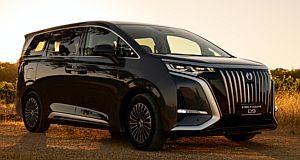

Chinese-made cars tallied 22,362 deliveries in February to outpace those from Japan (21,671), Thailand (19,493), and South Korea (11,913).
The influx of new Chinese makes and models has not only ousted Japanese-made marques such as Honda, Nissan and Subaru from the top 10 but has reprofiled the monthly sales chart in an impressive short space of time.
In addition, global car-makers including BMW Group, Tesla, Polestar, Volkswagen Group, Volvo and others increasingly rely on manufacturing bases in China to supply Australia and beyond.
Of the 10 new brands to enter the Australian market since 2020, nine originate from the People’s Republic, with three now holding a regular position on the monthly top 10 list.
It is a changing of the guard that has, of course, seen stalwart importers pushed further from the spotlight, with even the largest-sellers noting a significant loss in volume and market share.
Comparing February 2026 with the same month last year, it is obvious that even Australia’s number one selling brand is not immune to the effects of China’s march.
Toyota lost 4.8 market share points in the past 12 months, or the equivalent of 5226 units, maintaining first position on the charts, albeit by a slimmer margin.
It could bounce back when the new-generation RAV4 range arrives and HiLux volume recovers from a recent major update, although early adopter demand for the latest LandCruiser Prado appears to have tapered.
Second-placed Mazda lost 1.5 percentage points of market share, delivering 1755 units fewer than February 2025, to retain second place while Ford moved upward from fourth position to third, gaining 0.9 market share points from an additional 570 deliveries YoY.
Ford swapped places with Kia over the past 12 months, the South Korean importer dropping one place into fourth and losing 0.3 market share points, having delivered three more units than it did a year ago.
Sister brand Hyundai, meanwhile, stepped up to fifth place from sixth in February 2025, gaining 0.6 market share points with sales up 271 units YoY.
At the top of the table, there has not been a lot of change to the status quo. But sixth position shows a marked change.
Chinese importer BYD rose from 14th position just 12 months ago, entering sixth position with a 5.9 per cent market share points (up 1.4 points) from 5323 deliveries (up 2042 units compared with February 2025).
BYD overtook several other marques to claim this position, surpassing compatriot importers GWM and MG Motor in the process.
Speaking with GoAuto on the rise of BYD over the past year, BYD Australia chief operating officer Stephen Collins said a compelling blend of affordability and technology was drawing local buyers to the brand.
“We’ve had a solid start in 2026, continuing the flourish from last year,” he said.
“Brand acceptance is really strong, and that’s from having great new energy vehicles that a lot of Australians want and can afford.
“Okay, so we’re the leading Chinese OEM so far this year. I wouldn’t say that’s our objective, but rather an outcome from having vehicles with the latest technology competitively priced in key segments and introducing more vehicles like Sealion 5 and Sealion 8 into segments we haven’t previously been.
“It’s an exciting year for BYD. We will continue to strengthen our proposition with key models, like Shark 6, for example, where we will introduce variants that will appeal to tradies and fleet, as well as those looking for more towing capability.
“We’re also looking at gaps in the market where we may have something compelling to offer. Those opportunities may not be huge volume, but they’re important, because we can showcase our innovation and style.”
Mitsubishi slipped from fifth place last February to seventh, dropping 1.2 market share points and selling 1364 fewer units, while GWM dropped one place – moving from seventh to eighth position.
Chery holds ninth position in February 2026 – a position held by Nissan this time last year – increasing market share by 2.2 percentage points with 3938 vehicles sold for the month (up 1900 units YoY. It outsold Isuzu Ute in tenth position, the Japanese commercial vehicle specialist gaining 0.8 market share points YoY by retailing 649 more units than it did this time last year.
Speaking with GoAuto about the success of the Chery brand locally, Chery Australia and New Zealand chief operating officer Lucas Harris attributed the uptick in sales to a range of factors.
“Australian customers want strong value, but they also expect safety, technology and quality,” he said.
“Chery delivers all of that in a modern, well-designed package. We’ve also backed it with a comprehensive seven-year/unlimited-kilometre warranty, five-star ANCAP safety ratings, and an extensive dealer network, which provides customers peace of mind.
“It’s that combination of value and reassurance that’s made the difference.”
Of course, the changes in Australia’s top 10 vehicle ranking see not only the inclusion of new brands into the top 10, but the movement of other brands out.
Nissan has departed the charts after placing ninth in February of 2025, falling from 3.7 market share points to just 2.0. Subaru, which finished February 2025 in tenth position, is also out of the top 10, dropping 0.8 market share points to 2.9.
MG Motor finished February 2025 with 3739 sales and a buoyant 3.9 per cent of the new car market, falling 14.7 per cent to 3254 sales and 3.6 market share points at the end of last month.
While this year-on-year snapshot serves only as a snippet of the bigger picture, it showcases how dominant Chinese brands have collectively become – and how quickly they are changing the Australian automotive landscape.
There are now 14 Chinese automotive brands in the market, along with just as many produced in that country for other Asian and European marques. And there are more to come.
Just what the sales charts for February 2027 will look like is anybody’s guess. What looks certain is that there will be at least four Chinese players in the top 10 before the year is out.
Australia’s top 10 new-vehicle brands Feb 2026 vs Feb 2025*
*Sales data supplied courtesy of VFACTS