

It might be a thrill to cruise down the highway at higher speeds, or you might just be in a hurry, but it isn’t doing your mpg any favors either way. In the face of rising gas prices, one of the easiest ways to save at the pump might actually be just to slow down.
Every vehicle has its own optimal speed range for fuel economy, but most cars see a rapid drop in gas mileage starting around 50 mph. The U.S. Department of Energy (DOE) estimates that each 5 mph above 50 mph will cost an additional $0.27 per gallon, assuming an average cost of $3.83 per gallon. Slowing down even 5 to 10 mph can have a 7% to 14% fuel economy benefit, which can add up quickly.
Why Does Speed Impact Fuel Economy?
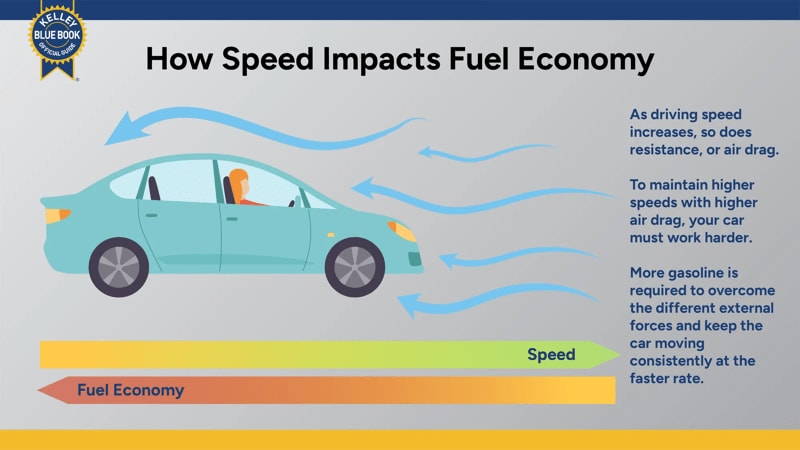
As you drive faster, your car faces greater resistance as the air pushes against it. This is air drag, and it increases with increased speed. Your engine has to work harder to rotate the tires and keep the car moving at that rate. You will also be fighting friction in your tires and between engine and transmission parts. This all requires more gasoline to overcome the net effect of these forces.
Tips for Maximizing Fuel Efficiency
The DOE cites studies suggesting that the average driver can improve their car’s fuel economy by roughly 10% if they follow good driving and maintenance habits. These include:
- Drive sensibly: Aggressive driving that includes rapid acceleration, frequently slamming the brakes, or speeding can dramatically impact fuel economy. Safe and controlled driving within the speed limit, along with smooth acceleration and braking at moderate speeds go a long a way toward improving your fuel economy, not to mention being much safer for you and other cars on the road.
- Limit idling: Depending on AC use, idling can consume up to a quarter tank of gas per hour. If you are parked for extended periods, turn the engine off.
- Reduce inside load: Every extra hundred pounds in a vehicle can reduce mpg by 2%, according to some studies. If you’ve been hauling extra cargo, it can be tempting to keep it in the car for future rides, but removing it can reduce fuel consumption.
- Ditch the roof rack: A loaded roof rack can reduce fuel economy by up to 5%. They increase aerodynamic drag and force your car to work even harder. If you can streamline your car, it’ll help improve fuel economy.
- Use cruise control: On long drives, it’s easy to let your mind wander while you’re belting out tunes and not even notice your speed creep up. For long highway stretches, cruise control can help you maintain a consistent speed and save gas.
- Keep your car properly maintained: Good tire pressure, a properly tuned engine, and regular oil changes will all help keep your car running at peak performance and maximum fuel efficiency. Never cut corners with scheduled maintenance — your car and your wallet will thank you.
Ultimately, slowing your roll even just a little can not only help return some fuel savings to your pocket but also has added safety benefits as well. There can certainly be vehicle and road conditions that are out of your control, but paying attention to those that are not can go a long way toward improving your fuel economy.