

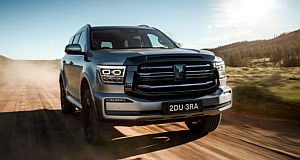

GWM’s Australian engineering program is taking on a bigger role – and it’s attracting attention from GWM markets around the world.
Known as AT-1, the program was launched to fine-tune the ride and handling of GWM vehicles for local roads. It’s led by former Holden vehicle dynamics chief Rob Trubiani and was until recently based at the former Holden proving ground at Lang Lang, Victoria.
The program has expanded into drivetrain calibration and the tuning of cameras and cruise control systems – even the colours and icons on the central infotainment screen – for Australian conditions.
The new 3.0-litre diesel Cannon Alpha and Tank 500, for example, get cameras tweaked for towing duties and allow owners to select conventional cruise rather than the radar-based adaptive system.
GWM Australia head of marketing and communications Steve Maciver said the work was now drawing interest from other markets.
“We’ve had interest from several other markets looking to take that too, including some European markets, including some South American markets, Middle East,” he said adding that the program’s influence was also pulling GWM’s engineering resources and suppliers to Australia.
“Not only are they sending out dozens of engineers at a time to spend weeks and weeks and weeks with Rob (Trubiani) and then testing that work in Australia, we’ve got a direct line now into supply chain,” he said.
“Steering suppliers, suspension suppliers, those suppliers are actually flying directly into Australia to spend time with Rob and the head office engineers to get that right.”
Asked whether AT-1 could become a global program, Maciver said “there’s a chance – it’s not up for me to decide. It’s going to be a decision that we make within that global engineering community”.
AT-1 was born to address criticism about the driving dynamics of GWM vehicles – something many Chinese brands have room to improve on.
“Every bit of feedback that the media has given us on every car thus far, be it around ride and handling, ADAS, whatever it might be, that feedback is taken seriously,” said Maciver.
The goal is to eventually apply AT-1 tuning to every GWM model sold here. The level of work will vary from car to car, from damper tweaks to complete suspension and steering recalibrations.
Maciver said Australia was now one of GWM’s three most important strategic markets globally, bringing more product development, tuning, technology and testing work locally. China, however, “will remain absolutely the global hub”.
AT-1 is the latest example of Australia’s growing role in 4WD development, despite local car manufacturing ending in 2017.
Toyota has long used Australia to develop and test its LandCruiser, Prado and Hilux models, citing the diversity of local conditions. The company has long said that about 90 per cent of the world’s road conditions can be found here.
Ford Australia is the global design and engineering hub for the Ranger and Everest. It has confirmed development of the next-generation models will stay in Australia. The last two generations of Ranger were developed locally by a team of around 1500 designers and engineers.
Ford has, however, previously warned that Australian engineering jobs could be at risk without government support to offset the cost of emissions regulations.