

The transition to electric passenger vehicles stalled in Australia when customers became obsessed about details such as charging times, until the surge in fuel prices and the plunge in the price of new EVs turned the decision into an economic no-brainer for many.
Now, it seems, a similar debate is being played out at the top end of top end of town, or at least with two of Australia’s biggest and most influential mining groups.
Andrew Forrest’s Fortescue has set the agenda for the country – and the world – with its remarkably ambitious target of reaching “real zero” at its Pilbara iron ore mining operations by 2030, which means not burning gas or diesel for its power supplies, or for its cars, trucks and giant mining equipment.
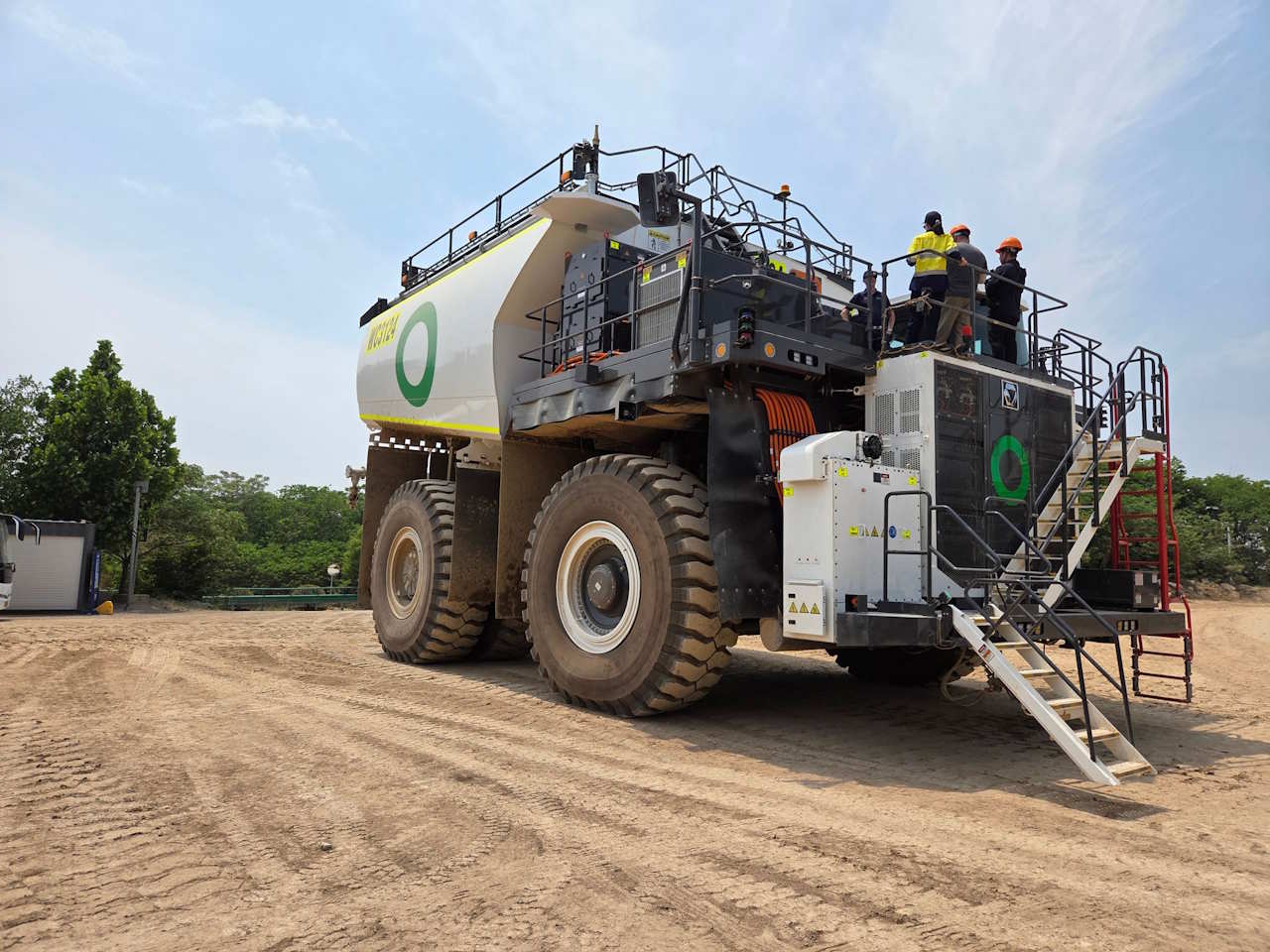
That transition will cost it around $6 billion in new wind and solar projects, big batteries, an upgraded grid, more than 300 huge electric haul trucks, and other mining equipment such as dozer, graders, water carriers and excavators.
Fortescue reckons that electrification will deliver cost savings of up to $US4 a tonne of mined ore, reduce its exposure to volatile fuel prices, and provide energy security.
“Our electric haul truck fleet will deliver a better total cost of ownership than a diesel fleet with today’s technology, and the economics will only get stronger as batteries, charging systems and power technology continue to improve,” says CEO Dino Otranto.
BHP, on the other hand, is going slow and just applied the brakes on its energy transition big time. It still aims for “net zero” by 2050, but says its emissions will be one third higher than previously predicted in the 2030s, and it is largely blaming the challenges of replacing its diesel trucks with fully electric ones.
It produces a climate transitions report this week that said its emissions in 2035 will be higher, and its also slowing down the rollout of electric haul trucks – it has been trialling a special “early learner” model in the Pilbara with Rio Tinto – because it says it is not yet suitable.
Andrew Larder, BHP’s head of decarbonisation planning, was quoted as saying in the Australian Financial Review that the current generation of electric trucks were not suitable for mass deployment in because they would need to stop to charge for 30 minute up to 8 times a day. By comparison, he said, a diesel truck needed refuelling once a day for 15 minutes.
The statement astonished the folk over at Fortescue, who said that rather than focusing on just one aspect – charging times – it’s more constructive to think of the bigger picture, including total cost of ownership and fuel security.
“Decarbonisation is about the whole system – not simply replacing a diesel truck with a battery-electric truck,” Otranto said in a statement emailed to The Driven.
“It means building the renewable power, transmission, storage, charging infrastructure, software and equipment needed to make the transition work.
“Charging time for battery-electric trucks is only one part of the operating model – it should not be considered in isolation from energy costs, maintenance, fuel logistics, infrastructure and productivity across the life of the fleet.
“Our electric haul truck fleet will deliver a better total cost of ownership than a diesel fleet with today’s technology, and the economics will only get stronger as batteries, charging systems and power technology continue to improve.”
Fortescue’s own modelling suggests that no more than six charging sessions per day are required for its electric haul trucks, totalling around two hours over a 24-hour period. The length and timing of each session will vary depending on the operating conditions, charger capacity and the most productive time to charge.
But the principal is the same as driving an EV, which usually requires a combination of planned and opportunistic fast charging, and will look to develop a system that allows charging at every spare moment, rather than waiting till the battery is empty. As many in the EV sector say – ABC, always be charging, like people do with their iPhone.
Fortescue is developing its own charging technology, and is currently trialling 6 MW chargers at one of its mines, and may even look at the potential of battery swaps. BHP appears more focused on “dynamic charging”, effectively having the trucks run on a type of rail, like a tram, that can charge the battery as it drives.
Sign up for The Driven’s free daily newsletter and get the latest EV news and analysis delivered straight to your inbox.