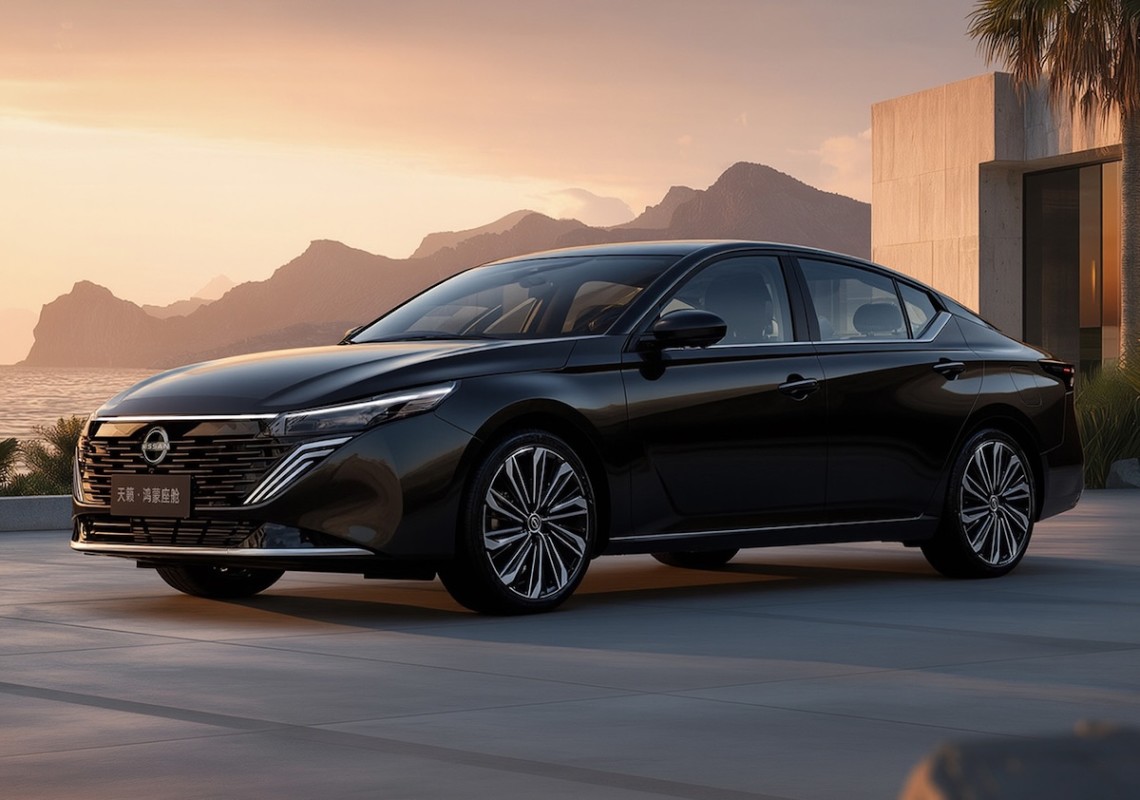
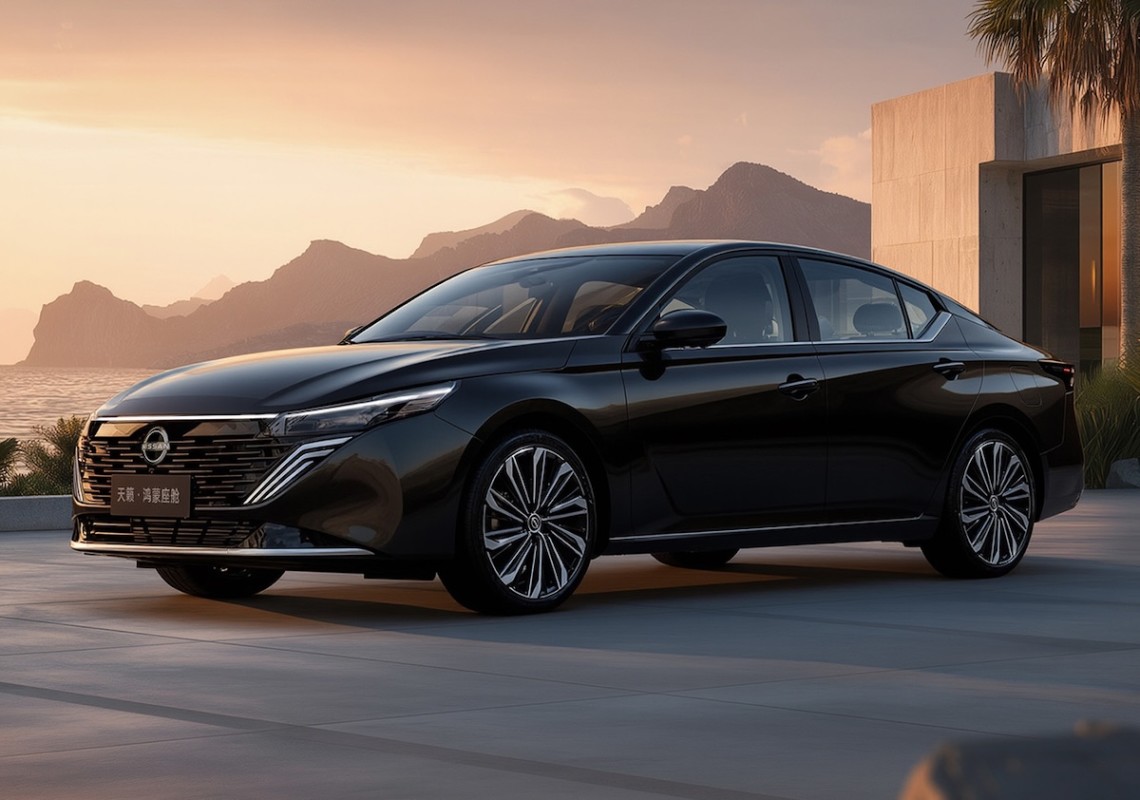
China is now a key market for global carmakers, and, surprisingly, buyers there are shifting back to sedans that offer serious tech. Automakers are pushing boundaries to get noticed, and Nissan is one of them. The brand launched two new electrified sedans and a refreshed Teana late last year – the latter being the more premium take on the Altima sold in the US.
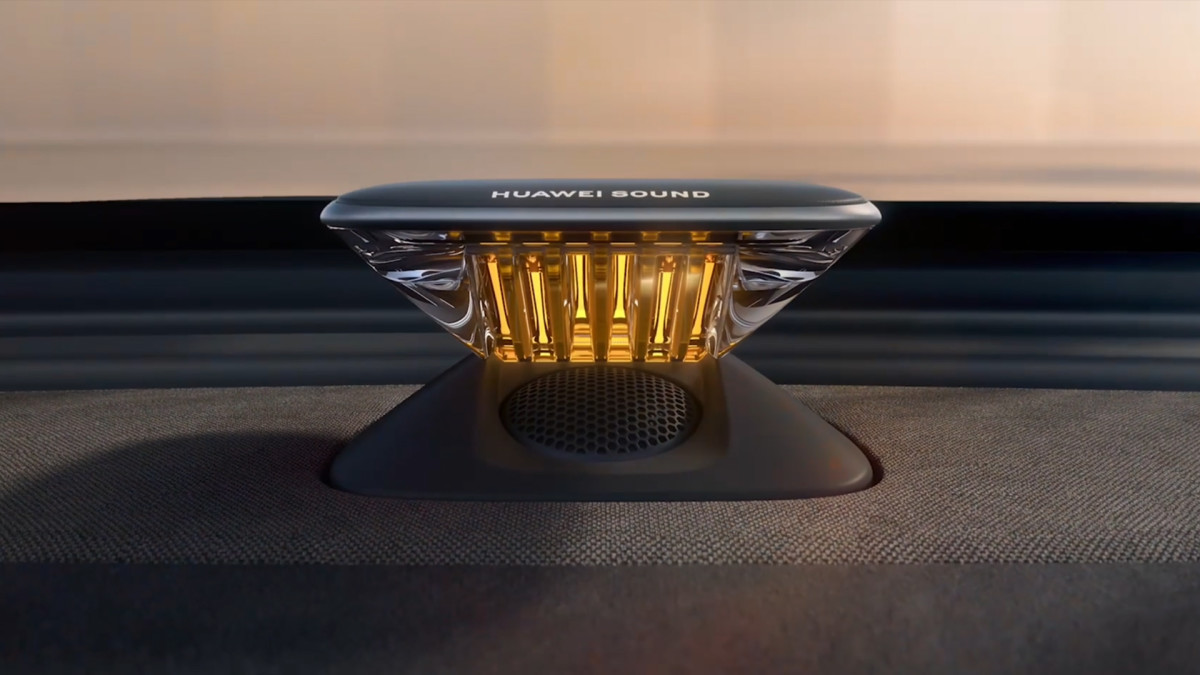
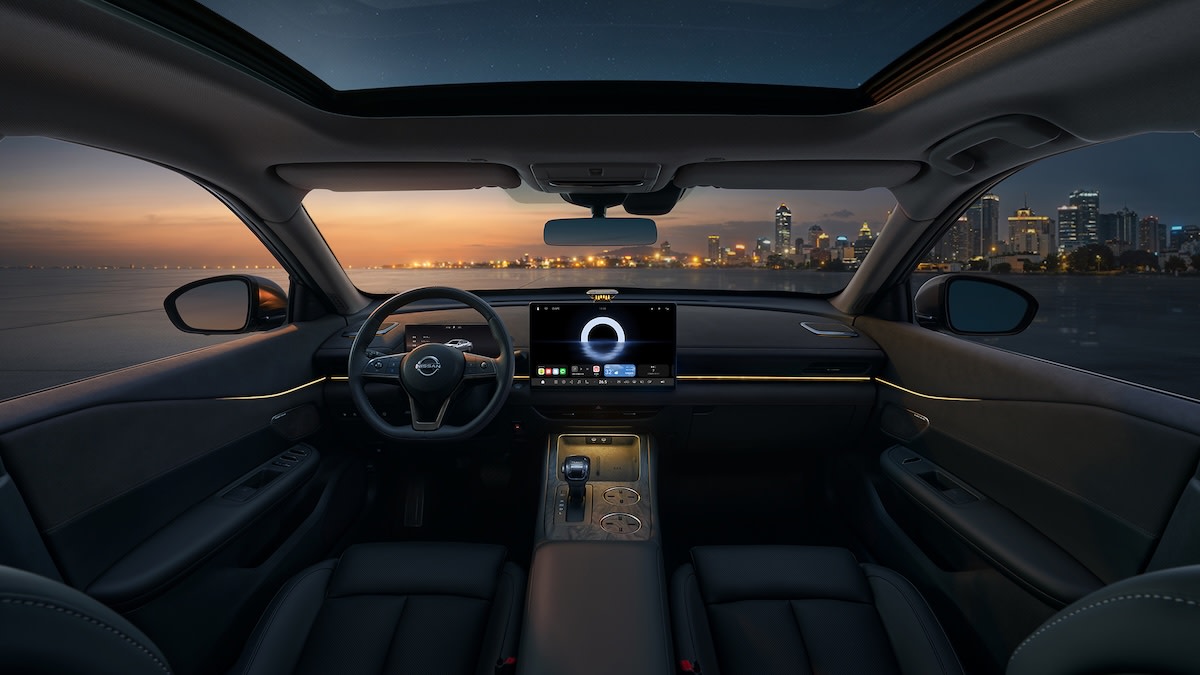
The new Teana, built by Dongfeng Nissan, puts a big emphasis on tech and interior quality. It looks a class above what you’d expect from an Altima-based sedan. Part of that comes from a glowing AI speaker on the dash, but the real surprise is the material choice. Nissan worked with Mitsubishi Chemical Corporation (MCC) to use Durabio, a plant-based plastic that looks and feels closer to crystal than the usual trim.
In China, buyers care about big screens, lighting, and how upscale a car feels. The Teana’s interior is built to make a strong first impression, and it stands out even more when you see it lit up at night.
Nissan
What Durabio Brings, Plus a Dose of Huawei
Durabio is more than just a marketing fluff. MCC developed it as a bio-based plastic using plant-derived isosorbide. It’s clearer and handles light better than regular polycarbonate, which helps create lighting that looks deep and high-end instead of cheap or artificial.
On the Teana, Durabio is used for the inverted-pyramid AI speaker that lights up with six pillars glowing in up to 256 colors. The material refracts light cleanly, giving it a crystal-like look without needing a clear coat. That saves manufacturing steps, lowers environmental footprint, and still meets automotive durability standards.
Teana runs a Huawei-based operating system to go with Durabio. The end result is an interior that feels modern and thoughtfully put together (at least visually), not just a quick update.
Nissan
Meanwhile, the American Altima Stays the Course
Meanwhile, the US-market Altima heads into 2026 with almost no changes from last year. It remains affordable and practical, but next to the Teana, it comes across as very restrained. Nissan still sells a lot of sedans in the US, with over 255,000 units last year (out of the brand’s over 760,000-unit sales), but the Altima’s own sales dropped to 93,268 in 2025, down 18 percent from the year before.
That drop probably comes from the Altima’s age. The current model dates back to 2018, with its last big update in 2022. It no longer stands out for design or interior appeal. After seeing what Nissan has done with the Teana, it’s fair to ask (hope, even) if a more upscale, more distinctive Altima could bring buyers back to the midsize sedan segment.
For now, there’s no clear answer. But with China getting the more ambitious upgrades, it’s easy to see how a bit of that Durabio-inspired thinking could only help the Altima.
Nissan
View the 9 images of this gallery on the
original article
It allows you to store, fix, paint and polish parts away from the car. Yet it also acts as a portable work surface that can be kept nearby should you need to get close to the open bonnet.
It allows you to store, fix, paint and polish parts away from the car, yet acts as a portable work surface that can also be kept nearby should you need to get close to the open bonnet.
You’ll also find a workbench really handy for securing parts such as hoses and trim while they are being cut, or for keeping batteries and engine components conveniently to hand when swapping them over.
Advertisement – Article continues below
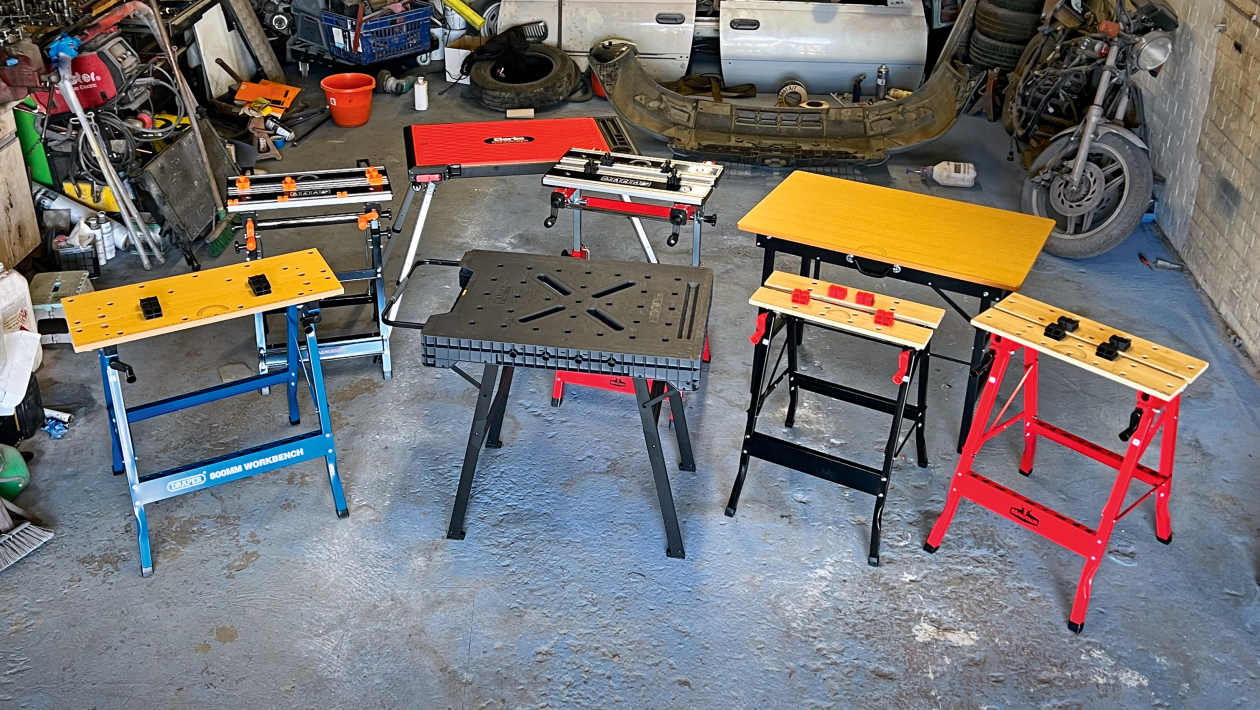
Not all of us have the space in our garages for a full, fixed bench with a vice, but you can still find a decent compromise with a folding table. We tested eight popular models. Our test criteria included stability, the functionality of the workbenches when using vices or clamps and their adjustability.
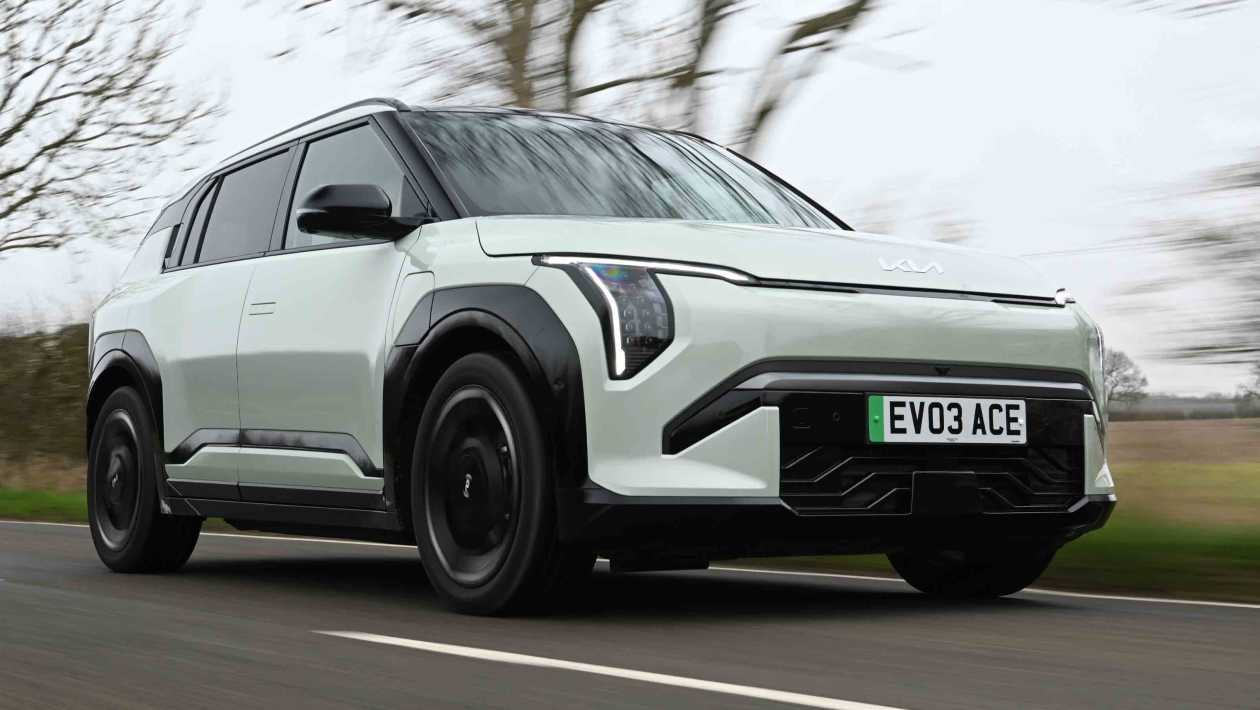
The current line-up is all front-wheel-drive. Kia EV3 Prices and Latest Deals
How Much Does the Kia EV3 Cost? Auto Express Find A Car offers prices starting at PS30.800, which is a savings of PS2,594. You can lease a Kia EV3 from PS360 per month or buy a used model at prices starting from PS28,995.
Check out our latest new car deals, leasing deals and used car deals for the top offers available now on Auto Express. And don’t forget we can help you sell your car, too.
Comfort and user-friendliness are the highlights of the EV3 driving experience, just don’t expect it to be exciting to drive
Pros
Easy to drive and is highly comfortable on longer trips
Variable regenerative braking system
Low speed ride does a decent job of soaking up the bumps
Cons
Not particularly thrilling to drive
None of the driving modes make a big difference to the driving experience
Could do with a reduction in road noise
Kia has kept things fairly simple with the EV3’s powertrain, with a choice of two battery capacities, both paired with the same motor. It’s not fun to drive but it doesn’t matter with a car like this. Kia’s EV3 is a car that focuses on comfort, and the company has done a good job delivering. We found it difficult to use the three throttle settings, and two steering modes. Performance, 0-60mph acceleration, and top speed
The EV3’s sole electric motor produces 201bhp with 283Nm torque. These are not class-leading numbers but they are more than adequate for a compact family car. The entry-level car’s lighter, smaller battery pack makes it the faster car. It covers the benchmark of 0-60mph in just 7.5 seconds, while the long-range vehicle takes 7.7 seconds. Even when driving them back-to-back, the difference is negligible.
Once you get used to it, the in-car tech is very easy to use. Interior and dashboard design
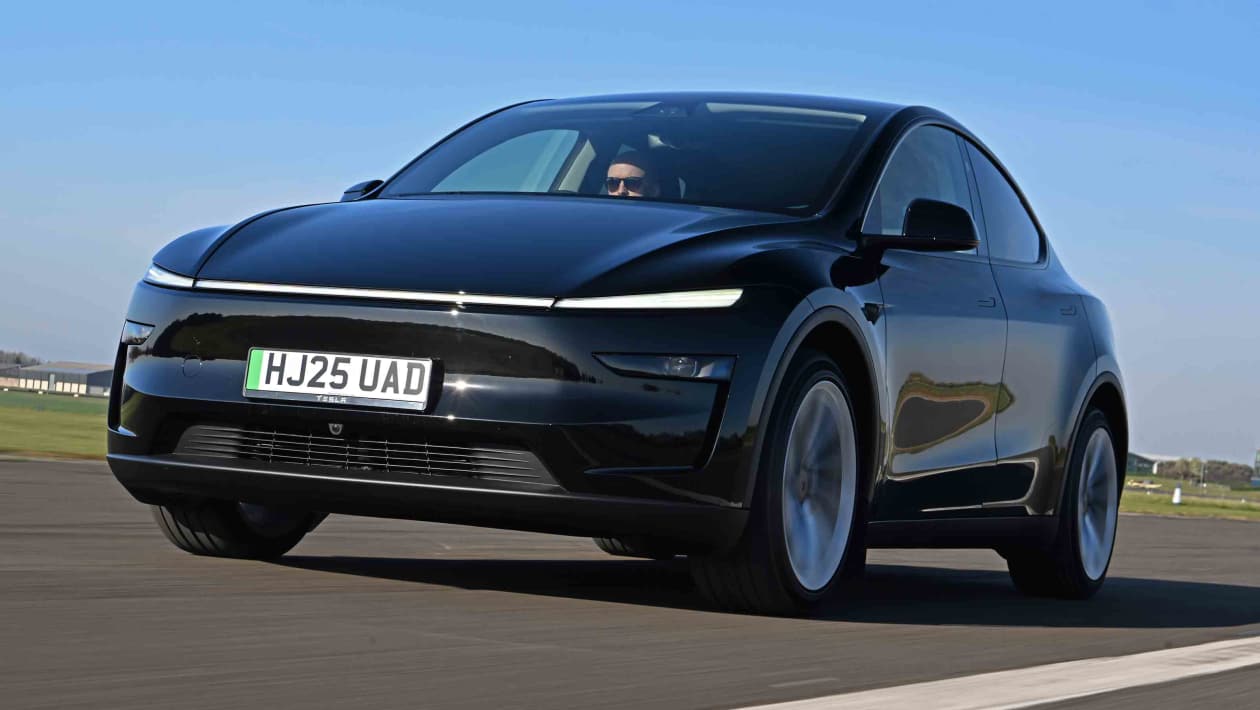
If you like understatement, the Model Y may be the car for your. The dashboard of the Model Y is almost bare apart from its large touchscreen. However, its simple design contains some neat details. For example, air from the climate system flows through a slim, subtle slot that runs across the entire width of the dash. Others find the look so unfinished that it looks almost unfinished. We’ve mentioned many times that we prefer physical controls and the Tesla is lacking in this regard. The large central display controls almost everything. The hazard switch is the only physical button you will find. It’s located on the ceiling. Other controls, such as the headlight flasher and windscreen washers are found on the steering-wheel. The latter is fine in practice but we think that it was a bad decision to remove the physical controls for headlights. Although automatic lights are less of a hassle than they used to be, we would still prefer to have the option to control them manually. It can be annoying to have to press the button longer in order for the lights turn on. It’s the same story with the indicator shaft. It’s a pain to use and feels cheap because it does not click into place. This makes cancelling a warning signal a hassle. It’s almost as if Tesla is persuading owners of the merits of touchscreens by deliberately making its physical controls less than ideal.
Materials and build quality
Fit and finish were certainly a weakness of earlier Teslas, but things have improved dramatically. It’s not perfect, but it is a lot better than before. There are still a few trim panels that aren’t perfectly aligned between the door and dash. But these flaws are common among other brands as well. Though the overall design is fairly sparse.
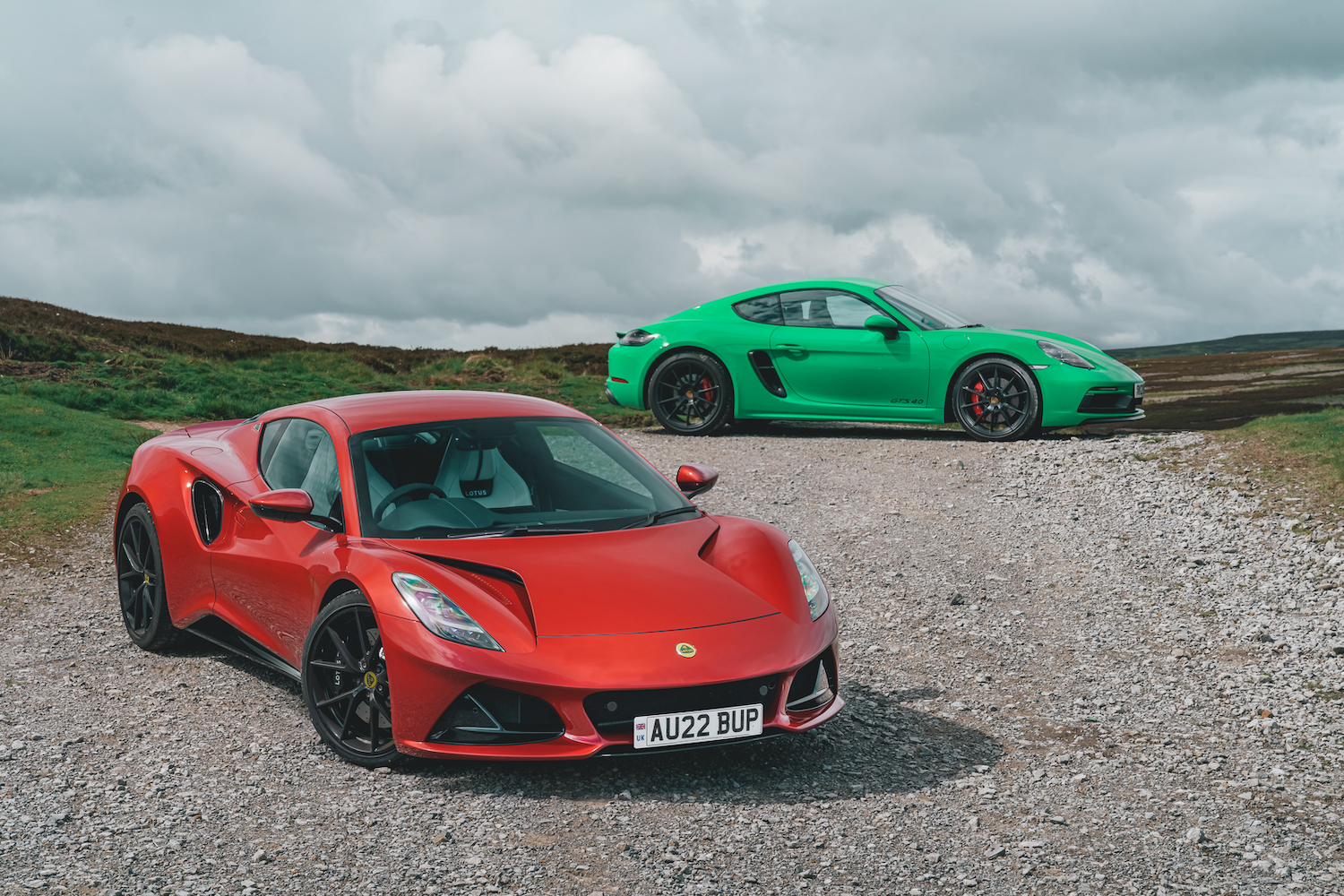
The mid engine sports car segment is stronger than ever, and two models stand out: the Lotus Emira & the Porsche 718 Cayman. They both offer great performance and design but appeal to different drivers. Here’s a clean, straightforward comparison to help determine which one delivers the better overall exotic sports car experience.
Overview
The Lotus Emira is the final internal-combustion sports car from Lotus, making it a symbolic end to the brand’s long history of pure, lightweight performance machines. The Porsche 718 Cayman is widely regarded as the benchmark in terms of precision, engineering excellence and everyday usability for a mid engine layout. Offered in a range of trims from turbocharged four-cylinders to naturally aspirated flat-sixes, the Cayman remains one of the most versatile and well-rounded performance cars on the market.
Performance and Powertrains
Lotus Emira
The Emira comes with two engine options: a supercharged 3.5-liter V6 or a turbocharged 2.0-liter four-cylinder, both delivering around 400 horsepower. The Emira is a Lotus car, and its strengths are in handling dynamics. The car feels light, communicative, and agile, giving the driver exceptional feedback.
Porsche 718 Cayman
The Cayman lineup spans from the 300-horsepower base model to the 394-horsepower GTS 4.0 and track-focused variants. Flat-six models have a smoother and more emotional power delivery. Porsche’s consistency and engineering precision shine through in every trim level, with top-tier brakes, balance, and stability.
Driving Experience
Emira
The Emira is built for driving purity. The steering is very responsive and the chassis is responsive. Overall, it is a more analog experience than many modern performance cars. It rewards spirited driving with sharpness and character.
Cayman
The Cayman offers a more refined and polished experience. It is more reliable and predictable, even though it’s still thrilling. It balances performance and comfort exceptionally well, offering confidence and consistency on both back roads and track days.
Interior and Usability
Emira
The Emira shows major interior improvements compared to past Lotus models, but it still leans toward simplicity and driver-focused design. It offers a sporty cabin, though not the most luxurious or tech-heavy in its class.
Cayman
The Cayman’s interior is one of the strengths of the model. The materials, finish, technology, and comfort all feel high-end. It has more cargo space than the Emira and better overall practicality, making it easier to live with day to day.
Ownership Experience
Emira
Owning an Emira means enjoying exclusivity, but it may come with compromises. Lotus may have fewer service centres, parts can take longer to obtain, and the long-term value of a Lotus is less predictable. The appeal lies in owning something rare and enthusiast-focused.
Cayman
The Cayman excels in reliability, resale value, and dealer support. Porsche’s extensive dealer network and brand reputation make ownership easy. Maintenance costs exist, but they’re more predictable and supported than with many exotic brands.
Final Verdict
Choosing between the Lotus Emira and Porsche 718 Cayman comes down to your priorities as a driver.
Choose the Lotus Emira if you want raw driving engagement, standout styling, and the excitement of a niche, enthusiast-built sports car. It’s the emotional choice for drivers who prioritize feel and character.
Choose the Porsche 718 Cayman if you want the complete package: precision engineering, usability, comfort, strong resale value, and a driving experience that blends excitement with everyday refinement. This is a smarter choice in the long run and more versatile.
The cheapest cleaner doesn’t do much wrong when looked at in isolation and it seems great value at less than PS45. The 5.5m cord and 1.8m tube are generous, and the cleaner can be converted into a blower simply by moving the tube towards the outlet.
Advertisement – Article continues below
You’re given the choice of two filters or a bag for dust collection. The Titan’s main issue is that the Daewoo is much better for not much more. But the Titan’s main issue is that the Daewoo is much better for not much more.
Henry Home XL
Price: around PS199.99
Hose: 1.9m
Capacity: 15 litres
Rating: N/A
Contact: myhenry.com
We were quite impressed with the Henry’s performance and specifications until we got to the water ingestion test and read the instructions. The vacuum is only for dry use, and was therefore disqualified. It’s a great machine if you just need it for dust and dirt. It matched the big Nilfisk Multi II 30T for cleaning power, the consumables are great value, and it has an enormous 12.5m cable.
Buy now from Amazon
Verdict
For its all-round ability, features and value, the Vacmaster Multi 20 takes the win in this test. The Nilfisk Multi II 30 is the best choice if money and space are not an issue and you want something powerful that can tackle bigger jobs. Did you know that you can sell your car on Auto Express
for a great price? We can help you find a good deal and get a great price on a new vehicle.
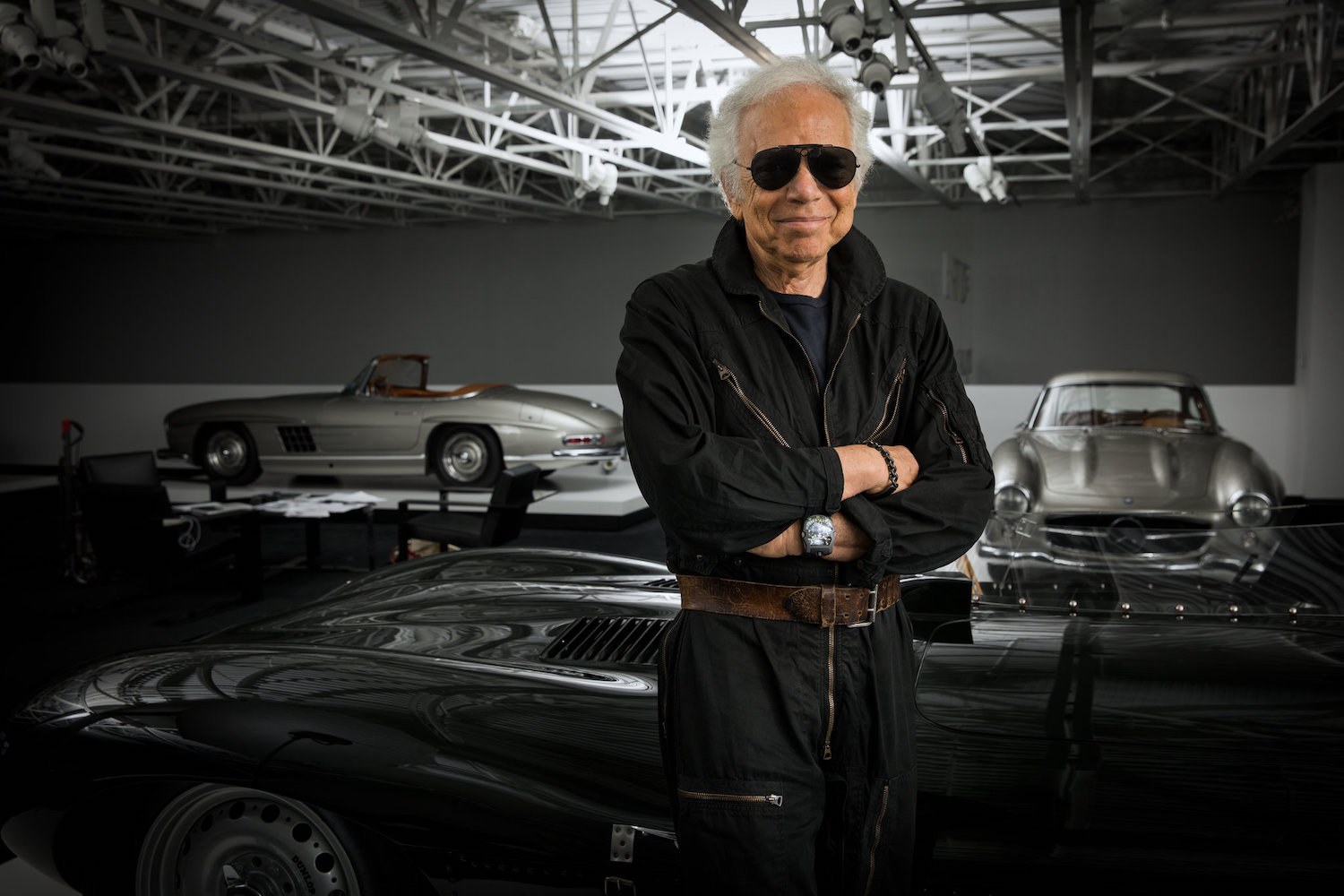
Some stars collect cars for attention. Some people collect classic cars because they love the craftsmanship, history, and emotions that these vehicles represent. Ralph Lauren
Ralph has built his fashion empire around timeless style. His classic car collection is a reflection of that passion. His collection includes a Bugatti Type 57SC Atlantic, a Ferrari 250 GTO and a Bugatti Type 57SC Atlantic. Lauren’s cars have been displayed in museums and prestigious events around the world. To Lauren, a great automobile is both a design statement and a piece of cultural history.
Rowan Atkinson
While millions know him as Mr. Bean, Rowan Atkinson is also a lifelong enthusiast of classic performance cars. His McLaren F1 was a world-famous example of how collectors should not hide their cars but rather enjoy them. He has collected iconic British and European cars over the years. He values engineering depth and character above flash. His garage is filled with everything from hand-built machines, to American muscle cars and European legends. Leno’s team regularly drives and restores the cars in his care because he believes that cars should not be parked. Through his shows and public outreach, he has helped introduce countless people to the magic of automotive history.
Jerry Seinfeld
Jerry Seinfeld’s passion for Porsche has earned him enormous respect among collectors. Seinfeld’s collection includes rare early models like the Porsche 550 Spyder, and some of most sought-after air-cooled 911s. Seinfeld does not just own these cars — he also studies, drives, and shares them in his projects such as Comedians In Cars Getting Coffee. A Shared Love of Classics
What binds these celebrities together is their genuine love for classic cars. They preserve remarkable pieces of mechanical art, support restoration work, and keep these vehicles alive on the road — exactly where they belong.
Classic cars are more than collectibles. These cars are a testament to the passion, innovation and design that helped shape the automotive industry. The legacy lives on thanks to collectors such as these.
The Renegade 4xe also has a smaller tank of fuel than the eHybrid to accommodate the larger plug in battery. The car’s range will be significantly reduced if the battery is not charged when the vehicle is parked. Either way, stops are going to be frequent to top up either the battery or the fuel tank.
Model
MPG
CO2
Insurance group
Renegade 1.5 E-Hybrid
52.3mpg
127g/km
17
Renegade 1.3 4xe PHEV
134.5mpg
48g/km
26
Electric range, battery life and charge time
While the battery in the 4xe PHEV is small at 11.4kWh, that does mean it’s quick to top up when compared with a full EV. It can go from flat to fully charged in an hour and 40 minutes when plugged into a 7.4kWh wallbox, but that’s as fast a charging speed as you’ll get, because there are no quicker options available.
Model
Battery size
Range
Insurance group
Renegade 1.3 4xe PHEV
11.4kWh
30 miles
26
Insurance groups
The complexity of the plug-in powertrain has a negative effect on insurance group ratings. The e-Hybrid model falls into group 17, but the 4xe is nearly 10 groups higher in 26.
Tax
All versions of the Jeep Renegade fall below the PS40,000 luxury car surcharge for road tax, so the 4xe will be a cheaper car to run than many other four-wheel-drive SUVs.
Depreciation
There’s a retained value of around 43 per cent for the e-Hybrid version of the Renegade, which is at the lower end of the spectrum in the small SUV class, but not shocking. The 4xe has a residual value of just 37 percent, which is a pretty low number. This isn’t the worst performer in the Jeep line-up, though, because the Compass has even less impressive residuals.
Ageing interior will appeal to some because of its switches, but they’re not well laid out
Pros
Rugged looking cabin carries Jeep design cues
Plenty of user-friendly buttons throughout
Hard plastics should stand up to knocks
Cons
Small touchscreen infotainment system
Scatter-gun layout of some of the main controls
Black plastics make the cabin feel claustrophobic
The Renegade’s cabin was designed back in the early 2010s, so it looks quite dated today, and features plenty of hard plastics. The Renegade has many physical controls, rather than touchscreens, and this can be a plus for some. The controls on some models are not logically arranged, and the fuel filler on the PHEV looks like an aftermarket accessory. It’s actually a safety measure to avoid opening the fuel cap while the car’s charging, which can cause a fire. As well as the touchscreen and climate controls, a third bank of switches sits beneath the climate settings to change the off-road modes.
Interior and dashboard design
Inside, Jeep squeezes in plenty of character touches. The Jeep face of round headlights, seven-slot grille and speaker surrounds are embossed on the rear-view-mirror housing, tailgate and speaker surrounds. The air vent design is apparently inspired by base-jumping equipment, the pod-like central vents by ski goggles, and you even get a mud splatter graphic instead of a red line on the rev counter.
Materials and build quality
Hard plastics are the order of the day, but as with other off-road biased models, the Renegade makes a virtue of this and incorporates it into the design.
Infotainment, sat-nav and stereo – subhead H3
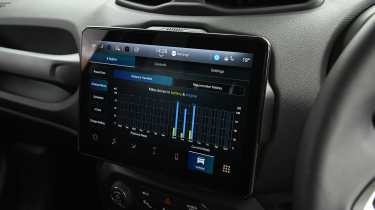
There’s a modest 10-inch touchscreen inside, while the driver gets a 10.25-inch display ahead of the steering wheel that shows loads of information. The main screen has plenty of functionality, with Bluetooth included alongside Apple CarPlay and Android Auto, allowing you to bypass the native infotainment system if you want.
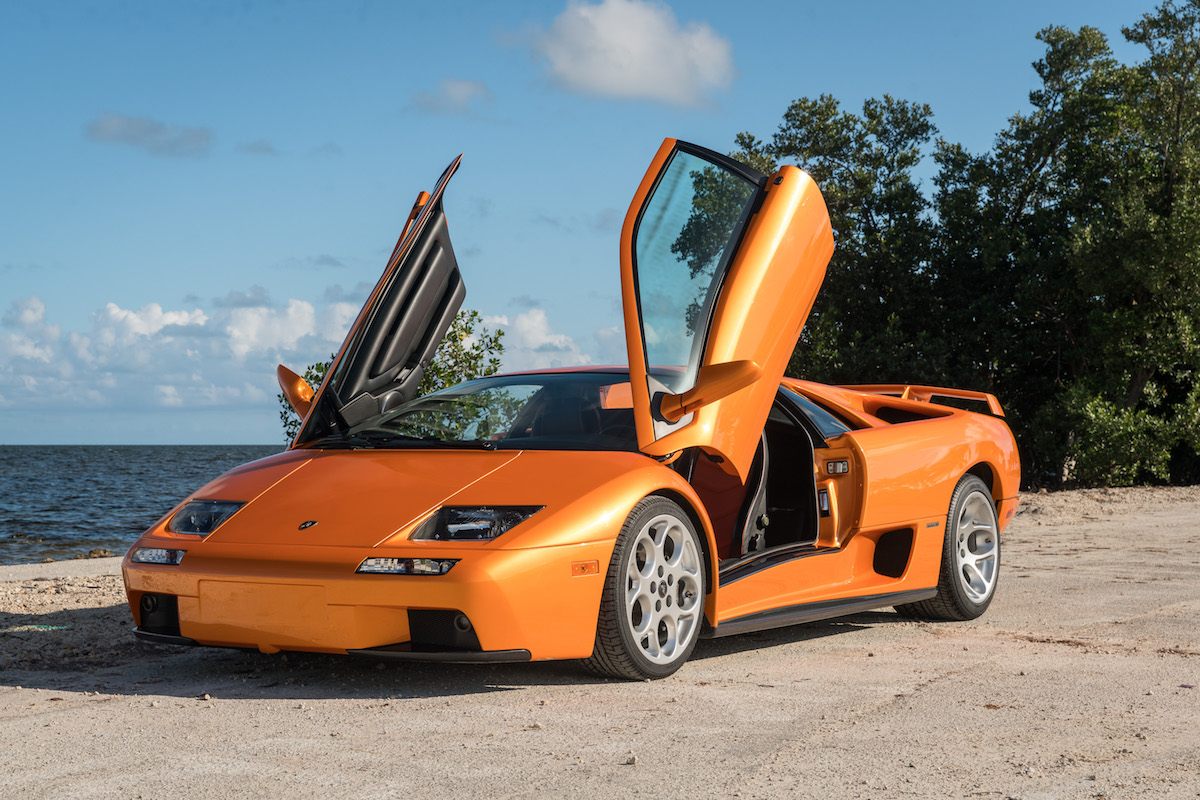
The Diablo is the last truly “old-school” Lamborghini: no hybrid systems, no The Diablo is the last truly “old-school” Lambo: no hybrid systems, no nanny electronics, just a naturally aspirated V12, a dogleg manual, and a whole lot of drama.
This guide will walk you through the different models, what it’s like to own one, key problem areas to inspect, and how the market looks today so you can buy with your eyes open–not just your heart.
Roughly 485-575+ hp depending on modelThe Diablo replaced the Countach and carried Lamborghini through the 1990s, evolving from a raw, slightly crude supercar into a more refined, faster and better-built machine after Audi took control in the late ’90s.
Early cars are the most “period correct” — wild, loud, less polished. Late 6.0 VT cars are the most usable and best built, but also the most expensive.
Model Overview: Variants and What Makes Them Special
Diablo (Early Cars – 1990-1993)
~485 hp 5.7L V12
Rear-wheel drive, manual only
Pop-up headlights on early models, pure 90s wedge styling
No ABS, minimal driver aids
Who it suits:
Purists who want the rawest Diablo experience and don’t mind slightly more ‘kit-car’ build quality and heavier controls.Buyer notes:
Early cars can feel more fragile and less refined. A great example with sorted mechanicals and good history is far better than a cheap project.Diablo VT (1993-late 90s)
Adds
viscous AWD (hence VT) for better tractionMore civilized road manners and improved cooling
Power stays around 485-530 hp depending on year and market
Who it suits:
Someone who wants the Diablo look and sound but with a bit more confidence at speed and in less-than-perfect conditions.Buyer notes:
Extra complexity with AWD means more parts to maintain, but many owners find the added stability worth it.Diablo SE30 & SE30 Jota (1993-1995)
Built to celebrate Lamborghini’s 30th anniversary
Lighter weight, more track-focused, often purple (Viola SE30 is iconic)
Power bumped (around 525 hp, more with Jota kit)
Some cars have more aggressive aero, minimal interior comfort
Who it suits:
Collectors and hardcore enthusiasts who want rarity and motorsport flavor.Buyer notes:
Extremely rare and highly collectible. Prices are often higher than the standard Diablos. Don’t expect “daily usable”; think event or track toy.Diablo SV (Mid-late 90s)
Rear-wheel drive again, slightly lighter, more power (~510+ hp)
Often features big SV graphics along the sides
One of the most iconic ‘poster car’ specs
Who it suits:
Enthusiasts who want the drama of RWD and the look of a full-on 90s supercar, plus a little more performance.Buyer notes:
The SV badge helps desirability. Watch for cars driven hard without proper maintenance–it’s a favorite for spirited driving.Diablo VT Roadster
Who it suits:
Those who want the V12 scream with the sky above.Buyer notes:
Check for roof seal issues, wind noise, and signs of water ingress. Roof panels must fit snugly; poorly adjusted panels can lead to leaks and rattles.Diablo GT
Hardcore, track-focused limited edition
Wider body, more aggressive aero, lighter weight
Power around 575+ hp, more extreme suspension
Who it suits:
Serious collectors. You know what to expect if you are shopping for a GT.Buyer Note Buy the best, original, well-documented example you can possibly afford.
Diablo 6.0 / 6.0 VT (2000-2001)Last and most refined Diablos, built under Audi ownership
Enlarged 6.0L V12, around 550+ hp
Much improved build quality, interior, and overall polish
Sharper, cleaner styling with fixed headlights
Who it suits:
Buyers who want Diablo presence and sound with the least compromise in usability and reliability.
Buyer notes: Often considered the “one to have” if you want to actually drive the car regularly. Driving Experience: What it’s Like
Size, visibility, and the Diablo’ Rearward visibility is poor, and doors that swing up are dramatic but not exactly subtle.Performance:
Even by modern standards, a healthy Diablo is very fast. Acceleration is brutal, especially in SV/GT/6.0 variants.
Ergonomics: Seats can be surprisingly comfortable on longer trips, but pedal offset and cabin heat can be annoying. Taller drivers might feel splayed around the wheel.
Sound: One of the best V12 soundtracks ever made. Many cars are equipped with aftermarket exhaust systems. If you want theatre and mechanical connection, you’ll be in heaven.
Maintenance and Running CostsOwning a Diablo is not a budget exercise. Even well-sorted cars need consistent attention. Consider
preventive care instead of reactive repairs. Typical cost considerations:
Annual servicing:
Expect higher-end exotic pricing–fluids, belts, inspections, and small consumables add up quickly.
Clutch: Clutch life depends on use. They can be worn out quickly by aggressive city driving and stop-and go. Tires and brakes: A big, heavy car with performance rubber. Many owners find that tires age before they wear. Always check date codes.
Cooling system: Radiators, hoses, and fans need to be in top shape. Overheating a V12 is a quick way to ruin your investment.
Electrical gremlins: Especially on earlier cars, wiring and connectors can corrode or loosen. Window regulators and pop-up headlights (where equipped) need checking.
A Diablo with excellent service history and recent major work
is almost always a better buy than a cheaper car with gaps in the paperwork.Common Issues and What to Inspect
When shopping, bring a specialist if at all possible and insist on a pre-purchase inspection (PPI)
by a shop that truly knows Diablos. Key areas:Engine and DrivetrainService history:
Look for documented major services, including timing components, fluids, and valve adjustments where applicable.
Oil leaks: Some seepage is common for an older Italian V12, but heavy leaks from the rear main, cam covers, or oil cooler lines can be costly.Cooling system:
Check for evidence of overheating–discolored expansion tank, warped or cracked plastic, or coolant smells. Fans should kick on as they should.
Clutch and gearbox:Clutch take-up should be smooth, without judder or excessive slip.
Gearbox should engage gears cleanly; any crunching on 2nd or 3rd could mean synchro wear.Listen for whining or clunking noises under load.
Suspension and BrakesBushings and ball joints:
Age and weight can wear them out, causing looseness, clunks, or vague steering.
Adjustable suspension (if fitted):
Some cars have factory adjustable dampers that are expensive to replace. Make sure modes actually work.
Brakes:
Check for warped rotors and uneven pad wear. Parts can be costly, so a full brake overhaul is not trivial.
Body and FrameAccident repairs:
With low cars and inexperienced drivers, curbed front ends and undertray damage are common. Check for overspray, panel misalignment, and poor fiberglass repairs.Corrosion:
While body panels are often composite or aluminum, check steel subframes and suspension mounting points for rust, especially in damp climates.Doors and windows:
Scissor doors should align and latch properly; sagging can be a sign of hinge wear or past damage. Windows should go up and down without binding.
Interior and ElectronicsSticky switches and trim:
Age and heat can degrade plastics. Not catastrophic, but can be expensive to put right if you care about originality.Instrument cluster and gauges:
Everything should work. Non-functioning gauges can mean anything from a bad sender to more serious electrical faults.Air conditioning:
Important on a Diablo–the cabin runs hot. Make sure it blows cold and cycles correctly.
Documentation and ProvenanceA Diablo with strong documentation will always be easier to sell and more confident to own. Ideally you want:
Original service book
with stamps and/or detailed invoicesRecords of
major services
(clutch, cooling system work, suspension refreshes, etc. )
Any documentation for upgrades (exhaust, stereo, cooling mods)
History of ownership and mileage consistency
Imported cars or those with unclear titles should be approached carefully. )Mileage discrepanciesNon-original V )
Mileage discrepanciesNon-original VIN tags or missing build platesModifications: What’s Acceptable and What to Avoid
Some modifications are common and generally accepted:
Generally acceptable:
Quality
aftermarket exhaust
Sensible
cooling upgrades
(better fans, improved radiators)
Modern stereo head unit
that doesn’t butcher the dashPeriod-correct wheels or reversible cosmetic tweaksMore concerning:
Heavy engine tuning from unknown shopsNon-professional body kits or aero modificationsInterior re-trims that look very different from original spec
Suspension slammed beyond factory settings
Because the Diablo is now collectible, originality and tasteful, reversible changes are your friend. Radically modified cars tend to be harder to sell and can be hiding questionable work.
Market Outlook and Values (High-Level)
Exact numbers vary by market, spec, mileage, and condition, but in general:
Entry point:
Higher-mileage early Diablos or cars with stories are the cheapest way in, but still not “cheap.”
Middle of the pack:
Nice driver-grade VT, SV, and VT Roadsters with solid history command a premium over base cars.
Top tier:
SE30, Jota, GT, and clean 6.0 VT examples are at the top of the food chain, especially in great colors with low mileage and strong documentation.Broadly, Diablos have moved from being “used supercars” to
established collectibles, especially as analog V12 manuals disappear from the modern market. Long-term, well-kept examples look likely to remain desirable.
Buying Strategy: How to Approach the SearchDecide your goal:
Set a realistic budget:Prioritize condition and history over mileage alone:Use specialists:
Get a PPI from a workshop with proven experience on Diablos.
Talk to owners, clubs, and forums to understand real-world running costs.
Be patient:
A Lamborghini Diablo is not a rational purchase, and that’s exactly the point. It is loud, wide and temperamental. It can be a rewarding experience to find a well maintained example that has proper records, but you must
The biggest disappointment for UK buyers, however, is that the best performance of the differential is on an RS 3 fitted to Pirelli Trofeo R tyres. In other markets these tyres are available, but they’re not on offer here. If you plan on ever taking your RS 3 on track, I’d hunt a set out, because it makes the whole package gel perfectly.
Along with the technical changes, the RS 3’s cosmetics got a glow-up in 2024. You can tell the difference between it and earlier models by its wider, flatter front grille, extravagant side intakes (with customisable graphics), a straighter splitter on the front, and revised daytime running lights for LED headlights.
Advertisement – Article continues below
A single vertical deflector sits in the centre of the tweaked rear diffuser and bumper, while two more are placed at the outer edges to mimic the front bumper. The changes are capped off by new colours and wheel designs.
Head-to-head
On the road
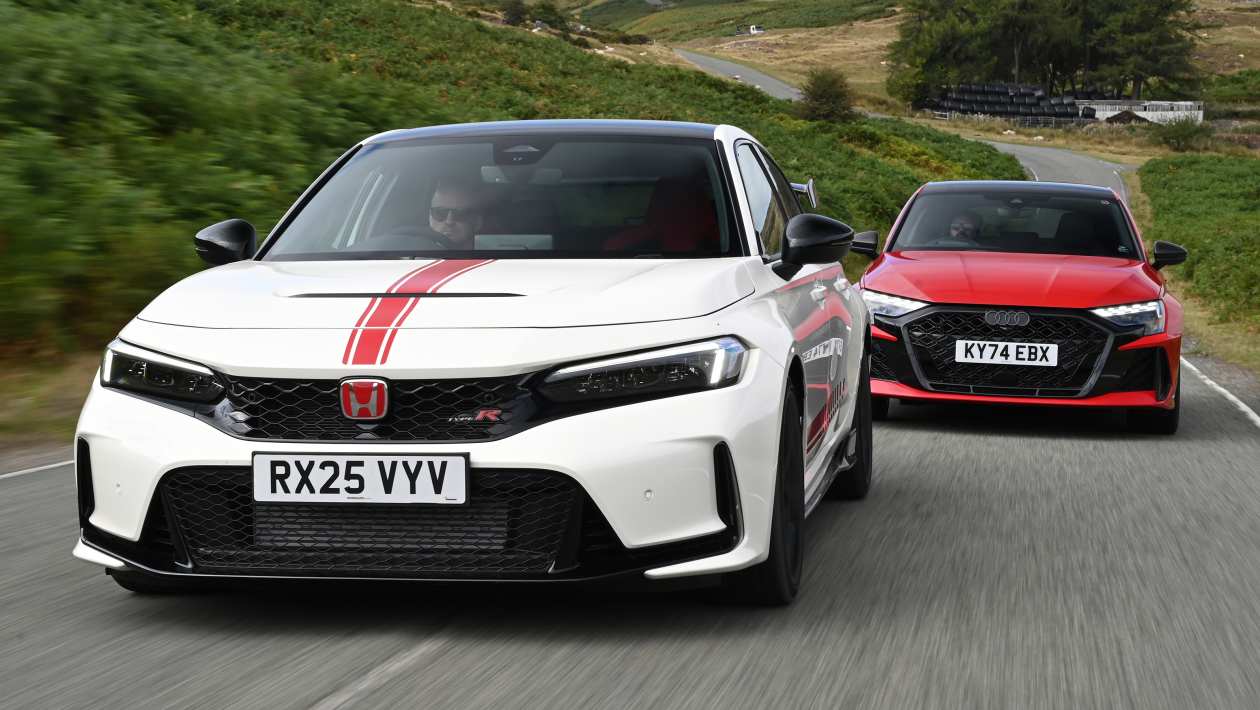
Both cars show incredible pace across pretty much any road. The RS 3 has an advantage in slippery conditions thanks to its quattro all-wheel-drive system and dual-clutch automatic gearbox. We’d gladly trade a tiny bit of speed to enjoy the Civic’s six-speed manual. The thrill of a perfectly timed downshift in a twisty highway is hard to beat. While both cars are huge fun, the Civic gets our vote.
Tech highlights
There are two significantly different takes on the hot-hatch formula here. Both cars have turbos but that’s about it. The Civic has a 2.0-litre 4-cylinder engine driving the front wheels. Audi’s 2.5-litre 5-cylinder engine produces 394bhp, but it requires four-wheel-drive to put that power to good use. The RS 3 is 211kg heavier than the Honda Civic, despite the extra power. Audi’s residual value is excellent, with a retention rate of over 60% after 3 years. However, at 56 per cent, the Civic is fairly strong, too.
Practicality
From a family-car perspective, the Honda is the better option. The Honda is the better choice for a family car. The Honda has more legroom than the RS 3 but the Audi offers a bit more headroom. The RS 3’s quattro system also compromises overall boot capacity, so the Honda has much more load space to play with, too.
Safety
Both of these cars have been tested by Euro NCAP in their more conventional hatchback forms, and both were awarded five stars. Audi’s PS340 charge for an airbag in the middle of the front seats that reduces injury risk during side collisions is a bit excessive. Adaptive cruise control and all-round parking sensors are standard on both the Audi and the Honda.
Ownership
A three-year warranty and roadside assistance are standard with these cars, but Honda drivers can extend both the warranty and breakdown cover to five years as part of a PS1,198 service plan (the five-year service plan costs PS799 on its own). Audi was ranked 19th out of 31 manufacturers in our 2025 Driver-Power Customer Satisfaction Survey. Honda performed better, however, taking 10th place.
Verdict
Winner: Honda Civic Type R
The Civic Type R has been our favourite hot hatch for some time, and our latest encounter only reinforces that stance. The Type R is still a better driving experience than the Audi RS 3 even when compared to the latest version.