

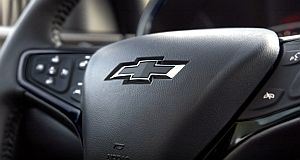

A DEFECTIVE replacement airbag inflator linked to 11 deaths in the United States has prompted fresh warnings over counterfeit and substandard automotive parts, recalling disturbing similarities with the global Takata airbag crisis.
The US National Highway Traffic Safety Administration (NHTSA) this month confirmed an eleventh death associated with frontal driver airbag inflators marked DTN60DB, following a crash involving a 2018 Chevrolet Equinox in Dallas, Texas.
The NHTSA said the crash was otherwise survivable, but that the replacement inflator ruptured when commanded to deploy, firing metal fragments into the vehicle cabin.
Eleven people have now died and three have suffered severe injuries in 14 crashes involving the suspect components.
Importantly, the problem is not a manufacturing defect affecting Chevrolet Equinox, Chevrolet Malibu, or Hyundai Sonata vehicles as originally built and applies only to substandard components reportedly manufactured by Chinese company DTN Airbag.
Every known incident involved a vehicle in which the original driver airbag had been replaced, predominantly following an earlier crash. The suspect inflators were aftermarket components believed to have entered the United States illegally.
The most recent fatality was the first involving a Chevrolet Equinox. Previous deaths and serious injuries occurred in Chevrolet Malibu and Hyundai Sonata models.
That distinction is particularly relevant in Australia, where the same-generation Equinox was sold from late 2017 under the Holden badge, while the Hyundai Sonata is also familiar to Australian buyers.
As at publication, however, Australia’s federal Vehicle Recalls and Product Safety databases contain no recall or consumer warning concerning DTN60DB inflators.
The US warning therefore does not suggest Australian-delivered Holden Equinox or Hyundai Sonata owners generally face the same risk.
Any potential Australian exposure would instead depend upon a vehicle having received one of the suspect replacement components during an undocumented airbag repair – particularly relevant to privately imported, accident-repaired, or used vehicles with an uncertain history.
The NHTSA says the inflators were “probably manufactured during 2021 and 2022” and carry the DTN60DB identifier, with affected units rupturing rather than remaining intact as the airbag deploys.
The regulator said an exploding inflator can propel pieces of its metal housing into the occupant compartment at sufficient force to cause “catastrophic injury”.
The NHTSA initially attributed the devices to Chinese manufacturer Jilin Province Detiannuo Safety Technology Co Ltd, or DTN Airbag.
The company has disputed that conclusion, saying it cannot be proved the inflators were manufactured by DTN Airbag and suggesting counterfeit products may carry its markings.
The NHTSA said that distinction did not alter its safety finding – every inflator marked DTN60DB involved in the investigated crashes had ruptured and caused severe or fatal injury.
The regulator’s decision effectively prohibited the sale, distribution, and importation of the components in the United States, but determining how many remain in circulation is difficult because they entered the market outside conventional manufacturer supply chains.
The case carries uncomfortable echoes of the Takata airbag crisis, in which defective inflators could similarly rupture during deployment and spray metal fragments towards occupants.
But the similarities largely end with the failure mode.
Takata inflators were installed as original equipment across dozens of vehicle brands and ultimately became the subject of the world’s largest automotive recall, affecting an estimated 100 million vehicles globally.
Australia’s compulsory Takata recall covered more than four million inflators fitted to more than three million vehicles. The defect involved Takata’s phase-stabilised ammonium nitrate propellant, which could deteriorate over time and cause an inflator to deploy with excessive force.
The DTN60DB issue instead centres on replacement components installed after vehicles had left manufacturers’ control, making identification far more difficult. A normal VIN recall search cannot establish whether one has been fitted.
The NHTSA specifically says vehicles repaired with genuine replacement airbags during the Takata recall are not affected by the DTN issue.
The latest deaths also highlight a broader counterfeit-parts problem in the United States…
US Customs and Border Protection seized more than 211,000 counterfeit automotive parts in fiscal 2024 – almost twice the previous year’s figure – including more than 490 counterfeit airbags (or around 10 times the 2023 number).
American authorities are advising owners of used vehicles that have suffered a crash involving airbag deployment since 2020, particularly where repair history cannot be verified, to have the restraint system inspected by a reputable dealer or repairer.
Again, for Australian motorists, there is presently no equivalent recall action, but the US experience reinforces the importance of establishing repair history and ensuring replacement airbags and restraint-system components are genuine.