The Car Connection has been a pioneer in mobile apps, and today we’re proud to announce our latest effort: a native Android app for the millions of users who read our news, reviews, tips, and advice on a device that doesn’t grow on trees.
It’s the perfect way for car shoppers and enthusiasts alike to get the latest car news, while also reading the latest car reviews, and searching the most up-to-date new- and used-car listings.
The Android app is available right now at the Google Play store, and unlike some other outlets, we don’t charge any subscription fees. You’ll find the same great expert advice we publish on TheCarConnection.com, only optimized in an easy-to-use interface built specifically for Google’s mobile operating system.
If you’re shopping for a new or used car, even better. We’ve included more than two million vehicle listings, so you can find your next car, truck, or crossover while you’re waiting in line, at the gate, or for your coffee.
Some of the app’s highlights include:
– Our unique “TCC Rating” for any vehicle–a score that you can use to compare cars
– Ability to search vehicle reviews by brand or vehicle type
– Detailed reviews that are easy to understand
– Likes and dislikes for each vehicle we review
– More than two million used-car listings, with the ability to connect with local dealerships
– Vehicle photo galleries
Download the new The Car Connection Android app from the Google Play store today–and let us know what you think after you take it for a spin.
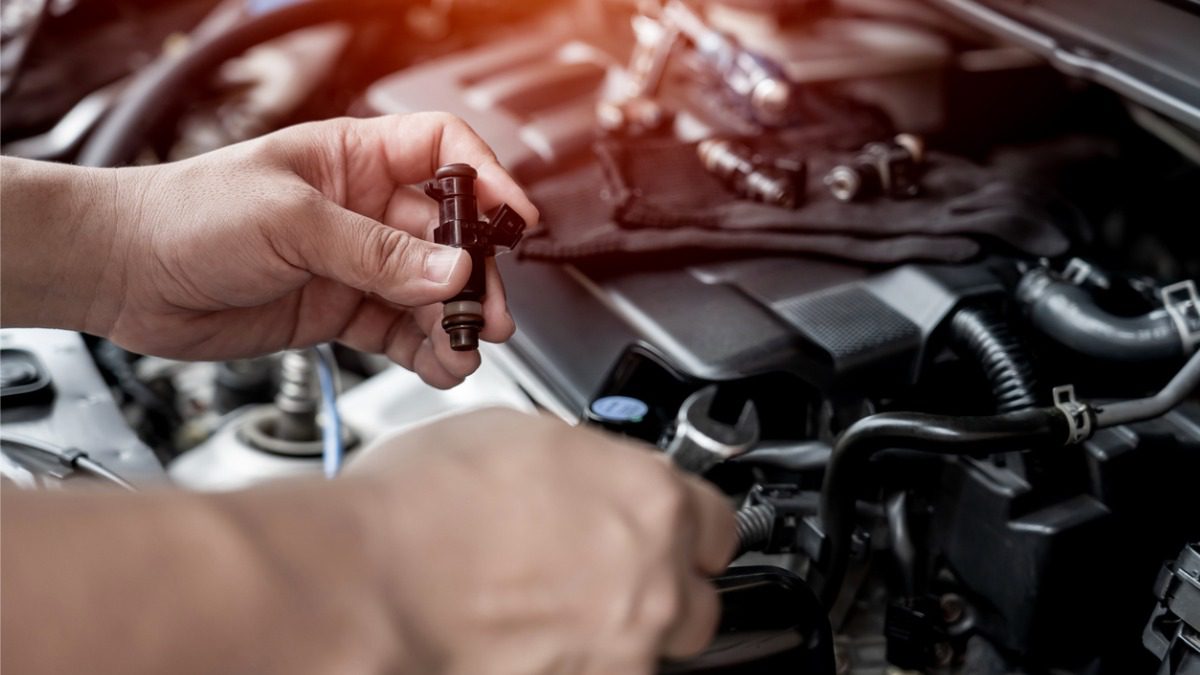
Is shelling out the money for fuel injection cleaning, which is sometimes suggested by garages and repair shops, a worthy investment in your vehicle? The odds are, your vehicle doesn’t need a fuel injector flush. If the car is performing normally and your “check engine” warning light isn’t illuminated, don’t fret over flushing the fuel injectors.
Do Fuel Injectors Need To Be Flushed?
Fuel injection service is part of a larger family of automotive maintenance procedures, including flushes for crankcases, power steering pumps, cooling systems, differentials, and other lubricated parts.
Carmakers have greatly improved fuel injection systems, and most high-quality gasoline is formulated with additives that help keep fuel injectors operating at full efficiency. Don’t allow an unscrupulous mechanic to talk you into an expensive flush that your car doesn’t need.
If the injectors ever do require flushing, your car will let you know.
What Are Fuel Injectors?
Fuel injectors are part of the modern delivery system to get gasoline from a car’s tank into an engine’s combustion chamber. Once upon a time, a carburetor mixed fuel with air, which it then fed into the cylinder’s combustion chamber. A spark from the cylinder’s spark plug ignited the fuel-air mixture, driving that cylinder’s piston downward. A crankshaft connects the pistons, which, when fired in a series, spin the crankshaft, creating the energy that eventually works its way to the drive wheels.
Fuel injection has replaced the carburetor in passenger vehicles made over the past several decades. In simple terms, a fuel injector is an electronically-controlled valve. It functions to pressurize gasoline from the fuel pump and air from the intake into a fine mist as it enters the cylinder’s combustion chamber. One or more clogged injectors will reduce the engine’s efficiency and performance, potentially even causing it to stall.
Do You Need a Fuel Injector Flush?
Dirty fuel injectors can reveal themselves through various symptoms. Although some of the symptoms we list can be caused by various failures or malfunctions, dirty fuel injectors are certainly among them.
DID YOU KNOW? Fuel injection cleaning makes less sense today than it did 30 or more years ago when injection systems fully replaced carburetors. At that time, poorly formulated gasoline and badly designed injector nozzles caused many fouled and plugged injector tips. But that’s far less the case today.
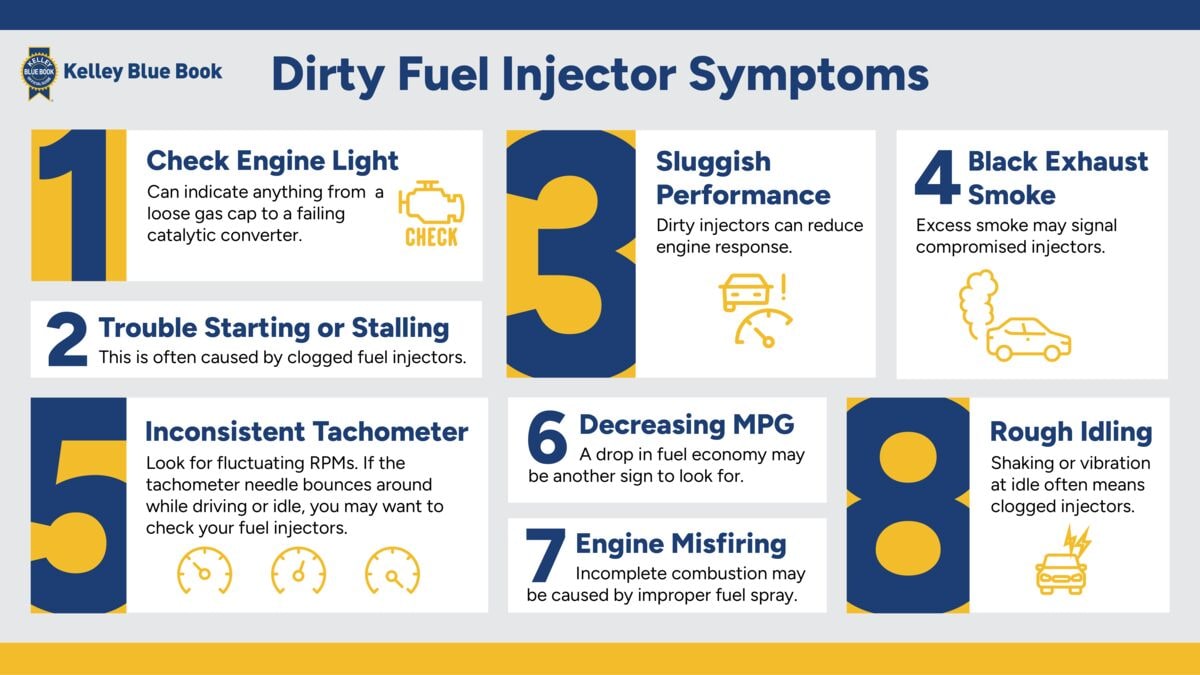
Here are some symptoms of dirty fuel injectors to be on the lookout for:
“Check Engine” warning light illuminates: Any number of issues can cause the check engine light located within the gauge cluster to pop on. Something as innocuous as a loose fuel filler cap to more important issues, such as a failing catalytic converter, can trigger the check engine light. Only a trained professional or, if you are more of a do-it-yourselfer, using an OBD-II scanner to diagnose the problem yourself will expose the exact cause.
Trouble starting or stalling: If your engine is slow to start or does start and then stalls, the cause may be clogged fuel injectors.
Sluggish performance: A lack of engine response when goosing the accelerator pedal or if your car’s engine seems to struggle going uphill, the culprit could be dirty fuel injectors.
Black exhaust smoke: An extreme amount of black exhaust smoke can be traced back to compromised fuel injectors.
Fluctuating tachometer: If your car’s engine isn’t getting the ideal fuel-air mix, it may react with radically fluctuating RPMs. In other words, if your tachometer needle begins bouncing around when the car is idling, you could have a fuel injector issue.
Decreasing mpg: A noticeable drop in your car’s fuel economy may be another sign that the fuel injectors are malfunctioning.
Engine misfiring: Incomplete combustion or misfiring is often caused by fuel injectors not spraying the fuel-air mixture appropriately.
Rough idling: If your car vibrates or shakes when idling, its fuel injectors could be clogged.
NOTE: If you need your fuel injector flushed, find a mechanic at a repair shop near you. You can also find maintenance schedules for your vehicle with repair pricing in your area.
How To Avoid Dirty Fuel Injectors
You can help ensure your fuel injectors remain healthy and operate at peak capacity by doing two things.
Avoid cheap gas: Putting off-brand gas in your vehicle may save a few pennies at the pump, but it could cost you big bucks in the long run. Quality fuel will more likely have the additives formulated to help keep your car’s fuel injectors gunk-free and performing up to par.
Change the fuel filter: A dirty fuel filter can allow contaminants to enter your engine. Each injector has a tiny filter of its own, which can become clogged if the fuel filter fails to trap all potential contaminants. Get pricing on changing your fuel filter.
Unless you are experiencing one or more of the dirty fuel injector symptoms listed above, don’t be too concerned about flushing the injectors. Buying quality gas and keeping up with routine maintenance should keep the fuel injectors performing at peak efficiency for miles to come, and in turn, help retain your car’s value over time.
RELATED: Car Maintenance Guide: Everything You Need To Know
Editor’s Note: We have updated this article since its initial publication. Russ Heaps contributed to the report.
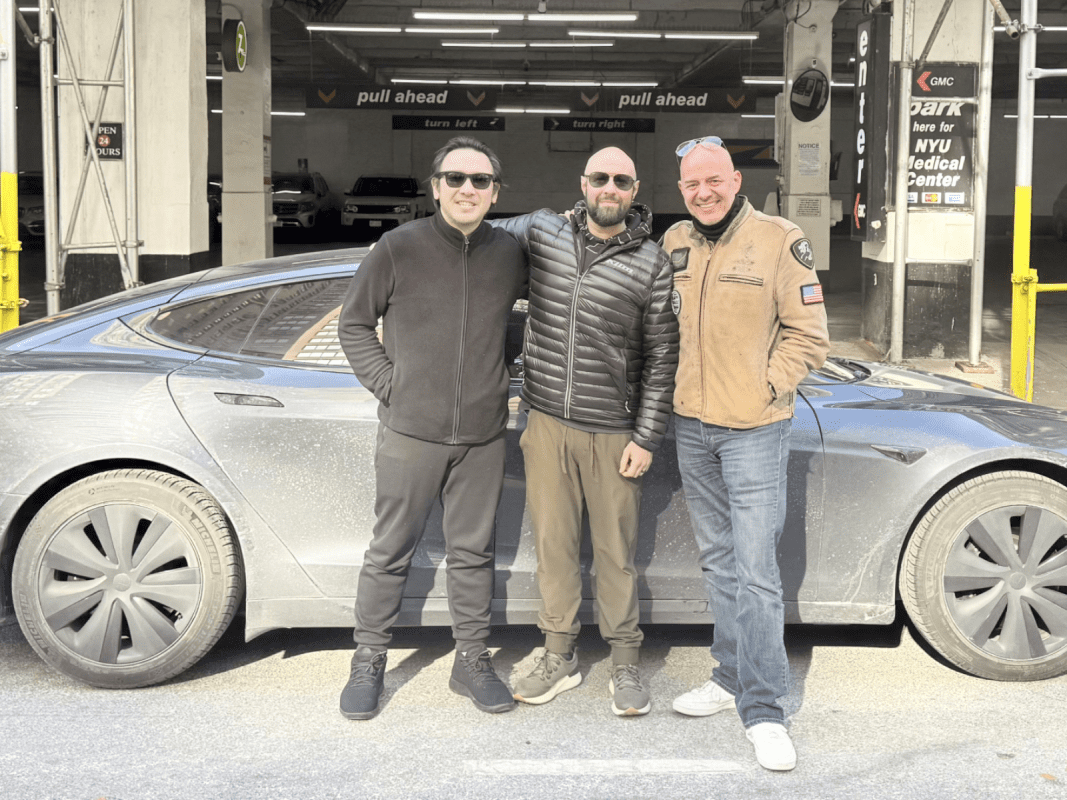
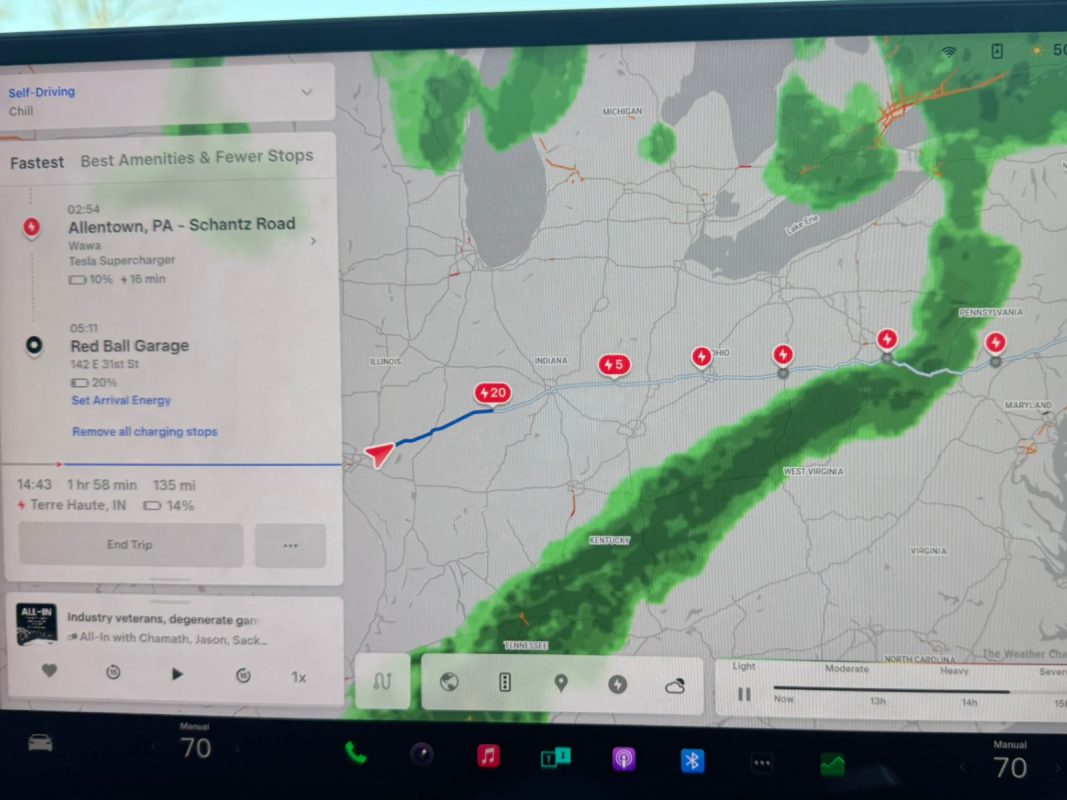
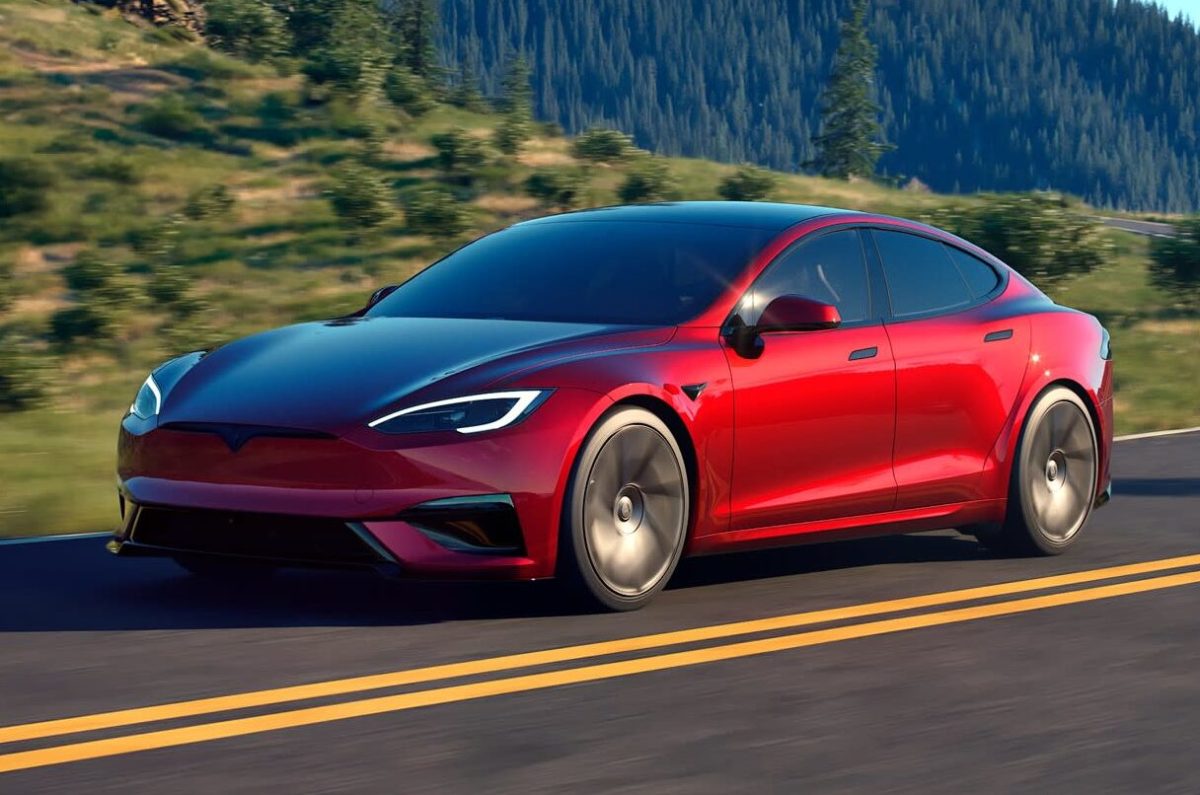
A 2024 Tesla Model S has reportedly achieved the first zero-intervention Tesla Full Self-Driving (FSD) Cannonball Run. The journey began in Los Angeles and ended in New York, with the small team covering 3,081 miles in 58 hours and 22 minutes.
For the uninitiated, the Cannonball Run originated in the early 1970s as a protest against newly imposed speed limits and heightened traffic enforcement in the U.S. In the Tesla world, the challenge became more relevant after CEO Elon Musk said the company would complete a coast-to-coast demonstration drive in 2017. That never happened—along with other pledges that later proved disappointing—but thanks to the team that recently completed the run, there is a clearer picture of what such a feat actually looks like.
Alex Roy via The Drive
Not Exactly Smooth Sailing
One of the team members and a former The Drive contributor, Alex Roy, said the video documenting the run “will be crazy.” The attempt was completed in snowy conditions – even during an active snowstorm – which typically has a negative impact on EV battery performance. Despite those challenges, the team maintained an average speed of just 64 mph – slower than previous attempts – while spending a total of 10 hours and 11 minutes stopped for charging, a hurdle drivers of gasoline-powered cars don’t have to deal with.
What was interesting in the report, however, was that the Model S made multiple detours, including a 90-minute diversion after one team member was left behind. How that situation happened is remarkable in itself, but it reflected the group’s dedication, as they chose not to take control of the vehicle and instead let FSD handle the situation.
Alex Roy via The Drive
Tesla’s Position on Full Self-Driving
With FSD still facing several well-documented issues—including some currently under investigation by the federal regulators—better and faster Cannonball Run results are expected as further updates roll out. It is also worth reiterating that FSD is classified as SAE Level 2 autonomy, meaning it still requires constant human supervision, something Tesla owners considering a similar challenge should keep in mind.
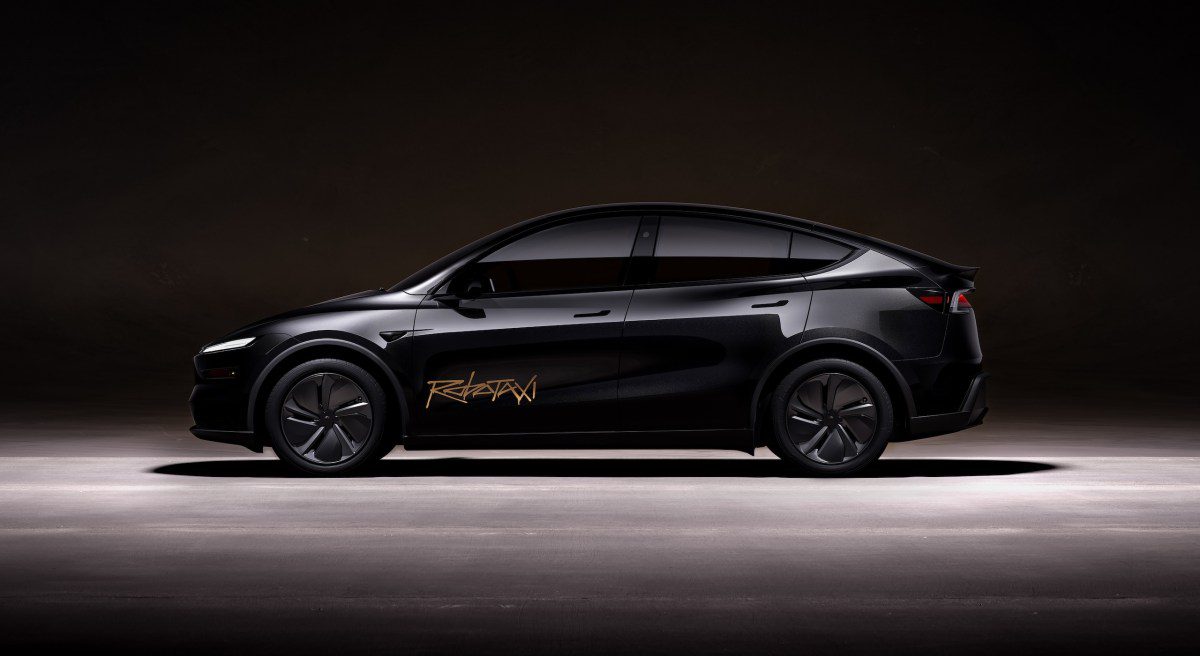
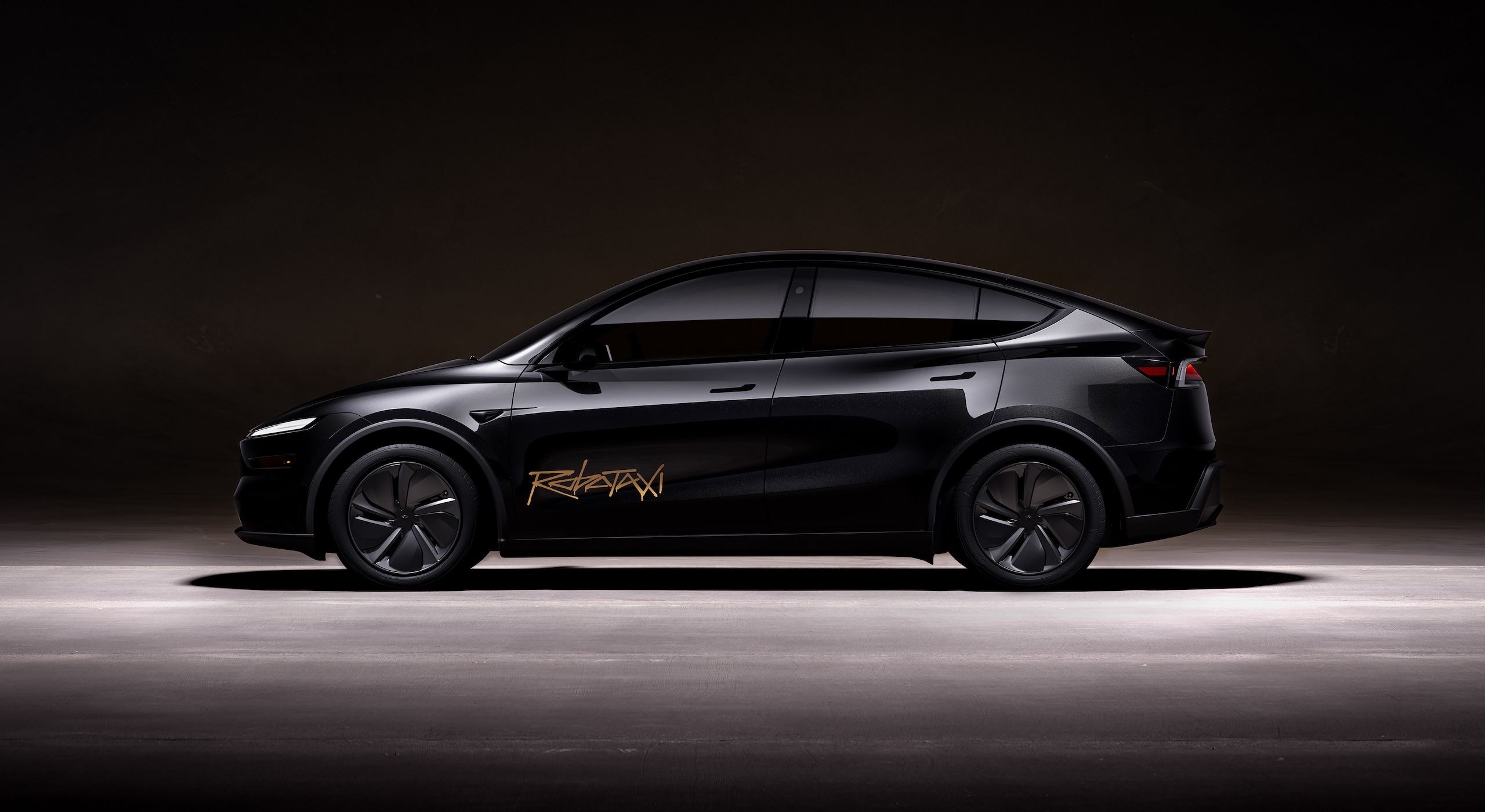
Tesla, for its part, is also working toward a fully autonomous driving system, though not for a road-going production EV. That technology is instead slated for its dedicated robotaxi program using the so-called Cybercab, expected to enter production in April 2026. Whether the company ultimately delivers on that timeline or adds it to the growing list of missed targets remains to be seen.
View the 3 images of this gallery on the
original article
Earlier this month, a little-known Finnish startup shocked the world when it claimed to have beaten Toyota, Samsung, LG Energy, Quantumscape and any number of Chinese automakers at commercializing the Holy Grail of electric-vehicle power: solid-state batteries.
Helsinki-based Donut Lab said at CES 2026 that it has a class-leading solid-state battery ready to go in an upcoming electric motorcycle, boasting five-minute fast-charging and unprecedented energy density. Hopes ran high that this could be a breakthrough for a battery technology widely seen as capable of changing the world. But then, the doubts started to emerge.
“People love seeing strategic partnerships and manufacturing scale-up,” Jiayan Shi, an associate at research firm BloombergNEF specializing in electrochemistry, told InsideEVs. “It would be nice to have data for performance and safety validation,” she added.
44
Source: Patrick George
For their part, Donut Lab executives maintain the technology is real, yet shrouded in mystery to protect their trade secrets. The company says the battery will soon be used in a new two-wheel EV from Verge Motorcycles. “The Donut battery surpasses what most of the industry is still planning for years from now,” Marko Lehtimaki, the co-founder and CEO of Donut Lab, said on the company’s YouTube channel. “These batteries are shipping today.”
Donut Lab and Verge Motorcycles did not respond to a detailed list of questions from InsideEVs about the technology, nor grant interviews with executives to respond to these claims.
Battery researchers have long described solid-state batteries as a key to solving many, if not most, of the problems with current battery chemistries. They swap out the liquid chemical-based electrolyte with a solid one, promising to eliminate range anxiety, enable ultra-fast charging speeds, perform flawlessly in extreme weather and deliver unmatched safety thanks to its fireproof properties.
On paper, an all-solid-state battery would have no trade-offs, which would be a dream come true for battery engineers and consumers alike. But making them at scale without defects and at a lower cost than lithium-ion batteries is extraordinarily difficult, battery executives have previously told InsideEVs.
The Donut Labs solid-state cell on display at CES 2026.
Photo by: Patrick George
That backdrop helps explain why Donut Lab’s claims generated such extensive media attention during CES, including coverage by InsideEVs. But before diving deep, here’s a list of the company’s claims:
The battery has 400 watt-hours per kilogram of energy density, much higher than 200-300 Wh/kg of today’s lithium-ion packs.
It can charge in as little as five minutes, depending on the size of the pack.
It can last 100,000 cycles, significantly more than today’s lithium-ion batteries, which last around 1,500-3,000 cycles.
No toxic or rare earth materials are involved.
Its operating temperature ranges between -30 degrees Celsius (-22 degrees Fahrenheit) to 100C (212F).
Costs are similar to today’s nickel-manganese-cobalt batteries, according to the company.
The start-up has been working on the tech since 2018.
What most clearly sets Donut Lab apart from other solid-state battery announcements is its timeline. Many large battery manufacturers say the technology is unlikely to mature before the end of the decade. Donut Lab, by contrast, says its batteries will be on the road in a matter of weeks.
Photo by: Patrick George
Verge Motorcycles’ TS Pro models equipped with its all-solid-state batteries will be delivered to customers in the U.S. and Europe starting this quarter, the company said. The Tron-inspired electric motorcycle claims to offer 370 miles of range and charge to 80% in under 10 minutes.
Battery experts and industry analysts, however, have urged caution.
Why Experts Are Skeptical Of These Claims
“Producing all-solid-state battery cells at high yield and high volumes is significantly more complex than lithium-ion batteries,” BloombergNEF’s Shi said. “Equipment providers have not yet developed standardized commercial production lines for the diverse range of all-solid-state battery technologies.”
Moreover, the company has disclosed little about its battery chemistry or manufacturing process. There are no approved patents tied to the technology, no publicly disclosed production facility and no independent testing for the batteries just yet.
Photo by: Patrick George
Some industry analysts are skeptical, too. “Without detailed chemistry disclosure or independent testing, it’s unclear whether this technology is directly comparable to the lithium-metal solid-state batteries that Toyota and QuantumScape are developing,” Stephanie Valdez-Streaty, the director of market insights at Cox Automotive, told InsideEVs.
At least one large Chinese battery manufacturer strongly rebuked Donut’s claims. “That battery doesn’t exist in the world,” Yang Hongxin, chairman and CEO of Svolt Energy, told Chinese media last week. “The parameters are contradictory… China’s technology is the most advanced globally. If China can’t produce or perfect it, companies from other countries certainly can’t either.”
Chinese battery manufacturers currently produce some of the world’s most advanced battery packs at a massive scale and low cost. With extensive research budgets and deep manufacturing expertise, several Chinese automakers, including Geely and Chery, seem to be getting close to deploying all-solid-state batteries, but they’re not fully there yet.
BloombergNEF projects that more than 80% of the world’s solid-state battery manufacturing capacity will be concentrated in China in the coming years, so they’re expected to be ahead in developing the tech.
That raises several questions: How could a small Finnish start-up leapfrog the larger companies? Where would these batteries be made? And what technology underpins them? Donut Lab has not provided clear answers, but some clues have emerged from its recent investments and public records.
What Could This Solid-State Battery Chemistry Be?
The Donut Lab battery appears to point toward work done by another Finnish company. Last October, Donut Lab said it made a “significant strategic investment” in renewable energy start-up Nordic Nano, which specializes in nanotechnology—which involves highly precise manufacturing using nanoparticles—for solar and battery applications.
Nordic Nano also said in a report last year that it had developed a “bipolar electrostatic capacitor” for energy storage systems. The specifications described in that report closely resemble Donut Lab’s claims. The capacitor has a similar 400 Wh/kg of energy density and a lifespan of over 50,000 charging cycles with less risk of fire.
Before getting into batteries, Donut Labs developed this hubless rear wheel with an integrated electric motor, a design it claims it pioneered.
Photo by: Patrick George
Capacitors are not new to cars. Lamborghini famously used a supercapacitor in its Sian supercar for instantaneous torque fill and energy recovery. That system, however, was a small hybrid unit paired with a combustion engine.
Capacitors store energy in an electrical field between physical conductive plates, according to a study published on Science Direct, whereas batteries can store energy chemically in small cells. That means capacitors require far more space to store the same amount of energy as batteries, which is why they’re mainly used in energy storage systems.
Nordic Nano also said in that report that it had finished installing pre-production equipment at its facility in Imatra, Finland, near the Russian border in the fourth quarter of last year. Production of its carbon-based solar films and solid-state super capacitors will begin in 2026, the company said.
Donut Labs claims the solid-state battery is not limited to motorcycles. It can be engineered for cars and drones, too.
Photo by: Patrick George
Finland’s local newspaper Yle reported last week that production had started at what it described as a “mysterious factory,” adding that the company had built fencing around the site to prevent “corporate espionage.”
Lehtimaki told The Verge that Nordic Nano was not making this solid-state battery. Nordic Nano did not respond to InsideEVs’ request for comment at the time of writing.
In comments to Yle, Nordic Nano CEO Esa Parjanen said: “We don’t want to reveal where and how we make our products. It’s a trade secret.” He told the outlet that the company was using something called nanomass, which is a carbon-based composite material, in solar panels to collect energy.
The same nanomass technology can be used in battery cells, the report said, replacing lithium with an abundant material common across Europe and the world. “These nanobattery cells can withstand tens of thousands of charging cycles and can hold more energy. They are also fireproof and cannot explode,” Parjanen told the newspaper.
Photo by: Patrick George
According to one theory from EV expert Laycee Schmidtke, who runs the MissGoElectric YouTube Channel, this abundant material could, after all, be sodium. She points to Nordic Nano’s Chief Scientist, Bela Bhuskute, and her research on “titanium dioxide nanostructures” and “carbon nanotubes,” which apparently help prevent dendrites, the sharp needle-like spikes that can damage a battery.
As per her publicly available white paper, the company could be using an anode-free sodium-metal battery instead of the lithium metal anodes U.S. battery start-ups QuantumScape and Factorial are working on. Sodium is indeed far more abundant than lithium, but it doesn’t enjoy the same supply chain advantages as lithium.
If Donut Lab has indeed achieved a breakthrough, it could open a new chapter for the battery world and probably even bring a lot of attention to Europe, which is increasingly relying on Chinese battery makers eager to set up shop on the continent. If not, it could join a long list of failed start-ups that promise bold things and fail to deliver.
The good news is it’s only a matter of weeks, not years, before experts will start tearing down the battery pack and determine whether the solid-state technology is real or not. For now, Donut Lab maintains that it’s the real deal and coming soon: “At Donut Lab, our answer on solid state batteries being ready for use in OEM production vehicles is now, today, not later,” Lehtimaki has said.
Our free daily newsletter sends the stories that really matter directly to you, every weekday.
Elon Musk took to X earlier this week to announce that Tesla is now operating robotaxis in Austin, Texas, without safety monitors in the car. While we’re happy to call Musk out on a fib, it appears he was being quite literal about the whole situation. Tesla is indeed operating robotaxis in Austin without safety monitors inside those taxis, but that doesn’t mean they’re absent. Instead, they’re accompanying them from the confines of a separate chase car—or chase cars, as video from a robotaxi user demonstrates.
While Tesla’s launch of the supposedly unmonitored vehicles made big headlines this week, the presence of spotters was not widely reported. It came to our attention by way of Electrek, which reported on the story Thursday.
Recent updates to Tesla’s so-called “Full Self-Driving” suite have finally enabled users to see the sort of reliability Musk promised nearly a decade ago, as Alex Roy and his merry band of autonomy geeks demonstrated yesterday by pulling off a drive from Los Angeles to New York with zero interventions. FSD was far from flawless, and weather and human error conspired to stretch it hours longer than previous attempts, but the car completed the journey without human takeover nonetheless.
My first unsupervised @robotaxi ride here in Austin! Come along with me on this 1st experience of driving around Austin with just me in the car and in the back seat!
The secret sauce that enabled this transition was introduced in a recent build of FSD, which is now in revision 14.2.2.3 as of the time of publication. Now, when FSD encounters an error that would have previously resulted in an immediate hand-off to the driver, rather than shutting down entirely while awaiting manual input, the software will continuously attempt to recover on its own. It’s known as TOI (“Take Over Immediately”) Recovery, or as I’ve already taken to calling it, “Try, Try Again” mode.
The end result is fewer FSD disengagements, which is likely why Tesla’s confidence level has improved so much. Roy told us that he saw the feature trigger twice on his trip, both times resulting in successful recoveries by the software. In other words, without TOI Recovery, Musk’s promised Los Angeles to New York trip would still be a hypothetical—nine years after he promised it.
But even with TOI Recovery, there are still limits to what FSD can do without human intervention. As long as that remains true, we expect the safety monitors to remain in tow. Sounds expensive, but if anybody can afford it, it’s Tesla.
POLESTAR Australia says it has already received several purchase offers for its New Vehicle Efficiency Standard (NVES) credits, but that any proceeds from such a transaction will be coordinated and held globally.
The NVES model allows the trading of CO2 credits between high emitting OEMs (such as those with a diesel-only range) and low emitting OEMs (including EV-only importers such as Polestar) to assist the former in reducing its Final Emissions Value, thereby avoiding, or at least minimising, any penalty that might be accrued.
With fleet-wide penalties of up to $100 per gram per kilometre of CO2 enforced against a predetermined cap (which becomes more stringent annually), there are several vehicle importers that could benefit from Polestar’s credits, including the likes of Ford and Isuzu that offer diesel-centric line-ups.
Speaking at the launch of the MY26 Polestar 2 in Melbourne this week, Polestar Australia managing director Scott Maynard said that while a number of importers had offered to purchase Polestar’s NVES credits, the decision on where these will be sold – and how the proceeds will be allocated – rests largely with head office in Sweden.
“We have had a couple offers (and) there is certainly interest in our credits and our ability to pass them through,” he outlined.
“There are a couple of brands that we are actively in conversation with that we would be happy to transact with … but a decision has not been taken on that yet.
“We haven’t got a final call on whether that would be disclosed,” he said in relation to which OEMs have shown interest in purchasing Polestar NVES credits.
“The coordination of NVES credits will be managed globally. It will still be attributed as a market earning – so (the funds) will be attributed to the Australian market – but it will be coordinated and held globally.
Mr Maynard said that while Polestar Australia could use its input to decide which OEM is deemed worthy of the receipt of its NVES credits, that the final say will again fall to Polestar head office.
“Locally, we will have input, we will have an opinion, but the final say will go to global,” he stated.
“That’s because there will be certain global partnerships that they will be coordinating, and I would expect to be asked to respect some of those, if it’s the right business that they want to work with.
The NVES came into effect on 1 January 2025 with a six-month grace period meaning OEMs were not fined until 1 July last year. From that point, emissions were penalised at a rate of $100 for every gram per kilometre of CO2 each vehicle sold is over the mandated limit.
Those fines are passed onto new car buyers in most cases via the increase of a vehicle’s list price, while others work to strike a deal with importers of ‘greener’ vehicles who are issued CO2 credits that may be sold on to higher-emitting marques.
Visit GoAuto again soon to read our Australian launch review of the 2026 Polestar 2 range.
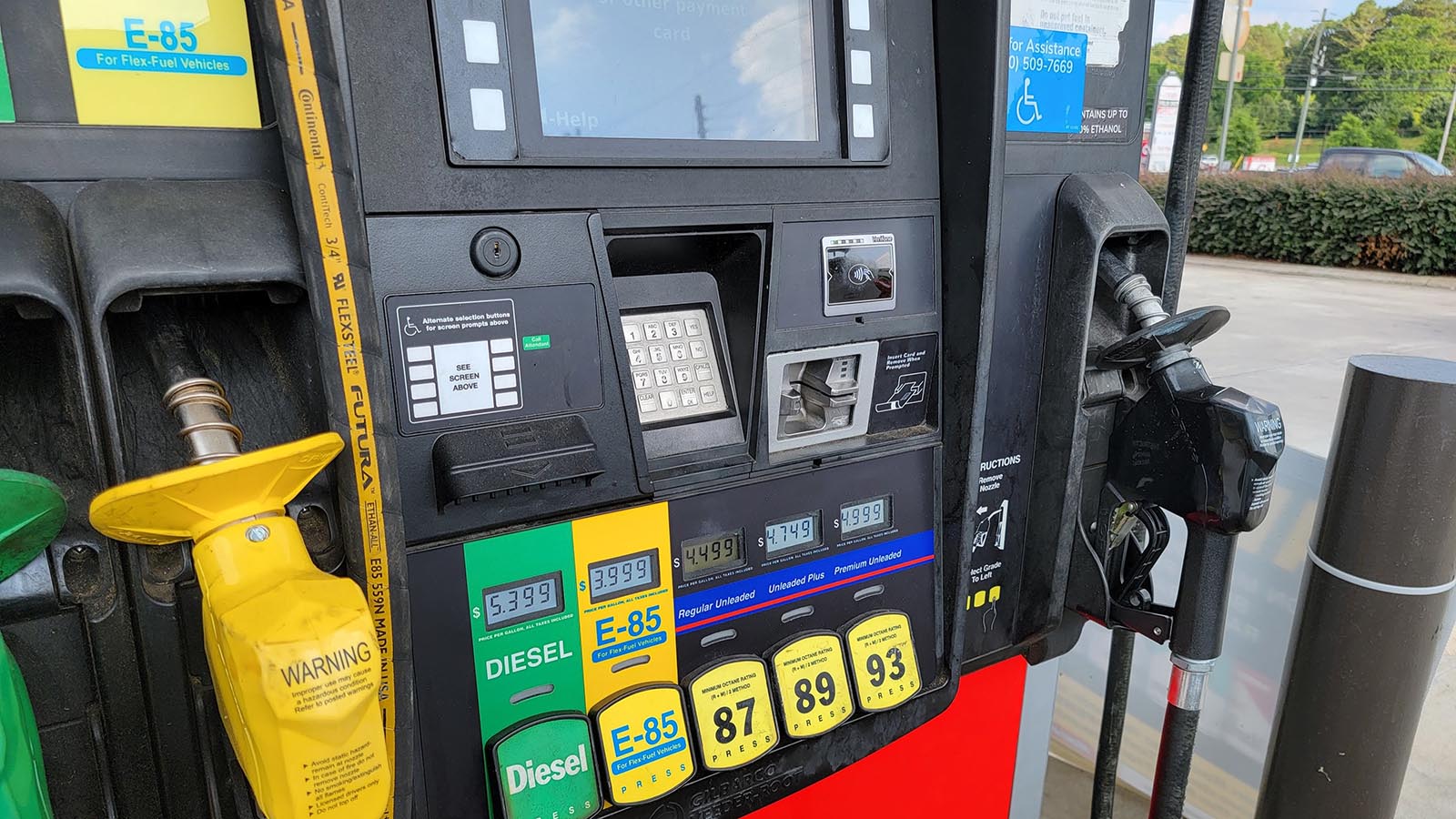
E85 fuel is blended from about 85% ethanol and 15% gasoline.
Flex-fuel vehicles can use E85 or regular unleaded; traditional gas engines cannot use E85 flex fuel.
E85 costs around 60 cents less per gallon than regular gas, but vehicles using it travel fewer miles per gallon.
E85 is not available at every filling station.
Vehicles that can run on flexible fuel, a blend of gasoline and ethanol also known as “flex fuel,” gained popularity in the 1990s. In turn, manufacturers began producing new cars that could use this biofuel blend. But many motorists know little about ethanol-blended gasoline labeled E85 at gas pumps.
Even some owners of flex-fuel vehicles, or FFVs, have questions about gasoline-ethanol blends. Read on to learn about flex fuel and whether you can use E85 or other blended gas in your vehicle.
What Is Flex Fuel?
Flexible fuel is the general term for a renewable and domestically-produced alternative fuel that is gasoline blended with ethanol. Ethanol is made from a collection of plant materials, including corn. Most of the gas sold in the United States contains some ethanol. However, E85 for FFVs uses a higher percentage of ethanol. So, what is E85 gas?
Also known as flex fuel, E85 is a gasoline-ethanol blend containing between 51% to 85% ethanol, depending on the season and geographic region of the distributor. For example, E85 sold during colder months often has lower ethanol levels to produce the vapor pressure necessary for starting in cold temperatures.
RELATED: Types of Gasoline Explained: Learn the Differences
Can My Car Use Flex Fuel?
Manufacturers make flex-fuel vehicles with modified internal combustion engines using traditional gasoline and ethanol blends, such as E85. A badge with “Flex-Fuel,” “FFV,” or “E85” on the rear of the vehicle may indicate it is compatible with the alternative fuel.
Having a yellow gas cap is a good indication that the car can use flex fuel. If the vehicle has a capless fuel filler, a yellow ring around the hole where the nozzle is inserted indicates that E85 is compatible with the vehicle.
Using any octane level of gasoline in a flex-fuel vehicle is acceptable. The sensors in an FFV detect whether the fuel is pure gasoline or 85% ethanol and make necessary changes for optimal fuel injection and combustion timing.
Putting E85 in a car not designed for flexible fuel can be harmful. Always refer to the owner’s manual for specifications on the optimal fuel to use in your vehicle.
Can You Use Regular Gas in a Flex-Fuel Vehicle?
One benefit of flex-fuel vehicles is that they are also compatible with regular gasoline. FFV engines have sensors that detect the gasoline-ethanol ratio in the fuel and make adjustments for optimal performance.
Can You Use Flex Fuel in a Regular Gas Car?
Flex fuel, such as E85, can be used only in flex-fuel vehicles and will damage a traditional gasoline engine.
MORE: What Happens if You Put Diesel in a Gas Car?
Why Would I Use Flex Fuel?
Proponents of higher ethanol-gasoline blends cite lower greenhouse-gas emissions since flex fuel burns cleaner than pure gasoline, and its use reduces reliance on foreign oil. The primary ingredient in the production of ethanol is corn, a sustainable crop grown in the United States.
E85 costs less per gallon than regular gasoline, making it an attractive option. At this time, AAA reports the national average gas price for a gallon of E85 is about $2.23 — about 60 cents less than a gallon of regular unleaded gas.
Flex Fuel Disadvantages
While the price per gallon of E85 is typically less than that of regular gas, FFVs using the ethanol-gasoline blend have lower fuel economy ratings. In some cases, the difference in mileage is close to 25%.
For example, a 2023 Ford F-150 2WD FFV pickup with a 3.3-liter 6-cylinder engine achieves 21 mpg combined when using gasoline but only 16 mpg combined when using E85. Often, the lower price per gallon for E85 offsets the loss in mileage.
RELATED: Should You Use Premium Gas?
Availability of E85 and FFVs
Around 4,800 gas stations across the U.S. sell E85 flex fuel, mostly in corn-producing Eastern and Midwestern states. However, you can find vehicles compatible with E85 nationwide because those automobiles can also use traditional gasoline.
The number of flex-fuel vehicles on the road today is unclear. One study found 21 million FFVs in the U.S. in 2017. More recently, some estimate that more than 27 million vehicles are using flex fuel.
The number of new FFV offerings from manufacturers has decreased, as automakers shifted focus to hybrid and electric vehicles.
Three automotive brands — Buick, Chevrolet, and GMC — offer FFVs in the 2025 model year. Flex-fuel compatibility may depend on specific trim levels or engine selection. Additionally, some models using E85 may be designated for fleet sales only.
According to the Renewable Fuels Association (RFA), more than 80 different models from eight manufacturers were available to consumers as recently as the model year 2015.
RELATED: Car Maintenance Guide: Everything You Need to Know
Other Ethanol Blends
E10
About 98% of the gasoline sold in the U.S. contains ethanol, typically E10 with 10% ethanol and 90% gasoline.
E15
Another blend, E15 (with 15% ethanol), entered the market in 2011. Sales were restricted during the summer months, but EPA waivers since 2021 have permitted year-round E15 sales. The EPA allows E15 for light-duty vehicles built after 2000. Manufacturers approve the use of E15 in approximately 95% of their model-year 2024 automobiles, according to a review of owner’s manuals and warranty statements by the trade group RFA. The group says the blend is available at more than 2,800 gas stations, and the average cost of E15 is about 25 cents per gallon less than regular unleaded.
E25
The RFA’s annual review indicates that E25 blends, containing up to 25% ethanol, are approved by the manufacturer for use in BMW and Mini vehicles. The 2024 Toyota GR Supra — developed with BMW — also allows E25.
E98
E98, 98% ethanol, is a popular fuel for some types of race cars.
If you’re trying to find the right car for you, check out our best cars and top 10 lists and the most fuel-efficient sedans.
Editor’s Note: We have updated this article since its initial publication.
20 years ago, Dr. Ferdinand Karl Piech dreamt of a new supercar that would not only set new performance benchmarks, but would also create an entirely new category of hypercars. Today, Bugatti has revealed a new one-off model in honor of this visionary engineer and head of the VW Group who conceived the legendary Veyron.
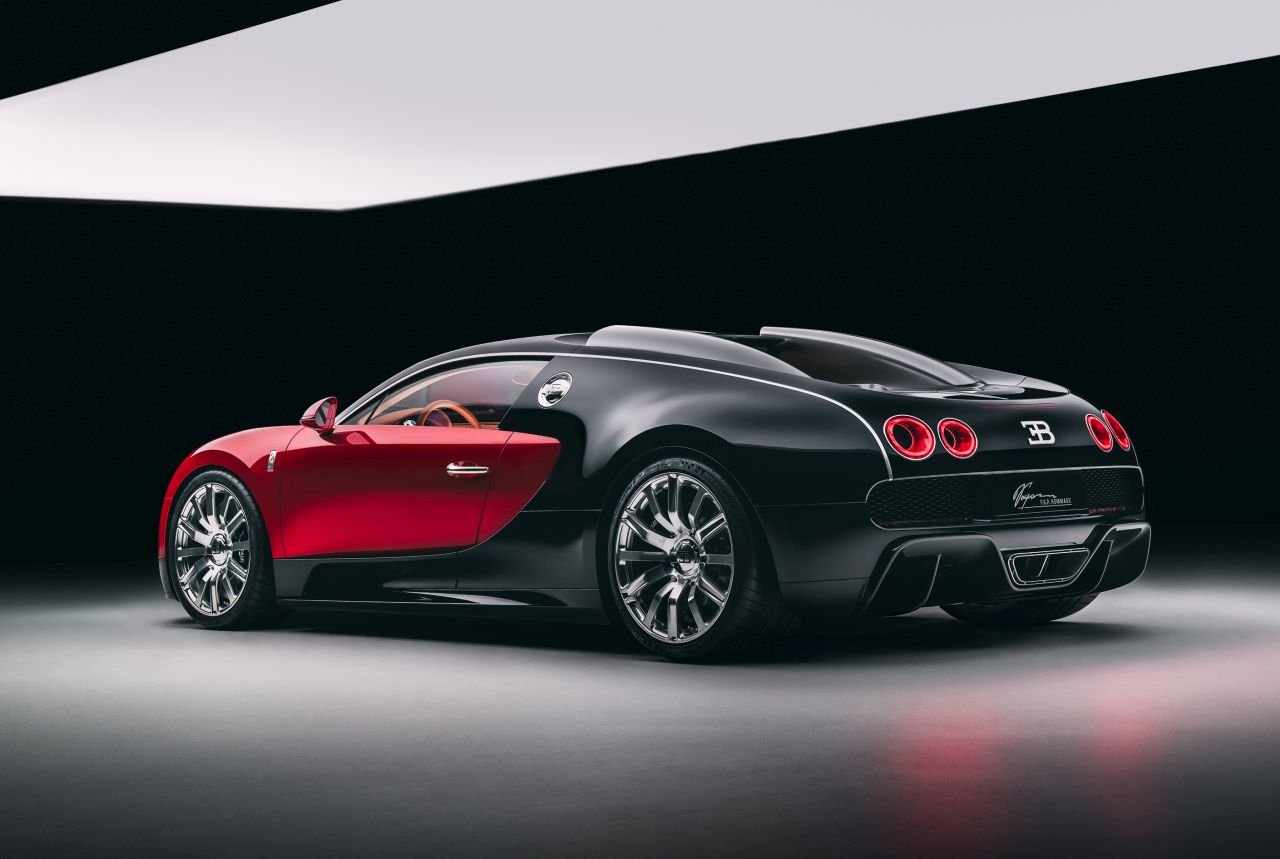
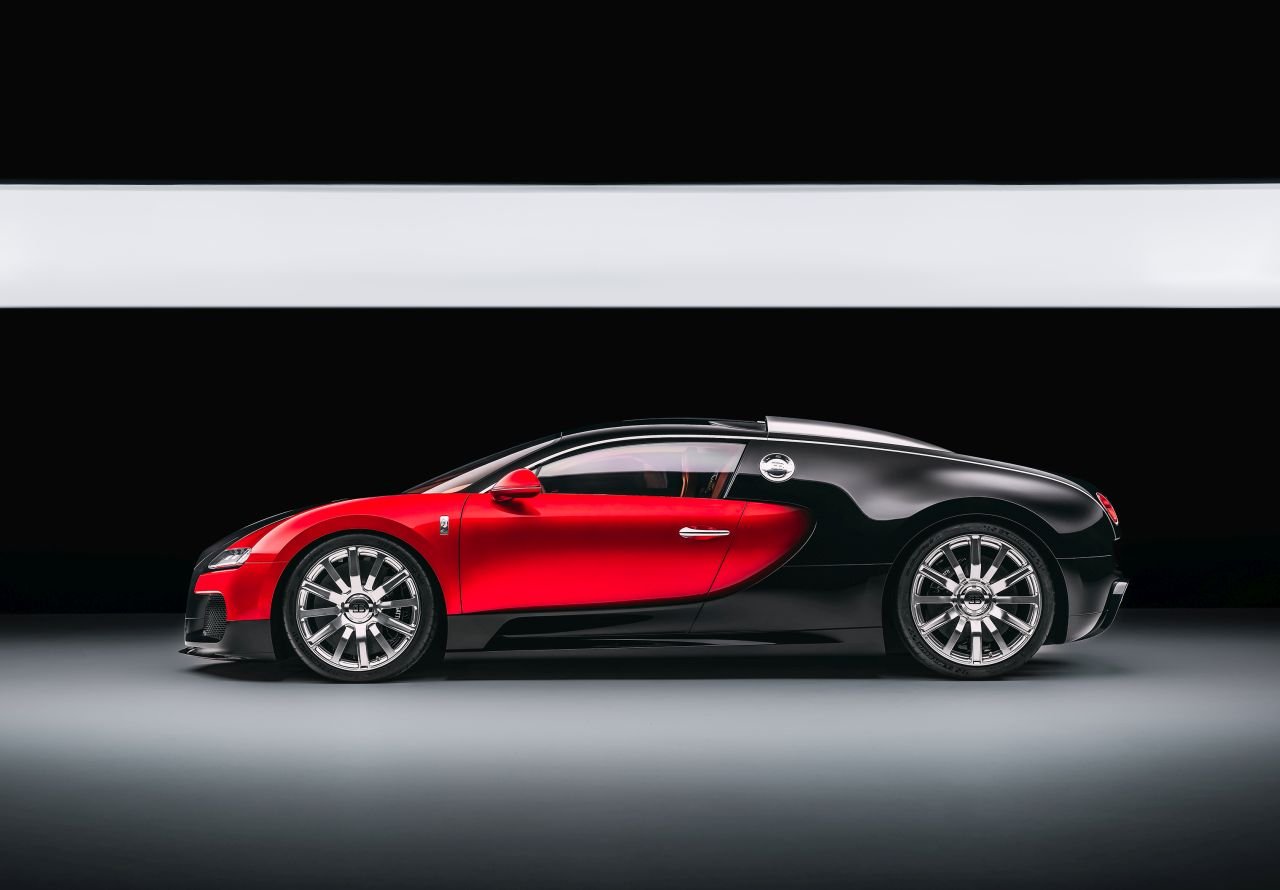
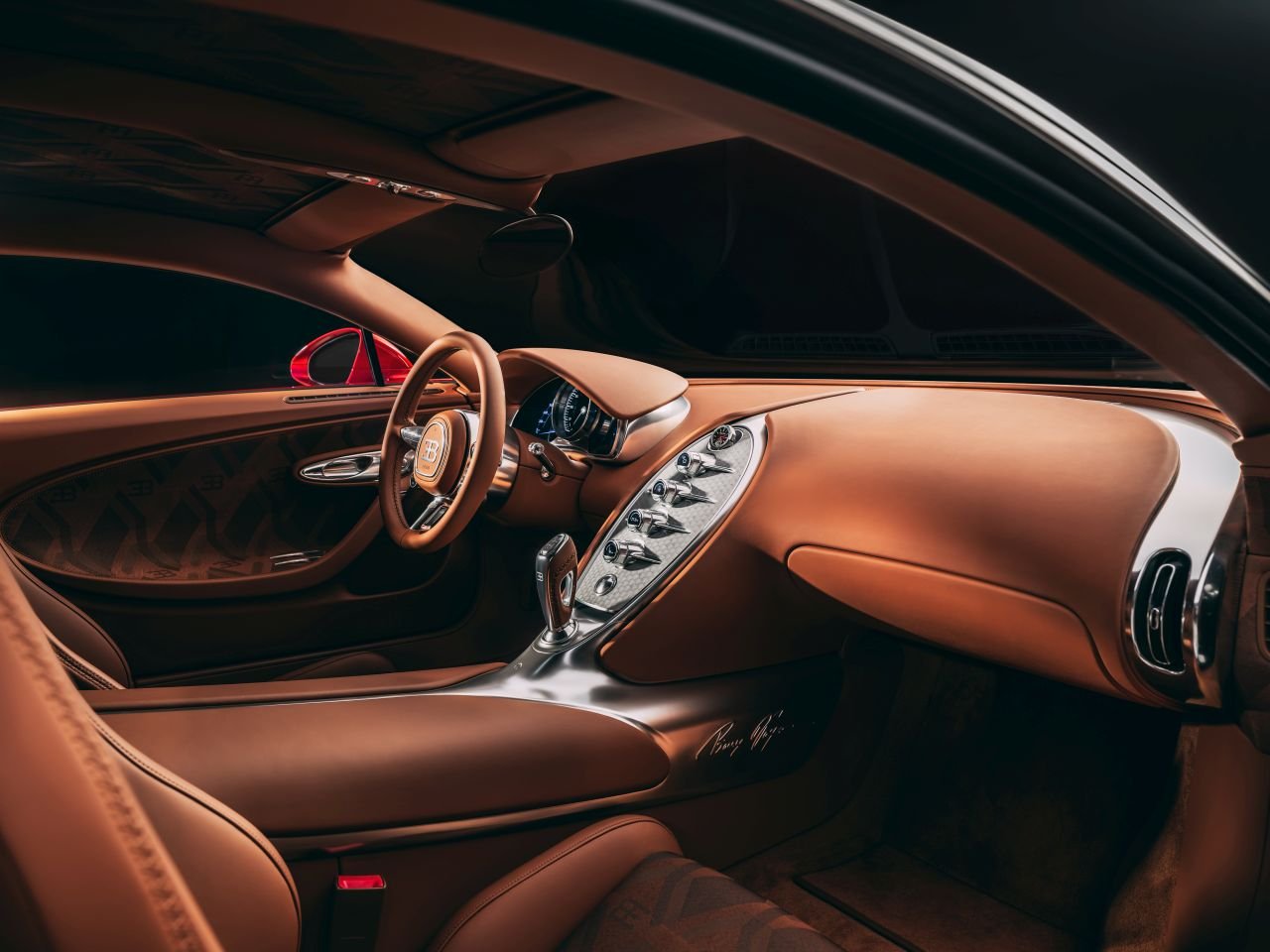
Created under the Solitaire programme, the Bugatti FKP Hommage pays tribute to the contributions of Dr. Piech, with a design that’s heavily inspired by the original Veyron 16.4.
As expected, the FKP Hommage is more like a restomod of the Veyron. The car features a similar shape with smooth surfaces all around. It has a three-dimensional horseshoe grille, machined from a solid block of aluminium, horizontal headlamp units and four circular LED taillights. The polished wheels, too, have a familiar design.
Unlike the original Veyron, which had a cream interior, the FKP Hommage uses brown interior upholstery. The dashboard, although new, is clearly inspired by the Veyron. Bugatti has also integrated a 41 mm Audemars Piguet Royal Oak Tourbillon timepiece into the dashboard.
The Bugatti FKP Hommage is based on the Chiron. It is powered by the latest and greatest iteration of the 8.0-liter W16 engine, which makes 1600 hp.
Singer Vehicle Design is best known for its subtle yet exceptional reimaginings of the Porsche 911, but with the widebody, 700-hp DLS Turbo, subtlety has been dropped from the vocabulary. That said, the first example of this new run of extraordinary restomods aims to infuse some tact into the 9,000-rpm beast, with an ombré, transitional paint finish that helps conceal the extra rear width of the chunky but lightweight carbon fiber bodywork. Dubbed “Sorcerer” by its commissioning owner, DLS Turbo #1, this is arguably a far prettier rendition of Singer’s most extreme offering yet than the tangerine example first exhibited at the Goodwood Festival of Speed in 2023.
Style Meets Substance in the Singer DLS Turbo
Singer Vehicle Design
View the 3 images of this gallery on the
original article
The color of this example, which features the track-focused bodywork option, is called Fantasia Blue, and it’s contrasted by black anodized upper trims, with the lower trims in satin carbon fiber. Adding some visual lightness to the build are forged magnesium centerlock wheels in a Champagne finish, measuring 19 inches in front and 20 inches at the back. Michelin Pilot Sport Cup 2 tires have been mounted thereupon, and within the barrels of these motorsport-inspired wheels, a set of CCM-R carbon-ceramic brake discs with monoblock calipers have been squeezed. That brings us to the substance of the project.
Singer Vehicle Design
View the 3 images of this gallery on the
original article
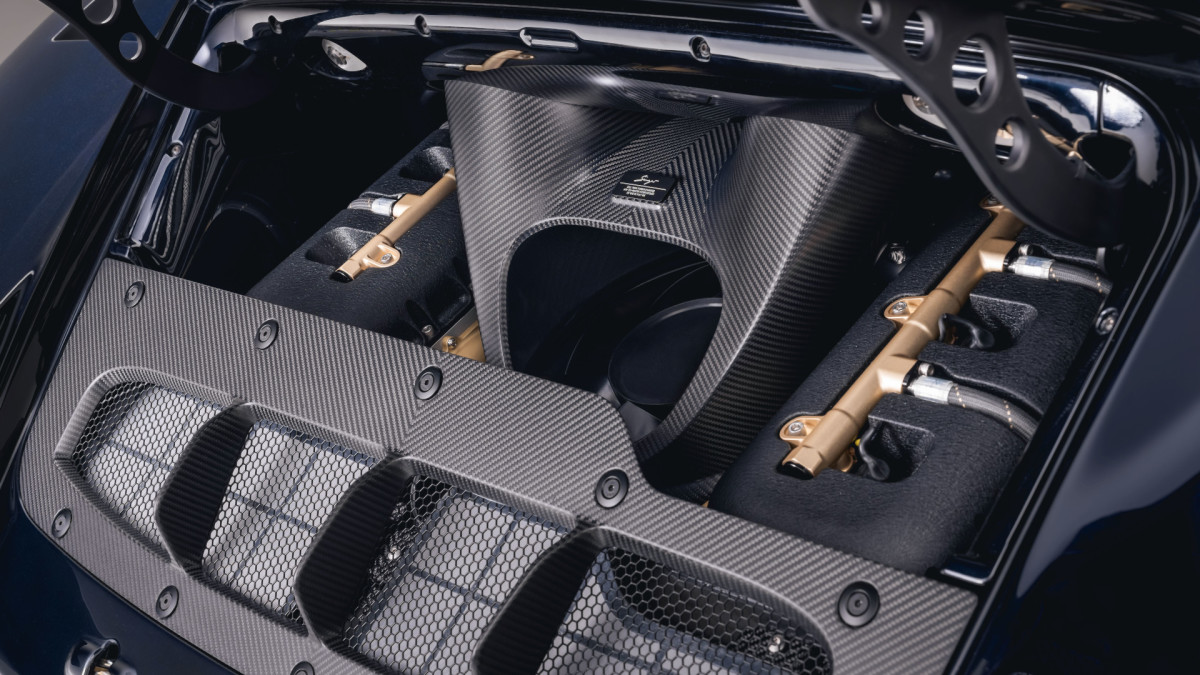
The Singer DLS Turbo, or more accurately, the “Porsche 911 Reimagined by Singer – DLS Turbo,” powers the rear wheels with a 3.8-liter, four-valve, twin-turbocharged flat-six with water-cooled cylinder heads and air-cooled cylinders. This combination produces over 700 hp and 553 lb-ft of torque, and unlike a contemporary 911 Turbo, the engine revs all the way to 9,000 rpm, singing through the side exits of a hybrid Inconel and titanium exhaust system. Also unlike a modern 911 Turbo, the driver must use their right hand and left leg to shift a six-speed manual, and with five drive modes to choose from, learning how to get the most out of the powertrain can be a gradual process. But with double wishbone suspension in front and trailing arms at the rear, not to mention a much wider track than the 964-generation 911 this is based on, grip and traction are in abundance. Exploiting the DLS Turbo’s performance is done from an equally fantastic cabin.
Singer’s Interiors Are Always Magical
Singer Vehicle Design
View the 2 images of this gallery on the
original article
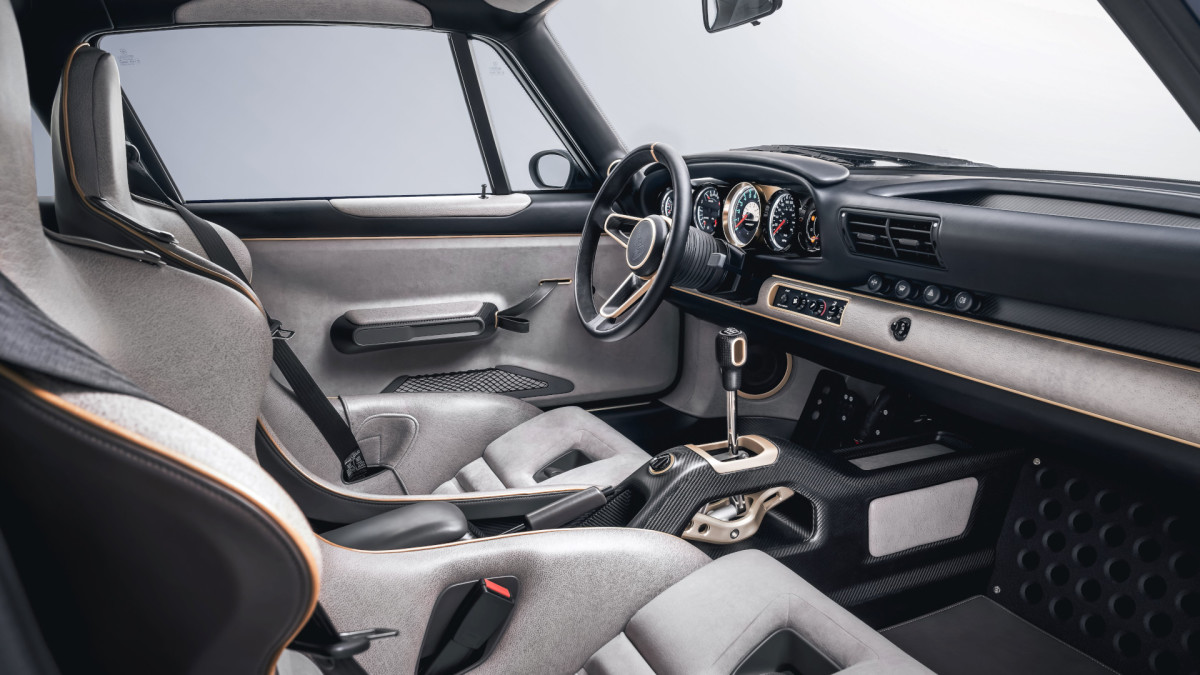
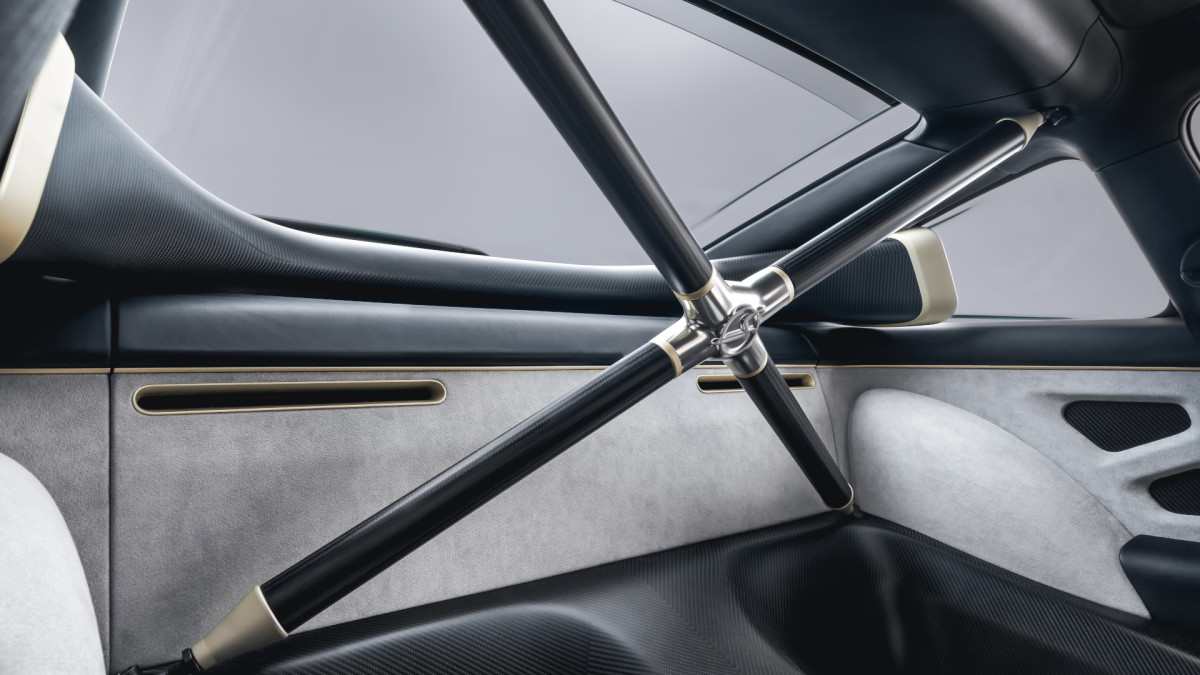
There is no Porsche 911 reimagined by Singer that has a sub-par interior, whether it’s the original Classic or a DLS Turbo like this, with all of them featuring bespoke finishes and upholstery. In this case, the seats have been lovingly trimmed in Pebble Grey leather with Pearl Grey Alcantara seat centers and contrasting piping in Champagne. The lattermost color is the foundation of the roomy and airy feel of the cockpit, but like the exterior, some contrast is necessary, so satin carbon fiber reappears, including in the cross-brace behind the occupants. Ahead of the driver, Singer’s handmade floating gauges have been given Champagne bezels, and in the hopes that the owner will use the car regularly, the car boasts a nose-lift system, modern air-conditioning, navigation, and Apple CarPlay.
Related: Porsche Wants to Use a Drone to Show Drivers the Perfect Racing Line
Then again, those features should go without saying in a car rumored to cost in the region of $3 million. That’s around twice as much as the best examples of the Porsche 934/5 that the DLS Turbo is inspired by have sold for, but those Seventies race cars can’t be enjoyed on the road. Hopefully, this one will be, not stored in the hopes it fetches an even loftier auction estimate a few years from now.
2026 will be a year of resets. Car companies have learned some painful lessons on the road to electrification, and this year, they are finally applying them to new cars.
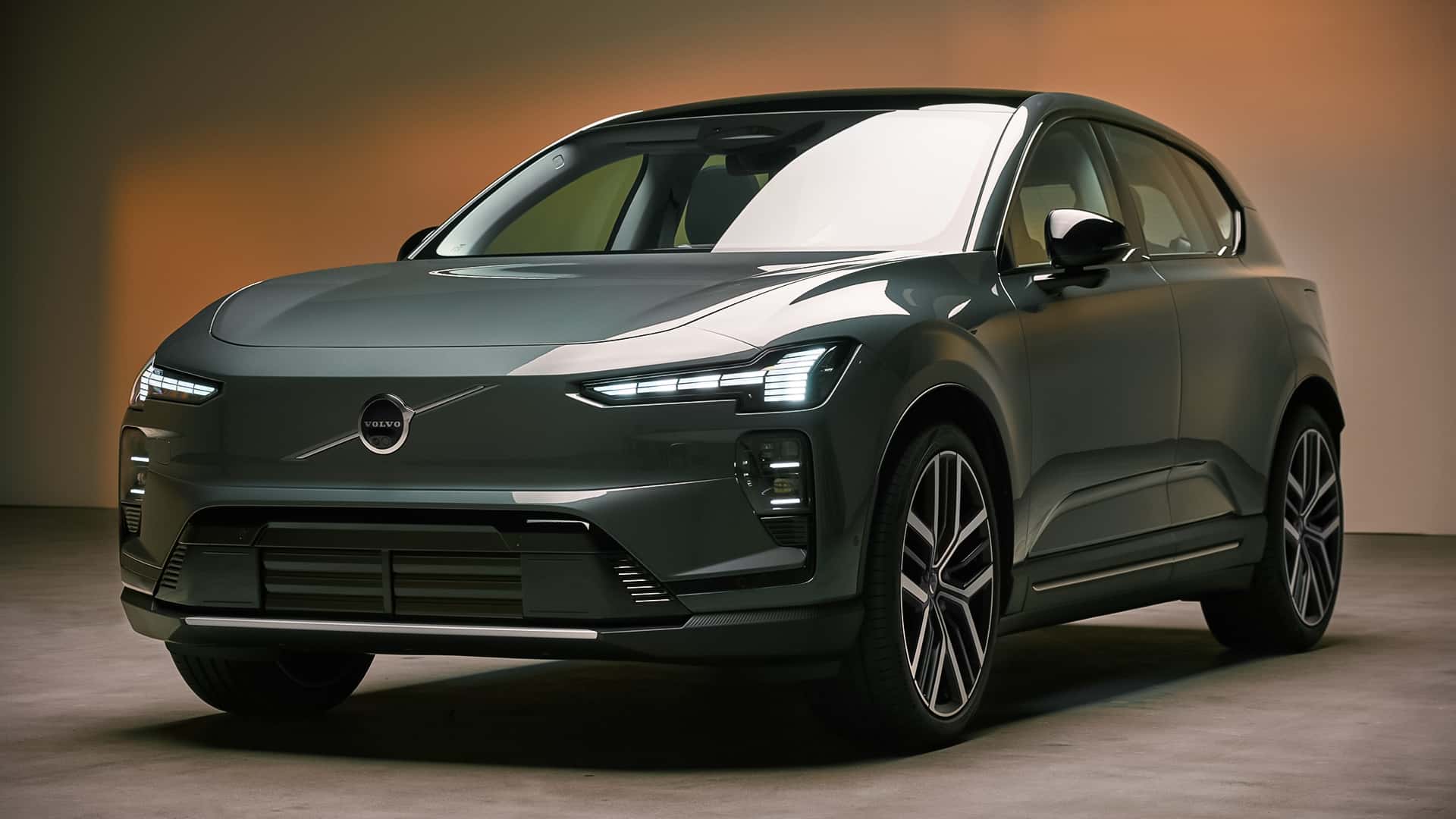
BMW is resetting its electric model line with the new iX3 and Neue Klasse platform. Mercedes is introducing both the CLA-Class and GLC-Class EVs, both of which are huge leaps forward for the brand. And now, Volvo is launching the 400-mile EX60, its attempt to change its own fortunes as EV technology becomes increasingly competitive and faces an uncertain near-term future in the United States.
Photo by: Volvo
But Volvo may just prove any doubters wrong with this one. “The EX60 is a game-changer, setting a new standard,” Volvo CTO Anders Bell said in Stockholm today. “The longest range, the fastest charging of any electric Volvo, and born smart.” Let’s get into why.
2027 Volvo EX60: Specs And Features
Volvo has launched two generations of EVs. The first were adapted from gas cars and had relatively small ranges, carryover software and middling specs. The EX30 and EX90 were supposed to fix those issues, but reality was less rosy: Both cars were plagued with problems, and in the China-built EX30’s case, it ran into an unfortunate tariff situation that diminished its value proposition in the U.S.
Either way, those cars’ rocky starts have eaten up a lot of Volvo’s goodwill in the space. It can’t afford another also-ran. Not when the competition keeps getting better and better, and when its CEO, Håkan Samuelsson, returned to a second tour of duty at Volvo to deliver an all-electric future.
Photo by: Volvo
Photo by: Volvo
Photo by: Volvo
Photos by: Volvo
The EX60 is a natural solution. It’s in the heart of the compact/midsize luxury crossover market, going head-to-head with not only the Tesla Model Y but all of the next-gen European competitors listed above.
To make it a winning proposition, Volvo has reworked its whole strategy for building EVs.
The EX60 is the first car built on Volvo’s updated SPA3 platform. It boasts a more efficient cell-to-body battery design, a streamlined architecture that’s lighter and more efficient, and an 800-volt electrical system. It is available in three variants: the P12 AWD with dual-motor power and 400 miles of range, the P10 AWD with 320 miles of range and the rear-wheel-drive P6 with 310 miles of range. No matter which one you go with, the EX60 is a distance runner.
Photo by: Volvo
It’s good for more than just range, too. The EX60 gets charging speeds of up to 370 kilowatts, or more than double your average EV in the U.S. All of that, plus a Tesla-style North American Charging System (NACS) plug, bidirectional charging, a 19.2-kilowatt onboard charger and 670 horsepower in its top trim.
It is, in every way, a cutting-edge EV. Perhaps most importantly, it shouldn’t cost much more than a gas-powered XC60. Volvo says a well-equipped P10 AWD Plus model with a 21-speaker sound system and Volvo’s Pilot Assist driving assistant will cost around $60,000.
2027 Volvo EX60: Tech & Software
Photo by: Volvo
The EX60 gets the same Nvidia Drive AGX Orin chip as the EX90, powering the company’s Pilot Assist advanced driver assistance system (ADAS). In my experience, it’s a perfectly adequate setup, but it does not support any form of hands-free driving.
And like all new EX90s, it also won’t get a lidar sensor. Despite making a hubbub about the EX90 being the first car with standard lidar, the company phased it out without ever turning it on. The company that supplied the sensor, Luminar, filed for bankruptcy last year after losing Volvo’s contract.
Still, Volvo says the EX60’s ADAS systems will get better over time. The vehicle was built from the start to support over-the-air updates, and Volvo controls all of the software in the vehicle. Executives stressed that the company will keep updating its products to introduce new features, a perhaps oblique reference to the fact that while many vehicles today claim to support over-the-air updates, actual feature additions remain rare.
Photo by: Volvo
Volvo is also adding Google’s Gemini AI assistant not just to the EX60, but to all of its cars with Android Automotive OS-based software systems. That means you’ll be able to say things like “find me a charging stop along the route with good food options nearby” or “search my email for the address of the hotel I’m staying at tonight,” and the car will figure it out.
All of that software lives in a new, landscape-oriented touch display that dominates the cabin. It’s the first Volvo since the 2015 XC90 to ditch the integrated, portrait-style touchscreen Volvo uses in every other car it makes.
Photo by: Volvo
2027 Volvo EX60: Design
It’s also the first Volvo since the 2015 XC90 to get a genuinely fresh interior design.
While the EX90 and EX30 certainly evolved Volvo’s interior design language, the EX60 is the first real top-down redesign in a long time. The new setup looks like a cross between a Rivian and a Volkswagen ID.4, with an upright center console, few buttons and a floating driver display.
Photo by: Volvo
Outside, things look a bit more familiar. The EX60 lands squarely where it belongs: somewhere between the EX30 and EX90 in design, borrowing the former’s stubby charm and the latter’s poise. Like all modern Volvos, it looks good, though I think the chunky floor makes it look less svelte than the gas XC60. Either way, with an available panoramic roof, light upholstery and Volvo’s famously lovely seats, I think the EX60 will be a great place to spend time.
Photo by: Volvo
And speaking of seats, this is the first vehicle to use Volvo’s new multi-adaptive safety belt. It uses interior and exterior sensors, as well as AI features, to customize your seating position and level of protection in a crash. “For example, a larger occupant in a serious crash will receive a higher belt load setting to help reduce the risk of head injury,” Volvo said in a news release. “While a smaller occupant in a milder crash will receive a lower belt load setting to reduce the risk of rib fractures.” Fascinating, right?
2027 Volvo EX60: Range And Charging
Volvo says the range-topping EX60 P12 AWD will offer 400 miles of EPA range, courtesy of a gargantuan 117-kwh battery. Those are huge figures even by today’s big-battery standards. Most people will be more than fine with a P6 RWD or P10 AWD, but the top model shows how much EV range is evolving past the onetime 300-mile benchmark.
Photo by: Volvo
Volvo says a 10-minute top-off on an EX60 P12 AWD should add 173 miles of range in 10 minutes, thanks to its 370-kw peak charging rate. As Bell put it today, the car promises “an end to range anxiety” thanks to the overall range and charging performance. Regardless of which model you choose, you’ll be able to charge from 10-80% in 19 minutes or less.
Even the slow-charging specs are impressive: The onboard charger can handle up to 19.2 kW speeds, provided you can find a Level 2 plug capable of such power. This is more of a benefit to European customers for now.
2027 Volvo EX60: Price And Availability
Volvo has not announced full pricing for the EX60, but says a mid-grade P10 AWD will cost “around $60,000.” That should make it comparable to the BMW iX3 and Mercedes GLC-Class with EQ Technology, both of which are expected to start at around $60,000. Deliveries start this summer.
That means that by the end of the year, you’ll be able to buy three midsize electric luxury crossovers with AI assistants, massive ranges, all-new software stacks and gobs of power. It’s a great time to be an EV fan.