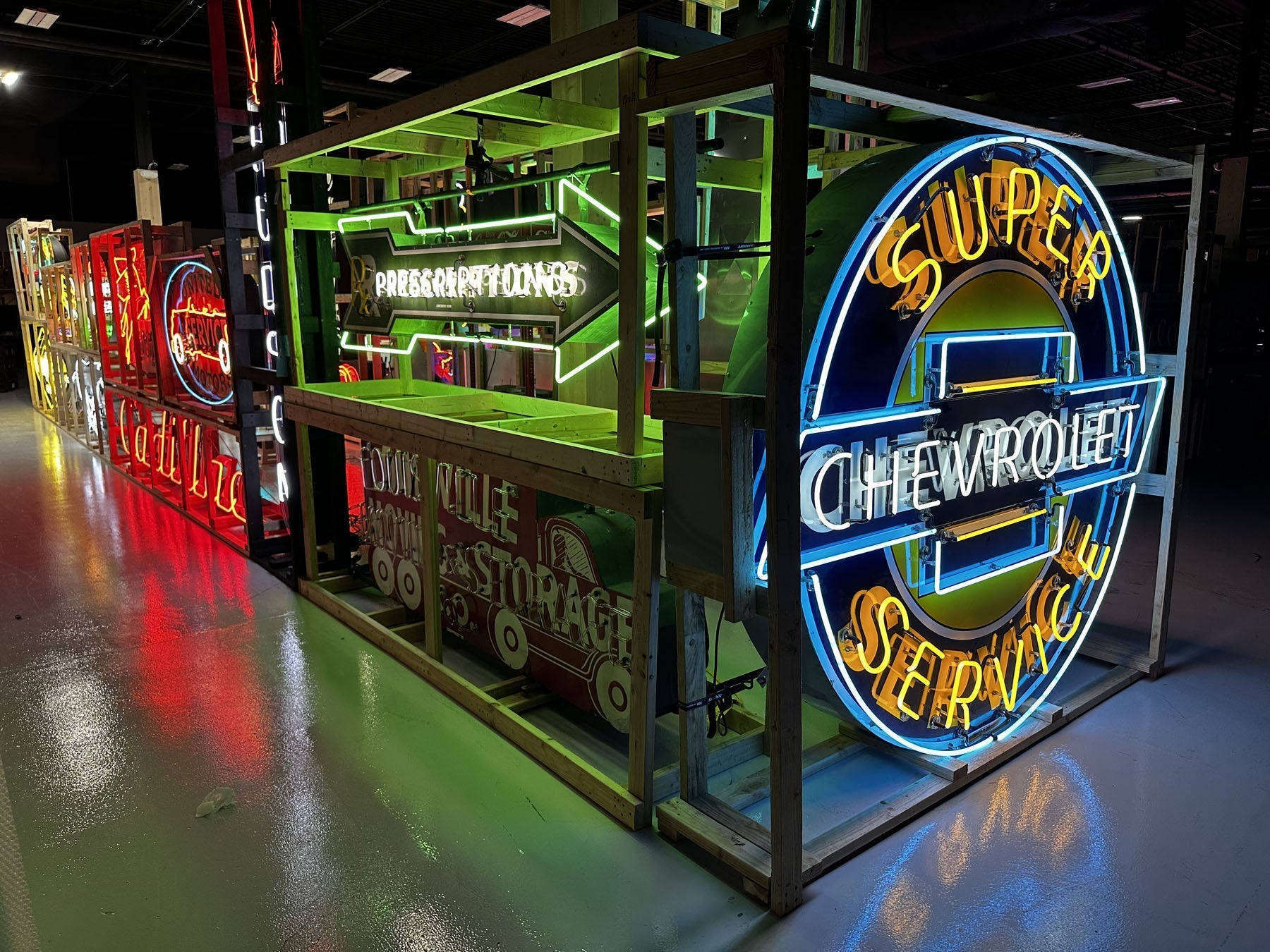
Richmond Auctions presents the 2026 Premier Three-Day Advertising Auction on January 29-31, 2026. Join us to celebrate the Grand Opening of our new facility, located at 526 Congaree Rd, Greenville, SC 29607. This multi-day sale features an incredible assortment of Petroliana, Automobilia, Soda, Country Store and Farming advertising memorabilia from prominent and respected collectors Sam McIntyre and David Webb. The auction contains nearly 1400 lots of neon signs, porcelain signs, tin signs, advertising displays, gas pumps, gas pump globes, clocks, and oil cans.
The Sam McIntyre Collection – Sam McIntyre was a legendary Standard, Esso, and Exxon collector who worked for the Standard Oil Company for over 30 years. He spent years educating collectors on all things Esso and was the author of the Essays Collectibles Handbook. Sam’s knowledge of the brand’s history was unmatched, and he was considered the authority on the brand. Richmond Auctions is honored to offer items from Sam’s incredible collection.
The David Webb Collection – The title ‘The One-Man Swap Meet’, earned through six decades as an active collector, David Webb often said he was blessed with a healthy hunter and gatherer gene, traversing the North American continent from sea to shining sea. The calendar did not tell David months or seasons, only the date of the next swap meet and the direction to point the van. To think of a lifetime collection as static would be an error; they are always in a state of flux, being curated, upgraded, tweaked and modified ever so slightly, if not completely. Richmond Auctions is thrilled to offer items from David’s wonderful collection.
Our free daily newsletter sends the stories that really matter directly to you, every weekday.
How much does the United States like pickup trucks? You don’t need me to answer that question. Just look out the window and you’ll see all the reasons a manufacturer might need to build their own. Now, a company like Hyundai or its luxury arm Genesis can’t simply decide to sell a body-on-frame pickup and have the same success as Detroit’s Big Three. But at least one—if not both—of those automakers seems set to release a truck of their own in the near future. Hyundai says it’ll bring such a vehicle to market by 2030, and Genesis has even gone so far as designing one already.
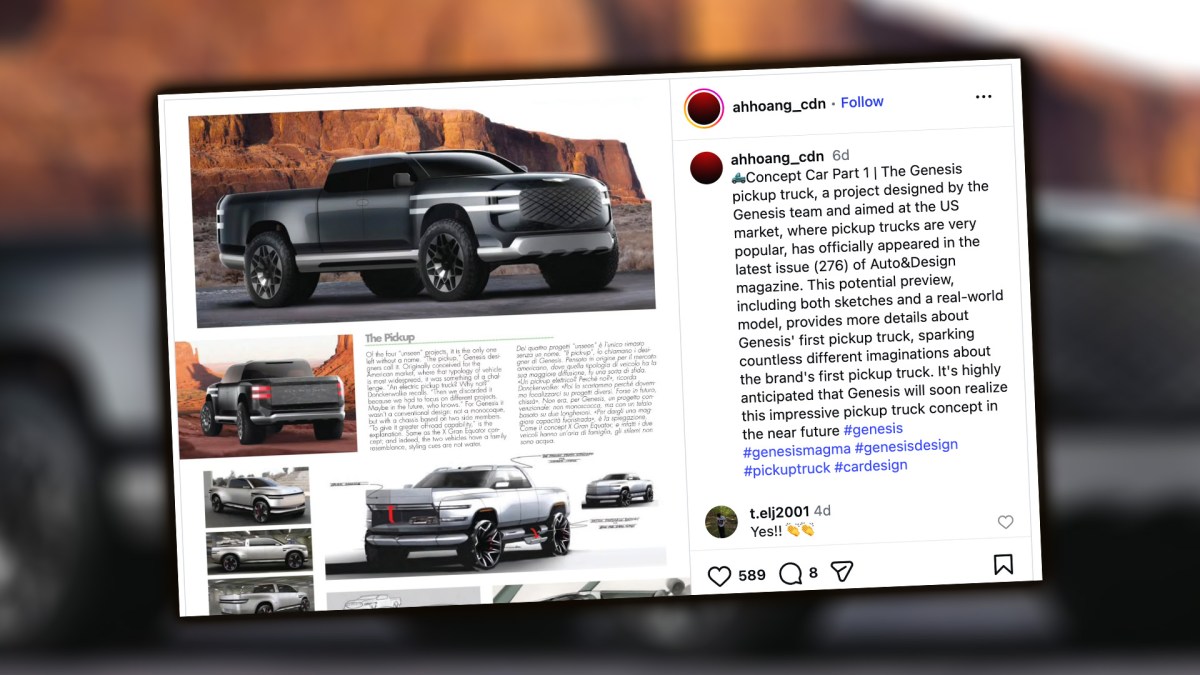
The chunky rig was featured in a recent issue of Auto&Design, an Italian publication. There’s no mistaking it for anything else, as the grille and parallel headlight elements are distinctly Genesis. Said LEDs wrap all the way around the front fenders and pick back up on the rearmost part of the bedsides. In that way, it’s a lot like the X Gran Equator Concept that Genesis unveiled last spring. This truck actually shares a lot with that wild SUV once you look at them side-by-side.
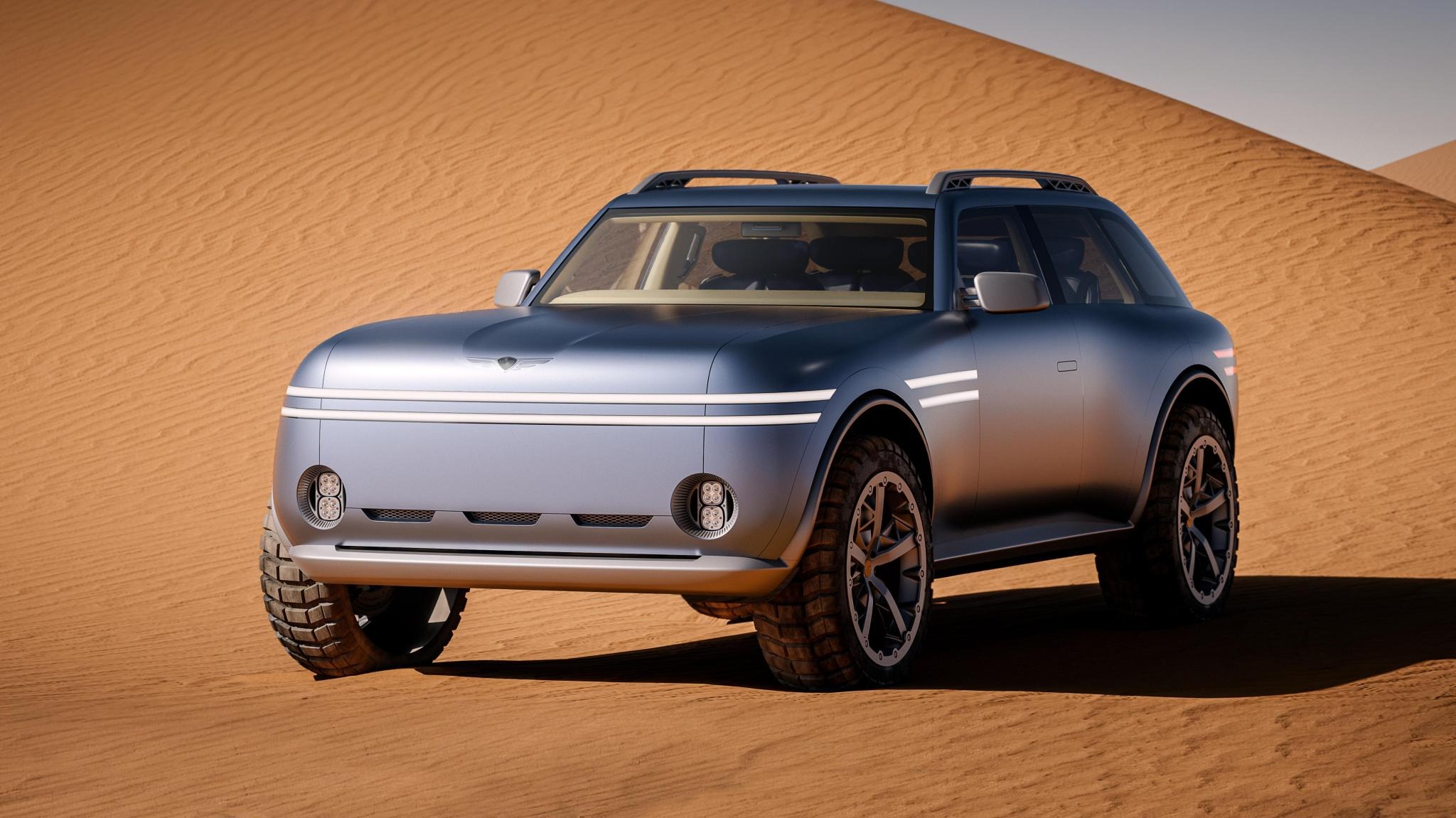
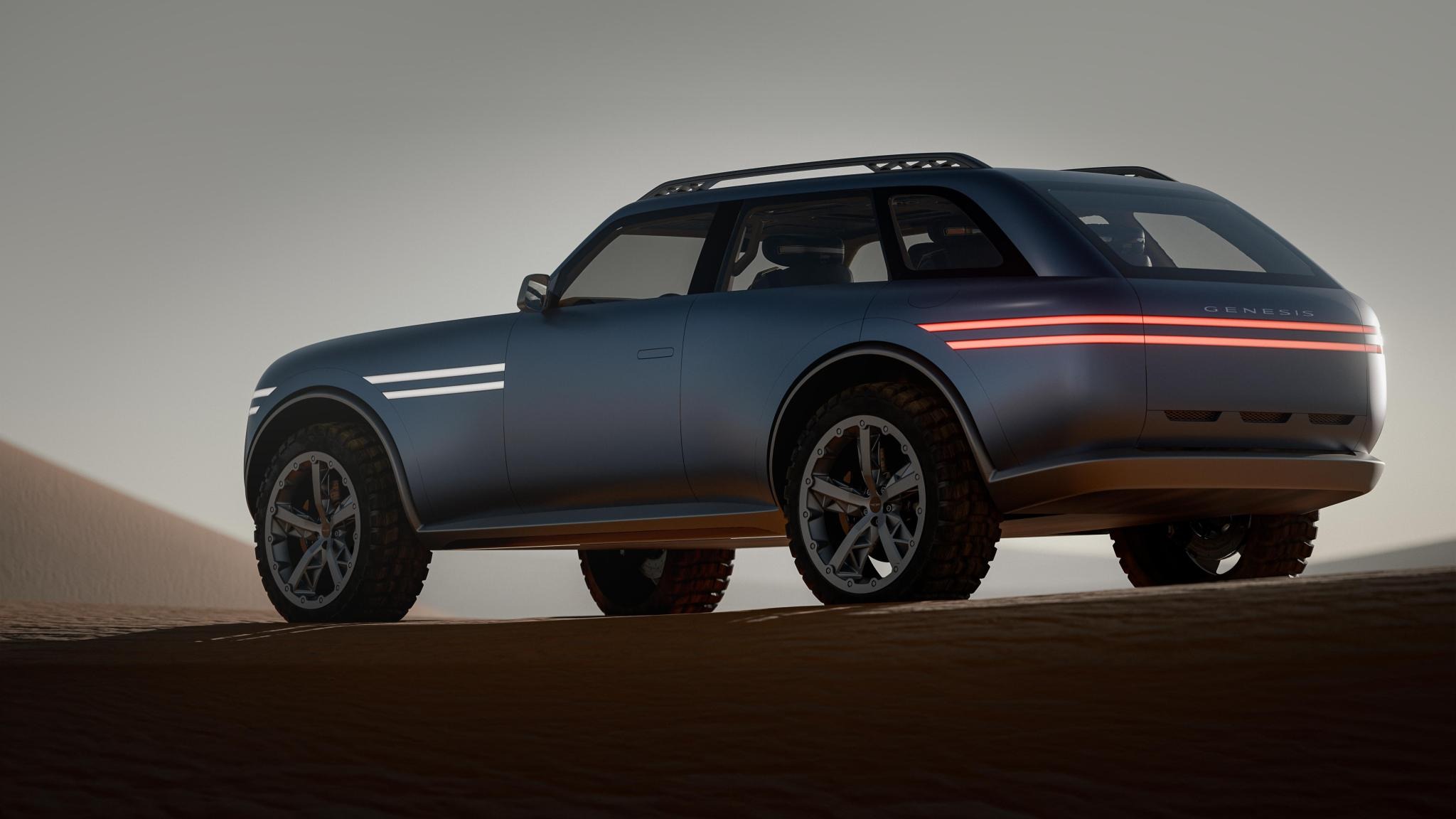
Genesis debuted the X Gran Equator Concept SUV in April 2025, and it shares quite a bit with the above pickup sketches. Genesis
It doesn’t have some secretive internal designation, according to the Auto&Design article; it’s simply referred to as “the pickup.” Luc Donckerwolke, chief creative officer and chief brand officer for Genesis, is quoted as saying, “An electric pickup truck? Why not? Then we discarded it because we had to focus on different projects. Maybe in the future, who knows.”
I’m not saying reverse psychology is at play here, but I’ve certainly heard similar talk from auto execs before, only for that very thing to become a reality in the near future.
My guess is that Genesis did the prep work in case Hyundai has success with its body-on-frame truck and the market seems ready for a more premium version. Aside from it being an unfamiliar name in the pickup segment, I think its biggest blocker would be the electric powertrain. I’m not saying it can’t work, but we’ve seen the EV forecast shift drastically in the past 12 months, and even a company like Rivian only sells a handful of battery-powered pickups compared to its SUVs.
I won’t hold my breath waiting for this to reach production, at least in the next four or five years. Whether or not this ever gets built likely depends on how well the public receives Hyundai’s version. That’ll be interesting to observe on its own, as I’m curious if it’ll have more success than the Santa Cruz. I bet it’ll be good, but whether or not it’ll be enough to capture a piece of the pie from other established players in the space seems a lot less certain.
Got a tip or question for the author? Contact them directly: caleb@thedrive.com
Toyota on Tuesday confirmed a bit of a shocker, pun intended.
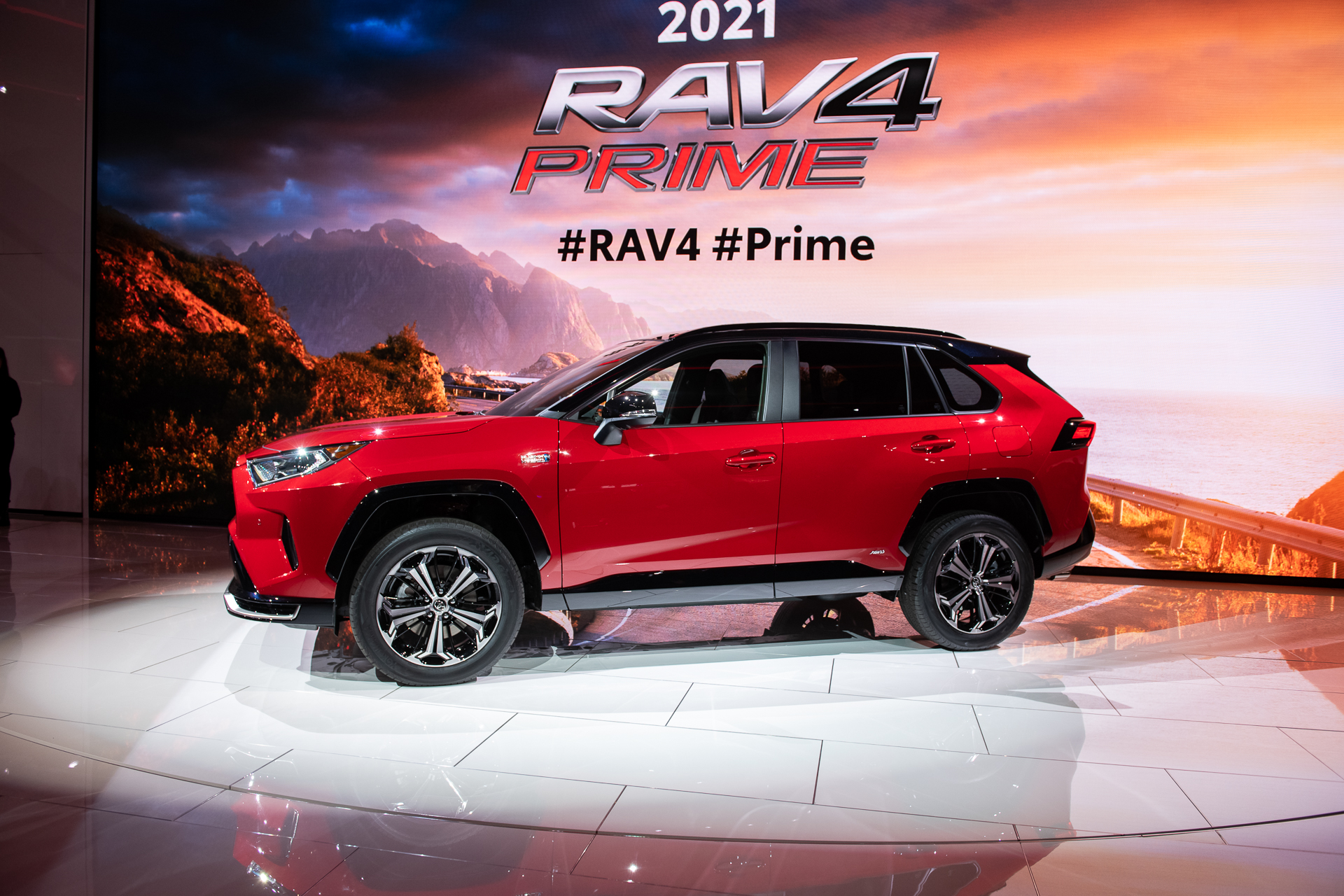
The automaker confirmed details for its 2021 Toyota RAV4 Prime plug-in hybrid crossover, due next year, which adds a bigger hybrid battery to its hybrid powertrain that can power the crossover up to 39 miles on electric power alone. The crossover will make 302 combined horsepower and drive all four wheels, and speed up to 60 mph in less than six seconds—the second-fastest Toyota in the lineup.
With the 2021 RAV4 Prime, Toyota offers an ultra fuel-efficient vehicle with unexpected performance potential. (Eds note: It wouldn’t be the first time, the performer in the Lexus lineup for years was the LS hybrid sedan.)
Like the RAV4 Hybrid, the RAV4 Prime is powered by a 2.5-liter inline-4 that makes 176 horsepower and 168 pound-feet alone. In back, electric motors drive the back axle and wheels when there’s less grip up front, or in sporty driving to help mitigate understeer. Toyota didn’t specify the size of the batteries nor the power output of the electric motors. Interior space isn’t compromised, according to Toyota, since the lithium-ion battery pack mounts under the floor, which also provides a lower center of gravity.
2021 Toyota RAV4 Prime
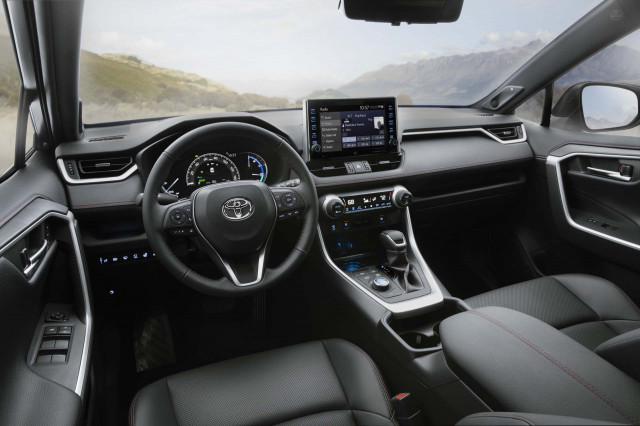
Reflecting the character of the RAV4 Prime, Toyota will make available the plug-in hybrid in sportier SE and XSE grades—the latter adding a two-tone black roof, 19-inch wheels, and Supersonic Red color. Inside, the XSE adds synthetic leather upholstery, wireless smartphone charger, and paddle-shifters. The paddle-shifters not only virtually downshift, but also control energy recuperation for the battery pack.
The SE offers an 8.0-inch touchscreen with Apple CarPlay and Android Auto compatibility, the XSE ups that to a 9.0-inch touchscreen. When equipped, the RAV4 Prime can use navigation data to be more efficient.
The XSE adds optional JBL audio, heated and cooled front seats, panoramic moonroof, heated steering wheel, a surround-view camera system, and hands-free power tailgate.
Toyota didn’t say how much the 2021 RAV4 Prime would cost when it goes on sale in the summer.
Whether it’s an improperly closed door, or the dreaded check-engine alert, dashboard warning lights are how your car communicates with you when something goes wrong.
They light every time you start your vehicle, illuminated briefly as your car or truck warms up and makes sure all systems are safe and ready to go. Occasionally one light might stay on, indicating there’s a problem. Be equally alert if one or more warning lights don’t briefly illuminate. If they aren’t functioning, you might not be able to detect a problem they’d warn you about.
But if you don’t understand what a warning light means—or choose to ignore it—a small problem could turn into a bigger, more expensive, and potentially dangerous issue. And even the savviest car owner can have trouble deciphering the message a warning light is trying to convey.
“They’re all so different and cryptic, it makes it easy for most people to ignore them,”Raul Arbelaez, vice president of the Insurance Institute for Highway Safety’s Vehicle Research Center, said. “I think vehicles today tend to be so good, and reliable, and smooth driving, that for many people you can ignore [dashboard warning lights] for a while and still get a very good driving experience. Until you don’t.”
A career spent conducting crash tests and researching automobile safety gives Arbelaez unique insight into how cars protect their occupants. Yet, as vehicles grow increasingly complex, it’s the human factor that can present hurdles. “People often really don’t understand this highly complex device they’re motoring around in at very high speeds,” Arbelaez said. “How many people do you know read the owner’s manual? Very, very few.”
According to Matt Anderson, curator of transportation at the Henry Ford Museum in Dearborn, Michigan, one of the earliest dashboard warning lights was found in a 1933 Hudson.
Anderson points to a page in a 1933 Hudson Super Six owner’s manual in which a generator warning light is referred to as “the red jewel” on the car’s dashboard. The manual advises the light should turn off once the car reaches a speed just above idle. Should it start flashing while traveling above 20 mph, it means the battery isn’t being charged. “At this point,” according to the manual, “your electrical system should be checked by your Hudson dealer.”
So, nearly 90 years ago, our cars were already trying to tell us when something was wrong. To make up for lost time and past misunderstandings, let’s explore some of the most common dashboard warning lights and what each one means.
CHECK ENGINE
Adobe Stock / gdainti
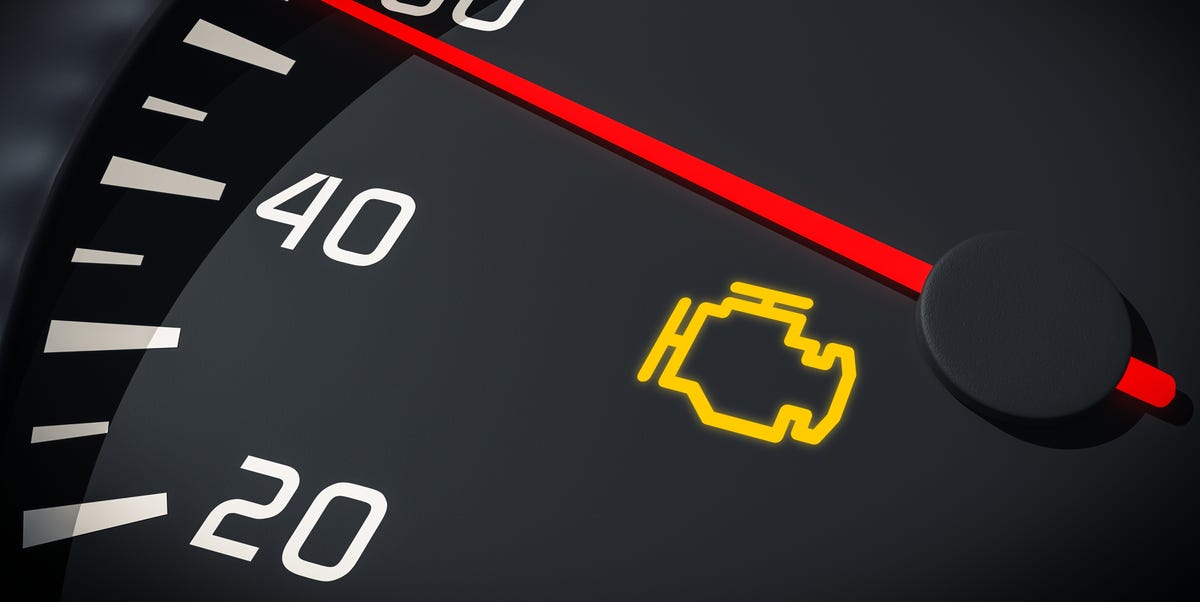
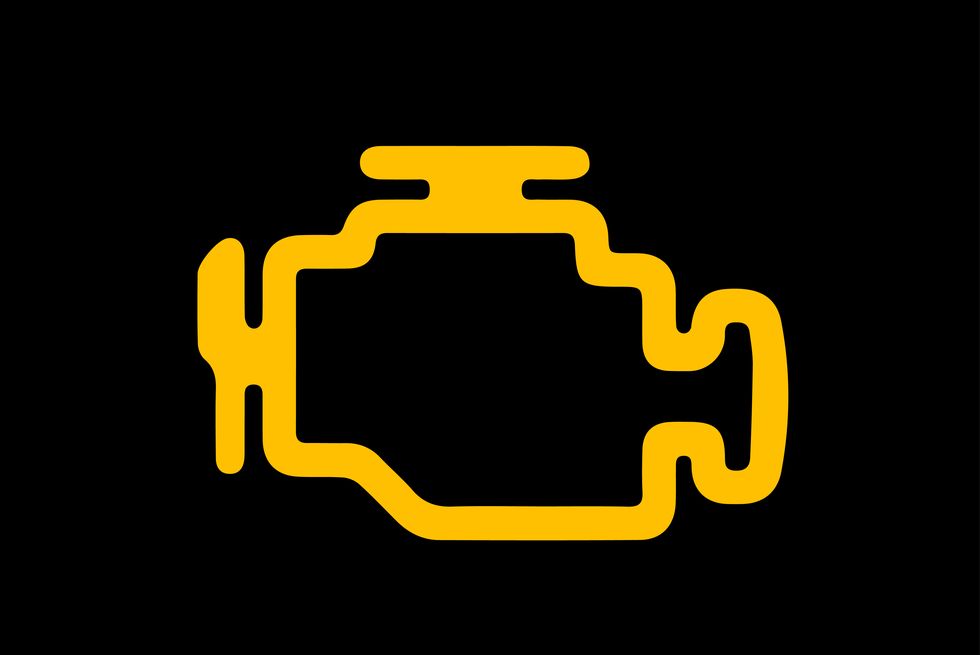
We’ll start with the worst. The check-engine light is the one car owners hate most. Usually, this warning is in the shape of a silhouetted engine, though sometimes it’s an even harder to miss all-caps “CHECK ENGINE” message.
While it seems like the scariest, this light is one the most ambiguous because it relates to anything having to do with the car’s motor and emissions system. The potential issue could be as minor as a loose wire, an ill-fitting gas cap, or a worn solenoid. Or it could mean something far more serious is wrong in the heart of the engine itself.
If the check-engine light illuminates while you’re driving and everything seems fine with the car, don’t panic, but don’t ignore it, either. Get the vehicle to a mechanic to run a diagnostic test and source the problem. Since 1996, every new car and light-duty truck sold in the U.S. has been legally required to have an On Board Diagnostic system (OBD). This is a computer that monitors emissions levels and other vital engine components. With an OBD scan, sourcing a problem is easier—something as simple as tightening the gas cap might solve the issue. This also prevents an emissions-spewing vehicle from operating without the driver knowing there’s a problem lurking under the hood.
Should the light turn on and the vehicle suddenly begin operating erratically or making strange noises, pull over immediately and call for a tow. This means there’s a far more serious problem, such as a misfire that could permanently damage the car’s engine. Ignoring a blinking check-engine light could mean putting yourself at risk, and ruining your car’s powertrain.
BATTERY
Adobe Stock / gdainti
The battery warning is easy to decipher because it looks exactly like the thing that needs attention. For many car owners, this light conjures up the heart-sinking “whir whir whir” sound of a vehicle trying to start with a flat battery. Don’t be fooled if the battery light illuminates but the car starts up and drives normally. There could be a long-term issue with the battery itself, or potential problems with the vehicle’s wiring, alternator, or other electrical components.
COOLANT TEMPERATURE
Adobe Stock / gdainti
Looking like a thermometer taking a dip in the ocean, the coolant temperature warning lets you know your car is running too hot. This could be caused by a broken water pump, low coolant levels in the radiator, a leaking or burst coolant hose, or even damage to the radiator itself. These are serious issues and could lead to much bigger engine problems if ignored. Like a blinking check engine light, driving an overheated car is not only unsafe, it also risks permanently ruining your four-wheeled mode of transportation.
TRANSMISSION TEMPERATURE
Adobe Stock / gdainti
This indicates the internal pieces of your gearbox are reaching a critical point. This might be caused by excessively heavy towing, low transmission fluid levels, or, more seriously, excessive wear on the inner workings of the transmission.
OIL PRESSURE WARNING
Adobe Stock / gdainti
Winning the award for best throwback dashboard warning light, an oil can (complete with a drop of oil coming from it). An illuminated oil pressure light could indicate something as simple as your car telling you it needs its oil topped off. More seriously, it could mean a leak in the engine, or worn parts like a blown piston ring or broken oil pump. If the engine’s dipstick shows oil levels are low and adding oil turns the light off, then you’re in luck. If that doesn’t do the trick, or the light comes on shortly after you’ve added oil, it’s smart to get the issue checked as soon as possible. Driving for extended periods with an oil pressure warning light illuminated is another sure-fire way of causing big repair bills down the road. Like the gasoline sloshing around in the fuel tank, your car’s oil level is equally essential to keeping your vehicle running.
TIRE PRESSURE MONITORING SYSTEM
Adobe Stock / gdainti
This light looks like two-thirds of a circle with an exclamation point in the middle. Those little lines across the bottom are meant to symbolize the tread of a car tire. Cute, right? Unfortunately, things can get ugly if you’re driving on severely under- or overinflated tires. In many modern cars, the tire pressure monitors include a display in the driver’s gauges, or in a menu located within the infotainment system, to tell the driver the exact tire pressure at each wheel. As an example, if one tire shows significantly less air pressure than the others, stop the car and refill the tire to the correct pressure rating. Start the car and see if the warning light goes off after a few minutes. If it doesn’t, there could be damage to the tire that’s causing a rapid leak.
BRAKE SYSTEM
Adobe Stock / gdainti
We all love to talk about how quickly a car accelerates from zero to 60 mph. But things can get dicey if a vehicle doesn’t come to a quick and controlled stop when the brakes are engaged. A common mistake occurs when the driver pulls away with the parking brake engaged, causing this warning light (or one saying “Parking Brake”) to glow. A more troubling culprit could be worn brake pads, low brake fluid levels, or a problem with the anti-lock braking system (ABS). On a similar theme when it comes a car’s stopping power, an illuminated ABS light often means there’s an issue with a wheel speed sensor, or problem with connections and wiring that could prevent the anti-lock braking system from activating. It’s still safe to drive your car without ABS, just understand a repair is warranted to restore full braking effectiveness, especially during a panic stop scenario.
TRACTION CONTROL, STABILITY CONTROL
Adobe Stock / gdainti
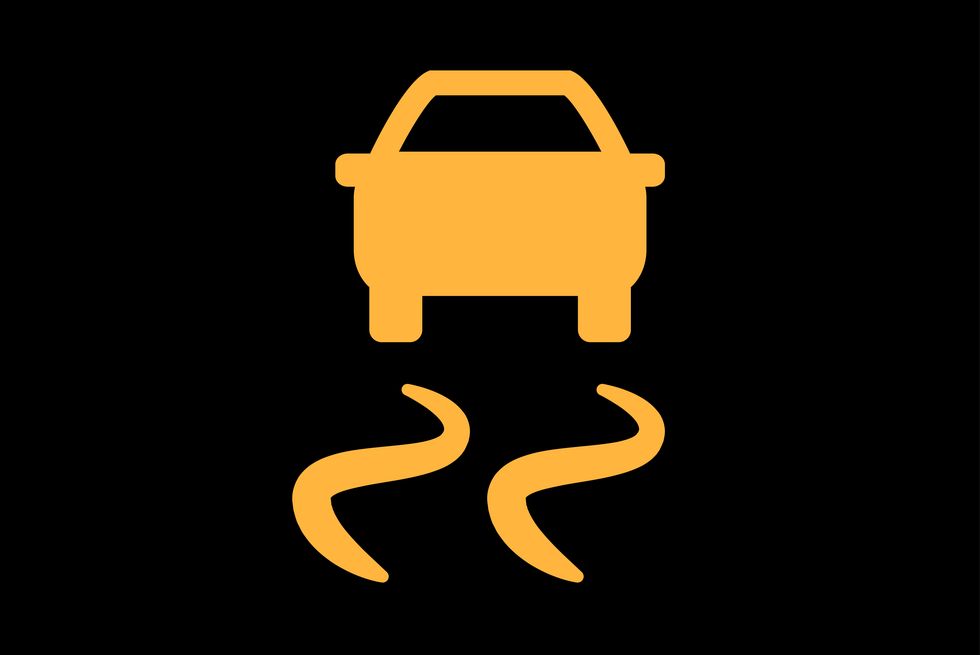
It’s not meant to look like a car driving down a wild and curvy road, but it kind of does. This warning is often represented as the front view of a car, with two squiggly lines underneath, illustrating what these systems are trying to avoid, which is your vehicle slipping and sliding all over the road. Keep in mind, the traction control and stability control light will turn on when the system is activated. Punch the gas pedal when it’s excessively rainy or snowy, and chances are good you’ll see this dashboard light illuminate. That only means these systems are doing their job. If they turn on when your car is running at moderate speed on dry surfaces, however, there might be a flaw in the system. A common culprit would be a wheel speed sensor. Many vehicles allow the driver to adjust these systems using some form of driving mode selector. The highest performance settings in many sports cars will greatly minimize or completely deactivate traction control and stability systems.
AIRBAG WARNING
Adobe Stock / gdainti
It’s perfectly normal for this light to turn on when your vehicle is first started. Should it stay illuminated while driving, there could be a problem with one of the vehicle’s airbags. This won’t cause you to get stuck on the side of the road, but it could be dangerous in the event of an accident.
LAMP OUT
Adobe Stock / gdainti
One of the less serious dash lights on this list. Then again, if the lamp or bulb in question is a headlamp or taillight, you could be risking an accident or pricey ticket. Ironically, the lamp-out indicator is usually depicted by what looks like a sun with rays around it. A burnt-out lamp or busted bulb wouldn’t be as illuminating.
WASHER FLUID, DOOR OPEN, LOW FUEL
Adobe Stock / gdainti
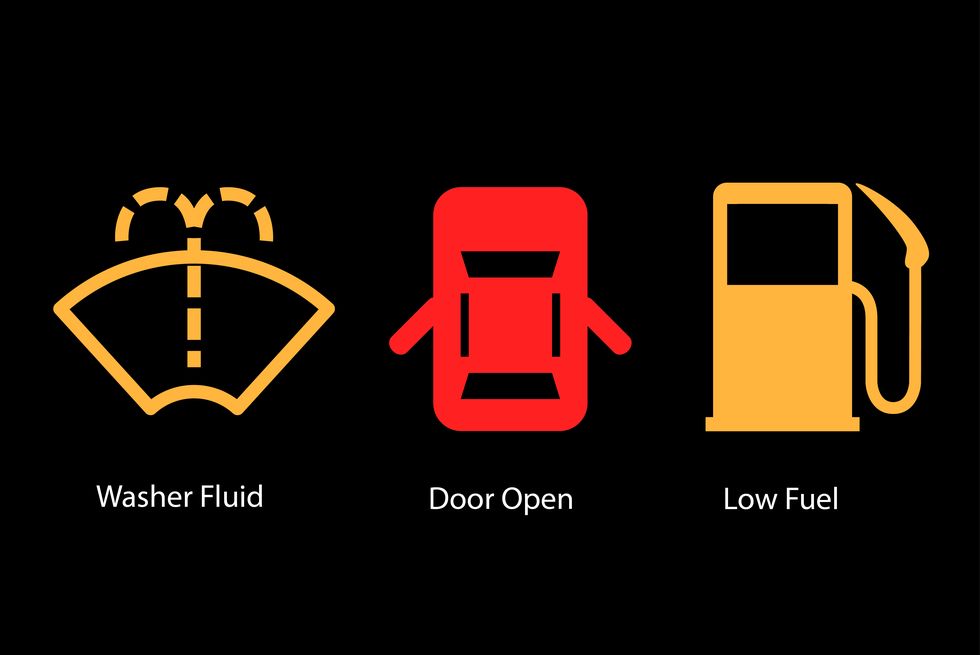
There are three very basic ones every single person should know and understand. The washer-fluid icon is depicted as a windshield with a jet of water. When this appears, it alerts the driver the car is low on washer fluid. Not a major problem, unless your windscreen is filled with gooey bugs and you don’t have the means to whisk them away. The door-open icon is usually an overhead depiction of a vehicle with one or two doors open. This can be rectified in seconds; close the door or trunk and you’re on your way. Last but not least, the low-fuel indicator features the icon of a fuel pump. This means you’re running low on gas and it’s time for a pit stop. A final helpful hint: The arrow alongside this icon tells you which side of the car the vehicle’s gas flap is located.
HEADLIGHTS
Greg S. Fink|Car and Driver
It used to be that a vehicle’s gauge cluster lit up only when the driving lights themselves were on. Today, most clusters look the same whether the exterior lights are on or off. To know if your headlights and taillights are on or off, you now have to look for the above symbol. If it’s glowing on your dashboard, then your driving lights are on. If it’s not lit up, and it’s dark out, then you better figure out how to turn those lights on ASAP.
SEATBELT INDICATOR
Car and Driver
If you see this light on in your cluster, then it means your seatbelt is unbuckled. OK, you probably didn’t need us to tell you this one, but if this symbol remains illuminated long after you’ve buckled your seatbelt, then you’ll want to get your belt buckle looked at to make sure everything’s still operating as intended.
FRONT FOG LIGHTS
Greg S. Fink|Car and Driver
Not all vehicles have front fog lights. Those that come with this feature from the factory, though, usually display the above icon somewhere in the gauge cluster when these auxiliary lamps are in use.
HIGH-BEAM INDICATOR
Greg S. Fink|Car and Driver
If you want to blind oncoming traffic, then leaving your high-beam headlights on is one way to do just that. But unless you’re a sociopath, odds are you’re not trying to blind other drivers, which is why it’s important to make sure the above indicator is only illuminated on your dashboard when you’re driving through very dark areas devoid of other drivers.
AUTOMATIC HIGH-BEAM INDICATOR
Greg S. Fink|Car and Driver
It’s easy to forget to turn off those high-beam headlights, though. Fortunately, many newer vehicles come with automatic high-beam headlights, which are capable of automatically turning on these bright lamps in dark areas and turning them off when there’s additional light, be it the light of an oncoming vehicle or a street light. If you see the typical high-beam headlight indicator accompanied by AUTO, then that means your vehicle’s automatic high-beam headlights are activated and ready for duty.
AUTOMATIC EMERGENCY BRAKING DISABLED
Car and Driver
This lamp indicates an issue with the automatic emergency braking (AEB) system of a so-equipped vehicle. It may show up briefly due to debris or road conditions that limit the system’s ability to function properly. If this lamp sticks around in good weather (and after a good wash), then it’s likely your AEB system has an issue and needs checking out.
AUTOMATIC EMERGENCY STEERING DISABLED
Car and Driver
Many modern cars will not just brake automatically in the event of an emergency; they’ll also steer themselves away from one. The hope is that the car avoids the accident entirely or if that’s not possible, then that a smaller portion of the vehicle takes an impact. Like AEB, automatic emergency steering (AES) is often temporarily disabled due to debris or road conditions that limit its ability to function properly.
FREEZING TEMPERATURES, ROADS MAY BE ICY
Car and Driver
If the temperature dips close to or past the freezing mark (32 degrees Fahrenheit), then this icon may pop up on your dashboard. No need to worry, though, because this symbol doesn’t mean anything is broken. It’s simply a reminder that the roads may be icy. Whether you choose to heed this warning or not, however, is entirely up to you.
AUTOMATIC STOP-START ACTIVE
Car and Driver
Did your car’s engine shut down when you came to a stop? If you spot this indicator, then you can rest easy knowing your car’s killing the engine intentionally as a way to save fuel. Don’t see this symbol? Then you may want to call for roadside assistance.
LANE-KEEP ASSIST OFF
Car and Driver
Lane-keep assist is all but de rigueur on today’s cars and trucks. In a nutshell, the system works by following the lines in the road. Start to cut too close to—or go over—these lines and the system will typically sound an audible warning or temporarily take over steering to nudge the vehicle back toward the center of the lane.
IMMOBILIZER WARNING
Car and Driver
Most modern cars have some electronic connection to the key or fob. This warning tells you that the immobilizer is on. Without the correct key or fob, the vehicle will not start. Have the correct key or fob in the vehicle? Then open up the owner’s manual. There’s typically a specific spot you can place the fob to get the immobilizer to recognize it.
VEHICLE CONNECTED TO CHARGING CABLE
Car and Driver
This light is exclusive to battery-electric and plug-in hybrid vehicles. If you see it, then that means your vehicle currently has a charging cable connected to its charge port.
For more than 20 years, automotive journalist Nick Kurczewski has written for dozens of print and digital publications about all aspects of the car world. Past adventures have included driving nearly 200 mph on the German autobahn and becoming a licensed Zamboni driver at an ice rink in Manhattan. He’s driven a car powered by compressed air, investigated how to keep rodents out of engine bays, and talked his way out of a ticket while piloting a Bugatti. In his more relaxed moments, Nick loves helping people find the perfect car for their driving needs and shopping budget
The “No Tax on Car Loan Interest” provision in the One Big Beautiful Bill Act (OBBBA) allows eligible new car buyers to deduct up to $10,000 in car loan interest per year.
This deduction is only applicable to loans for the purchase of new cars made after Dec. 31, 2024.
There are strict eligibility requirements, including income limits and U.S. final assembly requirements.
The “No Tax on Car Loan Interest” provision of the One Big Beautiful Bill Act (OBBBA), signed into law on July 4, 2025, isn’t as simple as its title suggests. It does not automatically provide a tax break for interest on every car loan. Instead, only new car buyers who meet a specific set of qualifications can benefit.
Who Qualifies for the New Car Loan Interest Deduction?
Here are the essentials of this provision. You must meet all of the criteria in order to be eligible. If you miss even one, you don’t qualify.
New Car Loan Interest Deduction Qualifications Checklist
New Car Loan Interest Deduction Qualifications Checklist
If you meet all of the criteria, you may be able to claim the deduction. Always confirm your eligibility with a tax professional.
About Final Assembly
The new provision requires that eligible vehicles must have their final assembly in the United States. There are a few ways to tell where a car was assembled:
Dealer documentation: The final assembly location is listed on the vehicle’s window sticker or in sales material.
VIN: Check the car’s vehicle identification number (VIN). A VIN beginning with 1, 4, 5, 7F-7Z, or 70 came from a U.S. assembly plant.
Online tools: Use AutoCheck or Carfax to learn more about the history of the car in question, or use the VIN Decoder from the National Highway Traffic Safety Administration (NHTSA) to confirm the car’s assembly location.
If you are in the market to buy a new car within the next few years and want to take advantage of this deduction, incorporate the U.S. assembly requirement into your initial research.
Important Considerations
Lease eligibility
Interest included in lease payments does not qualify for the deduction.
Maximum deduction
The maximum deduction is $10,000 in qualified new car-loan interest per year.
Deductions timeframe
This legislation applies through 2028. If new laws take effect, this deduction may not apply to the entire life of your loan.
Refinancing
If a qualifying vehicle loan is later refinanced, interest paid on the refinanced amount is generally eligible.
Itemizing
The deduction is available whether you itemize or take the standard deduction.
Ineligible vehicles
Vehicles weighing 14,000 pounds or more are not eligible. Golf carts are ineligible.
Reporting and Guidance
For tax year 2025, the IRS is providing transitional relief and lenders won’t be required to use a new tax form. However, lenders and any other recipients of qualified interest will still be required to provide borrowers with a statement by January 31, 2026, showing the total amount of interest paid on the qualified vehicle loan during 2025.
Borrowers will need this interest statement and the vehicle’s VIN to complete Schedule 1-A when filing a 2025 tax return. Consult a tax professional to confirm eligibility and ensure compliance with current IRS guidance.
Our free daily newsletter sends the stories that really matter directly to you, every weekday.
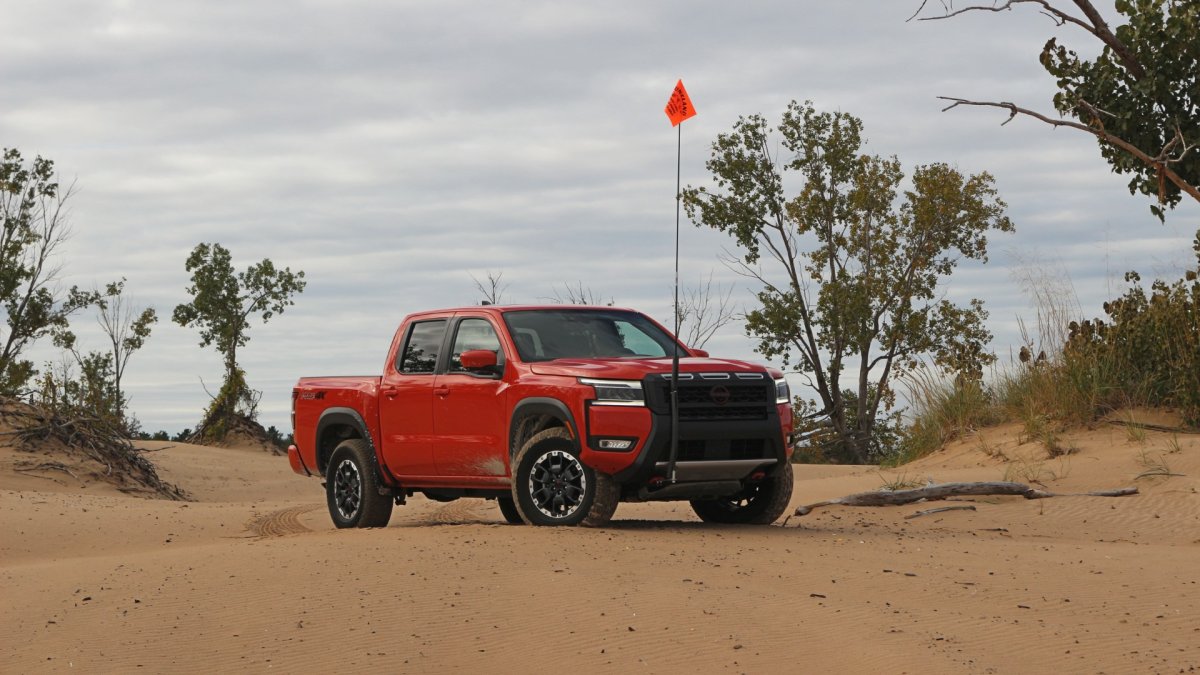
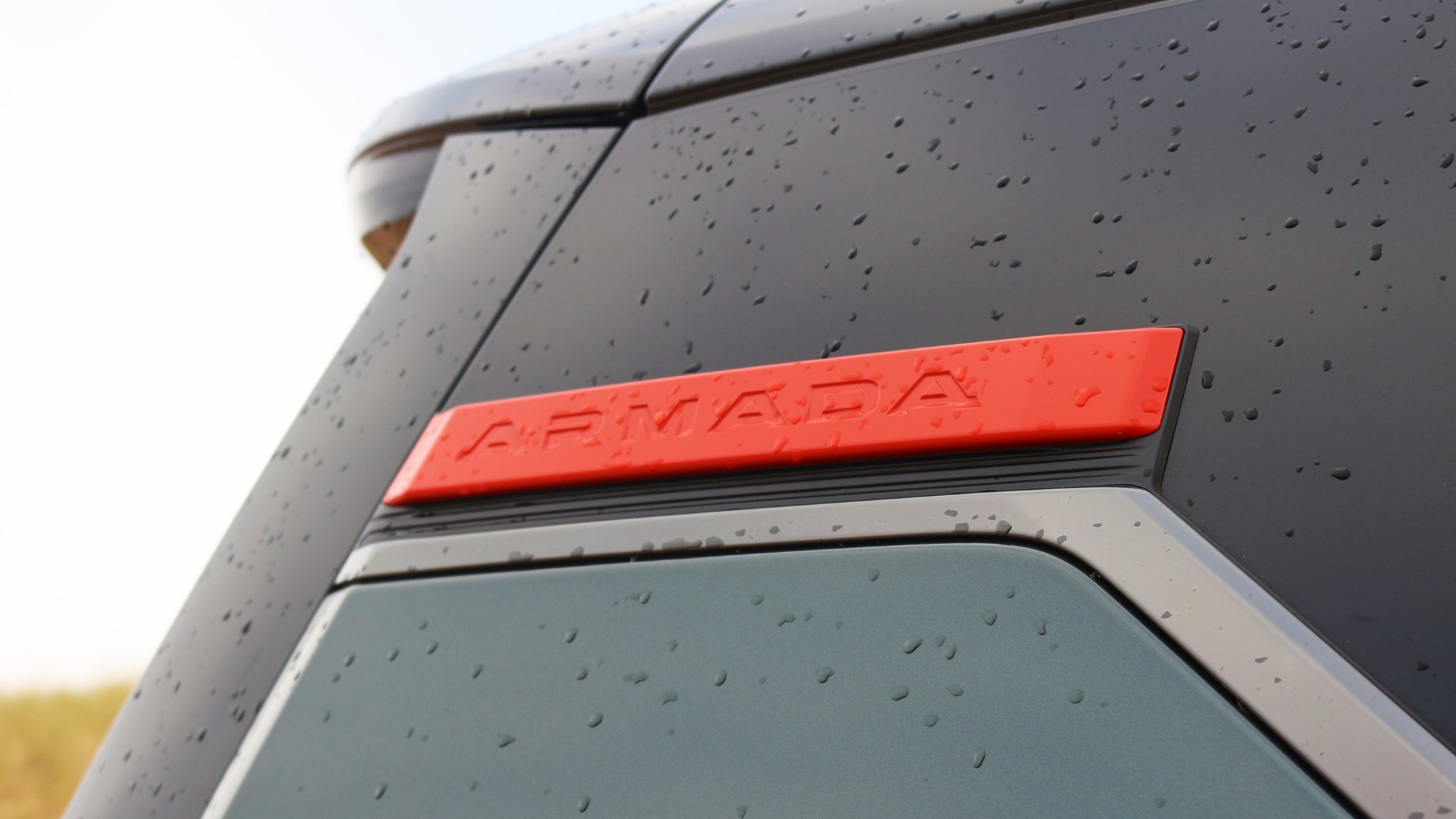
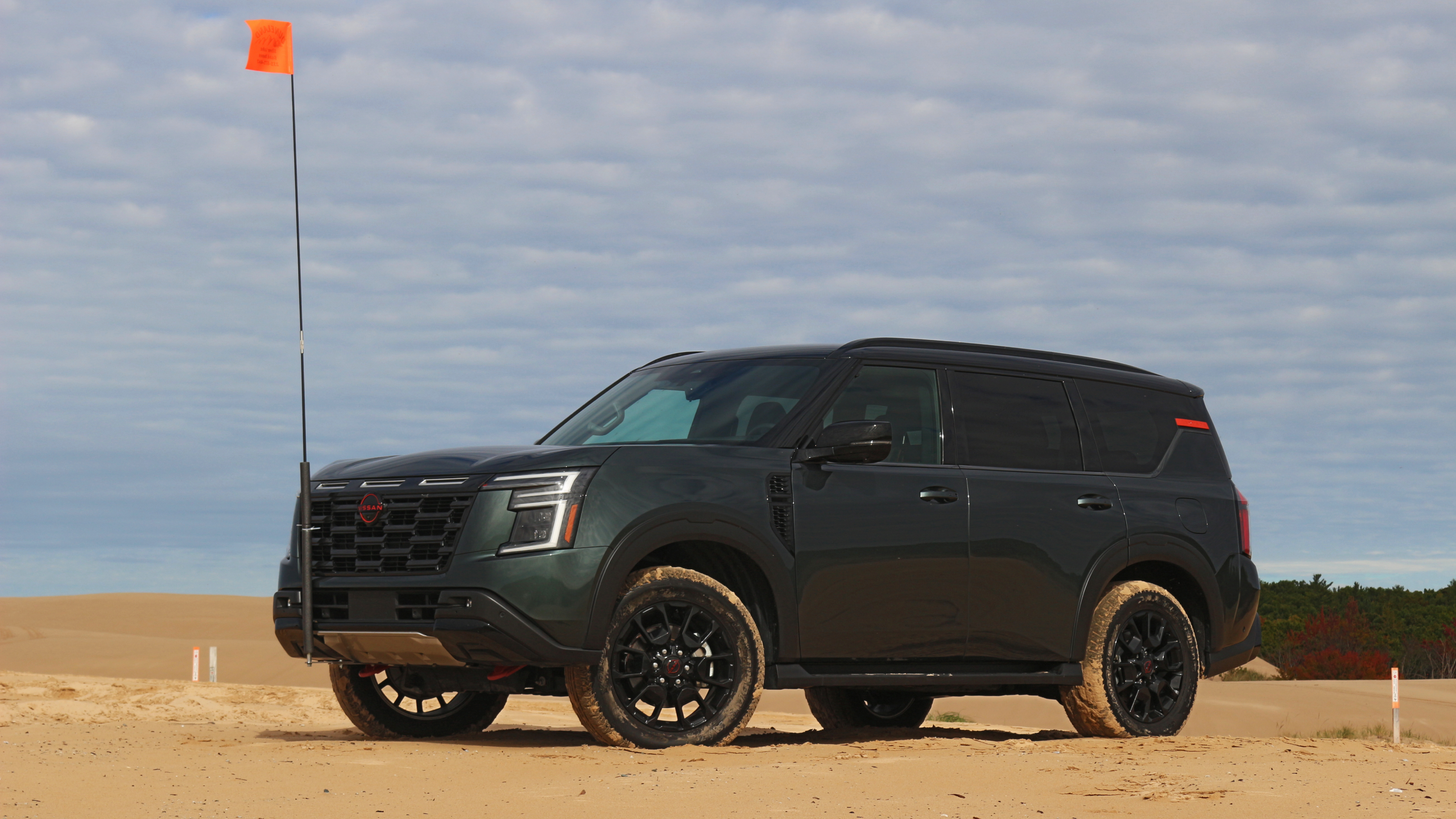
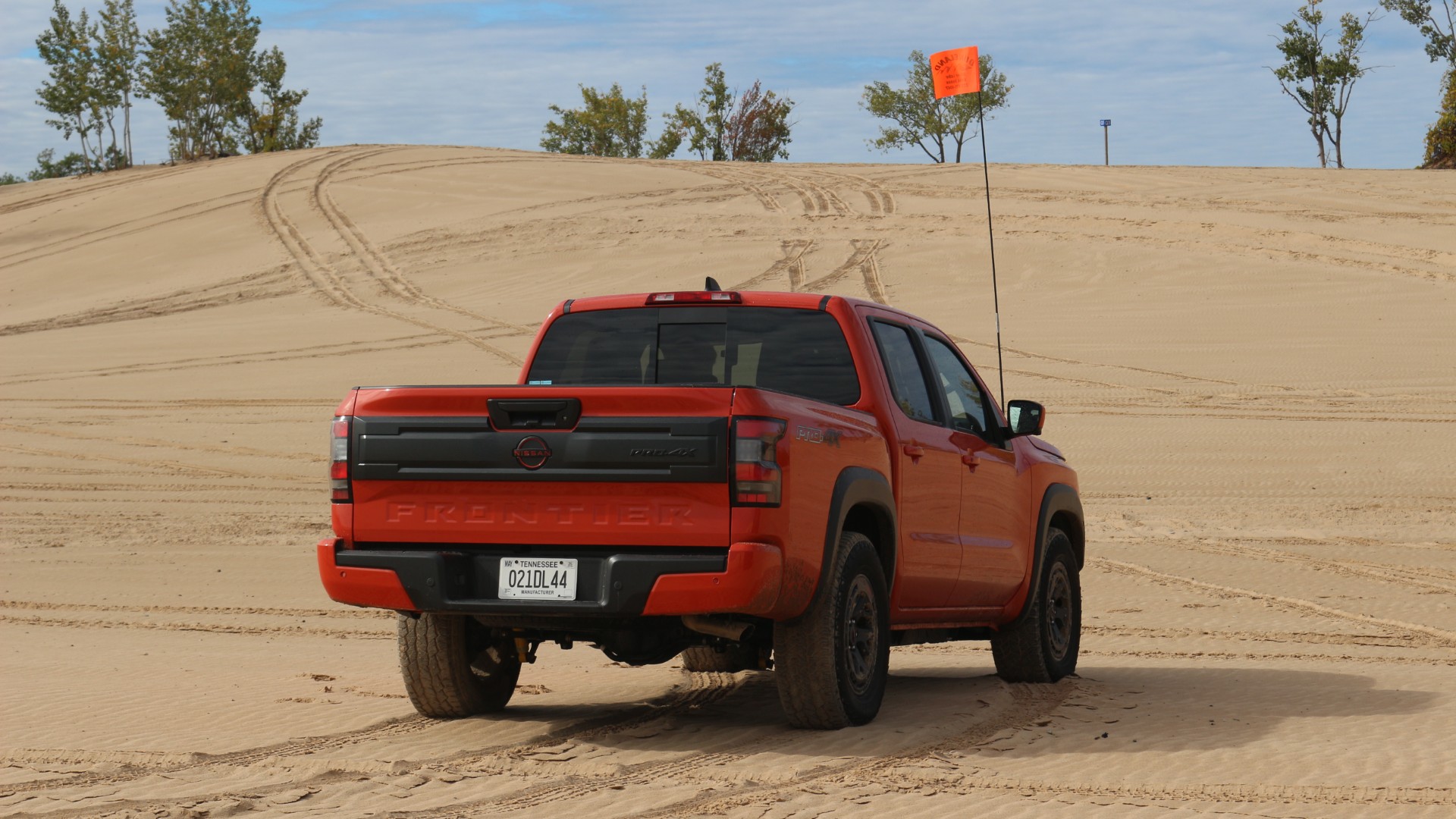
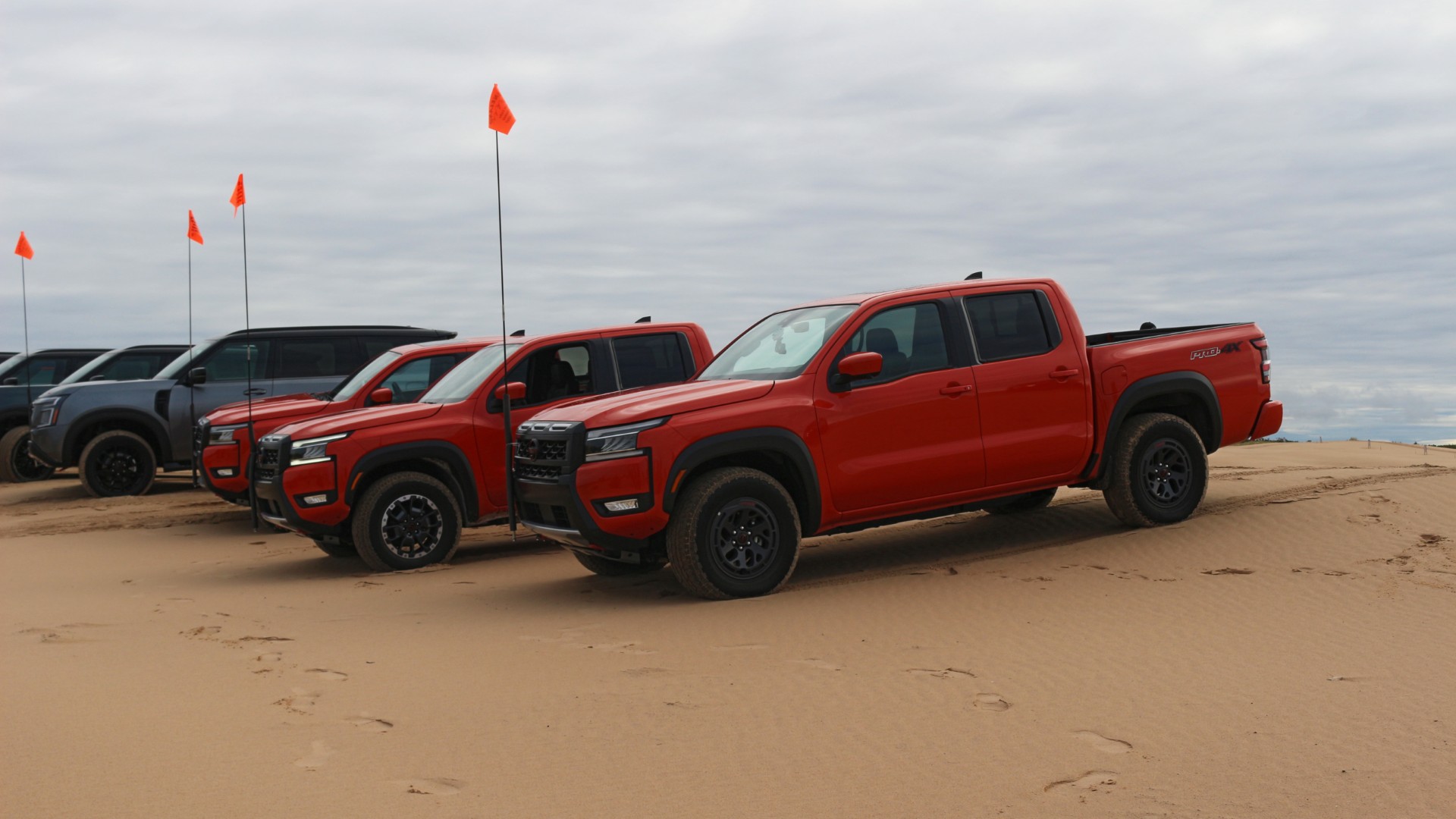
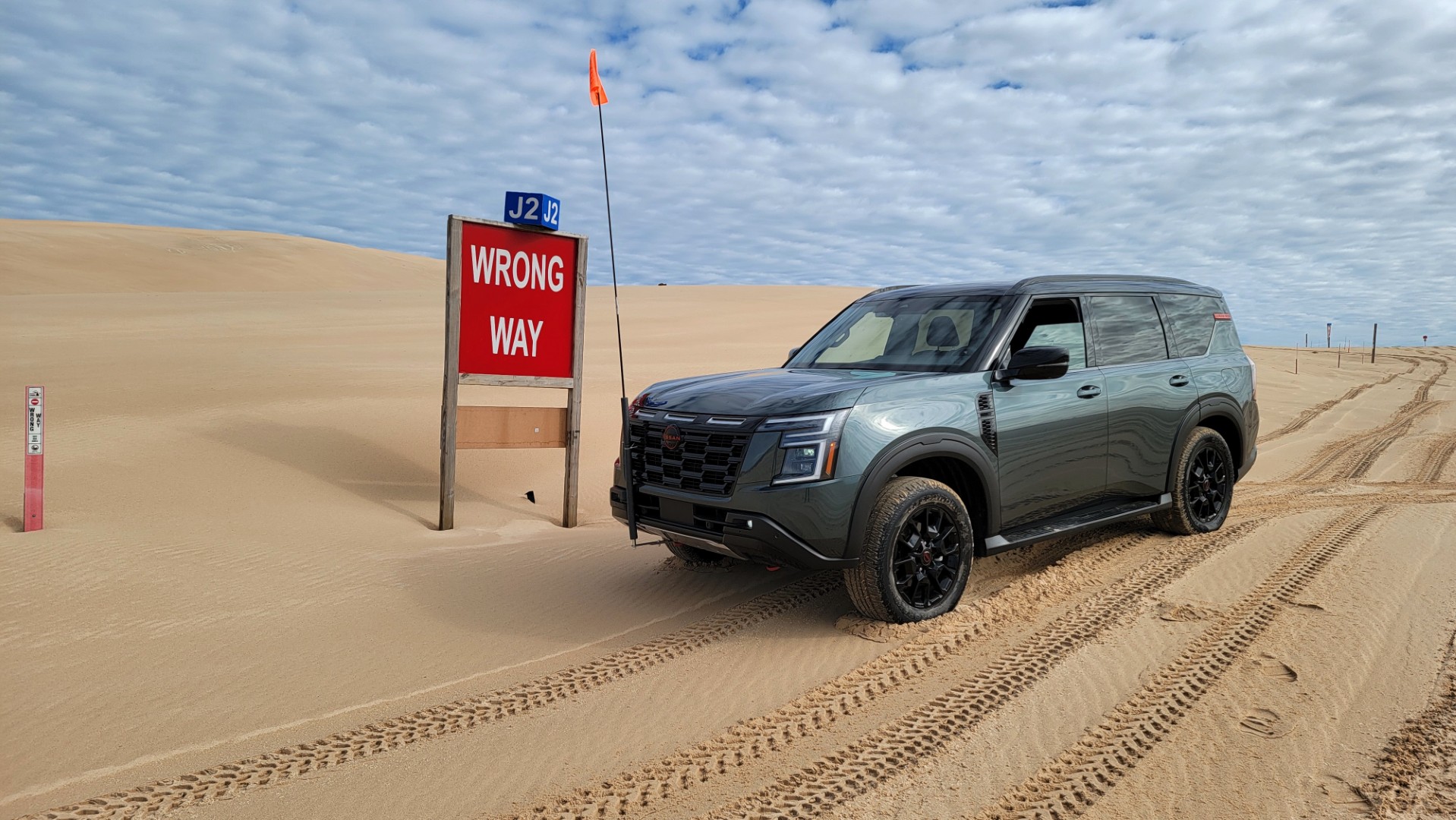
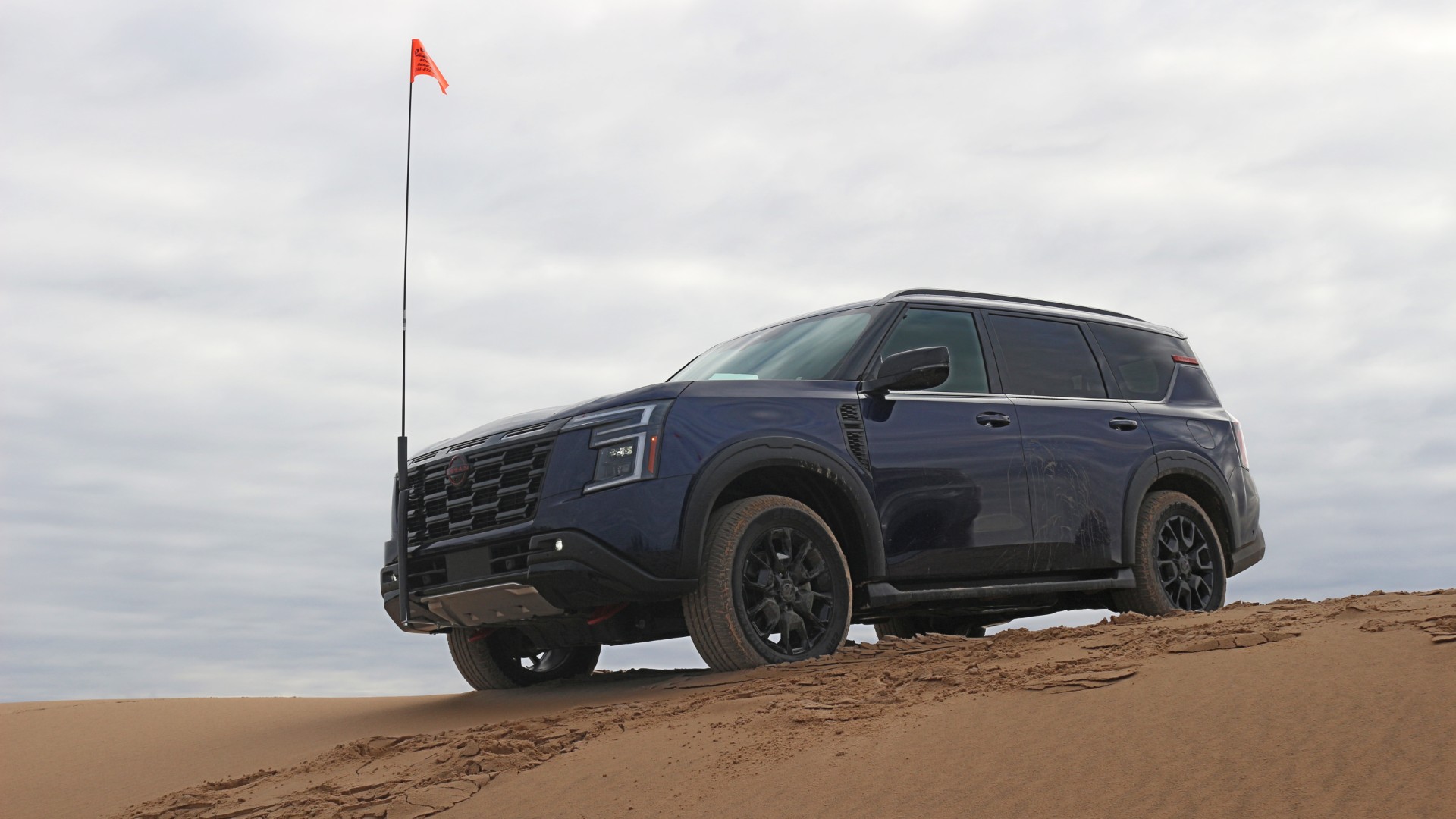
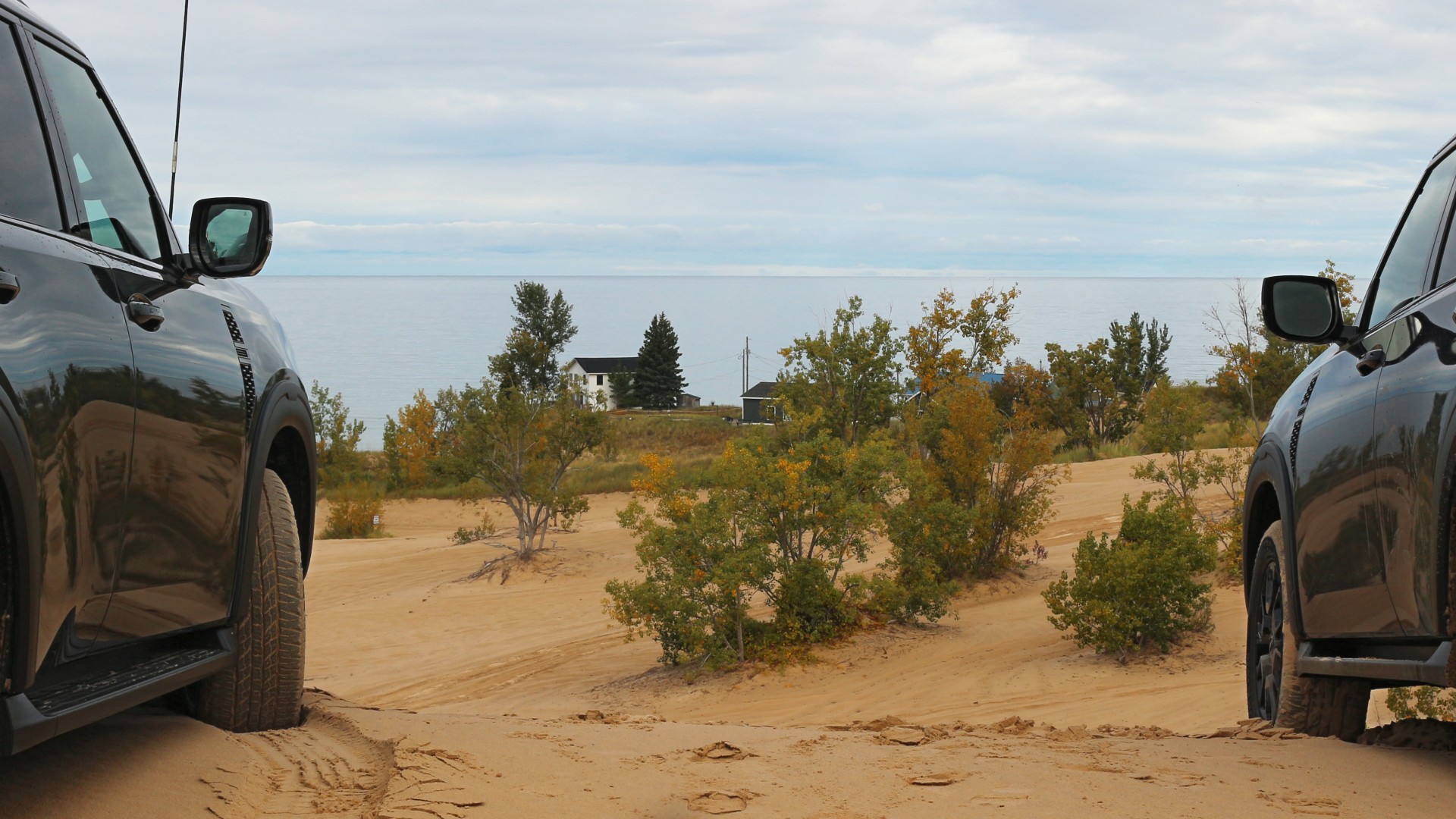
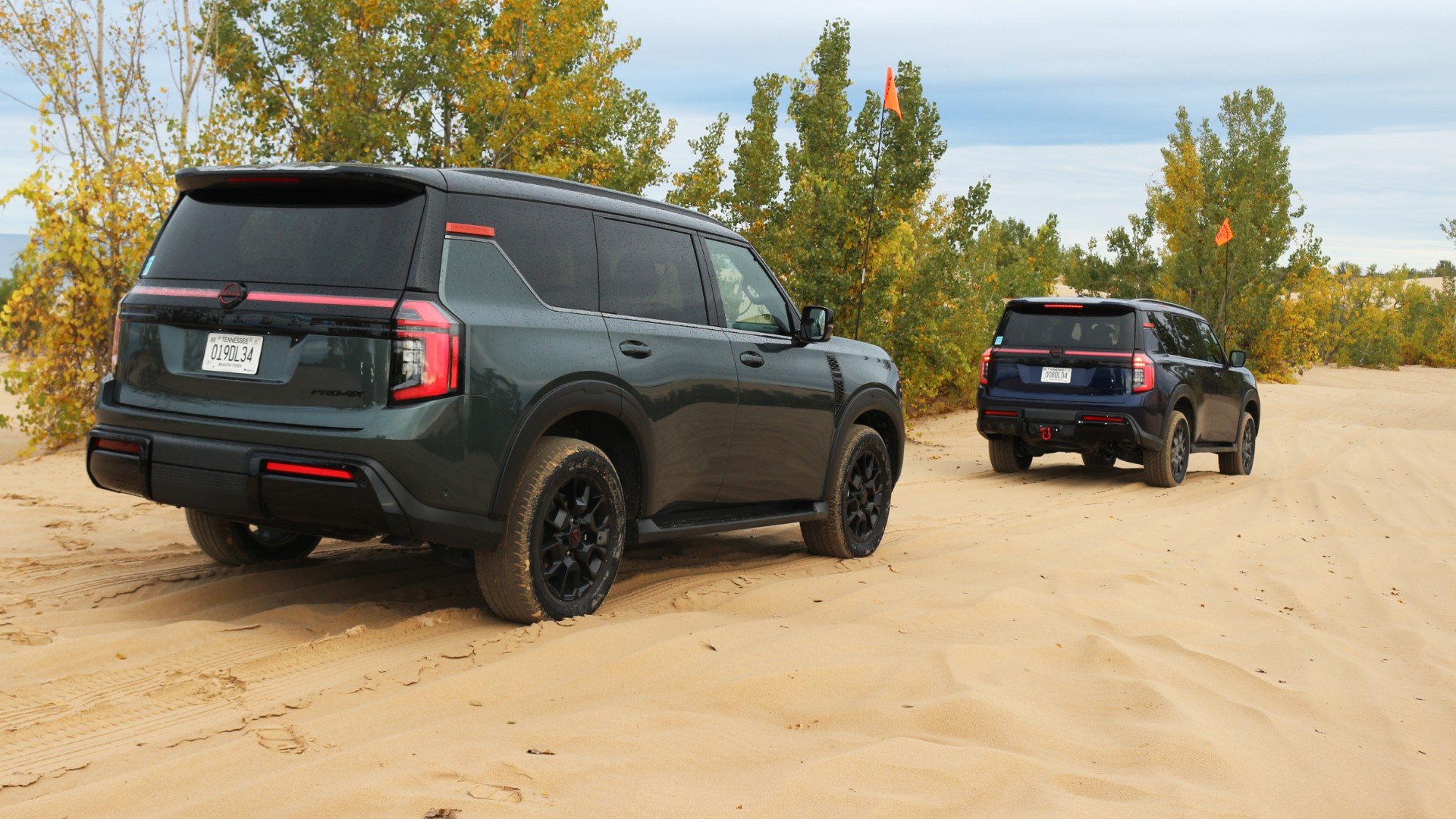
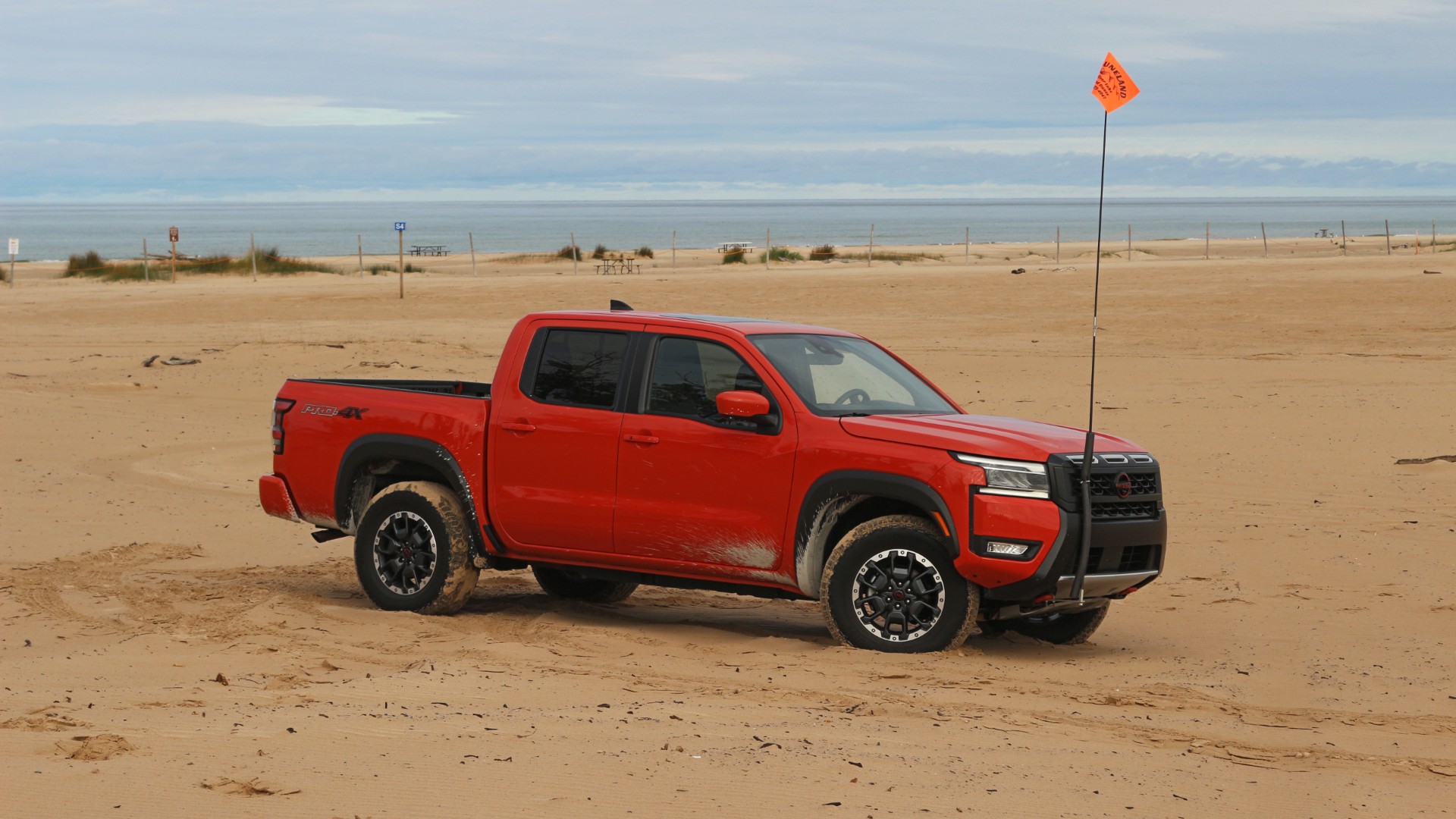
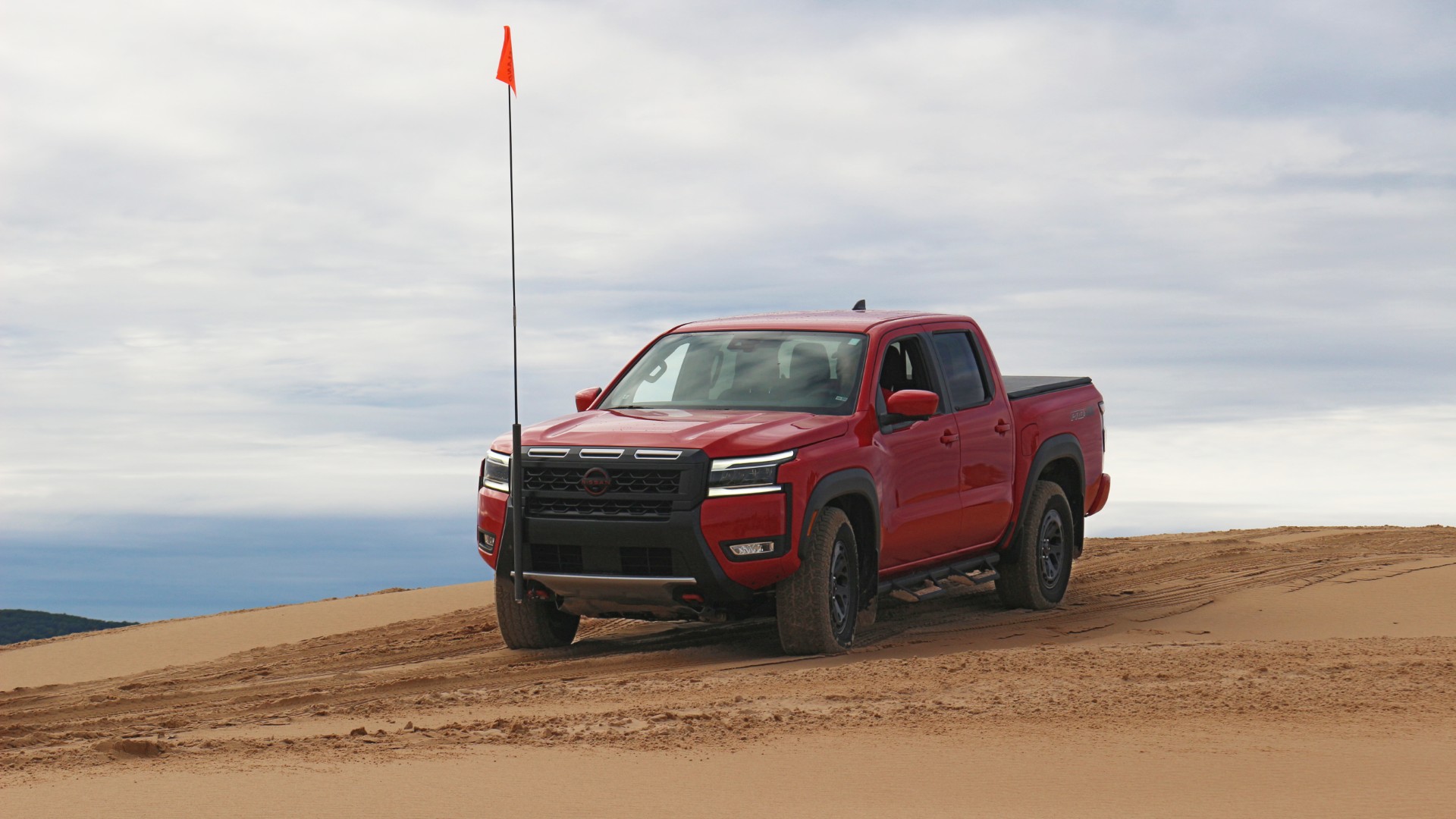
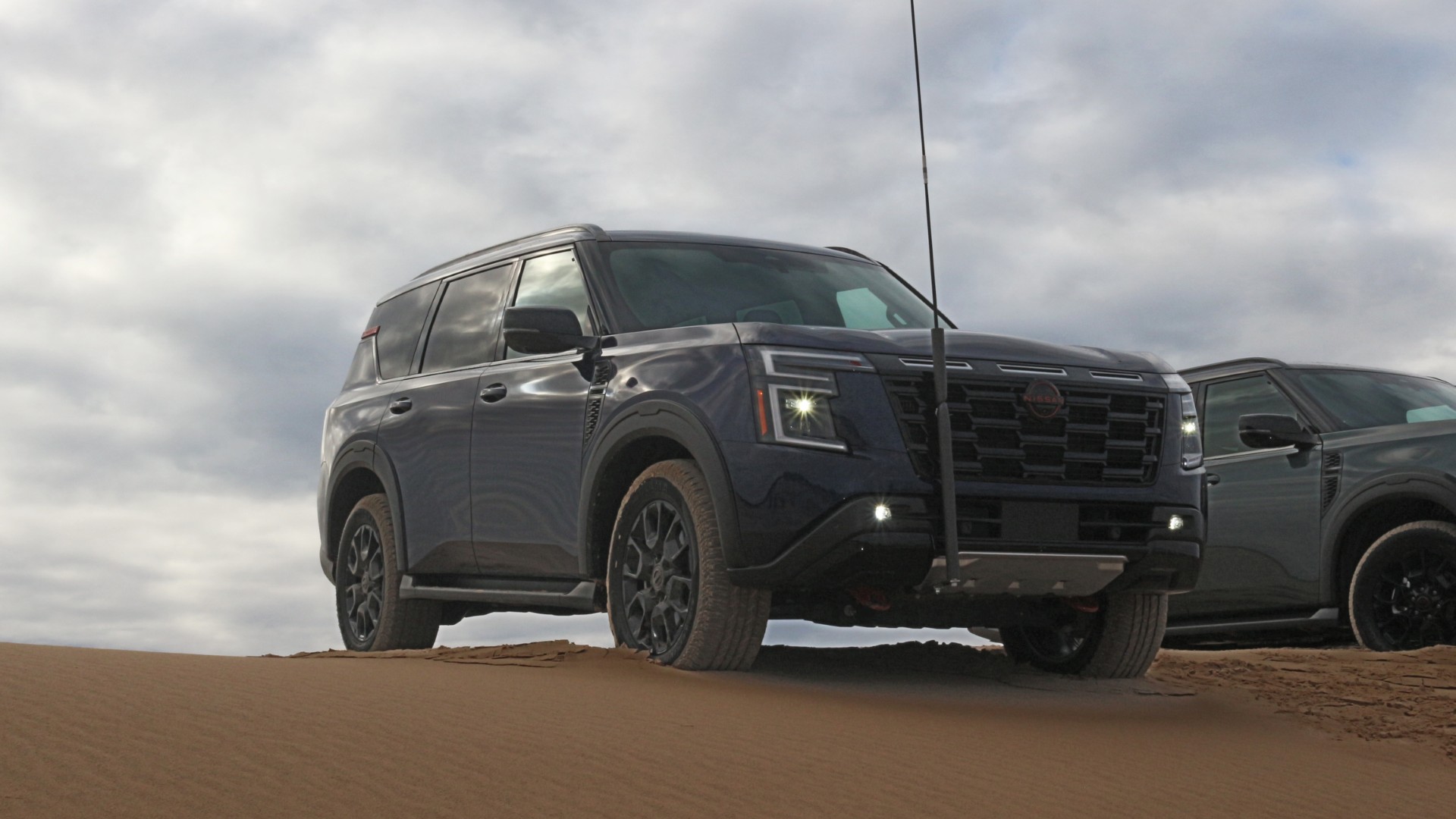
Pro-4X is Nissan‘s dedicated off-road brand—a competitor to the Jeep Trailhawks and Toyota TRD Pros of the world. It’s synonymous with extra ground clearance, knobbier tires, and locking differentials—the sorts of things you want if you do serious wheeling. So when Nissan invited me to sample its lineup of 4×4-ready Frontier and Armada Pro-4Xes at Silver Lake Sand Dunes in western Michigan, I was immediately game.
What do all those mechanical upgrades translate to out here on sand? In a word: overkill. To be fair, we got lucky in the grip department. After a dry summer and early fall, our trip to Silver Lake happened to come on the heels of a burst of rain. Contrary to most other performance driving situations, water actually gives you better grip on sand, packing it heavy and tight beneath your tires. Dry sand behaves more like an uncooperative liquid than anything resembling a hard surface, gleefully flowing away from your contact patches. With enough grip, navigating Silver Lake comes down to ground clearance and a little bit of momentum—and the Nissans offer both in spades.
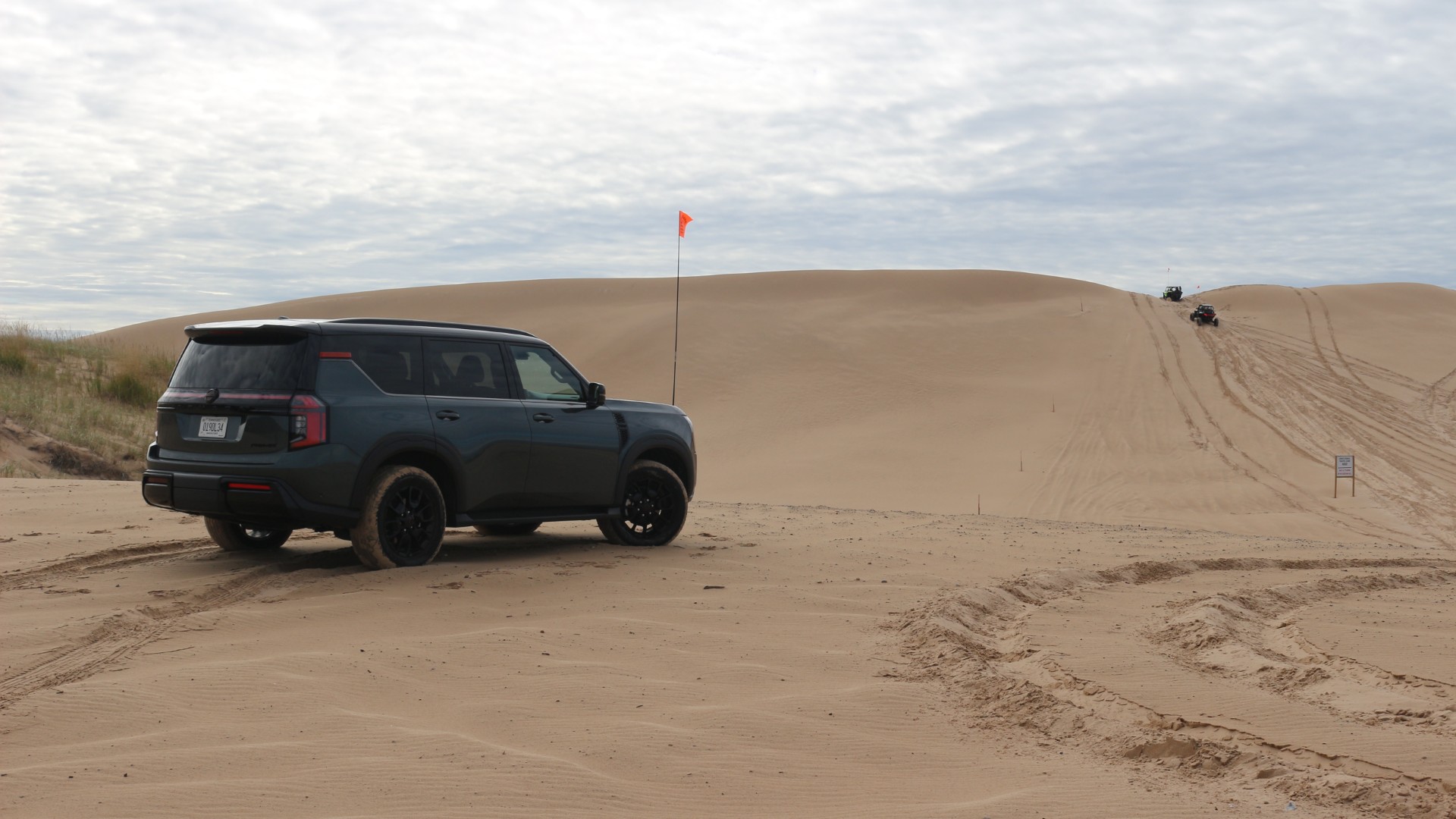
The former, of course, is baked in. In the case of the Armada, it’s further augmented by the settings of its fancy air suspension. You get between 9.6 and 9.9 inches of ground clearance with the standard car (and a bit less with the Nismo), but the extra lift baked into the Pro-4X and Platinum Reserve models provides another two inches on top of that, for a max of 11.6. The Frontier has to make do with a fixed ride height, but the Pro-4X has nearly an inch more ground clearance than the SV 4×4.
Byron Hurd
Momentum, however, is a different story. If you’re a racing fan, you might associate the term with cars that are down on power relative to their competitors and thus likely to struggle if they can’t capitalize on their typical advantages on technical courses. On track, momentum management can be the difference between finishing first and finishing last. Out here, it often determines whether you finish at all.
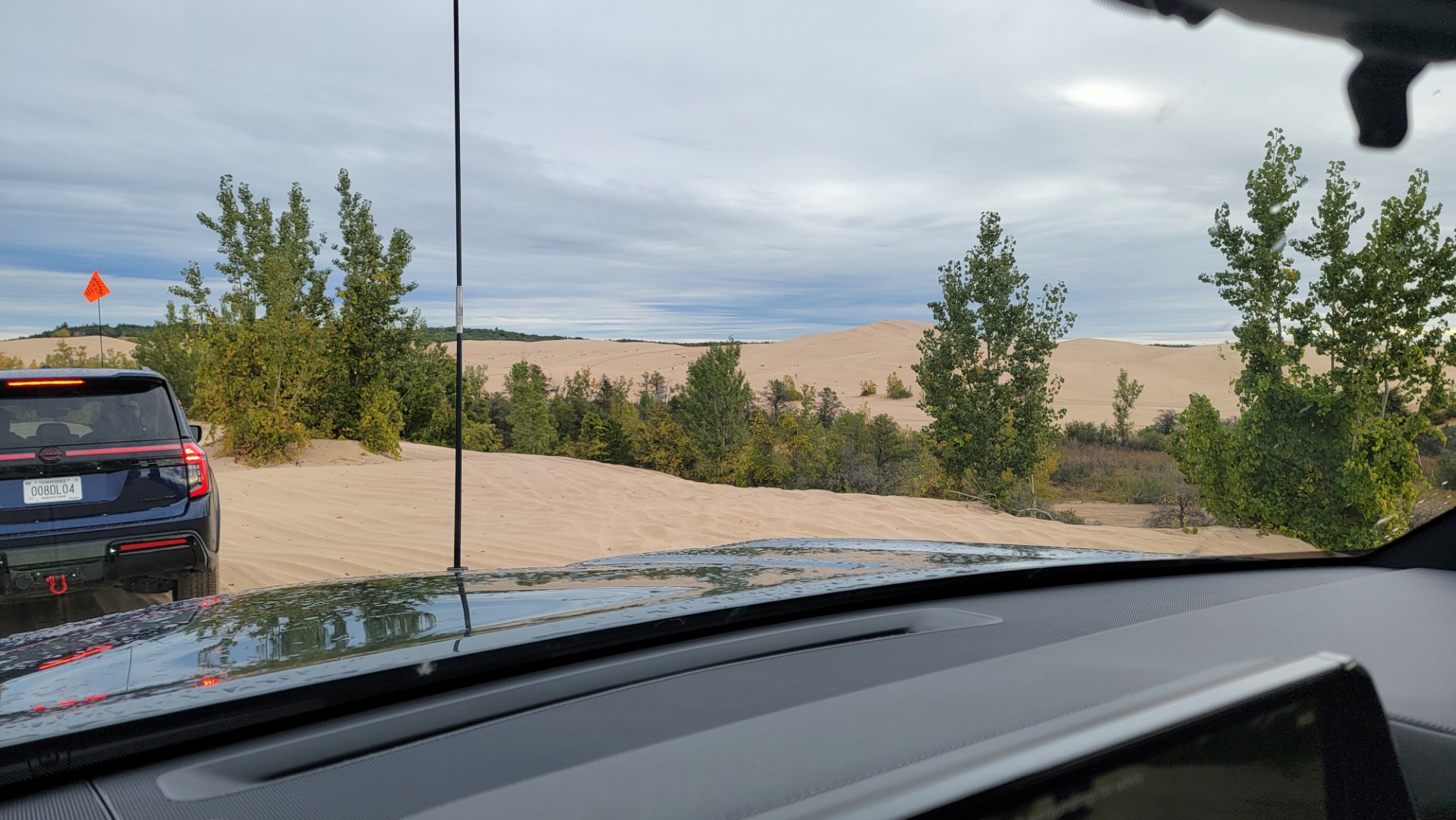
Despite my earlier allusions to wheel-to-wheel racing, this is what you might call more of a PvE (“Player vs. Environment”) type situation than PvP (“Player vs. Player”). That was especially true in mid-October, when we convoyed out to the dunes. By the time we arrived, the lakeside town had long cleared out for the season. 95% of the time, we had acres of park to ourselves in every direction. The effect was magnified after Nissan’s chase crew cut us loose with a radio and spoken assurances that they’d be able to locate us should anything go awry.
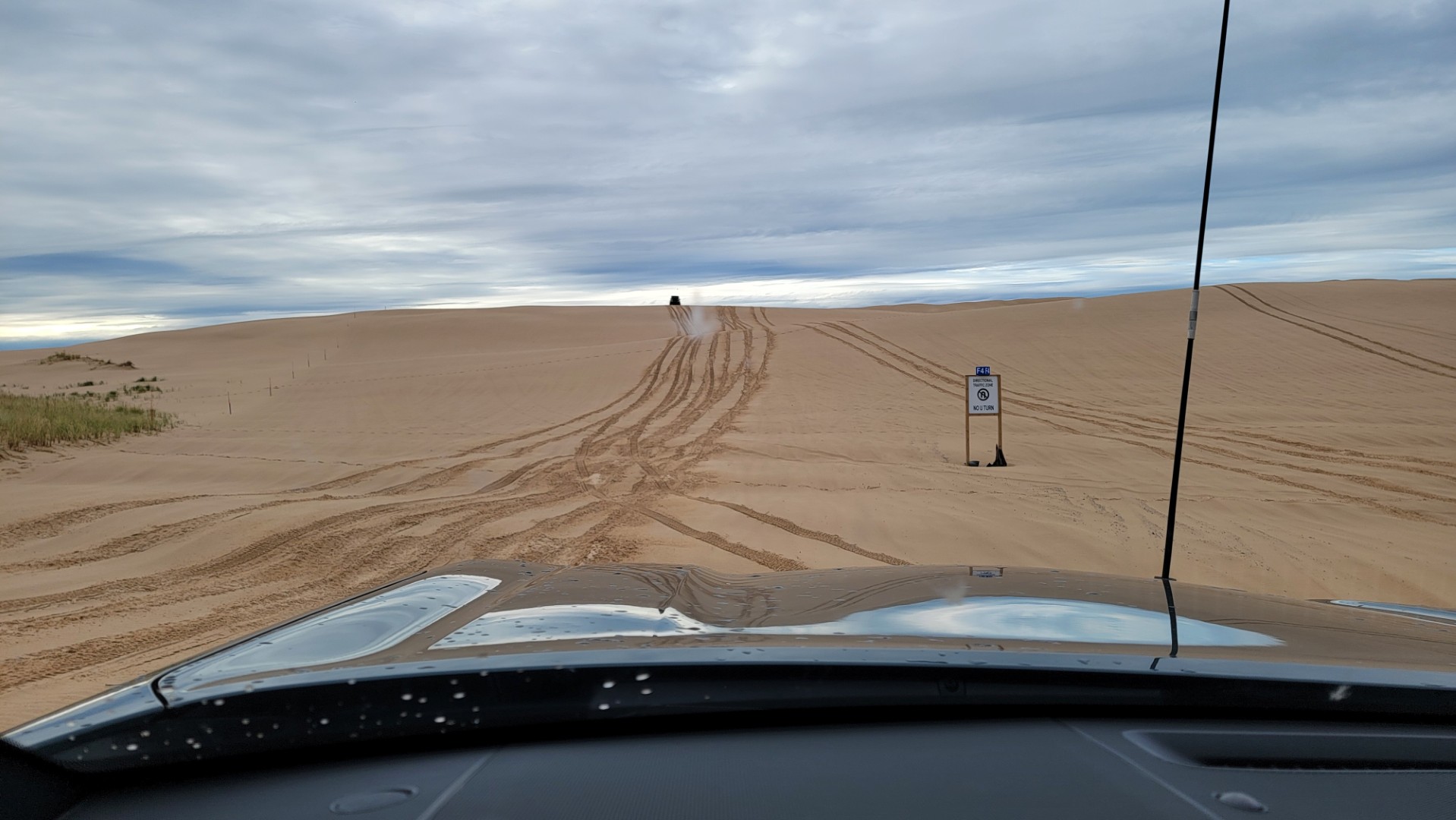
The rhythm of climbing sand dunes is simple to grasp but tricky to master. Ideally, you generate all the speed you need as quickly as possible, letting gravity bleed it off as you climb. If you time everything correctly, you’ll arrive at the peak with just enough inertia to tip your nose over the crest, but no more. Arrive with too little speed, and you’ll bog down before you reach the top. Get there too hot, and you’ll overshoot, which can send you ass-over-teakettle down the far side. I’ve seen it done, and frankly, I wouldn’t recommend it. Sand’s soft, but not that soft.
To make matters worse, the flow of the trail is constantly changing. Each trip up the dune is a hard reboot—a new surface potentially hiding new challenges. Driftwood? Small boulders? A cluster of millennia-old seashells? You never know what might get churned up—or worse, when somebody might get stuck and make a mess digging themselves free. And when inertia alone isn’t enough to get the job done, that’s when you call in reinforcements—in the form of torque, naturally.
Byron Hurd
There are two levers to pull in order to increase your available torque: engine output and mechanical multiplication. The first is exactly what it sounds like: By stepping on the throttle, you feed the engine more air and more fuel, which it then converts into torque. The second is a five-dollar way of saying it all comes down to what gear (and range) you’re in.
Enthusiasts get all fizzy over two-speed 4×4 transfer cases for exactly this reason. By shifting into low-range, you multiply the torque going to the wheels at a given speed. This shortens all of your gears, meaning your engine spins at a much higher RPM than normal to achieve the same forward velocity. Translation? Lots more noise producing and a lot less forward progress. Sounds bad, right? Usually, it would be, but out here, it means you can produce WAAAAAH! levels of torque without WAAAAAH! levels of forward progress.
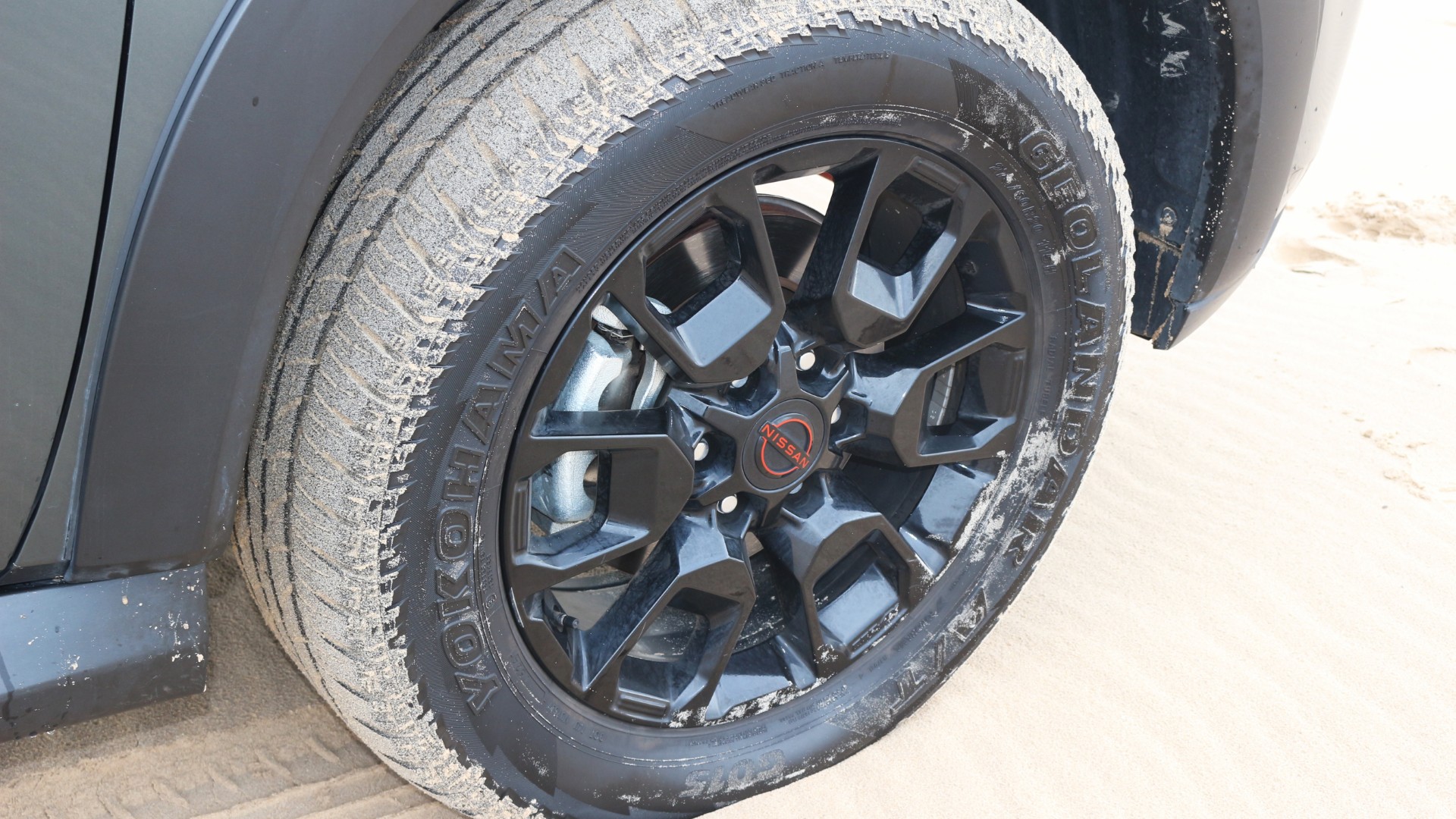
Normally, deep sand is exactly where you’d want a low-range gearbox and locking rear differential, which is why Nissan only bothered to bring Pro-4X models along for our outing. But with all the rain, the top layers of the dunes were packed solid, inviting tires to grab with very little drama. Four-wheel drive was still mandatory, but low-range proved unnecessary. Manually selecting second gear to keep the trucks from up-shifting into the torqueless abyss of fuel-efficient ratios proved more than enough to keep the engines operating within the meat of their respective power bands, and the tires were aired down to aid in keeping the trucks afloat on the crushed white quartz that emerges from eastern Lake Michigan.
My first stop on my solo expedition was the same one visited by countless others over the decades of 4×4’ing at Silver Lake: Test Hill. Its name says it all, really. If you can get up Test Hill, you can go anywhere in the park. It’s a climb of less than 200 feet, and if you do it right, you should complete it in seconds. Get it wrong, and you’ll gain new appreciation for just how high that really is.
My first go was in the Frontier, which lacks the Armada’s turbocharged torque (516 pound-feet!). Still, 281 lb-ft is nothing to sneeze at, and like the SUV, the pickup allows for manual gear selection. I hadn’t driven this truck at all until today, and my familiarization with the powertrain came from the two-minute crawl from our beachside staging area to the base of Test Hill. A few hundred yards away, I could see one of our recovery trucks parked where its occupants could quickly deploy to the stickier spots should anybody need assistance. I decided then and there not to be that guy.
Byron Hurd
With that in mind, I gave the Frontier about 60% throttle and dedicated my attention to keeping it pointed straight ahead. It not only lacks the Armada’s grunt, but also its heft, especially over the rear axle. It bucked and wiggled its rear end under throttle, alternately biting and then bouncing free as the sand gave way beneath the tires, but with a little finesse and some patience, it found the ruts and settled—just in time for the top of the dune to disappear beneath the Frontier’s hood, followed by the brief sensation of vertigo as the front wheels gently tipped over the crest.
Not today, tow strap!
Committing to Test Hill means committing to several more massive crystalline undulations. This section of the park is one-way due to dangers that would be posed by blind, two-way traffic over the sky-scraping crests. Each successive dune is easier to clear than the one before it, but all are unique. One nearly bends over itself at the top—that’s one you really don’t want to take too hot. Counting the seconds until your wheels touch back down sounds awesome in the abstract, but it’s a bit dicier when your clenched cheeks are about to absorb the brunt impact.
After I concluded my tour in the Frontier, I made my way back to the staging area to find somebody looking to trade their Armada for the pickup. Before long, I was back at Test Hill in the big SUV, waiting on a small buggy of some sort to free itself from its high-centered perch atop the dune. I glanced toward where our recovery crew had been staged earlier and found them missing—probably checking in on another driver, as I’d heard nothing at all over the radio. So I sat while the recovery played out. Once the way was clear again, I saddled back up and charged at the dune in the big Armada—only to bog down completely just short of the crest.
No sweat, though—the trick is not to panic. Off-roading is a hobby defined by one of our best-known societal maxims: If at first you don’t succeed, try, try again. In this case, that means backing down the dune to the starting point and starting from scratch. It’s simple enough, but you have to be careful about keeping the thing pointed straight downhill. If you get too much steering angle, it’s easy to lay the truck on its side—or even roll down the hill completely. Yep, seen that too.
But 30 seconds later, I was back at the proper launch point, shiny-side-up and ready for another try. I glanced again to find that the recovery crew had returned to its perch with their truck facing Test Hill—like a turkey vulture curiously eyeing what might be a sick bull.
No chance, you ugly, bald f-
I sent some gnarly rooster tails up on the second go, and the way the Armada bit in, I knew I was golden. As I approached the crest, I saw the huge concave area that the buggy had scrubbed out. Just as it disappeared beneath the hood, I goosed the throttle for a fraction of a second to bring the nose up, hoping it would keep the front bumper from coming down on the crest and killing my momentum. It worked. By the time the nose rebounded toward the ground, the front axle was already dropping away beneath me, and with just a mild dab of brake to keep the rear end honest, I was once again gently descending in the right direction. High on the clean finish, I made my way through the park and back around for another go, which ended up being unremarkably trivial.
This is the second time I’ve visited the dunes. My first was at the wheel of a Ford F-150 Raptor R alongside The Drive‘s indefatigable Joel Feder. While that’s a very different automobile from the two Nissans I drove this time around, the experience proved comfortingly familiar for one simple reason: Modern 4x4s are just stupidly capable.
Byron Hurd
Decades ago, a discussion of must-have factory off-road equipment usually began and ended with steel bumpers, upgraded axles, and two-speed transfer cases. Today, we’re constantly being bombarded by new tech that further trivializes what used to be car-thrashing obstacles. In today’s increasingly massive 4x4s, items like surround-view camera systems and hill descent control can actually enable trickier maneuvers than any commercially available lift kit.
As depressing as that reality may be for some, the simple fact is that the automotive industry has left the short-wheelbase, two-door 4×4 formula behind in favor of modern engineering solutions that allow OEMs to fit massive wheel and tire combinations to mid- and even full-size trucks and SUVs. Even AEV, which prides itself on offering capability without real-world compromises, is finding ways to stick 40-inch tires on anything with four wheels—and the resulting vehicles are genuinely more capable for it.
Can the same be said for Nissan’s Pro-4X lineup? In the case of the Armada, I say yes. Its air suspension keeps it from turning into a tippy mess on pavement and offsets the NVH impacts of its burlier tires. That’s a trade-off I’d accept in a heartbeat. The Frontier’s value proposition is a bit trickier since it doesn’t offer anything to offset the downgrade in creature comforts. For the pickup buyer, however, that may not matter much. It certainly wouldn’t around here.
IN A tranche of recent ANCAP testing Chinese brands Chery, MG and MG sub-brand IM Motor all achieved the maximum five-star rating from the independent car safety assessment body.
The Tiggo 7 Medium segment SUV and Tiggo 8 Large segment SUV achieved the top rating across both ICE and Super Hybrid variants of the range.
Drilling deeper into the crash testing data we find both vehicles were scored by ANCAP at 82 per cent for Adult Occupant Protection, 86 per cent for Child Occupant Protection, 80 per cent for Vulnerable Road User Protection and 82 per cent for Safety Assist features.
“The availability of safe alternate-powered SUVs continues to expand, with testing confirming all Chery Tiggo 7 and Tiggo 8 plug-in hybrid variants hold five-star ANCAP safety ratings, alongside their petrol counterparts,” said ANCAP CEO Carla Hoorweg.
“With these ratings, Chery has demonstrated high levels of vehicle safety performance, regardless of powertrain.”
Responding for Chery, chief operating officer Lucas Harris said, “We are delighted to receive the prestigious five star ANCAP safety rating for the 2025 Tiggo 7 and 8 models.”
“This acknowledgement highlights our steadfast dedication to delivering vehicles that adhere to the most stringent safety standards, offering assurance and peace of mind to our customers,” he added.
Moving to Chinese competitor MG we find a similar ANCAP five-star outcome for both the Small SUV segment MGS5 EV and IM 5 Medium segment sedan (assessed as a large sedan in ANCAP’s ratings) each recognised as ANCAP Safety Top Performers for 2025 which deliver “best-in-class protection for Australian drivers, passengers and road users”.
The accolade anoints ANCAP’s leading safety performers for 2025, representing the safest new vehicles across each segment in Australia.
Each year, ANCAP identifies the strongest-performing vehicles based on their results across Adult Occupant Protection, Child Occupant Protection, Vulnerable Road User Protection, and Safety Assist categories.
“Recognition of these MG models as ANCAP Safety Top Performers is another proof point for Australian drivers, reinforcing our dedication to safety, quality and innovation,” said MG Motor Australia head of product Meng Chen.
“These accolades were previously the preserve of expensive European vehicles, and it’s our commitment to consistent improvement that means with MG you can trust you’re getting truly world class safety, along with unbeatable value without compromising on technology, performance or style.”
The ANCAP top performer results reflect the increasing demand for high levels of safety performance across the most popular vehicle types and set the benchmark for safety performance in Australia for 2025, showing consumers and fleets the safest options on local roads.
In hard data, the IM 5 scored 89 per cent for Adult Occupant protection (90 per cent for the MG S5 EV), 91 per cent for Child Occupant Protection (86 per cent for the MG S5 EV), 85 per cent for Vulnerable Road User Protection (82 per cent for the MG S5 EV) and 79 per cent for Safety Assist features (79 per cent for MG S5 EV).
ANCAP five-star-rated MGs now include the ZS, HS, QS, U9, MG 7, and the MG 4.
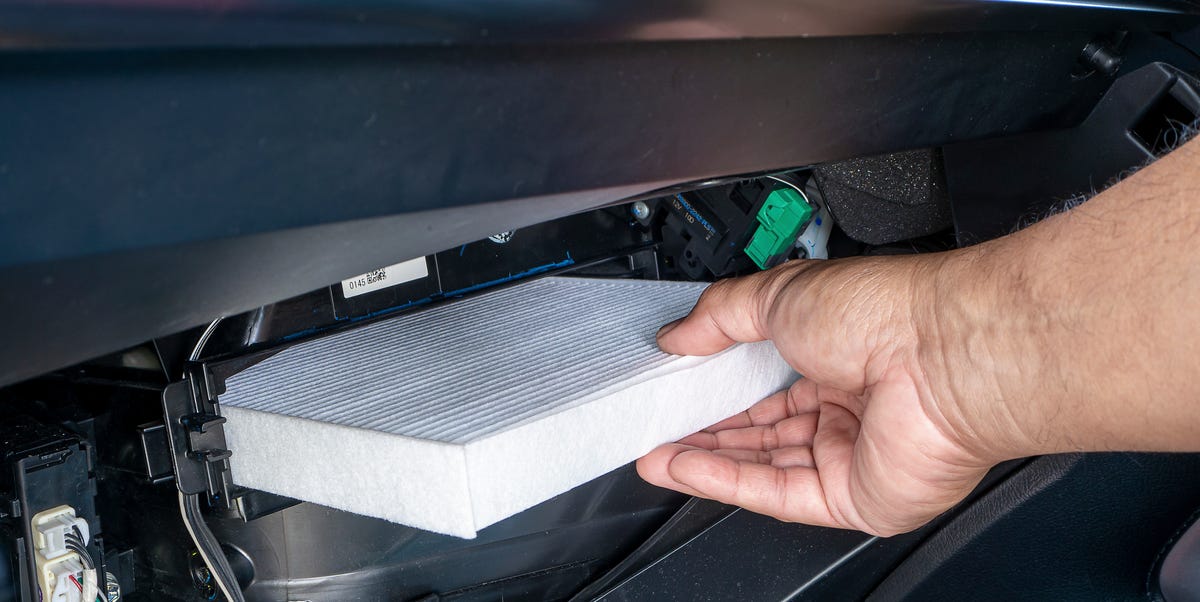
Cabin air filters clean the air entering the interior of dust, smog, odors, allergens, and other contaminants. Assuming everything is reasonably well sealed—the windows are closed, the top is in place, and the doors are attached—this filter keeps the outside from getting inside your vehicle.
Like any atmospheric filter, the one assigned to your vehicle’s cabin catches bad stuff as air from outside passes through it on the way to the interior. Cabin air filters are integrated into a vehicle’s ventilation system.
shop cabin air filters at amazon
Do All Cars Have a Cabin Air Filter?
Most modern vehicles include HVAC systems with a cabin air filter. Saab was one of the first manufacturers to introduce this feature, starting with the 1979 900. Other automakers soon followed suit, though this feature was primarily limited to vehicles from luxury marques. By the 2000s, cabin air filters made it to the mainstream. For instance, the 2002 Toyota Camry offered one. Though it’s not a mandated piece of equipment, the cabin air filter is now commonplace.
Note that the cabin air filter is entirely different from the air filter found under the hood of vehicles with internal combustion engines. That filter treats only the air going into the engine and assures that no debris or foreign matter makes it into the cylinders.
picture alliance|Getty Images
How Effective Are Cabin Air Filters?
If you’ve ever strolled the air filter aisle of a home improvement store, you’re aware of the wide array of options for what seems like a pretty simple part. It’s a similar situation with vehicle cabin air filters; the packaging will tell you what kinds and sizes of particles (usually measured in microns) the particular product can handle. The cost of a cabin air filter typically increases in relation to its claimed effectiveness.
You can go with the budget option, which will filter some particles but let others through. The mid-grade choice will catch more, but not as much as a top-of-the-line model. Because filter sizes vary by application, the selection available for your specific vehicle depends on what fits into its filter housing. If your local parts department doesn’t have what you want, consider searching online.
Some cabin air filters use activated charcoal to better trap odors. Others offer some level of HEPA-rated filtration (short for high-efficiency particulate arresting filtration). To meet this standard, a HEPA-rated filter must be able to remove a minimum of 99.97 percent of dust, pollen, mold, bacteria, and other airborne particles that measure as little as 0.3 microns.
ADOBE STOCK | CLAUDINE SABEAU
Cabin Air Filter Maintenance FAQs
Why is it important to replace my cabin air filter regularly?
Just like the air filter on your furnace at home, a vehicle’s cabin filter is replaceable for a reason. Over time, the filter will get clogged and dirty simply by doing its job. Swapping in a new one will help ensure the air in the car is clean and that the ventilation system is working in its most efficient state.
How often should I replace my cabin air filter?
Air-filter replacement cadence depends on a lot of highly variable factors, including how often the vehicle is driven, the environments in which it’s operated, and how good of a filter is being used at the time. Owner’s manuals include recommended replacement frequency, and there are often two or more schedules you can choose from depending on how and where the car gets used. Consider this as guidance, but feel free to deviate from it as you see fit. Unlike failing to replace your engine’s air filter, running a dirty cabin filter is not going to void your warranty—but it may damage your lungs. That said, most cabin air filters are relatively inexpensive, so you owe it to yourself to avoid breathing dirty air behind the wheel.
What signs indicate that my cabin air filter needs replacing?
Aside from measuring how long the part has been in service, several things can help determine when it’s time for a new cabin air filter. If the air from your vents smells a bit funky, then that’s a likely sign to replace your cabin air filter. If the ventilation system isn’t blowing as hard as before or makes noise when the fan is running, then there’s likely a blockage somewhere in the system—there’s a reasonable chance a dirty cabin air filter is the culprit.
Visual inspection can assist in determining when it’s time for replacement, too, but it’s not always obvious that a filter is past its prime at a glance.
Can I change the cabin air filter myself?
The process to gain access to the cabin air filter varies from model to model. It should be outlined in your owner’s manual, and many filters are hidden behind the passenger’s side glove box. Getting to the filter for inspection and replacement typically requires simple hand tools, such as a screwdriver or socket wrench—on some cars it’s possible to change a cabin air filter without the need for any tools at all.
Where can I take my car to get a cabin air filter replaced?
Any repair shop will gladly replace your car’s cabin air filter for you, though it may require spending a few extra bucks on labor costs. Many parts stores will take on this job, too. And often for free. Though you may want to have a couple of spare Washingtons or Lincolns on hand to tip the individual assigned the task of replacing your vehicle’s cabin air filter.
shop cabin air filters at amazon
Ever since David was a wee Car and Driver intern, he has kept a spreadsheet listing all the vehicles he’s driven and tested. David really likes spreadsheets. He can parallel-park a school bus and once drove a Lincoln Town Car 63 mph in reverse. After taking a break from journalism to work on autonomous vehicles, he’s back writing for this and other automotive publications. When David’s not searching for the perfect used car, you can find him sampling the latest in gimmicky, limited-edition foodstuffs.
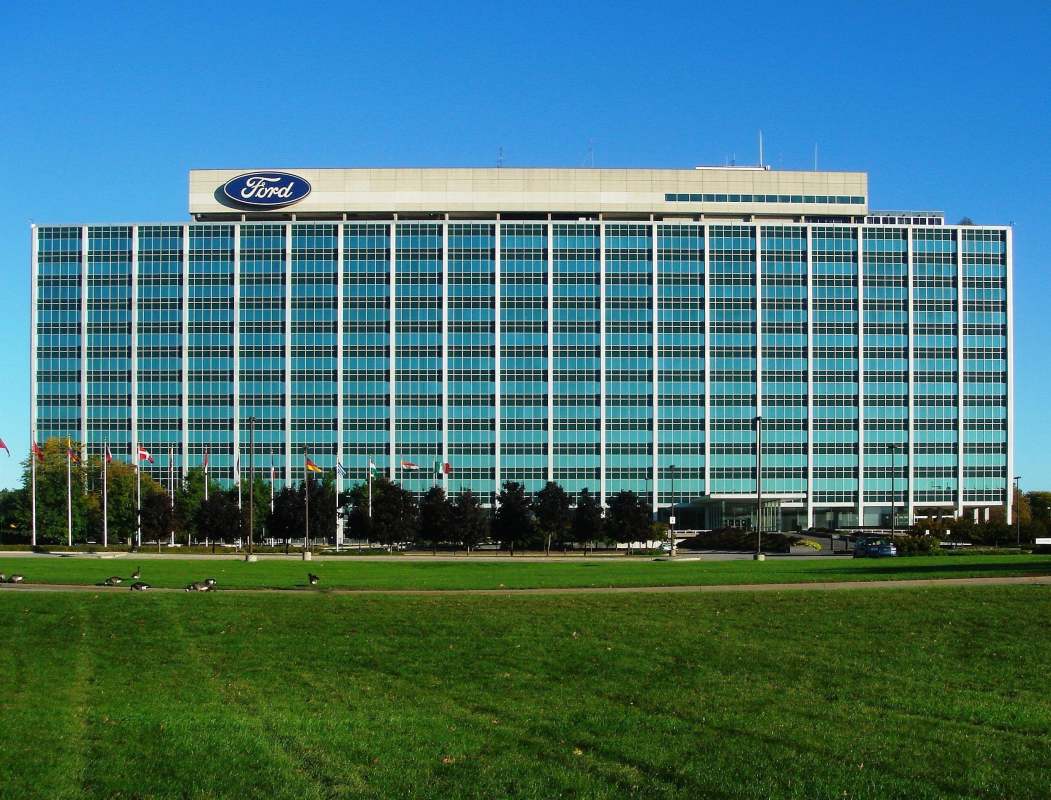
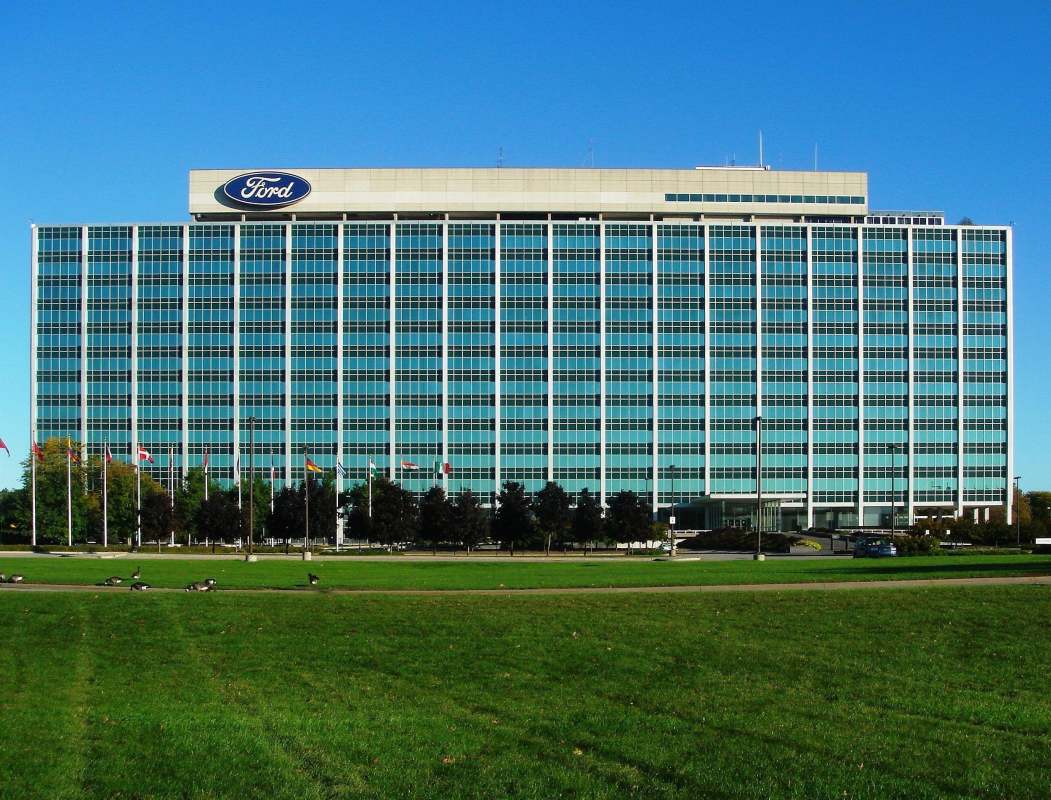
In an interview with InsideEVs, Ford CEO Jim Farley says the company’s planned $30,000 electric truck has reached the prototype stage, describing the effort as an internal Apollo style mission with little margin for error.
The comments frame the project as more than a new model, because Ford is trying to prove it can build an affordable EV that works as a business, not just as a technology showcase, with production targeted for 2027.
What Prototype Stage Means For Ford
Prototype vehicles are now running with Ford developed software and core systems, which signals the new platform is far enough along that engineers can validate how it drives, stops, and behaves in the real world. This phase also implies that key supply chain choices and design architecture decisions are largely locked, since prototype builds depend on production intent parts, packaging, and electrical structure.
For a $30,000 target, that matters, because every change late in the process usually adds cost. Ford is effectively saying the hard work now is execution, making the design repeatable, manufacturable, and profitable at scale.
The Cost War Ford Is Trying To Win
The $30,000 goal sits in the middle of a wider cost war, especially as Chinese automakers set new expectations for what an EV can cost. Ford has been exploring how to respond, including conversations that link to the rise of China’s leaders in batteries and electrification. Even if the affordable truck is fully electric, the broader lesson is the same, Ford needs manufacturing efficiency and component costs that are closer to what global challengers can achieve.
This is also why Ford keeps stressing that its future is not a single powertrain bet. The company is trying to keep profitable internal combustion products alive while it scales EVs. The affordable EV truck is meant to expand volume without destroying margins, while hybrids protect the rest of the lineup during the transition.
Ford is also aiming to strip complexity out of the platform, simplify manufacturing, and reduce component costs. A key piece of that strategy is the powertrain itself, with Ford claiming a major breakthrough on motor cost for the program. If that holds, it would address one of the big cost centers that still separates affordable EVs from mainstream pricing.
HSR/Patrick Tremblay
Why It Matters
The affordable EV truck is shaping up as Ford’s most important EV bet of the decade, because it targets the part of the market where volume lives. Reaching prototype stage is not a guarantee of success, but it is a meaningful signal that Ford’s low cost EV platform is moving from promise to proof.
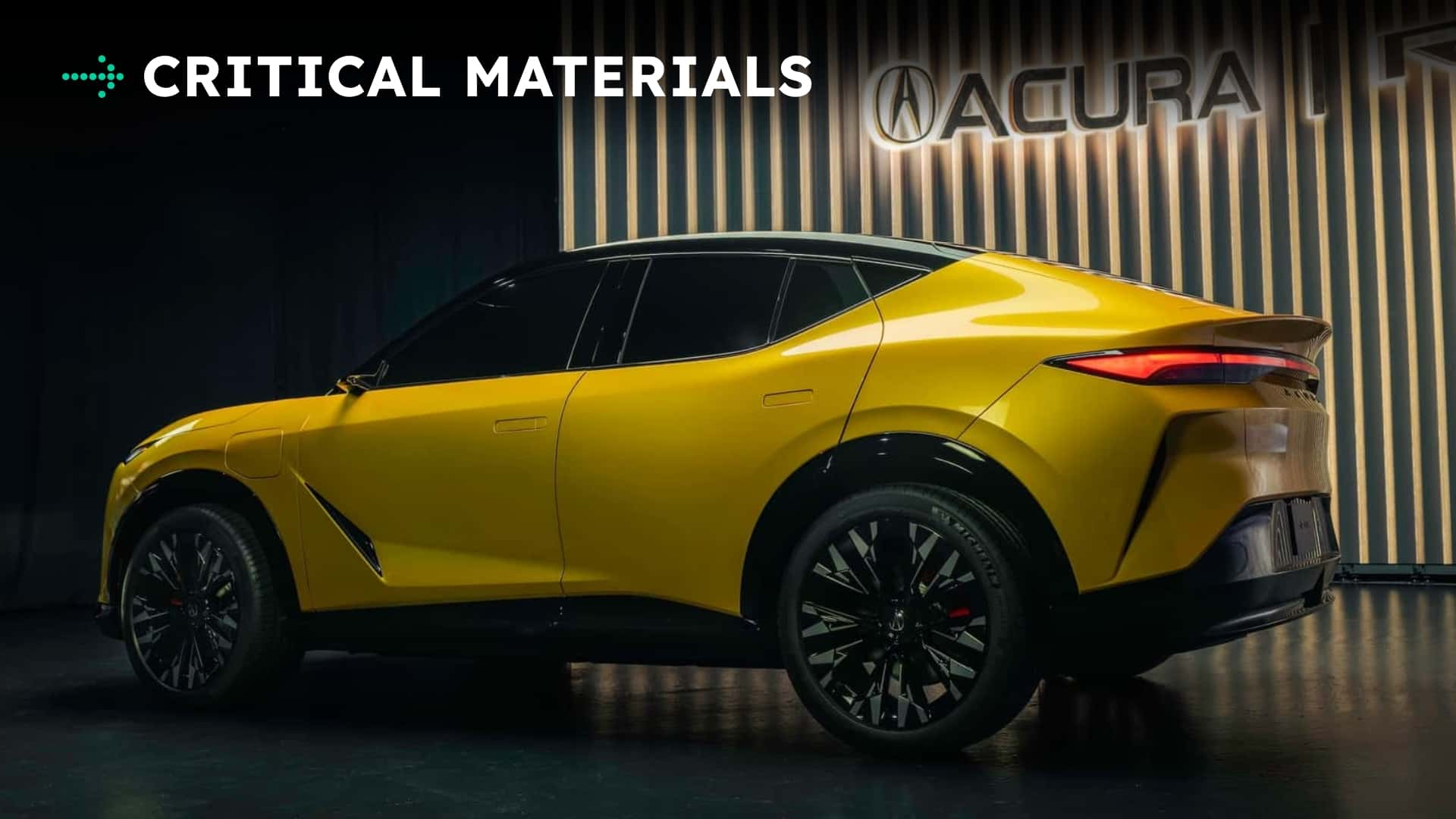
As the editor of InsideEVs, I don’t follow the gas-car market as closely as I once did. My colleagues at Motor1 will tell me all the time about new internal-combustion vehicles they’re testing, and my reaction is often: “That’s great! What is that?” But even I was surprised to learn that Acura would be temporarily discontinuing its top-selling RDX crossover.
Now, dealers are mad that they’re losing such an important car at a time when demand for its upcoming RSX electric model may not be as strong as it would’ve been with $7,500 tax credits in place. And they may have a point this time.
The must-read morning roundup of EV and tech news.
That kicks off this edition of Critical Materials, our morning roundup of industry and technology news. Also on deck today: Porsche’s China woes continue, and this whole “America needs to own Greenland” thing is bad for auto stocks. Let’s dig in.
25%: Acura’s Dealers Are Mad About An EV Shift. They May Have A Point
Photo by: Acura
I certainly don’t have strong feelings for the RDX. I can’t even recall the last time I drove one. But it is (or was) the kind of competitive, mass-market crossover that pays the bills for other things, as every automaker needs amid this expensive, rocky shift to electrification, advanced software and autonomy.
But the RDX is going on a two-year hiatus before becoming a hybrid model. In the meantime, Acura is launching a smaller gas crossover, the ADX, and the electric RSX—one of the first cars on Honda’s new in-house EV platform, replacing the General Motors-made ZDX that was discontinued last year.
(A lot of three-letter names, I know. I don’t come up with this stuff.)
The point is, the RSX’s tech makes it a very big deal, especially for Honda and Acura, which are late to the game on electrification. Yet as Automotive News reports, dealers are unhappy because they’re without a mass-appealing crossover at a very uncertain time for EVs without the $7,500 tax credit:
“To cancel [RDX] production on such short notice just leaves us hanging,” said Brian Benstock, vice president at Paragon Acura in New York City.
Benstock attributed the predicament to Acura’s “stubborn” pursuit of EVs until recently. Dealers repeatedly had urged a hybrid focus and a diversified powertrain approach, he said.
Benstock estimates the MDX and ADX will recapture just 20 percent of RDX volume, given the distinct segments. “There’s a certain demand for the RDX, and when you take it away,” those customers are going to look at alternatives in that segment, he said.
“Acura chose a different strategy—one that was politically correct but wrong for the market,” Benstock said. “Now dealers are paying the price.”
Now, we know that very few traditional car dealers are excited about EVs. They were among the loudest voices pushing back against what they called an “EV mandate” in the Biden years. But they have kind of a point here: at a time of regulatory whiplash and changing consumer demand, how does a car company get the timing “right”?
In the future, most automakers in the U.S. will likely have a mix of gas, hybrid and electric options; with the Trump administration rolling back strict fuel economy rules, car companies aren’t under the gun to deliver an all-electric future anymore. But that hardly means EV demand is going away. It is expected to pick up as battery costs fall in the latter part of this decade, and besides, a post-Trump White House or Congress could put an EV push back in play.
Still, the car companies don’t have infinite capital to play with. It’s not ideal for them to invest in so many powertrains at once, and to always be “right” about what consumers are going to want.
They may have more EV or hybrid options in the pipeline, but “coming soon” doesn’t help your business right now: “You can’t sell customers on ‘two years from now.’ Nobody’s going to wait for that truck,” dealer Benstock told AN. And he’s not wrong.
The next few years will be a wild time as all of these companies figure out what the future looks like—or don’t.
50%: Porsche’s China Headaches Got Worse In 2025
Photo by: Porsche
I still think that after all these years, the Porsche Taycan is one of the best EVs you can buy. But buyers in China aren’t going for it like they used to, because in their market, they can probably do better—and for cheaper, too.
Porsche has been struggling mightily in what used to be its largest market for years now, amid a wider shift toward homegrown brands over the “foreign” competitors. While Porsche had a record year in the U.S. in 2025 (albeit narrowly), the China downturn stung hard. Here’s the Wall Street Journal with more:
Automakers have faced intense competition in China, sparking a prolonged price war as rivals cut prices to win customers, while a lengthy property market slump and economic-growth concerns in the country has also led to buyers pulling back on luxury spending.
“Key reasons for the decline remain the challenging market conditions, particularly in the luxury segment, and the very intense competition in the Chinese market, especially for all-electric models,” the company said.
Other German brands, including Audi, BMW and Mercedes-Benz, have all recently reported that the challenging Chinese market hit demand last year.
In the meantime, and like other automakers, Porsche is betting big on North America to offset China’s losses. But as that Acura example shows, it’s hard to get things right here, too.
75%: Autos Stocks Fall Amid This Whole ‘Greenland’ Thing
Photo by: Toyota Norway
As Americans utter a collective “Uhhhh…” and Europeans flex militarily as President Donald Trump commits to taking control of the self-governing territory of Greenland, the economic fallout is already starting to spread.
That included automotive stocks on Monday, particularly as Trump threatens stiff new tariffs on European nations. Here’s CNBC with more:
Germany’s Volkswagen, BMW, and Mercedes-Benz Group stood between 2.5% to 3% lower, while Milan-listed shares of Ferrari dipped around 2.2%, notching a 52-week low. Germany’s Porsche fell 3.2% on the news.
Milan-listed shares of Stellanti, which owns household names including Jeep, Dodge, Fiat, Chrysler, and Peugeot, were last seen 1.8% lower.
The moves come shortly after Trump on Saturday pledged to impose 10% tariffs on the U.K., Denmark, Norway, Sweden, France, Germany, the Netherlands, and Finland by Feb. 1, ramping up his push to make Greenland, a self-governing Danish territory, part of the United States.
Analysts believe the auto industry—already rocked by Trump’s tariffs and regulatory changes in the U.S.—is uniquely vulnerable to these new levies due to its heavily interconnected supply chains. If any car company thought 2026 would be easier than 2025, they’re in for a rude awakening.
100%: How Do Automakers Get Powertrains Right In 2026?
Photo by: Acura
What is the “right” mix of powertrains for any automaker? Hybrid, gas, electric, EREV—there’s a lot going on right now. Or should they waste zero time in going electric, treating this current moment as a kind of speed bump? Share your thoughts in the comments.