Published: October 6th, 2025
Share
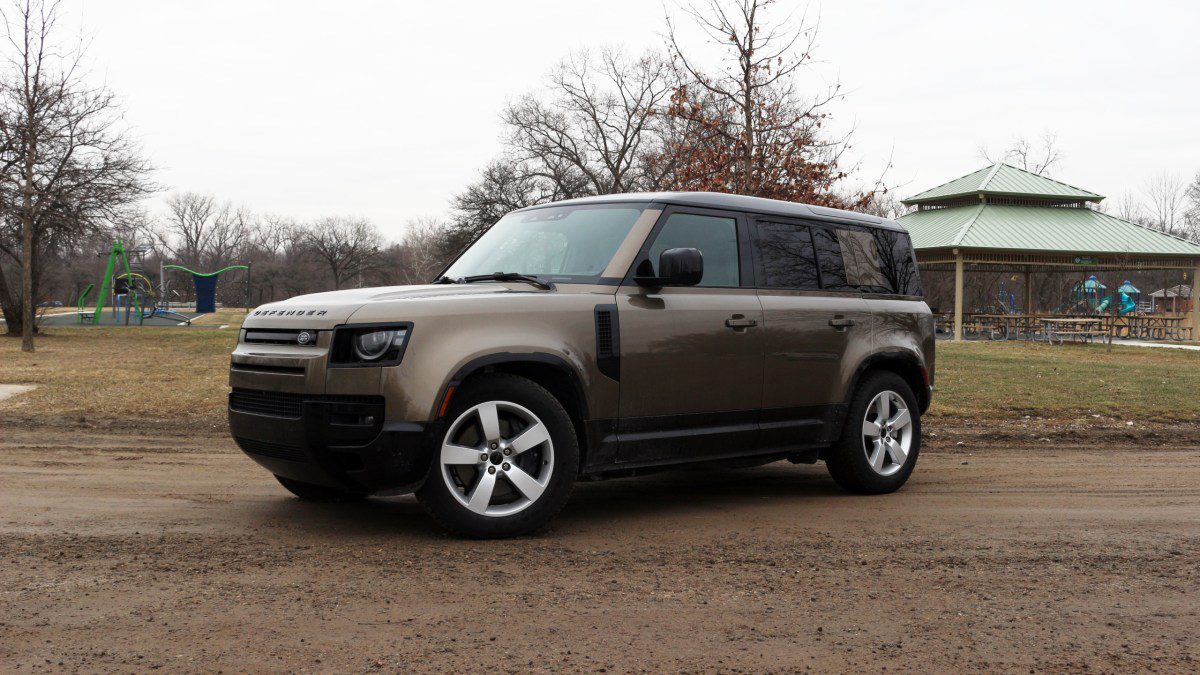
The Land Rover Defender‘s reintroduction was a bit of a roller coaster for fans of the famed nameplate. It marked the first time in over two decades that the rugged SUV was available for sale in the United States. The return was hotly anticipated, to say the least, but that excitement was at least somewhat tempered by news that the Defender would ship with the company’s lineup of inline engines. No V8 to be found.
Thankfully, it didn’t take Land Rover long to remedy that. And now, we’ve got not one, but two different V8 options in the SUV’s lineup. There’s the 5.0-liter, supercharged V8 found in the models simply named “V8” and the 4.4-liter, turbocharged monster found in the Octa.
When I was offered the chance to sample one of the supercharged V8 models, I jumped at it. Though it was a previous model year (2025), it was a combination I’d not yet sampled—the mid-length 110. The verdict? Well, it’s a V8, alright.
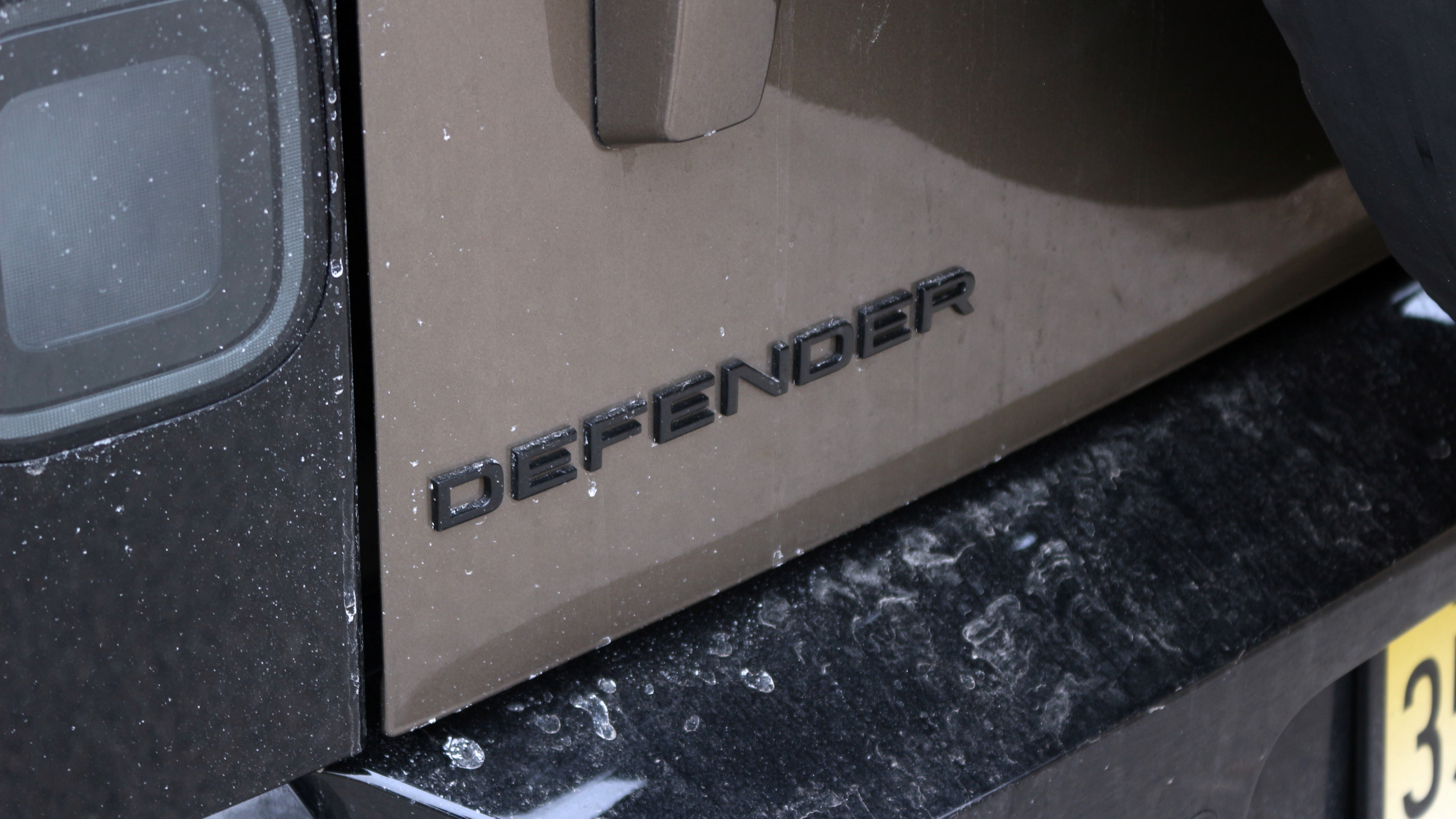
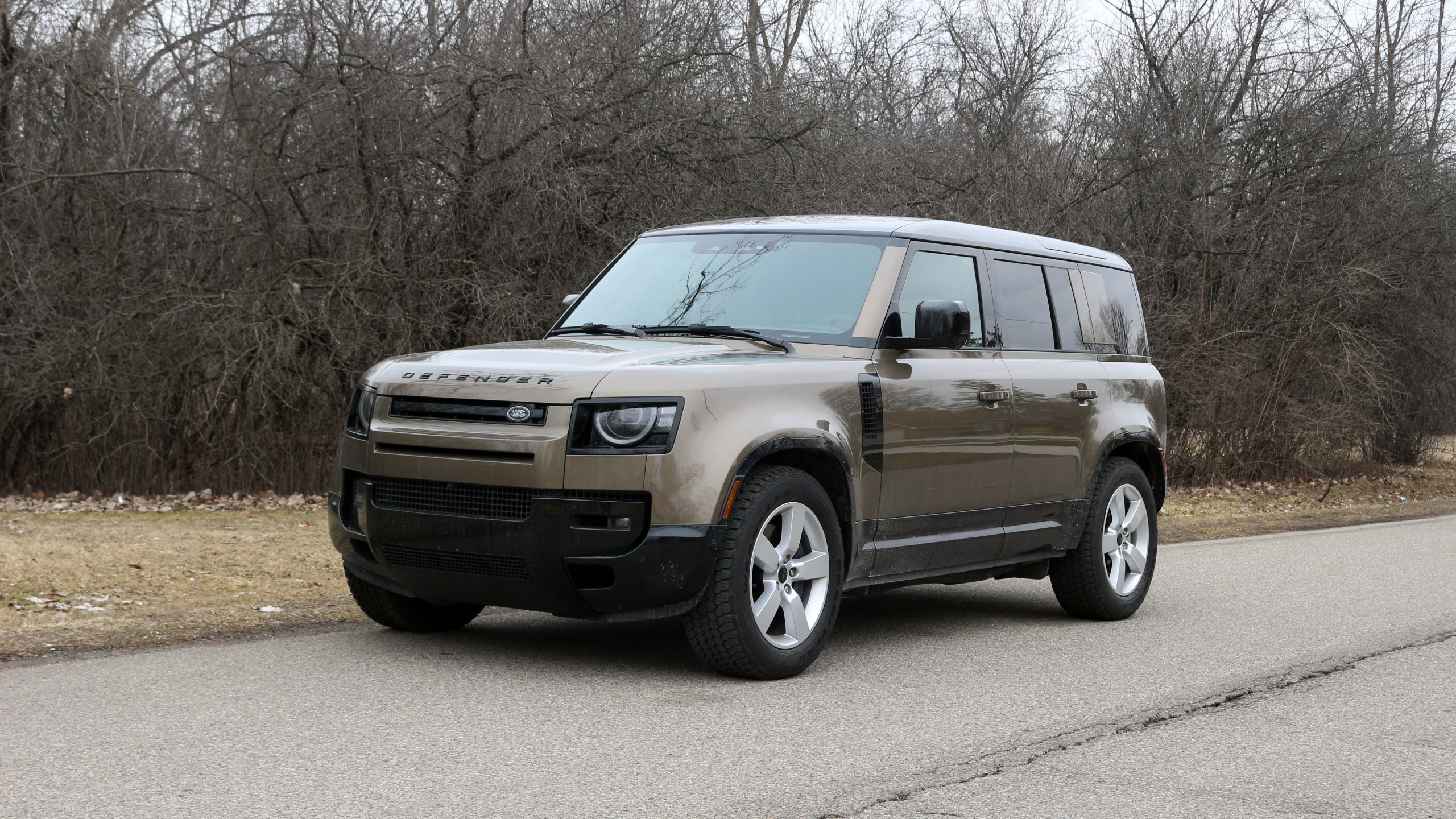
There was really nothing new for the Defender in the 2025 model. In fact, Land Rover seems to have leaped from one crisis to another. In prior years, the company struggled to build and import Defenders due to a series of Covid-induced supply fiascos. This time around, it’s tariffs.
If you’re shopping for a Defender, that’s not all bad news. The only real difference between the 2025 model year I drove and the 2026 is in package availability. Don’t fall in love with the brown finish on the 110 in these photos. Land Rover only lists three finishes in the Build & Price tool for 2026: White, Black, and Grey—like a bag of bespoke millennial Skittles.
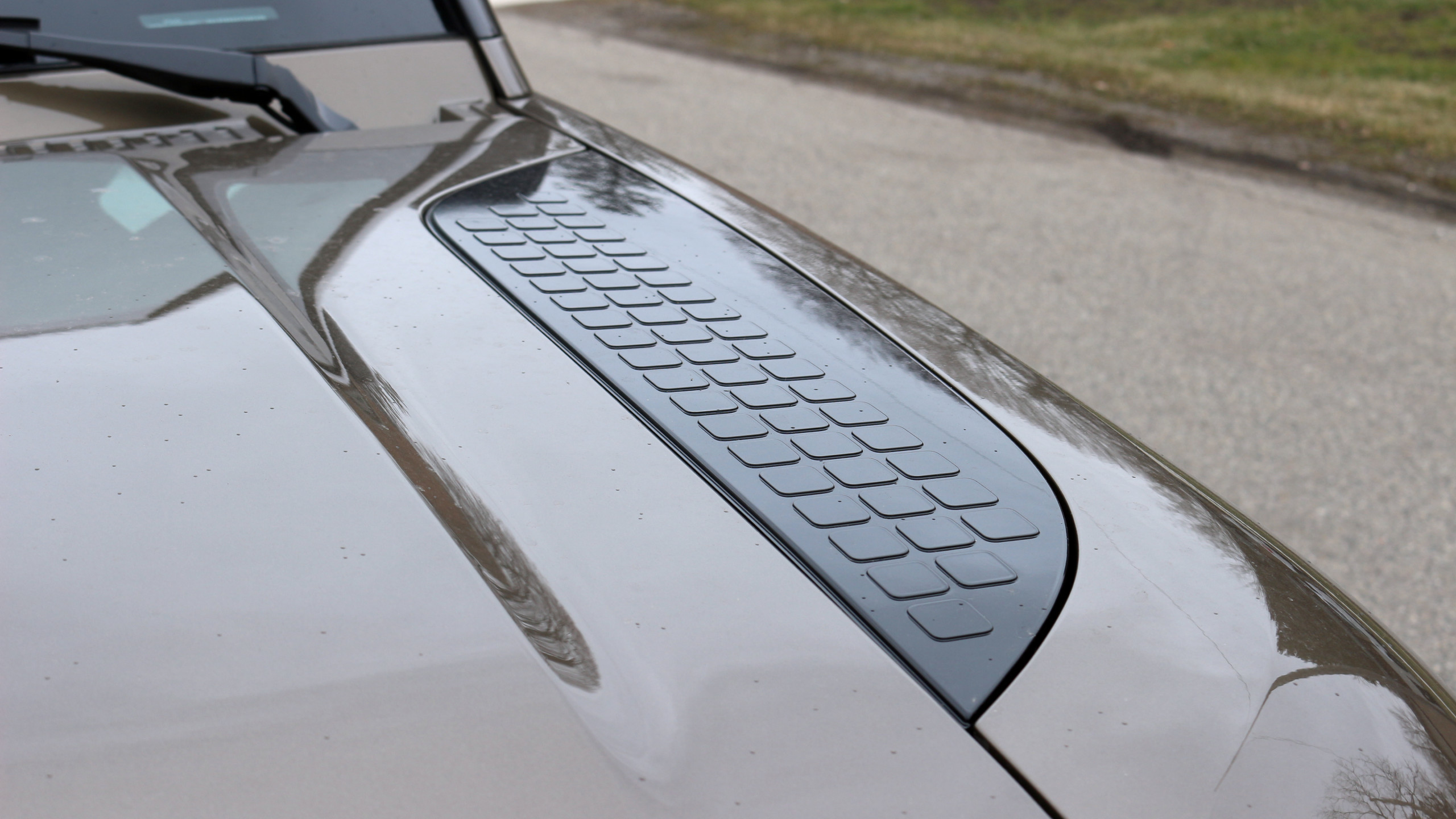
When you put the engine in a car’s name, you set certain expectations. Every term in “Defender 110 V8” tells you something useful—model name, wheelbase, and engine. By itself, “V8” tells you two things. First, it should be torquey; second, it should sound like NASCAR. [Ed. note: British NASCAR?]
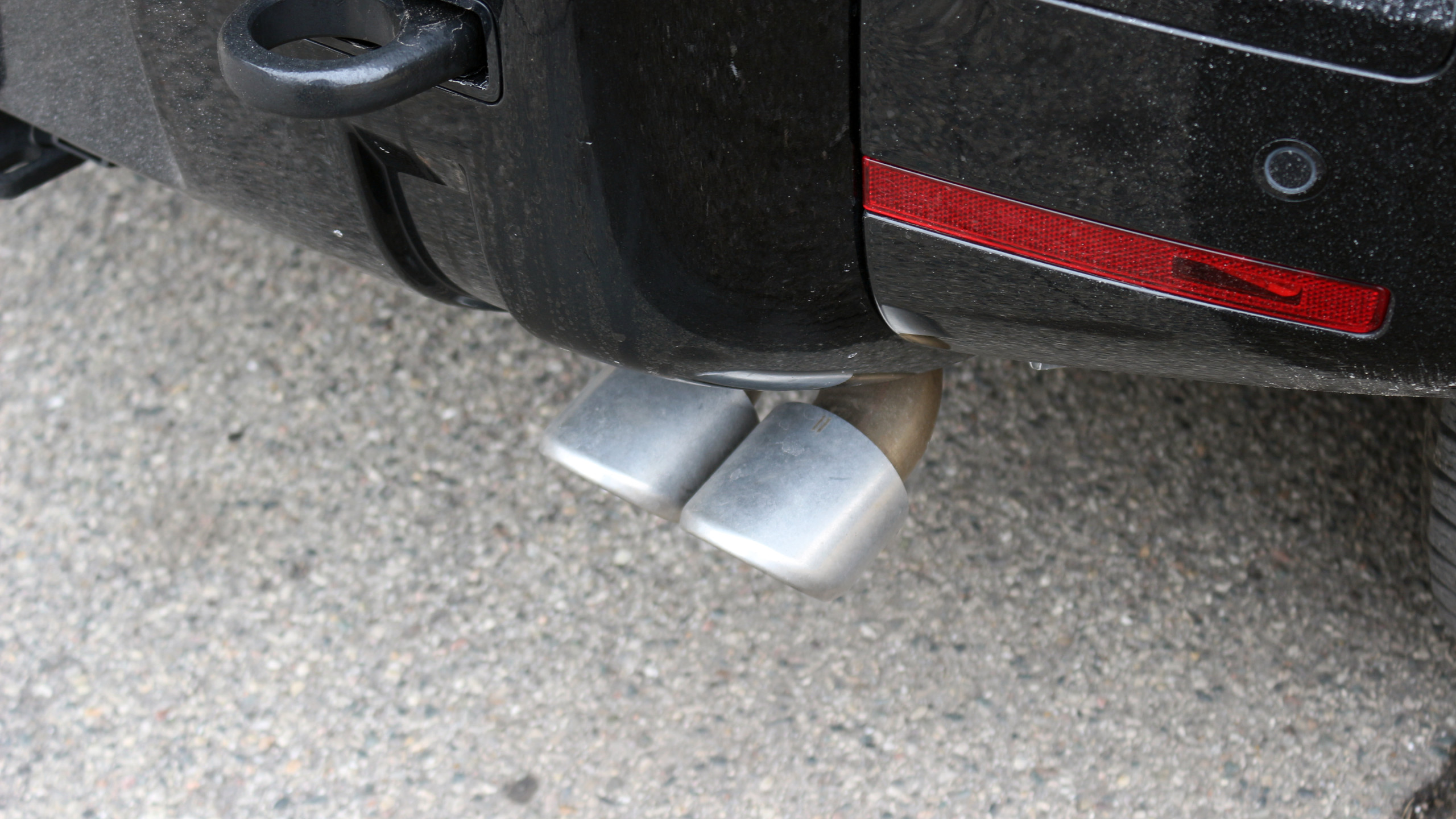
Well, check and check. The V8 makes 461 pound-feet of torque from 2,500 RPM. That’s not exactly a headline number in a world where you can walk out of a dealership with trucks producing more than double that, but it’s enough that Land Rover rated the 110 V8 to tow 8,200 pounds. And as for the noise, the 110 V8 also comes standard with a quad-outlet exhaust. It’s nowhere near as tacky as the G63’s side-exit setup, but it’s flashy for the otherwise relatively ho-hum Defender, and it sounds good too.
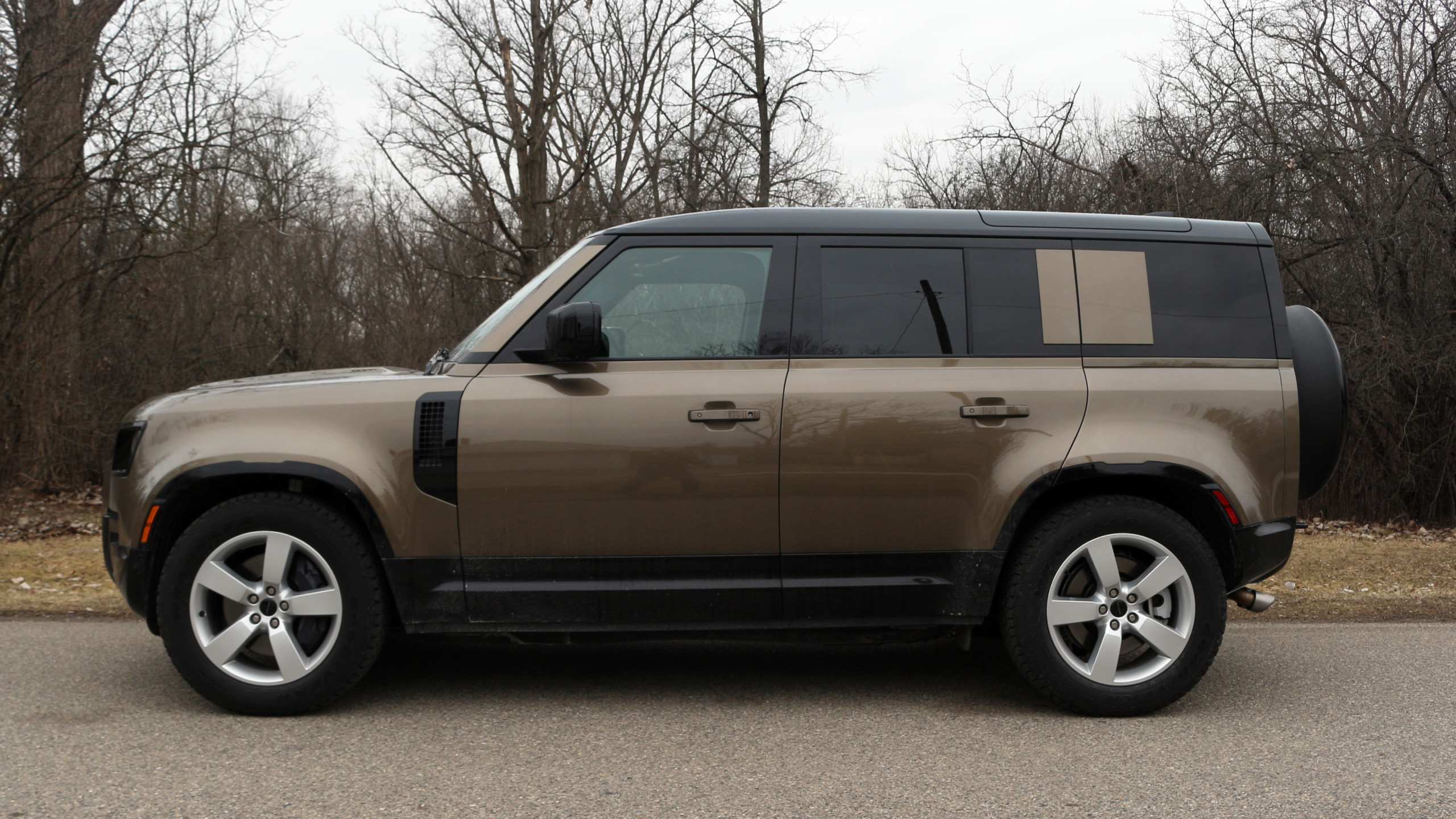
The Defender’s traditional shape offers some advantages. The upright greenhouse and high seating position make it easy to see out and navigate parking lots. These tight maneuvers give the Defender the rare opportunity to shrink around the driver.
In virtually every other scenario, the 110 feels every bit of its nearly 5,500-pound curb weight and nearly 120-inch wheelbase. And why not? This is a big, heavy, somewhat luxurious SUV. And more than that, it’s not one that relies on extensive electronic suspension wizardry. The 110 V8 rides on old-fashioned steel. That means Land Rover had to settle for a one-size-fits-all suspension tune, and supercharged V8 or no, Land Rover customers still expect it to be civilized. To some, that might as well say “boring.” If you’re looking for an SUV that will hunker down when thrown into corners, look elsewhere. The V8 will certainly help you make your exit (or merge onto the next highway when you do), but if your performance needs go beyond simple straight-line performance, this is not the car you want.
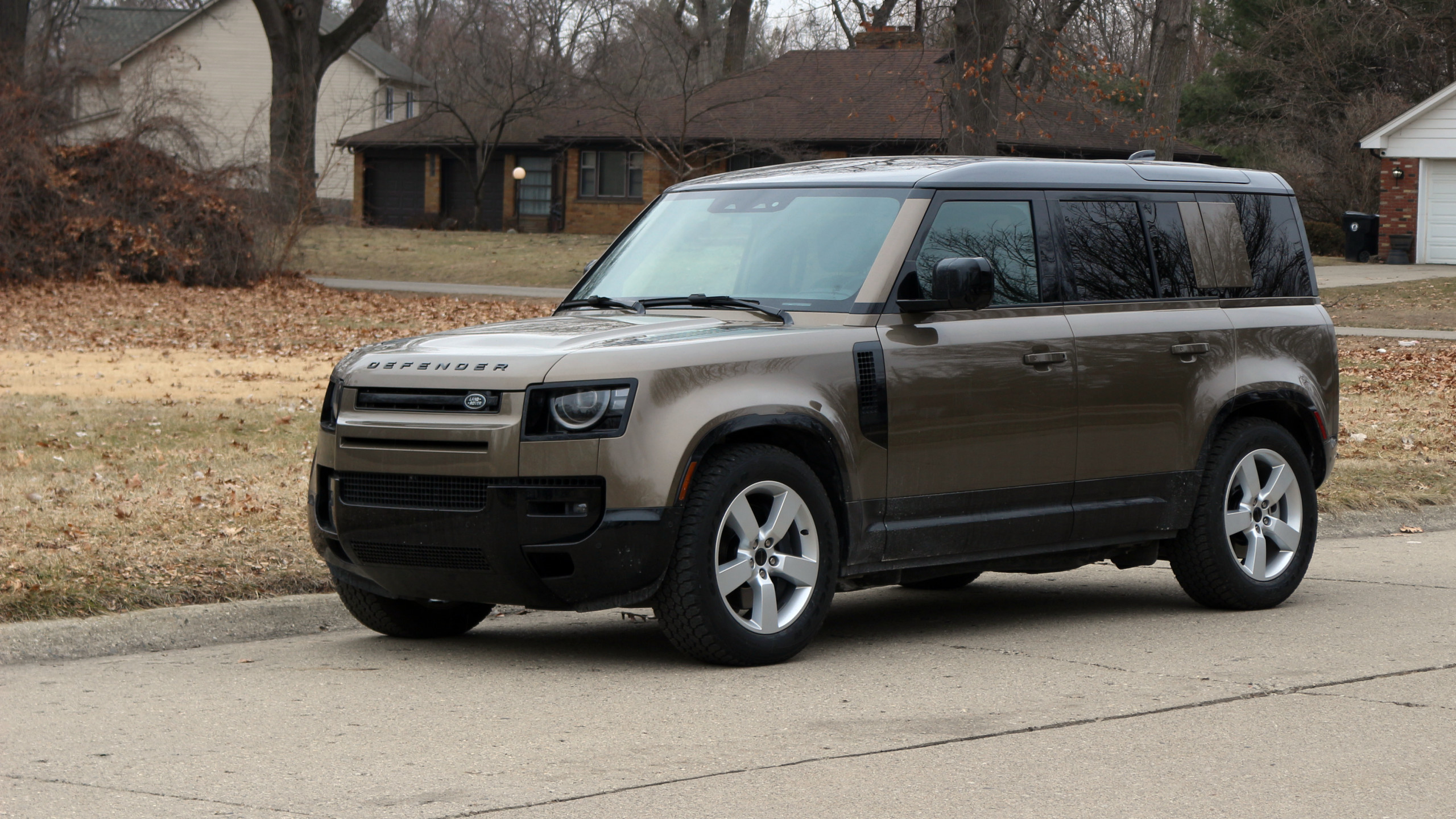
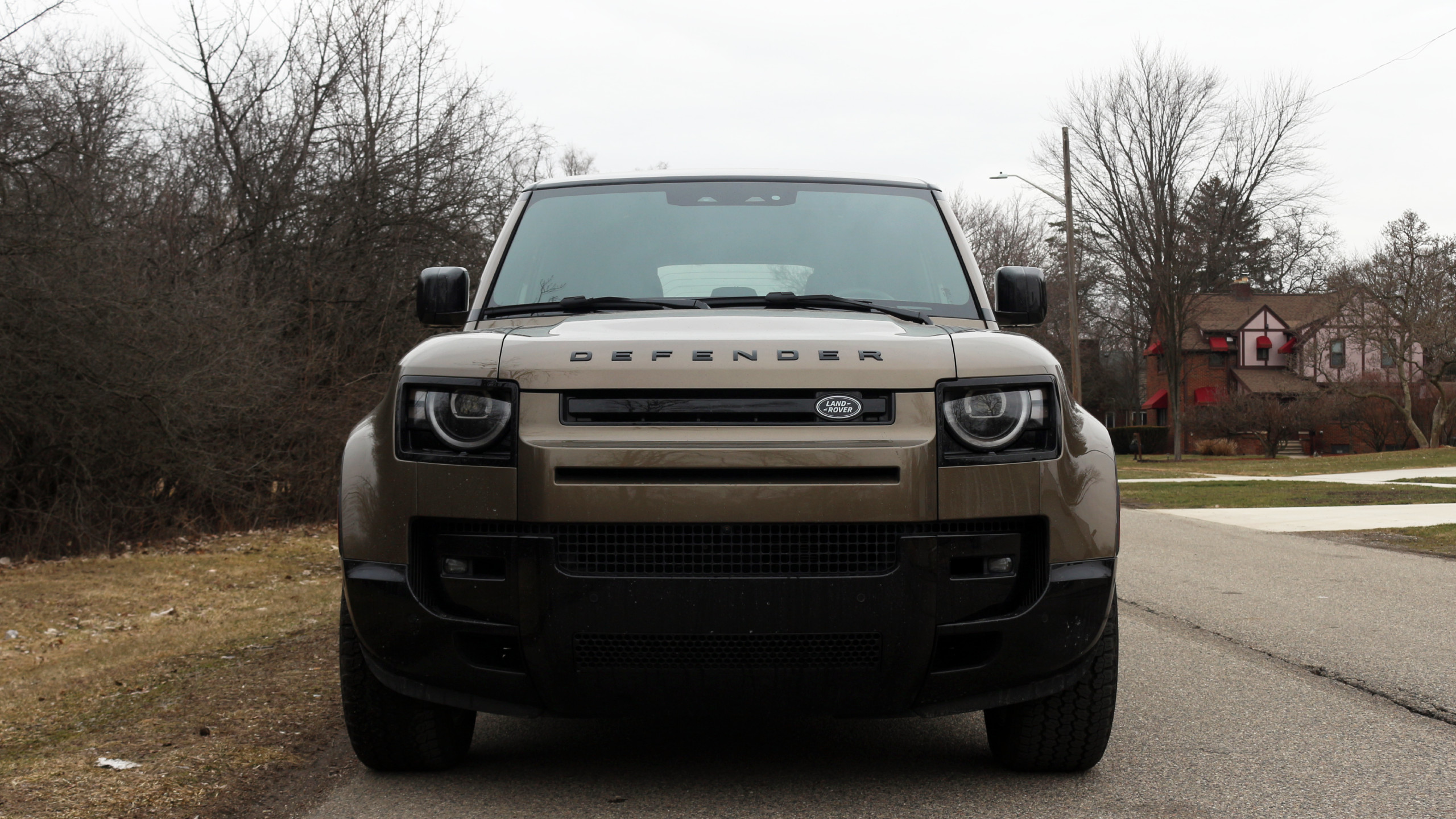
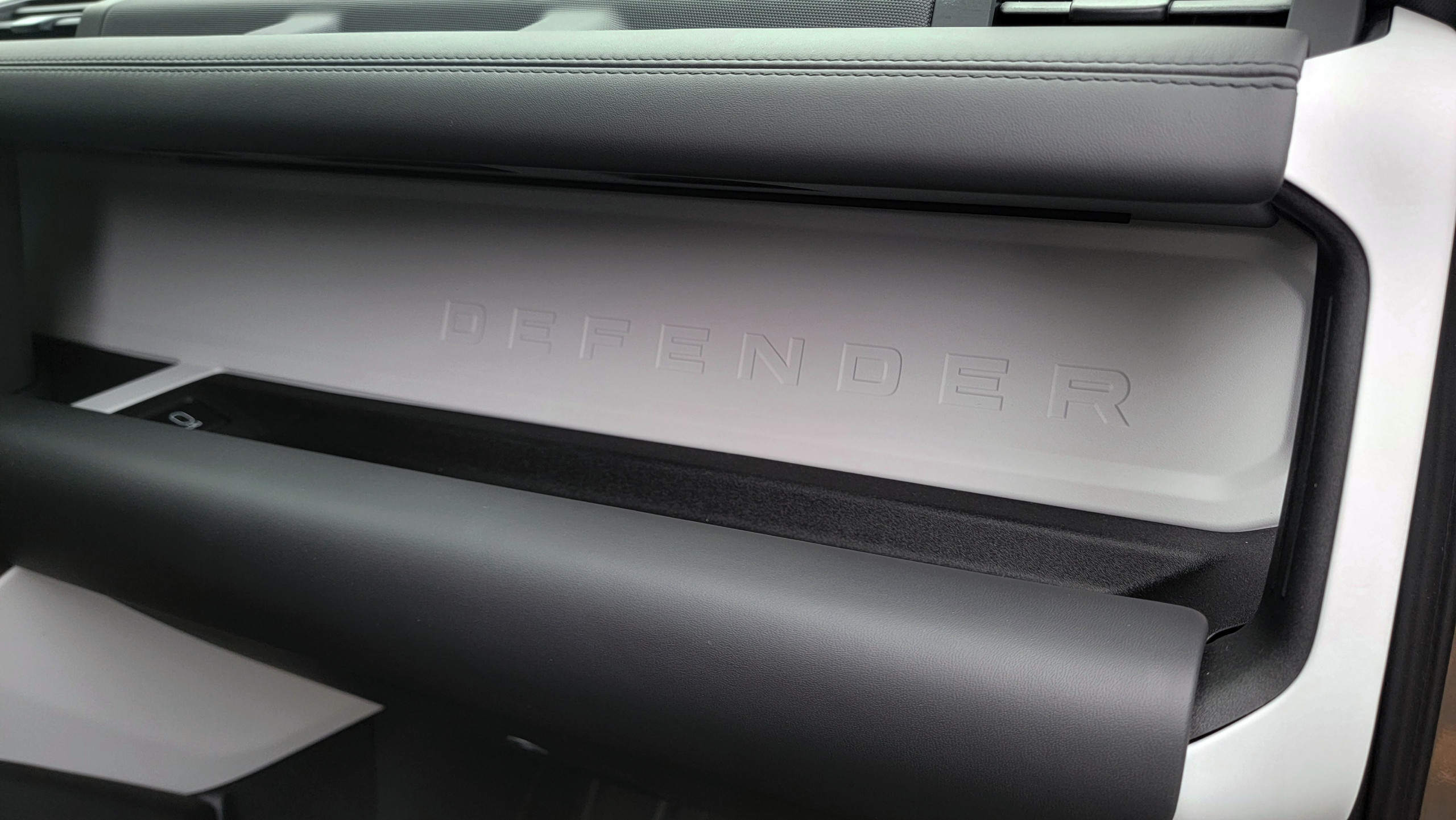
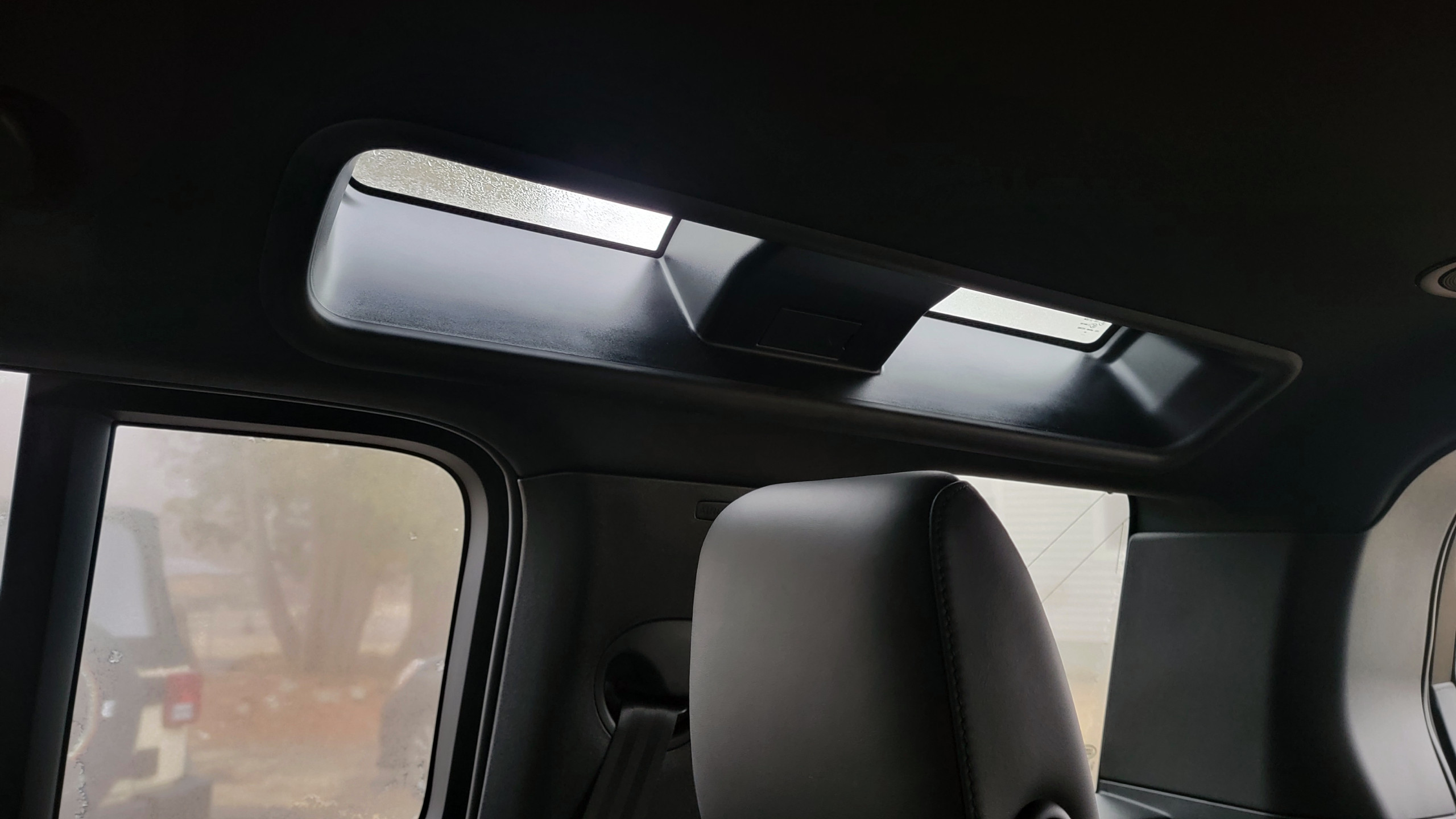
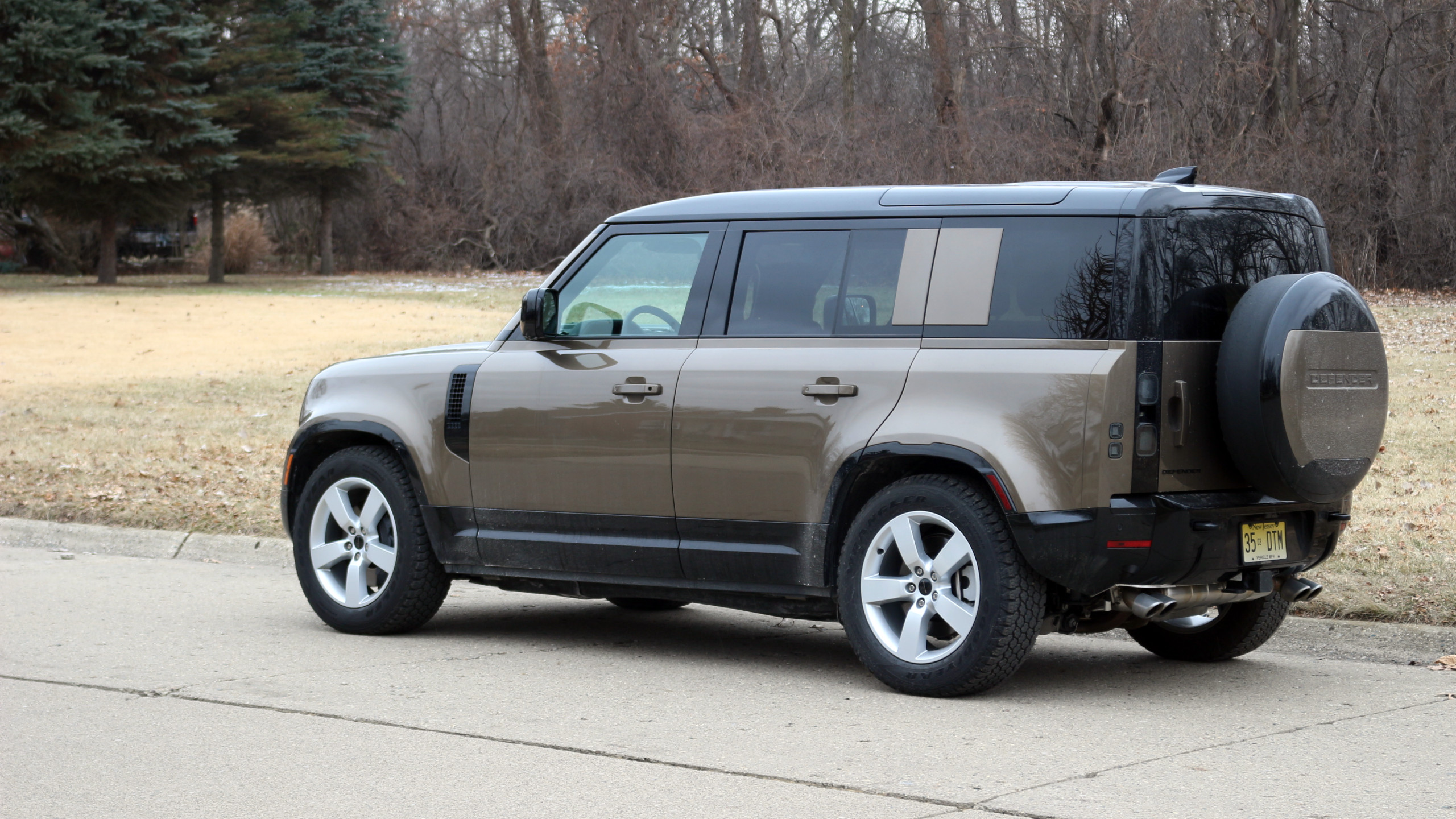
While it may feel like a workhorse engine, the 5.0 makes the Defender 110 the liveliest. On top of that, we live in the age of the vanishing V8, and even here in the Land Rover lineup, eight-pots are the minority. Volume comes from the six-cylinder models. In other words, this represents a premium on top of a premium, but to help sweeten the deal for the faithful, Land Rover ships the supercharged V8 with virtually every available feature standard.
Indeed, one might say the V8 is the whole point of this car. To further complicate things, the Defender occupies a weird space. It lacks the ostentatious aura of a Gelandewagen or Range Rover, but it’s also significantly more expensive (and better appointed) than something like a Jeep Wrangler, Ford Bronco, or Toyota 4Runner. The Land Cruiser has pivoted downmarket to let the Lexus GX and LX breathe; the Defender leans more toward the former than the latter.
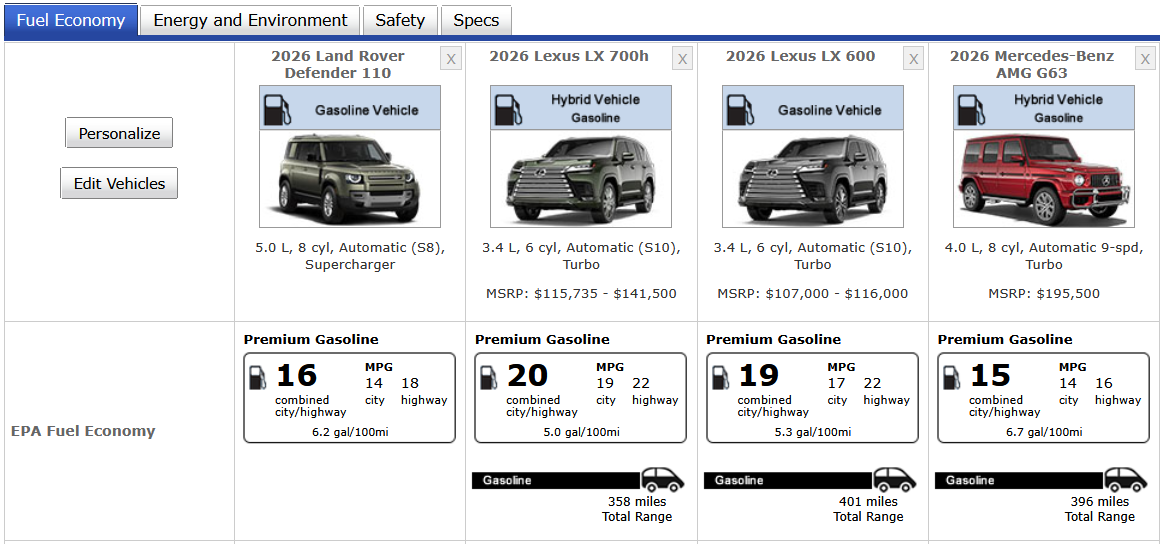
The downside to a V8, of course, is fuel consumption. The Defender 110 V8 is no outlier. It’s rated at 14 mpg city, 18 mpg city, and 16 mpg combined. We included both the LS600 and the 700h hybrid in the above to demonstrate that while a hybrid system certainly helps around town, the V8 hurts just as much on the highway.
Nobody’s buying this for the fuel economy, and if you’re already used to piloting something relatively sporty, its thirstiness probably won’t faze you.
It’s difficult to quantify the value of something like the Defender V8. This mid-length five-seater pines for the mountains; virtually any other SUV at this price will be more refined and more luxurious, and the V8 sort of stands apart from that equation. Yes, this is the most powerful standard Defender, and there’s no mistaking that noise for anything else, but at the end of the day, it’s a heavy truck with a reasonably big engine, and this is a case of the whole being exactly the sum of its parts.
If you’re looking for a four-door Defender that fits in your garage and won’t break the bank, and you simply must have it with a V8, then it’s this or nothing, and this ain’t too shabby.
| Base Price (as tested) | $120,250 ($129,270 est. 2026 model year pricing) |
| Powertrain | 5.0-liter supercharged V8 | 8-speed automatic transmission | 4-wheel drive |
| Horsepower | 518 @ 6,500 rpm |
| Torque | 461 lb-ft @ 2,500 |
| Seating Capacity | 5 |
| Cargo Volume | 34 cubic feet (behind second row | 78.8 cubic feet behind first row |
| Towing Capacity | 8,200 pounds |
| Curb Weight | 5,448 pounds |
| EPA Fuel Economy | 14 mpg city | 18 highway | 16 combined |
| Score | 7/10 |

Give me the Octa; this one is more octogenarian.
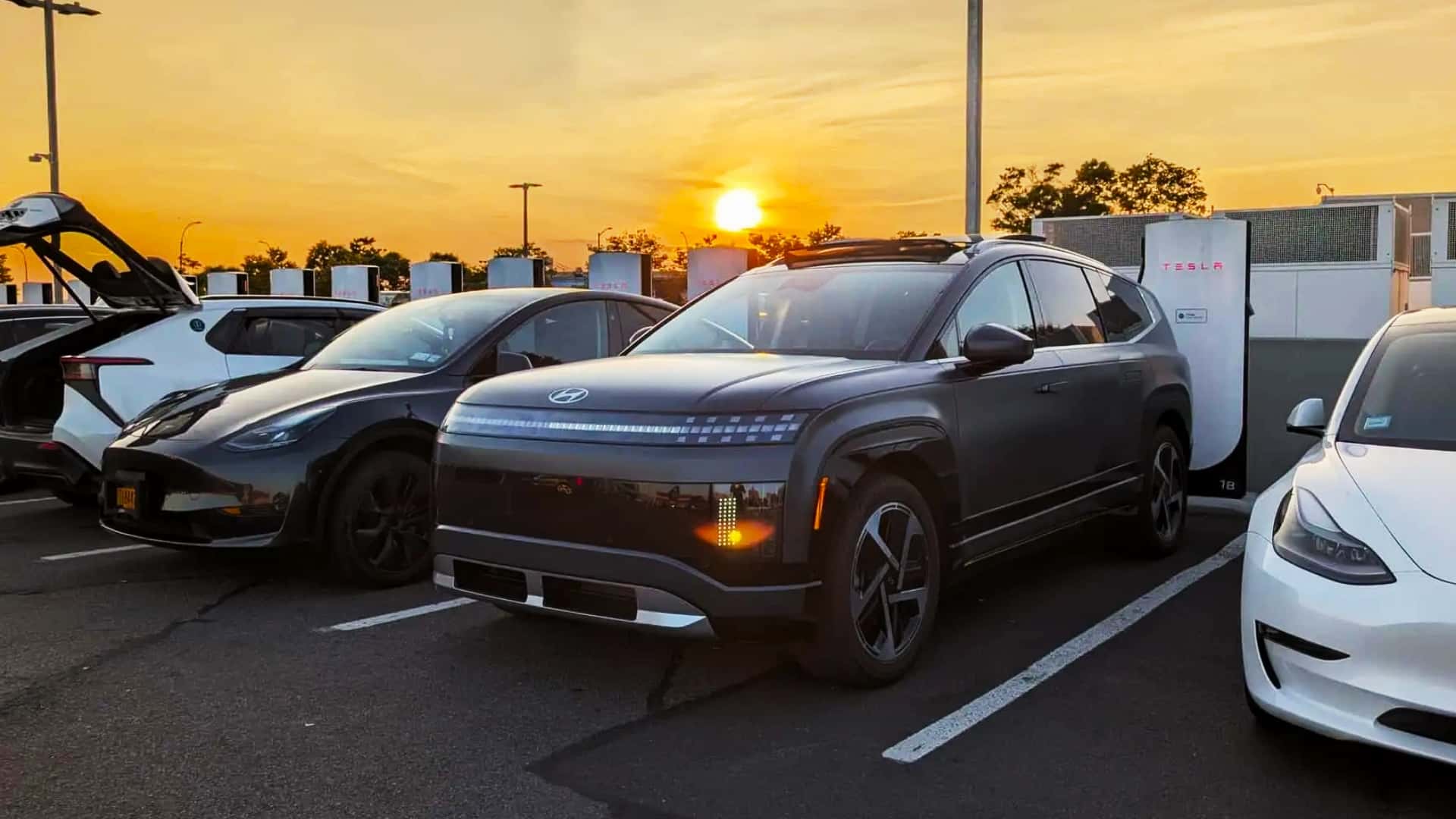
As new electric vehicles struggle to gain traction again, the market for used electric cars is swiftly shaking off the loss of EV tax credits, new sales data published last week shows.
In March, according to Cox Automotive, Americans bought 42,924 secondhand electric cars. That is by far the best month for used EVs since Congress eliminated all EV tax credits at the end of the third quarter of 2025; from October through February, monthly used EV sales numbered roughly 30,000, plus or minus a couple-thousand units, according to Cox. But that’s not all. Last month’s used EV sales represented a new record, surpassing August’s 40,960 units. That previous record came at the height of the tax-credit-fueled EV-buying frenzy, so topping it this quickly is impressive.
It all suggests that the post-tax-credit hangover may be in the rearview for the used EV market—and underscores how drastically the markets for new and used EVs are diverging. The short-lived federal tax credit for used EVs provided up to $4,000 toward the purchase of a vehicle that cost $25,000 or less, so long as buyers also fell below income caps. Americans rushed to claim the credit throughout last summer. But even without it, used EVs are proving to be a fast-growing bright spot in an otherwise gloomy EV industry. In March, used EV sales were up 27.7%, per Cox.
Compare that with what’s happening with new EVs. After the $7,500 incentive met its early end in September, sales of new EVs fell by over 50%. They’ve struggled to recover. In March, roughly 83,000 new EVs were sold, a 20% month-over-month gain, but a nearly 25% year-over-year decline, per Cox.
Supply is a big part of the used-EV success story. There has never been a better time to shop for a lightly used, modern, long-range EV. All those cheap EV leases people jumped into over the last few years are starting to return to dealerships. Meanwhile, automakers are shifting focus to combustion vehicles and pulling electric models from the market, dinging sales of new vehicles.

Photo by: Patrick George
High gas prices may have something to do with the strong results too. “The influence of high gas prices can’t be ignored in the numbers,” Stephanie Valdez Streaty, director of industry insights at Cox, wrote in a statement on Wednesday.
The used EV market may continue on being the industry’s growth engine for some time. Over 1 million EVs are set to come off lease in the next two years, according to Recurrent, flooding dealerships with nice, two-to-three-year-old electric cars. And high prices at the pump look like they’re sticking around too.
Contact the author: Tim.Levin@InsideEVs.com
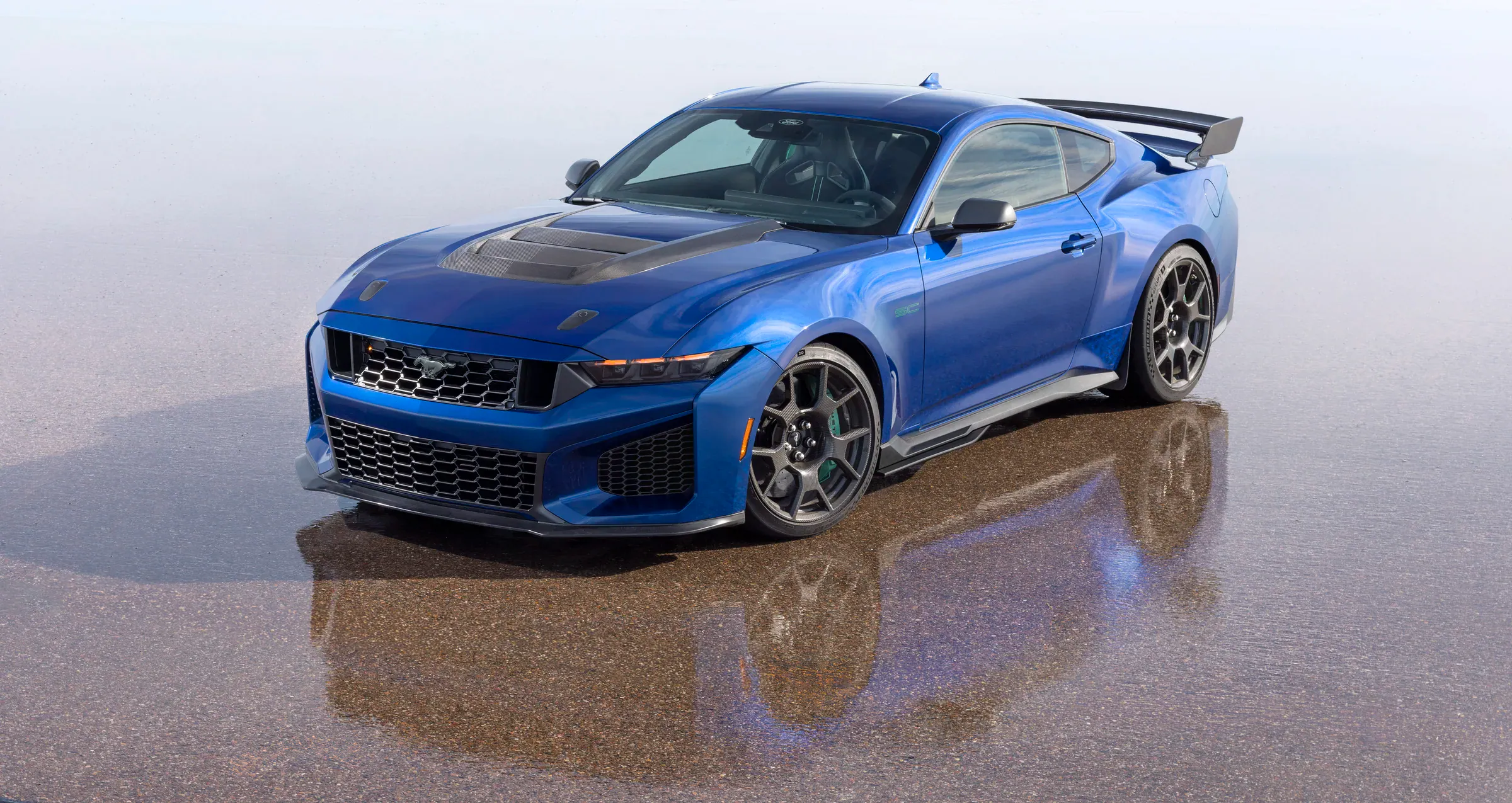
Ford has announced that it is now accepting bookings for its new Mustang Dark Horse SC, with the initial customer deliveries slated to commence this summer.
Ford has tuned the car’s handcrafted supercharged 5.2-litre V8 engine to churn out an insane 795 hp and 660 lb ft of torque, making this the most powerful Dark Horse ever to come out of its factory.
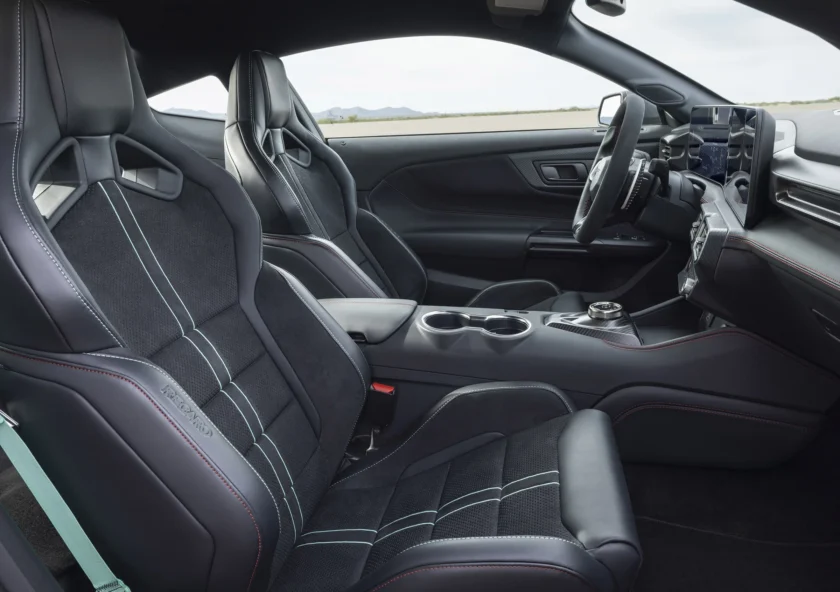
To keep all those horses in check, the Mustang Dark Horse SC comes with a track-focused Variable Traction Control system and the latest generation of MagneRide magnetic damping. Apart from that, the car also features exclusive aerodynamics and a cooling system.
Ford is also throwing in an optional Track Pack for more performance and less weight. This includes a set of 20-inch carbon fibre wheels, rear seat delete, Michelin Pilot Sport Cup 2 R tyres, and Brembo carbon-ceramic brakes.
Electric vehicles were already experiencing a slowdown amid shifting policies, especially in the U.S., where the $7,500 tax credit ended last year. Now, there could be further disruption.
Stephan Keese, senior partner at Roland Berger North America, told Automotive News that the war in Iran could constrict the supply of helium, which is used in semiconductor manufacturing and is especially important for EV plans, as technologies like advanced driver-assistance systems and software-heavy architectures rely heavily on those components.
As a result, Keese argued that a potential helium shortage could force automakers to shift their focus back toward combustion vehicles and hybrids equipped with fewer advanced electronics. Automakers that are doubling down on EVs are likely to be the most affected, while those taking a multi-powertrain approach, such as Toyota, may have greater flexibility.
Ford
According to Keese, about 33% of the global helium supply comes from the Middle East, largely from Qatar. However, a helium production facility has reportedly been damaged in an attack, further constraining the supply chain.
Meanwhile, roughly 47% of global helium supply comes from North America, meaning regions such as East and Southeast Asia could potentially face shortages in the coming weeks.
The thing is, the automotive industry isn’t the only sector relying on semiconductors. They are widely used in smartphones and computers, and demand is rising further with artificial intelligence, which, according to S&P Global, could disrupt automotive production.
Another report from The Register states that an SAE Level 4 automated driving system is estimated to require more than 300 GB of RAM to ensure components such as lidar, sensors, and cameras operate well enough to keep passengers safe without driver intervention. By comparison, many passenger cars today use SAE Level 2 systems, including Ford’s BlueCruise and Tesla’s Full Self-Driving, which only use around 16 GB of memory.
Hyundai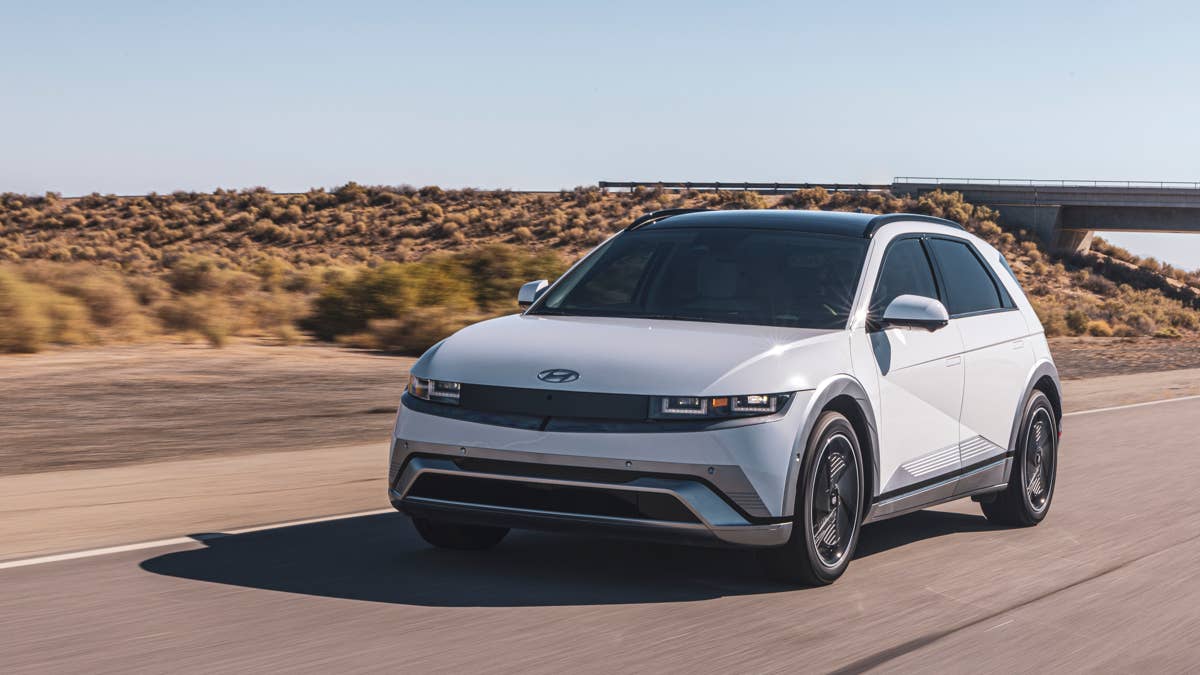
While Keese argues that EVs could take a hit from the ongoing conflict in the Middle East, combustion cars are also being affected, particularly by rising gas prices. Such a crisis has put hybrids in the spotlight for their more fuel-efficient powertrains.
The full impact of the global supply disruption remains to be seen, especially if the situation worsens. It also adds to existing challenges in the U.S. car market, where affordability has already become a concern, to the point that Ford is reportedly considering a return to sedans after previously stepping away from the segment to prioritize larger vehicles.
Mercedes-Benz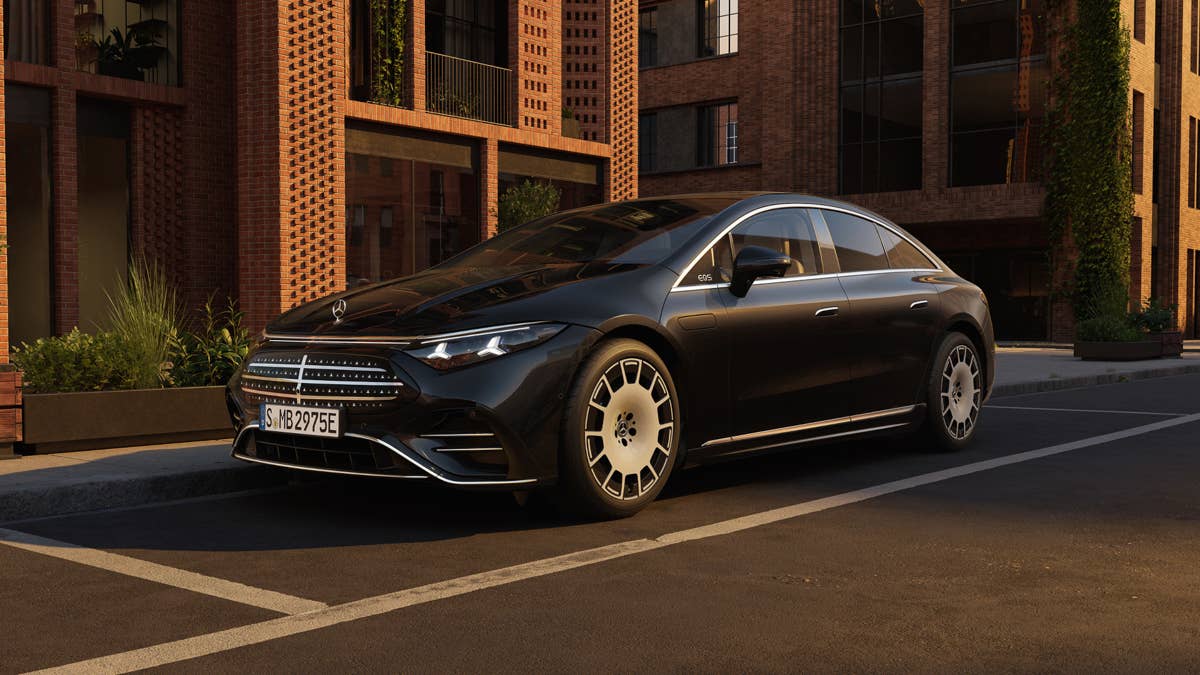
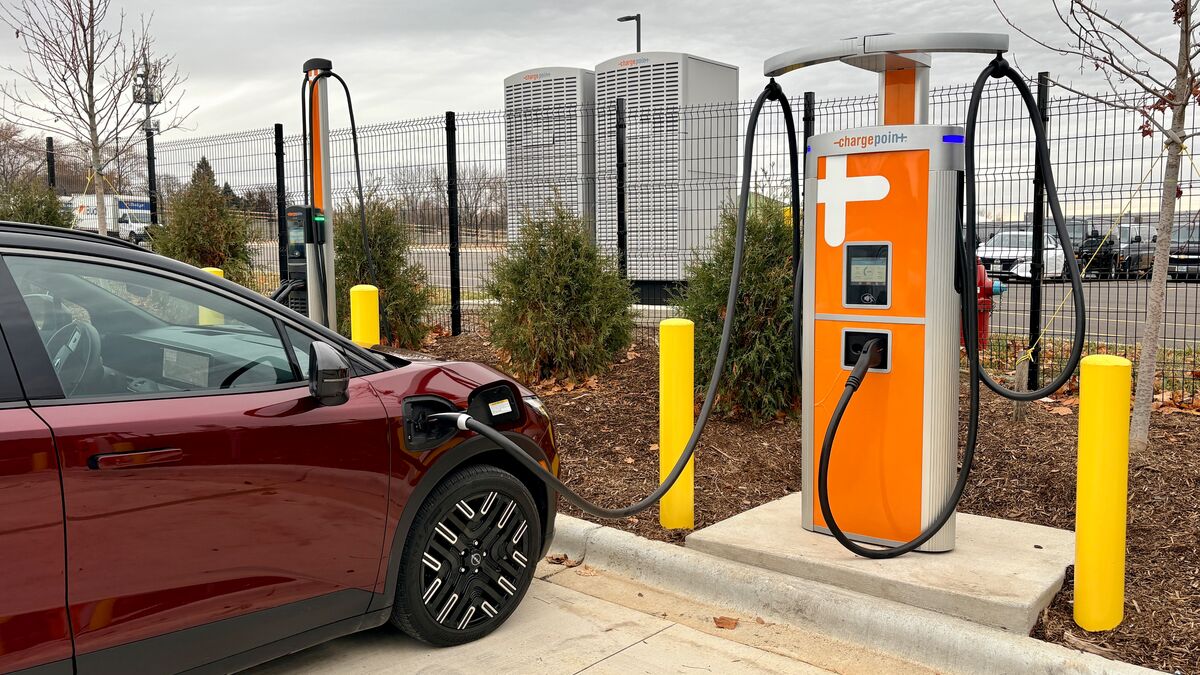
Electric vehicles (EVs) can be an excellent option for drivers, offering both environmental benefits and lower fuel and maintenance costs. Electric car batteries have improved significantly in recent years, and today’s EVs easily handle most daily driving needs. While electric cars have many advantages, their driving range can still be a concern compared with that of traditional gasoline-powered engines. Drivers who find that even the longest-range electric cars do not meet their needs still have other options. Anyone concerned about range anxiety may want to consider partial electrification through a plug-in hybrid vehicle (PHEV), which combines an electric battery with a traditional gasoline engine to extend driving range.
RELATED: An EV Charger Buying Guide: See All Your Options
Longest EV Ranges By Year
Electric cars receive EPA ratings that estimate how far they can travel before the battery is depleted. Unlike gas-powered cars, which often exceed their EPA fuel economy estimates, EVs typically fall short of their EPA combined range estimates in real-world driving. EVs tend to perform efficiently in stop-and-go traffic because regenerative braking helps recover energy. However, they use significantly more battery power at higher highway speeds and during extended trips. Some models are better suited to long-distance travel than others, so it is important to understand your driving needs before purchasing a new EV.
Vehicles like the 2026 Nissan Leaf S+, which can reach up to 303 miles, are better candidates for shorter commutes and in-town errands. For road trips and extended travel, longer-range EVs such as the 2026 Lucid Air Grand Touring, which offers up to 512 miles on a single charge, might be a better fit. There also are plenty of in-between options.
If you don’t have access to an at-home charger, you’ll need to explore other nearby charging options. Being aware of your charging options can also benefit you if you’re planning any future long-distance road trips. According to the U.S. Department of Energy’s Alternative Fuels Data Center, as of April 2026, around 85,000 charging stations are located across the United States. These stations have a combined total of more than 276,000 charging outlets. While this number continues to grow rapidly, traditional gas pumps still far outnumber electric charging options, and public charging is scarce in some regions.
RELATED INFOGRAPHIC: Longest EV Ranges by Year
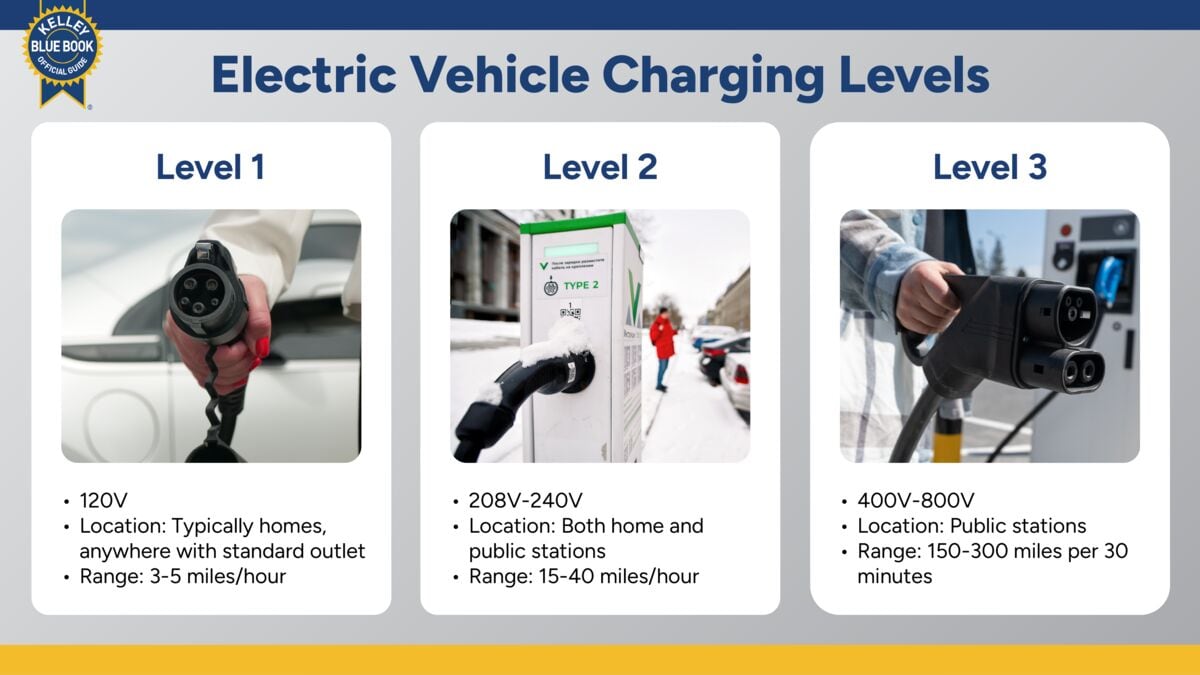
To understand EV charging, you’ll want to understand terms like kilowatt-hours (kWh) and kilowatts (kW). A simplified — very simplified — way to think of these terms is that kWh is like talking about the size of a car’s gas tank, while kW is like talking about a car’s horsepower. A fully electric car needs energy from the battery to run the motor. Battery capacity is measured in kWh. Motor output is measured in kW.
When comparing charging options, it’s helpful to evaluate charging speeds by the number of miles of range added per minute or hour of charging.
RELATED: What to Look for When Buying an Electric Car in 2026
If you are not convinced that an all-electric vehicle is right for you, a plug-in hybrid electric vehicle (PHEV) may be worth considering. Unlike conventional hybrids, PHEVs have larger battery packs, which make them more similar to fully electric vehicles in day-to-day use. Their batteries typically support about 25 miles of electric-only driving. For example, a commuter with a 20-mile one-way trip and access to workplace charging could complete daily driving with little or no gasoline use. If the vehicle is driven primarily on battery power, the gas engine may still cycle on occasionally to prevent fuel in the tank from going stale.
Plug-in hybrids also charge more quickly than all-electric vehicles because their batteries are smaller. On longer trips, drivers can stop at public charging stations to recharge the battery and reduce gasoline use. Many newer plug-in hybrids also allow drivers to reserve electric charge for later use. For example, a driver might choose to use battery power only on local roads, where it is generally more efficient than at highway speeds.
Editor’s Note: We have updated this article since its initial publication.
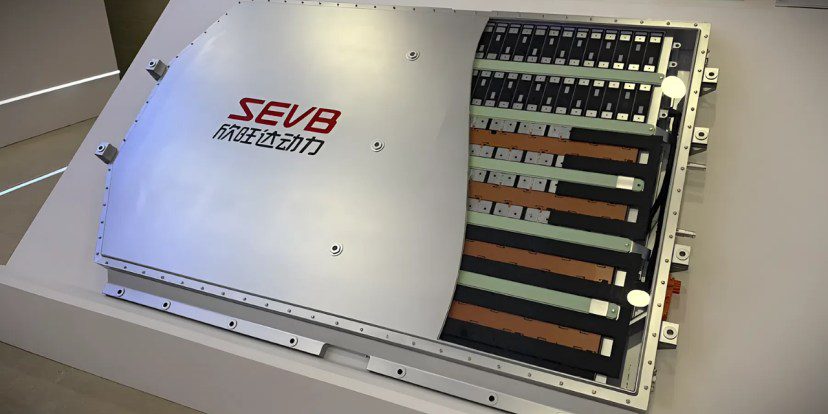
EV drivers often complain about one thing more than anything else: the time it takes to charge. Gas cars fill up in minutes, but EVs usually need a longer break. Sunwoda Power shared some news that might change that. At an event in Beijing, the company showed off a new battery that can charge pretty much as fast as you can refill a gas-powered car.
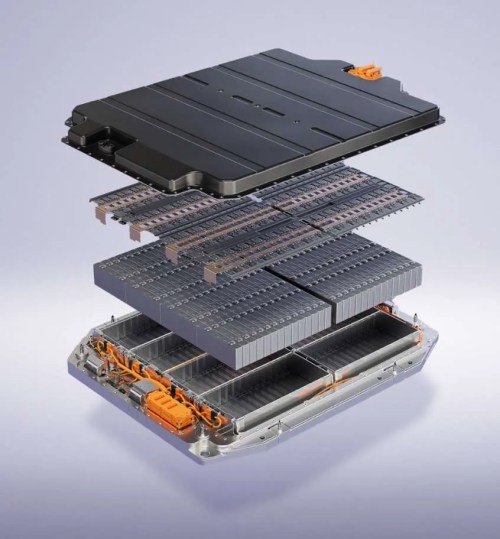
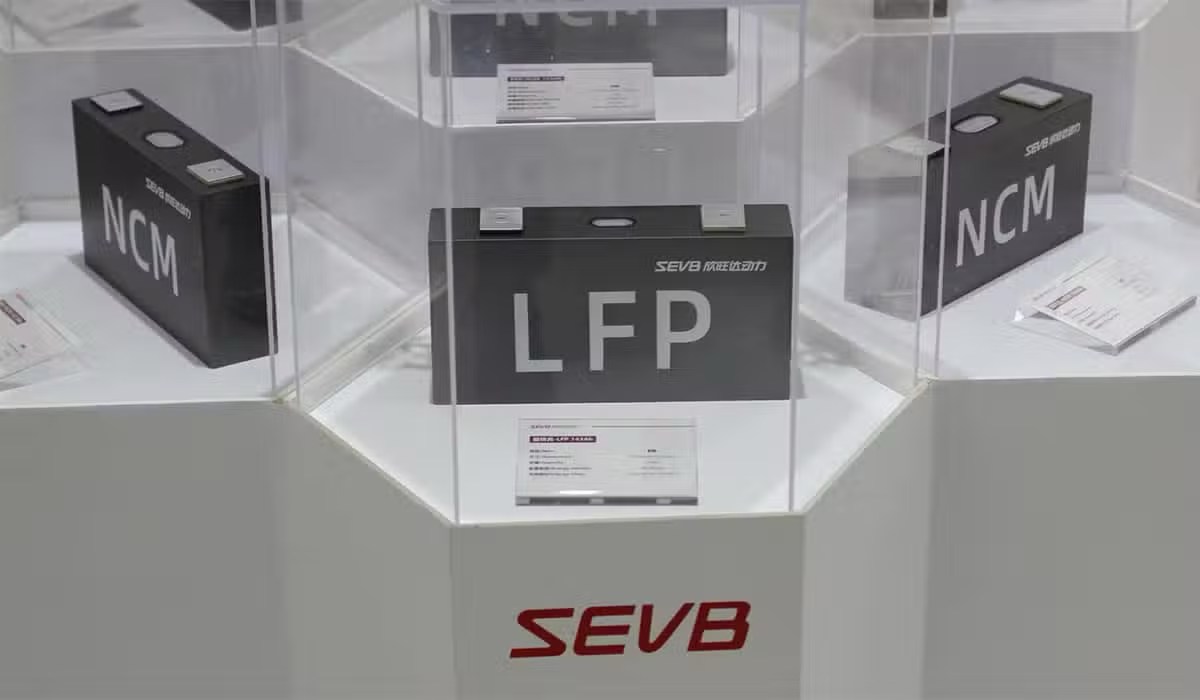
The new tech is called the Xingchi Supercharge Battery 2.0. It uses a chemistry known as lithium-iron phosphate, or LFP. These types of batteries are known for being tough and safe, but they aren’t always the fastest. Sunwoda says it has fixed that. Their new pack has a “15C” charging rate – this battery can handle a massive amount of power all at once without melting or breaking.
The numbers Sunwoda shared are quite impressive. If you plug in an EV with this battery when it is at 5%, it will hit 95% in just 9 minutes. If you are in a real rush, it can go from 5% to 75% in only 5.5 minutes. Most people spend more time scrolling through their phones in a parking lot than it would take to nearly fill this battery.
Surprisingly, Sunwoda did not make a small prototype – they showed off a full-sized battery pack. This pack uses 264 prismatic cells, has a total capacity of 98.8 kWh, and runs at 844.8 V. That is definitely enough energy to power a large sedan or SUV for a long trip.
Key specifications of the Xingchi 2.0
| Feature | Specification |
|---|---|
| Battery Chemistry | Lithium-Iron Phosphate (LFP) |
| Capacity | 98.8 kWh |
| Peak Current | 1,800 A |
| Voltage | 844.8 V |
| Charging Time 5-95% | 9 Minutes |
| Lifespan | Over 1,500 Cycles |
When you push that much power into a battery, people worry about heat and damage. Sunwoda seems very confident in its work. The company announced that drivers can use ultra-fast charging as much as they want during the warranty period. They are not putting a limit on how many times you can use the fastest chargers.
The battery can handle a maximum current of 1,800 A, but even with all that power, Sunwoda claims the battery will last for more than 1,500 charging cycles. For most drivers, that means the battery will likely outlast the car itself.
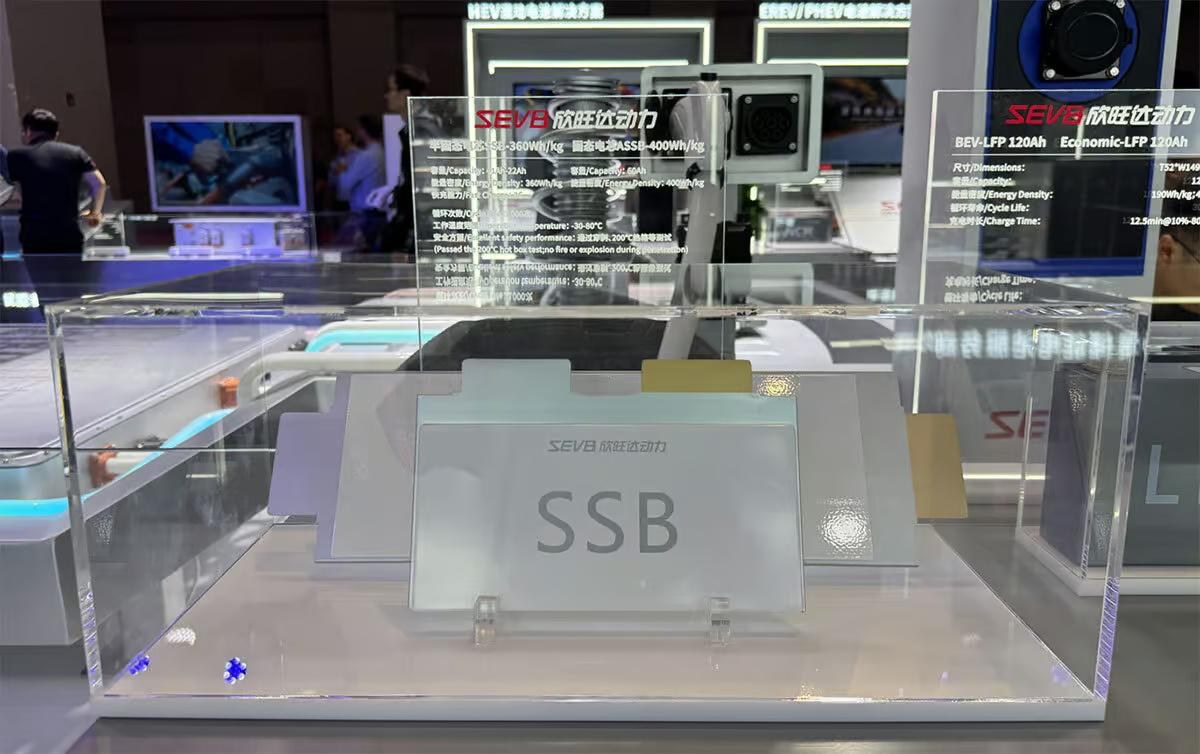
Sunwoda is working on a solid-state battery
Not everyone needs a massive battery for long trips. Some people prefer hybrid vehicles that use both gas and electricity. Sunwoda introduced a different battery for these vehicles. It uses large cylindrical cells that are 1.81 inches wide. These packs range from 3 kWh to 7 kWh.
Lithium is still the king of batteries right now, but Sunwoda is looking at other materials too. They are working on sodium-ion batteries, since sodium is much easier to find than lithium. These batteries are cheaper and safer, but there is a catch. Sodium batteries cannot hold as much energy in the same amount of space as lithium ones. Because of this, Sunwoda plans to use them for cheaper, entry-level EVs or for low-voltage systems in cars.
Sunwoda is also bringing artificial intelligence into the mix. They call it their “AI+ battery” strategy. They use computer programs to help design the batteries and keep track of them while people are driving. This helps the company find ways to make the batteries better and safer over time.
Of course, not wanting to be left out, the company is working on solid-state batteries. These are the “holy grail” of the industry. Their prototype can hold 400 Wh/kg of energy and could potentially give a car a range of 620 miles on a single charge.
Business-wise, Sunwoda is holding its ground. In March 2026, they installed 1.4 GWh of batteries into new EVs. This gives them about a 2.5% share of the massive Chinese battery market. They also recently finished a legal battle with a branch of the car company Geely. The dispute was worth £235 million, and it has now been settled.
Via
In the self-driving race Nissan’s preparing to take a massive leap in about a year with its next-generation ProPilot driver assist system. The automaker’s executive chief engineer said only Tesla and Wayve are on the level it’s about to play on. Big claims.
On Wednesday in Tokyo, Japan, Nissan’s Executive Chief Engineer for adaptive safety systems and software-defined vehicles Tetsuya Iijima told The Drive that the next-gen ProPilot Assist system will arrive in 2027. Japan will be the first launch market with others to follow “as soon as possible.” But the new system runs on upgraded hardware, new Nissan AI-based software, and according to Iijima, this technology is now “equal to or better than a human [driver].” And the engineering executive was ready to prove it with receipts.
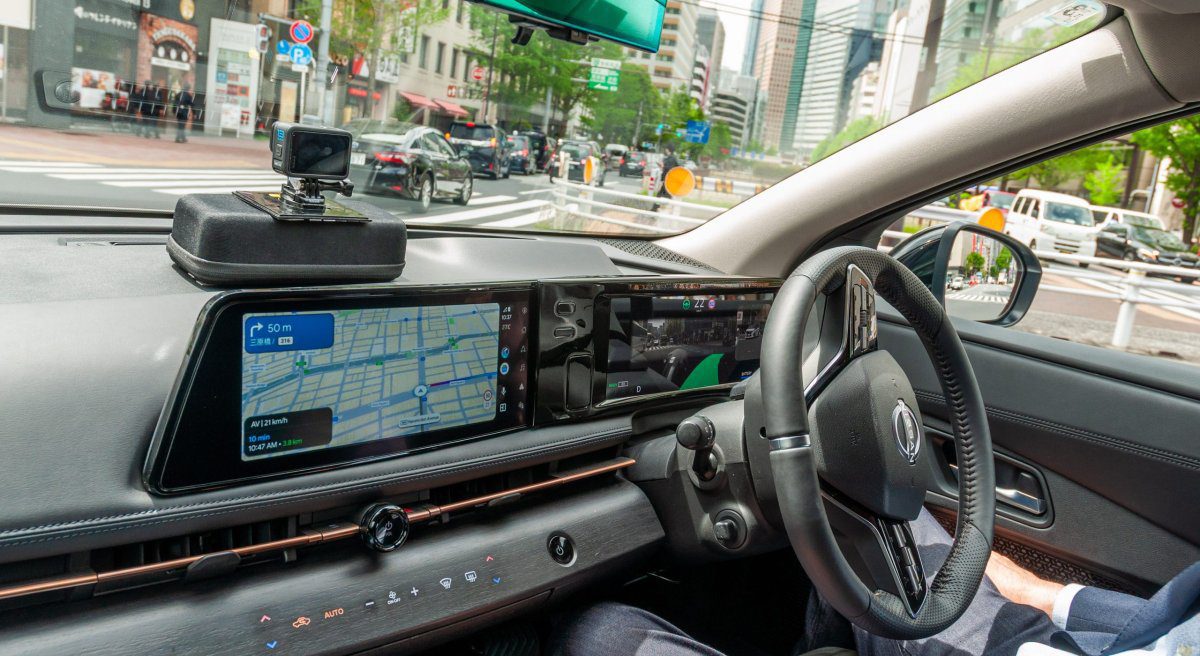
After walking us through the hardware, software, and logic-based system Iijima took us for a 40-minute ride around Tokyo in a Nissan Ariya with a prototype version of the next-gen ProPilot. The drive included both city streets and highways in a completely uncontrolled test.
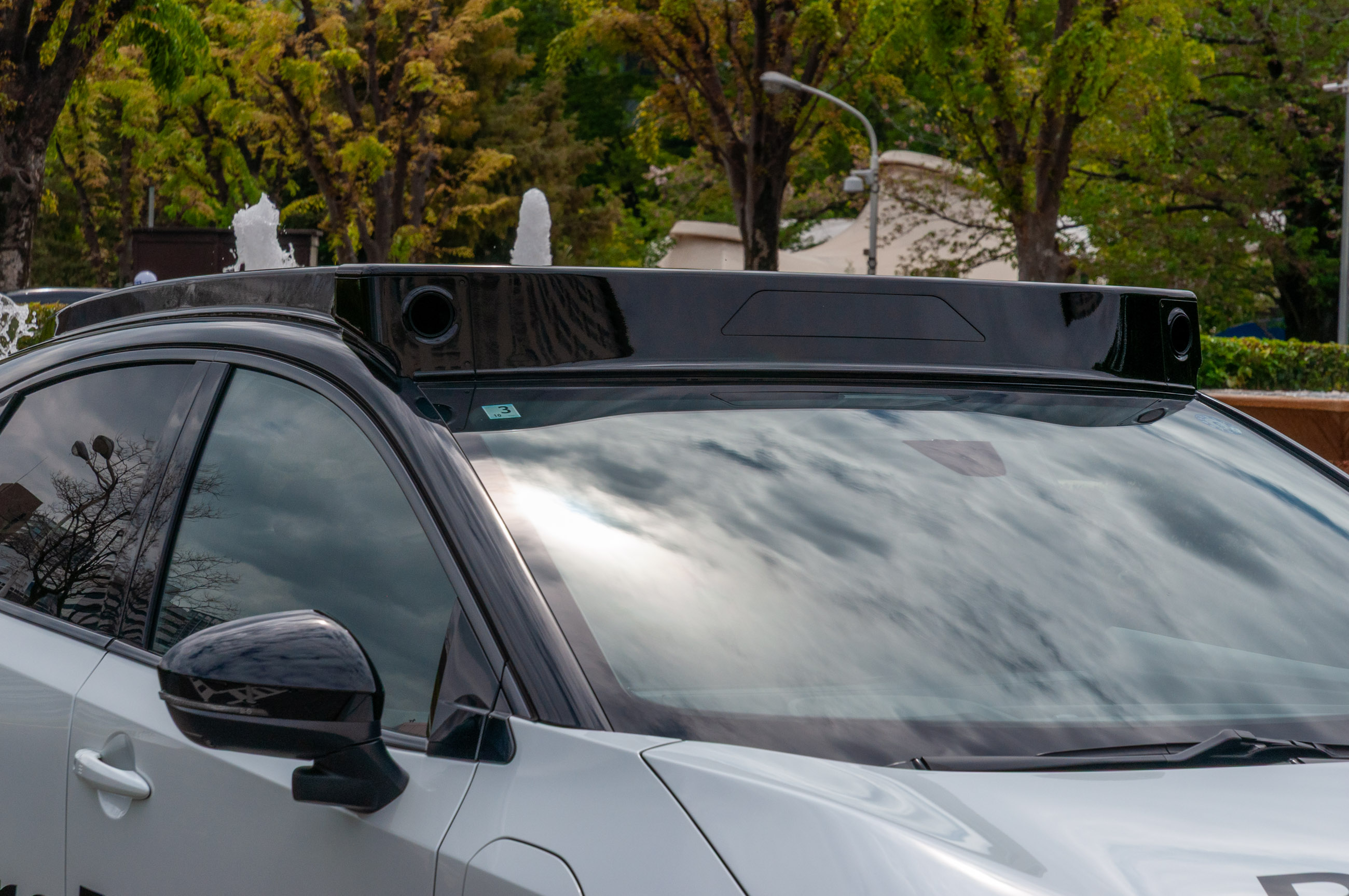
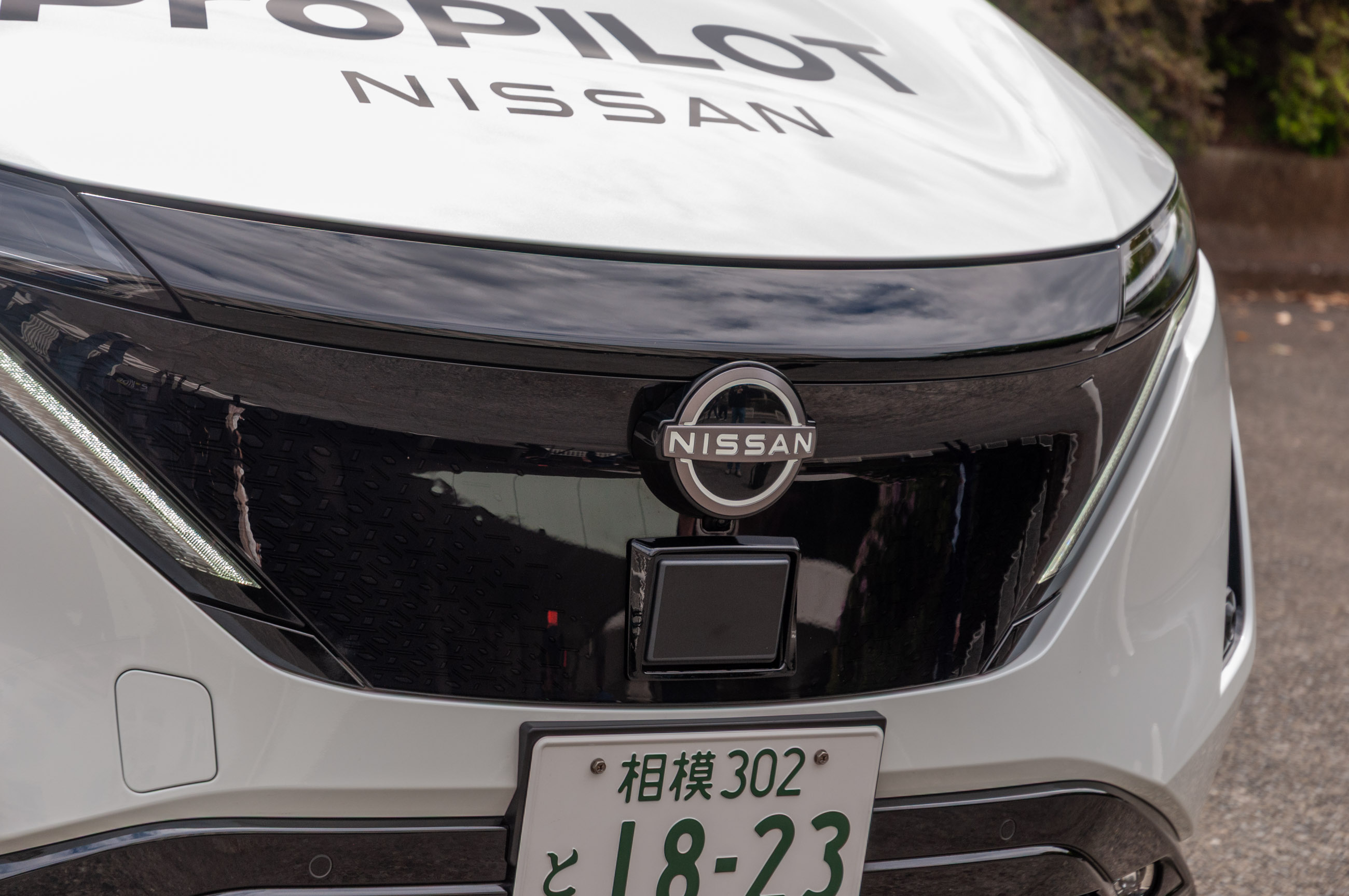
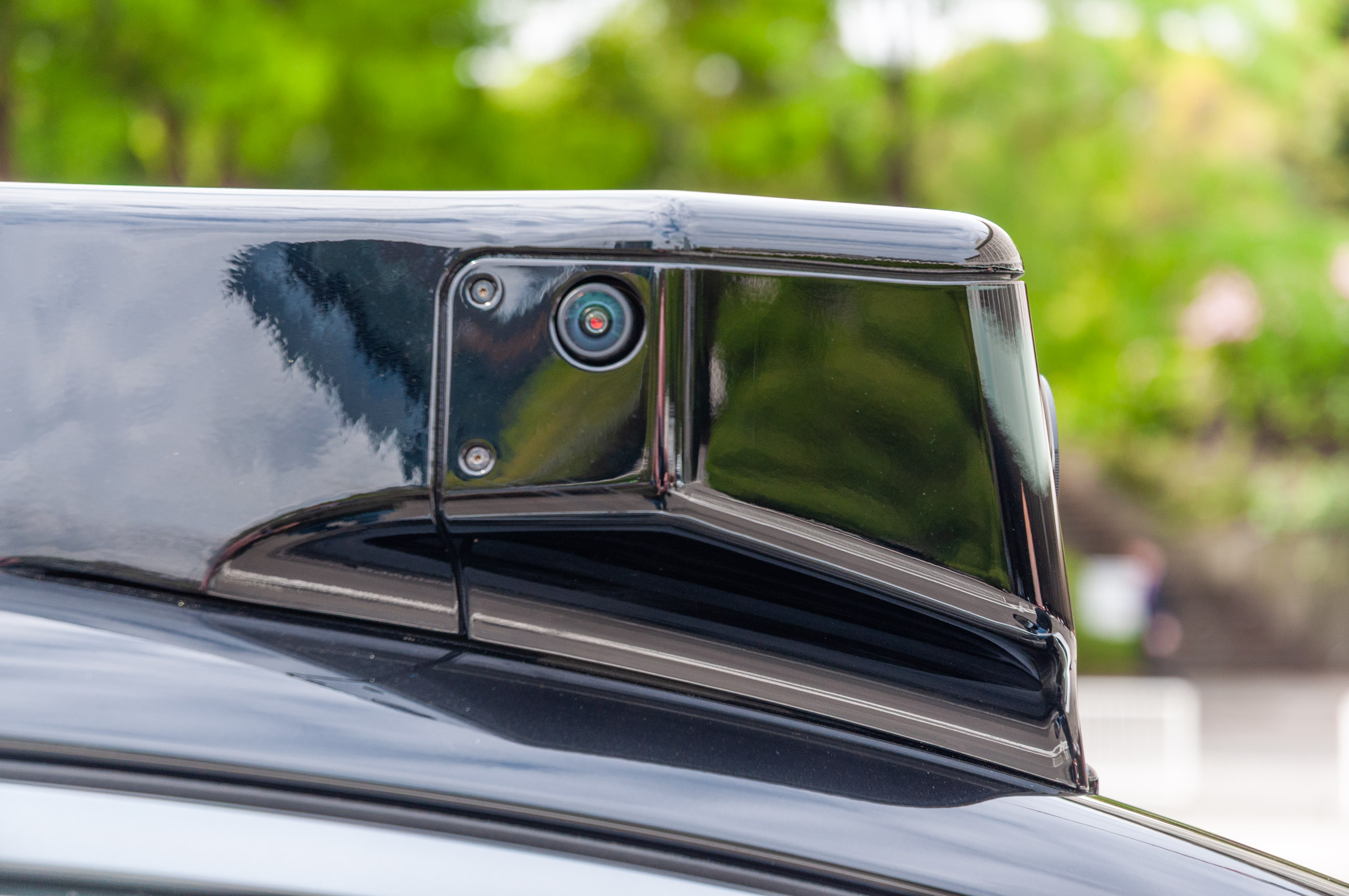
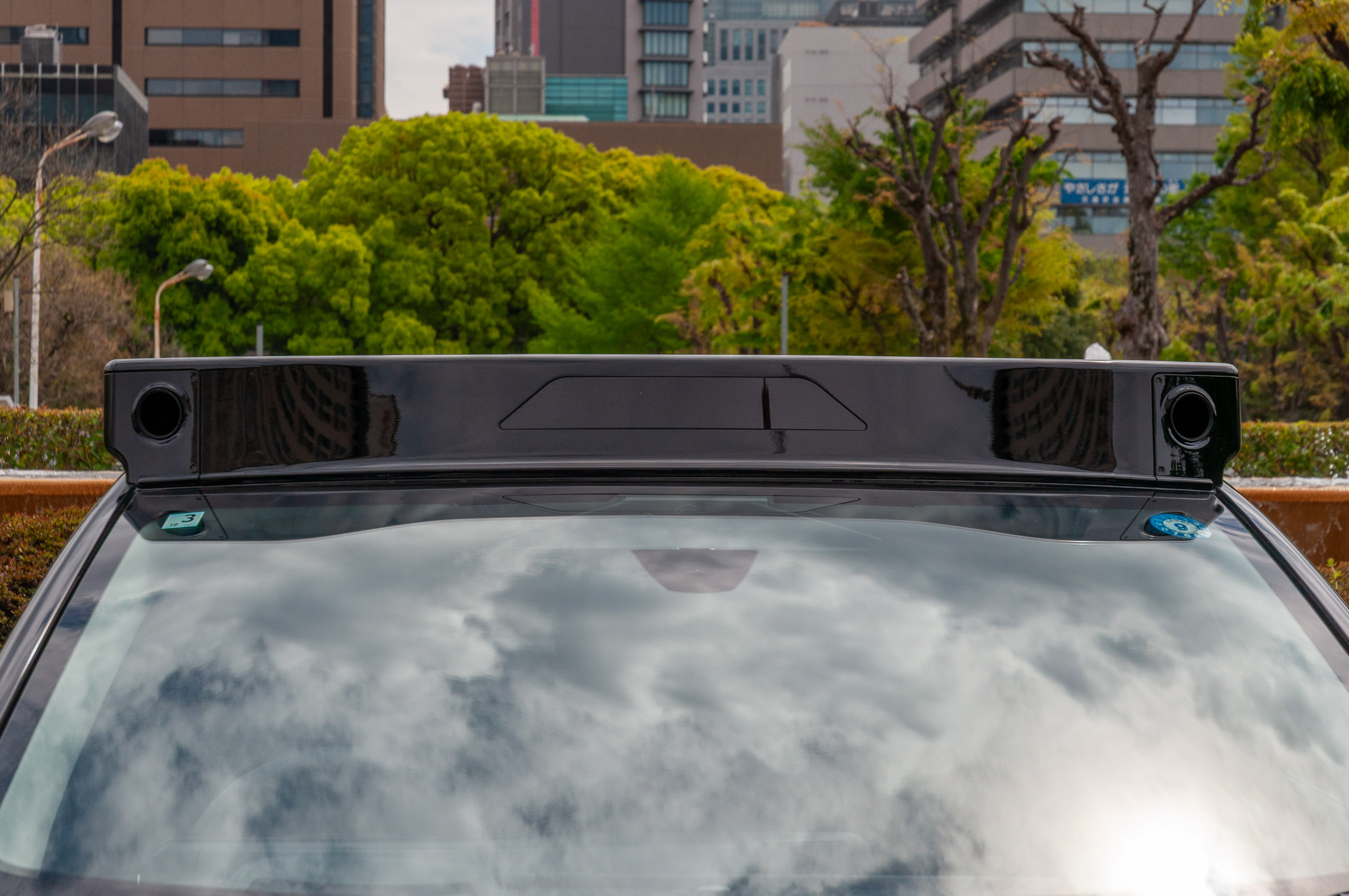
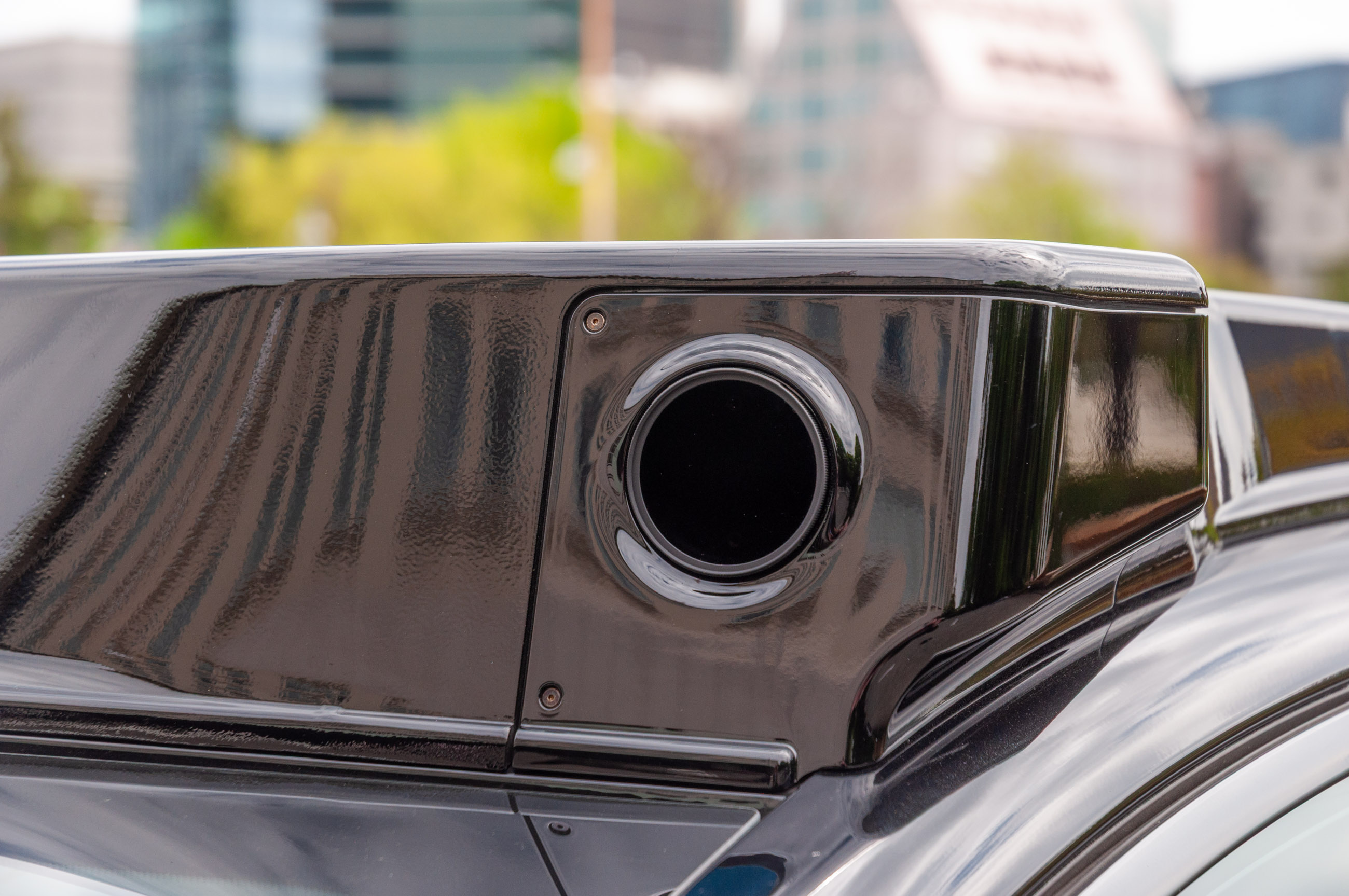
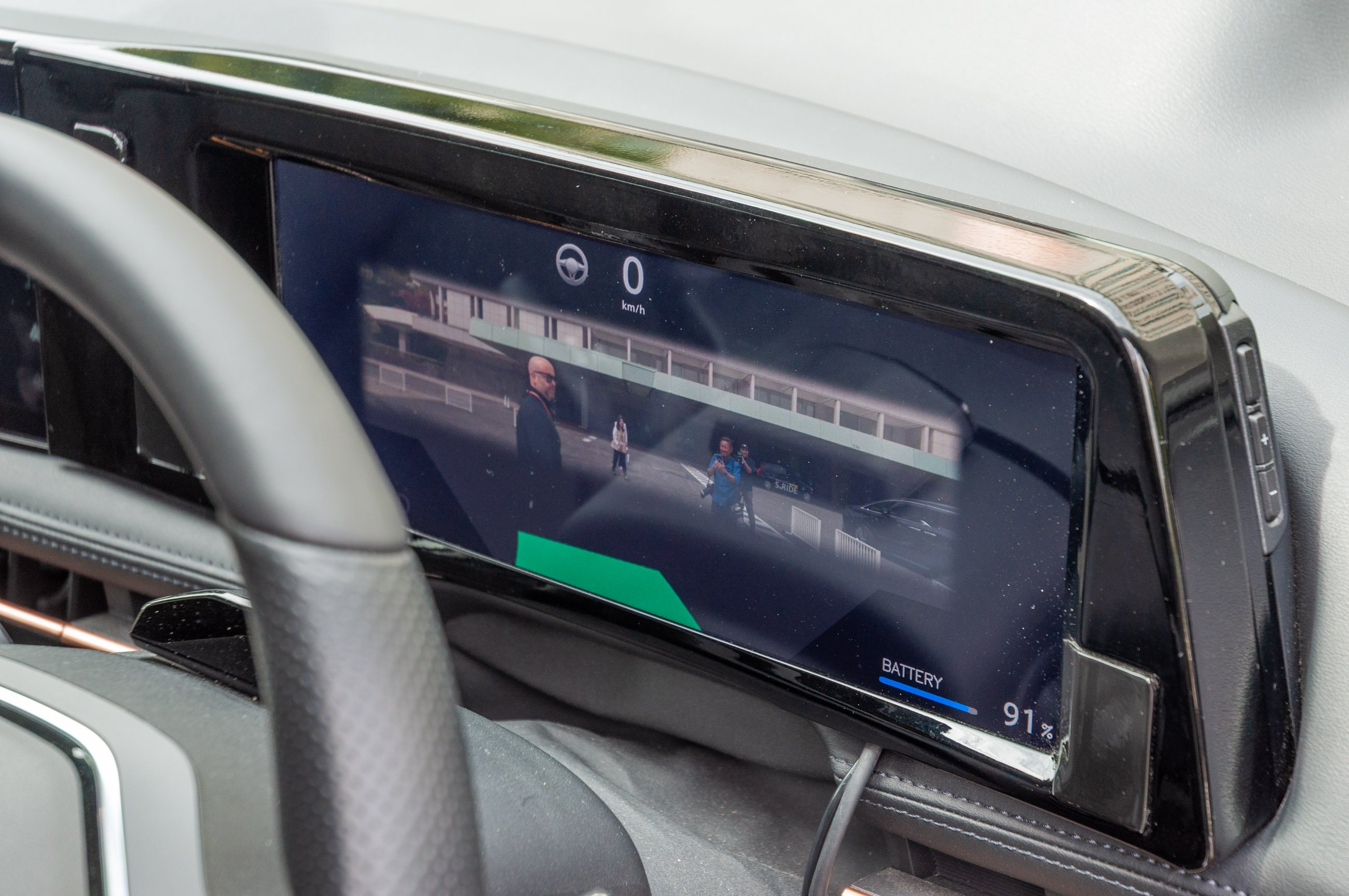
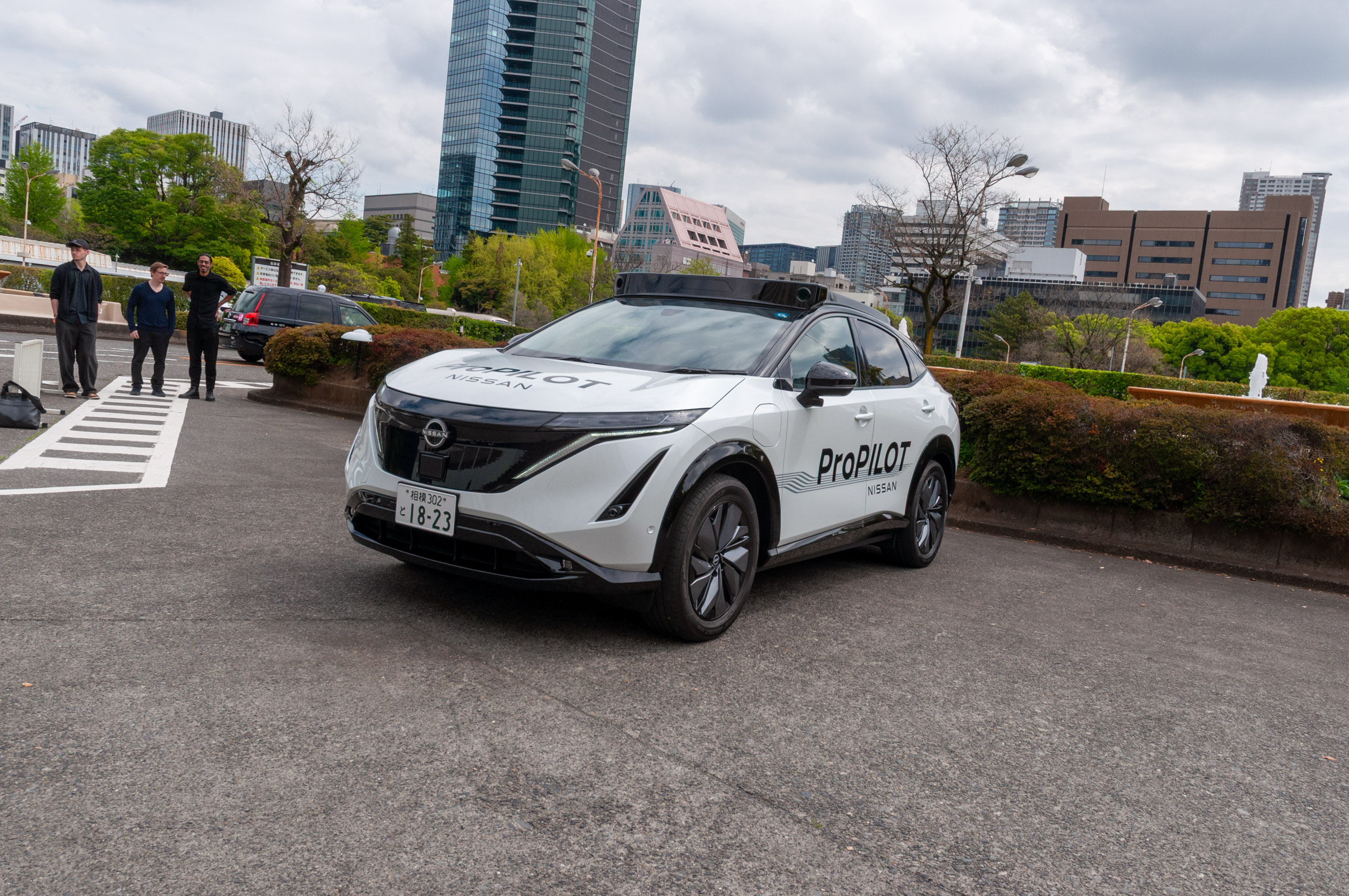
The Ariya test car equipped with the next-gen ProPilot Assist system looked like a production car we all know, that has now since been killed in the U.S., with an extra black box on the roof housing a sensor array. In production this array will be integrated into the car itself but the prototypes have it on top to make swapping and testing easier. All in there are 11 cameras, 5 radar units, and a Lidar unit. The latter matches what Rivian’s about to do with its upcoming self-driving hardware later this year on the electric R2 SUV.
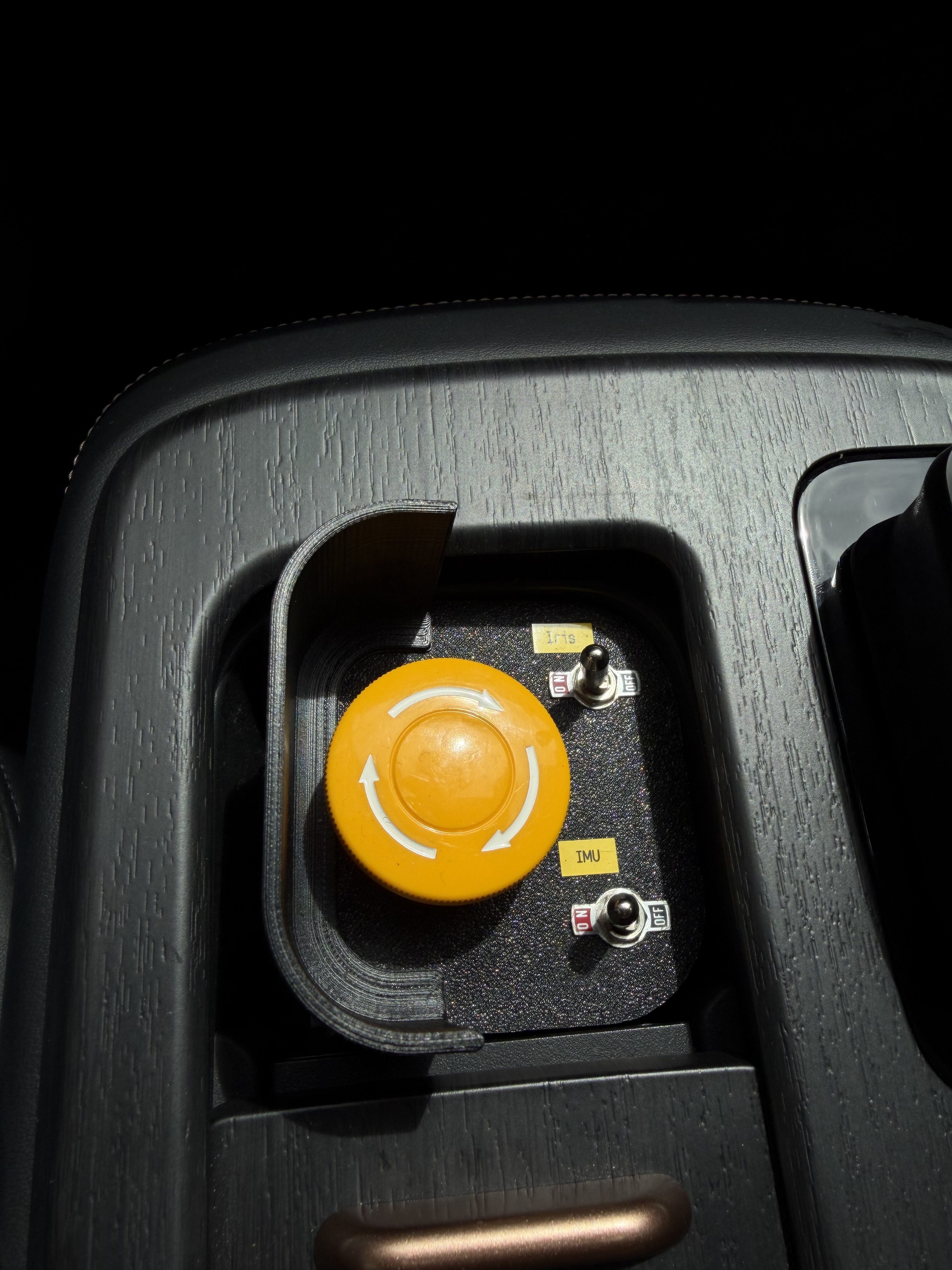
Once in the front passenger seat of the Ariya I knew this was a prototype thanks to a big yellow emergency kill switch hacked into the center console and two switches to kill systems should something go wrong. Nothing did, but safety first, especially on public roads.
When the system is in production the car will be able to start from where it’s parked and pull out of the parking spot, but because this is a test scenario Iijima guided the car manually from the parking spot to the front of the hotel entrance. From there he hit go on the touchscreen and the navigation took over with Iijima no longer having to touch the steering wheel, throttle, or brake again. Not once for the entire drive. Though, we all had a laugh when a police officer on a Honda motorcycle eyed us with a confused look as to what exactly was going on.
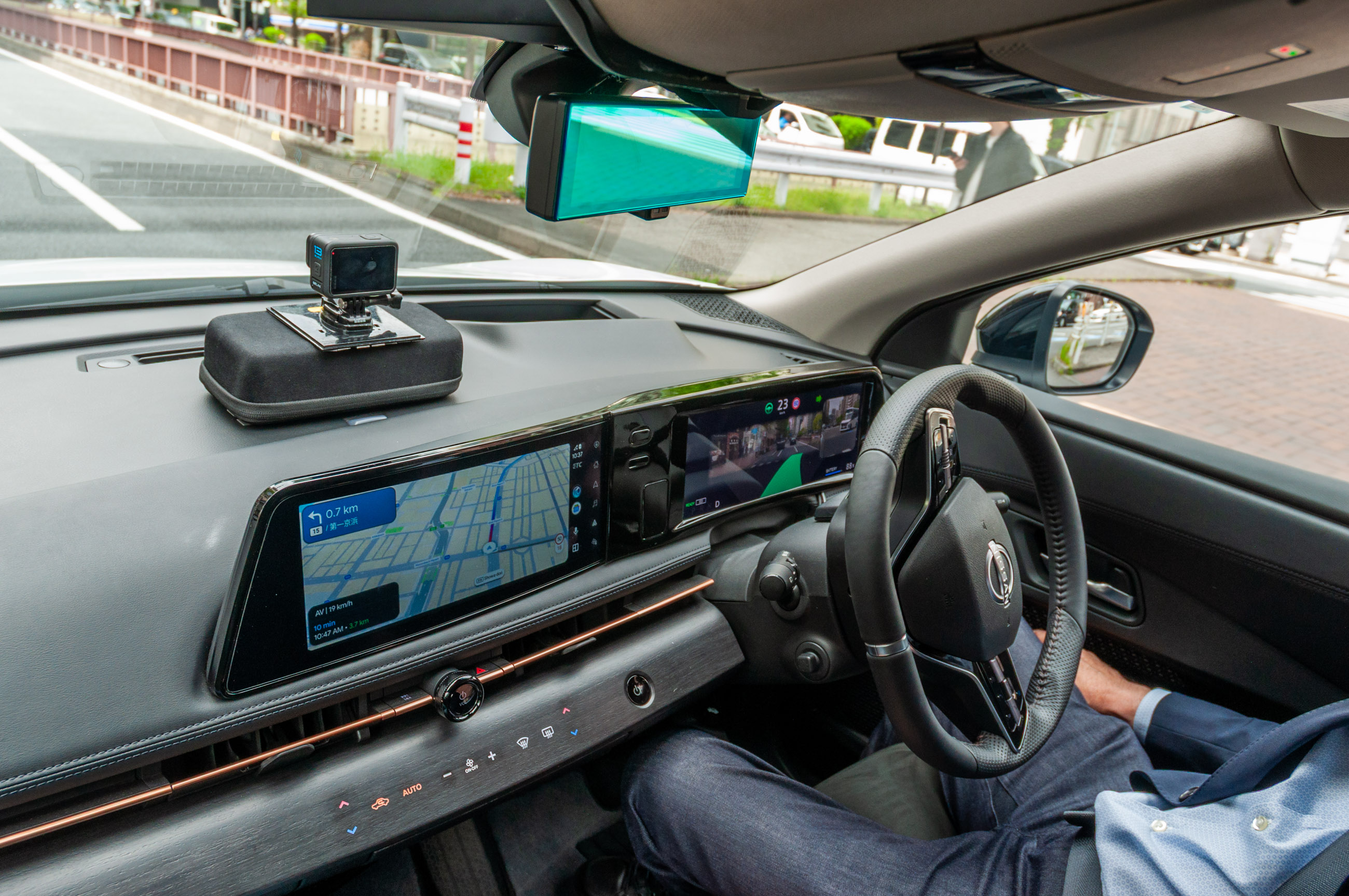
I witnessed the Ariya drive itself out of the hotel parking lot, stop at various stop lights at the appropriate spot, cross and navigate uncontrolled intersections while taking turns, deal with pedestrians running across the street outside of sidewalks, bicyclists, merging onto and off of the highway, going under bridges and through various lighting scenarios, none of which were staged and all were in real life, and get itself back to the front of the hotel.
Perhaps the most impressive, and hilarious, scenario we, and by we I mean the car, encountered was after taking a left onto a two-way street. There was a situation where the right side of the street was closed, making a portion of the street a controlled one-lane two-way situation via human construction workers with lit orange wands. A woman held up a wand and told us to stop and wait for oncoming traffic, the Ariya did, without ever honking at this person despite having to sit there for what felt like an eternity. When we were finally waved through the Ariya perfectly navigated itself through the construction setup despite a cement truck backing itself into the closed portion of the road adjacent to us. It was legitimately impressive. Iijima laughed and said Nissan didn’t pay for that situation to happen, but obviously how preposterous the situation became made one feel like it could’ve been staged as some absurd stunt. It wasn’t, which made it funnier.
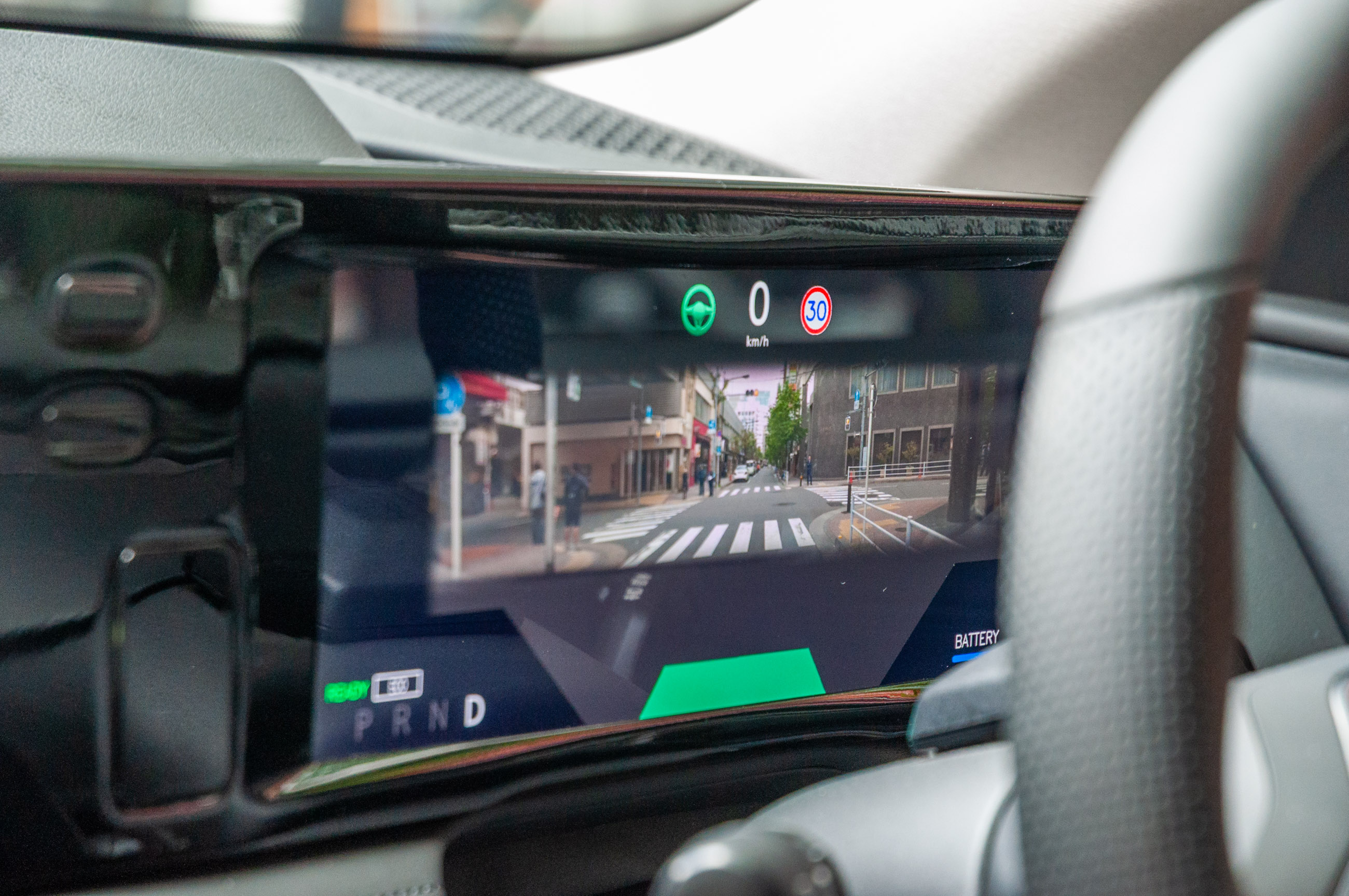
There were a few stop lights where the Ariya might’ve played it safe and stopped a few feet before where I might have, but that had to do with being cautious and what the cameras saw in terms of the painted lines, pedestrians, and overall situation. There was a situation where it yielded to a pedestrian where a more aggressive driver (why are you looking at me?) might have just kept going knowing it wouldn’t have hit the person, and there was a moment of extreme patience where someone wasn’t paying attention and didn’t go immediately when the light turned green. I would’ve honked the horn. The system absolutely plays in the safe zone, but one might argue playing it safe rather than fast and loose could be the difference between a driver-assist system getting you to your destination safely vs. crashing into the side of a white semi-truck.
Yes, the system can speed. Iijima said a user can program the system to go the exact speed limit, below the speed limit by a set amount, or above the speed limit by a set amount, but up to only 10 mph.
Iijima said the team is considering this system Level 4 capable in terms of self-driving technology, but it’s being deemed, called, and advertised as L2++. The reason comes down to both liability and the fact that some countries simply don’t have the legal framework setup for L4 systems yet, but the capability is there, as the engineer proved over the course of a 40-minute drive in Tokyo.
Nissan hasn’t decided how much the next-generation ProPilot Assist system will cost, but Iijima said it’s important to the automaker to make it a “reasonable price” as they are aiming for mass adoption. Nissan also hasn’t decided which vehicle the system will launch with in the U.S. market, but in Japan it will debut on the next Elgrand van.
Based on a brief 40-minute ride it did seem like the system I witnessed was as good a driver as a human. Frankly, better than some. Whether that speaks volumes about human drivers, the system, or both, is unclear.
Nissan provided The Drive with travel, accommodations, some raw food I definitely did not eat, and access to the vehicle for the purpose of writing this story.

BRIDGESTONE has launched the fifth generation of its Potenza Adrenalin ‘RE’ performance tyre, the RE005, replacing the RE003 after 11 years and more than two million sales in Australia and New Zealand.
For those counting at home, yes, the RE004 was skipped, but there was a clear reason why the brand’s Australian arm rejected the model and chose to wait for the now-launched RE005.
Bridgestone Australia sales director Claudio Sodano told GoAuto the fourth-generation tyre was developed to meet rolling resistance regulations in certain Asian markets, but the trade-off was a step backwards in wet handling compared with the RE003.
“When the RE004 was tested in our market, it didn’t surpass the expectations Potenza Adrenalin RE003 set, so we made a conscious decision to skip the fourth-generation product,” Mr Sodano said.
Unlike the RE004, Bridgestone Australia had input throughout the RE005’s development, from the concept stage through to delivery, driven by the fact the Australia and New Zealand markets account for around 45 per cent of total Potenza Adrenaline sales across the Asia Pacific region.
The result is a tyre that Bridgestone claims offers a seven per cent improvement in dry grip and 12 per cent improvement in wet grip, while rolling resistance is down 25 per cent and wear life improves by four per cent when compared with the RE003.
Much of the performance gain comes from the tread design, with an “A-shape” groove offering improved traction and predictability, while a wide inside rib sharpens steering response.
On the outer edge, connecting blocks stiffen the tread face during hard cornering, giving the RE005 a semi-slick appearance when viewed from the side – offering a far more aggressive aesthetic than the outgoing RE003.
The RE005 launches in 50 sizes spanning 15 to 20 inches, covering everything from the Toyota 86 and Mazda MX-5, through to the Ford Mustang and Nissan Z, as Bridgestone targets an enthusiast audience.
“Bridgestone Potenza Adrenalin RE003 customers are incredibly engaged and passionate about their cars and tyres, so it was essential that any successor to the product was a genuine step up in performance,” said Mr Sodano.
“These are the customers who spend time researching and planning their next tyre purchase.”
The RE003 was always a competitively priced tyre, particularly when offered under Bridgestone’s longstanding four-for-three promotion, and the RE005 offers comparative value despite the myriad improvements.
Mr Sodano told GoAuto that pricing will come in at less than $200 per tyre when sold as part of a four-for-three promotion, positioning it a few per cent below the Michelin Pilot Sport 5 – the RE005’s key rival.
The RE005 is the first of three Potenza launches this year, with the new flagship Potenza Sport EVO and an updated RE-71RZ track-focused semi-slick due in 2026.
“There is always excitement around the launch of a new Bridgestone tyre, but the build-up and anticipation for the Potenza Adrenalin RE005 internally, within our sales network and with consumers has been to another level,” said Bridgestone Australia and New Zealand managing director Heath Barclay.
On the track
Bridgestone invited media to Norwell Motorplex in south-east Queensland for the RE005 launch, giving us track time in identically prepared Toyota 86s fitted with either the new RE005s or a fresh set of Michelin Pilot Sport 5s in the same size, across slalom and full-circuit sessions.
The difference was apparent during our first back-to-back crack at the slalom, so much so that we actually questioned whether the competitor tyres were in fact heavily used.
Where the Pilot Sport 5 has a slight delay at turn-in, a sensation of the tread squirming before the carcass loads up – all very typical behaviour for a road tyre – the RE005 responds almost instantly.
Turn the wheel and the nose follows, with no rolling onto the shoulder, offering performance far closer to that of a more track-focused semi-slick.
Mr Sodano attributed this to the wide, rigid rib structure on the inside of the tread face, which eliminates the squirm that creates that split-second delay.
Out on the full circuit the RE005’s character became clearer still, allowing us to squeeze more out of the 86s than we expected given this is a street tyre with strong wet-weather performance.
Under hard braking, the front end bites with confidence, offering stopping performance that genuinely impressed us compared with the control tyres.
Then, as you load up the RE005s mid-corner, there’s a progressive, predictable breakaway that is in no way snappy – somewhat contrary to the twitchy, tail happy handling the 86 is known for.
Swapping into the Michelin-shod car highlighted the slower turn-in and a less defined limit, although it would have also been interesting to test the new model against the RE003 it replaces.
When asked if there was anything the RE005 doesn’t do better than the RE003 after wrapping up the on-track component of the day, Mr Sodano was candid in his response.
“The only thing that it doesn’t do better than RE003 is noise – it’s about the same,” he said.
“But every other area is better; dry and wet braking’s better, dry and wet handling’s better, rolling resistance is better.”
At this price point, with this breadth of sizes and this level of on-track composure, the RE005 makes a strong case as the performance street tyre to beat – and given the RE003’s cult following, it’s likely to hit the ground running.
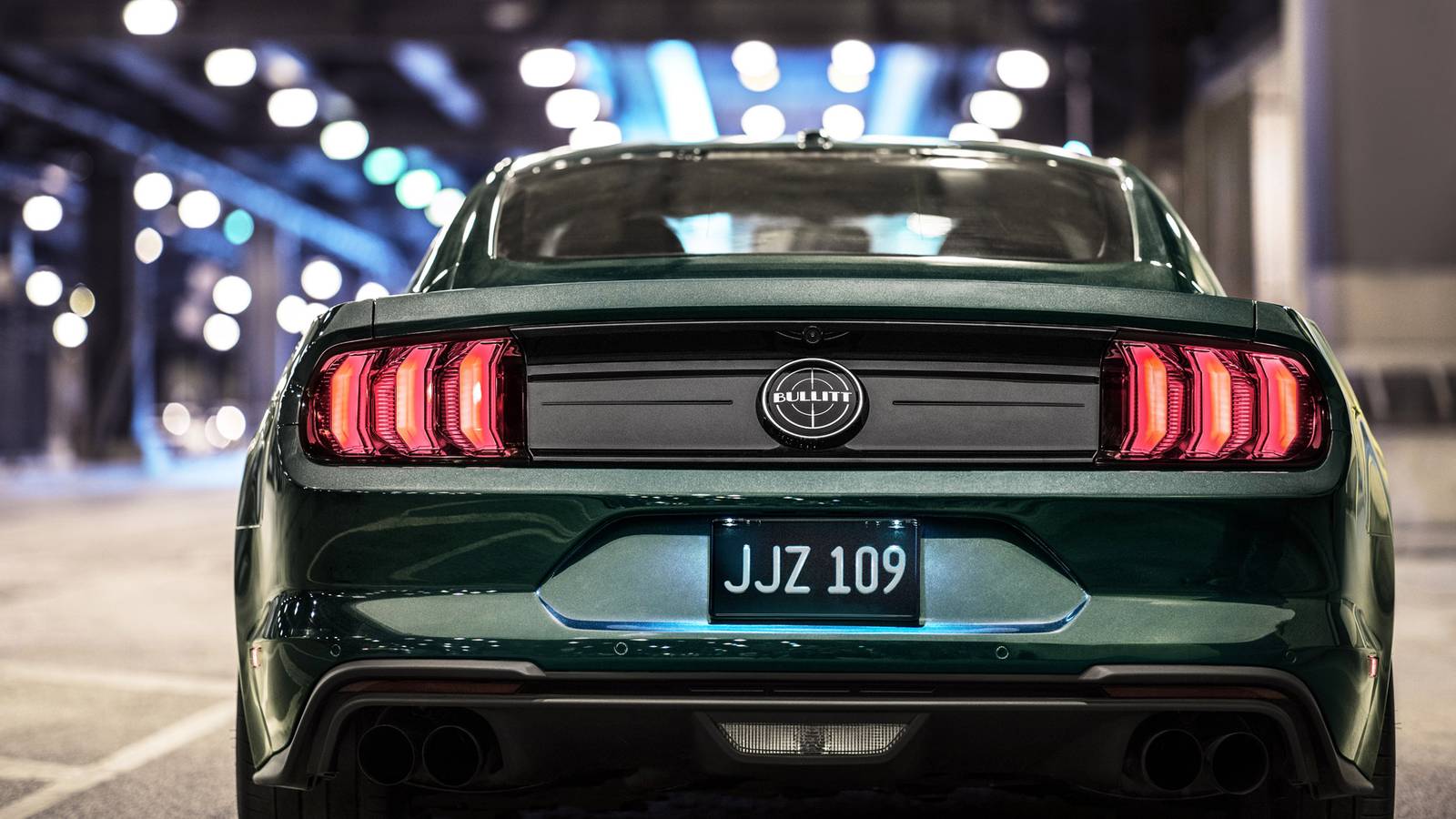
Much like the original Fast and the Furious movie did in the early 2000s, a film starring a certain Ford Mustang GT 390 finished in Highland Green created a whole new generation of car fans when it aired in 1968. The film, of course, is Bullitt, starring Steve McQueen as San Francisco detective Frank Bullitt, and it forever etched the Ford Mustang – and even the hilly streets where its legendary chase was filmed – into popular culture.

5.0L V8 Gas
6-Speed Manual
Rear-Wheel Drive
480 hp
420 lb-ft @ 4600 rpm
14/23 MPG
Ford itself didn’t do much to capitalize on the movie’s popularity until much later, when in 2001 it launched the first Mustang Bullitt special edition. Two more would arrive in 2008 and 2019, offering not just a dose of nostalgia, but meaningful performance upgrades, proving that the legend was more than just cinematic.
Pricing details reflect the information available at the time of writing and may change over time.

The original film’s famous 10-minute chase involves McQueen in the Mustang following a black Dodge Charger R/T, piloted by stunt driver Bill Hickman, through the hilly streets of San Francisco. It starts off slow, but when the belt buckles go on, the cars are soon weaving around corners, barreling over curbs, and careening past unsuspecting traffic. Its tight, realistic driving, combined with a raw V8 soundtrack and the city’s steep inclines, created an intensity and authenticity rarely seen on film at the time. Even today, almost six decades on, it still sets the standard for filmmakers staging tense car chases.
While the rest of the film isn’t always hailed as a cinematic masterpiece, with critics noting its slow pacing and somewhat convoluted plot, it stands out for its realism and lack of melodrama, anchored by the restrained, cool, minimalist performance of McQueen. A genuine car enthusiast and accomplished racing driver, McQueen did much of his own driving for the film, and his firsthand experience on the track shaped the production. For example, his guidance on camera angles during the chase help turn those 10 minutes into a cinematic milestone.

Interestingly, two 1968 Mustang GT 390s were used for filming. One was wrecked and sold as scrap (though recently discovered in Mexico) but the surviving car ended up with Robert Kiernan, who purchased it shortly after filming wrapped up for $6,000, after seeing an ad for it. Kiernan held onto the car for decades, even refusing an offer from McQueen to purchase it. It was finally sold at auction in 2020 by Kiernan’s son, fetching $3.74 million.
Like that original car, Ford’s modern series of Mustang Bullitt editions have, in their own way, blurred the line between cinema and reality like few movie specials ever have. Much like McQueen and his portrayal of Frank Bullitt behind the wheel, these cars deliver understated, genuine performance without shouting for attention. Instead of flashy stripes or bold badges, you get a powerful V8 engine combined with modifications designed to shore up the handling. It’s a subtle nod to a legend, a car that lets the driving speak for itself.

Ford finally cashed in on the aura of the movie car by introducing the first Mustang Bullitt in 2001. Staying true to the original, it arrived in Highland Green with deleted exterior badges and subtle styling cues for a clean, understated look. This was a one-year-only, limited edition, based on the fourth-generation Mustang. While the stock GT offered 260 horsepower, the Bullitt added five extra horses and received a more focused chassis. Specific modifications included a revised intake, underdrive pulleys, stiffer suspension, and subframe connectors, giving it sharper handling and a more connected, driver-focused feel, though nothing on the same level as the more hardcore and more expensive SVT Cobra.

The Mustang Bullitt returned for the 2008 model year, coinciding with the 40th anniversary of the film. The car this time was based on the fifth-generation Mustang and was offered for two years. Ford kept to the same formula as the previous car, but upped the level of tuning and this time also included a recreation of the movie car’s white cue ball shifter. Power was increased by 15 hp over the stock GT’s 300-hp rating, and the chassis tuned for a sharper drive, including with parts developed by Ford Racing. There were new shocks, struts, brake pads, and a performance sway bar, and the old live rear axle given a higher 3.73:1 ratio for better acceleration.

With the arrival of the sixth-generation Mustang and its new Coyote 5.0-liter V8, the standard Mustang GT was already a formidable performer. Ford nonetheless pushed the envelope further with the 2019 Mustang Bullitt, boosting output by 20 hp over the stock GT’s 460 hp. This came thanks in part to performance goodies borrowed from the hardcore Mustang Shelby GT350, including an upgraded intake manifold and larger throttle bodies. Other enhancements included Brembo brakes, aerodynamic tweaks, and chassis refinements to sharpen handling. While the Bullitt disappeared again after 2020, Ford carried most of its upgrades, and then some, into the 2021 Mustang Mach 1.
|
|
2001 |
2008-2009 |
2019-2020 |
|---|---|---|---|
|
Engine |
4.6-liter V8 |
4.6-liter V8 |
5.0-liter V8 |
|
Power |
265 hp |
315 hp |
480 hp |
|
Torque |
305 lb-ft |
325 lb-ft |
420 lb-ft |
|
0-60 mph |
5.5 seconds |
5 seconds |
4–4.5 seconds |

Even if you’ve never seen Bullitt, the Mustang Bullitt ranks among the better Mustangs, particularly the final version based on the sixth-generation car. Finished in Highland Green, or more discreetly in Shadow Black, and riding on Torq Thrust-style 19-inch wheels, it drops subtle hints for those who know what they’re looking at. For everyone else, it’s simply a clean, restrained fastback – one that just happens to pack nearly 500 hp under the hood.
Based on the Mustang GT Premium, the Bullitt came standard with a six-speed manual and the Mustang’s Performance package. While the Premium trim handles comfort duties, the Performance pack’s hardware is serious: six-piston Brembo brakes, a strut-tower brace and K-brace, heavy-duty front springs, a thicker rear sway bar, a Torsen differential with 3.73 gearing, and an upgraded radiator. Revised stability-control and ABS tuning, subtle aero tweaks, and aluminum interior accents complete a package that feels cohesive rather than cosmetic.

Today, the market reflects that balance. Examples start around $30,000 for higher-mileage cars, with sub-50,000-mile examples closer to $35,000. Considering an original sticker of $46,595, the Bullitt has held its value respectably, which is proof that understated performance never goes out of style.

Nearly six decades after Bullitt first lit up theaters, the Mustang Bullitt remains a rare thing: a movie car that backs up its mythology with mechanical credibility. It has never relied on stripes or aggressive aero to make its point. Instead, it delivers performance wrapped in restraint, the kind enthusiasts appreciate long after trends fade.
And with the film’s 60th anniversary just two years away, another Bullitt feels not just possible, but likely, perhaps offering Mustang Dark Horse levels of pace dressed in a more elegant suit. And with rumors of Steven Spielberg planning a new movie centered on the Frank Bullitt character, with Bradley Cooper tipped for the role, we could see a Mustang in Highland Green also return to the silver screen in the not too distant future.
Sources: Ford