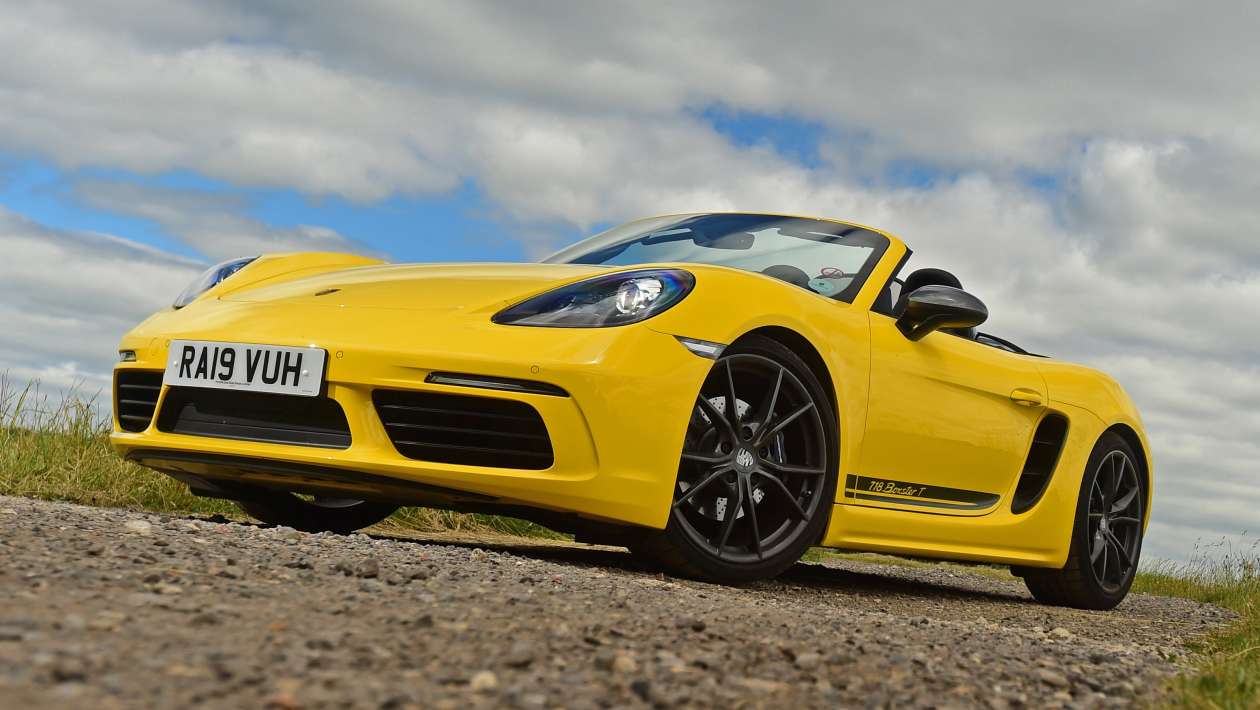
We were impressed as soon as we drove the 718 Boxster, and then Porsche introduced a six-cylinder version that was even better. Now the Boxster Mk4 has been axed, but its desirability isn’t diminished, so here’s what you need to know to buy your perfect example.
History
The fourth-generation Boxster was launched in January 2016, two decades after the original model was unveiled. The 296bhp Boxster had a turbocharged 2.0-litre four-cylinder engine, while the 345bhp Boxster S version came with a turbocharged 2.5-litre engine.
Launched in October 2017, the Boxster GTS had a 360bhp 2.5-litre engine, while the 296bhp Boxster T that arrived in December 2018 was a driver-focused entry-level variant that was lighter than standard, sat 20mm lower and was fitted with adaptive dampers.
Advertisement – Article continues below
The Boxster Spyder that was introduced in September 2019 packed a 414bhp 4.0-litre naturally aspirated six-cylinder engine; this same powerplant was fitted to the Boxster GTS 4.0 that was launched in January 2020, in 388bhp form. The Boxster 25 Years that arrived in January 2021 marked a quarter of a century of production and was based on the GTS 4.0; it was limited to 1,250 units worldwide.
On the road
There are many reasons why you want a Boxster, but this is the key one. Any correctly maintained and properly set up Boxster is fabulous to drive, from the weighting and feedback of the controls to the scintillating performance. Ride comfort is amazing considering how sharp the handling is, too.
The six-cylinder engines are smooth and sound superb, while the four-cylinder units are torquey, frugal and lighter. So both engines have their pros and cons and it’s the same for the transmissions; both manuals and autos are ultra-slick, and chosen purely based on personal preference.
Which one should I buy?
Even the slowest Boxster, the 2.0-litre edition, can crack 170mph and do 0-62mph in 5.1 seconds, while the Spyder can do 187mph and 0-62mph in 4.4 seconds. The six-cylinder versions are glorious, but the 2.5-litre S model has the perfect balance of poke and poise, even if it doesn’t sound as lovely as a 4.0-litre edition (for which you’ll pay a very hefty premium).
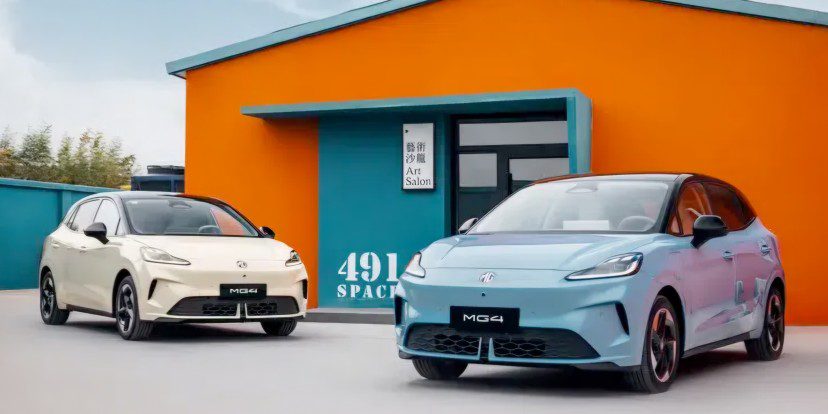
On April 15, SAIC officially pulled the covers off the new 2026 MG4. This popular hatchback is getting ready for its big public party at the Beijing Auto Show. The car might look familiar to fans of the brand, but it packs a lot of new surprises under the metal.
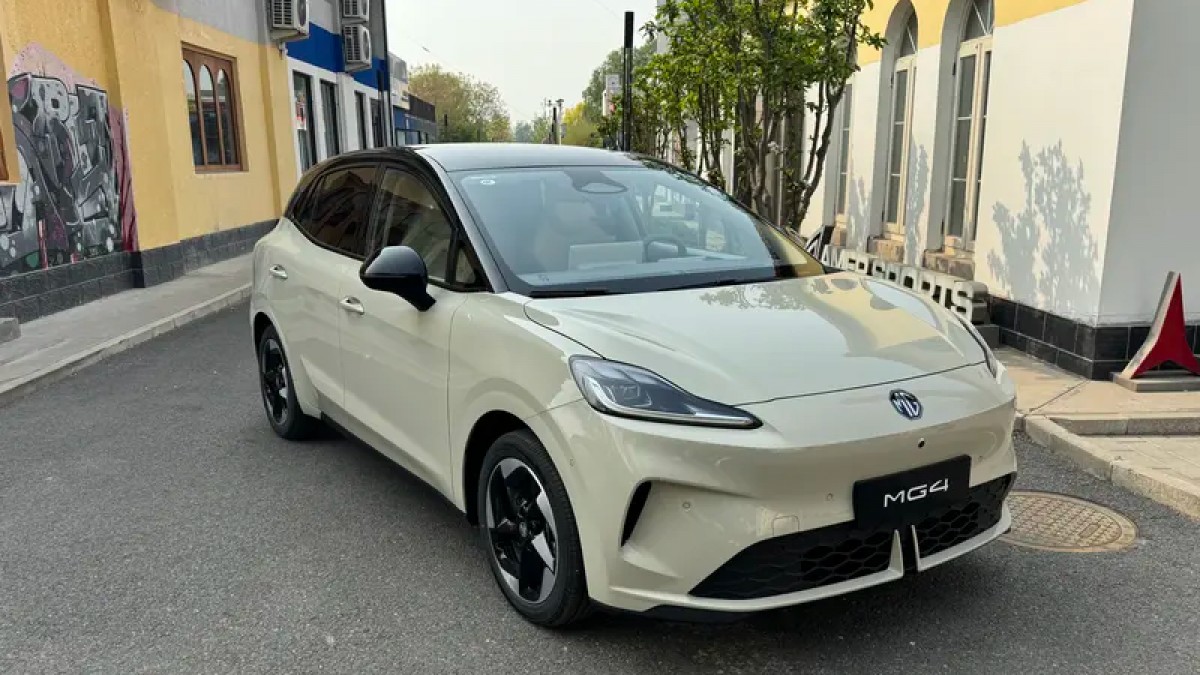
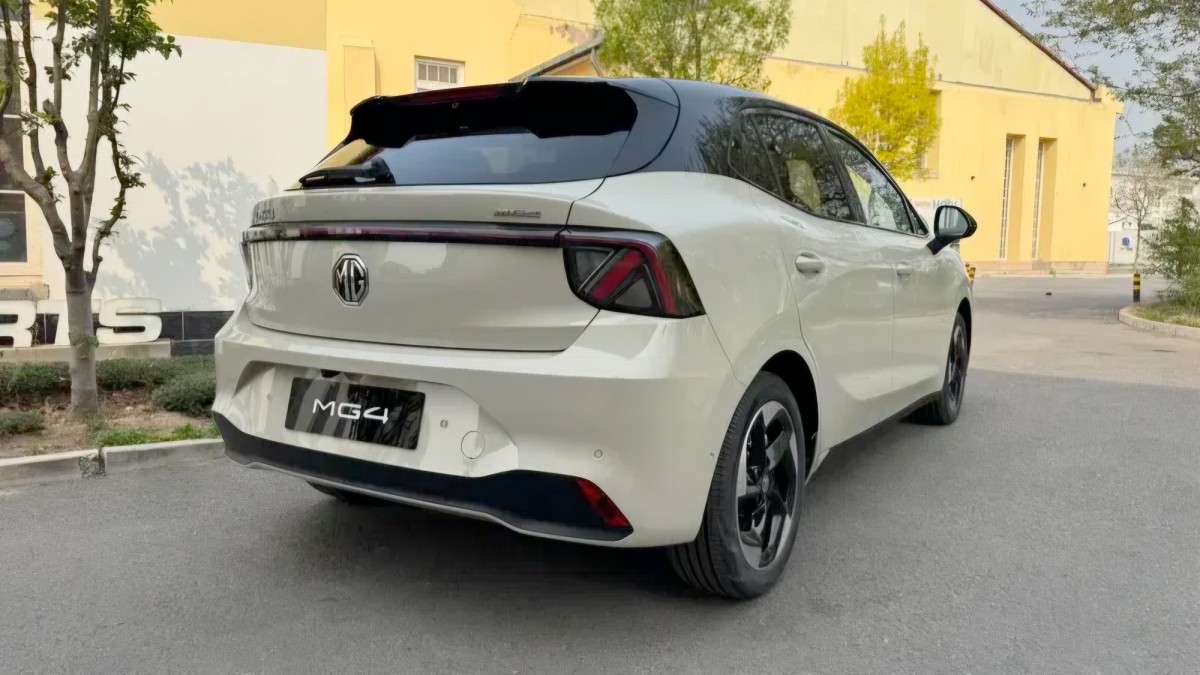
The 2026 MG4 keeps the familiar look that made the original model a hit. It still has the pointy headlights and the black bumper at the bottom that gives it a sporty vibe. If you look closely at the front, you will see a small blue light. This is not just for show. It tells people outside the car when the computer is helping the driver. On the side, the car keeps its “floating roof” look, which makes the top part of the car seem like it is hovering. To freshen things up, MG added a new set of 17-inch rims.
2026 MG4 – source: Car News China
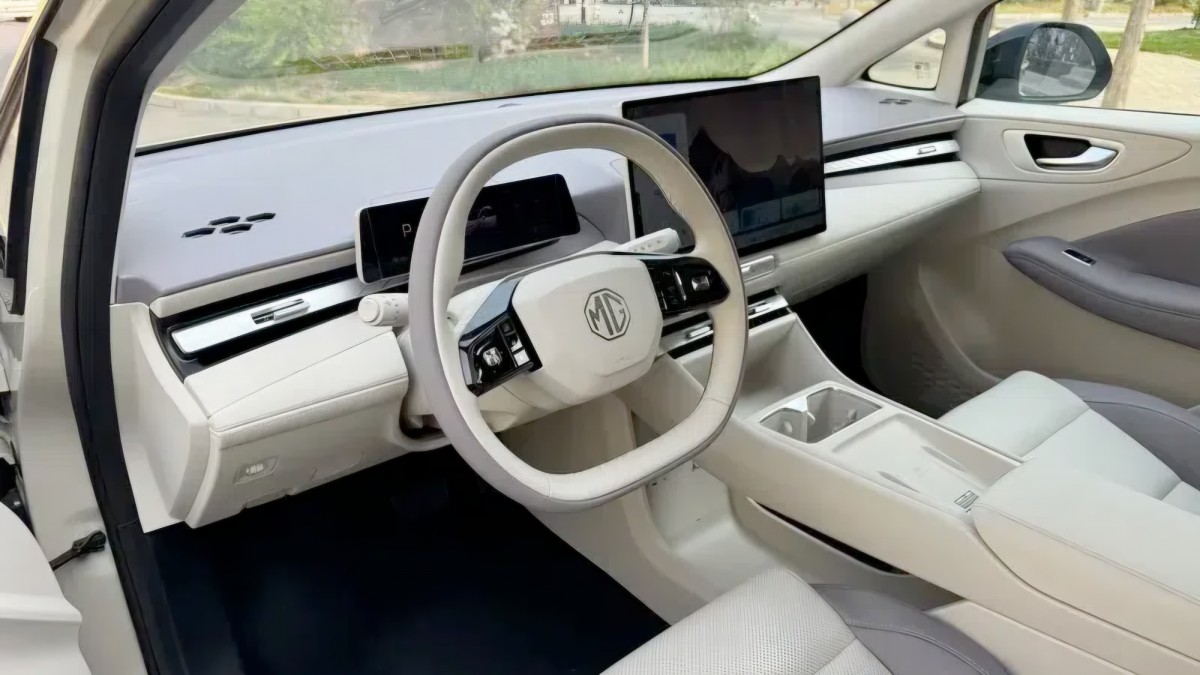
Inside the cabin, the changes are even bigger. MG is offering two new interior colors called Yacht Blue and Midnight Purple. These colors make the car feel more like a lounge than a standard commuter vehicle. The dashboard looks very clean because the air vents are hidden from view. A 15.6-inch central touchscreen with a high-quality 2.5K resolution sits in the middle of the dash. The driver also gets an 8.8-inch digital screen to show speed and battery levels.
One of the coolest updates is the new Doubao 3.0 smart assistant built into the car. You can talk to it normally, and it will understand what you need. Even better, it has four-zone voice recognition. This means if someone in the back seat asks to change the music, the car knows exactly who is talking. The AI can open the sunroof, change the air conditioning, or find a nearby restaurant just by listening to your voice.
2026 MG4 – source: Car News China
Comfort is a big deal in the 2026 MG4. The front seats come with a massage feature that hits eight different points on your back. They are also heated and ventilated, so you stay comfortable whether it is hot or cold outside. The person in the front passenger seat even gets an electric leg rest. This is a feature you usually only see in very expensive limousines. People in the back are not forgotten, either. The rear seat cushions are 22.5 inches long, giving passengers plenty of support for their legs on long trips.
The new MG4 gets a smart driving system from Horizon Robotics. It gives the car “Level 2 Plus” abilities. This means the car can help with driving on the highway. It can stay in its lane, change lanes when you use the turn signal, and even overtake slower cars on its own. The car is also great at parking. It can find spots at low speeds and park itself in “dead-end” roads where space is very tight.
Interior of the 2026 MG4 – source: Car News China
When it comes to power, the MG4 has plenty of it. The single electric motor produces 120 kW, which is about 161 horsepower. It also has 184 lb-ft of torque, which helps the car pull away from stoplights quickly. Buyers can choose between two main battery sizes. The 42.8 kWh battery lets you drive about 272 miles on a single charge. If you need more, the 53.9 kWh battery goes up to 329 miles. There is even a semi-solid-state battery version that can travel 317 miles.
Charging is a breeze as well. Thanks to the 3C fast charging support, you can go from a 30% battery to 80% in 18 minutes. For those who enjoy driving, the steering has been improved with a dual-pinion system, making it feel more connected to the road compared to older systems. The MG4 has been a huge success so far, selling over 10,000 units every month in China. With all these new upgrades, it looks like that success will continue for a long time.
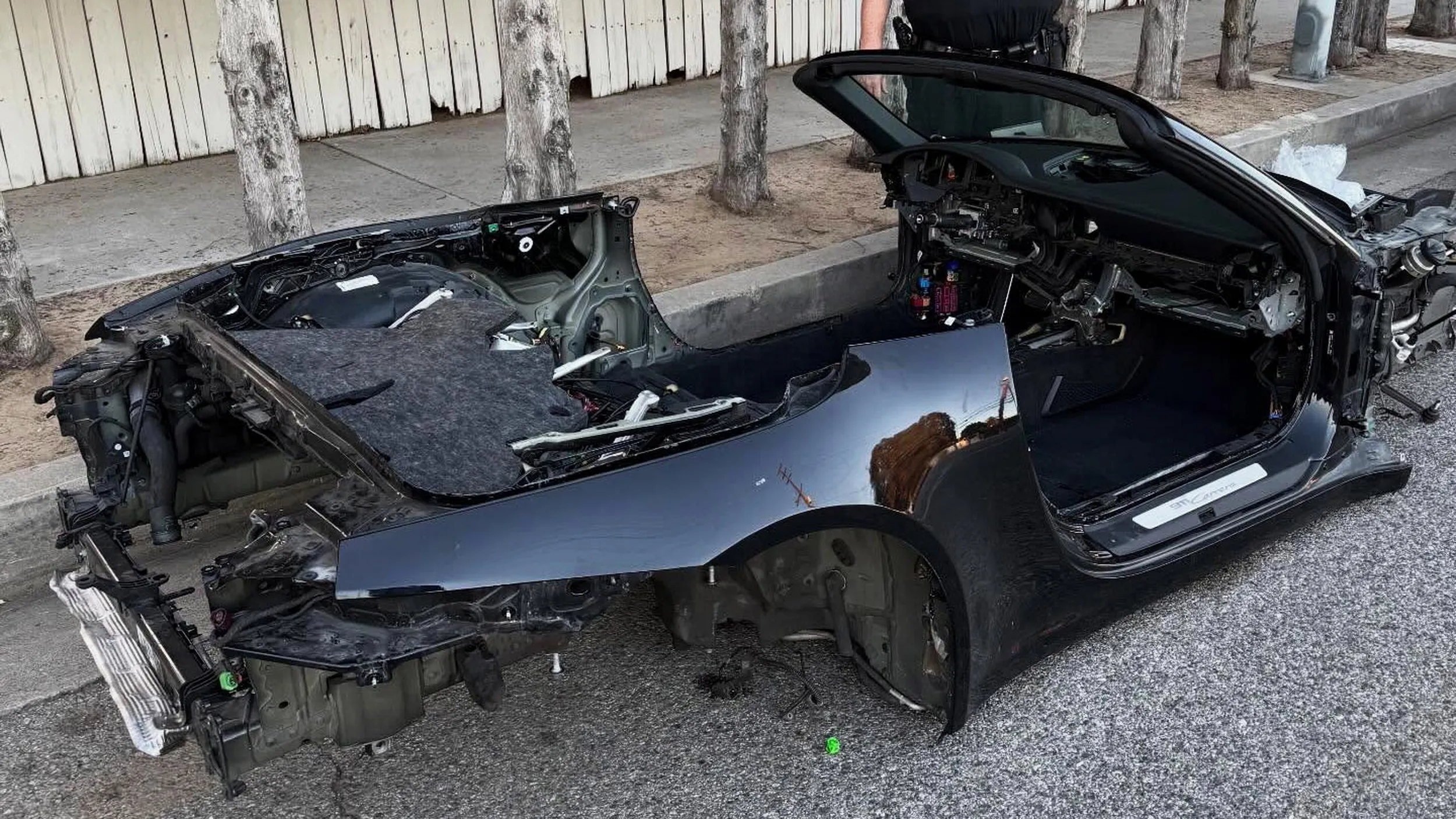
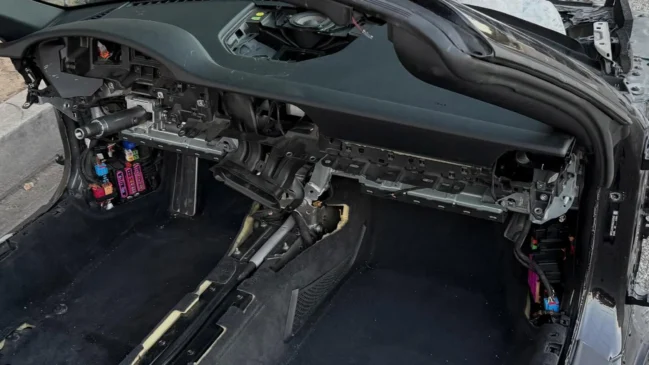
This has to be one of the most bizarre car theft stories coming from LA – a Porsche 911 Carrera Cabriolet was found on a street, reduced to something barely recognisable – a hollow metal shell stripped with surgical precision.
The thieves took away all the essentials: wheels, suspension, the flat-six engine, and even the PDK gearbox. From the interior – seats, steering wheel, infotainment, instrument cluster, audio system, airbags – all gone. Nearly every valuable component of the Porsche 911, inside and out, had been meticulously removed, leaving behind little more than a bare chassis with a few dangling wires.
It was as if the thieves didn’t just strip the parts; they erased the car’s identity. Only a closer inspection – subtle cues like the pedal layout, rear proportions, and scuff plates – revealed that it’s a 992-series 911.
As confirmed by the authorities, it was a stolen Porsche. The owner has been notified about the case, and the investigation is ongoing.
Ferrari’s first-ever electric production model, the Luce, will have a “tactile-first” interior that is the work of former Apple designer Jony Ive and the LoveFrom design collective he co-founded with Mark Newson, another Apple alumni.
After releasing the first interior teasers in February, Ferrari has now dropped a new interior walkthrough video for the Luce, offering the best look yet at the cabin and a taste of the experience the driver will have interacting with the vehicle controls.
Right off the bat, the difference between the Luce’s dashboard and existing EV interiors is crystal clear. The new cabin features many tactile controls instead of the massive displays that have become ubiquitous on electric vehicles in recent years.
A Ferrari Unlike Any Other That Came Before It
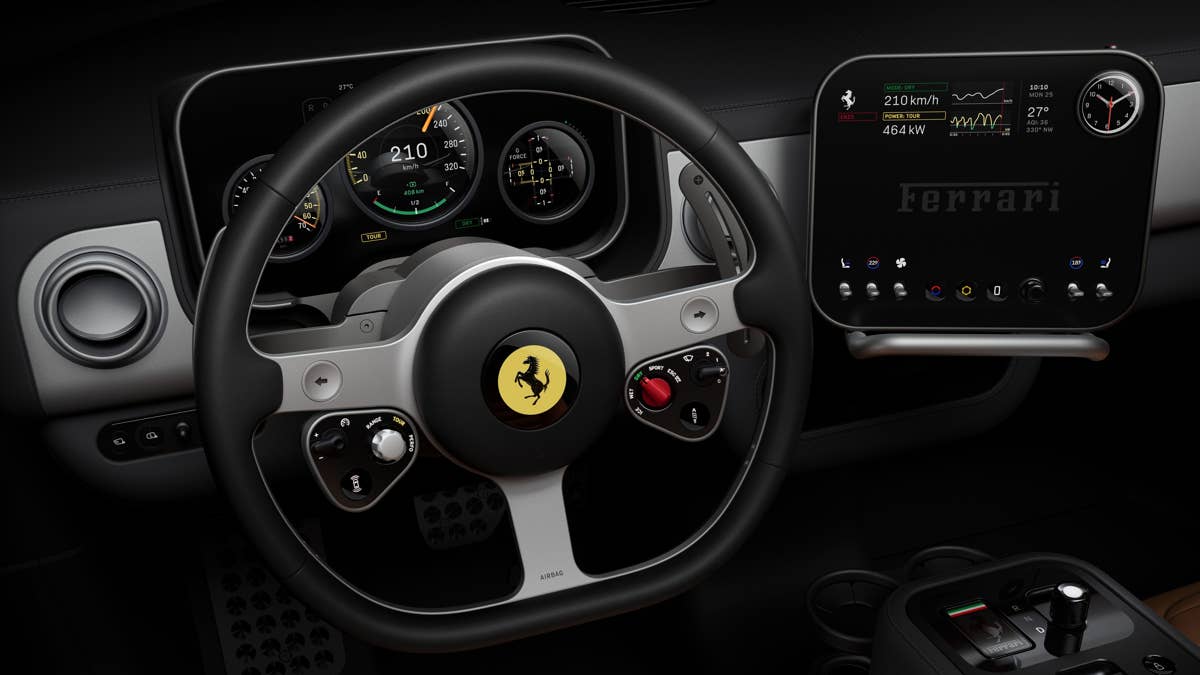
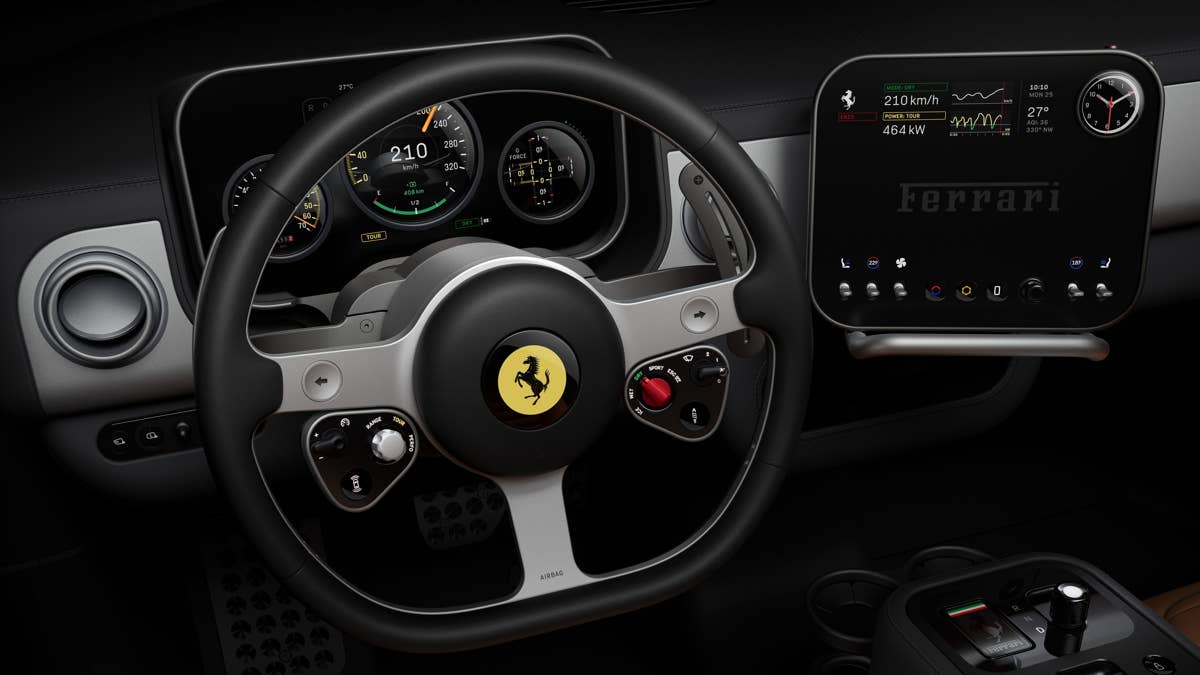
While the Luce does have a central display, it’s square-shaped with a thick metallic edge and curved corners like an older iPhone. It’s also restrained in size and features typography that reminds of older iOS-era Apple design language, according to some auto outlets. The video shows that the main screen also tilts toward the driver or the passenger, according to preferences.
The screen integrates physical switches at the bottom for the climate control system, a volume knob and three shortcut buttons. Additionally, on the top right corner there are two buttons that appear to toggle between a clock, a compass, and a stopwatch displayed in the integrated round display. The video doesn’t show a single function that is enabled by touching the screen; everything is done via buttons and switches.
Ferrari
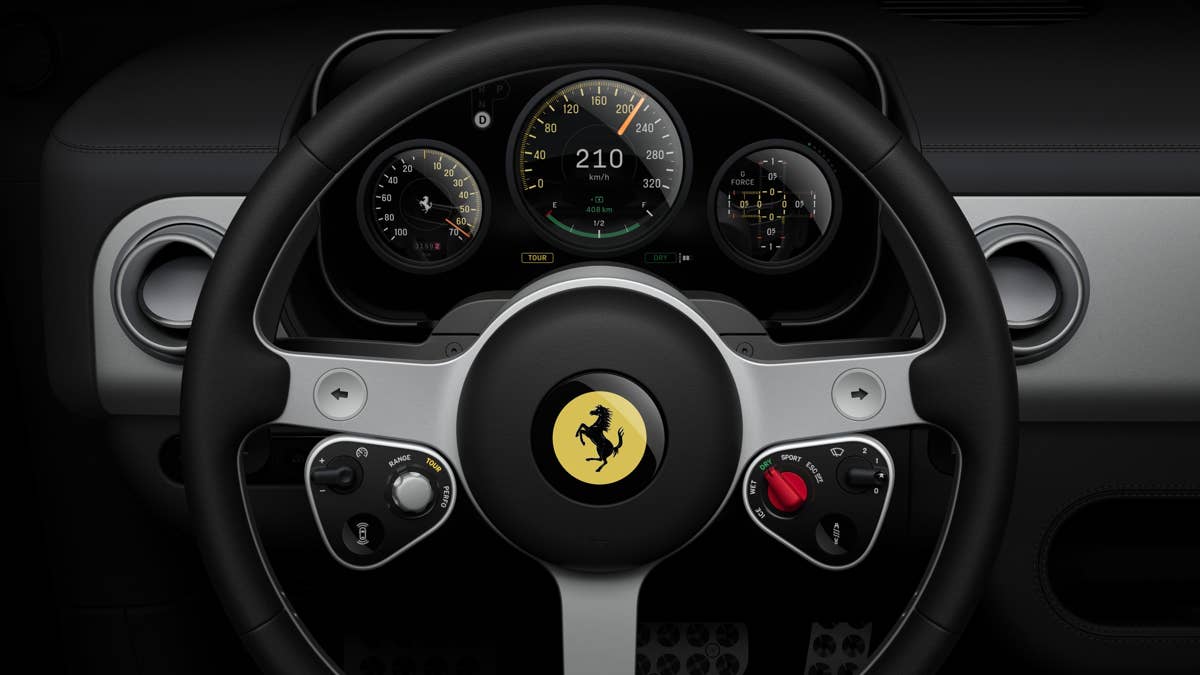
There’s a second display behind the steering wheel that houses the instrument cluster grouped into three main round areas that imitate a classic instrument panel but are highly configurable. The largest one in the middle displays the speedometer, battery charge level and range, the one of the left shows how much energy the vehicle uses or receives at any given time from the regenerative braking system, while the one on the right is a G force meter.
The cool thing about the digital cluster is it’s connected to the steering column so it moves along as you adjust the wheel to provide the driver with a clear view of the instruments.
Ferrari
Speaking of the steering wheel, it features an old-school look with three aluminum spokes but it’s also modern, using physical control pods along with Ferrari’s hallmark Manettino rotary dial, which has been repurposed for an electric powertrain, acting as a power-flow selector. The steering wheel also includes buttons for the turn signals, wipers, and a dial for the drive mode selector—the Luce features three modes: Range, Tour and Perfo.
We also get to see the startup sequence that is triggered by inserting the glass-and-leather key into a dedicated slot in the center console. The key’s e-ink display changes appearance once docked into its place, with the instrument panel lighting up after that.
Performance Worthy of the Prancing Horse Badge
SH Proshots/Autoblog
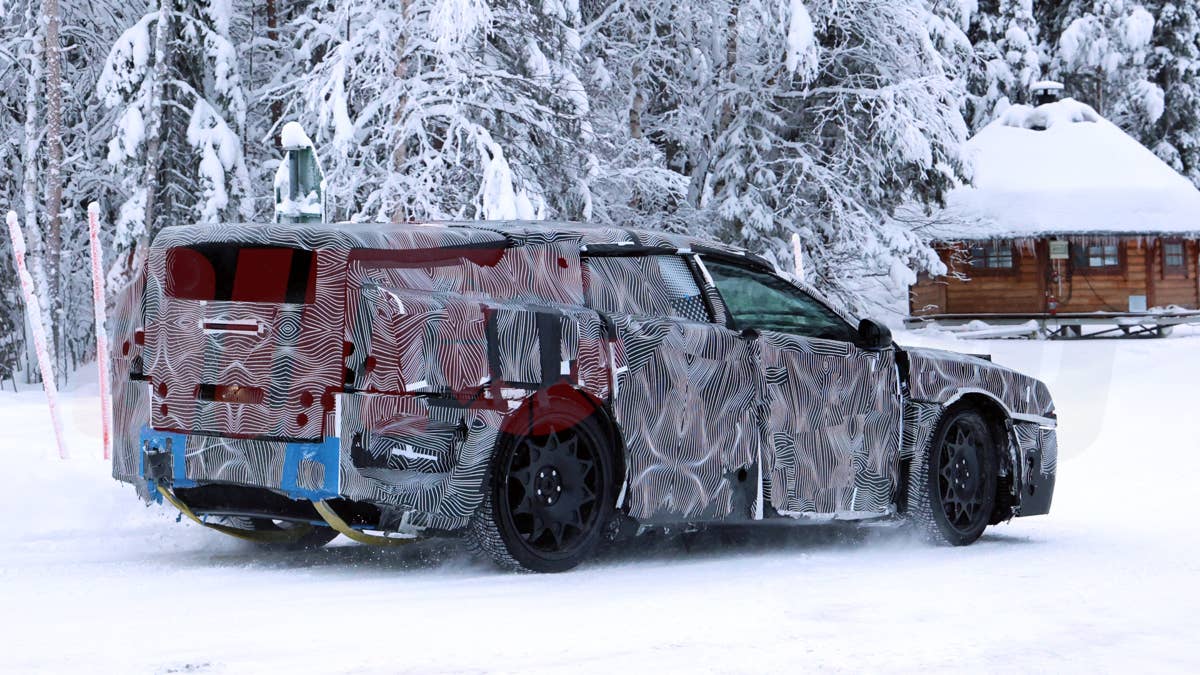
The exterior design of the Ferrari Luce remains a mystery for now, although we do know that it’s a four-door, four-seat electric super-GT. As you would expect from a car sporting the Prancing Horse badge, the performance will be spectacular. Ferrari has so far said that the Luce features a 122-kWh battery pack running on 880 volts and offering a range of around 330 miles under European testing.
The fact that it gets a big battery is reflected in the Luce’s curb weight of just under 5,100 pounds. That makes it the heaviest production Ferrari ever made, putting it on par with the Porsche Taycan Turbo GT. Still, the weight won’t be a problem as far as performance is concerned.
SH Proshots/Autoblog
The battery feeds a four-motor powertrain expected to deliver over 1,100 horsepower for breathtaking performance; the video shows how a launch is seen from the interior, with the 0 to 62 mph sprint taking 2.5 seconds. Interestingly, simulated gear shifts will also be on the menu for added driver feedback. The top speed is 193 mph, which is impressive for an EV.
The front e-axle delivers a total output of 282 horsepower (141 hp for each motor), while the rear e-axle produces 832 hp (416 hp for each motor), bringing the total peak power to 1,114 hp, according to Ferrari. A disconnect system shifts into rear-wheel drive to maximize efficiency—and allow the driver to slide the rear end should they feel brave enough.
The world premiere of the Ferrari Luce is scheduled for May 25 in Maranello, Italy, with production expected to start in late 2026, followed by deliveries in early 2027.
This motor type tends to be considerably cheaper to build. It’s also lighter and somewhat smaller while nearly matching the freewheeling efficiency of an EESM when no torque is required. Finally, these motors are powered by silicon-carbide (SiC) inverter technology. Altogether, BMW says the sixth-gen motor setup reduces energy losses by 40 percent, manufacturing costs by 20 percent, and mass by 10 percent.
Better Public Charging Experience
The big numbers—800-volt architecture capable of 400-kW DC fast-charging speeds, good for adding up to 230 miles of range in as little as 10 minutes—are just the foundation. BMW also seeks to eliminate the pain points of trip planning and charging through AI-based improvements to its MyBMW app’s route-planning service. By sensing and reporting actual (not claimed) maximum charge rates at various stations as reported by users, charging-time prediction accuracy is continuously improved, and by fine-tuning charger locations based on where cars actually plug in, drivers won’t find themselves searching a location for the plugs. The app will also predict the cost of charging at various locations and handle billing. (These features are rolling out to all BMW EV owners in 2026.)
ADVERTISEMENT – CONTINUE READING BELOW
Bi-Directional and Home Charging
All Neue Klasse vehicles will be capable of exporting power—either 3,600 watts of glamping juice via a three-outlet power strip that plugs into the NACS socket or 19.2 kW worth of whole-home power when connected to a properly wired BMW Wallbox Professional system. Vehicle-to-grid capability will be available in Germany at launch, and BMW says its customers could see an annual benefit of as much as 250 euro simply for allowing the grid access to the power in their batteries (respecting the customer’s preset minimum state-of-charge settings). V2G compliance for other regions will follow.
Bottom-Line Sixth-Gen Electrical Efficiency
Add up the reduced motor and inverter losses and the improved battery efficiency, then figure in the iX3’s sleek aerodynamics, and BMW is claiming a driving efficiency of 15.1 kWh/100 km. That boils down to 4.1 miles/kWh in quasi-American terms. For reference, over two years and 30,717 miles of use, our Tesla Model Y—long a paragon of electric SUV efficiency—averaged 3.1 mi/kWh. We very much look forward to a long-term test of what BMW casts as its most significant new vehicle line since the 1960s.
Enthusiasts have been modifying sports cars for off-road adventures for decades, drawing inspiration from dedicated racing machines like the Porsche 911s that conquered the East African Safari and Dakar rallies in the 1970s and 80s. For the most part, automakers stayed on the sidelines. At least, that was until Porsche and Lamborghini jumped in a few years ago with their respective 911 Dakar and Huracan Sterrato.
Base Trim Engine
5.2L V10 Gas
Base Trim Transmission
7-Speed Automatic
Base Trim Drivetrain
All-Wheel Drive
Base Trim Horsepower
610 hp
Base Trim Torque
416 lb-ft @ 6500 rpm
Fuel Economy
13/18 MPG
0-60 MPH
Both models were limited editions, with Porsche capping production at 2,500 units and Lamborghini, just 1,499. Unsurprisingly, the cars sold out quickly. Yet the Sterrato’s values on the used market haven’t skyrocketed as some might have expected, though the trend is generally up. That opens a potential opportunity: pick one up near original cost, enjoy its off-road antics, and resell it later, possibly for what you paid or, even a tidy profit.
Pricing and market details are accurate at the time of writing, but the market for used exotics moves fast, and figures are subject to change. This article is for informational purposes only and isn’t financial or investment advice.
Sterrato? That’s Italian For Dirt Road
2024 Lamborghini Huracan Sterrato Front 3/4 ViewLamborghini
Key Facts To Know
Unveiled during 2022 Art Basel in Miami
Among the last of Lamborghini’s V10 cars
Ground clearance is 1.7 inches higher compared to stock Huracan
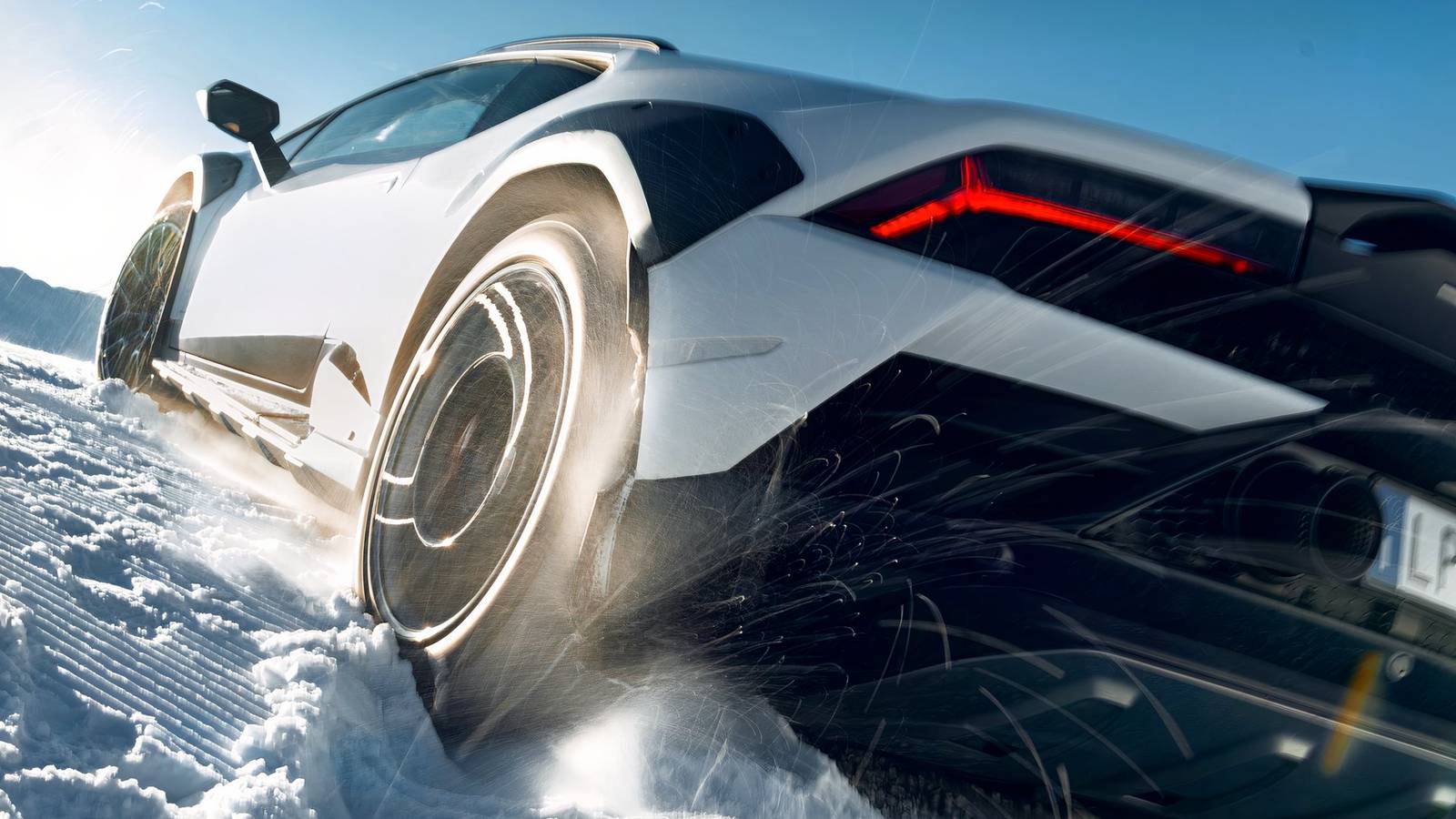
Lamborghini introduced the Huracan Sterrato in 2023, effectively giving the Huracan and its naturally aspirated V10 a final victory lap ahead of the arrival of the Temerario V8 plug-in hybrid. Officially, the last true Huracan is the hardcore STJ, a 10-unit farewell special, but the Sterrato is the more interesting send-off. Its name comes from the Italian word for “dirt road,” and the concept is exactly what it sounds like: a Huracan designed to thrive on rally-style gravel stages and other loose surfaces.
The Sterrato looks the part. Flared fenders, auxiliary lighting, and a roof rack make it appear ready for a high-speed escape into the wilderness. Even parked, it gives off the impression that it’s meant to be used hard, whether it ever sees dirt or not. Inside, Lamborghini added Alcantara trim and unique digital displays, including a compass, GPS co-ordinate readout, steering-angle indicator, and an inclinometer showing pitch and roll. There’s also a dedicated Rally mode for high-speed driving in low-grip conditions.
The hardware changes are more than cosmetic. Ground clearance rises to 6.4 inches, and the Sterrato also gains skid plates, reinforced side sills, and 19-inch wheels wrapped in custom Bridgestone Dueler AT002 run-flat all-terrain tires. It’s enough to handle the dirt roads suggested by its name, but this is still a mid-engine supercar we’re talking about.
Clearance remains low compared with most crossovers, and there’s no spare tire. The run-flats might get you home after a puncture, but they won’t save you if a sharp rock tears into the sidewall. At least the roof rack could theoretically carry a spare.
2023 Huracan Sterrato
Engine
5.2-liter V10
Transmission
7-speed dual-clutch
Power
602 hp
Torque
413 lb-ft
0-62 mph
3.4 seconds
Top Speed
160 mph
Original MSRP
$278,972
Those off-road upgrades also blunt the Sterrato’s edge on pavement. The 235/40 front and 285/40 rear all-terrains don’t deliver the same cornering bite as the Huracan’s typical road-focused rubber, and straight-line numbers take a small hit, too. Lamborghini quotes 0–62 mph in 3.4 seconds and a top speed of 160 mph. That’s still fast, but a bit off the pace of the standard Huracan, nevertheless.
That blend of only modest off-road capability and slightly compromised on-road performance may help explain why Sterrato values haven’t skyrocketed like you’d expect for a limited-edition Lamborghini marking the end of the brand’s iconic V10. Add in the fact that Lamborghini built more than 14,000 Huracans over the car’s decade-long run, or more than any other model line, and the Sterrato’s relative affordability makes sense. Still, as the Huracán era recedes into history, the Sterrato’s rarity and significance could push values higher sooner rather than later.
Lamborghini Sterrato’s Recent Price Action
2024 Lamborghini Huracan Sterrato Side ViewLamborghini
Search any major classifieds website and you’ll find multiple Huracan Sterratos up for sale, with prices starting as low as $280,000. That’s basically the car’s original MSRP, and it seems like a bit of a bargain when you consider the original buyer would have paid significantly more once destination charges, taxes, and any options are factored in. Lamborghini options can be extremely expensive, with some paint finishes alone carrying price tags that climb into the five figures.
You might be thinking those low used prices are only due to high mileage, which many collectors seem to fear more than the plague, but you’d be wrong. Most of the examples listed today have very low numbers on their odometers, yet are still priced well below $300,000.
Cross-checking auction results shows the trend for Huracan Sterrato prices is ticking up, though at a relatively slow pace. Average auction prices in 2024 sat below $300,000, but over the past year they’ve crept above that mark, suggesting the market is finally starting to acknowledge the car’s collector status. This is perhaps best highlighted by an example with almost 7,000 miles on the clock that sold at a Mecum auction in January for $418,000.
Can Cars Make A Good Investment?
2024 Lamborghini Huracán SterratoLamborghini
For the most part, cars make terrible investments. They are depreciating assets by nature, losing value the moment they leave the dealership. Even models that increase in value come with ongoing insurance, maintenance, servicing costs, and, if financed, interest payments that chip away at any potential gains. Sure, there are exceptions. Classic Ferraris, for instance, have been known to appreciate. However, increased value is never guaranteed. At the end of the day, a car is only ever worth what someone is willing to pay for it.
There are, however, signals that a car might have the potential to rise in value over time. Historical significance is key, especially if a car has racing provenance or played some other notable role in history, like being in a movie. Rarity matters as well. Limited editions, low-volume runs, or cars with unique options, such as a special engine, tend to attract collectors. Cars that offer a driver-focused experience, particularly those with manual transmissions, also tend to be highly sought after – something that’s becoming even more significant as the level of electrification and automated driving systems increase.
Exterior of the 2023 Porsche 911 GT3Porsche
Some examples have traditionally increased in value and tend to exhibit many of these traits. GT-badged Porsche 911s have tended to appreciate, as have special-series Ferraris like the LaFerrari or the latest F80, and pretty much anything from Bugatti. These cars combine rarity, performance, and collectibility, but, with the exception of the Porsche, are pretty much unobtainable to begin with.
Drive It For Thrills, Not Profits
The Lamborghini Huracán Sterrato’s V10 engine produces 600 hp.Lamborghini
In the end, the Huracan Sterrato is a car you should buy because it excites you behind the wheel, not because it might make you rich down the line. Sure, some rare supercars have appreciated, but those cases are the exception, not the rule, and even the same model can fluctuate unpredictably. Limited production, unique specs, and historical significance help, but there’s no guarantee.
So enjoy the flared fenders, the rally-inspired interior, and the sheer thrill of tossing a V10-powered Lamborghini over loose gravel. Drive it, explore its quirks and the smiles at stoplights, and savor the experience, because that’s where the real value lies.
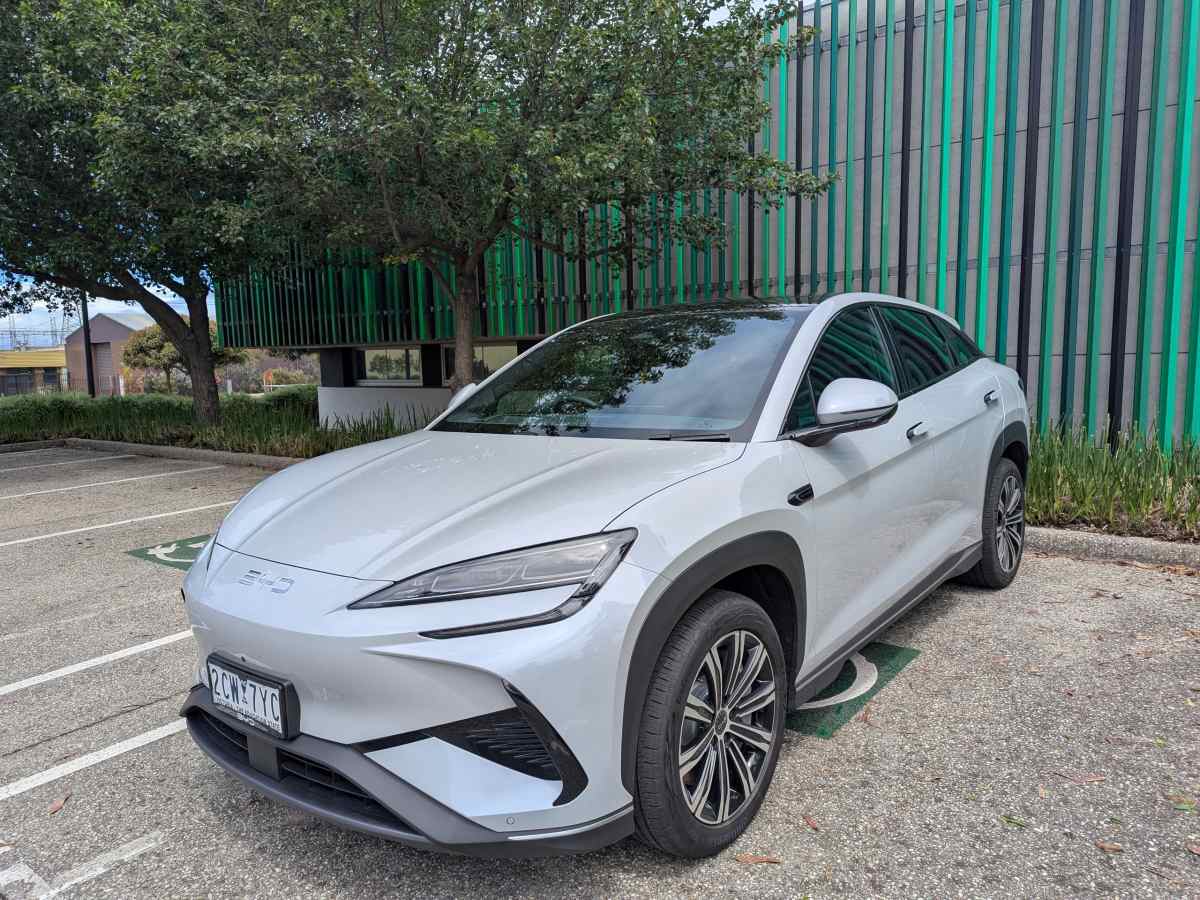
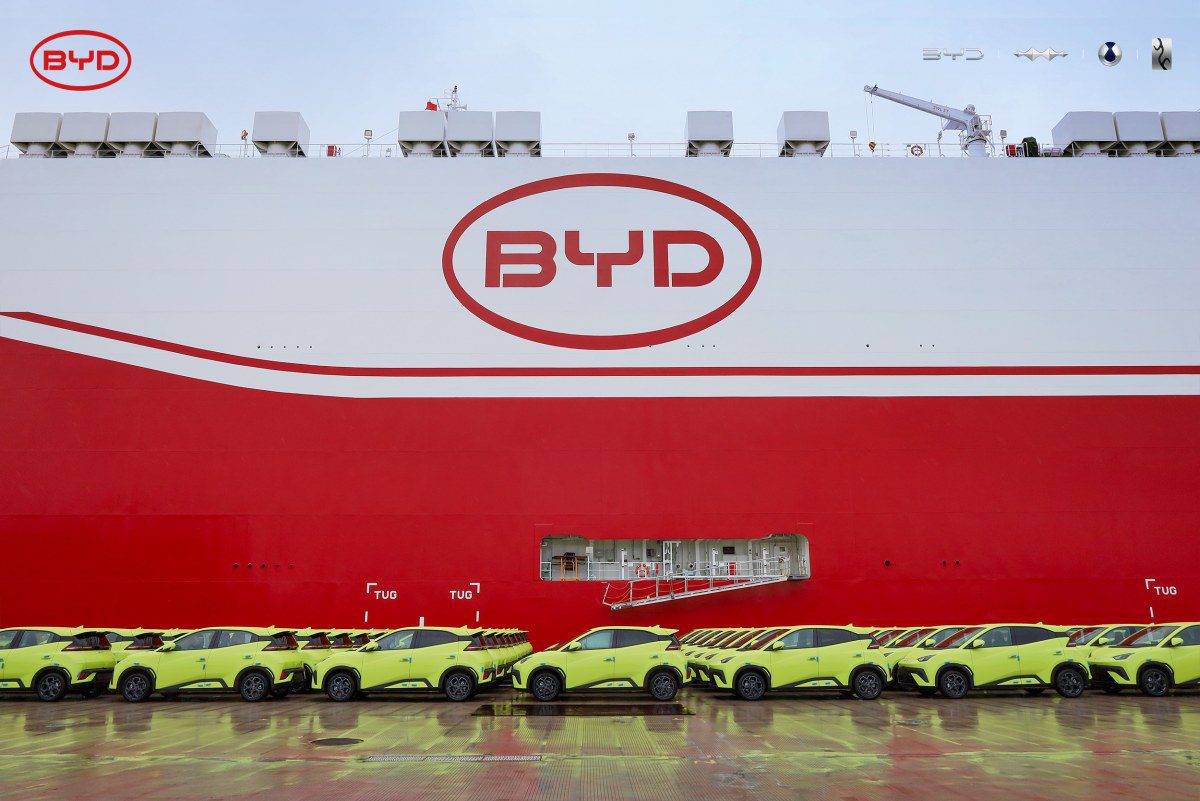
Chinese car maker BYD has announced it will bring an extra 30,000 new energy vehicles – both full battery electric and plug in hybrids – to Australia through May and June.
BYD, which has overtaken Tesla as the most popular electric brand in Australia and announced this week it had delivered its 100,000th NEV in Australia, says the new initiative will support essential workers who need cost-effective transport to get around.
These include doctors, nurses and other healthcare professionals, teachers, social workers, police, fire, ambulance and SES volunteers. It says the move is important given the soaring cost of petrol and diesel, and the uncertainty over long term supplies (particularly after the dramatic fire on one of Australia’s two refineries).
“Ultimately, we want to minimise wait times for all customers, because everyone is feeling the pinch. The 30,000 vehicles arriving by June will go a long way to helping,” BYD Australia COO Stephen Collins said in a statement.
“We will work closely with our national dealer network to provide priority access – not exclusivity – for those delivering critical services to the community, while maintaining availability for the broader public.”
Image: BYD via Weibo
To put those numbers into context, BYD has sold some 9,954 EVs in Australia so far this year (to the end of March), and more than 10,000 cars in total, including hybrids.
BYD, as a company, has also used its vertically integrated engineering and manufacturing operations to quickly pivot to other products, which saw a surge in demand in Australia during the Covid-19 pandemic.
That was specifically about the face masks needed during the pandemic, with healthcare professionals using them to protect themselves and the community.
Production of those masks saw BYD’s manufacturing plants increase output from 5 million masks per day to 50 million per day within a month. These were used by the company’s employees, hospital and frontline medical staff, and overseas distribution.
BYD’s sales have grown significantly in recent years, and of the 100,000 vehicles it has delivered, more than 64,000 have been BEVs.
In Australia, BYD has already made it into the top 10 best-selling car brands in 2025 and has become the first brand in recent Australian motoring history to reach the top 10 in under 4 years.
It secured the 8th spot for the year, but with these additional supply announcements, BYD might be positioned to enter the top three best-selling brands by the year’s close.
Our free daily newsletter sends the stories that really matter directly to you, every weekday.
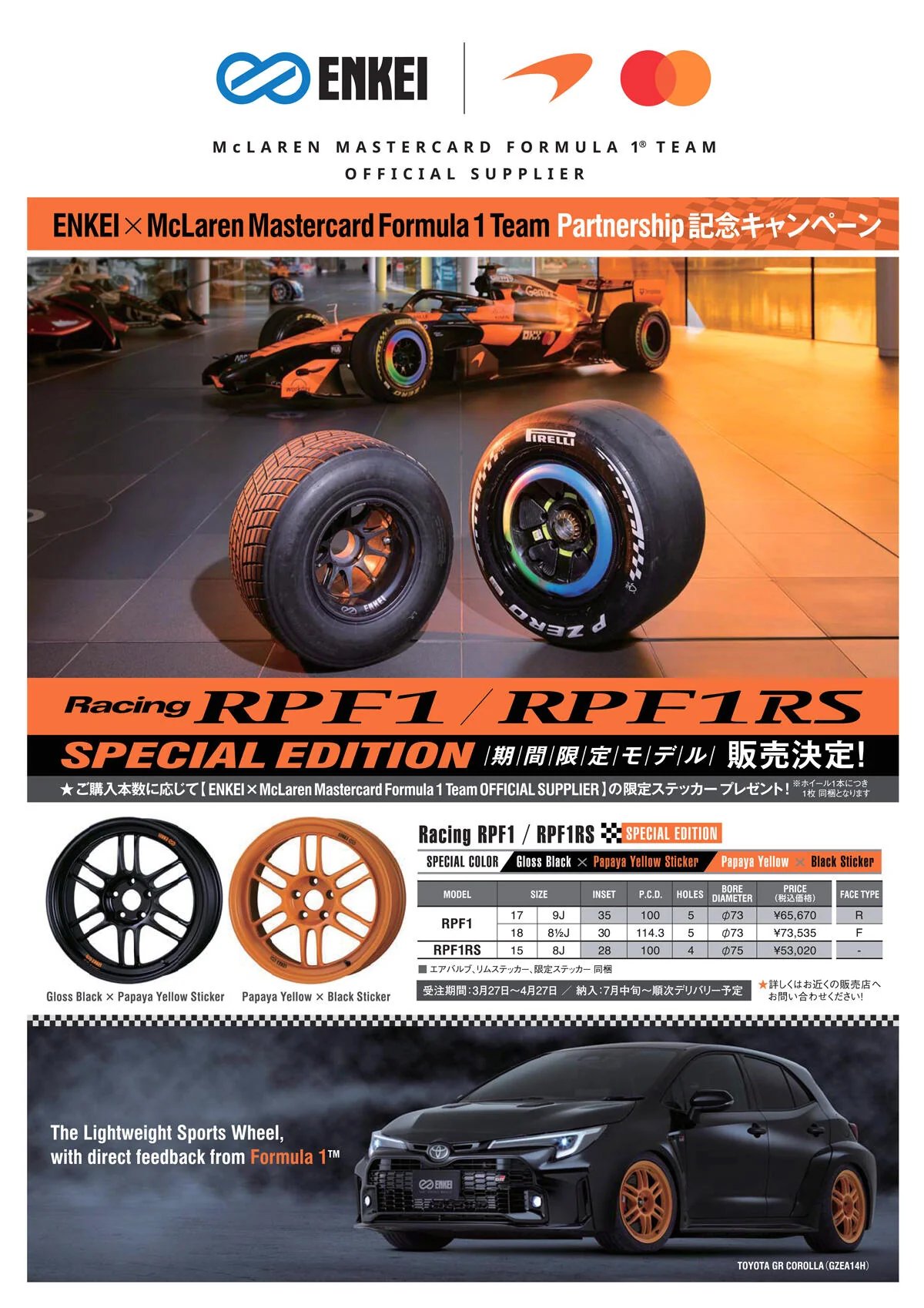
I’m not much into modifying my cars, but one aspect I would totally dive head first into, given the means, is wheels. I’ve had an alternate set for whatever my daily is going back a while, but I always crave more. I’ve also never owned a set of Enkei RPF1s, which seems like an oversight that must be corrected someday; they’re about as iconic as aftermarket wheels get. This new collaboration between the Japanese wheelmaker and the McLaren Formula 1 team might just push me to take the plunge, though.
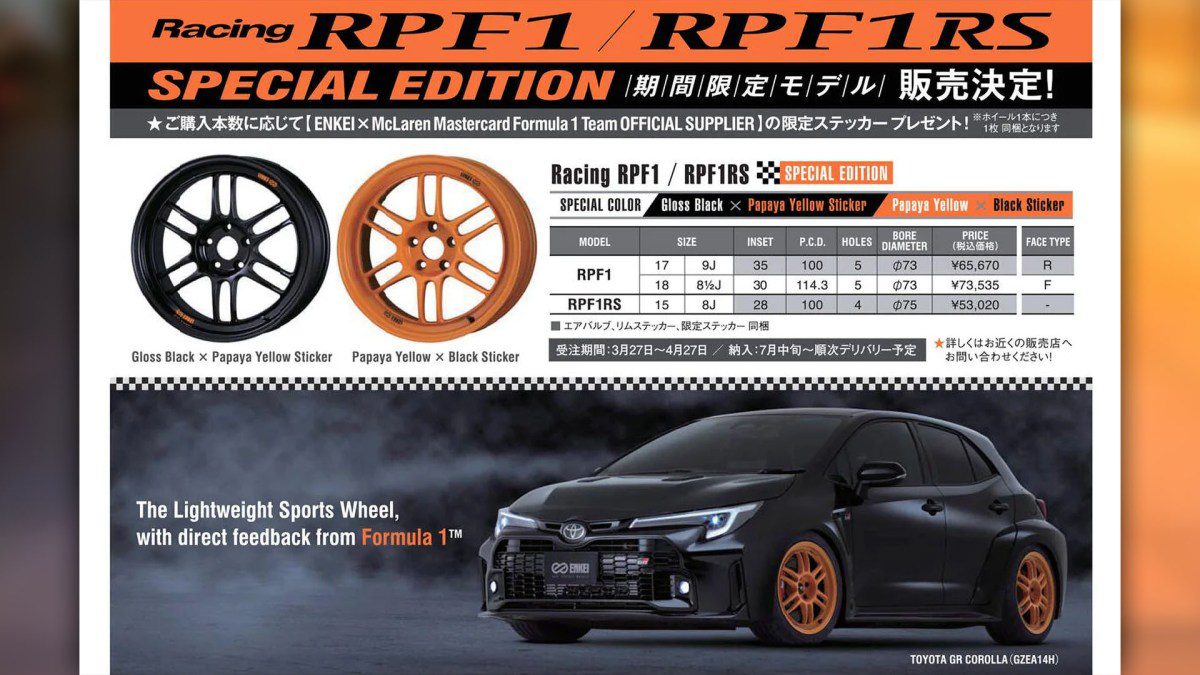
They come in two flavors—papaya orange or black for the less daring, with labels in the opposite color—and they’re the perfect get for that enthusiast who appreciates F1 and British supercars, but drives something a bit more pedestrian. Not that the three sizes Enkei is making them in would be big enough for a modern McLaren, anyway. Fortunately, in keeping with RPF1 tradition, they’re all still very reasonably priced:
15×8 size | 4×100 bolt pattern | +28 offset: ¥53,020 or $333.48 per wheel
17×9 size | 5×100 bolt pattern | +35 offset: ¥65,670 or $413.05 per wheel
18×8.5 size | 5×114.3 bolt pattern | +30 offset: ¥73,535 or $462.52 per wheel
The 15-inchers specifically are the newer RPF1 RS design, which has a flatter face with less convex spokes. Personally, I prefer it to the original, controversial though that opinion may be.
Anyone in the states looking to snag a set can head over to Sensei6, which is distributing these wheels out of California; there may be other distributors, but none we could find at the time of publication. However, you’ll need to get your order in before April 27, because this collab, like collabs tend to be, is a limited-time engagement.
Enkei via Sensei6
The RPF1 has been the byword for affordable performance wheels for decades, thanks to Enkei’s production process that combines casting and forging for maximum strength at a very light weight, along with a twin six-spoke design for optimized rigidity, brake clearance, and cooling. Plus, they just look dang good. For years, I’d written them off from an aesthetic perspective, but a switch flipped in me not too long ago and I reckon RPF1s can look fantastic in the right finish, at the right size, and on the right car. Maybe yours goes with orange?
BYD Australia has delivered its 100,000th new vehicle this week
Brisbane-based Tim Shaw took delivery of the milestone vehicle, a Shark 6 Premium utility, one of the brand’s best-selling models.
Since launching locally in 2022 with the Atto 3 SUV, BYD has grown rapidly to offer a 10-model portfolio, while continuing to expand its national dealership network to all parts of the country.
To date, the family-sized Sealion 7 SUV is the brand’s most popular electric vehicle, while the Shark 6 PHEV dual-cab utility is the best-selling vehicle of its type – and now recently joined by the Dynamic cab-chassis and flagship Performance variants.
In Australia to celebrate the delivery of BYD’s 100,000th vehicle, Asia Pacific general manager Liu Xueliang handed over the keys to Mr Shaw’s Shark 6 personally, remarking that the vehicle is both stylish, and well-suited to Australian lifestyles.
BYD Australia chief operating officer Stephen Collins echoed Mr Xueliang’s remarks, saying the growth of the Chinese importer was “remarkable”.
“The growth of BYD Australia over the last three-and-a-half years has been remarkable,” he said.
“Australian motorists want stylish, practical, and affordable new energy vehicles, now more than ever.
“It is our pleasure to hand over our 100,000th vehicle today – with over 100 sales and service centres around Australia, and growing, we are proud to be building a network that will support all BYD owners (and) we have exciting plans for continued growth in Australia.”