Author: admin

  • Nvidia CEO Jensen Huang Is the 2026 MotorTrend Person of the Year

    Nvidia CEO Jensen Huang Is the 2026 MotorTrend Person of the Year

    ADVERTISEMENT – CONTINUE READING BELOW

    Nvidia now has the intelligence needed to scale up self-driving, software-defined vehicles with over-the-air update capability. This is the future of mobility. All automakers are working on autonomous driving, which manifests itself in various levels from simple cruise control or automatic emergency braking to hands-free highway driving and robotaxis.

    Nvidia can give an automaker an AI platform so they don’t have to build their own from scratch, allowing for quicker time to market. Mercedes-Benz did just that: The 2026 CLA introduces the company’s latest operating system, MB.OS, which enables communication between the car’s sensors and brain, running everything from infotainment to hands-free driving. Mercedes worked with Nvidia to bring the AI piece of the puzzle to the car.

    ADVERTISEMENT – CONTINUE READING BELOW

    AI also forms the backbone of Drive Assist Pro, the Mercedes equivalent of Tesla’s Full Self-Driving, but with a super-redundant software stack for safety. Mercedes built it with Nvidia using a combination of real-world and virtual data, creating scenarios and simulations to turn a single incident into hundreds of thousands of miles of test driving. By working with Nvidia, Mercedes got the system up and running sooner than if the automaker did all the work in-house.

    The problem the industry has faced to date is that AI, while a quick study, still does not know how to handle every one-off scenario a vehicle may encounter. The challenge is safely navigating the rare and complex situations that fall outside the training experience.

    This is where Nvidia looks to revolutionize the game. In January it launched Alpamayo, a family of AI models and simulation tools and datasets that can train robots and vehicles—in other words, physical machines—to think like a human to sort out complex driving scenarios.

    Automakers can put Alpamayo in their autonomous vehicle stacks as a teacher model and then fine tune. This should accelerate safe autonomous driving, pushing it into the mainstream. The package aims to help automakers develop vehicles that perceive, reason, and act like humans to solve problems, like how to navigate a broken traffic light at a busy intersection without previous experience. Self-driving cars will possess the ability to analyze and act in the real world by breaking down a problem into steps, reasoning through every possibility, and selecting the best course of action.

    Source link

  • This ’90s Hardbody Pickup Truck From Nissan Is Still More Reliable Than Anything You Can Buy Today

    This ’90s Hardbody Pickup Truck From Nissan Is Still More Reliable Than Anything You Can Buy Today

    These days, the pickup truck is much more popular than it was, say, 30 years ago. Back then, the pickup was just beginning its transition from something normally used for work, to a vehicle that folks without blue-collar jobs would want to buy. Prior to this shift, the usual habitat for the pickup was rural and small-town America, where small cabs and large cargo beds were more important than creature comforts or passenger space.

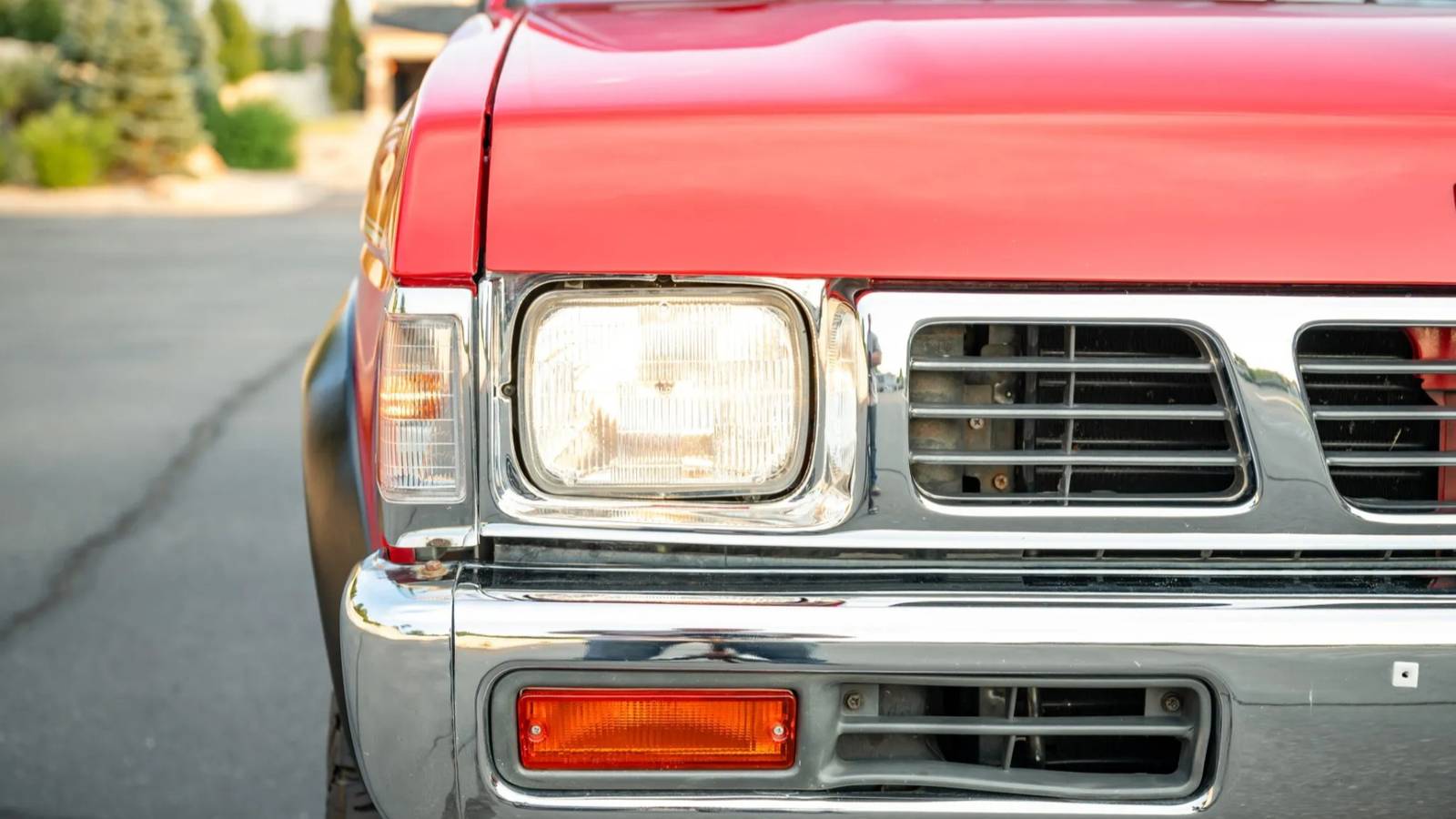
    A major and forgotten-about plus side to those old-school, simple trucks was their penchant for reliability. Because they were made for work, they needed to be durable, and virtually all automakers involved in pickup truck manufacturing knew this very well. However, one such pickup that’s been largely forgotten about was one of the most reliable built in the 1990s, just before the pickup went through its personality shift. It was called the Nissan Hardbody: a simple name for a simple, long-lasting truck that can still outlast modern pickups.

    A Fitting Name For A Tough Little Truck


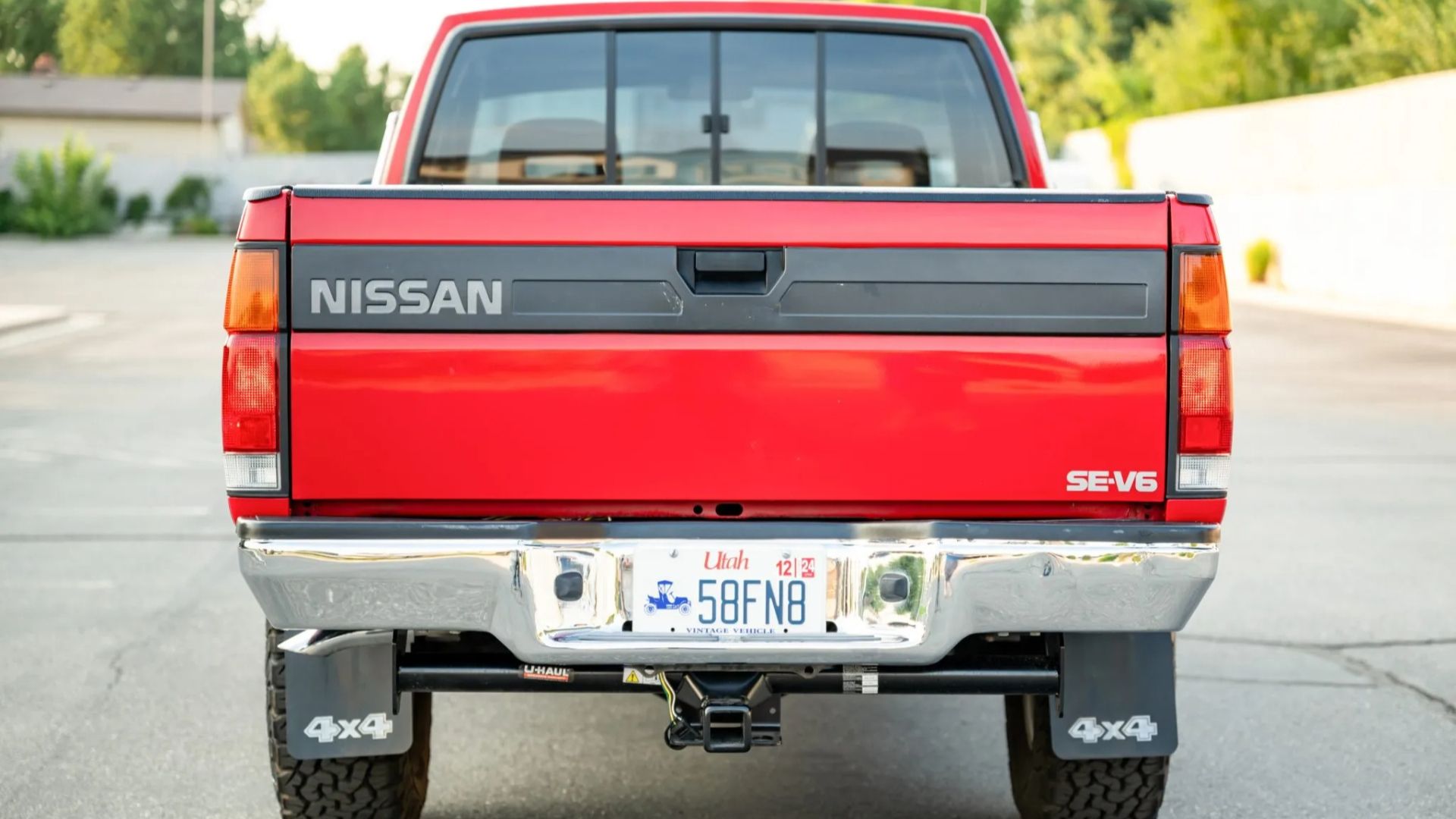
    1993_nissan_hardbody_pickup_front
    1993 Nissan Hardbody pickup truck finished in red with gray interior
    Bring A Trailer

    While the majority of the Nissan Hardbody’s production timeframe fell within the 1990s, it was actually introduced all the way back in 1986, just about halfway through the model year. A year prior to that, Nissan had just changed its name from “Datsun” to Nissan in the USDM market. Between the years of 1980 and 1986, Nissan’s previous pickup was the Datsun 720. While the new Nissan truck was a new model, it would borrow much of its underpinnings from its predecessor.

    Its predecessor was the Datsun truck, and its affinity for reliability wasn’t well known outside those who owned one, but for those in-the-know, the new Hardbody needed to meet or exceed that high bar previously set. With the underlying theme of the new pickup being reliability above all else, Nissan went to work designing the Hardbody, also known as the “D21” to boast as much longevity as possible.


    1993_nissan_hardbody_pickup_rear
    1993 Nissan Hardbody pickup truck finished in red with gray interior
    Bring A Trailer

    The D21’s well-built nature begins with its chassis. It’s a ladder-frame configuration, as was standard with virtually all pickups made at the time. However, the Hardbody’s chassis was also designed to be more robust than a typical compact pickup would need it to be, meaning it could handle a bit more thrown at it than, say, its main competitor: the Toyota Pickup. In addition, its pair of engine options were designed to be understressed, an attribute that lends itself to longer-lasting motors. Topping it off was a double-walled cargo bed, meant to handle tougher-than-usual loads without bending, giving meaning its “Hardbody” namesake.

    The Hardbody’s Ins And Outs


    1993_nissan_hardbody_pickup_engine
    1993 Nissan Hardbody pickup truck finished in red with gray interior
    Bring A Trailer

    While a litany of engines was offered across all the Nissan D21’s international markets, USDM examples made use of just two distinct engines throughout its near-11-year tenure. At base level was a simple, rugged 2.4-liter inline-four-cylinder mill that carried the internal code name “Z24i.” One unique aspect of the mill was its use of two spark plugs per cylinder, which allows the powerplant to burn fuel more efficiently while also producing a bit more power. Coupled with its low compression ratio of 8.3:1, the Z24i remained understressed, even under heavy load. Come 1990, an all-new 2.4-liter four-banger was introduced: the KA24E. While this new mill didn’t have a twin-spark setup, it managed to retain a relatively low compression ratio of 8.6:1. It also took advantage of an actual timing chain, rather than a belt.


    1993_nissan_hardbody_pickup_badge
    1993 Nissan Hardbody pickup truck finished in red with gray interior
    Bring A Trailer

    The optional engine upgrade for the D21 pickup was a 3.0-liter V6. Between its debut and 1989, the six-pot offered was the VG30i. While not considered as rugged as the Z24i, it was still regarded as a reliable engine in its own right. However, it did sport a timing belt rather than a chain, meaning regular maintenance was crucial to avoid failures. In 1990, the mill was replaced by the 3.0-liter VG30E V6, upping power output by 15 horsepower.


    1993_nissan_hardbody_pickup_rear_close_up
    1993 Nissan Hardbody pickup truck finished in red with gray interior
    Bring A Trailer

    Backing up the Hardbody’s reliable powerplants was a standard five-speed manual transmission. A four-speed automatic was available as an optional upgrade. Both rear and four-wheel drive drivetrains were offered, with the former acting as standard kit. 4WD models made use of a separate two-speed transfer case, coined “TX10A.” It’s known as one of the most robust transfer cases produced at the time, and is still even produced by Nissan as a replacement part to this day.

    Nissan employed an all-new bed production process for the D21 pickup truck. Most compact truck beds at the time made use of a single steel panel, or “wall.” Nissan, on the other hand, built the D21’s bed by mating two steel panels together, creating a double-walled bed.

    2.4L Z24i NA Inline-Four (1986–1989)

    2.4L KA24E NA Inline-Four (1990–1997)

    3.0L VG30i NA V6 (1986–1989)

    3.0L VG30E NA V6 (1990–1997)

    Horsepower

    106 hp

    134 hp

    138 hp

    153 hp

    Torque

    137 lb-ft

    154 lb-ft

    182 lb-ft

    Bore x Stroke

    89.0 mm x 96.0 mm

    87.0 mm 83.0 mm

    Max Towing Capacity

    3,500 lbs

    Curb Weight

    2,800–3,700 lbs

    Just How Reliable Is It?


    1993_nissan_hardbody_pickup_side
    1993 Nissan Hardbody pickup truck finished in red with gray interior
    Bring A Trailer

    Short answer: Very. Seeing as the Nissan Hardbody’s core tenet is simplicity, its long-lasting nature falls right into place. According to numerous anecdotal reports, D21s routinely last well over 200,000 miles, with many even reaching 300,000. There are even a few cases of these trucks reaching half a million miles with just simple maintenance. According to CarSurvey, the D21 manages to achieve an overall reliability rating of 8.9 out of 10 across all model years.

    We’ll list out the rest of its marks below:

    • Average Performance: 8.0
    • Average Comfort: 6.9
    • Average Running Costs (higher is cheaper): 7.7

    How It Compares To Some Modern Pickups

    Bearing that 8.9-out-of-10 reliability score from CarSurvey in mind, let’s take a peek at how that ranking stacks up to some of the most popular trucks currently sold. We’ll use CarSurvey for the following owner-submitted reliability ratings, as well.

    Ford F-150 (8.4/10)


    2024 Ford F-150 Platinum Brown Front Angled View
    2024 Ford F-150 Platinum Brown Front Angled View
    Ford

    For 49 years, the Ford F-150 has been America’s best-selling pickup truck. Last year, Ford managed to shift approximately 828,832 F-150s, an 8.3 percent increase over 2024. It seems that, despite Ford’s recent issues with recalls, Americans still love the F-150. Well-loved or not, the modern F-150 does seem to struggle with reliability in some respects. However, certain older examples, such as those equipped with the 4.6-liter Modular V8, were renowned for their durability.

    Chevrolet Colorado (6.6/10)


    2026 Chevrolet Colorado Trail Boss
    2026 Chevrolet Colorado Trail Boss driving front view
    Chevrolet

    In order to give the small pickup truck class a chance, we’ll take a look at the Chevrolet Colorado’s reliability, as well. The Colorado entered the fold in 2004 as a replacement for the age-old S-10 compact pickup. Since then, the Colorado was in production until 2012, when it was axed. However, come 2015, the nameplate was resurrected for use on a mid-size pickup truck, the segment it still occupies today. Unfortunately, the Colorado doesn’t seem to receive good reliability marks from real owners, at least as far as CarSurvey users are concerned.

    1993_nissan_hardbody_pickup_full_rear

    So, it seems it’s true. This 30-plus-year-old Japanese pickup beats out modern pickups when it comes to reliability. We can thank the Nissan Hardbody’s dedication to an extremely simple, yet rugged, design. So rugged and simple, in fact, that it still holds up today in a sea of brand-new, space-age pickups.

    Sources: Nissan, NissanPartsDeal.com, Fuelly.com, Bring A Trailer, CarSurvey.org

    Source link

  • Volkswagen ID.Buzz Cargo Reviews | Overview

    Volkswagen ID.Buzz Cargo Reviews | Overview

    Overview


    A KOMBI inspired van was always going to be something of a hit with sentimentalists of a certain era.


    Even with electric power, it’s a formula that tugs at the heart strings of those who remember the “good old days” … days when slow progress and the occasional engine fire were de rigueur.


    But nostalgia is indeed a powerful tool, a tool sharp enough to attract cashed-up buyers perhaps wishing to relive their youth in a more socially and environmentally sensitive manner.


    The ID.Buzz embraces much of that glow – even in the Cargo format tested here. It is undeniably cool, and (mostly) very well thought out, delivering the smarts commercial buyers require with the technology and comfort modern ‘Kombi’ buyers demand.


    The short-wheelbase ID.Buzz Cargo on test is available from $69,990 plus on-road costs and is a logical rival to the Farizon SV (from $71,490), Ford Transit Electric (from $77,890), LDV eDeliver 7 (from $67,358), and perhaps even Volkswagen’s own Transporter BEV (from $83,590).


    BUT – and it’s a very big but – the Volkswagen ID.Buzz has a significantly reduced cargo capacity when measured against its competitor set, falling victim to a chunky 2376kg kerb weight and offering just 774kg of payload. That’s about the same as a Volkswagen Caddy, or around half-a-tonne less than the Volkswagen Transporter.


    Braked towing is a somewhat lacklustre 1200kg and the ball weight just 75kg.


    On the plus side, there are two sliding doors, an electric rear tailgate (an $890 option), seamlessly flat cargo floor, protected sides, a sturdy bulkhead, brilliant LED lighting, and useful lashing points on three of the cargo walls. Volkswagen has thought of its end-user well here, even offering separate locking between the passenger and cargo cabin for those who are in-and-out of their van all day long.


    Further forward, the passenger cabin offers seating for three, fabric upholstery, dual-zone climate control, power outlets galore, truly useful oddment storage, keyless entry and start, a leather-wrapped steering wheel, easy-to-clean vinyl flooring, and even a heat-reflecting windscreen.


    The instrument panel is digital and measures just 5.7 inches while the infotainment array dominates the dash’ at 12.9 inches. It hosts wireless Apple CarPlay and Android Auto, Bluetooth connectivity, DAB+ digital radio reception, voice control, and access to a bevy of vehicle settings and personalisation tools.


    The ID.Buzz also offers a wireless phone charger and a USB -C port for your dash camera.


    Other standard inclusions are 18-inch steel wheels with aerodynamic trim covers, LED lighting front and rear, and a generous catalogue of safety technologies including adaptive cruise control, autonomous emergency braking, blind-spot monitoring, front and rear parking sensors, lane keeping and departure assistants, a reversing camera, and six airbags.


    Volkswagen backs the ID.Buzz Cargo with a five-year/unlimited-kilometre warranty with an eight-year/160,000km warranty on the high-voltage battery pack. Service intervals are set at 24 months/20,000km (whichever comes first) with capped-price servicing running to $1450 for six years.


    Roadside assistance is included in two-year blocks when servicing through the Volkswagen network.


    Driving Impressions


    The ID.Buzz range (including the ID.Buzz Cargo on test) is underpinned by Volkswagen’s somewhat ubiquitous MEB (or Modularer E-Antriebs-Baukasten) platform. Think of it as modular foundation on which cars, SUVs, and even vans can be constructed with differing drive configurations and motor and battery sizes.


    In the case of the ID.Buzz Cargo, the framework plays host to a single permanent magnet rear-mounted electric motor and single-speed reduction gear driving the rear wheels. Output is listed at 210kW/550Nm and battery capacity 79kWh (net).


    The high-voltage power system (400v) draws from a lithium-ion battery pack that can deliver up to 431km range in ideal conditions. Volkswagen quotes an official energy consumption rate of 20.3kWh/100km, which in our experience isn’t too far from the mark.


    Charging is rated at up to 185kW via a DC fast charger with a 10-80 per cent state of charge (SoC) achieved in 26 minutes. A full charge via an 11kW AC device takes 7.5 hours.


    In real-world use, these numbers stack up rather well. We could only access a 50kW DC charger for the duration of the test but found charge times acceptable. At home, with a domestic (240v/10a) GPO progress was far slower, but of course that is to be expected.


    Driving range, depending on topography and average speeds, ranged from about 380km at worst to around 415km at best per complete charge. It’s a long way short of a diesel van, for sure. But a figure that is closely aligned to the manufacturer’s claims, which is a bit of a rarity these days…


    In terms of driving character, the ID.Buzz Cargo is something of a surprise. Performance is brisk and acceleration wonderfully linear, the willingness to respond to throttle immediate – even at highway speeds. The throttle is sensibly modulated (so as not to whisk you into the cargo bay at the slightest prod) and may be altered through various modes (Eco, Comfort, Sport, and Individual) to soften or hasten response as required.


    The ID.Buzz Cargo cruises comfortably with dutiful assistance from the ADAS nannies. We found the calibration of the driver assistance bundle to be ideal for Australian roads, intervening as necessary without over-reacting. The system is easy to use, with steering wheel spoke buttons offering direct access to commonly used functions. Why more manufacturers can’t get this right is beyond us…


    Volkswagen has tuned the chassis of the ID.Buzz Cargo to offer almost SUV-like levels of handling prowess – and comfort. It is a surprisingly supple ride that quells road imperfections rather well. Add a little load to the back, and it’s just about ideal.


    Of course, that means there’s a slight trade-off when it comes to handling. The ID.Buzz Cargo can tend to squat and pitch under heavy acceleration and braking but keeps lateral motion in check. This creates a slightly unusual dynamic when “giving it the berries”, but in most conditions is barely noticeable.


    Traction and road grip are absolutely terrific, the front-to-rear balance of the ID.Buzz Cargo offering predictable engagement, even with the Giti-branded rubber fitted to our test car. We found the steering likewise agreeable, being car-like quick, though perhaps less tactile.


    Volkswagen’s disc (front) / drum (rear) braking combination is smooth and effective with reliable pedal pressure and adequate assistance. In combination with regenerative braking (or ‘B’ mode), we found little issue in bringing the weighty van to a standstill, managing a smooth action with no hard ‘full stop’ when braking at the ‘lights.


    From the driver’s viewpoint, the ID.Buzz Cargo almost nails the brief. The seating position is sound, as is the relationship with the vehicle’s primary controls. Forward visibility is excellent, and road noise non-existent. However, that’s not to say the modern-day Kombi isn’t without its flaws.


    With no grab handle on the A pillar, we found getting in and out of the ID.Buzz Cargo a chore. Maintaining three points of contact is just about impossible, the slippery plastic step another oversight that clearly needs a rethink.


    We were also very disappointed with the hand-clap style wipers. The motor resonates distinctly through the forward bulkhead and the blades chatter on the windscreen. On a long, wet drive it’s enough to send you around the twist. Talk about a fair-weather friend…


    Understandably, the interior of the ID.Buzz Cargo is, let’s just say, hard-wearing, with acres of black plastic to endure. Yes, it’s well considered and offers plenty in the way of storage, but some painted surfaces to match the exterior of the car (a la the original Kombi) might have gone a long way toward cheering up an otherwise utilitarian cabin.


    We’d also appreciate a centre armrest for longer journeys, perhaps a fold-down job that can be moved aside when not in use, and the ability to remove the centre head-restraint to improve rearward visibility. They’re little things, for certain, but ones that would benefit the driving experience no end.


    While not a match for the workhorse Transporter, the ID.Buzz Cargo is a smart alternative for those who need the space a commercial van offers, without the payload and towing capacity.


    It’s an attractive, well-finished, and (mostly) well considered vehicle that ticks most of the boxes an electric van should – and wraps it up in a retro-styled package you just can’t help smile at. What’s not to like about that?

    Source link

  • Key Toyota supplier commissions a 2 megawatt solar carport to slash electricity costs

    Key Toyota supplier commissions a 2 megawatt solar carport to slash electricity costs

    A core component supplier for Japanese car giant Toyota has celebrated the commissioning of a 2-megawatt solar carport at a facility in Japan which is expected to save nearly 40 per cent on electricity costs.

    JTEKT Corporation, a global manufacturer of automotive and industrial components has opened the solar carport facility in Kagawa Prefecture, Japan, and is expected to generate approximately 2,500 megawatt-hours (MWh) of electricity each year.

    The solar facing covers 640 parking spaces and was completed in only 5 months, and was delivered under a 20-year power purchase agreement (PPA) with Peak Energy, a Singapore based clean energy developer with over 300 MW of operating assets and another 1-gigawatt (GW) of capacity in development across Asia and Australia.

    The opening is well-timed, given the soaring costs of fossil fuel because of the Middle East crisis, and because Japanese companies are heavily dependent on imported fossil fuels.

    The fact that the company could secure the power by making use of existing parking space and minimising disruption to plant operations, presents a replicable model for Japanese manufacturers looking to reduce electricity costs despite limited available land.

    Electricity generated by the solar carport will be consumed on-site, and will help the company deliver its target of cutting CO₂ emissions by 60% by fiscal year 2030 – compared to fiscal year 2013.

    JTEKT expects its new carport solar installation to help avoid 1,090 tonnes of CO2 emissions each year, the equivalent of removing 230 cars from the road.

    Source link

  • Ferrari F80’s new “extreme” exhaust makes it illegally loud

    Ferrari F80’s new “extreme” exhaust makes it illegally loud

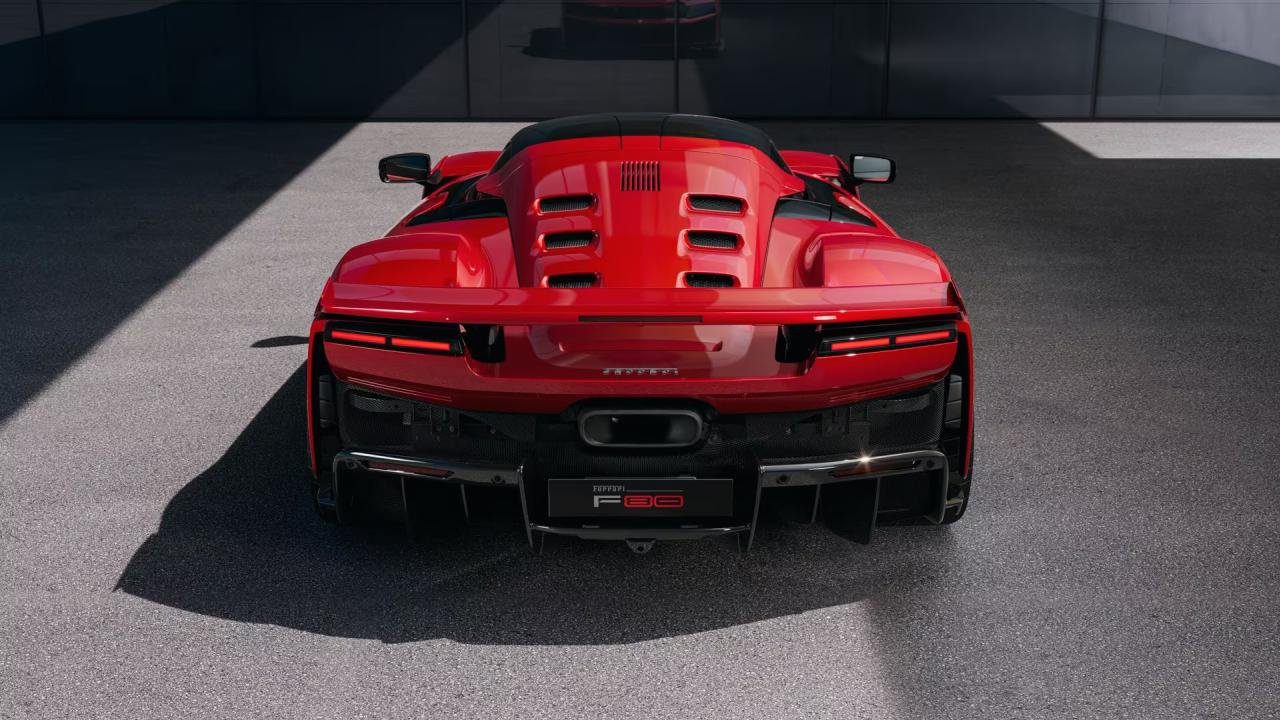
    The Ferrari F80 is the most powerful road-going Ferrari ever made. If there’s one thing that it lacks over its predecessors, it is a hair-raising exhaust note. Ferrari is aware of this and has now introduced a louder, more extreme exhaust system for the F80. Unfortunately, it’s track-only.

    Ferrari says the new track-only exhaust “unleashes an even more intense sound, giving it the exhilarating roar of racing”. It deletes the catalytic converters and silencers. Despite this, the cars will maintain the official Prancing Horse warranty. Customers can opt for the track exhaust during the configuration process.

    Unlike its V12-powered predecessors, the F80 uses a 3.0-liter twin-turbo V6 engine that produces 900 hp. The internal combustion engine is paired with an electric front axle and an F1-derived MGU-K, which adds another 300 hp, taking the total output to 1200 hp.

    Ferrari claims a 0-62 mph time of 2.15 seconds. 0-124 mph comes up in 5.75 seconds, and it can reach a top speed of 217 mph.

    Source: Ferrarichat

    Source link

  • The Crown Vic Everyone Forgot—Before It Became a Ford Icon

    The Crown Vic Everyone Forgot—Before It Became a Ford Icon

    When Ordinary Becomes Iconic

    On the surface, the Ford Crown Victoria was as ordinary as it got. Yes, it has a V8 and rear-wheel drive, but it had zero performance intentions whatsoever. Besides, the reason it had those was that it followed the tried-and-tested recipe for traditional, full-size American sedans that rode on a ladder-frame chassis.

    It’s a dinosaur, and a relic from days gone by. The fact that its chassis wasn’t changed from the Carter to the Obama Administration tells you just how old it was until it was ultimately retired in 2011. And yet, the ‘Vic is a well-loved car with legions of fans from coast to coast, and even around the world.

    Of course, the most well-known version of the Crown Victoria was the one made from 1998 to 2011. That’s no surprise, given that every police and taxi agency had these in their respective fleets back in the day. It was the de facto cop car and taxicab, and its headlight pattern was permanently etched in everyone’s minds. It gets all the attention, yes, but there’s one version of the ‘Vic that we say deserves a little more love and appreciation.

    Ford

    The Aero Vics of the ’90s

    The name Crown Victoria was first used in the ’50s as the Fairlane Crown Victoria. It was used for only two model years, from ’55 to ’56, and the name would return in 1980 as the top trim level on the now-downsized Panther-platform Ford LTD. In 1983, all full-size LTDs were renamed LTD Crown Victoria to differentiate them from the smaller midsize versions, a designation that lasted until the model was retired in 1991.

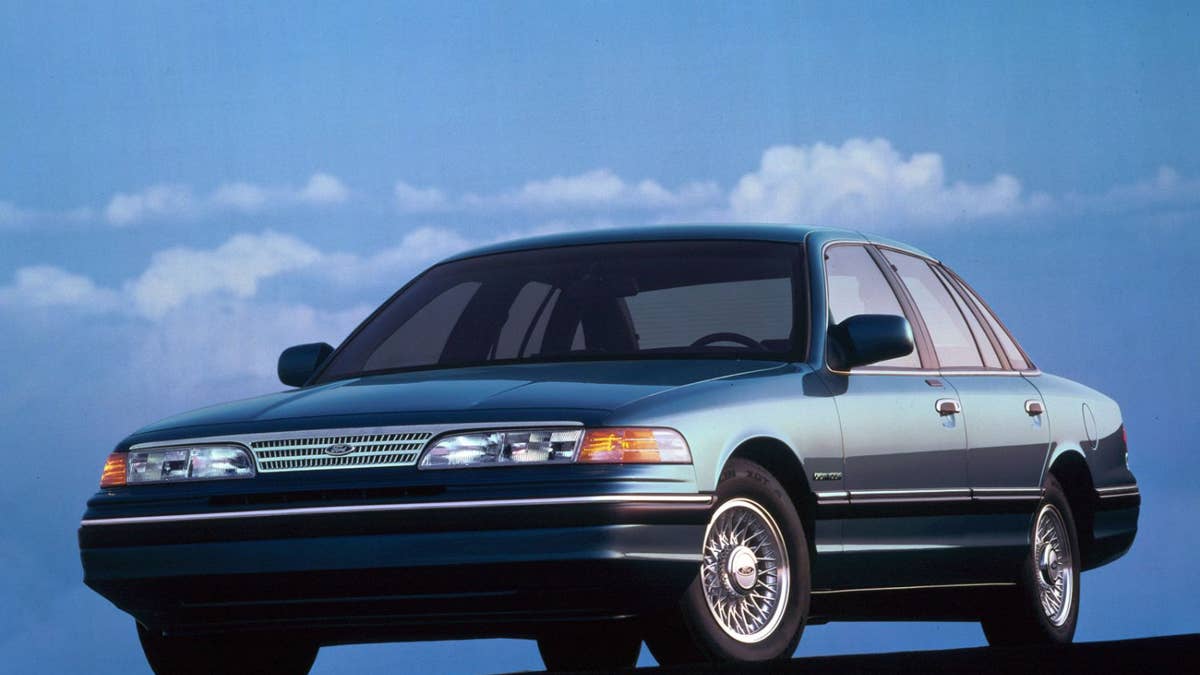
    In 1992, the LTD prefix was dropped to usher in a new era of full-sized Ford sedans. Now just called Crown Victoria, it was a radical departure from its boxy predecessor. Carrying the internal code of EN53, its arrival came in at the right time, too, as General Motors overhauled its range of full-sized B-Body models that consisted of the Chevrolet Caprice, Buick Roadmaster, and the often-forgotten Oldsmobile Custom Cruiser.

    Ford

    A Gamble that Paid Off

    The early ’90s were an interesting time for traditional large American cars. It was initially thought that both Ford and GM wouldn’t build these body-on-frame sedans past the ’90s, but sales proved strong enough through the ’80s to keep them on the road a little longer. Both companies made big gambles on design, each taking vastly different approaches.

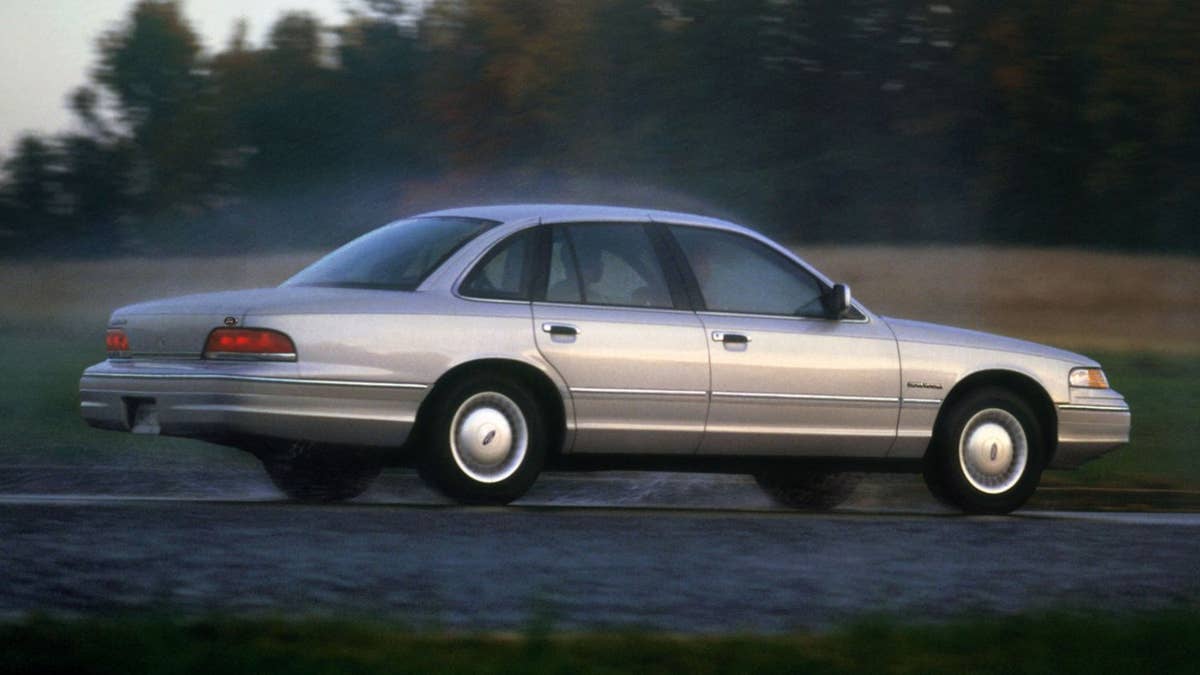
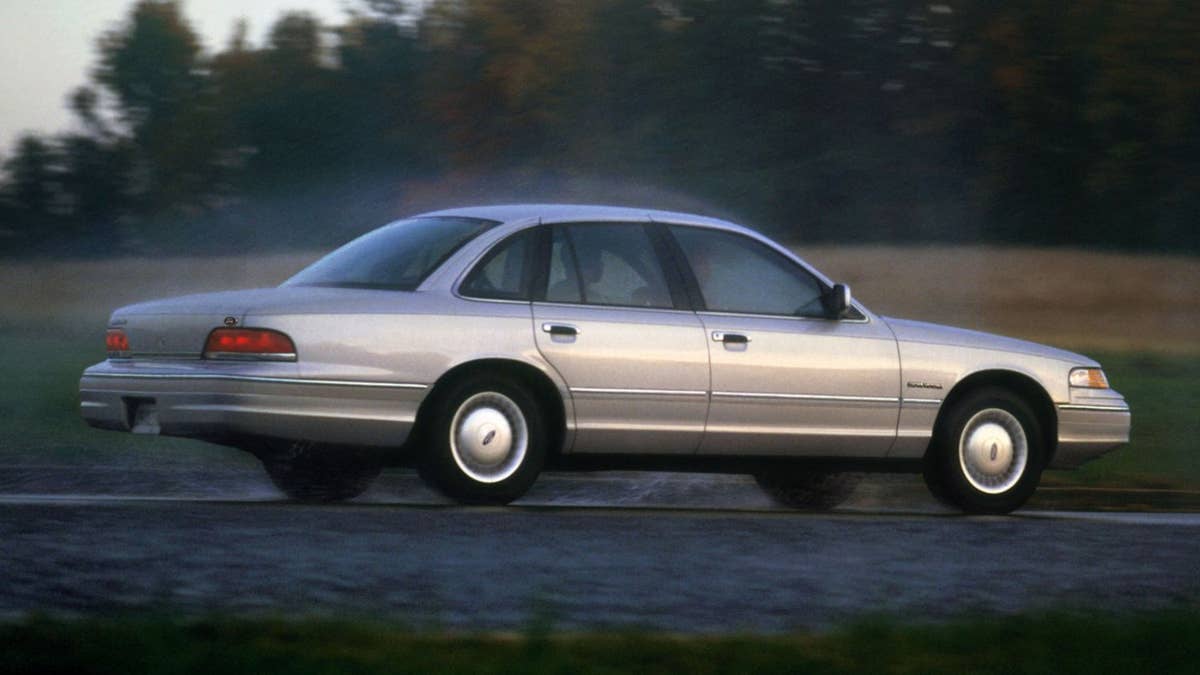
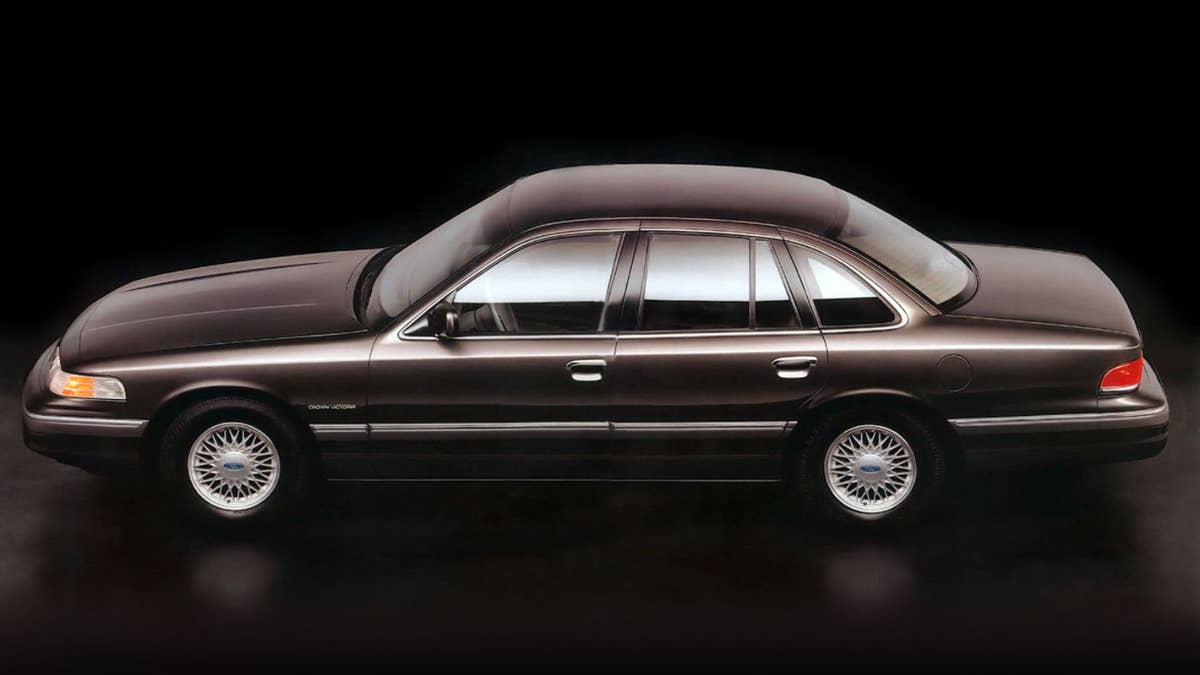
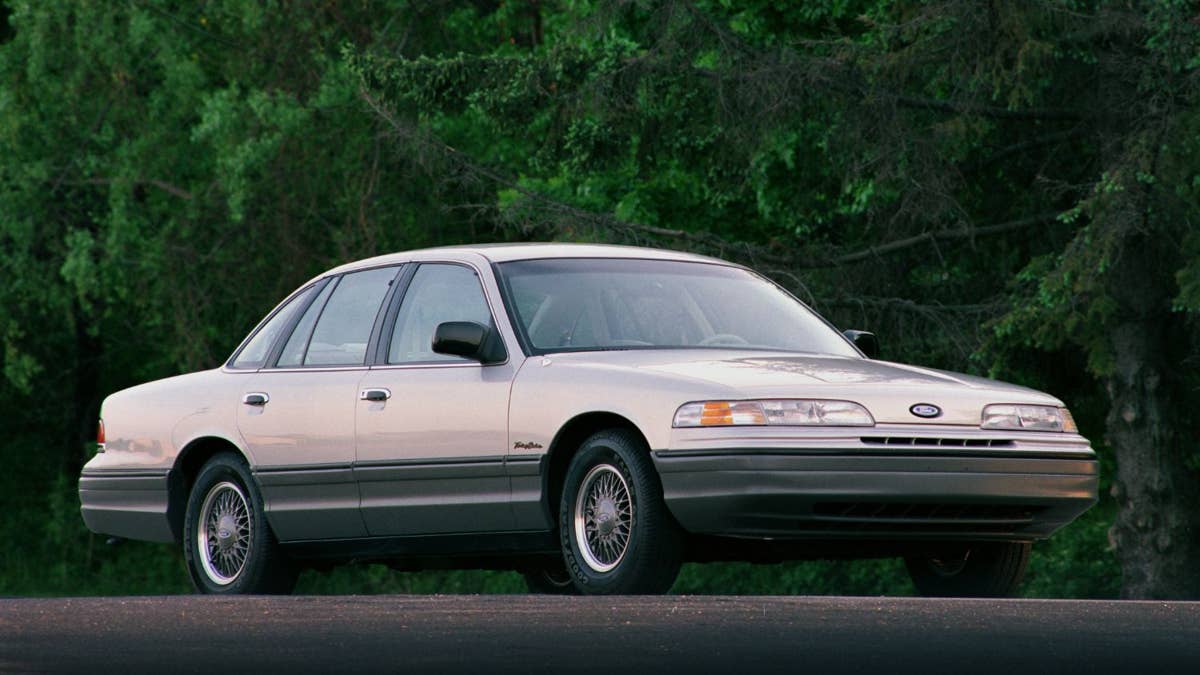
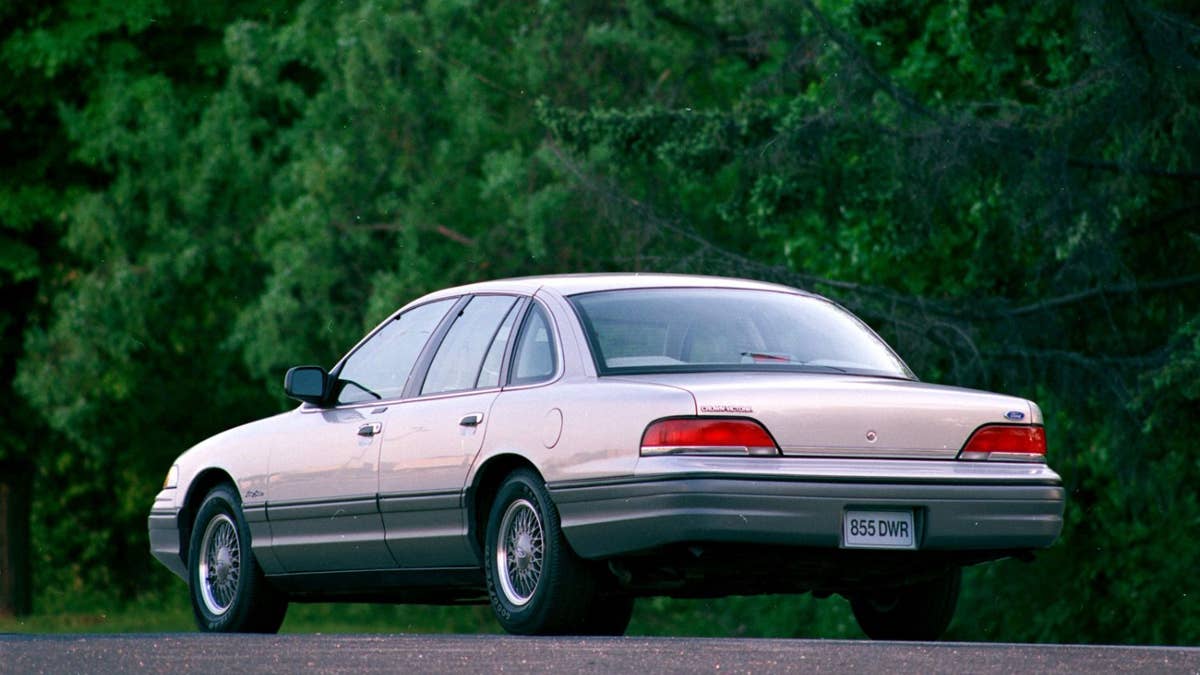
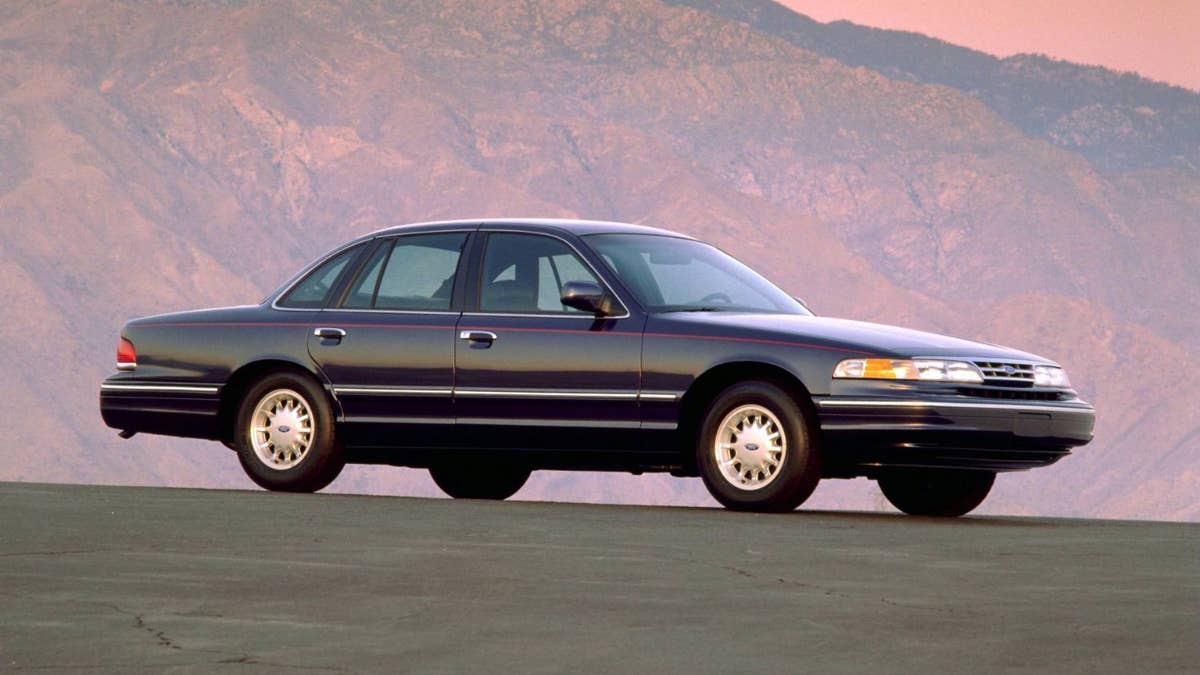
    In the case of the Crown Victoria, it picked up where the Taurus left off, with a smooth, aerodynamic design. It’s that very reason why these were called the Aero Vics, and design elements from its smaller sibling were pretty evident. It had a six-window arrangement, slim headlights, and the no-grille look that automakers tried to make a thing in the early-’90s for the sake of aerodynamics.

    Despite criticisms of the rather blank-looking nose, the first full year of Aero Vics sold well for its class. If anything, its redesign was better received than the Chevrolet Caprice, although we think both look great now. Maybe it’s the rose-tinted glasses.

    Ford

    The Specs

    Although the looks are very ’90s, its chassis dates back to 1979. The Panther platform was a response to GM’s downsized B-Body models from 1977. While the frame was, indeed, the same, Ford did more than enough changes to the chassis to make it drive and ride like a more contemporary vehicle. That same frame would continue to receive updates even after this generation was replaced.

    Its new engine was a big deal, too. For the most part, the LTD Crown Victoria came with a 5.0-liter V8 with 150 hp in its final iteration. There was also a 5.8-liter option with, hold on tight, 180 hp, typically reserved for law enforcement applications. The new Crown Vic (as well as the Mercury Grand Marquis) benefitted from the new 4.6-liter Modular V8, and despite the smaller displacement, made more power right out of the box with 190 hp.

    Okay, it’s not a lot of power by today’s standards, and it’ll easily be dusted off the line by a modern-day Honda Civic. But one has to remember that power ratings were far more conservative over 30 years ago. Still, if 190 hp wasn’t enough, a dual-exhaust option bumper that up to 210 hp. As for trims, there were base, LX, and, for 1992 only, the Touring Sedan. Of course, there was also the Taxi Package and Police Interceptor.

    Ford

    Constant Updates

    Crown Victoria buyers who aren’t cab drivers or police officers are typically more conservative. Hence, in 1993, Ford added a grille to the car to address those who didn’t like the look of the first batch of models. At the rear, it also gained a reflector above the trim piece. Oh, airbags and cupholders were added, too.

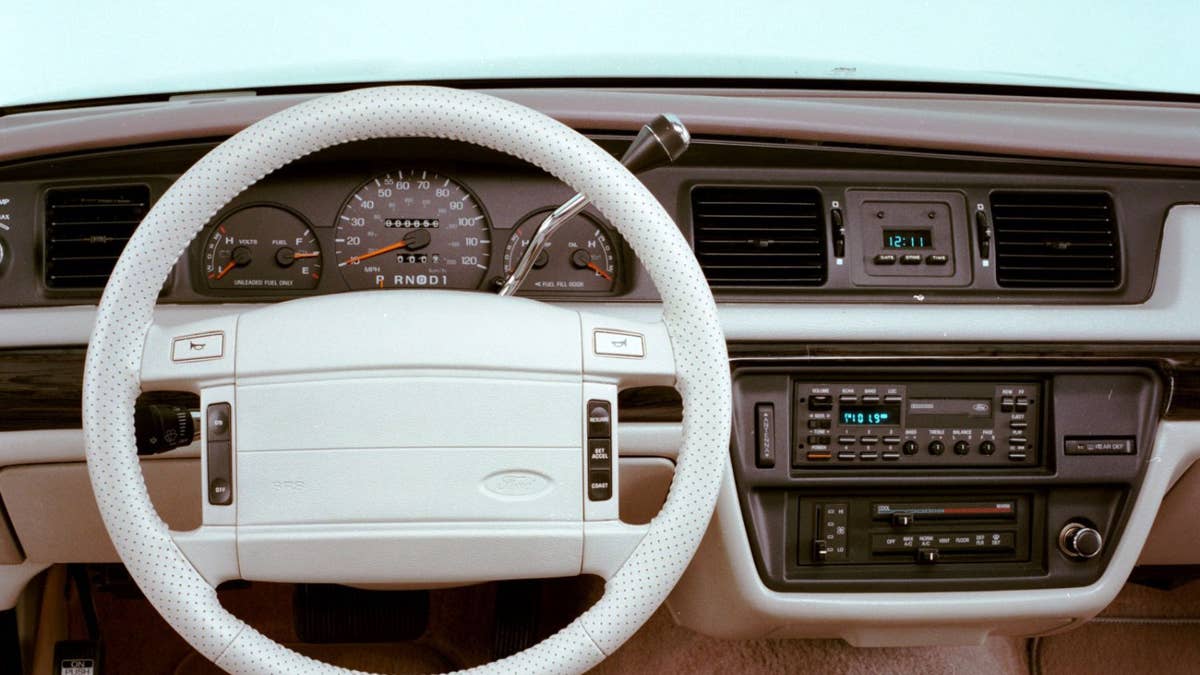
    However, there were far greater changes made for ’95. Its interior was now aligned with the Grand Marquis, and the dashboard would remain largely unchanged until the end of the Crown Victoria’s production. Towards the end of ’95, it also received a new four-spoke steering wheel that better integrated the airbag. The front grille was revamped, along with a much larger set of tail lights, a repositioned license plate holder, and new wheel designs.

    ’96 saw a minor bump in torque ratings. Both single- and dual-exhaust models received an additional 5 lb-ft, with ratings of 265 lb-ft and 275 lb-ft, respectively. Horsepower, however, remained the same at 190 hp for single-exhaust and 210 hp for dual-exhaust versions.

    Ford

    Why Was it (Mostly) Overlooked?

    It’s not that the Aero Vics sold poorly. For the most part, it consistently sold over 100,000 units throughout its production from 1991 to 1997. Total production was estimated at 630,000 cars over its life. But perhaps the biggest problem of the first standalone Crown Victoria was the lore surrounding the Chevrolet Caprice from the same era.

    The last (real) Caprice’s legacy was practically built upon the 5.7-liter LT1 engine. Despite being introduced later in its life, it boosted the car’s image, and the Impala SS further elevated its status. Law enforcement waxed lyrical about it too, relegating the Crown Victoria of the early to mid-90s as ‘the other cop car.’ The Aero Vic briefly had its moment in the sun in 1997, after the Caprice was discontinued a year prior, but by then, the newer, now more familiar version of the Crown Vic was about to arrive for 1998.

    Still, if that version of the Crown Victoria flopped, the legacy of that name might be entirely different today. It wouldn’t be held in the same reverence, and there wouldn’t be repeated calls to bring it back. The Aero Vics walked so that the second-gen Vics could run and establish themselves as an icon.

    With Ford planning to bring back sedans at some point, perhaps there’s room for a new-age Crown Victoria. For as long as it’s large and rear-wheel drive, we’re good with that – anything but bringing back that nameplate as a crossover.

    Ford

    Ford


    View the 11 images of this gallery on the
    original article

    Source link

  • Highlighting Women in Motorsport – Kelley Blue Book

    Highlighting Women in Motorsport – Kelley Blue Book

    It’s no secret that the motorsports scene is incredibly male-dominated, both on the track and behind the scenes. Despite these barriers, women throughout history have pushed back against limited resources and widespread prejudices to compete and achieve their goals in racing. Although we can’t showcase all the groundbreaking women in motorsports, we’d like to highlight a few who paved the way for those who followed. 

    1898

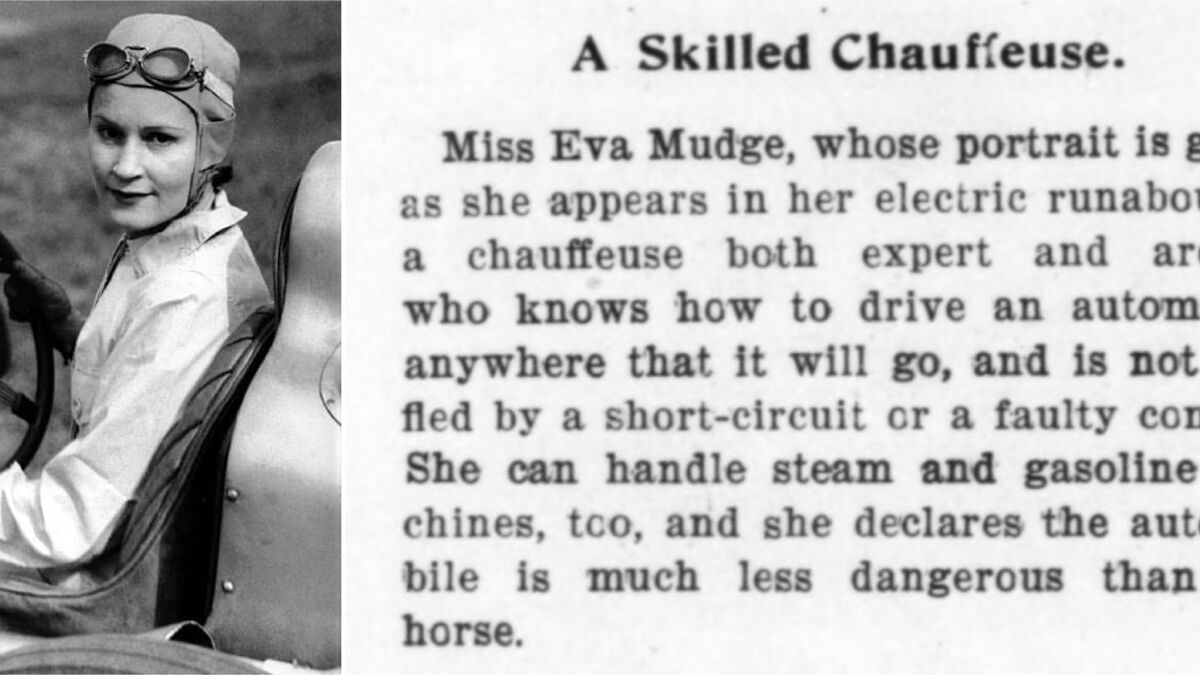
    Eva Mudge Obtains Driver’s License

    Mudge obtained her U.S. driver’s license in 1898 New York, making her the first woman to do so.

    First

    1929

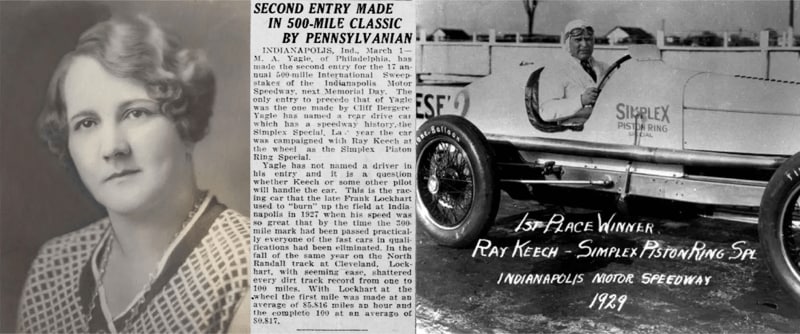
    Maude Yagle Competes in Indy 500 as Owner

    Yagle became the first and only female car owner to win the Indy 500.

    first

    1949

    Sara Christian Competes in NASCAR

    Christian competes and finishes 14th at the Charlotte Speedway. She is the first woman to race in NASCAR.

    FIRST

    1973

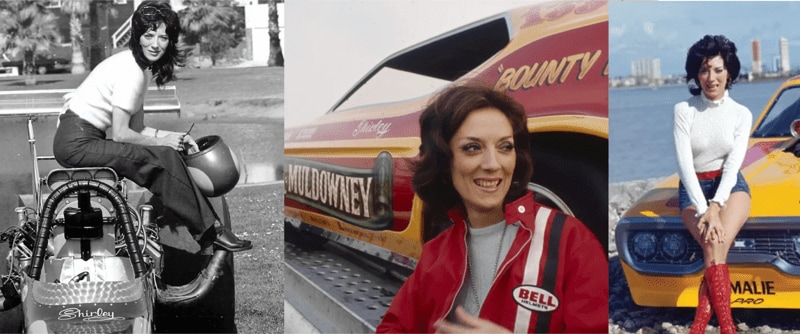
    Shirley Muldowney Obtains a Top Fuel License

    Muldowney used her license to compete in NHRA Top Fuel Dragster races, and became the first person to win the championship three times.

    wins and success

    1976 – 1977

    Janet Guthrie Competes in NASCAR Winston Cup

    Guthrie became the first woman to compete in the NASCAR Winston Cup. She later became the first to race in the Daytona 500 as well.

    first

    1992

    Lyn St. James Named Rookie of the Year

    St. James was named the first-ever female Rookie of the Year. She competed in 17 IndyCar races during her career.

    recognition

    2000

    Sarah Fisher Competes at 19

    Fisher became the youngest woman to compete in the Indy 500.

    First

    2008 / 2013

    Danica Patrick Wins an IndyCar Race and Earns Pole Position in NASCAR

    Patrick won the 2008 Indy Japan 300, making her the first and only woman to do so. Later, she earned the P1 starting spot for the 2013 Daytona 500, where she eventually placed eighth.

    FIRST


    Scroll to explore

    Eva Mudge (1880 – 1964)

    Highlighting Women in MotorsportHighlighting Women in Motorsport
    Credit: Sayre J. Willis Collection of Theatrical Photographs; The Automobile 1900-12 Vol. 2 Iss. 12

    Geneva Delphine Mudge, better known by the stage name Eva Mudge, was a famous vaudeville performer born in Michigan in 1880. Her father, R.C. Mudge, was a businessman who also acted as Eva’s manager. But what does this have to do with motorsports? Well, R.C. Mudge held an interest in the automobile industry and obtained a patent for a flue construction with the Locomotive Company of America. He passed his interest in automobiles down to his daughter, who later became the first woman in the United States to obtain a driver’s license in 1898 in New York. Eva was also potentially one of the first female racecar drivers and rode a gas-powered Locomobile during a race on December 31, 1899, when she skidded off the road and knocked down five spectators.  

    She was later named “A Skilled Chauffeuse” in the December 1900 edition of The Automobile magazine. An excerpt reads, “Miss Eva Mudge, whose portrait is given as she appears in her electric runabout, is a chauffeuse both expert and assured, who knows how to drive an automobile anywhere that it will go, and is not baffled by a short-circuit or a faulty contact.”                                                                          

    Maude Yagle (1883 – 1968)

    Highlighting Women in MotorsportHighlighting Women in Motorsport
    Credit: Technology’s Stories Vol. 3 No. 2; Palladium Item-Archive: Friday, March 1, 1929, Richmond, Indiana, Page 8; IMS Museum

    While it’s important to highlight female drivers, those who worked behind the scenes to build the events are equally important. Maude Yagle was the first woman to own a vehicle entered into the Indianapolis 500. She was the second entrant in the 1929 Indianapolis 500 and entered the race under the name M.A. Yagle, in hopes of concealing her identity as a woman, but her gender was quickly discovered before the race.  

    She faced public backlash, with a male journalist writing, “Horrors! Women are trying to break down the last male stronghold in the sports and automobile world!”  

     Although she was a car owner, she was denied access to the pits along with female timekeeper Alice Hoofman-Trobeck, and instead had to communicate with her crew by passing notes through the fence. It wasn’t until 50 years later, in 1970, that women were allowed in the pits. Despite these challenges, she and her driver, Ray Keech, secured a victory in 1929. Maude Yagle is the only woman owner to win the Indy 500 to date.  

    Shirley Muldowney (1940 – Present)

    Highlighting Women in MotorsportHighlighting Women in Motorsport
    Credit: Shirley Muldowney Racing

    The “First Lady of Drag Racing” is none other than Vermont-born Shirley Muldowney (1940 – Present), also known as “Cha-Cha.” Her love for racing began in her teens, when she joined local street races in Schenectady, New York.

    “School had no appeal to me,” Muldowney said. “All I wanted was to race up and down the streets in a hot rod.”

    Later, Muldowney built her motorsport career in the high-risk world of drag racing, making her professional debut at the Fonda Speedway in 1958. In 1965, she became the first woman to receive a drag racing license from the National Hot Rod Association (NHRA), breaking a long-standing barrier in the sport.

    “NHRA fought me every inch of the way, but when they saw how a girl could fill the stands, they saw I was good for the sport,” said Muldowney. “The fans were wonderful. They made me.” 

    In 1973, she became the first woman licensed to drive a Top Fuel dragster. She won the NHRA Top Fuel championship in 1977, 1980, and 1982, making her the first person to claim the title three times. She found great success in the sport despite resistance from competitors and racing officials who believed women did not belong in Top Fuel competition. She retired from racing in 2004 and has been inducted into the Automotive Hall of Fame, the Motorsports Hall of Fame of America, and the International Motorsports Hall of Fame. In 1983, Bonnie Bedelia played Shirley Muldowney in the movie “Heart Like A Wheel,” based on Muldowney’s career.

    Janet Guthrie (1938 – Present)

    Highlighting Women in MotorsportHighlighting Women in Motorsport
    Credit: IMS Museum

    Iowa-born racecar driver Janet Guthrie was the first woman to compete in not just one, but multiple notable racing series. Before starting her career as a professional racer in 1972, she bought a Jaguar XK120, which inspired her to compete in gymkhana, field trials, and hill climbs hosted by the Sports Car Club of America (SCCA). These races eventually led to her winning two class victories in the 12 Hours of Sebring.  

    In 1976, Guthrie became the first woman to compete in the NASCAR Winston Cup Series, finishing fifteenth in the World 600. She competed in 33 Winston Cup races over the course of her career. In 1977, she became the first woman to compete in the Daytona 500. She secured the title of Top Rookie in the 1977 Daytona 500 and finished in fifth place in the 1979 Milwaukee Indy 500.
     
    She achieved all these milestones while racing in relatively underfunded vehicles. In 1978, she finished ninth in the Indy 500 in her $120,000 vehicle while competing against teams like Penske, which had budgets of about $2.3 million. The financial realities forced her into retirement. “I didn’t decide to quit racing, believe me, I was forced out by a lack of sponsorship,” Guthrie said in a 2005 interview with Automotive DriftBreath.

    In an interview with the Los Angeles Times, Guthrie said, “Males are getting sponsorships and women can’t. That sounds unfair. But who cares about fair? … Sponsors want the publicity that racing brings. But a successful woman driver will get 10 times the attention that a man will get. So, now, what really is important?” 

    Over the course of her career, she proved the argument that women couldn’t handle top-tier racing wrong, paving the way for women to compete professionally. Guthrie’s helmet and racing suit are now located in the Smithsonian Institution in Washington, D.C. She is currently in the International Women’s Sports Hall of Fame, the International Motorsports Hall of Fame, and the Sports Car Club of America Hall of Fame. 

    Lyn St. James (1947 – Present)

    TestingTesting
    Credit: Lyn St. James

    Lyn St. James was the first woman to be named Rookie of the Year at the Indianapolis 500 after her 1992 race. She was 53 during the 2000 Indianapolis 500, one of her last races. During this race, she was the oldest driver in the field, challenging attitudes against not just women in motorsports but also older race car drivers. 

    Her racing career began in 1973 in an Amateur Sports Car Club of America race. This spurred her determination to compete in the IndyCar series, a dream she accomplished in 1988, with the help of driver Dick Simon. Simon provided the car, while St. James worked hard to secure a sponsorship. After being rejected by more than 150 companies, she finally secured sponsorship from JCPenney.

    Later on, St. James pursued a partnership with Ford after seeing an article titled “Ford and Feminism” in Car and Driver magazine. She finally achieved a meeting with the company in 1980, where she met Ford public relations executive Walter Hayes at a Ford dealer show.

    Highlighting Women in MotorsportHighlighting Women in Motorsport
    Credit: Lyn St James, Ford

    In 1992, St. James became the first woman to gain the title of the Indianapolis 500 Rookie of the Year. Throughout her career, she achieved numerous victories, including two class wins at the 24 Hours of Daytona, 17 IndyCar starts, and a class win at the 1990 12 Hours of Sebring.  

    Although she no longer races today, she remains in the public eye and advocates for women’s continued participation in motorsports. St. James is a co-founder of Women in Motorsports North America and encourages women to participate in motorsports as drivers, engineers, representatives, media, and in other roles. 

    “There’s still work to be done. And I’m going to keep pushing until I know the next generation doesn’t have to fight the same battles I did.” 

    Source link

  • Honda’s Cutest EV Also Has Simulated Gear Shifting

    Honda’s Cutest EV Also Has Simulated Gear Shifting

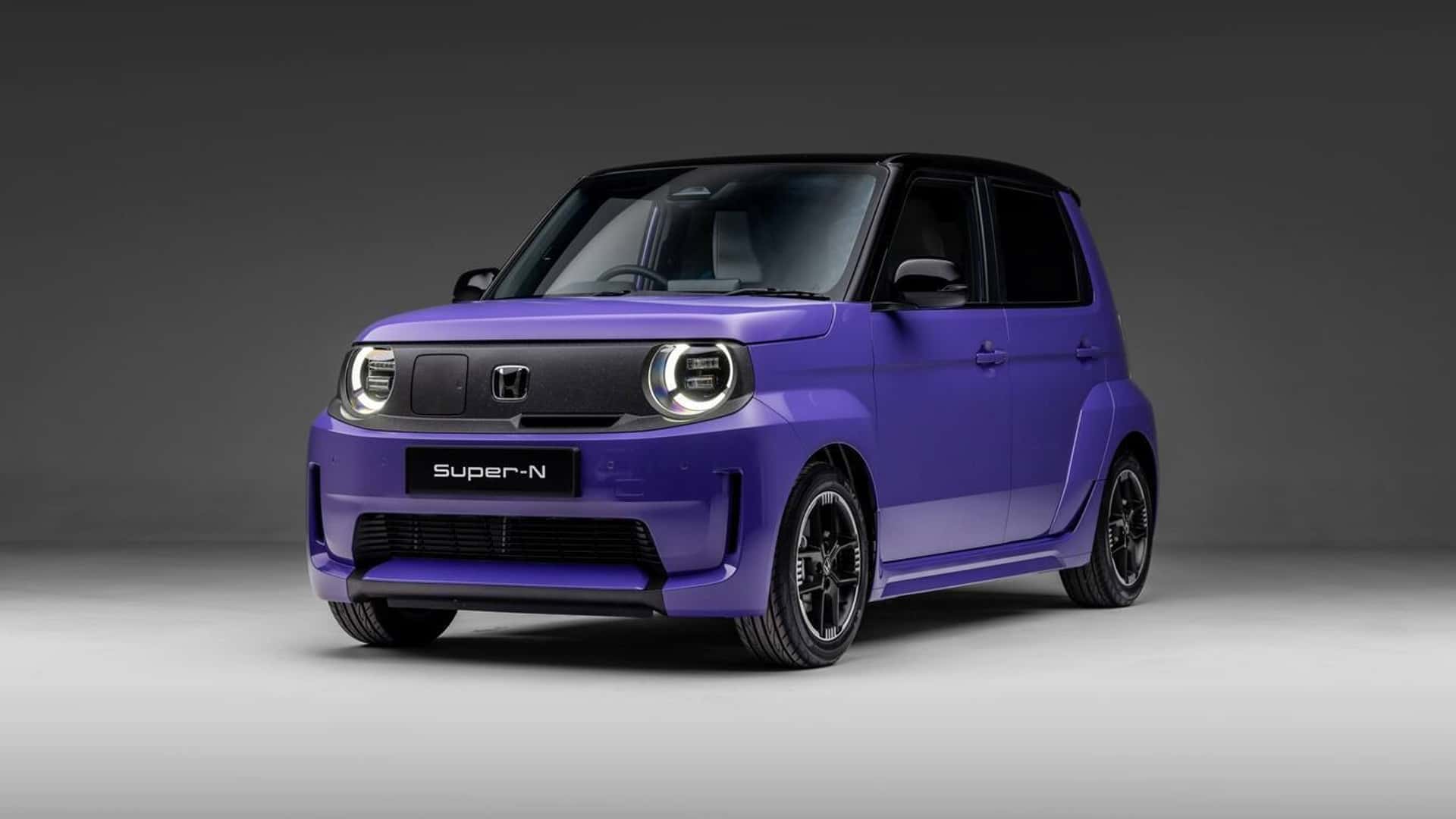
    • The Honda Super-N is an EV city car set to go on sale in Europe this year.
    • It will have simulated shifting paired with synthetic engine sounds. 
    • Price will be under $26,900 when it goes on sale.

    Honda may have given up on its own self-developed EVs for North America, but that doesn’t mean it’s down for the count everywhere else. 

    Meet the Honda Super-N. We’ve seen it in preproduction prototype form, and barely camouflaged, running around the Goodwood Festival of Speed, but now it’s been revealed. This car is headed to “select global markets,” starting with the UK. Oh, and it shouldn’t break the bank. Honda says that it’ll start under £20,000, or around $26,900 according to current exchange rates.


    Honda Super-N (2026)

    Photo by: Honda

    Mechanically, the Honda Super-N started life as the Honda N-One kei car. From there, Honda has converted it to electric power, while widening the N-One’s narrow body. The Super-N’s output is only 63 horsepower, but its boost mode increases that to 94 horsepower on demand. Honda hasn’t said much about official 0-60 times or top speed yet.

    To make it sharper to drive, the Super-N has simulated shifting and artificial combustion noises. I’ve tried a prototype version of this system in Japan; it’s remarkably convincing and definitely adds charm to the EV experience. It’s not clear if Honda’s greatest-hits style selectable engine sounds will be available here, though.

    The Super-N is rated for 128 miles of range (combined) from the WLTP cycle. If the Super-N were to ever come to the U.S., I’d expect that to be closer to 100 miles. Honda hasn’t confirmed the battery size, although older prototype drives do suggest that a 29 kWh battery is under the floor. 


    Stylistically, the Super-N is smart-looking, if slightly old. This retro-styled small car has been a strong seller on the Japanese market in gas form since its introduction in 2011. Even though this latest generation was released in 2020, the car still looks fresh, especially with its wide-body kit meant to recall cars like the Honda City Turbo from the 1980s. 


    Honda Super-N (2026)

    Photo by: Honda

    The Honda Super-N is unlikely to come to the U.S. It’s really small, likely to be kind of slow, and would have a very low electric range. Just look at how poorly the Fiat 500e, America’s closest equivalent to the Super-N, is doing.

    But U.S. tastes don’t always track across the globe. The Super-N’s price and market position put it right in the sights of other affordable EVs we don’t get here, like the swanky new Renault Twingo and the BYD Dolphin Surf.

    On one hand, it’s frustrating to see Honda throw away its EV aspirations in the U.S. On the other hand, there’s a real dearth of affordable EV models, and it looks like the Super-N meets that need with a surprising amount of charm. If you’re in the UK, the Honda Super-N will be on the roads before the end of this year. 

    Contact the author: kevin.williams@insideevs.com 

    Source link

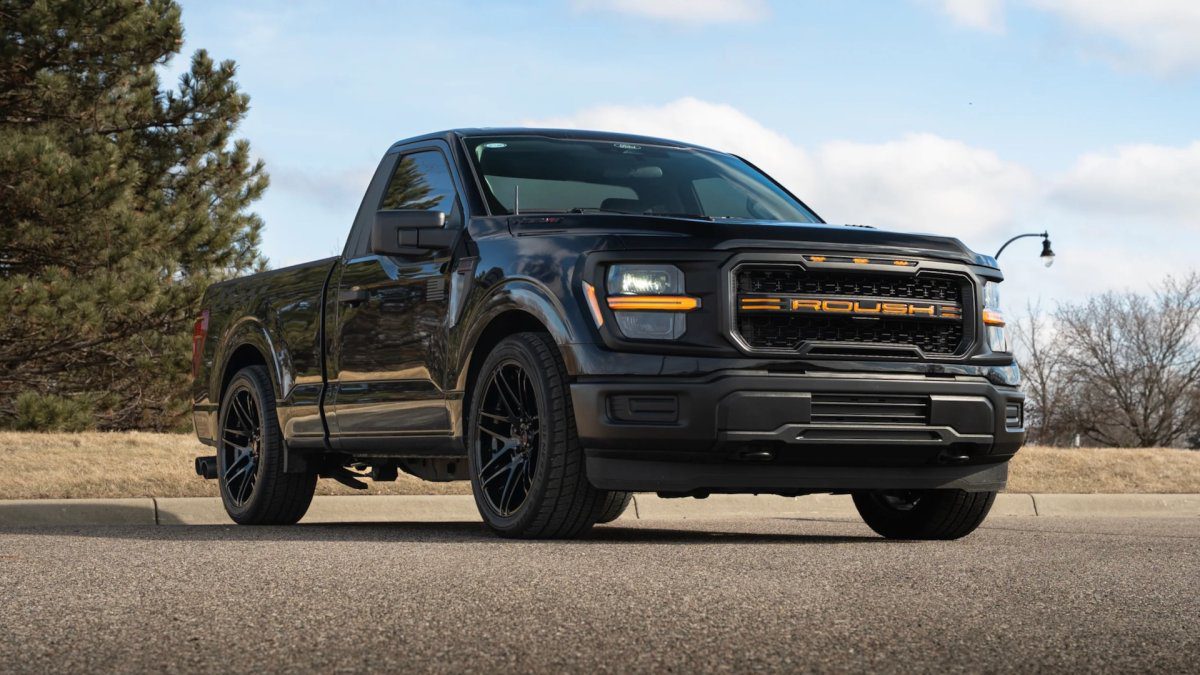
  • Roush Will Turn Your Base Ford F-150 XL Into a Fat-Tire Street Truck

    Roush Will Turn Your Base Ford F-150 XL Into a Fat-Tire Street Truck

    While Ford deserves credit for its light-touch street truck, the F-150 Lobo just doesn’t go far enough. It sits too high on tires that are too skinny, and it’s only available as a crew cab. Roush is doing what Ford should have and giving a basic two-door F-150 a street truck makeover.

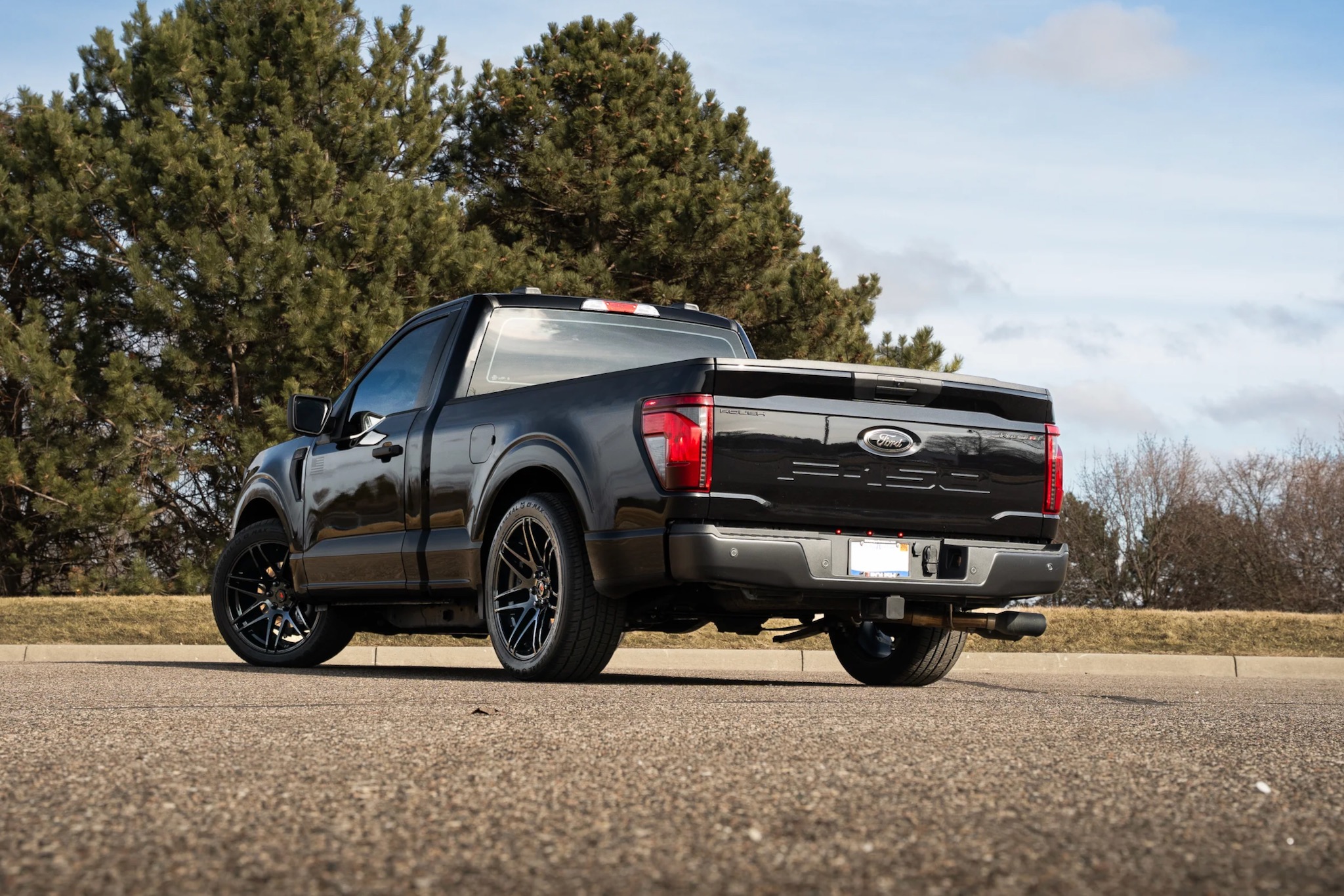
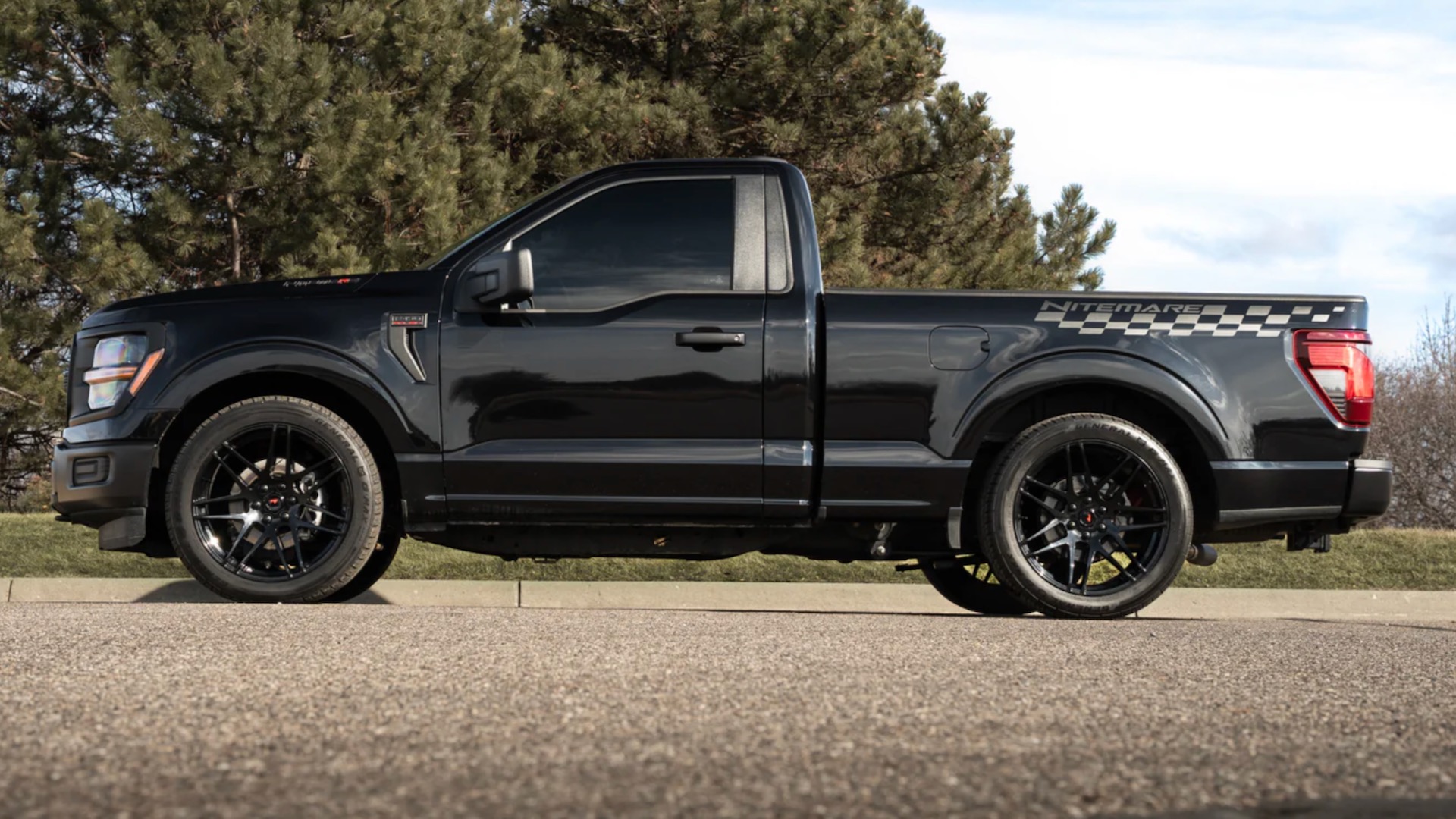
    The latest Roush Nitemare package is available on the F-150 XL and XLT trim levels, meaning you can now get a base F-150 with attitude. A suspension kit consists of new coilovers, twin-tube dampers, progressive-rate springs, and new sway bars with CNC-machined aluminum bushing brackets. This setup lowers the truck three inches in front and five inches in back. Roush claims this suspension gives the F-150 1g cornering ability.

    Roush also adds 22-inch wheels with 305/40R22 General G-Max AS07 all-season tires, with slotted brake rotors to improve stopping power with those enlarged wheels. A cat-back exhaust system enhances the sound of the 5.0-liter V8 that’s standard on regular-cab versions of the XL (and a $2,340 option on the XLT crew cab). It makes 400 horsepower and 410 pound-feet of torque from the factory.

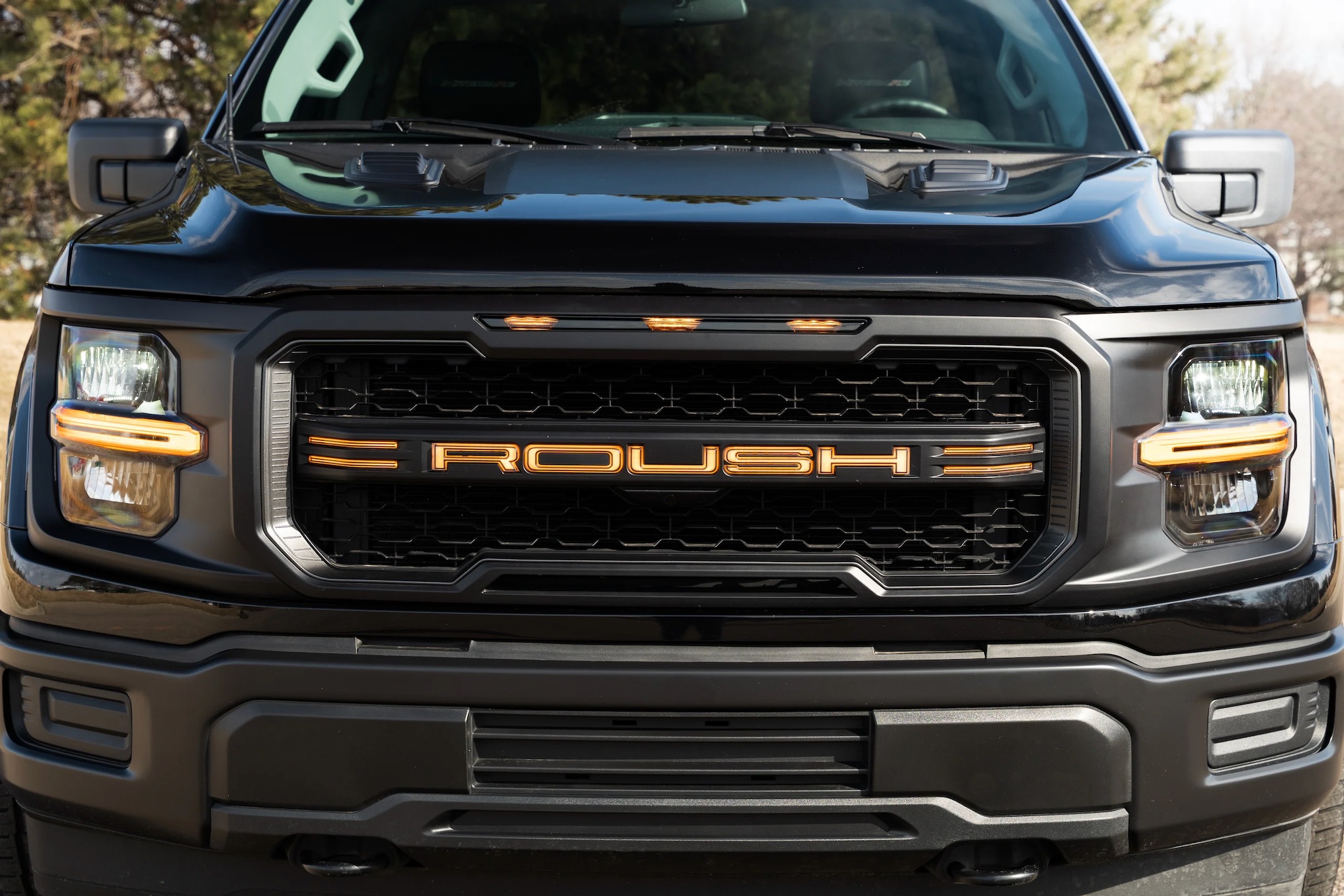
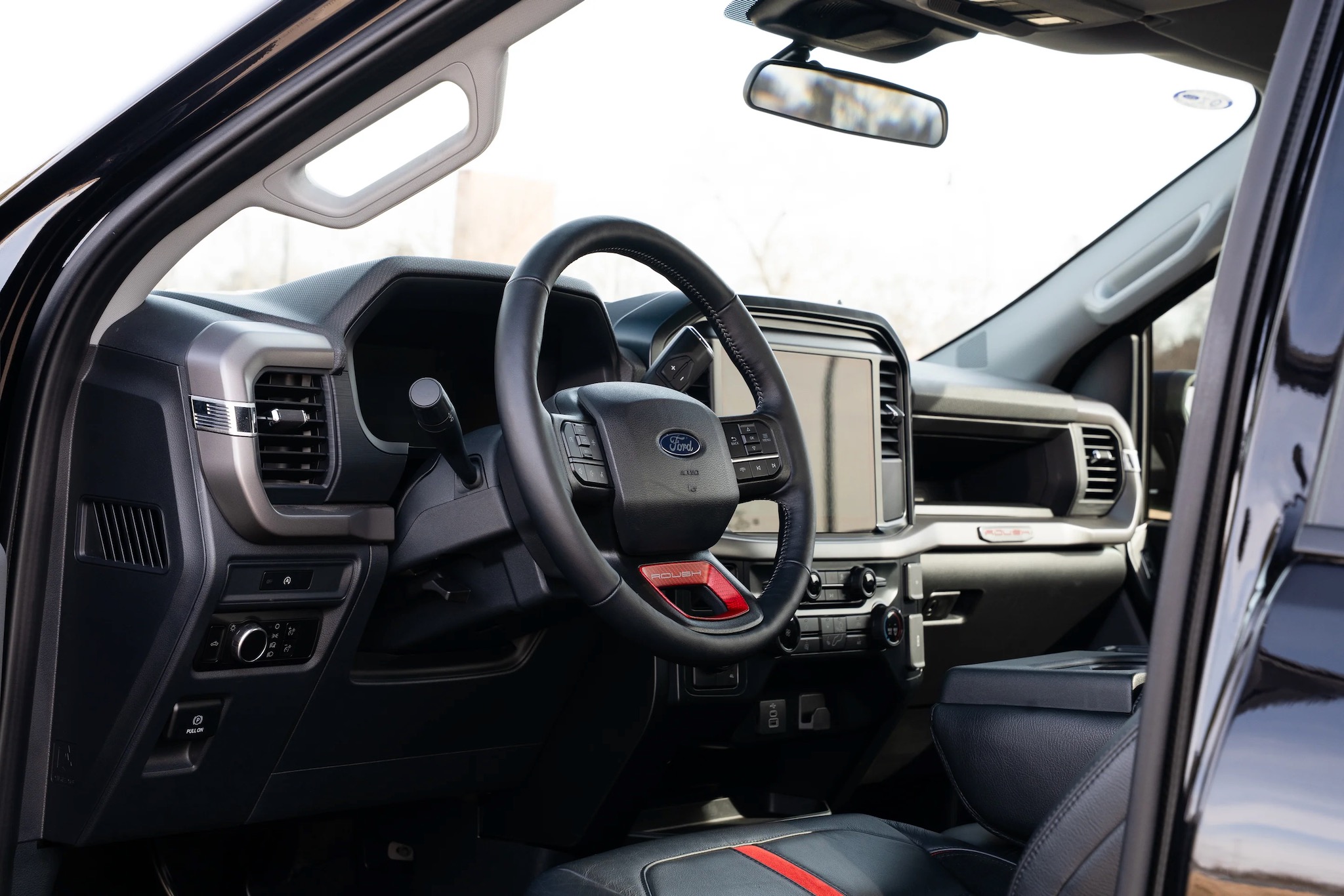
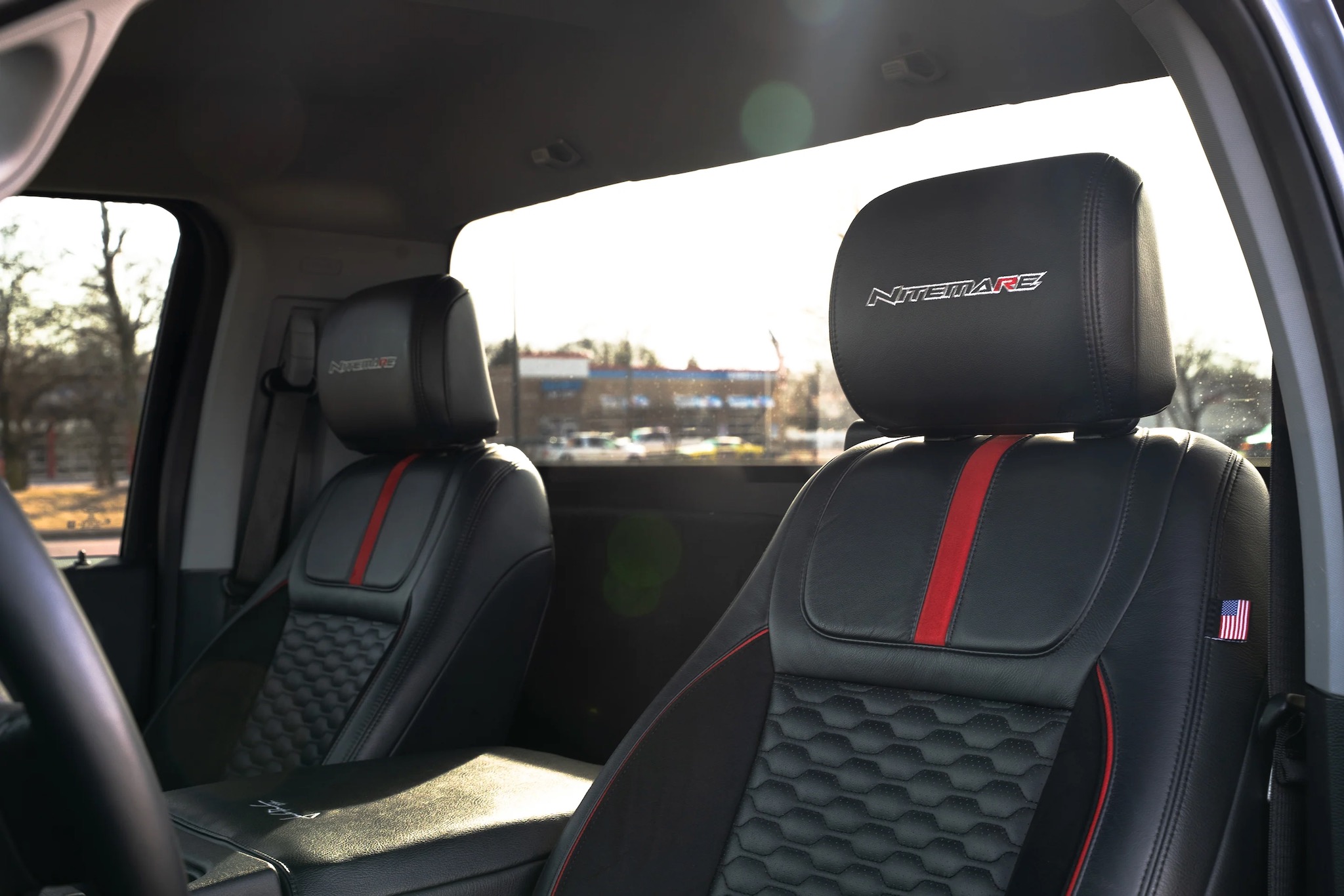
    The lowered stance and bigger wheels and tires are the main attractions, but the Nitemare package also includes hood air extractors, a new grille with amber lights and “Roush” lettering, and an optional graphics package. The blacked-out exterior with a splash of orange around the grille looks decidedly Lobo-like, and also doesn’t match the interior, which gets red accents instead.

    All of this costs $22,999 on top of the price of a new F-150, which is $42,125 if you go for a regular-cab XL or $50,850 for a crew-cab XLT (both prices include a $2,795 destination charge). So the upgrade package is equivalent to about half the price of the truck itself, and pricier than a base Lobo even if it’s added to a base F-150 XL. You can at least get a Nitemare at certain Ford dealerships, and the modifications are backed by a three-year/36,000-mile warranty.

    Alternatively, you could skip the visual upgrades and slap the $10,250 Whipple supercharger kit from Ford Performance Parts on a base regular cab XL. That boosts the 5.0-liter V8 to 700 hp and 590 lb-ft for $52,375.

    Got a tip? Send us a note at tips@thedrive.com.

    Stephen has always been passionate about cars, and managed to turn that passion into a career as a freelance automotive journalist. When he’s not handling weekend coverage for The Drive, you can find him looking for a new book to read.


    Source link