Our free daily newsletter sends the stories that really matter directly to you, every weekday.
An auto dealer software company is pitching AI-powered kiosks designed to replace car salesmen on showroom floors. Automotive News says the industry is “skeptical.” But be honest—would you really rather deal with the average car lot shark than a computer?
Epikar, a South Korean company that cooks up digital management solutions for car dealers, has named its new AI invention the Pikar Genie. The idea is that customers can talk to this device, ask it product questions, and basically do everything you’d do with a car salesman except for actually closing the deal and signing paperwork.
So it’s not quite like ordering nuggets from one of those giant-screen ATMs at McDonalds, but kind of the same idea.
Renault, BMW, and Volvo are already using some Epikar products at South Korean dealerships, but this new customer-facing AI product is still in its infancy. AN reported that “Renault assigns three salespeople to its Seoul showroom enhanced with Epikar automation compared with six for other Renault showrooms in South Korea,” according to Epikar CEO Bosuk Han.
The company’s now looking to expand into America and is apparently already testing its products at at least one dealership stateside.
Car-dealer consultant Fleming Ford (Director of Strategic Growth at NCM Associates) indicated to AN that U.S. dealerships “aren’t ready for fully automated showrooms.”
“The showroom isn’t just where you buy a car,” Automotive News quoted him saying. “It’s where you decide who to trust to help you to choose the right car.”
I have to admit, I’ve only been inside car dealerships as a buyer less than a dozen times. But, sorry, “trustworthy” is not the vibe I’ve ever gotten from a commission-motivated salesperson.
In fact, every conversation I’ve ever had with an actively working salesman has felt a lot more like talking to a chatbot than an actual person.
Now, I don’t mean to personally disparage folks in the car sales trade. I get it, you’re just trying to get your quotas done and get home like everyone else. But in my experience, on-duty car salespeople don’t really converse so much as work their way through a script to get whatever’s been sitting on the lot the longest into your driveway.
Case in point, I helped my grandfather buy a new Nissan Frontier not too long ago. He’s been driving pickups since the 1960s and very specifically wanted a low-spec, short-cab Frontier as, most likely, his last truck.
I went with him to a Nissan store, where I explained the above. The salesperson jovially nodded and typed out what sounded like the entire script of a feature film on his computer, then printed a spec list and handed me a deal … for a four-door top-of-the-line PRO-4X. We walked out.
Days later, we were able to get him the rig he wanted from a different dealership—I had to literally read the sales guy the inventory stock number from the store’s website to get him off his butt and into the key locker.
So, yeah, I would not consider myself a “fan” of AI, but this is not a human-job deletion I’ll be particularly sad about. That said, who knows if Epikar will be the real catalyst here—I can’t get its website to load on any browsers as of this writing (not a great sign for a tech company).
Car dealers have a reputation for resisting change, and it might take considerable time to AI-ify car sales because of the paperwork involved in car ownership (loans, insurance, titles, registration). But once the tech is in place, dealership owners are going to be all about robot sales associates. A salesperson who never takes a smoke break, can instantly access the whole internet, and most critically, never takes a commission? Those attributes are going to be very popular with managers, no matter what consumers think of them.
CHINA’S number one carmaker, BYD, has warned of an impending shakeout in the domestic electric vehicle sector after reporting a 19 per cent drop in annual net profit, despite continued sales growth.
In hard numbers, the giant Shenzhen-based carmaker posted a net profit of 33 billion yuan ($A6.87b) for the year ended December 31, as intensifying price competition (discounting) in China eroded margins.
Revenue, however, edged up 3.5 per cent to 804 billion yuan ($A166b).
Automotive media reported BYD chairman Wang Chuanfu saying the industry had reached a “brutal knockout stage”, with weaker players likely to be forced out as competition reaches “fever pitch”.
The warning reflects mounting pressure across China’s crowded EV market, where dozens of domestic brands are competing amid softening demand, excess supply and reduced government support.
BYD’s global sales of electric vehicles and plug-in hybrids rose 7.7 per cent to 4.6 million units in 2025, though its China deliveries fell 7.8 per cent to 3.55 million.
Profitability was hit harder, with net margin declining to 4.1 per cent from 5.2 per cent the previous year.
Industry observers expect consolidation to accelerate, with some executives forecasting only a handful of viable players will remain over the next five years as weaker brands exit through factory closures or mergers possibly accompanied by job losses.
To counter slowing domestic growth, BYD is ramping up its international expansion, with overseas markets emerging as a key growth driver.
The company now operates in 119 countries and has invested heavily in export logistics, including a fleet of dedicated vehicle carriers. It is also building out production capacity globally, with new or planned facilities in Cambodia, Brazil and Hungary, alongside existing plants in Thailand, and Uzbekistan.
Overseas deliveries more than doubled in 2025 to 1.05 million units, helping lift international revenue by 40 per cent to 311 billion yuan ($A64b), representing 39 per cent of total revenue – up from 29 per cent the previous year.
Despite the challenging market conditions, BYD continues to invest heavily in new technology, with more than 120,000 engineers working across battery and vehicle development.
Recent breakthroughs include a second-generation Blade battery and ultra-fast charging capability, with BYD claiming the system can charge from 10 to 70 per cent in five minutes and up to 97 per cent in under 10 minutes under normal conditions.
The technology, already deployed in China, is expected to roll out to international markets later in 2026 as BYD looks to strengthen its competitive position globally.
Our free daily newsletter sends the stories that really matter directly to you, every weekday.
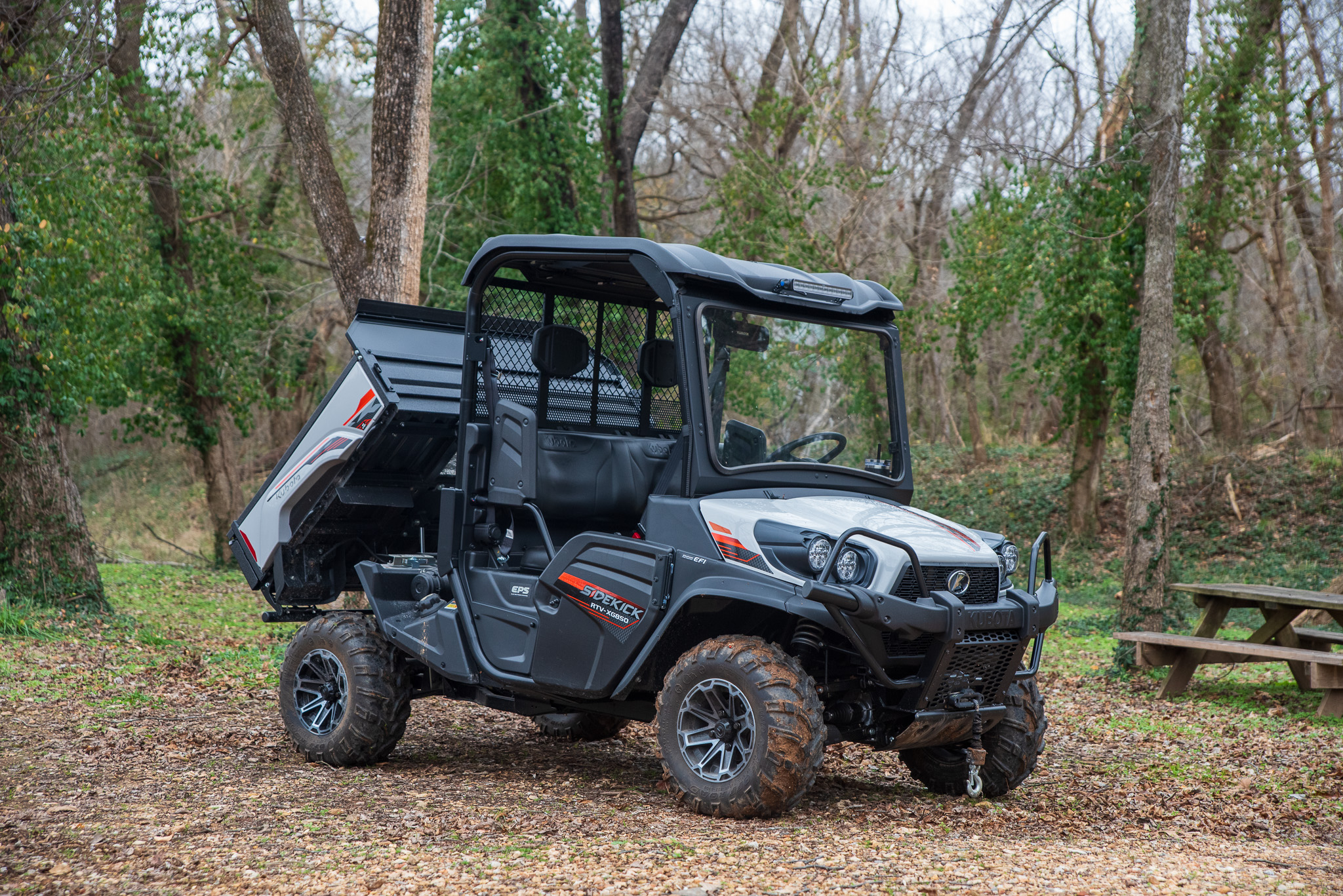
Over time, I’ve developed a pretty good set of tests for side-by-sides at our humble abode. They all have to haul wood, tow modestly sized trailers, and make chores simpler, or else they don’t cut the mustard. Fortunately, most UTVs on the market today are capable of all that and more, but the Kubota Sidekick did it differently than I’ve experienced with the rest. Or, at least, the approach was unique if not the end result, and I liked it.
The Sidekick is almost nothing like the Polaris Ranger XD1500 I reviewed a while back. It’s significantly smaller, less powerful, and yeah, a heck of a lot less expensive at $20,000 compared to nearly three times that. But you know what else? It’s made out of metal, including the dump bed, which is more than the Polaris can say.
That’s just the first hint at what Kubota values in a side-by-side compared to other manufacturers. You can tell that these guys usually build tractors, and I mean that in the kindest way possible. Not everything about the Sidekick is perfect, but I reckon it’s a solid buy if you’re looking to purchase a rig you’ll actually work with. Hopefully, you’re OK without some of the niceties like touchscreen radio.
Caleb Jacobs
The Basics
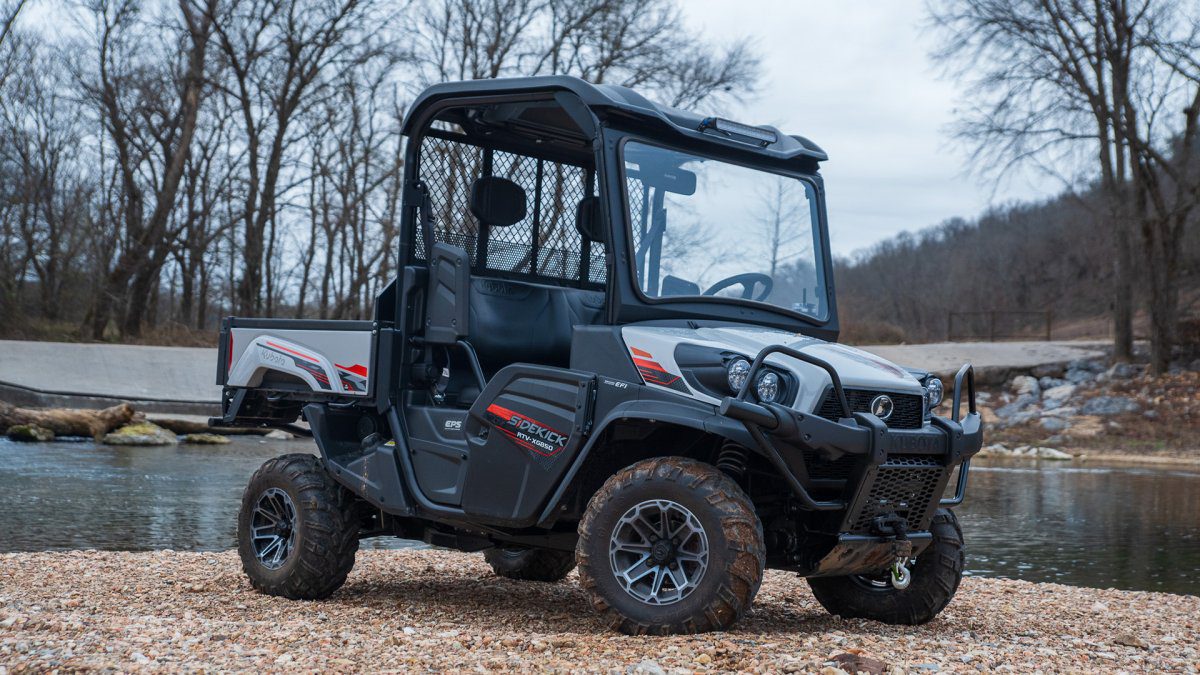
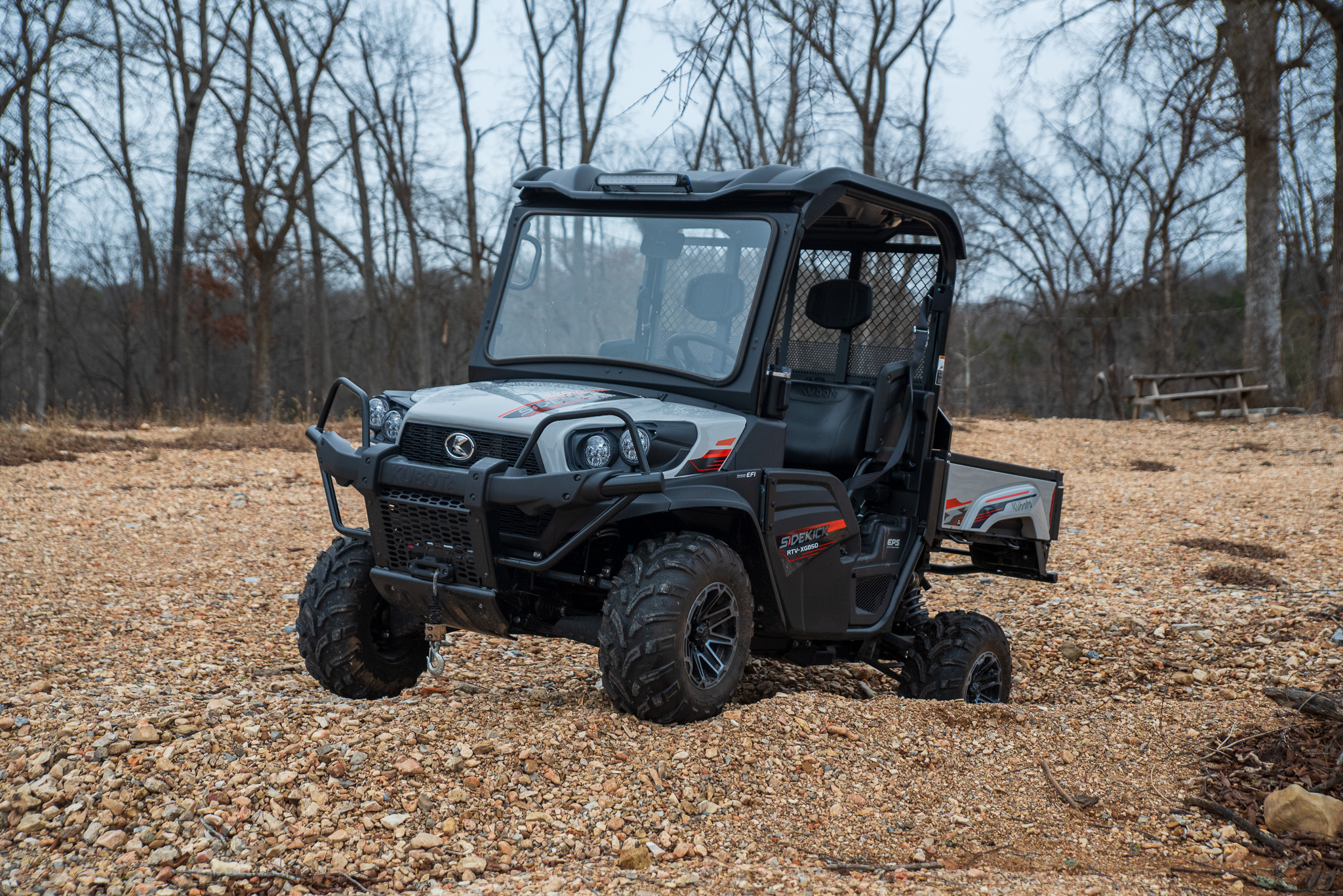
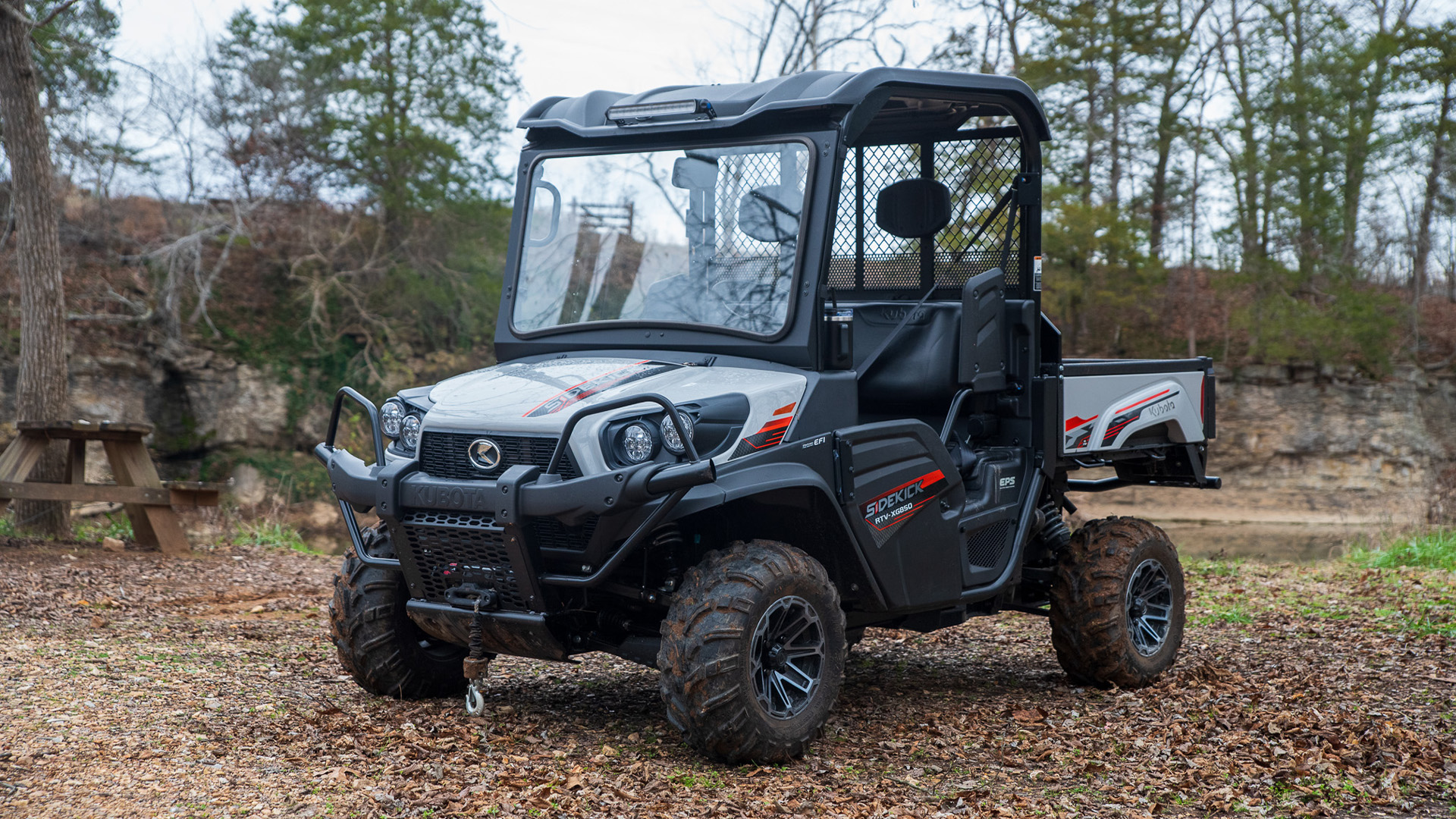
In addition to tractors, mowers, mini excavators, and skid steers, Kubota sells a handful of UTVs. The RTV520 is the smallest, while the diesel RTV-X models are the mightiest workhorses. The full-size Sidekick 850 gas model I tested is somewhere right in the middle.
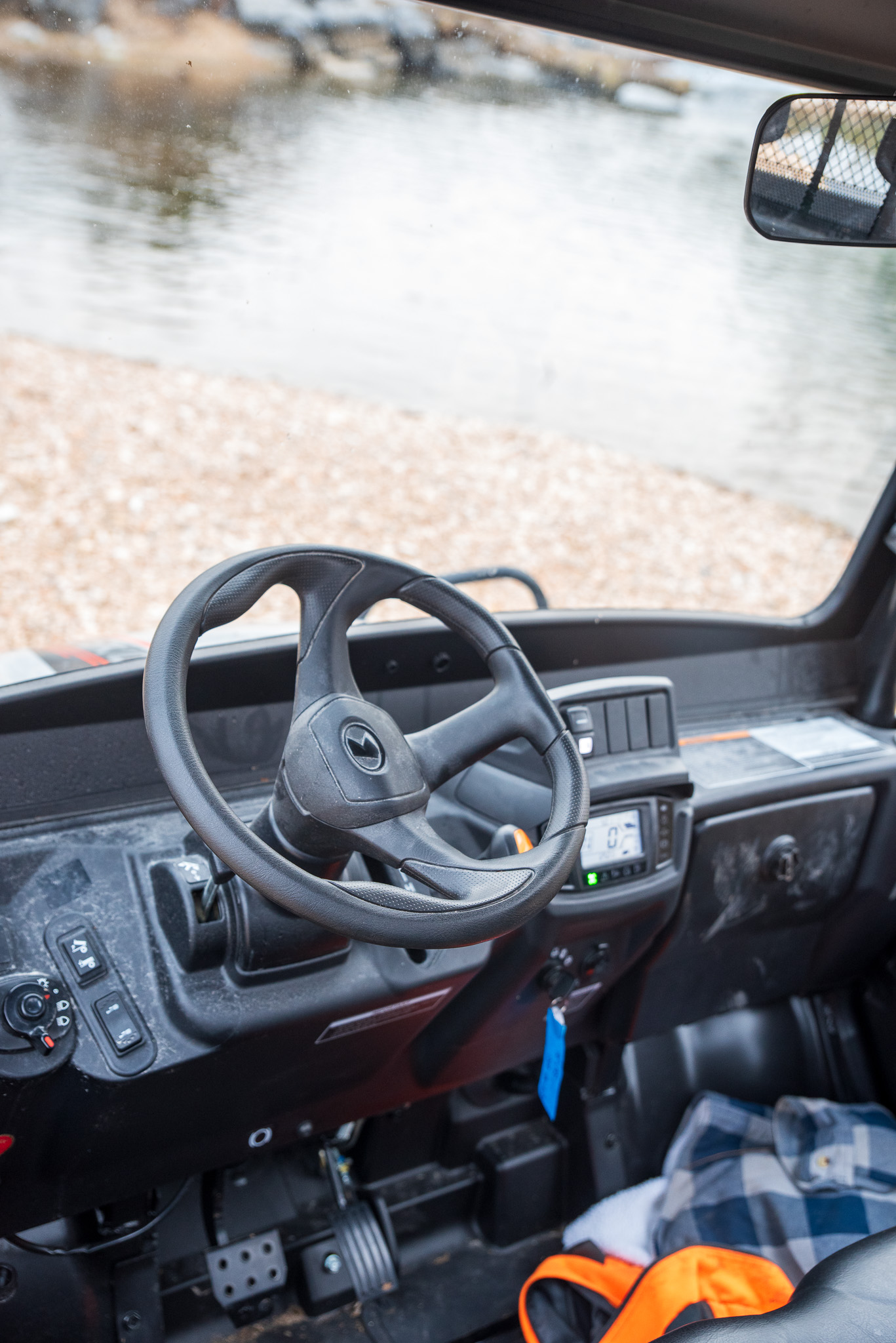
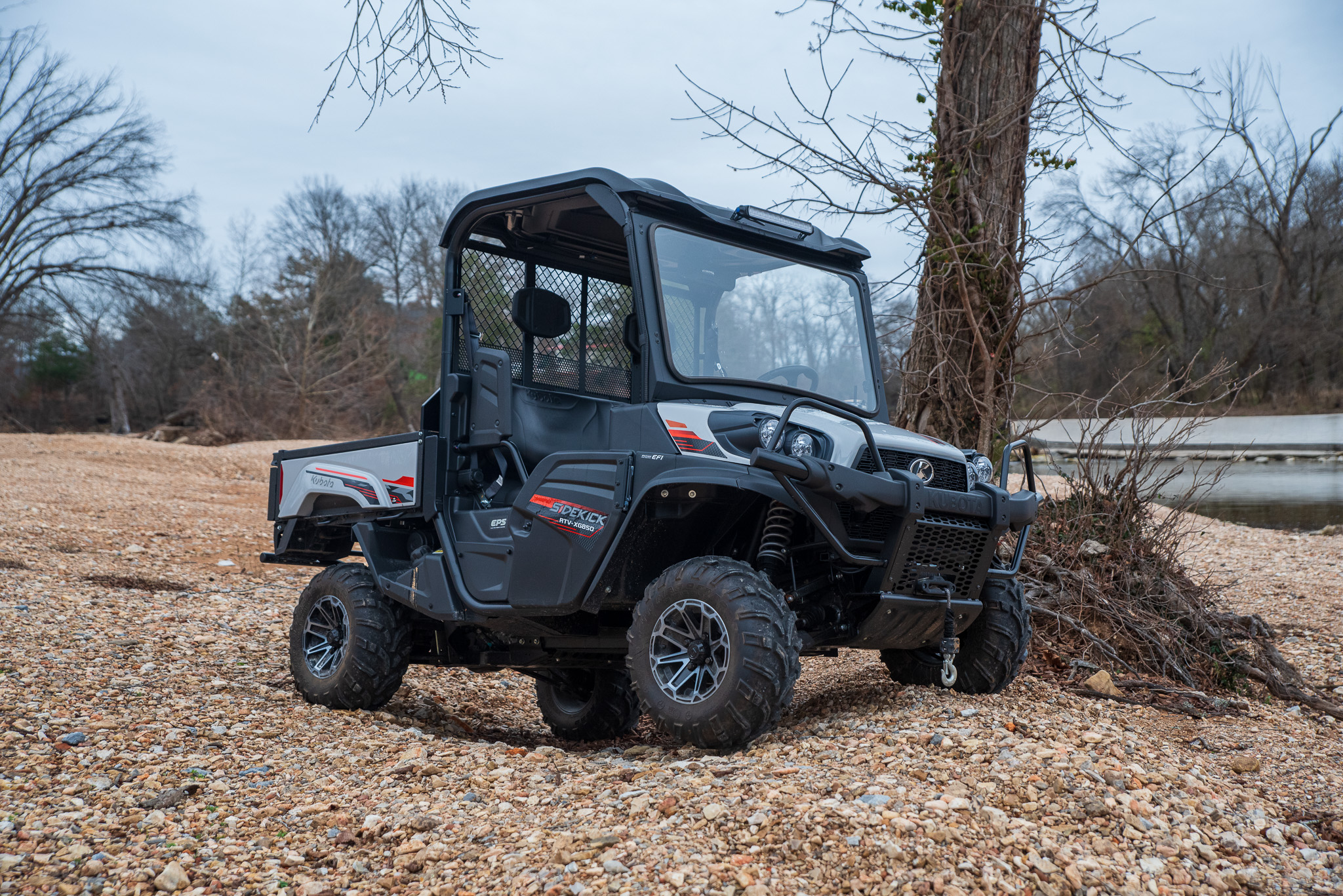
Whereas manufacturers like Can-Am and Polaris style their side-by-sides more aggressively, Kubota follows the mantra of Keep It Simple Stupid. Everything you see here serves a purpose, and it isn’t made to look fancy. That’s because it isn’t.
Caleb Jacobs
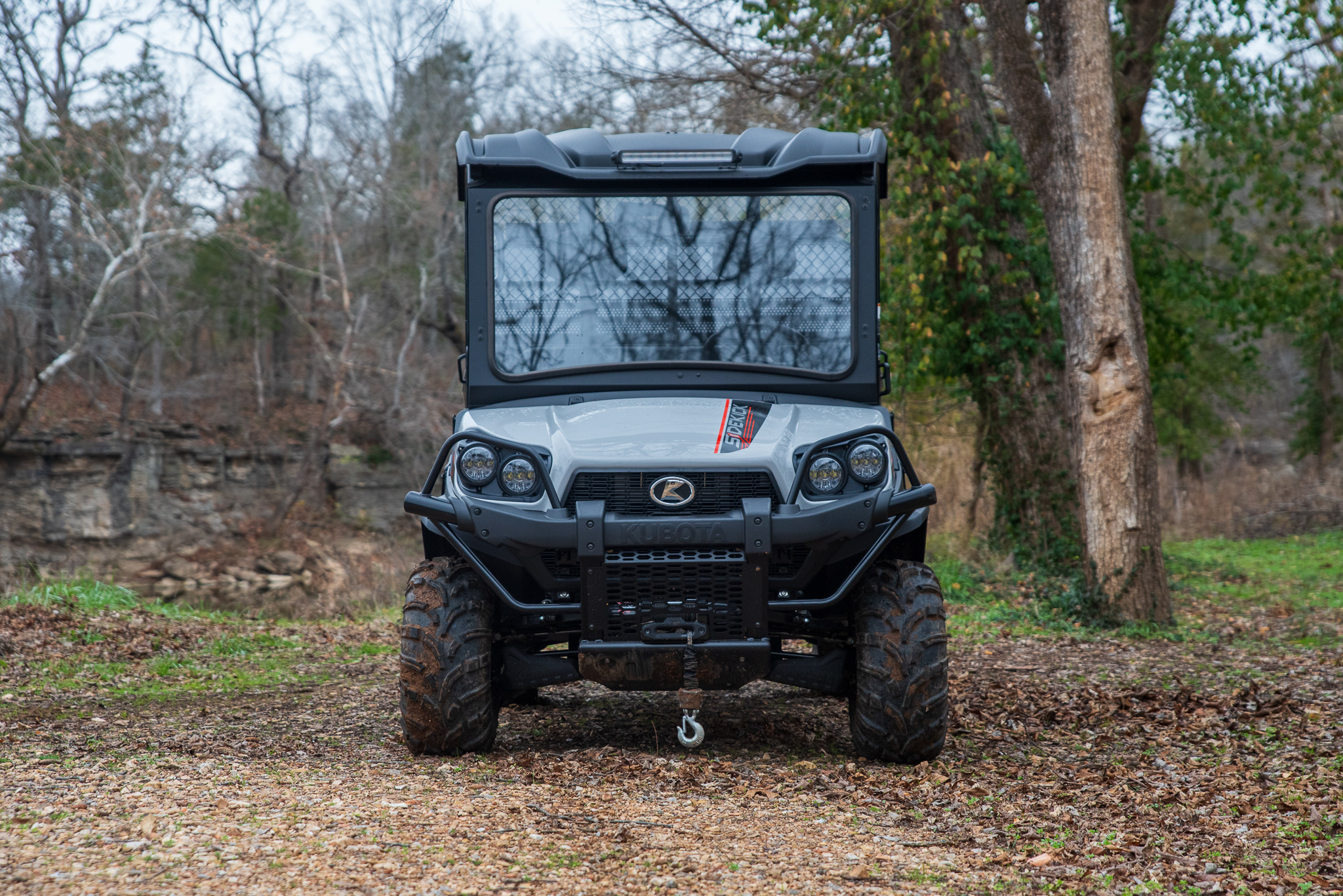
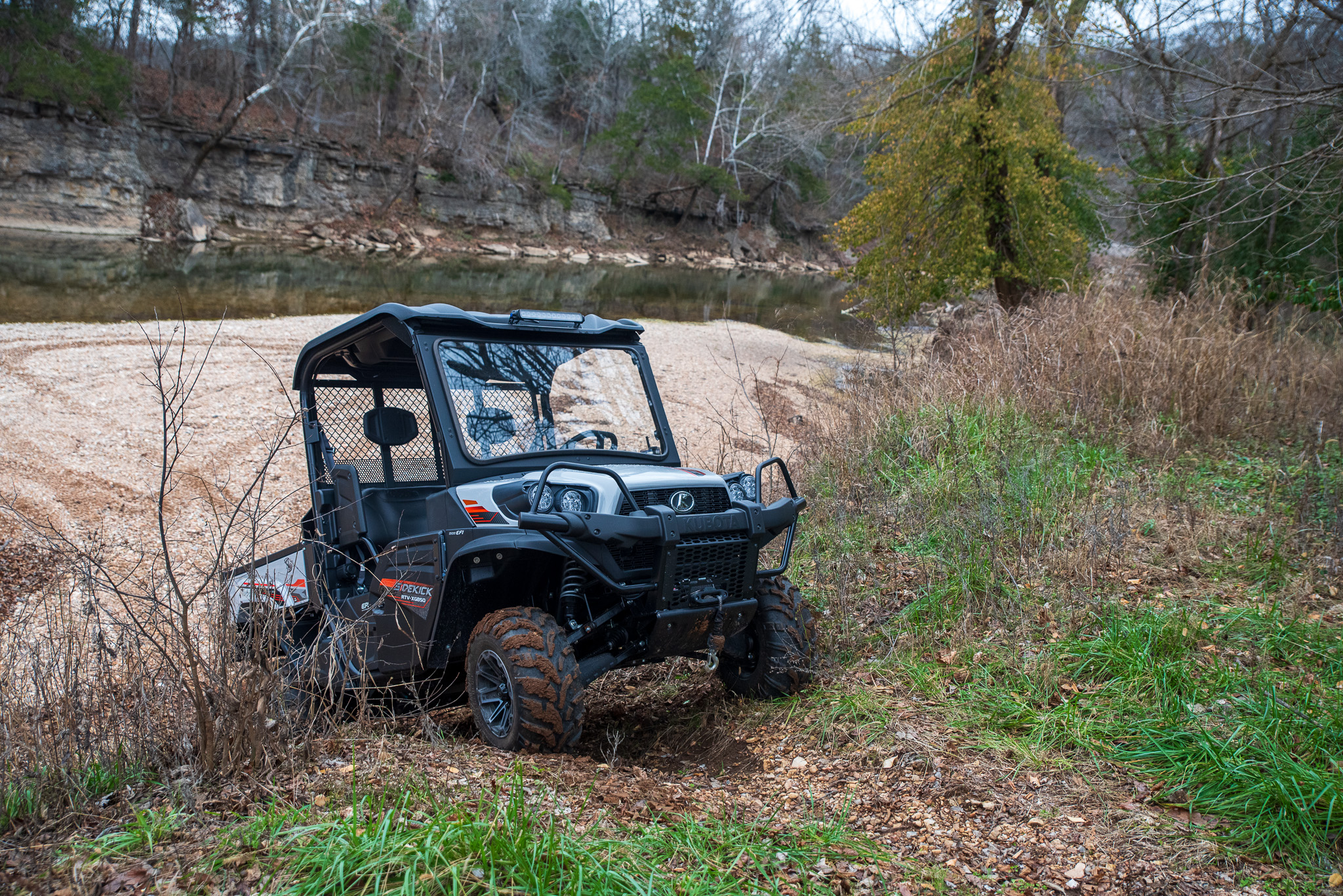
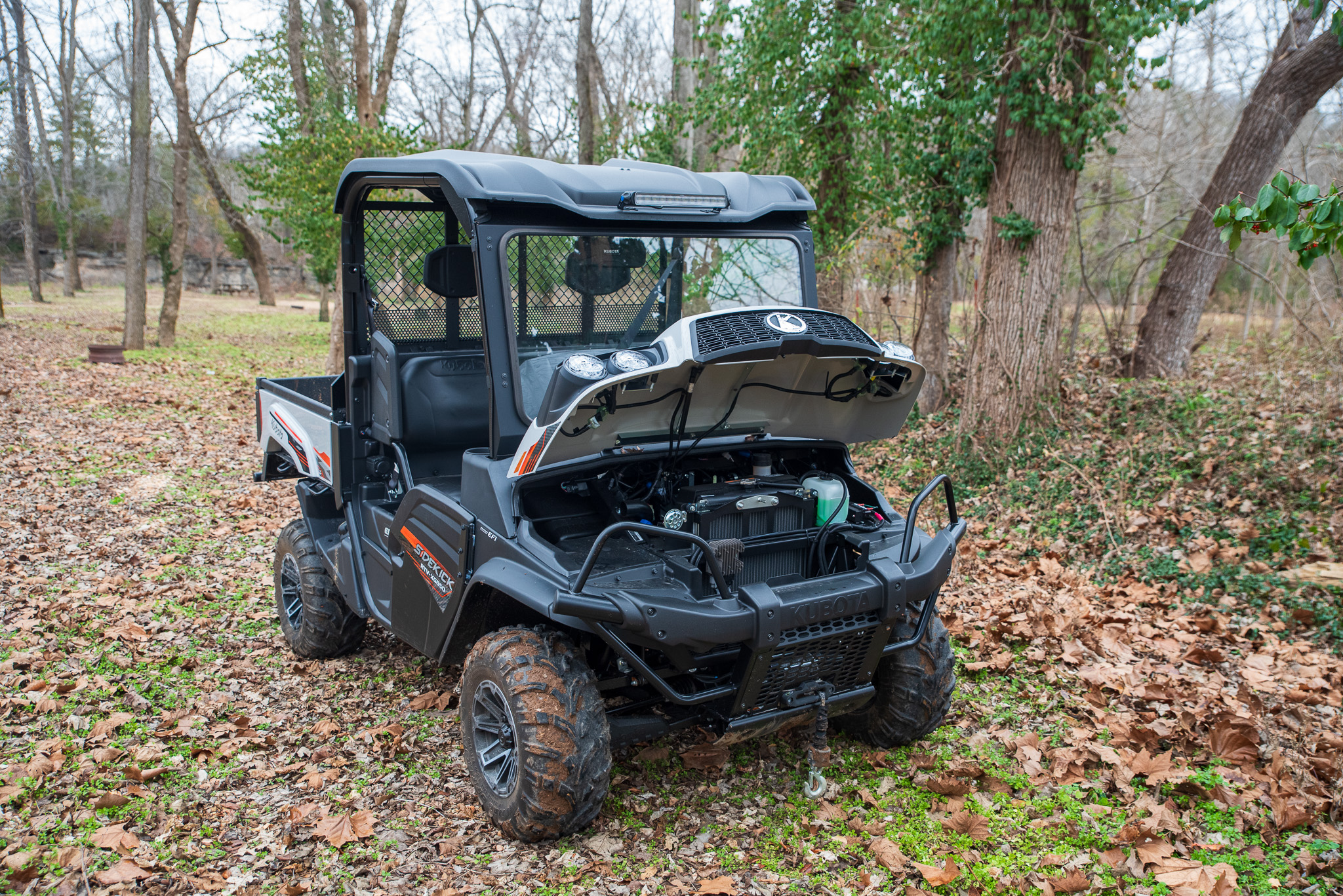
Still, there’s a laundry list of accessories you can fit to these. My tester had a steel brush guard, half-doors, and some nifty decals; others come with a full cab that features speakers in the roof. It’s up to you how many options you want to throw at it, but I’m personally a fan of K.I.S.S.
The engine is an 850cc four-stroke gasser making 54 horsepower at 5,750 rpm. Output travels through a CVT to either the rear wheels or all four, depending on the selection. The front differential is a limited-slip unit, and the rear has a foot-operated locker—just like a Kubota tractor.
Driving the Kubota Sidekick
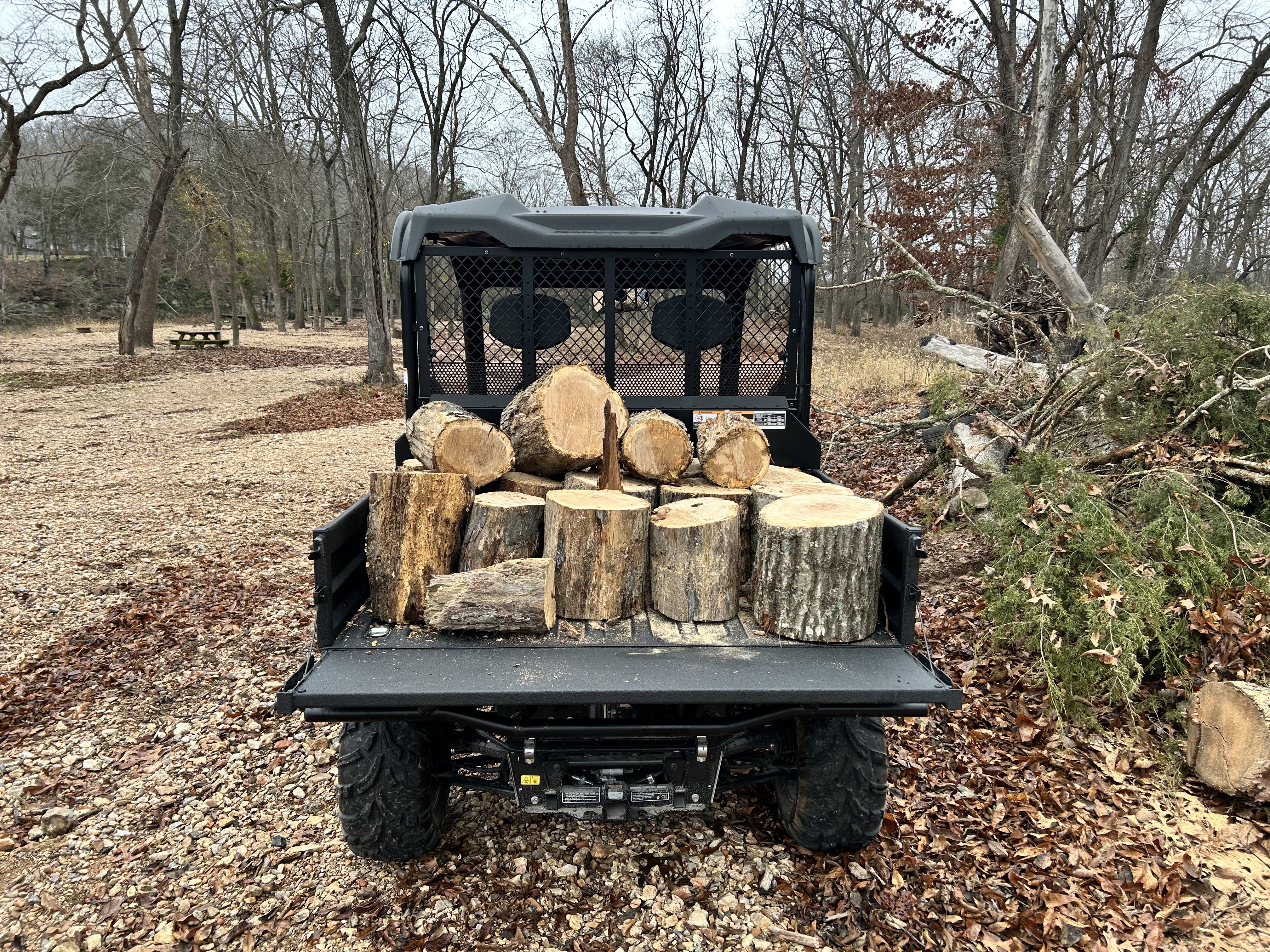
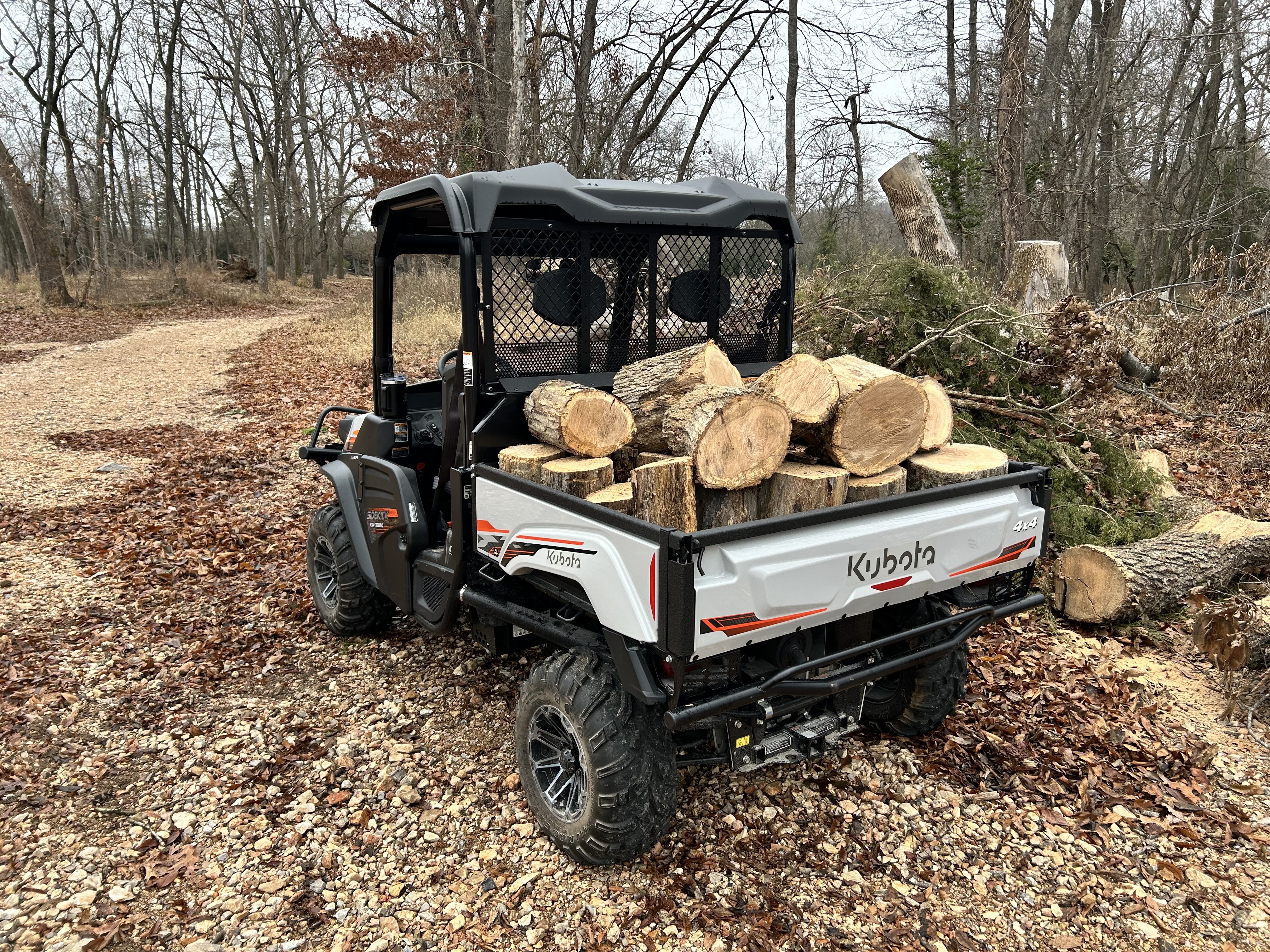
Knowing that this isn’t some high-rolling, luxury-laden machine, I approached the Sidekick with a get-it-done attitude. The bench-seat beauty’s first task was carrying firewood that I’d sawed at our family’s campground up to our house, where the log-splitter is. Not a crazy job, but a pretty typical one for anybody who might be considering one of these, I reckon.
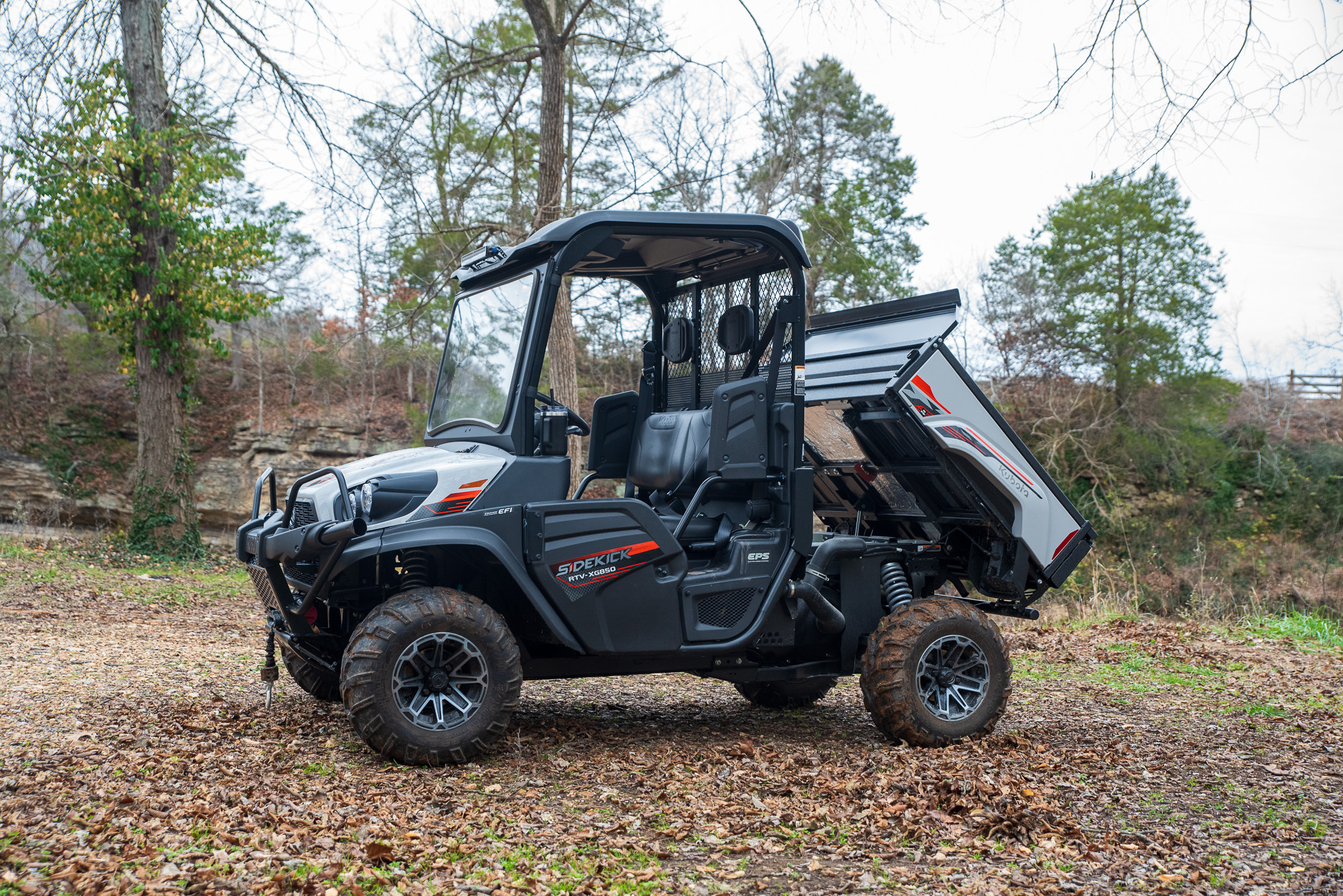
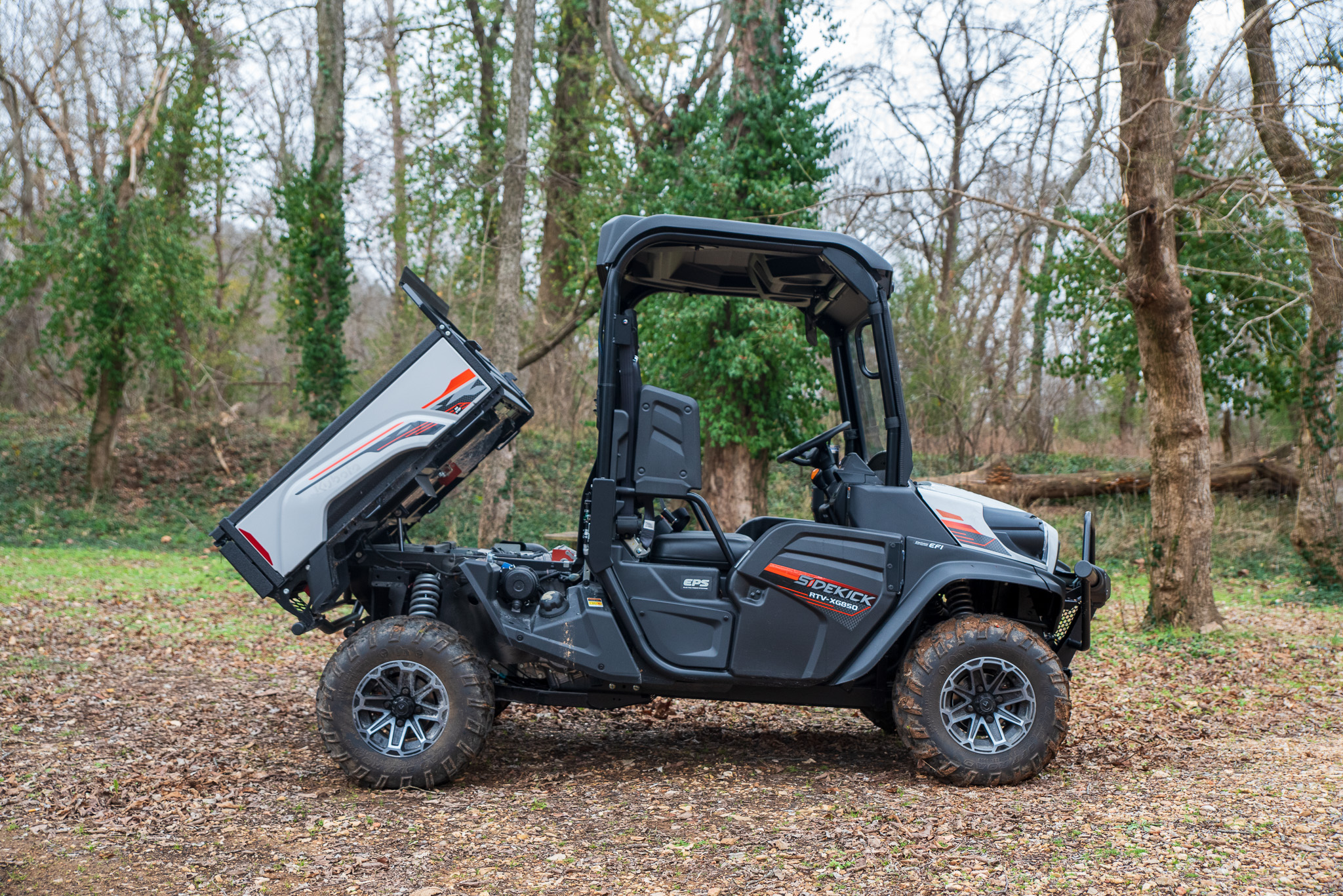
Loading the Kubota was easy because it isn’t jacked up on big tires. I’m a fairly tall guy at 6’5″, but still, the bedsides were noticeably lower than on other machines I’ve tested. That was a delight considering I had several piles of oak to work my way through. And better yet, because the bed is made of metal rather than plastic, I could huck those chunks of wood right in without worry.
Dumping the load was easy-peasy, thanks to the hydraulic bed lift. Not every Sidekick has that feature, but it’s a necessary upgrade in my eyes; there’s a good chance it might be mightier than you are with a manual dump.
Caleb Jacobs
Normally, I would have pulled a loaded canoe trailer with the UTV, but I tested it during the cold months. There wasn’t anybody to float—even though I enjoy the occasional polar plunge.
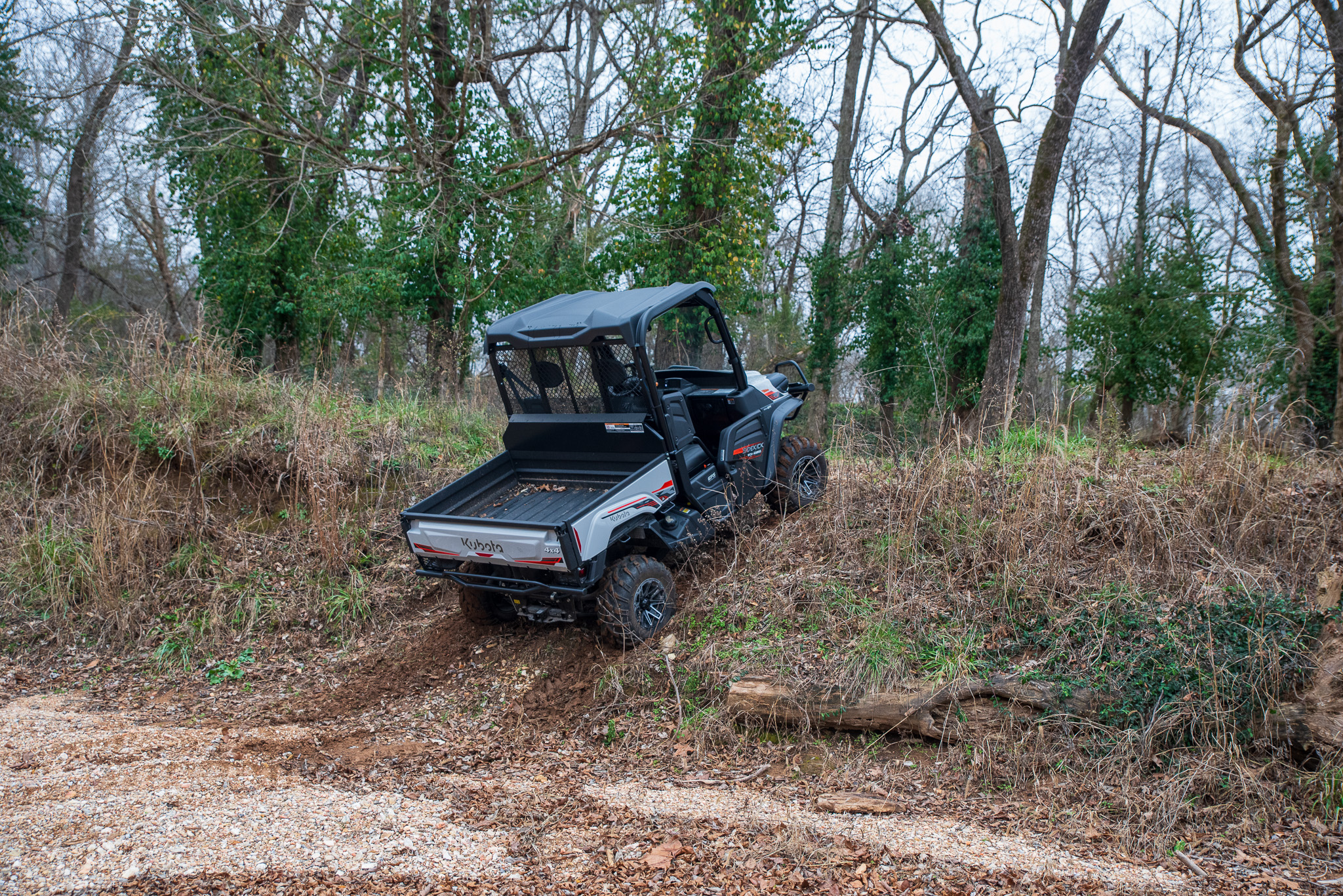
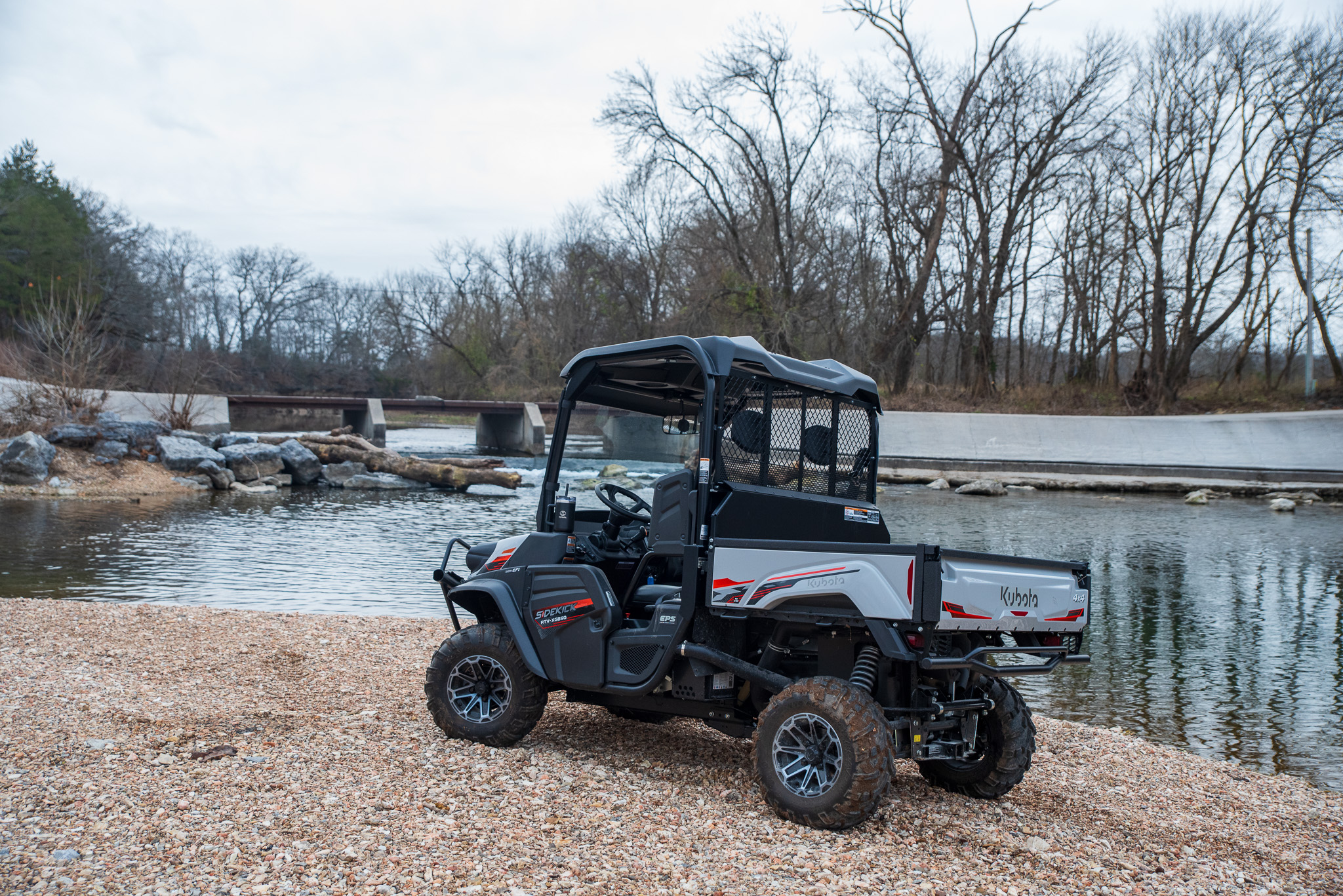
The Sidekick proved to be a nifty runabout from one end of the property to the other. I even put it in a few predicaments on purpose to see how it would handle them, and the drivetrain is super well-suited to getting you out of tough spots. The wheelbase is short at just 80.5 inches, so keep that in mind as you wheel around. You won’t have any trouble navigating tight spots, but it doesn’t have the same stability as a machine with a larger footprint.
I was delighted to see how well it got around our place, which is basically all creek gravel, both packed and loose. The transmission features a dedicated low range—great for working and four-wheeling—so it makes the most of its 54 hp. There was one obstacle that it failed to conquer, a long-dead tree that’s too big for us to move. The approach angle was a problem as the bumper hit the log before the tires could.
Caleb Jacobs
Overall, I wasn’t pushing the Kubota to the absolute max. I just used it as a normal owner would. In that sense, it did nearly everything I asked. Heck, the winch even lifted it up in a tree! (OK, maybe that’s not the most practical test, but I had to try it.)
The Highs and Lows
In an industry that’s defined more and more by excess, the Kubota Sidekick does what it says on the tin. It’s simple without being sparse on doo-dads that help you get work done. By using it, you’re increasing productivity without spending the equivalent of four years’ college tuition. And it actually feels solid!
If I had to dog one thing, it’d be the low-power number relative to other UTVs at this price point. Really, the Kubota is a bit more expensive than a similarly equipped Polaris Ranger 1000, and that machine makes 61 hp.
Kubota Sidekick Features, Options, and Competition
I almost doubt you have the time to read all the options available for the Sidekick, as they fill up several pages in the brochure. You can get a full cab with a heater, all kinds of lights and strobes, a reverse alarm—you name it. Plows? Definitely. Cargo racks and handles of all kinds? You bet. Even a premium roof radio and speaker kit that pairs with a Bluetooth stereo.
Caleb Jacobs
Of course, other players in the space can be fitted with those, too. John Deere makes a similarly sized Gator 845M, but I didn’t much care for the four-door I tested a few years ago. Kawasaki sells an 820cc Mule, which I’ve spent time around and was impressed by, and then there’s the Polaris Ranger 1000 that I mentioned before. Of that bunch, I’d be happy with any of them except for the John Deere, so it really comes down to two factors: Preference and proximity to the dealer.
Much like you should consider when buying farm or construction equipment, dealer support is important here. I’d almost argue that you should take that into account, just as much if not more than price. When you depend on your UTV to get work done, downtime has to be minimal, and you’ll see a lot more of it if you’re hours away from the dealer—or worse, they just plain suck.
Value and Verdict
For this money, you can get a respectable machine from a handful of manufacturers. I wouldn’t blame you for picking any of them—OK, except for maybe that daggum Gator. But where the Kubota stands out is in the heft of its materials and its hardworking pedigree.
I’d feel a lot more comfortable buying a rig that’s simpler than it is sophisticated, and sturdier than it is silly with a zillion gadgets you don’t need. You aren’t saving a ton of money up front by choosing the Sidekick, though I can’t help but think it’ll be more durable and resilient in the long run. Plus, it works just fine without all the extras.
Caleb Jacobs
Kubota loaned this vehicle to The Drive for a month for the purpose of this review.
Alpitronic’s new megawatt chargers are sleek and efficient.
They’re currently being tested at the company’s North Carolina headquarters.
Megwatt chargers are way faster than existing stations, with some charging batteries from 10-80% in 7 minutes or less.
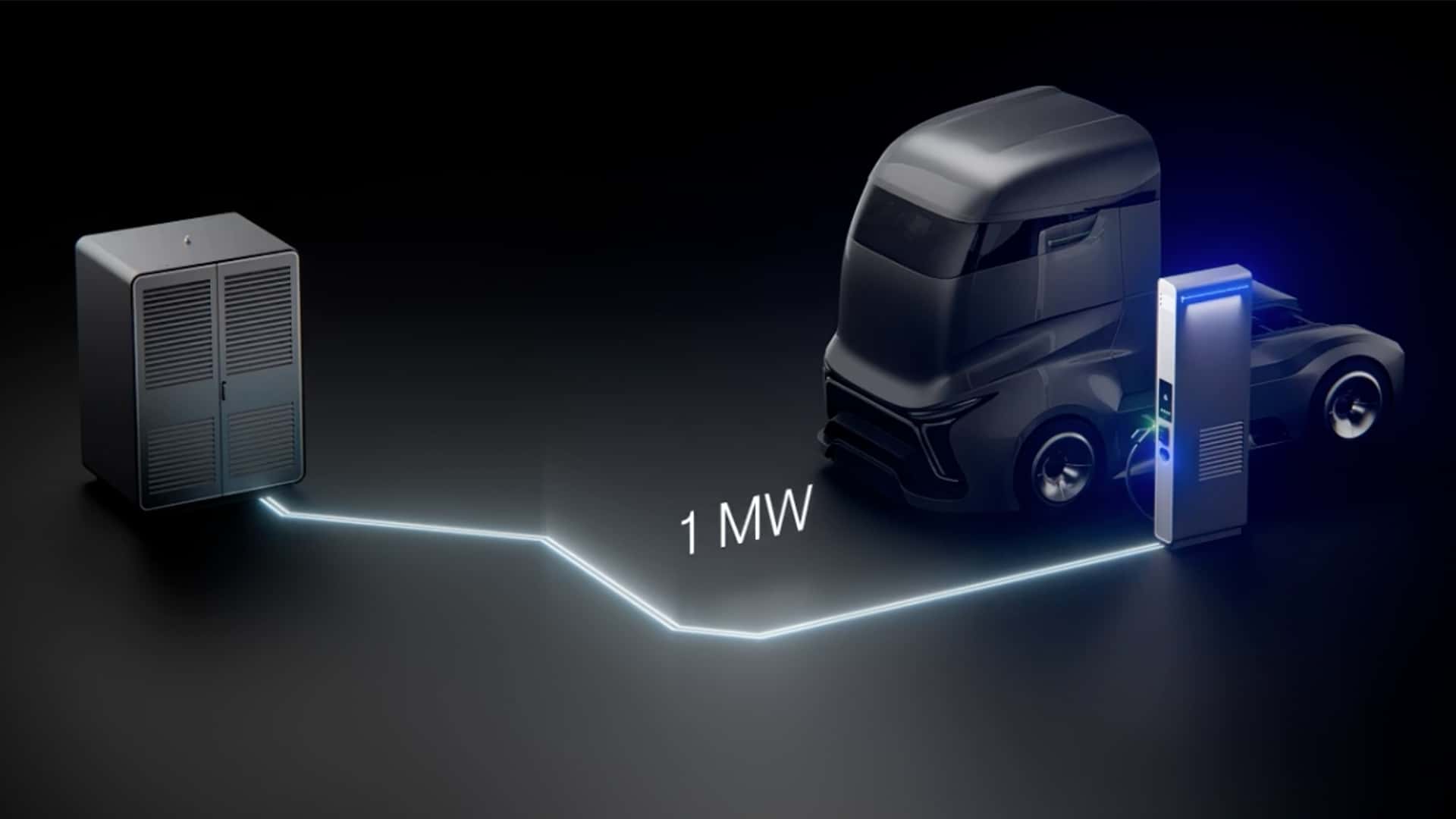
Italian charging hardware provider Alpitronic is testing its new HYC1000 megawatt chargers at its North American headquarters in Charlotte, North Carolina, the company confirmed today. The chargers can deliver up to 1,000 kilowatts of power to a single port for semi trucks, and up to 600 kW for passenger EVs. That’s way beyond what the fastest-charging EVs in the U.S. can currently accept.
Still, the technology could usher in a new era of ultra-fast charging in North America and encourage automakers to roll out newer EVs capable of charging at higher rates. Charging is one of the bottlenecks in mass adoption of EVs, but such high power systems can make it as seamless as refueling a gas car.
In a recent video from the Out Of Spec Reviews YouTube channel, Alpitronic Americas President Mike Doucleff explained how exactly the HYC1000 chargers work, what’s different from other large charging networks, and how EV drivers will benefit from the tech.
For starters, Alpitronic is one of the fastest-growing charging hardware providers in the U.S. In just a couple of years, it has inked deals with several leading charging networks like Ionna, Walmart, Mercedes-Benz High Power Charging, Electrify America, and BP Pulse. Those networks have already deployed hundreds of Alpitronic HYC400 chargers nationwide and continue to do so at a rapid clip.
The newer HYC1000 charger takes things further. The megawatt dispensers are slim and tall rectangular units, with each capable of holding two cables. They support the Tesla-style NACS cables, CCS cables and the Megawatt Charging Standard (MCS) cable for heavy duty trucks; they can be configured with either of these combinations depending on the network provider’s needs. They also have swinging arms at the top that carry the cable weight, a vehicle-facing touchscreen to display charging details, and a card reader.
Each tower has two plugs, both of which can simultaneously deliver up to 600 amps and a 1,000 volts, which translates to 600 kW of power. The fastest chargers in the U.S., like the Tesla V4 Superchargers and the Gravity Charging Center in New York City, top out at 500 kW. No EVs in the U.S. can accept that sort of power at the moment. The Porsche Cayenne Electric, BMW iX3, and Lucid Gravity all top out at about 400 kW.
Photo by: Alpitronic
The modularity of these chargers is also impressive, at least on paper. The chargers can be configured to deliver 1,500 amps and 1,000 volts with the MCS standard. So one location could have semi trucks and passenger EVs charging at the same time, depending on how the site is designed and the combination of available plugs. The company also worked with Mercedes-AMG to develop a special version of the HYC1000 capable of delivering 1,000 kW to a passenger EV. The Concept AMG GT XX peaked at 1,041 kilowatts during a test run in Italy last year.
Furthermore, the dispensers’ distributed power delivery is fascinating. The main cabinet consists of eight 125 kW silicon carbide power modules, capable of powering eight individual charging towers. Each of these 125 kW modules in the cabinet is further subdivided into 62.5 kW units for a more precise distribution of power depending on the demand at each stall.
Photo by: Alpitronic
For example, if a Chevy Equinox EV that peaks at 150 kW and a Hyundai Ioniq 5, which can charge at up to 350 kW, are parked adjacent, the charger can deliver those speeds precisely. It can match that demand without wasting a single tower’s maximum capability on a car that can’t use it. Moreover, EVs usually need their full charging power at a low state of charge, which then tapers off to slower speeds as charging progresses, which makes such smart power management even more beneficial.
To be fair, Alpitronic isn’t the only one doing this dynamic load balancing. Tesla, ChargePoint, and Electrify America have all adopted similar approaches.
That said, megawatt charging is already getting democratized in China on mass market models from BYD and Geely. Plus, Alpitronic isn’t the only company rolling out megawatt chargers in the U.S. Tesla has started rolling out its Megachargers for the Semi, and Kempower is planning to do the same for electric semi trucks.
However, it’s starting to look like this tech could also someday trickle down to passengers EVs in the U.S., which would be a big win for EV adoption.
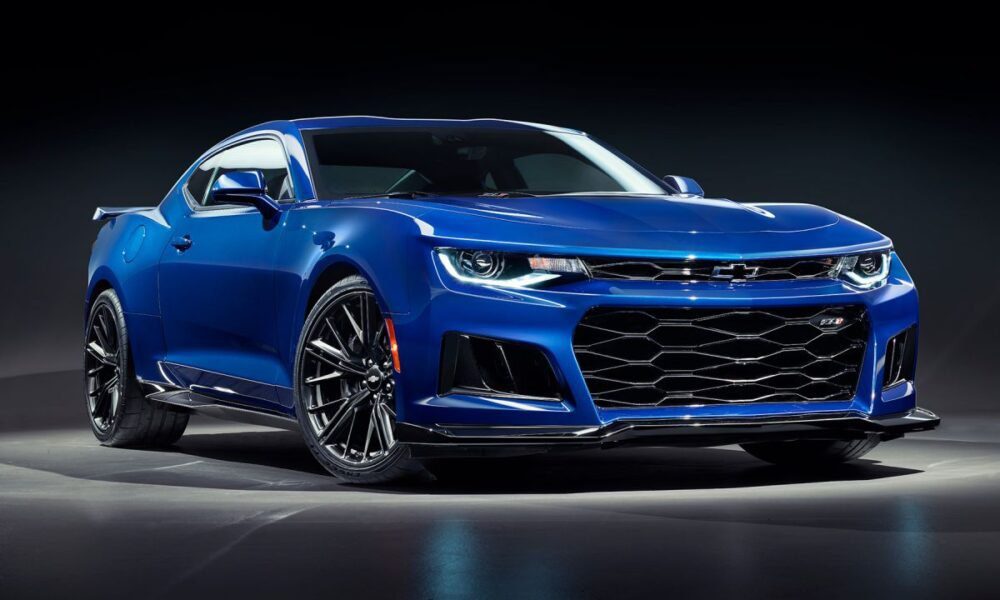
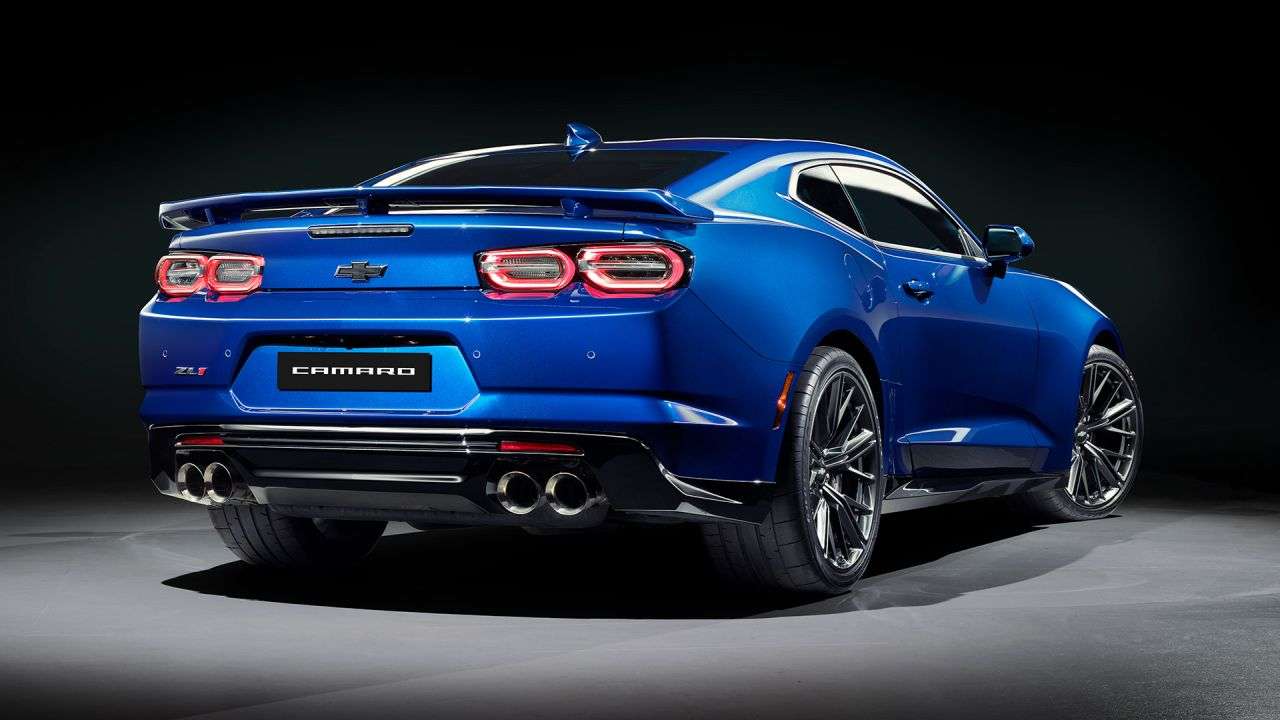
General Motors is reportedly working on the next-generation Camaro. It is likely to be based on the same platform as the upcoming Cadillac CT5.
Citing a source from a major GM supplier, Automotive News reports that the production of the new Camaro and CT5 will commence in fall 2027. The same platform will also underpin a new Buick sedan.
The Chevrolet Camaro was phased out in 2023. The upcoming model will be the 7th generation of the popular American muscle car – a direct rival of the Ford Mustang.
The report states that GM plans to produce around 60,000-70,000 units of the CT5 and Camaro.
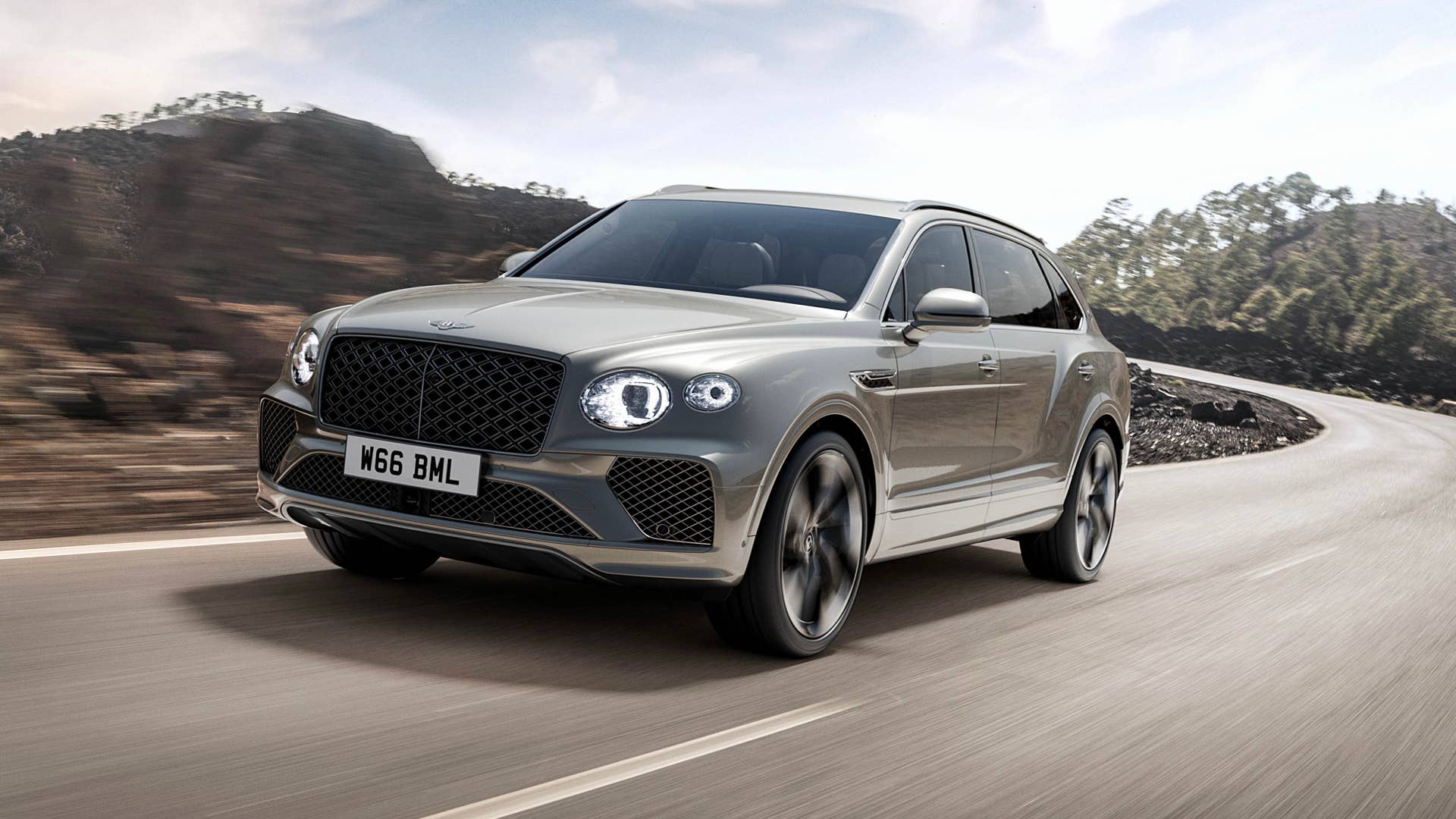
Bentley is exploring a limited-run off-road model while preparing its first electric vehicle and a next-generation Bentayga — a combination that reflects how significantly the British luxury brand’s thinking has shifted in recent years.
Speaking with Autoblog at the 2026 New York Auto Show, Bentley Americas CEO Mike Rocco outlined a strategy that looks quite different from the one the company was pursuing just a few years ago. “We’re not on the same track that was announced four or five years ago, where we were going to be fully electrified by 2030,” Rocco said. What’s replaced it is something more nuanced: a lineup built around electrification, high-performance variants, and limited-production special models, with Bentley maintaining flexibility across all three rather than committing entirely to any one direction.
Bentley
Bentley Could Build A Limited-Run Off-Road Model
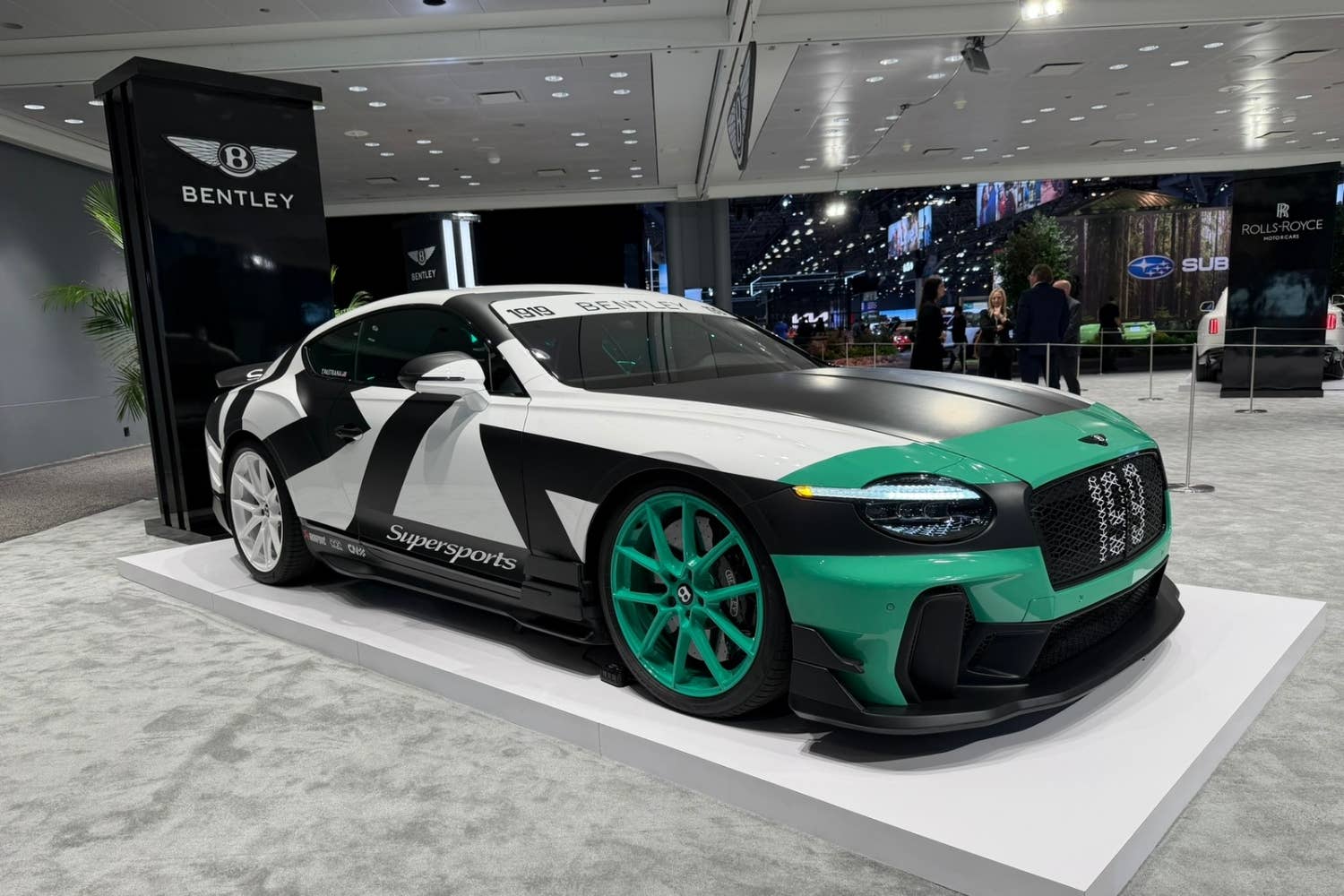
As we reported in January, Bentley debuted the Bentayga X Concept at the FAT Ice Race in Zell am See, Austria — a heavily modified Bentayga Speed built to gauge interest in a more capable off-road variant. Based on the Bentayga Speed’s twin-turbo 4.0-liter V8 producing 641 horsepower, the concept rides 2.1 inches higher and sits 4.7 inches wider than the standard car, with forged 22-inch wheels, all-terrain tires, and around 12.2 inches of ground clearance. A roof rack, auxiliary lighting, and twin tow eyes completed the picture of something built to actually go places.
Related: W12 is Dead, Long Live the V8: The New Bentayga Speed is Bentley’s Fastest SUV Yet
The response has been strong enough to keep the idea moving forward. Rocco made clear that dealer feedback had been unambiguous. “There’s a lot of interest in it,” he said, though he stopped short of confirming production. What’s also clear is that if a production version does happen, it won’t follow the same path as the Bentayga. Rather than a full model-line addition, Bentley is thinking small in volume and exclusive in character. “If we did it, it would probably be in the same vein as a Supersports with a limited run of production,” Rocco explained. “It wouldn’t be a full model — we would limit it.”
The implication is a collector-focused halo product, designed to extend the brand’s image and demonstrate capability rather than contribute meaningfully to overall sales volume.
Related: Bentley’s Continental GT Supersports Is Rear-Drive Only, 657 HP, and the Lightest Bentley in 85 Years
Bentley’s First EV Arrives In 2027 — And It’s Staying Electric
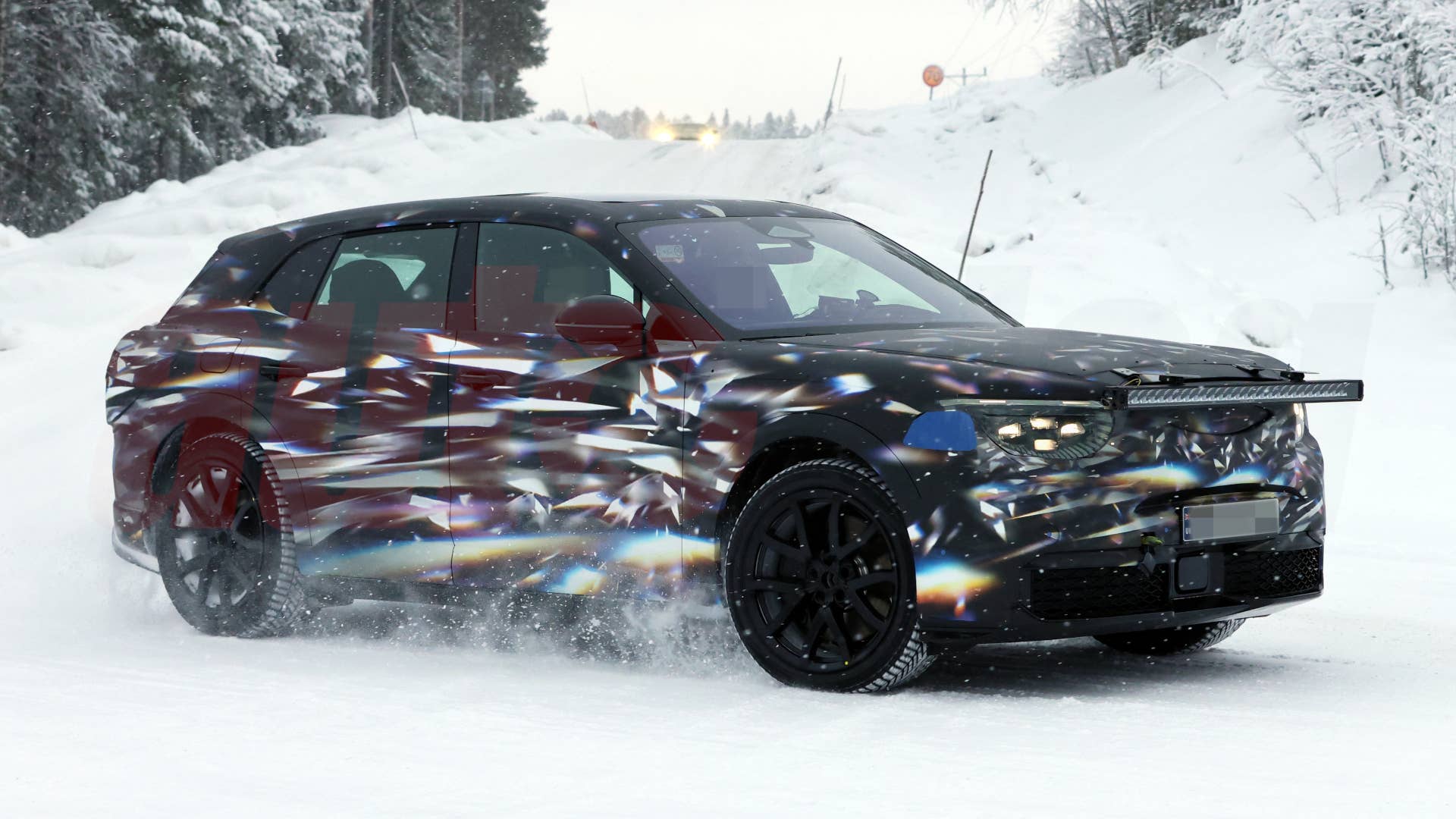
Bentley’s first electric vehicle is on a firm timeline, with a reveal planned for the second half of this year and sales beginning in 2027. The model — a smaller SUV positioned below the Bentayga and described internally as the Luxury Urban SUV — will ride on Volkswagen Group’s PPE platform, the same architecture that underpins the Porsche Macan Electric and Audi Q6 e-tron. Prototypes are currently in testing.
SH Proshots/Autoblog
Bentley has made clear that the model will not spawn a combustion or plug-in hybrid variant — a contrast to some rivals that have pivoted back toward hybrid solutions in response to softening EV demand. For Bentley, the reasoning is partly strategic and partly technical, with the platform itself not designed to accommodate combustion power. The car is also positioned not as a replacement for existing models, but as an addition to the lineup aimed at attracting new customers. This will be a new Bentley that happens to be electric, aimed at buyers the brand doesn’t currently reach. Rocco echoed that in New York: “We’re not positioning it as an EV product — it’s the next Bentley.”
The car will also introduce Bentley’s next-generation design language, shaping the look of the brand going forward. On performance, the SUV is expected to deliver rapid charging capability and a balance of comfort and agility in line with Bentley’s existing models.
Bentley
Next-Generation Bentayga Later This Decade
While attention is focused on the new EV, Bentley is also developing the next-generation Bentayga, though timing remains fluid. Rocco suggested it could come in around two years from now. Unlike the Luxury Urban SUV, the next Bentayga is expected to offer plug-in hybrid and internal combustion powertrains, keeping it accessible to buyers who aren’t yet ready for a full switch to electric.
Bentley is not expected to introduce a second EV before the end of the decade, meaning the new SUV will carry the brand’s electric ambitions alone for several years. In the meantime, the company is also considering exclusive limited-run combustion-only models in response to continued demand for gas-powered cars — a signal that Bentley intends to serve that part of its audience rather than phase it out.
Related: Bentley Marks 10 Years of the Bentayga With a New Special Edition
Performance Remains Central To What Bentley Is
Running through all of this is a consistent emphasis on performance, which Bentley views as one of the clearest points of differentiation within the luxury segment. “We’re the only luxury brand that can say we can do all of that — luxury, craftsmanship, bespoke, and performance,” Rocco said. Recent models like the Supersports and Speed variants have reinforced that position, with demand proving strong.
Adam Lynton/Autoblog
View the 2 images of this gallery on the
original article
“The demand has been exceptional — the car is sold out,” he noted. Performance-focused derivatives currently account for around 35 percent of Bentley’s business when a full derivative strategy is in place, and the brand intends to lean further into that. “We want to shine a light on performance a bit more,” Rocco said.
Related: Bentley’s One-Off Travis Pastrana Supersports Looks Wild In Person
Enthusiasts love a powerful car exhaust note, and Kelley Blue Book’s 100th Anniversary presents a great opportunity to look back at how the sounds of the industry have changed over the years. From Formula 1 cars to electric vehicles, automotive exhausts help drivers build a special connection with their rides while working hard to reduce harmful emissions. Let’s dive in.
Sound Wasn’t the Initial Focus
We’ve come a long way from the exhaust systems seen in early automobiles. While they were originally designed solely to carry toxic gases away from passengers, automotive exhausts now come in a wide range of designs, from high-flow performance applications to systems that make electric vehicles (EVs) sound like their gas-powered counterparts.
One of the first automotive exhaust systems was patented in the United States in 1897, but it wasn’t until the 1930s that mufflers became commonplace. With a growing number of cars on the road, noise became a significant problem, pushing auto engineers to develop mufflers with baffles and air chambers to dampen the sound.
The Need for Speed Drove Innovation
It didn’t take long for tuners and hot-rodders to figure out that a free-flowing exhaust could boost performance, leading to a boom in development in the 1950s. That boom continued into the 1960s and the muscle car era, as American automakers duked it out on the street and drag strip. The hulking V8 engines of the era saw improved fuel economy and power output with performance exhaust systems. However, things took a turn as emissions regulations became tighter later in the decade and into the 1970s.
Federal regulations forced automakers to rethink their exhaust system designs. The catalytic converter helped reduce carbon emissions, but early applications also made it harder to extract the big horsepower numbers buyers had become accustomed to over the previous decade. That change, combined with a push to increase safety standards and badge-engineered vehicle design, led to the “malaise era” in the U.S. auto industry, which lasted until the mid-1980s.
Exhaust technologies evolved as smaller, more fuel-efficient cars became common in the 1980s. While many automakers still struggled to deliver performance, 4-cylinder engines and the more widespread use of turbochargers made it easier to generate usable horsepower without comparable increases in emissions.
The situation improved further in the 1990s and early 2000s as computer components became smaller and less expensive, leading to onboard diagnostic systems with sensors and variable intake systems that could modify the air-fuel mixture on the go.
As someone who reached driving age in the mid-1990s, this era remains my favorite for exhaust designs, as imported cars dominated the enthusiast scene with big pipes on little cars and sounds that tuners still chase today.
Electrification Has Changed the Game
Some of the most notable changes to automotive exhausts over the last century have occurred in the last 20 years. Hybrids, plug-in hybrids (PHEVs), and electric vehicles (EVs) have slashed our reliance on gas engines. With more power coming from the electric side of the equation, many vehicles have smaller, quieter exhaust systems, with PHEVs and EVs operating in near-complete silence much of the time.
Electric motors often deliver significant horsepower and acceleration gains over gas engines, but they don’t generate the sound and level of engagement that many driving enthusiasts expect. In response, some automakers and aftermarket manufacturers have developed synthetic exhaust systems that emulate the sounds of high-performance gas vehicles.
The Dodge Charger Daytona EV uses a unique “Fratzonic” exhaust system that relies on chambers and speakers to generate sounds coordinated with the car’s acceleration and cruising speed. Borla Performance Industries has also developed an upgrade for the Ford Mustang Mach-E that uses the throttle position, wheel speed, and other metrics to simulate a sporty exhaust sound.
David Borla is the Chief Marketing Officer at Borla Performance Industries, which describes itself as “the pioneer and leader in the design and manufacture of stainless steel performance exhaust.” Regarding sound and drivers’ connection to their vehicle, Borla said, “I often say that sound is an instrument in two distinct ways, and that philosophy shapes how we approach performance acoustics. The first way it’s an instrument is like a gauge on your instrument cluster. As humans, we drive primarily with sight, touch, and sound,” he said.
“Sound even overlaps with feel, because frequency and vibration are something you experience physically. In performance driving, engine tone tells you about load, traction, shift points, and timing,” he continued. “Long before digital displays, sound was a primary performance gauge, and it still sharpens reaction time and deepens the connection between driver and machine.”
Borla said drivers also build a sense of identity based on their car’s sound. “The second way sound is an instrument is in the musical sense, and it’s also identity. Throttle input, gear selection, and load shape the note, and a driver can play the car the way they play a musical instrument. That interaction transforms transportation into an experience. The sound becomes part of the vehicle’s personality and the driver’s signature. In car culture, how a vehicle sounds is just as important as how it looks, because it communicates character and intent before you ever see the badge. When engineered correctly, sound is one part telemetry and one part swagger, and that’s what makes a vehicle feel alive.”
We may earn revenue from the products available on this page and participate in affiliate programs. Learn more ›
The biggest car news and reviews, no BS
Our free daily newsletter sends the stories that really matter directly to you, every weekday.
The snow is melting, and it’s just about time to start thinking about property projects! We’ve already chainsawed one downed tree and started prepping mowers here at our little ranch in rural New York. If you’ve been thinking about upping your outdoorsmanship game this year, Husqvarna’s spring sale is worth a look.
Husqvarna Electric Chainsaw Kit: $525
See It
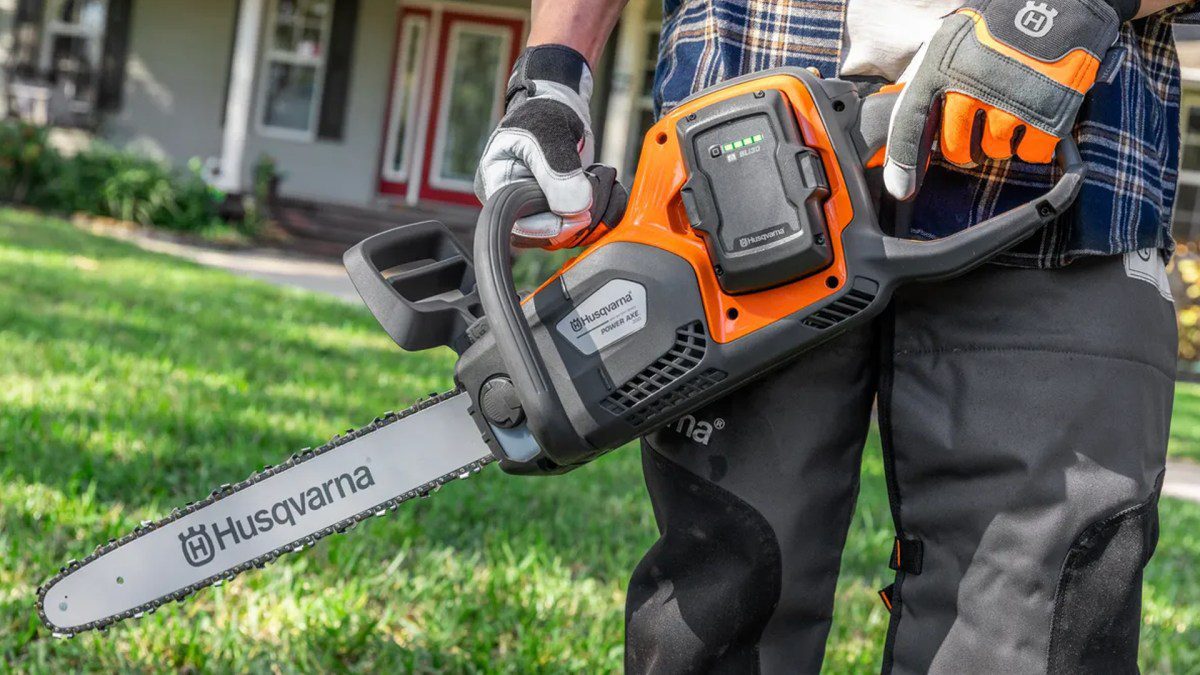
Husqvarna is a longstanding Swedish brand with a long history of selling things with small gas engines—mowers, saws, even dirt bikes and full-on motorcycles. It’s also been pivoting some of those things to electric power, building an electric tool lineup around the 36V/40V BLi-X battery ecosystem. Speaking of which, the electric Power Axe 350i Chainsaw is one of my favorite deals in this sale. Right now, you can get the saw, a battery, and a charger for just $429.99. But the real smart money is on Lowe’s full Husqvarna Chainsaw Starter Kit. For $525.33, you get the saw, battery, and charger, plus a helmet with ear protection, a backup blade, and the OEM chain oil you’re going to want to keep your saw running right.
Husqvarna also sells other property-management power tools, ride-on mowers, autonomous mowers, and more.
These spring deals will run through May 3. You’ll find the best discounts on Husqvarna Automower iQ Series (robotic mowers), the Z200F Series Residential Turn and Residential Gas Chainsaws and Trimmers.
Some more highlights:
Save up to $700 off select Automower iQ Series Models
Save up to $500 off select Residential Zero-Turns and Tractors
Save up to $70 off select Residential Handheld Tools
Head to Lowe’s or Husqvarna directly to shop all the brand’s deals. Use the table below as your cheat sheet to see where the biggest discounts are and when they’ll be live:
Nio is getting ready for a big party this week – on Thursday April 9, the company will host an event to show off its newest creation: the Nio ES9. This is a very large vehicle that Nio calls a “smart electric executive flagship.” That name might sound like a lot of marketing talk, but it basically means this is a giant, high-tech car built for people who want the best features available in electric cars. Nio shared new videos and photos to get people excited before the official reveal – and there is a lot to unpack.
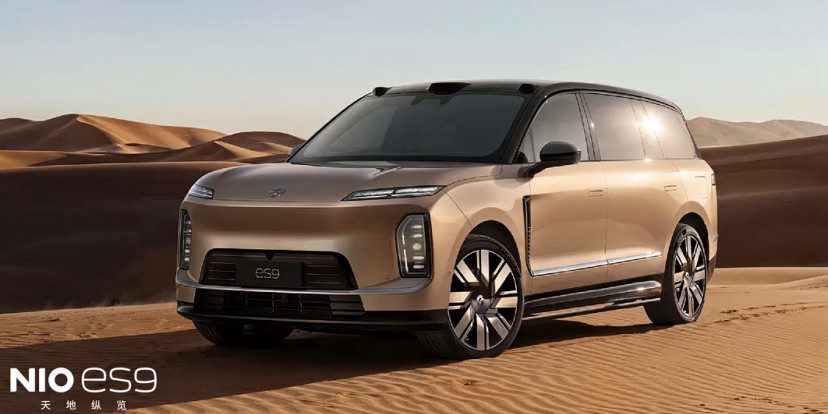
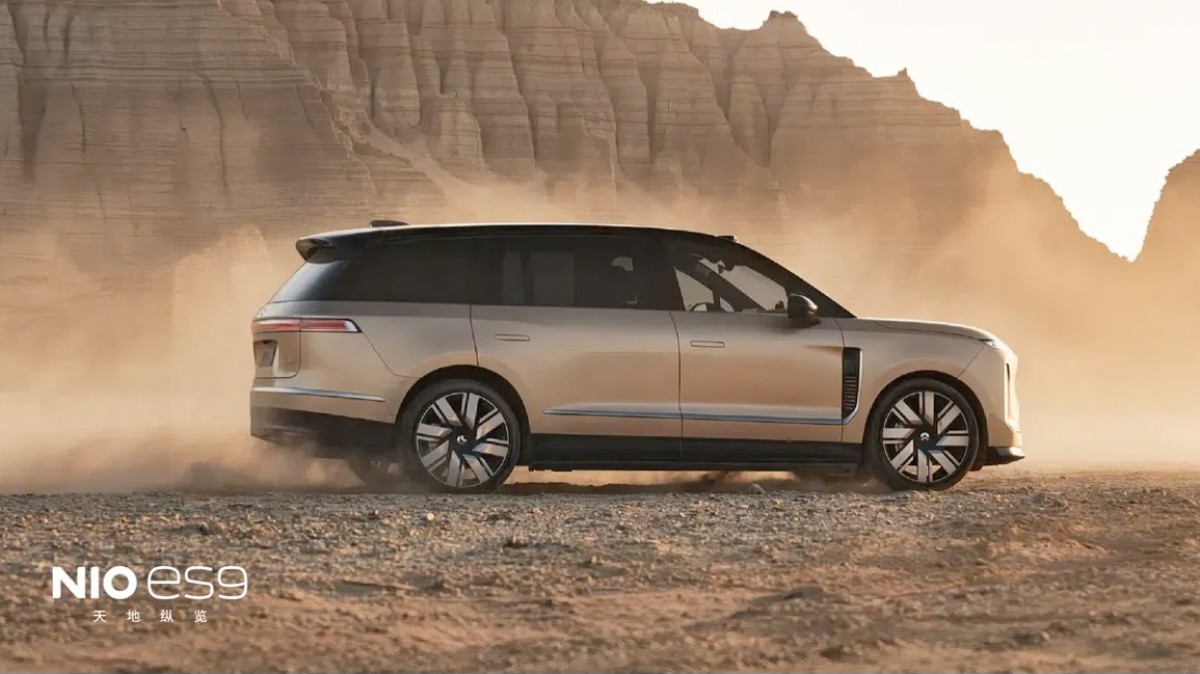
The ES9 is definitely not your average family car. It will be the biggest pure electric SUV sold in China. According to official papers, it measures 211.2 inches in length. It is also 79.9 inches wide and 73.6 inches tall. With a wheelbase of 128 inches, the ES9 is as long as two newest Smart #2 EVs parked bumper to bumper. It is even larger than Nio’s current big SUV, the ES8. If you have a small garage, you might want to bring a tape measure before you order one.
The new Nio ES9 – source: Nio/Weibo
The front of the vehicle has a bold look that Nio calls the “Shark Nose” design. It gets very thin, sharp lights called “Ultra Pure Crystal Diamond” daytime running lights. These are helping the driver see at night, and they have a neat trick – they can actually project videos onto a wall about 10 meters in front of the car. If you ever feel like watching a movie on your neighbor’s fence while you are parked, this car can do it. These smart headlights can also cover six lanes of traffic to help you see pedestrians or obstacles more easily.
Some people worry that big EVs are hard to drive on narrow streets, but Nio claims it has solved this problem. The company released a video showing the ES9 driving through tight roads – it apparently turns as easily as a much smaller car. The car’s safety was tested by popping a tire at 93 mph and the SUV stayed steady even after the tire blew out.
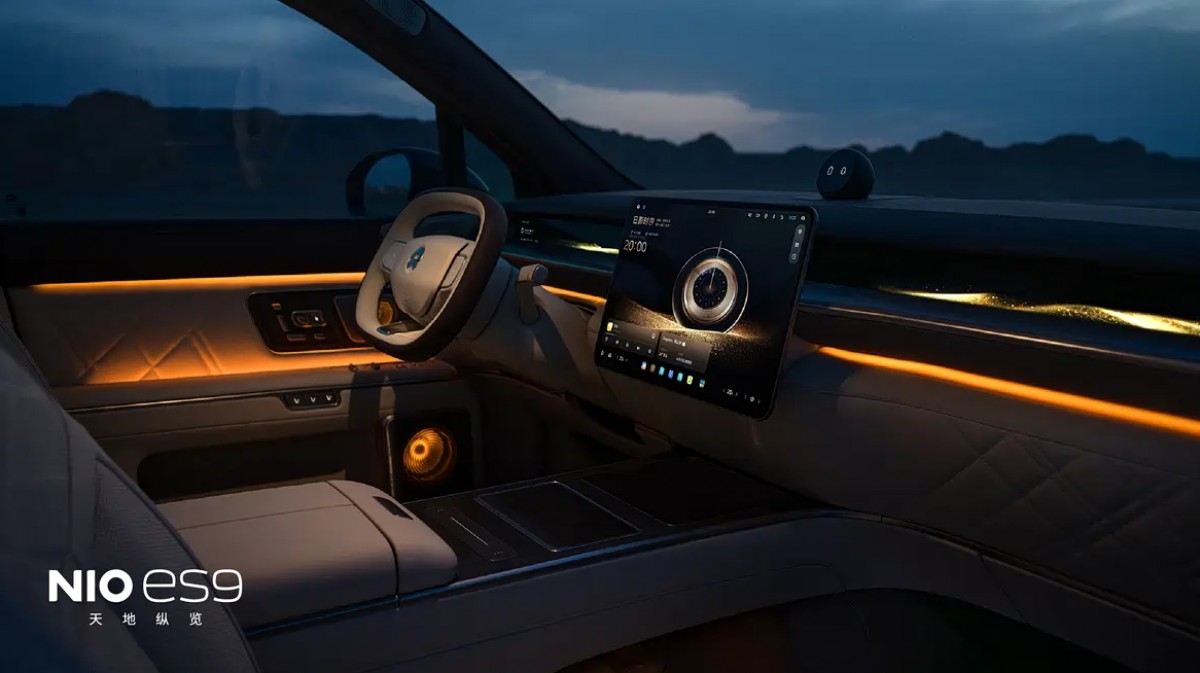
Interior of the new Nio ES9 – source: Nio/Weibo
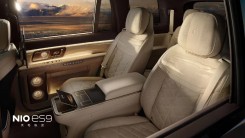
Inside the cabin, the ES9 looks more like a luxury lounge than a car. It has a six-seat layout with two seats in each of the three rows. The middle row has “zero-gravity” seats which can lean back very far to make you feel like you are floating. The seats also come with heaters, cooling fans, and massage tools. The windows use electrochromic glass, allowing you to turn them from clear to dark with the push of a button.
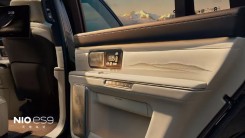
There are screens everywhere in this SUV. The driver gets a huge 15.6-inch screen in the middle of the dashboard. There is also a long display that stretches across the front for the passenger to use. People sitting in the back have two 14.5-inch screens to watch shows or play games. There is even a small 8-inch screen in the center of the back seats. To keep your snacks cold, Nio included a small refrigerator. The company used a lot of real wood and soft Nappa leather to make the interior feel upmarket.
Interior of the new Nio ES9 – source: Nio/Weibo
This car has plenty of power – it uses two electric motors to move its heavy body. The front motor provides 180 kW (241 hp), and the rear motor adds another 340 kW (456 hp). All that power comes from a 102 kWh battery pack. Depending on which version you buy, the car can travel between 360 miles and 385 miles on a full charge. It also uses a 900V system, so the battery should charge very quickly – we will have more details on that this Thursday.
The ES9 is also very smart. It uses two Shenji NX 9031 chips designed by Nio. To see the world around it, the SUV has a LiDAR sensor on the roof and more sensors on the sides. It also uses radar and cameras to watch for other cars. This is the same high-tech hardware found in Nio’s most expensive sedan, the ET9.
We do not know exactly how much the ES9 will cost yet. Nio says they will announce the pre-sale prices during the event on Thursday at 7 pm Beijing time. We can guess it will be expensive, though. Nio’s current top-of-the-line sedan starts at RMB 768,000, which is about £81,400. After the big reveal this week, the ES9 will go to the Beijing Auto Show on April 24, with deliveries expected to start on June 1.