Author: admin

  • HiLux to remain diesel, BEV as an alternative: Toyota

    HiLux to remain diesel, BEV as an alternative: Toyota

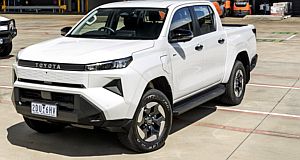
    ALTHOUGH Toyota Australia revealed details of its first battery electric light commercial vehicle with the debut of the HiLux BEV in Melbourne last week, it has confirmed that hybrid and plug-in hybrid power are not on the agenda for its flagship utility, opting instead to jump from diesel directly to full electrification. 


    The HiLux BEV arrives to complement diesel and mild-hybrid diesel offerings within the ninth-generation HiLux range, a move that appears to defy current market trends as a growing number of competitors push various flavours of hybrid, plug-in hybrid and range extender utes. 


    Speaking with GoAuto at the HiLux BEV debut, Toyota Australia vice president of sales, marketing and franchise operations John Pappas said the approach to new energy drivetrains in the light commercial range is aimed at a specific audience while also helping to reduce the emissions average of its local portfolio. 


    “I’ve got nothing else to announce today on any other powertrains for HiLux moving forward,” he said, having reiterated that Toyota’s “multi-pathway approach to the reduction of CO2 emissions applies throughout our line-up”. 


    “We have so many hybrids now that 50 per cent of our sales are hybrids. Of course, this means our customers have the luxury of choice throughout many of our vehicle lines,” emphasised Mr Pappas. 


    “The HiLux BEV is slightly different in that it’s targeted at a specific customer. It’s not a big volume proposition, initially. It is targeted more at a back-to-base type of customer. 


    “But I think it’s going to be great for us – and our customers – in that we can learn a lot from the experience and make the vehicle even better over time.” 


    Mr Pappas said a one-size-fits-all approach does not work when it comes to the HiLux, noting that Toyota Motor Corporation operates in about 190 markets, all with different requirements. 


    “We’ve been working closely with TMC in piloting this battery electric powertrain for 12 months, testing the vehicle in partnership with BHP,” he said. 


    “So, from a TMC point of view, the Australian market is considered pretty important, and although we can only access 500 examples of the vehicle in the first 12 months of production, we know that we will continue to build on that.” 


    While sales of the HiLux BEV are likely to grow over time, the arrival of other new energy technologies in the range – including hydrogen fuel cell (FCEV) power – means hybrid and plug-in hybrid buyers will need to look elsewhere, with Toyota seemingly investing in the long game rather than a short-term sugar hit. 


    “Hydrogen is a longer-term proposition … and the HiLux FCEV is on the way. But it’s largely dependent on hydrogen infrastructure, which is nowhere near ready yet. I honestly feel that’s about 10 years from being a viable option,” Mr Pappas told GoAuto. 


    “So again, the hydrogen HiLux, much like the HiLux BEV, will be targeted at a specific customer, to make sure we can bring the vehicle to market at scale when we’ve got more infrastructure. 


    “We feel that we’re in a good place so far as timing goes. We feel we are taking the right steps.” 


    Asked directly why Toyota had not considered HEV or PHEV power for the current-generation HiLux – one of the importer’s strongest sellers – Mr Pappas said customer utilisation and preference was at the heart of any decision, indicating that diesel and mild-hybrid diesel remained the right choice for now. 


    “Frankly, when you look at the HiLux, our demand is in diesel,” he said. 


    “We don’t want to leave anyone behind – we are all about customer centricity. We have to offer a vehicle that can fit people’s needs, and the HiLux has proven that it can do that for the customer it serves. 


    “As we go forward with HiLux, we will bring relevant technologies to the model at the right time to suit customer requirements.” 


    Mr Pappas said that was particularly important when applying the HiLux to a regional setting. 


    “Rural Australia is heartland Australia for us. We have been able to serve those communities for a long time, and that is something we want to make sure we can continue to do,” he said. 


    “For the majority of those customers, demand on that vehicle is very strong. So, we will continue offering that vehicle and extending on that with BEV and FCEV in time … But I can say that when those options become available for our market, we will assess them and make sure they can do the job for our market – and for our customers.”

    Source link

  • (Update) Hyundai Halts Sales of Some 2026 Palisades, Recall Issued Over Potential Rear Seat Danger

    (Update) Hyundai Halts Sales of Some 2026 Palisades, Recall Issued Over Potential Rear Seat Danger

    Update 3/23: Hyundai has identified an additional four minor injuries related to its second- and third-row power seats. The company said claims have been filed regarding 17 separate vehicles to date and have been under investigation since November.

    Update 3/24: Kia has issued a stop-sale on all 2027 Telluride Hybrid SX Prestige and X-Line SX Prestige models equipped with the Executive Package, which includes power second-row seats. The company warns those seats may also fail to recognize a person or object and could continue to fold when an obstruction is present. Kia is recalling 568 vehicles matching the above description and warning owners not to operate the power second row seats when children are present.

    ADVERTISEMENT – CONTINUE READING BELOW

    A recall notice will be sent to owners soon. Kia has not yet issued a temporary software fix like Hyundai and has not announced a permanent fix for the defect. An announcement on the remedy is scheduled for May 19.

    The original story continues below.

    ADVERTISEMENT – CONTINUE READING BELOW

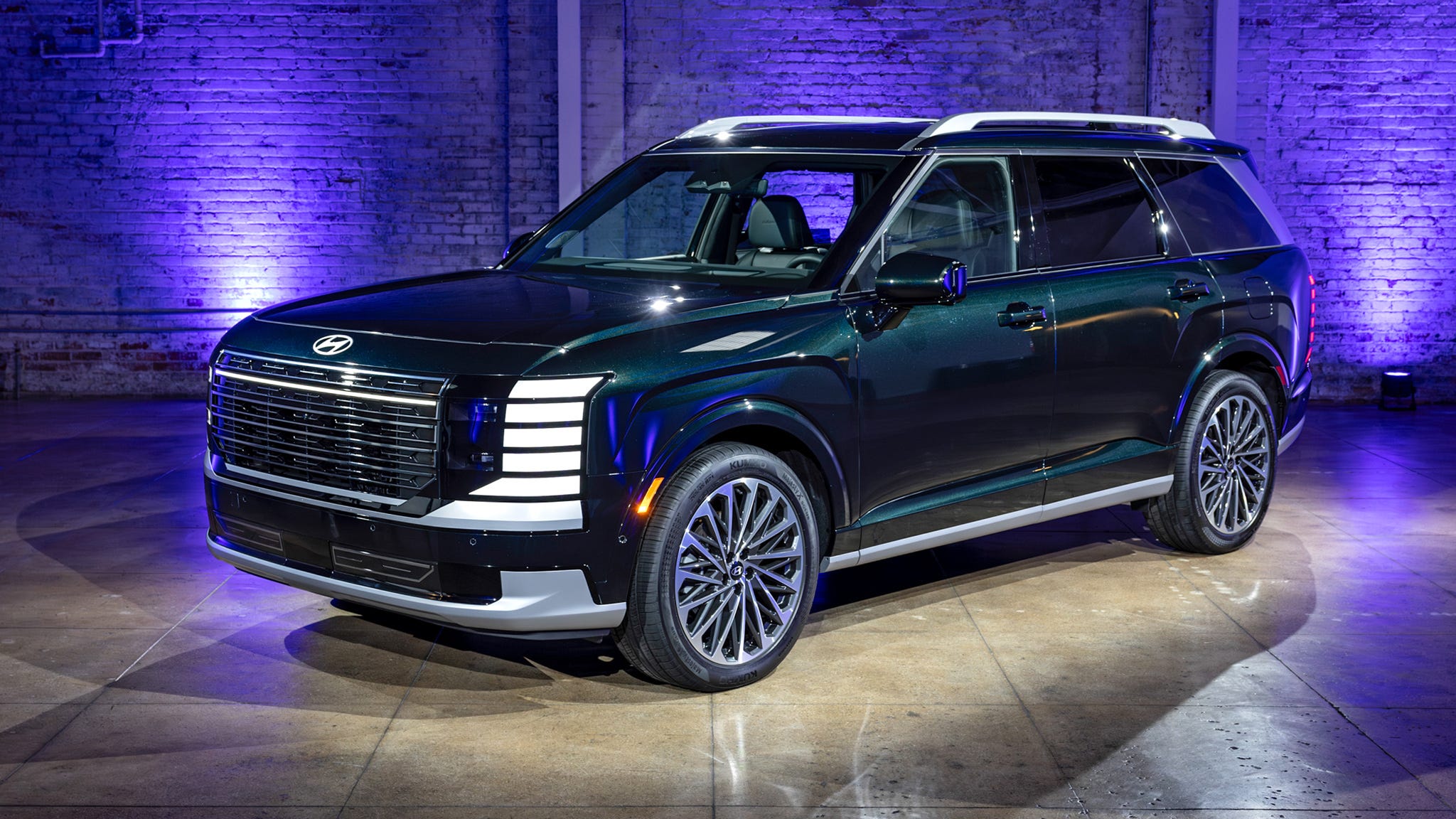
    Hyundai has halted sales of its 2026 Palisade Limited and Calligraphy trims, and a recall is planned for the SUVs as their powered second- and third-row seating has been involved with a child fatality that occurred as the seat was in operation.

    The March 7 incident is still under investigation, according to Hyundai, but the company has taken immediate action to start a recall plan and engineer a fix. The issue involves the vehicles’ second- and third-row power seating and how the seats don’t fully detect an occupant or an object in the seat being operated via the one-touch buttons.

    ADVERTISEMENT – CONTINUE READING BELOW

    When Will I See a Recall Notice?

    Final details are being worked out between Hyundai and the National Highway Traffic Safety Administration (NHTSA) on a recall notice that will go out to owners soon. Hyundai is also developing a repair for this issue and, just as with other recalls, it will be performed at no cost to those owners. Many Palisade owners have reported that they have seen a pop-up notification on their vehicles’ infotainment screens.

    For the U.S., this issue potentially affects around 60,515 Palisades, with another 7,967 in Canada. Hyundai has also stated it will offer owners rental vehicles “until a full remedy is available.” We’re unsure of the exact timeframe for this offer (if it’s available now or only after a recall notice has been sent); we will update this information when Hyundai provides more details.

    ADVERTISEMENT – CONTINUE READING BELOW

    What Should You Do if You Own One?

    If you own a 2026 Hyundai Palisade Limited or Calligraphy, take care to ensure no occupants are seated in the third row before someone pushes the power-folding button, and that none are seated in the second row before using the one-touch tilt-and-slide buttons.

    There will be a temporary software update done over-the-air (OTA) to help mitigate the issue with occupant and object detection. It’s scheduled to begin going out by the end of March and is only intended to be a temporary fix. The permanent fix will come later; no timeframe has been set. Owners will need to have this recall work performed once it is ready.

    Source link

  • 10 Used Hybrids You Should Consider Over A New Toyota Corolla

    10 Used Hybrids You Should Consider Over A New Toyota Corolla

    Here at CarBuzz we’re always looking at new ways to stretch the dollar and sip as little fuel as possible…when we’re not ripping around in brand-new 500+ horsepower monsters, that is. Sometimes we have to come back to reality and solve the puzzles faced by most, which makes for good inner-office debates and colorful Excel spreadsheets. Our latest challenge was to find the 10 best used hybrids that cost less, and are arguably better than, a new Toyota Corolla in 2026.

    We created a list of 10 hybrid vehicles across different segments and ranked them based on average prices obtained from the CarBuzz Marketplace. All models listed are no more than 10 years old.

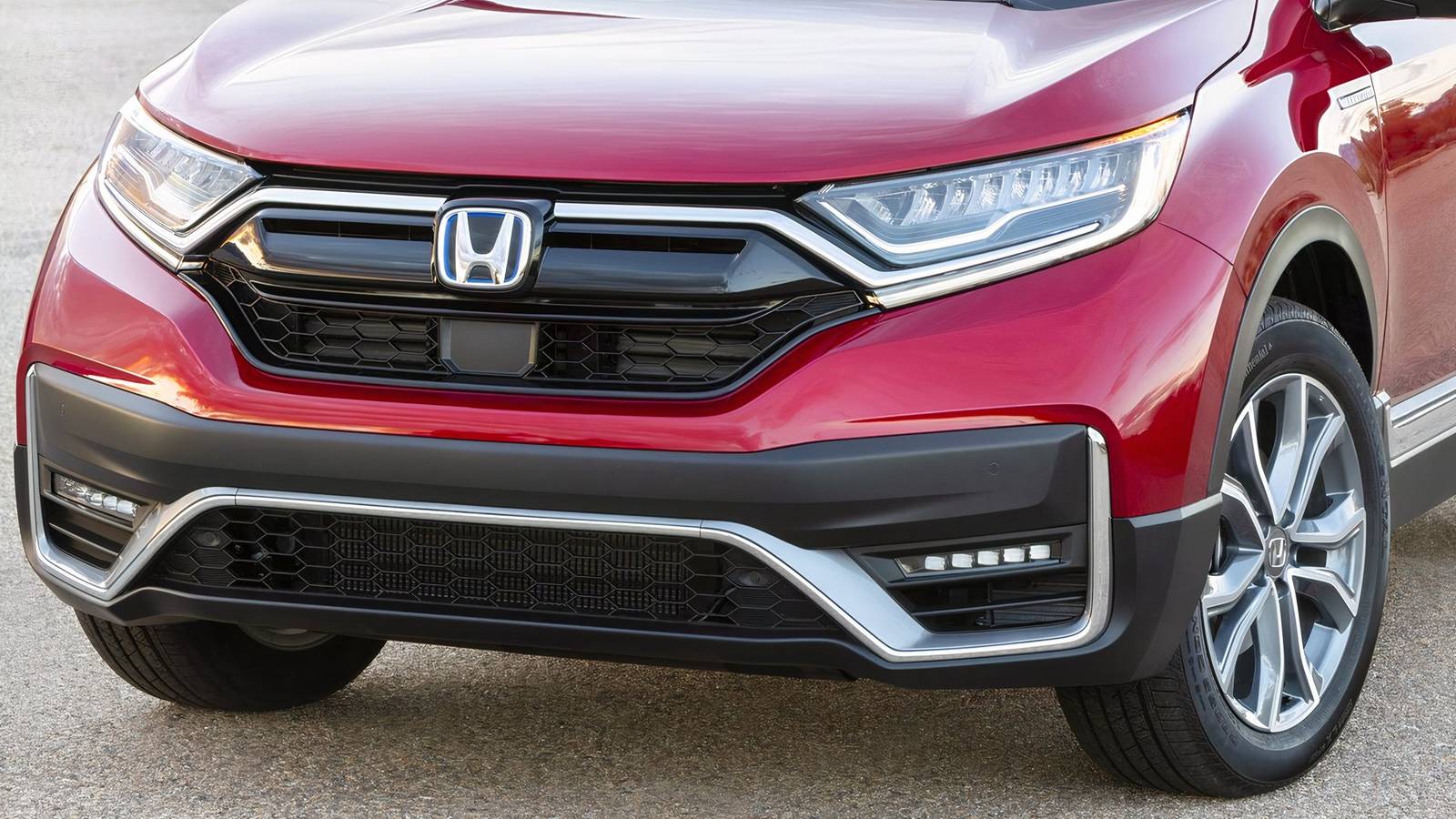
    Honda CR-V Hybrid

    Average Price: $21–23,000

    Key Specifications

    Engine

    2.0-liter Inline-4 hybrid

    Horsepower

    212 hp

    Torque

    232 lb-ft

    MPG*

    40/35/38

    *city/highway/combined

    Not that being the priciest on this list translates as the worst option for you and your family, the Honda CR-V hybrid ranked here due to its impressive residual value. While still offering fantastic fuel economy for a compact crossover, the Honda CR-V allows you to haul more stuff and people comfortably for longer distances than its conventual gas-only counterpart.

    Prices for mid-to-low mileage examples do exceed the base price of a new Corolla but don’t stretch too far into the range. Older models and high-mileage CR-Vs come in well below our threshold, and could handle many daily runs without a visit to the pump as often. Expect to pay $21–23,000 for a previous-generation hybrid with higher miles, and $23–26,000 for newer, low-mileage examples.

    Honda Accord Hybrid

    Average Price: $19–22,000

    Key Specifications

    Engine

    2.0-liter Inline-4 hybrid

    Horsepower

    212 hp

    Torque

    129 lb-ft

    MPG*

    48/47/47

    *city/highway/combined

    Consistently crowned as the best mid-size sedan across multiple outlets, the Accord Hybrid is no different from its conventional options, adding an extra layer of powertrain refinement over the already silky gas-only engines. With the most refined interior in the segment and the most driver’s legroom, it’s easy to see the Accord’s appeal.

    The average price for this generation of Accord Hybrid remains high, meaning finding one within the budget could be tricky, but higher mileages examples should tick that box. We found one gem available for under $20,000 with only 56,444 miles in Fort Myers, Florida, which we found via our new CarBuzz Marketplace tool.

    Toyota Highlander Hybrid

    Average Price: $19–22,000

    Key Specifications

    Engine

    3.5-liter V-6 hybrid

    Horsepower

    306 hp

    Torque

    215 lb-ft

    MPG*

    29/27/28

    *city/highway/combined

    A car powered by a 3.5-liter V6 hybrid is on the list, but unfortunately it’s not a gargantuan pickup or even the Acura NSX. It’s actually the previous-generation Toyota Highlander Hybrid. Nothing on this list could beat the Highlander’s cargo space and three-rows of seating which hold up to eight people. What impressed us was its ability to keep that third row with the addition of a hybrid system, making it the most capable hybrid listed.

    Current and previous generations are out there for less than the base MSRP of a new Corolla, but scant are they under 100,000 miles. If older Toyota hybrids have taught us anything, you need not worry about reliability as most can be driven up to 300,000 miles without breaking a sweat.

    Toyota RAV4 Hybrid

    Average Price: $18–22,000

    Key Specifications

    Engine

    2.5-liter Inline-4 hybrid

    Horsepower

    194 hp

    Torque

    152 lb-ft

    MPG*

    41/38/40

    *city/highway/combined

    When comparing the RAV4 Hybrid to the regular gas-only models, the hybrid adds extra refinement in heaps and bounds to the driving experience with its smoother power delivery and quieter cabin. Overall fuel economy is stellar for the segment like the CR-V is, but smaller hybrids are able to beat it.

    Prices range from $18–22,000 on the used market, with most examples showing a moderate number of miles on the odometer for their age. Definitely give this one a look if you need both a daily commuter and something that can haul your gear if you’re the outdoorsy type.

    Hyundai Santa Fe Hybrid

    Average Price: $18–21,000

    Key Specifications

    Engine

    1.6-liter turbocharged Inline-4 hybrid

    Horsepower

    226 hp

    Torque

    195 lb-ft

    MPG*

    36/31/34

    *city/highway/combined

    The lesser-known of the hybrid crossovers, the Santa Fe Hybrid is still a strong contender. What helps is the improvements Hyundai has made in its hybrid technology since the early days. In the past, the Santa Fe came in two flavors: Sport and XL, which made the lineup a bit confusing before both were combined for the current generation Santa Fe.

    Hybrids were available from 2021 on with prices for low mileage listings right around $21–22,000. The Santa Fe’s hybrid system puts more emphasis on performance than fuel economy, certainly, more grunt is available here than it is under the Toyota RAV4 or Honda CR-V’s hood. Nevertheless, it’s important to have at least one hybrid on the list focused on the added power benefits that come with electrification.

    Hyundai Elantra Hybrid

    Average Price: $18–21,000

    Key Specifications

    Engine

    1.6-liter Inline-4 hybrid

    Horsepower

    139 hp

    Torque

    195 lb-ft

    MPG*

    53/56/54

    *city/highway/combined

    Newer Elantra Hybrids can be found well within our parameters and sit in direct competition with our target new car. Offering better gas mileage than the Corolla, the Elantra is a vastly underrated hybrid that’s more than deserving of its place in the top five. Fun fact: Hyundai’s hybrids don’t use continuously variable transmissions (CVT) like most others do. It uses a six-speed automatic DCT.

    Used Elantra Hybrids have popped up for sale around the country for under $22,000, which neatly places it within the asking price of a new Corolla, and therefore well-worth your consideration as a cost-effective commuter.

    Lexus ES300h

    Average Price: $18–21,000

    Key Specifications

    Engine

    2.5-liter Inline-4 hybrid

    Horsepower

    200 hp

    Torque

    156 lb-ft

    MPG*

    40/39/40

    *city/highway/combined

    Who says a Lexus can’t be had for Corolla money? We don’t, because the ES300h is helping our case. Riding on the Camry platform, the ES hybrid provides far better cabin space, comfort, and features than a new Corolla. Lexus was a pioneer in hybridization across its lineup as it was the first luxury brand to offer a hybrid crossover with the RX400h and mid-size and full-size luxury sedans with the GS450h and LS600h L respectively.

    It’s the same story as the Highlander when it comes to mileage, but a few diamonds in the rough to be found at our price point. So, if you’re happy to consider a well-traveled odometer, you can find yourself behind the wheel of something far more luxurious than what a base-model Corolla would feel like.

    Hyundai Sonata Hybrid

    Average Price: $17–21,000

    Key Specifications

    Engine

    2.0-liter Inline-4 hybrid

    Horsepower

    192 hp

    Torque

    139 lb-ft

    MPG*

    50/54/52

    *city/highway/combined

    Apparently, a plug-in variant of the Sonata Hybrid exists, but we’re sticking with the conventional hybrid for the purposes of this list. The electrified Sonata has been on the market since 2011, making it one of the more established hybrid sedans on the market. Used versions go unappreciated with plenty found well under the $22k mark with room to spare.

    Maybe keep that extra change for something fun? It’s exceptional fuel economy combined with its cheaper average price put the Sonata Hybrid high up on the list of vehicles to take a look at to spend less time fueling and more time out on the road.

    Toyota Camry Hybrid

    Average Price: $17–21,000

    Key Specifications

    Engine

    2.5-liter Inline-4 hybrid

    Horsepower

    208 hp

    Torque

    163 lb-ft

    MPG*

    51/53/52

    *city/highway/combined

    What probably comes as no surprise is a Toyota Camry placing high on a list of recommended cars to cross-shop. But what is surprising is that on this list of hybrids, it’s not a Prius. We assumed that you wouldn’t want to assimilate into Prius culture for the sake of fuel savings, so we pitched the Camry as the next best option (you’re welcome).

    Around since the dawn of time—okay that’s an exaggeration, but the point still stands—the hybrid Camry has been the weapon of choice for New York cab owner-operators and Uber drivers. Ever take a peek at the odometer of one while being thrashed around Lower Manhattan? I have, and it should come as no shock that even at 200,000 miles, it feels barely broken-in. Search for older-generation hybrids first, specifically 2015-2017 first, but later ones from 2018-2021 can also be found listed for Corolla money.

    Honda Insight

    Average Price: $17–19,000

    Key Specifications

    Engine

    1.5-liter Inline-4 V-6 hybrid

    Horsepower

    151 hp

    Torque

    197 lb-ft

    MPG*

    55/49/52

    *city/highway/combined

    Replacing the Civic Hybrid that was discontinued in 2015, the Insight arrived for the 2019 model year and filled the gap in Honda’s of a small hybrid to pit against rivals. With great looks and a more sophisticated interior, the Insight was highly regarded by us when we reviewed it, even regarded as “less sofa-like” to drive than the Prius. High praise, indeed. With its 1.5-inches of extra space between the wheels, the Insight felt more comfortable while still communicating a spritely demeanor that’s expected from a Honda.

    When compared directly with the new Corolla, it seemed better in every category. For the price, it’s unlike any other compact hybrid with aspirations of something greater. We found that smart examples can be found for south of $20,000, so unless you’re a stickler for always buying new, it’s really quite to hard to see why you’d jump into a brand-new base Corolla over this hybridized Honda.

    Sources: Respective automakers, Fuel Economy.gov.

    Source link

  • MG MG4 Urban Reviews | Overview

    MG MG4 Urban Reviews | Overview

    Overview


    The MG 4 Urban battery electric hatchback has arrived in Australia, and the timing couldn’t have been much better.


    With Australian motorists spending a pretty penny at the pump amid soaring fuel prices, MG’s sharply priced BEV could be the gateway offering to entice teetering buyers into the electric camp.


    Wearing a price tag of $31,990 driveaway for the entry-level Essence 43 variant – rising to $34,990 drive away for the larger battery Essence 54 model – the MG 4 Urban is poised to do battle in the Australian market with the likes of the GAC Aion UT (from $31,999), the BYD Dolphin (from $29,990), GWM Ora (from $35,990), and the incoming Geely EX2 (yet to be priced for Australia).


    The MG 4 Urban is not a replacement for the rear-wheel drive and all-wheel drive MG 4 which is currently on runout. Instead, it will be positioned as a more budget-conscious, urban-focused offering to sit alongside the incoming facelifted MG 4.


    In the Essence 43 grade, power comes from a front-mounted electric motor – producing 110kW/250Nm – sourcing electricity from a 43kWh LFP battery. It completes the 0-100km/h run in nine seconds and has a combined WLTP driving range of 316km with an energy consumption claim of 16.5kWh per 100km.


    The Essence 54 ups the power output to 118kW – improving the 0-100km/h dash to 8.7 seconds – and is equipped with a larger 54kWh battery, good for a combined WLTP driving range of 405km. Its claimed energy consumption figure is 16.1kWh per 100km.


    Each model has four levels of regenerative braking which includes an adaptive regen’ mode, as well as a separate one-pedal driving mode.


    Both models support 150kW DC fast charging, with a 10 to 80 per cent recharge time of 28 minutes in the Essence 43 and 30 minutes in the Essence 54.


    As both MG 4 Urban variants are specified in the Essence trim level, their standard equipment lists are identical.


    Outside, you get 17-inch starburst alloy wheels, LED external lighting, rear privacy glass, and roof rails.


    Inside, you’ll find a 12.8-inch infotainment touchscreen, a 7.0-inch digital instrument cluster, PVC upholstery, heated front seats, a six-way electrically adjustable driver’s seat, a four-way manually adjustable passenger’s seat, a six-speaker sound system, a wireless phone charger, two USB-C ports in the front and one in the rear, rear air vents, voice control, and LED ambient lighting.


    Standard safety equipment includes the MG Pilot customisable ADAS suite, adaptive cruise control, autonomous emergency braking, lane change assist, lane keep assist, lane departure warning, traffic sign recognition, driver monitoring, rear cross-traffic alert and brake, forward and rear collision warning, a 360-degree camera, and seven airbags.


    While currently unrated by ANCAP, the MG 4 Urban achieved a five-star Euro NCAP score which is expected to carry over to Australia.


    The MG 4 Urban has 382 litres of boot space with the rear seats up and 1266 litres of space with the second row folded. MG also quotes 98 litres of underfloor boot storage.


    It comes with a seven-year/unlimited-kilometre warranty as standard, extending to 10 years or 250,000km provided that scheduled services are completed at an authorised MG dealer.


    A five-year servicing package is offered for the MG 4 Urban, with prices for each service ranging between $149 and $472, coming to a total cost of $1366 for the first five services. Service intervals come every 25,000km or 12 months (whichever comes first).


    Driving Impressions


    From the outside, the MG 4 Urban takes a sportier design approach as opposed to the cute styling of rivals such as the GWM Ora and GAC Aion UT.


    In fact, it takes inspiration from the Cyberster roadster, borrowing its starburst alloy wheel design and incorporating cues such as the c-shaped air inlets on the bumper, ducktail spoiler and rear lightbar.


    Step inside and you’ll find a high-quality, well-thought-out interior.


    From a usability standpoint, MG has nailed the blend between digital and physical controls while also maintaining a minimalist design, a balancing act that not every marque can pull off.


    There are physical dials and switches for the air conditioning, media volume, and window demisting controls on a slim, well-packaged control panel just below the infotainment screen.


    These are complimented by the steering wheel buttons which handle the adaptive cruise control, voice activation, and digital instrument cluster navigation. There are also two customisable star buttons that allow quick access to functions of the driver’s choosing.


    Coupled with a simple, easy-to-use and navigate, infotainment touchscreen and the MG 4 Urban is a UX joy.


    Despite including physical buttons, the cabin doesn’t feel cluttered or dated, proving that usability doesn’t have to come at the cost of modern minimalism. This is something that many car makers can learn from.


    MG’s attention to detail is also appreciated. For instance, the wireless phone charger is made from what appears to be rubber and integrates dividers on either side, each preventing a telephone escape in the event of spirited cornering. It’s a nice touch.


    When it comes to cabin materials, the PVC leather, faux and true metal components are fantastic to the touch. The seats themselves are also comfortable and feel well-supported.


    Forward and rear visibility is good although the triangular side windows – presumably intended to improve the view beyond the wing mirrors – aren’t particularly useful.


    Storage options are also good, with a large cleared out space beneath the dashboard – an EV hallmark – a decently-sized centre console armrest storage compartment and well-sized door bins.


    The second row offers great legroom and decent headroom, and with no transmission tunnel and a flat floor, the middle-seat passenger won’t feel short-changed. However, the rear bench lacks somewhat when it comes to under-thigh support.


    Backseat passengers also have rear air vents, a USB-C port and rear seat pockets to enjoy, but there’s no centre folding armrest.


    The MG 4 Urban’s 382 litres of boot space with the rear seats up is an extremely competitive showing for its segment, especially compared to rivals such as the GWM Ora (228 litres), BYD Dolphin (345 litres), and GAC Aion UT (321 litres), as is its 1266 litres of space with the rear seats folded down. Its adjustable boot floor is also nifty for practicality.


    Our drive time with the MG 4 Urban was largely limited to the streets of Sydney’s eastern suburbs, although we did get to experience it on the faster roads and motorways surrounding Sydney airport.


    During this time, the MG 4 Urban presented itself as a comfortable, well-tuned and enjoyable-to-drive vehicle.


    The ride strikes the right balance between soft and firm, comfortable enough to handle Sydney’s rough urban streets but not so soft and squidgy that it feels compromised.


    While our driving experience included little in the way of technical cornering, on the rare occasion the road did get twisty, the MG 4 Urban handled confidently, with great body control and little in the way of understeer or untidy behaviour.


    The steering, while not exactly brimming with feedback, is direct and well-weighted and always feels appropriate for whatever speed you happen to be travelling at.


    On the motorways around Sydney airport, the MG 4 Urban was quiet and refined, with no undue tire or wind noise to report.


    With a claimed 0-100km/h time of nine seconds in the Essence 43 variant, the MG 4 Urban is hardly the quickest car in the world, but it does benefit from the hallmark zippy characteristics of a battery electric vehicle. Go for an overtake, for instance, and it won’t leave you high and dry. 


    During our drive time, the MG 4 Urban Essence 43 that we were testing posted some pretty promising efficiency numbers. After 57.5km of driving, the trip computer read 12.3kWh per 100km.


    However, with a claimed total WLTP driving range of 316km in the Essence 43 variant and 405km in the Essence 54, the MG4 EV Urban finds itself slightly down on distance compared to the BYD Dolphin (from 340km), GWM Ora (from 380km), and GAC Aion UT (from 430km).


    We primarily made use of the second level of regen’ braking, which felt comfortable to use and was evidently quite effective. A brief test of the one-pedal driving mode revealed that the MG 4 Urban really can be driven with one pedal.


    When it comes to ADAS tuning, the MG4 EV Urban is pretty solid for the most part. The amount of standard safety equipment – which includes a 360-degree – is great, the adaptive cruise control works smoothly and as expected, and we didn’t encounter many overly intrusive safety system interventions.


    Even if you find the safety features a bit much, you can customise them as you please with MG’s Pilot Custom system, which also allows you to save and return to personalised presets.


    Our only gripe with the safety equipment was the traffic sign recognition, which seems to interpret yellow suggested speed signs – such as those found on corners and speed bumps – as the speed limit and, believing you’re breaking that limit, and beeps at you as a result.


    Overall, we are extremely impressed with the MG 4 Urban, particularly its capable yet comfortable driving experience, its high-quality, well-thought out cockpit, its impressive standard equipment list, strong practicality, lengthy warranty period, and sharp pricing.


    However, it can’t quite match the claimed driving ranges of its rivals, lacks under thigh support on the rear bench, and the traffic sign recognition is evidently a bit dim-witted sometimes.


    Out of those three issues, the driving range is what is likely to deter prospective buyers the most.


    However, unless your daily commute is exactly 317km (1km more than the Essence 43’s driving range) or 406km (versus the Essence 54’s 405km driving range), then the MG 4 Urban will most likely fit your daily urban runabout needs anyway.


    During our short driving experience, the MG 4 Urban proved itself to be a truly well-sorted BEV hatchback offering, serving as a pleasant reminder for customers looking to make the EV switch that there are some great options out there at an affordable price.
    Source link

  • Porsche 911 GT3 Sport Cabriolet to debut on April 14: Teaser out!

    Porsche 911 GT3 Sport Cabriolet to debut on April 14: Teaser out!

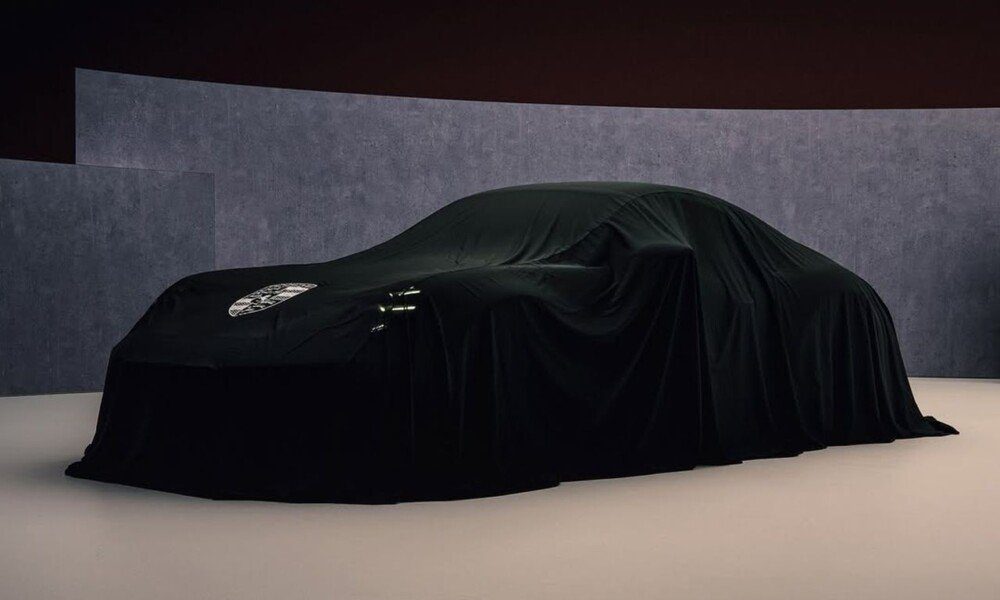
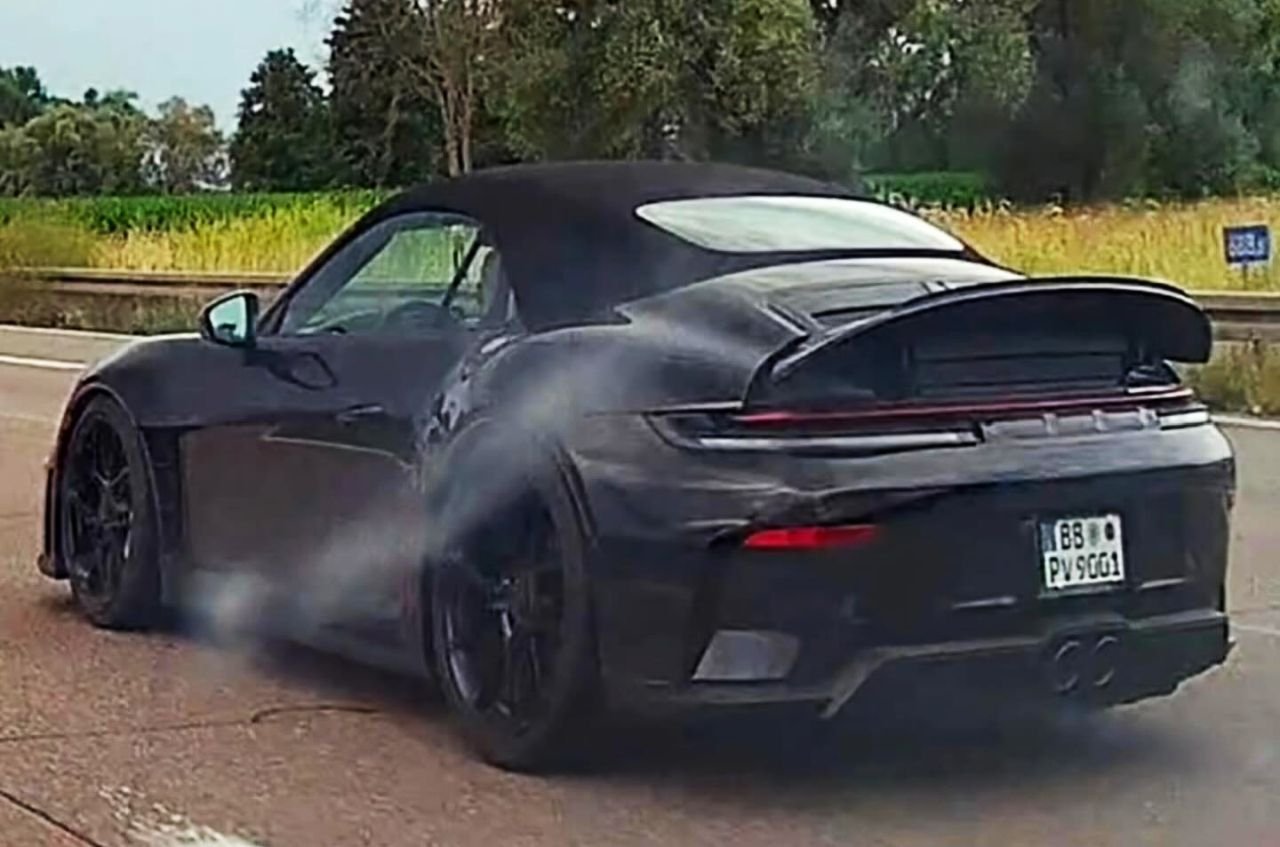
    Porsche has just confirmed that its latest 911 will be unveiled on April 14. It’s likely to be the much-awaited 911 GT3 Sport Cabriolet.

    Porsche describes the new model as “one of the most exhilarating driver’s cars imaginable”. While this is true for almost every track-focused 911, the latest model will be slightly different. It will offer all the GT3 goodness in a convertible body style.

    2026 Porsche 911 GT3 Cabriolet-1

    The 911 GT3 Sport Cabriolet is expected to feature a folding soft top and a special aero package comprising vents behind the front wheel arches and a sporty rear bumper with dual exhausts in the centre.

    Powering the Sport Cabriolet will be the 4.0-liter flat-6 engine from the 911 S/T. This naturally aspirated unit produces 518 hp and 343 lb-ft of torque. It will be paired with a 6-speed manual gearbox.

    Source link

  • EV sales hit record high in March amid fuel price hikes, BYD overtakes Tesla again

    EV sales hit record high in March amid fuel price hikes, BYD overtakes Tesla again

    Electric vehicle sales in March reached an all-time high in Australia, reaching a record number of 15,839 and a record share of 14.5 per cent – nearly double the share in the same month last year – as consumers searched out EVs amid the global fuel crisis.

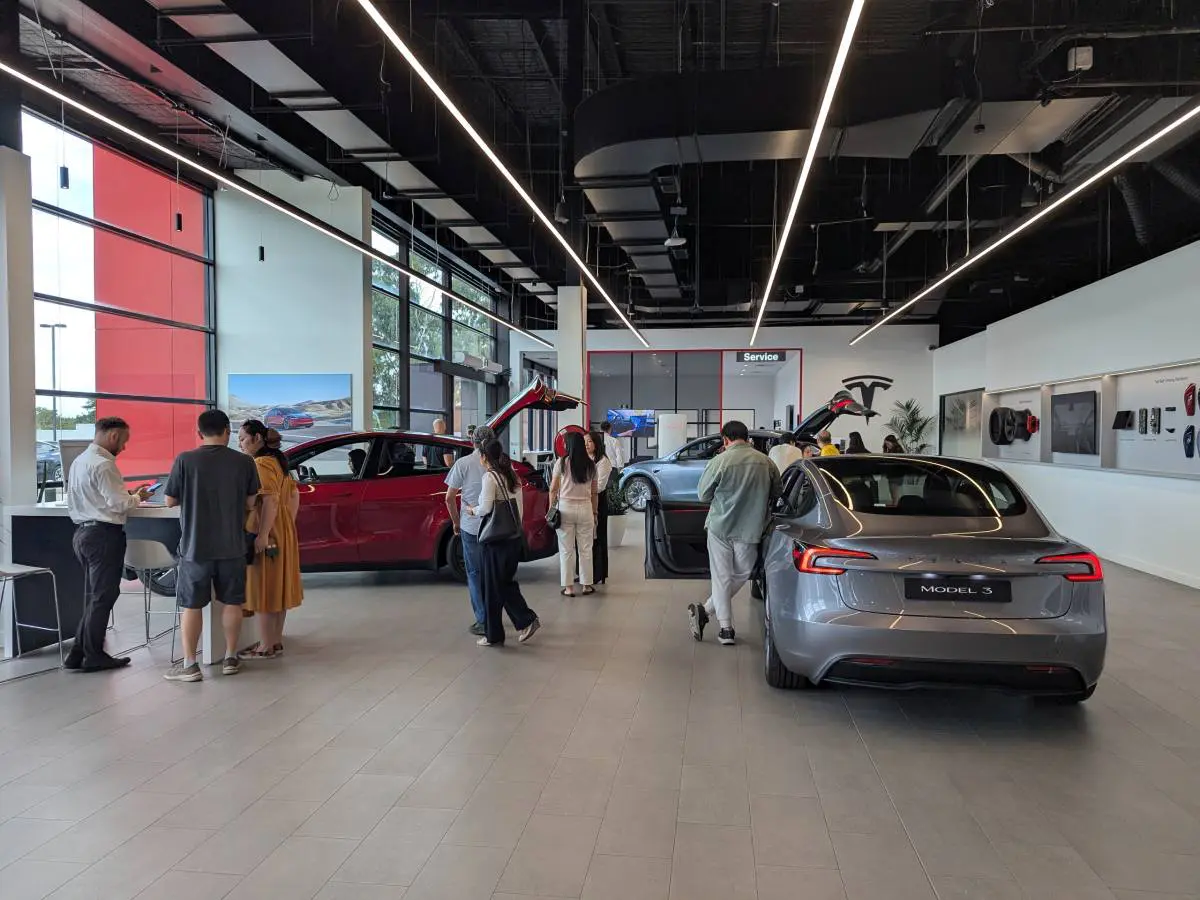
    The EV sales were led by China’s BYD, which once again overtook Tesla in total brand sales, but could have been higher were it not for many companies running out of stock. Tesla last week promised more ships, and more deliveries, after the wait time for its Model Y electric SUV blew out to several months.

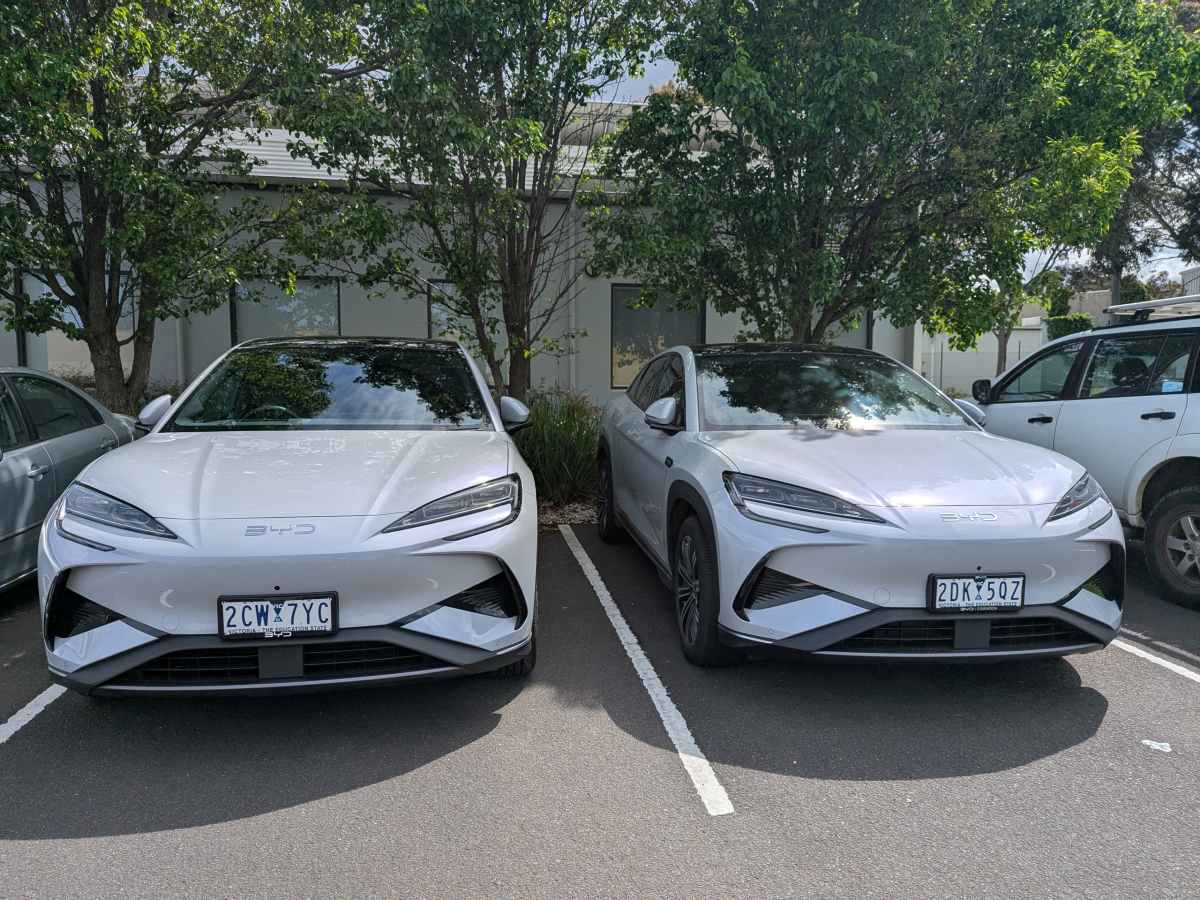
    BYD, which has a number of different models, sold a total of 4,206 EVs in March, beating Tesla with 3,485, although the Model Y regained its position as the top selling EV with 2,818 – which would put it at number 3 in the overall list behind the popular Ford and Toyota diesel utes.

    Other EV makers also boosted sales, helped by multiple incentives that were already in place in March before Donald Trump’s war in the Middle East led to the closure of the Strait of Hormuz, soaring prices and concerns about fuel supply as many servos ran out of fuel.

    In March last year, EVs accounted for only 7.5% of total new car sales.

    EV Sales Breakdown – March 2026

    FCAI vFacts 12,194
    EVC (Polestar + Tesla) 3,645
    EV Sales Total (FCAI + EVC) 15,839
    Total Vehicle Sales (FCAI + EVC) 108,703

    For the first three months of the year, EV sales have doubled in Australia. Last year they totalled 17,901, and 2026 already shows 34,382 new electric cars made it onto the road.

    In March, PHEV sales increased from the previous month, with 8,215 PHEVs sold, up from over 5,000 in February.

    Looking into the EV models that made up the top 5 Tesla sales, the Tesla Model Y stayed at the top spot with 2,818 sales. The Sealion 7 SUV came in the second spot with 1,970 sales. 

    Image: Riz Akhtar

    The third spot went to Zeekr’s 7X, raking in 679 sales during the month. Tesla Model 3 and Geely EX5 made up the rest of the top 5.

    Other notable mentions include the BYD Atto 1, Australia’s cheapest EV, which saw 488 sales in its best month to date. Omoda Jaecoo J5 EV also showed solid growth in the SUV segment, surpassing 500 sales in the month.

    The best-selling EVs in March 2026 were:

    • Tesla Model Y – 2,818 sales
    • BYD Sealion 7 – 1,970 sales
    • Zeekr 7X – 679 sales
    • Tesla Model 3 – 667 sales
    • Geely EX5 – 606 sales
    • Kia EV5 – 587 sales
    • BYD Atto 2 – 572 sales
    • Omoda Jaecoo J5 – 569 sales
    • BYD Atto 1 – 488 sales
    • MG S5 – 475 sales
    • BYD Atto 3 – 466 sales
    • Kia EV3 – 461 sales

    The Driven is waiting to hear back from various manufacturers regarding sales of some EV models, and this will be updated once they are received.  You can see our detailed data here: Australian electric vehicle sales by month in 2026 – by model and by brand

    FCAI CEO Tony Weber said it is too early to determine whether this represents a structural shift in the market. “More consumers are considering EVs due to the disruption to fuel supply caused by conflict in the Middle East, along with the review into the fringe benefits tax concession for EVs,” he said in a statement.

    “The automotive industry would welcome a sustained shift to EVs, given its substantial investment in bringing more than 100 EV models to the Australian market and the industry’s efforts to meet ambitious NVES targets.

     “A long-term shift to EVs will require Australian governments to sharpen their focus on public charging infrastructure, particularly in regional areas and locations where home charging is not practical.”

    Will the recent growth in interest and EV lead times being pushed out for brands like Tesla and others impact upcoming monthly sales? Time will tell.  

    See full details of EV sales for each month of the year in our database here.

    Source link

  • Ford Bronco Gets Wildtrak Back for 2026—Plus More Updates Rolled Out

    Ford Bronco Gets Wildtrak Back for 2026—Plus More Updates Rolled Out

    Not a Carryover From 2025

    It almost seemed like Ford would let the Bronco coast through 2026 without any real changes. The current model is still selling well, so a bigger update closer to 2027 would have made sense. We actually thought the 2026 model year would just be a carryover.

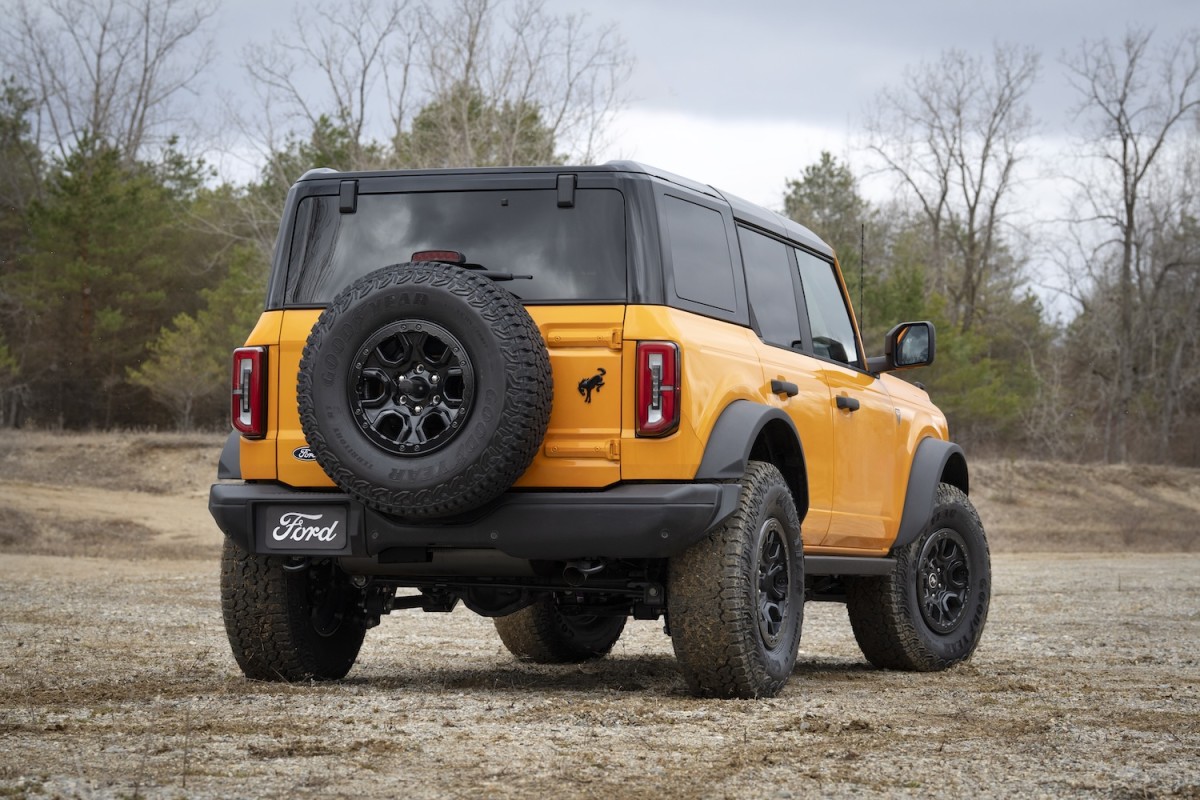
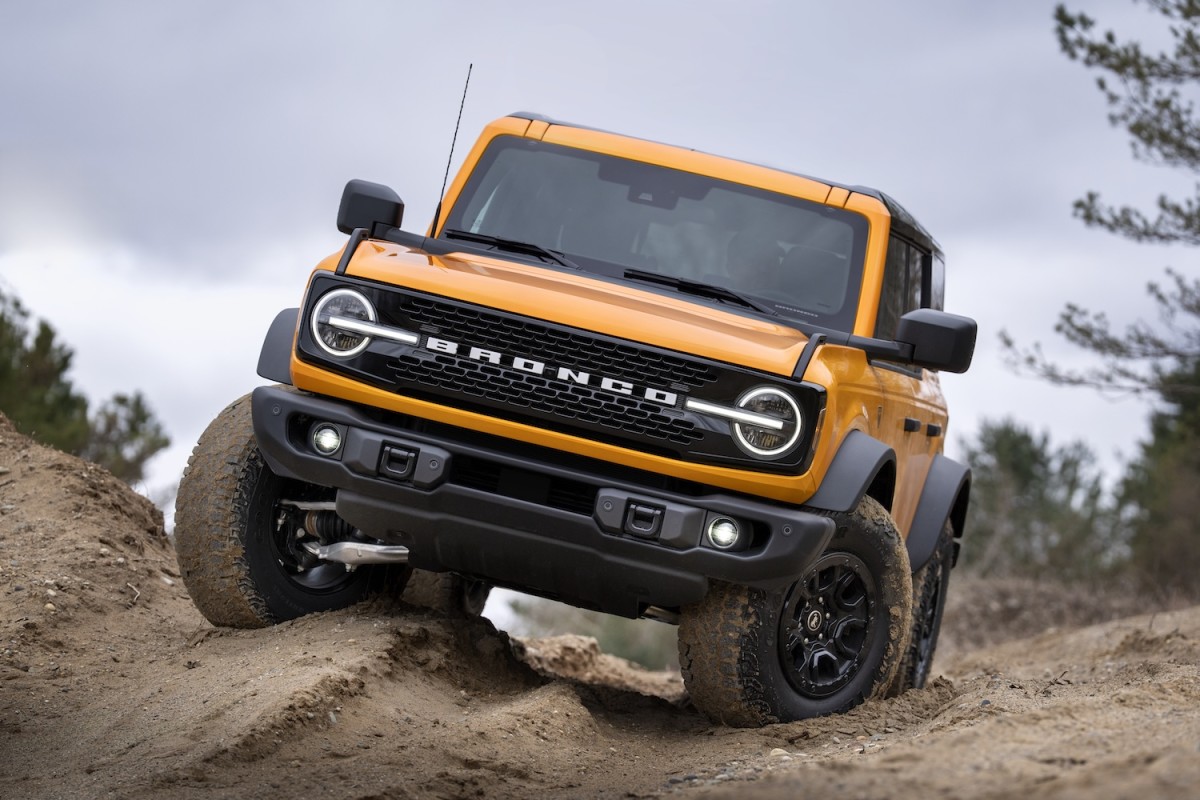
    But Ford didn’t stick to that plan. Instead, the 2026 Bronco gets a round of updates that keep it fresh. The big news is the Wildtrak’s return, though it comes back in a different way.

    Discontinued last year, the Wildtrak isn’t its own trim anymore. Now, it’s an equipment package you can only get with the Bronco Badlands. This move keeps the lineup simpler but still gives buyers the off-road features Wildtrak is known for.

    Ford

    What’s Actually New for 2026

    The Wildtrak package is the main update. It combines the 2.7-liter EcoBoost V6, 10-speed automatic, and the Sasquatch off-road kit with HOSS 3.0 suspension and FOX internal bypass dampers. Instead of picking through a long list of options, you now get all the key upgrades in one go.

    You also get a Black Appearance Package, so the Bronco looks more aggressive right from the factory – no need to hunt for extra accessories.

    Ford also brought back some features that make a difference in daily use. The SecuriCode keypad returns, letting you unlock the Bronco with a code. It’s an old-school Ford touch, but it comes in handy when you’re out on the trail and want to leave your keys behind.

    Customization gets a boost, too. Orange Fury, a color Mustang fans will recognize, joins the lineup later in the year. Painted roof options are now available for Outer Banks and Raptor, giving buyers more ways to make their Bronco stand out.

    Ford is putting more focus on the ownership experience. If you buy a 2024 or newer Bronco, you get access to the Bronco Off-Roadeo event. There’s also a partnership with onX, so you get a year of off-road navigation tools. The idea is to help owners actually use the Bronco’s capabilities, not just read about them.

    Ford

    2026 Pricing: Up and Down

    Ford hasn’t released full pricing for 2026 yet, but most numbers are already live in the configurator. The two entry-level trims are still missing official prices as of now.

    Trim

    2025 MSRP

    2026 MSRP

    Base

    $39,995

    Big Bend

    $40,845

    Outer Banks

    $47,940

    $48,090

    Badlands

    $49,585

    $48,890

    Heritage Edition

    $51,475

    $51,625

    Stroppe Edition

    $75,635

    $69,995

    Raptor

    $81,900

    $79,995

    Of note, the prices here don’t include destination charges, priced at $1,995. As you can see, there are some notable price changes. The Bronco Raptor drops by a good margin, and the Stroppe Edition comes down too. Badlands is a bit cheaper as well, which makes sense now that it’s the base for the Wildtrak package.

    Overall, the 2026 Bronco isn’t a total overhaul. It’s a smart refresh that brings back a familiar name, adds useful features, and adjusts pricing to keep the Bronco competitive.

    Ford


    View the 9 images of this gallery on the
    original article

    Source link

  • When Will New Car Prices Drop?

    When Will New Car Prices Drop?

    Quick Facts About New Car Prices

    • The pace of national sales remained relatively stable year over year on an adjusted basis and improved month over month.
    • The February new-vehicle market showed signs of recovery after a slow January, but uncertainty over the war in the Middle East will likely shift consumer sentiment from March onward.
    • Cox Automotive’s Erin Keating says that vehicles in the $35,000 to $45,000 range better absorb demand and maintain leverage. Mid-market vehicles ($45,000 to $55,000) continue to carry excess supply and face margin risk. 
    • For buyers, the situation hasn’t changed dramatically. Prices are still seeing steady, modest increases, but incentives can help ease the burden.

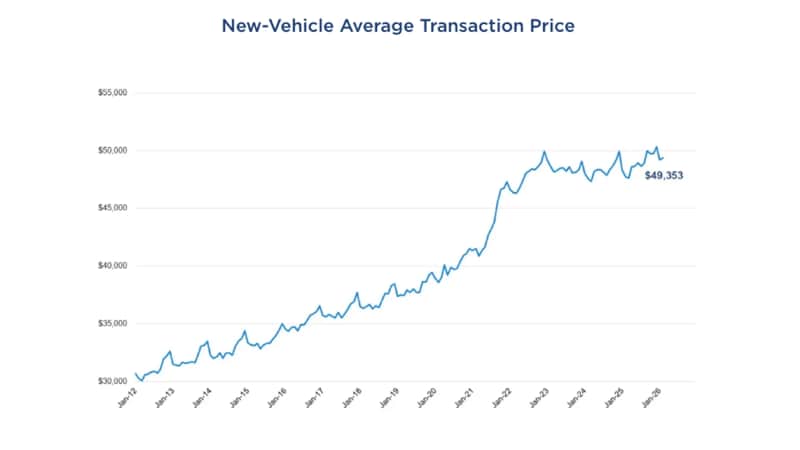
    If you’re in the market for a new vehicle, prices remain high. In February, the new-vehicle average transaction price (ATP) was $49,353. Higher ATPs suggest that buyers are selecting more expensive versions from available vehicle inventory. Sales incentives did show a modest increase in February, but remained relatively flat compared to this time last year. Instead of marketing broadly, manufacturers and dealers are using incentives to address specific pockets of inventory.

    In February, incentives were strongest for luxury vehicles and compact SUVs, so buyers in those markets may find favorable offers. Otherwise, the situation for new vehicles has not changed dramatically. The story taking shape in the pricing landscape is about pricing bands rather than overall averages. When you remove pricey full-size pickups from the equation, the average is closer to $39,000.

    With conflict overseas affecting U.S. fuel economy, we’ll also see rippling effects in other areas of life. With costs rising across the board, consumer sentiment toward new vehicles could cool in the coming months. What does that mean for car buyers right now? Read on for expert insights into what’s driving the current trends and what you need to know if you’re planning to start your search or buy a car now. 

    New Car Prices Continue Modest Increases

    New-vehicle average transaction price.New-vehicle average transaction price.

    Sales slowed in January of this year, but saw some recovery in February. The new vehicle average transaction price (ATP) was $49,353 in February, up 0.3% from January’s average and up 3.4% year over year. “A 3.4% ATP increase in February stands out, but it’s not out of character when you put it in context,” explained Cox Automotive Executive Analyst Erin Keating. “Outside of the ‘everything was broken’ phase, when prices were rising at a 13% clip, the industry’s long‑run average is closer to 3%. What we’re seeing now looks more like normalization than a new pricing problem.”

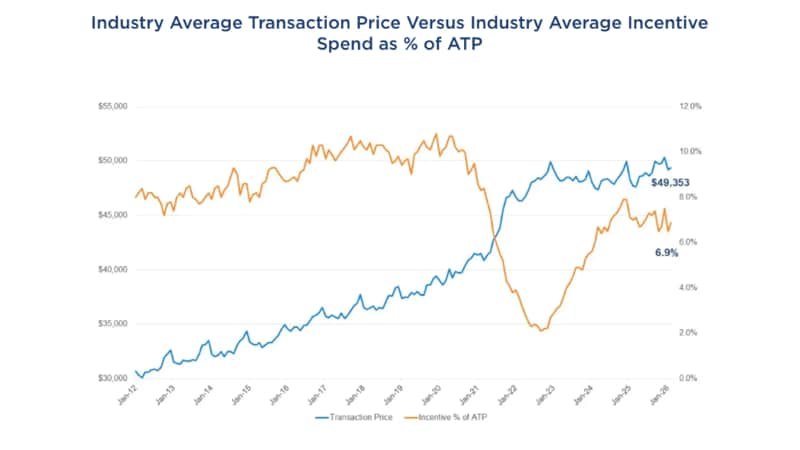
    Incentives increased modestly in February, with an average incentive package equal to 6.9% of ATP. This was an increase from 6.5% in January. Last year at this time, the average incentive package equaled 7.0% of ATP. “Softening sales have not forced widespread discounting. Instead, manufacturers and dealers respond selectively, using incentives to address specific inventory pockets rather than the market broadly,” said Keating.  

    “February reflects a bifurcated market weighed down by mismatched supply and demand. National metrics remain stable, inventory is leaner year over year, and pricing discipline is intact,” said Keating. “But beneath the surface, the mainstream market struggles against inventory imbalances it has yet to fully resolve.”

    Average transaction price vs. average incentive spend.Average transaction price vs. average incentive spend.

    It’s important to remember that volume-weighted ATP reflects all market realities, including high-volume vehicles like pricey pickup trucks, which can influence the number. For example, full-size pickups averaged $66,157 in February, a 2.9% year-over-year increase. “Not every vehicle is a $50,000 purchase,” reminded Keating. “Most of the volume still sits in segments priced below the industry average. The top five segments come in at around $44,000 on a weighted basis, and pickups account for a big share of that. Remove expensive full-size pickups, and the average is closer to $39,000, which tells a very different affordability story.”

    The Electric Landscape Continues to See Headwinds

    Electric vehicle (EV) sales continue to meet rougher waters, totaling an estimated 68,951 units. This number is down 26.8% year over year but is up 5.8% month over month, with EVs accounting for 5.8% of total new vehicle sales. Tesla headed the pack with 38,500 units sold, 4% lower than January. Hyundai, Chevrolet, Toyota, and Cadillac followed it.

    Inventory levels tightened from January, and prices were pushed lower across both new and used segments, highlighting a market increasingly driven by affordability and demand alignment. Days’ supply for new EVs fell to 130 in February, down 27% month over month but remaining 23.7% above this time last year. Ford and Chevrolet held the heaviest supply, while Toyota and Mercedes‑Benz showed leaner inventory levels.

    February underscored the EV market’s new reality, with new EV sales sharply lower year over year and used EV momentum continuing to build. Inventory levels tightened from January and prices were pushed lower across both new and used segments, highlighting a market increasingly driven by affordability and demand alignment. EV prices edged higher to an estimated $55,300 in February, down 1.4% year over year. February also saw the narrowest EV premium over ICE+ on record, at $6,532. Incentives reached an average of $7,870 or 14.2% of ATP, up from 12.4% in January. Tesla and Kia posted month-over-month EV ATP gains, but Cadillac, Ford, and Chevrolet recorded the largest declines.

    “As the EV market enters the spring selling season, it appears to be moving through an ongoing normalization phase, with manufacturers and retailers still working to identify sustainable, natural demand levels,” said Cox Automotive Director of Industry Insights Stephanie Valdez Streaty. “A wave of new EV launches in 2026 could broaden consumer choice and support volume growth beyond the current top brands. Rising gasoline prices may also increase consideration for EVs among shoppers weighing total cost of ownership.”

    What Drives New Car Prices

    • Inventory availability
    • Manufacturer incentives
    • Dealer discounts
    • Trade-in vehicle value
    • Geopolitical shifts

    New Car Inventory Update

    Days' supply of inventoryDays' supply of inventory

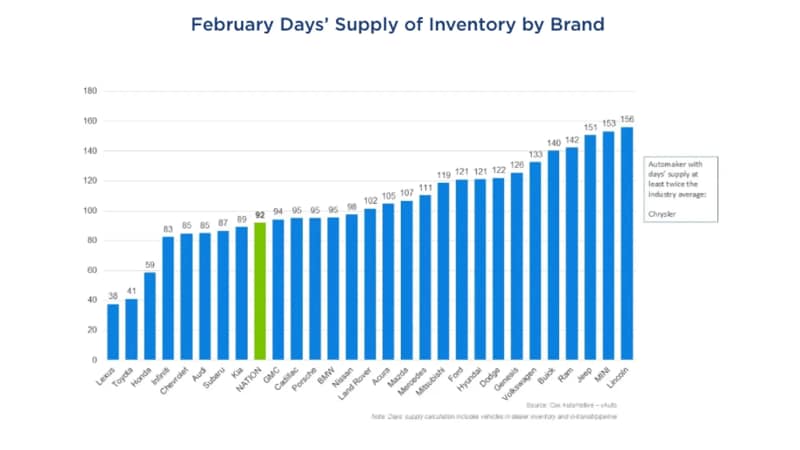
    Dealerships track the number of new vehicles they have on hand to sell using a metric called “days’ supply,” or how long it would take them to sell out at today’s sales pace if they stopped adding new vehicles. According to Cox Automotive’s vAuto Live Market View, new-car inventory is showing a widening divide according to price band. Vehicles priced between $35,000 and $45,000 are outperforming the market, and carry the least inventory at about 81 days’ supply. Toyota and Honda have the tightest days’ supply at 41 days and 59 days, respectively. Nissan at 98 days and Kia at 89 days round out the most competitive manufacturers when it comes to pricing power, as dealers demand more stock from them, not less.

    In contrast, the $45,000 to $55,000 range represents the mid-range band and the weakest inventory efficiency, with an average supply of about 120 days. Ford and Jeep sit at 121 days and 151 days, respectively. Jeep’s days’ supply has grown to 151 days from 123 days, an increase of 28 days year over year.

    “Vehicles in the $35,000 to $45,000 tier absorb demand and maintain leverage, while the mid-market tier carries excess supply and faces margin risk,” said Keating. “For dealers, February’s lesson is less about volume and more about alignment. Where inventory matches real demand, the market functions well. Where it does not, adjustment is underway and will likely accelerate as spring demand either materializes or fails to arrive.”

    What does this mean for shoppers? With cars in the lower band seeing significantly lower inventory levels, it may be harder to find them in your area and dealers may drive a harder bargain due to competition. It may be tempting to raise your budget or pursue different financing options in the face of these challenges, but we urge caution before doing so. Search for incentives and expand your shopping boundaries to find the right deal for your budget. Low-interest-rate offers and lease deals may be available for qualified buyers as dealerships continue to make room for newer inventory. 

    Shop Around for the Best Offer on Your Trade-in

    Trade-in value is another factor driving car prices. A lack of used-vehicle stock has kept those prices higher, giving credence to the idea that buying a new vehicle can sometimes be cheaper than purchasing a certain used model, only a few years old. As a result, it’s still a great time to trade in your car. 

    Dealers value your trade-in partly based on what they need in stock, so if you have a popular model, you may be in luck. On the other hand, they’re more likely to offer an excellent deal to buyers on a car that fewer people are currently looking for. In other words, a car shopper trading a 2018 Honda Civic for something else will be much happier with the trade-in appraisal than a shopper with a 2021 Jeep Grand Cherokee. 

    Car buyers should prepare to shop their trade-in around. It’s slightly more complicated to pull off, but selling your old vehicle to one dealership and buying your new car from a different one may make sense if the final invoice numbers work out in your favor. Use the Kelley Blue Book Instant Cash Offer tool to shop your trade-in vehicle at nearby dealerships. When you let the deals come to you, selecting the best trade-in offer for your situation is easier. Remember, you can always negotiate the offer, and pitting one offer against the other is not unheard of when shopping around for a vehicle. 

    The Higher Costs of Car Insurance

    Tariffs on imported cars and car parts have pushed insurance rates higher, even as car owners are already stretched to the limit by insurance costs. However, this sharp upturn in cost slowed in February. According to the Bureau of Labor Statistics, car insurance costs were 0.2% higher in February than a year earlier. By comparison, in September of last year, these rates were 3.1% higher year over year. Bankrate says the average cost of car insurance is $2,697 per year for full coverage. Full coverage, called comprehensive car insurance, covers natural disasters like wildfires, hurricanes, floods, and accidents. Before you seal the deal and sign anything for a new vehicle, compare quotes for car insurance. 

    What to Expect: Looking Ahead

    New car inventory in February rose 2.4% month over month but is down 1.6% year over year. Early February numbers showed the number of available new vehicles in the U.S. hitting 2.85 million units, or 92 days’ supply. This is a 4.4% year-over-year supply decline, but an inventory volume increase of 4.1% month over month (from 2.74 million units). These trends align with a typical seasonal pattern as dealers build inventory in anticipation of higher springtime demand.

    Automakers still contend with tariffs, and now, an intensifying conflict across the Middle East, suggesting a continuing need to balance steady inventory management with smart pricing. This is easier said than done as the market contends with stubborn inventory imbalances.

    For buyers, the situation has not shifted significantly one way or another. Options in lower pricing bands remain limited, though careful shoppers can still locate incentives that can help lighten the financial burden. The coming months will reveal more about the war’s overall impact.

    RELATED: Bad Credit Car Loans: Everything You Need to Know

    What to Do if You Need a Car Now

    Incentives are a buyer’s best friend in this current market. If you can adjust your expectations about the type of car or brand you are willing to buy, there may be some good deals available. Beyond that, prices remain on a steady, modest increase. Before buying: 

    • Research your options and expand your boundaries if needed.
    • Look for deals and incentives, especially on inventory that dealers may be trying to offload to clear room for newer incoming models.
    • Shop ahead for a car loan if you’re not paying cash.

    RELATED: Paying Cash for a Car: Consider the Pros and Cons

    Editor’s Note: This article has been updated since its initial publication.

    Source link

  • Six of 10 Drivers Say Headlight Glare Is a Problem

    Six of 10 Drivers Say Headlight Glare Is a Problem

    If you feel like headlights have gotten too bright in recent years, you’re not alone. In a recent survey conducted by AAA, six out of 10 drivers reported that glare was a problem when driving at night, and nearly three-quarters (73%) said the problem has gotten worse over the past decade. That corresponds to the growth of more powerful LED headlights among both automakers and the aftermarket.

    “Headlight glare has become a major source of frustration and concern for millions of drivers,” said Greg Brannon, director of automotive engineering and research at AAA, in a statement. Brannon attributed the increase in concern over headlight glare to multiple factors, “including new headlight technologies and taller vehicle designs.”

    AAA headlight survey graphic
    AAA

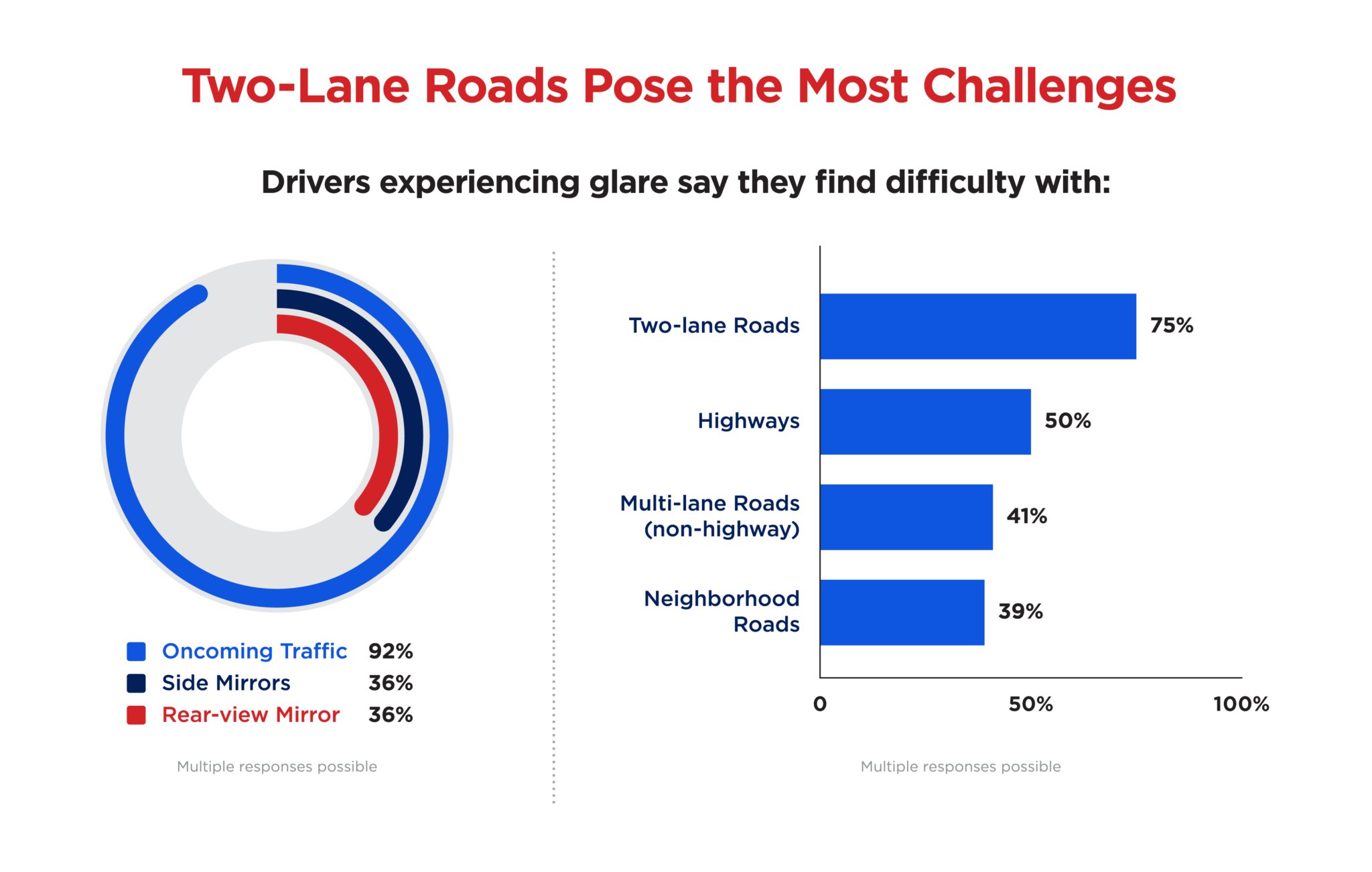
    The survey encompassed 1,092 interviews with U.S. drivers age 18 or over, conducted between February 5-8, 2026. Interviewees were chosen with a probability-based panel designed to be representative of the overall U.S. driver population. Of those respondents, 92% said glare from oncoming headlights as their top concern, while 36% each listed glare seen in rearview or side mirrors as the biggest problem.

    The survey showed some variability in glare sensitivity. Drivers who wear prescription glasses reported experiencing more glare than those who do not, at 70% to 56%, respectively. Pickup drivers were less likely to report glare (41%) than drivers of other vehicle types (66%). Women reported experiencing glare more often (70%) than men (57%). However, age was not statistically significant, nor was driver height, according to AAA.

    2026 Audi Q3 DRL
    Audi

    The organization reminds drivers to avoid looking directly at oncoming headlights to minimize the effect of glare, and to make sure your own headlights are working properly to maximize visibility. AAA also recommends sticking with the original equipment, which is good advice, as the unregulated nature of aftermarket lighting makes it an outsized contributor to the problem. Aftermarket companies often go for added brightness without paying attention to where the beams are aimed. And federal regulators aren’t doing anything about it.

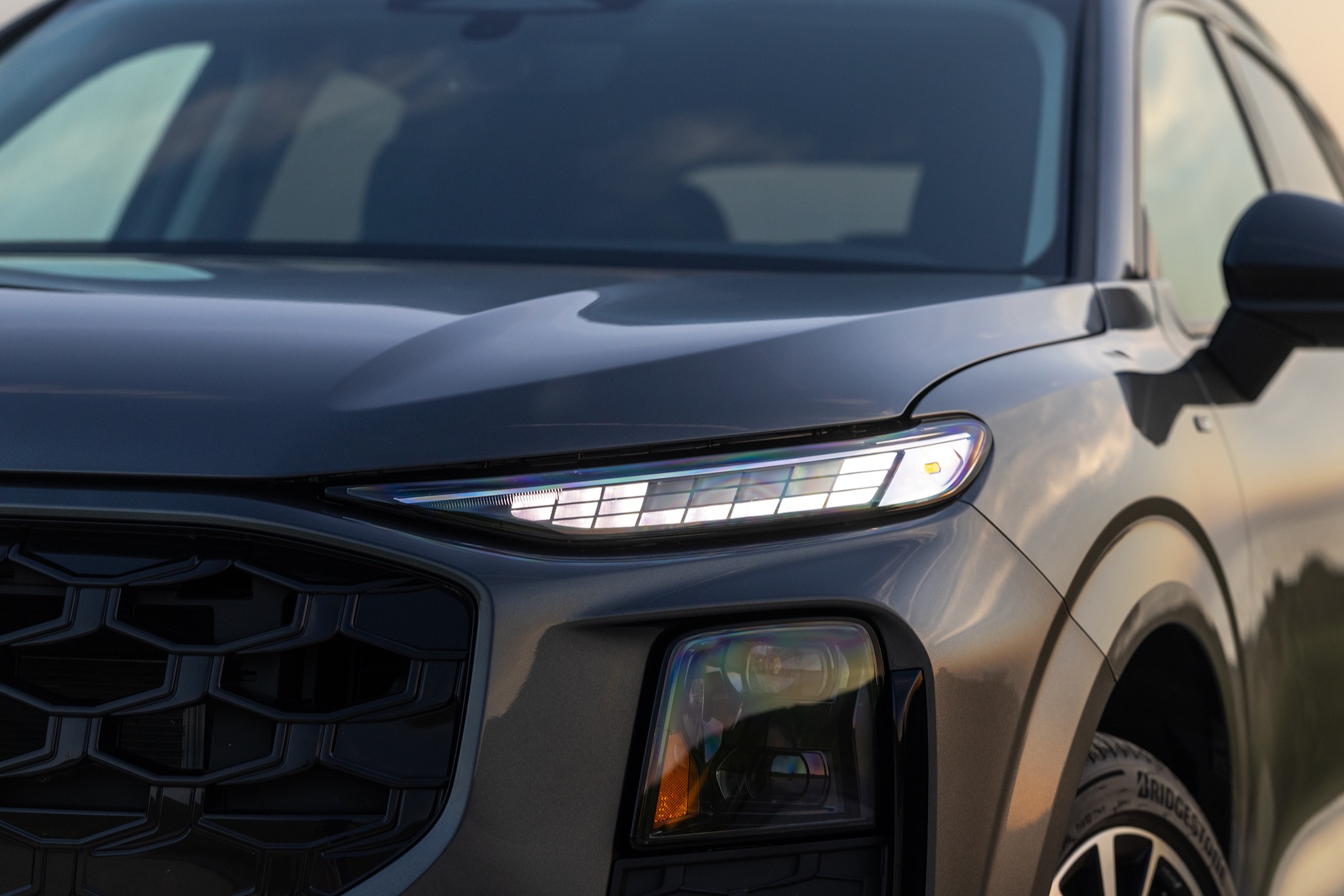
    At the same time, current regulations prevent the adaptive lighting systems available in Europe from making it to the U.S. Audi’s Digital Matrix LED headlights can aim light where it needs to be—and away from oncoming drivers—but rigidly worded regulations that predate the existence of LEDs by decades prevent them from being offered here. That’s also the case for all other automakers except Rivian, which designed its adaptive lighting system for the U.S. and nowhere else. And yet regulators are fine with levels of brightness that make one feel sympathetic for Dracula.

    Stephen has always been passionate about cars, and managed to turn that passion into a career as a freelance automotive journalist. When he’s not handling weekend coverage for The Drive, you can find him looking for a new book to read.


    Source link