Our free daily newsletter sends the stories that really matter directly to you, every weekday.
It would be an understatement to say Infiniti has squandered good will and squashed enthusiasts’ dreams at multiple points in history. But the automaker’s about to, hopefully, make good on broken promises and make it up to its fans. A true sports car is coming, and it sounds hot.
On Wednesday at the 2026 New York auto show, Senior Vice President of U.S. Marketing and Sales of Nissan and Infiniti Tiago Castro told The Drive the upcoming Infiniti sport sedan will have “high horsepower” and “it will come with a manual transmission.”
Castro said, “Infiniti is committed to that vehicle (referencing the sports sedan)” and confirmed the car is indeed a sedan.
There’s little doubt the resurrection of the Infiniti sport sedan will be based on the latest Nissan Z and its manual transmission.
While not ready to talk horsepower numbers, Castro, who’s first Infiniti when he joined the company was a G35 with a manual transmission, described the sedan as “exciting,” as he slid towards the edge of his seat.
Castro knows the take rate for the manual transmission, or possibly even the sports sedan itself, will be low, but it’s important. The executive said, “We need that connection with where the brand is. Going back to where Infiniti was successful. It’s when we connected with our customer base. And our customer base wants a Q50S performance car that they can drive, whether it’s a manual or automatic. So that’s exciting. I don’t expect the volume to be very high, but it’s more of a niche vehicle, but it’s an opportunity vehicle.”
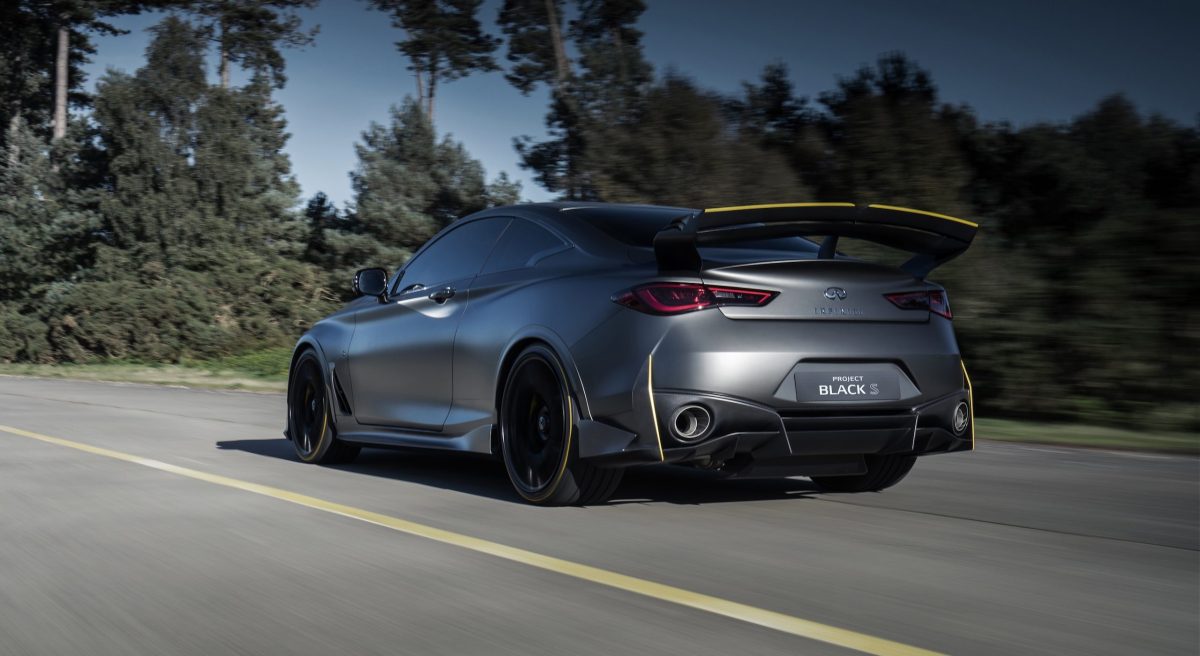
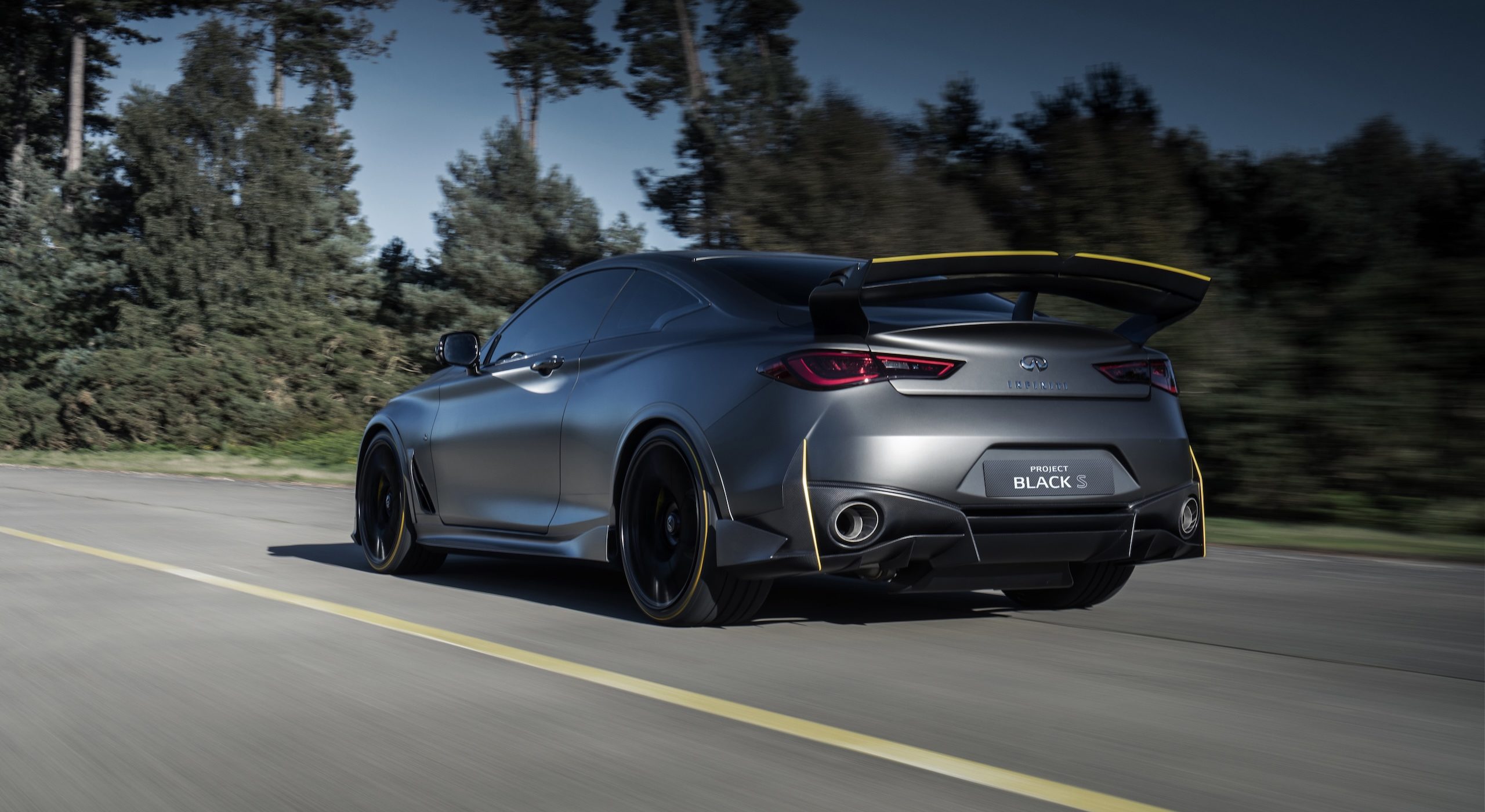
At one point the world was set to (possibly) get a Formula 1-inspired Infiniti Q60 Black S. It was essentially a hotted up hybrid Nissan Z with a twin-turbo V6 and Renault F1 hybrid tech. It didn’t happen.
Let’s not forget about the GT-R-powered Q50 Eau Rouge, which would’ve been a BMW M3 eater, but then wasn’t.
Enthusiasts likely haven’t forgotten that the Q60 Coupe and Q50 sedan were left to die on the vine only to be killed off so Infiniti could build more crossovers.
What’s different this time? At least for the moment, both the new head of Nissan, which owns Infiniti, and head of Nissan and Infiniti U.S. are enthusiasts. There are car people in the hot seat.
Got a tip about future product? Send us a line at tips@thedrive.com
NISSAN has announced the Heritage Edition version of its Z front-engined, rear-wheel drive sportscar for Australia, limited to a run of just 10 units, each finished in Midnight Purple.
Priced at $77,410 plus on-road costs, the Heritage Edition sits in Nissan’s Z range between the entry-level model ($76,160 + ORCs) and the range-topping Nismo model ($94,065 + ORCs including premium paint).
The Heritage Edition celebrates the seven generations of Nissan’s Z line of sports cars, which kicked off with the Datsun 240Z launched in 1969, with right-hand drive deliveries commencing the following year.
The current Nissan Z – the latest member of the family – launched in Australia in 2022.
Midnight Purple also holds special significance as a colour option in Nissan’s sports car history, with the colour option first introduced in 1995 for the R33-series Nissan Skyline GT-R.
In 1999, an updated version of the colour returned to Nissan’s palette as Midnight Purple II, this time available for the R34 Skyline GT-R, and was later succeeded by Midnight Purple III.
In 2013, Nissan unveiled a special edition of the R35 GT-R painted in Midnight Opal, a nod to its purple Godzilla forefathers, with 100 examples sold worldwide. Midnight Purple later made its return on the R35 for the swansong T-Spec variant in 2021.
The Z Heritage Edition’s Midnight Purple paint will be paired with bronze 19-inch Rays alloy wheels.
Midnight Purple is not the only iconic colour to make a recent comeback on the Nissan Z.
In July last year, Bayside Blue – another colour choice entrenched in the history of the GT-R nameplate – became available for the non-Nismo Z model.
For the Heritage Edition, power and torque figures from the 3.0-litre twin-turbo V6 remain unchanged at 298kW and 475Nm, with the Heritage Edition available with either a six-speed manual transmission or a nine-speed automatic with paddle shifters.
Like the regular Z, it also benefits from a mechanical limited slip differential and launch control.
Inside you will find a 12.3-inch digital instrument cluster, an 8.0-inch infotainment touchscreen, heated, leather-accented seats, active noise cancellation and sound enhancement.
It also retains the Z’s host of ADAS features including intelligent cruise control, autonomous emergency braking with pedestrian detection, blind spot warning, rear cross-traffic alert, and lane departure warning.
The reveal of the Heritage Edition comes ahead of the arrival of the 2026-spec Nissan Z, expected on Australian shores later this year (although full pricing and specifications remain unconfirmed).
Discovering your car’s AC blowing hot air is an unpleasant surprise when you need relief from the blazing interior. The problem of your car air conditioner not blowing cold air can be caused by several factors, ranging from minor to major. Read on to learn some common reasons for a car’s AC not blowing cold air, possible solutions, and the cost of potential air conditioning repairs.
AC Troubleshooter
Why Is My Car AC Blowing Hot Air?
Use this quick diagnostic guide to narrow down what may be causing your car’s air conditioner to blow warm air instead of cold.
1. Low Refrigerant:
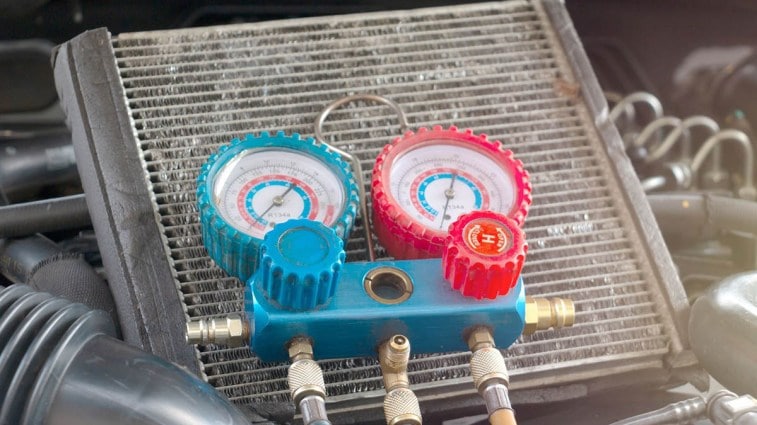
Low refrigerant levels are the most common reason drivers ask, “Why is my car AC blowing hot air?” Refrigerant circulates through the cooling system, absorbing heat and releasing cool air. Leaks in the air conditioning system can lead to a gradual loss of refrigerant. If the level is insufficient, the system’s cooling capacity is significantly reduced.
Solution: A professional mechanic can refill the refrigerant to the recommended levels after checking for leaks. Expect that coolant recharge service to cost about $200. The bill for replacing a damaged hose, O-ring, seal, evaporator, or condenser will vary. According to Kelley Blue Book data, the average AC repair cost at dealerships is around $500. Repair costs vary by region and vehicle.
An ASE-certified technician or other qualified mechanic will use specialized tools to pinpoint and repair the leak before recharging the system. Simply adding more refrigerant without fixing the leak is a temporary fix that is environmentally irresponsible.
RELATED: Does AC in a Car Use Gas?
2. Malfunctioning Compressor:
The compressor is the heart of your car’s air conditioner. It pressurizes the air conditioning refrigerant and circulates it through the system. A malfunctioning compressor often causes the car’s AC to stop blowing cold air.
Solution: A compressor is the most expensive part of an automotive air conditioner to fix. A defective compressor requires repair or replacement, costing $1,700 or more to replace, according to Kelley Blue Book data.
MORE: Car Air Conditioning: Tips To Keep It in Shape and Cold
3. Dirty Condenser:
Accumulated dirt, debris, or other contaminants on the condenser coils can hinder heat exchange, causing the car’s AC to blow hot air. Similarly, dirt and other particles can become lodged in the evaporator, blocking airflow and causing poor cooling.
Solution: Regularly cleaning the condenser and evaporator helps ensure optimal airflow. You can use a gentle brush or compressed air to remove dirt and debris, but most drivers should leave this maintenance task for the pros.
4. Electrical Issues:
Various electrical problems can disrupt the operation of the car’s air conditioner: a faulty relay, a blown fuse, bad sensors, loose connections, damaged wiring, or a malfunctioning control panel are possible causes.
Solution: Check the electrical components associated with the AC system and replace any damaged parts.
MORE: Car Warning and Dashboard Lights Explained
5. Malfunctioning Thermostat:
A dodgy thermostat may not accurately regulate the temperature, leading to inconsistent cooling or hot air blowing from the vents.
Solution: Replace the thermostat if it is faulty to restore proper temperature control.
MORE: Do I Need a Coolant System Flush?
6. Broken Blend Door Actuator:
The blend door actuator regulates the airflow between the heater core and the evaporator. If the blend door becomes stuck on the heat setting, the car’s AC can blow hot air.
Solution: Replace the blend door actuator to restore proper airflow and temperature control.
MORE: How Do I Know If My Spark Plugs Need Replacing?
7. Blocked Cabin Air Filter:
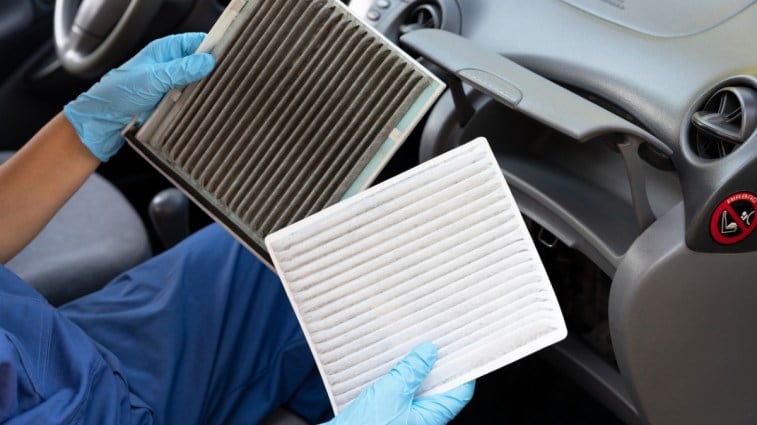
A clogged cabin air filter can restrict airflow, reducing system efficiency and causing warm air to blow.
Solution: Regularly replace the cabin air filter for unrestricted airflow and optimal air conditioning system performance.
What to Do When Your Car AC is Blowing Hot Air
Your car’s air conditioning may blow hot air for many reasons, and regular maintenance can help prevent some issues. Use an ASE-certified technician or qualified mechanic to check and service your air conditioner at the start of each warm season. Meanwhile, get to the root cause of many car AC problems by visiting a service center to ensure you have a cool drive on the hot days ahead. Staying on top of vehicle service and repairs ensures safe and reliable transportation and helps your car retain its value if you need to trade or sell.
Editor’s Note: This article has been updated since its initial publication. Chris Hardesty contributed to the report.
Our free daily newsletter sends the stories that really matter directly to you, every weekday.
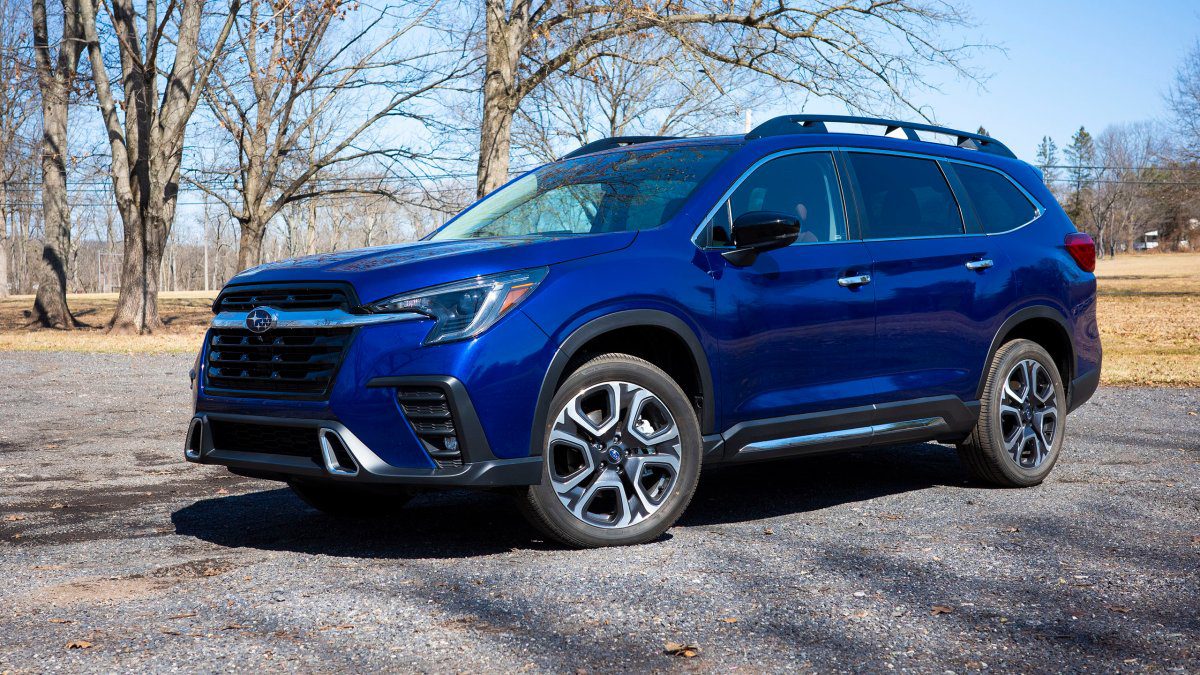
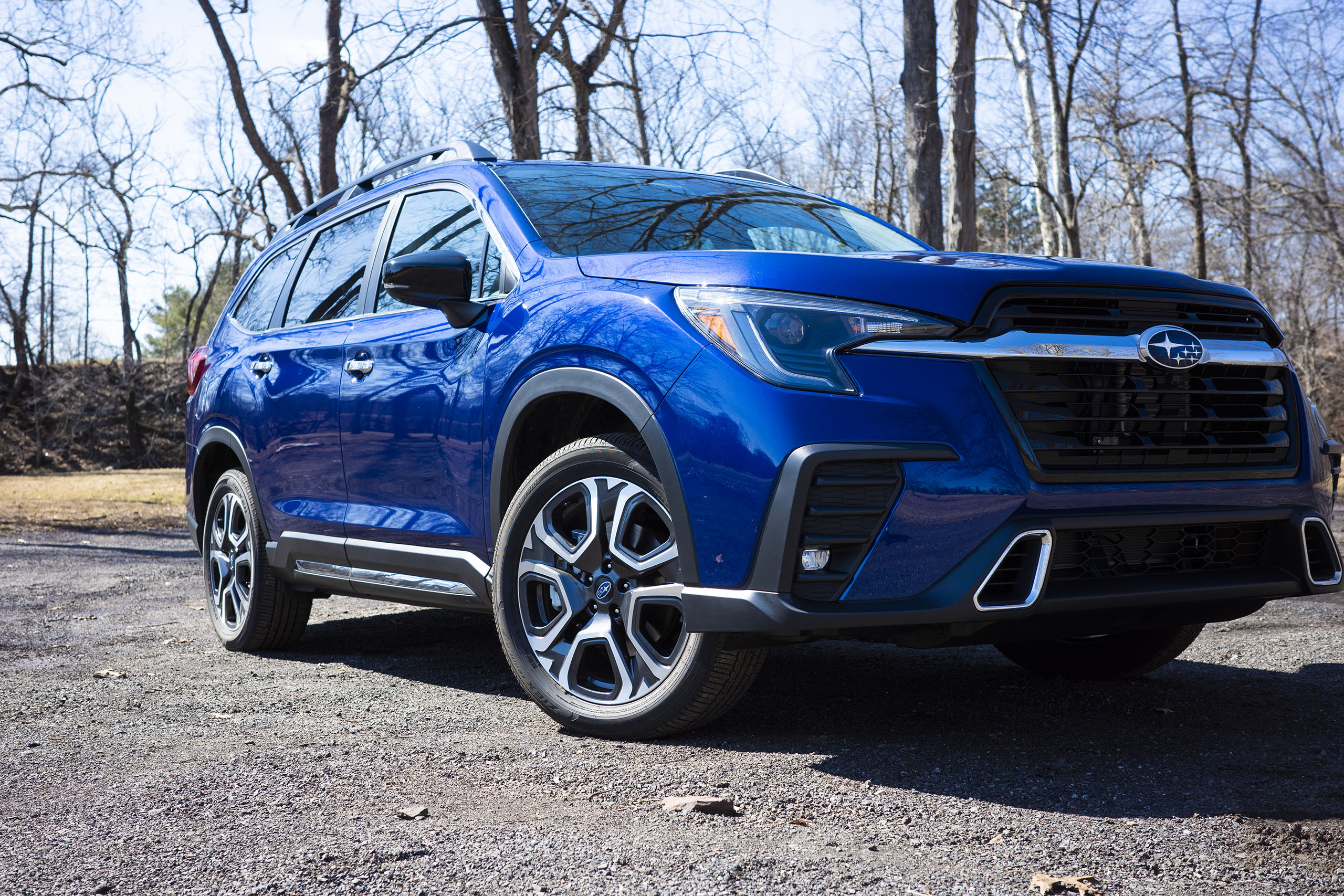
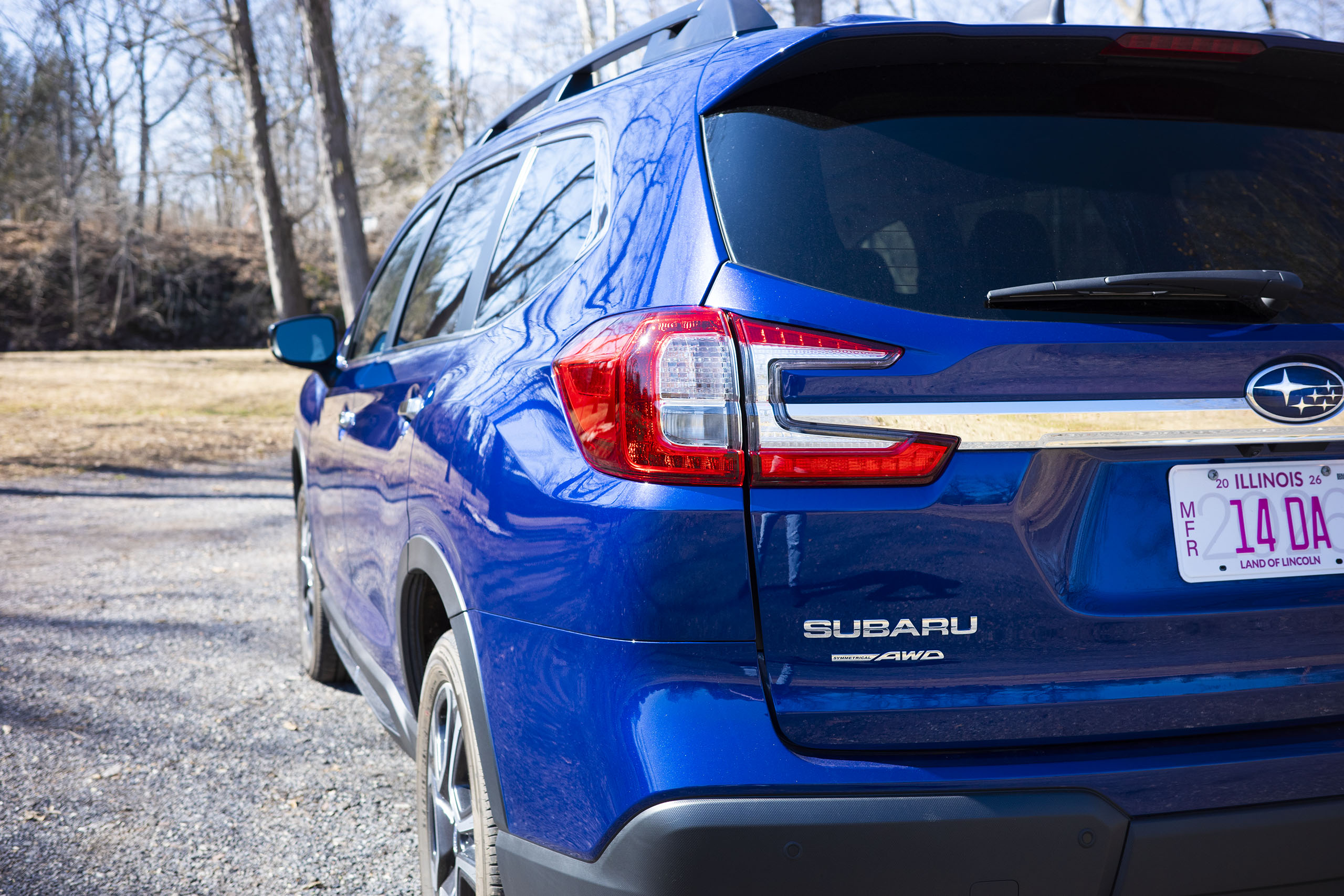
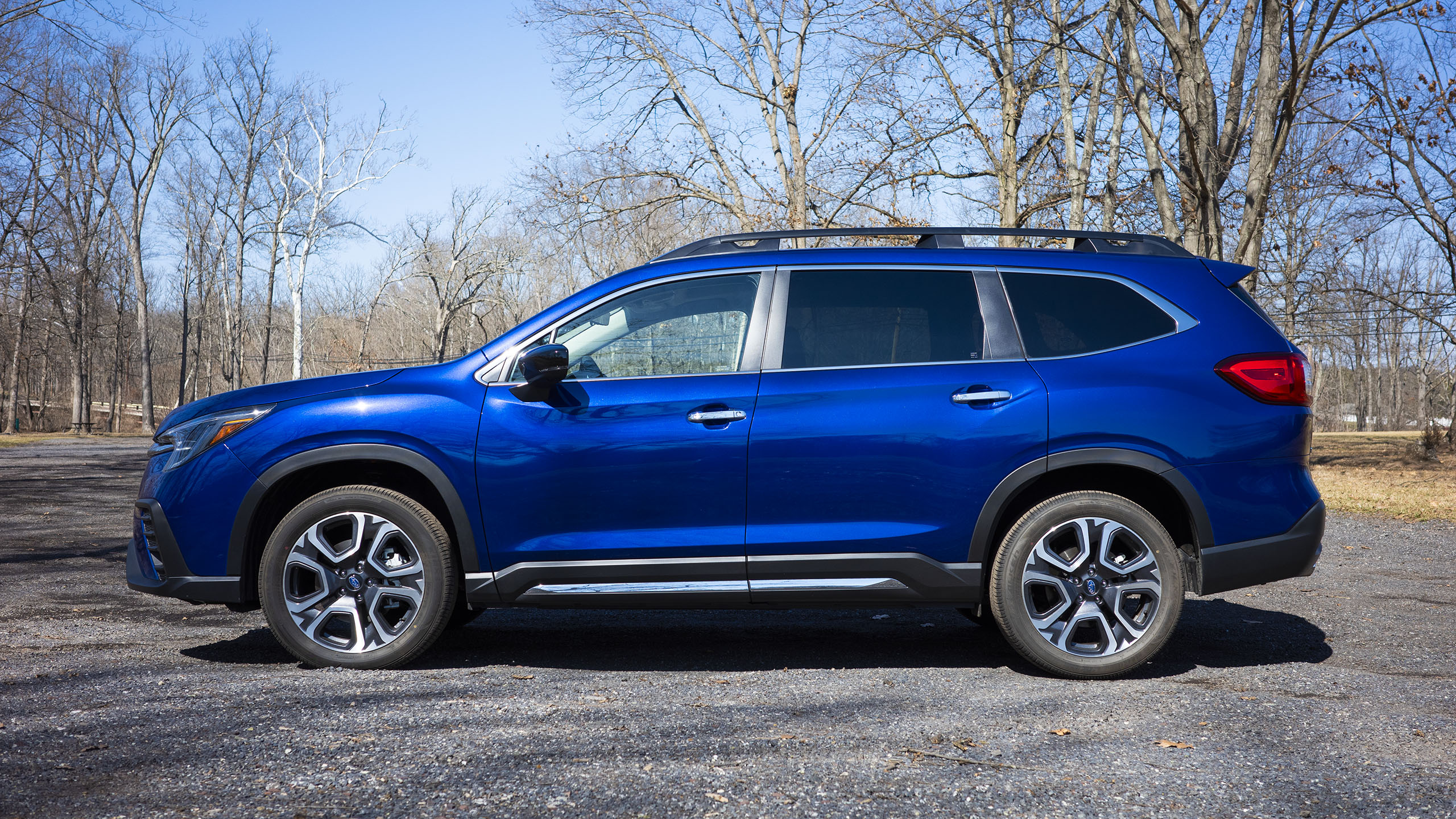
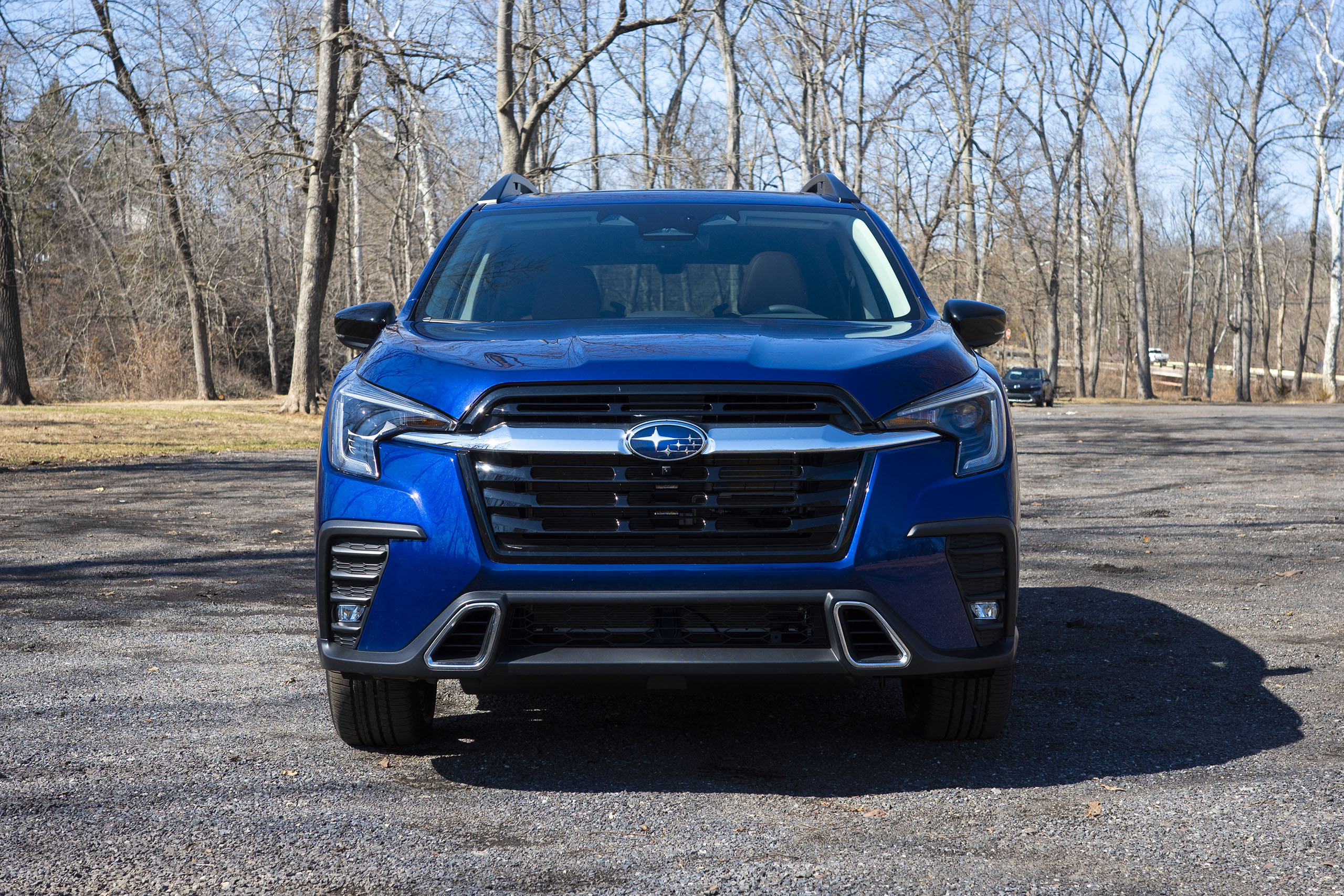
Going into this review, my friends and family weren’t particularly excited for me to test a Subaru Ascent, but I was looking forward to it. When you’re used to spine-shattering sport compacts, a break in a big, cushy SUV certainly has some appeal—especially one that favors comfort above all else.
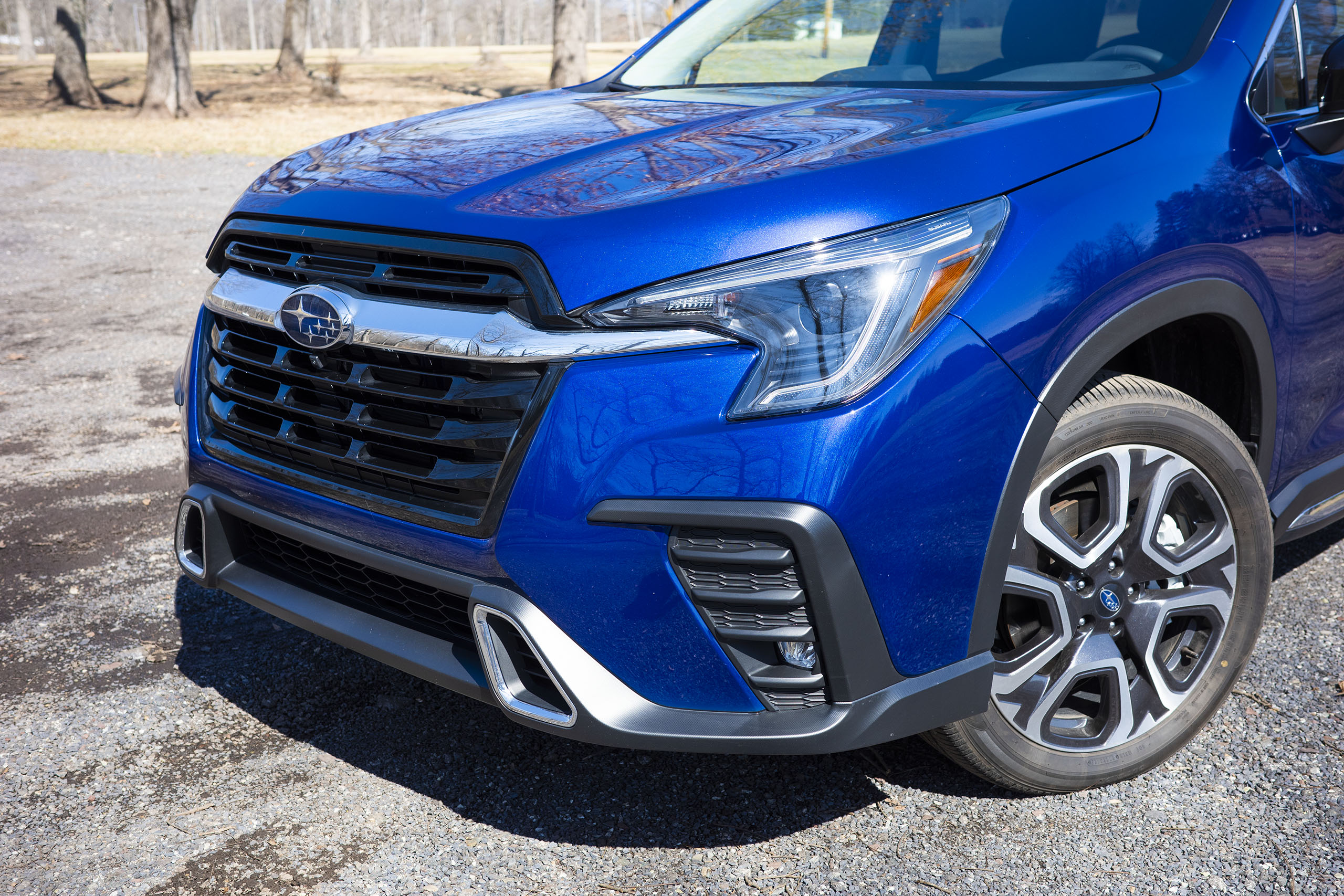
Being seven years old by this point, if you can believe that, the Subaru Ascent doesn’t really win any comparisons on paper, unless they involve cupholder quantity. It isn’t remarkable to drive, its exterior and interior resemble the products of the last decade that they are, it makes a lot of noise, and it has the most frustrating infotainment system of any car I’ve sampled in recent memory. All things being equal, it’s not the barely-three-row SUV anyone should buy.
Despite all that, I was still a little sad to see it go. What the Ascent lacks in design and tech, it somewhat makes up for—a little, certainly not entirely—in comfort and ease. Subaru should probably replace it in the near future, but its biggest (and oldest) SUV has a certain, strange charm about it.
Adam Ismail
The Basics
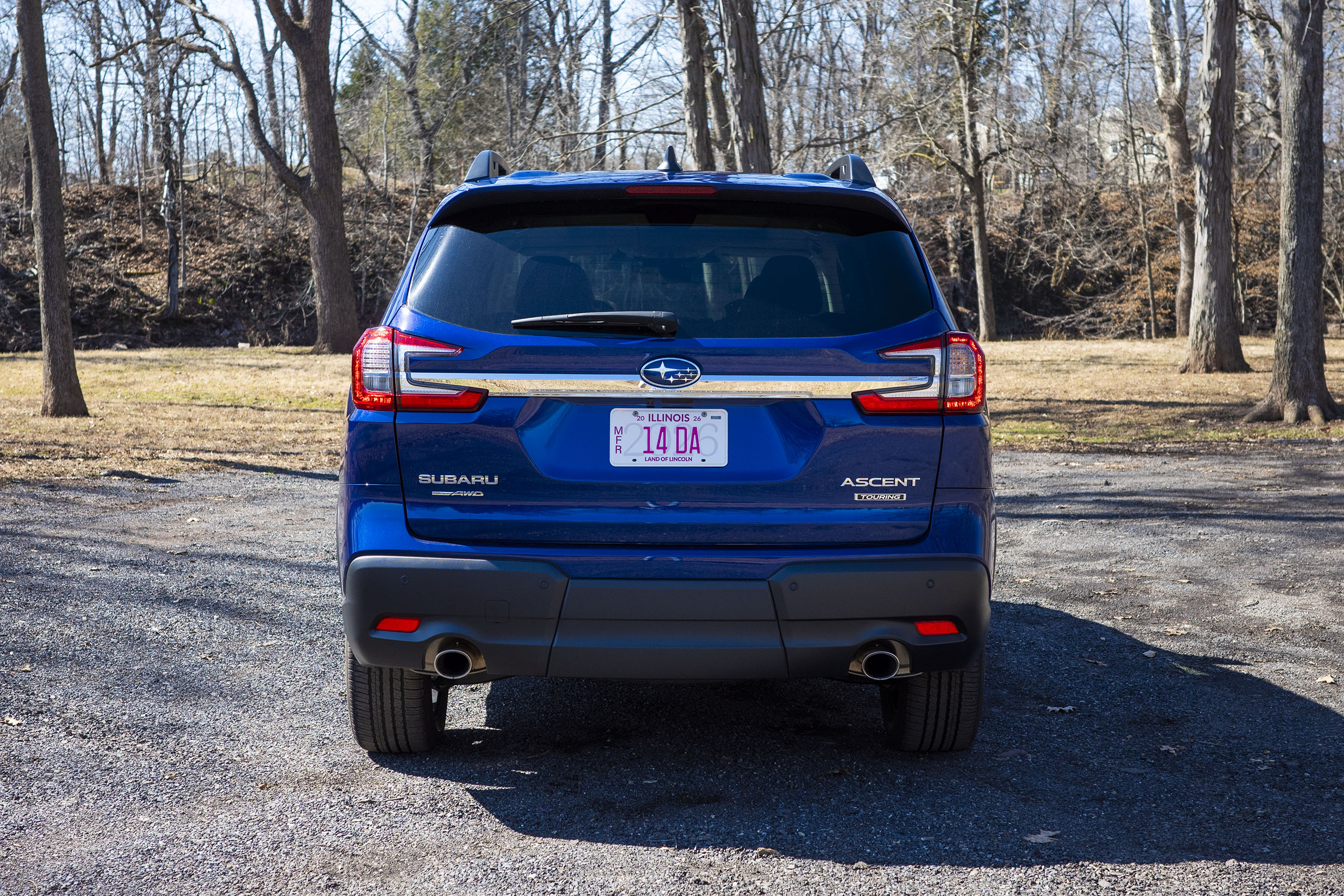
The 2026 Subaru Ascent starts at $42,245, including $1,450 delivery; mine, a range-topping, Onyx Edition Touring model, cost $52,615. All Ascent trims come with Subaru’s turbocharged 2.4-liter flat-four—a version of the WRX‘s engine, tuned a little differently for family hauler duty—making 260 horsepower and 277 lb-ft of torque. Power is routed through a CVT to all four wheels.
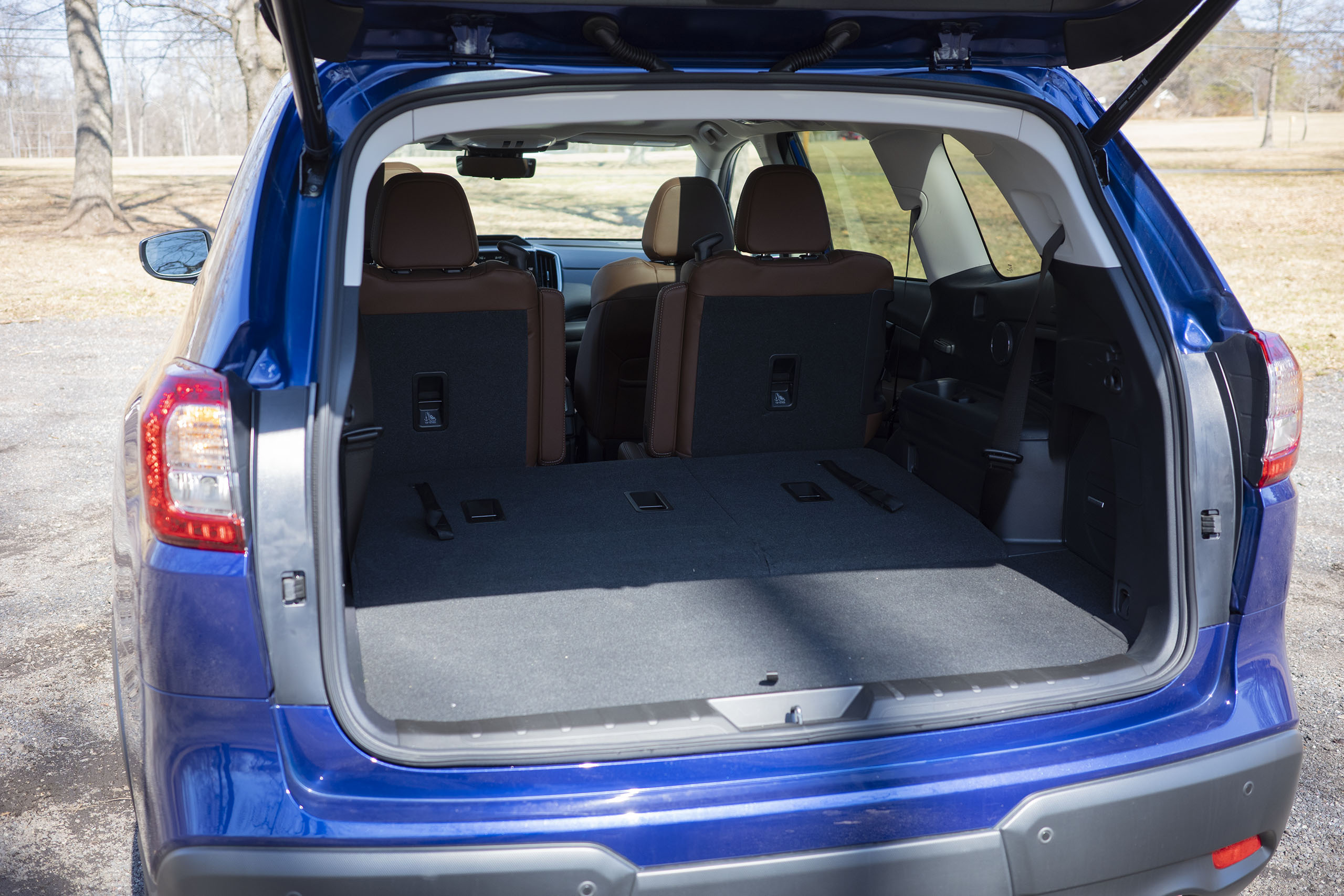
Every Ascent also comes with three rows of seating. Buyers can opt for a full second row or two captain’s chairs, depending on trim. The AWD system includes X-Mode, which adds two power delivery maps—one for dirt and snow, and another for deeper snow and mud. And the rest of the standard features list is quite solid. A cold-weather package with heated front seats and eight-way adjustable power for the driver, adaptive cruise control, steering-responsive headlights, power-folding mirrors, and a 5,000-pound towing capacity are staples across all grades.
Adam Ismail
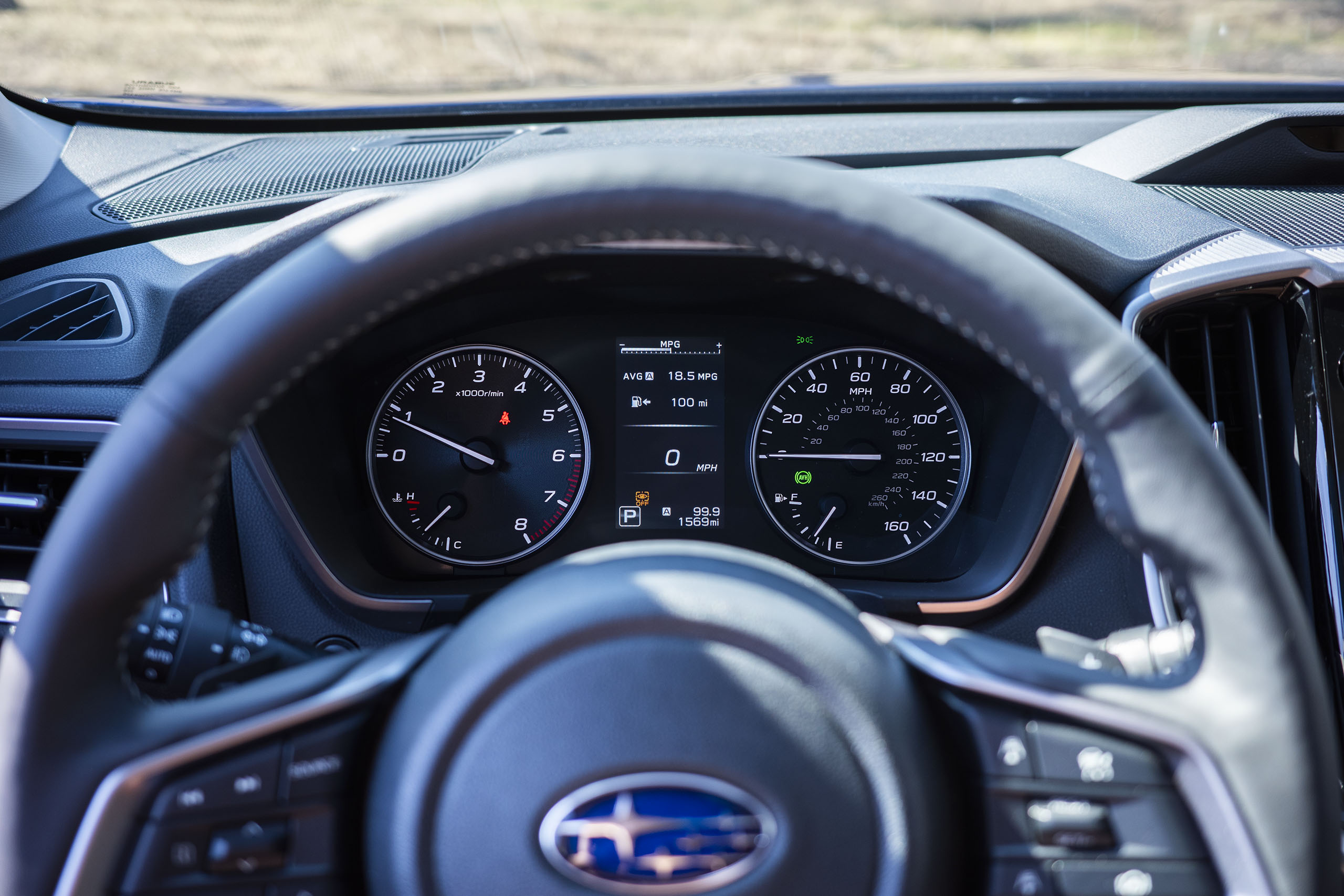
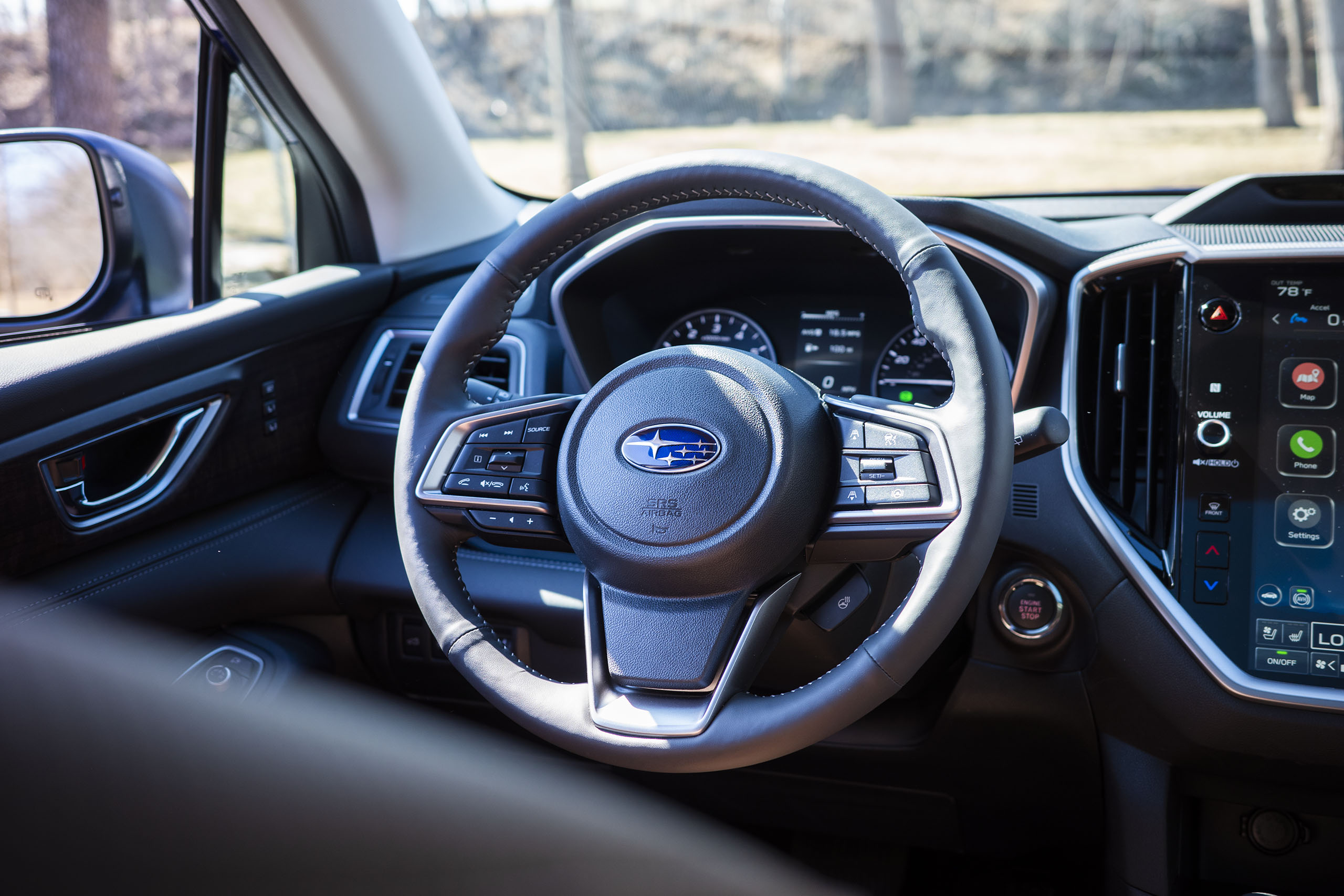
The dashboard is likely where the Ascent shows its age the most. The instrument cluster is mostly physical, save for a tiny screen between the two gauges. For me, personally, this is a very good thing; however, it appropriately sets the tone for what to expect in here.
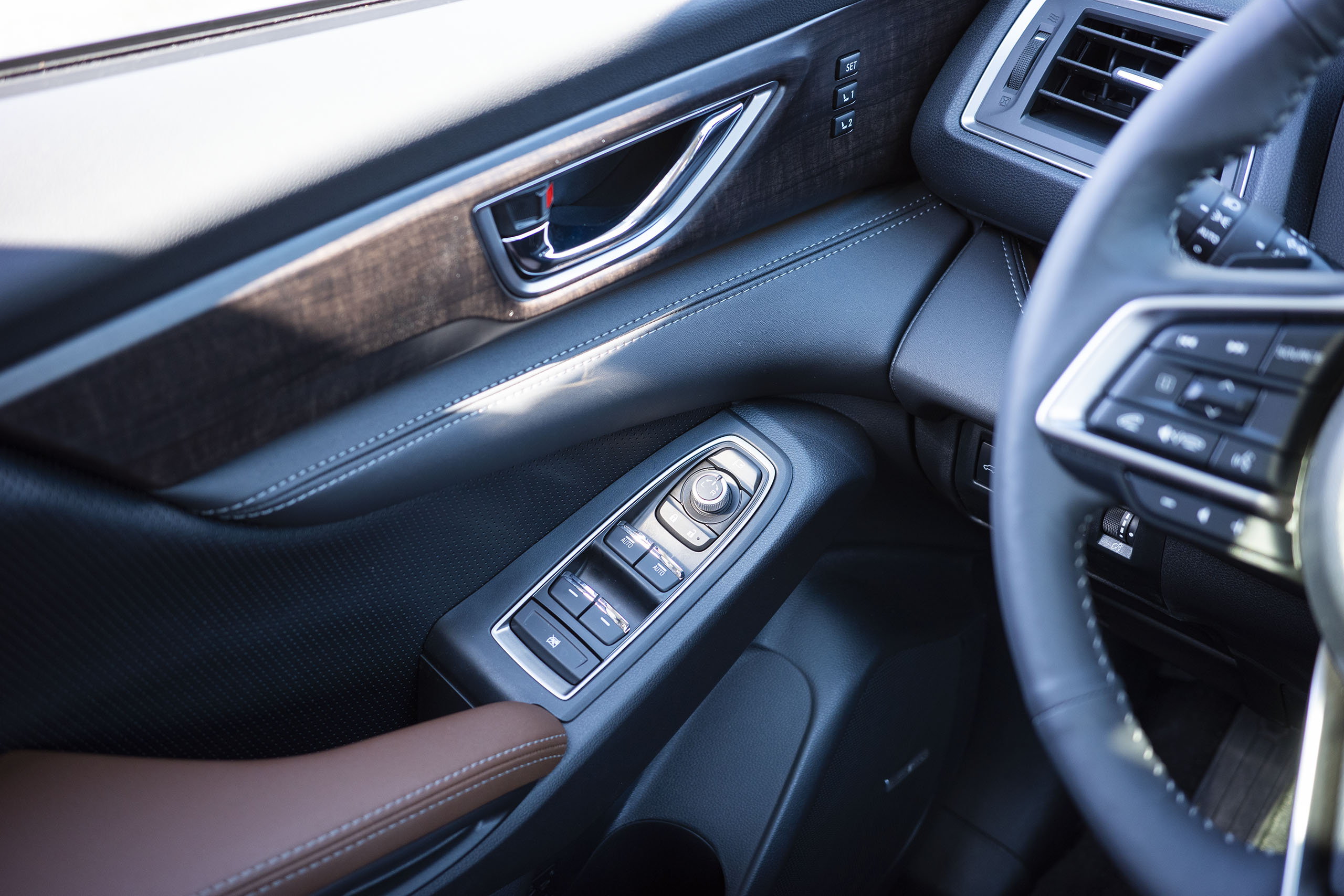
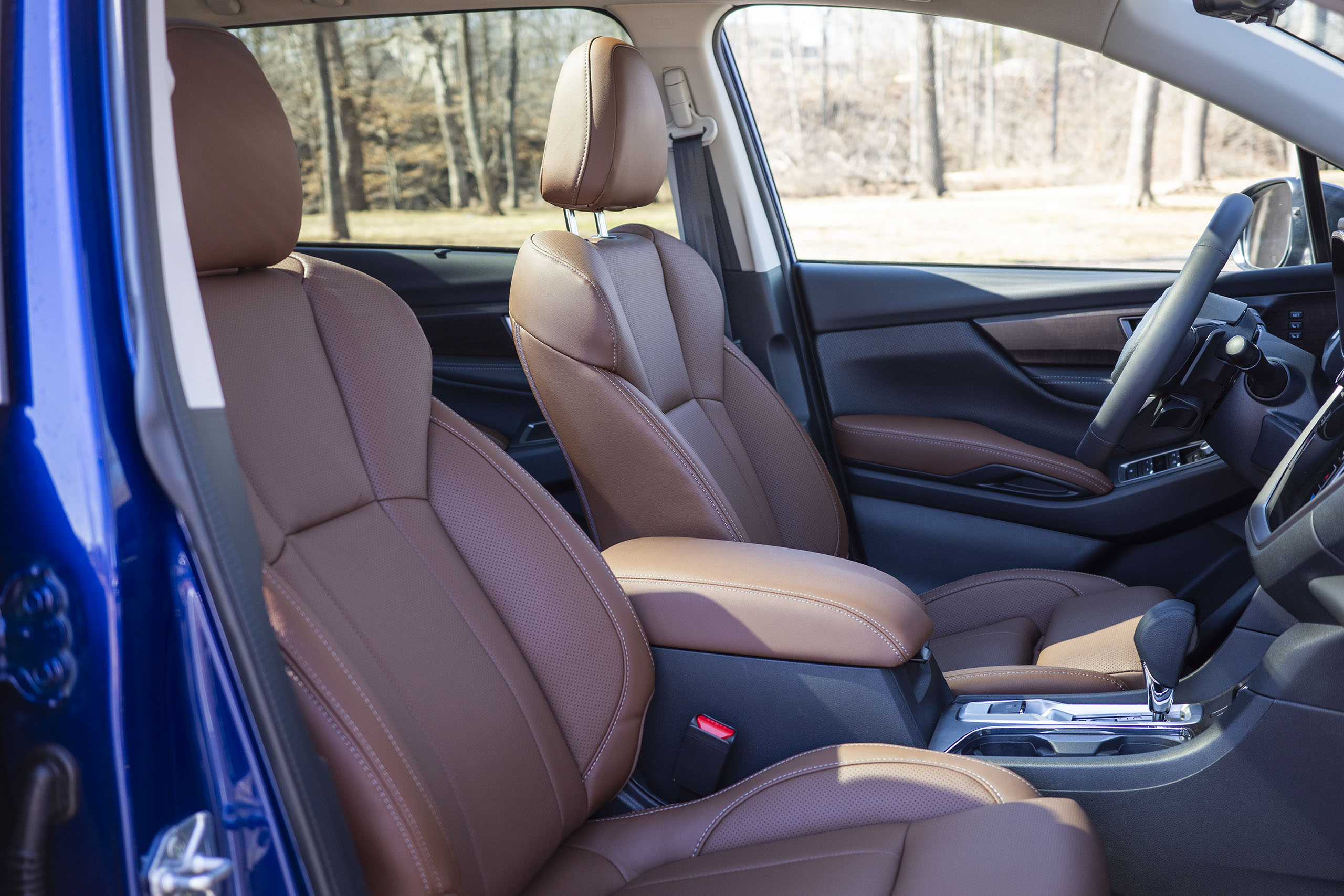
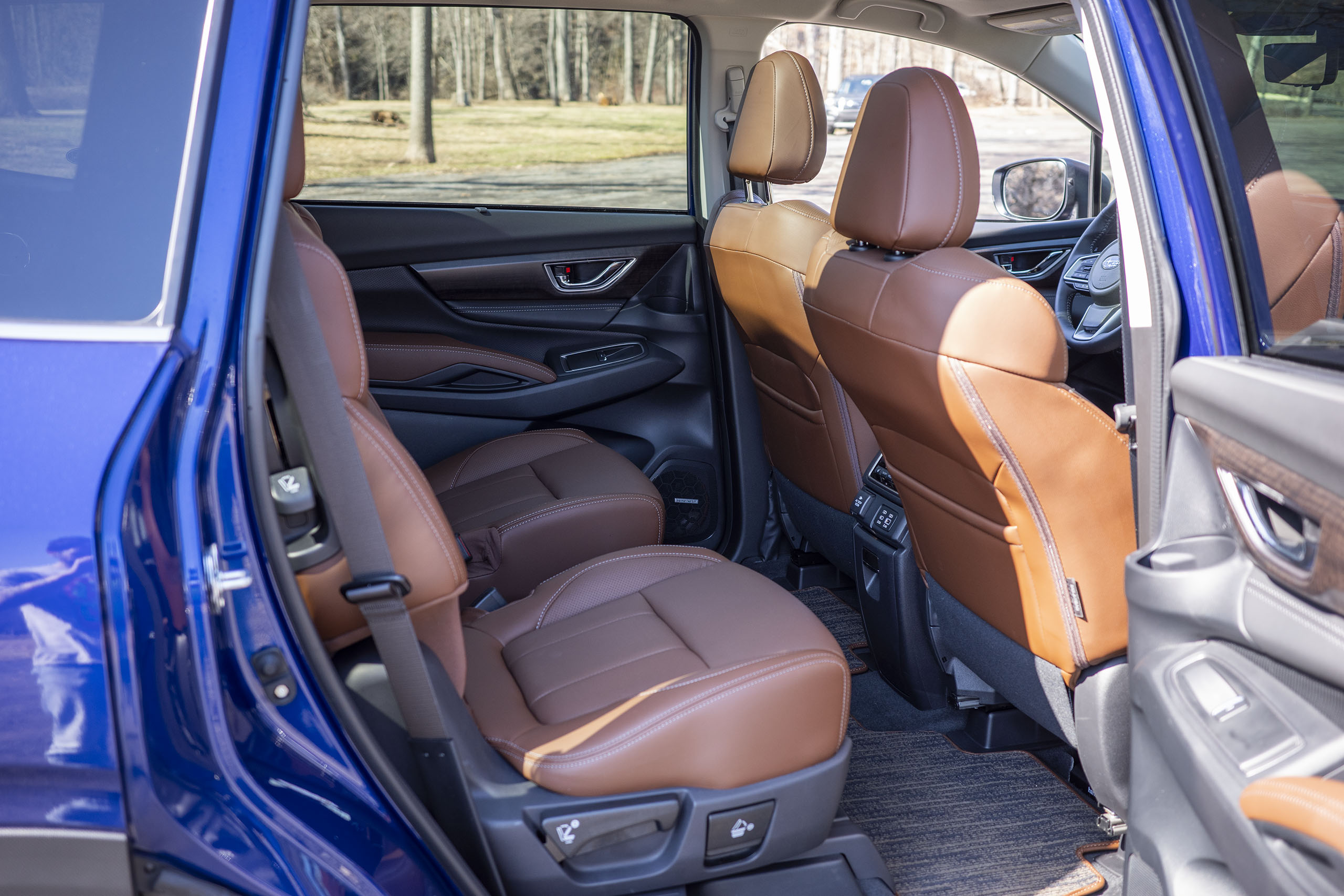
The angular, upright shape to the dash and climate vents was behind the curve by the time the Ascent first hit the market, and age has not been kind to it. It’s just an aesthetic thing, though. Thankfully, visibility is excellent in this car, as are the materials. Everything from the wood trim to the very comfortable Nappa leather seats of this Touring model felt top-class. My 5-foot-10 frame could even fit on the third-row bench, though I wouldn’t want to spend hours back there.
Adam Ismail
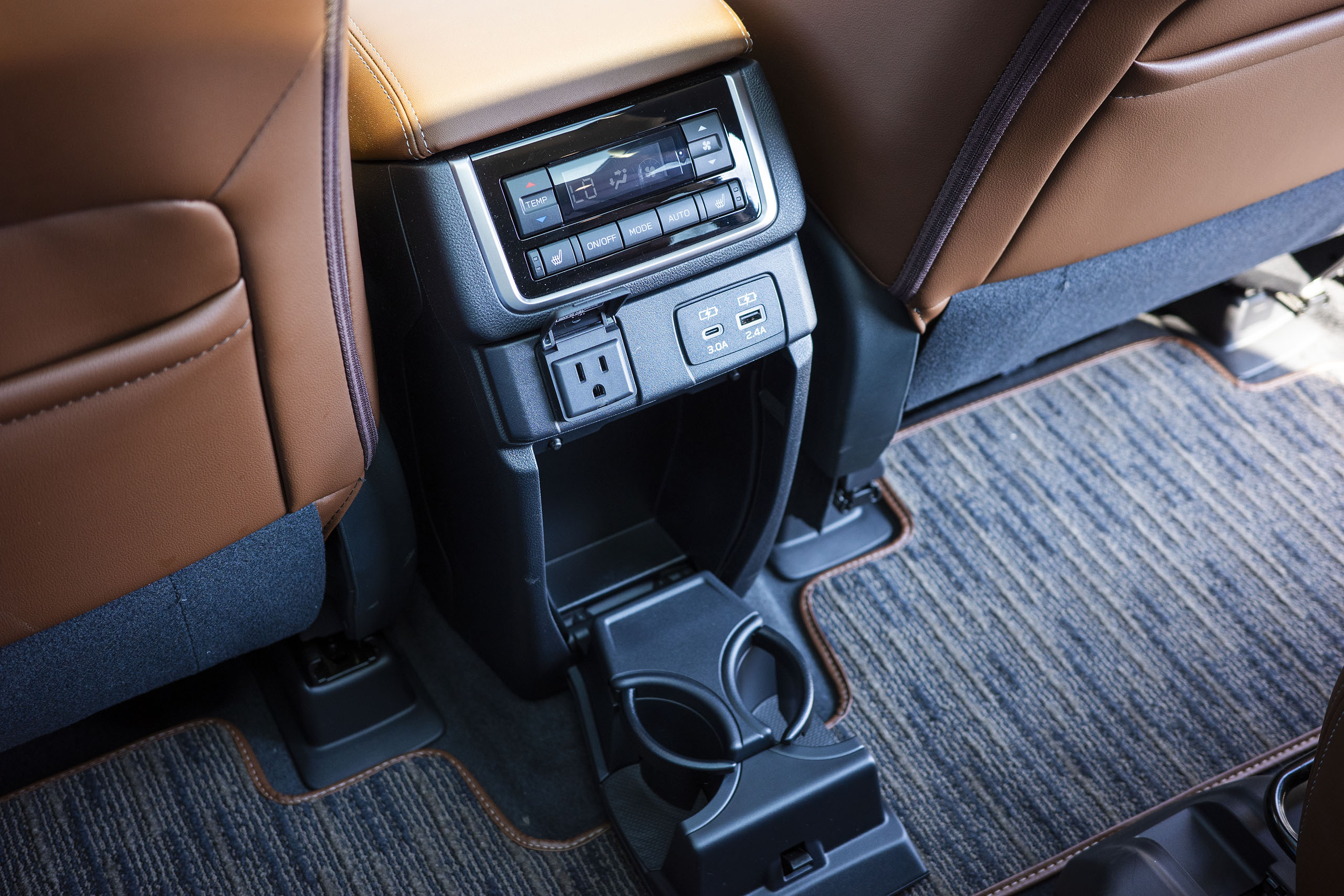
Oh, and you get cupholders—lots of them. I counted 19 in total, including a rather odd three for the right-side third-row passenger, versus two for the left.
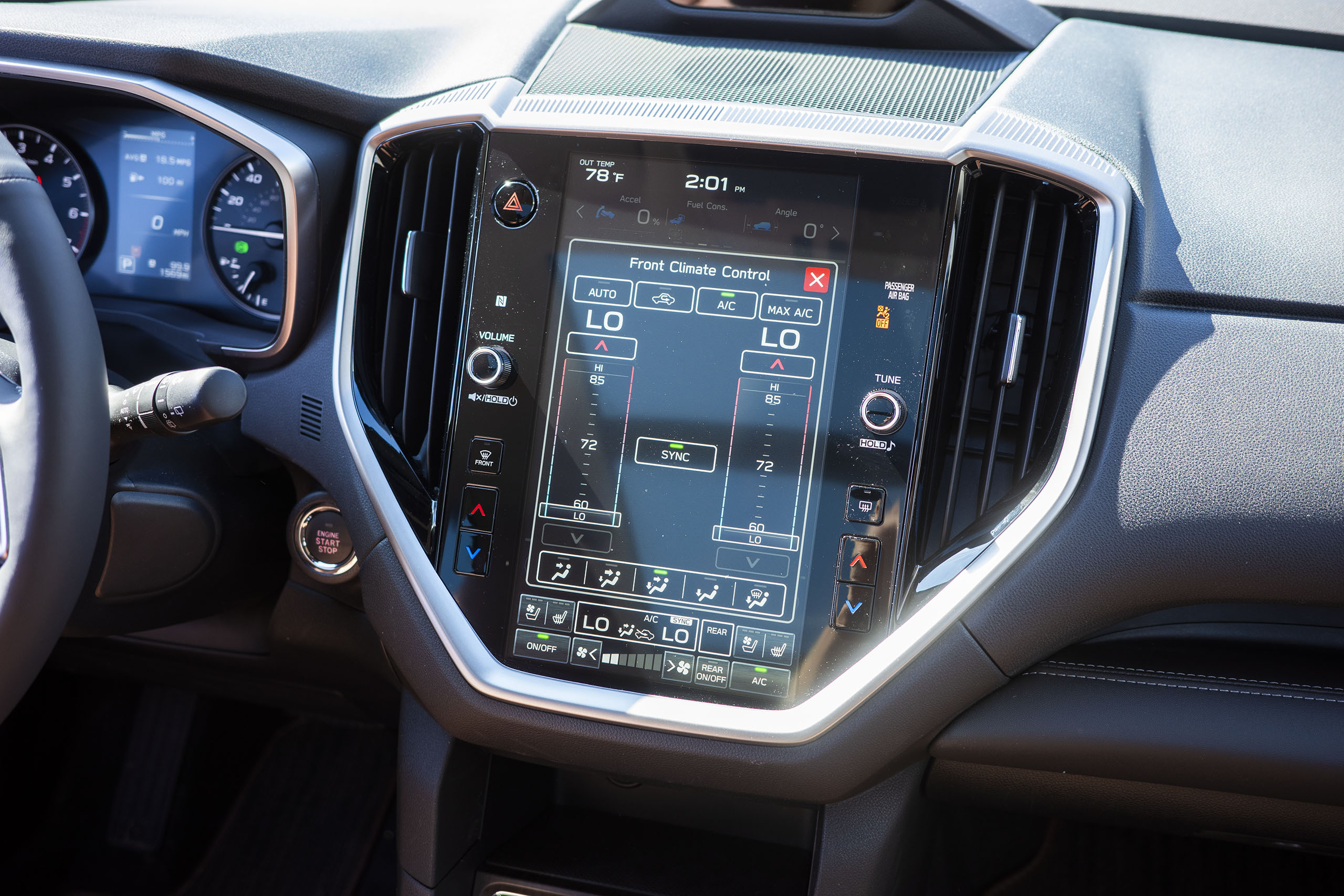
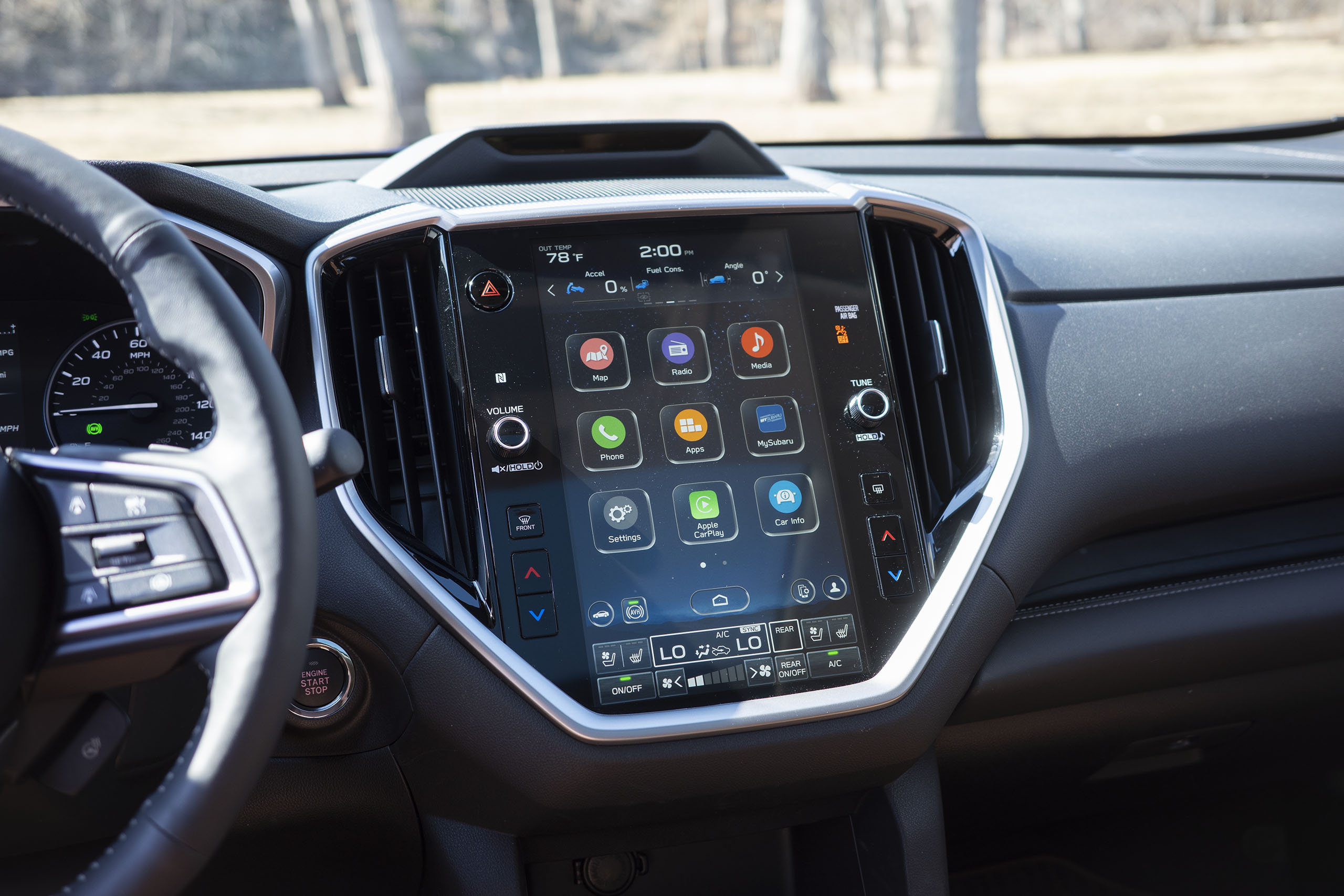
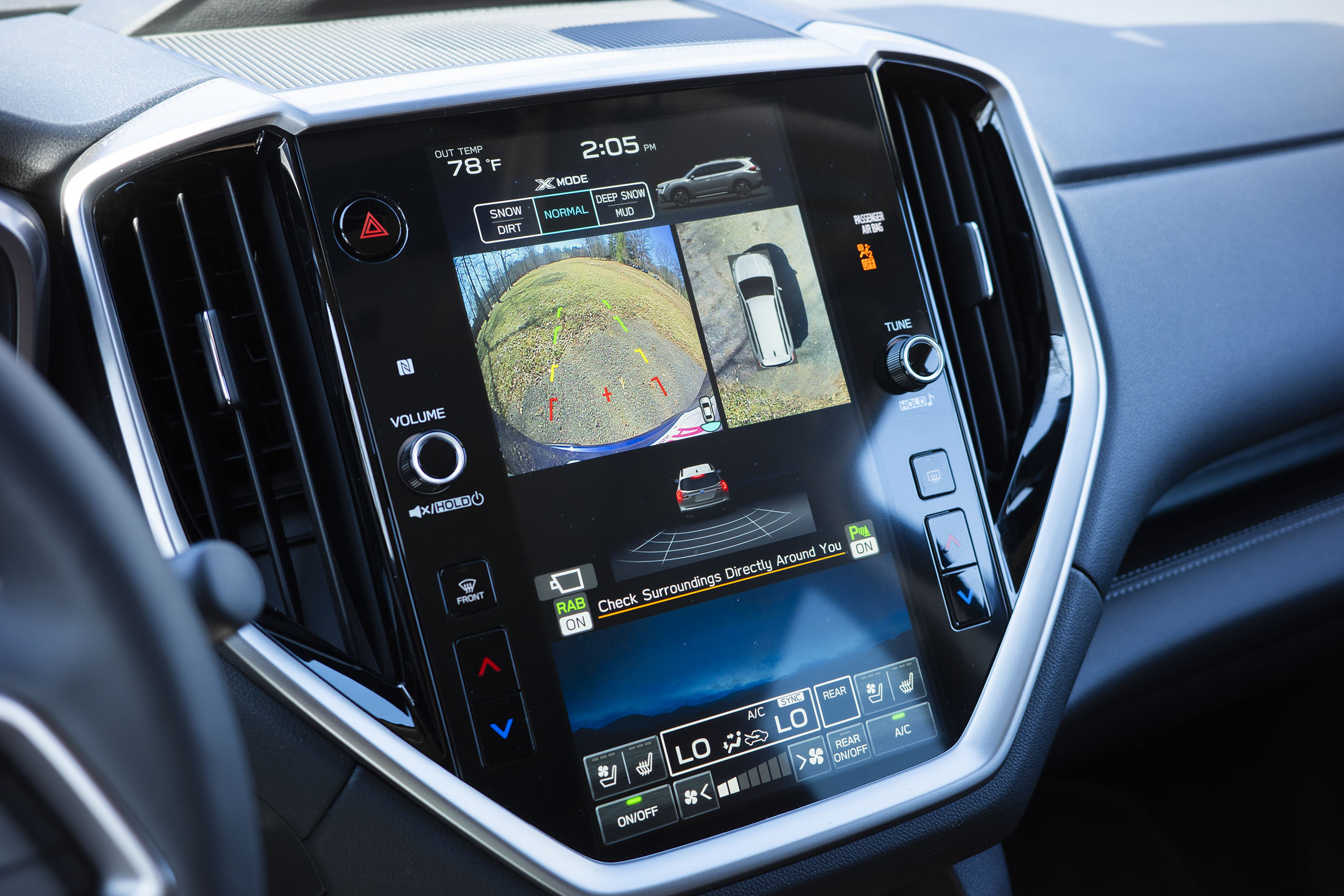
The vertically oriented 11.6-inch central touchscreen is also standard equipment, though I wouldn’t necessarily call it a perk. This is Subaru’s old infotainment system, and boy does it feel like it, with busy, garish graphics, a general lag to everything, and a reluctance to register dragging, scrolling motions.
I appreciate the plethora of simultaneous exterior cameras when reversing, but the default presentation squishes the backup camera horizontally, which screwed with my perception. You can tap on it and make it full-size, however. Adam Ismail
I don’t know if this is a resistive touchscreen—you know, the old-style ones that Palm Pilots used to have, before iPhones let the world swipe with ease—but it might as well be. The interface it runs is also just plain confusing. The top of the display is reserved for customizable widgets, but for the life of me, I could not figure out how to get the one labeled “fuel efficiency” to show any actual data. Most of the climate controls, regrettably, are all contained within a tight frame at the bottom of the panel. Unfortunately, this is one respect in which the Ascent didn’t stick to its dated ways and retain physical HVAC buttons, aside from temperature toggles.
Driving the 2026 Subaru Ascent Touring
Surprise, I know, but the Ascent is a vehicle designed to be easy to drive above all else, and it mostly succeeds in that objective. Steering is very light and the brake pedal has this sort of elasticity to it, making it very responsive to slight pressure. The ride is super compliant, so much so that it could be described as bouncy over potholed roads, as we get in the Northeast come early spring. There’s nothing sporting about the Ascent’s road manners, but at the same time, it doesn’t feel unwieldy or cumbersome on crooked routes, either.
The powertrain conversation, on the other hand, is a little more interesting. While not unique to Subaru, the Ascent’s 2.4-liter flat-four is a unique engine for this segment, with unique quirks. For starters, it’s noisy, and the CVT certainly doesn’t help things. There’s a wheezy quality to the Ascent at speed—my partner specifically said it “sounded like it has a cold”—that you just don’t expect from a three-row SUV. The cabin is otherwise well-insulated from ambient noise, but you’ll just have to tune out the motor’s bronchial rasp with time.
Adam Ismail
Take all that together, and it’s unsurprising that highway driving leaves Subaru’s biggest SUV feeling the most out of its element. Because, believe it or not, this thing has a surprising bit of pep off the line. The Ascent taps into its healthy 277 lb-ft at just 2,000 rpm, which makes it very ideal for city driving. And, as with other FA24 derivatives, that torque lasts a good while through the rev range.
On the move, though, you always kind of feel like you’re catching the CVT at a bad time whenever you flex the accelerator. It’s like you can hear it stumbling over itself, profusely apologizing for not noticing you there, or realizing you wanted to go for that pass. It’s like the Hugh Grant of powertrains, but less charmingly dotty.
Fueleconomy.gov
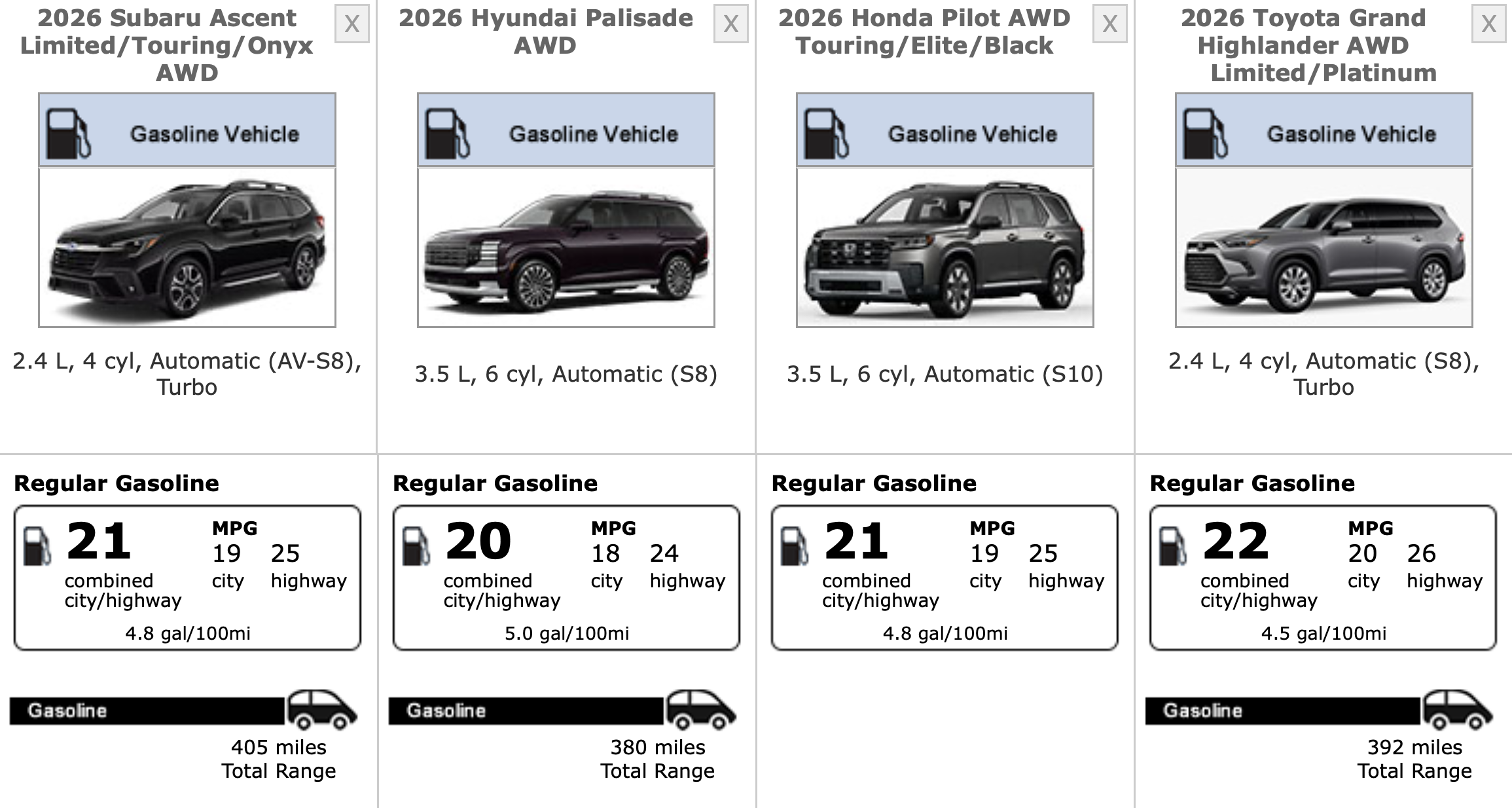
For all these idiosyncrasies, the Ascent manages only mediocre fuel efficiency within the segment. Rated 19 miles per gallon city and 25 mpg highway, I averaged 20.3 mpg predominantly on rural roads, with some interstate travel. That’s but 1 mpg ahead of the Hyundai Palisade, level with the Honda Pilot, and 1 mpg behind the Toyota Grand Highlander, if we’re talking about the base powertrain, all-wheel-drive versions of each.
Adam Ismail
Quick Verdict
Where the Subaru Ascent wins, at this point in its rather long life, is in the arenas of standard equipment and basic comfort. Those aforementioned competitors might start a hair cheaper, but offer fewer amenities at the low end; conversely, their top-trim offerings are markedly more expensive.
The Ascent targets a bang-for-buck sweet spot, and I found some of its most antiquated characteristics—like its physical gauges and 3.5-mm audio jack—strangely likable. Others, though, were just plain past their prime. In one of the most competitive automotive segments that exists, you can do better. And, I’m willing to bet, so can Subaru.
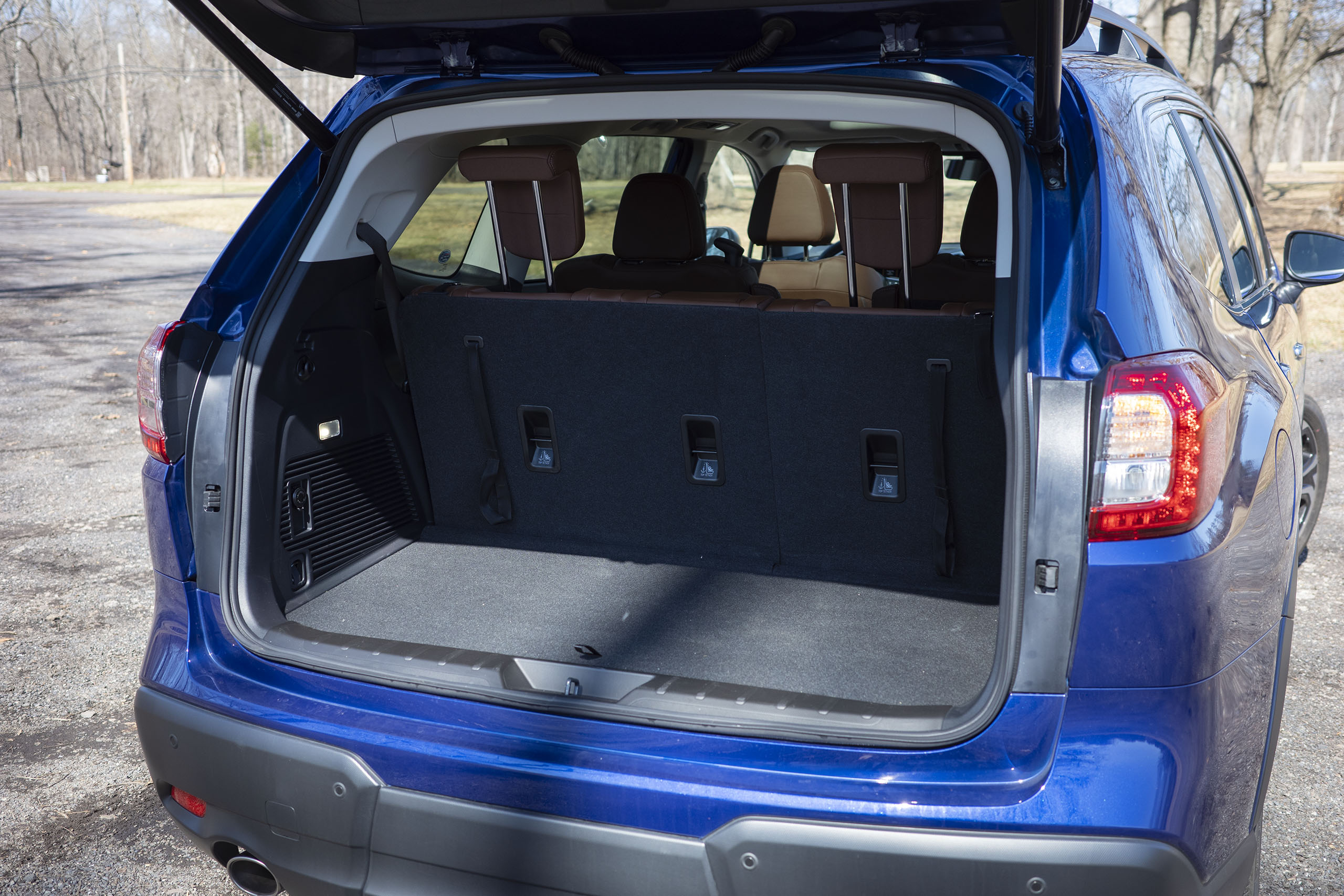
17.8 cubic feet behind third row | 43.5 cubic feet behind second row | 75.6 cubic feet behind first row
Max Towing Capacity
5,000 pounds
EPA Fuel Economy
19 mpg city | 26 highway (25 for Limited and above) | 21 combined
Score
6/10
Quick Take
The Ascent is very good at being comfortable and easy to live with. Unfortunately, so are many other three-row SUVs. Beyond that, what sets it apart is its age.
After dragging its heels on electric vehicles for years, Toyota has found itself in an unexpected position at the start of 2026: It’s winning.
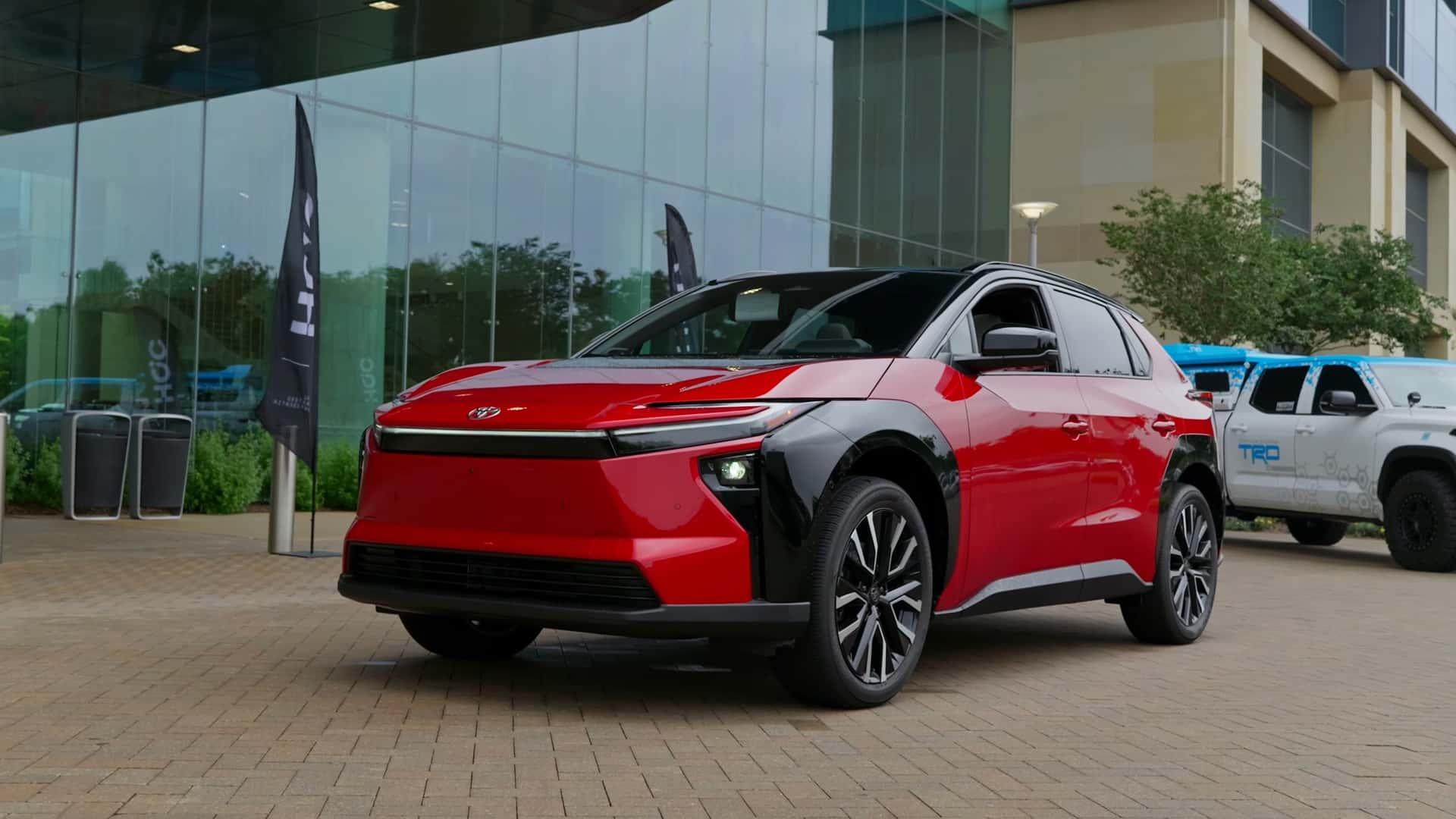
Barring any major surprises, the bZ is on track to be the country’s top-selling non-Tesla EV in the first quarter. On Wednesday, Toyota reported selling 10,029 units of the bZ crossover from January through March, a 79% gain over the same period last year. With a strong start to the year and three new electric models landing in 2026, Toyota has quickly gone from an also-ran in the EV world to a real contender.
“That’s one brand I’m going to watch in the next six months,” said Stephanie Valdez Streaty, director of industry insights at Cox Automotive.
Photo by: Patrick George
Some manufacturers have not reported their first quarter sales yet, so in theory things could change. But the bZ managed to beat out the usual suspects that tend to top America’s EV sales charts, so it will very likely hold onto the lead.
Ford sold 4,600 Mustang Mach-Es from January through March, a 60% decline year over year. Hyundai moved 9,790 Ioniq 5s, 14% more than it did in Q1 of 2025. The Chevrolet Equinox EV, last year’s top seller behind the ever-dominant Tesla Model Y and Model 3, did fairly well in Q1 too. But 9,589 units sold means it has lost its “best of the rest” crown to the bZ. (Tesla does not break out U.S.-specific sales, but it’s fair to say the Model Y and Model 3 were in a different universe.)
Meanwhile, EV sales in the U.S. as a whole fell 28% in the first quarter, Cox estimates, to some 213,000 vehicles from nearly 300,000 in the year-ago quarter. Many auto companies have slowed down or reversed their EV plans in the face of looser environmental regulations and the premature end of the federal EV tax credit. In Q1, the electric share of the U.S. car market was 5.8%, Cox says, down about two percentage points year over year.
The pullback also presents opportunity. Toyota has been lathering on above-average discounts to help sell bZs and gain market share, Valdez Streaty said.
“I think that’s their strategy: We want to buy share. And it’s working,” she said. In February, Toyota bZs were selling with incentives worth 30% of their average transaction price, according to Cox’s data. The industry-wide EV average was 14.2% that month.
“We adjust our pricing structure for each of our models based on market conditions, vehicle content, and the competitive landscape,” a Toyota spokesperson said.
Photo by: Patrick George
There are a couple of other reasons for the bZ’s sudden success. It is, hands-down, a better EV than it was last year, benefiting from a top-to-bottom makeover for the 2026 model year. Toyota slashed the price of the base model by over $2,000, bringing it to $36,350 before any discounts. The automaker bumped its maximum range to a respectable 314 miles from a paltry 252, without changing the price of that model by much. Toyota’s EVs aren’t perfect, mind you, and we at InsideEVs are consistently baffled by their lack of one-pedal driving and built-in route planning.
The strength of the Toyota brand is also undeniable. The automaker may have earned a reputation as an EV laggard among hardcore EV fans. And rightly so; the bZ4X (as it used to be called) arrived later than competitors, with worse specs and some missing capabilities. But Toyota is still a company that many Americans trust above most others to make reliable, well-priced cars. In a poll Cox conducted last year, Americans said the top brand they’d want to buy an EV from was Toyota. Another poll showed the same thing. “They have this halo effect,” Valdez Streaty said.
Now that Toyota can meet those buyers where they are—not only with a revamped bZ but also with the bZ Woodland, C-HR, and upcoming Highlander—2026 may be a very good year the company’s EV project, regardless of the timing.
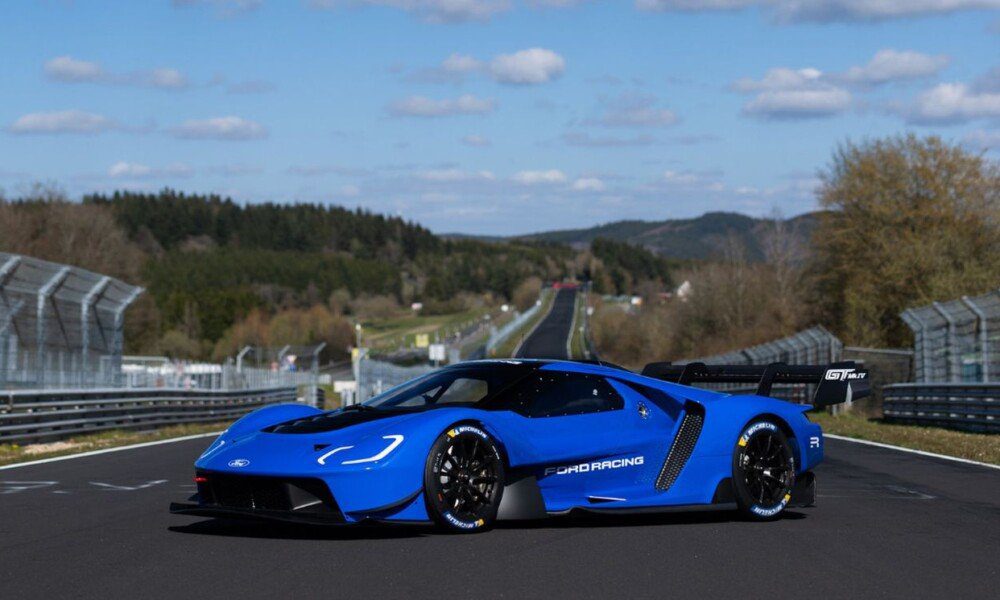
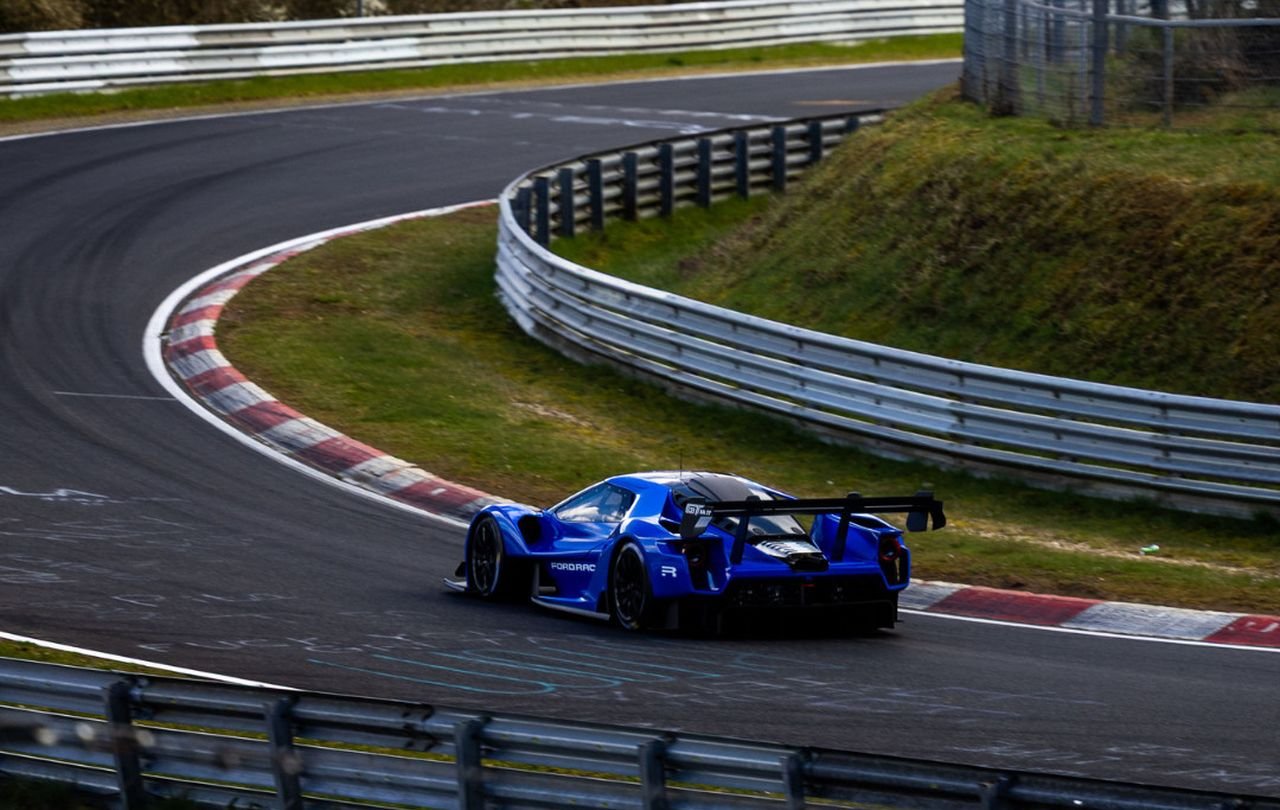
The Ford GT Mk IV has just set an official lap time at the Nurburgring Nordschleife. It completed a lap of the 12.9-mile circuit in 6 min 15.977 seconds.
It makes the Ford GT Mk IV the fastest American car at the Green Hell. It was also the third fastest overall and the fastest car that is exclusively powered by an Internal Combustion Engine (ICE).
The Ford GT Mk IV is a limited-edition track car powered by a twin-turbo EcoBoost engine. It has an estimated output of 800 hp and comes with a racing transmission. Only 67 examples were built and offered to customers at $1.7 million a piece.
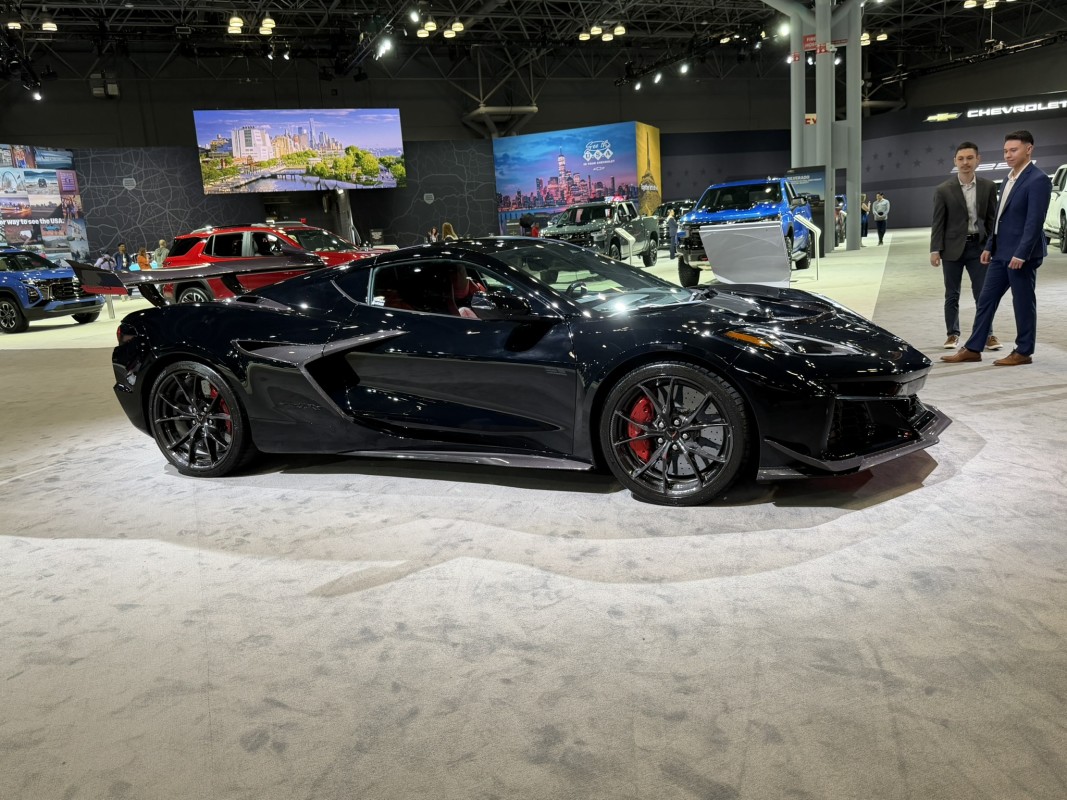
The 2026 New York Auto Show gives automakers a chance to show off the best they have on offer, especially American carmakers. Obviously, it was the perfect opportunity for Chevrolet to show off some futuristic hypercar concepts, the latest Corvette Grand Sport, as well as its fastest car on sale, the Corvette ZR1X. But instead of flaunting a mass-produced version of the ZR1X, Chevy exhibited a limited-edition version thereof, celebrating America’s quarter-millennium birthday.
Chevrolet’s 250-Year Tribute In Person
Adam Lynton/Autoblog
Adam Lynton/Autoblog
Adam Lynton/Autoblog
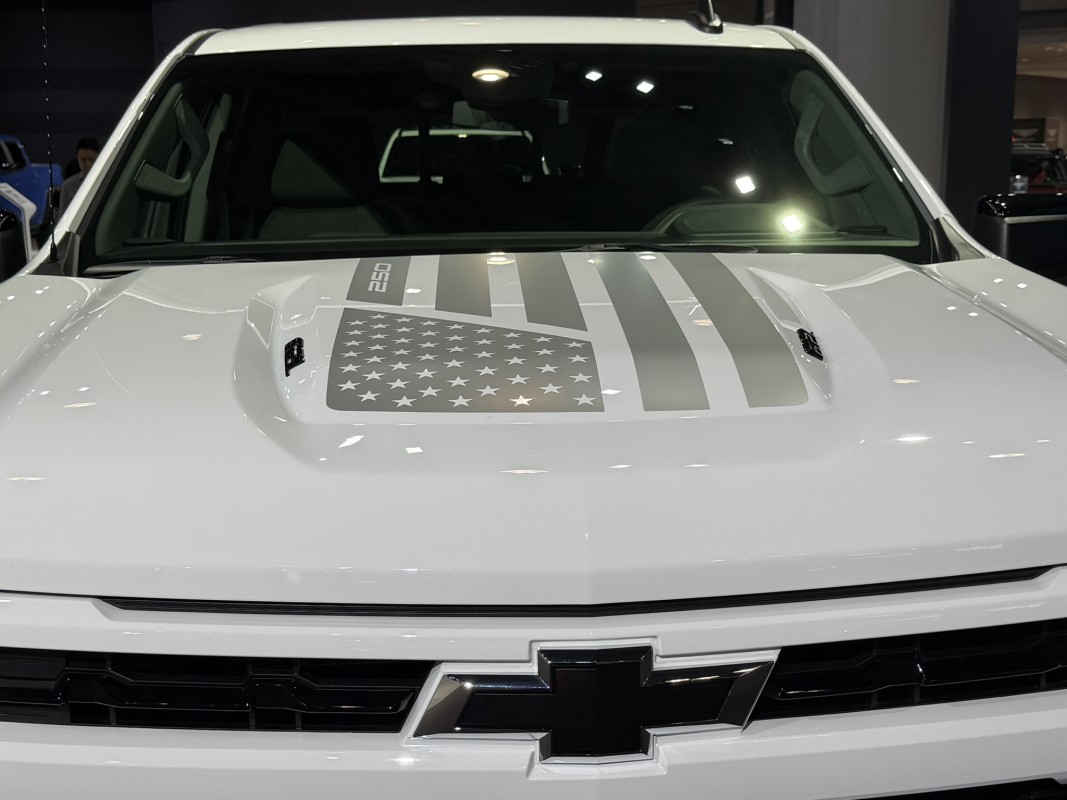
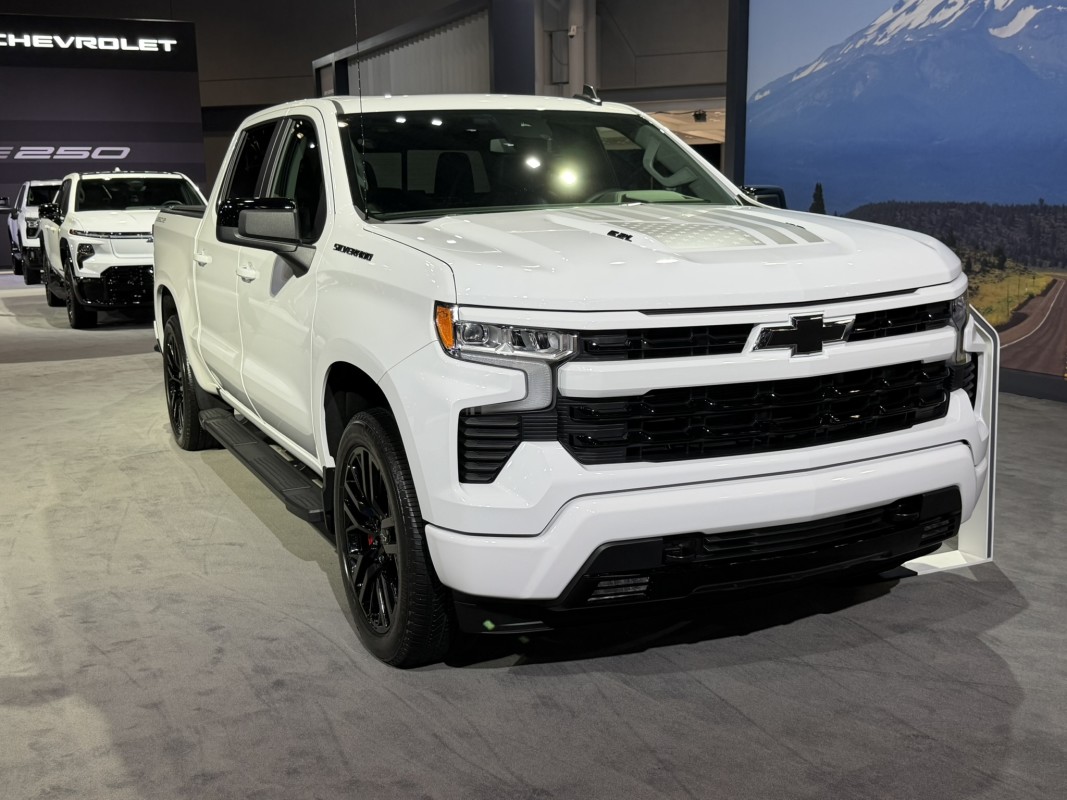
This Stars & Steel collection treats Chevrolet’s current lineup with a patriotic design pack to celebrate America’s 250th birthday. The treatment spans multiple models, including the Silverado, Colorado, and Corvette, each featuring American flag-inspired decals and “250” markings. GM says it will donate $250 from every Stars & Steel vehicle sold to NPOs that support veterans and their families.
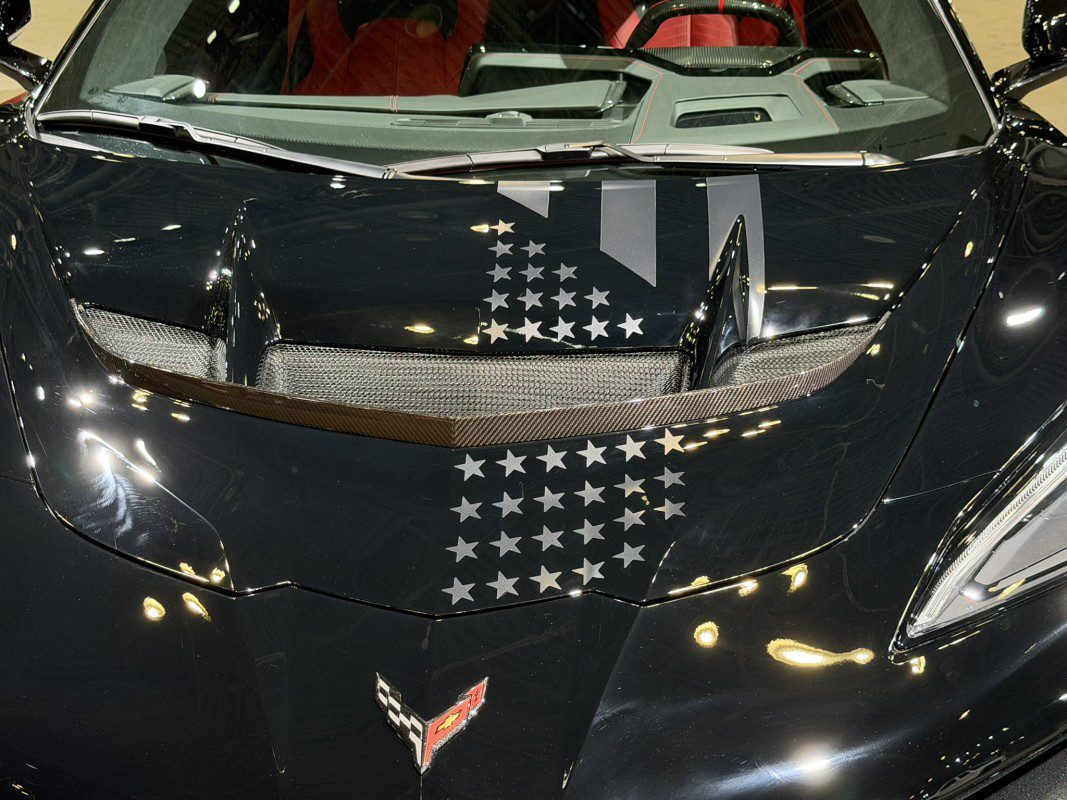
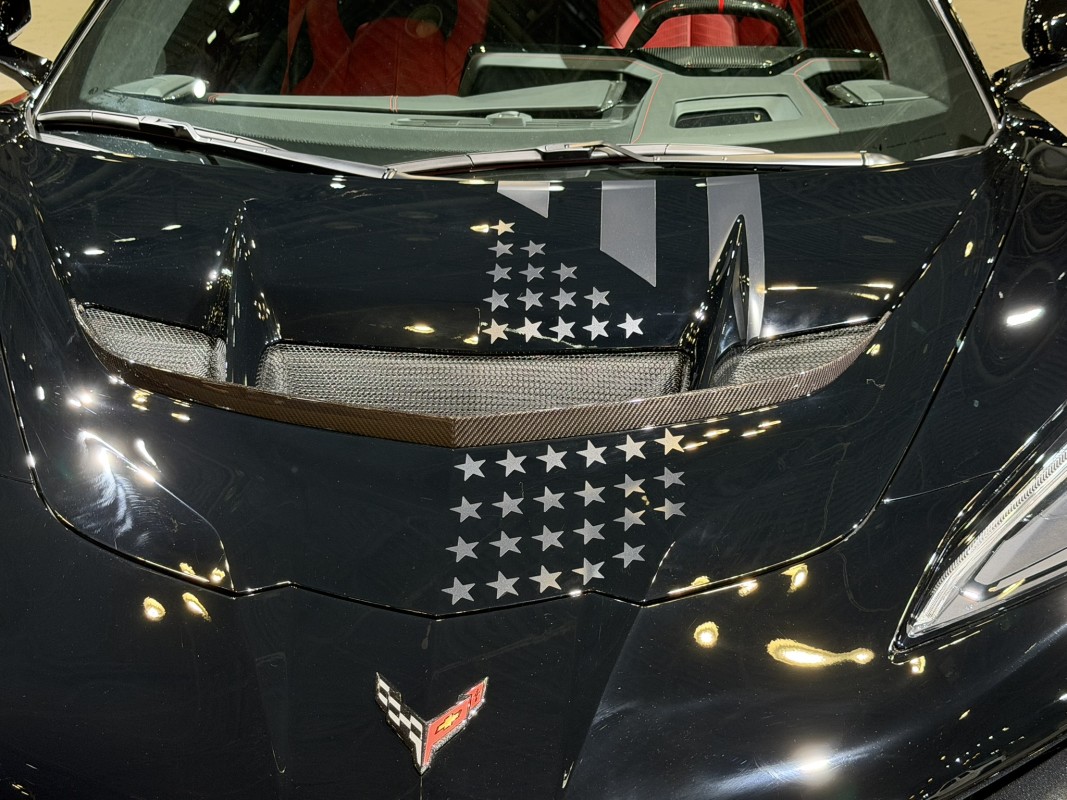
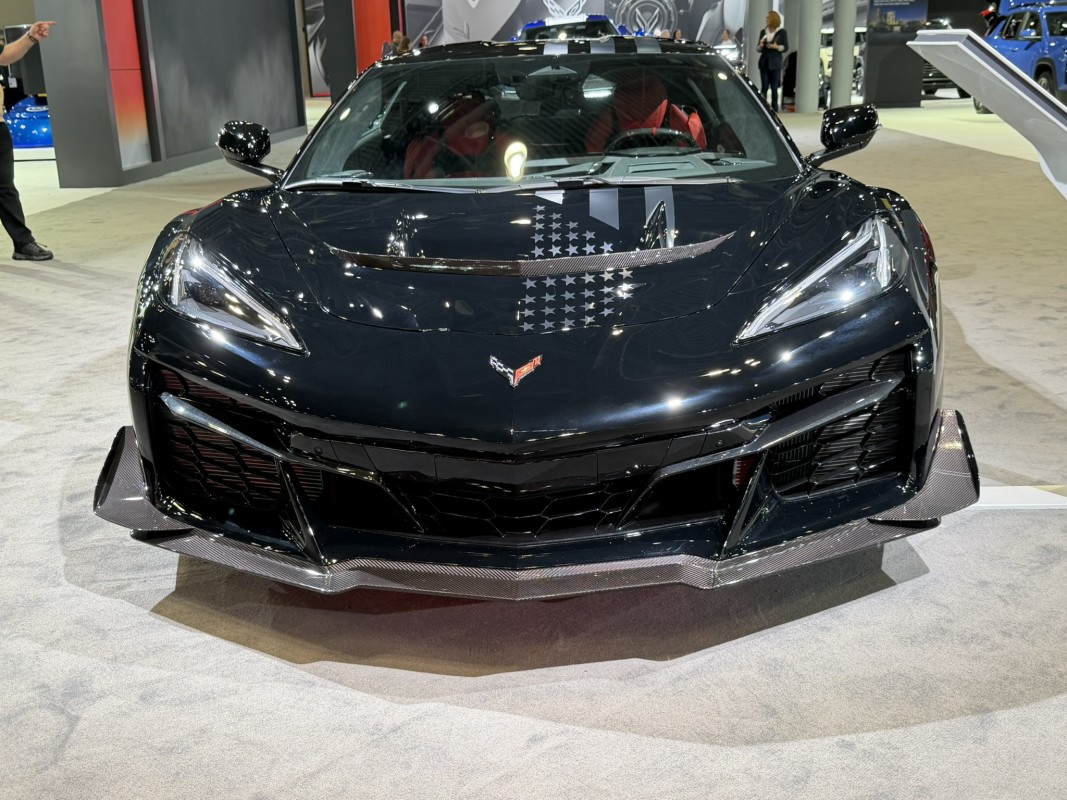
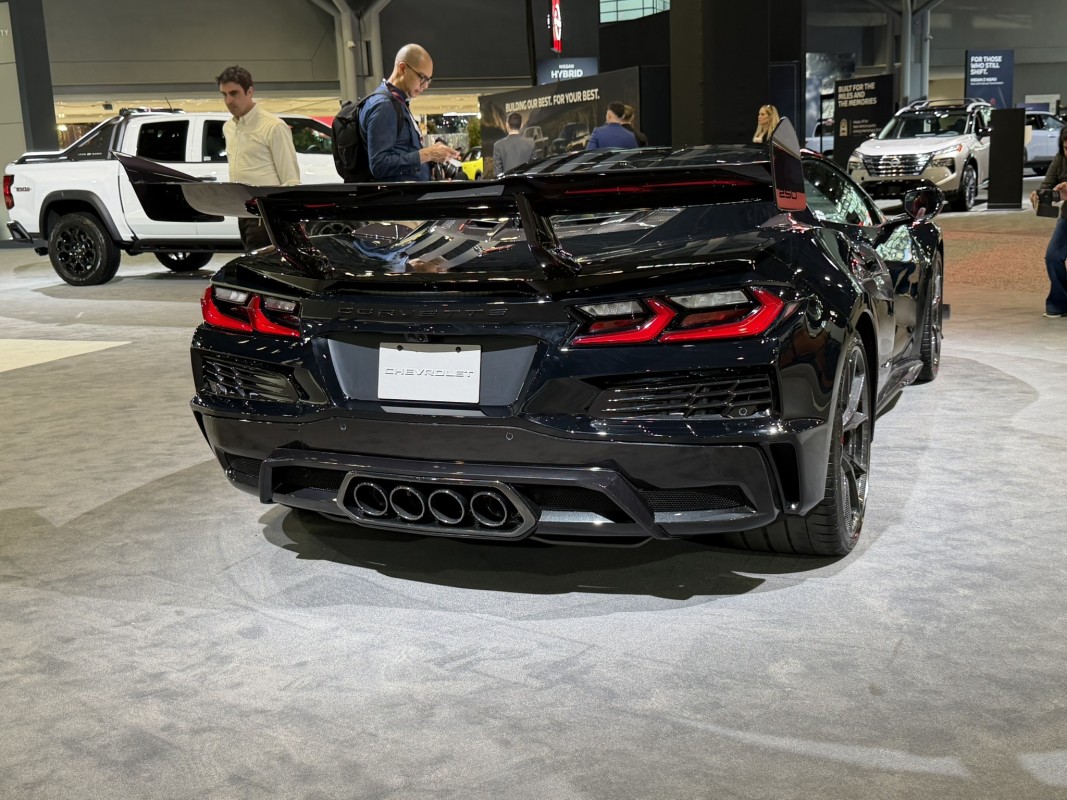
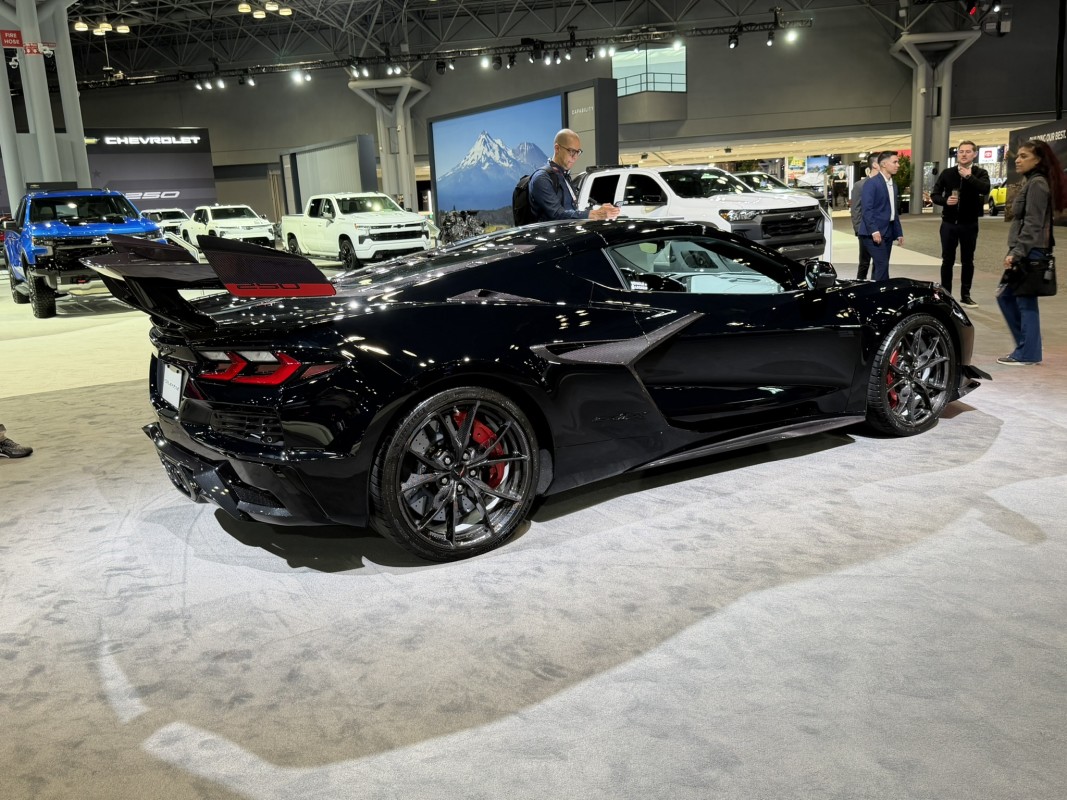
While several examples, like this white Silverado, were present at the 2026 NY Auto Show, the blacked-out Corvette stole all of our attention. Limited to just 250 units across the Corvette range, this particular ZR1X, fitted with the Carbon Fiber Aero Package, shares a similar aesthetic to the $2.6 million example that sold at a Barrett-Jackson in January this year.
The Corvette That Stole Our Attention
Adam Lynton/Autoblog
Adam Lynton/Autoblog
Adam Lynton/Autoblog
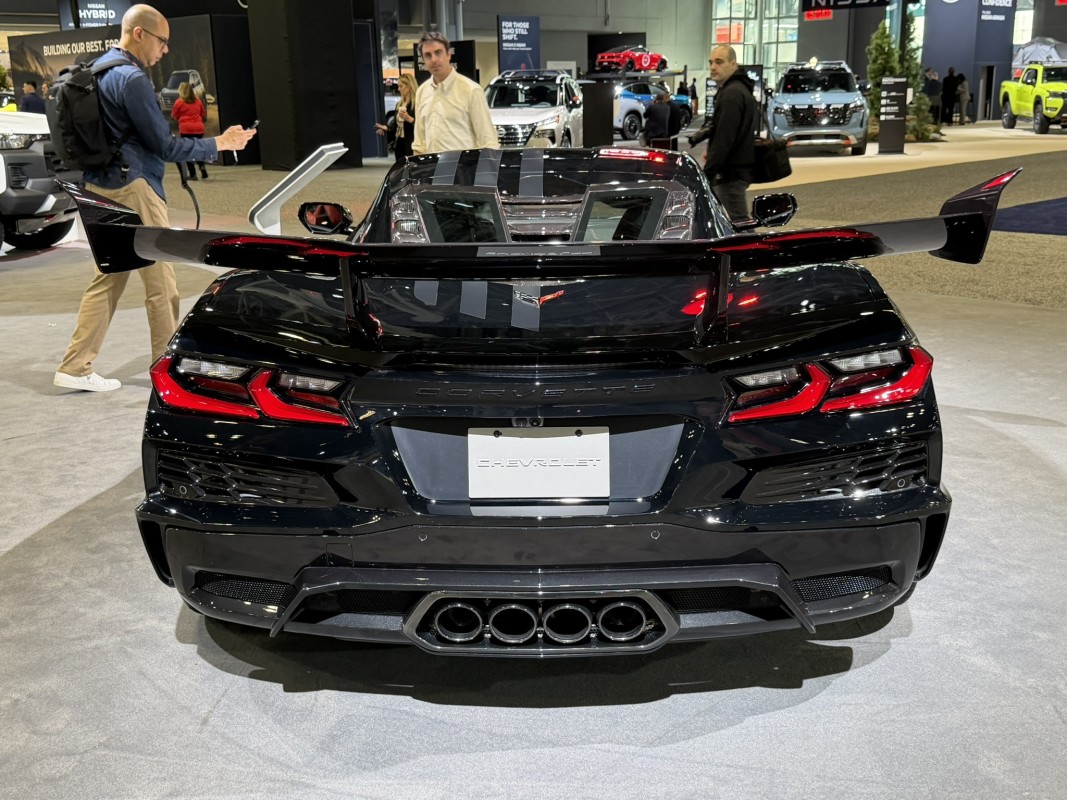
The ZR1X displayed at the NY Auto Show had a stealthy look, finished in gloss black with carbon fiber wheels. Contrasting Satin silver striping runs from the trunk to the hood, with some stars, too. Some splashes of red appear on the brake calipers and on the edges of the gargantuan rear wing to commemorate America’s 250th birthday. Inside, the theme follows the red palette, but is much less subtle.
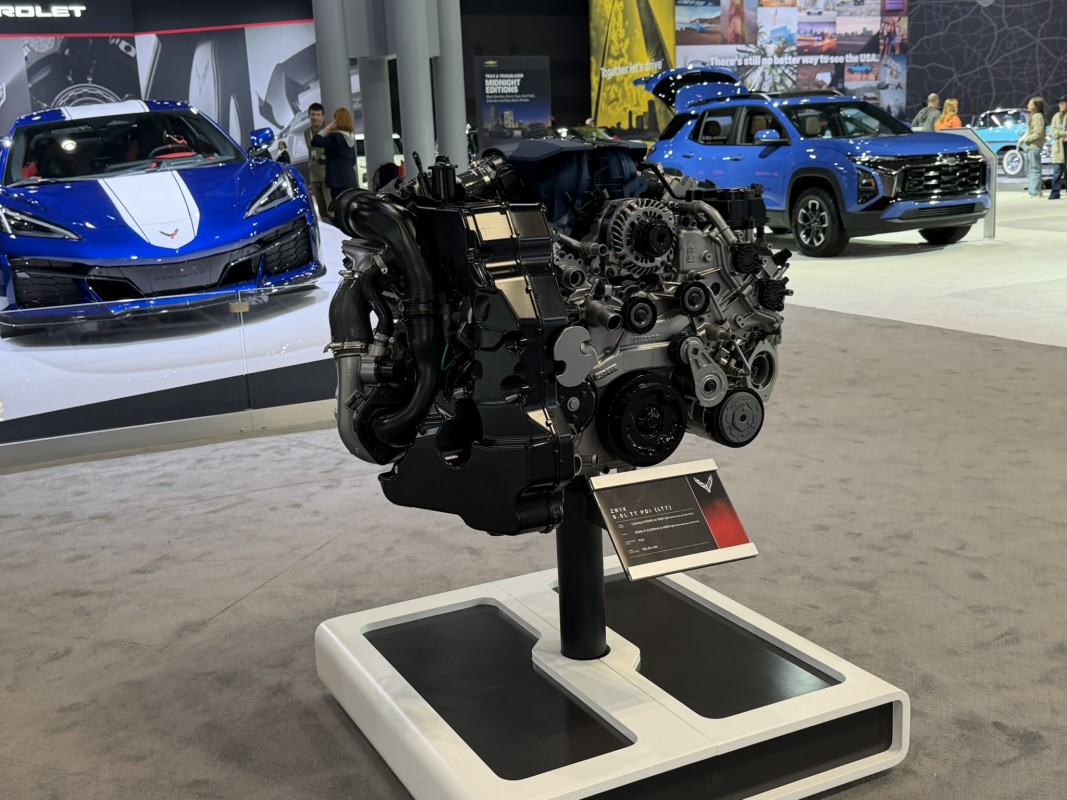
Also on display was the Chevy Corvette ZR1X’s powertrain: a 1,064 hp twin-turbocharged 5.5-liter flat-plane crank V8, dubbed the LT7. With help from an electric motor, the ZR1X has a combined 1,250 hp at its fingertips. In the real world, that allows the all-wheel-drive ZR1X to achieve a 0 to 60 mph time of just 1.68 seconds, making it the quickest production car in the world.
Nearing The End Of The C8 Corvette
Adam Lynton/Autoblog
Adam Lynton/Autoblog
Adam Lynton/Autoblog
A few days ago, GM confirmed the Grand Sport will be the last C8 Corvette model. While limited-run variants that focus on bespoke aesthetic upgrades like this Stars & Steel example will continue to exist, no core models will be added to the Corvette lineup. Knowing this makes witnessing one of the rarest C8 specifications in the flesh just all the more special.
As hot summer weather approaches, your car’s interior needs plenty of cool air to keep you and your crew comfortable around town. Too often, we take car air conditioning for granted. But having cold air in hot weather is not just another feature. It’s a necessity.
If you notice any unusual noises, odors, condensation, or temperature fluctuations, there’s a chance you could have an AC issue.
So what can we do to encourage the health of our climate control system before car AC repair is needed? How can we help our car air conditioner operate better? We asked Kelley Blue Book’s in-house service and maintenance expert, Gary Hardesty, an A.S.E. certified master technician, to share his AC expertise, and these are our top 10 tips for keeping your AC in tip-top shape.
MORE: Does AC in a Car Use Gas?
1. Watch High Engine Temperatures on Steep Grades
If your summer getaway means heading for the mountains and you’re traveling uphill on a steep grade, loaded with people and gear in hot weather, keep an eye on the engine temperature. Running the air conditioner puts extra strain on your engine, which can contribute to overheating. If you see the engine temp gauge rising, Hardesty says to turn your heat on full blast for a few minutes to help lower the engine temperature and temporarily lessen the burden on the car’s cooling system.
2. Keep “Inducts” Under the Windshield Dry and Clear
Water, dirt, and leaves at the base of the windshield reduce operating efficiency and can contribute to mold in the climate control system. The area where the hood and windshield meet is an optimal collection point for debris like pine needles and windblown leaves. Unfortunately, the air conditioning intake is in that area, making it a bad place for old leaves to decay. Hardesty suggests regularly removing any obstructions that restrict airflow, as well as smaller debris that could enter the air distribution box and plug the water drains.
3. When Odors are Detected, Act Quickly
Strange smells coming from your car’s air vents can be a sign of serious problems, but some odors may just be from the previous owner, who was a smoker or allowed pet odors to accumulate. In these cases, Hardesty says placing orange peel on your car’s floor for a few days will help. Other options include spraying an odor neutralizer like Ozium into the vents or changing the air conditioning filter.
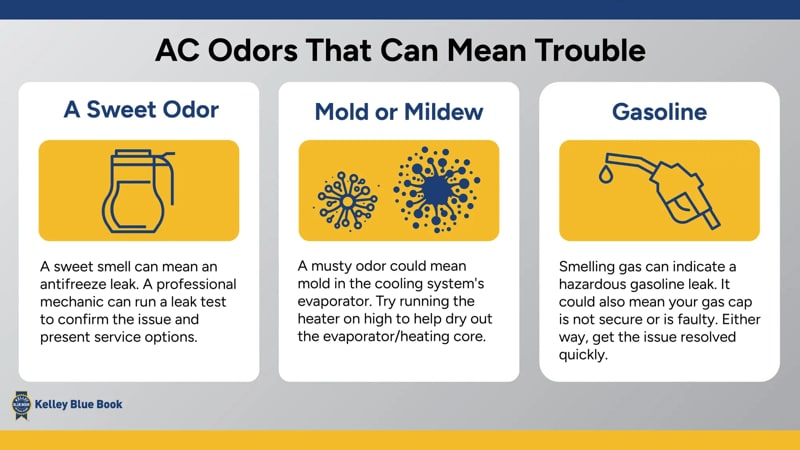
But there are some odors to watch out for that might suggest a more significant issue, including gasoline, mildew, or a sweet odor.
4. Read the Air Conditioning Section of Your Owner’s Manual
Your owner’s manual is full of recommendations and requirements for operating the vehicle, including its climate control and engine cooling systems. Refer to its guidelines for antifreeze coolant to give proper corrosion protection and help prevent overheating. In case your summer travel plans don’t include a road trip, that book in your glovebox also contains information on maintaining the air conditioning system when the vehicle is unused for extended periods.
5. Add Air Conditioning Checkpoints to Your Maintenance Schedule
Always follow the manufacturer’s recommended maintenance schedule, which includes checking system performance to determine if a car air conditioning recharge is needed. Routine inspection may detect potential problems before they become troublesome. Staying on top of AC maintenance can help improve your fuel economy while keeping the car’s interior comfortable for you and your passengers. At a minimum, have the system checked at the start of each warm season. The service should include checking the drive belt tension, cleaning the condenser fins, and completing a performance test.
6. Change the AC Filter When Needed
Changing the cabin air filter is an essential part of car air conditioning maintenance. A typical replacement interval is 30,000 miles, but drivers and passengers with airborne allergen sensitivities may need to replace filters more frequently to help prevent dust and pollen from circulating inside the car. Clean cabin filters also allow for stronger airflow and can reduce unpleasant odors. Even car owners with minimal DIY skills can save money and replace the filter themselves by following the instructions in the owner’s manual.
7. Open Windows and Start Driving, Then Turn on Your Air
Don’t expect the air conditioning to instantly cool the cabin during summer weather when the vehicle interior is blistering hot from sitting in the sun all day. You can give it a head start by opening your car’s windows to flush out hot air when you start the car and turn the blower on high. After a minute or so, close the windows and adjust the AC controls as needed to achieve comfort.
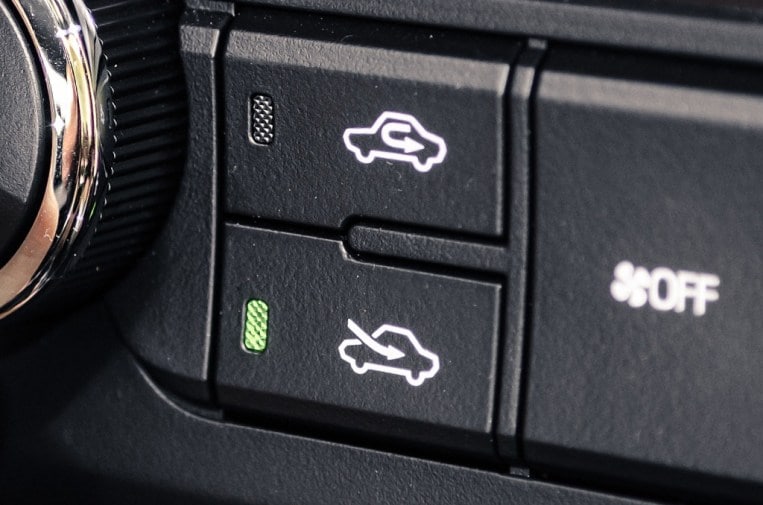
8. Use the Fresh Air Vent When Possible
Choosing between recirculating and outside-air mode can be perplexing to some people. Follow this straightforward advice: Use recirculation when outside conditions (smoke, dust, odors, or high humidity) are present. Otherwise, select outside air. Recirculation mode can make the inside air stuffy, and window fogging may occur. Extended use of this mode is not recommended. Instead, use outside-air mode whenever possible.
9. Occasionally Run the AC in Defrost Mode
According to Hardesty, the defrost mode in your car does more than take the frost off your windows. It prevents mildew and clears up moisture inside the AC unit. Doing this once a week for 5 to 10 minutes can help you avoid mold, mildew, or other unpleasant odors in your car.
10. Use Coldest Setting and Adjust the Fan
Most experts agree that setting your air conditioner to the lowest temperature is more efficient for the car’s cooling system and saves fuel. Why? Hardesty says that most cooling systems only cool the cabin by 30 degrees and then stop. If you reach that point and then set the temp higher, you also activate the heater. This dual effort strains the system and consumes more fuel. Instead, set the AC fan to low and rotate the vents away from you.
KBB Pro Tip: As with many other systems in your car, climate control weakens with wear and tear. Keep an eye out for telltale signs of common and costly issues, keep up with your regular maintenance, and don’t delay addressing any signs of trouble as soon as they arise — it could save you money and grief down the line.
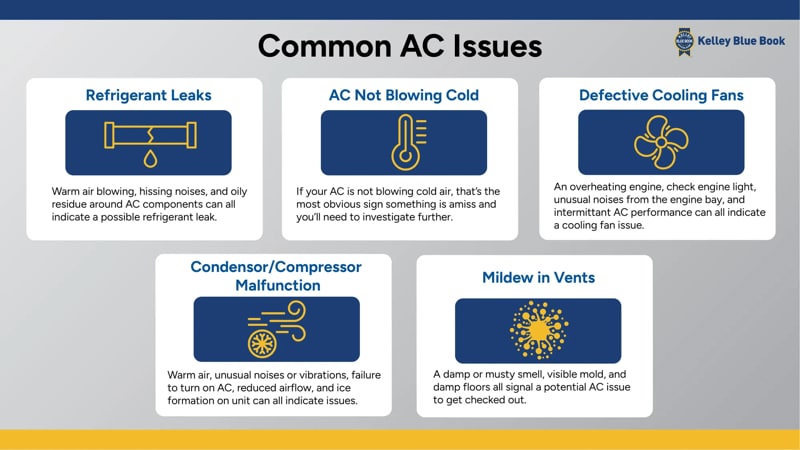
The most common issues that can constitute a visit to a service bay are refrigerant leaks, defective cooling fans, condenser/compressor malfunctions, and mildew in the vents. These services can range from $150 to $2,000, depending on the severity of the problem. Use the Kelley Blue Book Service Advisor tool to get an estimate for AC repair before making an appointment with your repair shop.
Editor’s Note: This article has been updated since its original publication. Joni Finkle contributed to this report.
According to a report by Wired, a letter sent to Senator Ed Markey by Tesla reveals that the company sometimes relies on actual human operators, driving the company’s robotaxis that are currently being tested around the US.
Some Tesla vehicles are already deployed in Austin, Texas, without a human present in the car. Instead, Tesla relies on remote operators to get the car unstuck from hairy situations. Tesla’s spokesperson clarifies that overriding Tesla’s FSD is a rare measure.
It may come as a surprise, but this is actually standard practice. Other self-driving taxi services like Waymo also have a team of remote operators that helps cars get out of complicated situations. However, Waymo and other services use operators to give the car general guidance, but never take full control of the vehicle.
The main reason not to adopt Tesla’s approach is safety. There is latency and a limited perception of the surroundings from the vehicle’s camera live feed. Not to mention, Tesla doesn’t use LiDAR and relies only on regular cameras for its FSD. This makes things a tad more difficult.
Tesla assures that there are some guardrails in place. For instance, the operator can drive the car at 2 mph and can go up to 10 mph if the system allows.