Our free daily newsletter sends the stories that really matter directly to you, every weekday.
While it’s true that some big jobs require big power, not all of them do. Plenty can be managed with modest equipment and a heaping spoonful of patience. You’ll find evidence of that at farms all over the world, where simple-seeming machinery does the work of 10 men or more. Just check out these flatbed trucks that run off single-cylinder diesel engines.
I’ve written about these small-but-mighty power plants before. Depending on your social media algorithms or your world travels, you might’ve seen how popular they are outside the United States. There are a million and one videos of ag workers across Asia using the engines—often sourced from Yanmar and Kubota—to power wagons and irrigation pumps, among other contraptions.
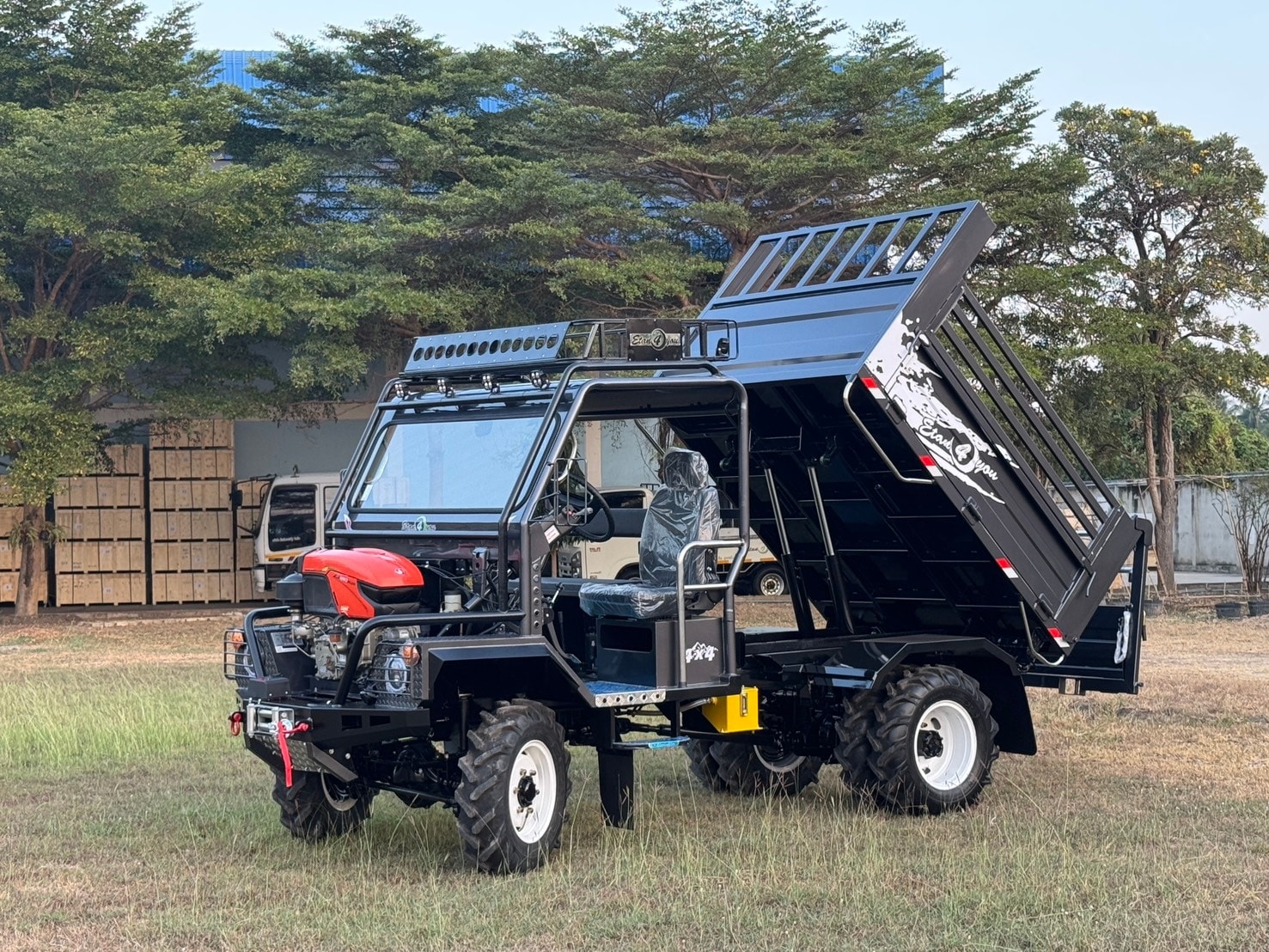
Now, these humble horseless carriages are nothing new. Folks in countries like Thailand and Laos have been using them for decades in various forms. Still, they continue to be refined, as Somvang Kubota builds them with new Etan 4U truck bodies and Kubota ZT-series engines.
The little engines that feature their own headlight are water-cooled and feature direct injection. Somvang Kubota
The result is these Unimog-looking workhorses with what appears to be a tiny tractor on the front until you realize that’s just the engine’s plastic fairing. Kitted out with winches and 4×4, you can bet they’re capable little boogers, too. When fitted with the top-tier ZT180 Plus, they make a whopping 18 horsepower at 2,400 rpm. (Others, like the tamer ZT155, make less.)
Examples of these trucks run from mild to somewhat less mild, as you can buy one with single rear wheels or duals, and a fixed stake bed or an electric dump. They’re incredibly versatile. Whether you’re hauling dirt or crops that come from it, like cassava, they ought to help get the job done.
My search for pricing has come up empty as Somvang requires you to reach out for a quote. I don’t imagine they’re terribly expensive, and you can bet they’re a heck of a lot less than the crazy UTVs we have here in the U.S. Sure, they’re down drastically on power, but you don’t see that stop anyone from using them.
Got a tip or question for the author? Contact them directly: caleb@thedrive.com
Nvidia says its latest autonomous-driving platform is gaining traction with several major automakers and mobility companies, as the steady march towards fully self-driving vehicles continues to gain momentum.
Today, at Nvidia’s GTC conference in San Jose, CEO Jensen Huang announced that the Nvidia Drive Hyperion platform will underpin upcoming Level 4-capable vehicles from Hyundai, Nissan, BYD, and Geely. These car makers join previously announced OEMs including Mercedes-Benz, Toyota, and GM.
ADVERTISEMENT – CONTINUE READING BELOW
Level 4 autonomy generally refers to vehicles that can drive themselves in certain conditions without human intervention. Notably, the only Level 3 system currently approved for use in North America—Mercedes-Benz’s Drive Pilot—does not run on Nvidia hardware, though Mercedes uses Nvidia Drive AV software for its enhanced Level 2 (aka L2++) system that we drove recently and will soon see in the 2027 Mercedes-Benz CLA.
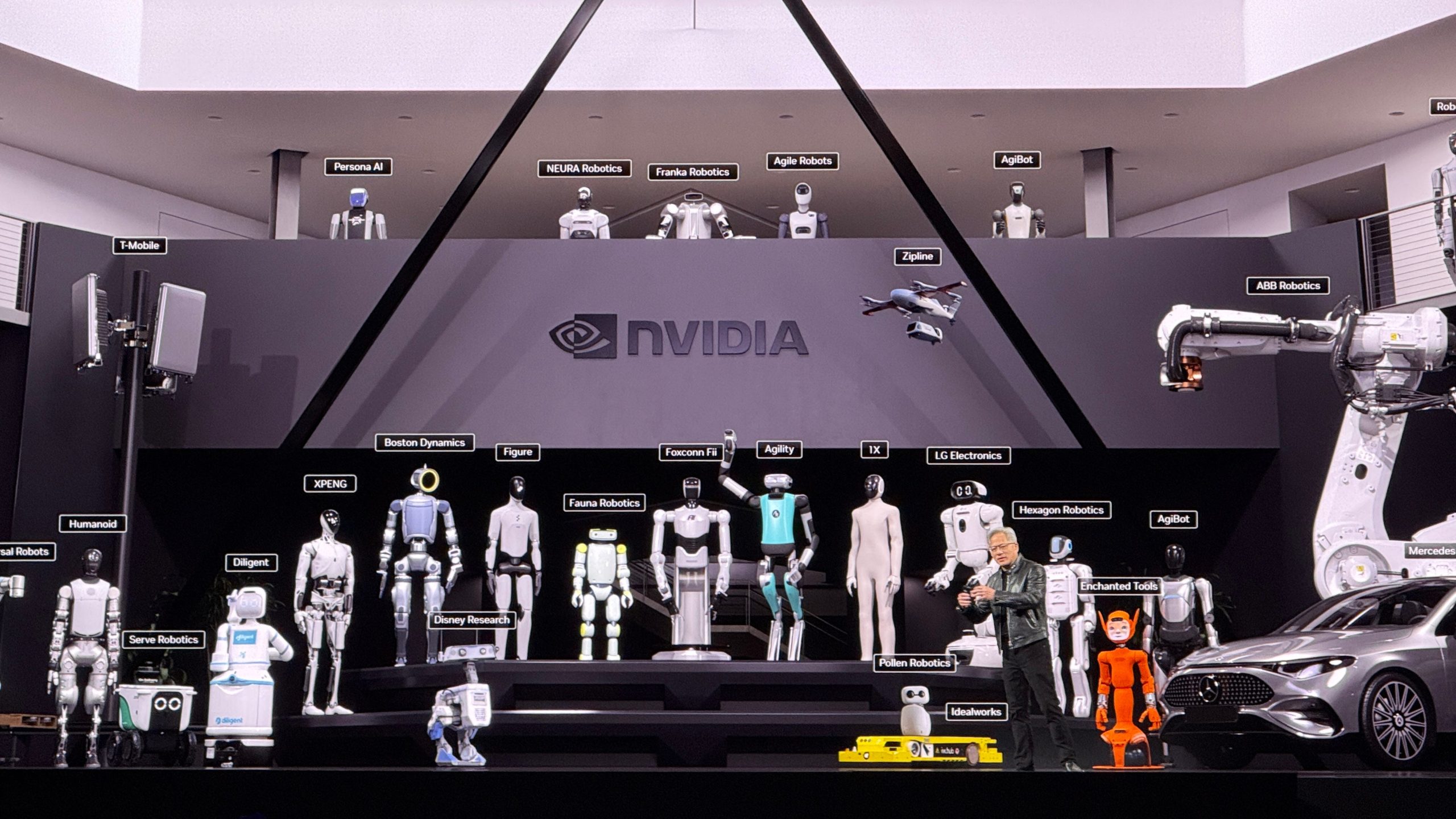
Nvidia CEO Jensen Huang showing off his “favorite slide” of GTC 2026.
The announcement is an update to the news Nvidia made at its GTC event in Washington D.C. in October of 2025, where Huang announced that Nvidia is partnering with Uber and multiple automakers to develop and deploy 100,000 self-driving taxis and delivery vehicles in the coming years.
ADVERTISEMENT – CONTINUE READING BELOW
Drive? Hyperion? Wait What Now?
While you may remember Nvidia as the maker of the graphics card for your PC that made for super sick gaming, it has evolved into the leading supplier of high-performance graphics processing units (GPUs) and so much more, including but not limited to the chips that support supercomputers, cloud computing, data centers, all forms of AI, robots, and of course, advanced driver assistance systems (ADAS), and eventually, fully autonomous cars.
Nvidia CEO Jensen Huang showing off some of the many physical AI agents, aka robots, including autonomous cars.
Drive is Nvidia’s platform for building the latter, and includes the computers, software, and AI tools that help vehicles perceive the world around them, understand what is happening and make driving decisions. Several automakers including Mercedes-Benz, Toyota, Jaguar Land Rover, BYD, and Geely have signed on to use these tools to create advanced driver-assistance and autonomous systems.
ADVERTISEMENT – CONTINUE READING BELOW
So what is Hyperion? Essentially the blueprint for how to build an autonomous driving system using Drive. In industry speak, it’s called the reference design or architecture, and it shows automakers how to combine the Drive computing platform with cameras, radar, lidar, and other hardware in a working vehicle setup. This helps companies develop autonomous cars faster because they don’t have to design the whole system from scratch. The idea is to give manufacturers a standardized starting point, reducing development time and helping companies spread autonomous systems across multiple vehicles and markets.
The big news from GTC 2026 San Jose is that Hyundai, Nissan, BYD, and Geely are developing next-generation autonomous vehicles using the platform’s compute and sensor architecture, while Isuzu is working with Japanese autonomous technology company TIER IV on a Level 4 autonomous bus project powered by Nvidia’s Drive AGX Thor system-on-a-chip.
Globally, more and more consumers are fumbling under economic pressures. And in America, where lease deals are a common way to drive something like a brand-new Toyota Corolla at a lower monthly payment, the standard three-year commitment of a lease can feel less like a convenience and more like a constraint. Because, when the monthly payment or the vehicle itself no longer fits your reality, the burning question is whether you can swap a lease without incurring too many financial implications. Navigating the exit of a lease is often met with penalties, but the scenario is far more nuanced. Understanding the mechanics of lease exits is a critical skill for any modern driver looking to maintain liquidity and flexibility in an uncertain economy.
To exit a lease contract effectively, one must look past the sales pitch and dive into the contractual fine print. While exiting such a contract is not always straightforward, it is not impossible and there are several paths to liberation. Whether you are seeking a car lease transfer or considering a total buyout, the goal remains the same: minimizing liability while maximizing your personal mobility.
This article only serves as a guide to make a more informed decision regarding an active or future lease. The fine print should be discussed with the automaker or dealer you go into an agreement with.
4 Ways To Swap A Lease
Lease Transfer Or Lease Swap
car lease handshake new car financingAntoni Shkraba Studio / Pexels
A car lease transfer is the most efficient exit strategy if you want to walk away from a vehicle without paying thousands in early termination fees. What it essentially means is that you are finding a third party to take over the remaining months of your contract. Many people ask, “can you transfer a car lease to another person?” and the answer is generally yes, provided your leasing company allows it. So, how does a lease transfer work? You list your vehicle on a secondary marketplace, find a qualified buyer, and initiate a credit check through the original lessor. This car lease swap effectively replaces your name with theirs on the legal title. Once the transferring lease process is complete, you are free.
However, when researching how swapping a lease works, you must verify if the manufacturer offers a full release of liability, ensuring you aren’t on the hook if the new driver defaults. While you might sublease car terms in some jurisdictions, a formal transfer is the best way for protection.
If You Want To Trade In At A Dealership
nissan dealershipErik Mclean / Pexels
Trading in a lease at a dealership is often the path of least resistance. In this scenario, the dealership acts as the middleman, valuing your car based on current market rates and comparing it to your current buyout price. In simple terms: If the car is worth more than the remaining balance on your lease, you possess positive equity, which can be applied as a down payment on a new vehicle or, in rare cases, paid out to you in cash. However, if the vehicle’s market value is lower than the buyout, you face negative equity.
On the other side of the coin, if the used-car market is hot and inventory is low, dealerships are often desperate for quality inventory and may be willing to cover your remaining payments just to get the car on their lot. It’s not a guarantee, but this might be the best thing to hope for. While convenient, this method is authoritative and final, because once the trade-in is executed, you lose any potential profit that a private sale might have yielded. A dealership trade-in remains the preferred choice for those who value speed and administrative simplicity.
Buyout & Sell If You Have The Advantage
car dealershipAntoni Shkraba via Pexels
The “Buyout and Sell” strategy is a power move for those who find themselves with a vehicle that has depreciated at a much slower rate than the leasing company originally predicted. You exercise your purchase option and then immediately sell it to a private party or a dedicated car-buying service at a potential profit. However, in many states, you must pay sales tax when you buy out the lease, which can eat into your profit margins unless you sell the car within a very specific “tax-free” window (often only 10 days in certain jurisdictions). For this, sellers must keep an eagle eye on market trends, because varying factors (like recalls or a drop in demand) can impact how much you sell the car for.
Early Termination Is An Option, But It’s Risky
budget money car lease financeTima Miroshnichenko / Pexels
Early termination is the “nuclear option” of lease exits, because it is the most straightforward but arguably the most expensive way to end a lease. When you return the vehicle to the dealership before the contract ends without a trade-in or transfer in place, you are essentially breaking a legal contract, and you are typically charged the early termination fee – which is often the difference between the remaining payments and the realized value of the car at auction – plus a flat disposition fee. Before choosing this path, you must request an early payoff quote from your lender to see the exact damage. Sometimes, the lender will offer a voluntary repossession if you cannot pay, but this will impact your credit score negatively and should be avoided at all costs. If you are considering early termination, it is almost always better to explore a lease swap or a dealership trade-in first.
Consider These 3 Variables
There Are Always Costs & Penalties
money dollarKarolina Grabowska / Pexels
Exiting a lease is rarely a cost-free endeavor. Even in a “clean” transfer, expect to pay a transfer fee to the leasing company. If you are opting for a trade-in or early termination, you must account for disposition fees – the cost the dealer charges to clean up and resell the car. Furthermore, if the car has excess wear and tear, or has exceeded its mileage limits, these costs are tallied, too. And if you are using a third-party to handle the lease swap, there are membership and listing fees to consider. When you swap a lease, you generally do not get the down payment back from the new driver, so when you exit a lease deal early, you stand to lose more from a monetary point.
Ask The Right Questions To Avoid Transfer Restrictions
new car buy lease financeAntoni Shkraba Studio / Pexels
Not all lease contracts are created equal. Some lenders (like Honda/Acura or Nissan/Infiniti) have historically restricted the ability to transfer a lease to a third party entirely, or they may allow a transfer but keep the original lessee secondarily liable. This is critical because secondary liability means that if the person who took over your lease stops making payments or totals the car without insurance, the bank can legally come after you for the balance. Additionally, most brands have a blackout period where they will not allow a swap if there are fewer than six months (and sometimes 12 months) remaining on the contract.
So, before you even list your car on a swap site, you must call your lender and ask three specific questions:
“Do you allow third-party transfers?”
“Do I remain liable after the transfer?”
“What is the minimum time remaining required for a swap?”
Continue Paying Until You Have The All-Clear
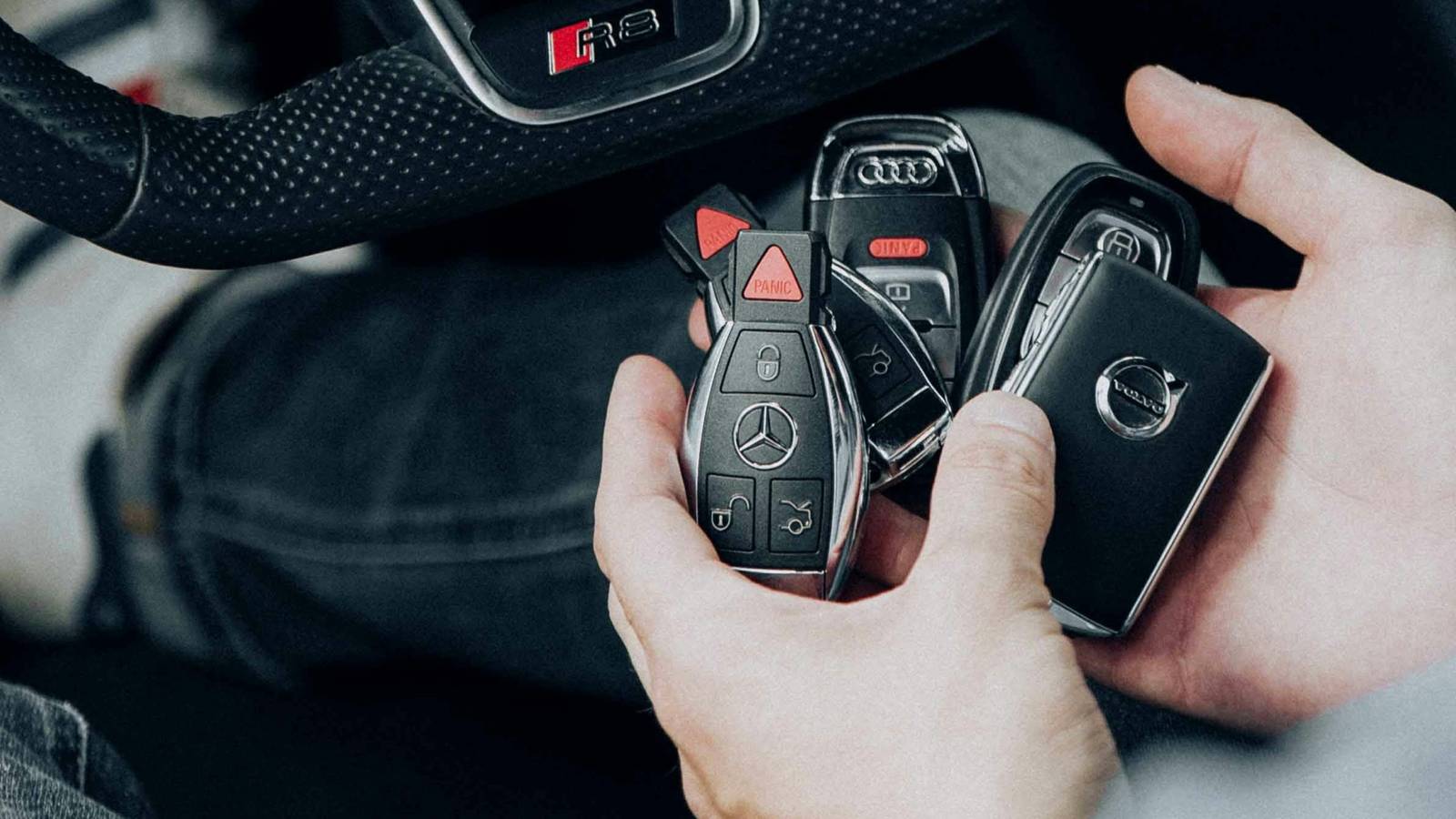
mercedes-benz keyMohit Hambiria / Pexels
Until the leasing company sends you a formal ‘Transfer of Equity’ or ‘Release of Liability’ document, you are the legal owner and the primary debtor. Many drivers make the mistake of stopping their automatic payments the moment they hand over the keys to a new driver. If the paperwork is stuck in a processing backlog for three weeks and a payment date passes, a 30-day late mark will hit your credit report, which can stay there for seven years. You must maintain all payments, insurance coverage, and registration fees until the lessor confirms in writing that the account is closed in your name. Only when you receive the final ‘Paid in Full’ or ‘Account Closed’ notice can you truly consider yourself free of the lease.
Verdict: Should You Swap Your Lease?
Pros & Cons Of A Lease Swap
Pros
Cons
Avoids massive early termination fees
Protects your credit score from default
Immediate relief from monthly payments
No long-term commitment to a vehicle
Requires a qualified credit applicant
Potential secondary liability risks
Upfront transfer and listing fees
Loss of any down payment/DAS money
Deciding to swap a lease is a calculation of utility versus cost. If your debt-to-income ratio is tightening or you simply no longer drive the 1,000 miles a month you projected, a swap is a proactive financial defense. However, if you are deep into the final year of the lease, the fees associated with a transfer might outweigh the savings of the remaining payments. If a lease swap is the only solution, a swap is most effective when executed 12 to 24 months into a 36-month term. Critically, you must evaluate the market and ask if your car is in demand because a swap is not a way to get your money back.
For those with high-mileage lifestyles who are approaching their limit early, a swap is an important way to avoid a massive bill at the end of the term. Conversely, if you have very low mileage, your car might be worth more as a trade-in than a swap, as the equity belongs to you. Always run the numbers on a trade-in, a private sale, and a swap simultaneously, because the “should” in “should you swap?” is answered by whichever path leaves the most capital in your pocket while satisfying your needs.
FORD Australia has announced a $4000 fuel card on selected Ranger and Everest models as a sweetener it says will help ease cost of living pressures for its customers.
Available on run-out (MY26 and older) Ranger and Everest Trend variants, the offer is paired with sharpened pricing on Ranger Hybrid (PHEV) in a move Ford Australia says will help buyers navigate a challenging economic climate.
The Ranger Hybrid is now available from $62,000 in XLT guise, $66,000 for the Sport variant, $70,000 for the Wildtrak, and $73,000 for the flagship Stormtrak. The driveaway offers are now available from Ford dealers nationally.
Separately, there is an additional $1000 discount on Ranger, Ranger Hybrid, and Ranger Super Duty models for farming businesses that are registered as Primary Producers.
“These initiatives are designed to help our customers, from small business owners to families, get through this challenging financial period,” said Ford Australia and New Zealand president and CEO Fadi Mawal.
The offers are available from 1 April until 30 June or until applicable vehicles are sold out.
EVERYTHING’S going up. Sticker shock for new cars is getting as overwhelming as the shock motorists are getting slapped with when refuelling at the bowser.
Despite a competitive new-car market, car prices are still moving up and brands are stretching out their model range from light cars through to SUVs and 4WDs.
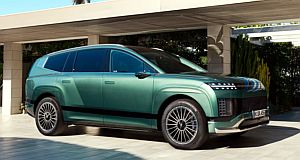
Into this, Hyundai, once the maker of ‘cheap and cheerful’ cars, has launched its most expensive model – ever – and it’s neither a 4WD nor a luxury saloon. It’s a, umm, SUV. I think. Perhaps it’s a people mover.
Whatever, the Ioniq 9 is now the biggest electric model from Hyundai and also the most expensive with a Euro-beating $119,750 (plus costs) starter in its single-variant Calligraphy grade.
If you want the six-seat version – which inserts two swivelling captain seats in the second row instead of a bench – then add $2000 to that and if you want the digital (camera) side viewers (previously known as mirrors), add another $3000. That’s $124,750 plus on-road costs. In addition, any other paint colour (except white) will set you back up to $1000.
That’s the bad news out of the way because the rest of the big Ioniq 9 – the follow-up to the Ioniq 5, 5N, and 6 – is very impressive in its role at anything starting from a commuter to a long-distance tourer to a shopping trolley, big family bus and even a cargo hauler.
The Ioniq 9 has a five-star ANCAP rating with the main points being the 84 per cent adult occupant; 86 per cent child occupant; and 85 per cent for the safety assist category.
Included in its safety inventory are 10 airbags (including head airbags through to the third row); autonomous emergency braking (AEB) including bicycle, motorcycle, pedestrian and intersection monitor; adaptive cruise with stop and go; blind spot monitor with side cameras; rear cross-traffic alert; 36-degree cameras; lane keeping, assist and following; driver attention warning; road sign recognition; active pop-up bonnet (for pedestrian safety);
The view monitor side cameras, also fitted to some other Hyundai and Kia models, is a great safety feature that is triggered by the indicator switch and shows views to the rear down the side of the vehicle, picking up pedestrians, other vehicles and obstacles including curbs, low fences and walls.
There’s also connected car safety features including eCall. The car gets breakdown help thanks to the complimentary five-year Bluelink subscription.
It is very practical and really doesn’t become all things to all owners. Even moving from dropping kids off at school to taking the bicycles to a trail in the hills is as simple as opening the (electric) side doors or tailgate and loading.
So in effect, it’s more than one car. It will do the things most wagons, sedans, utes and vans can do, and probably add in some light off-road work thanks to its all-wheel drive layout.
As an EV it will steer clear of those nasty people bowsers and will go as far as 600km on a charge, says Hyundai, while cossetting occupants in Bose audio sound, on massaging and heated seats (front) and in relative silence because of clever acoustic glass, active noise cancelling, lots of sound deadening and all the inherent smoothness and hushed operation of the electric motors.
The Ioniq 9 has a five-year, unlimited warranty but if you keep the car serviced at a Hyundai dealer, that goes to seven years. The battery has an eight-year, 160,000km warranty.
Hyundai also offers roadside assistance for life, again if the car is serviced at Hyundai.
Ownership costs are also reduced as it gets a long service interval of 24 months or 30,000km (whichever comes first) which costs $668 for two years (one service) and $1361 for four years.
Driving Impressions
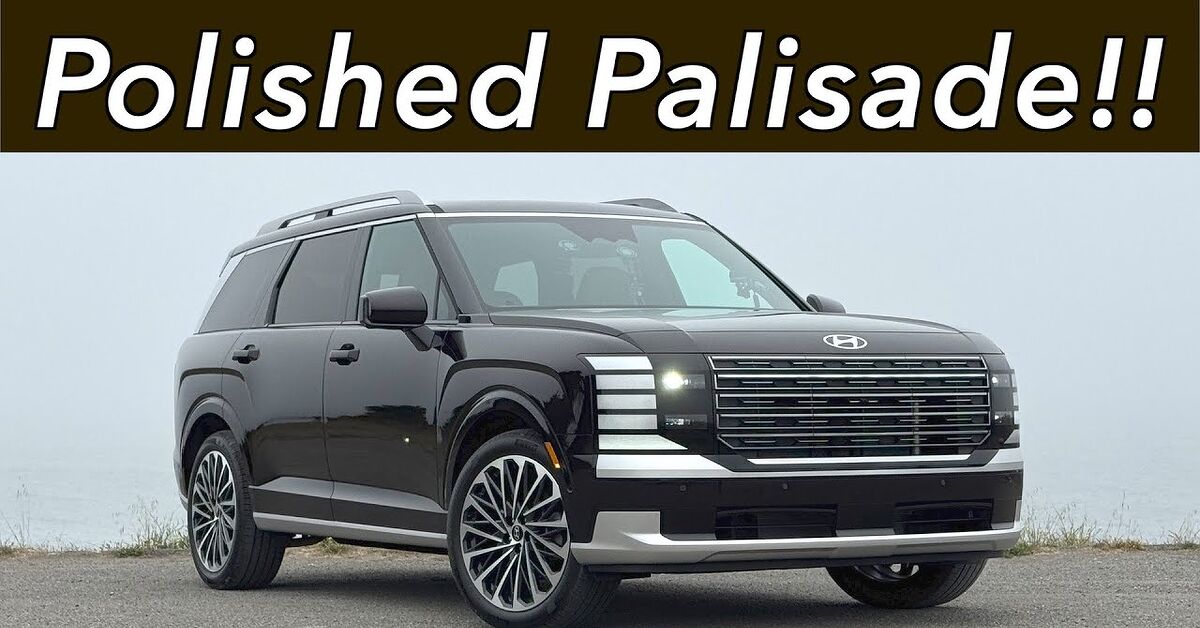
The Ioniq 9 is big, physically a large chamfered rectangle that shares some lines with the Santa Fe and Palisade, but has sufficient identity to make it stand out on the road.
Those dimensions – 5m long, 2m wide and 1.8m high – and the wide 12.5m turning circle require driver patience and acute selective powers to find a suitable parking bay, including your home garage.
You also need to become cognisant of narrow roads, congested traffic and narrow laneways.
The weight – a hefty 2744kg – also affects handling. While the ride is comfortable on smooth and straight roads, the Ioniq 9 isn’t a vehicle to be hustled through the bends.
It has plenty of grip but driver exuberance will induce body roll through the bends and possibly a few words of complaint from the occupants.
It also tends to ride firmly on irregular bitumen roads, but not to the point of being too uncomfortable.
In all other respects, the Ioniq 9 drives so smoothly and quietly that it’s got to be one of the most relaxed driver cars on the market.
The cabin is open, clean, bright (pastel colours everywhere) and has controls that are logical, well placed and thankfully minimal touchscreen commands, with Hyundai including manual buttons for high-frequency functions such as HVAC.
Like a loungeroom, the seating room is spacious and the driving position is excellent with a wide view through the glass that is enhanced by the 360-degree camera and side-view monitors.
I’m not overly sure about the rear-view ‘mirrors”. These digital cameras relay the background via wide monitors at the bottom of the windscreen pillars. It’s effective, clear and the image in poor light conditions is very good, but conventional mirrors are smaller, lighter, take up less space and lack complexity. And mirrors don’t add $3000 to the price of the car.
The Ioniq 9 carries over Hyundai’s wide-screen monitors, with two 12.3-inch glass screens side-by-side for driver (right) and infotainment (centre) functions. As mentioned, the high-frequency buttons are manual while diving into the screen will produce other controls.
Standard is a Bose audio with 14 speakers, with Apple Carplay (wireless) and Android Auto (wired) and Bluelink connected services access and over-the-air software updates. There’s also five USB fast-charge outlets and a wireless charging pad.
I’m not putting Bose down but the Ioniq 9’s sticker price could suggest that it has a more upmarket sound system, such as Harman Kardon or Bowers and Wilkins.
This is the first Hyundai model in Australia with ‘Digital Key 2’, a smartphone-operated system that can remotely access and switch on functions including door locks.
Getting all this around is a powerplant of two electric motors, each 157kW (so 314kW in total) with a meaty 700Nm that makes small work of the car’s near-2.8 tonnes.
Disregard the figures. On the road the Ioniq 9 shrugs off its mass by being very rapid, able to sprint to 100km/h from rest in a smart 5.2 seconds to reach a very smooth and almost imperceptible 100km/h cruising speed.
Hyundai claims 600km as a range (test was showing 582km) which is pretty pain free and makes for a decent trip. The 110kWh battery can charge from 10 per cent to 80 per cent in a claimed 24 minutes (350DC charger) or 49 minutes (50DC).
The electric boot lid opens for 338 litres of cargo (third seat up) or 908 litres (second row collapsed) to a total of 2410 litres with rows two and three down. There’s no spare wheel with Hyundai supplying a tyre repair kit.
Overall and given a deep wallet, the Ioniq 9 Calligraphy really is a good thing.
The Clean Energy Finance Corporation (CEFC), the country’s main green bank, is committing $100 million to help more Australians and local businesses switch to electric vehicles (EVs), with discounted finance available for new and used eligible EVs.
The investment is being made in partnership with Volkswagen Financial Services Australia (VWFS) but will allow eligible customers to choose from brands as varied as Volkswagen, Audi, Škoda, Cupra, and Volvo, as well as other eligible EVs beyond these brands through VWFS’s accredited dealer network.
The discounted finance offerings will be made available through VWFS and could save up to 1.0 per cent on standard loan rates for eligible EVs, made up of 0.5 per cent from the CEFC and 0.5 per cent from VWFS.
The program covers consumer loans for passenger EVs which will be capped under the luxury car tax threshold and could save customers more than $1,900 on a typical $70,000 loan over five years.
The program also covers commercial loans for light commercial electric vehicles including vans or utility vehicles, and which are not capped by the luxury car tax threshold.
The CEFC and VWFS hope to support the electrification of Australia’s small- to medium-sized business fleets by reducing upfront costs as well as send a signal to manufacturers to begin offering a broader range of EV model options to the Australian market.
Another aspect of the goal of these investments is supporting the future integration of EVs into the electricity grid, with technologies such as vehicle-to-grid (V2G) allowing some EVs to act as mobile batteries, charging or discharging to the grid.
“We’re making it easier for businesses to choose advanced electric vehicles, including those with future-ready features like V2G, by reducing barriers like high upfront costs and by encouraging manufacturers to increase model availability in Australia,” said Richard Lovell, CEFC executive director and head of debt markets.
“This investment helps lower costs today and builds a stronger market for affordable, second-hand EVs tomorrow, making clean transport more affordable for more Australians and their businesses.”
We’ve seen a few one-off specs of the Pagani Utopia since production began. The Coyote comes in a special livery, while the Utopia Roadster “La Nonna” gets subtle exterior modifications. Now, another one-off Utopia has been spotted prior to delivery.
The latest one-off Pagani Utopia has a gold exterior. It’s a single-tone spec with minimal exposed carbon fibre surfaces. The unique bit on this particular example, though, is its headlights. A closer inspection of the spy images reveals Huayra R-style units. Unlike the regular Utopia, which has dual LED projectors housed inside a glass casing, this car has a body-coloured housing with exposed projectors.
We don’t expect any mechanical changes, though. It will be powered by a 6.0-liter twin-turbo V12 engine, which produces 864 hp @ 6000 rpm and 811 lb-ft of torque @ 2800-5900 rpm. Pagani offers a choice of a 7-speed automated manual and a proper H-pattern manual transmission.
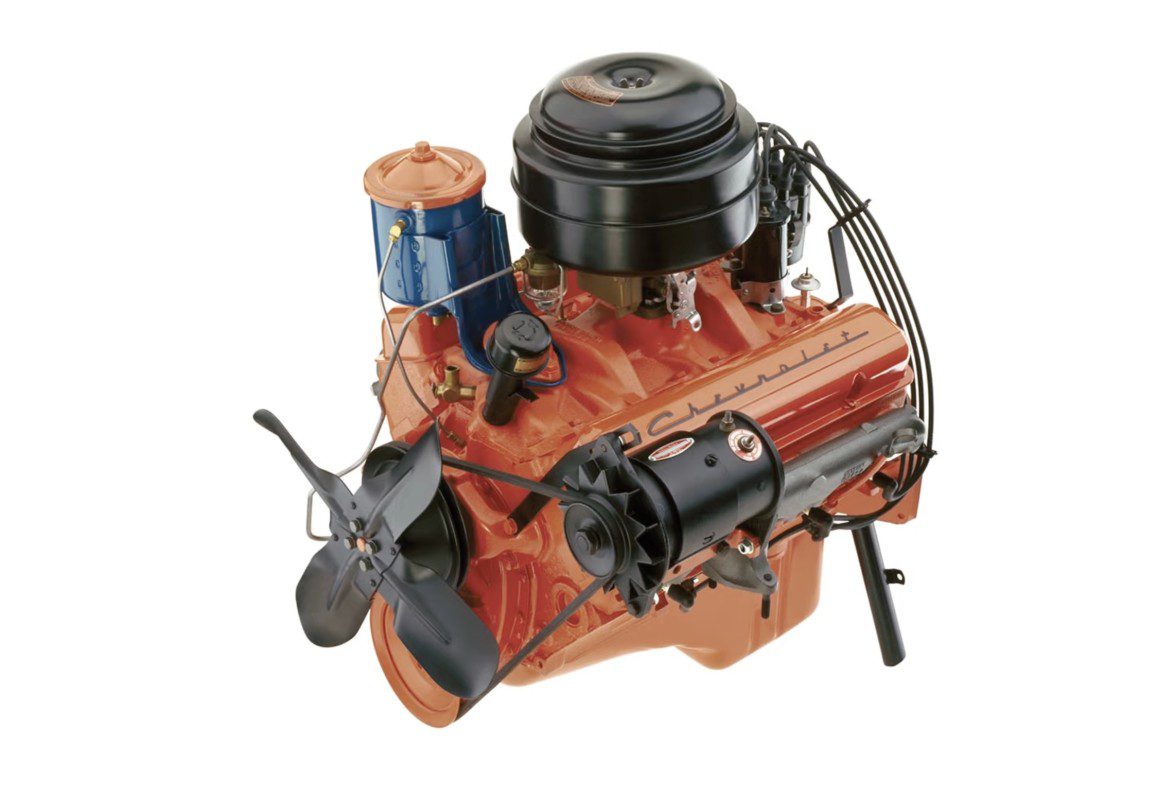
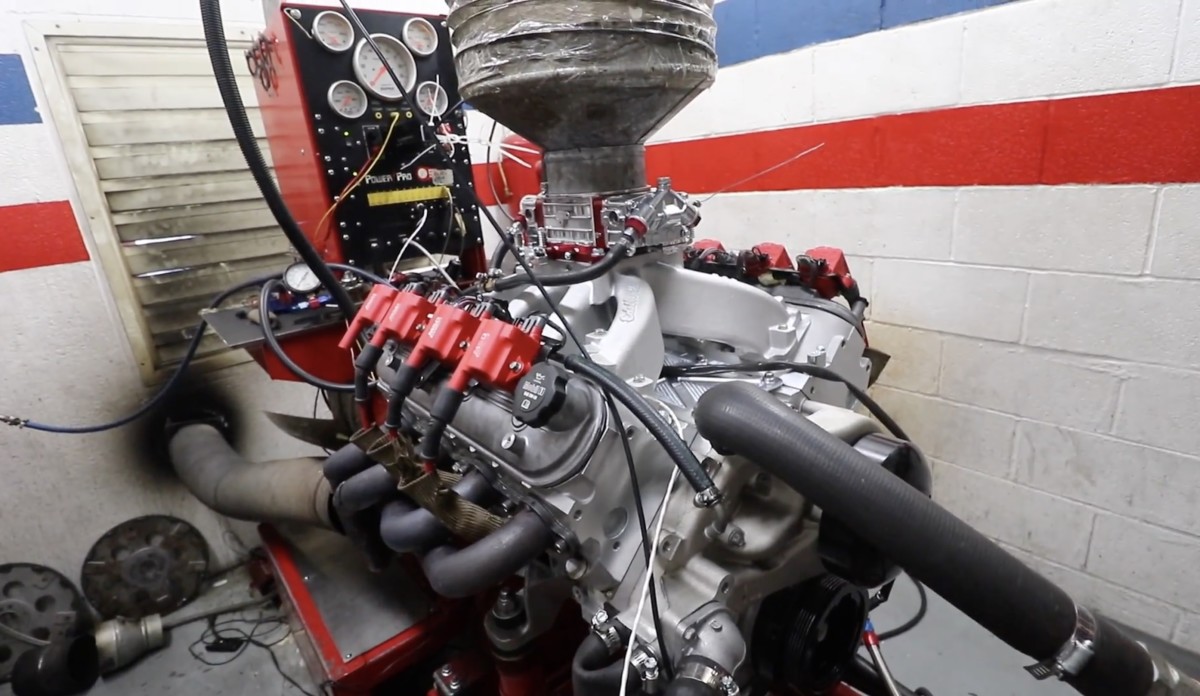
What we refer to today as the LS family of engines usually refers to the third and fourth generations of Chevrolet’s small-block V8. But to understand the relevance of these engines, and what makes them so special, we must look back to where it all began. The year is 1955, and General Motors has just revealed one of the most influential internal combustion engines ever built — the first generation of Chevrolet’s small-block V8 engine platform. It was slated to power the Corvette, the brand’s first true sports car, launched two years earlier with a lackluster inline-six under the hood. The switch to the 265 cubic inch (4.3-liter) V8 transformed the Corvette’s performance and reputation, turning it from experimental exotic to the brand’s halo performance car.
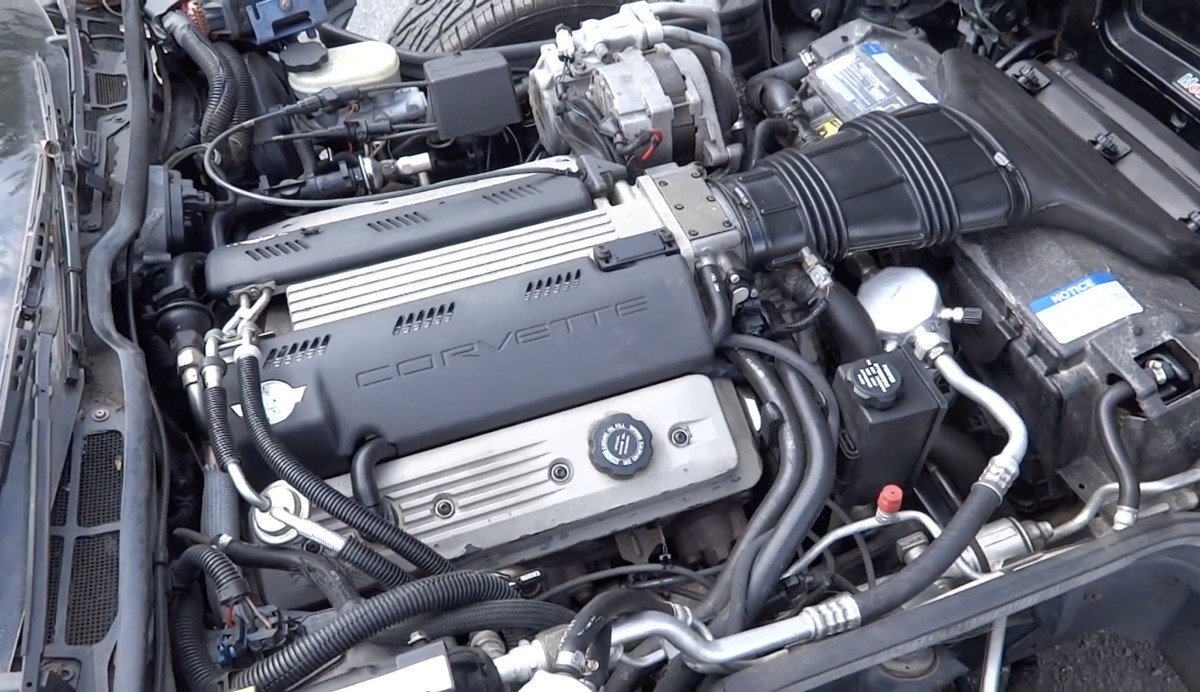
This original small block was a class leader in its time, compact, powerful, and easily scaled up, eventually evolving into the 283, 327, and 350-cubic-inch versions through its almost half-century production run. In an effort to meet emissions, efficiency, and weight requirements in the 1990’s, Chevy introduced the second-generation small block with the LT1 and high-performance LT4 engines, but these 350-cubic-inch motors were largely based on their predecessors and struggled to be competitive against more modern powerplants.
As the turn of the century approached, parent company GM realised that this ageing architecture needed a complete, ground-up overhaul, and began working on the third-generation Chevy small block. But first, the company had to decide whether they would be sticking with the previous generations’ pushrod-operated overhead valve layout or switching to the more modern DOHC heads. The decision, believe it or not, was left to blind testing of cars by a large group of GM’s own executives.
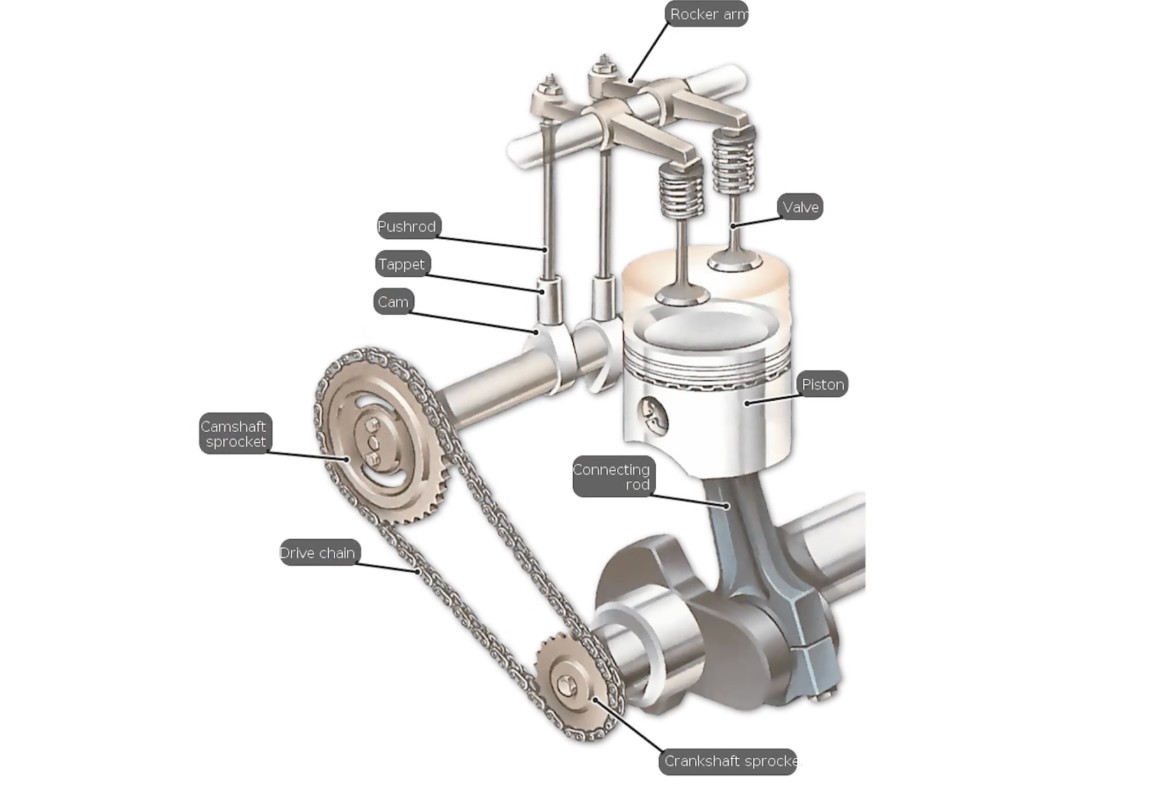
By the 1990s, overhead valve (OHV) pushrod engines were already considered archaic and outdated, with most manufacturers having moved on to overhead camshaft (OHC) designs. After all, OHC engines could spin faster, make higher peak horsepower, and offered less valvetrain inertia by having the camshafts placed directly above the valves. They could also have four or more valves per cylinder, while OHV engines usually had to make do with just two, operated by a single camshaft within the block. On the other hand, OHV engines could be more compact and are better at producing torque earlier in the rev range. Even as Chevy introduced the second-generation small block in early 1992, they knew they had limited time to figure out the future development direction of their Corvette V8. And this brings us to May 1992 and the blind test.
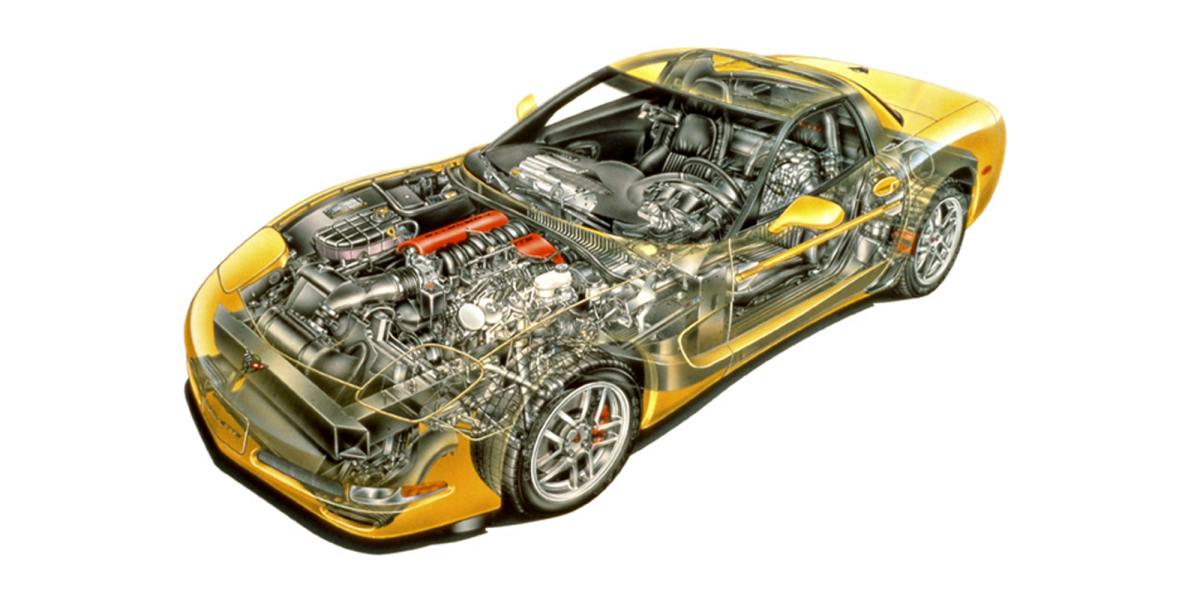
A group of GM executives was made to drive two seemingly identical black Corvette C4s at the company’s Milford Proving Grounds in Michigan. One of these cars was powered by the existing OHV LT4 motor, and the other by a modern, DOHC, 32-valve V8 developed by Lotus. While the newer engine may have revved higher and made more power, the test subjects unanimously preferred the instant torque delivery and snappy throttle response of the ‘outdated’ pushrod OHV engine. And so the decision was made to retain the pushrod architecture when developing the third generation of the small-block V8s, the first of which was the 345-horsepower 5.7-liter LS1 in the 1997 Corvette C5.
Bring a Trailer
Creating the LS
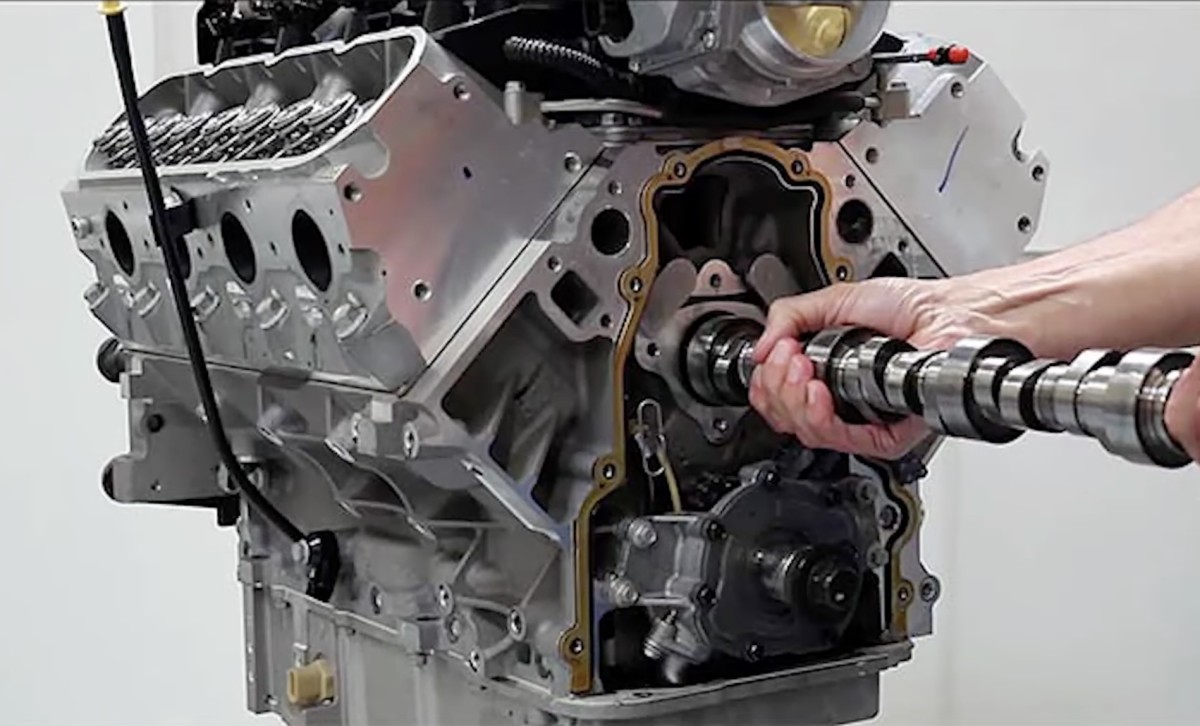
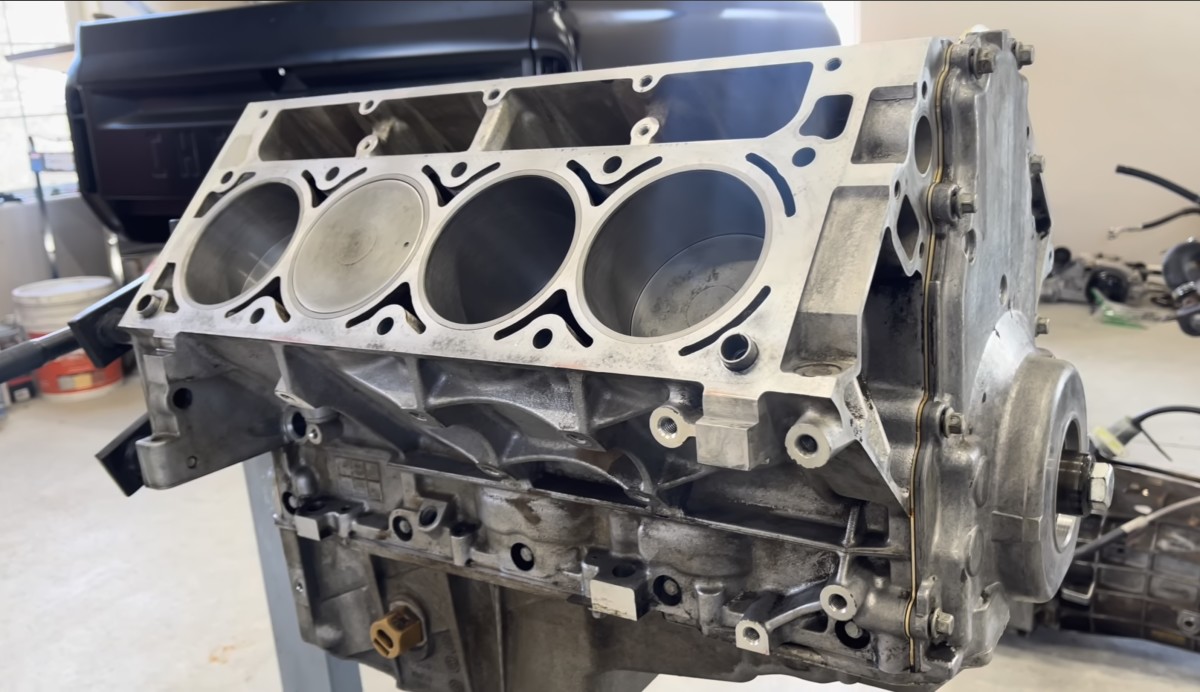
The LS1 motor was designed to overcome the weight, efficiency, and emissions limitations of the second-generation small block, while staying true to its lineage. The all-new engine may have shared its predecessor’s 5.7-liter displacement, although with slightly revised bore and stroke dimensions and absolutely no shared components. It got an all-aluminum construction to save weight, more closely spaced cylinders for a smaller footprint, a revised cooling system and valvetrain geometry, and traded in its distributor for a more modern coil-on-plug ignition system.
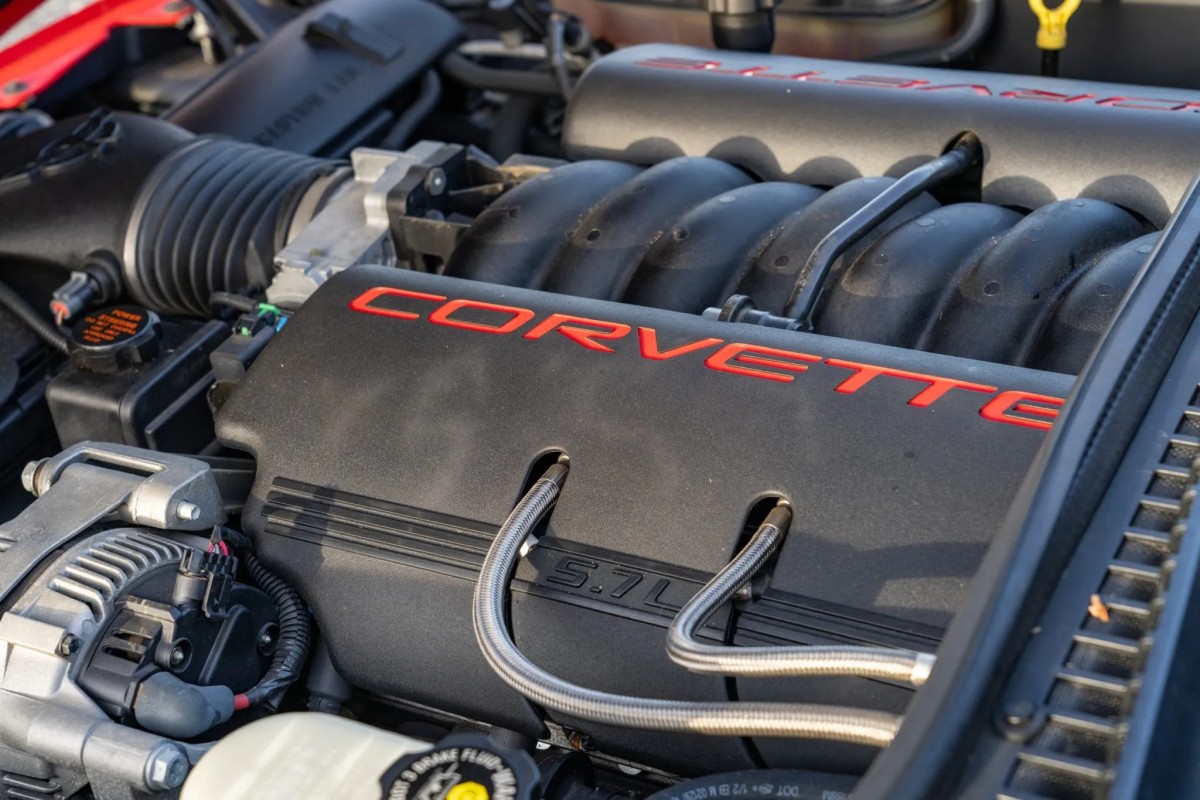
The LS1 in the 1997 Corvette made 345 horsepower at just 5,600 rpm, with a healthy peak torque of 350 lb-ft at 4,400 rpm — both figures marginally more than the 330 hp and 340 lb-ft of the outgoing LT4, but achieved at slightly lower rpm to provide an even more intense shove off the line. And this was achieved with an engine that was physically smaller, weighed about 100 lbs less, and was more fuel efficient. The LS1 was very well received at its launch, and laid the foundation for an entire generation of LS-based V8 engines that would go on to dominate performance cars, motorsport, and the global engine swap scene for decades.
LS Evolution
The LS1 was just the beginning, and formed the basis of the modern LS platform, vaunted for its compact dimensions, durability, and tuning potential. Noting the positive reception it received, GM were quick to expand the platform into a wide range of variants to suit different applications. The LS1 evolved into the LS6 in 2001, a high-performance variant powering that year’s Corvette Z06. Updates included better-flowing heads, sturdier valvetrain, higher compression, and more aggressive camshaft profile.
Chevrolet
GM also brought back iron block variants of the third-generation small block in the form of the LM7, LQ4, and LQ9 motors, specifically designed for trucks like the Chevy Silverado. These iron block small-block V8s proved to be extremely sturdy and durable, and are the preferred engines for high-boost, high-horsepower builds to this day due to their availability and affordability.
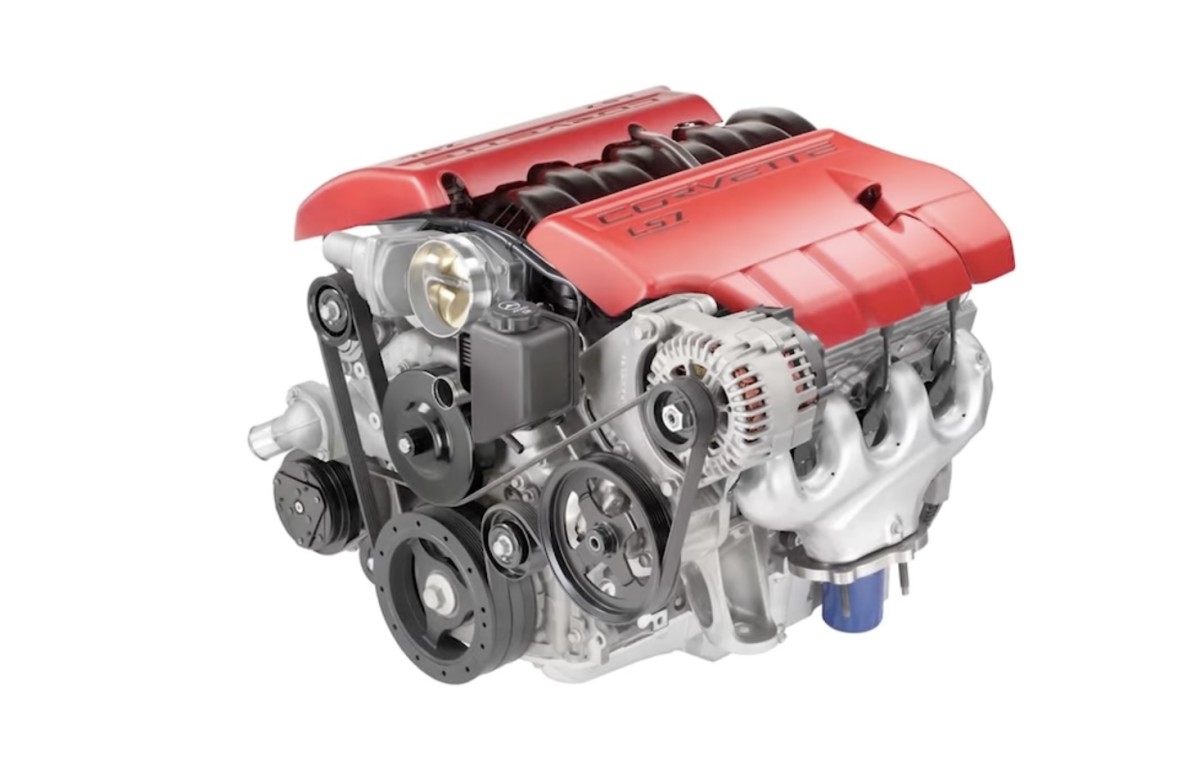
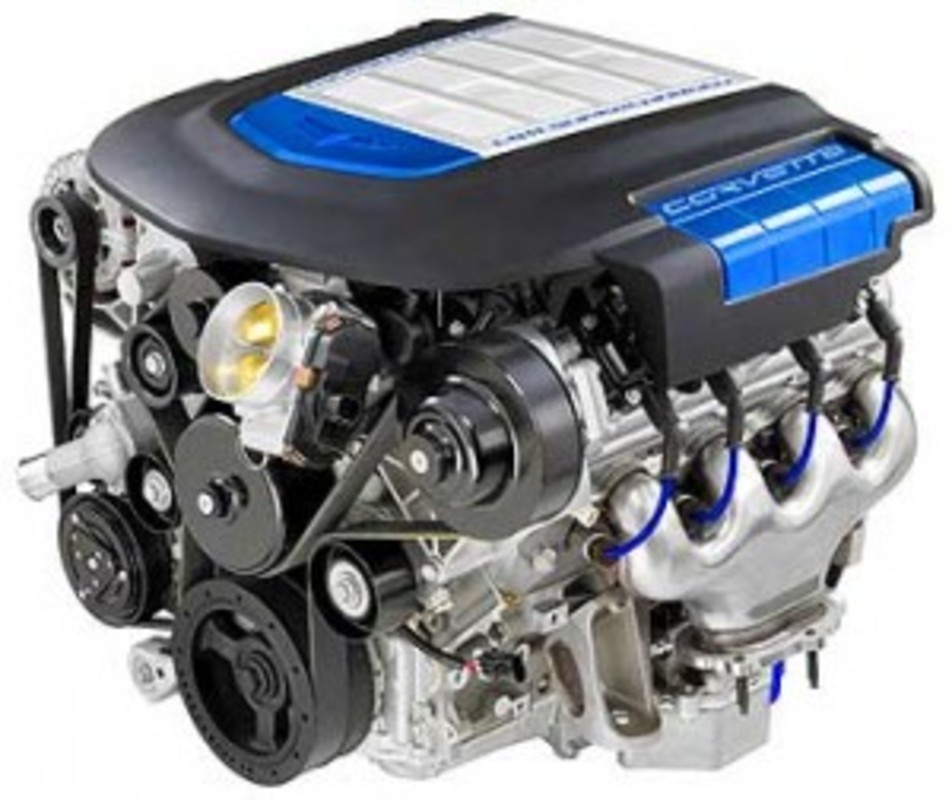
The fourth-generation small-block V8 engines were revealed in 2005, with more modern technology and larger displacements. Popular were the 6.0-liter LS2 and the 6.2-liter LS3, which made upwards of 400 horsepower and were used to power cars including the Corvette C6 and fifth-generation Camaro. 2006 brought us the most powerful naturally-aspirated LS engine yet, the 7.0-liter, 505-horsepower LS7 under the hood of the C6 Corvette Z06. This motor got titanium rods, a dry-sump design, and could rev to over 7,000 rpm — unheard of for a pushrod OHV engine. But GM wasn’t done yet, and in 2009 gave us the supercharged 6.2-liter LS9, powering that year’s Corvette ZR1. Producing 638 horsepower and 604 lb-ft of torque, this was the most powerful production engine ever created by GM at the time.
Chevrolet
Tuning Potential
One of the defining characteristics of the LS platform, and the reason for its widespread popularity in the tuning scene, is just how well it responds to modifications. Relatively simple upgrades like intake, exhaust, and camshaft mods could unlock substantial gains, while forced-induction setups could easily take peak power to well over 600 horsepower on stock internals. Fully-built engines with forged internals regularly made over 1,000 hp, making them a popular choice for drag, drift, and time-attack builds. Consequently, we have a thriving aftermarket scene around the LS platform today, with parts easily available and tuners with the know-how to squeeze power out of them, without affecting reliability.
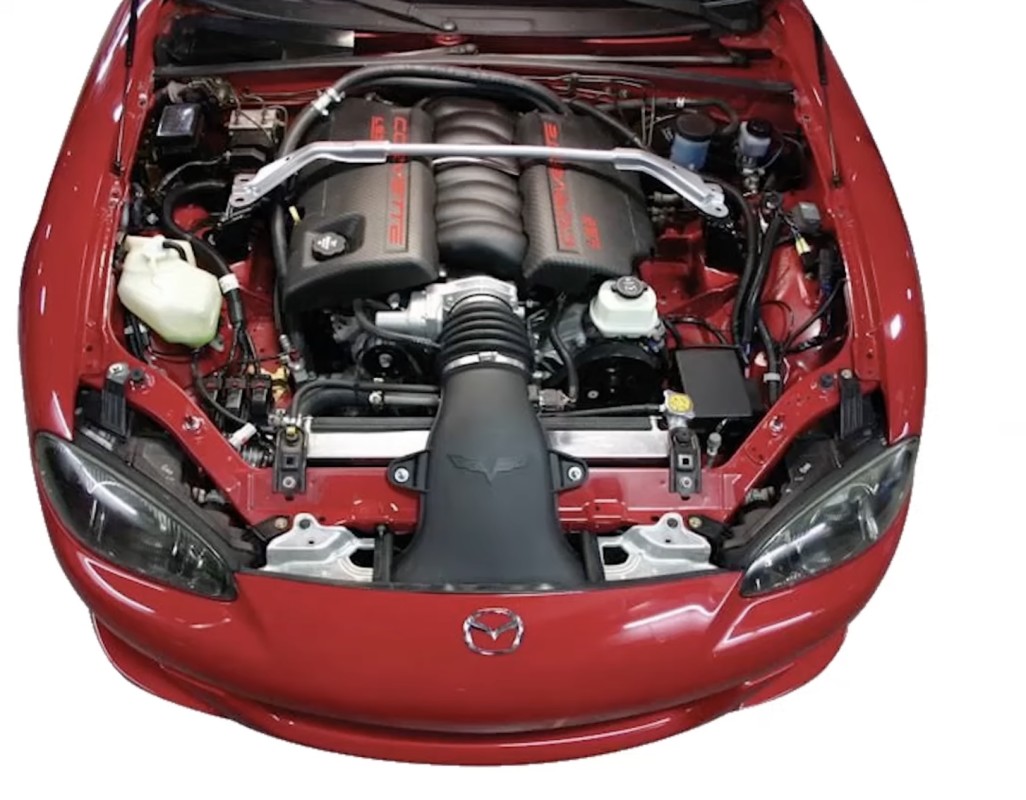
Today, the LS V8s are among the most desirable engines for swaps across the world, and can be found under the hood of everything from classic American muscle cars to tiny Japanese sportscars like the Mazda Miata. It isn’t uncommon to see an LS engine even being used in off-road builds. The secret to this adaptability lies in the LS platform’s ‘outdated’ pushrod design, which makes these engines much more compact and shorter top-to-bottom than OHC engines, allowing them to fit where larger, more modern engines could not. Add to that its modular architecture and interchangeability of components across several variants, and you have the ideal motor for enthusiasts seeking reliable and affordable performance.
Although GM has now moved on to newer generations of the small-block V8, the LS platform from the third and fourth generations is still extremely relevant. They are widely used in motorsport, are the preferred choice for swaps for a wide variety of builds, and are still offered as crate engines. Few engines can boast this blend of simplicity, durability, and scalability, which is why the LS platform has achieved legendary status among the enthusiast community. Its success proves that with the right engineering, even an outdated design can be transformed into a modern icon.
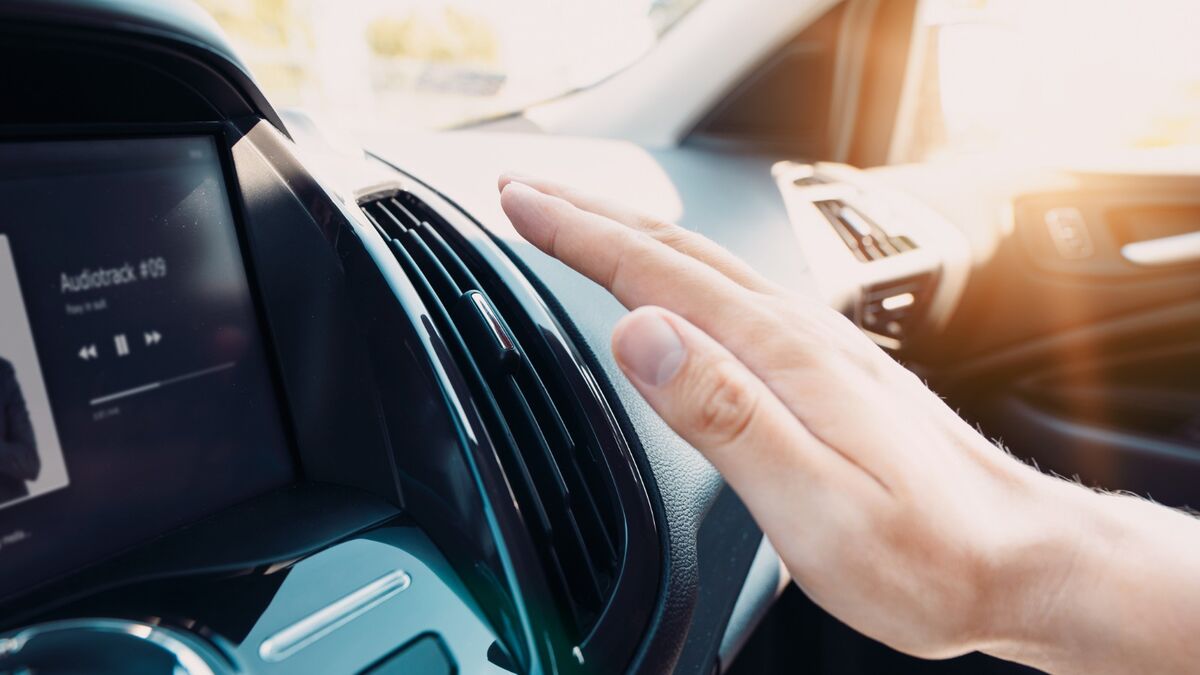
Rising temperatures and higher gas prices sometimes prompt drivers seeking to maximize mileage and minimize fuel costs to ask: Does the AC use gas in my car?
Yes, your vehicle’s air conditioner consumes fuel, although it’s an indirect use. Keep reading to learn more about how — and how much — gas the AC in your car uses.
How Does the Car Air Conditioner Work?
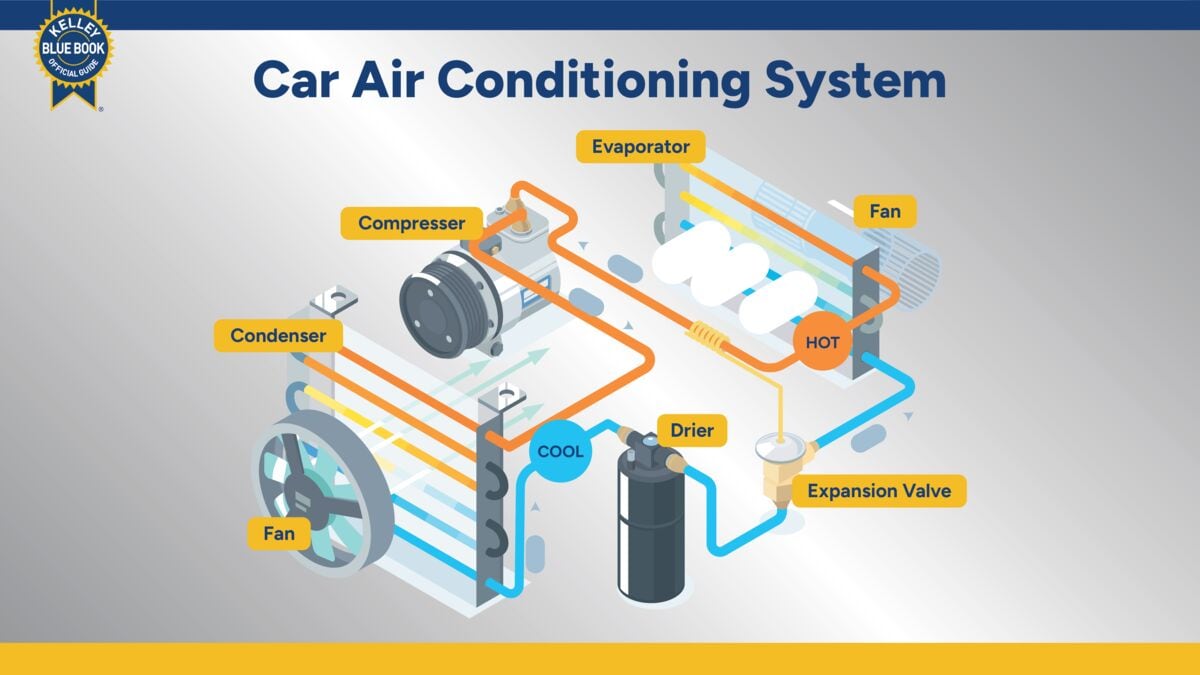
A general overview of how a typical car air conditioner works can help you understand its negligible impact on fuel consumption. The car’s AC uses energy from the engine to cool the cabin temperature. Here’s how it works:
Compressor: The heart of the air conditioning system is the compressor. It compresses the refrigerant gas, raising its temperature. The compressor is the component that indirectly uses power generated from the vehicle’s fuel.
Condenser: The hot refrigerant gas flows through the condenser (a series of coils), releasing heat. The cooled gas condenses into a cold liquid.
Receiver-drier: Refrigerant passes through a reservoir that removes water from the line, which, if not removed, can create ice crystals and damage the AC system.
Expansion valve: A valve restricts the refrigerant flow, causing it to expand and change from high-pressure to low-pressure refrigerant.
Evaporator: The liquid refrigerant passes through the evaporator, absorbing heat from the cabin air and cooling it down.
Blower fan: The blower fan circulates the cold air outside the evaporator into the cabin.
RELATED: Car AC Not Blowing Cold Air: Possible Causes and Solutions
Does Car AC Use Gas?
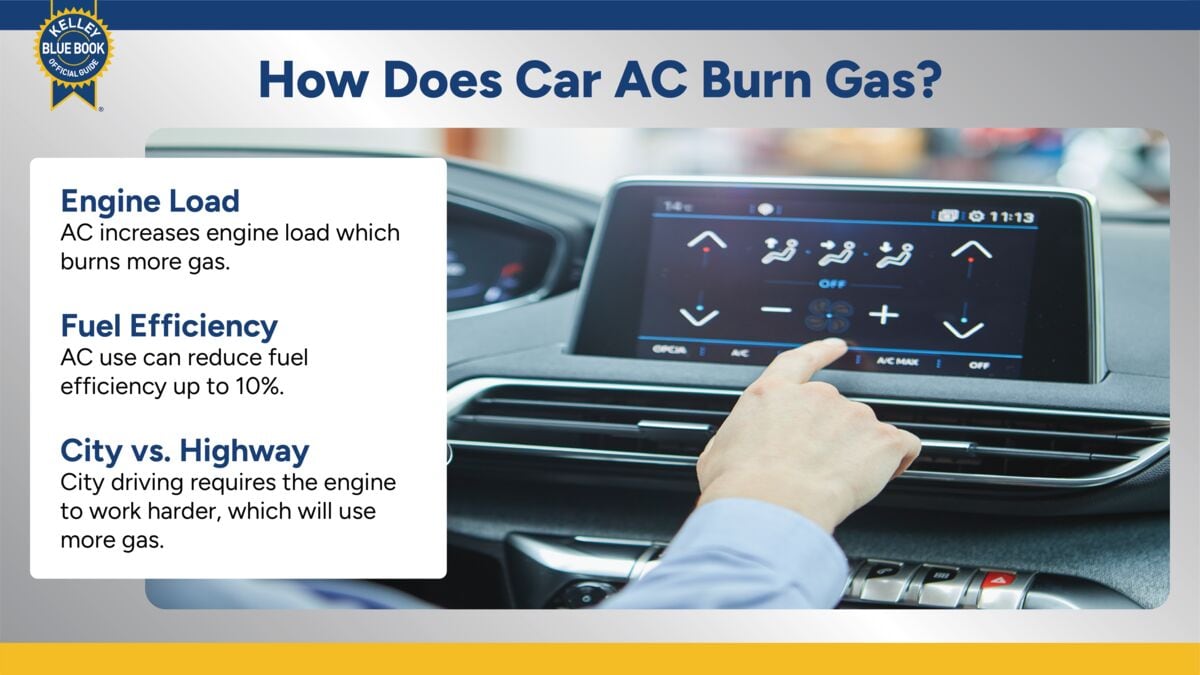
Yes, the car air conditioner does use gas, but not directly, and not that much. The vehicle’s engine uses gas to power the alternator; the alternator provides energy for the compressor in the AC system. The impact on fuel economy varies depending on factors like outside temperature, driving speed, and the car’s make and model.
Tips for Balancing Comfort and Fuel Efficiency Using AC
Use AC wisely: Turn it off when it’s unnecessary. If the weather is pleasant, consider opening the windows instead.
Pre-cool the car: Park in the shade or use a sunshade to keep the interior cooler. When you start the vehicle, roll down the windows and let the hot air escape before turning on the air conditioner.
Service regularly: A well-maintained air-conditioning system is more efficient. Check the refrigerant levels, clean the filters, and ensure the system is leak-free.
Yes, the car air conditioner indirectly uses gas by putting an additional load on the engine. Staying cool is essential, but so is saving on fuel costs. Your and your passengers’ comfort, and the safety issue of driver fatigue from excessive heat, are considerations when deciding to use the AC. With smart usage and regular maintenance, you can balance comfort and fuel efficiency.