Author: admin

  • Acura at 40: The Five Cars that Made the Brand

    Acura at 40: The Five Cars that Made the Brand

    One Giant Leap for Honda

    If you were born on March 27, 1986, you share a birthday with Japan’s first-ever dedicated luxury marque. That fateful date in 1986 marked the official launch of Acura, nearly a year after it was first previewed.

    Fast forward several years, and the range had ballooned from the initial two-car lineup. Models have come and gone, some were great, and some were not, but there’s no denying that Acura built truly great cars over the past 40 years.

    With that, here are just some of the cars we think that defined the brand.

    Acura
    Acura Legend (KA7/KA8)

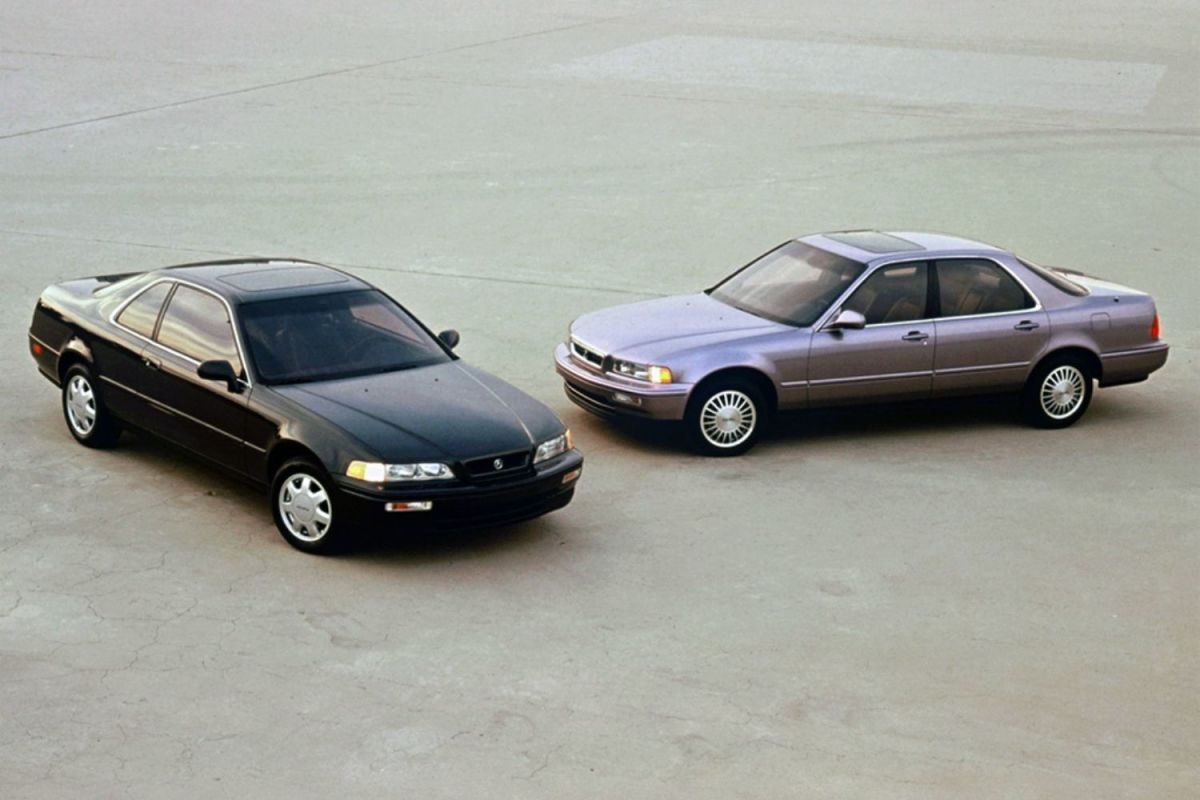
    We’re well aware that we just wrote a love letter to the first-gen Legend, but the second-gen was, and still is, the definitive Acura flagship sedan. It was a huge step forward compared to its predecessor in terms of design, performance, and technology. While it was never exactly a rival for the Lexus LS (the price gap alone shows this), it well and truly held its own against the ES, as well as the BMW 5 Series and Mercedes-Benz E-Class.

    It undercut the European opposition, but that’s not the reason why the second-gen Legend is one of the greats. The smooth and creamy 3.2-liter V6 first used in the NSX was a great complement to its wonderful chassis, and despite being front-drive, it possessed a dynamic flair that made it a wonderful car to drive.

    Let’s not forget the coupe, with its delicious curves, that made it truly distinct from the sedan. Did we mention it was available with a six-speed manual later on, too? Honda and Acura made this generation so good that the succeeding RL and Legend generations just couldn’t capture the same magic for some reason.

    Acura
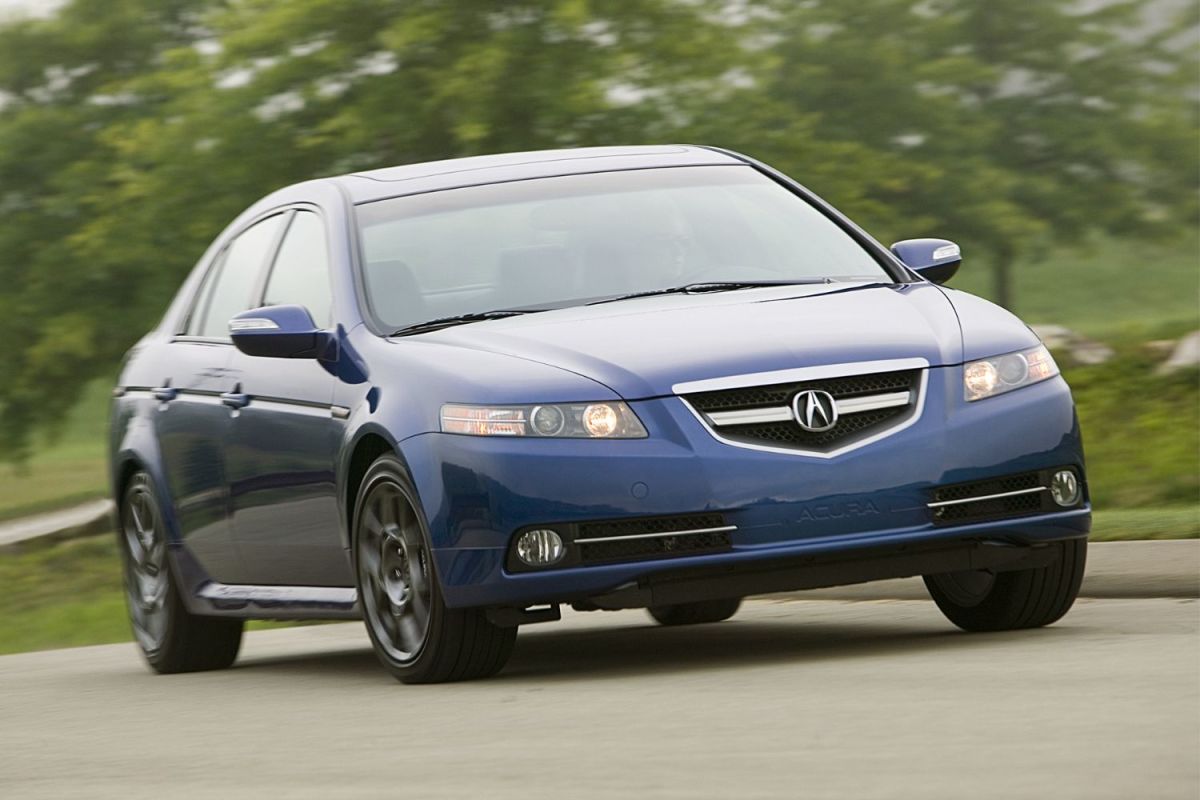
    Acura TL Type S (UA7)

    It took a while for Acura to finally get the formula right for its junior midsize sedan. The strangely lovable Vigor was a false start, but the brand didn’t give up and replaced it with the 2.5 TL and 3.2 TL. While a step in the right direction, its generic styling did little to lift its image. The succeeding second-gen TL was a huge glow-up, but marred by catastrophic transmission issues. A shame, because we think it’s a bit of a looker.

    But it all finally came together for the third-gen TL, more specifically, with the Type S model for the 2007 and 2008 model years. By this time, Acura had finally sorted the issues with its automatics (along with Honda), but we all know the TL Type S to get is the one with the six-speed manual.

    The manual models also came standard with a limited-slip differential, double wishbones at the front, multi-links at the rear, and an upgraded spring-and-damper combo, making this a true sport sedan. Peak TL? Absolutely, and it practically made the RL irrelevant thanks to that 286 hp 3.5-liter V6.

    Acura
    Acura MDX (YD1)

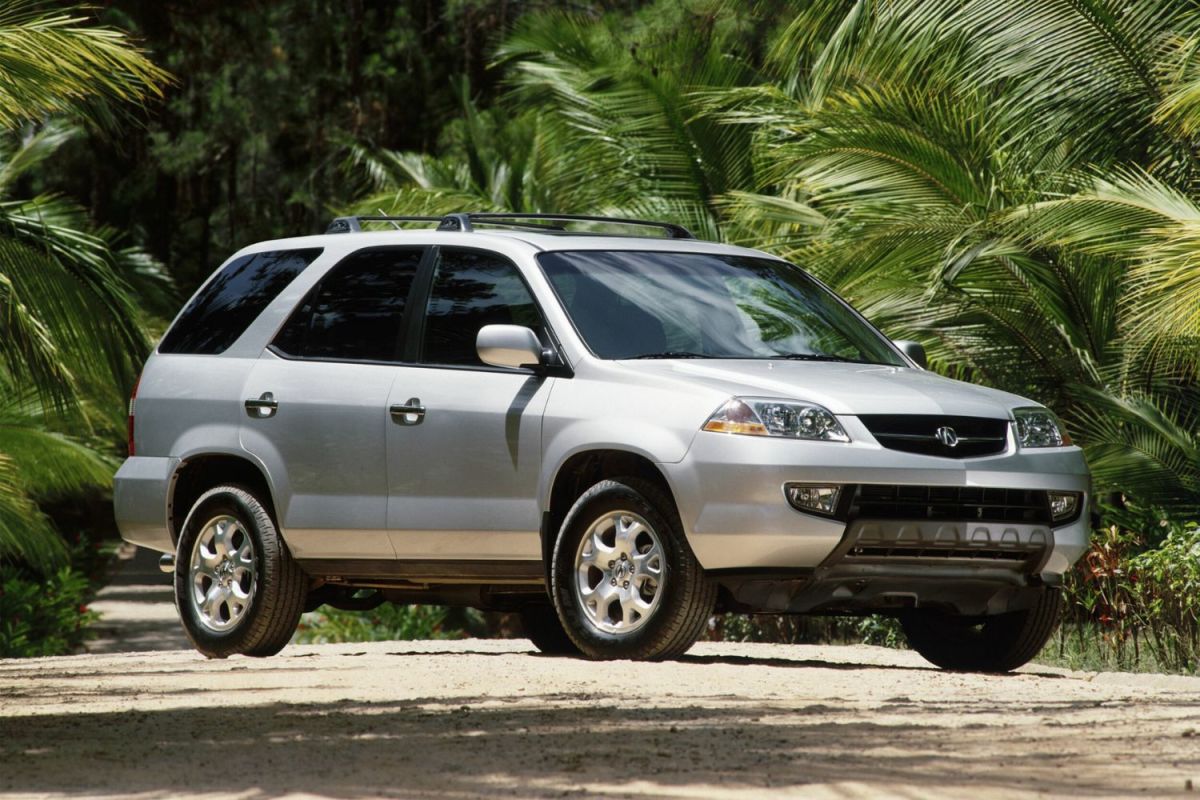
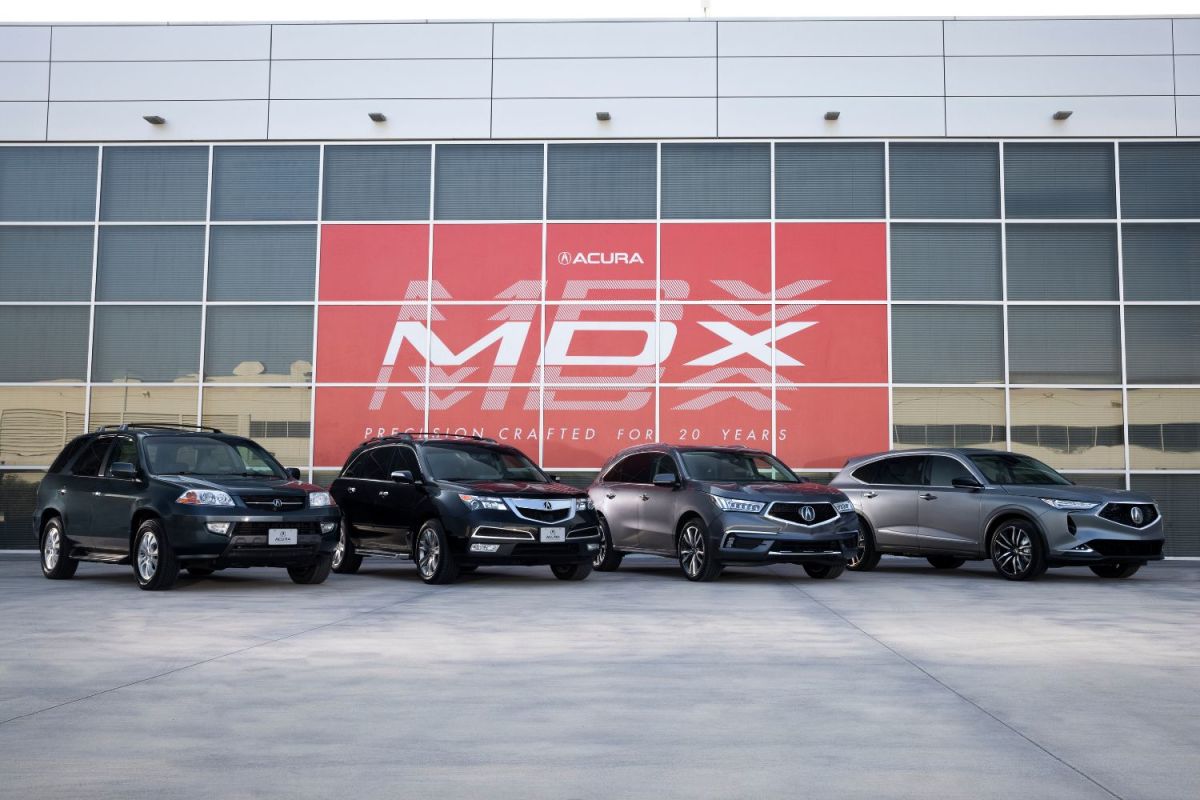
    Like it or not, the MDX deserves a spot in this list, even if begrudgingly so. We moan about crossovers now, but the first-gen MDX was a hugely significant and important model for Acura. At the time, the brand was losing out on the SUV craze, and Lexus was kicking its compatriots to the curb with the RX. The lazily rebadged SLX was never going to cut it.

    Acura finally responded to the RX with the MDX in 2000. Like its main rival at the time, it was a crossover, but it offered three-row seating thanks to its Odyssey roots, a punchier V6 engine, and a far more clever all-wheel drive system. The MDX was also among the first crossovers in its size class to come with seven seats as standard, and its car-based underpinnings basically banished any thoughts of the SLX, not that it was even memorable in the first place. Today, the MDX continues doing a lot of heavy lifting for Acura as its best-selling model.

    Acura
    Acura Integra Type R (DC2)

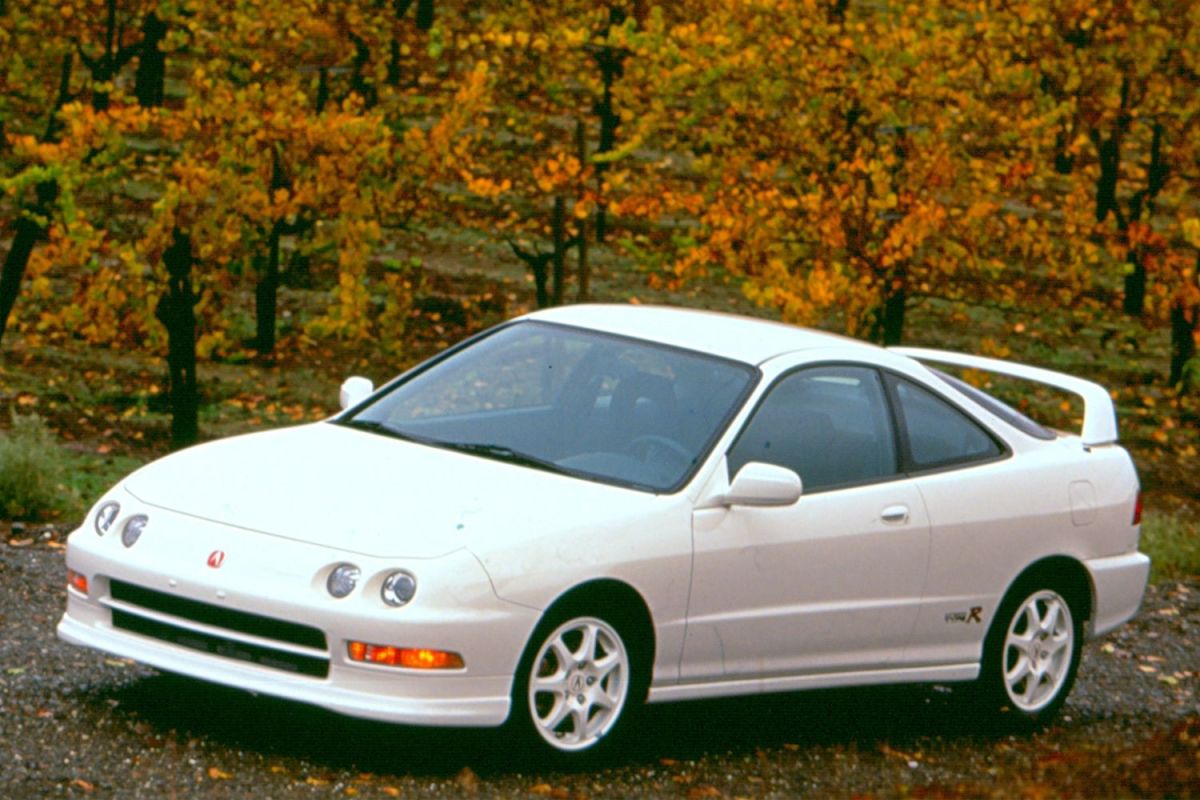
    For those who need proof that front-wheel drive cars can, indeed, dance, one has to get behind the wheel of the Integra Type R. Long before the Civic Type R finally landed in the U.S., the hot Integra was America’s first real taste of what the red R was all about. Spoiler alert: the car was well worth the hype.

    As it is, the third-generation Integra was, and still is, one of the greatest front-wheel drive platforms ever made. It was made during the time Honda was at the height of flexing its engineering might, and it beamed through the car’s driving dynamics and characteristics. Let’s be honest, a car like the Integra didn’t need double-wishbone suspension in all four corners, but that’s exactly what made it such a high-handling benchmark for all front-wheel-drive performance cars.

    The Type R simply distilled the basic platform by stiffening and lightening it, making it more focused, and slapping in that high-revving B18C engine. The combination of all those factors helped the Integra Type R establish itself as one of the true legends of the ’90s. Now that we think about it, Honda could’ve used the current Prelude, name it the Integra Coupe, and stick in that K20C1 engine to make a modern Integra Type R. C’mon, Honda, we know you can do it.

    Acura
    Acura NSX (NA1/NA2)

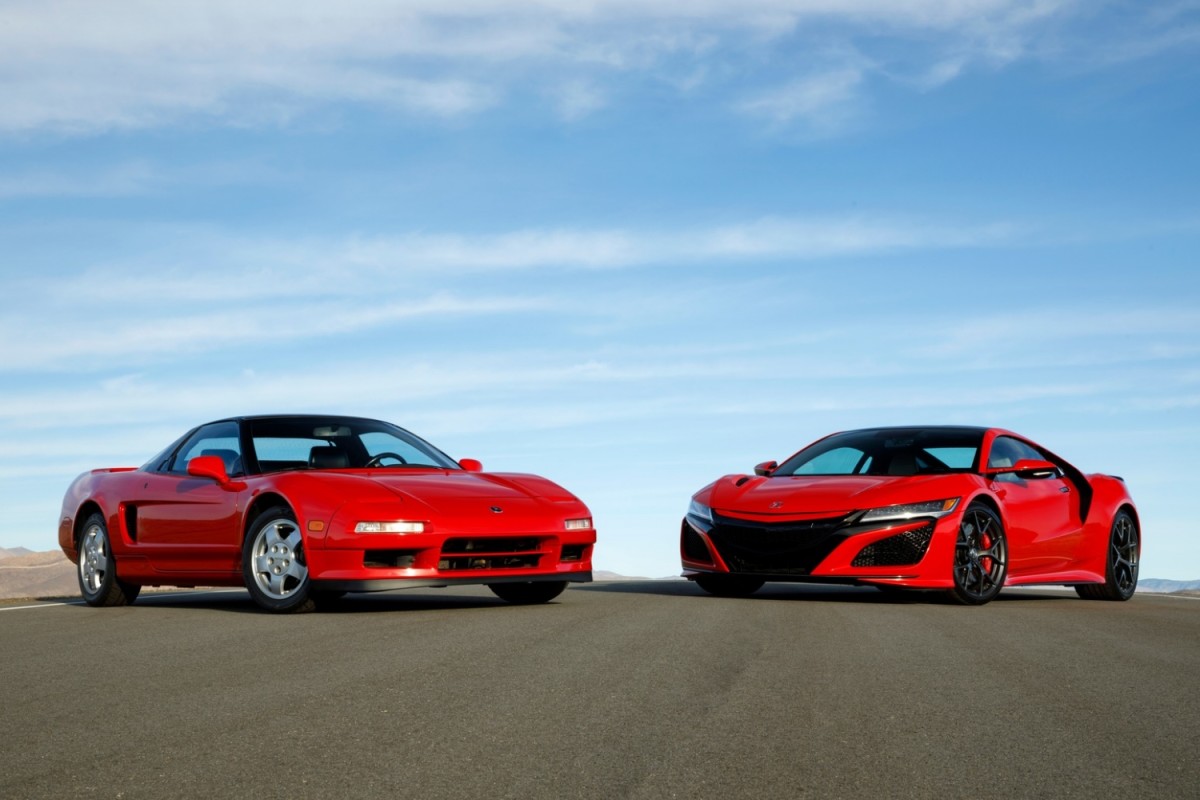
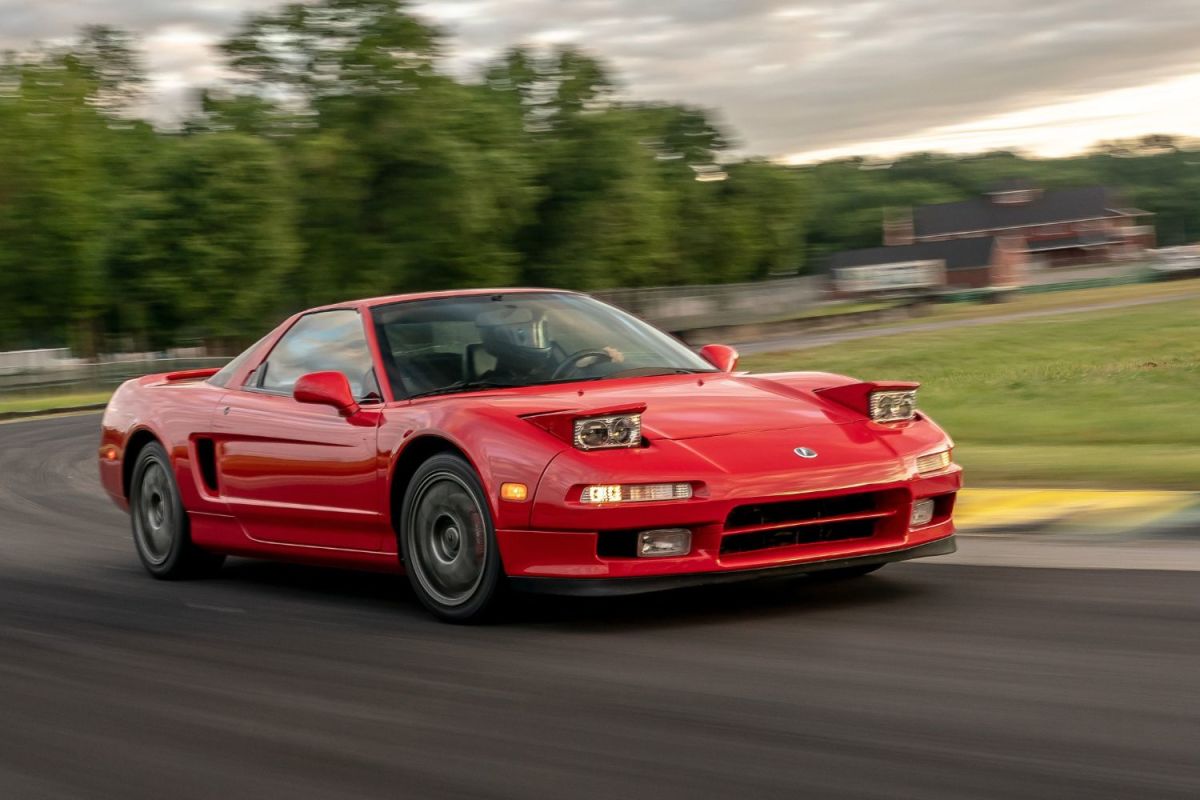
    You thought we were going to leave out the NSX, didn’t you? Of course, we couldn’t do that to Japan’s first true supercar. It was, by all means, an ambitious project, but it ended up showing the world what Honda could really do if asked to build a Ferrari-fighter. Nobody asked for it, but we’re glad it happened.

    Its backstory was incredible as it underwent so many changes throughout its development. Several Japanese motorsports legends, such as Motoharu Kurosawa, were involved in the project, as were Ayrton Senna, who urged Honda to further stiffen the chassis, and Bobby Rahal, who provided input on suspension work.

    The end result was a car that could hang with some of the world’s best supercars at the time, that had little in the way of compromise. It was solid, well-built, and reliable, but also capable of delivering a whole lot of smiles behind the wheel. The NSX made its world premiere as an Acura first and Honda second, further highlighting its significance for the luxury division. Sure, it wasn’t a financial success, but that wasn’t the point. The original NSX was, and still is, an engineering masterpiece.

    Acura
    Honorable Mentions

    There are a couple more Acuras that we think are still worth a mention. In chronological order, we’ll start with the CL Type S, Acura’s first model to receive the Type S treatment. Up next is the RSX, which was essentially the fourth-gen Honda Integra for the North American market, still great to drive, if not quite to the same level as its predecessor.

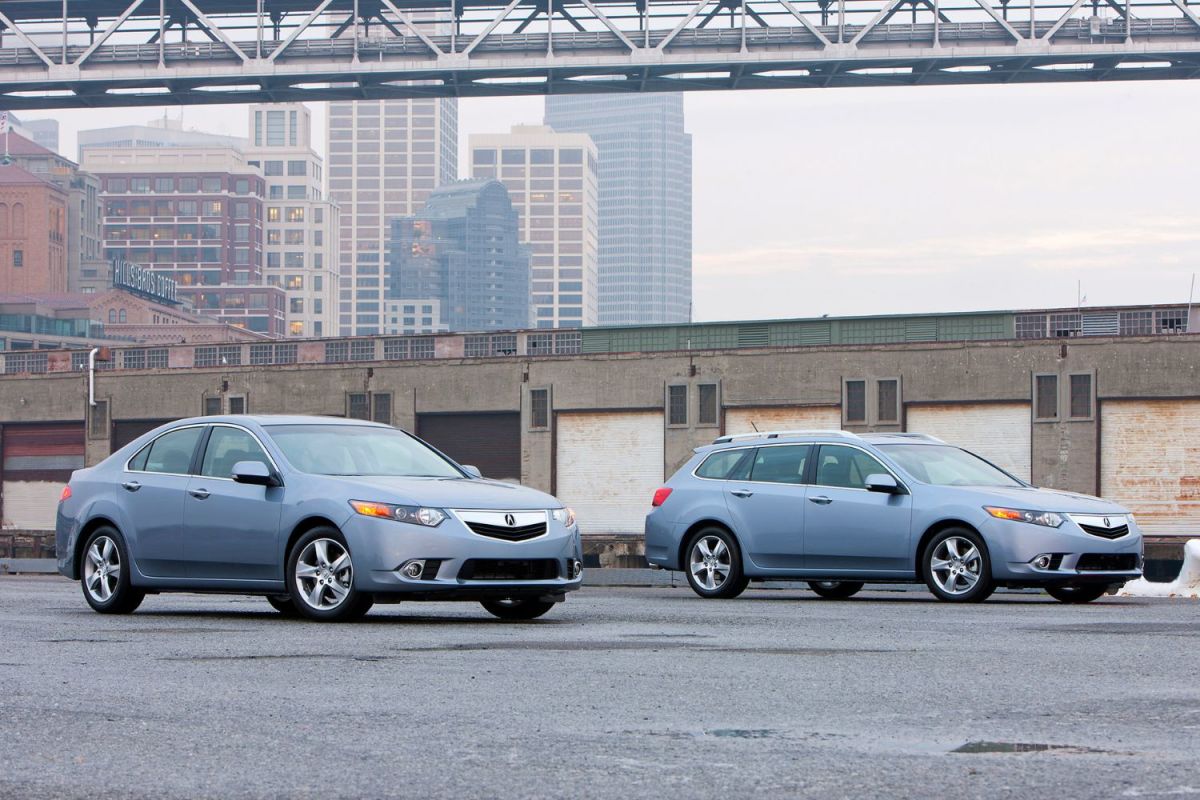
    For our Canadian readers, we think the CSX deserves a shout, mainly because it was literally the Japanese/global-market Civic for North America, and it came standard with a 2.0-liter, not the 1.8. Last but not least, both generations of the TSX gave America a taste of the Japanese- and European-market Honda Accords at a reasonable price. There was even a Sport Wagon model for the second-generation, the one and only time Acura would sell a wagon in North America.

    Acura
    Acura

    View the 21 images of this gallery on the
    original article
    Source link

  • BYD launches new SUV with 1,500 kW Flash Charging, at under $A32,000

    BYD launches new SUV with 1,500 kW Flash Charging, at under $A32,000

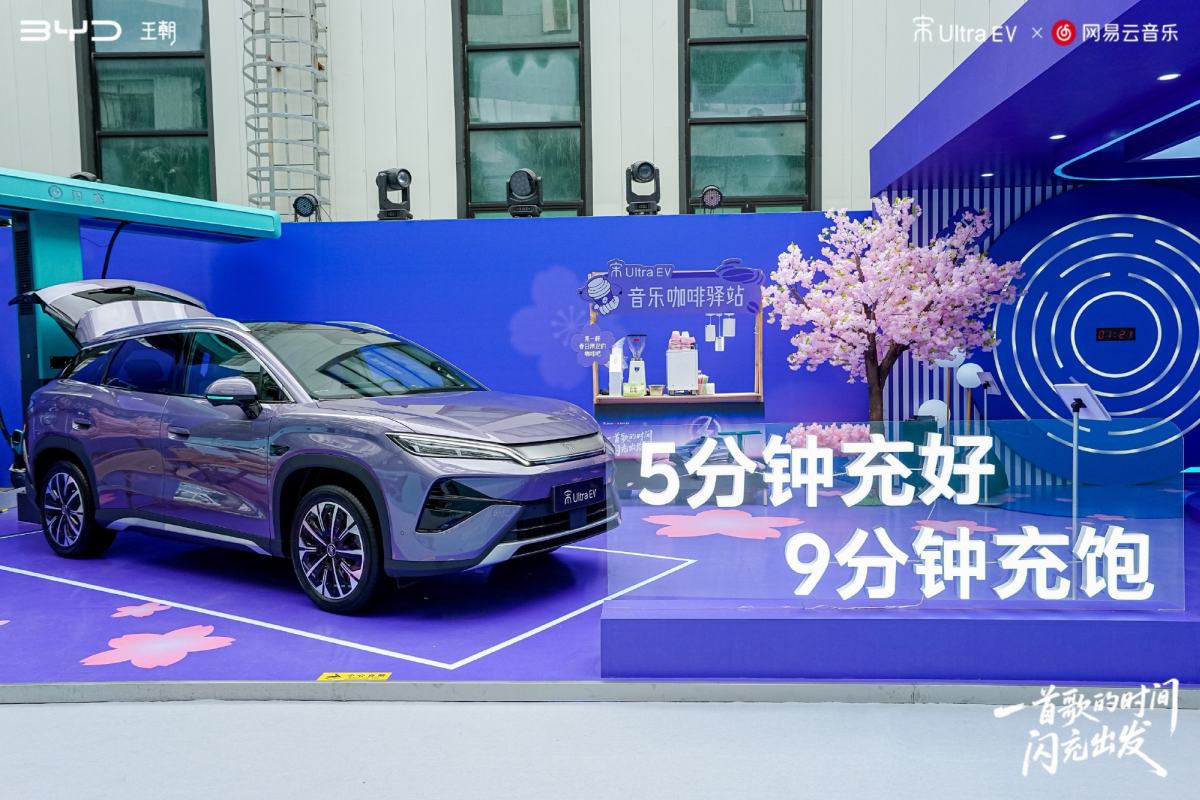
    BYD, the world’s fastest-growing car company, is continuing an onslaught of new model launches new, with the latest being a mid-sized family SUV boasting the company’s 5-minute Flash Charging tech, a new Blade Battery, and more power. 

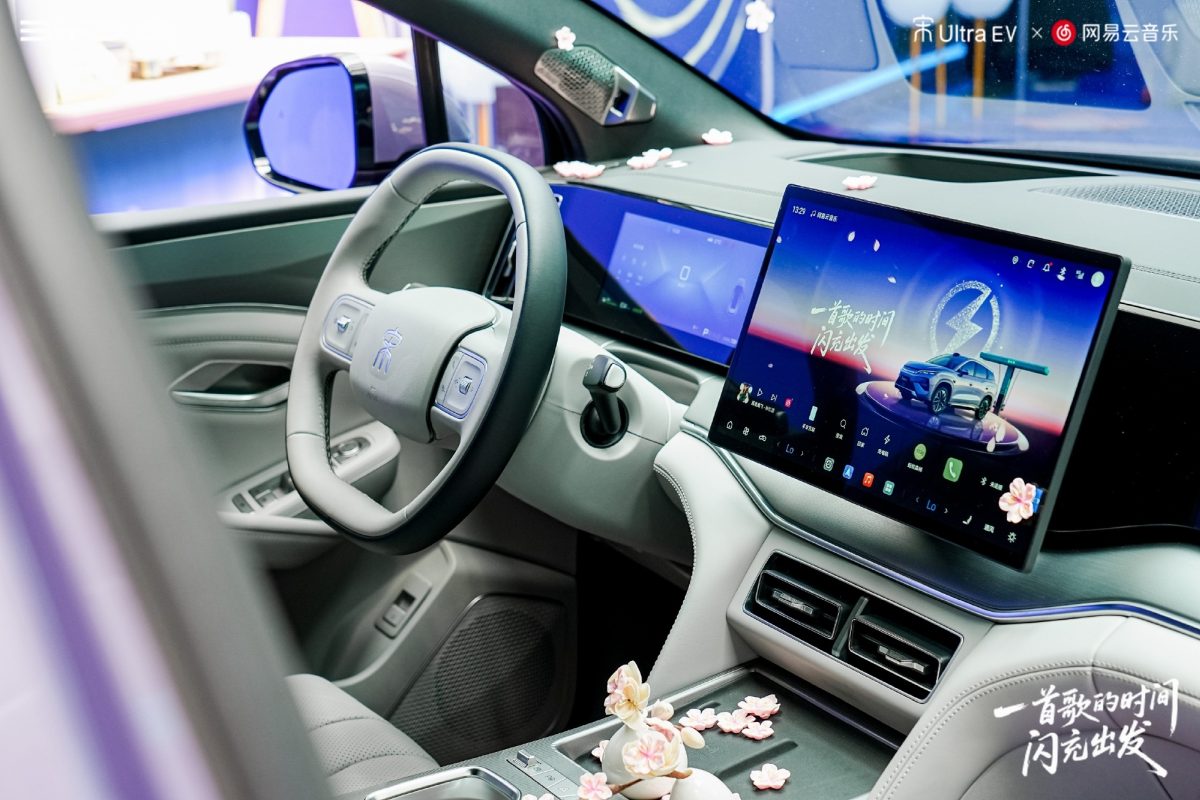
    This model will be called the Song Ultra EV in China, with prices starting at the equivalent of under $A32,000.

    It will be able to charge from 10-70% in just 5 minutes using the company’s latest Flash Charging technology, unveiled earlier this month.

    That’s made possible by the new Lithium Iron Phosphate (LFP) battery packs, which will retain the safety credentials of BYD’s Blade Battery tech while now incorporating charging speeds of up to 1,500 kW at the company’s Flash Charging sites, which are being deployed at a rapid pace.

    BYD really wants its customers to use this Flash Charging tech in cars like this and is offering 1 year of free Flash Charging to initial customers with all compatible models.

    Image: BYD via Weibo

     With the Song Ultra EV, customer that pre-order the car can get an additional 6 months of free Flash Charging, bringing the total free period to 18 months.

    This model comes in at a length of 4,850 mm, which is slightly larger than the Sealion 7 SUV, which has seen thousands of sales in Australia and was the second-best-selling EV in the country. 

    The new car features the same large 15.6-inch infotainment screen behind the steering wheel as many BYD owners have today. 

    A 50 W wireless phone charger is also seen in the centre console, and, like many of BYD’s latest cars, the inside now features the gear shifter relocated to the steering wheel.

    Powering the new compact SUV is a single rear-mounted motor delivering 270 kW, which will deliver a top-speed of up to 210 km/h.

    The single-motor powertrain is powered by BYD’s second-generation blade batteries, which come in capacities of 68.4 kWh and larger 82.7 kWh packs that feed the motor.

    Range-wise, the Song Ultra EV will have an NEDC range of 605-710 km, likely over 500-580 km on the WLTP test cycle.

    Image: BYD via Weibo

    The latest-generation platform also allows for a 150 L frunk and a 730 L boot with seats up. This can be expanded to 1,659 litres with rear seats down.

    There is also a fridge included with this SUV, which can also be used to keep things warm with a temperature setting of up to 50 C available.

    Given the amount of tech featured in the SUV, which can also be equipped with LiDAR for an assisted driving system functionality. That would come from the DiPilot 300 ADAS system, which is powered by 27 sensors.

    We look forward to seeing this model in person in China in the coming months, with some of this tech likely to be available in our local market in the future.

    Given that this model’s starting price is lower than many SUVs available in the Chinese market and comes equipped with 18 months of free Flash Charging, which is quicker than filling up at a servo, it’s going to be quite a popular model that ICE drivers need to pay attention to.

    Source link

  • Your Bugatti EB112 Sedan, Monsieur

    Your Bugatti EB112 Sedan, Monsieur

    That Italian businessman Romano Artioli was able to revive Bugatti in the 1990s, let alone take on the best in the world with the EB110, was nothing short of remarkable. So remarkable that it’s also unsurprising that the whole enterprise disintegrated before too long, leaving behind some unfinished business.

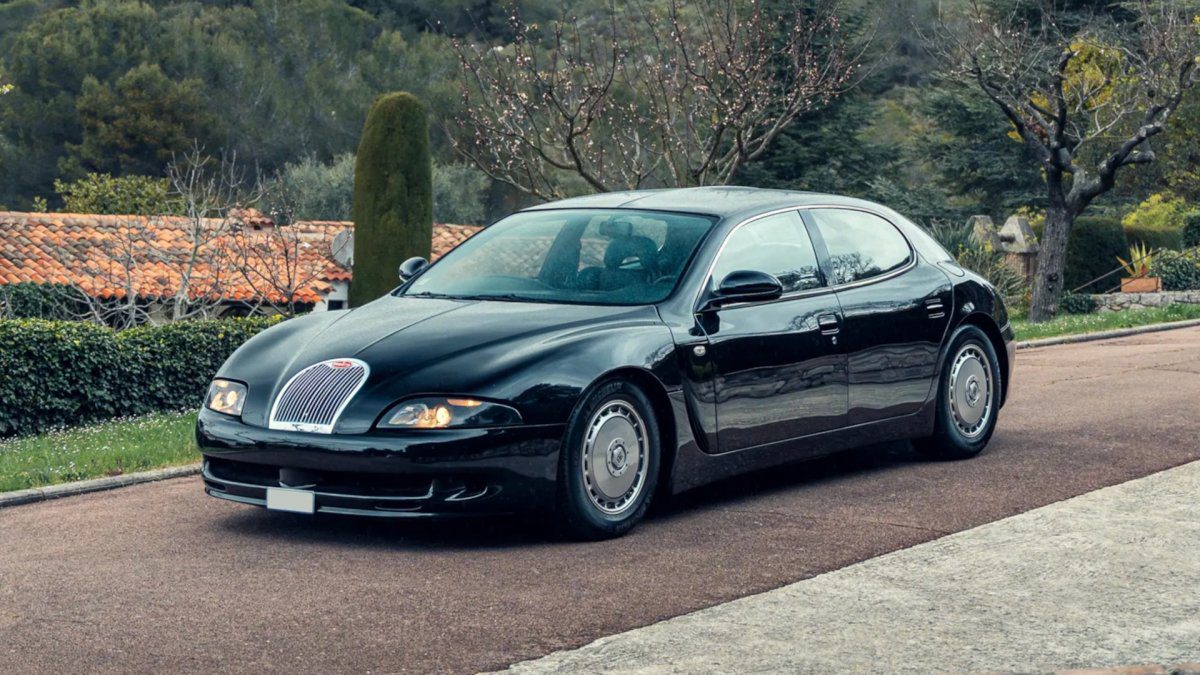
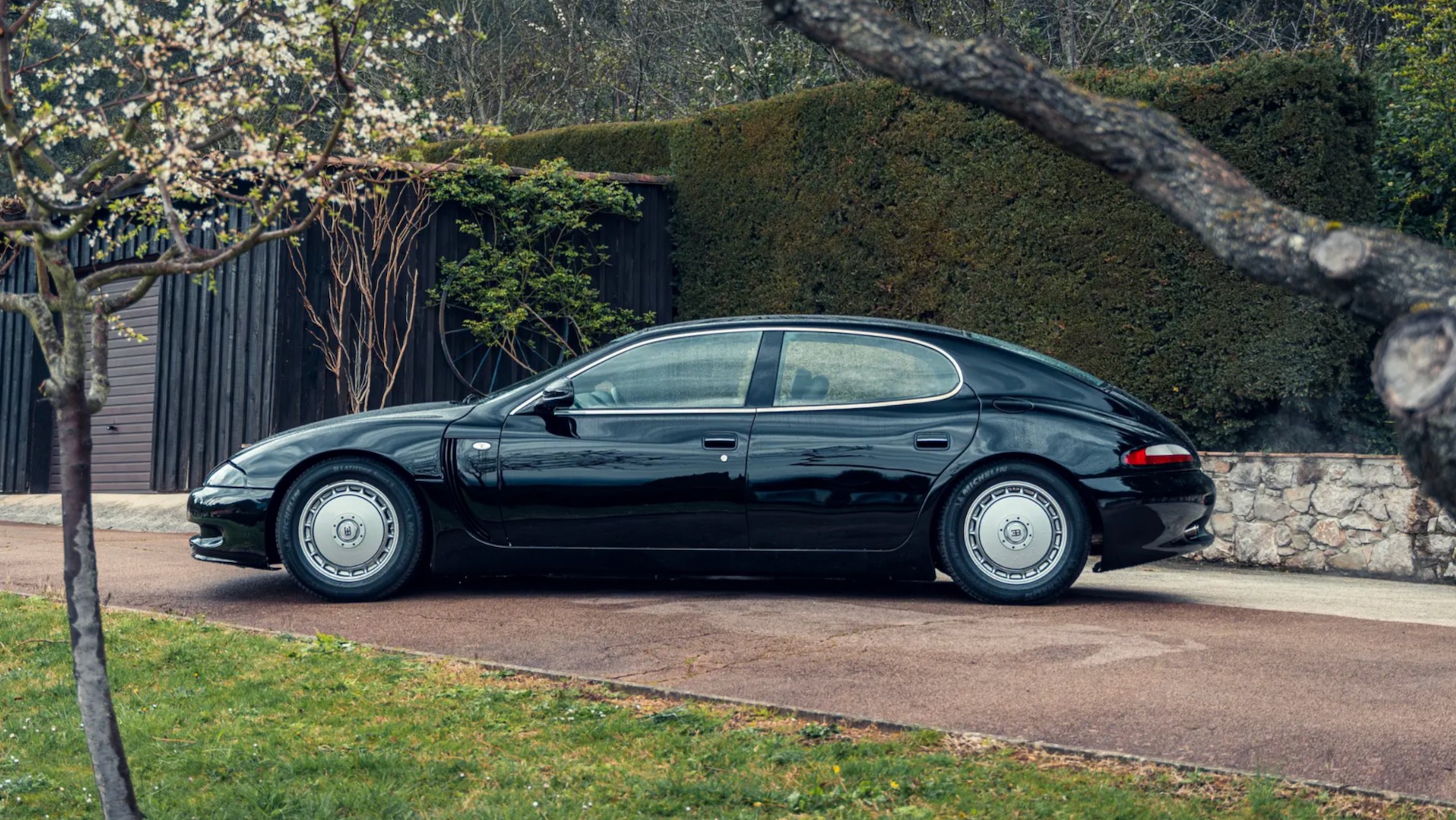
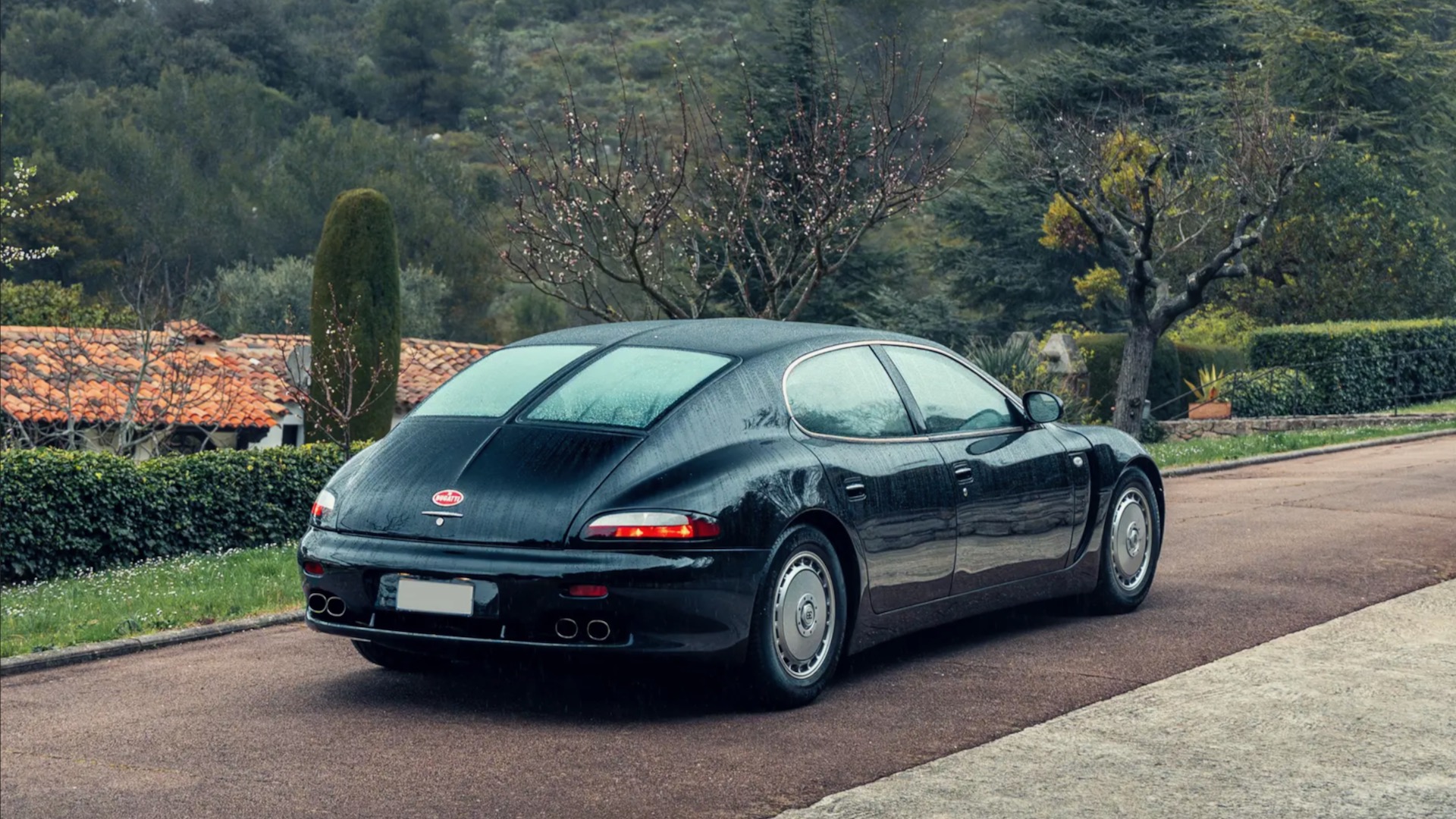
    The Bugatti EB112 was a luxury sedan built on a carbon-fiber monocoque derived from that of the EB110, but it never reached production. Three running examples were completed, one of which will be among the lots at RM Sotheby’s 2026 Monaco auction, happening April 25. The auction house expects it to sell for 1.5 million to 2 million euros, or about $1.7 million to $2.3 million at current exchange rates. So if you couldn’t swing the $4.6 million price tag of a Tourbillon, it’s something to consider.

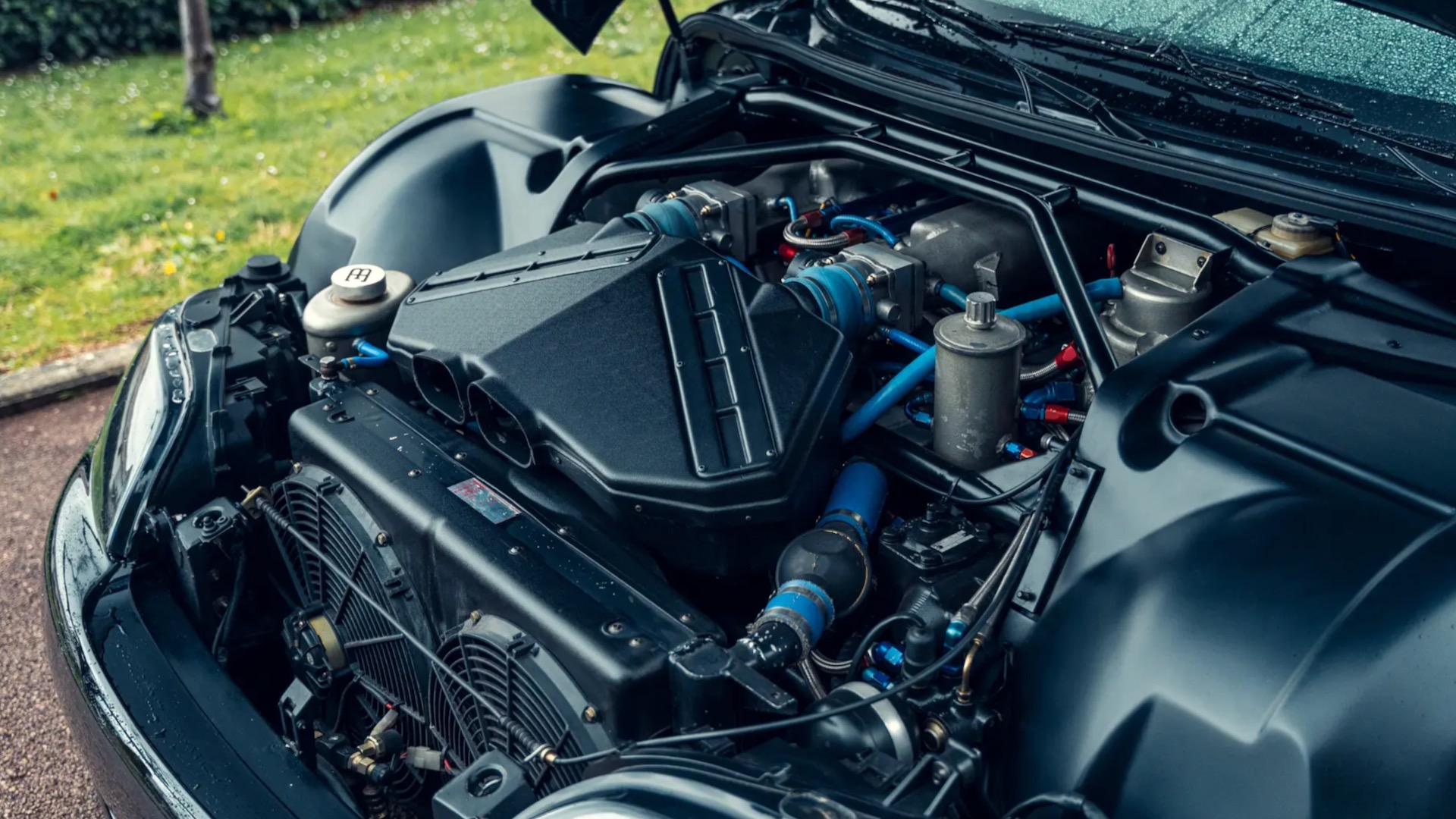
    Unveiled at the 1993 Geneva Motor Show, the EB112 had V12 power like the EB110, which had made its public debut about two years earlier. But instead of the supercar’s quad-turbocharged 3.5-liter engine, the EB112’s V12 displaced 6.0 liters and was naturally aspirated. Mounted ahead of the cabin but behind the front axle, it produced 460 horsepower and 435 pound-feet of torque.

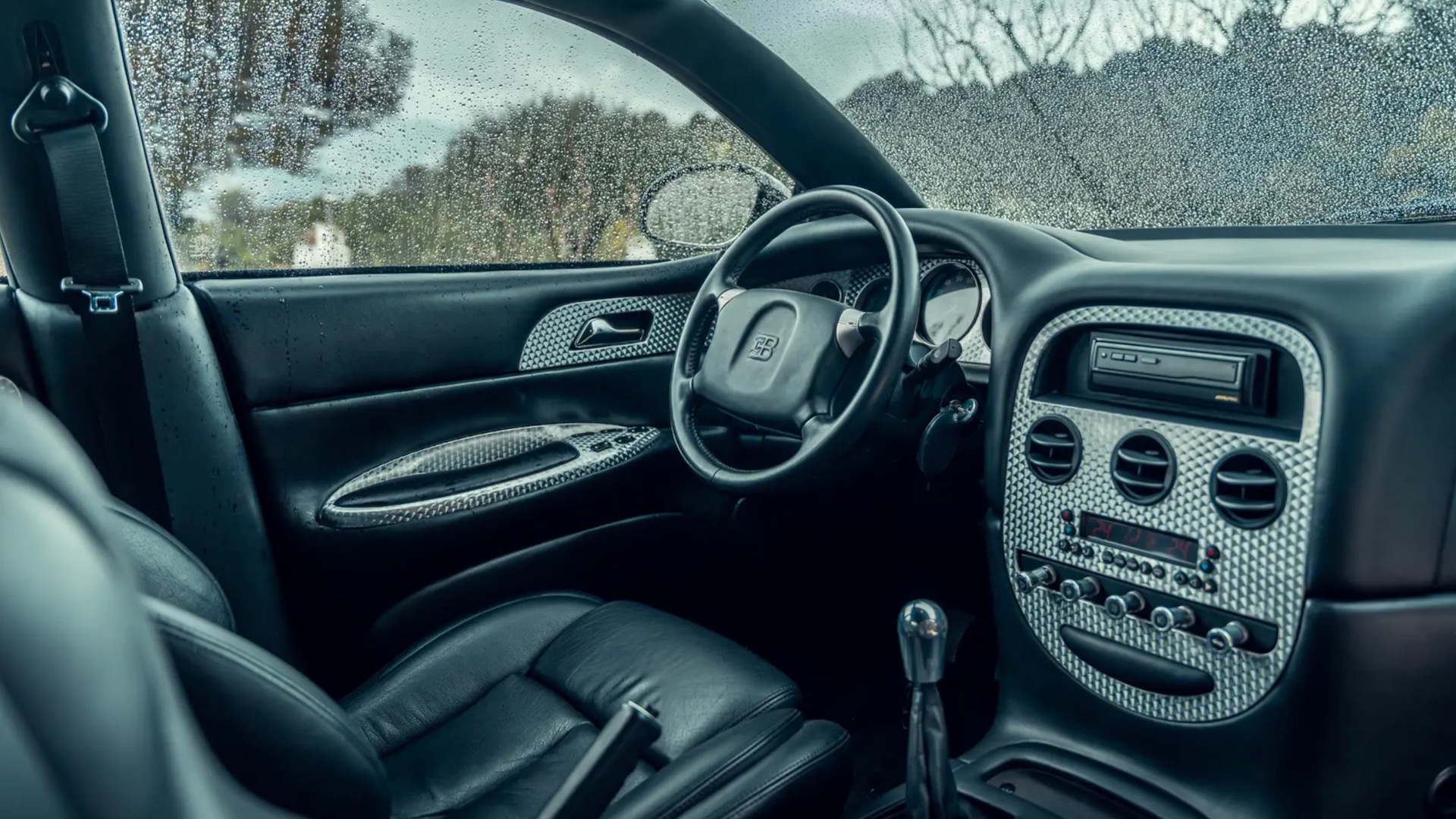
    The V12 was coupled to a six-speed manual transmission and all-wheel drive (with a 38% front and 62% rear torque split), as in the EB110. At the time, Bugatti said it could reach 62 mph from a standstill in 4.3 seconds, and continue to a top speed of 186 mph. Not bad for a sedan that could seat four in leather-lined comfort.

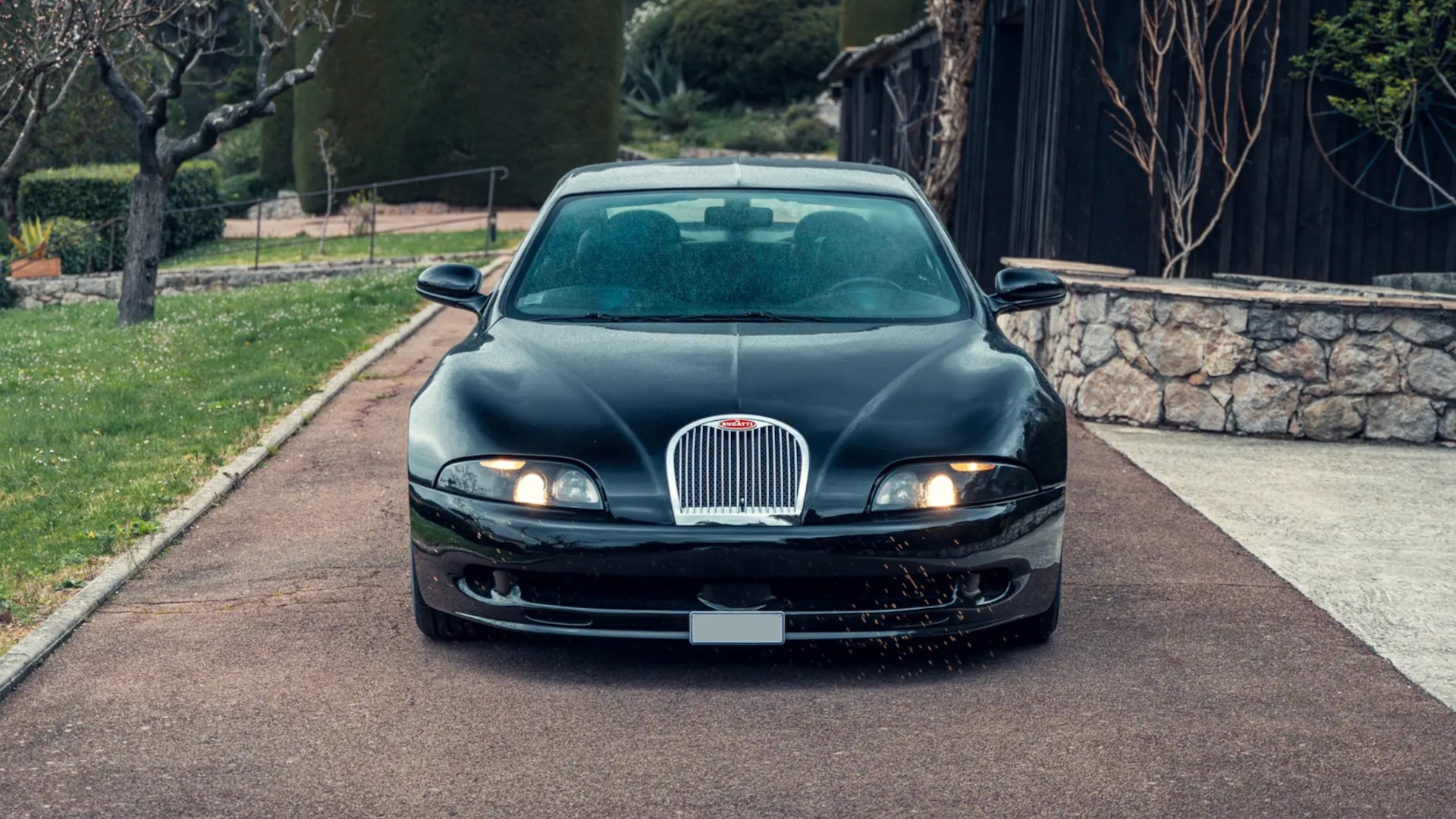
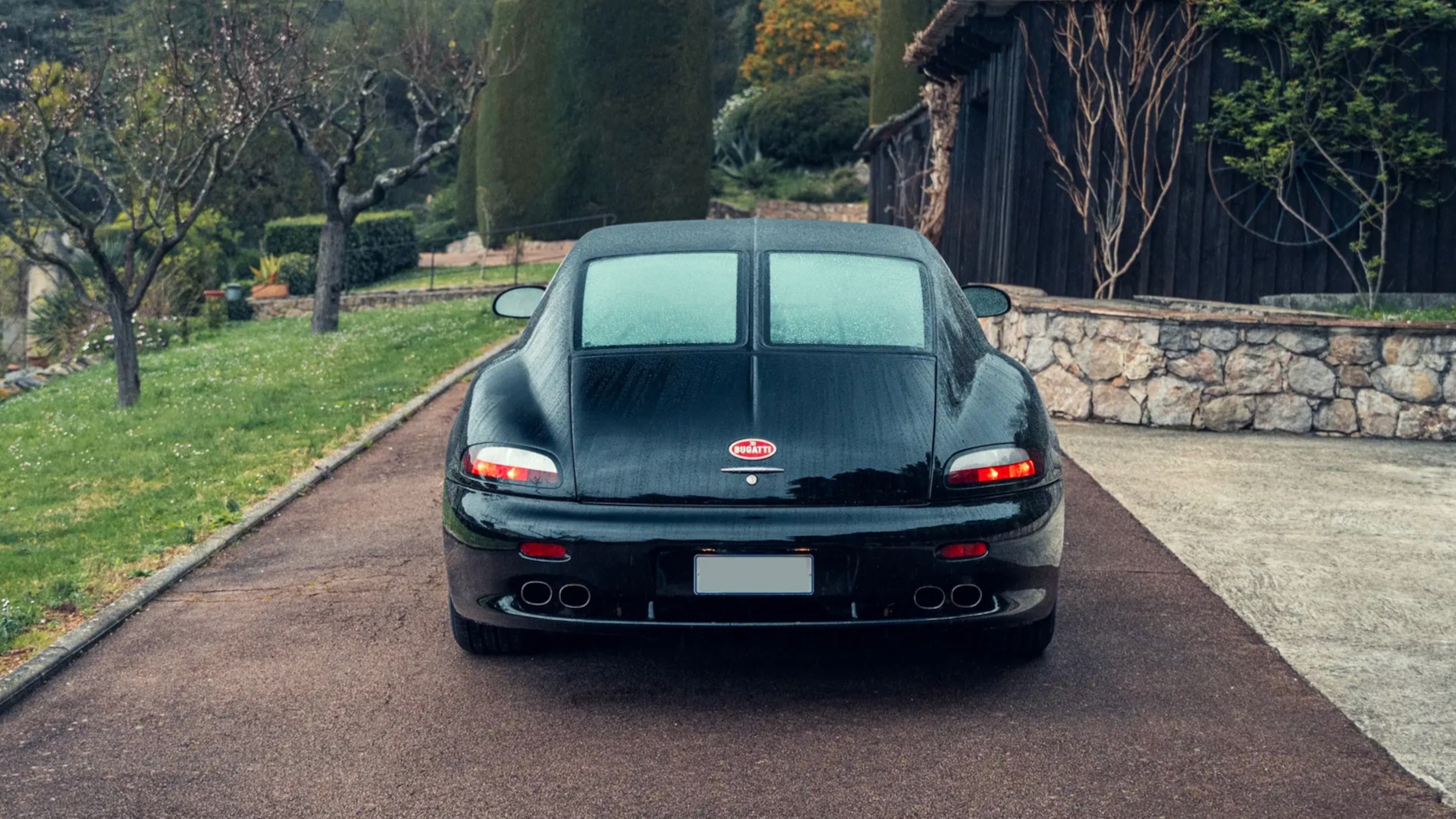
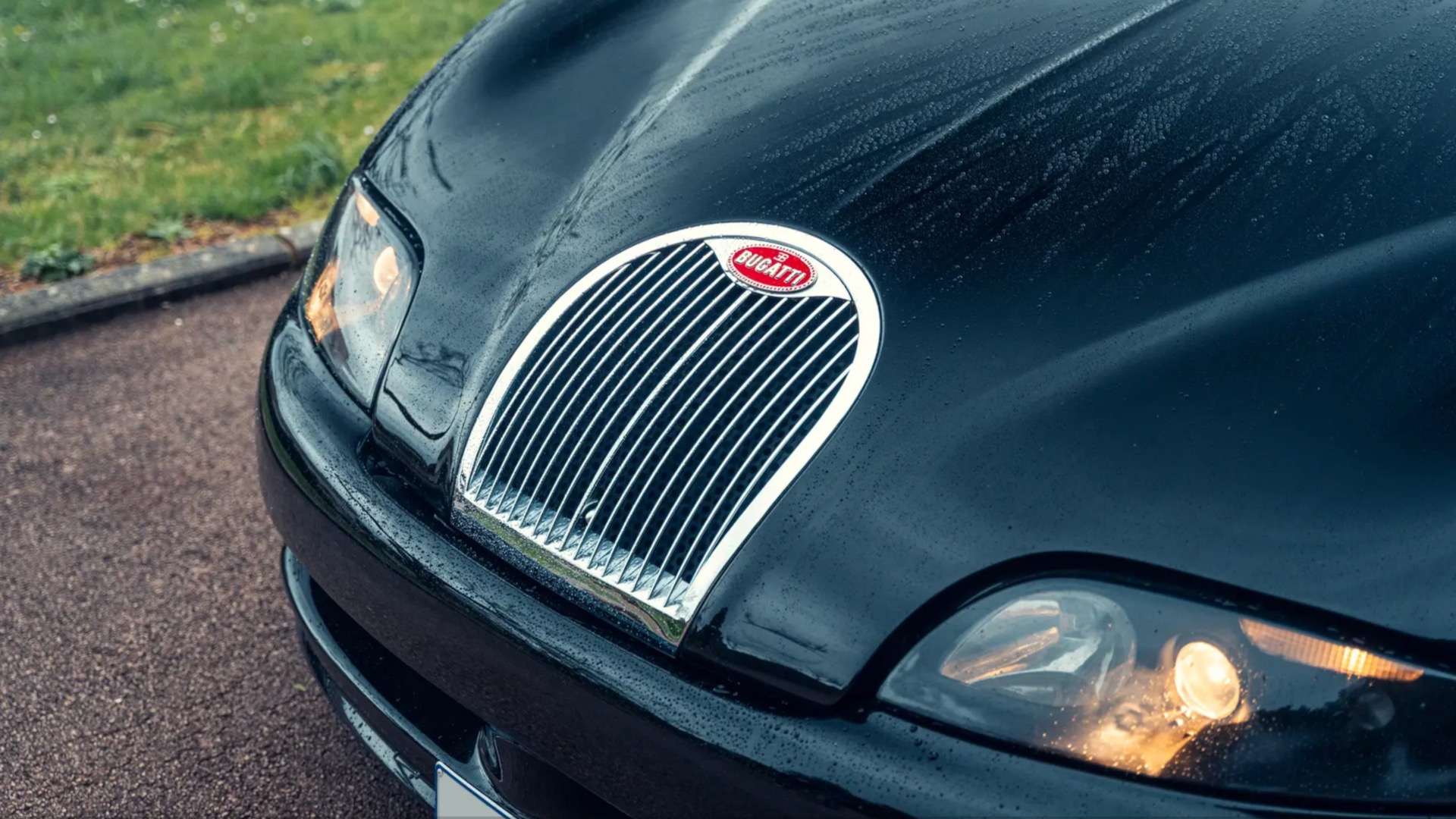
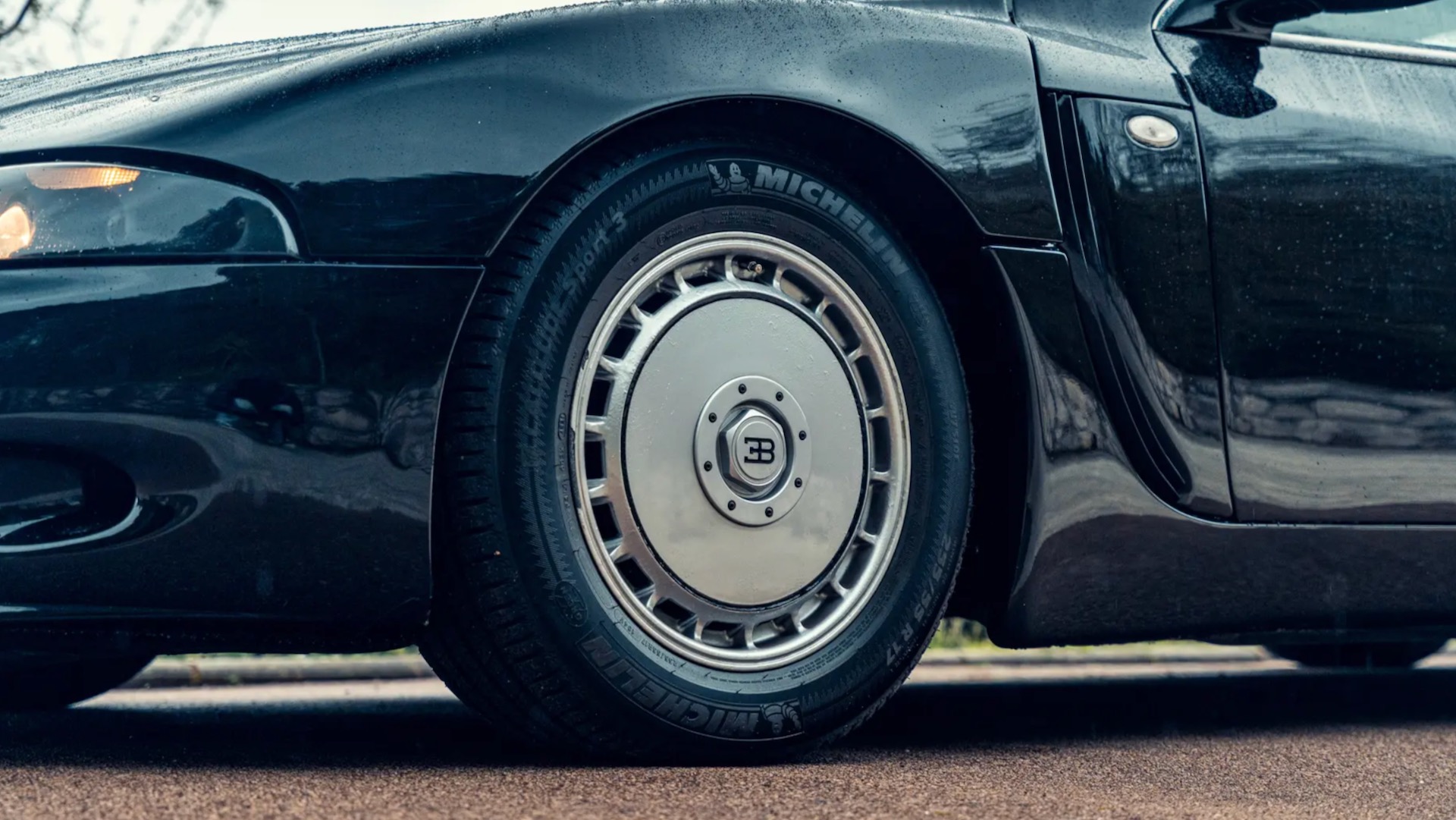
    That capable drivetrain is wrapped in bodywork shaped by design legend Giorgetto Giugiaro, with more overt nods to Bugatti’s history than the EB110. A pronounced spine and split rear window reference the Type 57 Atlantic; the wheels are inspired by those of the Type 41; and the Bugatti horseshoe grille is restored to the size it was on the automaker’s prewar cars. The EB110 made do with a miniature version that gave it a duckface look.

    Bugatti completed one drivable prototype (the car shown in Geneva) and two styling models, plus a handful of chassis and other components before shutting down in 1995. Monegasque businessman Gildo Pallanca Pastor subsequently purchased the company’s assets and had two complete EB112s built from that cache of parts. This is the second of those two cars, which is why it’s listed as a 1999 model even though Bugatti had shut down by that time.

    The car was occasionally driven around Monaco by Pastor until he sold it in 2015, but still shows just 241 miles on its odometer. It received a substantial overhaul in 2021 and 2022 covering the brakes, suspension, emissions control system, and the installation of new tires, with a separate engine overhaul in 2022. So anyone brave enough to risk this piece of unobtanium in traffic should have no problems adding a few more miles.

    According to the auction house, the other EB112 built by Pastor remains in private hands, while the original prototype is part of ItalDesign’s collection. They’re just as intriguing today as they were when new. While the Volkswagen Group has restored Bugatti to glory, and tried to do its own Bugatti sedan in the form of the 16C Galibier, even this automotive giant hasn’t managed to pull it off.

    Got a tip? Send it in: tips@thedrive.com

    Stephen has always been passionate about cars, and managed to turn that passion into a career as a freelance automotive journalist. When he’s not handling weekend coverage for The Drive, you can find him looking for a new book to read.


    Source link

  • Sony Honda Mobility cancel EV collaboration plans

    Sony Honda Mobility cancel EV collaboration plans

    SONY-HONDA MOBILITY has announced that it will “discontinue the development and launch” of its Afeela1 electric sedan and following SUV after discussions between its parent companies, namely Sony Group Corporation and Honda Motor Company.


    First mooted as an entertainment focused concept dubbed the Vision-S (pictured) at the Consumer Electronics Show (CES) back in 2020, the Sony-Honda range of models was joined by the Vision-S 02 SUV and Vision-S 01 Sedan in 2022, models which would later form the basis of close-to-production-ready vehicles shown at last year’s CES in Las Vegas.


    In a statement, Sony-Honda Mobility said the decision was made “as a result of Honda’s reassessment of its automobile electrification strategy announced on 12 March 2026 and factoring the changes to the EV market, the underlying assumptions of Sony-Honda Mobility’s business operations such as the utilisation of certain technologies and assets planned to be provided by Honda were fundamentally altered, resulting in the announcement by Sony-Honda Mobility today to discontinue the development and launch of its first model, Afeela 1, and its second model”.


    The announcement follows news published by GoAuto Premium earlier this month that Honda was cancelling three new EV programs slated for the North American market as it faces losses totalling 2.5 trillion yen ($A22.4 billion) over two years.


    It is Honda’s first loss since it went public in 1957, and has forced the company to reassess its entire EV business, a shift it says was brought about in part by “changes in the internal combustion engine and hybrid electric vehicle categories” brought on by US government policy changes.


    “We recognise that the entire automotive industry is undergoing a major transition,” said Honda president and CEO Toshihiro Mibe earlier.


    “Looking back, it was an issue requiring reflection that we were unable to sufficiently revise our strategy with flexibility and multiple scenarios in response to changes in market conditions and policy trends.”


    The company said it was suffering from “intensified competition due to the rapid emergence of newer EV manufacturers,” and would incur impairment charges and losses from write-offs on EV models it had planned to make in North America, in addition to impairment losses due to stiffer competition in China.


    Honda said it planned to strengthen its hybrid offerings and streamline its EV model line-up “in light of the recent slowdown”.


    “Honda will promote electrification flexibly from a long-term perspective, while balancing profitability and demand trends,” it said in statement, with Mr Mibe adding that the Honda 0 Saloon, Honda 0 SUV and Acura RSX were “hardly viable” under current market conditions.


    “I’m fully aware of the passion poured in by many employees, business partners and sales staff, as well as the high expectations expressed by our customers,” he said.


    Like many other manufacturers, Honda had planned to eliminate sales of internal combustion engine vehicles and only sell EVs and fuel cell vehicles by 2040. However, Mr Mibe told the press conference Honda will now focus on hybrid vehicles.


    Source link

  • The Brief Histories of Automotive’s Unsung Heroes

    The Brief Histories of Automotive’s Unsung Heroes

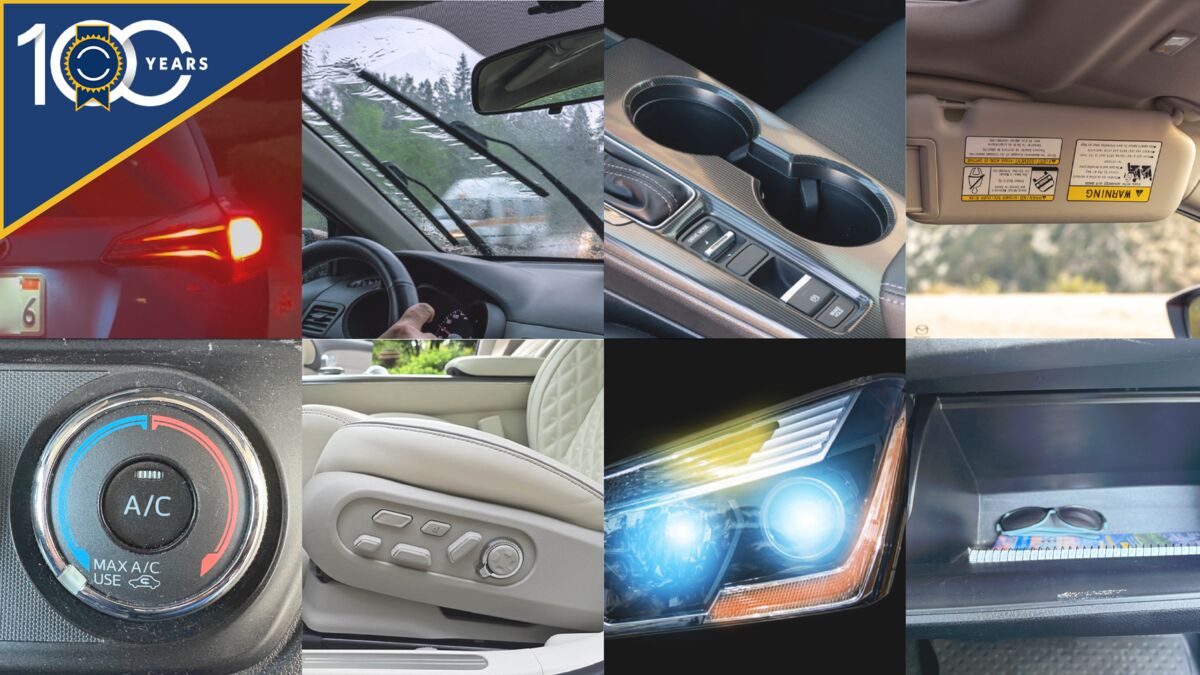
    Kelley Blue Book turns 100 in 2026, and now that we’ve explored a century of auto innovations, the history of car paint colors, car brands that have come and gone, and the history of auto shows in celebration, it’s time to turn the spotlight on the underdogs. These are the quiet workhorses, the stalwart elements, the car features that don’t always get the glitz and glam, but that are always there for you in exactly the way you need them, when you need them.  

    We’re talking, of course, about cupholders, wiper blades, headlights, and all the other pieces of your car that we tend to take for granted. They may not get top billing on your wish list when you’re buying a vehicle (or even make it at all, given how fundamental they now seem to our driving lives), but you will ruefully long for any one of them if you find yourself without a working version. 

    Here’s a look at the brief histories of these heavy hitters. This one’s for you, unsung heroes of automotive!  

    Hark, Headlights!  

    Imagine: you forget an ingredient for dinner and need to head out to the market. It’s dark out, but before you can go, you need to rustle up your matches and light your acetylene or oil headlamps before heading out into the night. Even then, their brightness is questionable. This was the scenario for the earliest vehicles. Visibility in the dark has been essential since the days of pre-automobile carriages, and lamps of various types have long been used. Headlamps have been available for cars since the 1880s, becoming standard equipment on the Ford Model T in 1909, which used headlamps of lit acetylene gas produced by a carbide generator.

    The first electric headlight debuted on the 1912 Cadillac Model 30, and low-beam headlights appeared in 1915. In the early days, drivers had to get out of the car to manually adjust and turn on the headlights. This situation evolved over the decades into the sealed-beam headlight in 1939, which remained standard through the 1970s. 

    The 1980s and 1990s saw composite and xenon/high-intensity discharge (HID) lights, leading the way for today’s light-emitting diode (LED) and laser technology. These advances also led the way for conversations around the blinding brightness of some of today’s headlights. Whatever the material, headlights are a safety essential that is an anchor on this list, and rightfully so. 

    Behold, Brake Lights!  

    Much like their headlight counterparts at the front of the car, brake lights are an essential standard that we don’t tend to think about much until they need replacing. They’re just a bit younger than headlights, not appearing on very early models. Hand signals were the original brake light, but at night or in poor visibility, they were ineffective.  

    The earliest brake light was actually not a light at all, but a rear-bumper-mounted sign that read “STOP” and would automatically pop up when the brake pedal was depressed. This was the brainchild of silent film actress Florence Lawrence in the first decade of the 1900s. Unfortunately, it was never patented or widely adopted. 

    The technology developed throughout the 1910s and 1920s, and a series of different legislation, both federal and state-wide, in the 1930s finally led to firmer mandates around stop lights or brake lights in vehicles. Later in the 20th century, the Federal Motor Vehicle Safety Standard 108 mandated center high-mounted stop lamps (CHMSL) as standard equipment on all new passenger cars sold in the U.S. from model year 1986 and all new light trucks from model year 1994. Like headlights, materials and aesthetics around brake lights continue to evolve, but the basics remain the same: you brake, your lights alert anyone behind you, and accidents are (hopefully) prevented. 

    No Shade to Sun Visors 

    Driving off into the sunset may look glamorous in movie finales, but the reality is that it’s both miserable and hazardous to have the sun blaring into your eyes. The sun visor was an early arrival in cars, first appearing in the 1920s as exterior-mounted “glare shields” on models like the Model T. In 1930, George Gagnier and Bion Cole Place filed a patent for the interior sun shield, which became the foundation for all future iterations. 

    This trusty and essential safety device hasn’t changed all that much from its original iteration, but a few notable developments include: 

    • The standardization of interior flip-down visors during the 1930s for both driver and passenger.  
    • In 1937, the visor mirror was patented by Ryerson & Haynes, Inc., but these “vanity mirrors” wouldn’t hit their popularity stride until the 60s. Now, they’re a no-brainer for checking your teeth for errant food before you head to your appointments. 
    • Sun visor materials have evolved over time. Early external glare shields were made of metal and other rigid materials. Over time, materials such as cardboard, foam, and high-density polyethylene (HDPE) were introduced, often covered with leather or fabric. 

    In the modern automotive era, companies are looking at further developing sun visor technology. Companies like Bosch, for example, have toyed with technology that combines AI and liquid-crystal display (LCD) screens linked to cameras to more effectively reduce glare without limiting the driver’s view. Will there be a new wave of futuristic sun-blocking technologies down the road? Maybe, but for the time being, your trusty old flip-down visor will continue to show up for duty.  

    Cupholders Bring Spill-less Beverage Bliss 

    Maybe it holds your morning coffee, your post-gym protein shake, or your can of bubbly water. Whatever the beverage, your reliable cupholder keeps your drink close at hand and snug through the twists and turns of your day. This wasn’t always the case, however – cupholders were actually a relatively late addition to the auto world. 

    Early cars tended to be a much rougher ride, and eating or drinking while moving didn’t hold a lot of appeal. It wasn’t until the 1950s and 1960s that the idea began to gain legs. In 1953, Burnard Byford patented the “Automobile Seat Article Holder” which was essentially a metal plate that wedged between two seats. This was ideal for an era of drive-in restaurants and movies, where eating in the car became more popular, but it still wasn’t entirely secure. Later in the 1950s and into the 1960s, glove compartments began to feature cupholders in the backs of their doors.

    It wasn’t until 1983 that Chrysler introduced the minivan and the built-in cupholder, featured in the Dodge Caravan and the Plymouth Voyager. The trend continued to catch on and cupholders became a standard feature. That it took so long is a little hard to imagine today, when cars like the 2025 Subaru Ascent boast up to 19 cupholders. Hydration, meet your match.  

    Winning Windshield Wipers  

    It’s all fun and games until you get caught in an unexpected storm and you realize that you haven’t replaced your crusty, dusty windshield wiper blades in far too long and can’t see a thing. Our trusty windshield wipers, like the other items on this list, aren’t things we tend to think about much until we need them, but they’re always there for us, like an old friend. 

    Mary Anderson, an Alabama woman visiting New York in 1902, was stuck on a streetcar in a snowstorm. Observing the streetcar driver manually clearing the window inspired Ms. Anderson to create what would become our modern windshield wipers. Her “Window Cleaning Device” was patented in 1903 and featured a rubber blade and a lever-operated spring-loaded arm to wipe the windshield. 

    Gradually, windshield wipers gained steam on new vehicles, but the manual mechanisms could be distracting and clunky. In 1926, Bosch introduced the first electric windshield wiper. From there, the technology evolved into what it is today.  

    Modern wiper blades include innovations such as frameless wipers, sensors, intermittent speeds, aerodynamic designs, and heating technologies to help combat ice. Next time you’re caught in the rain or a bug hits your windshield, take a moment to appreciate not having to get out of your car to address the issue manually.  

    Glove Boxes, or Trinket Treasure Chests?  

    Registration. Proof of insurance. Owner’s manual. Tire gauge. Mad money. Snacks. Spare car forks. In modern times, gloves don’t often make the list of things we store in our gloveboxes, but in early automobiles, good driving gloves were essential. Goggles and scarves were also commonly-stored items.  

    Though the contents have changed over time, the glovebox itself has been an auto staple since the mid-1910s. As engines shifted from under the carriage floor to the front of the car, early dashboards gained more space for storage and gauges. The first true glovebox appeared with the 1915 Pierce-Arrow, and it caught on. By the 1930s, the glovebox had become an auto standard. 

    Like every item on this list, the glovebox has undergone shifts and experimentation throughout automotive history, but it has persisted as a standard expectation in vehicles. It’s a simple and elegant storage solution, one that keeps things in place and prevents the need to find (and pay for) other less-secure options.

    Every Body Is Unique, and Seat Adjustability Knows It 

    When it comes to seats, car buyers often clamor for luxury materials and fancier features like seat warmers. What we don’t often stop to appreciate is the ability to adjust our seating position to suit our individual bodies. Sure, it’s nice to have massaging seats, but there’s only so much they can do if you’re cramped into an uncomfortable position for a long day of travel (ever been in an economy airplane seat for a long haul flight?).  

    Until the early 1910s, car seats were mostly fixed and rigid. Over the next few decades, seats slowly became more adjustable to accommodate different angles and legroom. In 1946, Buick offered the first optional two-way power seat. Ford debuted 4-way power seats with the 1955 Thunderbird. Headrests found their footing in the 1960s. 

    With all this technology well in place, modern cars have focused on increasing comfort and introducing new luxury features in car seats. Next time you hop in your car, before settling on the massage pattern you want in your seat, take a moment to appreciate the leg room that’s just right for you and the seat angle that won’t cause a backache for the rest of the day. 

    Don’t Sweat It: Temperature Adjustment Is There for You 

    These days, newer cars have sophisticated climate control that allows drivers to adjust cabin temperature to an exact degree of comfort. But – you guessed it – this wasn’t always the case. 

    Early driving could be a chilly affair. Early motorists would often heat bricks or soapstones at home and place them in dedicated heatboxes in the car. Manifold heaters became popular with Model A owners, but they were unreliable. GM introduced coolant-based heaters in the early 1930s. Later in the decade, Nash Motors introduced the first integrated heating and ventilation system. 

    For sweatier days, drivers were mostly out of luck until the 1940s and had to rely on the trusty breeze or unreliable fans while driving. Packard broke through with the first factory-installed AC in 1940, followed closely by Cadillac in 1941. These systems, however, left a lot to be desired. Drivers had to get out of the car and manually turn the air conditioner on or off by installing or removing the drive belt from the compressor. The systems could only recirculate air and drip water and were generally not a focus of further innovation until after World War II. 

    AC and heating systems both improved dramatically in the decades that followed. Automatic climate control and digitization have brought us to today, where we lavish in multi-zone, automatic AC and heating systems that can be adjusted down to the degree. We can drive in extreme climates and still be wildly comfortable with a simple dial adjustment or a tap on the screen.  

    Raise Your Glass 

    We don’t begrudge anyone the flashy features that can make driving luxurious and fun, but we do feel like it’s important not to forget the ones that are absolutely foundational to the car and the driving experience. Without these, driving would be in upheaval. Cups would be flying, car registrations would be within range of the dog’s teeth, we’d be shivering in the cold or sweating in the heat, and we’d be unable to see in the rain or dark. We’re not being dramatic, just sentimental about the lesser-lauded wonders of our vehicles that unflaggingly put in the work day in and day out.

    Three cheers to you, fundamental features, and to all the innovators who have helped to refine you throughout automotive history.

    Source link

  • Forget Your Expectations. This Is Better

    Forget Your Expectations. This Is Better

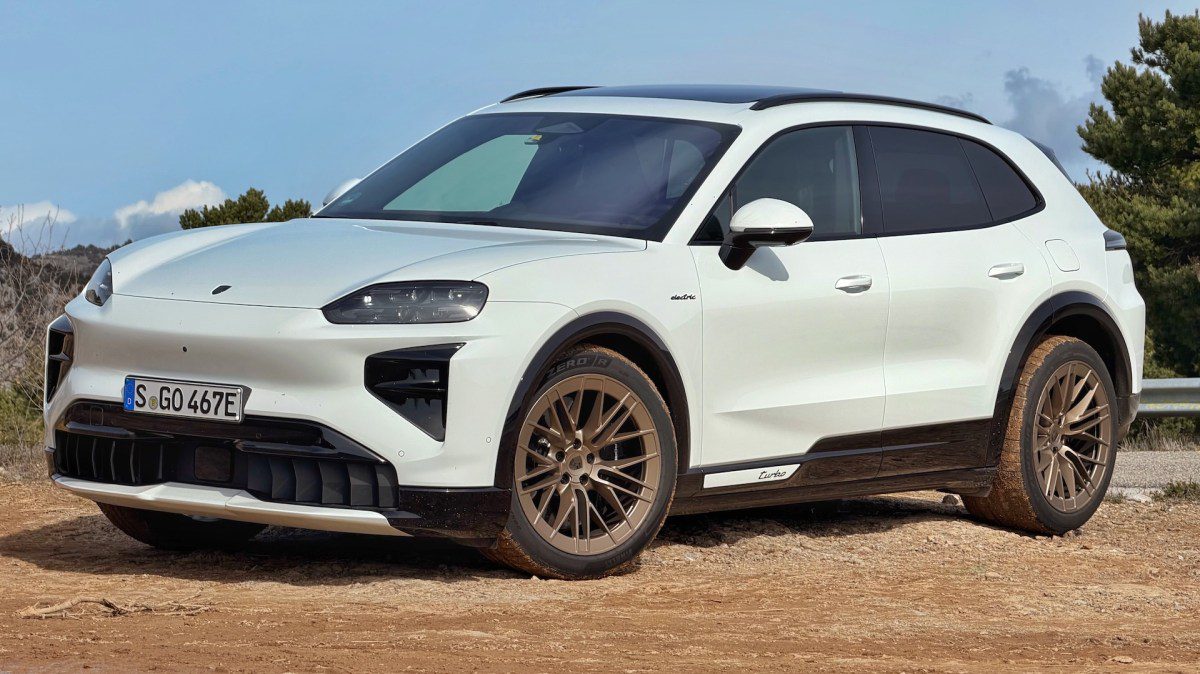
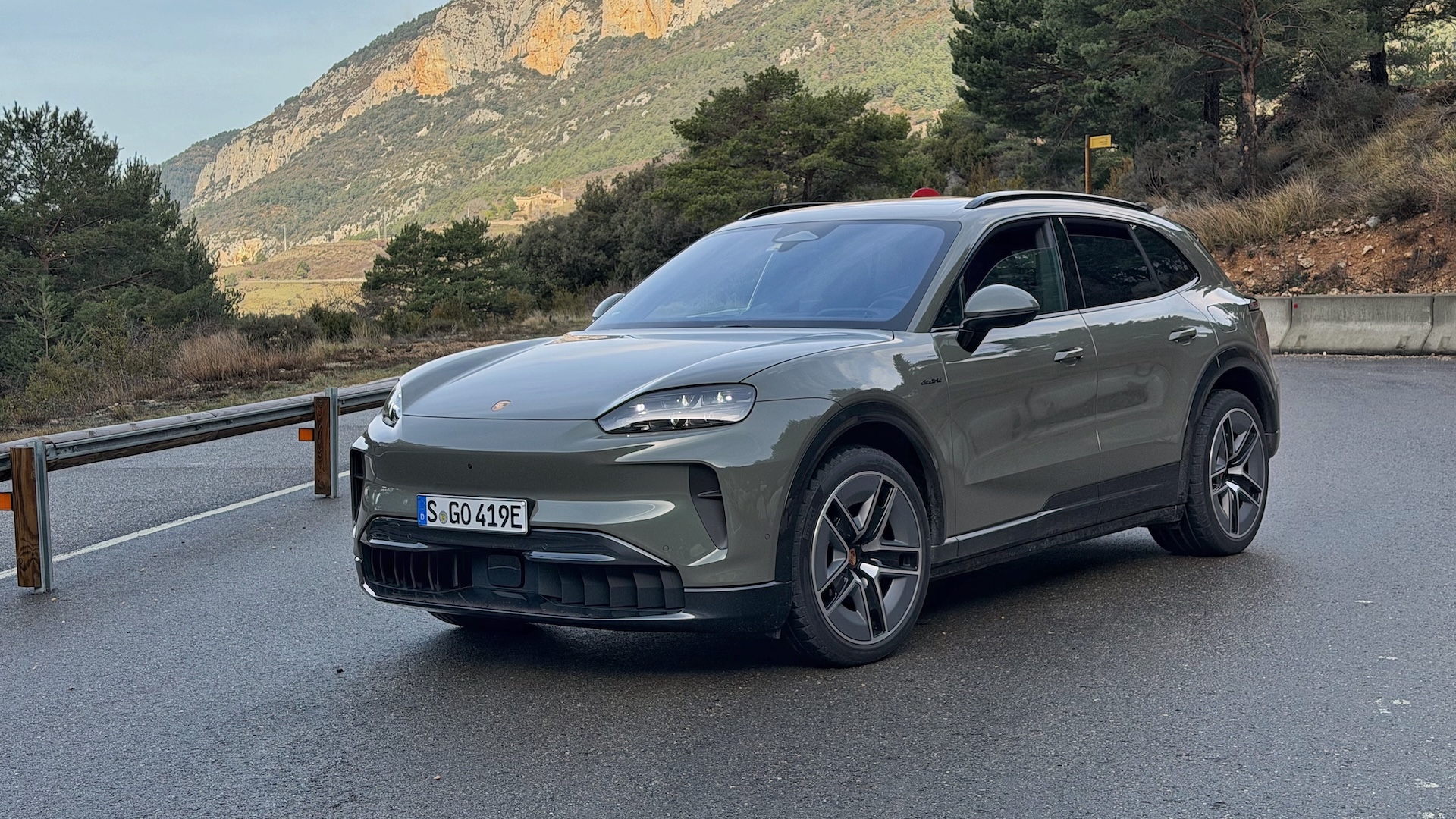
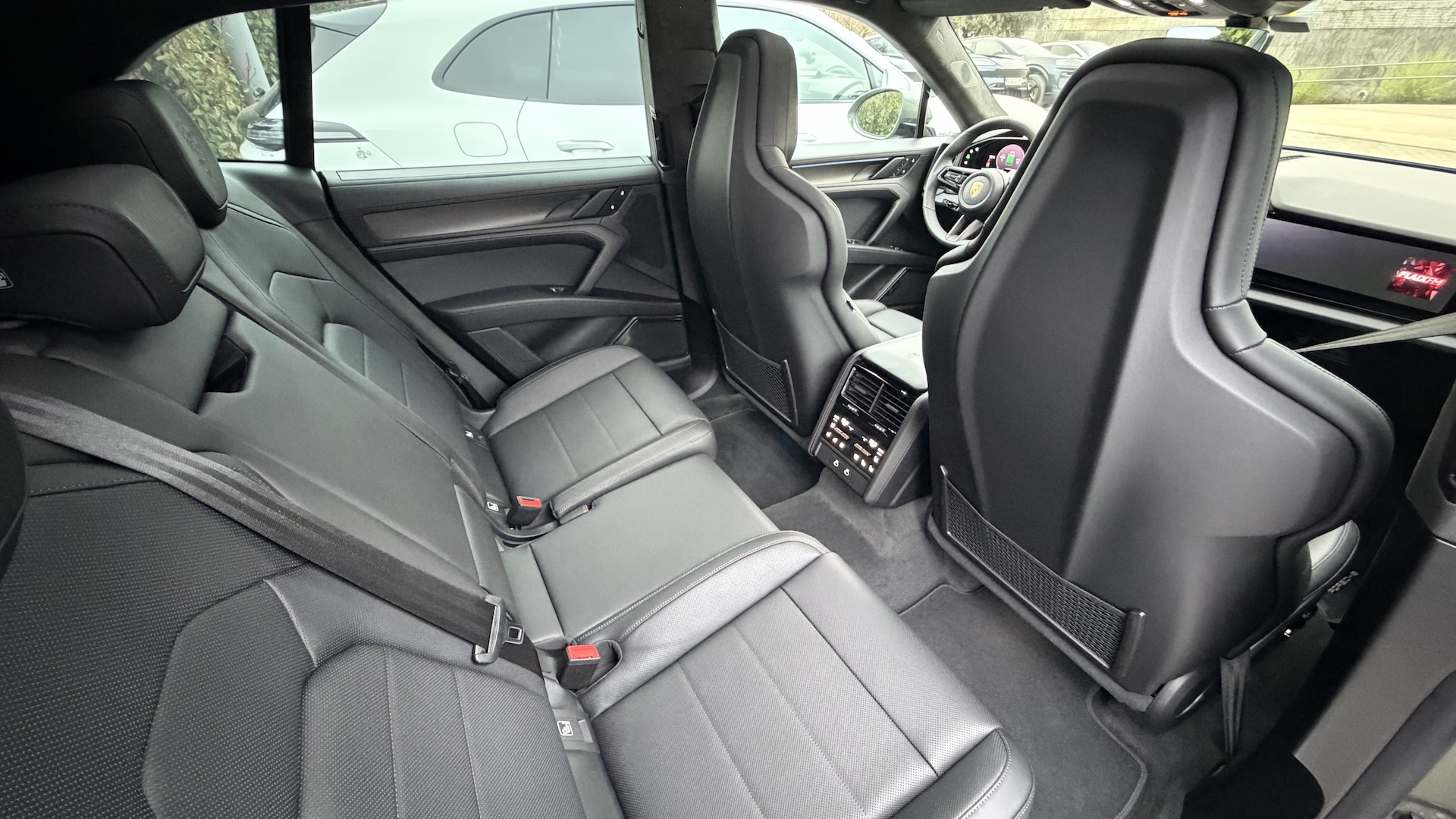
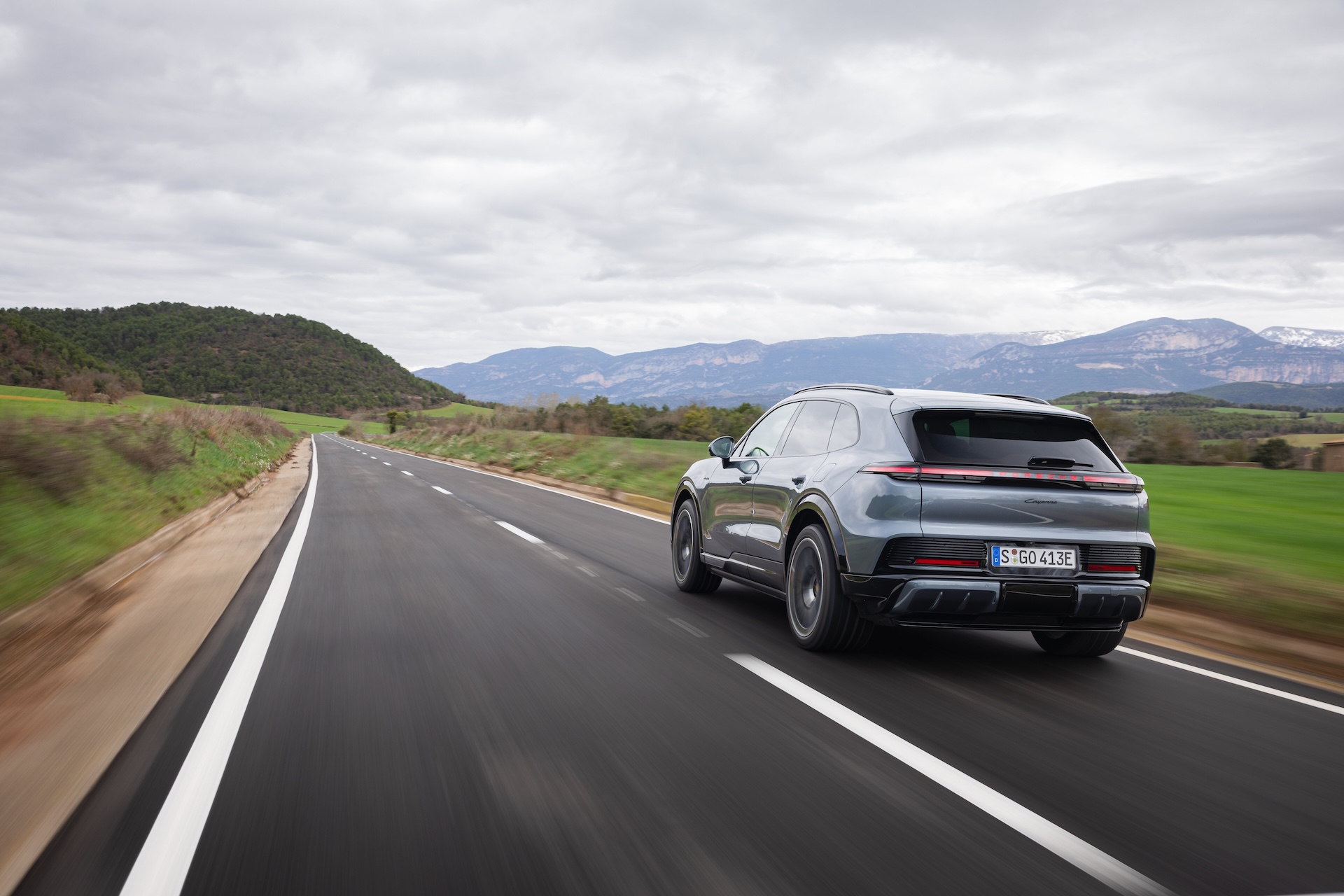
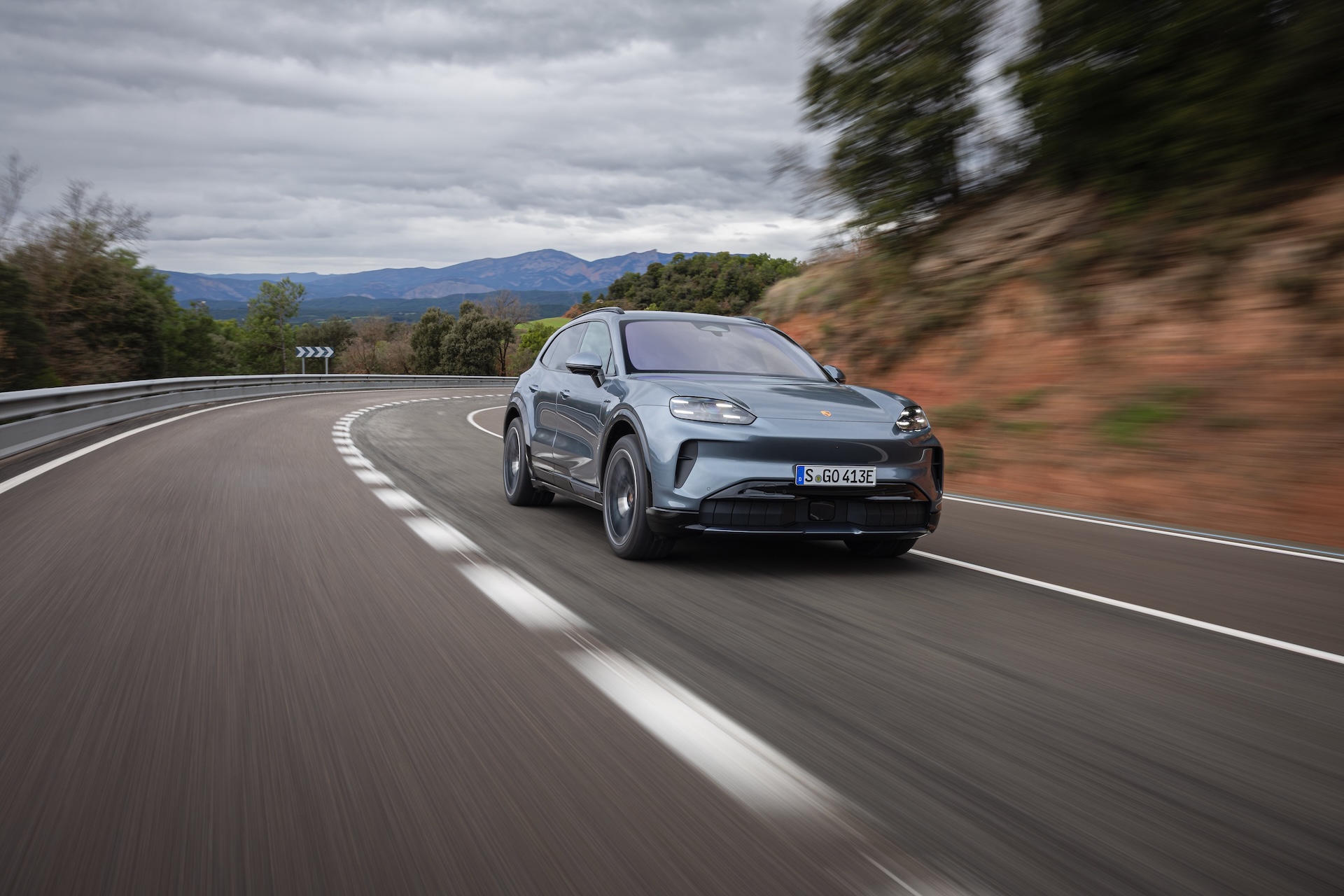
    “Unmistakably Porsche, Unmistakably Cayenne,” read the PowerPoint presentation I was shown ahead of the 2026 Porsche Cayenne Electric’s media drive. In this line of work, you get used to hearing automakers’ pitches, slogans, and marketing promises, and while not all fall short, very few actually live up to the hype.

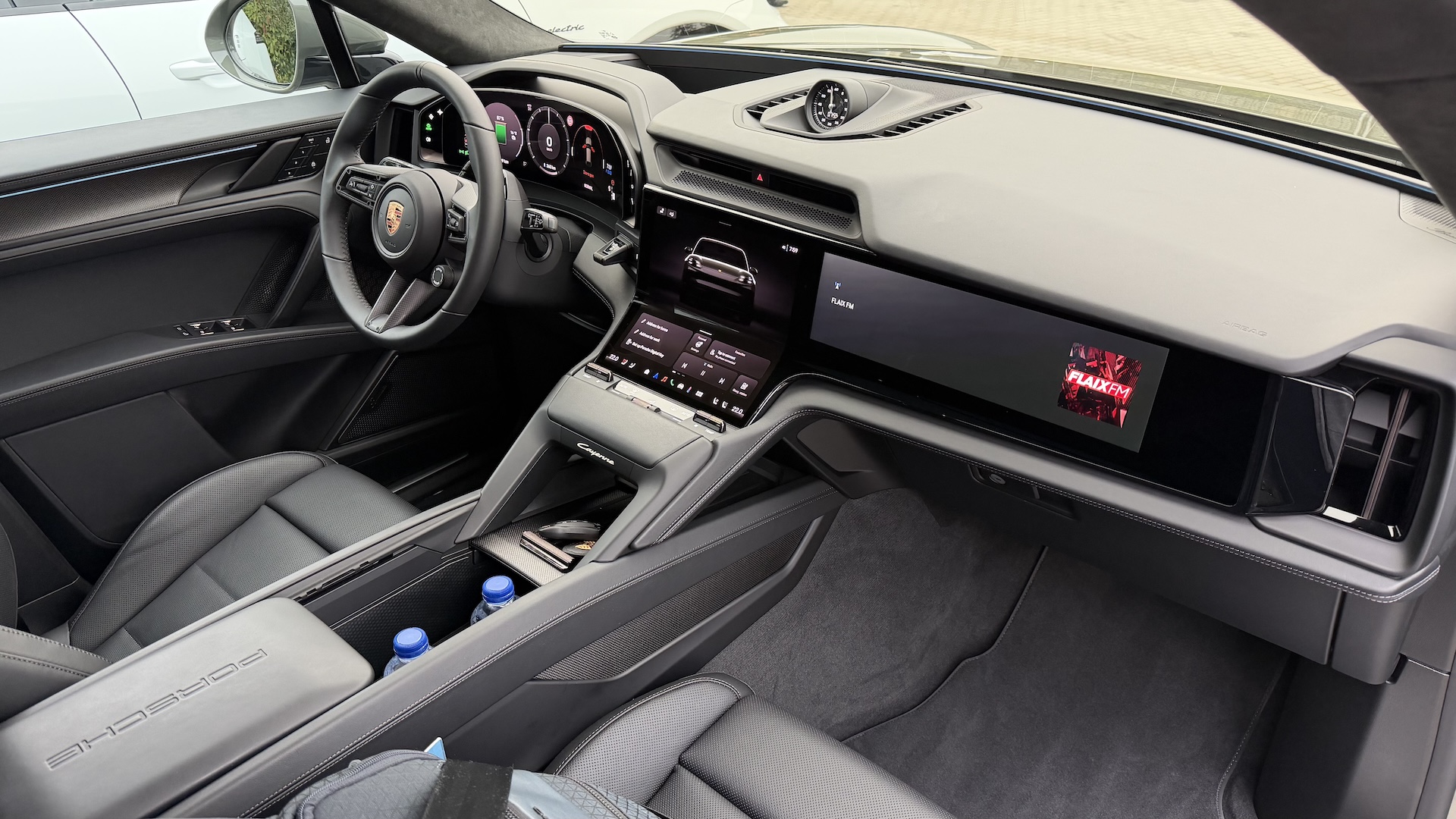
    The debut of the Cayenne Electric has been a slow drip for quite some time, and it’s been prolifically covered by The Drive as it was teased, announced, and developed. We even drove an early prototype last year, and later on, went all the way to Germany just to poke around its tech-heavy cabin and play with that sleek, curved touchscreen. The only thing we hadn’t done, really, was drive a finished, production version free of camouflage.

    That time finally came a couple of weeks ago, when I headed to the outskirts of Barcelona to experience the Cayenne Electric and Cayenne Turbo Electric on some of Europe’s finest driving roads. Here’s how that went.

    Basics

    The name says it all. It’s an electric Cayenne, but thankfully, not the only Cayenne. If you want a gas version of Porsche’s staple SUV, you can still get one. But if you’d rather go electric, Stuttgart’s in to please with its revolutionary new model. The Cayenne Electric is offered in three trims: base, S, and Turbo, with 435, 657, and 1,139 horsepower, respectively. Torque is rated at 615 lb-ft for the base model, 796 for the S, and a staggering 1,106 for the Turbo.

    As The Drive‘s editor-in-chief, Kyle Cheromcha, highlighted after driving a prototype last year, the Cayenne Electric rides on the PPE platform used for the Macan Electric, though it’s been modified for this application. It has an 800-volt architecture capable of DC charging at up to 400 kW via NACS plug, delivering a sub-16-minute 10-80% charge. The 113-kWh battery underneath the floor is shared across all models, as is the dual-motor powertrain. The rear-axle electric motor, however, is oil-cooled to help dissipate heat under extreme load, something which sets the Porsche apart from other high-performance EVs. Both the motors and battery are built in-house by the automaker.

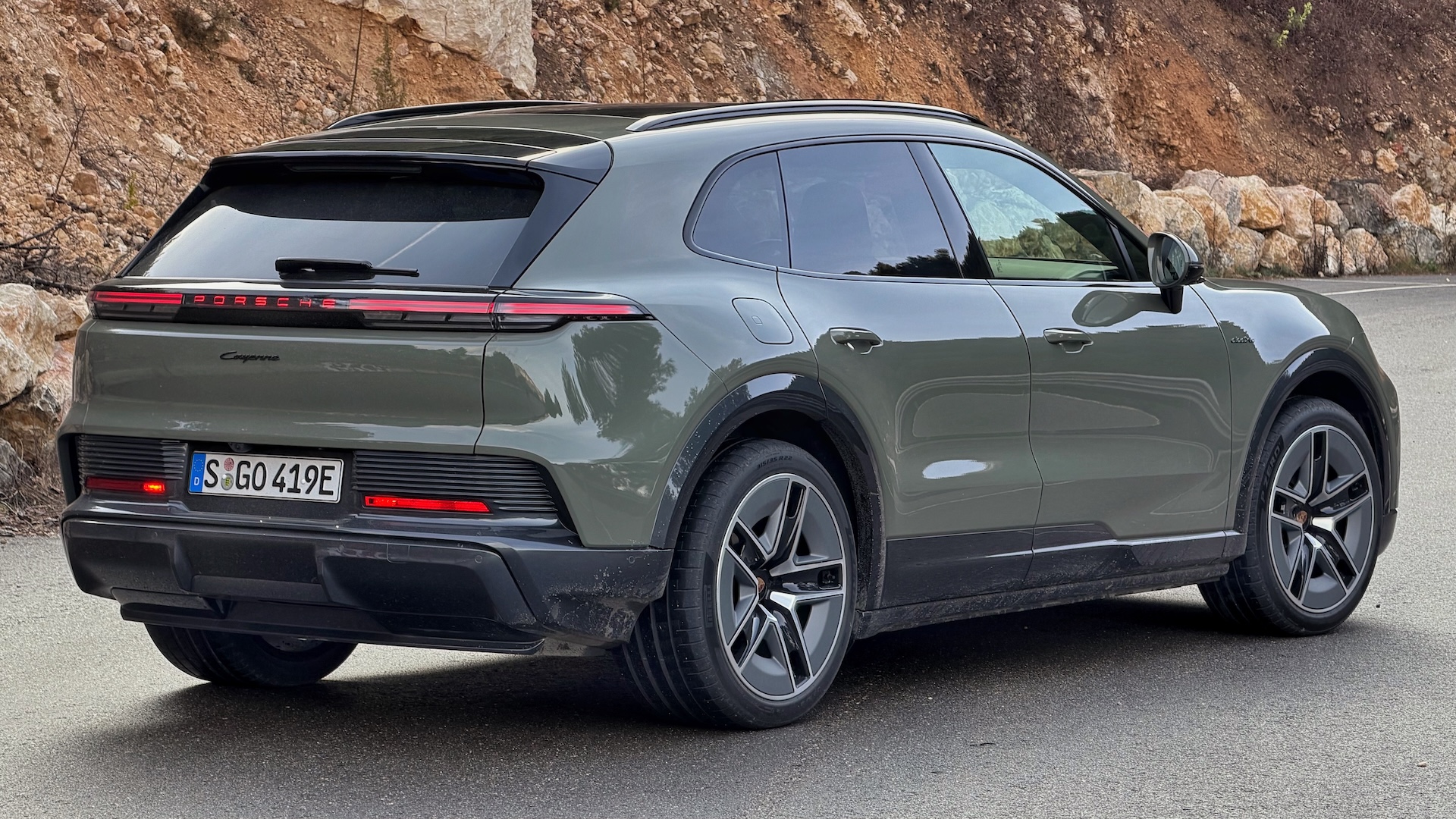
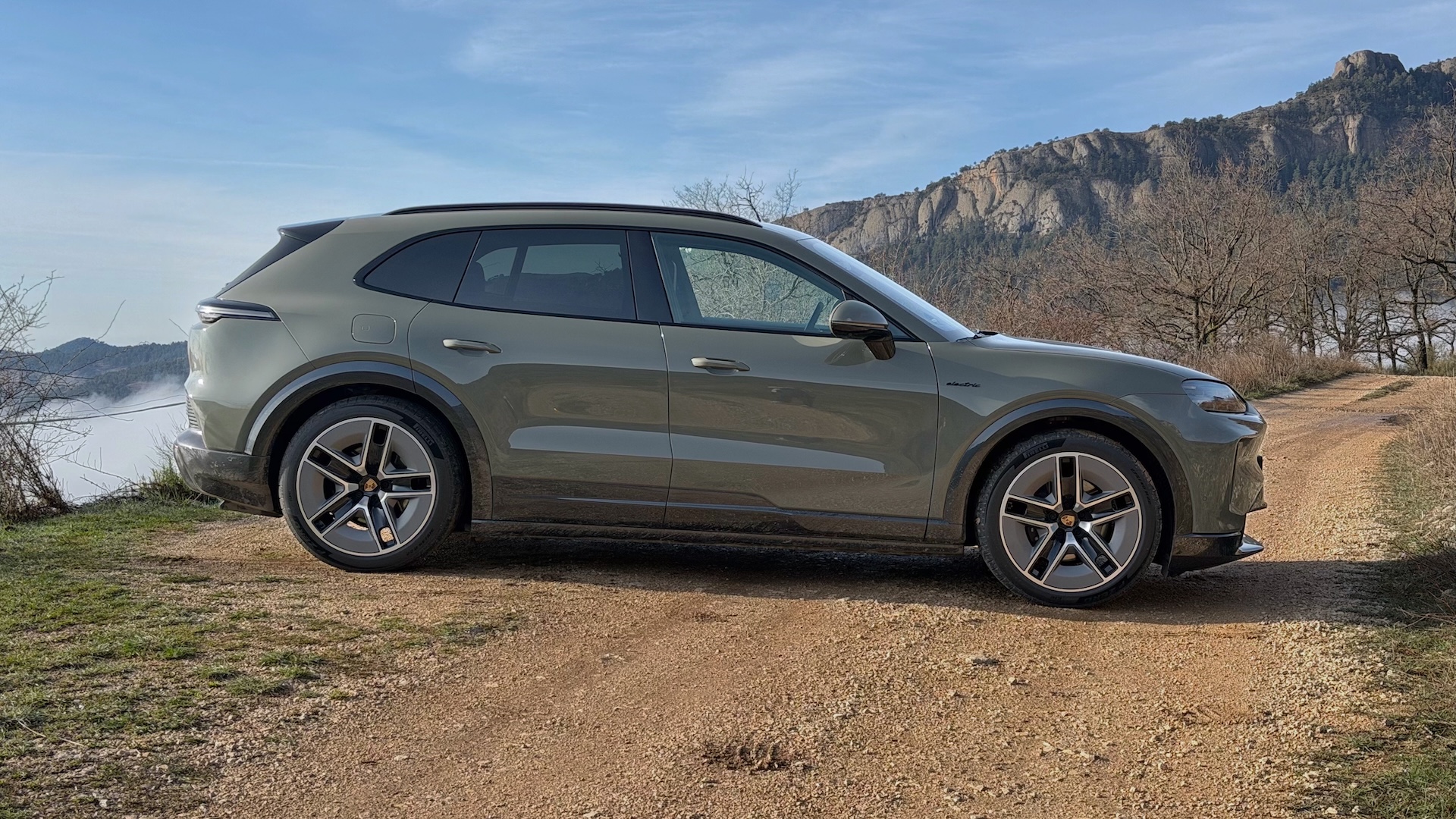
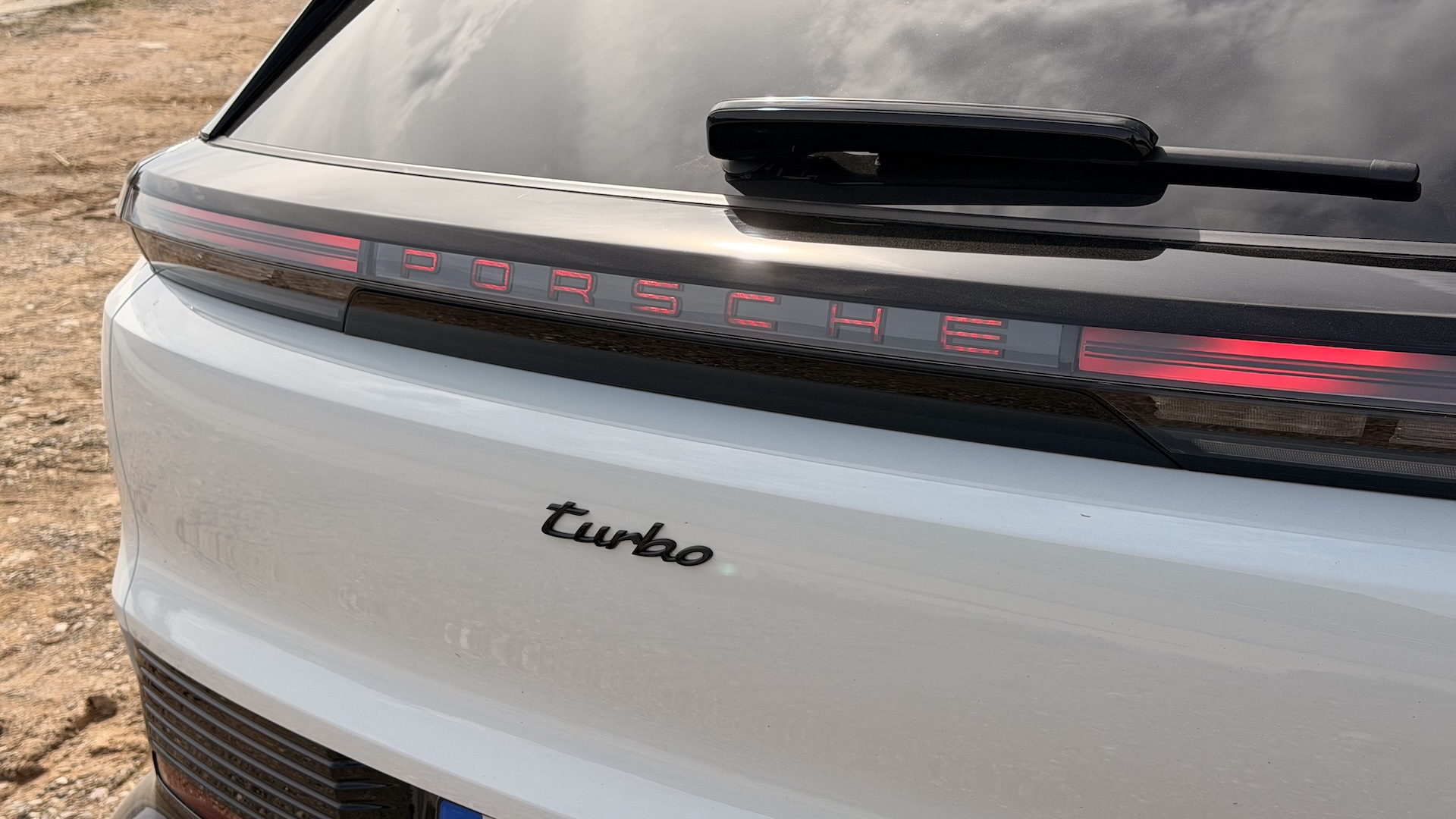
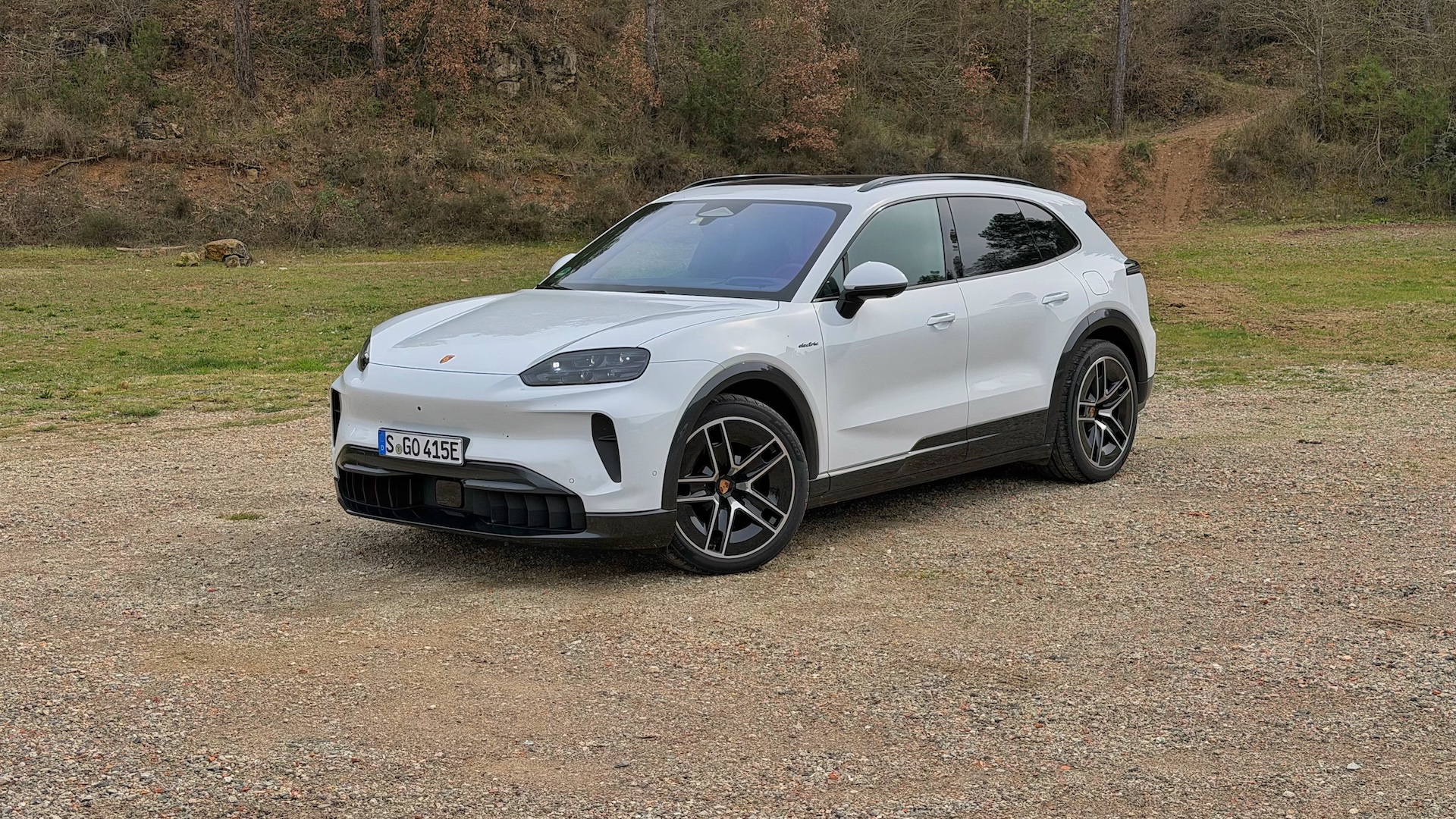
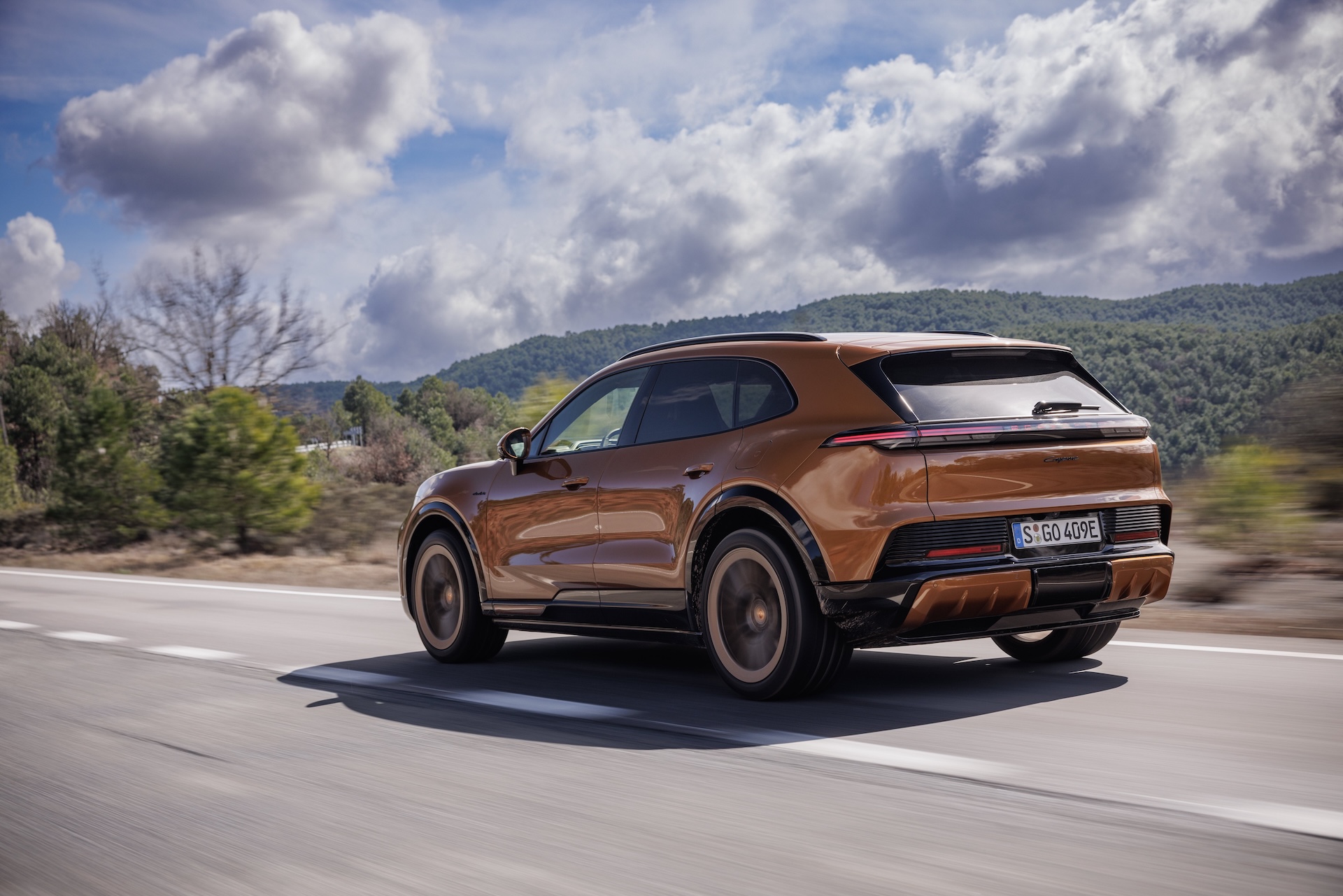
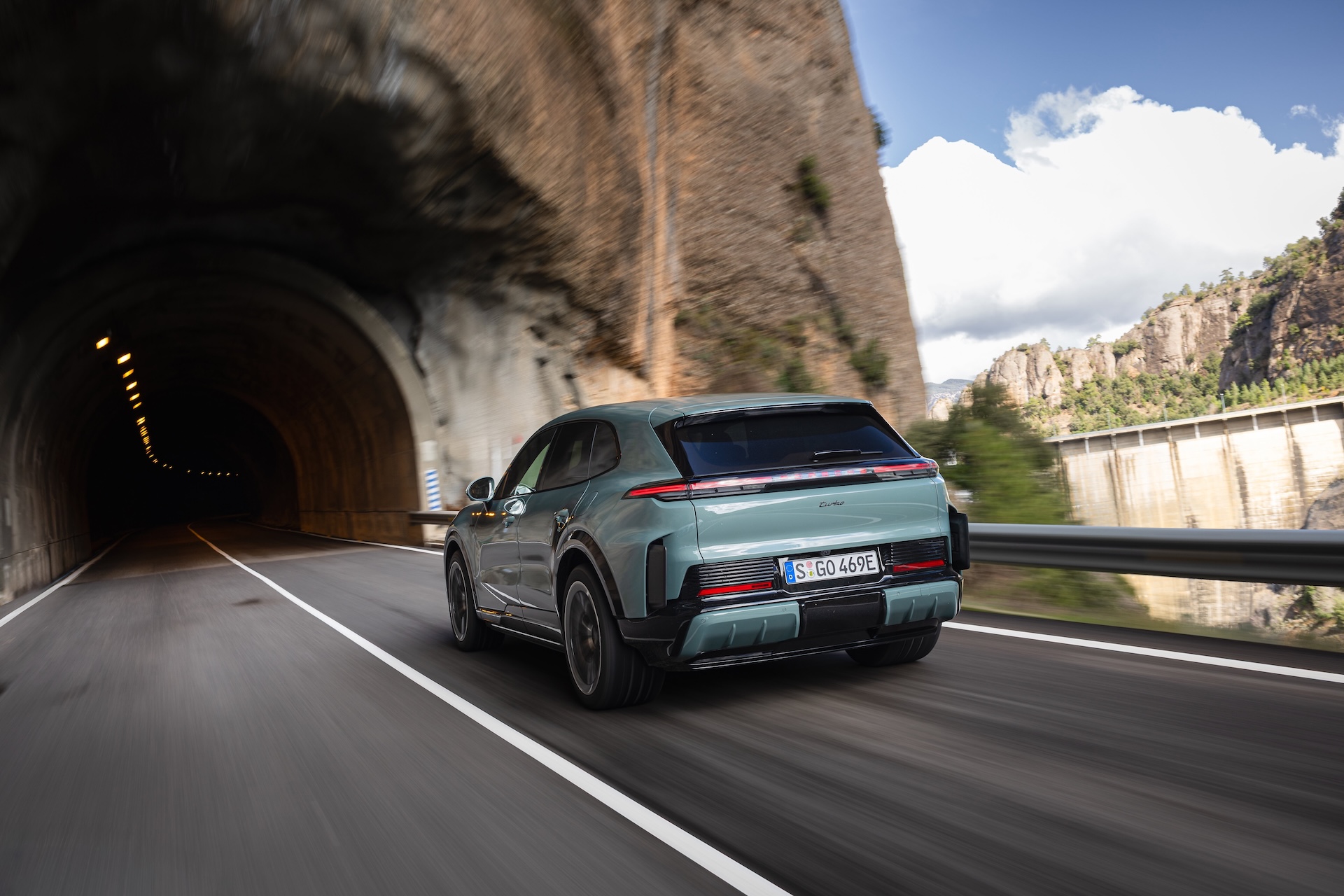
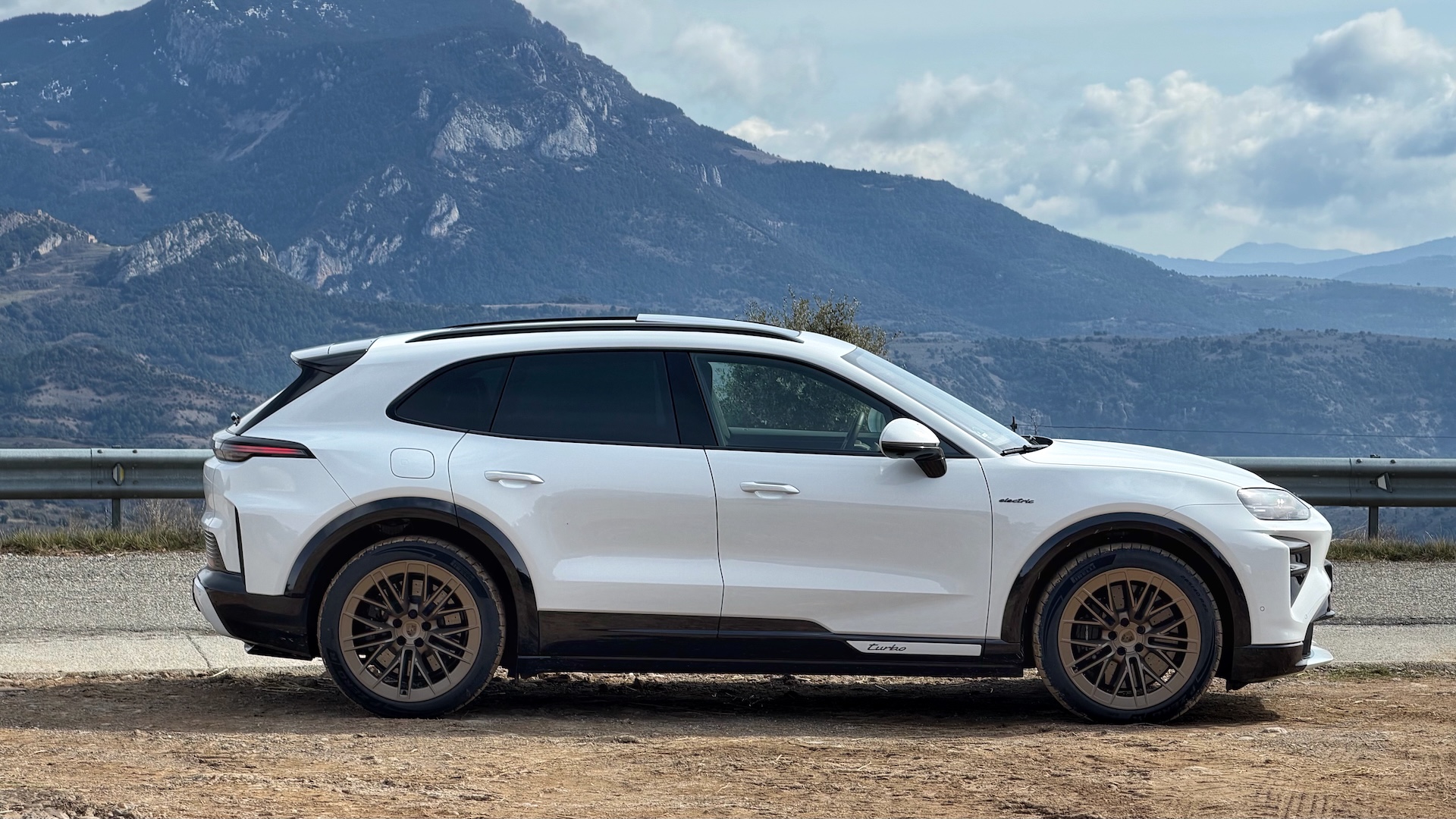
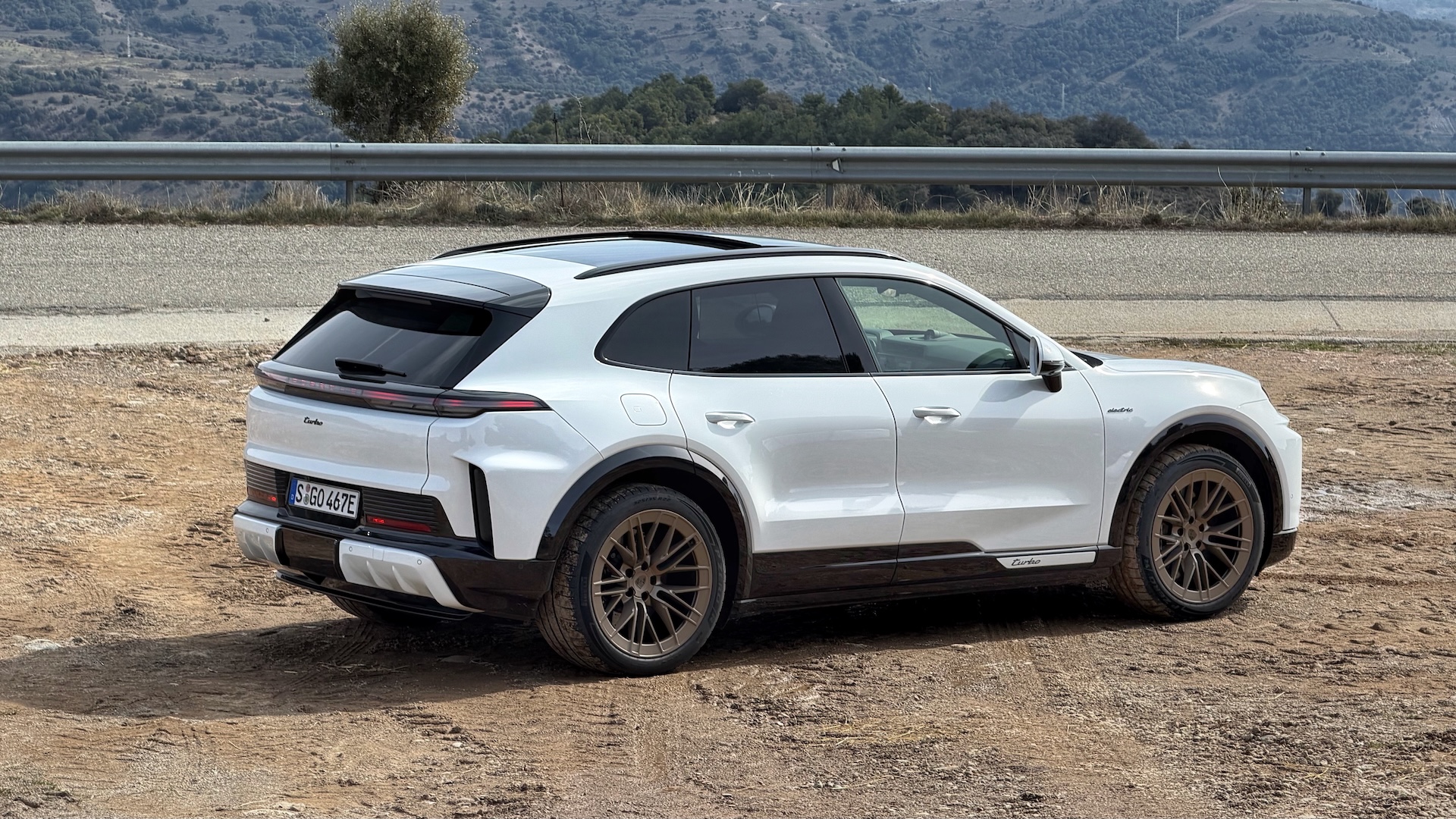
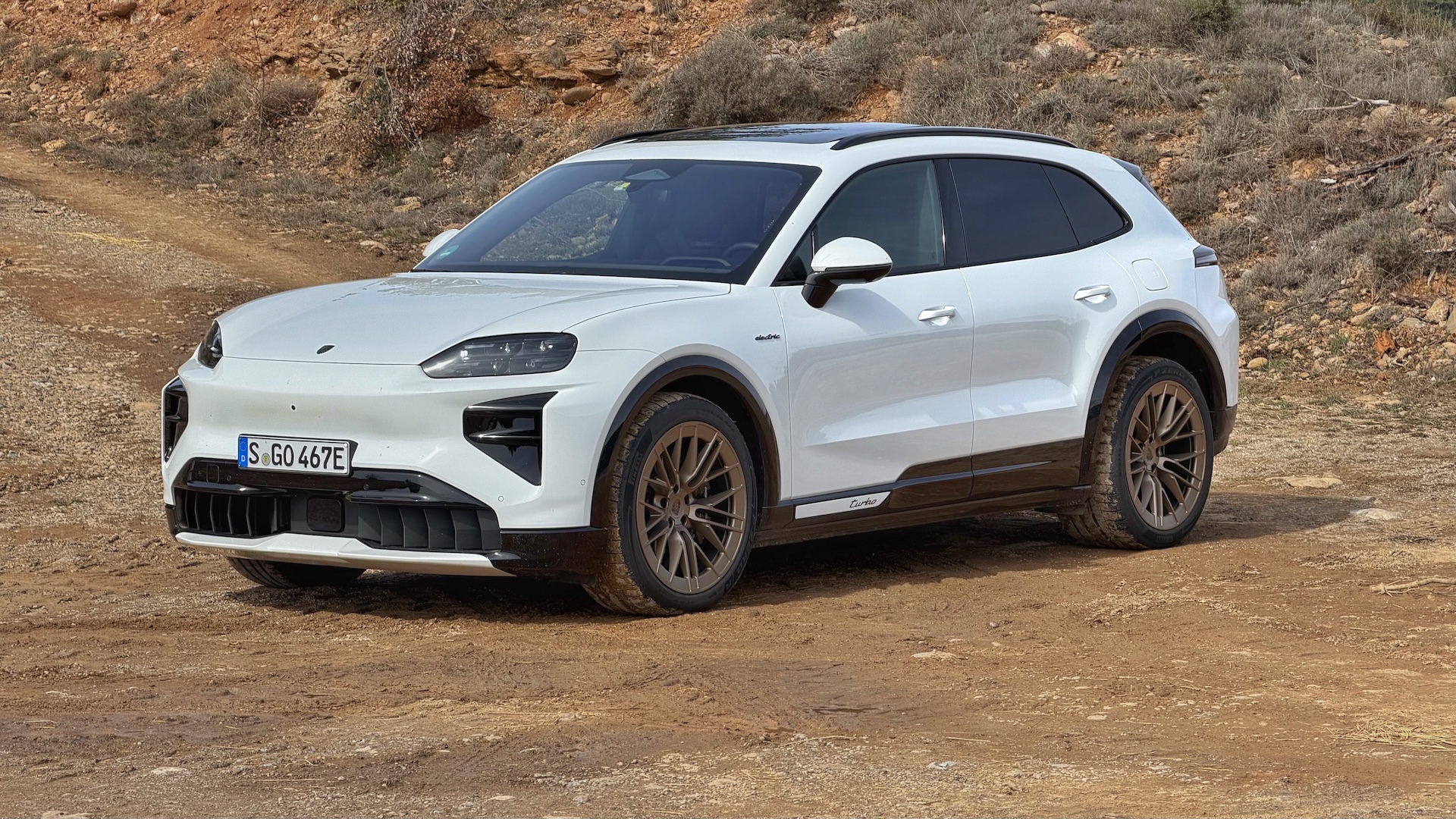
    Onto the more subjective bits, now. I will admit that it’s taken me some time to warm up to the Cayenne Electric’s look, though I’m not sure that I will ever love it. Then again, have I ever loved any Cayenne? Not really. The free-flowing design is free of kinks and excessively hard edges, and the design team did a great job keeping aero a priority (0.25 drag coefficient) without making it look like a blob. It’s definitely more handsome than the Macan Electric. I am slightly hung up on the front fascia, specifically where the grille would traditionally be, but at least the Euro models hide that real estate better with their elongated license plates. Likewise, I find the rear of the Turbo model too busy and prefer the simpler approach of the base model. I love the 3D Porsche lettering on the taillight bar, though.

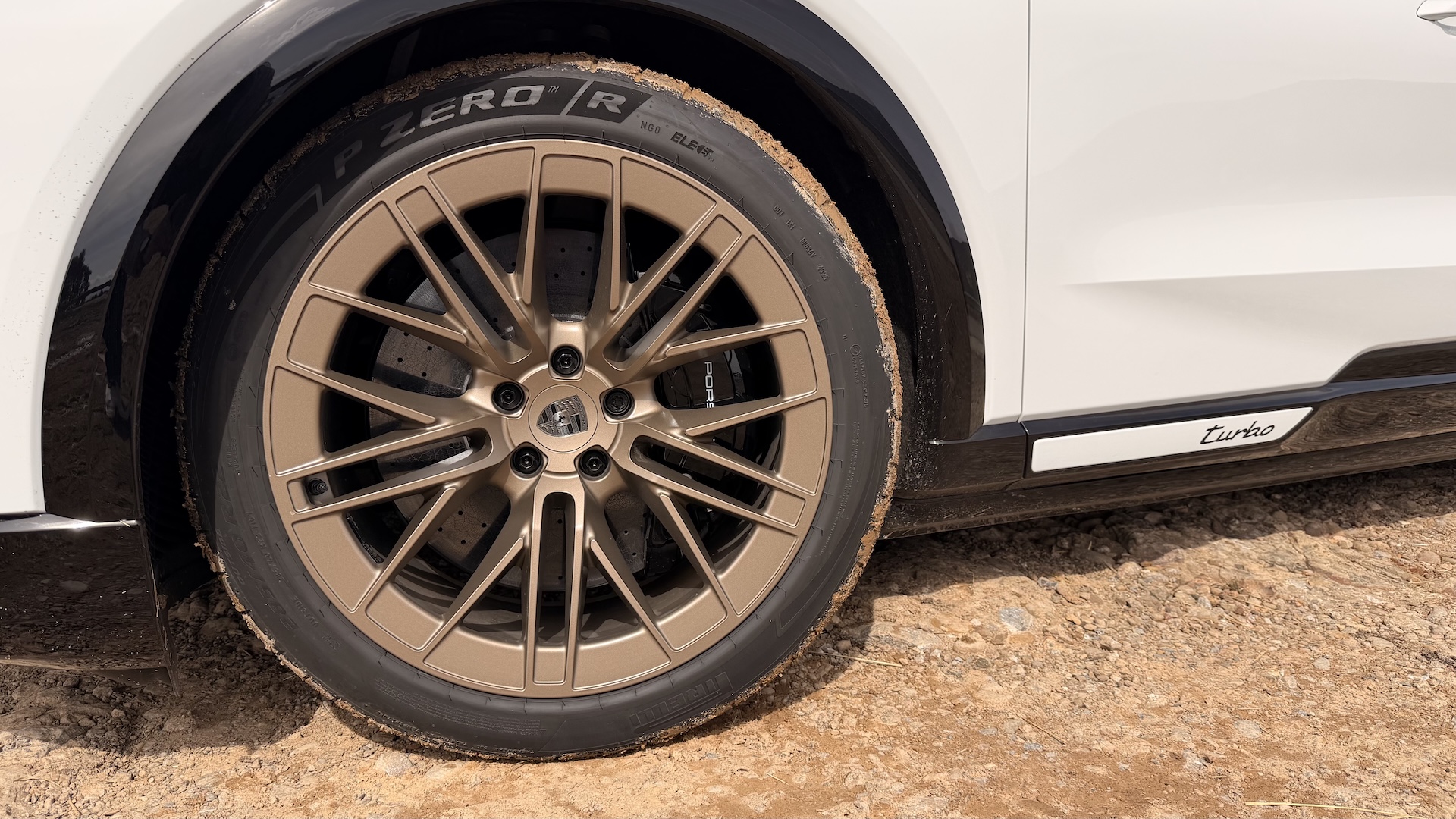
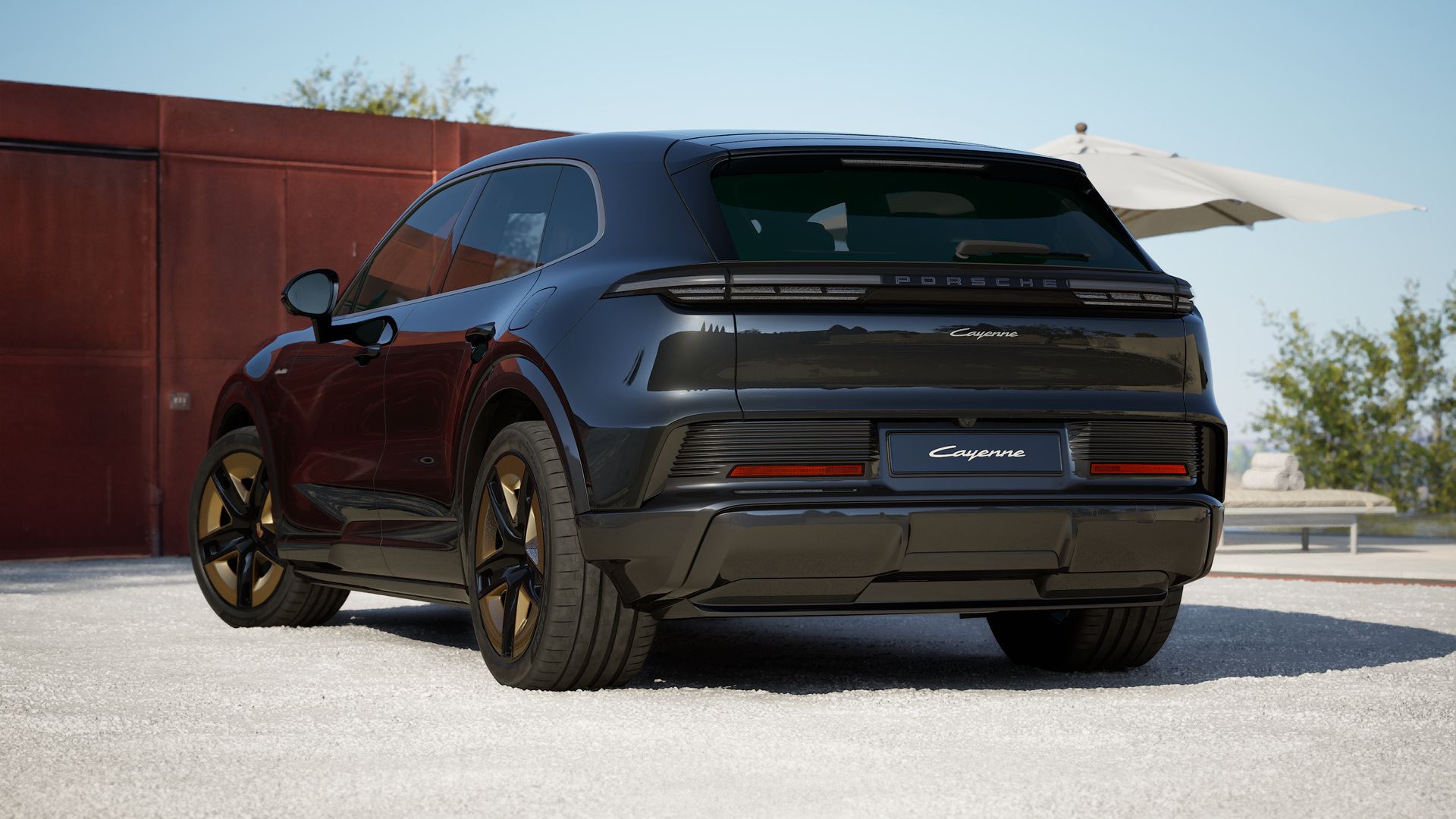
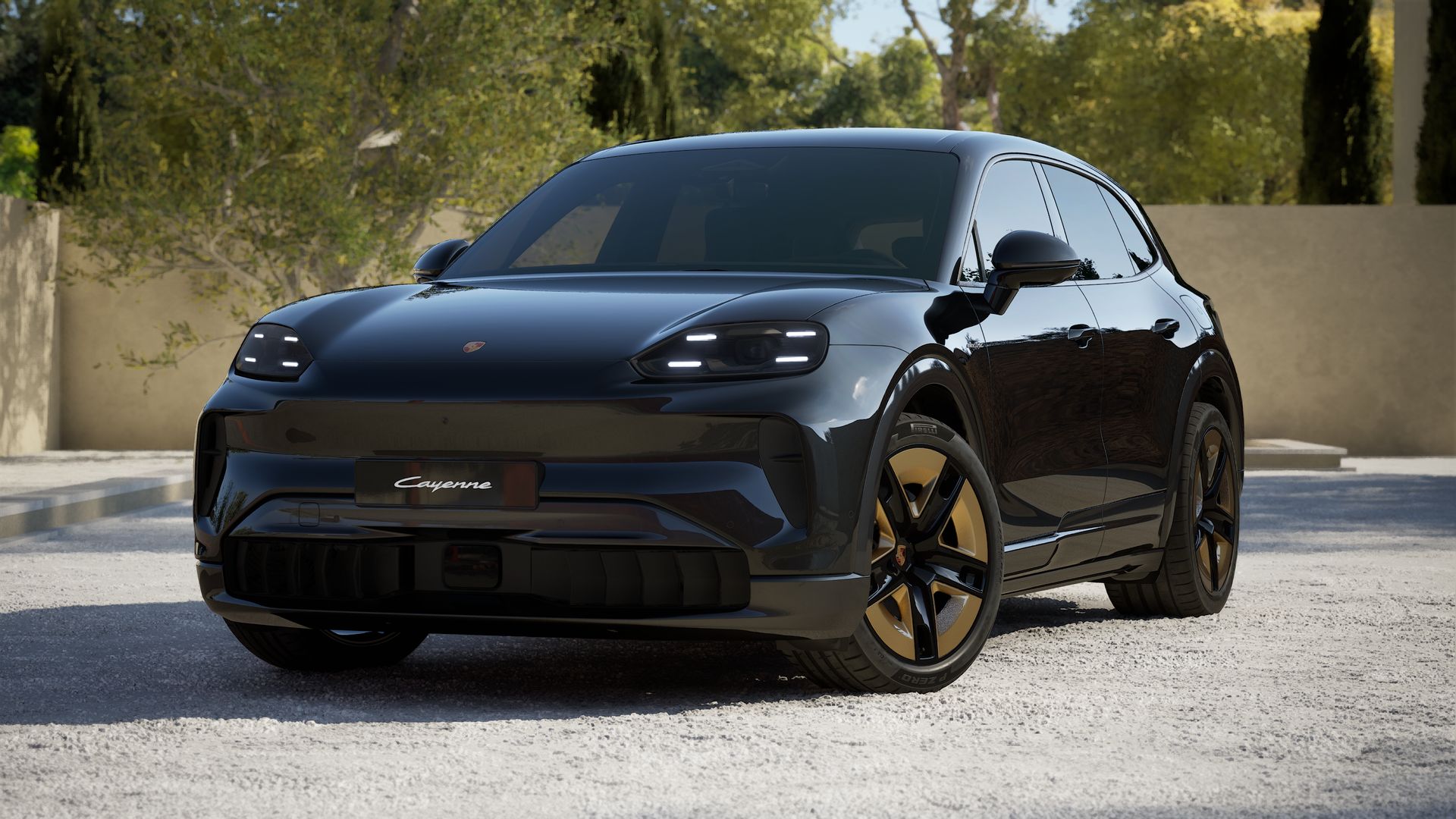
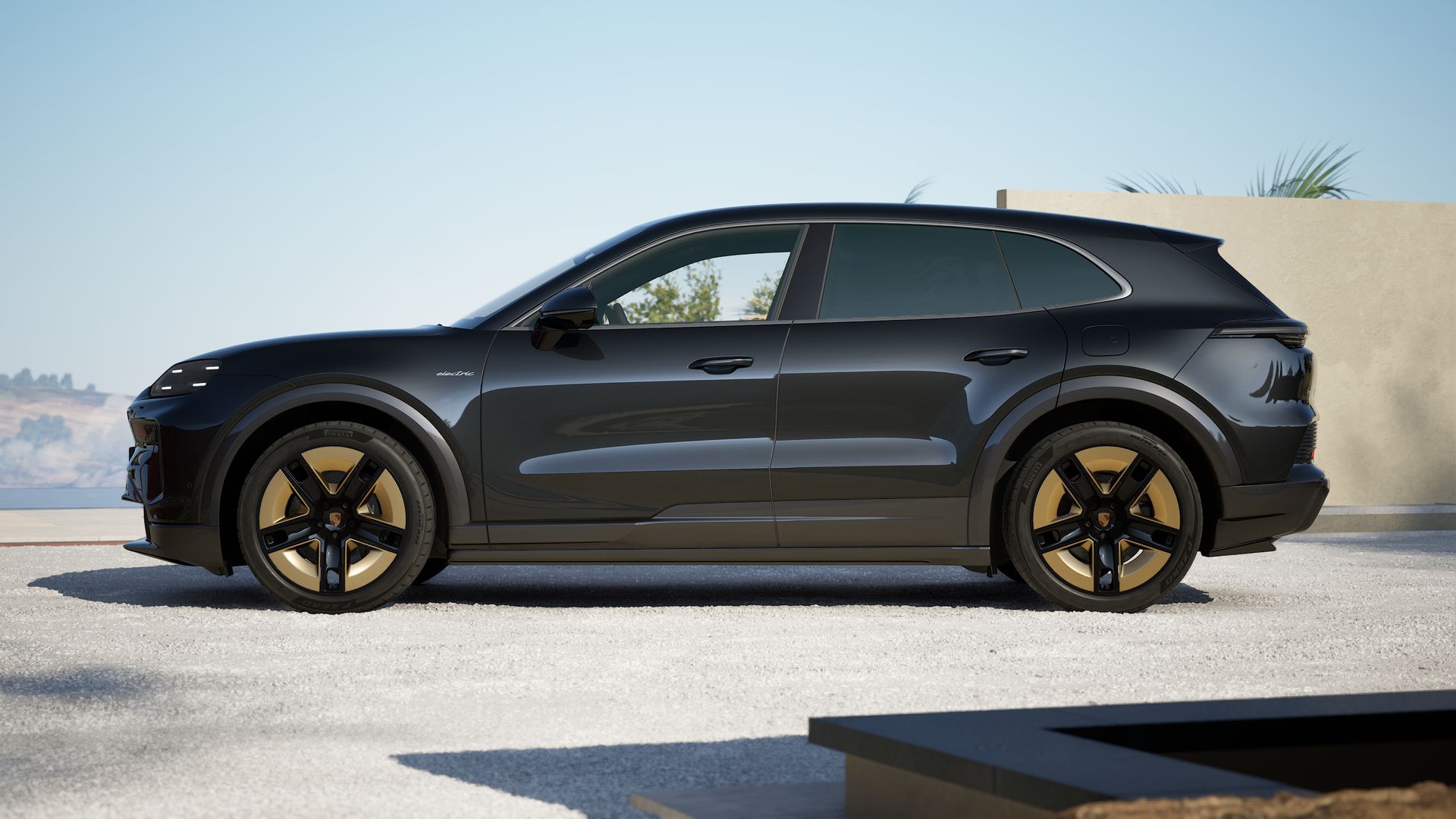
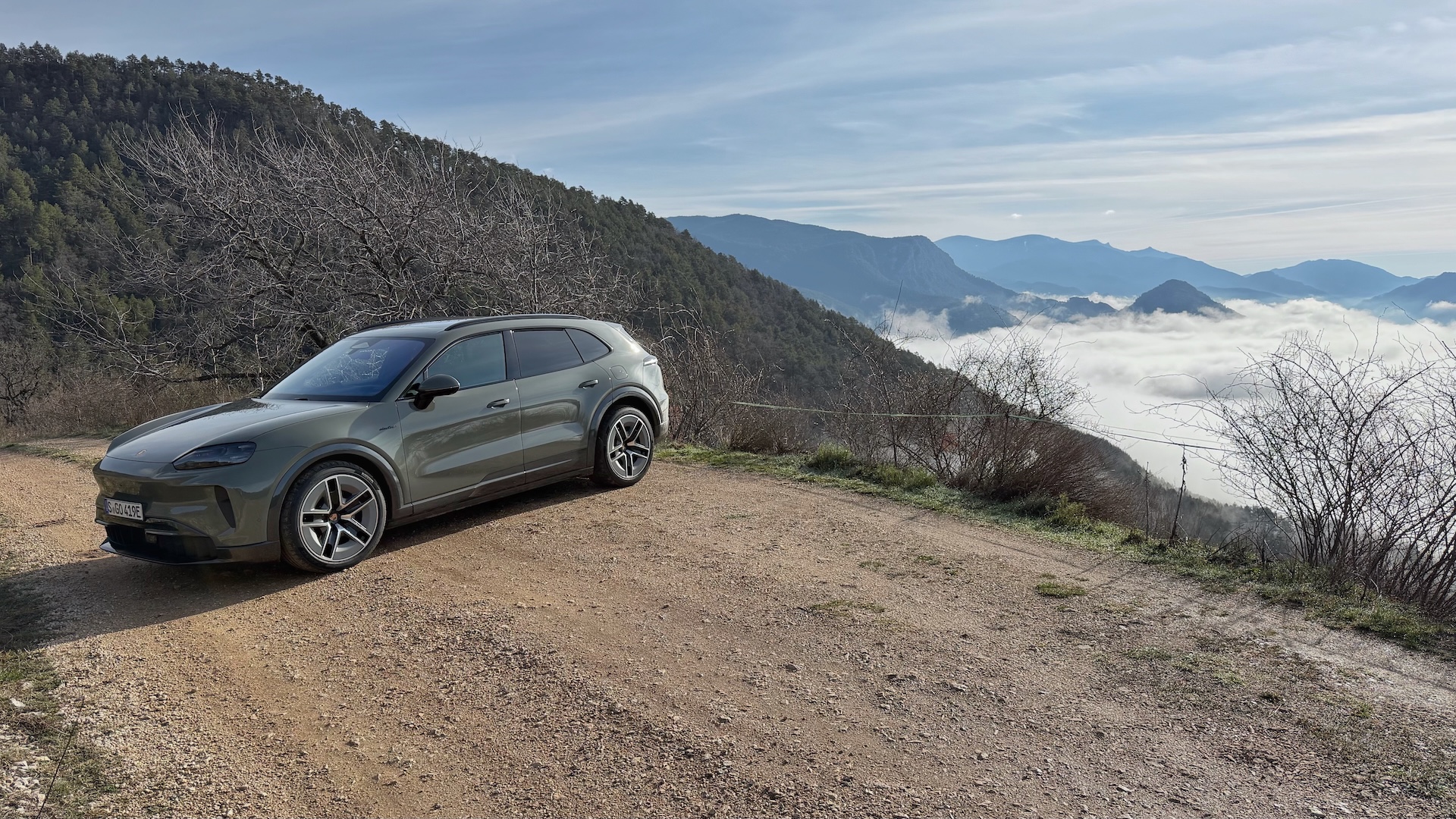
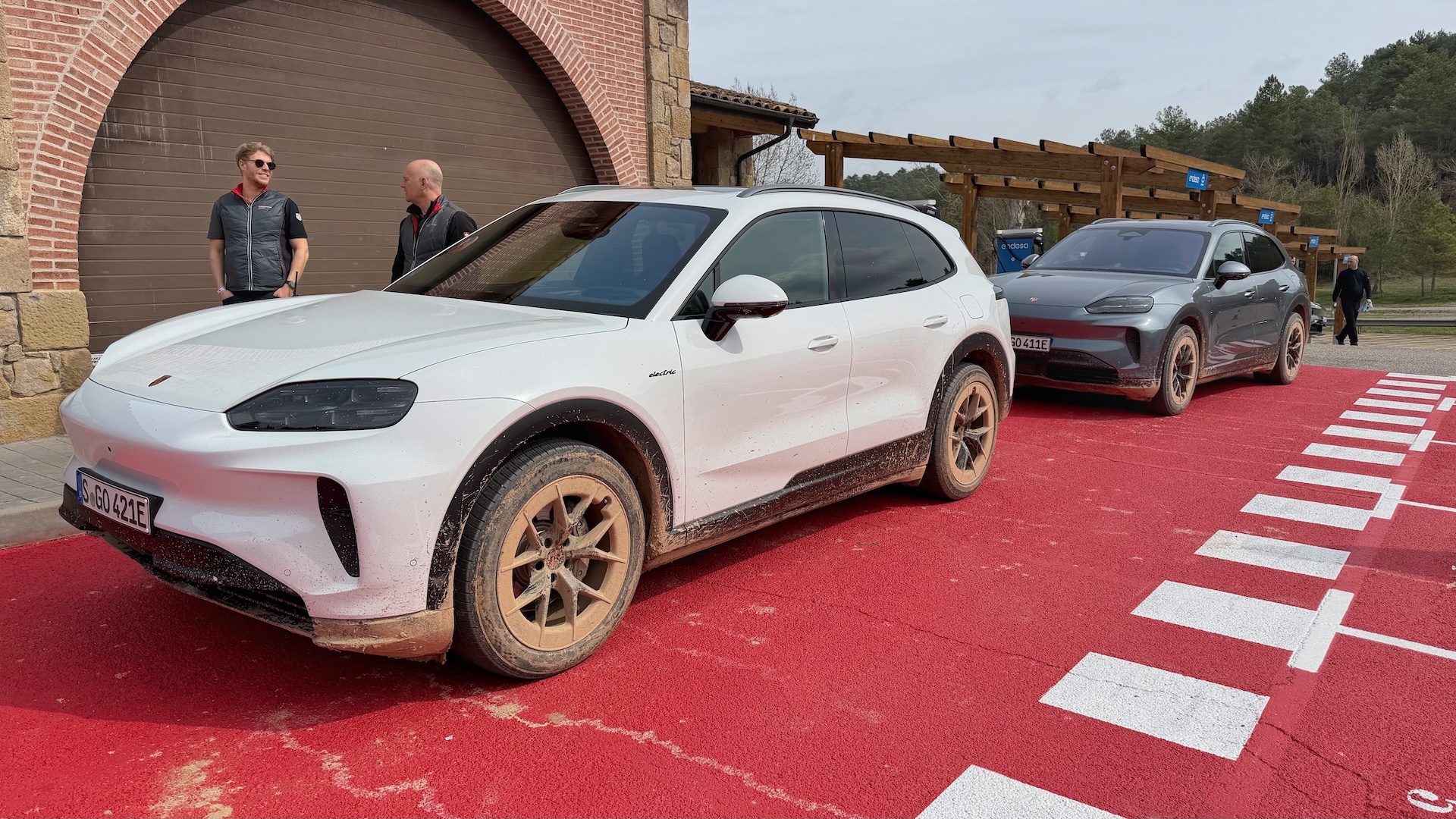
    Porsche brought several trims to the event, each with different color options and wheel combinations, which definitely showed the wide range of customization. The Mystic Green Metallic and Monteverde Metallic are beautiful, though they give the EV a bit of a Ninja Turtle look. My imaginary money would be on a Cayenne Electric (base) dressed in Chromite Black Metallic, riding on 22-inch Exclusive Design wheels with gold-painted inserts, just like in the renderings below. Chef’s kiss.

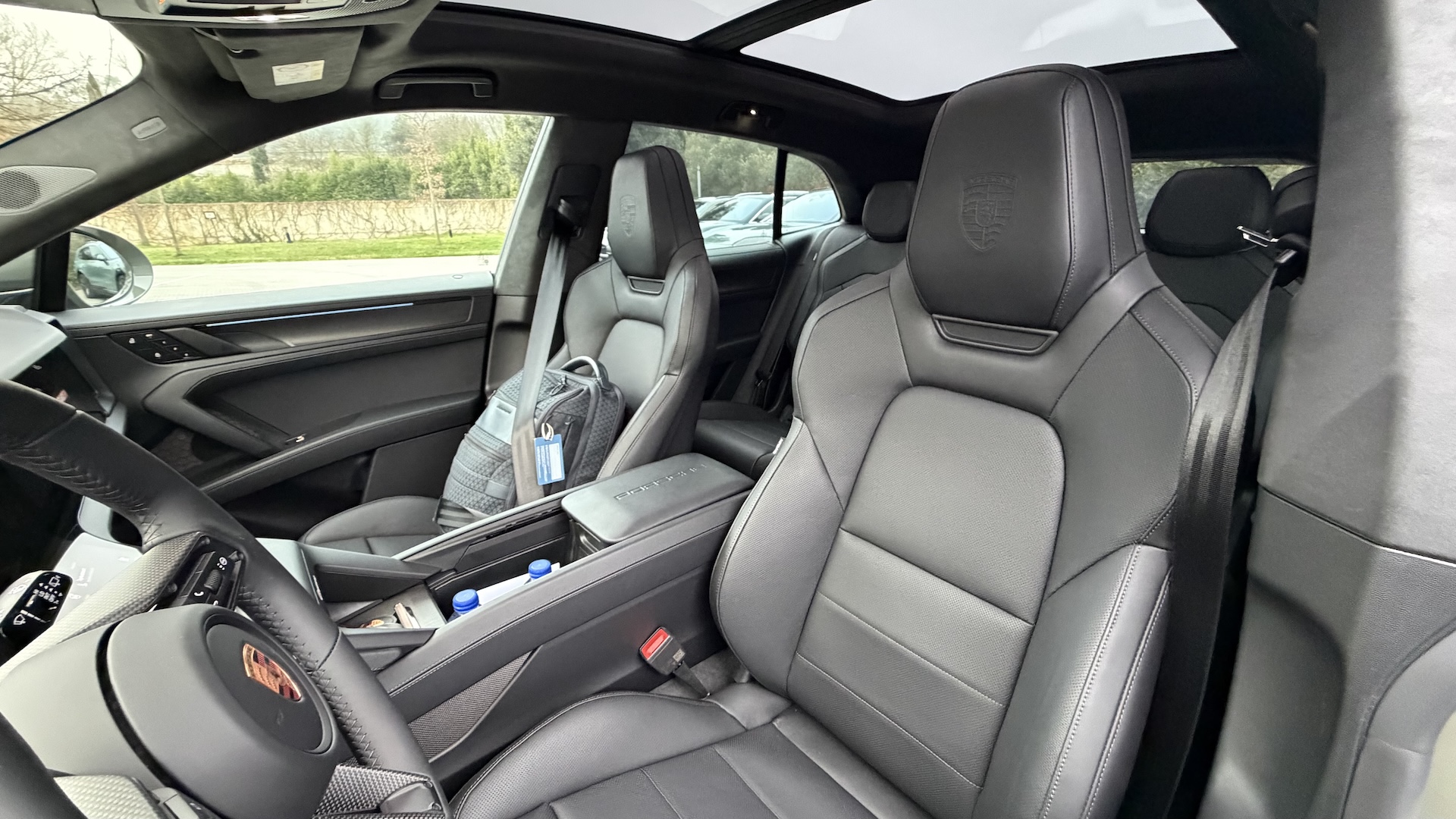
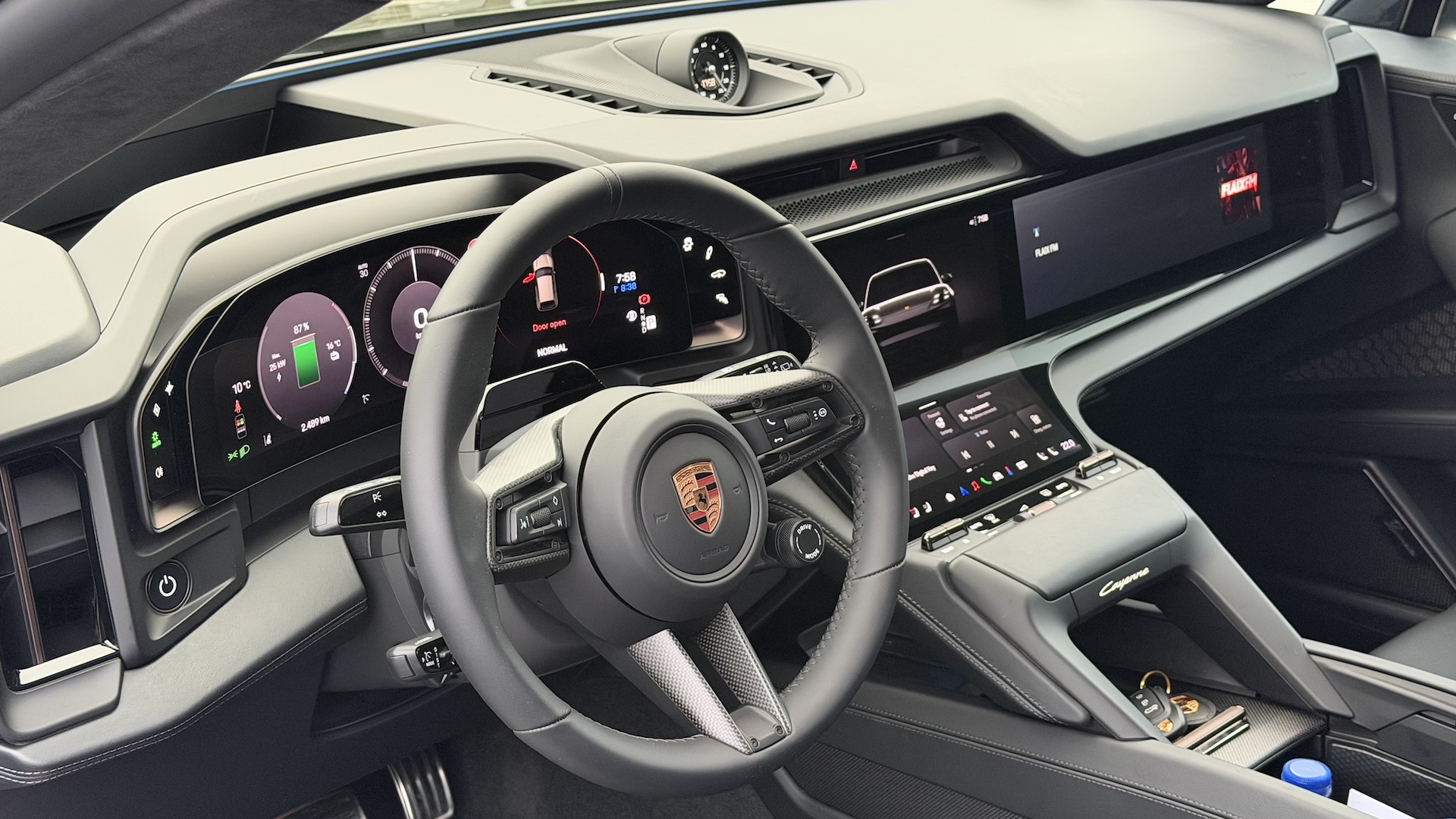
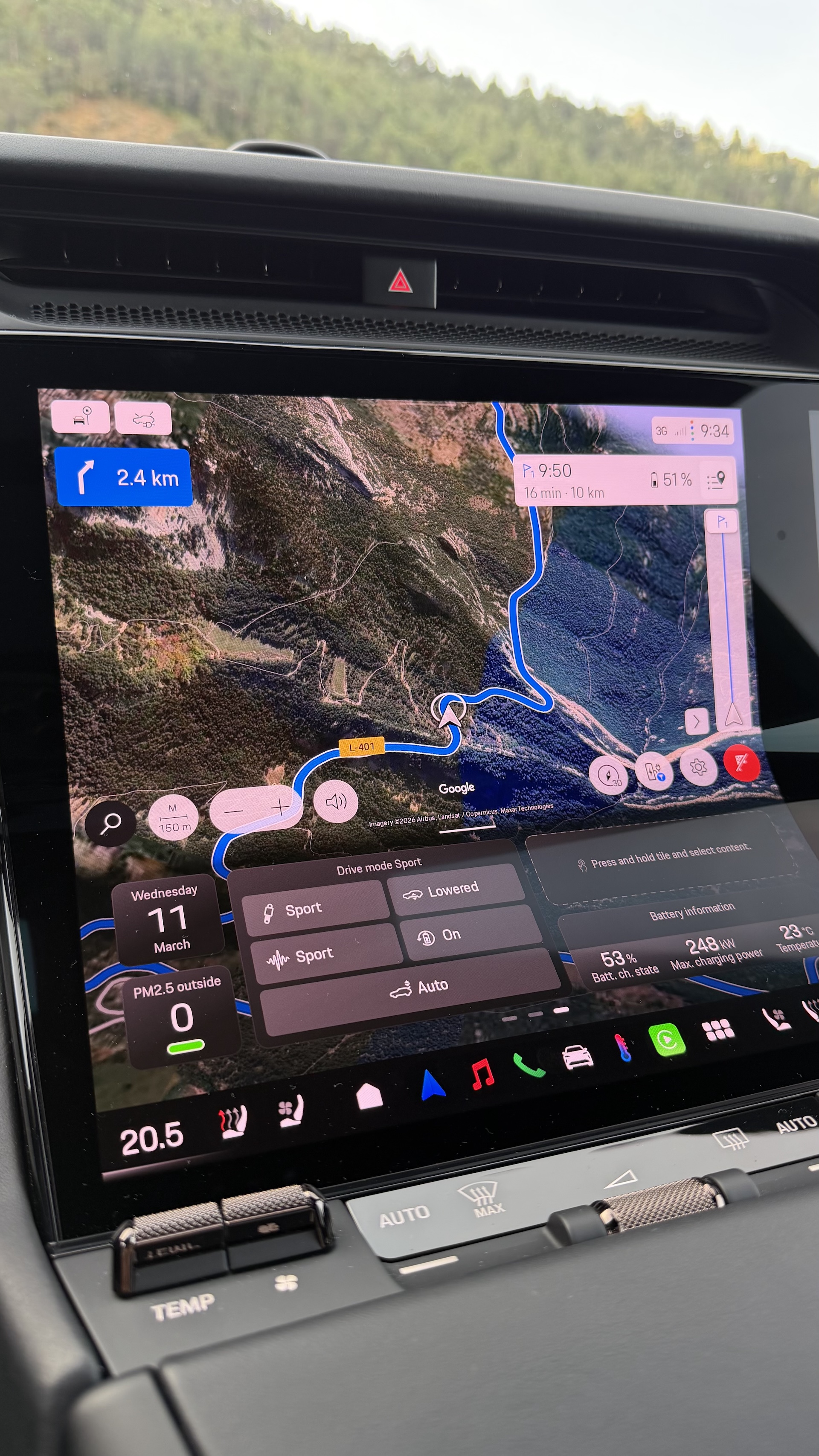
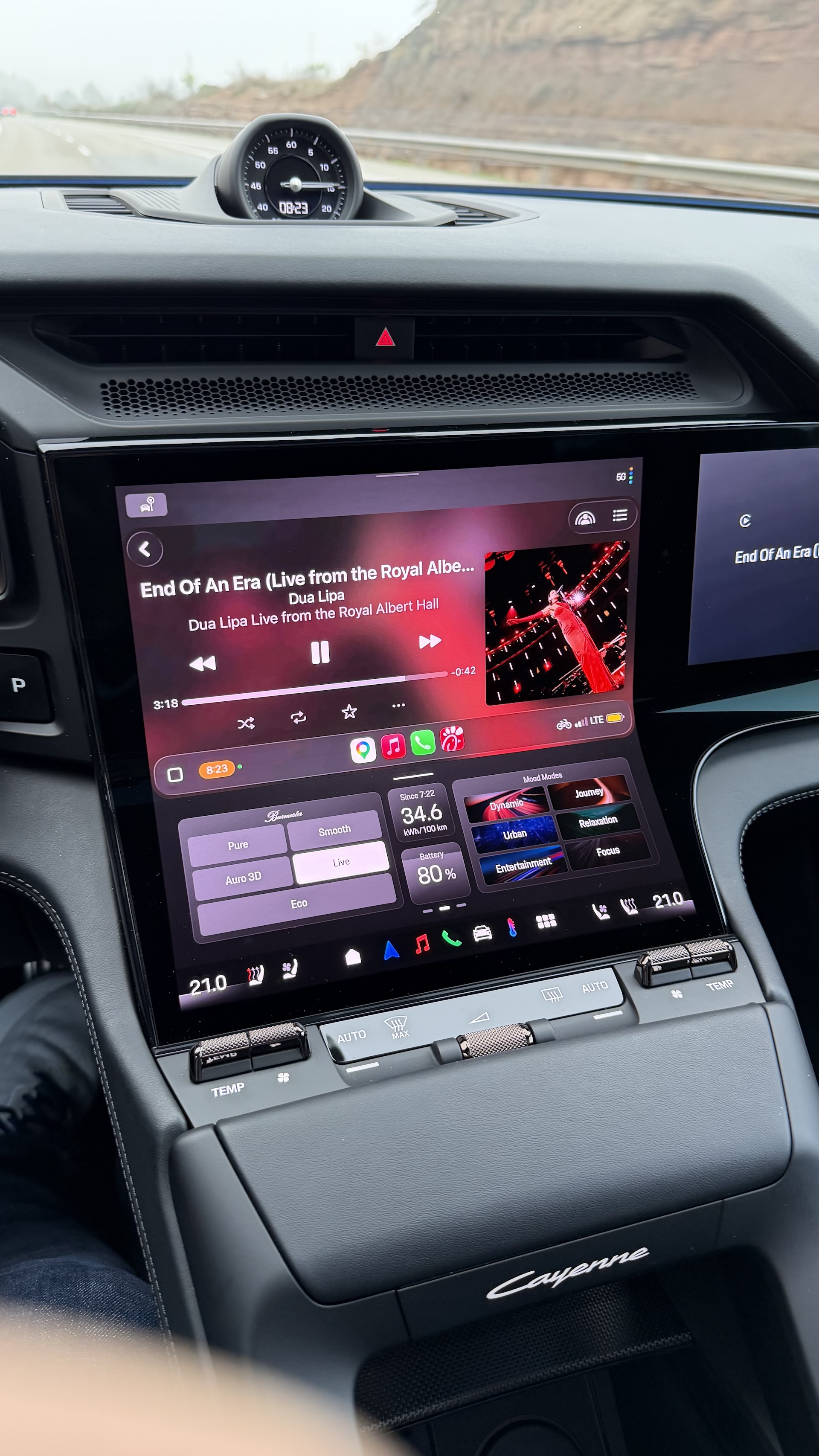
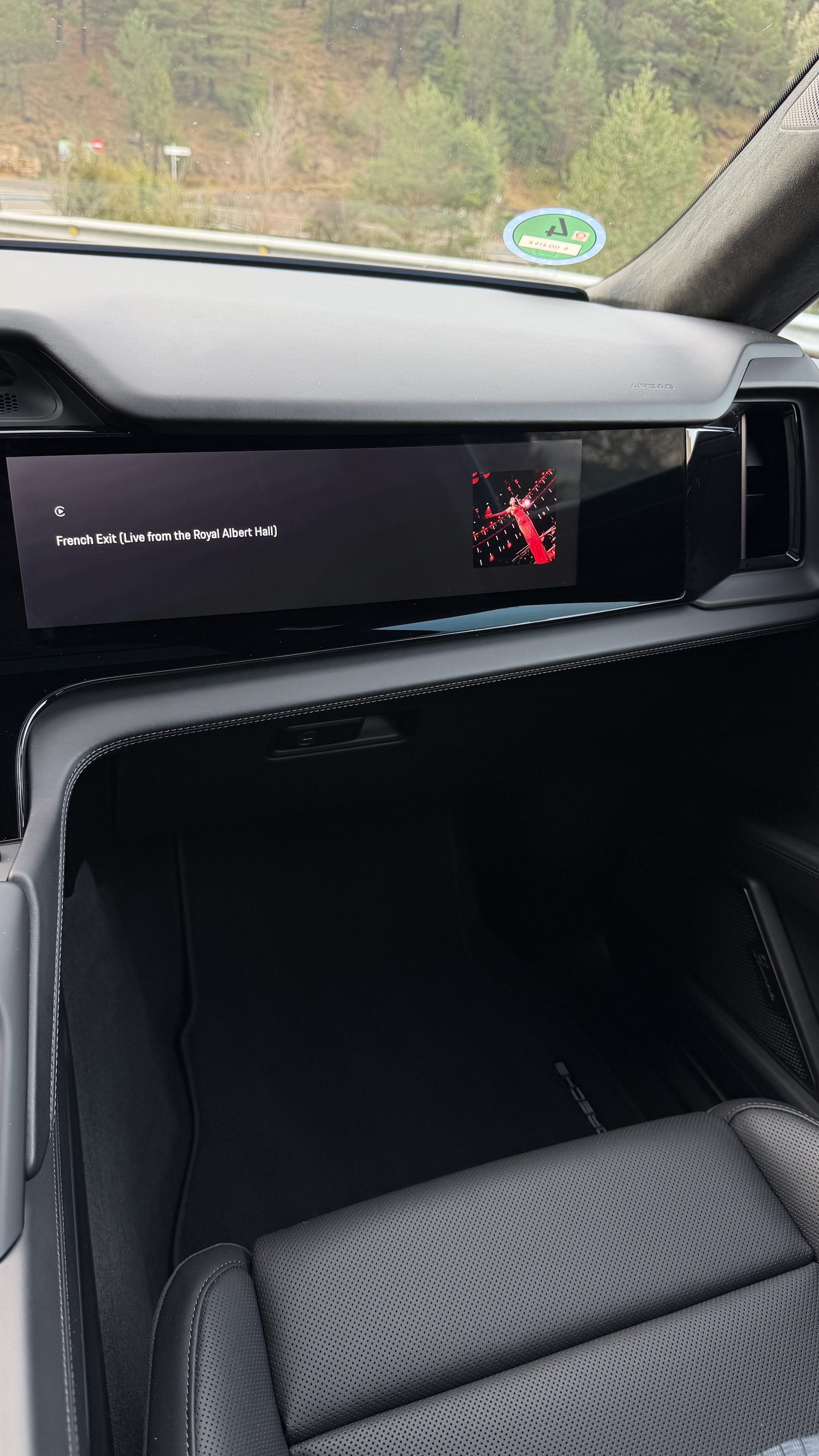
    The interior is another area I wasn’t sure about going into my test drive. Another large screen… yawn. Oh, but this one’s curved! Still yawn. Then I sat behind the wheel, paired my iPhone via Apple CarPlay, selected some tunes, adjusted a few settings, and hit the road. A minute later, it hit me: I figured all of that out on the first try. I performed some basic and necessary actions on hardware and software I had never used before. I didn’t have to fish around for things, go in and out of a dozen submenus, or grow frustrated because I didn’t know how to access the radio. It all just flowed, and the 14.25-inch curved screen’s ability to display different functions at the top and bottom is extremely well-executed, as are the ergonomics. There’s a built-in wrist pad, and physical controls for vital functions like volume and climate features like temperature, fan speed, defroster, etc.

    Driving the 2026 Porsche Cayenne Electric

    I’ll start with the base model first. Scroll down if you’d rather skip to the Turbo driving impressions.

    It’s really hard to call a machine of this caliber a “base” even if it’s technically accurate. Like with the 911, the base Cayenne Electric is everything you could want, and there’s a very good reason for that. The base delivers 100% the Cayenne experience Porsche actually wants you to have. It’s where it all starts and ends, it’s the Alpha and the Omega. It isn’t a subpar model where you have to upgrade to the S or Turbo to get what Porsche was aiming for. In reality, those spicier trims simply give you more of everything—performance, bells and whistles, panache, and so forth—if you so desire to go that route.

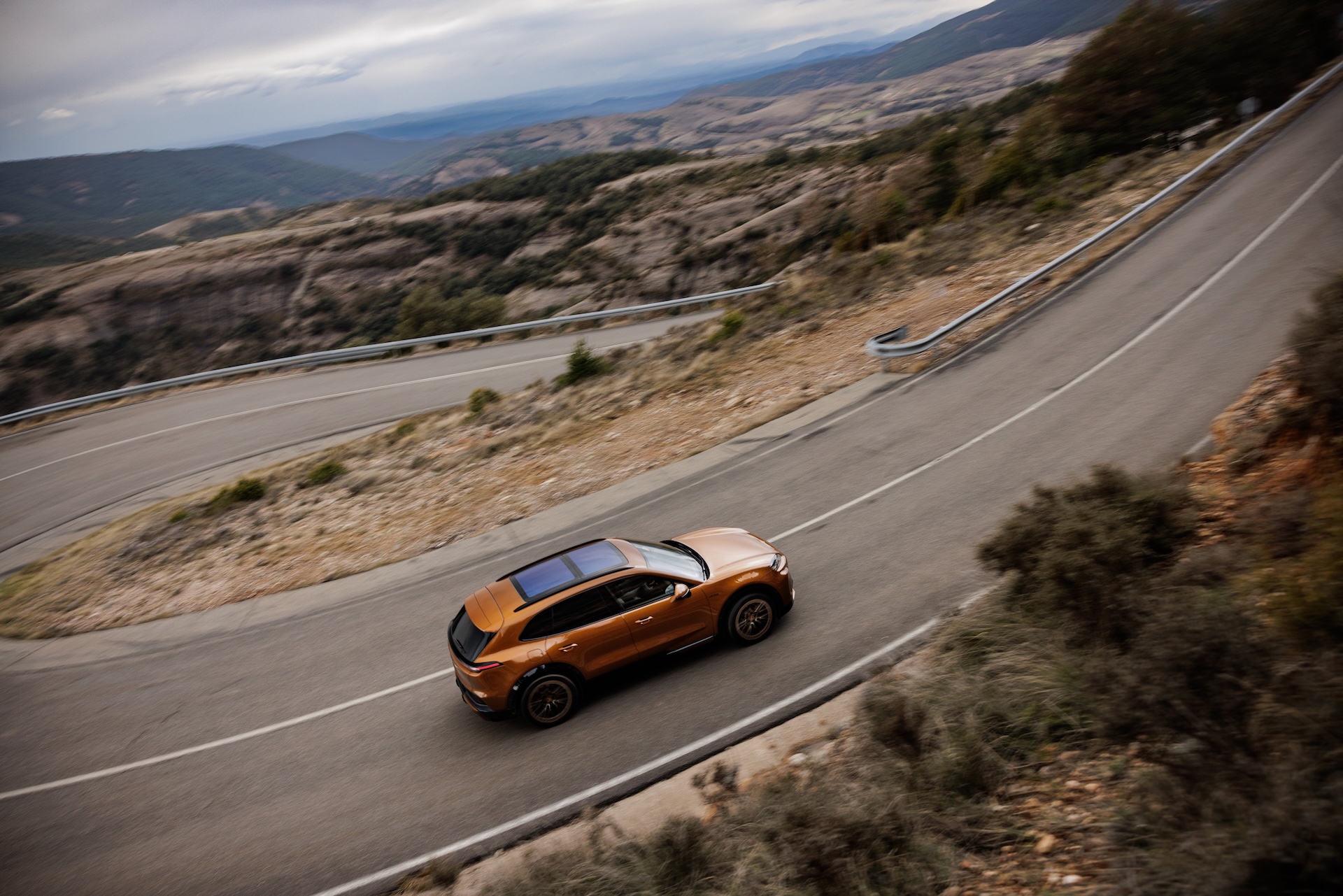
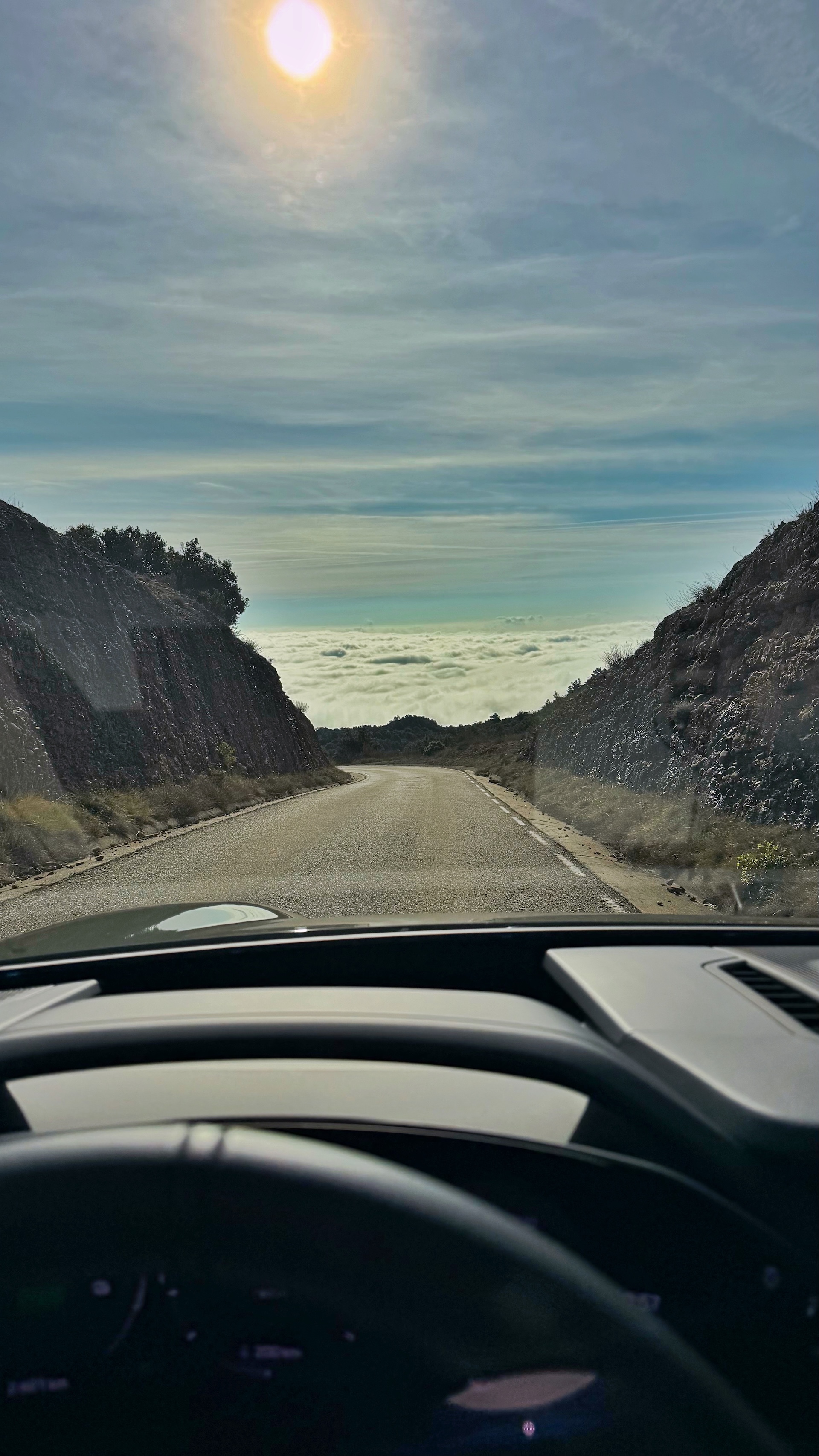
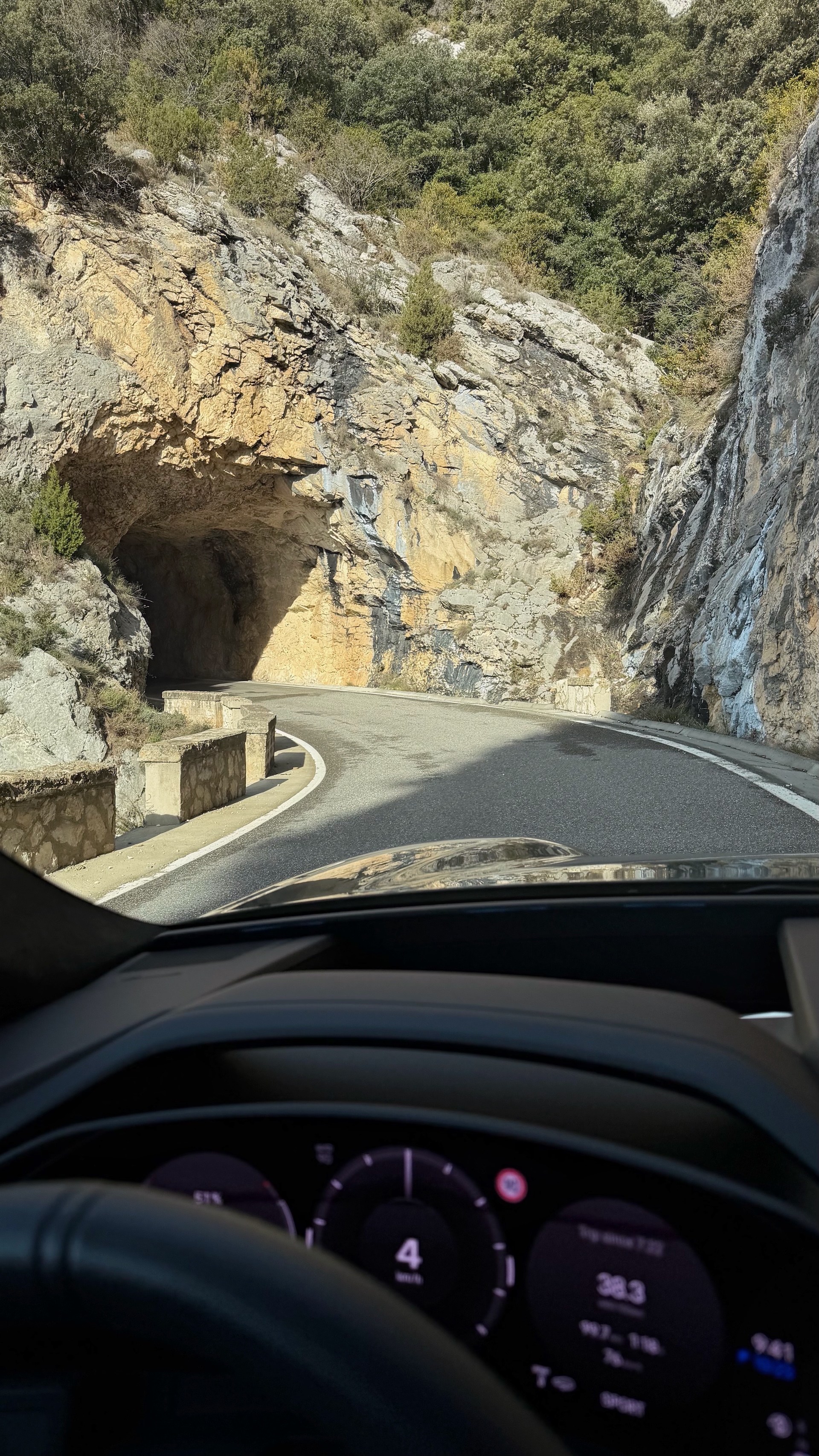
    That much was obvious right as I exited the freeway and began a long and twisty journey up a series of WRC-worthy mountain roads. I switched from Normal driving mode to Sport via the steering-wheel-mounted knob to help the car and driver get in the right mood. Like in other Porsches, the change in dynamics isn’t drastic—it’s a subtle adjustment to the steering and pedal response, the standard air suspension’s characteristics, and so on. The most noticeable change, by far, was the level of drag from the drivetrain when I let off the gas pedal. There are no paddle shifters and no fake manuals here, just old-fashioned two-pedal driving. In Normal mode, there was no drag when coasting off-throttle, or, if there was, it was so faint that I never felt it. In Sport, I felt a generous amount of it as my right foot bounced between the gas and brake. In Sport Plus, it was even more so.

    My first reaction: Cayenne Electric’s got hands. Despite weighing right under 6,000 pounds—that’s about 1,000 pounds more than a gas Cayenne, mind you—the steering feel is tight but not exhausting. The dynamic between the chassis, drivetrain, and body felt coherent. It’s as if there was no separation, and everything interacted with the driver as one. With 435 hp on tap, the Cayenne Electric base felt agile, smooth, and playful, but never overwhelming. I’d go as far as saying that it lacked that punch that high-po EVs are so famous for, but the more I drove it, the less I cared.

    Turning the wheel right, then left, then right, then left again as I stringed together tight corners highlighted the EV’s phenomenal air suspension and adaptive dampers, and their effect on traction management. Whether it was a fast sweeper or a hairpin that required heavy braking, everything always felt under control, almost regardless of how hard I pushed. It was certainly a situation where I couldn’t possibly reach the car’s limits—at least safely. That said, despite the Cayenne Electric’s near-perfect composure, it’s not sterile or boring when driven spiritedly. Mashing the gas pedal out of a tight corner, I could hear the inside rear tire put its hardware and software wizardry to work, sending power to the ground and thrusting me forward. Much like in a gas car—and unlike most EVs—you can actually feel the mechanics at play, and it’s downright wonderful.

    When it’s time to slow down, it can do so confidently and, like any other Porsche, it rewards you with generous feedback via the brake pedal. At no point did I feel like the base model’s six-piston setup was weak or overly strong—just right. That said, under normal circumstances—and by that I mean, when not bombing up and down a mountain—the mechanical brakes will hardly be used. Up to a staggering 600 kW of energy recuperation is possible under regenerative braking, and Porsche claims that up to “97 percent of all braking maneuvers are purely electric.”

    Dynamics aside, the cabin is comfortable, and the layout of the controls, whether in-screen or physical buttons, is ideal. It’s an electric SUV that’s easy to drive at a chill pace and at speed, with seats offering good comfort, support, and superb ergonomics. The same goes for the infotainment operating system.

    Turbo Time

    Braking isn’t as smooth in the Turbo, and it’s a pity, because the thousand-horsepower beast is truly a feat of engineering that, unlike other crazy-powerful EVs, is actually a joy to drive. Oh, and it can do 0-60 mph in 2.4 seconds.

    Line up the SUV into a corner, get on the brakes, and you begin slowing down in a nice, progressive manner until JOLT. Despite the electric brake booster, which aims to smooth the transition from friction brakes to regen braking, there’s still a very hard line between the two as the car rapidly decelerates. It’s worth noting that the optional ($10,900) carbon composite brakes likely amplify this sensation.

    That issue aside, you’re going to need all the clamping power you can get when hustling a thousand-horsepower EV on roads that resembled an autocross course above the clouds (quite literally, see photos above). Where the base model lacks that punch in the gut, the Turbo has that and then some. It’s very cliché by now to describe the sensation of an EV’s torque punch, but it’s really something otherworldly, especially when paired with Porsche’s cool sound effects for the Cayenne Electric. It really delivers the full driving experience that anyone—me or Le Mans winner Timo Bernhard (who shuttled me around for a bit at a speedy pace) would be completely satisfied with.

    After spending two hours in the base and two hours in the Turbo, my neck had finally had it. On my way down the mountain, I started developing a painful kink, and that’s when it hit me that I had spent four-plus hours on what was essentially a rollercoaster. My neck and shoulders were toast from the silly speeds these things can carry through a corner.

    An EPA-estimated range for either model isn’t available yet. In Europe’s WLTP cycle, however, it’s rated at 399 to 405 miles depending on trim. That means here in the States, we might expect something around 310 to 330 miles, depending on trim.

    Jerry Perez

    Verdict

    I went into this test somewhat skeptical of what an electric Cayenne could deliver in terms of driving fulfillment. I knew it’d be quick, handle well, and be smooth and punchy. What I did not expect was for it to feel holistically sporty and engaging enough to match the gas Cayenne. At the end of the day, it’s not about pitting the two propulsion systems against each other, but about understanding that they’re both their own thing, and both are superb in their own applications. Porsche has truly outdone itself here.

    Whatever your expectations are of the 2026 Porsche Cayenne Electric, leave them at the door. Whether you opt for the base model or the Turbo, they’ll blow them out of the water.

    Porsche provided The Drive with travel and accommodations, along with the use of a vehicle for the purpose of writing this review.

    2026 Porsche Cayenne Electric and Turbo Electric Specs

    Base Turbo
    Base Price (as tested) $111,350 ($161,480) $165,350 ($214,540)
    Powertrain 113 kWh battery | dual-motor all-wheel drive
    Horsepower 435 hp (with overboost) 1,139 (with overboost)
    Torque 615 lb-ft 1,106 lb-ft
    Seating Capacity 5
    0-60 mph 4.8 seconds 2.4 seconds
    Top Speed 143 mph 162 mph
    Curb Weight 5,600-5,800 pounds est. 5,600-5,800 pounds est.
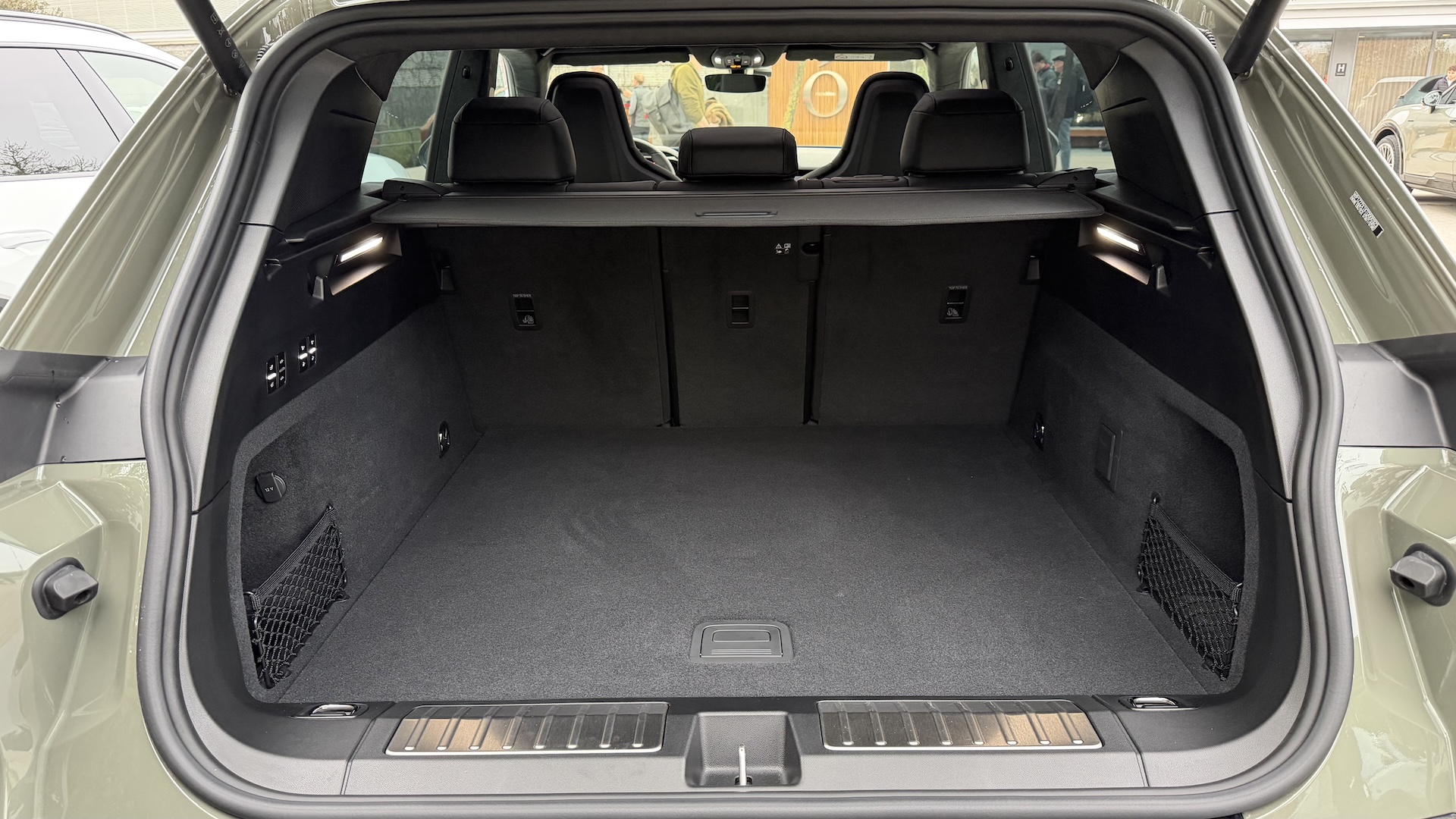
    Cargo Volume 19.5 cubic feet | 56.1 cubic feet with rear seats folded
    3.2 cubic-foot frunk
    Max Charging Speed 400 kW
    Towing Capacity 7,716 pounds
    EPA Range TBA
    Initial Score 8.5/10

    As deputy editor, Jerry draws on a decade of industry experience and a lifelong passion for motorsports to guide The Drive’s short- and long-term coverage.


    The Drive Logo

    Car Buying Service

    Source link

  • 2026 Toyota bZ Review: One Big Thing Missing

    2026 Toyota bZ Review: One Big Thing Missing

    If a casual car shopper only went off recent headlines, they might easily think that the U.S. auto industry’s transition to electric vehicles has been a boondoggle, a $50 billion failure of products, policy and imagination. In reality, there are now millions of American EV drivers who are perfectly happy with their gas-free existence and, statistically speaking, probably aren’t going back. 

    It can be hard for people to understand this if they don’t experience it every day. I can think of few images that would prove that point better than hundreds of thousands of Toyota EVs on American roads. After all, if the world’s top-selling car company—and a name that’s become synonymous with trust and reliability—got serious about EVs, wouldn’t that be the ultimate proof that battery-powered cars could work for everyone? 

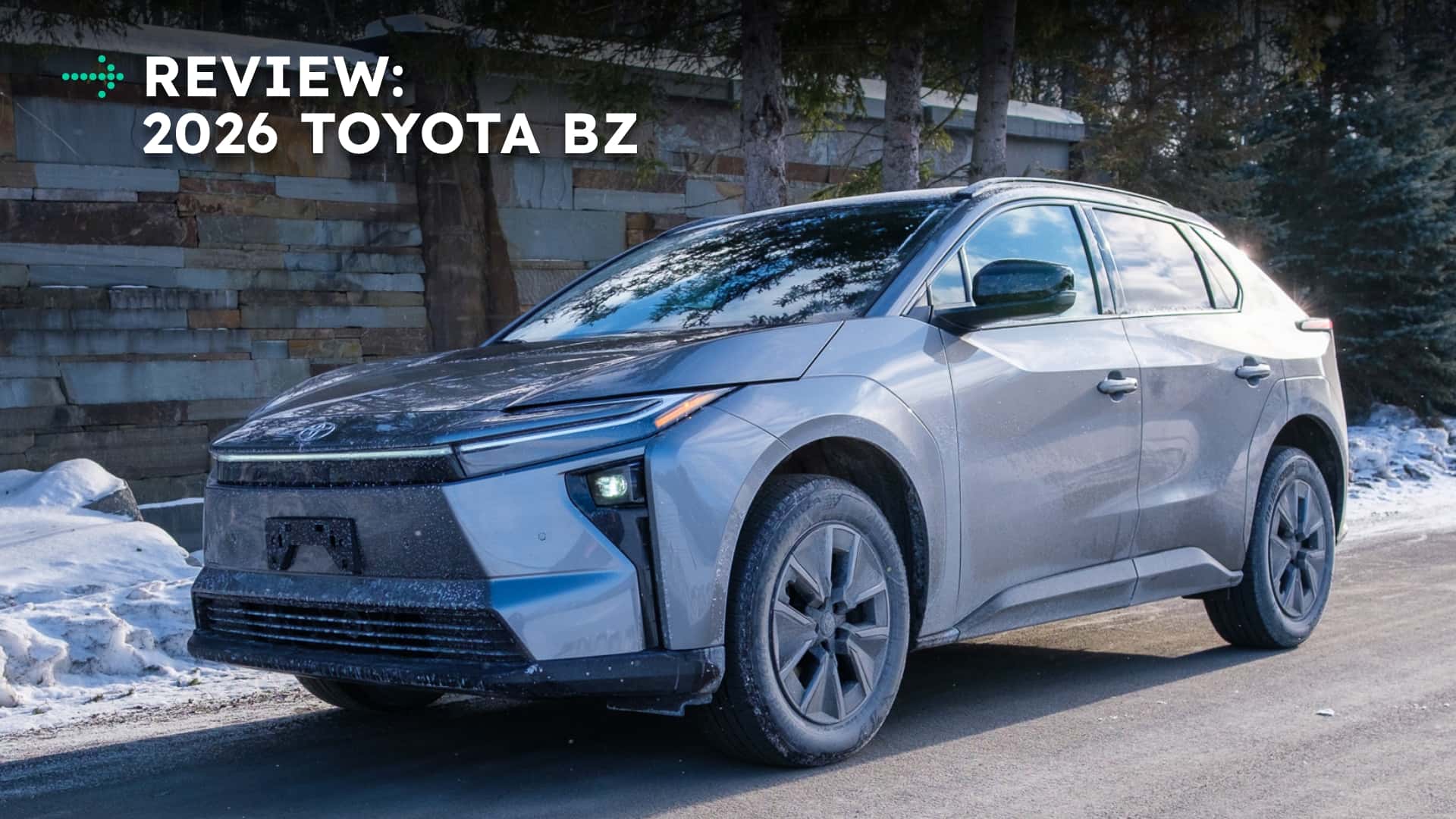
    I had hoped the 2026 Toyota bZ would make that case. It seemed like it could redeem its predecessor, the bZ4X, widely maligned for its subpar range, charging performance and software. If the bZ fixed those things, perhaps it could prove what many people already think: that Toyota makes the best EVs for most buyers right now. 

    After a weeklong test, I can tell you the bZ is a better car and a better EV than the bZ4X ever was. But now one thing, instead of three things, holds it back—even though the ingredients are all there for Toyota to fix it for good.

    [Full Disclosure: Toyota loaned me a 2026 bZ for a week of testing.]

    2026 Toyota bZ: Specs And Features

    I’ll give Toyota this: it’s certainly giving EVs a bigger shot right now than it did even a few years ago. 2026 brings significant updates to the Toyota/Lexus/Subaru electric family, as well as new members in different sizes. The cars all get updated batteries, better performance across the board, more range and improved charging speeds. 

    2026 Toyota bZ


    Base Price

    $36,350


    EV Range

    236 – 314 miles


    Drive Type

    Front- or all-wheel drive


    Charge Type

    150 kW DC fast-charging


    Output

    221-338 hp


    Battery

    57.7 or 74.7 kWh NMC li-ion

    Of all of those new options, the bZ remains the all-rounder choice. It’s a compact-midsize crossover in the same price and size class as the Tesla Model Y, Hyundai Ioniq 5, Ford Mustang Mach-E, and others. It can be had in XLE and more well-appointed Limited trims. As before, the bZ comes in single-motor front- or dual-motor all-wheel-drive, and the overall styling is basically the same. But a lot is different under the skin. 


    2026 Toyota bZ

    Photo by: Patrick George

    The base bZ now gets a new, smaller 57.7-kilowatt-hour battery pack, but most models will use a 74.7-kWh unit—slightly bigger than what was in the bZ4X. Range stretches from a sub-par 235 miles in the XLE FWD model to an impressive 314 miles in the XLE FWD Plus model with the larger battery. That’s much more competitive across the board; the bZ4X topped out at just 252 miles of range. Updated electric motors deliver more power, too. The AWD models deliver 338 horsepower to the old car’s 214, and front-drive models get a 20 hp boost to 221 hp. 

    Perhaps most importantly, charging is improved, too. Gone is the old CCS port, replaced by a developed-in-house Tesla-style NACS unit. Maximum fast charging speed is still the same at 150 kilowatts—and still midpack by modern standards—but the charging curve has been improved. Unlike the O.G. bZ4X, this car can also fast charge multiple times in one day. Previously, that weakness kept the bZ4X from being a competent road-trip machine.  


    2026 Toyota bZ

    Photo by: Patrick George

    In my conversations with Toyota engineers, they made clear that they took to heart the feedback of bZ4X owners and would-be buyers—and that they don’t see any value in sitting out the global EV race. The result is a vastly improved car on paper, but that’s only part of the story.

    2026 Toyota bZ: Driving Experience

    My bZ tester was an XLE FWD Plus model with the bigger battery, but a modestly equipped one at that. It’s pretty fun to drive, just like the old bZ4X was. My tester weighed in at 4,057 pounds, making it almost a lightweight by EV crossover standards. That, coupled with a finely tuned chassis, gives the bZ a kind of agility and lightness that you don’t get with competitors from Chevy or even Hyundai and Kia. Engineers put real thought into how this car handles, and it shows on the road.

    Still, I’m no great fan of the torque steer inherent to front-drive EVs. Based on my time in its sibling, the Subaru Solterra, I do recommend the AWD bZ instead unless you’re absolutely looking to maximize your range. It has better, more balanced driving dynamics and the extra power is quite welcome. Toyota claims the FWD bZ does 0 to 60 mph in eight seconds, but I’m convinced it’s quite a bit quicker than that. Like most EVs, it feels quicker than its on-paper performance figures suggest.

    Besides losing the “4X” on the badge, this new car is nearly identical on the outside to the old one. It’s a different story inside. The center console has been revised to offer more space, the driver-facing display is in a new and more visible spot, the dashboard was completely redesigned and the area around the central display is now much less cluttered. It’s a subtle improvement, but a likeable one, and the bZ remains comfortable for long-distance driving—just still heavy on black plastics and a dark, industrial vibe. 


    2026 Toyota bZ

    Photo by: Patrick George

    On the plus side, the bZ is refreshingly easy to use. Normal, by EV standards. Those door handles? Nothing new here. They’re just door handles. Buttons and physical switches abound. It’s all very easy to figure out. At a time when the auto industry is reeling from the unintended consequences of cutting-edge design, the bZ’s RAV4-like controls are strangely welcome. If you want an EV that’s not fussy to operate from a physical control perspective, give this one a look. 

    You will sacrifice interior space to some rivals. You get 28 cubic feet of storage behind the second row of seats (or 26 cubic feet if you opt for JBL speakers) and 94.4 cubic feet of overall space, but no frunk. The bZ’s cousin, the new RAV4, has it absolutely trounced in terms of interior volume. Hyundai and Tesla’s EVs do much better on this front, too. 

    Overall, I still like driving the bZ. Maybe it’s the shark-like design, or the familiar yet humble badge, or the lack of a tech learning curve. But it just feels like a good, normal family crossover that happens to be electric, and I tend to vibe with that.  


    2026 Toyota bZ

    Photo by: Patrick George

    2026 Toyota bZ: Range, Efficiency And Charging 

    In ideal weather conditions, a bZ XLE FWD Plus like this one would be the distance king of the family at 314 miles of range. But we have not had ideal weather conditions in upstate New York this winter, and when I tested the bZ, the temperatures were sometimes in the negatives. Not great for EV performance, no matter which company built the car.

    Still, the bZ saw range losses I’d consider normal for such conditions. A 100% charge sometimes meant 267 miles or about 245 miles. The car’s range is adjusted on the fly when you play with the climate system and as outside temperatures change. For efficiency, my tester went as high as 2.7 miles per kWh in the cold, about on par with my own Kia EV6 right now. 

    I didn’t get a chance to fast-charge the bZ during my test. But based on my tests of the updated Solterra and Lexus RZ, I have no reason to believe it won’t go from about 15% to 80% in about 25 minutes on a Tesla Supercharger. That’s a good 10 to 20 minutes better than various iterations of the bZ4X could achieve.  


    2026 Toyota bZ

    Photo by: Patrick George

    2026 Toyota bZ: Tech Features

    Here’s where things start to fall down a bit. If you get a 2026 RAV4, you’re treated to Toyota’s new Arene connected software platform. It’s a total overhaul of the infotainment system and the software and hardware stack behind it. You get more customizable displays, better graphics, a faster and more intuitive interface, and a proper home screen with mapping, audio, and range displays. For a company that’s behind the curve on software, it’s quite good. 

    But the bZ (and the C-HR and bZ Woodland) are, for now at least, stuck with the previous software system. That means you’ll live with more rudimentary displays, you have to subscribe to use the “cloud navigation” system, and worst of all, there is still no EV route-planning. And if you need to find an EV charger, you have to do so with Toyota’s smartphone app. To the company’s credit, the app is now very good—features include remote starting and charging management. But it’s ridiculous that the built-in navigation system is so limited. Want to navigate from New York City to Los Angeles? The bZ will tell you how to get there with the ETA of a gas car, because charging is on you to figure out.  


    2026 Toyota bZ

    Photo by: Patrick George

    A Toyota spokesperson couldn’t say why the bZ, CH-R and bZ Woodland don’t have Toyota’s latest software, but he confirmed the new Highlander will. “As always, we will listen to the voice of the customer to evaluate these features for future model years,” he said. That’s a sign of progress. But until it spreads across the board, I have a hard time recommending a new EV in 2026 without any sort of route-planning. 

    I’ve heard some owners defend this lack of a feature by saying they don’t road-trip often (which is also statistically true) or that they know where their plugs are (and certainly, so do I). But the problem is that for the same amount of money, you can get any number of EVs now that will help you find plugs and plan a long trip at the press of a button. And wouldn’t you want that instead? 


    2026 Toyota bZ

    Photo by: Patrick George

    Supposedly, the bZ has route-planning and range info through Apple Maps when you fire up Apple CarPlay. But I never got that to work. And even if I could, leaning on Apple for such a key function feels like a cop-out.

    My sincere hope is that Toyota adds the Arene software to its family of EVs, and soon. At least the new Highlander EV has it, so that’s a sign of progress. 

    2026 Toyota bZ Vs. The Competition

    The bZ brings style, solid range, usability and (presumably, anyway) Toyota’s renowned reliability to a very competitive segment. There’s the Model Y, the O.G., which is now better than ever but saddled with quite a bit of brand baggage. 

    Chevrolet’s Equinox EV and Blazer EV match the bZ on many specs, but have an Android Automotive OS-based software system that’s far superior to this one. The Hyundai and Kia EVs still have the bZ beat on fast-charging speeds. And while the Ford Mustang Mach-E is showing its age a bit, it can still hold its own and it’s even more fun to drive. 

    2026 Toyota bZ: Price and Verdict

    To its credit, the bZ is also a better deal than its predecessor. It starts at $36,350 (including destination) for the entry-level XLE FWD trim. That’s more than $2,000 cheaper than the base bZ4X was. The XLE FWD Plus, like my tester, starts at $39,350. An XLE AWD goes for $41,350 and the loaded Limited will set you back $46,750. Again, competitive, but enough to make you mourn the $7,500 EV tax credit. 

    So, where does that leave the bZ now? Yes, it’s better than ever. But I’m struggling to tell you why to buy one, unless you can score an incredible deal or just really, really love buying from Toyota. And for many people, that badge alone is enough. If the bZ had route-planning and better software, it would be, too. 

    As of now, buying one means getting a decent-range EV from a trusted brand, but also some frustrating compromises. With any luck, a computer transplant from the RAV4 is in order. When that happens, maybe Toyota’s EV game can finally take off as it should have by now.

    Click here to see all articles with lists of the best EVs

    Source link

  • Bugatti Mistral ‘Caroline’: A beautiful one-off dedicated to a daughter

    Bugatti Mistral ‘Caroline’: A beautiful one-off dedicated to a daughter

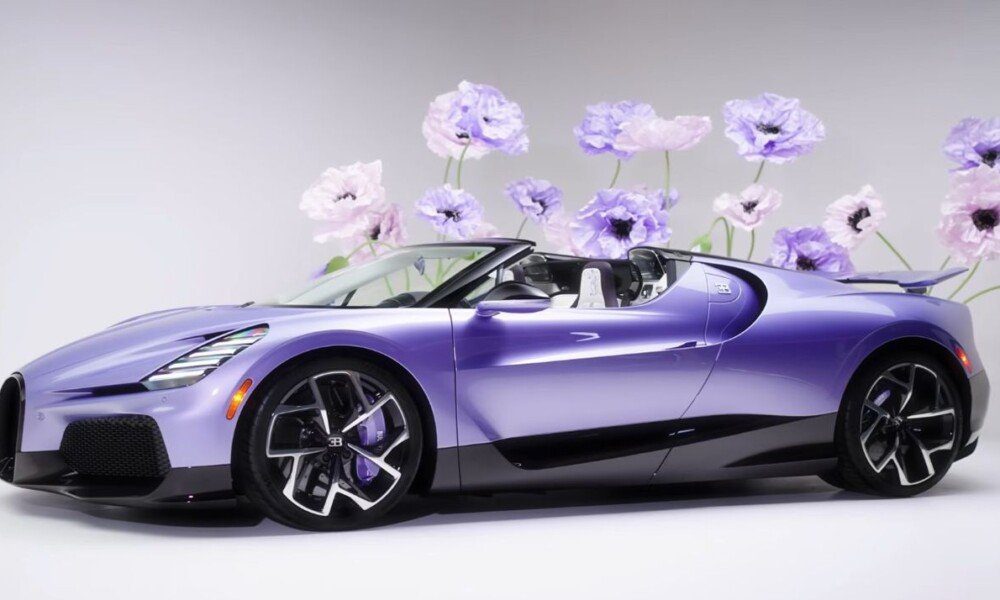
    Bugatti has revealed yet another one-off Mistral created by the Sur Mesure personalisation department. This stunning example is called the Mistral Caroline and is dedicated to the customer’s daughter.

    The Mistral Caroline is finished in a stunning shade of purple which has a metallic finish, while the lower section has an exposed carbon fibre finish. The wheels are two-tone, and the brake calipers match the exterior colour.

    The lower section rear wing is painted in white with ‘Caroline’ lettering and has a flower motif in different shades of purple. The same flower motif can be found on the interior – on the door pads and centre console. The cabin is trimmed in dark purple and white leather.

    The Bugatti Mistral is powered by the 8.0-liter quad-turbocharged W16 engine that delivers 1600 hp to all four wheels. It also holds the top speed record for an open-top production car.

    Source link

  • Ford Crown Victoria Fans Have Been Asking the Wrong Person For Its Comeback

    Ford Crown Victoria Fans Have Been Asking the Wrong Person For Its Comeback

    It’s Been 15 Years

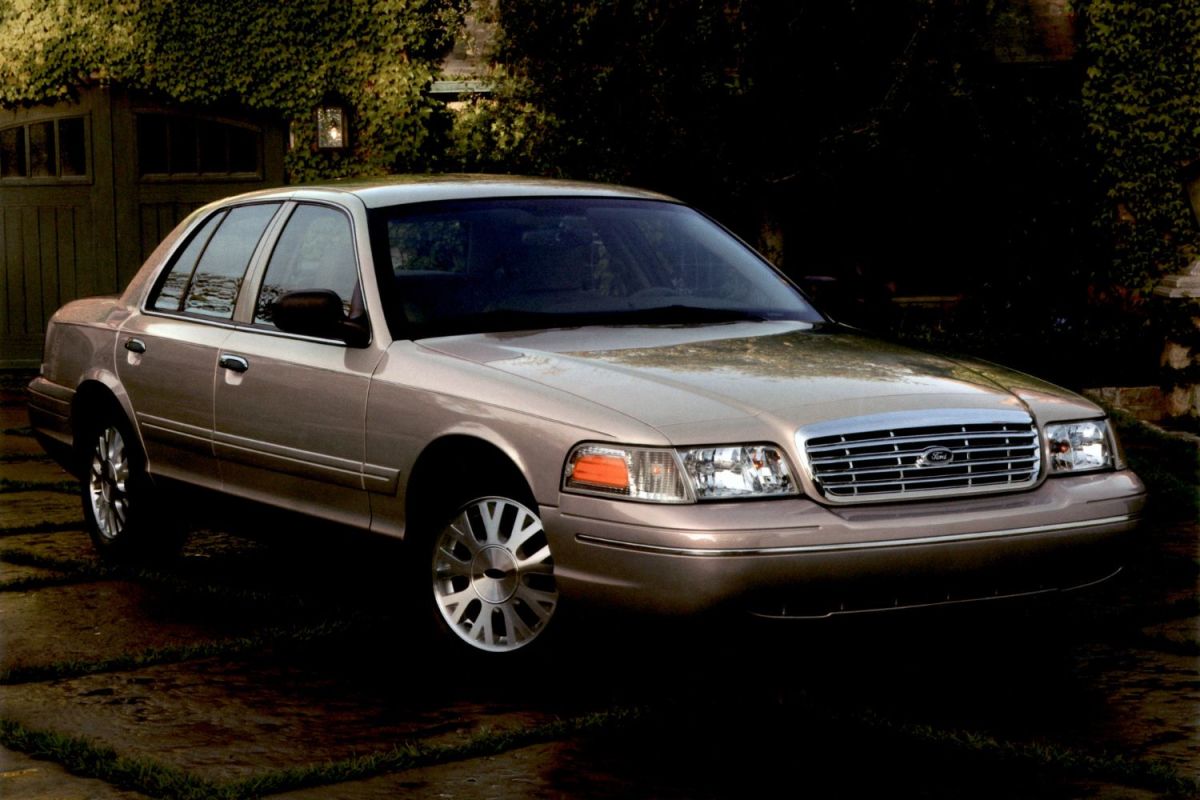
    The last Ford Crown Victoria rolled off on September 15, 2011. It marked the end of an era and was the last traditional full-sized sedan with a body-on-frame construction. While it was an effective successor to the Taurus, the Crown Vic had well and truly established itself as an automotive icon.

    The end of the Crown Victoria also marked the demise of the Panther platform. First introduced in 1979, it lasted for 32 years and underwent three body changes. The first was the box-body era, with the LTD Crown Victoria and Country Squire, which lasted from 1979 to 1991. It was succeeded by the ‘Aero Vics’, running from 1991 to 1997 with three distinct facelifts.

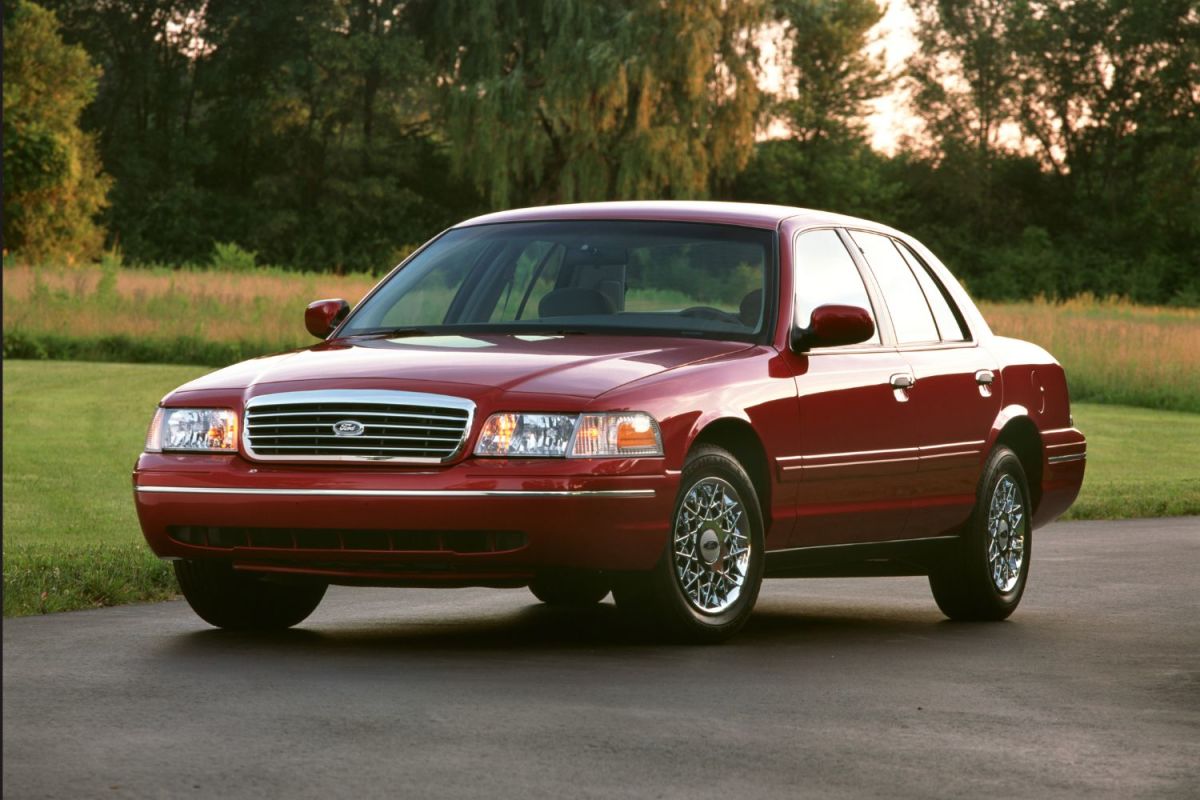
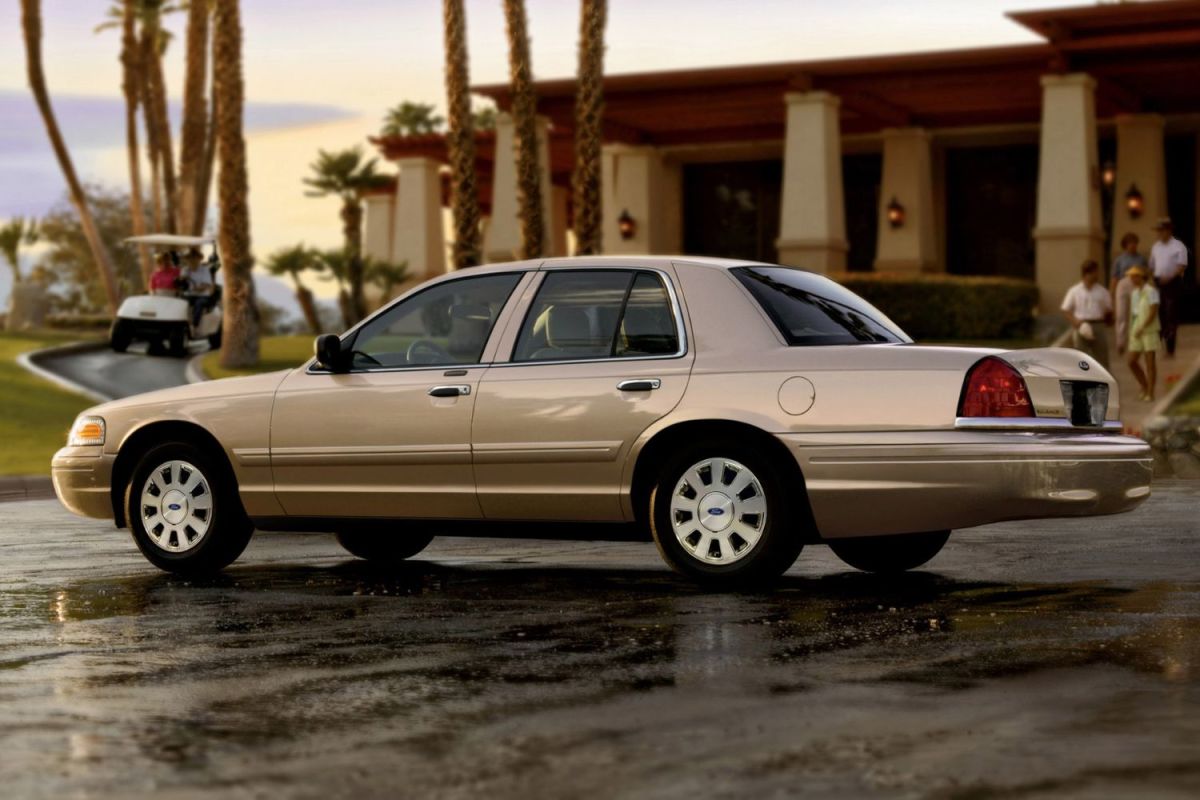
    Of course, the most popular was the final iteration built from 1998 to 2011, with its, er, distinct headlight pattern etched in everyone’s memories.

    There’s Still Clamor for it

    Whether it’s fans of traditional large sedans or service vehicles, the Crown Vic still has a very strong presence on social media. Simple, rugged, and reliable, the car has won many fans over the decades, whether you’re a civilian or a law enforcement officer.

    That also means fans have been practically begging Ford to build it again, leading to a hilarious post on Ford Pro’s Facebook page.

    It simply read, in all caps for maximum effect, “I CAN’T BRING BACK THE CROWN VIC I ONLY DO THE SOCIAL MEDIA.”

    Looking at previous posts, there have been several comments saying “Bring back the Crown Vic,” and we wouldn’t be surprised if Ford Pro’s inbox has been spammed with messages containing those same words.

    Inevitably, the comments section was flooded. “Bring it back anyway!” it said, and one commenter even pulled up a post from 2011 asking which product Ford should revive. The company replied in the comments, “Some popular answers so far are: The Crown Vic, Excursion, Falcon, and the Pinto. It’s nice to know that many of you have great taste.”

    Ford

    Why Was it Discontinued?

    Simply put, it was using ancient technology. The Crown Victoria’s last true rival was the Chevrolet Caprice, which used the B-Body platform. That one was axed in 1996 to make way for full-size SUV production, although it briefly returned in the 2010s, rebadged from a Holden model, but for police use only. At the same time, the civilian market wasn’t exactly buying it in droves. If anything, you’re more likely to see a Police Interceptor or an ex-taxi over an actual, regular Crown Victoria.

    But the final nail in its coffin was the government mandate that required stability control. Ford said it would simply be too costly to fit Crown Victorias with that system, and with private sales being virtually non-existent, it had to go. It didn’t help that the tooling in the St. Thomas Assembly Plant in Ontario, Canada, was getting worn out, and retooling it would be, you guessed it, too expensive to make financial sense.

    Ford

    Ford Promised a Sedan Revival

    Still, that’s not stopping people from asking for it back. Admittedly, the chances of the Crown Victoria returning in the way it’s most fondly remembered is pretty slim. It’s not the like company is willing to develop a new body-on-frame platform for a sedan application given the current state of the market.

    That said, Ford did say that’s planning to bring back sedans to its range, targeting a price of under $40,000. With that in mind, it could be revived as a large, unibody sedan, although we’re not too sure if the car’s devoted fans will like that idea. Still, should there be more than enough people who promise that they will buy one if Ford builds it, maybe we might be on to something here. Surely, though, the social media manager knows someone who can point us in the right direction.

    We do have one request for Ford, though. If it’s planning a Crown Vic comeback, please don’t slap that name on a crossover. That’s all we ask.

    Ford

    Ford


    View the 6 images of this gallery on the
    original article
    Source link