Author: admin

  • Honda Civic Type-R Reviews | Overview

    Honda Civic Type-R Reviews | Overview

    Overview


    HONDA’s tweaked Civic Type R arrived last year with a touch more of everything… and a big price hike of about $5000 to $79,000 driveaway.


    The latest incarnation of the front-wheel drive FL5-series Civic Type R now lists within shouting distance of cars like BMW’s M125i xDrive (from $84,700) and the Mercedes-AMG A 35 AMG 4Matic (from $87,900) all-wheel drives.


    Beneath those are the lower-priced all-wheel drive Toyota Corolla GR (from $67,990) and Volkswagen Golf R (from $71,990) or perhaps the Hyundai i30 N (from $52,000) and Volkswagen Golf GTI (from $59,890) front-wheel drives.


    Heck, you can even get into a base Subaru WRX for under $50K.


    In the face of these tempters, does the low-slung, angry looking Honda have enough guile to carry it off and justify the extra dosh?


    After a week punting the startling Racing Blue test car the answer is “yes” as the fun factor involved here can’t be ignored despite the questionable affordability factor.


    The Type R is possibly the quickest front-wheel drive sporty hatch on the planet, exemplified in its ownership of the FWD lap record at the fearsome 21km Nürburgring race track in Germany.


    Added to this is the Honda’s reliability record that is second to none among those who know in the motorsport fraternity. They (Type Rs) simply don’t break unless you do something really stupid.


    The freshened model is available in a standout Racing Blue colour that joins carryover colours including Championship White, Crystal Black and Sonic Grey. Red seems to have disappeared.


    Power from the turbocharged K20C-series VTEC 2.0-litre petrol engine is up to a handy 235kW at 6500rpm and 420Nm (+7kW/20Nm) from 2600-4000rpm making the latest model the most powerful yet.


    As usual, drive is to the front wheels via a six-speed manual transmission after passing through a lighter (by 18 per cent) flywheel and revised rev-matching system that is said to ensure “hyper precise” shifting.


    Subtle changes to the engine focused on a higher flow exhaust, a plastic turbo inlet baffle and enhanced longevity (component strength).


    The model also benefits from increased rear body strength for improved handling, changes to front suspension camber rigidity and a stronger steering column torsion bar to reduce deflections.


    Honda says it has retuned the Civic Type R’s dual-axis strut front and multilink rear suspension to improve straight-line stability and steering feel. 


    The 1380kg Type R rides on 19-inch matte black alloy wheels shod with 265/30 profile Michelin Pilot Sport 4S tyres.


    Weight is shaved via wider use of aluminium body parts including the bonnet, but the brakes remain as before – high-performance Brembos with 350mm two-piece front discs.


    Standard equipment is generous, and includes individual drive modes, an active exhaust valve, 10.2-inch digital driver display, a 9.0-inch infotainment array with wireless Apple CarPlay, wireless phone charger, Honda LogR telemetry system, sat nav, folding door mirrors, and ambient door and footwell lighting.


    Safety kit includes the usual ADAS array and a full complement of airbags.


    The cockpit features the requisite Type R’s red seats, carpet and trim, a redesigned aluminium shift knob, and a build plate on the dash.


    Our test vehicle was fitted with the optional carbon-fibre rear wing at $5300 extra.


    All-new Honda vehicles are backed by a five-year/unlimited-kilometre warranty with included roadside assistance and capped-price schedule servicing.


    Driving Impressions


    We are familiar with the FL5-series Civic Type R as it’s a tough customer when encountered at the track providing plenty of straight line poke, fade free brakes, precise steering, and high cornering speeds.


    Often, we’ve found ourselves looking straight up the three exhaust pipes unable to make an impression on the distance between us and the Civic Type R – dropping back even.


    Prowess at the track doesn’t necessarily make a great road car as the two environments are pretty much diametrically opposed but, in this case, we are happy to report the Type R makes a good fist of both with a few compromises biased more towards the motorsport side of the ledger.


    They are the firm ride and the small, heavily bolstered front seats both of which are great for cutting hot laps but pall in the daily drudge.


    The beast likes a drink, too (98RON PULP is mandatory), but cranking out this amount of power from just 2.0-litres must exact a toll.


    During the week of our test drive which coincided with a spike in fuel prices from the Middle East conflict, we saw an average of 12.1 litres per 100km which is somewhat excessive.


    Driven really carefully you might see it into the 10s or less but that questions why you’d buy the Civic Type R in the first place.


    It’s not built as an economical urban runabout, it’s a hot hatch with the emphasis on “hot” exemplified in rapid 0-100km/h times, flat cornering at ridiculous speeds, direct steering, unfadable brakes and super grippy tyres – all to the accompaniment of a turbo four symphony trumpeting out the back.


    Yes, it’s quick; tempered a tad by front-wheel drive traction limitations moderated in this case by electronic interventions.


    Once it’s off the mark, the Civic Type R blitzes forward with brutal acceleration across a wide rev range extending to about 7000rpm all exquisitely accessed by the car’s rifle bolt, close ratio six-speed manual transmission – the only transmission available.


    It’s a case of snick, snick, snick as you rip up the tarmac through the Type R’s sticky Michelin rubber. Flicking back for corners is facilitated by the handy rev matching function that blips the throttle to synchronise wheel speed with gearbox revolutions.


    The idea is to prevent compression lock-up coming in hot… and it works a treat.


    Same thing for driving around town as the rev match function not only makes you feel like a proper racer, it smooths the transition between gear changes.


    Engine performance is never lacking as long as you are in the right gear although plenty of torque is available low down if you go one too high or feel lazy. 


    We like the fact that its manual only as the Civic Type R is built for people who love driving and want maximum control over the vehicle instead of letting it look after the more difficult bits.


    It is the kind of car that makes you actively seek out winding roads to enjoy its razor-sharp reflexes and that raunchy exhaust note (no bangs on the overrun though).


    The tight cabin envelops its four occupants in close fitting seats and firm squabs. The driver’s cockpit is built for speed offering up a chunky multi-function wheel, sporty driving position, well-spaced pedals and easy to read information via a liveable HMI on the centre touchscreen.


    Some critical switchgear can be used without looking.


    The low ride height can be an issue parking, and the pronounced seat bolsters can give you a touch-up exiting the car.


    Living with it on a day-to-day basis is not a problem apart from the above as the five-door Civic Type R is almost as practical as it is fast. There’s plenty of luggage space down the back and it’s happy to tootle around the ‘burbs’ in a relaxed manner.


    It’s jiggly on the softest setting which might be a deal breaker for some but if you’re after a shopping trolley, buy one. And there is a chunk of road noise to live with on the open road.


    Among pretty much everything else, we love the “in ya face” looks, the striking new blue, the big red four piston brake callipers how it drives and the triple exhaust outlets.


    On reflection, the name says it all, “Honda Civic Type Aaaahhh”. No pesky plug-in electrification, no weighty electric motors or battery, no over-the-top driver assist tech, no artificial exhaust note, and no slurring CVT transmission.


    It’s one of a few cars left for the driving purist, and we’d own one in a heartbeat.
    Source link

  • Hyundai says EVs now 20 pct of Australian orders as electric interest surges

    Hyundai says EVs now 20 pct of Australian orders as electric interest surges

    South Korea car giant Hyundai says it has experienced a massive surge in interest in electric vehicles, which now account for 20 per cent of its order volume, up from 3 per cent before the fuel supply crisis emerged after the breakout of the latest Middle East war.

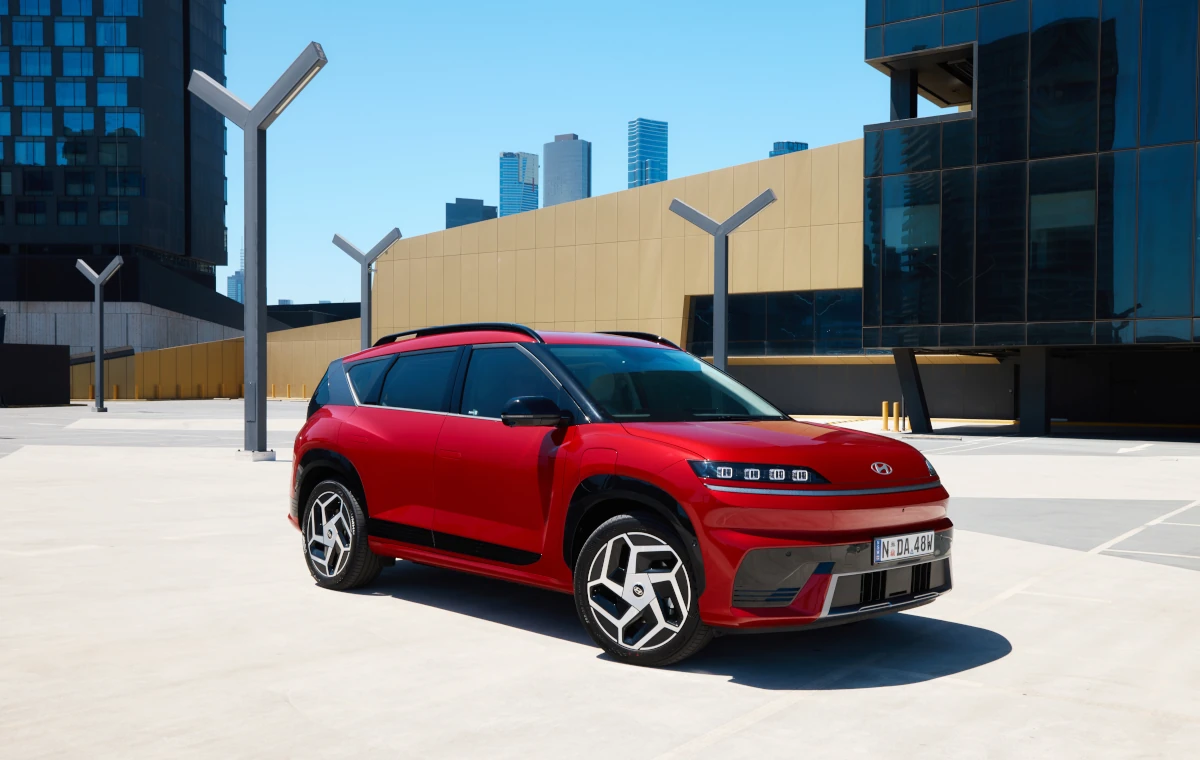
    The company says it has seen a more than four-fold increase in EV orders in March – up to 1,037 from 228 in February – with the Kona EV and the newly released Elexio leading the way.

    “EVs now account for 20% of our volume – previously we were at less than 3%,” said Hyundai Motor Company Australia director of sales, David Rodda. “We are planning for a 70% increase in EV orders for the second quarter over Q1.”

    Rodda says Hyundai Australia has  secured a 158% supply increase of EVs for quarter two to meet this unprecedented level of demand, and these vehicles will start to arrive from May. It is confident the increased supply can continue for the rest of the year.

    Hyundai says it has a supply of 1,226 Kona EVs for the second quarter, up from 305 in the March quarter, and also has 1,180 of the new Elexio EVs, up from 750 in the first quarter. Wait times are several months.

    It is also increasing its supply of the small Inster (to 255 from 84), and the Ioniq 5 (to 150 from 96). It says the order level in March and April is triple the level of January and February for the Kona, Inster and Ioniq 5, and more than 10-fold for the Elexio.

    Table: Hyundai Australia

    Hyundai also provided this week by week data of its order numbers, showing the surge in interest in the 3rd and 4th week of March.

    Hyundai says it expects to boost order with the release of the Ioniq 3 hatch early next year and the Staria commercial van later this year. It is also seeing a strong interest in hybrid orders, which rose to 3,966 in March from 3,049 in February, and accounted for a record 57 per cent of total orders in March.

    See The Driven’s detailed EV sales data here: Australian electric vehicle sales by month in 2026; by model and by brand

    Sign up for The Driven’s free daily newsletter by going to the button on the bottom right of the website’s home page at www.thedriven.io

    Source link

  • Straight-piped Ferrari 812 Superfast sounds sick; definitely not for quiet neighbourhoods

    Straight-piped Ferrari 812 Superfast sounds sick; definitely not for quiet neighbourhoods

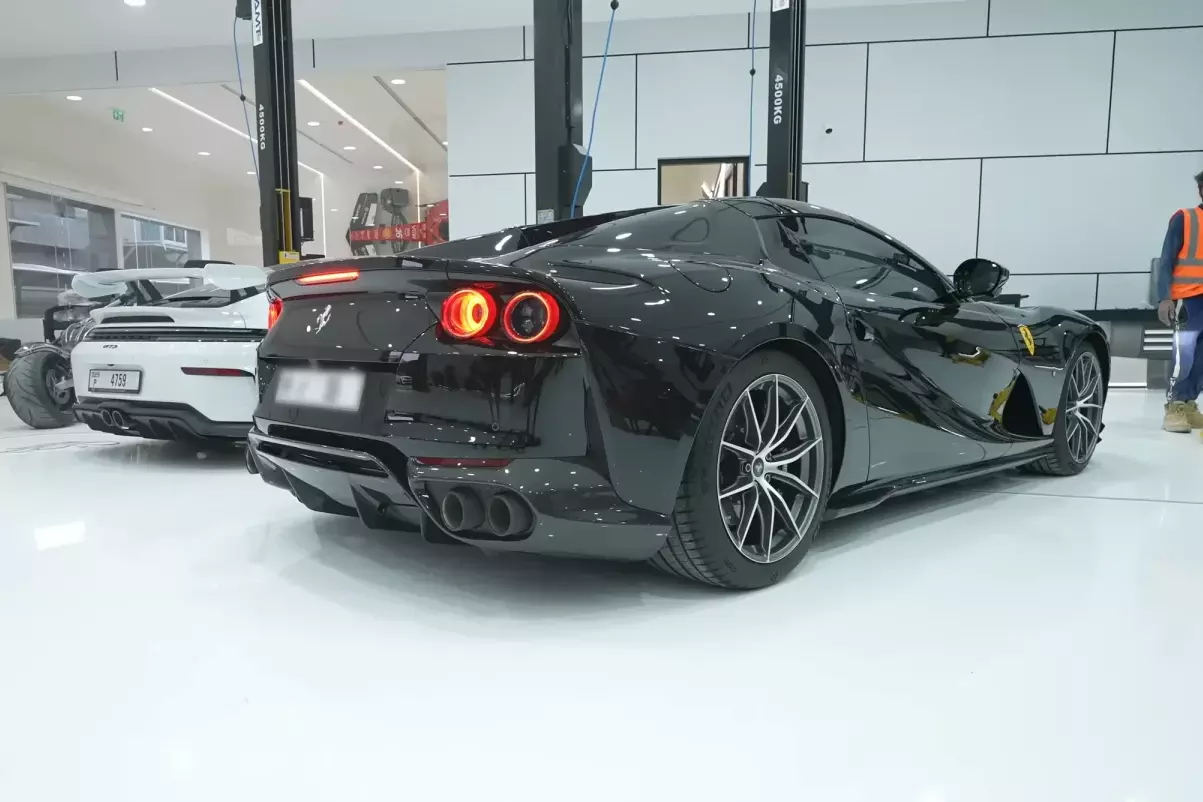
    With a 6.5-litre V12 engine under its hood, the Ferrari 812 Superfast already sounds pretty sweet and loud. So, what happens when the supercar gets an aftermarket straight pipe installed? Absolute Acoustic Mayhem!

    We can see in the video that after the installation of the exhaust setup, the Ferrari 812 Superfast is fired up inside the workshop, and just the supercar’s cold start is so loud that the guy in the video is almost inaudible.

    He later takes the car out for a test drive, and we can hear the V12 screaming. The exhaust note from inside the cabin also sounds amazing. With this setup, the owner is certainly going to have a lot of fun driving his black Prancing Horse, but we cannot say the same for his neighbours!

    The naturally aspirated V12 of the Ferrari 812 Superfast packs in 788 bhp. An 8-speed dual-clutch automatic transmission handles all that firepower and sends it to the rear wheels. The supercar can achieve 100 kmph from a standstill in a mere 2.9 seconds.

    Source link

  • Gas Prices Just Flipped the EV Market—Hyundai Sales Jump 40%

    Gas Prices Just Flipped the EV Market—Hyundai Sales Jump 40%

    The US electric vehicle market has had a rough stretch. Federal EV tax credits disappeared, supportive policies were rolled back, and overall EV sales dropped by around 27 percent year-over-year in the first quarter of 2026, according to Cox Automotive estimates. Then the conflict with Iran hit, and geopolitical tensions pushed oil prices higher. That single shift in what people pay at the pump appears to be influencing buyer behavior—at least in the short term. Hyundai Motor Company CEO José Muñoz told Bloomberg that the company’s US EV sales grew by 40 percent between February and March, and he pointed squarely at rising fuel costs as the reason.

    Getty Images

    Hyundai’s Numbers Tell the Story

    The jump comes off a relatively soft February, highlighting how quickly demand can swing with fuel prices. The Ioniq 5 crossover alone sold 4,425 units in March, up 27 percent from the month before, making it the second best-selling EV behind Tesla models in the country for the first quarter. The larger Ioniq 9 did even better, jumping from 505 to 905 units in the same period. These are meaningful numbers for a brand that has one foot firmly in the EV market while several competitors have retreated.

    Hyundai


    View the 2 images of this gallery on the
    original article

    What Comes Next for the EV Market

    Muñoz acknowledged that the industry’s earlier optimism, the idea that EVs could hit 50-60 percent US market share by the end of the decade, no longer looks realistic. He expects something closer to 10 to 15 percent market share, which he described as enough to stay committed to the technology. Car-buying platforms like Edmunds have noticed increased interest in electric options since the Iran war began, and a recent survey found nearly a third of Americans say they would seriously consider an EV for their next vehicle. 

    The used EV market is also seeing a lift, and the timing is almost accidental. Years of aggressive EV leasing and a wave of early adopters trading up have pushed a large supply of used electric cars into dealerships at exactly the right moment. It brings accessible price points to buyers eager to switch, but who were previously priced out of the new car market. For an industry searching for its next catalyst, the answer may be as simple and volatile as the price of fuel.

    Source link

  • The Cure for Shadetree Mechanic Loneliness? A DIY Wrenching Club Like This

    The Cure for Shadetree Mechanic Loneliness? A DIY Wrenching Club Like This

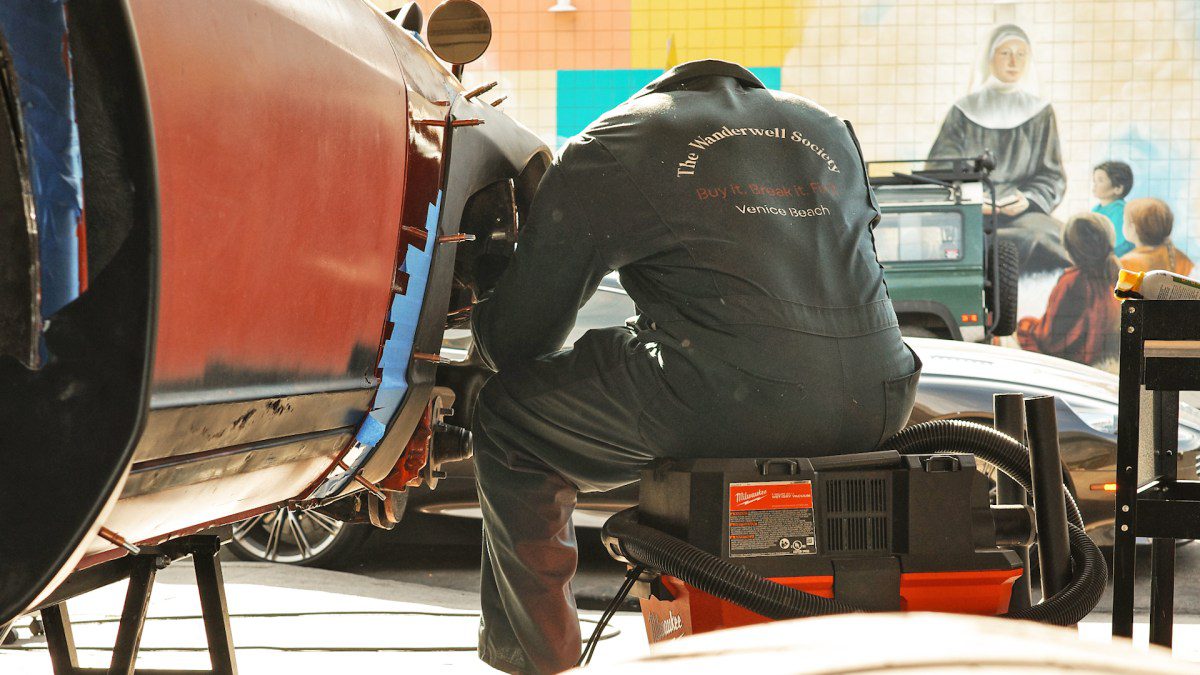
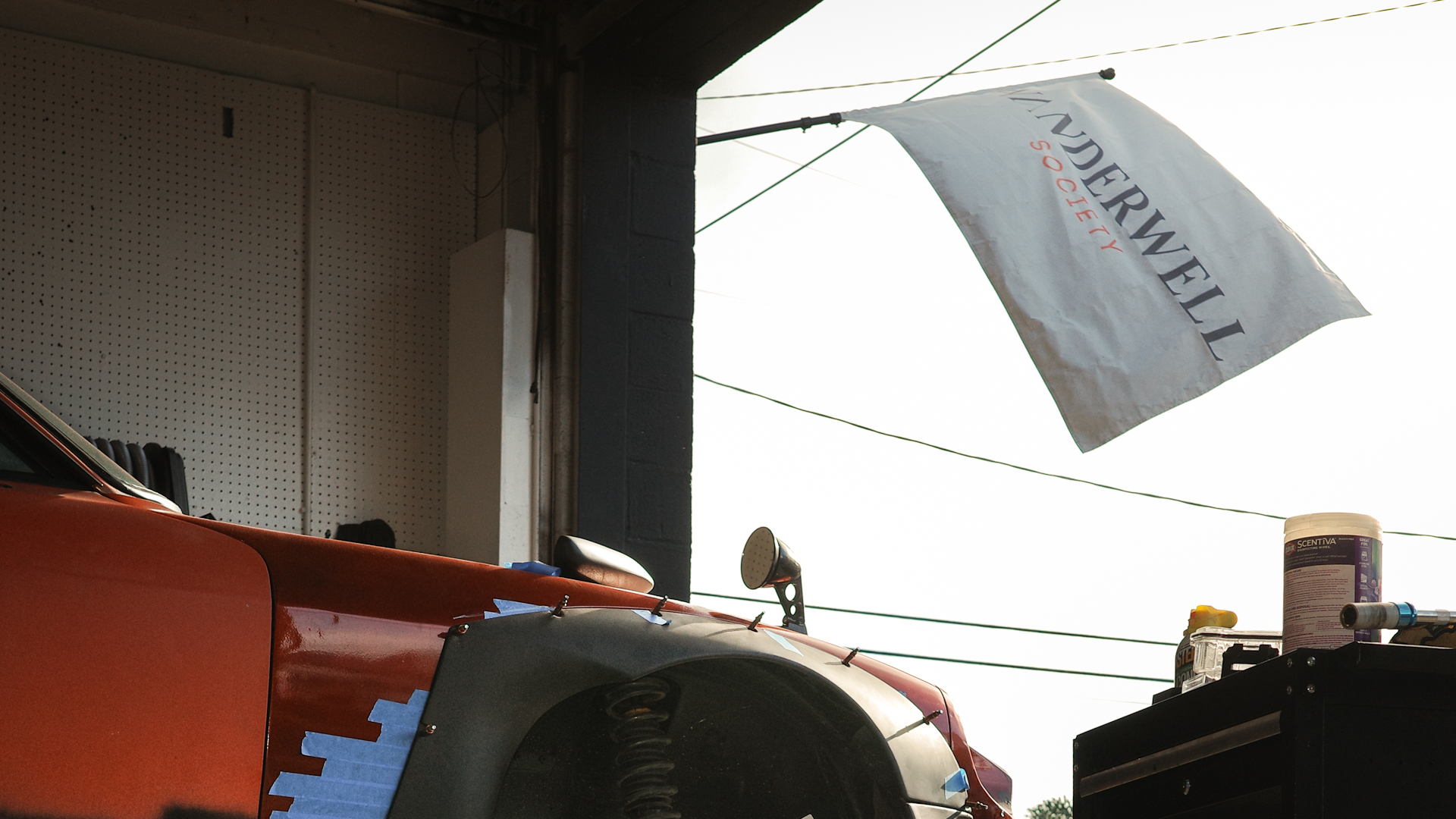
    Opening unmarked shop doors in LA is like lifting rocks in a jungle. What are you going to find—bugs? Treasure? Somebody’s precious classic Porsche or sketchy dudes holding a séance to get some jalopy through a smog test? The Wanderwell Society, operating out of a nondescript three-bay garage in Venice, is a bit of all that. It calls itself a “DIY social club.” It’s kind of a car club, kind of a classroom, and most importantly, a great catalyst for cultivating friendships.

    I’d go so far as to say that Wanderwell has figured out the ultimate and optimal execution of a modern car club. Driving with homies is fun, but you can really only chat with whoever’s sitting next to you. Cars and coffee meetups are cool, but there’s only so much standing and sipping I can handle before getting antsy.

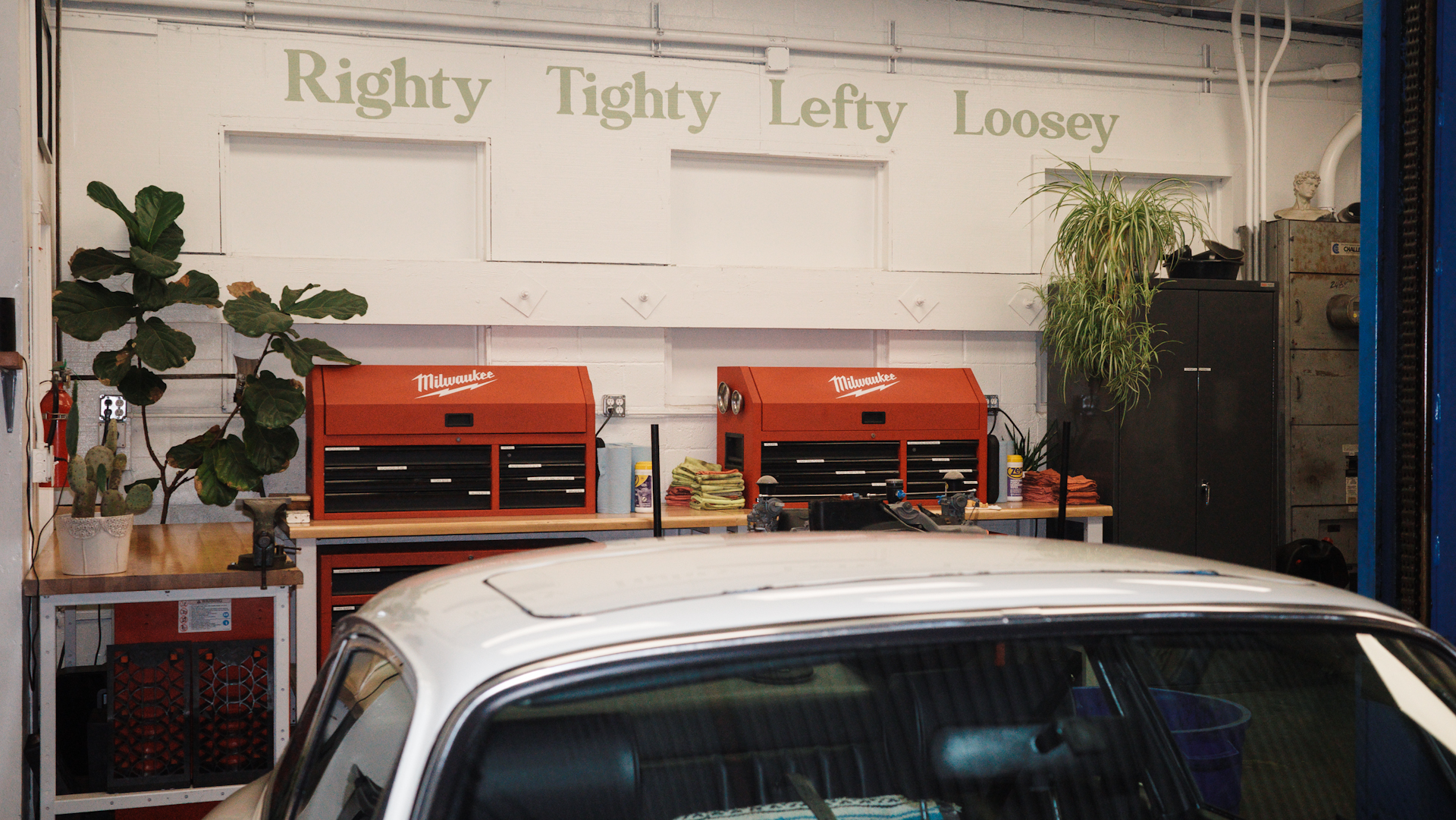
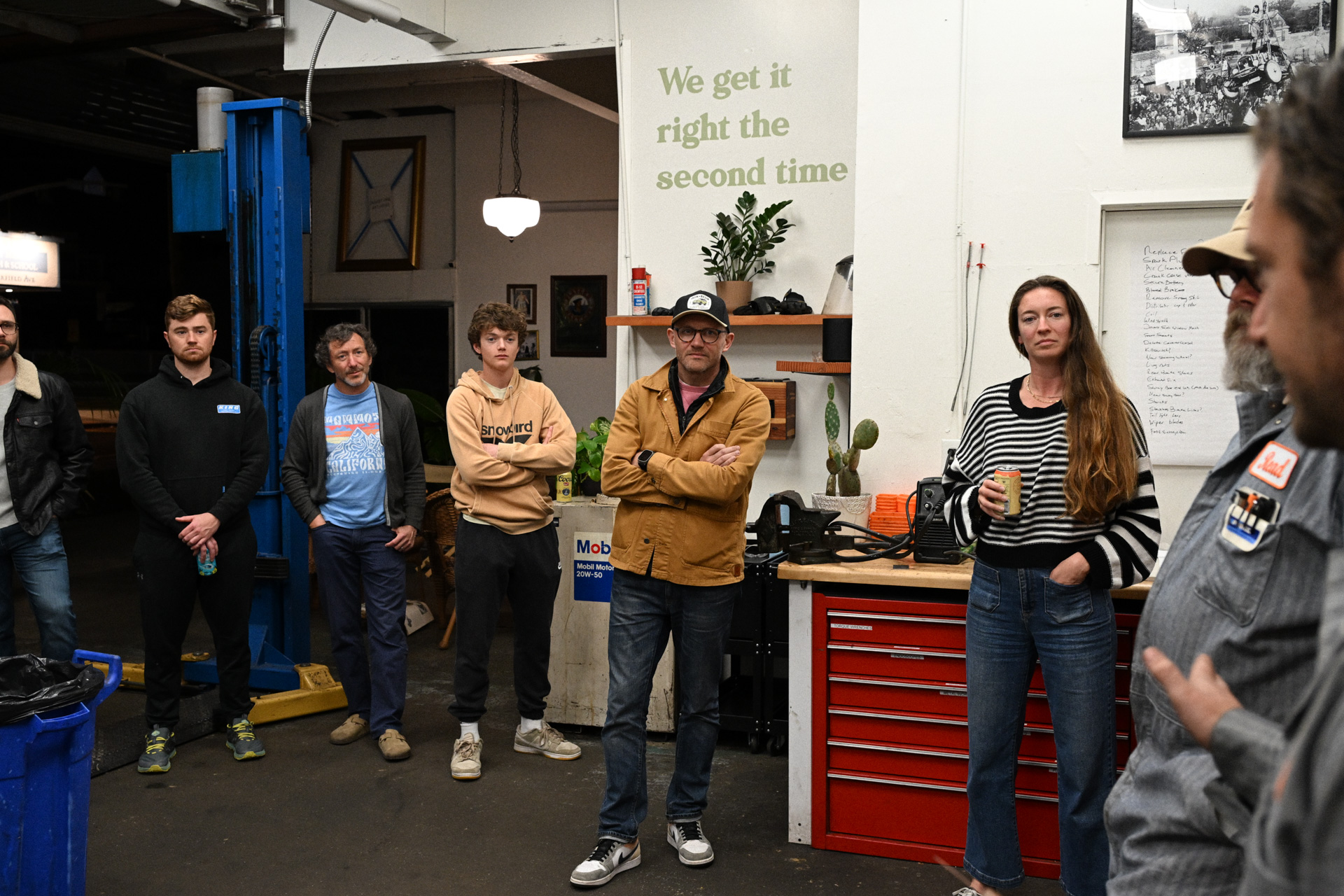
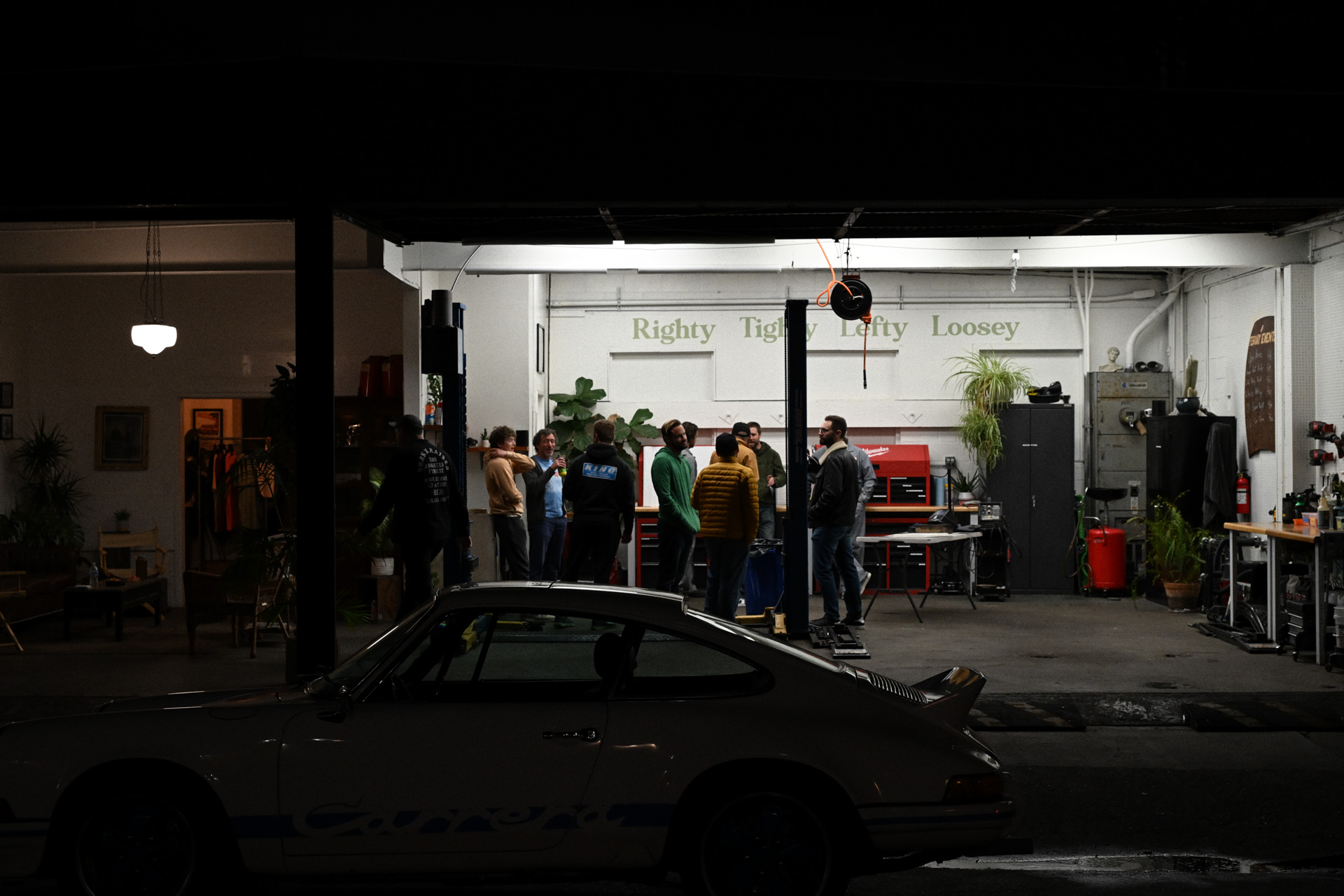
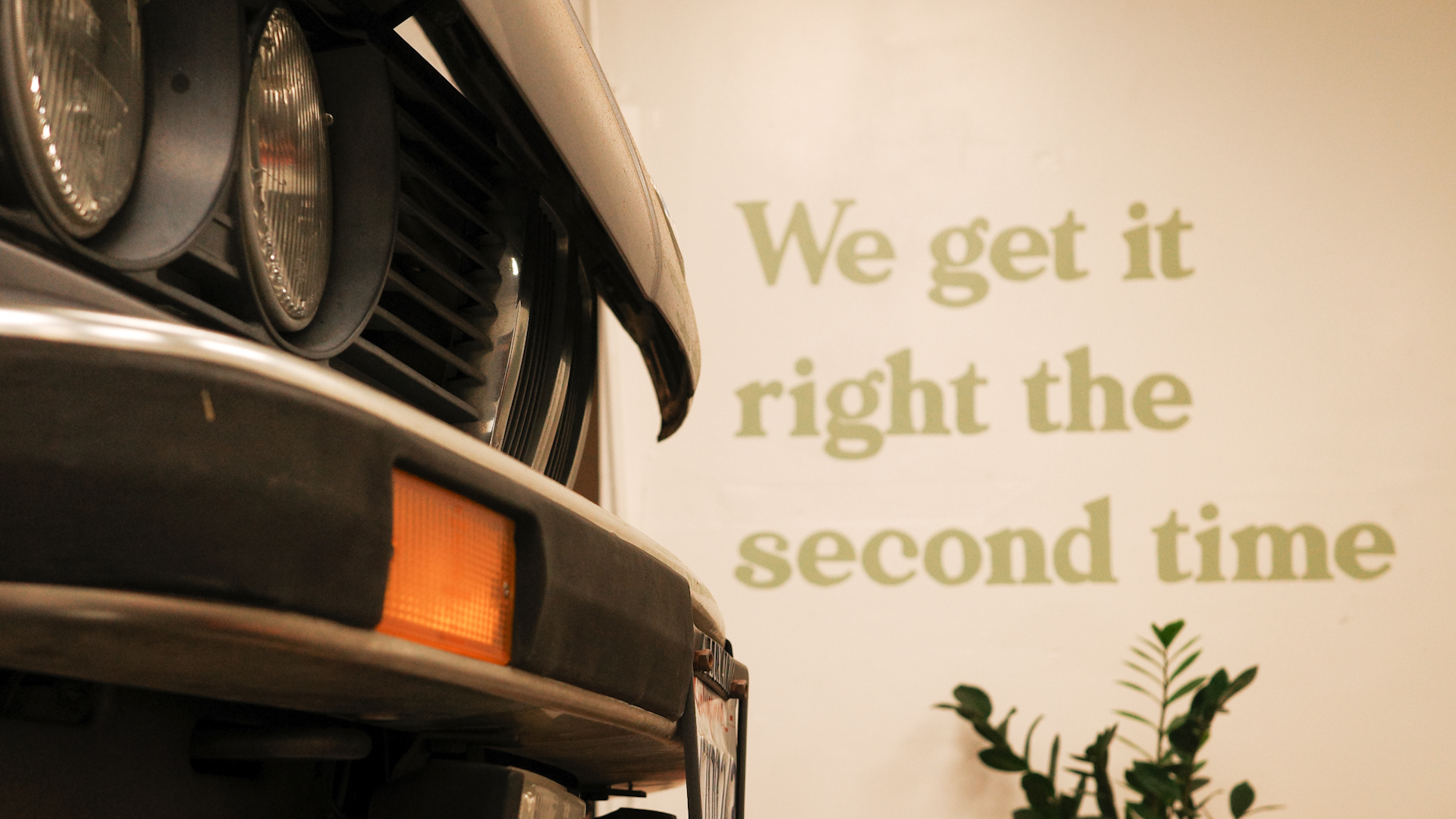
    This group is all about doing, learning, breaking down the intimidation of trying new tools, and experiencing the joy and pain of wrenching as a collective. I knew I’d like the vibe when I saw “RIGHTY TIGHTY LEFTY LOOSEY” stenciled in huge letters across the back wall. Hanging out with some members at a “welding 101” session a few weeks ago, my suspicions were confirmed: A clubhouse full of eager-to-learn DIY enthusiasts is indeed an awesome place to spend time. And clearly, I’m not the only person who thinks so.

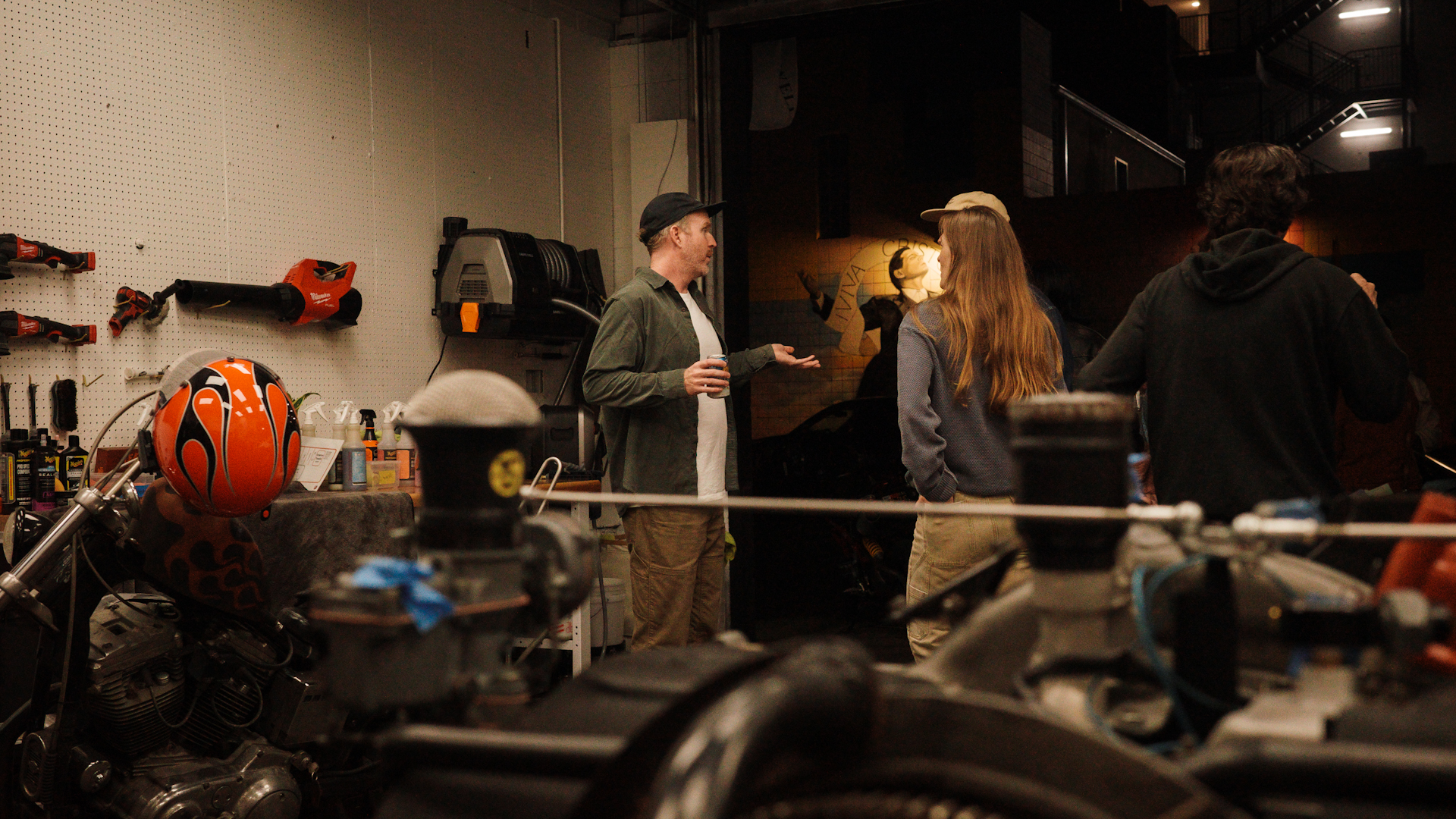
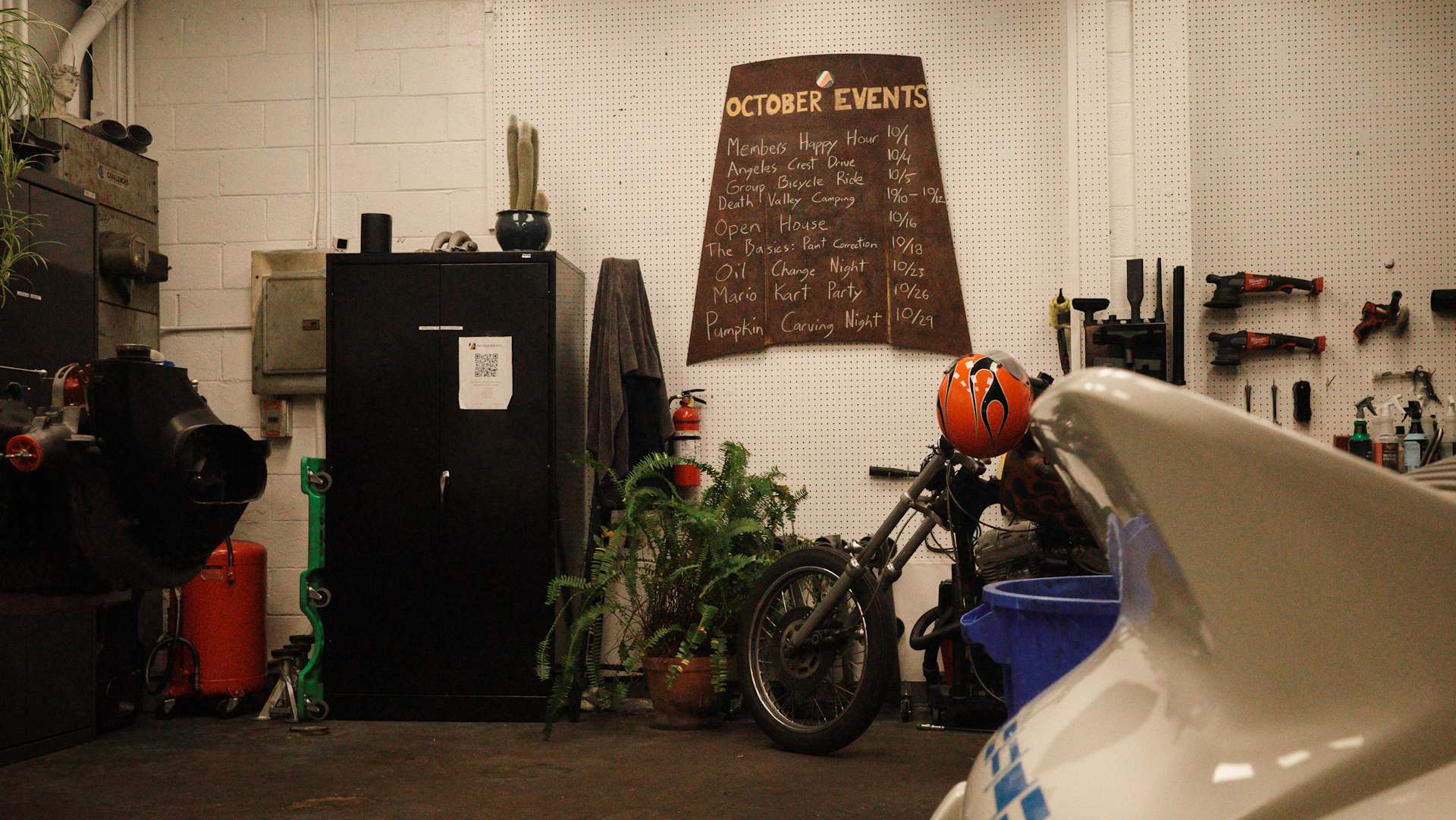
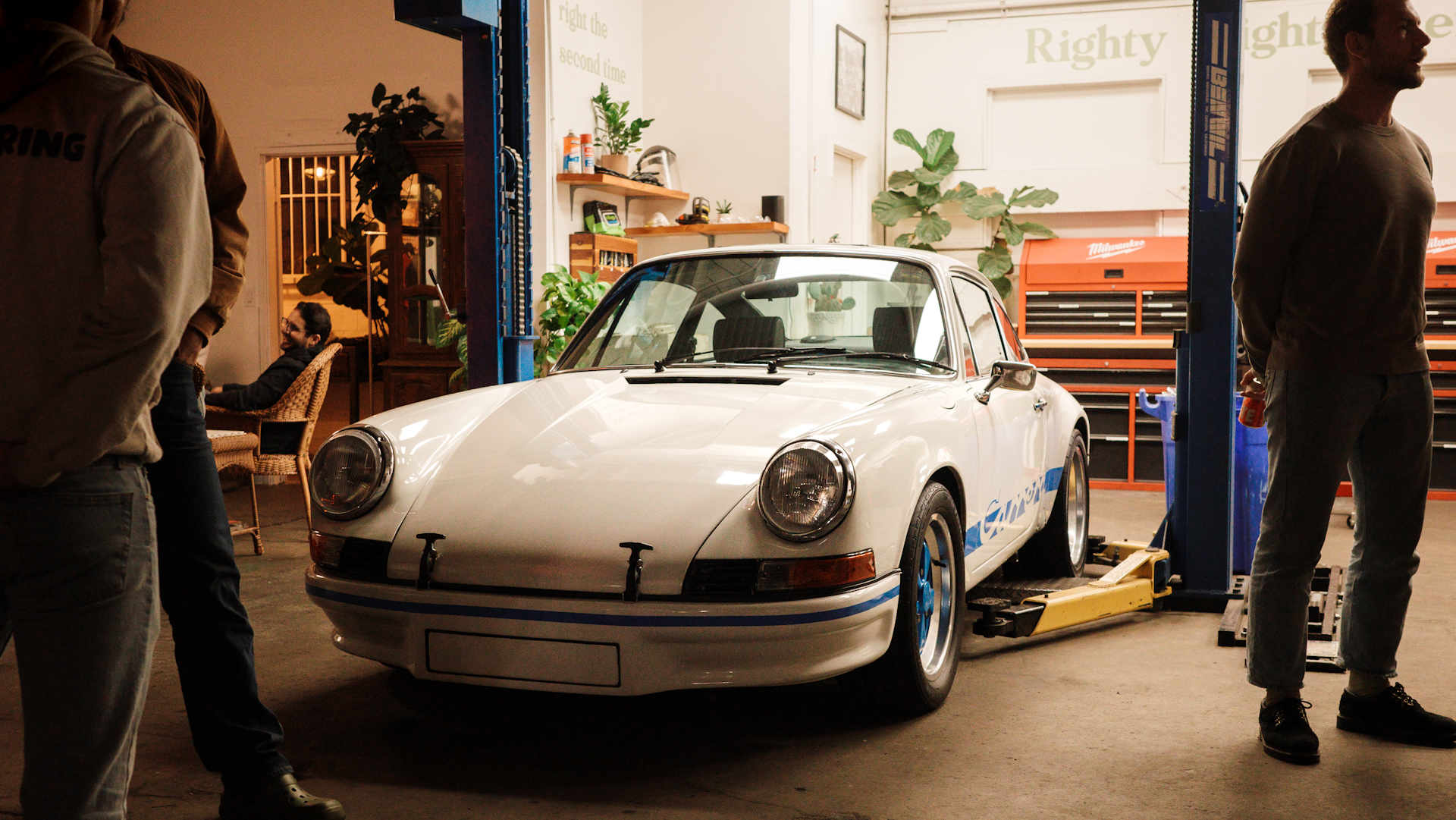
    Wanderwell just celebrated its first anniversary and is already expanding with a second garage in LA’s South Bay. When I stopped by the Venice, CA, HQ a few weeks ago, I saw tidily packed tools, the embroidered mechanic onesies of members hung on a rack, a stocked beer fridge, and a neatly organized, simple floor plan. One garage bay is a lounge area with couches and a TV, another is a detailing bay, and the middle one has a lift for real work.

    It’s almost like the best possible version of “your friend with all the tools’ house.” The only rule (or, at least, the biggest one) is that you can’t leave your car on the lift overnight. That prevents any one project from hogging the bay—and keeps people on-task while their car’s on the rack.

    Welding class.
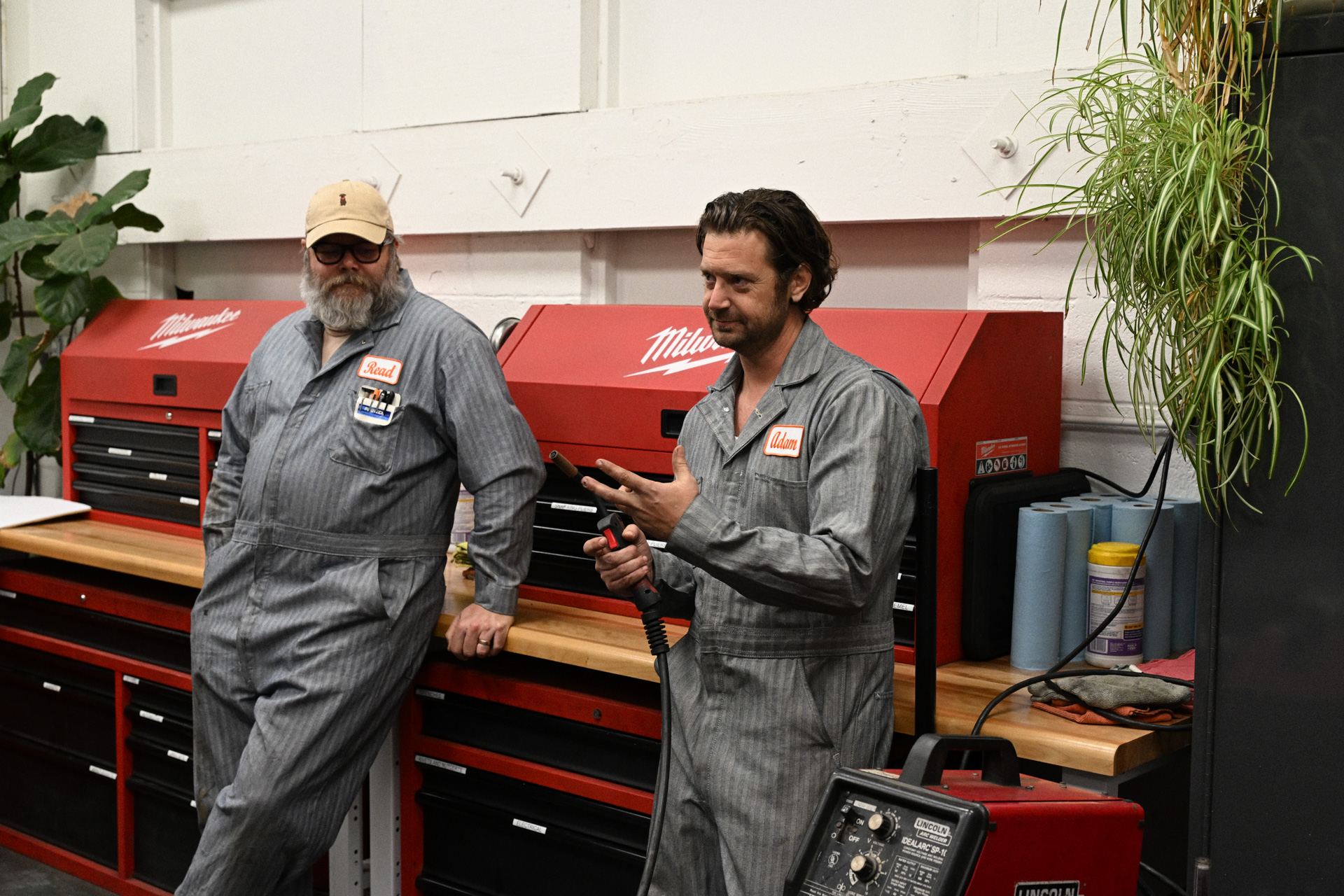
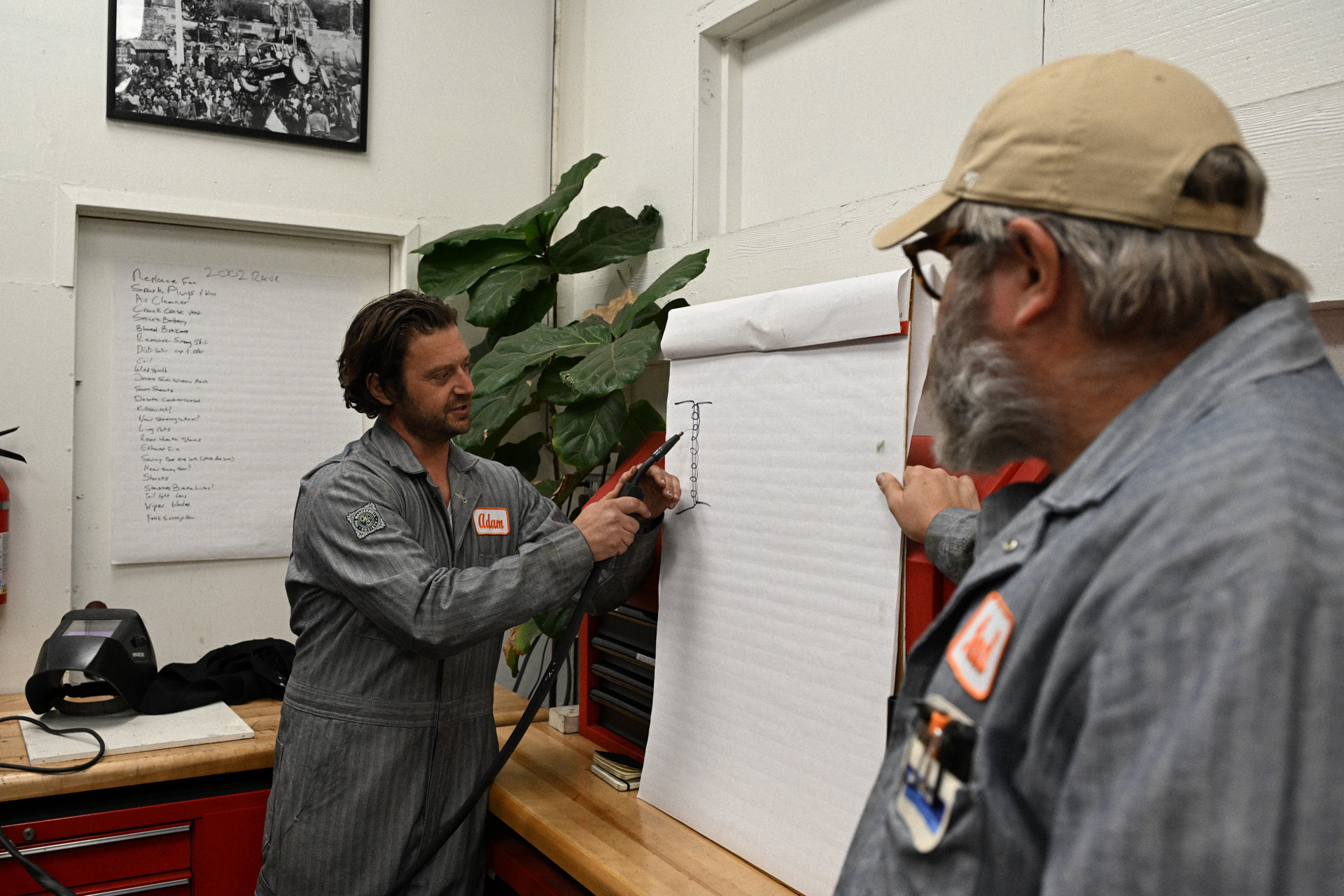
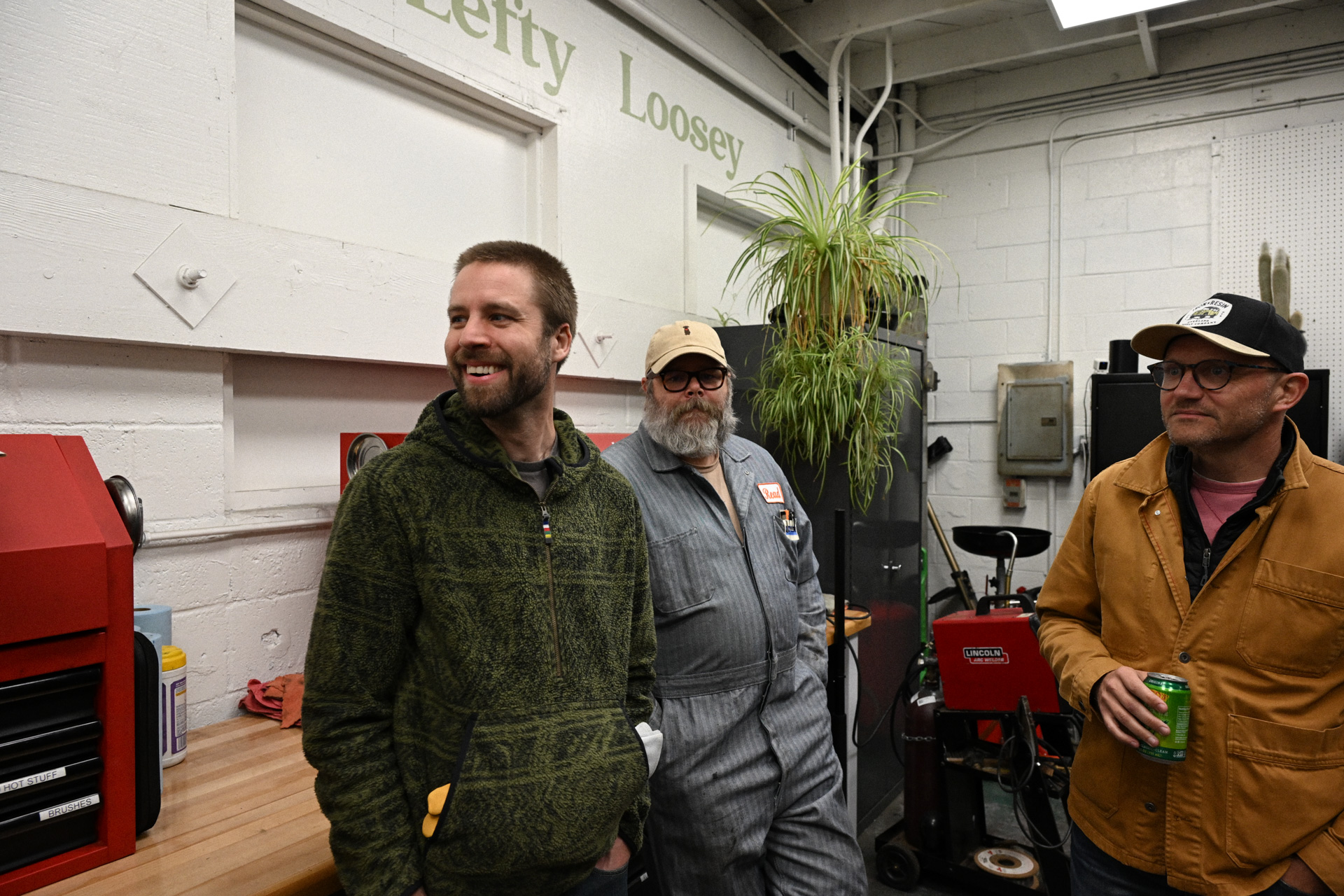
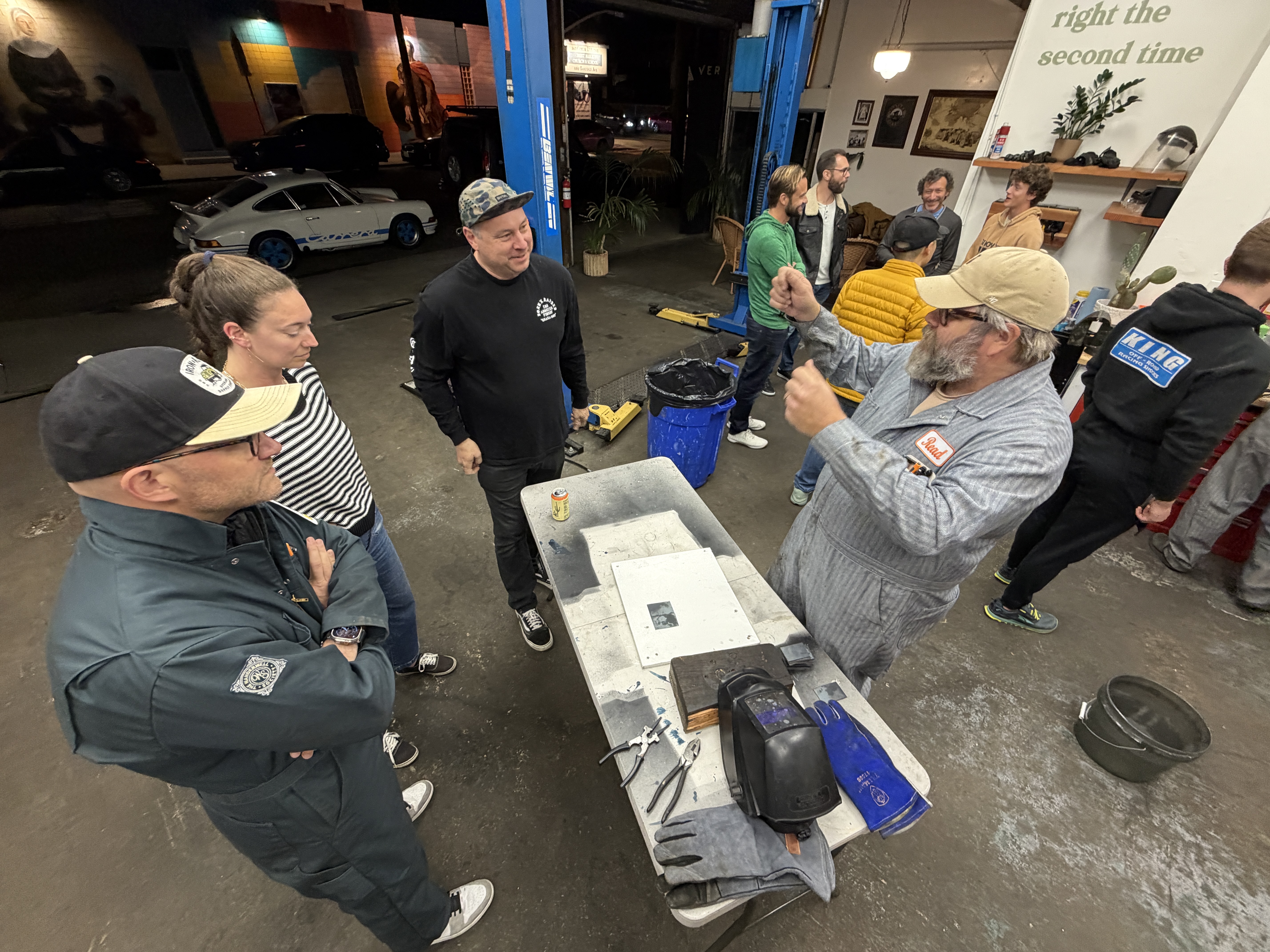
    Read Kerlin (left) and Adam Kaslikowski (right) explaining the basics of welding to me and some Wanderwell Society members. Rashod Bacon

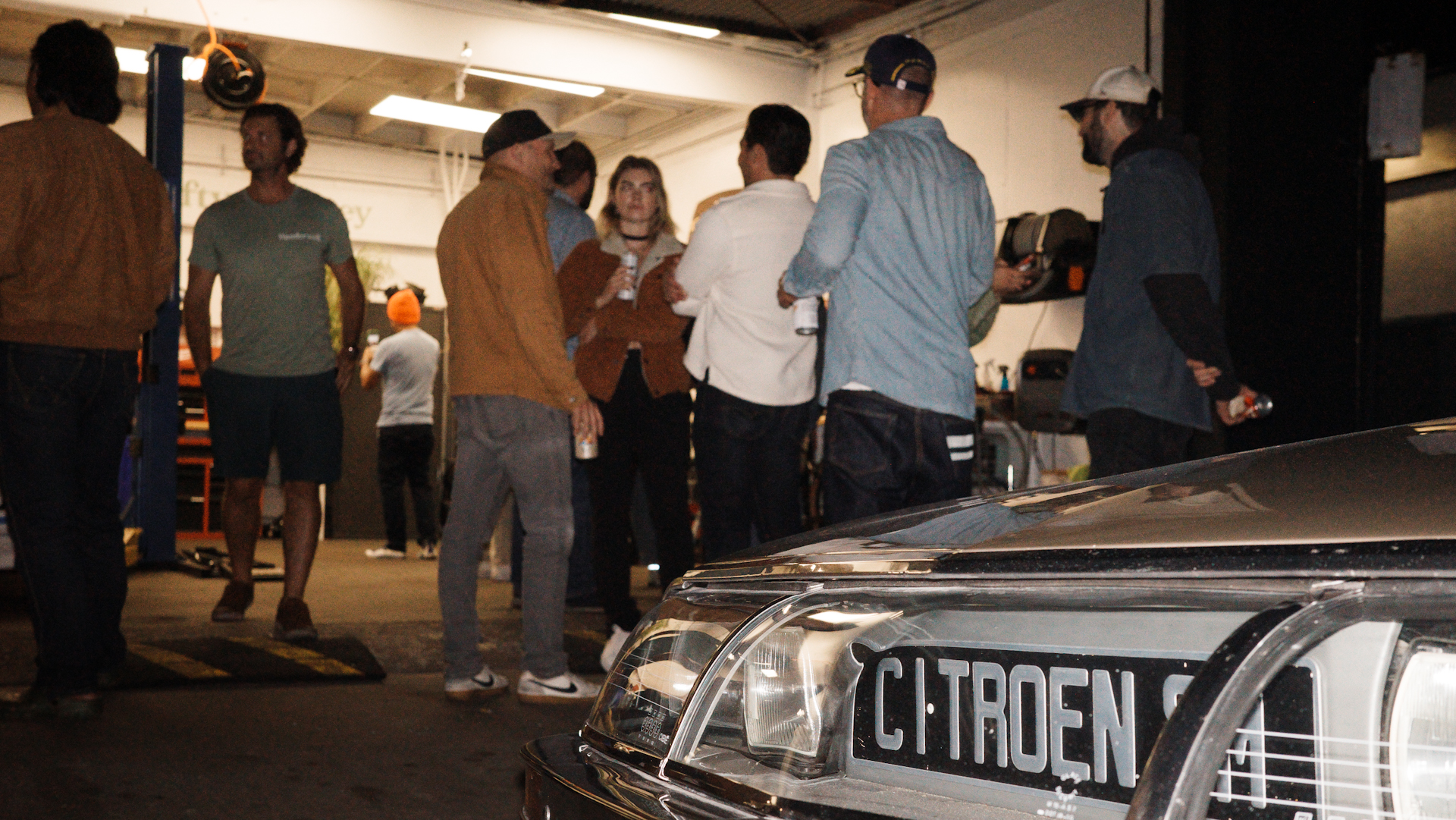
    Wanderwell got on my radar because the main man behind it, Adam Kaslikowski, was my friend with all the tools when I lived in LA myself. I actually met him through another LA-based car group, The Motoring Club (which has also expanded considerably since I joined circa 2019). Kas and I became buds as he hosted “oil change nights” in the alley-garage behind his apartment. A bunch of us would hang out, crack beers, talk shop, talk shit, and roll one vehicle after another onto a pair of wheel ramps to do oil changes and show-and-tell whatever upgrades we’d done to our rides.

    I loved it so much—people came through with everything from Ferraris and Porsches to Mustangs and motorcycles, and, on a couple of occasions, that 300ZX I bought for $100 made an appearance. Every oil change night, I got a little closer to my new friends and pretty much always learned something about cars.

    “It’s like oil change night every day,” Kas (as I call him) told me when he pitched his new endeavor. When I finally got to visit a few weeks ago, man, it made me miss living in Los Angeles all over again.

    The Wanderwell Society solves a whole bunch of problems at once. It empowers DIY newbies to get their hands dirty with a safe space and toolset, and most importantly, social support. Because shadetree mechanic’ing is rewarding, but let’s be real, it’s also a pain in the ass and oftentimes a lot less fun than it looks on Instagram. But tinkering with friends around? Totally different experience. Even the most heartbreaking bolt head-snap is much easier to endure when you’ve got folks around to offer help and hands. Heck, even a little ribbing is more fun than swearing at steel when you’re struggling by yourself.

    In addition to playing with personal projects, Kas and company also host workshops to introduce members to skills like welding. In an informal evening session, I joined a group of club members for a brief rundown on how welding works conceptually followed by a few practice beads with two different types of welding tools and a “final project” of tacking a screwdriver bit to a Porsche part somebody was throwing out. (We made them into little bottle openers.)

    Kas indicated that the Wanderwell Society was close to max membership months ago, and that an enthusiastic partner is already setting up another outpost. But I suspect that expansion will continue. There’s already talk of the Venice shop spilling into an adjacent office to increase the size of the social space.

    I hope it does keep expanding—and not just for the sake of my friends’ fortunes. I just love this idea as a hands-on evolution of car enthusiast clubs. Not everybody’s lucky enough to have a friend with a huge garage and an ultimate set of tools, but outfits like the Wanderwell Society can make that experience accessible.

    Wanderwell’s name is a nod to the motorized-adventure pioneer Aloha Wanderwell. She was a highly accomplished overlander, pilot, roadtripper, and experience-haver long before it was commonplace to do any of those things, let alone for a woman to do them. So, yeah, the club is about cars and tinkering, but it’s really about learning, growing, and exploring. And that stuff never goes out of style.

    Know about any other clubs like this? I’d love to hear about them—hit me up at andrew.collins@thedrive.com.

    Automotive journalist since 2013, Andrew primarily coordinates features, sponsored content, and multi-departmental initiatives at The Drive.


    Source link

  • 100 Years of Automotive Steering Wheels

    100 Years of Automotive Steering Wheels

    Your car’s steering wheel is one of its most-seen and most-touched features, but unless you hate it, you probably don’t give it a lot of thought. Automotive engineers have, which is why there have been so many interesting, unique designs over the years. Kelley Blue Book celebrates our 100th anniversary in 2026, giving us the perfect opportunity to look back at the steering wheels that have guided automotive interior design over the past century.

    Before the Steering Wheel

    Some of the earliest automobiles didn’t have steering wheels. Instead, they relied on tiller-style controls. That might seem dangerous at first, but cars of the late 1800s had very modest top speeds, such as the Benz Patent-Motorwagen, which maxed out at around 10 mph. It didn’t take long for speed-hungry drivers to figure out that a wheel provides much better control. One of the earliest steering wheel fitments is credited to a racer driving a 4-horsepower Panhard.

    1920s through 1930s

    As fun as that history lesson was, we’re only here to talk about the last 100 years. While car steering wheels had horn buttons in the 1920s, most were otherwise very simple. A ring for grip and spokes to connect the wheel to the steering column formed the basis of automotive steering wheel design for decades, though Cadillac pushed those boundaries in the 1930s.

    The 1933 Cadillac 355C V8 featured a unique control system on the steering wheel hub that allowed the driver to select one of five ride-control positions, altering the car’s suspension behavior. Buyers had to shell out $2,995 for the vehicle, or almost $76,000 in today’s dollars. Even contemporary Duesenberg cars didn’t have such luxuries. 

    100 Years of Automotive Steering Wheels100 Years of Automotive Steering Wheels
    1933 Cadillac 355C V8 Steering Wheel – Courtesy of General Motors

    1940s through 1960s

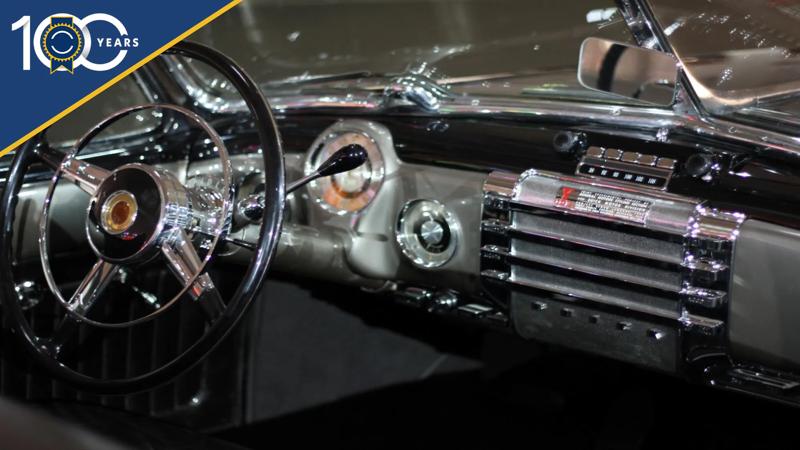
    The 1940s brought a bit more fun to steering wheel design, with color-matched spokes, chrome rings, and fancier grips becoming common in American cars. While they looked incredible, those innovations didn’t add functionality, and they negatively affected crash safety.

    The decorative trend continued into the 1950s, though automakers’ logos became much more elaborate during the decade. Cars like the 1953 Chevrolet Corvette featured colorful enamel badges in the center of the steering wheel.

    Steering wheel designs leaned into a futuristic look as the industry transitioned into the 1960s, as the Space Race hit full steam. Automakers still relied on chrome accents and pops of color, but the designs became wilder, with more intricate shapes and unique fonts in the logos. Some steering wheels, such as the Ford Mustang’s, took on a fighter jet look, with striking holes in the spokes and bold metal designs. 

    100 Years of Automotive Steering Wheels100 Years of Automotive Steering Wheels
    Chevrolet Corvette Steering Wheel – Courtesy of General Motors

    1970s and 1980s

    The 1970s were the decade of drab car colors, and steering wheels weren’t much more exciting. European brands such as Mercedes-Benz had steering wheels that were all business, with blocky shapes and plain, black plastics. The American automakers relied on geometric designs, with even the upscale brands and sports cars employing relatively boring steering wheels. 

    Technology was a big deal in the 1980s, and every automaker wanted to show how far it could go. The steering wheels in some production cars looked like they had been ripped straight out of a concept car gallery, and concept cars took things to an entirely new level. Some cars, such as the Subaru XT, offered funky asymmetrical steering wheels, while others, like the Pontiac Grand Prix, packed in as many buttons as could fit into the center of the wheel. 

    1990s and 2000s

    Automakers returned to more muted designs in the 1990s, but the big story in that decade was the increasing availability of airbags. While front airbags became mandatory in late 1998, many companies began equipping them as standard or available features much earlier. 

    100 Years of Automotive Steering Wheels100 Years of Automotive Steering Wheels
    Nissan 240SX Steering Wheel – Courtesy of Nissan

    Things didn’t change much in the early 2000s, though steering wheel control buttons for audio systems, cruise control, and other functions became more common. Some, especially sportier models, employed more ergonomic shapes, with indentations for the driver’s thumbs and fingers to assist with grip.

    2010s Through Today

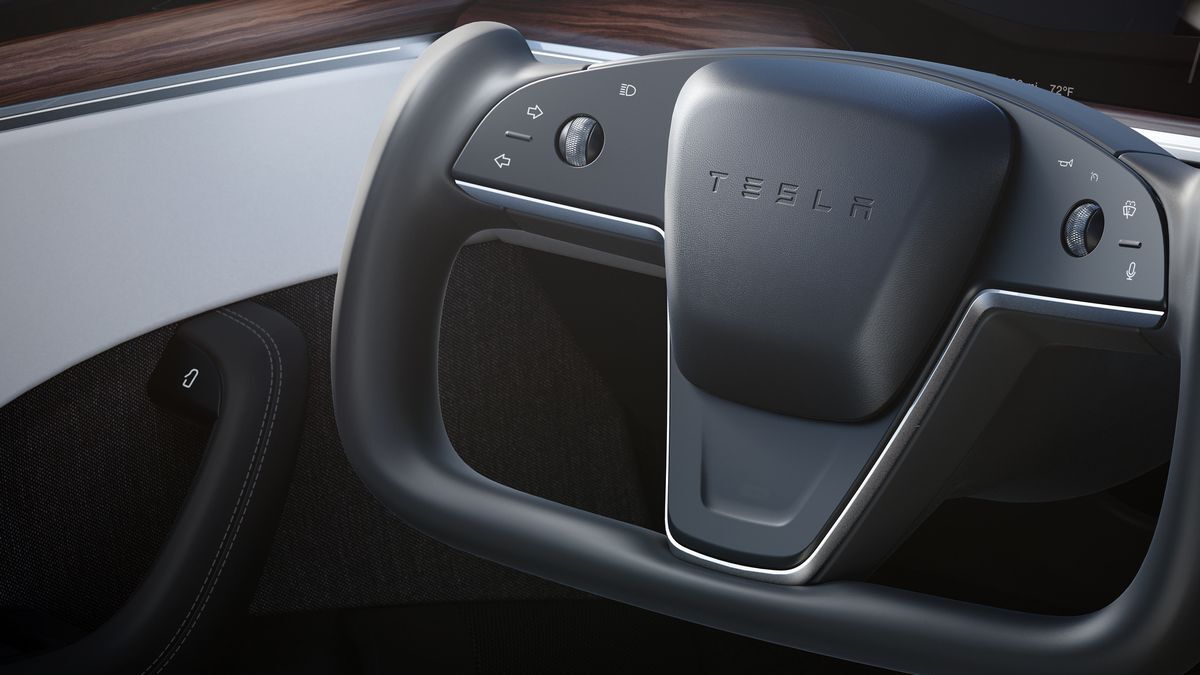
    With the rise of touchscreens in the 2010s, some automakers brought touch-sensitive controls to steering wheels later in the decade. That trend continued into the 2020s, though backlash from owners and critics has pushed some companies to rethink that approach. Yoke-style steering wheels have also started popping up, with Tesla, Lexus, and other brands offering the unique, two-handed shape.

    100 Years of Automotive Steering Wheels100 Years of Automotive Steering Wheels
    Tesla Model S “Yoke” Steering Wheel – Courtesy of Tesla Motors

    Concept Car Steering Wheels

    Without the need to be practical, safe, or even usable, concept cars have always pushed the boundaries of design. Concept steering wheels take on wild shapes and often lack features their production-ready counterparts require, such as airbags, horn buttons, and turn signal stalks. Some look as if they were taken straight out of a video game, while others lean heavily into motorsport, with Formula 1-inspired controls and hand grips. Automakers use concept cars to test new design and technology elements, many of which don’t make it to production models, but yoke-style steering wheels discussed earlier are a great example of how forward-looking components can make their way into everyday vehicles.

    Source link

  • One Of The Coolest Retro EVs Gets A New Feature That Makes It Even Cooler

    One Of The Coolest Retro EVs Gets A New Feature That Makes It Even Cooler

    • The funky, retro-looking Renault 4 electric crossover is getting a new feature that harks back to the original.
    • The addition is part of a minor technical upgrade that comes just one year after the car went on sale in Europe.
    • New stuff includes a water-to-water heat exchanger that can significantly reduce charging times in freezing weather.

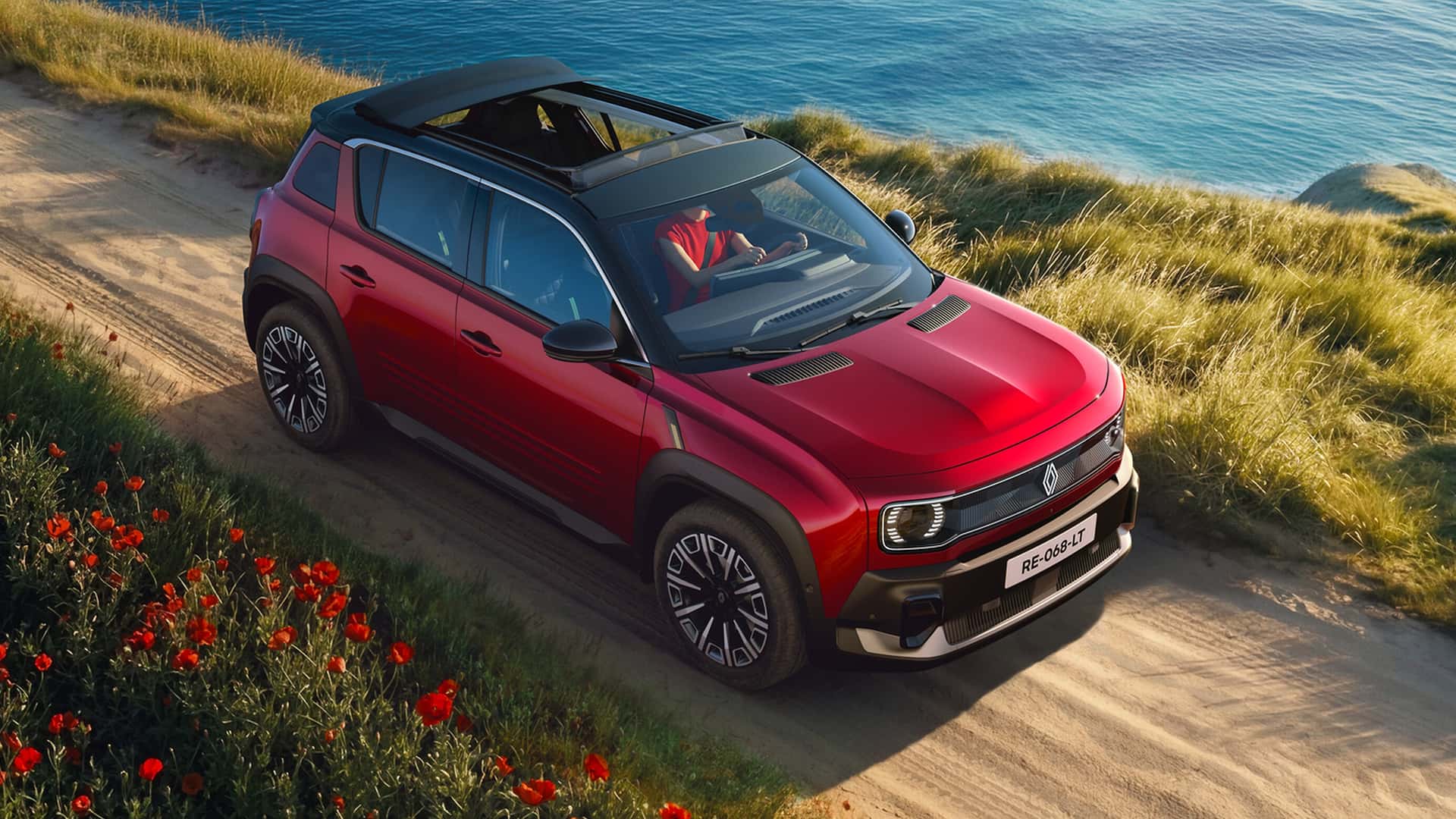
    The Renault 4 is one of the happiest EVs out there, with its unashamedly retro looks that hark back to the original do-it-all hatchback of the 1960s. And now, the French automaker is giving the Renault 4 EV a new feature that makes it even cooler–literally and figuratively.

    Just like its predecessor, the Renault 4 E-Tech Electric can now be specced with a retractable fabric roof that transforms the battery-powered hatchback into a cut-price convertible at the push of a button. Renault has even launched a special trim called Plein Sud, which means “due south,” that is obviously inspired by the historic Renault 4’s Plein Air variant that was offered in Europe in the late 1960s.

    That said, the Plein Air didn’t have doors, a roof, or a tailgate, while the electric Plein Sud has to settle for a more toned-down approach. (Blame those pesky safety regulations, I guess.) If buying a special edition car just for a soft top isn’t your cup of tea, then you should know that Renault also offers the retractable roof on the regular versions of the R4 EV, too, except for the entry-level trim.

    The roof’s opening is 36 inches (92 centimeters) long and 31 in (80 cm) wide, and it increases the headroom for the driver and front passenger. However, because the mechanism itself takes up extra space compared to the fixed-roof car, rear passengers get roughly 1.5 in (4 cm) less headroom.

    Renault says the roof can be partially or completely opened, and that the load-bearing parts are made of plastic to save weight.


    Besides the new soft top, every new Renault 4 sold in Europe gets a revised driver monitoring system that detects fatigue and distraction, and will brake to a standstill if needed. A new water-to-water heat exchanger is also part of the pack, which is said to significantly reduce charging times at freezing temperatures.

    Source link

  • Dirty ‘Chameleon Carriers’ Ignore Truck Safety Rules by Sneakily Switching Names

    Dirty ‘Chameleon Carriers’ Ignore Truck Safety Rules by Sneakily Switching Names

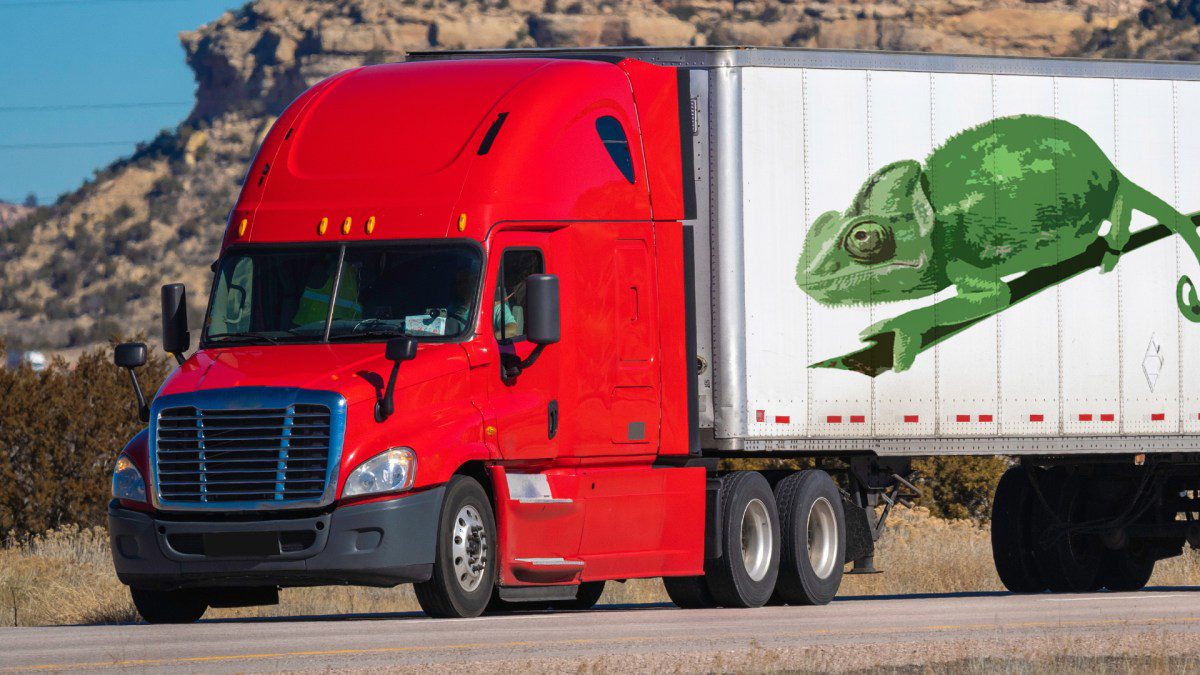
    Crooks find all kinds of ways to do crimes in the trucking industry. Hardly a week goes by without a headline about smugglers carrying illegal substances across state lines, or entire schemes issuing fake CDLs to unqualified drivers. And when it comes to safety, some of the offenses can only be described as gross negligence. That doesn’t stop some operators, however, as 60 Minutes just ran an exposé on so-called “chameleon carriers” that bypass safety enforcement on drive time regulations and janky equipment by simply changing their company name.

    All of the program’s findings came after an eight-month investigation where reporters spoke with truckers, both domestic and abroad. The 60 Minutes segment largely focused on Super Ego Holding, which you may have seen on semi-trailers before. It’s a network of commercial trucking and leasing companies that operate in the United States, though it also has Serbian ties.

    “Chameleon carriers are basically a network of companies, and they constantly reincarnate,” explained Rob Carpenter, a trucking safety consultant, to 60 Minutes. “The idea is, ‘We are revenue-focused, we are going to start this trucking company, we are going to run it into the ground to make as much money as we possibly can.’”

    Super Ego Holding
    60 Minutes via YouTube

    Carpenter continued, “And when you move on to the next, you’re really doing that to try to abandon the history that you’ve created with that other trucking company because you’ve run so poorly in the past year, right? So then you just adopt a new identity and you move on to a new carrier.”

    By changing all of a truck’s identifying information, like the freight operator name and Department of Transportation number, they effectively create an all-new rig—at least, as far as regulatory agencies can see. Carpenter said this is because you can “start [a new company] from anywhere in the world. $1,000, pay online, say you are who you say you are, and you’ve got a trucking company.”

    Trucking fleets shed old identities in scheme to evade federal enforcement | 60 Minutes thumbnail

    Trucking fleets shed old identities in scheme to evade federal enforcement | 60 Minutes

    60 Minutes spoke to seven drivers who had contracted with Super Ego Holding. One of them, named Daniel Sanchez, described the conditions as almost dystopian. “They’d have me go out and do anything to get the money, no matter what the risk,” Sanchez said. “They don’t care if I got a violation or went to jail, whatever, for any reason. The next day, they’d have another driver in that truck and keep on goin’.”

    Sanchez recounted a time when he claims Super Ego had him scrub his truck’s identifying markers. “They’d email you, or they’d send you some kind of documentation with a picture of the new name and DOT number,” he said. “They’d have me print it out, buy some duct tape. Come out, put it on the truck.”

    It didn’t stop there, either. Sanchez said that when he reached the established 11-hour drive time limit, managers in Serbia would often illegally reset the federally mandated clocks so he could continue toward the delivery site. That poses an obvious danger to the truck drivers involved and also to everyone they share the road with.

    Overall, the 60 Minutes feature painted a damning picture of Super Ego Holding, and the company has since called the report “misleading” in a statement to the Serbian Times. For its part, Super Ego claims it is “an equipment leasing company, not a carrier company,” arguing that all claims about its involvement in altered driver clocks, DOT numbers, and pay are “false.”

    Got a tip or question for the author? Contact them directly: caleb@thedrive.com

    From running point on new car launch coverage to editing long-form features and reviews, Caleb does some of everything at The Drive. And he really, really loves trucks.


    Source link

  • BYD pledges to support essential workers

    BYD pledges to support essential workers

    BYD says it will send extra new energy vehicles (NEVs) to Australia and prioritise delivery to essential workers in a bid to help ease cost-of-living pressures for those who serve their communities.


    The initiative will support those in need of reliable and cost-effective transportation – including doctors, nurses and other healthcare professionals, teachers, social workers, and emergency services workers – during what BYD has described as a time of “unprecedented demand for electric and ultra-efficient hybrid vehicles”.


    The announcement, made by BYD Asia Pacific general manager Liu Xueliang at last weekend’s Melbourne Motor Show comes as BYD commits to supplying an additional 30,000 new vehicles to Australian customers throughout May and June, helping to meet demand and minimise wait times.


    Mr Xeuliang said that BYD’s ability to rapidly scale production through its vertically integrated supply chain placed it in a unique position to respond quickly in times of heightened demand.


    BYD Australia chief operating officer Stephen Collins echoed the sentiment of Mr Xeuliang, saying the decision to prioritise vehicle sales to essential workers is the right thing to do.


    “Ultimately, we want to minimise wait times for all customers, because everyone is feeling the pinch,” he said.


    “The 30,000 vehicles arriving by June will go a long way to helping.


    “We will work closely with our national dealer network to provide priority access – not exclusivity – for those delivering critical services to the community, while maintaining availability for the broader public.”


    Mr Collins said the process will be supervised by BYD Australia, with eligibility verified through standard employment documentation.

    Source link