Author: admin

  • Jaguar Canceled Four New Cars Before Deciding to Go All-Electric

    Jaguar Canceled Four New Cars Before Deciding to Go All-Electric

    British luxury brand Jaguar built its final combustion car in December last year, but it didn’t necessarily have to be that way. In fact, the company had four new, next-generation cars in the pipeline before it decided to cancel all of them in favor of exclusively producing six-figure EVs. The revelation came through iconic former Jag designer Ian Callum, who worked for the automaker from 1999 to 2019 and was credited with evolving the brand from a company that made BMW and Mercedes alternatives that looked old-school on the day they were released to fresh but distinctive 3 Series and E-Class alternatives that looked modern without losing their sense of tradition.

    Four Next-Gen Jags Lost As “What-Ifs” We’ll Likely Never See

    Michael Harley/Autoblog

    Jaguar’s last new model was launched in 2018, a year before Callum left, and he wasn’t idle in that year. Speaking on the Road to Success podcast, Callum said that he and his successor, Julian Thomson (who left in 2021, for the record), “created quite a lot of new Jaguars before I left” that were “all taken away.” What were those, you ask? You can probably guess: replacements for the XF sedan (3 Series fighter), the XJ (S-Class alternative), and the brand’s bestseller, the F-Pace SUV. Proof that Jaguar was fairly far along with these can still be found on X (formerly Twitter), where a split headlight design that looked very cat-like was being prepared for the XJ. It’s been said that the stillborn electric XJ’s platform found its way to the controversial Type 00, and that trying to update this for Jaguar’s new goals is part of why it’s been so heavily delayed.

    For those of you keeping count, we’ve only mentioned three Jags that faced the chopping block. The fourth Jaguar model that was canned was a new F-Type sports car, which was adored by all who drove it, despite its tiny trunk. The cars weren’t just being considered by being developed, explained the designer, saying they “were all in the cards, they were all being done.” Callum also indicated that he knows why they were dropped in favor of the EV-only plan, but didn’t elaborate. “That was all stopped. Just like that,” Callum said.

    Jaguar’s Electric Future Is Set in Stone, Callum Likes the Look (Kinda)

    Jaguar via Top Gear

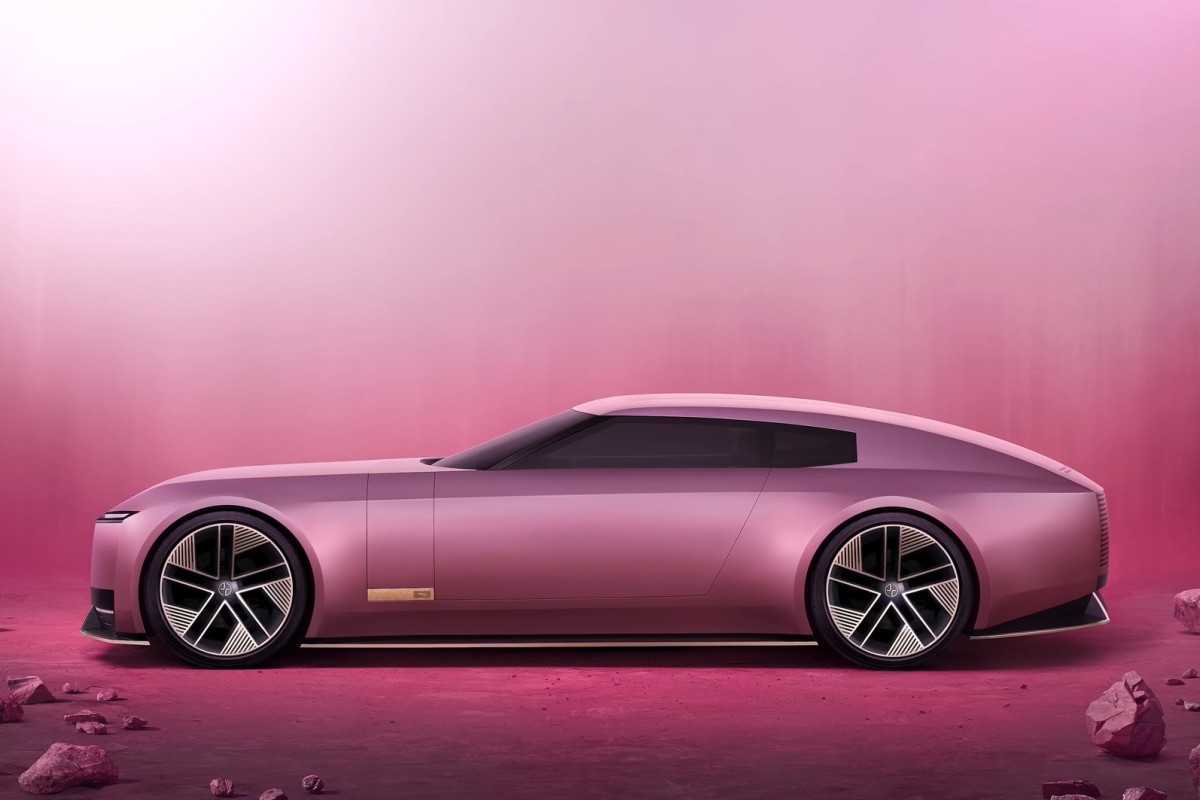
    When asked what he thinks about the Type 00, which has only been revealed in concept form (camouflaged prototypes have also been spotted testing), Callum said, “It’s a handsome car, it’s bold, it’s brave, and it’s got a lot of good design attributes about it. But it’s not beautiful, and Jaguars need to be beautiful.” The legendary designer added that it’s “just too retro,” but regardless of what he or anyone else thinks, Jaguar is plowing ahead, not just with the unusual look, but also with an all-electric powertrain. Rumors of a range-extender powertrain have been shut down by the brand, and despite Jaguar dealers questioning the strategy, there’s no adjustment on the horizon.

    There’s also uncertainty in today’s Jaguar design department. Chief Creative Officer Gerry McGovern was supposedly fired from the role last year, and when asked about this rumor, Jaguar responded that his employment had not been terminated, yet did not confirm that he still held the same position. Given that the Type 00 has not been well received by most and that EVs are not as popular as expected, one can’t help but wonder if those four stillborn cars should be on sale right now.


    Source link

  • Does Eco Mode Really Save Fuel?

    Does Eco Mode Really Save Fuel?

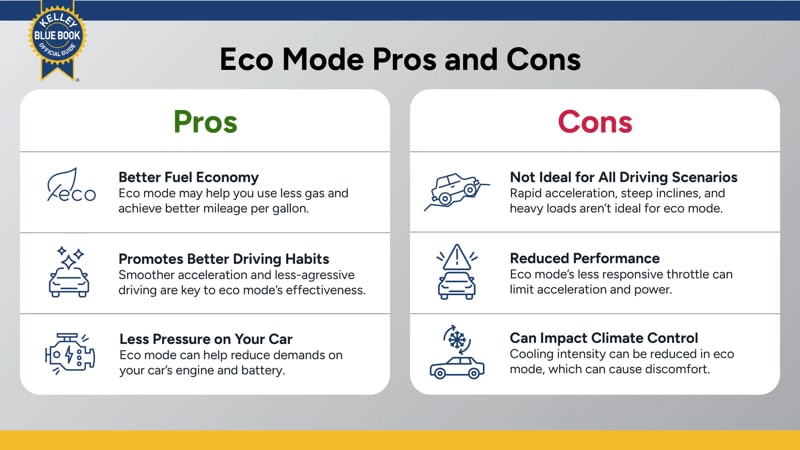
    Ever wondered if that little green “eco” light on your dash is actually translating to dollars saved? The short answer is yes, eco mode does save some fuel. The longer answer is that your eco mode fuel savings will vary based on factors like where you’re driving, how you’re driving, and what kind of car you’re driving.

    What Is Eco Mode?

    Depending on who you ask, the “eco” in eco mode stands for either “economy” or “economical.” Whichever term you (or your car’s manufacturer) prefer, the gist is savings. Eco mode is generally activated by the driver via a button or switch, though some cars will automatically show that you’re in eco mode when you’re driving efficiently. When it’s on, the car’s computer adjusts settings and controls to improve fuel economy.

    Exactly which settings get adjusted depends on the specific vehicle and can include transmission shift timing, throttle response, air conditioning, and lights. You may notice that acceleration is more gradual, earlier shifting to high gears to keep engine speed lower, or reduced cooling intensity from your air conditioning.

    How Much Fuel Does Eco Mode Save?

    Some manufacturers boast eco mode savings up to 12% for some vehicles under controlled conditions. Recent testing by Consumer Reports estimated the true fuel savings from eco mode more conservatively, coming in at about 2 to 3 mpg. It doesn’t seem like much, but when gas prices rise, every bit of savings can help keep your money in your pocket rather than in the gas tank.

    Factors that can impact the efficacy of eco mode include:

    • Vehicle type: If your car has a smaller engine, eco mode can make your drive feel more sluggish. If you’re running casual errands close to home, you might not even notice it, but on longer drives you likely will. More throttle input to accelerate to highway speeds can actually waste fuel in these scenarios.
    • Road and traffic conditions: Eco mode works best on highways at steady speeds. It’s also good for city driving, helping reduce pressure on your engine and transmission from frequent starts and stops. If you’re driving through steep or hilly terrain, hauling a packed car, or just need a little extra pep to merge onto a highway or pass another car, it’s not going to be efficient, and you are better off using sport mode (if your car has it).
    • Driving habits: If you have a lead foot, frequently ride your brakes, or drive aggressively, you may cancel eco mode’s benefits. Eco mode shines with gentler driving techniques like slow, steady acceleration.
    Does Eco Mode Really Save Fuel?Does Eco Mode Really Save Fuel?

    Final Thoughts About Eco Mode

    If your car has eco mode, using it is a good way to improve your fuel economy — a bit. If you’re heading out on a longer trip with tougher or more unpredictable road conditions, eco mode might not ultimately benefit you all that much, but for regular, daily driving, it’s worthwhile to use. You likely won’t notice any major impact to your car’s performance, and you can feel good about making the ecological, economical choice.

    Source link

  • Genesis GV60 Magma is the new speed king for the EV era

    Genesis GV60 Magma is the new speed king for the EV era

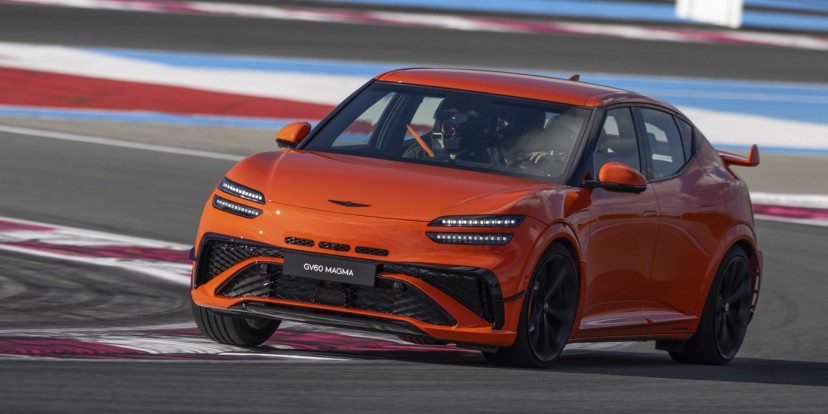
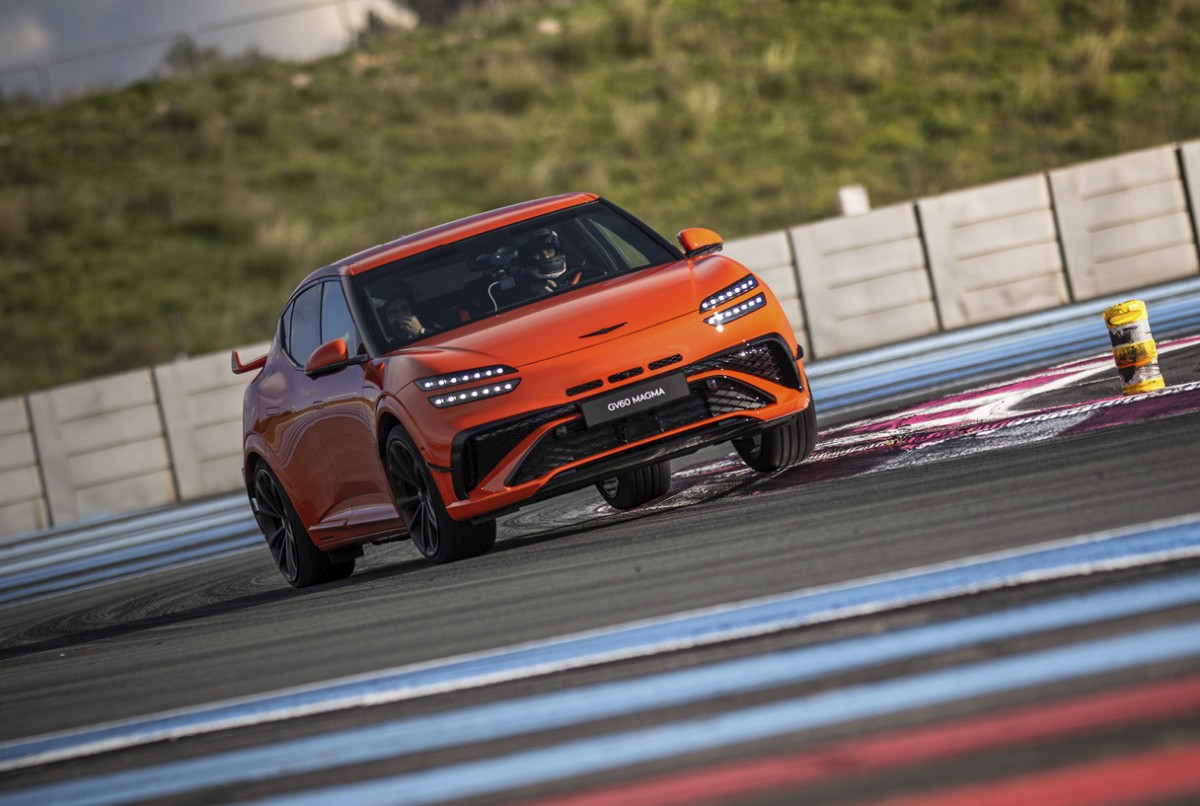
    Genesis is no longer making only quiet luxury cars – the brand released a detailed look into its latest creation, the Genesis GV60 Magma. This car is a big change for the company. It moves away from just being comfortable and steps into the world of high-performance electric cars. By mixing its classic elegant look with serious speed, Genesis wants to show that EVs can be as exciting as gas-powered sports cars.

    Genesis GV60 Magma performance figures - source: Genesis
    Genesis GV60 Magma performance figures – source: Genesis

    The people in charge at Hyundai Motor Group, which owns Genesis, are very proud of this project. Manfred Harrer, who leads their research and development, explained that his team worked hard to build something special. He says the car is not only fast in a straight line – it is designed to make the driver feel a real emotional connection. The goal was to create a machine that builds confidence, even when it is moving at very high speeds.

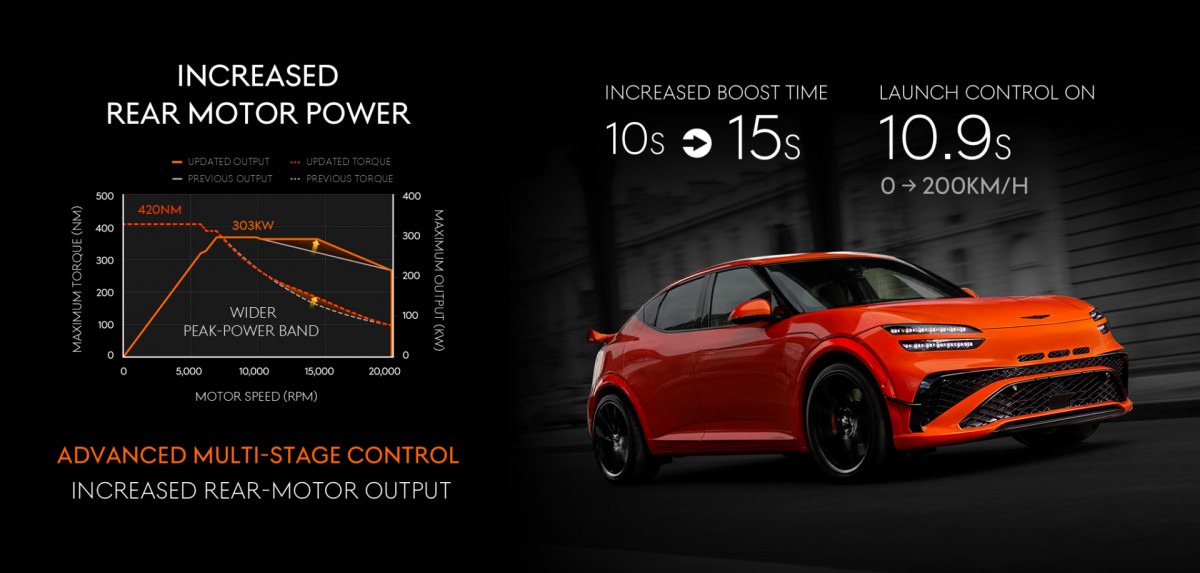
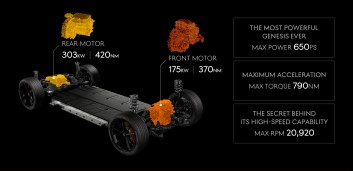
    To make the Genesis GV60 Magma perform this way, the engineers had to rebuild the powertrain from the ground up. They upgraded the electric motors and changed many internal parts. These changes allow the car to reach 62 mph in only 3.4 seconds. If you keep your foot down, it will hit 124 mph in 10.9 seconds. These numbers make it the fastest vehicle Genesis has ever put on the road.

    Genesis GV60 Magma performance figures - source: Genesis
    Genesis GV60 Magma performance figures - source: Genesis

    Genesis GV60 Magma performance figures – source: Genesis

    The power coming from the front and rear motors is quite impressive for any modern car. The motors can spin up to 20,920 rpm, delivering 583 lb-ft of torque and a peak output of 641 horsepower. The Genesis GV60 Magma can reach a top speed of 164 mph. For a brand known for smooth rides and soft leather, these racing-style specs are quite a departure.

    Genesis also wrote new software to manage all that power. Most EVs start to lose their punch once they are already moving fast. To fix this, the GV60 Magma uses a special two-stage motor control system. This helps the car keep pulling hard even when it is already at high speeds. There is also a “Boost Mode” button that gives the driver 15 seconds of maximum power for quick passing or track driving.

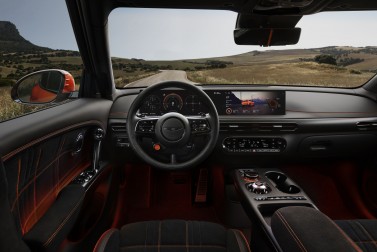
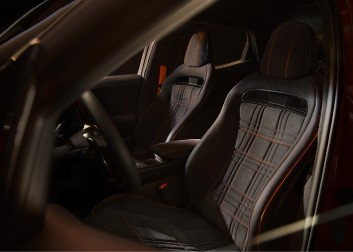
    Genesis GV60 Magma interior - source: Genesis
    Genesis GV60 Magma interior - source: Genesis

    Genesis GV60 Magma interior – source: Genesis

    Driving a car with this much power can be tricky, so Genesis added five different drive modes. Each of them changes how the GV60 Magma feels. Range Mode is all about saving energy, and Comfort Mode is for the daily commute, balancing power with a smooth ride. Sport Mode makes the car feel a bit more responsive and fun for back roads. Then there are two special modes: Sprint and GT. Sprint is for the race track, making the car very sensitive to every input. GT Mode is for long highway trips where you want a mix of luxury and speed.

    One interesting detail is the accelerator pedal. Usually, pedals in electric cars feel very light, but the engineers at Genesis decided to make the pedal harder to push. Taejun Kang, a senior engineer on the test team, said they did this to give the driver more control. When you are driving slowly through town, the pedal is easy to move. But when you want to go fast, it pushes back more. This helps prevent the car from jerking forward and makes the driver feel more connected to the road.

    Genesis GV60 Magma - source: Genesis
    Genesis GV60 Magma – source: Genesis

    This focus on the “feel” is what Genesis hopes will set it apart from other EVs. Genesis is not chasing top speed records; it wants to make a high-performance car that is still easy to live with every day. The GV60 Magma is quite a different beast from its twin Hyundai Ioniq 5 N – it shows that the company is ready to compete with the fastest luxury brands in the world.

    Source

    Source link

  • Adding a 119mm Turbo to a Five-Rotor Supercar Is Stupid in a Good Way

    Adding a 119mm Turbo to a Five-Rotor Supercar Is Stupid in a Good Way

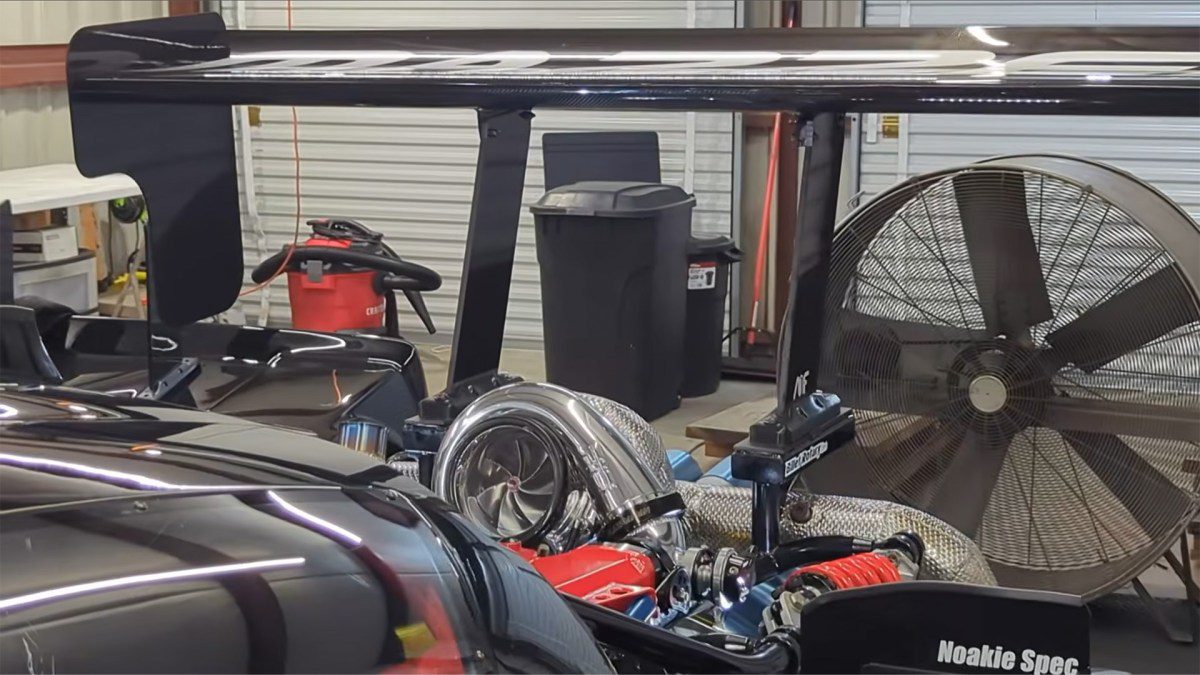
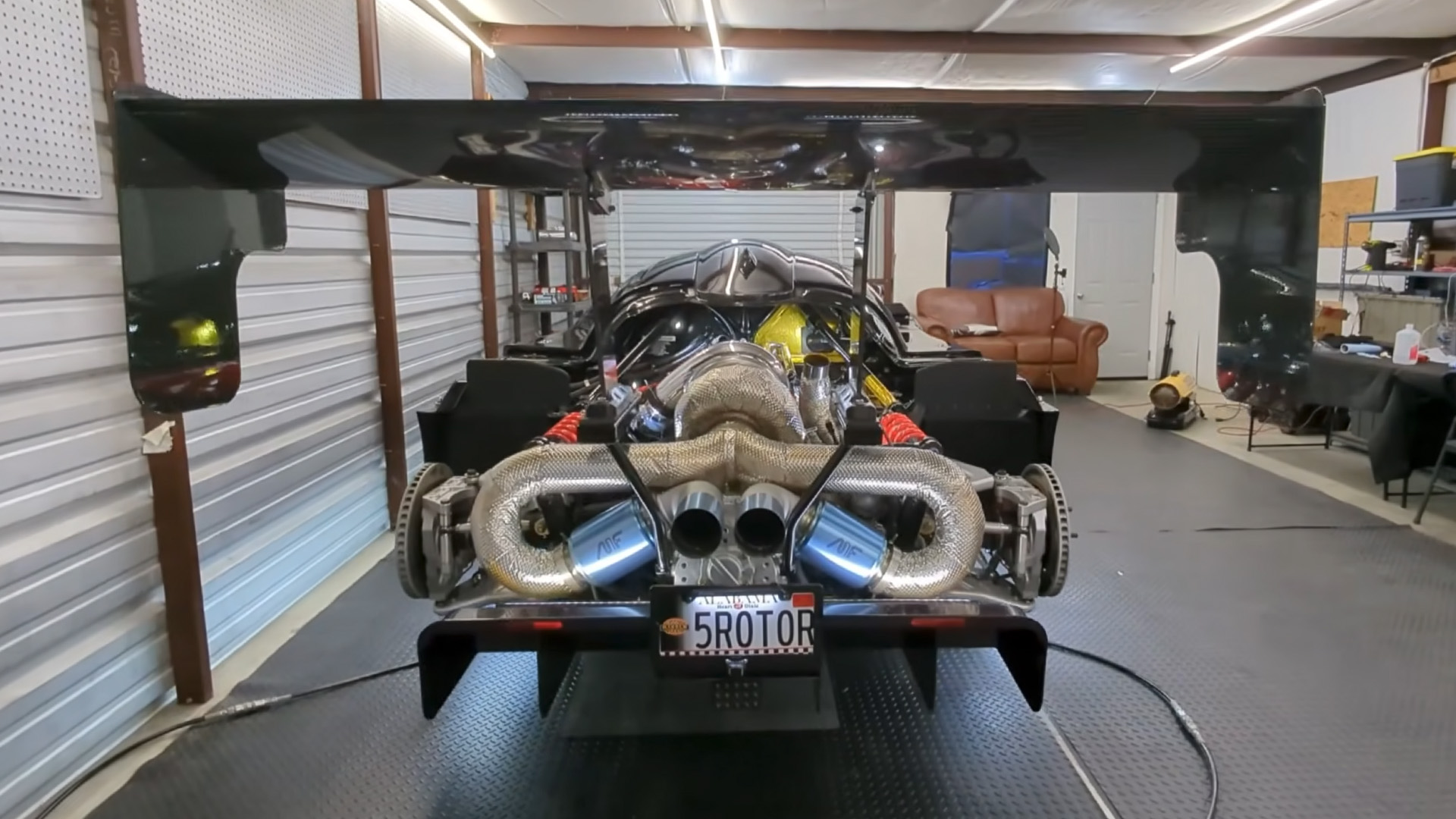
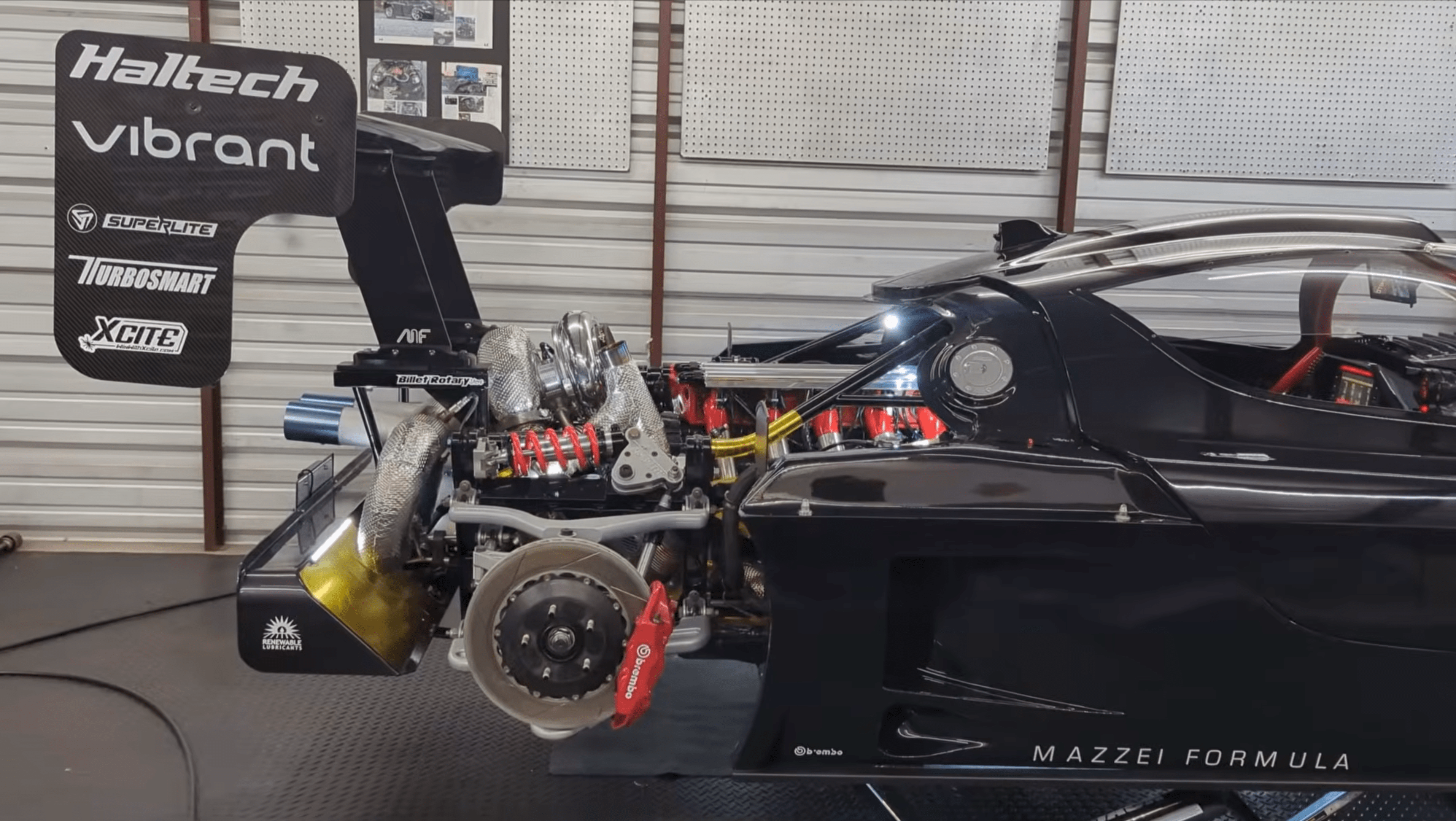
    Do you know about the Mazzei Formula Five yet? I’ve written about the mad-lad creation a handful of times for this fine website. In essence, it’s a homemade five-rotor supercar with a masterfully fabricated chassis wrapped in a Superlite SL-C kit car body. Last time we checked in, the single-seater had just laid down 1,120 wheel horsepower on the dyno. But that was with a 106-millimeter turbo, which has since been ditched for something even mightier: A 119mm whirler that’s sure to scream even louder.

    David Mazzei, the man behind all this, is entering new territory as he sent off his Garrett G57 turbo to Forced Induction Systems for an overhaul. They modified the unit with their own cast housing and what Mazzei called a “7+7 splitter blade.” Because of these upgrades, they’re now working with about 30% more surface area than before, which means the turbo should move roughly 30% more cubic feet of air per minute at the same boost levels.

    While this setup could certainly support more power than before, that isn’t exactly the point. Mazzei’s hope is to lower exhaust gas temperatures while increasing volumetric efficiency beyond 8,000 rpm; with the 106mm turbo, the power curve tapered off significantly past that point. It appears that the compressor wheel on the old power-adder was spinning so fast that it couldn’t move any meaningful amount of extra air on the high end.

    For good measure, he also installed an exhaust manifold back pressure sensor, another sensor just before the throttle body to see if it’s backing up the turbo’s compressor, and a boost gauge after the intercooler core to see how much pressure drops across the unit.

    Mazzei Formula Five
    Mazzei Formula Five
    Just look at it. Mazzei Formula via YouTube

    Mazzei actually admitted more than once in his latest video that the car doesn’t need more speed for him to enjoy it. I’m not sure you can call him “sensible”—I mean, he built a five-rotor supercar from scratch. But still. He explained that he’ll continue pushing this build to learn what’s possible, as he’s picking up quite a few tuning customers along the way.

    That being said, Mazzei is still making some mods just for fun. Daddy Turbos built a T-51R mod for the upsized super-spooler, which recreates the insane whistle from one of famed Japanese tuner HKS’s discontinued models. You can pretty much bet it’s the world’s largest of its kind.

    I’m pretty captivated by this build as Mazzei keeps finding new ways to make it more extreme. He does it in such a way, though, that it’s not about max YouTube views. Instead, he’s genuinely using the car as a testbed to learn and make new discoveries for rotary platforms. One thing’s for sure—he knows his way around a peripheral port.

    This feels ridiculous! 119mm turbo upgrade for the 5 Rotor


    Got a tip or question for the author? Contact them directly: caleb@thedrive.com

    From running point on new car launch coverage to editing long-form features and reviews, Caleb does some of everything at The Drive. And he really, really loves trucks.


    Source link

  • Grander Than Grand? Rumors Suggest New Corvette V-8, Two 2027 C8 Grand Sport Models

    Grander Than Grand? Rumors Suggest New Corvette V-8, Two 2027 C8 Grand Sport Models

    A Grand Sport was always going to be part of the C8 Chevrolet Corvette product mix, but new rumors add intrigue to a car we thought would just be an eventuality. Rather than only one C8 Grand Sport, there might be two versions.

    At a recent conference for General Motors employees, dealers, and suppliers, Chevrolet likely previewed what’s to come in its 2027 lineup. Now, a post from a Corvette-focused Instagram account claims to have obtained leaks about the C8 Grand Sport from that conference.

    ADVERTISEMENT – CONTINUE READING BELOW

    Hints of the New Grand Sport

    As Corvette fans know, the Grand Sport has historically been an in-between model, using an engine from the base Stingray but chassis bits from the Z06. This approach should continue when the Grand Sport is revealed soon as part of another important update for the C8 line.

    Following the 2026 refresh that debuted a remodeled interior and hypercar-chasing ZR1X, for 2027 a new cross-plane 6.7-liter LS6 V-8 is expected to become standard for the Stingray and Grand Sport. The Z06 will keep the flat-plane 5.5-liter LT6, while the twin-turbocharged LT7 version remains in the ZR1 and ZR1X.

    ADVERTISEMENT – CONTINUE READING BELOW

    The LS6 will make improvements on power over the current LT2 6.2-liter V-8. Expect the bigger engine to punch out between 530 and 550 hp, up from the 495 maximum the LT2 produces. This alone will make the regular Stingray a more impressive performer, while the sharper Grand Sport should provide Z06-level precision if not an 8,600-rpm redline.

    Pieces from the Z06 borrowed by the Grand Sport could include stiffer suspension, lighter wheels with stickier tires, aerodynamic aids, and enhanced cooling.

    ADVERTISEMENT – CONTINUE READING BELOW

    Another Hybrid Corvette?

    If the C8 Grand Sport arrives with this equipment, it’d be plenty exciting even if is somewhat expected and follows a familiar formula. The rumors about a potential second Grand Sport variant mix things up, but at this point also aren’t unpredictable for how Chevrolet has recently enhanced the Corvette’s performance: There could be a hybrid-powered Grand Sport X.

    Like how the ZR1X builds on the ZR1, the Grand Sport X would be equipped with a front-axle electric motor. That would give it all-wheel-drive traction, and pump the car’s total output to 720 hp, according to the Instagram post. That amount would make sense given the LS6’s expected base power, since the electric motor Chevrolet has used in previous applications is known to make up to 180 hp.


    Source link

  • Skoda Octavia MHEV optimised for fleets

    Skoda Octavia MHEV optimised for fleets

    THE Skoda Octavia mild hybrid sedan has been especially optimised as a fleet focused model for the 2026 model year according to Australian executives for the brand.


    Released earlier this month, the 48-volt mild-hybrid version of Skoda’s mid-size sedan and wagon is powered by a turbocharged 1.5-litre four-cylinder petrol engine, paired with an electric motor, producing 110kW and 250Nm.


    The mild-hybrid Octavia replaces the turbocharged 1.4-litre four-cylinder petrol 110TSI Select and Sportline variants.


    Instead, the Select mild hybrid now opens the Octavia range at $41,990 before on-road costs for the sedan and $43,490 + ORCs for the wagon.


    The Signature Pack – available as a $6500 option for the Select model – has effectively replaced the Sportline variant.


    Meanwhile, the petrol-only RS variant still sits atop the Octavia sedan and wagon range.


    The mild-hybrid model improves fuel economy over the non-hybrid Octavia by one litre per 100km, with a claimed fuel economy of 5.1L/100km in the sedan and 5.2L/100km in the wagon. 


    “We wanted to make (the Octavia) a more fleet focused car, so we actually went to some of our fleet clients and asked what do you want in a car like this?” said Skoda Australia product manager Glen Reid.


    According to Skoda’s Australian Brand Director Lucie Kuhn, the environmental friendliness of the mild hybrid Octavia – as well as the recently introduced plug-in hybrid and incoming mild hybrid versions of the Kodiaq – is an appealing proposition for fleet buyers.


    “Octavia is our number one fleet car. And we can see that it very positively resonates within this segment, and especially with the mild hybrid,” Ms Kuhn told GoAuto.


    “It’s also the kind of hybrid, where the company starts thinking about the environment and some CO2 policies within their fleets.


    “So here is a space where actually our Octavia or potentially also Kodiaq can fit into these two areas either with the mild hybrids or even with the PHEVs.”


    Several changes were made to the Octavia’s list of standard equipment for 2026, prompted by fleet buyer’s interactions with Skoda’s dealer network according to the brand’s Australian Head of Marketing & Product Kieran Merrigan.


    “The feedback comes through our dealer network, essentially, they’re the ones most of the time speaking to the end users so the changes we’ve made for model year ’26 was we put a smaller alloy on the car, so we went from 18 (inch wheels) down to 17 as the standard,” he said.


    “We added in the auto tailgate. They said some of the fleets in terms of lifting and pulling down a boot from an OH&S perspective was super important. And the third thing was the keyless entry.”


    “It’s always (a case of) trying to find a balance of what equipment is required and at what costs. Where’s the right price point?


    “But in terms of having those conversations with our dealers who are more engaged with the fleet customers, they felt that price point and that equipment was the sweet spot for the majority of fleet customers.”


    While moves have been made to optimise the Octavia for fleet buyers, alongside its Superb stablemate, it also appeals to retail buyers looking to buck the SUV trend with a sedan or wagon purchase.


    “The segment overall (for) sedan and wagons (is) shrinking. So the market goes year on year more into SUVs,” added Mr Kuhn.


    “(But you) can observe still a relatively high share of sedan or wagon owners. This we feel is an opportunity in the retail space to address these customers and offer them these two products of the two segments, speaking about Octavia and the Superb.”


    As of the end of February, 97 Skoda Octavia examples have been sold in Australia during 2026, down from 130 sold by the same time last year.


    Last year, Skoda sold 731 Octavias in Australia, compared to 846 in 2024, marking a sales decrease of 13.6 per cent.

    Source link

  • Genesis Maintenance Cost: What To Expect From Hyundai’s Luxury Brand

    Genesis Maintenance Cost: What To Expect From Hyundai’s Luxury Brand

    When Genesis first landed on American shores 2008 – eight years before going at it as a standalone brand – it was the start of the ultimate underdog story. Born from the Hyundai stable but carrying the ambition of a century-old European titan, the brand had a simple ethos: give the buying public the leather, wood, and horsepower found in a German sedan but with the reliability and value of a Korean one. With that, the aim was also to ensure that Genesis maintenance cost figures remained lower than primary rivals.

    In the years since, especially post-2016, Genesis has succeeded in most of that mission. The cabin of any modern Genesis is a masterpiece of design, and the exterior turns more heads than many cars twice their price.

    Genesis

    Founded

    2015

    Founder

    Hyundai

    Headquarters

    Seoul, South Korea

    Owned By

    Hyundai Motor Group

    Current CEO

    Jose Munoz

    However, as the brand has matured over the years, the conversation has shifted from “how nice is the interior?” to “how much is this going to cost me in five years?” and “is Genesis expensive to maintain?” Luxury car buyers in the US want the prestige and the “white glove” service, but you don’t want to be the person at the dinner party complaining about a $4,000 sensor failure. As Genesis continues its valiant effort of pulling buyers away from BMW, Mercedes-Benz, and Lexus, the reality of its maintenance costs, repair frequency, and aftersales support has become the true litmus test of its luxury status.

    This article explores the common problems, maintenance costs, and price of repairs as reported by owners and local authorities. Information is correct at the time of writing and your mileage may vary.

    Genesis Maintenance Expectations

    2023-2025 Genesis G90 Sedan (9)
    2023-2025 Genesis G90 Sedan
    Genesis

    One of the strongest selling points for a new Genesis is the Genesis Service Valet. For the first three years or 36,000 miles, the brand effectively removes the cost of maintenance entirely – the brand includes oil changes, air filter changes, and even a valet service that picks up your car from your home or office and leaves a loaner vehicle in its place. For the first owner, the Genesis maintenance plan costs almost nothing. However, once that honeymoon period ends, the bills come more in line with the vehicle’s direct rivals, though with a slight “Hyundai-adjacent” discount.

    Entry-Level: The Genesis G70 Maintenance Cost

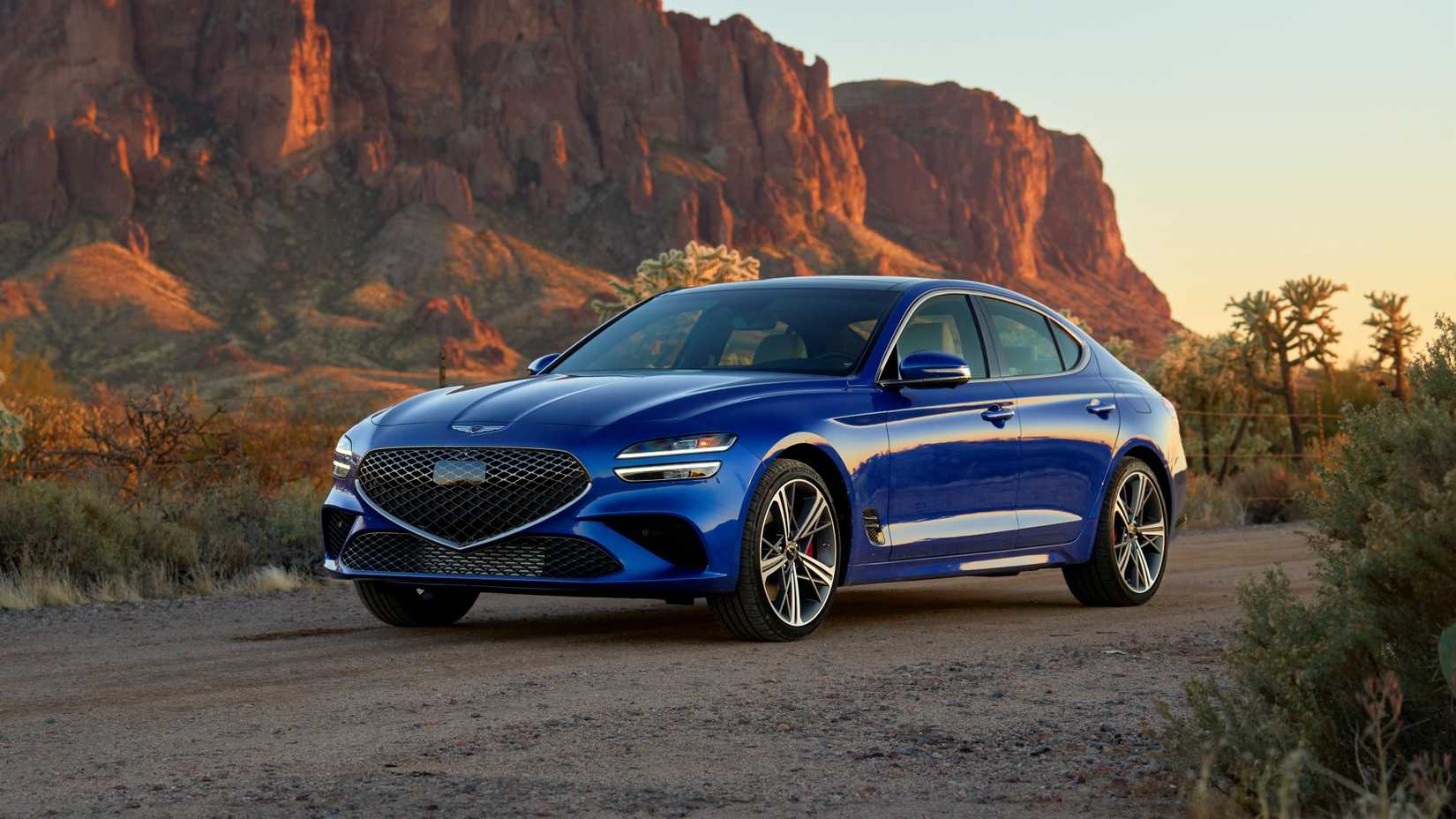
    2025-2026 Genesis G70
    2025-2026 Genesis G70 front 3/4 view in blue while parked
    Genesis

    2026 Genesis G70

    MSRP

    From $43,450

    Base Engine

    2.5L, Turbo, 4-Cyl

    Horsepower | Torque

    300 hp | 311 lb-ft

    The G70 competes with the BMW 3 Series and Mercedes-Benz C-Class. After the complimentary period, RepairPal pegs a standard oil change typically run between $175 and $211. As far as maintenance costs over the first five years are concerned, CarEdge notes the average cost of maintenance/repair at $2,352, which is $2,010 less than the industry average for luxury sedans. The chance of a major repair in the car’s first five years is 20%, which is 9% better than similar vehicles in this segment.

    The Flagship: The Genesis G90 Maintenance Cost

    2023-2025 Genesis G90 Sedan (10)
    2023-2025 Genesis G90 Sedan
    Genesis

    2026 Genesis G90

    MSRP

    From $92,700

    Base Engine

    3.5L V6, Turbo

    Horsepower | Torque

    375 hp | 391 lb-ft

    Step up to the flagship G90, and the numbers climb. While still cheaper than a Mercedes S-Class, the G90 uses complex systems like electronically controlled suspension, which make it more complex than the entry-level G70. Replacing the Hybrid High Voltage Battery will set you back between $2,893 – $3,064, according to RepairPal, while replacing the Brake Master Cylinder Reservoir will cost between $414 and $555. The G90’s maintenance and repairs over the first 10 years will cost about $8,161, which is $1,529 less than the industry average. Over five years, this number drops to $2,822, which is an impressive $1,540 less than the industry average for luxury sedans.

    Genesis vs. American & European Benchmarks

    When compared to its primary competition, a Genesis isn’t as cheap to keep on the road as a Lexus, which remains the gold standard for low-cost luxury maintenance; a Lexus is still significantly more affordable than its European counterparts. RepairPal puts the annual maintenance cost of a Genesis at an average of $524. Here’s how Genesis compares to it’s biggest rivals:

    Genesis maintenance cost vs. BMW and Mercedes-Benz: European luxury cars often require specialized diagnostic tools and high-priced European-sourced parts. A BMW 3 Series’ cost of maintenance/repair in the car’s first five years, for instance, comes to $4,501, according to CarEdge. The chance of a major repair over this same period is a staggering 42%, which is 13% worse than similar vehicles in this segment. According to RepairPal, BMW and Mercedes-Benz’s average annual repair costs are $968 and $908, respectively – much higher than Genesis.

    Genesis maintenance cost vs. Cadillac/Lincoln: While Cadillac parts are widely available, they also best Genesis in long-term reliability surveys, like the 2025 J.D. Power’s Vehicle Dependability Study. But the picture changes when costs are involved. RepairPal rates Cadillac’s average annual repair cost at $783, with Lincoln’s coming in almost $100 more at $879. Over 10 years of ownership, Cadillac models average around $11,025 for maintenance and repair costs (38% chance of a major repair over that period), while Lincoln’s numbers are $12,416 and 34.45% for the same measurements, as per Car Edge. The average 10-year maintenance cost for a Genesis is $7,591.

    Genesis Common Issues

    2023-2025 Genesis G90 Sedan (11)
    2023-2025 Genesis G90 Sedan
    Genesis

    • Recalls & Complaints: No brand has a clean record, and Genesis, too, has been affected by recalls. Falling under Hyundai’s umbrella, even as a standalone brand, many Hyundai recalls may also affect some Genesis models. Notably, Genesis has fewer recalls per model, but the gravity of the recall will dictate the next course of action.
    • V6 Engine Recalls: Some earlier 3.3L Twin-Turbo models faced recalls related to fuel pumps and turbocharger oil pipes. While covered under the industry-leading 10-year/100,000-mile powertrain warranty, it has contributed to a perception of “teething issues.”
    • Tire Wear: The factory-equipped tires on heavier SUVs, like the GV80, tend to wear out faster than expected. At around $300+ per tire for 22-inch rims, this is quite a high hidden cost.

    Aftersales: How Does Genesis Stack Up

    2025 Genesis GV80 Exterior Front Driving
    2025 Genesis GV80 SUV Exterior
    Genesis

    If there is one area where Genesis faces its steepest climb, it’s the aftersales service. While the vehicles are world-class, the all-round dealership experience is frequently cited as the brand’s Achilles’ heel. Because many Genesis “stores” are still tucked inside or shared with Hyundai dealerships, the luxury feel can vanish the moment you walk into the service department. It has not been uncommon thus far to be placed on a waiting list to have the same technicians who work on a Hyundai vehicle perform a routine job on your premium Genesis; owners noted having to wait four to six weeks just to get an oil change.

    Parts availability has been a recurring headache, too, when looking at complaints lodged with the authorities. While common maintenance items like filters and brake pads are easy to find, body panels or specialized sensors often have to be shipped from South Korea. In enthusiast forums and consumer groups, stories of cars sitting in “service limbo” for three to four months waiting for a specific wiring harness or headlight assembly are unfortunately common. This “parts lag” can turn a minor repair into a major lifestyle disruption, which impacts the brand’s public perception and how it reflects in the ratings, like J.D. Power’s VDS.

    Genesis Owner Satisfaction: Good Value, At A Cost?

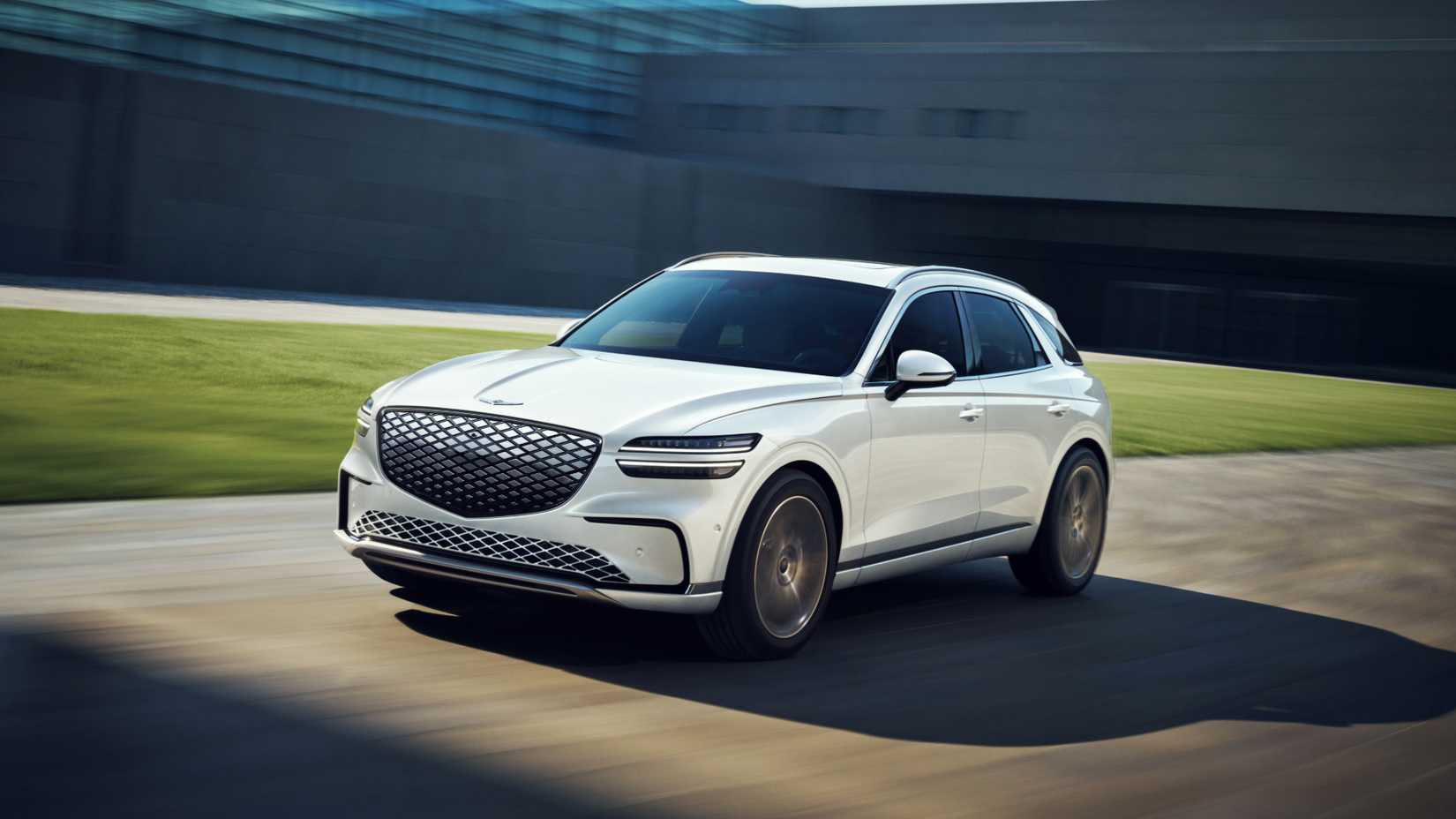
    2026 Genesis Electrified GV70
    2026 Genesis Electrified GV70 front 3/4 angle in white
    Genesis

    Despite the service headaches, Genesis consistently ranks high in Consumer Reports Owner Satisfaction surveys. Why? Because the products are high-quality vehicles that fare extremely well in reliability studies, and they don’t cost a fortune to maintain in comparison to rivals.

    Owners will likely come to the consensus that they have beaten the system. They are driving a car that almost looks like a Bentley, drives like a BMW, and costs them less than either. This surplus in value creates a lot of goodwill, and most owners will be willing to forgive a glitchy screen or a slow parts delivery because the daily experience of driving a Genesis feels so much more premium than the price tag suggests.

    Conclusion: Is the Genesis Worth the Investment?

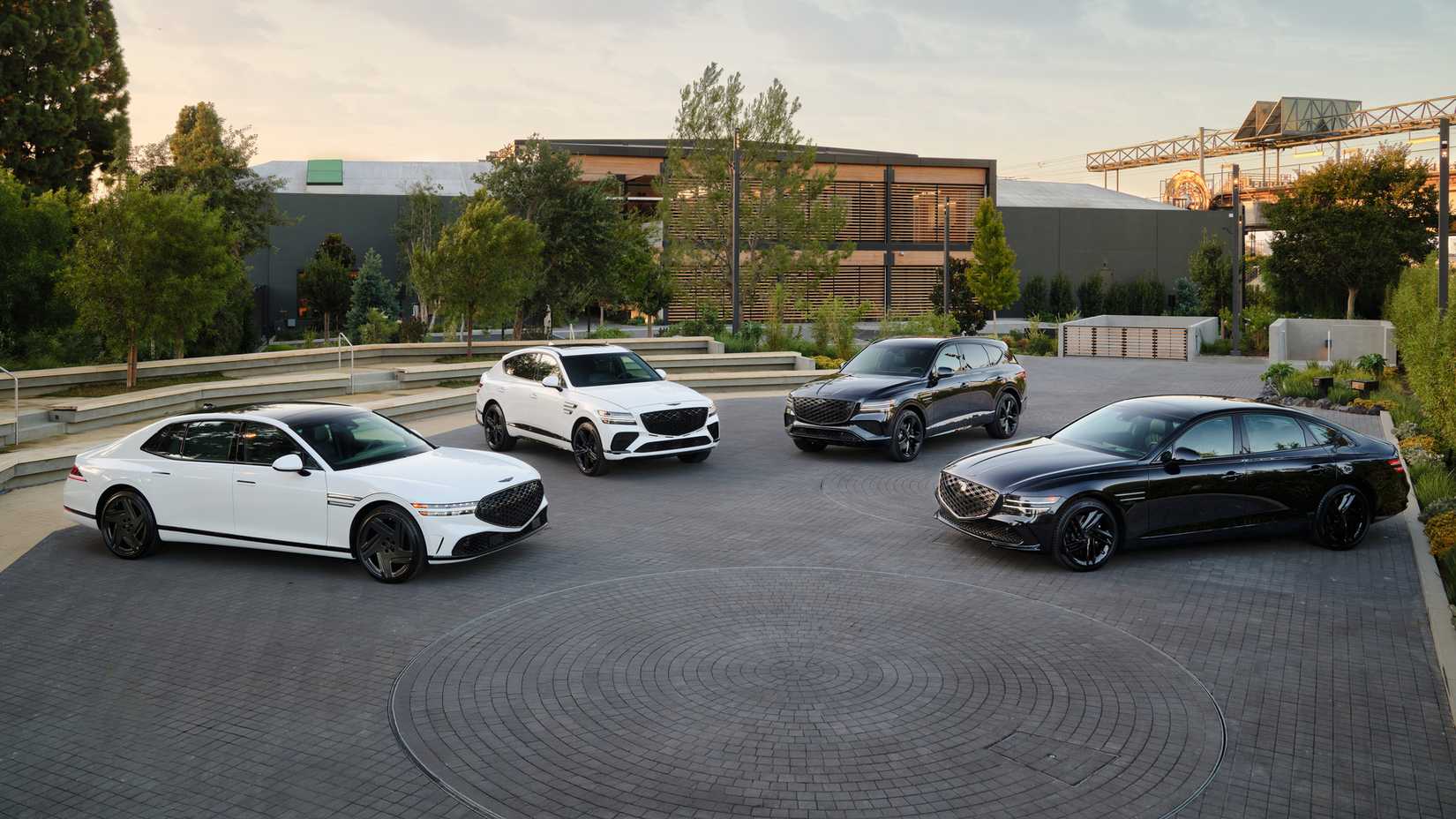
    2026 Genesis G80, 2026 Genesis G90, 2026 Genesis GV80, 2026 Genesis GV80 Coupe
    2026 Genesis G80, 2026 Genesis G90, 2026 Genesis GV80, 2026 Genesis GV80 Coupe
    Genesis

    If you are considering a new Genesis as your next vehicle, the maintenance angle will definitely hook you. You get three years of total peace of mind and a decade of powertrain protection that no European brand will match. You will likely save thousands of dollars compared to a Mercedes or BMW owner over the first five years of ownership.

    However, the true cost isn’t always measured in monetary value; sometimes it’s measured in time. Prospective owners should research their local dealership specifically. If your local Genesis point is a standalone facility dedicated to offering the luxury service expected of a luxury brand, your experience will likely be stellar. But if it’s in a corner of a busy Hyundai lot, it might require a bit more patience. Genesis will celebrate a decade of being a standalone brand in the US this year, and it’s commendable how far it’s come. After-sales service might not be at the level where the brand wants it yet due to circumstances, but buying one of its vehicles, such as the GV80, remains one of the smartest financial plays in the luxury segment.

    FAQs

    Do Genesis cars require a lot of maintenance?

    Genesis vehicles follow a standard luxury maintenance schedule. While they don’t require more frequent maintenance than rivals, they do utilize high-performance components that carry premium price tags.

    Is a Genesis GV70 expensive to maintain?

    Compared to the average SUV, the GV70 is pricier to maintain, but it is a bargain within the luxury compact space where its rivals are pricier in upkeep. Over the first 10-year period, CarEdge projects that the GV70 will cost roughly $9,500 in total upkeep.

    Is a Genesis a reliable vehicle?

    Generally speaking, yes. According to the 2025 J.D. Power Vehicle Dependability Study, Genesis received a score of 213 problems per 100 vehicles, which is higher than the study average of 202 PP100. Genesis’ score is better than Lincoln (221 PP100), Volvo (242 PP100), Mercedes-Benz (243 PP100), and Volkswagen (PP285).

    Is Genesis insurance expensive?

    CarEdge puts the average cost of car insurance for Genesis models at about $3,421 per year, which is $288 higher than other luxury brands.

    Sources: Genesis, RepairPal, CarEdge, J.D. Power, NHTSA, Trust Pilot,

    Source link

  • Kia EV4 GT-Line Reviews | Overview

    Kia EV4 GT-Line Reviews | Overview

    Overview


    I DON’T wear flared trousers anymore for a lot of good reasons, including I’d be laughed off the train and pointed at by fellow shoppers at my weekly Coles visitation.


    They were once a fashion statement (the trousers, not Coles) but that was then. Like sedan cars – you know, with four doors, a truncated boot and low silhouette with the lower the better because it was sportier -apparently.


    For the past two decades, SUVs are imprinted on our minds as the image of a modern vehicle and sedans drifted into near obscurity on a path trodden by flared trousers.


    Other than style, there’s no real reason for the diminished popularity of the sedan. Unless you specifically want seven seats, most sedans have as much cabin and cargo space as an SUV.


    Subjectively, sedans are more attractive (and they don’t all look the same) while objectively, they handle better and often are more fuel efficient.


    Fortunately there remains a market for sedans and OEMs who pledge loyalty into the EV age include Tesla with its Model 3, BYD Seal, Kia EV4, Polestar 2, IM5, Hyundai Ioniq 6, and upcoming Mazda 6e.


    The new Kia EV4 is available in three grades – Air, Earth and GT-Line – priced from $49,990 (+ORC) to $64,690 (+ ORC) and the dollar signs follow the slide up the list of equipment.


    As tested in its GT-Line version, it gets a carload of features and costs $64,690 (+ ORC) which is, incidentally, on par with Kia’s own electric SUV, the EV5 Earth at $64,770 plus costs.


    The GT-Line gets all the fun bits, including sunroof, a more comprehensive list of safety equipment, the eight-speaker Harman Kardon audio (the mid-spec Earth gets six speaker sound), heads-up display, heated and vented front seats with electric adjustment for both, and 19-inch alloys.


    The upholstery is faux leather and looks good, especially with the ‘GT-Line’ tagging.


    It scores a five-star crash rating with a strong 84 per cent recorded for adult occupant protection and 86 per cent for child protection.


    The safety inventory is comprehensive and includes: AEB with active collision avoidance systems, pedestrian detection, lane keeping and lane following assistance, intersection monitoring and avoidance, and with the GT-Line adding surround view, blind spot view, intelligent front lighting and reverse parking collision avoidance.


    Kia has a seven-year or unlimited distance warranty with roadside assistance available free in the first year and up to eight years if the car is returned to a Kia dealer for servicing.


    Unlike the ICE and hybrid models, Kia doesn’t have a capped-price service program for its EVs. Instead, it has pre-paid service plans in three, five or seven year terms.


    These cost, respectively, $688, $1308 and $1929. Owners have 11 months from purchase date to select one of these. The service plan is transferable to the car’s next owner.


    The great thing about the EV4 however, is that it bundles all the tech of its electric SUVs along with definitive styling, low profile sporty shape and the promise of sharp handling but doesn’t look like everything else on the road.


    Driving impressions


    Kia has taken styling cues from its EV range and applied it over a sedan body, presenting a true family of vehicles but in doing so, makes onlookers question one of the parents of the EV4.


    It’s not that it’s ugly, just distinctive. Much of the drama is happening around its rear three-quarter view where it just looks a bit awkwardly stretched. But it’s a shape that grows on you.


    The sedan silhouette is typically long and low and that often brings complaints – in older people – about the lack of ease entering and exiting the low seats. This is not the case in the EV4.


    The seats are well placed and the door opening wide enough and close enough to make it easy to get in and out.


    Typical of the EV trend, the cabin is very well styled, open and airy, clean and bright. The Kia’s dashboard is one of the best on the market with manual switches for the high-use functions (ventilation, for example) and in-screen for lesser functions.


    Specifically, the placement of the car locking and seat accessory controls – seat heating, ventilating and steering heating – are on the door card right beneath the side mirror placement so it’s easy to access.


    The wide driver’s 12.3-inch information screen and its abutment to the central 12.3-inch (yes, 24.6-inch in total) touchscreen reinforces the streamlined design and produces a really simple and clear panel of information.


    The Hyundai-Kia start button is on the right-side stalk, the same one that has the gear selection. Again, simple and easy and one that clears the centre console of the gear shifter.


    Acceleration is brisk, quiet and unfussed and although the serenity is enjoyable, any theatre that we may have once enjoyed is gone. Then again, there’s always the eight-speaker Harman-Kardon audio. Get into that and you can quickly forget any buzz from an ICE.


    No gears, light steering, no noise and a compliant suspension can lull occupants into lethargy but in reality, it’s the only way to endure the freeway on the way to work and survive the journey home.


    The EV4 is always quiet and quick, more than sufficient for traffic – and a run through the hills – which can supersede an urge to opt for a dual-motor rival.


    The EV4 is a single motor rated at 150kW and 283Nm, driving the front wheels, which is more than adequate for hauling four people.


    It uses an 81.4kW/h lithium-ion nickel-cobalt-manganese (NCM) battery (unlike the EV5’s LFP ‘blade’ battery shared with some BYD models) which is good for an excellent 604km range.


    This 81.4kW/h battery is not available in the entry level Air version of the EV4, which gets a 58.3kW/h unit for a claimed 456km range.


    Tested in city and country, the EV4 recorded an average of 13.8kWh/100km. Kia says the EV4 GT-Line will charge to 80 per cent in 79 minutes (150kW charger) or 31 minutes (350kW charger) or a bit over seven hours when you plug it in at home.


    The EV4 stands 1480mm high which is a bit taller than the Hyundai i30 sedan – with which it shares some dimensions – at 1420mm.


    Clearly, the EV4 is no SUV and this aids its sure-footedness through winding roads. In fact, aside from its extra weight (1912kg compared with the 1334kg of the mid-range i30 2.0-litre auto) the EV4 will hold the road almost as confidently as the Hyundai sedan.


    Kia has really spent time on the EV4’s suspension, tuning it for Australian road conditions but also honing it to suit the more aggressive style of driving seen in Australia. Apparently, we like to drive and want a car that rewards that desire.


    The efforts of Kia’s engineer Graeme Gambold work a treat. He said that the bones were there – sedan design with a low centre of gravity and accentuated by the low placement of the 475kg battery – before he started. He just made it all better.


    Steering action is precise, easily controlled, with great balance through the bends and a sense that it will hang like a limpet through the bends. All this while the ride comfort remains pliant and stable and without any scary suspension noises.


    It really is a great option to the (now) traditional SUV. The boot is a reasonable 490 litres (bigger than many SUVs) with the only grizzle is that it is accessible through a rather small access point.


    Inside, it seats five adults (four is better) with a flat floor for plenty of legroom, while upfront the seats are comfy and legroom good, especially for the driver with a wide foot well and broad left-foot rest.


    Overall, the EV4 makes a good argument for buying an electric sedan over an SUV.
    Source link

  • Polestar breaks down full carbon footprint of Polestar 5

    Polestar breaks down full carbon footprint of Polestar 5

    Swedish electric carmaker Polestar has once again delivered on its commitment to publish the full carbon footprint of every vehicle in its lineup, and says the cradle-to-gate carbon footprint of its Polestar 5 four-door GT measured in at 23.8 tonnes of CO2-equivalent.

    Polestar is the first original equipment manufacturer (OEM) to publish the full carbon footprint of every vehicle in its lineup, part of the company’s efforts to provide customers with greater transparency about the climate impact of the cars that they drive.

    The Polestar 5 four-door GT – soon to be released in Australia – boasts a range of up to 678 kilometres (WLTP) and, in its dual-motor variant, up to 650kW of power and acceleration from 0-100km/h of just 3.2 seconds.

    But it’s the car’s manufacturing process in the spotlight here, boasting a cradle-to-grave carbon footprint of 23.8 tonnes of CO2-equivalent (tCO2e).

    Image Credit: Polestar

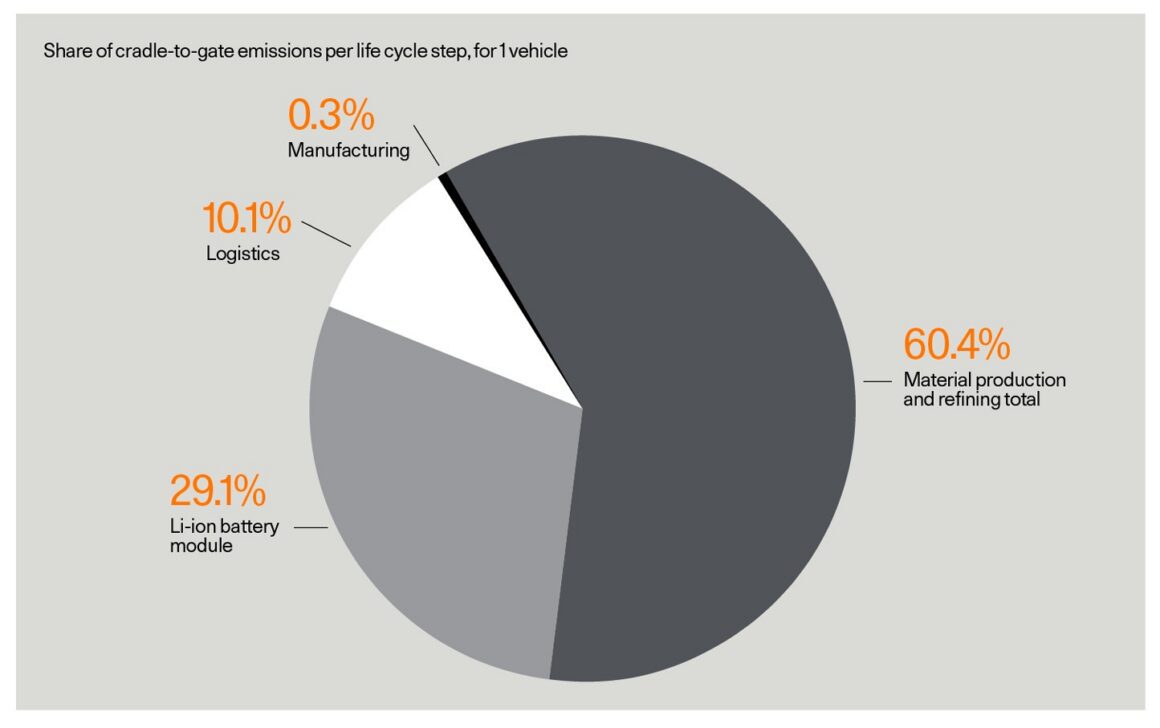
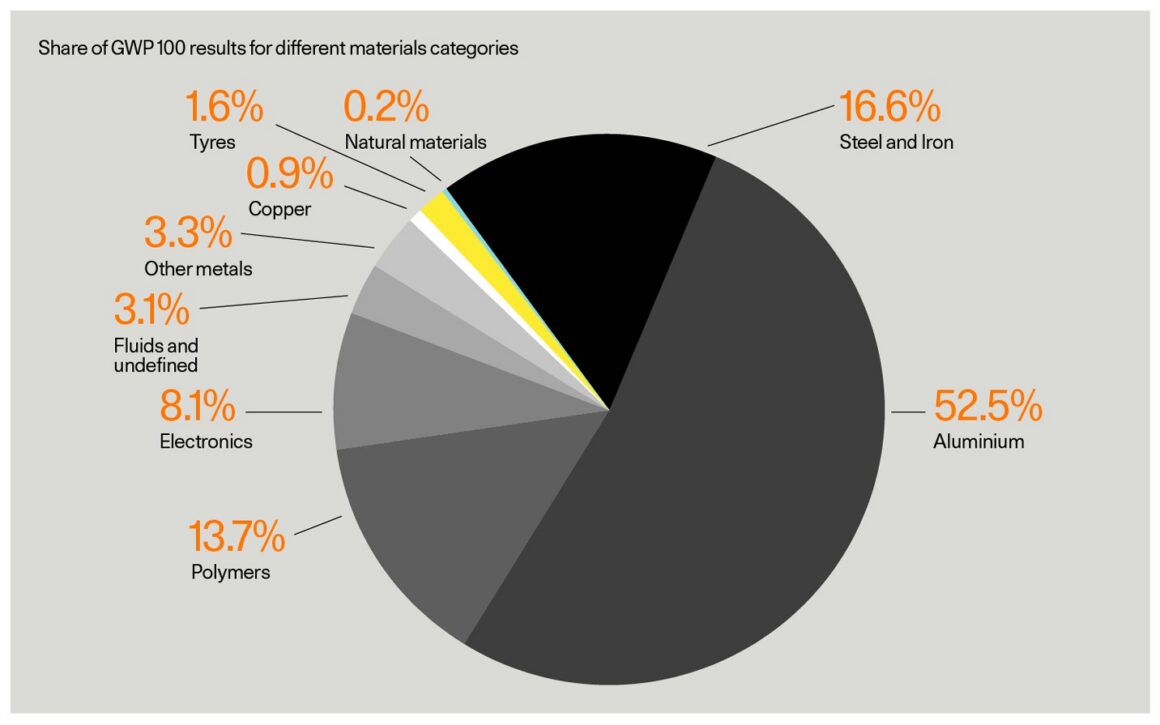
    According to Polestar’s analysis, 60 per cent of the cradle-to-gate climate impact is due to the materials used in the vehicle’s production, which excludes the battery modules. A smidge over 50 per cent of the materials emissions comes from aluminium, with steel and iron accounting for another 17 per cent.

    The lithium-ion battery modules accounted for 29 per cent of a single car’s emissions, with logistics (10 per cent) and manufacturing rounding out the list.

    In Polestar’s estimation, the climate impact of the battery is relatively low due to the use of 100 per cent renewable electricity in the production of the anode and cathode active materials and in the cell production of the battery modules.

    Image Credit: Polestar

    Importantly, to account for the huge impact aluminium has on the car’s emissions during production, 13 per cent of the aluminium used is recycled and 83 per cent comes from smelters powered by renewable electricity.

    As a result, Polestar has been able to avoid 14 tCO2e per car compared with conventional aluminium sourcing.

    Other emissions savings were made with the use of innovative materials in the car’s interior, such as natural fibre composites and recycled materials.

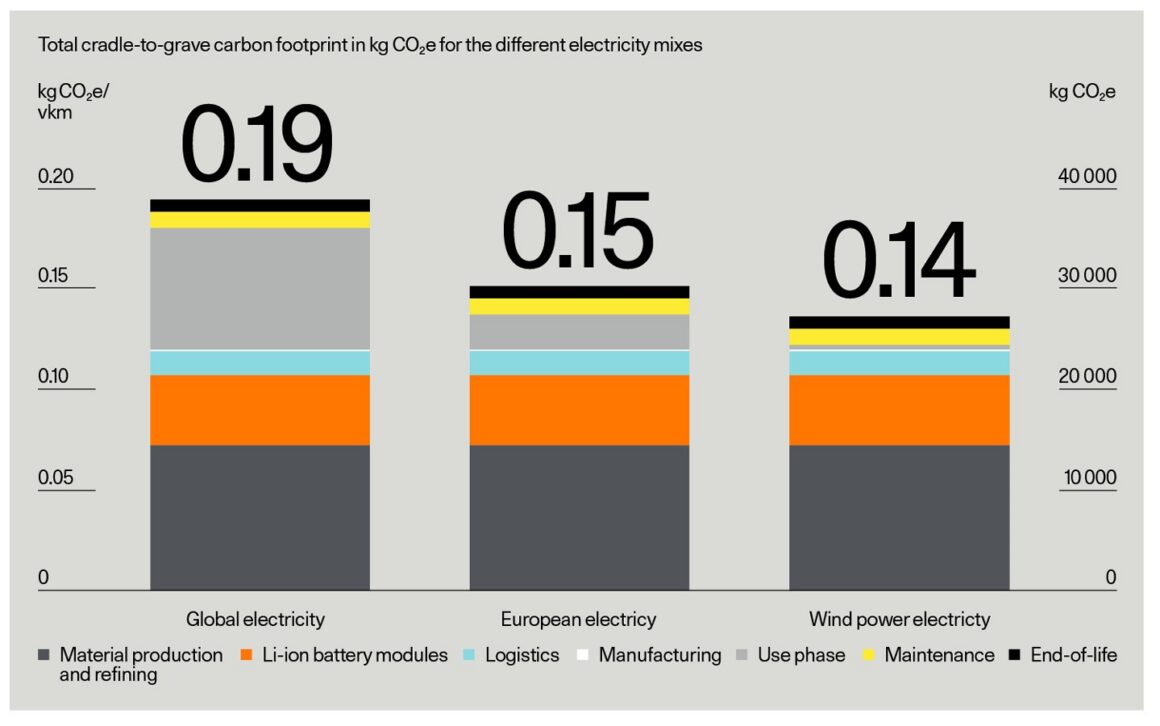
    The full vehicle life cycle, which includes cradle-to-gate and then a further 200,000 kilometres driving plus end-of-life treatment, works out to 28.5 tCO₂e using the European electricity mix, but skyrockets to 38.6 tCO2e if manufacturing were to rely on the global electricity mix.

    Image Credit: Polestar

    “You cannot reduce what you don’t measure,” said Fredrika Klarén, head of sustainability at Polestar.

    “Making the carbon footprint of a car visible helps focus the industry on where emissions occur, particularly in materials and manufacturing. That transparency is essential if we want to scale the low-carbon materials, renewable energy and circular solutions needed to reduce the climate impact of cars.”

    The full Life Cycle Assessments (LCA) for the Polestar 5, available in full here, is based on the 2026 model year, the car’s first model year, and has been critically reviewed by British engineering services firm Ricardo.

    The Polestar 5 is currently available in Australia with a hefty price tag in excess of $185,000, and up to nearly $210,000 for the Performance – Launch edition.

    Source link

  • Mercedes-AMG teases racier GT Track Sport

    Mercedes-AMG teases racier GT Track Sport

    Mercedes-AMG has dropped a new teaser on social media, clearly hinting at a new track-focused version of the AMG GT, dubbed the Track Sport.

    The Mercedes-AMG GT Track Sport will be based on the second-generation AMG GT coupe. It will feature several performance upgrades, including a bespoke high downforce package.

    Mercedes-AMG has confirmed that the model will be powered by the same V8 engine which also powers the brand’s GT Series racecars. That being said, the exact technical specs are still unclear.

    As far as aero is concerned, the Track Sport will feature a massive swan-neck rear wing and a prominent front splitter. It will also get a more aggressive-looking front fascia and a vented hood, among other modifications.


    Source link