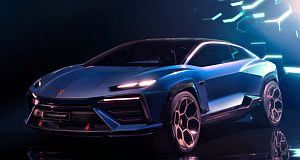
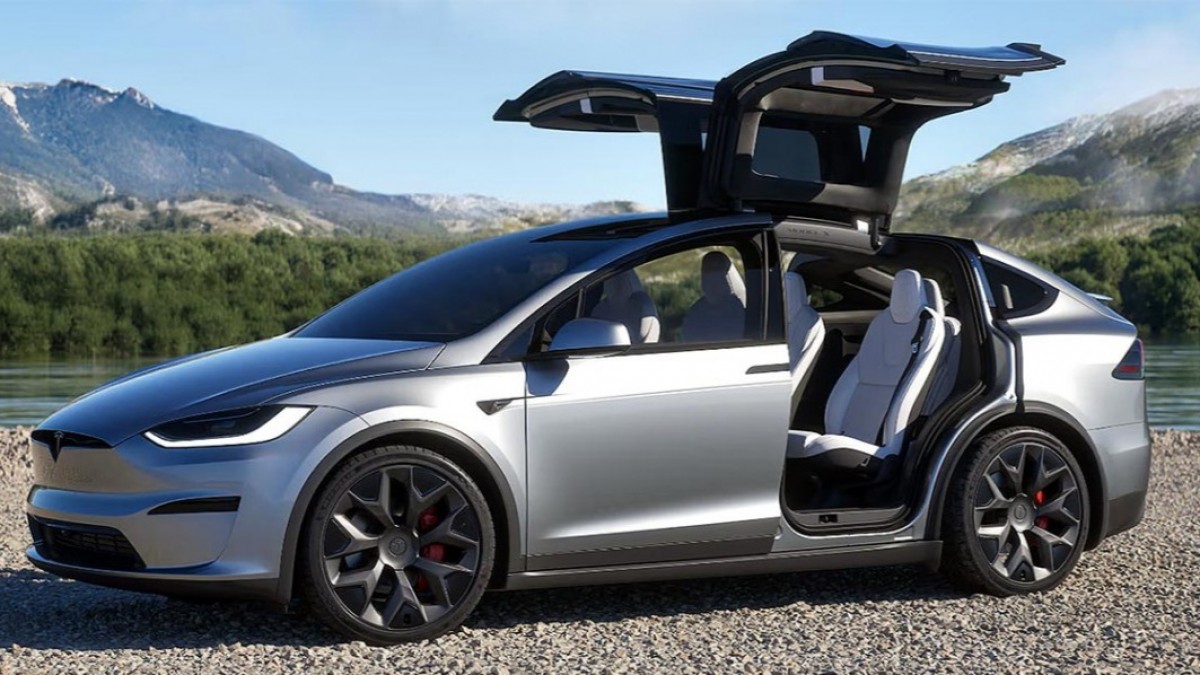
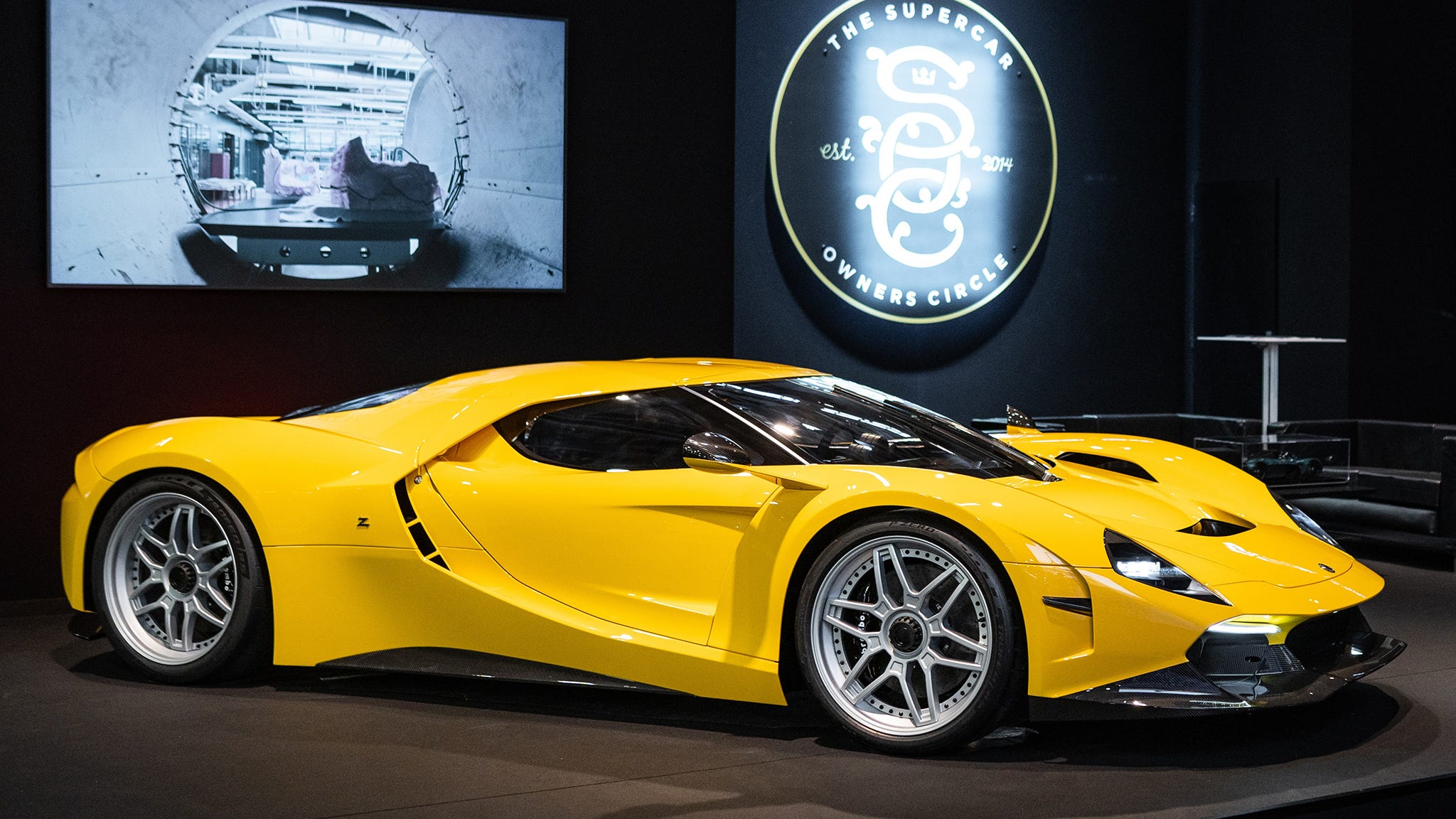
LAMBORGHINI has officially pulled the pin on its first battery electric model – which would’ve been called the Lanzador (pictured) – due to a lack of demand for EVs within the Italian performance brand’s customer base.
Speaking with The Sunday Times, Lamborghini chairman and CEO Stephan Winkelmann cited the inability of electric vehicles to deliver a “specific emotional connection” for Lamborghini customers as a reason behind the decision.
Mr Winkelmann went on to say that Lamborghini investing heavily in EVs when neither the market nor its customers are ready for them “would be an expensive hobby, and financially irresponsible towards shareholders, customers (and) to our employees and their families”.
In May 2021, Lamborghini announced the introduction of a battery electric model into its stable by 2030. A little over two years later in August 2023, the Lanzador high-riding, 2+2 SUV ‘coupe’ concept was unveiled during Monterey Car Week.
Initially slated for arrival in 2028, the Lanzador would’ve arrived with a dual-motor, all-wheel drive powertrain with an output of one megawatt (1000kW).
In December 2024, Mr Winkelmann told Reuters the Lanzador had been delayed until 2029, but now Lamborghini’s first foray into the battery electric vehicle market has been officially scrapped.
Instead, the electric Lanzador will be replaced with a plug-in hybrid vehicle like the currently-offered Temerario and Revuelto supercars and the Urus SE SUV.
Meanwhile, arch rival Ferrari is charging towards the launch of its first EV model – dubbed the Luce – with its full global unveiling expected in May this year with Australian deliveries slated for the first half of 2027.
However, Lamborghini is not alone among performance brands shying away from the EV transition.
Over at corporate cousin Porsche, the battery electric versions of the 718 Cayman and Boxster sportscars could be scrapped entirely due to high costs and low demand for EVs.
In 2024, Lotus – which sells its internal combustion-powered Emira sportscar alongside the battery electric Eletre SUV, and Emeya sedan in Australia – cancelled its plans to go all-electric by 2028, instead placing a great focus on the development of hybrid technology.
In January last year, Aston Martin delayed its EV plans by five years, while Maserati scrapped an electric variant of its MC20 supercar in May the same year, although the latter still sells electric versions of its GranTurismo, GranCabrio, and Grecale models.
Furthermore, the European Union is poised to scale back its 2035 internal combustion engine ban from a 100 per cent to a 90 per cent CO2 reduction.
However, Lamborghini has not entirely ruled out EV models in the future according to Mr Winkelmann.
“Never say never, but only when the time is right,” he added.
“For the foreseeable future, only PHEVs. We will continue to develop electrification because we also need to be ready.”
From the March/April 2026 issue of Car and Driver.
Lap Time: 2:44.1
Class: LL4 | Base: $261,307 | As Tested: $274,857 Power and Weight: 502 hp • 3218 lb • 6.4 lb/hp Tires: Michelin Pilot Sport Cup 2R F: 255/35ZR-20 (97Y) N1 R: 315/30ZR-21 (105Y) N1
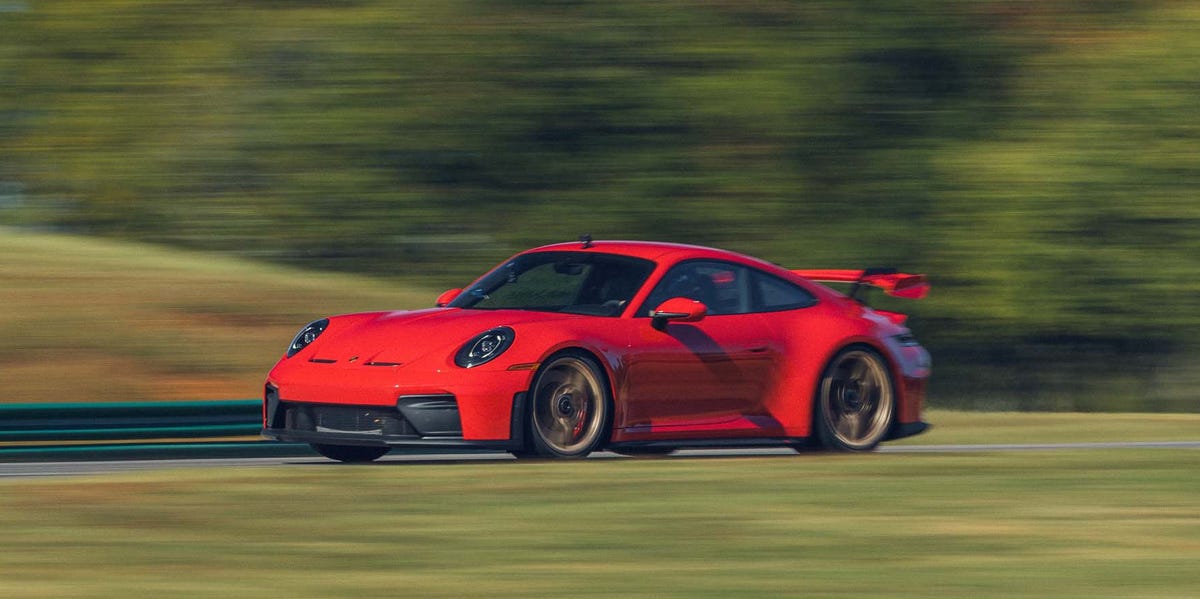
Thirty-two. That’s how many times the manual six-speed 911 GT3 needs shifting on a Grand Course lap. Sure, some of the downshifts are value-shopper two-for-ones, but the 16 upshifts are the major reason why an automatic GT3 turned a faster lap. Each manual upshift interrupts the GT3’s acceleration for about a quarter-second, which more than accounts for the 3.5-second delta to the automatic, but Porsche’s subtle changes to the 992.2 GT3—gearing that’s a bit shorter overall, revised dampers, a new tire spec—contribute to the GT3’s lap time. We haven’t been in a manual car this quick since the 2016 Dodge Viper ACR. There’s a new fastest manual at VIR, and it’s this GT3.
Keeping the revs up on the GT3’s flat-six is critical, not just for power delivery but also for the limited-slip differential’s ability to maximize the traction where it’s needed. If the revs are too low, there isn’t enough lockup, and the back end gets a bit loose, particularly in the 80- to 90-mph sweepers of the Infield. On almost every lap, we started instinctually upshifting to fourth before the cresting left (Turn 18b on a VIR track map), but the GT3 worked better here screaming near redline than not—ear plugs help, trust us. Only a tenth of a second is lost to the ZR1 in the four-corner sequence, a tie with the automatic GT3.
View Photos
Michael Simari and Marc Urbano|Car and Driver
Grip in Turn 1 decreased: 1.11 g’s to the auto’s 1.22. Exit speeds were 6.1 mph slower. Upshifts and downshifts mean you’re taking your hand off the steering wheel. This is something you never contend with when driving an automatic, but it’s all part of the fun.
The perfect heel-toe downshift brings a sense of involvement and accomplishment that cars this quick rarely offer, though for our fast lap we relied on Porsche’s excellent rev-matching software. Ripping up the Climbing Esses just as you’re carefully steering to prevent going into the grass, you realize you’re going to have to take a hand off the wheel to shift. It’s not the fast way, but it is the challenging way. The GT3 manual takes the congeniality award: not the winner, but the car every one wants to spend time with.
Back to Lightning Lap 2026
K.C. Colwell, the executive editor at Car and Driver, is a seasoned professional with a deep-rooted passion for new cars and technology. His journey into the world of automotive journalism began at an early age when his grandmother gifted him a subscription to Car and Driver for his 10th birthday. This gift sparked a lifelong love for the industry, and he read every issue between then and his first day of employment. He started his Car and Driver career as a technical assistant in the fall of 2004. In 2007, he was promoted to assistant technical editor. In addition to testing, evaluating, and writing about cars, technology, and tires, K.C. also set the production-car lap record at Virginia International Raceway for C/D‘s annual Lightning Lap track test and was just the sixth person to drive the Hendrick Motorsport Garage 56 Camaro. In 2017, he took over as testing director until 2022, when was promoted to executive editor and has led the brand to be one of the top automotive magazines in the country. When he’s not thinking about cars, he likes playing hockey in the winter and golf in the summer and doing his best to pass his good car sense and love of ’90s German sedans to his daughter. He might be the only Car and Driver editor to own a Bobcat: the skidsteer, not the feline. Though, if you have a bobcat guy, reach out. K.C. resides in Chelsea, Michigan, with his family.
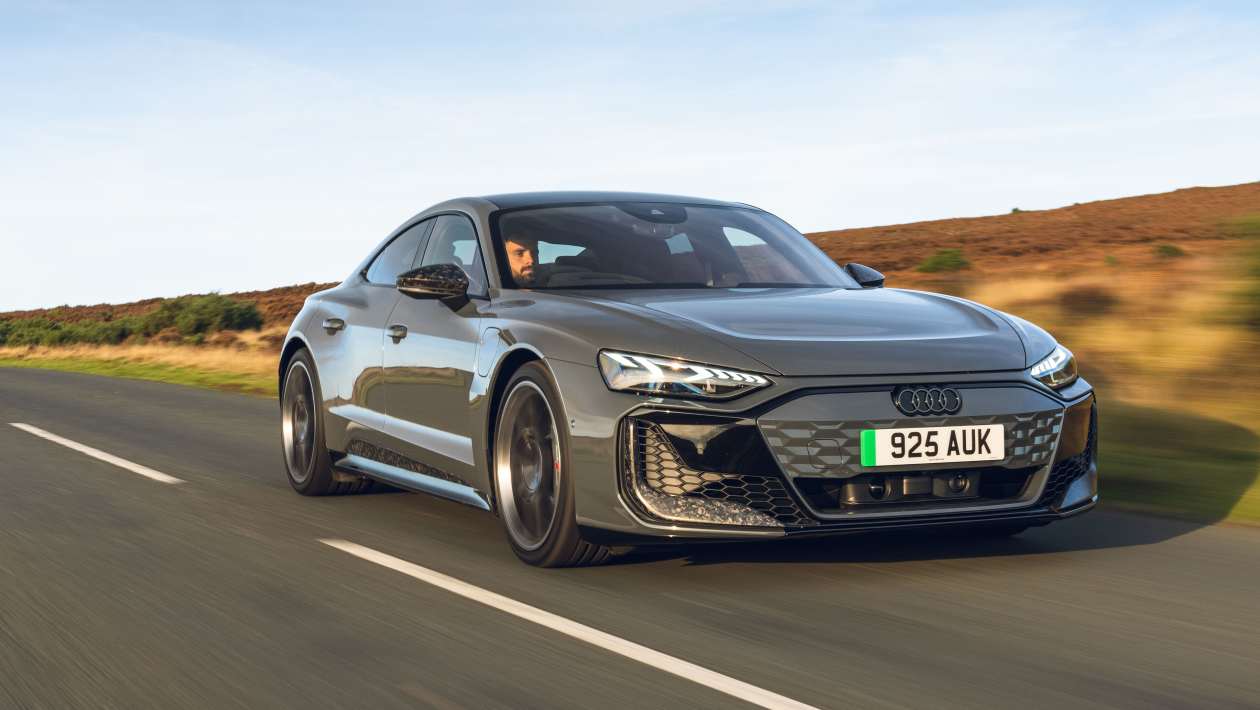
Amazingly, despite having such power, the car feels incredibly controllable and not intimidating in the least. Clear and authentic throttle response, together with excellent brake feel and a good level of off-centre steering feel help the prodigious 1,027Nm of torque feel manageable. This is thanks to a superb new active suspension system that’s standard on this Performance Vorsprung model, and a hefty £6,710 option on others.
Without going into too much technical detail, this new suspension system uses electronically controlled hydraulic dampers to infinitely control the body’s movements. This means the Audi does without traditional anti-roll bars, and while it is still on air-springs, the dampers allow it to react far more quickly to dips in the road, or indeed, the extraordinary effects of so much performance on the chassis.
The benefits are clear from the moment you drive away, because the set-up keeps the body incredibly stable, increasing the feeling of agility and engagement. But in the real world, this yields astonishing ride quality, with almost unbelievable softness and comfort, without ever feeling out of control or sloppy.
Advertisement – Article continues below
It’s uncanny; the e-tron glides over horrible road conditions without anyone in the cabin being aware of them. Other than when you hit particularly sharp bumps, which resonate though the wheel rim, rather than the suspension, you’d be hard-pressed to distinguish this and hovering over the surface on a cushion of air.
The 1960s were an era defined by societal change, significant cultural events such as the Moon landing, the birth of the pony car, and the rise of critical safety regulation in the automotive industry.
The Invention and Its Effect
Image courtesy of Volvo
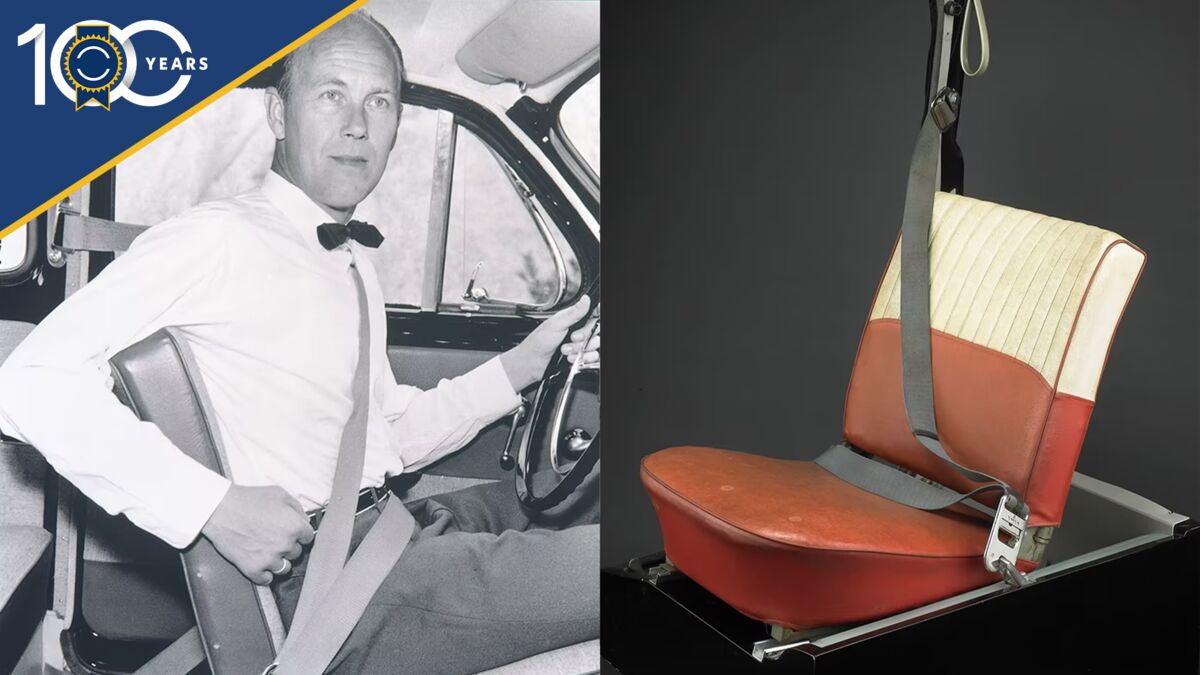
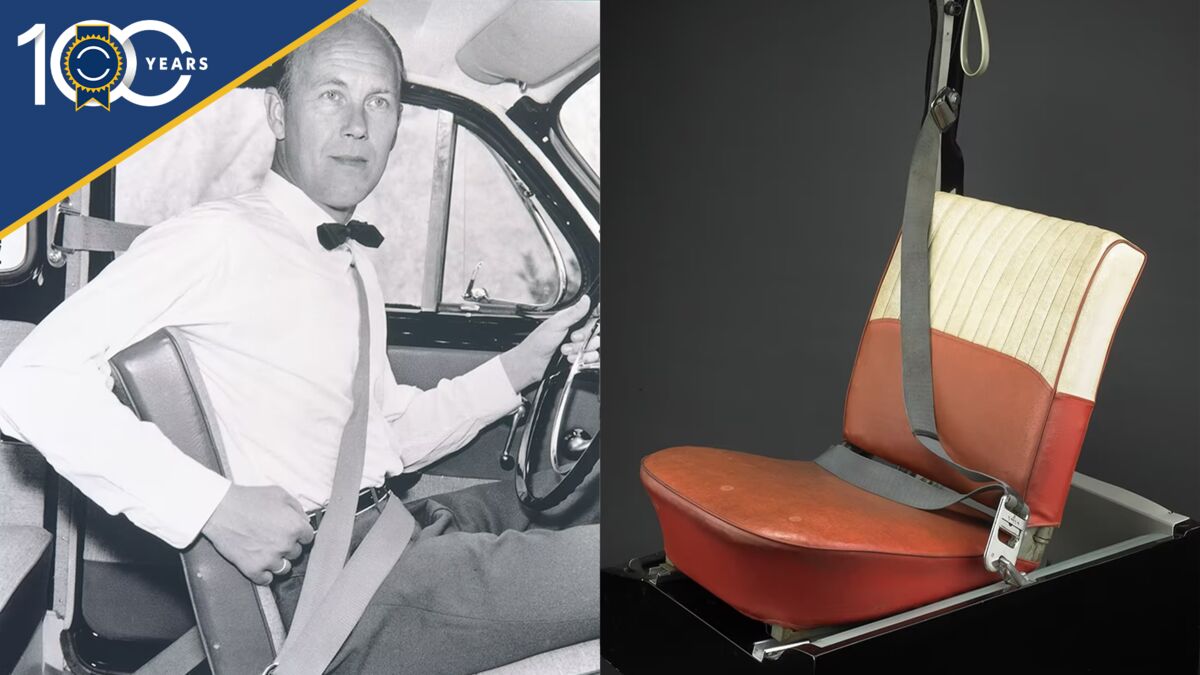
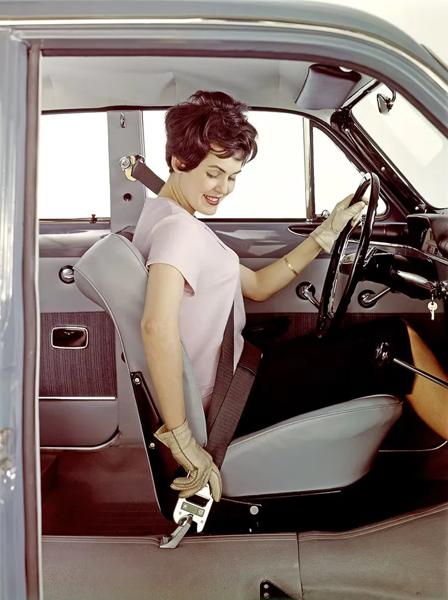
In the early 1960s, most vehicles on the road used the classic lap seatbelt common to cars of the era. In 1959, at the tail end of the ’50s, Volvo designer Nils Bohlin invented the 3-point seatbelt. Volvo then made this innovation freely available worldwide through an open patent.
Though it may not be the most exciting innovation on our list, the 3-point belt is one of the most significant, as it has been directly credited with saving millions of lives worldwide, with regulatory enforcement beginning in 1968 in the U.S..
The credit for the success and importance of the 3-point seatbelt is also clear in its continued use and regulation, more than six decades after its first introduction.
Video by Insurance Institute for Highway Safety displaying why seatbelts can save lives.
Explore automotive innovations from other decades below:
The global shift toward electric cars reached an important milestone last year. In 2025, drivers around the world bought 20.53 million new energy vehicles. This group includes battery-electric cars (BEVs), plug-in hybrids (PHEVs), and fuel-cell vehicles. This is a 26% jump compared to the year before, proving that the appetite for EVs is still growing, even if the pace is starting to shift.
The numbers are big, but experts at TrendForce expect things to calm down a bit in 2026. Global EV sales are projected to reach 23.4 million units this year – still an increase, but the growth rate is expected to drop to 14%. A big reason for this change is China, which until now was the main engine driving the world’s electric car market. That market is maturing now, and the rapid-fire growth we saw in previous years is naturally slowing down.
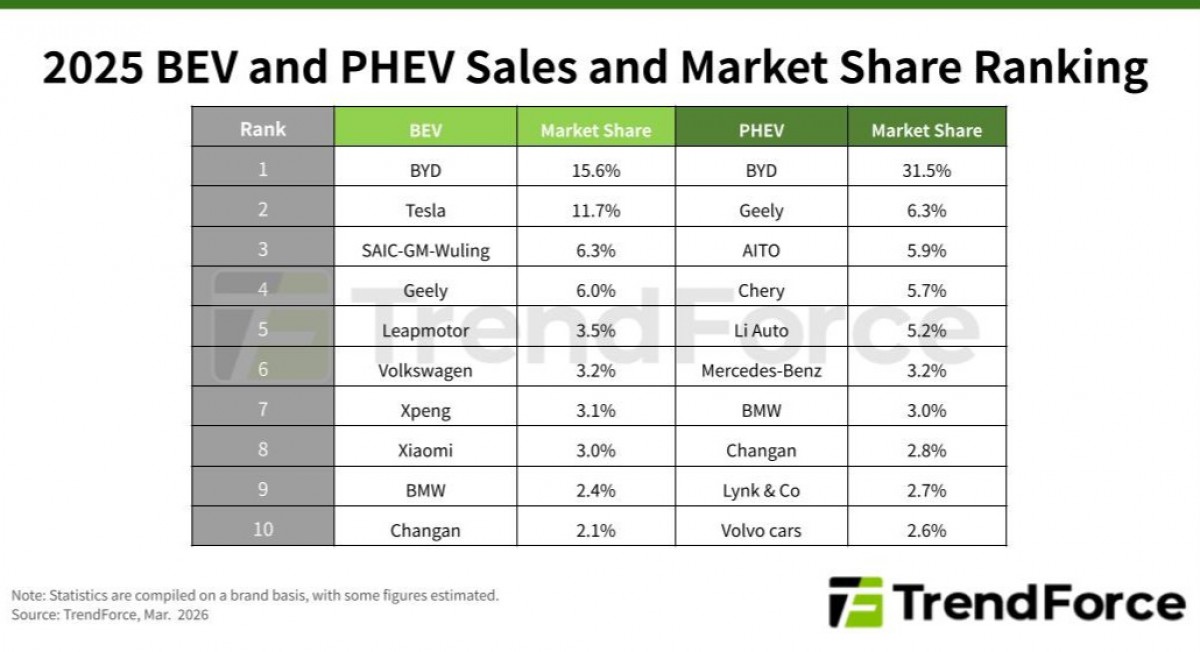
Global EV sales rankings – source: TrendForce
China still holds the title of the world’s largest market for electric cars, accounting for about 66% of all sales in 2025. Its own growth rate sat at 24%, which was actually a little bit lower than the global average. On the other side of the map, Western Europe had a fantastic year. Sales there grew by nearly 30%, marking the best performance for the region since 2022.
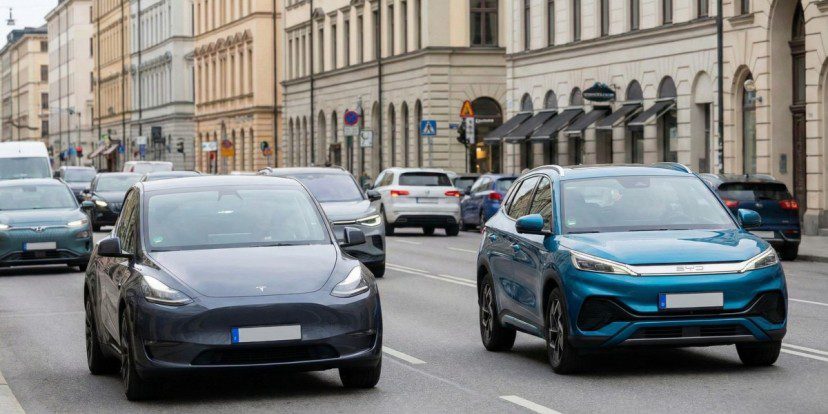
The most shocking news from the 2025 rankings involves the battle at the top. For the first time, the Chinese brand BYD has overtaken Tesla to become the world leader in battery-electric car sales. BYD saw its sales grow by 25% over the year. Tesla, on the other hand, saw its sales slide by about 9%. Many analysts believe Tesla struggled because it did not release enough new or updated models to keep shoppers interested.
Tesla Model X – source: Tesla
Other Chinese companies are also making big moves. Geely climbed up to fourth place in the global rankings, doubling its market share from 3% to 6%. A lot of that success came from a small, affordable car called the Xingyuan, which costs less than 100,000 Chinese Yuan (about $13,800). Even the tech company Xiaomi is getting in on the action. It tripled its market share from 1% to 3% in just one year, landing it in eighth place globally.
Volkswagen is having a tougher time. Even though the German giant sold more cars overall, it lost ground in China. To fix this, Volkswagen launched a new brand specifically for Chinese drivers. They are also working closely with XPeng to build new cars together. We should see the first results of this partnership hit the streets real soon.
BYD is the new King of EV Sales
In the world of plug-in hybrids, BYD is still the king with a 31.5% market share. Unfortunately, even the king had a rough patch, seeing its first-ever drop in sales volume. Meanwhile, Li Auto, which used to be in second place, had a very difficult 2025. Its sales fell by 30%, and it dropped to fifth place in the hybrid rankings. To fight back, Li Auto is spending a lot of money on Artificial Intelligence to make its cars smarter and more high-tech.
2026 will bring some big changes to how people pay for electric cars. In China, the government is changing how it gives out discounts. Instead of a flat cash amount, the subsidy will be a percentage of the car’s price. This might make cheaper cars feel more expensive for buyers. In the United States, the situation is even more dramatic because federal subsidies for EVs have ended completely. Germany, on the other hand, is bringing back its subsidies and won’t care where the car was built, which is great news for brands imported from China.
BYD Han L – source: BYD
Building high-tech EVs is also getting more complicated – modern electric cars are basically computers on wheels, and they need a lot of memory chips. These chips usually only make up 1% to 5% of the total cost of building the car. If the price of critical components goes up or the supply runs low, it can cause big delays – something we have witnessed for the last few years. Automakers are now working harder than ever to make sure they have a steady supply of parts so they can keep their factory lines moving and their software updated.
2026 is shaping up to be a year of big changes. The EV markets around the world are maturing, and many automakers are bringing more affordable models to customers, while others are calling it quits on electric cars. The world is slowly getting divided with entire countries taking either a pro-EV stance or going back to fossil fuels – something we did not expect to ever happen.
Lightweight, Clean Aero, and a Focus on Feel Over Flash
That fast top end is partly due to the absence of large, drag-inducing wings and other showy aero gewgaws. “We decided in the very beginning to have a clean car, with no flics and flaps or big spoilers because they would just disturb the design,” Hartelt said. Almost all the aero work is therefore done under the car, courtesy of a floor design that works with front and rear diffusers and a subtle rear spoiler to provide meaningful and consistent levels of downforce. “We were not aiming for a downforce monster,” Hartelt said. “We wanted a constant ratio between downforce front to rear to maintain balance, which is important for non-professional drivers. It’s no fun to drive a car where the aero changes drastically. We did not want this to be a nervous car.”
For all the race-face engineering, the Capricorn 01 Zagato will not be a penalty box to drive like the deafeningly loud and claustrophobic Aston Martin Valkyrie. The relatively roomy cabin will accommodate drivers up to 6 feet, 6 inches tall. The seats, equipped with Schroth four-point harnesses, are fixed, integrated into the carbon-fiber safety cell. To accommodate drivers of different heights and shapes, the seat cushioning is fully adjustable, as are the steering column and pedal box. Uniquely, the Capricorn Zagato’s shifter can also be moved through 3.2 inches of fore and aft travel along the center console so it’s always within ideal reach.
Although carbon fiber dominates the interior and it doesn’t come with an audio system, the Capricorn 01 Zagato features switchgear and interior parts machined from solid titanium and aluminum, Connolly leather on the seats, and Alcantara on other surfaces. The pared-back dashboard features an analog instrument cluster with a large centrally located tach, a speedo to the left, and a binnacle on the right that houses the fuel, oil temperature, and oil pressure gauges. The three-spoke steering wheel is Capricorn’s own design and is trimmed in Connolly leather. The only additions to the wheel are the engine start-stop button and the controller that allows the driver to switch between Comfort, Sport, and Track drive modes.
ADVERTISEMENT – CONTINUE READING BELOW
Capricorn plans to build just 19 of the 01 Zagato coupes, with prices starting at the equivalent of $3.5 million, plus shipping and tax. Why 19? That’s an homage to Zagato, which was founded on the 19th of April 1919. The 01 Zagato has been homologated as road legal in the E.U., U.K., Switzerland, Japan, Mexico, Canada, and the Middle East, but Hartelt says it’s already attracting considerable interest from well-heeled enthusiasts in the U.S. looking to import the car using show or display permits. “I think one-third of the cars will maybe go to the U.S.,” Hartelt said. “We did not expect that.”
What’s more intriguing is the 01 Zagato won’t be the last hypercar from Capricorn. “We’ll definitely do a new model,” Hartelt said. “It’s already in preparation. We want to share the technology of the platform we have developed.” The new car will thus be mid-engined, but Hartelt says it will have a different shape and silhouette. If the design, engineering, and craftsmanship of the Capricorn 01 Zagato is anything to go by, it should be an impressive machine.
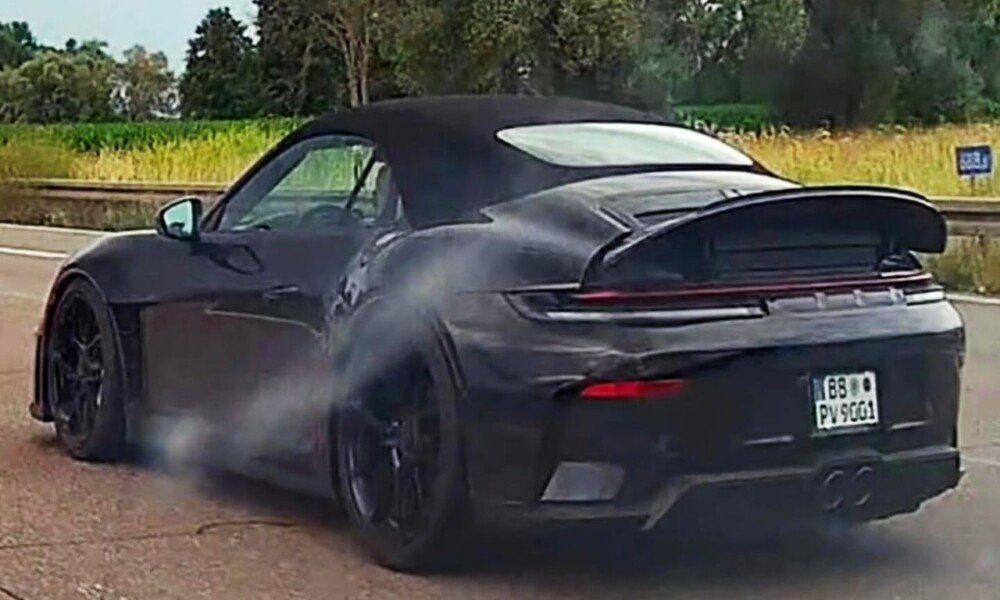
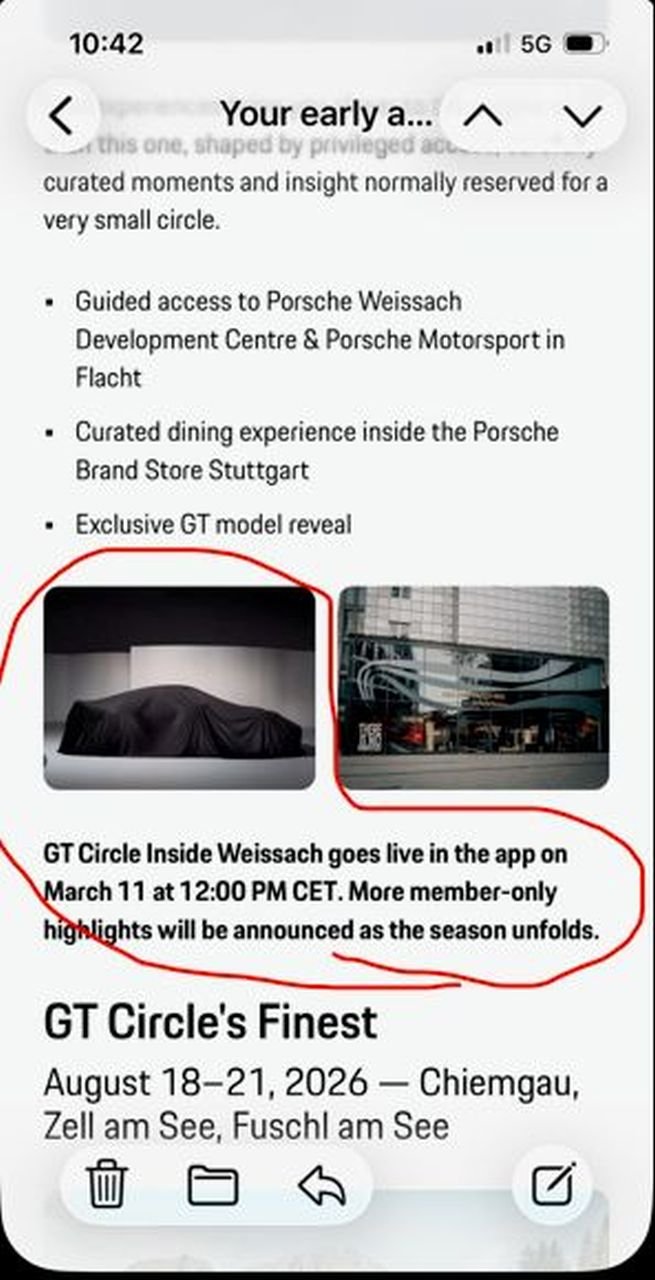
We had recently reported that Porsche was planning to debut the new 911 GT3 Sport Cabriolet in March. Well, we now know that the car will most likely be unveiled on March 11 at 12 pm CET.
A Rennlist forum member has shared a screenshot of an email, which hints at the launch of an “Exclusive GT model” on March 11, 2026. The email also includes a teaser image featuring the car under a black cover.
The Sport Cabriolet is expected to be a convertible version of the 911 GT3. It will feature a folding soft top and a special aero package comprising vents behind the front wheel arches and a sporty rear bumper with dual exhausts in the centre.
The 911 GT3 Sport Cabrio could use the same 4.0-liter, flat-6 engine. Currently, this engine produces 502 hp, which is sent to the rear wheels via either a 6-speed manual or a 7-speed PDK.
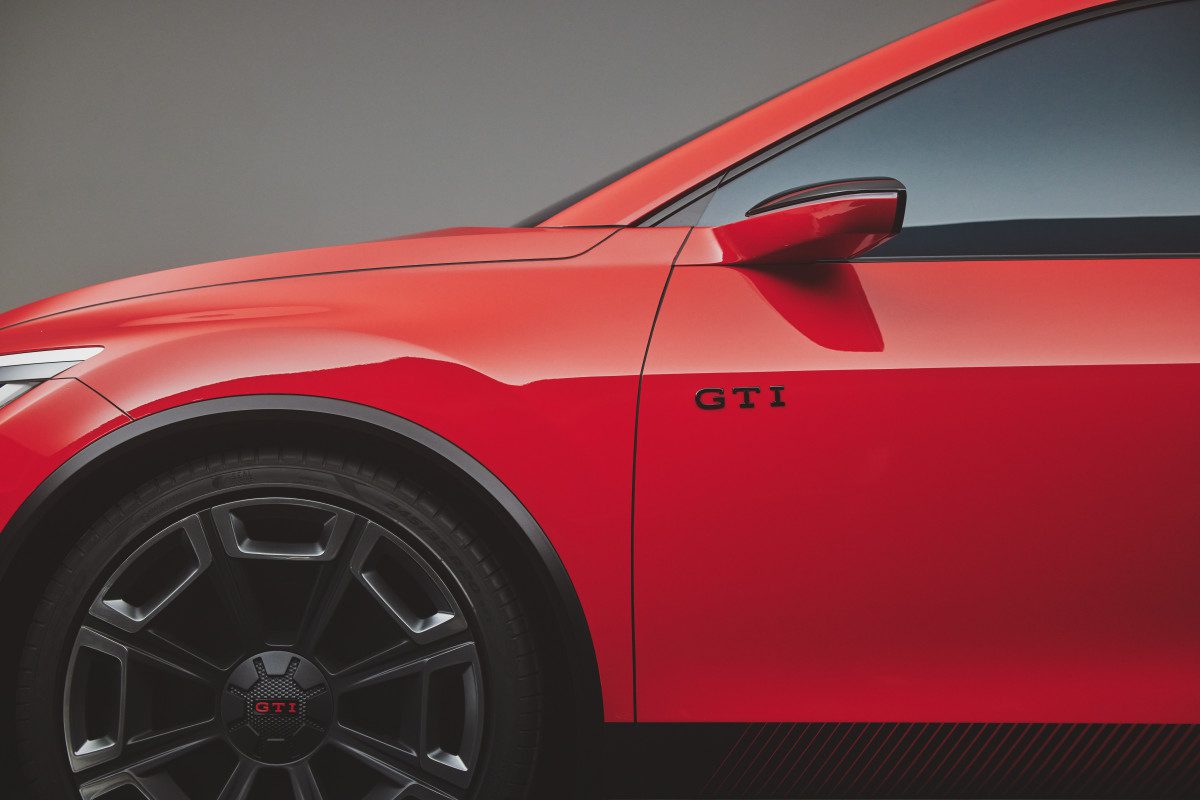
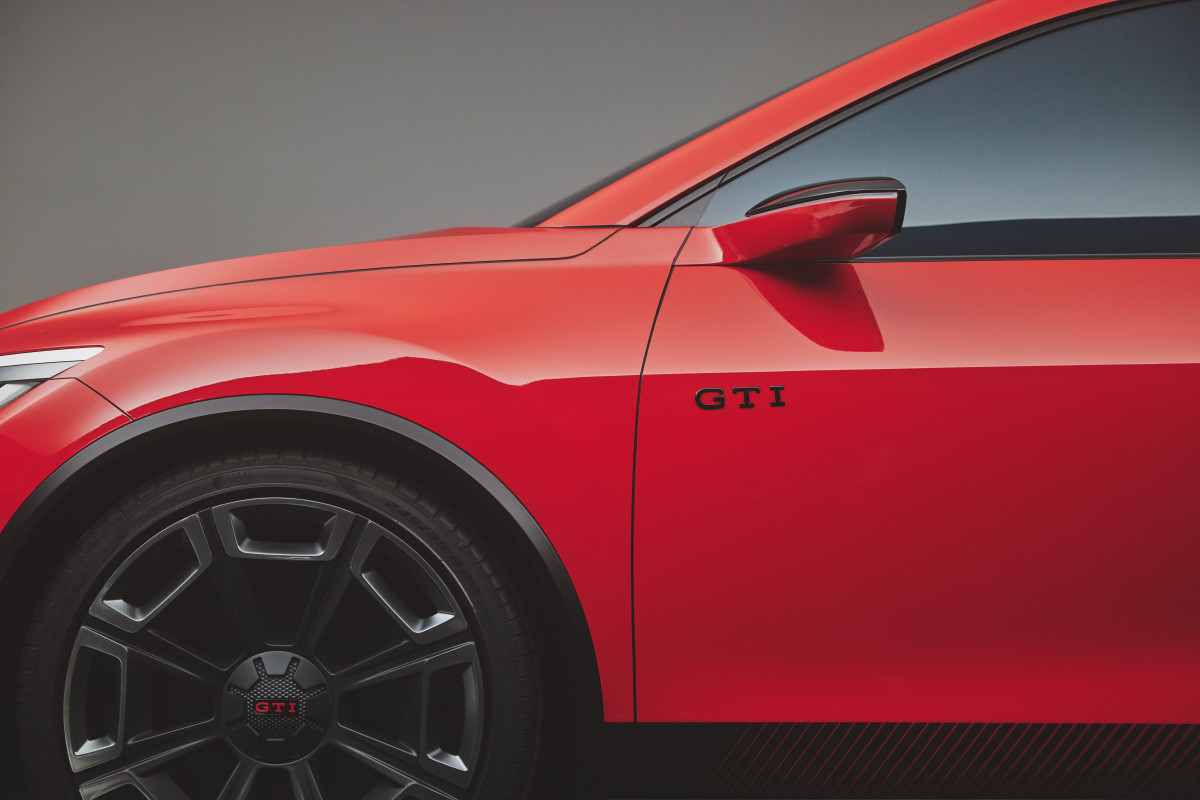
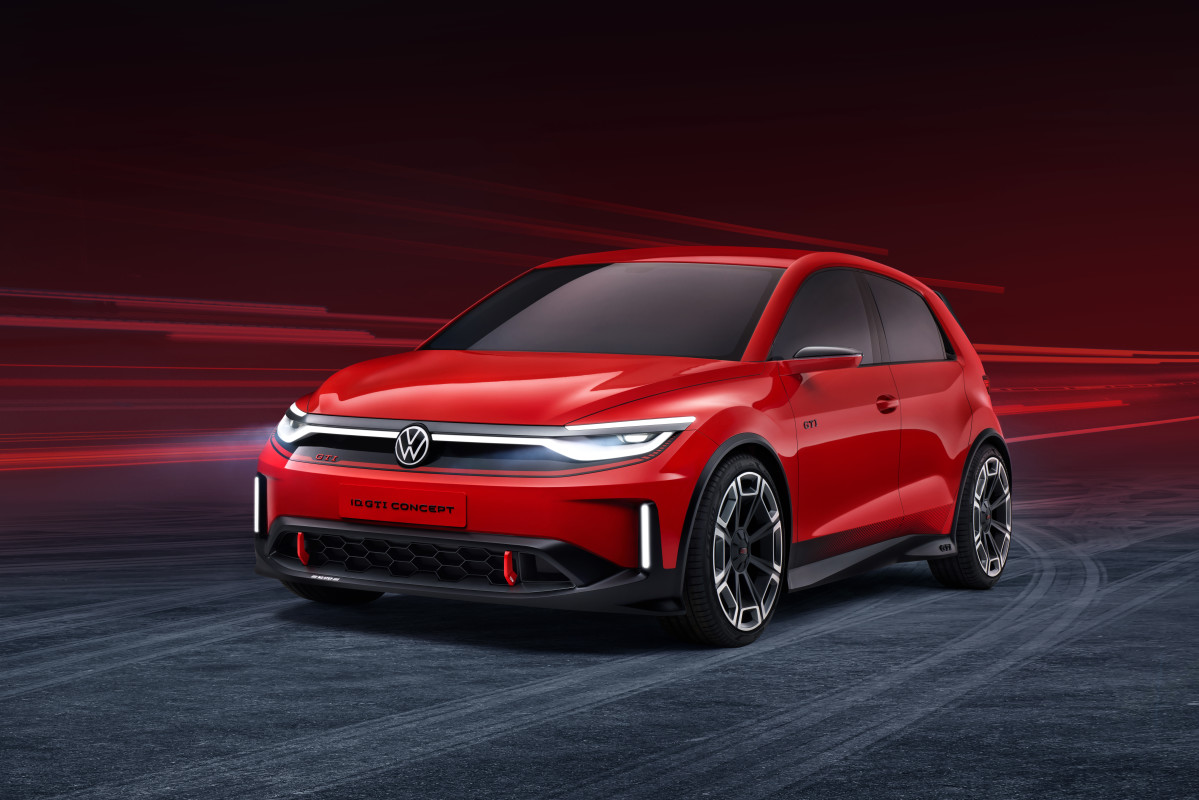
During a works council meeting yesterday, trade union IG Metall revealed the first official teaser image of the next-generation Volkswagen Golf, which will be underpinned by VW’s SSP architecture. Athough at first glance there appears to be little to glean from the solitary photograph, the silhouette is a clear evolution of that of the current eighth-generation hatchback, while also taking inspiration from the ID. GTI concept. Furthermore, the image’s file name includes the words “ID. Golf,” confirming that VW is abandoning alphanumeric names for its EVs in favor of nomenclature that is both more traditional and more memorable. Indeed, the ID.4 is expected to become the ID. Tiguan, and now it’s clear that the electric Golf will similarly evoke its gas-powered sibling, which, for the record, isn’t going anywhere.
Electric Golf Will Coexist with Gas Hatchback
Volkswagen
Last year, Volkswagen confirmed that the gas-powered Golf will continue to exist well into the next decade, and that includes the hot GTI and R variants. While some reports have suggested that the electric Golf has been delayed to the end of the decade, others have claimed that it will arrive in 2028. Either way, the eight-generation VW Golf arrived in 2019 and was already facelifted once in 2024, which means that the gas-powered hatchback will be pretty old by the time the EV alternative arrives. Therefore, another facelift is likely when the ID. Golf debuts, though it may be substantial enough for Wolfsburg to call it a new generation.
Related: Volkswagen’s Tiguan R Targets Toyota’s RAV4 GR Sport With 300+ HP
When that happens, we expect a whole new interior setup, with the return of physical buttons and the addition of customizable gauge cluster displays, likely including some retro themes that will call the Mk.1 Golf to mind. If the gas Golf shares the Scalable Systems Platform (SSP) with the EV, we might see hybrid powertrains being introduced, too.
Golf Production Site Set to Change
Volkswagen
View the 3 images of this gallery on the
original article
Volkswagen ha not confirmed when the new Golf hatches will arrive, but it’s been confirmed that the current 8.5 Golf will no longer be built in Wolfsburg, moving instead to Pueble, Mexico next year. This will allow the German plant to produce the EV, according to IG Metall. Both vehicles are sure to be heavily influenced by the aforementioned ID. GTI concept, which will mean a new face with full-width illumination front and rear, a sharper silhouette, and pronounced wheel arches. With 800-volt dual-motor powertrains and software developed with Rivian, the ID. Golf is sure to be an exciting proposition, but whether it will be successful remains to be seen.
Cadillac is a brand that has managed to do a full 180 from where it was at the start of the 2000s. The era of stuffy, front-wheel drive, and if optioned with the Northstar V8, unreliable cars are a thing of the past. Nowadays, Cadillac is venturing into Formula 1, is one of the only brands having any success in the electric SUV space, and most importantly, is supercharging Escalades.
There may have been some question regarding the reliability of Cadillac at the best of times, as General Motors has not always been as reliable as its Asian rivals like Toyota or Honda. In recent years, GM and Cadillac have managed to pull away from Stellantis and Ford, who are constantly laden with recalls, and are seen as slightly more reliable brands. In this article we will look at Cadillac’s warranty system, and see what they cover, what they don’t cover, and for how long. We will then compare it to some of the industry benchmarks to see how it holds up.
Cadillac
Founded
1902
Founder
Henry Leland
Headquarters
Warren, Michigan
Owned By
General Motors
Current CEO
Johan de Nysschen
All warranty information is sourced directly from the manufacturers, and is correct at the time of writing. Manufacturers may change or update their warranty cover or terms and conditions at any time.
Cadillac Warranty Period Overview
New-vehicle Limited Warranty
4 years/50,000 miles
Powertrain Limited Warranty
6 years or 70,000 miles
24/7 Roadside Assistance
6 years or 70,000 miles
Safety Restraint System Limited Warranty
6 years or 72,000 miles
Anti-perforation Limited Warranty
4 years or 50,000 miles
High-voltage Battery Limited Warranty
8 years or 100,000 miles
Federal Emissions Control Warranty*
2 years of 24,000 miles
8 years or 80,000 miles
Cadillac Powertrain Warranty And Other Basics
New-vehicle Limited Warranty
2025 Cadillac Optiq driving front 3/4Cadillac
Cadillac will replace or repair parts with manufacturing faults for a period of three years or 36,000 miles, whichever comes first. In the event that parts are covered by a warranty, this guarantee also covers towing costs to the closest Cadillac dealership. Here are some highlights because the list of exclusions is longer than the number of topics covered:
Direct factors beyond the manufacturer’s control (i.e. damage from accidents, racing, off-roading, modification, etc.)
Damage due to a lack of proper/regular maintenance
Normal wear and tear/deterioration
Altered mileage
Tires
Normal maintenance
Powertrain Limited Warranty
2025 Cadillac Lyriq front 3/4 chargingCadillac
For the brand’s EV and hybrid vehicles, the powertrain limited warranty covers damage or broken parts related to the engine, gearbox, front/rear drive systems, motor, and high-voltage drive components for the first five years or 70,000 miles. In the event that the automobile breaks down and cannot be driven, this guarantee also covers towing costs to the closest Cadillac dealership. According to Cadillac, slight noise, vibrations or other normal characteristics of the vehicle, and routine maintenance are not covered, and it is the owner’s duty to change the oil, filters, and other components on schedule.
24/7 Roadside Assistance
2025-2026 Cadillac Escalade IQCadillac
Regardless of whether the damaged component is covered by a warranty, Cadillac will pay for all towing costs if your new car breaks down and cannot be driven for the first three years or 36,000 miles. Towing costs will be reimbursed for the duration of the powertrain limited warranty, which is five years or sixty thousand miles, if the damaged parts are covered.
Airbags, seat belts, and associated systems are covered for six years or 72,000 miles if they were defective or damaged at the factory. For cars acquired in the state of Kansas, seat belts and related components are assured against defects in manufacturer’s materials and workmanship for a duration of 10 years with unlimited miles. The list below includes what isn’t covered:
Repair or replacement due to misuse, negligence, improper repair or adjustment, alteration, or accident/collision damage
Replacement of proper functioning part for comfort or appearance
Incidental or consequential damages such as loss of the vehicle
If the vehicle is classified as a total loss or has a salvage title
Corrosion Warranty
This refers to any rust that appears on your Cadillac vehicle. Cadillac will repair or replace any panal or part for four years or 50,000 miles. If rust gets to the point of corroding through a panal or part, then Cadillac has a separate warranty for that situation.
Rust Through Protection
This covers all body and sheet metal components against rusting through. If an actual hole in the panel, Cadillac will warranty the vehicle for six years or 100,000 miles.
Automakers are obligated by law to give a 24-month/24,000-mile guarantee on emissions systems starting at the time of sale. Air/fuel metering system components, the ignition spark system, PCV system, hybrid systems (PHEV and Mild Hybrid), air induction system, exhaust system, EGR system, fuel evaporative system, and other various parts used in those systems, such as hoses and clamps, are all covered by the 24-month warranty. Major emissions warranty parts are covered for eight years or 80,000 miles. These include the catalytic converter, electronic emission control unit, and the onboard emission diagnostic device.
California Emissions Control Warranty
California requires extra legislation for automakers, specifically when it comes to emissions. There are a number of states that follow California Emissions Control, and these warranties also apply to any Cadillac that is first registered in those states as well. The states that are included are: California, Colorado, Connecticut, Delaware, Maine, Maryland, Massachusetts, Minnesota, Nevada, New Jersey, New York, Oregon, Pennsylvania, Rhode Island, Vermont, Virginia or Washington.
This warranty guarantees that any necessary repairs or replacement parts will be paid for at no cost if your Cadillac fails a California smog test within the first three years of 50,000 miles. Failing a smog check could happen for a number of reasons, including fuel leaks, defective airflow sensors, and more.
Any defects to long-term emissions control systems are covered by Cadillac for seven years or 70,000 miles, which ever comes first. When it comes to TZEVs (transitional zero emission vehicles), which are vehicles powered by a hybrid or plug-in hybrid powertrain, emissions-related components are warranted for 15 years or 150,000 miles, whichever comes first. TZEV hybrid batteries are also covered for 10 years or 150,000 miles in any state following California Emissions Control.
Cadillac Vs Hyundai Vs Kia Warranties
2025 Kia K4 GT-LineKia
Cadillac VS Hyundai VS Kia Warranty Comparison
Warranty Type
Cadillac
Hyundai
Kia
Powertrain Limited Warranty
6 years or 70,000 miles
10 years/100,000 miles
10 years/100,000 miles
New-vehicle Limited Warranty
4 years/50,000 miles
5 years/60,000 miles
5 years/60,000 miles
Anti-perforation Warranty (Rust Warranty)
4 years/50,000 miles
7 years/unlimited miles
5 years/100,000 miles
EV/Hybrid/High-voltage Battery Coverage
8 years/100,000 miles
10 years/100,000 miles
10 years/100,000 miles (EV only)
24-hour Roadside Assistance
6 years or 70,000 miles
5 years/unlimited miles
5 years/60,000 miles
While not quite as good as the two best warranties currently offered from Hyundai or Kia, Cadillac does put up a pretty good showing. This is especially true when it comes to roadside assistance, where it beats out the Hyundai and Kia warranties so long as you’re within the millage restriction. As for the rest, Cadillac falls short by a year or two in most categories, but is about average or slightly above average when compared to other luxury brands like BMW or Mercedes. Our article looking at Kia’s warranty can be found here, and our article looking at Hyundai’s warranty can also be found here.
EV sales in February have rebounded strongly from a slow January, taking an 11.8 per cent share of the total new car market, up from 8.4% a month earlier, and led by a resurgent Tesla, as well as Chinese EV makers BYD and Zeekr.
The main drive was the lift in sales from Tesla’s still limited EV lineup, which showed strong sales growth during the month, accounting for over 3,200 sales. BYD sales – which led in January – also remained strong with 2,969 during the month and it was notable that China, for the first time, was the biggest source of new cars in Australia for the first time.
The latest data from the Federal Chamber of Automotive Industries (FCAI) shows that 7,715 battery electric vehicles were sold in Australia in February.
The total vehicles for the month came in just over 90,000 vehicles sold during the month, tallying up to 94,131 when EVC data was combined with the FCAI vFacts data.
Most major EV makers had multiple incentives during February, which contributed to these sales as well as the broader availability of some recently launched affordable EV models.
This is also a big jump over last year, when EVs only accounted for 5.9% in February 2025, compared to the 11.8% in February 2026.
EV Sales Breakdown – February 2026
FCAI vFacts
7,715
EVC (Polestar + Tesla)
3,419
EV Sales Total (FCAI + EVC)
11,134
Total Vehicle Sales (FCAI + EVC)
94,131
EV sales over the first 2 months of 2025 totalled 9,516, and 2026 shows 18,543 electric cars made it onto the road so far this year.
In February, PHEV sales saw an increase from previous months, with 5,854 PHEVs sold during the month which was up from 4,871 sold last year during the same period.
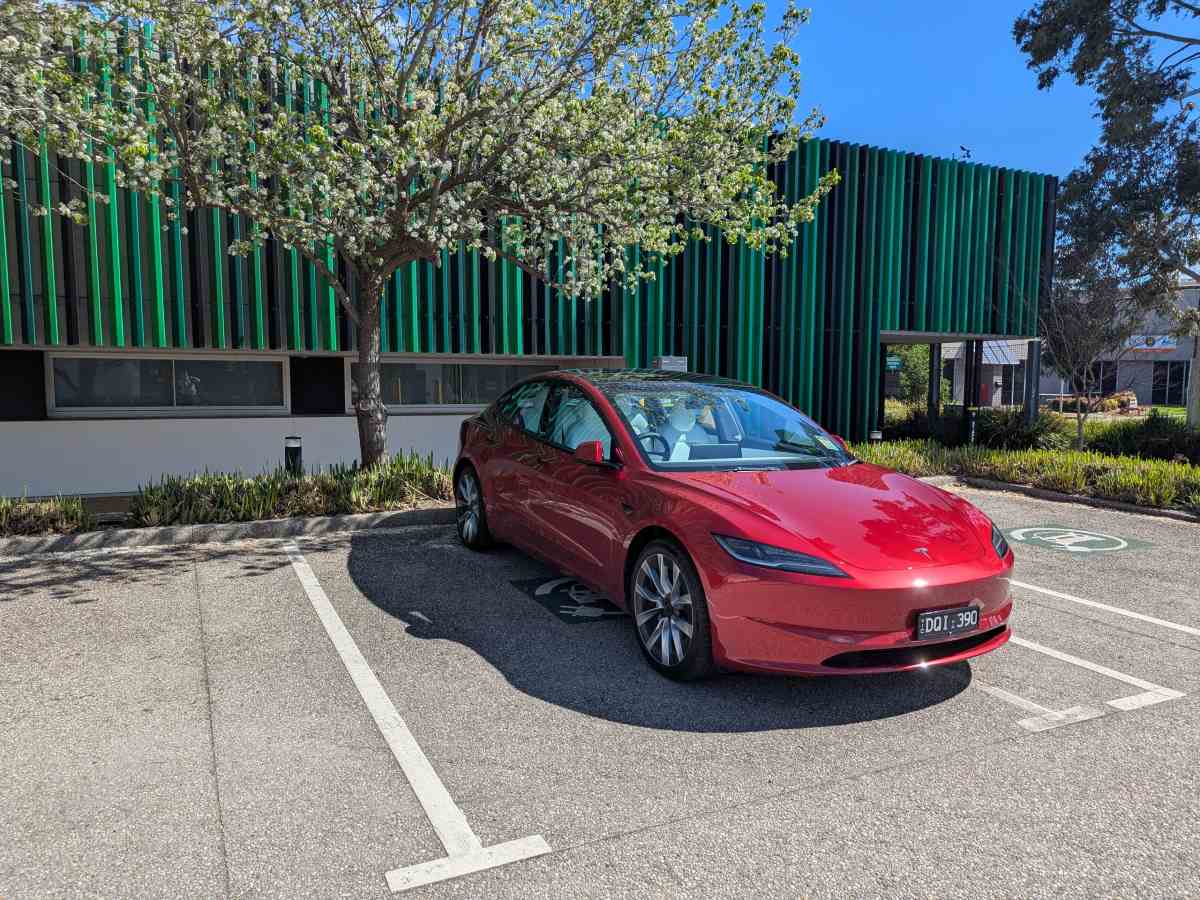
Looking into the EV models that made up the top 5, the Tesla Model Y bounced back to the top with 2,971 sales and BYD’s Sealion 7 SUV came in the second spot with 1,327 sales.
The third spot stood out with Zeekr’s 7X, raking in 628 sales in its second month of deliveries. Tesla Model 3 and Geely EX5 made up the rest of the top 5.
Image: Riz Akhtar
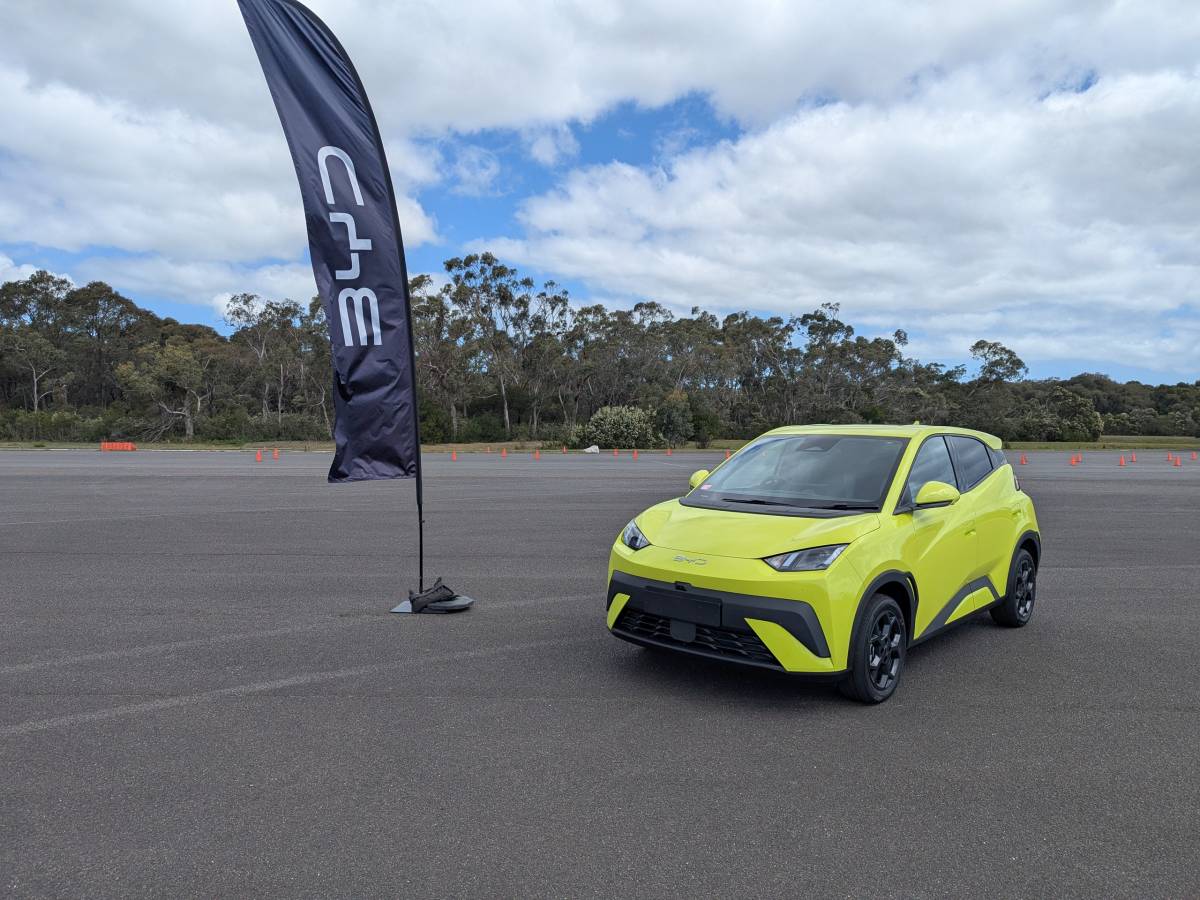
Other notable mentions are the BYD Atto 1, Australia’s cheapest EV, which saw 349 sales in its highest month of sales to date.
The best-selling EVs in February 2026 were:
Tesla Model Y – 2,791 sales
BYD Sealion 7 – 1,327 sales
Zeekr 7X – 628 sales
Tesla Model 3 – 483 sales
Geely EX5 – 416 sales
MG MG4 – 406 sales
BYD Atto 3 – 384 sales
Omoda Jaecoo J5 – 369 sales
BYD Atto 1 – 349 sales
BYD Atto 2 – 347 sales
BYD Seal – 302 sales
The Driven is waiting to hear back from various manufacturers regarding sales of some EV models, and this will be updated once they are received.
February also marked the first month when vehicles made in China overtook Japan. “After 28 years, Japan has been overtaken by China as the largest source of vehicles for the Australian market in a single month,” FCAI CEO Tony Weber said.
“The Australian market is one of the most open and competitive in the world. New brands can enter, establish dealer networks and compete on price, technology and design. Consumers are the beneficiaries of that competition.”
The uptick in sales shows solid growth compared to previous years, with a ramp-up in incentives for February, leading to YTD EV sales almost doubling in 2026, making it the strongest year for BEV uptake so far.
See full details of EV sales for each month of the year in our database here.