Author: admin

  • 2027 Mercedes-AMG GLC53 First Look: Hello, Inline-6 Engine

    2027 Mercedes-AMG GLC53 First Look: Hello, Inline-6 Engine

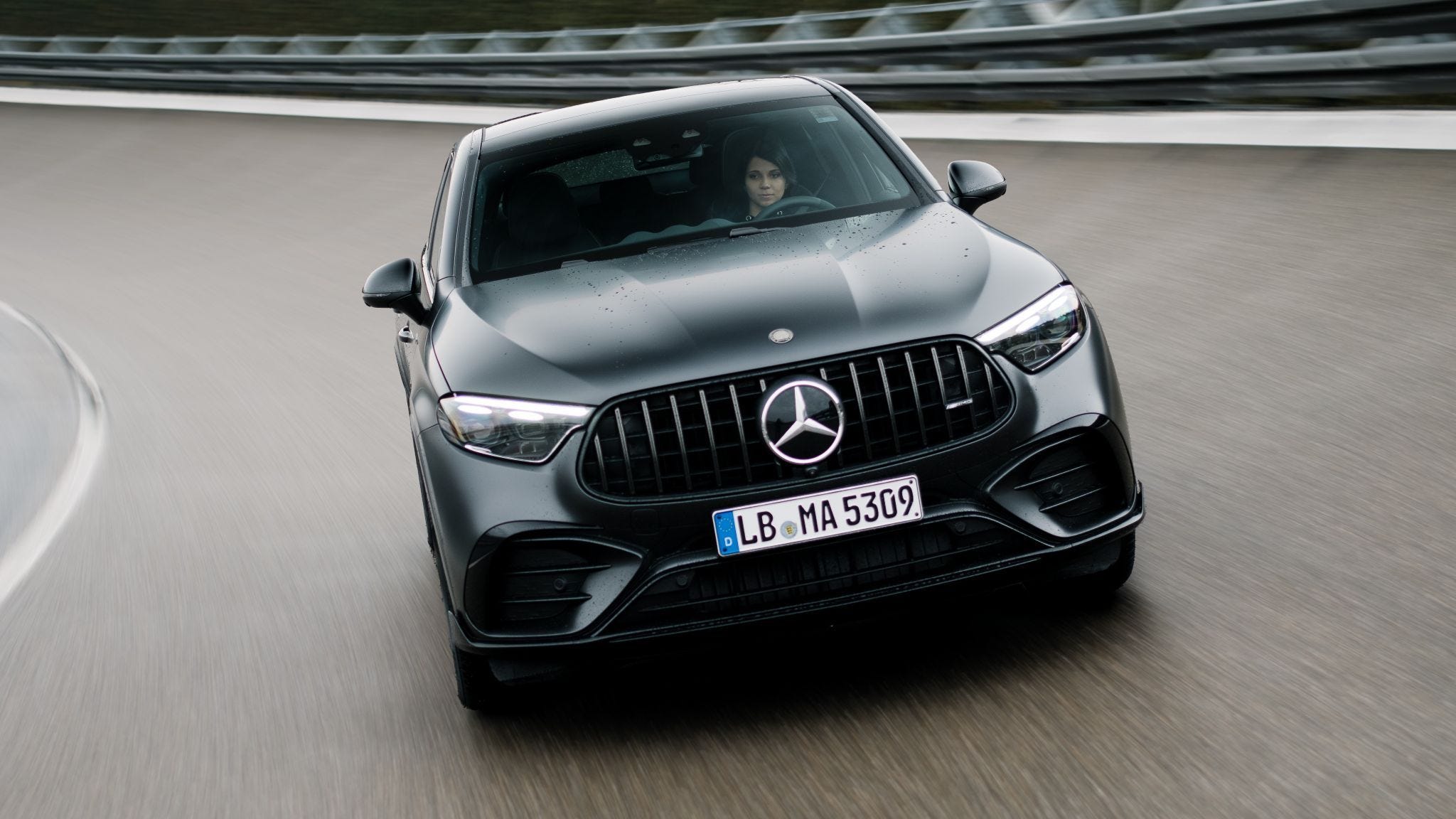
    The AMG is distinguished by its front fascia with a larger front splitter up front, as well as a larger lip on the rear spoiler on the roof (SUV) or trunklid (coupe) and a diffuser in glossy black.

    ADVERTISEMENT – CONTINUE READING BELOW

    The biggest change is the turbocharged four-cylinder engine that has been a Mercedes mainstay is gone. It is being discontinued because it will not meet future emissions regulations.

    So, powering the 2027 GLC53 is Mercedes’ 3.0-liter turbocharged inline six-cylinder engine that has been given the AMG treatment. The result is a 443-hp, 443-lb-ft powerplant with a powerful exhaust note and an overboost function to deliver an extra adrenaline burst. The overboost provides 472 lb-ft of torque for 10 seconds to help make sprints in the passing lane even quicker.

    ADVERTISEMENT – CONTINUE READING BELOW

    Yup, The GLC Has a Drift Mode

    The engine is paired with the AMG nine-speed automatic transmission and drives all four wheels via 4Matic all-wheel drive as standard. Customers can choose to add an electronically controlled limited slip differential that includes a Drift Mode and the ability to make the vehicle rear-wheel drive. These are firsts for an AMG SUV and come as part of the AMG Dynamics Plus package.

    The I-6 has a turbocharger as well as an electric auxiliary compressor to help smooth the torque curve. The modified engine has a new cylinder head and intake camshaft. It is also deliberately louder, with an exhaust note that varies across the five available drive modes. The AMG Dynamic Plus package also adds a Race drive mode.

    ADVERTISEMENT – CONTINUE READING BELOW

    The second-generation integrated starter-generator takes on hybrid functions by supporting the engine at lower speeds with 23 hp and 151 lb-ft while also helping with energy recuperation and smoother start-stop transitions.

    Standard rear-axle steering provides more agile turn-in, better handling, and a reduced turning circle.

    ADVERTISEMENT – CONTINUE READING BELOW

    Mercedes says the 2027 model ups the towing capability for the U.S. market (no figures yet) and is compatible with a Class II hitch.

    Source link

  • Nissan Z Heritage Edition Wrecked Immediately at Port While Still in Protective Plastic

    Nissan Z Heritage Edition Wrecked Immediately at Port While Still in Protective Plastic

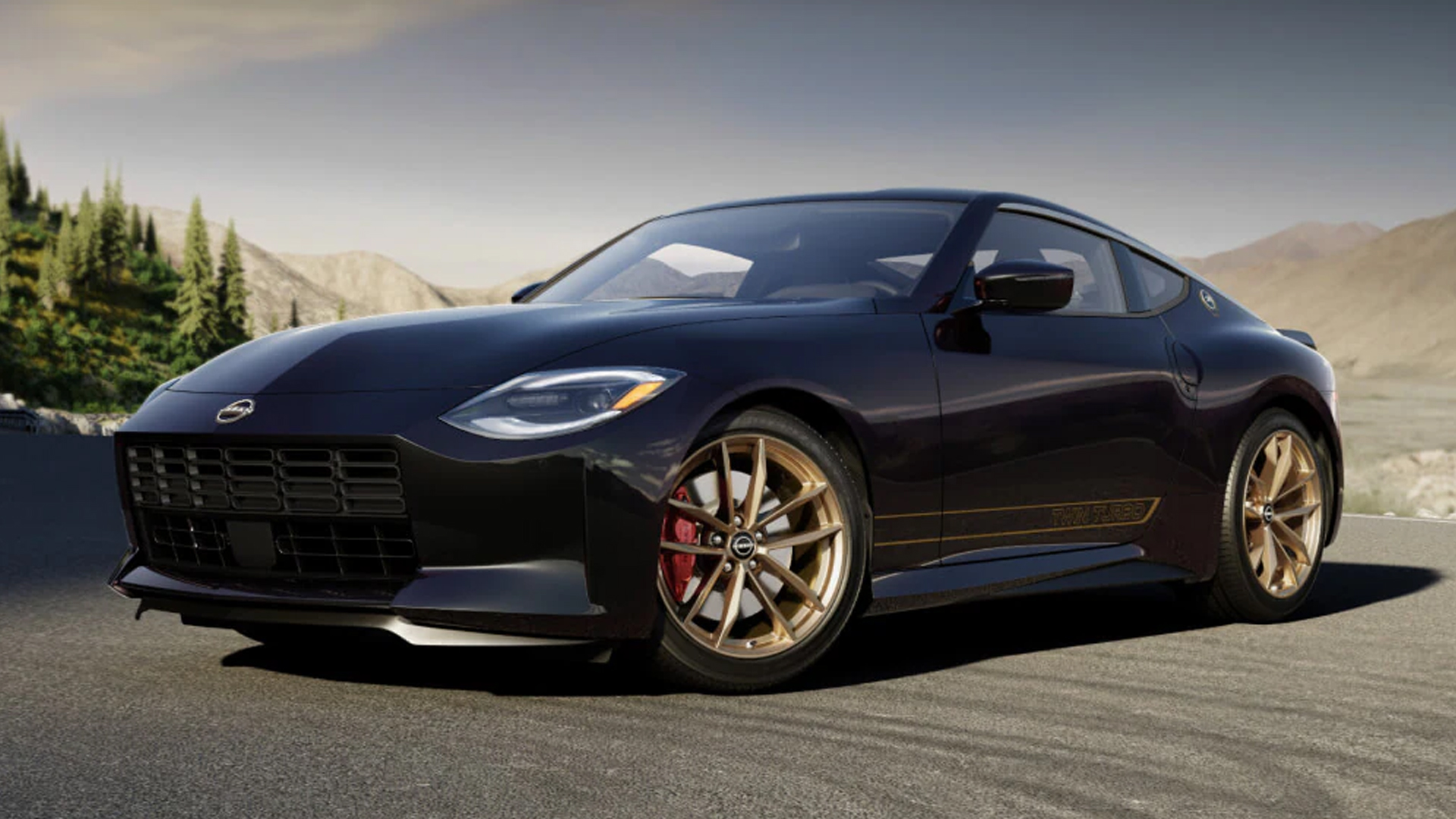
    The 2026 Nissan Z Heritage Edition features some neat decorative details and unique Midnight Purple paint. Only 500 were slated to hit U.S. dealerships—that number might already be down to 499, as one of these special Zs was reportedly wrecked before it could even be collected from the port where it entered the country.

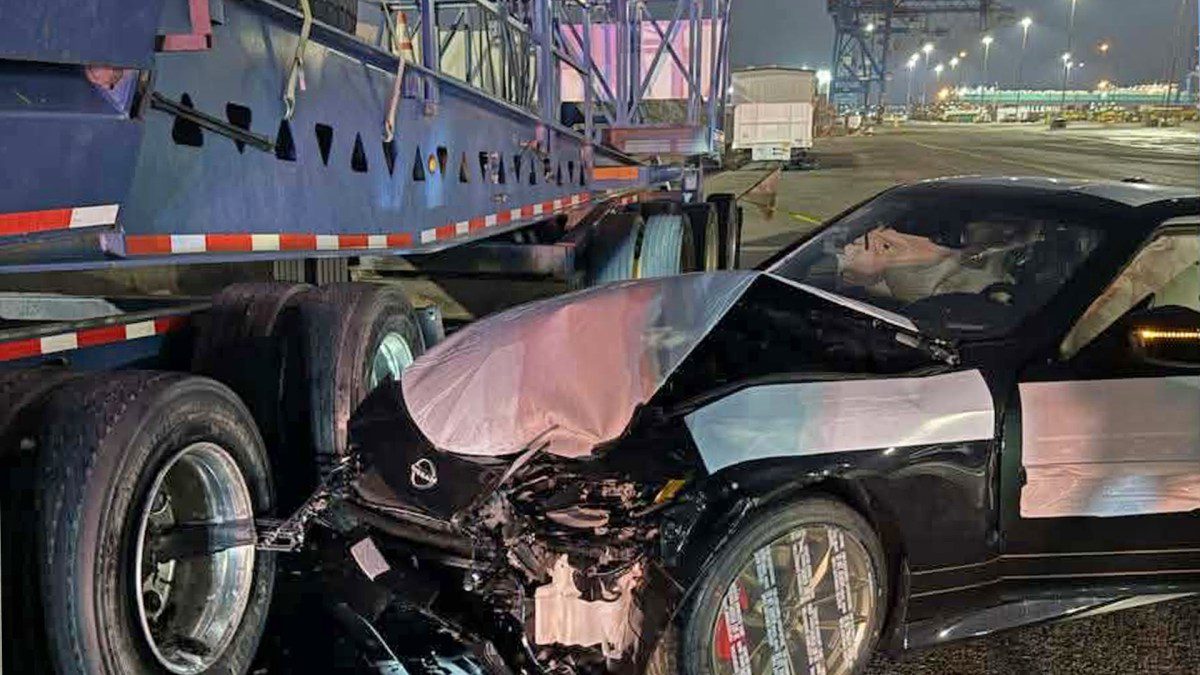
    An anonymous source shared these images of a wrecked Z at a port in Baltimore, Maryland, from just a few days ago. It’s tough to tell that it’s purple, as the photos were taken at night, but the wheels and gold stripes on the door make it clear that this Z is (was) a Heritage Edition model for sure.

    Our tipster had quite the story to share about how the wipeout happened, too. Apparently, an over-the-road trucker pulled up to the port on a windy, rainy night at the end of February to collect a batch of Nissans—including this Z. And their collection was routine, until it came time to load this Z.

    “Nissan’s pickup lot is a rather wide area that spans across one of the end berths at the port, and the road directly in front where the accident occurred is very, very wavy and bumpy,” our source explained. “… anything going over 40 mph over these bumps is catching air.”

    You can probably see where this is going. Here’s how our connection broke down the incident (edited for formatting):

    “So the trucker loads all of the SUVs on, and the last vehicle to go on [was] this Z. Now his truck is parked at one end of the lot, while the Z is at the other end … just under a quarter mile, maybe. He gets in it, pulls it out, and decides to just gun it down the road alongside the pier, reaching speeds of probably 60-70 mph. The car then hits one of the first big bumps, and that’s when he lost traction and hydroplaned towards a pile of new Nissans that were awaiting pickup. He attempted to avoid it, but couldn’t bring the rear back in. He managed to clip four brand new Nissan Rogues, and then spun into a parked Lowboy modular trailer parked against a wall on the other side of the road.”

    Yikes. We don’t know what exactly became of the driver, just this: “He walked out unharmed, and as far as I know, he’s barred from the port.”

    The one-of-500 Z reportedly had just 3 miles on the odometer.

    I dropped Nissan a line to ask if this incident has been on the company’s radar at all at a corporate level, and whether or not an “extra” 2026 Heritage Z would be built to match the original planned output. I’ll update this story if the brand comes back with any kind of official response. If I had to guess personally, I think it’s just going to get written off, and Midnight Purple 2026 Zs just became 0.2% more rare.

    Midnight Purple Nissan Z
    Here’s what a Midnight Purple Z looks like when it’s in one piece—much prettier. Nissan

    Got a tip? Drop us a line at tips@thedrive.com.

    Automotive journalist since 2013, Andrew primarily coordinates features, sponsored content, and multi-departmental initiatives at The Drive.


    Source link

  • Next-gen PHEV tech coming to Chery line-up

    Next-gen PHEV tech coming to Chery line-up

    CHERY is planning a wholesale makeover of its entire global and Australian line-up, headlined by two new plug-in hybrid powertrains along with re-engineered platforms and the promise of much-improved vehicle dynamics, as well as the possibility of Chery’s Fulwin A9L plug-in hybrid electric sedan and QQ3 small electric car being made available for Australia


    The latter two vehicles were displayed as camouflaged test mules at Chery’s international reveal of the KP31 Ute Concept in Sydney – following heat and durability testing undertaken in the Australian outback – and while they’re both exclusively left-hand-drive for now, Chery’s Australian management is pushing hard for both cars to be produced in right-hand drive.


    “We make other interesting cars as well,” said Lucas Harris, chief operating officer at Chery Australia, highlighting that the brand doesn’t just make SUVs.


    “Hopefully if we make enough noise, eventually we’ll get some of that extra product here,” he said, referring to the Fulwin A9L and QQ3.


    “No one is shouting louder than me to bring some extra segments to Australia.”


    In terms of their niche potential, the QQ3 would become Chery’s first dedicated electric car (as opposed to the E5 variant of the Chery C5/Omoda 5) – competing against the BYD Dolphin, GWM Ora and MG 4.


    Measuring 4195mm long, 1811mm wide and 1572mm tall, and riding on a 2700mm wheelbase, it’s a ‘wheel-at-each-corner car’ that just launched in China with a rear electric motor and rear-wheel drive, with power outputs spanning 58kW to 90kW (though with battery size unspecified) and range claims spanning 230-330km WLTP.


    The handsome Fulwin A9L fastback sedan would sit at the opposing end of Chery’s line-up – a large ‘new energy’ plug-in hybrid flagship sedan, developed to meet global safety and design standards, that could potentially be branded as an Omoda in Australia (though it has been reported by Car News China that it will be exported as the Exeed ES7).


    At 5018mm long, 1965mm wide and 1500mm tall, with a 3000mm wheelbase and a slippery 0.23Cd drag coefficient, the A9L is powered by a direct-injection turbocharged 1.5-litre four-cylinder petrol engine combined with a 33.7kWh square-blade LFP battery, and features sophisticated suspension hardware with magnetic adaptive damping.


    The single-motor version produces 275kW/530Nm, while the dual-motor AWD version offers 470kW/854Nm for a 0-100km/h time of around 4.0 seconds. Claimed electric range is 213km WLTP while a 30-80 percent fast charge takes 14.5 minutes.


    As for the next-generation ‘Chery Super Hybrid’ (CSH) powertrains destined for production from later this year, Chery revealed basic details of power and torque outputs and made several grand efficiency claims about the capabilities of these powertrains.


    Speaking to Australian media at the unveiling of the KP31 Ute concept, Chery’s chief engineer for international programs Peter Matkin said there will be two new set-ups – the 160kW/275Nm ‘DHT160’ for SUVs between 1500 and 2000kg, and a more powerful 260kW/330Nm ‘DHT230’ for SUVs weighing over 2000kg.


    They’ve been developed for global markets, from -30 degrees Celsius to over 50-degree ambient temperatures, and Chery claims “lower fuel consumption, stronger performance, and a smoother, more refined driving experience”, as well as class-leading thermal efficiency for the direct-injection petrol engine and a combined range goal of 1650km WLTP.


    Given the core age of most SUVs in Chery’s current line-up – the Tiggo 4 (launched 2017), the Tiggo 7 (2019), and Tiggo 8 (2018) – expect new-generation versions of these models to start appearing later in 2026 and into 2027.


    Each will feature significantly re-engineered T1X platforms (they share the same architecture underneath) and, for the first time, a global focus on suspension design and chassis tuning.


    “All the architectures at the moment are actually being updated,” said Mr Makin.


    “We’re updating that architecture to spawn much smaller cars (and) updating the architecture for the cars that we’re selling today.


    “So, we will get new technology [and] be much more advanced.


    “It’ll be a new version of the T1X (platform) – a new architecture, completely redeveloped,” he said, though Australia will see yet another facelift of the existing, nine-year-old Tiggo 4 later in 2026, in line with its debut in the UK and some European markets, before a re-engineered, new-generation version arrives here in 2027.


    What will set these new-generation Cherys apart is that they will finally be designed for the immense challenges of international road surfaces, rather than China’s smooth, straight surfaces.


    “What we’re trying to do now is make sure we’ve got the bandwidth so we can tune the car and still meet the requirements of markets like China and Middle East – where the roads are all straight – and then also satisfy markets like Australia and others where much more dynamic performance (is required),” Mr Makin told GoAuto.


    “Trying to make sure we can fit anti-roll bars that are bigger than what we have today in China is critical. So, all the new architectures and the new cars, we’re making sure we cascade all these requirements – making sure you get the damper bandwidth much higher, to get the spring frequencies better.


    “Originally, the business model at Chery was we always sold whatever was the specification in China. We sell internationally, and we only change for regulation. But now for Europe, for the UK, for Australia, New Zealand, we’re changing.


    “We’ve got about 250, 260 requirements, which we now cascade into the each of the programs to make sure that we can meet the right capability, which includes all the dynamic performance.


    “So, we’re modifying anti-roll bars, springs, dampers, bush ratings, retuning the steering. The brakes are completely different. Some of them will be upsized, so there’s a lot of dynamic requirements, particularly in Europe, where the speeds are much higher.”


    The Chinese chassis engineers have been quite astonished by the varying road conditions and the driving pace of international markets – contrasting sharply with China’s new infrastructure, modern lighting and heavy speed restrictions.


    “Before we launched Tiggo 7, we had some engineers come out and we did a loop from roads up the Old Pacific Highway across and then back down through Wiseman’s Ferry,” said Lucas Harris.


    “And when we got back to the office, the guy said to me: ‘I counted 80-something different road surfaces and some ridiculous number of different lane-marking scenarios … I can’t believe it. It’s just beyond comprehension.’


    “We did a drive through Inner Western Sydney [namely Marrickville], and same thing – he just couldn’t understand why the road wasn’t uniform. And every capital city in Australia you go to different.


    “Lane markings, different road signs, it’s just mind-blowing(to the Chinese). And those roads through Wiseman’s Ferry with speed limits of 100km/h. It’s narrow, (with) close oncoming traffic, and I’m doing 100km/h and they’re just like hanging on for their life!” he said.


    Mr Matkin recounted a similar experience he had with one of Chery’s domestic chassis engineers: “the head guy for vehicle dynamics, I go drive with him on the test track (and I said) ‘You need to go faster.’


    “‘This is too slow, yeah?’ (he said). I mean, I’m not a dynamics guy but I can drive faster – they’re just not used to it. They just don’t understand why anybody would drive at that speed. You know, you enter the ramp up to the highway, and it’s 40km/h with a speed camera in China, whereas in this market it’s 100km/h, 110, otherwise you can’t join the highway. So they’re just not used to it.


    “Everything in China is about safety. They’re very risk adverse with everything … they’re just not used to people driving this quick. We have this long, long wave test, which we normally do on a proving ground.


    “But in some of the international markets, the infrastructure isn’t new. It’s 100 years’ old, so the roads need maintaining. And sometimes (countries) can’t afford to maintain (them), so they just put a sign up.


    “There are bumps so you slow down, yeah? But some people don’t so, and they don’t get this. They don’t unless they experience it. We have to we bring them over, show them the different driving conditions,” added Mr Matkin.


    Given this newfound focus on international chassis and suspension development, as well as dynamic tuning led by Chery’s R&D centre in Frankfurt, there’s a good chance the forthcoming generation of Chery SUVs could bury the less-than-stellar reputation for sub-standard steering, suspension control and overall calibration.


    Yet even without the benefit of this re-engineering and new technologies, Chery sold over 2.8 million vehicles in 2025, which represented year-on-year growth of 15 per cent, and with a record 1.3 million vehicles exported.


    Among that substantial tally, Chery’s ‘New Energy’ vehicle sales jumped 55 per cent year-on-year to more than 900,000 units globally.
    Source link

  • Mazda 3 Sedan Generations Ranked By Reliability

    Mazda 3 Sedan Generations Ranked By Reliability

    The Mazda 3 Sedan is the Japanese brand’s entry-level sedan offering and, following the retirement of the Mazda 6 from the North American lineup, is the only four-door sedan Mazda USA offers – rivaling other compact sedans like the Toyota Corolla and Nissan Sentra. However, while its Japanese roots and engineering do mean reliability is on Mazda’s side, not all Mazda 3 Sedan generations are ranked equally when it comes to reliability. We’ll review all generations of the Mazda 3 Sedan to discuss some of their common issues mechanically, ranking them from worst to best, based on their reliability records.


    Mazda-logo

    Base Trim Engine

    2.5L SKYACTIV-G I4 ICE

    Base Trim Transmission

    SKYACTIV-Drive 6-speed automatic

    Base Trim Drivetrain

    Front-Wheel Drive

    Base Trim Horsepower

    186 HP @6000 RPM

    Base Trim Torque

    186 lb.-ft. @ 4000 RPM

    Base Trim Fuel Economy (city/highway/combined)

    27/36/30 MPG

    Infotainment & Features

    8 /10


    This analysis is based on a variety of reputable sources for reliability, taking into account the number and severity of consumer complaints and recalls. J.D. Power quality and reliability ratings have been included, if available. J.D. Power ratings are an assessment of initial reliability, not long-term reliability, so all of the above factors are considered together. We rank these generations from least to most reliable.

    We have excluded the 2022 and newer 4th-generation Mazda 3 Sedan as, currently, there is not enough sufficient reliability data available at this time.

    Mazda 3 Overview – 1st-4th Generations

    1st Gen

    2nd Gen

    3rd Gen

    4th Gen

    Model Years

    2004–2009

    2010–2013

    2014–2018

    2019–2021

    Engine

    2.0L, 2.3L Naturally Aspirated Inline Four-cylinder

    2.0L, 2.5L Naturally Aspirated Inline Four-cylinder

    2.0L, 2.5L Naturally Aspirated Inline Four-cylinder

    • 2.0L, 2.5L Naturally Aspirated Inline Four-cylinder
    • 2.5L Turbocharged Four-cylinder

    Transmission

    • 4-speed Automatic Transmission
    • 5-speed Manual Transmission
    • 5-speed Automatic Transmission
    • 6-speed Manual Transmission

    6-speed Automatic/Manual Transmission

    6-speed Automatic/Manual Transmission

    Drivetrain

    FWD

    FWD, AWD

    4

    Second Generation (BL): 2010–2013

    Highest J.D. Power Rating: 83/100 (MY 2010)

    Out of all the Mazda 3 generations, the second-gen models are considered the most trouble-prone. Produced from 2010 to 2013, the second-generation Mazda 3, known internally as the BL-generation, saw an all-new front fascia define this model. There was no shortage of comments comparing its resemblance to a grin, leading to its aforementioned nickname of Mazda’s ‘smiling grille’. Mazda’s new generation of engines, known as ‘SKYACTIV,’ made its debut in post-update models of the Mazda 3 2012, which all Mazda 3s have used since.

    Common Issues: Second-gen (BL) Mazda 3

    • Clutch problems
    • Powertrain issues
    • Electrical issues

    The second-generation Mazda 3 Sedans are among the models with the most serious complaints, as well as models with the most complaints out of all generations, according to both Car Complaints and NHTSA data, with 2010 models in particular recording the highest number of recalls and complaints out of all years of the second-gen.

    Some of the most reported issues affecting these models include electrical problems caused by faulty control modules, with the Transmission Control Module (TCM) being a particular concern in recent years, resulting in multiple reports of drivetrain failure. 2010 Mazda 3s are also reported to have problematic clutches on the manual-equipped models, with many experiencing premature wear or failure, but to the frustration of many owners, Mazda has not issued an official recall to rectify this faulty component.

    “The 2010 Mazda MAZDA3 has the most overall complaints, & we also rate 2010 as the worst model year ranked on several factors such as repair cost & average mileage when problems occur. Issues with clutch failure might be giving 2010 MAZDA3 owners headaches, but the lack of support from Mazda is giving them migraines.”

    3

    Third Generation (BM/BN): 2014–2018

    Highest J.D. Power Tating: 78/100 (MY 2014)

    The third-generation Mazda 3 sedans slot in the middle in terms of overall reliability and potential issues they face.

    Introduced for the 2014 model year, the third-gen Mazda 3 was the first iteration to incorporate the Japanese brand’s ‘Kodo’ design language, defining models like the Mazda 3 Sedan with a sharper body profile and front grille design. Mazda’s i-Connect infotainment system also debuted in this model. Engine choices remained the same, with either a 2.0L or 2.5L naturally aspirated four-cylinder paired to automatic or manual transmissions, both of which now came with SKYACTIV technology as standard.

    Common Issues: Third-gen (BM/BN) Mazda 3

    • Air conditioning/heater system issues
    • Automatic transmission slipping
    • Braking system/component issues (premature brake wear, handbrake failure)
    • Interior accessories issues (infotainment system crashing, backup camera not displaying, keyfob not working)

    Most years of this Mazda 3 generation prove to be quite reliable, minus the first-year models (2014) that bore most of the initial build-quality issues expected of a new car, especially with a then-all-new engine design. A few early models have also experienced the (automatic) transmission slipping, but these are limited to a select few compared to a wider spread that have had issues with their air conditioning/heater systems.

    A more prevalent problem focuses on premature brake wear or intermittent issues affecting the braking system, as noted by a previous recall issued by Mazda. This generation isn’t unreliable per se, but when considering the number of complaints and severity across all generations, we judge third-gen Mazda 3s to only be slightly better in this regard when viewing them under the context of a potential secondhand purchase.

    “Mazda North American Operations (Mazda) is recalling certain 2014-2015 Mazda6 and 2014-2016 Mazda3 vehicles. Water could possibly enter the brake caliper causing the parking brake actuator shaft to corrode and possibly bind.”

    2

    First Generation (BK): 2004–2009

    Highest J.D. Power Rating: 76/100 (2009MY)

    Among the older iterations of the Mazda 3 still in the used market, the first-generation models are proving to be quite solid products, even after more than ten years since their production run ended.

    The first iteration, known as the BK-generation of the Mazda 3, was available both as a four-door sedan and five-door hatchback for the North American market, serving as an all-new model to replace the aging Mazda Protege as the brand’s smallest model (until the introduction of the subcompact Mazda 2). All models featured the four-cylinder engine from Mazda’s ‘MZR’ engine series, paired to either a four-speed automatic or five-speed manual transmission.

    Common Issues: First-gen Mazda 3 Sedan

    • Transmission issues
    • Body/paintwork issues (corrosion, paint flaking off, water ingress)
    • Engine issues (excessive oil consumption, coolant system failure)
    • Engine, transmission mount failure

    The majority of complaints or issues these have experienced in recent years are largely due to the car’s age, given that some are nearing more than twenty years old. Hence, it’s not uncommon for models of this generation to experience minor body and paintwork issues (wear, flaking/clear coat coming off) as is expected with a car of this age. Rust/corrosion on the body and chassis can also be something to look out for, but depending on where the car has spent the majority of its life and past treatment, it may not be a serious concern, as some may think.

    Both four-cylinder engines, when maintained to schedule, report no serious problems, but components like suspension parts and engine mounts are consumables worth looking into replacing, especially among high-mileage and well-used examples.

    But as far as some of the oldest cars from the 2000s era go, the first-generation Mazda 3s are held quite high in terms of their reliability, and are very likely to serve for many more years to come when given regular care and maintenance.

    “Except for a minor issue with cracked motor mounts, the 2008 MAZDA3 is a fantastic vehicle with a great reputation. If you need to replace the motor mounts, first ask your dealer if they’ll cover it – the motor mounts were dealt with in a TSB & were recalled for some model years. Otherwise, buy aftermarket motor mounts – owners report this solves the problem. If you use the same OEM parts, they may just crack again.”

    1

    Fourth Generation (BP): 2019–2021

    Highest J.D. Power Rating: 81/100 (2022 MY)

    Where research meets the right deal

    The most up-to-date generation of the Mazda 3 Sedan ranks as the least problematic here when it comes to overall reliability. The Mazda 3, in its latest form, referred to as the BP-generation, improves upon the striking design of its predecessor, notably updating the cabin to a more upmarket appearance with a slimmer infotainment screen. Improvements were made underneath the car as well, with better sound insulation materials, a more dynamic suspension setup, and torque vectoring system were just some of the new changes Mazda added. All-wheel drive was finally made an option for the Mazda 3 sedan following the latest facelift, exclusive to the 2.5L turbocharged four-cylinder variant.

    Common Issues: Fourth-gen Mazda 3 Sedan

    • Interior accessories issues
    • Excessive oil consumption
    • Body/paintwork issues

    Being the youngest Mazda 3 models out of all generations plays to their advantage, with pre-facelift fourth-generation Mazda 3 Sedans having little to no recalls issued, according to the most up-to-date NHTSA data. Previously, we also recommended the 2018 Mazda 3 Sedan as the model least likely to prove troublesome, being the model with the fewest number of complaints on CarComplaints.

    The BP generation is not entirely bulletproof, though, especially with those made in 2021 featuring the more complex turbocharged engine versus the naturally-aspirated units, as they were subject to a class action settlement over excessive oil consumption and faulty valve stem seals. It is worth noting that models after 2021 may be more reliable, as the fourth generation is still ongoing, but reliability data for these cars is not widely available or accurate yet.

    Summary: A Solid Track Record

    2005 Mazda 3
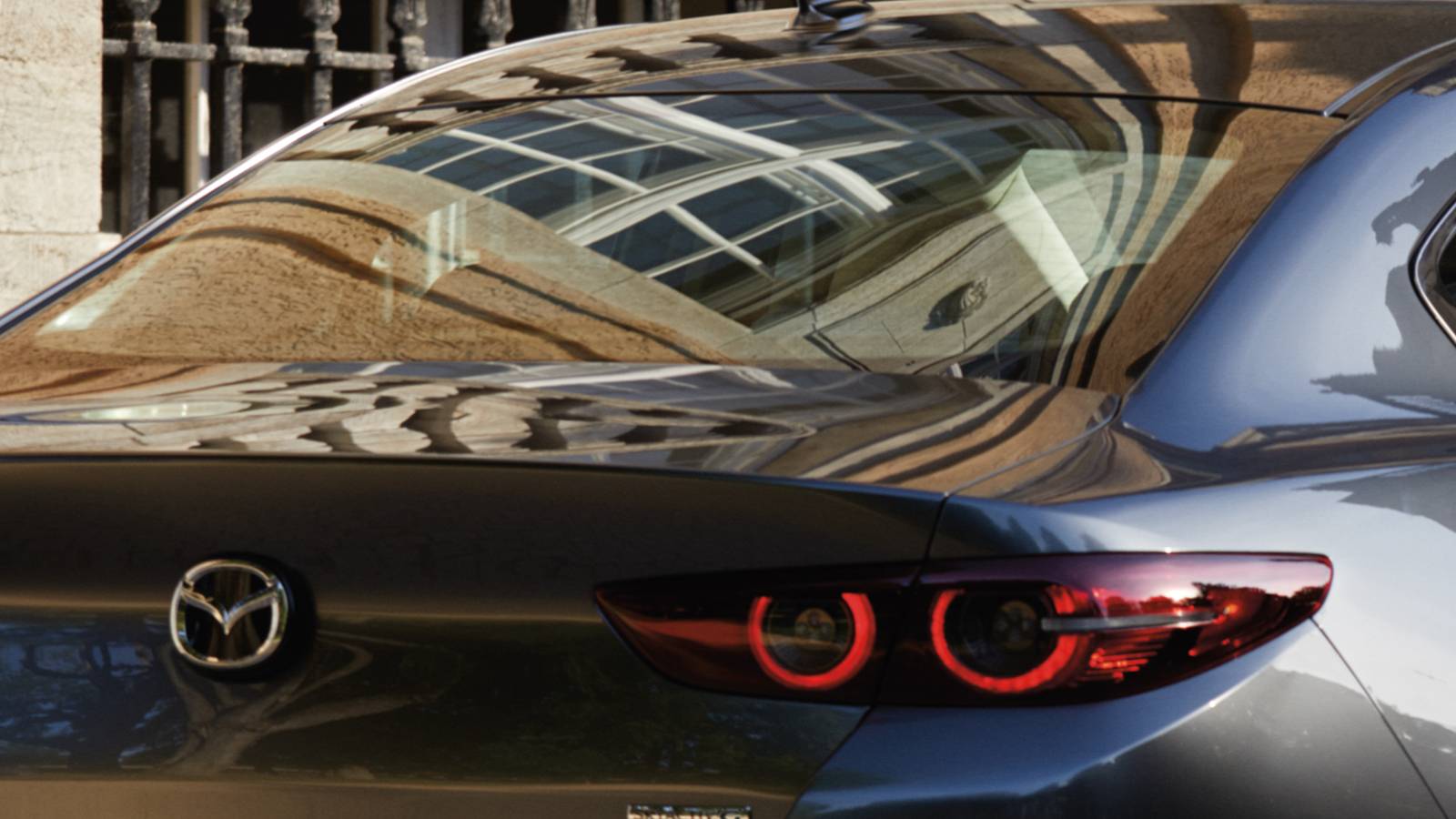
    2005 Mazda 3 Rear Badge
    Mazda

    In reality, the Mazda 3 Sedan is proving to be one of the least troublesome cars on the market, both in its latest form currently on sale in showrooms and among its older models in the secondhand market. This sedan from Mazda’s lineup, in general, has proved to be a relatively solid product compared to rivals, especially far more expensive compact sedans. We judge the most ideal models to be among the Mazda 3 Sedan’s oldest and youngest examples – specifically the first generation (BK-generation) and fourth generation (BP-generation) currently available on the secondhand market.

    As with any used car, it’s highly advised to perform a pre-purchase inspection or arrange for a qualified technician to fully inspect whatever Mazda 3 you are looking to buy to confirm it has a clean bill of health and is not hiding any concerning issues or sketchy history. But if it passes with no pressing concerns, there’s no reason why you should ignore going for one of these to serve as your next daily driver.

    Sources: Mazda, CarComplaints, NHTSA, J.D. Power

    Source link

  • Lamborghini Huracán Super Trofeo Evo2 at Lightning Lap 2026

    Lamborghini Huracán Super Trofeo Evo2 at Lightning Lap 2026

    From the March/April 2026 issue of Car and Driver.

    Lap Time: 2:30.6

    Class: LLPro | Base: $360,000 | As Tested: $360,000
    Power and Weight: 612 hp • 2950 lb (C/D est) • 4.8 lb/hp
    Tires: Hankook Ventus slick
    F: 300/660R-18
    R: 300/680R-18

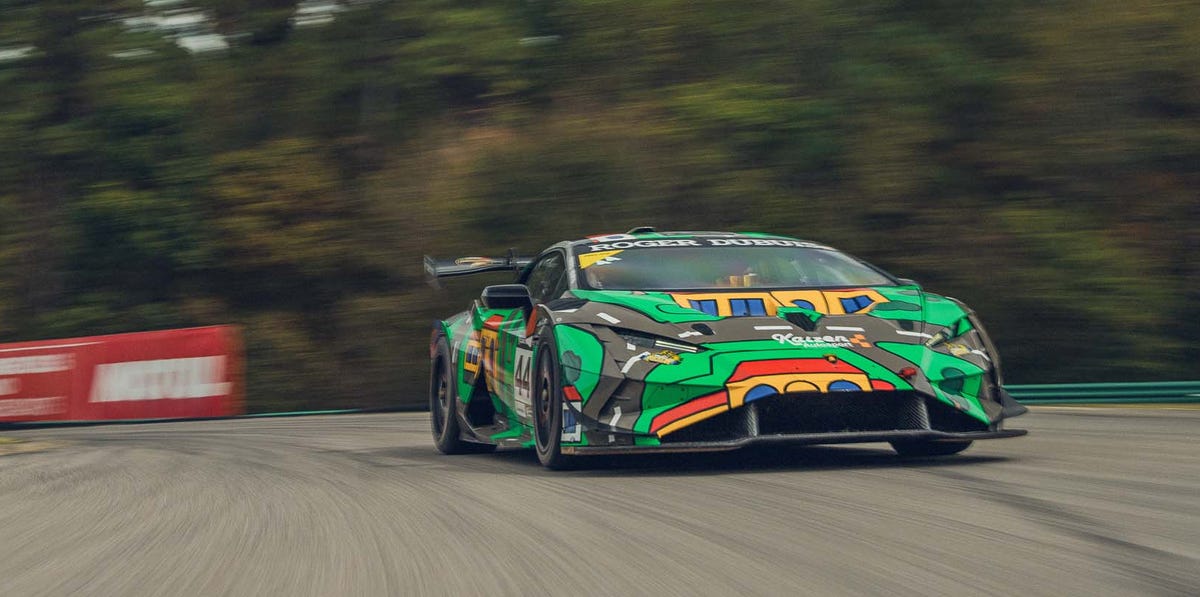
    Throughout the year, squads of stripped-down Lamborghini Huracán race cars square off in championships in Europe, Asia, and the U.S. VIR resident Kaizen Autosport looked after this particular example on behalf of a client last year who ran in the Pro-Am class; thanks to both of them for bringing it to Lightning Lap.

    lamborghini huracán super trofeo evo2View Photos

    Michael Simari and Marc Urbano|Car and Driver

    After sizing up the livery, meant to mimic a child’s play mat adorned with roads and buildings, we folded ourselves into the Huracán’s tight confines. Even with the seat bolted to the floor and no headliner, our tallest staffer barely fit; our right knee whacking the shift paddle caused a few unplanned upshifts. It’s a serious thrill to pilot—so eager, so precise, and also a serious workout. Standing on the brakes hard enough to get the dash lights to blink, indicating ABS activation, takes massive effort. But you can brake incredibly late.

    We want to bottle up the V-10’s syncopated scream because we already miss it dearly. As we found ourselves traveling backward in the grass, we were reminded that stiffly suspended race cars don’t swallow curbs like street cars do, and they spin rather instantaneously.

    lamborghini huracán super trofeo evo2View Photos

    Michael Simari and Marc Urbano|Car and Driver

    Kaizen hot shoe Wyatt Foster, who co-drove this car for the season and finished as high as third, set the timed lap. The Super Trofeo is a perfect example of what downforce (roughly 1500 pounds at 170 mph), light weight (2756 pounds minimum), and slicks can do. Using most of the 17 degrees of rear-wing angle the series allows, the Huracán is glued through the Climbing Esses. Foster’s right foot never flinches as he actually accelerates through them, averaging 153.2 mph. That’s 12.0 mph faster than the Corvette ZR1, the fastest street car we’ve run, and just 5.3 mph shy of the swiftest thing we’ve measured in this sector, the Garage 56 Camaro.

    The 5.2-liter V-10 retains stock internals and makes 612 horsepower. And all of that downforce means limited top end; the Super Trofeo’s 164.7-mph peak isn’t even in our top 10 among street cars. While the Hankook slicks are more endurance oriented, their 1.19-g average in Turn 1 doesn’t exceed that of some street tires in previous years, another clue that grip was lacking. Compare it to the bonkers 1.43 g’s from last year’s Ford Supertruck.

    lamborghini huracán super trofeo evo2View Photos

    Michael Simari and Marc Urbano|Car and Driver

    Still, a 2:30.6 lap is heroic. That’s 13.3 seconds quicker than the quickest street Huracán and 11.1 quicker than the new Temerario. The $360K price seems downright reasonable compared with that of Lamborghini street cars, and the Kaizen crew attests to the car’s durability. We’re drooling at the thought of what the Temerario Super Trofeo might be capable of with an infusion of power from the new twin-turbocharged V-8. Hopefully, we’ll find out soon.

    Back to Lightning Lap 2026

    Headshot of Dave VanderWerp

    Dave VanderWerp has spent more than 20 years in the automotive industry, in varied roles from engineering to product consulting, and now leading Car and Driver‘s vehicle-testing efforts. Dave got his very lucky start at C/D by happening to submit an unsolicited resume at just the right time to land a part-time road warrior job when he was a student at the University of Michigan, where he immediately became enthralled with the world of automotive journalism.

    Source link

  • Lexus NX 450h+ PHEV Reviews | Overview

    Lexus NX 450h+ PHEV Reviews | Overview

    Overview


    THE MARCH of Lexus towards electrification quickens exemplified in the recent addition of a PHEV Luxury version of the Toyota-RAV4-based NX 450h+ midsize luxury SUV that lobbed last year and resides towards the top of the NX line-up.


    Priced from $84,500 + ORC, for the money, the only direct plug-in competitor is Mazda’s top of the range CX-60 Azami Takumi at a grand less.


    Cheaper mostly Chinese plug-ins and more expensive mostly Euro plug-ins are available in the segment.


    Arriving only last September, the AWD test vehicle brings to 10 the number of NXs on offer that include ICE, HEV and PHEV variants, the fully electric model is called the RZ and costs nearly 50 per cent more.


    Ever mindful of the NVES and its implications for non-compliers, Lexus seems on an electrification mission as it has “a commitment to meeting the needs of our customers through a range of powertrains and specification levels”.


    Following through with “the NX 450h+ Luxury brings plug-in hybrid (PHEV) technology to a wider range of customers wanting to make the transition towards low-tailpipe-emission luxury motoring”.


    Going the three-quarter hog, the NX 450h+ Luxury offers Lexus refinement with standard equipment including heated and ventilated front seats with eight-way adjustment, heated rear outboard seats, heated steering wheel, smart entry and start, wireless smartphone charger, leather-accented upholstery, panoramic view monitor, powered tailgate, and a comprehensive suite of Lexus Safety System+ active safety technologies.


    Lexus says the expansion of the NX PHEV offering comes on the back of a reduction in demand for the base 2.5-litre petrol NX 250 Luxury in Australia, which is or has been deleted as existing stock is sold.


    The NX 450h+ Luxury shares its electrified powertrain with the flagship NX 450h+ F Sport variant, both powered by the same 2.5-litre PHEV system with “intelligent” all-wheel drive providing a potent 227kW/450Nm of combined power and torque from the petrol engine and two permanent synchronous electric motors.


    Electrons emanate from an 18.1kWh lithium-ion battery empowering the NX 450h+ with a claimed 87km of electric-only driving range.


    Users can tailor battery usage to suit their driving needs, and if the battery reaches a low state of charge on a longer trip, the powertrain will revert to a similar state of operation as the hybrid mode.


    That means the petrol engine and electric motors working in harmony to deliver “both powerful and efficient motoring”, keeping the battery state of charge level and ensuring the peak 227kW output is always available.


    Lexus says the air-cooled AC charging system uses a 6.6kW on-board charger which can charge the battery in as little as two and a half hours when using a 32A charging current, and around seven and a half hours with a 10A current.


    Performance claims a 0 to 100km/h sprint in 6.3 seconds – aided by variable torque distribution between 100:0 and 20:80 front-rear to match the driver’s intentions.


    Driving Impressions


    It is hard not to be impressed by this car as it ticks most of the boxes apart from possibly towing (1000kg max) and hard-core off-road driving limited by ground clearance (and its pretty bodywork).


    Quite the sporty number, the NX 450h+ will show a clean pair of rears to many a car thanks to the generous power and torque of its plug-in hybrid (PHEV) powertrain.


    And unlike many BEVs, it doesn’t taper off or plateau at higher speeds, in fact, the NX PHEV spins out hard to maximum ICE engine speed of around 6000rpm, to the accompaniment of a satisfying exhaust snarl.


    It uses minimal premium petrol recording everything from zero (EV) through to about 6.0 litres per 100km real world, with the hybrid system contributing to a possible 1000km plus no stops range.


    Lexus says the NX 450h+ “has been crafted for optimal flexibility with four driving modes – EV Priority mode, Auto EV/HV mode, HV mode and Battery-charging mode. In Auto EV/HV mode, if the accelerator is fully depressed, or if more power is required temporarily such as for sudden acceleration, the engine will start, enabling powerful HV acceleration”.


    Looking sharp and sleek for a midsize, five seat SUV, the test vehicle’s RAV4 lines are obvious. They share the same TNGA-K architecture, in this case enhanced with big wheels, spindle grille, tapered and bright LED headlights and a premium colour palette that seem to accentuate its coupe-like profile.


    The interior is standard Lexus fare. Clean, uncluttered, premium materials including leather upholstery, a large 14.0-inch centre infotainment touch screen, digital instrument pod, and a decent array of hard buttons for regularly used functions.


    Truth be known, it’s really a four-seater unless the rear middle occupant is diminutive or a child.


    A decent 520-litre boot can take a few large suitcases and is easily expanded by folding the rear pew forming van-like load proportions. Various USB ports dot the cabin, and the tailgate is gesture operated for convenience.


    Though smallish, it is relatively easy to find a comfortable seating position in the NX cabin enhanced by heated and cooled electrically adjustable front seats (heated outboard rears, too). The 10 speaker audio impresses, the dual zone climate control efficient and quiet…


    In terms of drive feel, the NX tested is quite handy across most driving applications and is even pretty sharp when driven with sporty intent despite tipping the scale at about 2050kg.


    Ride quality differs according to the drive mode selected and covers off a range from supple and luxurious Eco through to firm and responsive Sport… all facilitated by quality Bridgestone 18-inch road-oriented rubber.


    We weren’t able (or game enough) to take the tester off-road, and we couldn’t perform a tow test either though that would, of necessity, be restricted to perhaps a jet-ski or a small box trailer.


    Sharp steering response improves drive feel at higher speeds particularly through corners where it’s relatively easy to accurately place the NX regardless of whetherthe surface is rough or smooth as bump steer is not evident.


    The adaptive suspension (strut front and double wishbone rear) makes a good fist of suspending the weighty NX holding the body level cornering fast with minimal pitching under brakes which seem well up for stopping the NX hiccup-free.


    We enjoyed the test car’s sporty engine performance as it delivers brisk off the line grunt and feels exponentially quicker as speeds rise thanks to the revvy 2.5-litre petrol engine aided by dual electric motors.


    If you want more, it’s just a matter of using the paddle shift to keep the NX’s powertrain on the boil albeit with weird rev characteristics due to the CVT “auto”.


    So, to the elephant in the room which is the PHEV system.


    Put simply, we feel the slightly less powerful, but lighter self-charging HEV is a better (and $8000 cheaper) proposition as the extra dosh for the PHEV only complicates buyer choice for what is already a really useful powertrain, all for possibly 80km of electric-only range.


    It might be handy if you live in the city and can easily tap a charger at home, work or locally but elsewhere it’s highly likely owners would run this car like a HEV – as we did.


    And as such, we were still impressed with what the NX450h+ Luxury has to offer – range, performance, fuel efficiency, an engaging drive feel, a high level of luxury, tech rich cabin, reasonably unobtrusive ADAS and a stylish body – to say nothing of reliability and resale.

    Source link

  • AEVA launches register of EV-friendly apartment buildings in Canberra

    AEVA launches register of EV-friendly apartment buildings in Canberra

    In a significant move for apartment dwellers looking to make the switch to electric transport, the ACT branch of the Australian Electric Vehicle Association (AEVA) has launched a public register of EV-friendly strata sites across Canberra. The initiative aims to provide transparency for residents who have historically faced hurdles when trying to charge at home.

    The register, released on Thursday, lists strata complexes that allow some form of on-site EV charging, a feature that is increasingly becoming a deal-maker (or breaker) for buyers and renters considering the switch to electric.

    “We have created a publicly available register of EV-friendly strata sites that are attracting tenants and new owners by enabling EV charging on-site,” AEVA spokesperson Dr Peter Campbell said in a statement.

    The register currently includes 22 strata complexes across Canberra, with different approaches to providing charging access.

    Some buildings allow individual charging outlets to be wired back to the electricity meters of individual apartments. Others provide shared charging bays, often managed by third-party operators who bill residents directly and reimburse the body corporate for electricity used.

    “As a low-cost solution, shared charging points let residents charge once or twice a week without giving up the convenience of their own parking space,” Dr Campbell said.

    The register has been compiled using information from AEVA members, owners corporations, strata managers and public sources such as PlugShare.

    AEVA is inviting additional buildings to submit their details for inclusion and advises users to confirm arrangements directly with the relevant owners corporation, as settings may change over time

    Beyond convenience, the move is increasingly seen as an essential step for property value and tenant retention. Julie Campbell, Chair of the “Evoque” Owners Corporation which installed two stations two years ago, noted that modernising facilities makes buildings more attractive to future buyers.

    Robin Eckermann, Chair of the OCN (ACT) Environmental Sustainability Working Group, echoed this sentiment, stating that strata owners deserve the same convenience as those in detached homes. He warned that complexes failing to facilitate charging “will fall behind in their appeal to purchasers and renters”.

    Some states have begun clarifying strata rules to make installations easier, but progress is uneven. Canberra, which already has one of the highest rates of EV ownership in Australia, may become an early test case for how strata communities respond as EV uptake accelerates.

    You can view the current list of EV-friendly complexes at the AEVA website.

    Source link

  • Bugatti Mistral ‘La Perle Rare’ is a pearlescent tribute to the brand’s hypercars

    Bugatti Mistral ‘La Perle Rare’ is a pearlescent tribute to the brand’s hypercars

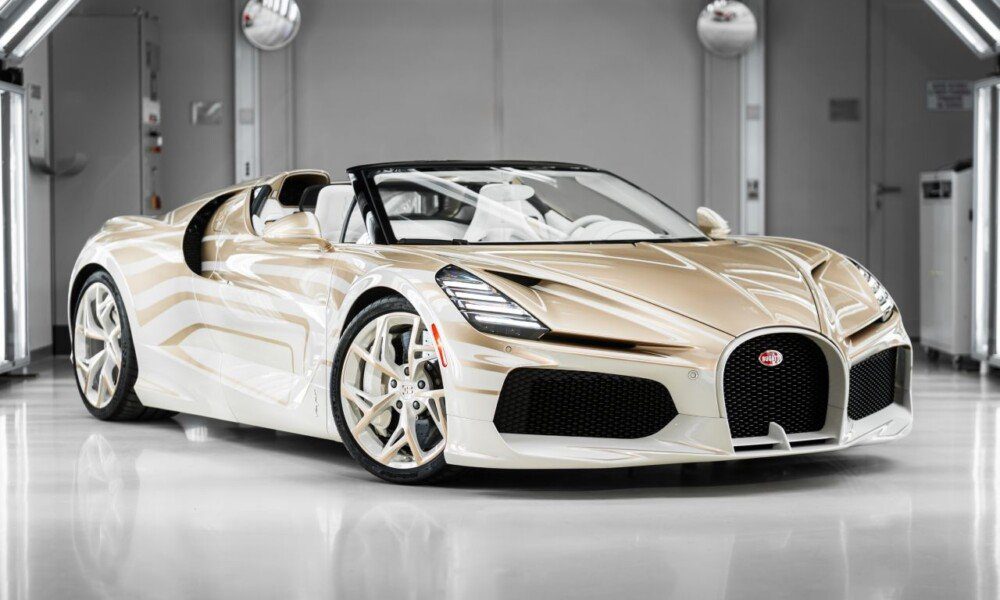
    Bugatti has delivered several units of the Mistral till now. However, the latest unit to leave the factory floor is a bit special. It’s a custom spec created by Bugatti’s Sur Mesure personalisation department. It’s called the Mistral ‘La Perle Rare’.

    20 BUGATTI-Mistral-Sur-Mesure-La-Perle-Rare

    This one-of-a-kind creation draws inspiration from Bugatti’s signature hand-painted paintwork, ‘Vagues de Lumiere’. It pays homage to the brand’s hyper sports cars and is a “pearlescent tribute to the elemental power and beauty of the W16 Mistral”, with the two-tone theme “echoing the interplay between ground and sky”.

    08 BUGATTI-Mistral-Sur-Mesure-La-Perle-Rare

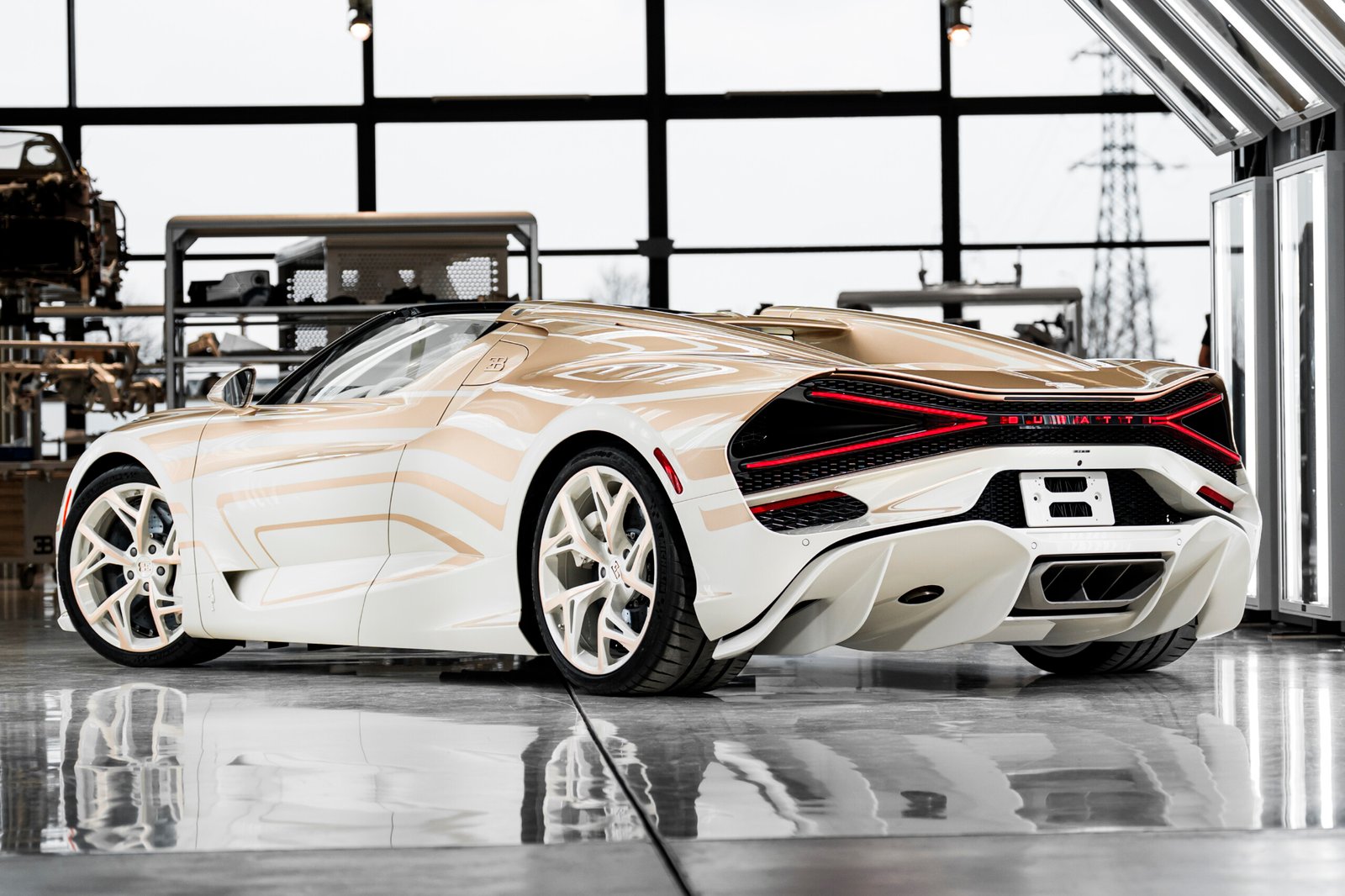
    Bugatti developed two unique shades just for this car. The lower body is painted in a shade of warm white, while the upper surfaces get a gold-infused metallic hue and gold dividing lines. The diamond-cut alloy wheels have a matching two-tone colour scheme.

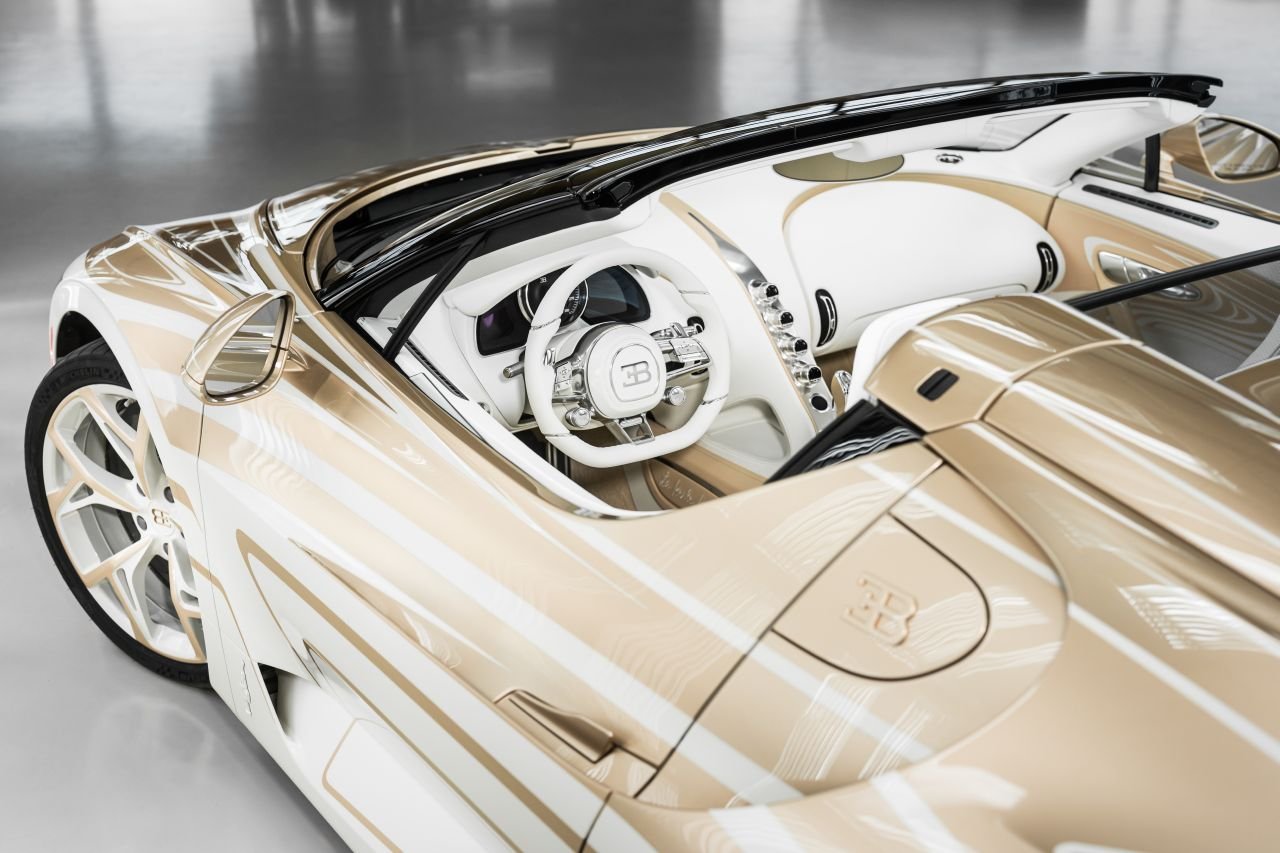
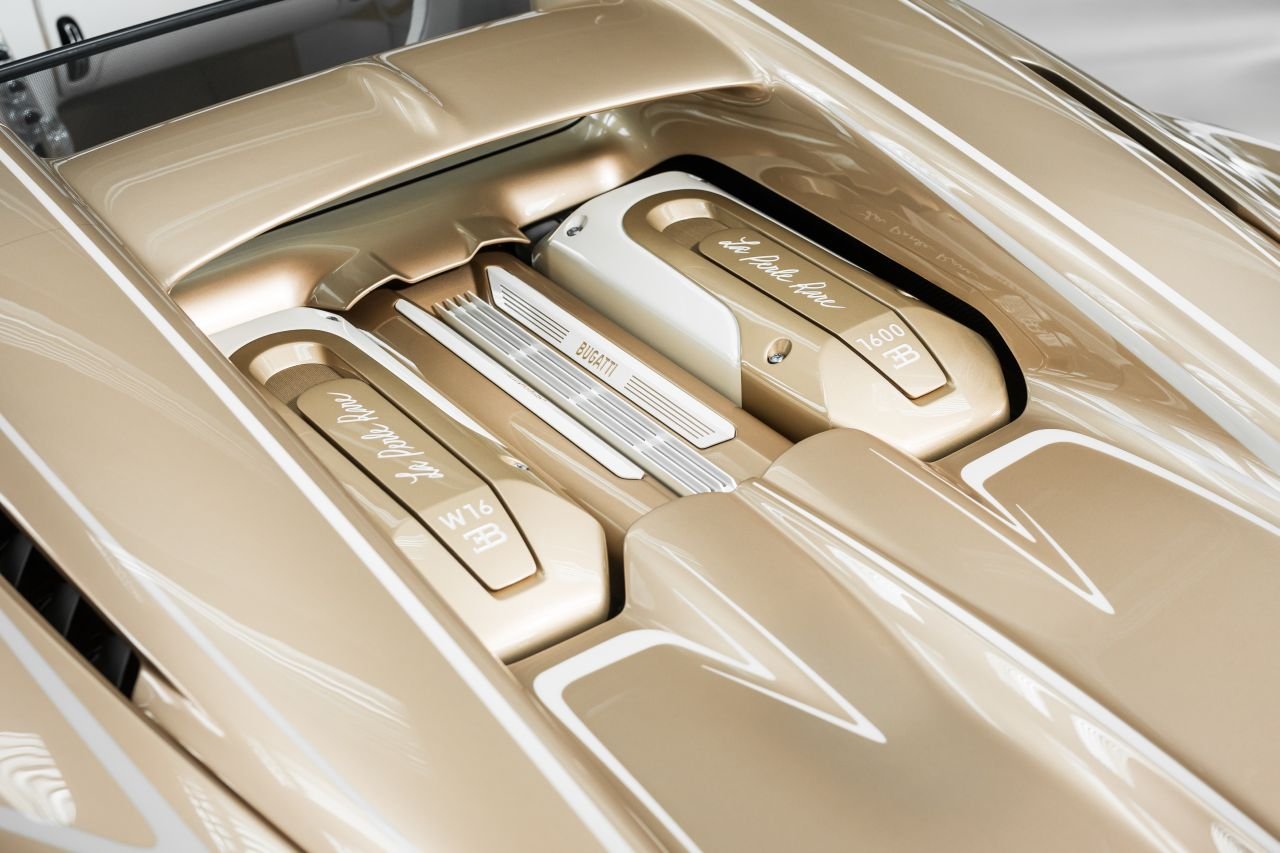
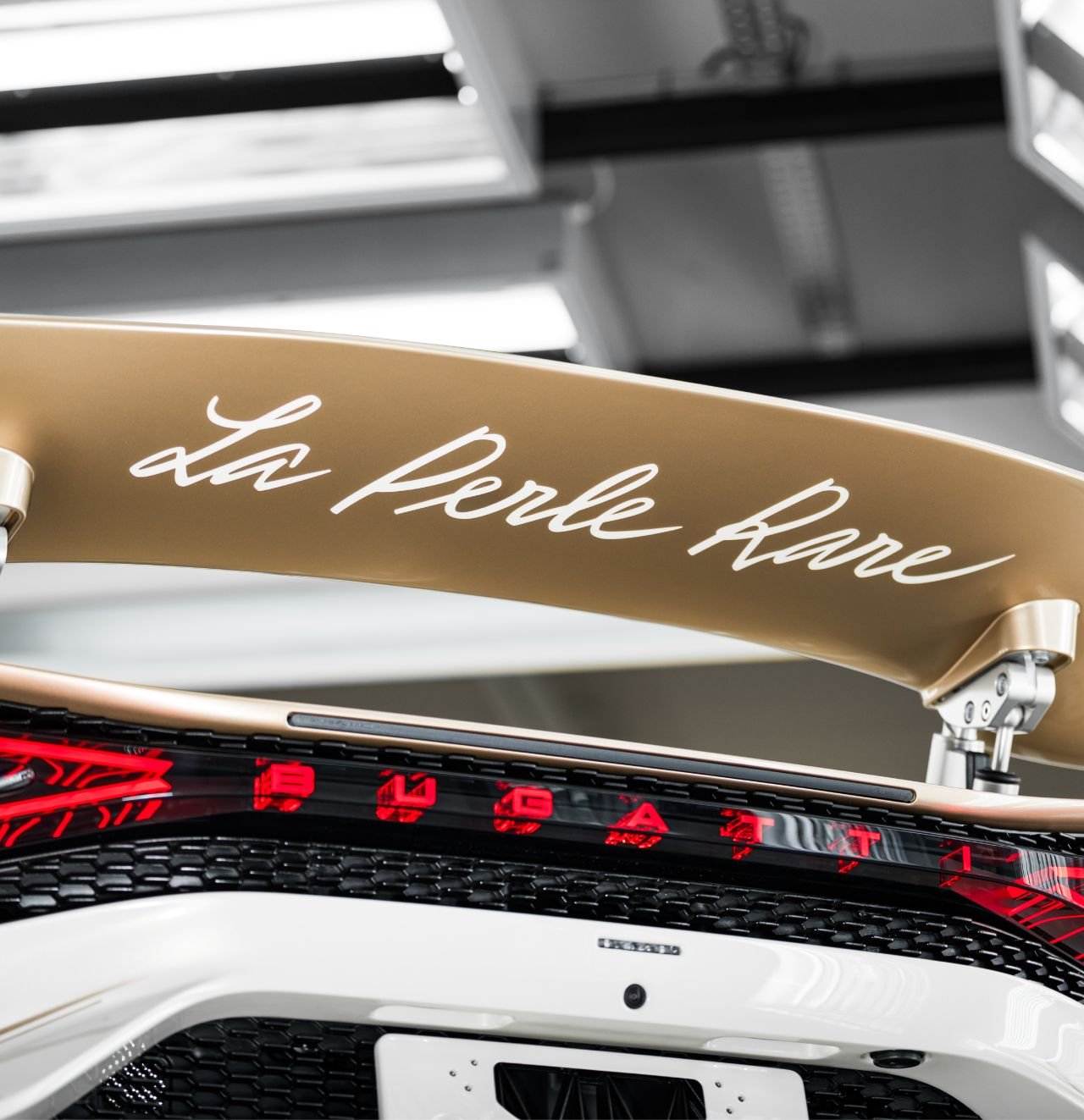
    All the carbon panels on the interior are painted white. The door panels feature alternative white and warm gold linework. Machined and polished aluminium trim can be found all around the cabin. The signature ‘La Perle Rare’ is stitched along the central tunnel. The same is engraved on the bespoke white and gold engine cover and is also painted beneath the rear wing.
    13 BUGATTI-Mistral-Sur-Mesure-La-Perle-Rare

    19 BUGATTI-Mistral-Sur-Mesure-La-Perle-Rare

    Source: Bugatti

    Source link

  • Jeff Gordon Didn’t Just Buy a Corvette ZR1X — He Helped Build Its 1,250-HP Engine

    Jeff Gordon Didn’t Just Buy a Corvette ZR1X — He Helped Build Its 1,250-HP Engine

    Gloves On

    Some may know Jeff Gordon as the NASCAR legend who, as a young driver, battled the late Dale Earnhardt Sr. for championships in the ’90s. While his racing credentials are unquestionable, could he prove himself just as capable in the garage?

    In an Instagram post, Chevrolet showed Gordon arriving at its Bowling Green Assembly Plant with his father to help build an LT7 engine for his Corvette ZR1X. Well, the returning Build Your Own Engine program is open to buyers who ordered the Z06, ZR1, and ZR1X. Gordon, who retired from full-time racing in 2015, also serves as vice chairman of Chevrolet-backed Hendrick Motorsports, where he oversees the team’s operations and drivers — including reigning NASCAR champion Kyle Larson.

    View this post on Instagram

    Inside the LT7 Assembly

    The engine assembly began with the short-block build at 10:09 a.m., followed by the long-block assembly at 12:02 p.m. At 1:27 p.m., the engine underwent a cold test — a procedure that uses an electric motor to run the engine without combustion to verify proper operation.

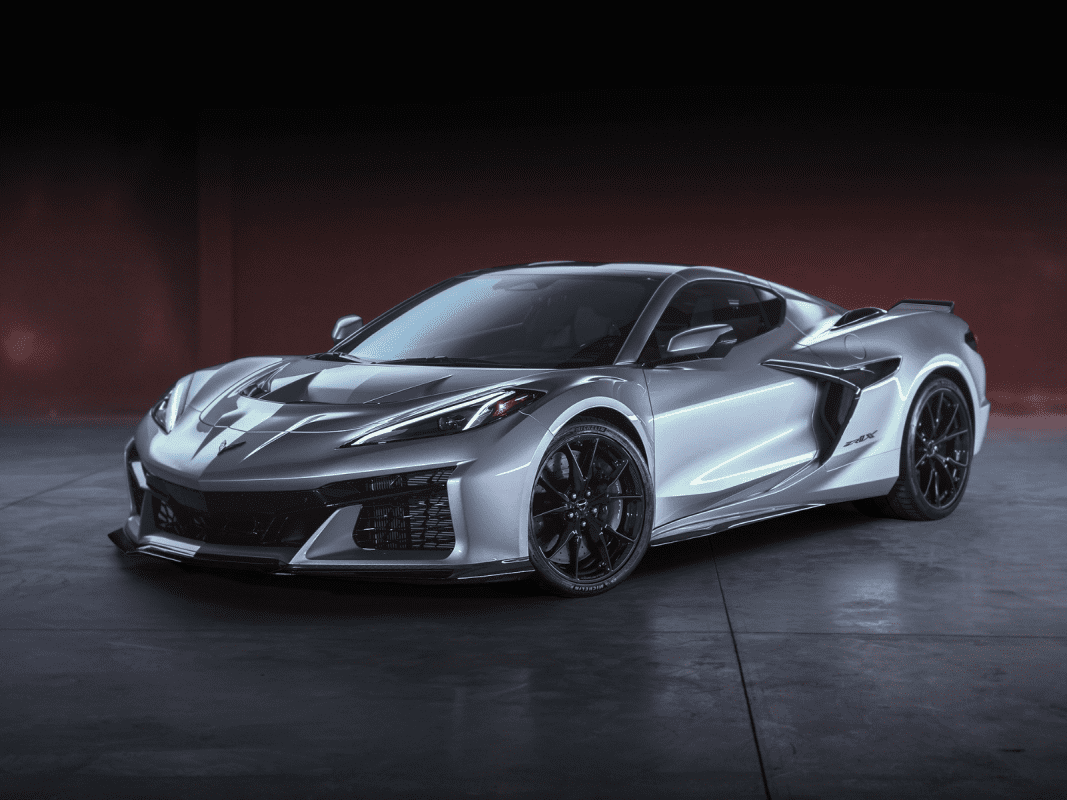
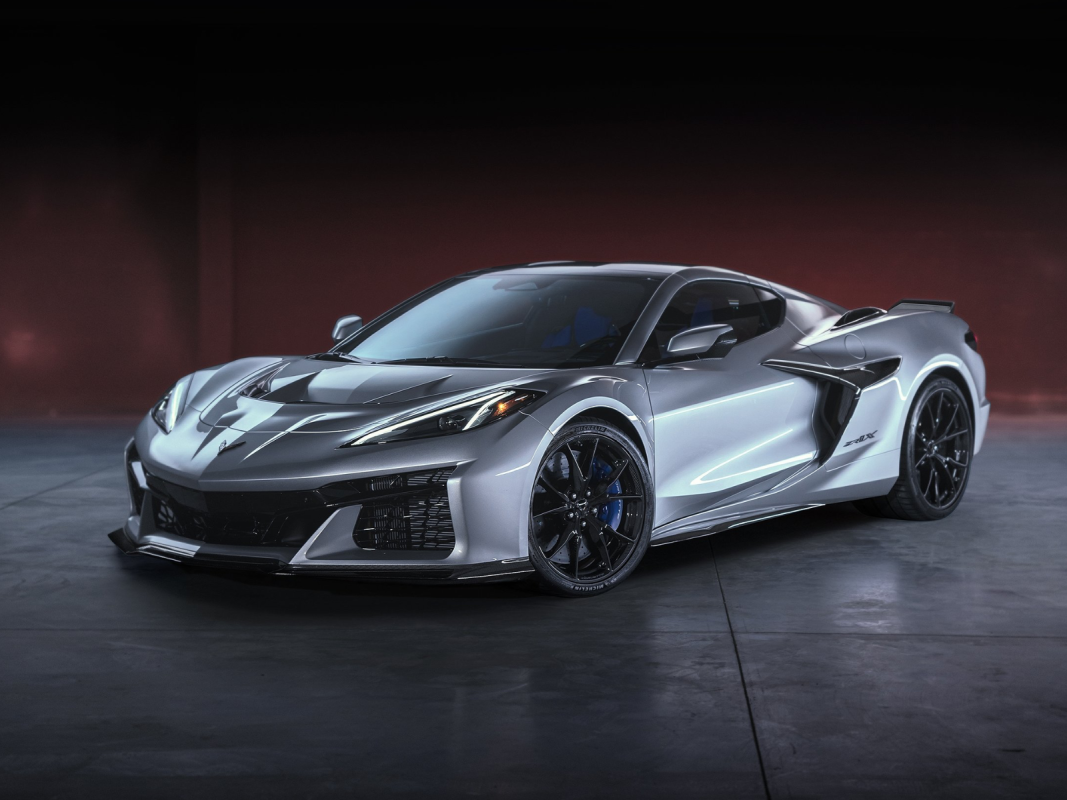
    So yes, the 5.5-liter twin-turbocharged LT7 V8 is paired with an electric motor, producing a combined 1,250 horsepower and making the ZR1X the most powerful Corvette variant to date. It is also the second Corvette to adopt a hybridized setup, following the E-Ray. Both C8-generation models feature an all-wheel-drive (AWD) system. According to Chevrolet, the ZR1X is capable of sprinting from 0 to 60 mph in just 1.89 seconds and completing a quarter-mile time of 8.99 seconds.

    At 1:55 p.m., the blue intake manifold was installed, followed by the turbochargers at 2:37 p.m. The engine received its nameplate at 2:55 p.m., with the final inspection taking place at 3:10 p.m.

    Chevrolet

    A Longstanding Chevrolet Tie

    Gordon is reportedly the first to participate in the Build Your Own Engine program, which, according to Corvette Blogger, costs about $9,995. Given his connections, that comes as little surprise. During his racing days, he delivered four NASCAR Cup Series championships to Hendrick Motorsports and Chevrolet, along with 93 race wins — the third-most in series history behind Richard Petty and David Pearson.

    Under the program, ZR1 and ZR1X customers assemble the LT7, while Z06 buyers build the LT6. For reference, the Corvette ZR1X starts at $209,700, excluding destination fees. One of its most notable achievements so far is a 6:49.275 lap time at Germany’s Nürburgring, making it the fastest American production car around the Ring, edging out the Ford Mustang GTD.

    Chevrolet


    View the 3 images of this gallery on the
    original article


    Source link