Author: admin

  • Japanese Drift Crew Arrested After Wicked Skids Caught on Camera by Tokyo PD

    Japanese Drift Crew Arrested After Wicked Skids Caught on Camera by Tokyo PD

    While the rest of the world romanticizes drifting in Japan, the Tokyo Metropolitan Police Department has had its fill of smoky skids. If you need proof, just look at the five men arrested by officers on suspicion of dangerous driving recently. The crew is accused of sliding all over the wharf at Tokyo Port in a fleet of rear-wheel-drive Toyotas and Nissan S-chassis, and there appears to be video evidence.

    Reports by Japanese outlets like NHK World, TBS News Dig, and FNN say the incident occurred back in December. Footage released by the Tokyo Metro PD shows at least two cars drifting on public roads at night, while all five vehicles appear to be in police custody:

    「日本マジキテル連合」5人逮捕 白煙上げ真夜中の都内で危険なドリフト走行「ストリートでやることに意味がある」(2026年03月03日)


    https://www.youtube.com/watch?v=SdVX7-sOz_I

    Yoshikawa Marcelo Yuji was one of the five drivers arrested. With more than 100,000 followers on Instagram, he’s a fairly well-known figure in the Japanese drift scene. Many of his posts show cars on track—Fuji Speedway, most often—although several videos are filmed on city streets. He acknowledged the run-in with police in a post on Tuesday.

    Tokyo Metro PD is referring to the crew as “charismatic figures in the drifting world.” That’s a pretty reasonable conclusion to reach once you see Yoshikawa’s social media. His black and blue chrome Toyota is typically just one in a pack of cars.

    I have to say, though: He has those reverse entries down to a science.

    Emergency calls related to drifting have reportedly more than doubled in Tokyo over the past year. NHK World writes that some 347 calls were made in 2025 alone. Even though we often look at this kind of tomfoolery with rose-colored glasses because of Fast and Furious: Tokyo Drift, it presents the same dangers as takeovers in the U.S. That’s not to say drifting isn’t sick, but like any other high-speed antics, it’s better saved for the track.

    Got a tip or question for the author? Contact them directly: caleb@thedrive.com

    From running point on new car launch coverage to editing long-form features and reviews, Caleb does some of everything at The Drive. And he really, really loves trucks.


    Source link

  • VFACTS: Chinese cars top February sales

    VFACTS: Chinese cars top February sales

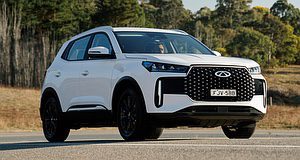
    CHINA has become Australia’s largest source of new vehicles for the first time in a single month, according to figures released today by the Federal Chamber of Automotive Industries (FCAI).


    In February, some 22,362 new vehicles sourced from China were sold in Australia, surpassing Japan (21,671), Thailand (19,493), and South Korea (11,913). Japan had been Australia’s leading source of new vehicles since 1998.


    “After 28 years, Japan has been overtaken by China as the largest source of vehicles for the Australian market,” said FCAI chief executive Tony Weber.


    Mr Weber noted that nine of the 10 new brands to enter the Australian market since 2020 are Chinese, with Chinese-made cars now accounting for three of the top 10 most popular vehicle brands sold Down Under.


    “The Australian (new car) market is one of the most open and competitive in the world,” he continued.


    “New brands can enter, establish dealer networks, and compete on price, technology, and design.


    “Consumers are the beneficiaries of that competition.”


    Australia’s new vehicle market recorded 94,131 sales in February, a decrease of 2.7 per cent on the same time last year.


    Toyota remains the market leader in February with 13,606 new vehicle sales (down 27.8 per cent YoY), followed by Mazda (7042, down 19.9 per cent), Ford (6907, up 9.0 per cent), Kia (6710, unchanged), and Hyundai (6266, up 4.5 per cent).


    The top-selling vehicle models for the month were the Ford Ranger (4325, up 7.1 per cent), Toyota HiLux (3625, up 0.2 per cent), Chery Tiggo 4 (2315, up 117.0 per cent), Mazda CX-5 (2099, up 8.6 per cent), and Isuzu D-Max (2092, up 3.5 per cent).


    The pecking order has shifted significantly for vehicles made by Australia’s number one importer, Toyota.


    Speaking with GoAuto this week, a Toyota Australia spokesperson said sales of the RAV4 are down 83.6 per cent (to 723 units) as the importer makes way for an all-new model, while constrained supplies of the 250-Series LandCruiser Prado have caused a lower result for that model in February, down 53.3 per cent (to 1273 units).


    The spokesperson also suggested sales of the HiLux light commercial utility will be supported by new body styles and the imminent arrival of a battery electric model.


    Indeed, battery electric vehicles accounted for 11.8 per cent of total sales from all sources in February, representing a record high monthly share. A total of 11,134 battery electric vehicles were sold across the month, a rise of 95.9 per cent on January 2026, buoyed in no small part to the sale of 3274 new Teslas.


    While petrol- (33,309 unit sales) and diesel (26,963) sales remained the strongest sellers by volume, February results show solid sales of hybrid- (13,868) and plug-in hybrid (5854) vehicle sales, underscoring the diversity of Australia’s rapidly shifting new car market.


    Looking across the jurisdictions in February we note declines in all states and territories bar Victora, which grew slightly with 24,732 unit sales for the month (up 3.0 per cent).


    Elsewhere, the Australian Capital Territory fell 18.7 per cent to 1187 units; New South Wales 7.6 per cent to 27,524 units; the Northern Territory 15.8 per cent to 727 units; Queensland 2.8 per cent to 19,644 units; South Australia 8.7 per cent to 5673 units; Tasmania 6.4 per cent to 1384 units; and Western Australia 3.9 per cent to 9841 units.


    Top 10 vehicle sales by make (February 2026)*:


    Make

    Sales

    Share

    Variance

    Toyota

    13,606

    15.0%

    -27.8%

    Mazda

    7042

    7.8%

    -19.9%

    Ford

    6907

    7.6%

    +9.0%

    Kia

    6710

    7.4%

    Unchanged

    Hyundai

    6266

    6.9%

    +4.5%

    BYD

    5323

    5.9%

    +62.2%

    Mitsubishi

    4755

    5.2%

    -22.3%

    GWM

    4689

    5.2%

    +24.9%

    Chery

    3938

    4.3%

    +93.2%

    Isuzu Ute

    3384

    3.7%

    +23.7%


    Top 10 vehicle sales by model (February 2026)*:


    Make/Model

    Sales

    Variance

    Ford Ranger

    4325

    +7.1%

    Toyota HiLux

    3625

    +0.2%

    Tesla Model Y

    2791

    +202.0%

    Chery Tiggo 4

    2315

    +117.0%

    Mazda CX-5

    2099

    +8.6%

    Isuzu D-Max

    2092

    +3.5%

    Mitsubishi Outlander

    2070

    -13.2%

    Hyundai Kona

    2023

    +7.1%

    Mitsubishi Triton

    2017

    +42.0%

    GWM Haval Jolion

    1804

    +38.1%


    State-by-state sales (February 2026)*:


    State/Territory

    Sales

    Variance

    ACT

    1187

    -9.6%

    NSW

    27,524

    -3.0%

    NT

    727

    -16.9%

    QLD

    19,644

    -1.8%

    SA

    5673

    -5.9%

    TAS

    1384

    -3.6%

    VIC

    24,732

    +3.0%

    WA

    9841

    -8.3%


    *All sales data is supplied courtesy of the FCAI and the Electric Vehicle Council.

    Source link

  • Top Automotive Innovations of the Past 100 Years – 1930s: Front Independent Suspension

    Top Automotive Innovations of the Past 100 Years – 1930s: Front Independent Suspension

    The 1930s were made for driving. More Americans had cars in their daily lives, more roads were getting paved, and Route 66 — “The Mother Road” — helped turn long-distance driving into a cultural phenomenon. But there was a catch. Plenty of those roads were still rough, inconsistent, and downright punishing at speed.

    As drivers pushed their cars faster and farther, one problem became impossible to ignore — early suspension systems simply weren’t up to the job.

    The Demonstration That Changed Everything

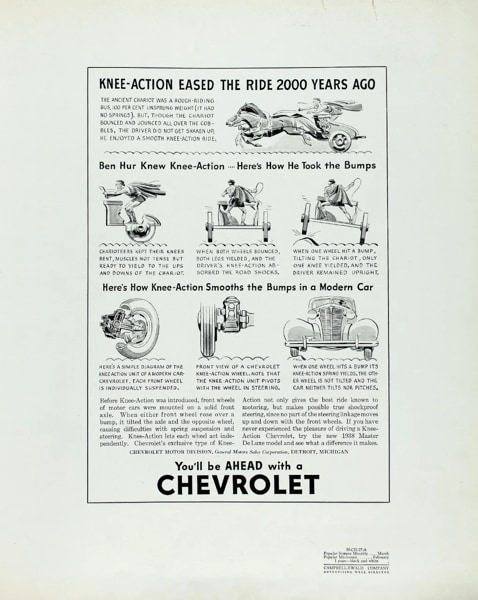
    As verified by the GM Heritage Archive, in March 1933, engineers demonstrated two types of independent front suspension systems on Cadillac vehicles for executives from all five GM car brands (Chevrolet, Pontiac, Oldsmobile, Buick, and Cadillac). The winning design was introduced by French auto racer and aperitif heir André Dubonnet. This marked the birth of the Dubonnet system, also known within General Motors as “Knee Action.”

    A New Type of Suspension

    Knee Action was a new type of front suspension that used coil springs and control arms, enabling easier travel on the roads of the 1930s and paving the way for further advancements in driver control, safety, and comfort.

    Top Automotive Innovations of the Past 100 Years – 1930s: Front Independent SuspensionTop Automotive Innovations of the Past 100 Years – 1930s: Front Independent Suspension
    Image courtesy of General Motors

    “The executives were impressed enough by the smoother ride to adopt the technology for the 1934 model year across GM divisions, with CEO Alfred P. Sloan and technical chief Charles F. ‘Boss’ Kettering reportedly backing the move,” according to the GM Heritage Archive. This early iteration of an independent front suspension replaced solid axle technology in passenger cars, and while it was relatively unrefined by modern standards, it pushed the automotive industry to adapt and continue improving automobiles as they moved into the 1940s.

    Explore automotive innovations from other decades below:

    Source link

  • More Fun Than Most Sports Cars

    More Fun Than Most Sports Cars

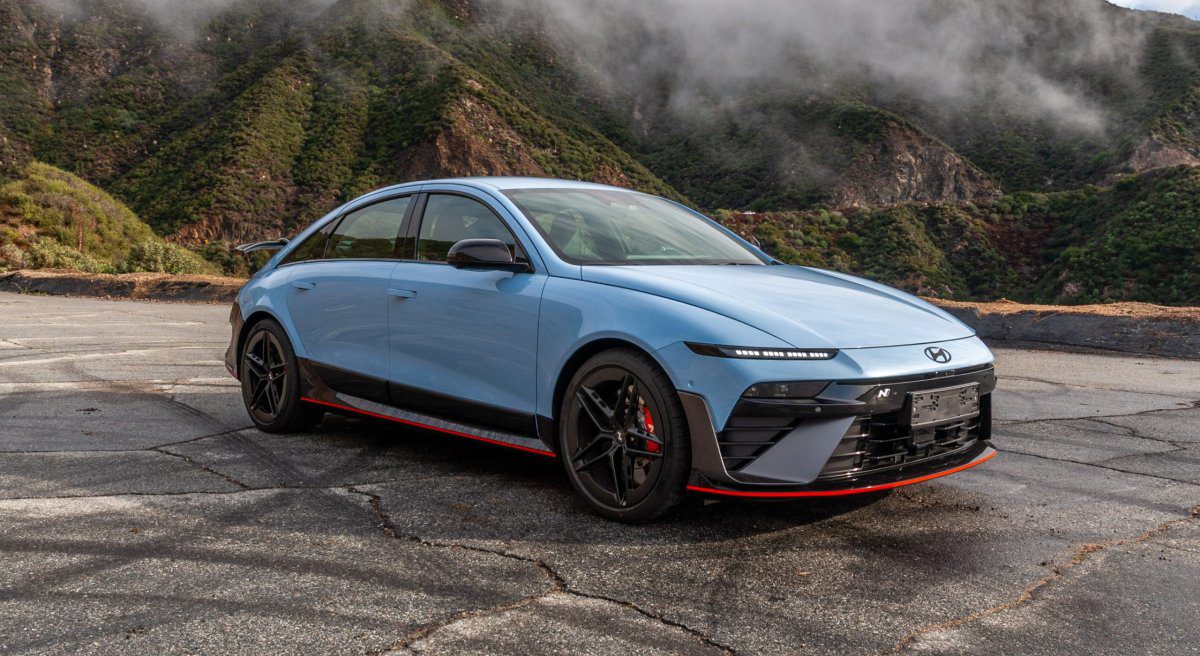
    Enthusiasts are up in arms, concerned that the electric future will be boring, silent, and soulless. It’s a fair concern, honestly, but rest easy, friends, because that isn’t, or at least doesn’t have to be, the case. Hyundai has proven it before, but emphasizes it further with the upcoming 2026 Hyundai Ioniq 6 N EV.

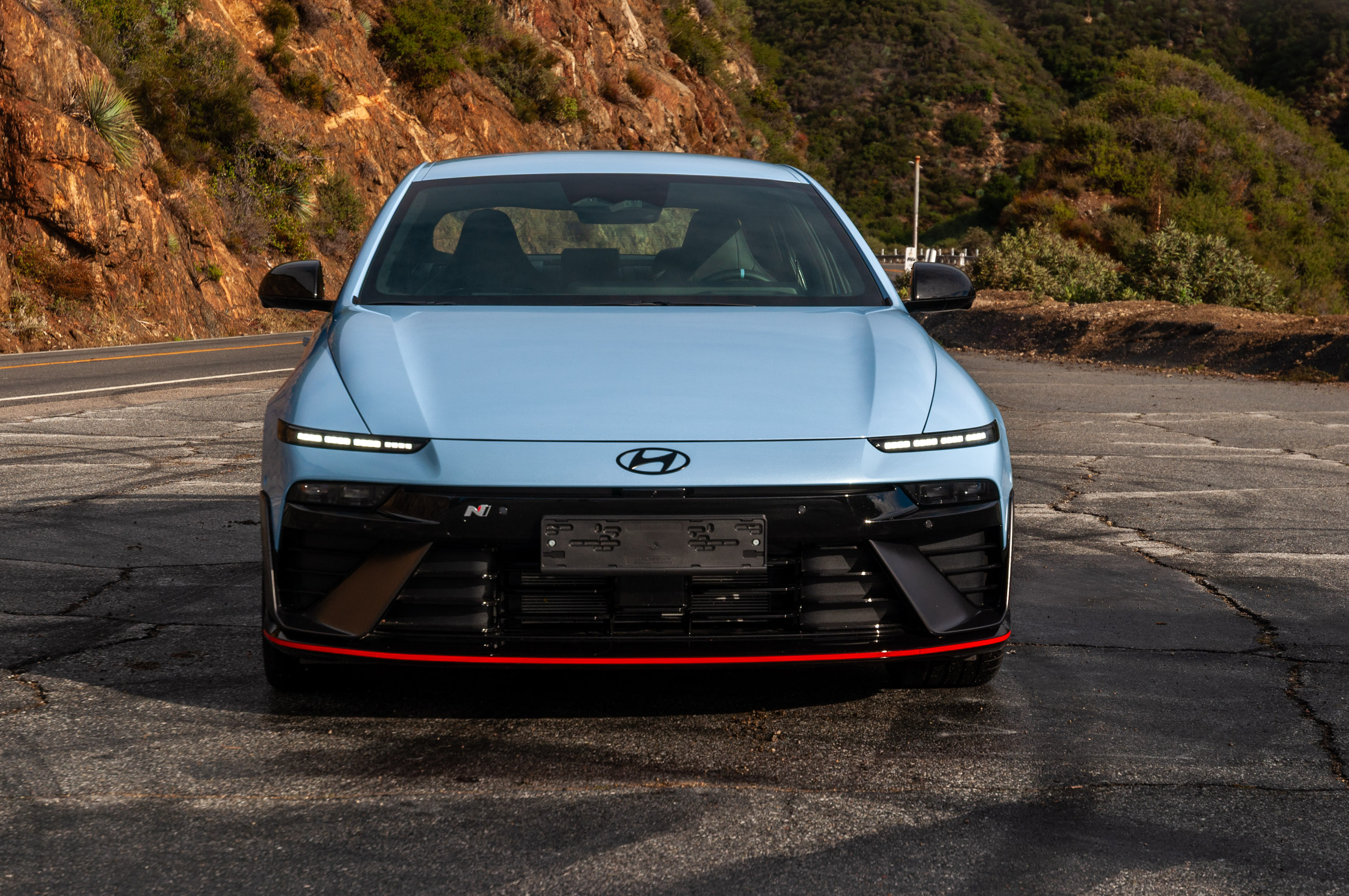
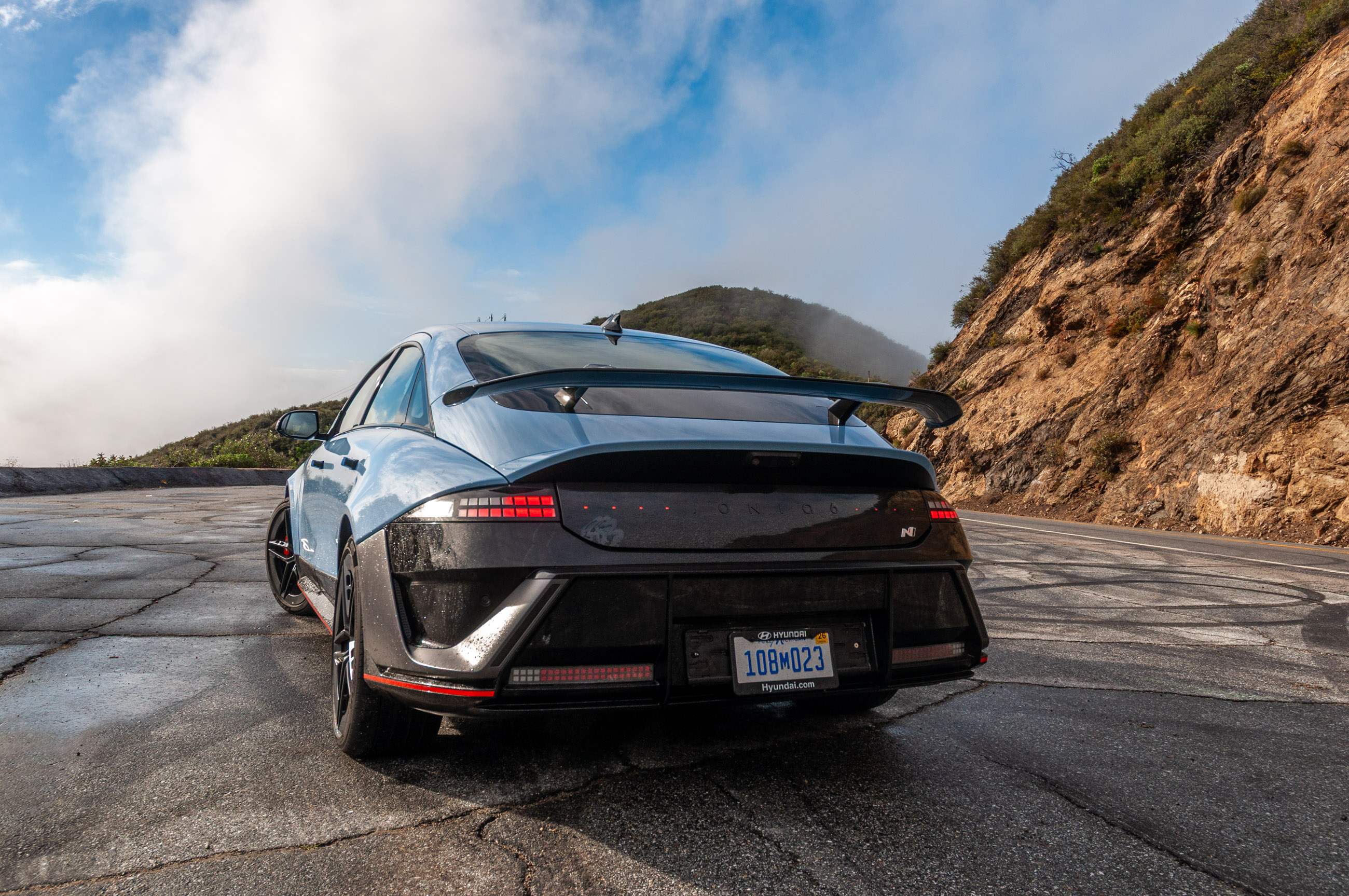
    Due to my role as a World Car juror, I had the opportunity to drive a Korea-spec Ioniq 6 N. Here’s what I can tell you in the all-too-brief encounter: The styling may be a love-or-hate affair, but it is a proper sports car that pins a smile on your face as it rips around corners while making all sorts of cool sounds.

    The Ioniq 6 N takes the refreshed Ioniq 6 and applies the same formula that first launched in the overgrown hot-hatch Ioniq 5 N. That means a dual-motor powertrain sending 641 horsepower—and while specs are unconfirmed for the U.S. at this point—probably up to about 568 lb-ft of torque to all four wheels. It’s fed by an 84-kWh battery.

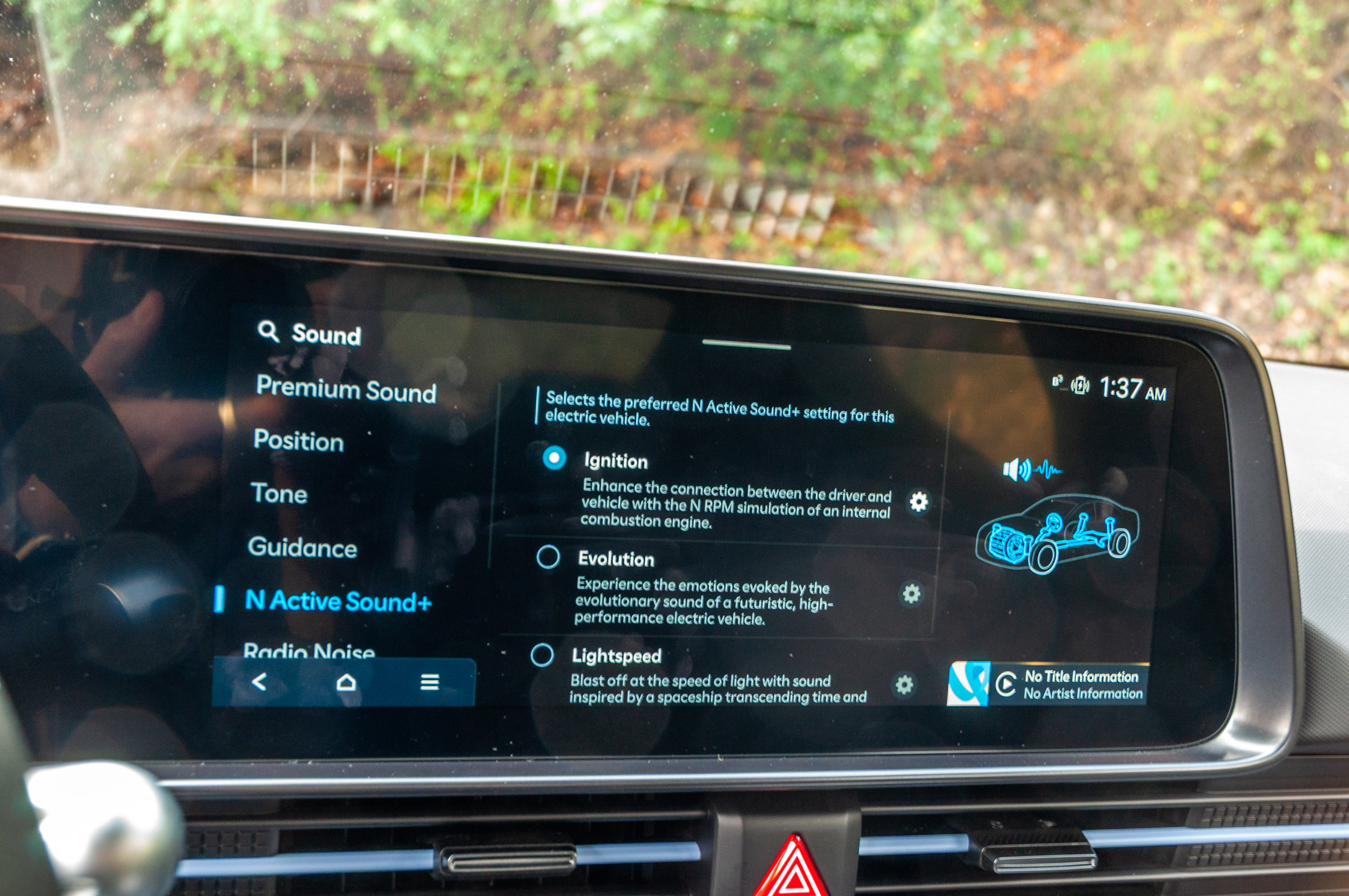
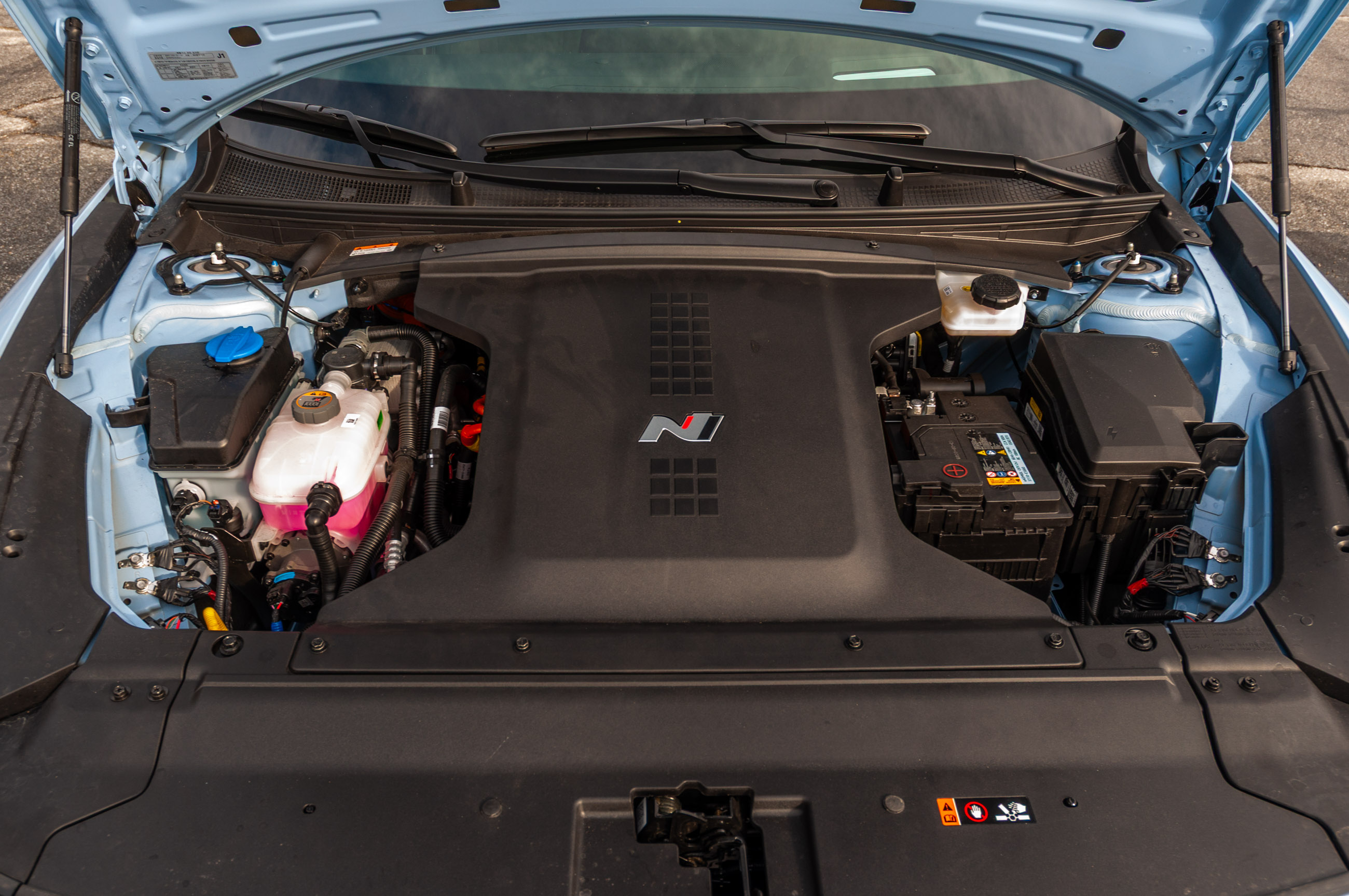
    And just like the Ioniq 5 N, the 6 N has speakers placed under the hood and underneath the rear of the car to mimic and emit sound in the same places a gas vehicle would.

    These numbers translate into bragging rights for a 0-60 mph time of 3.2 seconds. But based on what I experienced, the real magic is in how this thing handles around Angeles Crest.

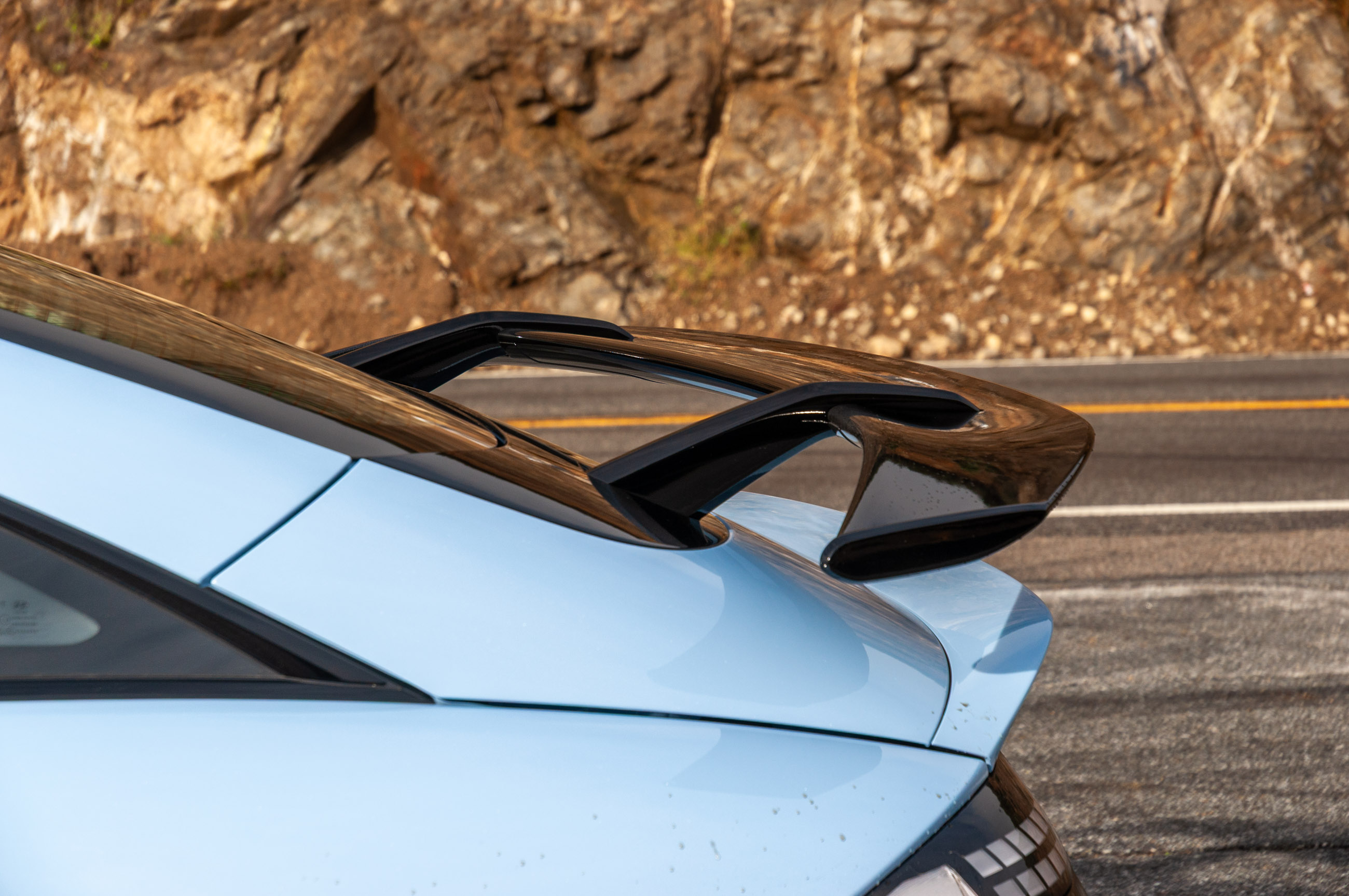
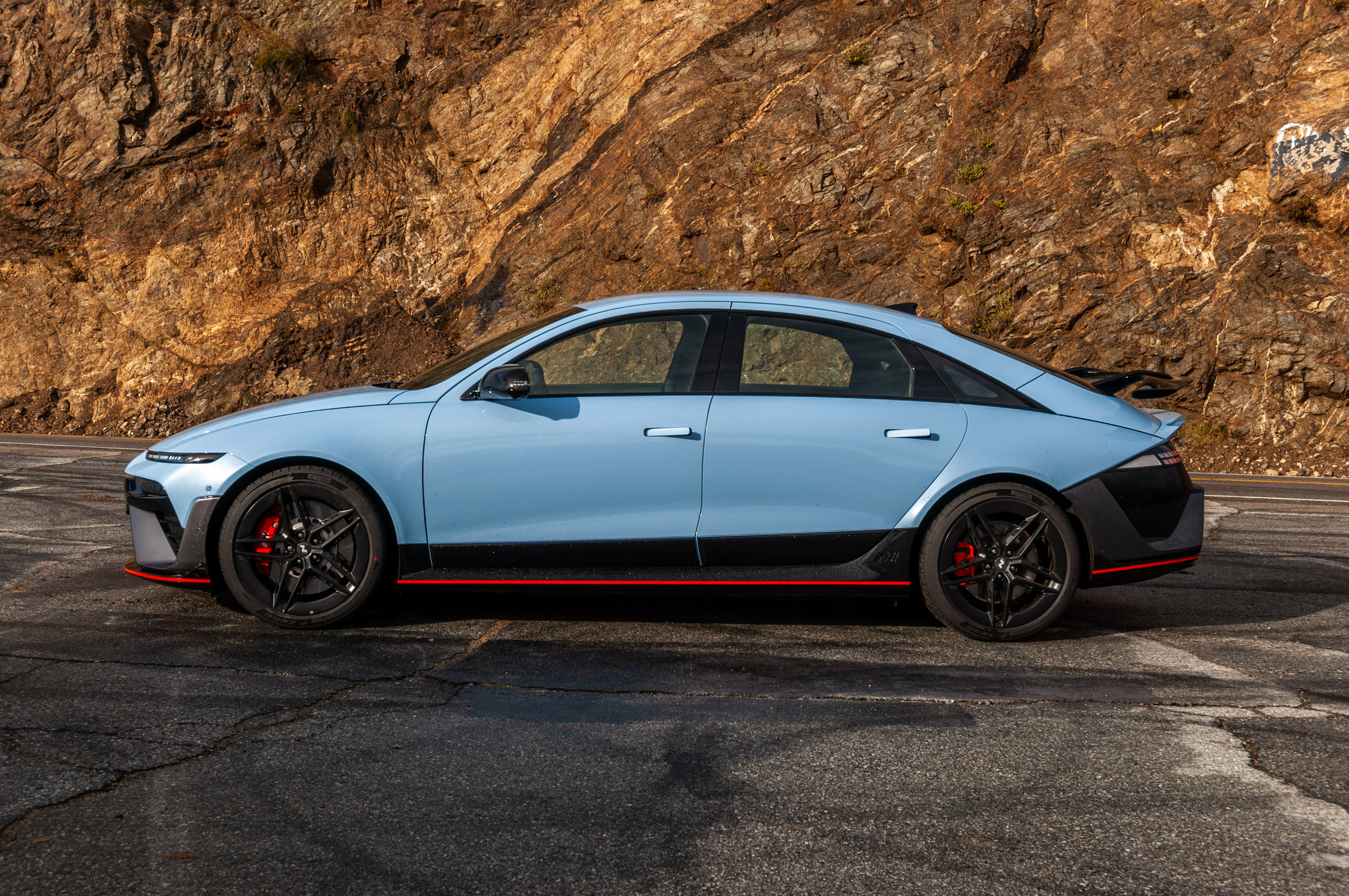
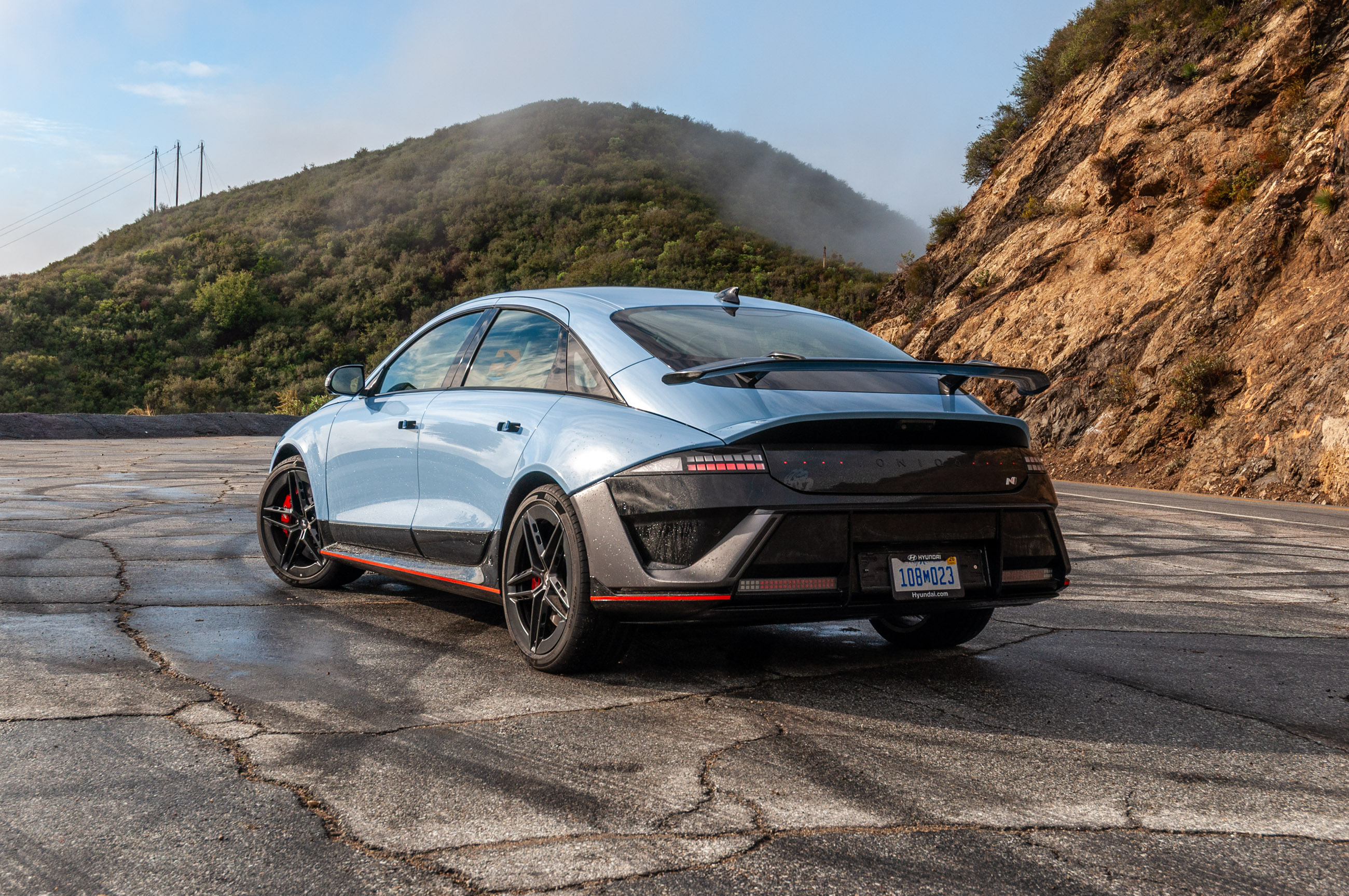
    The front lip spoiler with red lipstick sits below Darth Vader-like aero bits on the front bumper that lead into the front fenders. The sill extensions aren’t ridiculous, but definitely noticeable. The rear is the most interesting angle, with a bumper design that picks up where the front leaves off and no attempt at a fake diffuser. But it’s the huge rear spoiler on swan neck mounts that grabs your attention. This is a four-door Hyundai sedan—wild.

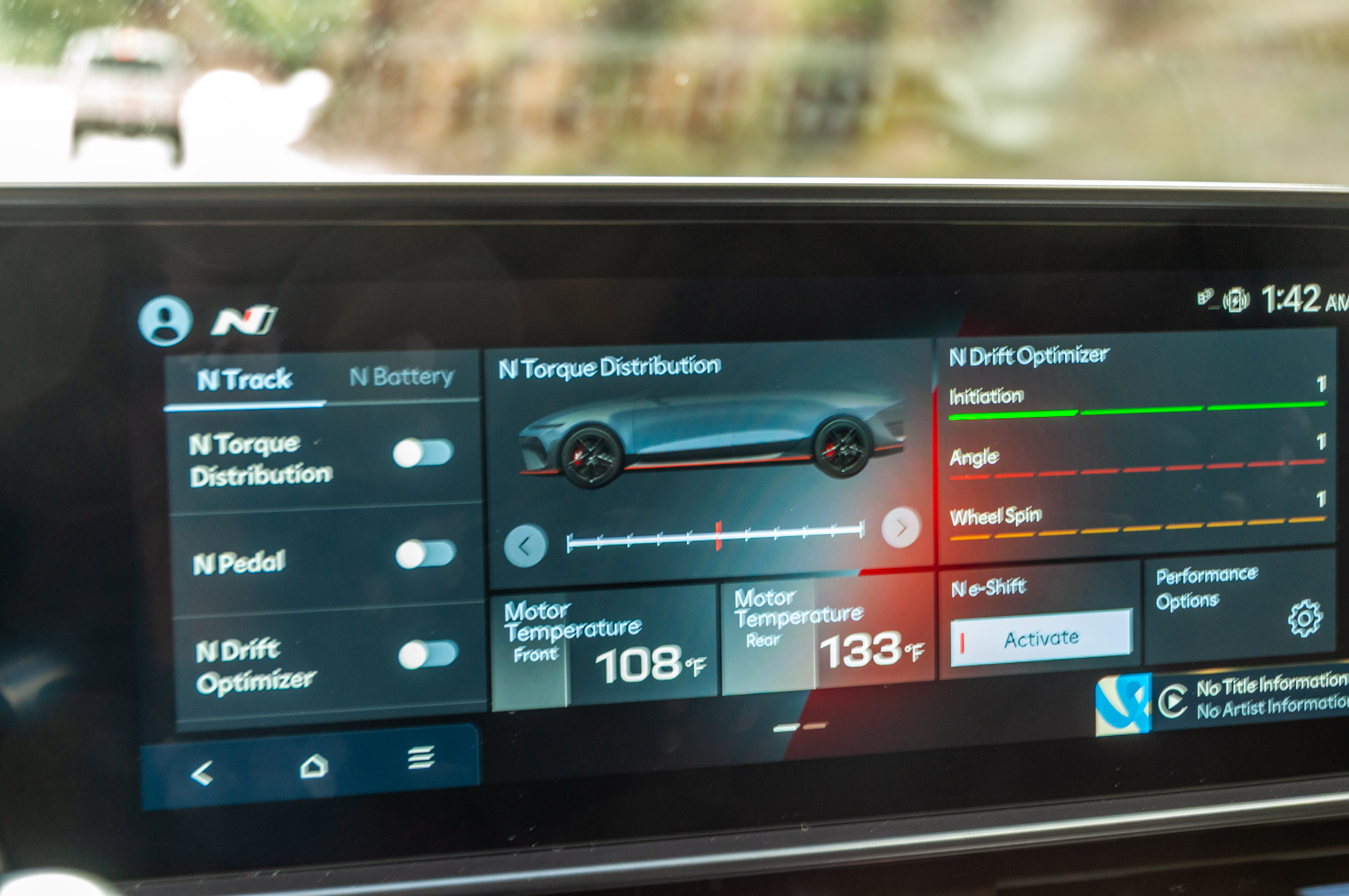
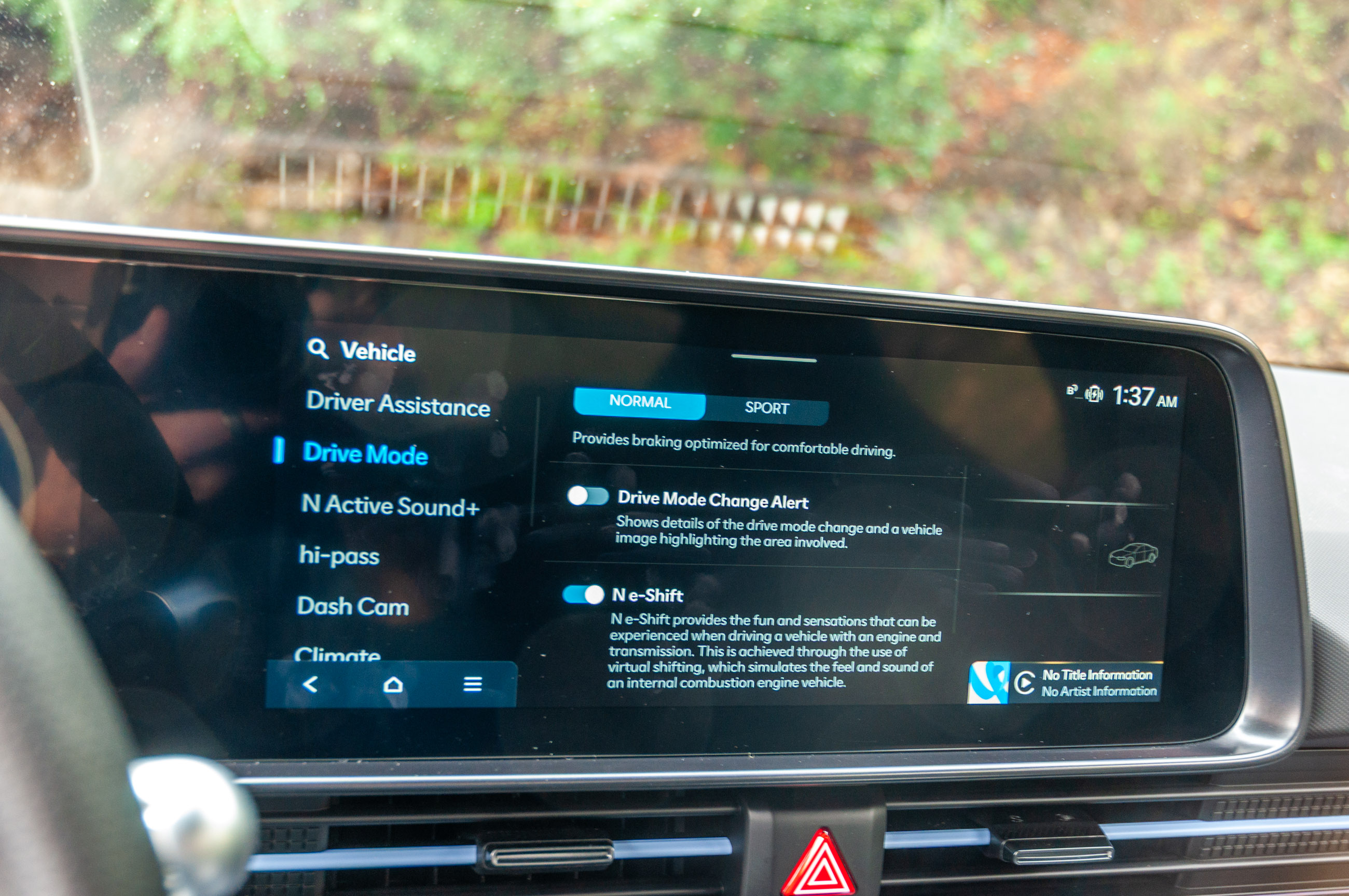
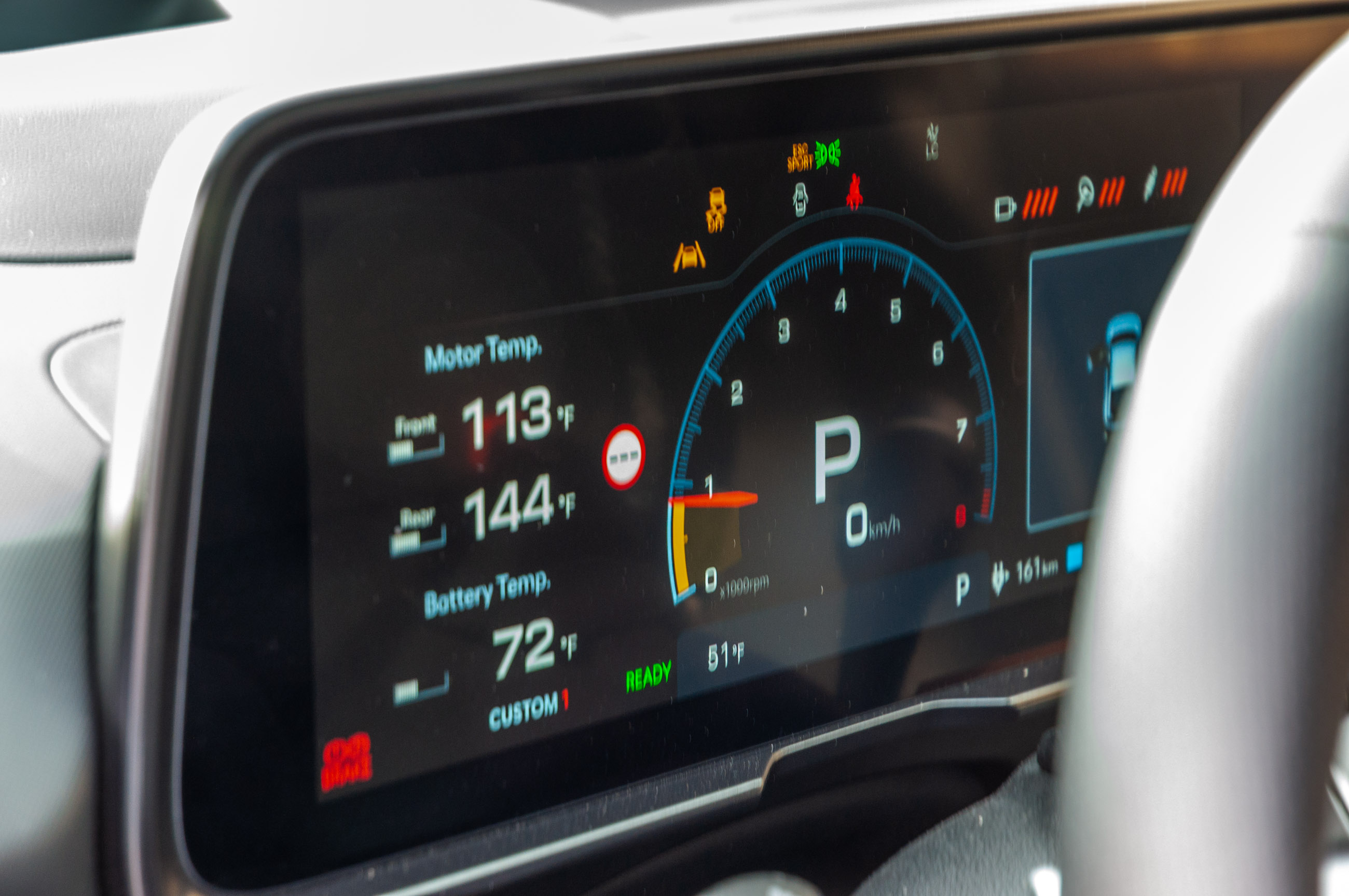
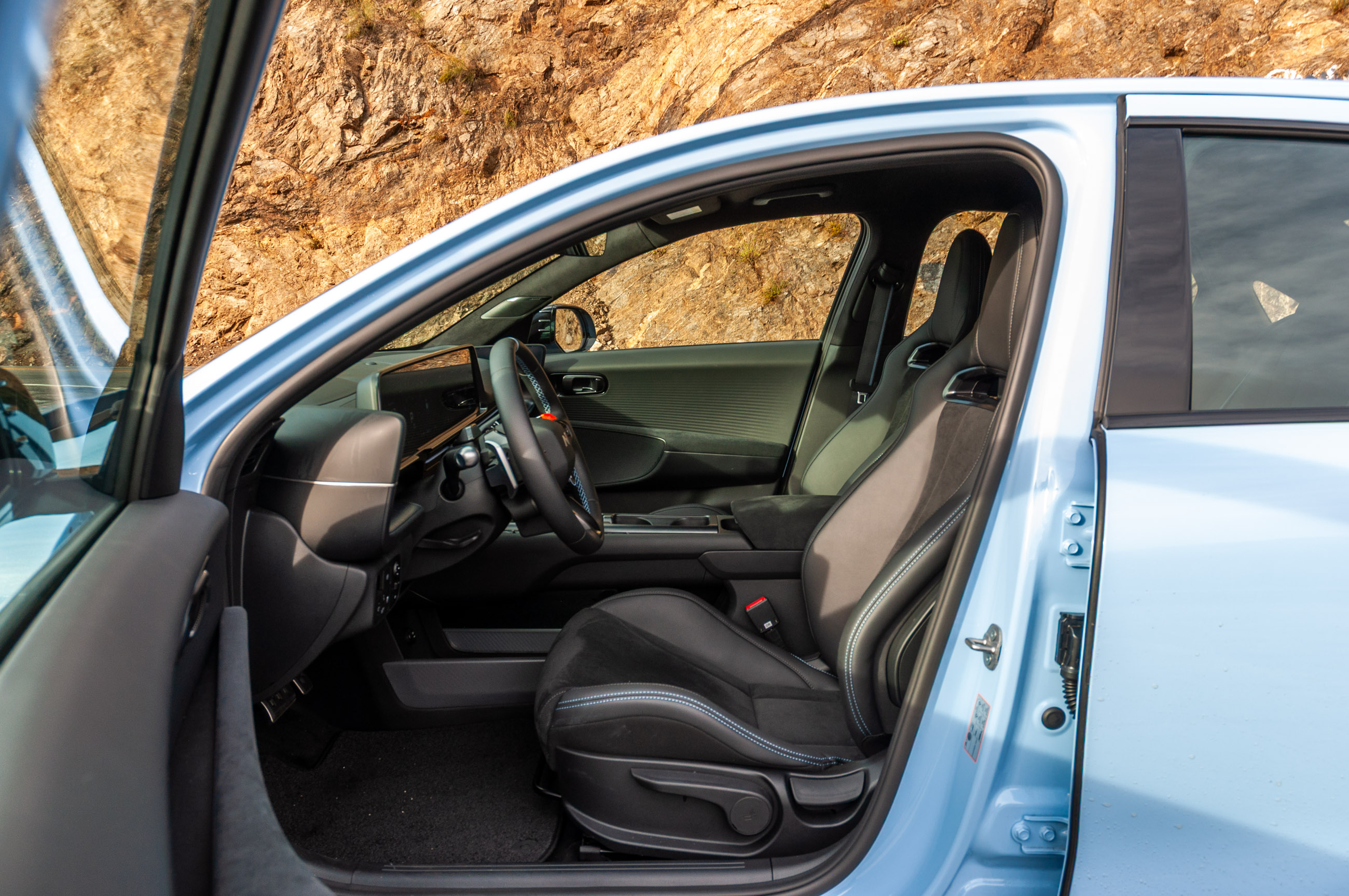
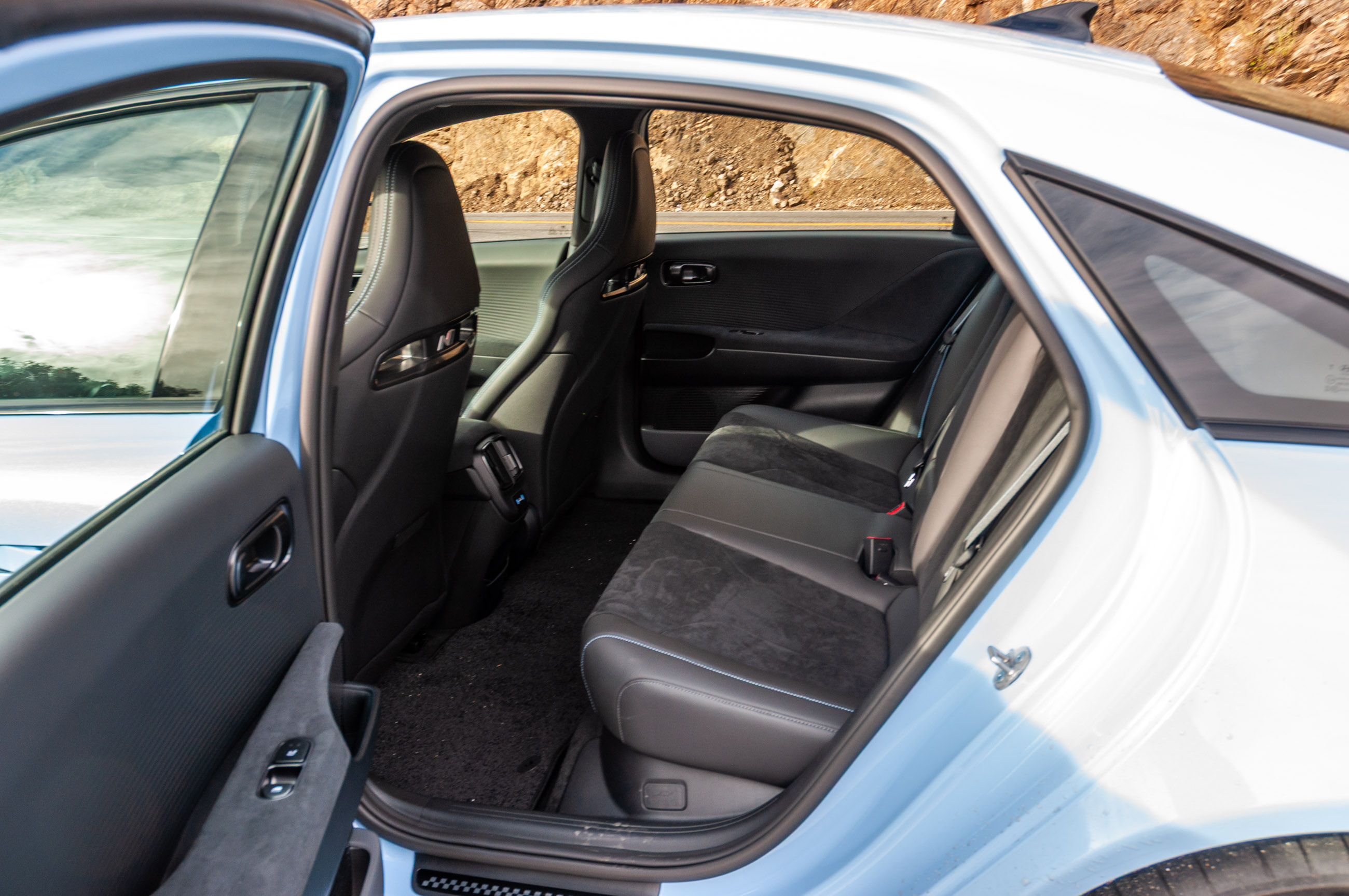
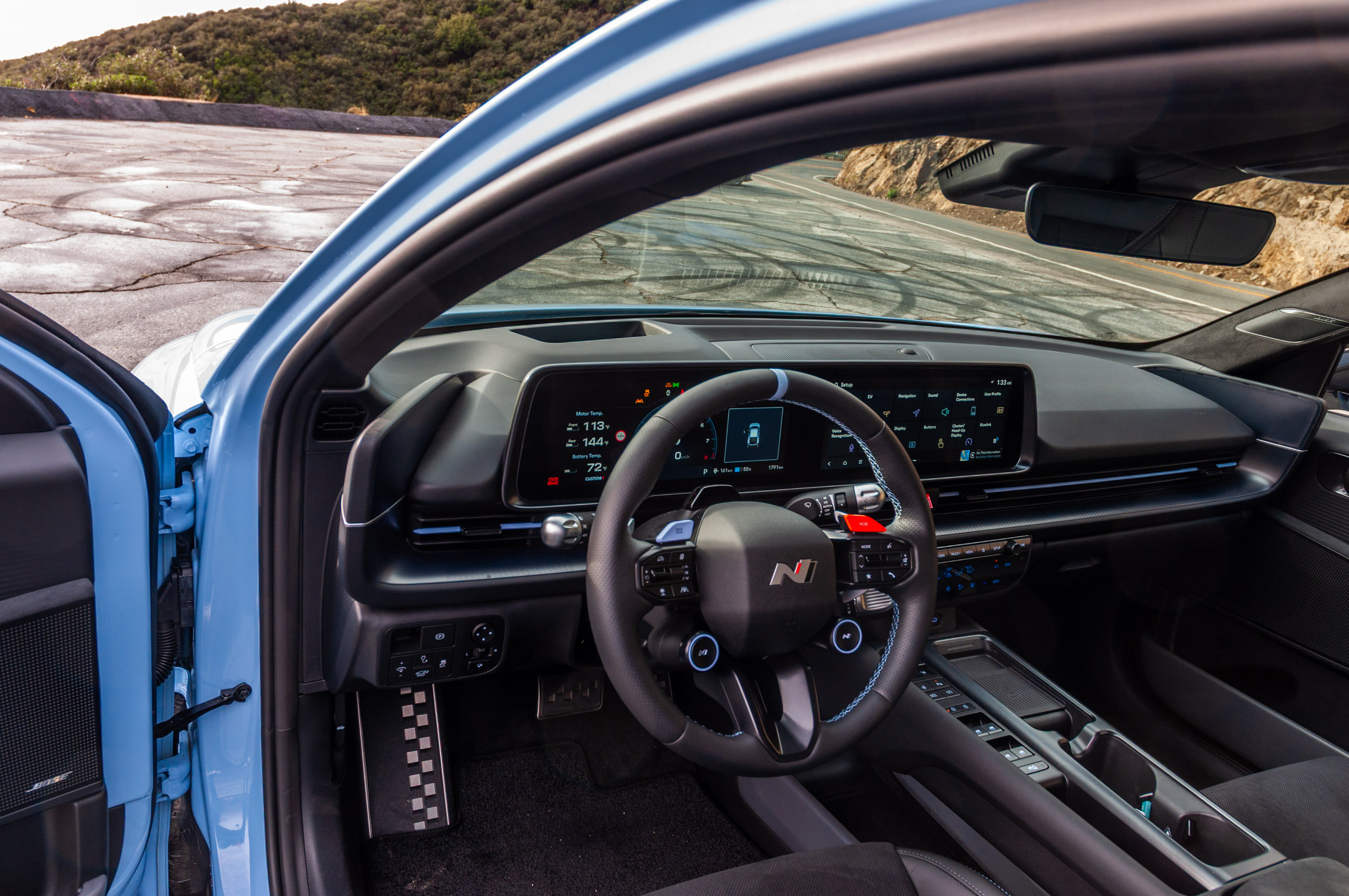
    Inside, it’s standard Ioniq 6 fare. The high-back sport bucket seats with backlit N branding look less ridiculous than the available carbon-fiber buckets found in a BMW M3. The dual 12.3-inch touchscreen and digital gauge cluster setup under one piece of glass remains, but it’s reskinned with an interface straight out of the Ioniq 5 N. Buttons and knobs remain for the climate control and main audio functions, thankfully.

    Pulling onto a Los Angeles side street and then onto the highway, it’s clear the suspension is firm but compliant as I drive over a pothole. This was far from broken midwest pavement, so I’ll withhold judgment for now.

    The same drive modes and powertrain sound options from the 5 N were present. With the sound generators cranked all the way up, it took minutes of blasting up the canyon for my ears to start ringing. This thing is loud, at least from inside the car. And I don’t mean road noise or wind noise, I mean the speakers blasting noise associated with the powertrain as the “revs” from the fake transmission. It wasn’t hard to “bang off the limiter” constantly if I didn’t upshift while in “manual” mode. It all felt so real, at least, the power curve and delivery, and even to an extent, the sounds. I’ve always argued fake sounds in an EV are dumb, and while that hot take hasn’t morphed, there’s no arguing they did add to the Ioniq 6 N’s experience.

    The electric power steering system was razor sharp with quick turn-in. My time was limited, but the steering was a delight and communicated what was going on on the pavement with the Pirelli PZero tires.

    Above all else, the Ioniq 6 N felt more balanced and agile than its Ioniq 5 N sibling. With less weight hanging from the rear, the entire platform felt more neutral, slightly less tail-happy, and lighter on its rubber feet.

    Hyundai Ioniq 6 N
    Joel Feder

    The Ioniq 6 N hasn’t been priced in the U.S. yet, but when it arrives, it’s expected to cost between $65,000 and $70,000. At some level, it has no direct competitor, but on another level, one might argue it competes with everything from a full-loaded Polestar 4 to a Tesla Model 3 Performance. No other EV at this price, or possibly any, is as singularly focused on being an electric sports sedan.

    Ironically, I drove a Chevrolet Corvette E-Ray immediately after my brief time in the Ioniq 6 N. Without question, the Ioniq 6 N was more fun and more engaging despite the Corvette technically being the quicker car. I’m not sure any recent BMW M3 has put a smile on my face the way that Ioniq 6 N did.

    Final judgement shall be reserved until the Hyundai Ioniq 6 N arrives in the U.S., we receive full specs and pricing, and we have meaningful time with the car. But for now, it’s clear Hyundai’s made an electric sports sedan that can challenge the best while stirring the soul and truly delivering a fun time behind the wheel.

    Hyundai provided The Drive with this vehicle for the purpose of writing this review.

    2026 Hyundai Ioniq 6 N Specs
    Base Price $65,000-$70,000 est.
    Powertrain dual-motor | single-speed automatic | all-wheel drive
    Horsepower 641
    Torque 568 lb-ft est.
    Seating Capacity 5
    Curb Weight TBD
    Cargo Volume 13.1 cubic feet
    0-60 mph 3.2 seconds
    Top Speed TBD

    Quick Take

    Hyundai’s proven an electric sports sedan can stir the soul and deliver genuine fun.


    The Drive Logo

    Car Buying Service

    Source link

  • What Donut Lab’s Latest Solid-State EV Battery Test Actually Reveals

    What Donut Lab’s Latest Solid-State EV Battery Test Actually Reveals

    • Donut Lab released its second independent solid-state battery test result Monday.
    • The pouch cell was subjected to extreme temperatures as high as 212 degrees Fahrenheit.
    • It appeared to perform well at elevated heat, but one battery scientist said the limited data revealed little about its real-world performance.

    Finnish startup Donut Lab has released its second independent test result for what it claims is the world’s first all-solid-state battery. Once again, the data is raising as many questions as it answers.

    This latest test puts the cell through its paces at high-temperatures of 80 and 100 degrees Celsius (176-212 degrees Fahrenheit), roughly double the maximum operating temperature of conventional lithium-ion batteries. 

    On the surface, the results look promising. But experts urged caution, pointing to data they say is far too thin to mean much. Some of Donut’s biggest claims, like all-important battery chemistry and energy density, are still unverified. 

    Eric Wachsman, a professor at the University of Maryland’s Department of Materials Science and Engineering who specializes in solid-state batteries and solid oxide fuel cells, said the insufficient data does not represent real-world usage in automotive applications. 

    “The cells are not violating any law of thermodynamics,” Wachsman told me in an email. “But the data presented leaves a lot to be desired for many reasons,” he said.

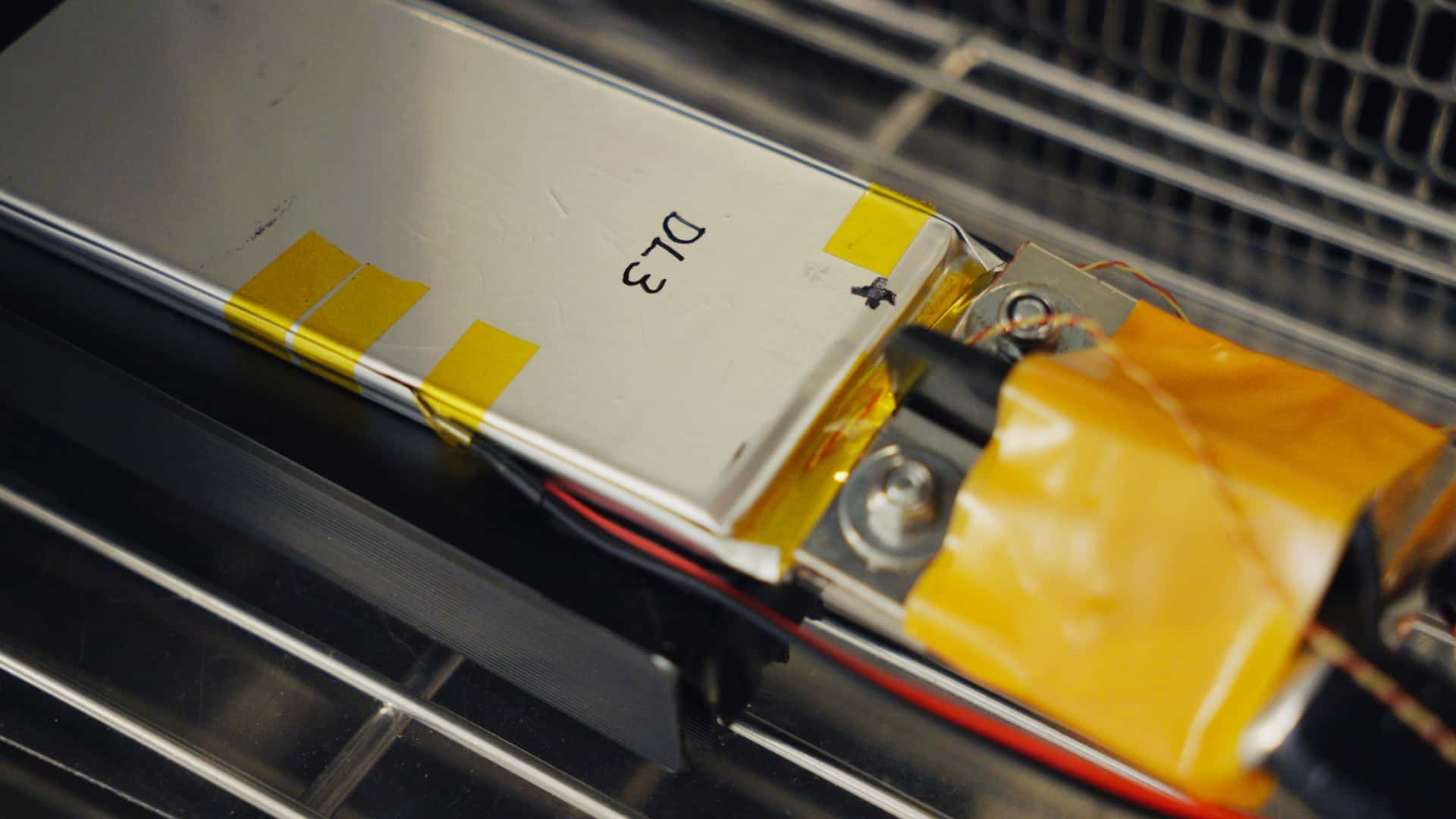
    Donut Lab Solid-State Cell

    Photo by: Donut Lab

    Researchers say solid-state batteries are a “holy grail” technology that can unlock superior driving range compared to today’s lithium-ion batteries, while substantially reducing charging times and fire risk. At least on paper, the technology has the potential to vanquish range and charging anxieties and unlock broader EV adoption.

    Battery companies and automakers are racing to develop the technology, but mass manufacturing of solid-state batteries without defects is extremely challenging. Several solid-state battery startup CEOs InsideEVs has interviewed have said it’s an unresolved problem.

    That’s why Donut Lab’s claims took the internet by storm early this year. The Helsinki-based startup says it has developed the world’s first all-solid-state battery that’s production-ready. It will power Verge Motorcycles EVs starting this quarter. 

    The specs it’s put forward are extraordinary: 400 watt-hours of energy density (roughly double today’s lithium-ion cells), a five-minute charge time, an operating range of -30C to 100C (-22F to 212F), a 100,000-cycle lifespan, and zero rare earth materials.


    Donut Labs Solid-State Battery

    Photo by: Donut Lab

    The announcement was met with deep skepticism from industry experts for making bold claims without providing any proof, patent disclosures, or live demonstrations. The company is now responding to the blowback by releasing independent test results from the VTT Technical Research Centre of Finland.

    After demonstrating its fast-charging capabilities in a lab test last week, the company released a second independent test on Monday. This one showcases the cell’s apparent stability at temperatures as high as 80C and 100C (176F and 212F). 

    At 80C (176F), the cell appeared to have delivered more energy than at 20C (68F), reaching 110.5% of its normal capacity. It basically suggests that the chemistry is possibly running more efficiently at elevated heat. After the high-temperature discharge, it recharged without any visible damage, indicating normal performance.

    The battery was then pushed even harder. The agency raised the temperature of the testing chamber to 100C (212F), which is the boiling point of water. Again, the cell performed better than it did at room temperature, delivering 107% of its normal capacity. And it was able to charge up normally again thereafter.

    That’s impressive because regular lithium-ion batteries don’t handle heat all that well. As temperatures climb, they lose efficiency. And if you push far enough, they can become unstable or sustain permanent damage. Studies suggest that the optimal operating range for lithium-ion batteries is between 25-40C (77-104F). The Donut Lab cell was able to survive in temperatures over twice of that.
    However, there was one notable development after the 100C test: the Donut battery’s outer pouch lost its “vacuum.” Wachsman said the pouch issue was a potential red flag. The loss of vacuum, he explained, may indicate that the cell lost its “hermetic seal,” the barrier that keeps outside air away from the sensitive internal chemistry.

    “Pouch cells will tend to expand due to internal pressure as they can give off gas during cycling,” Wachsman said. “It’s clear they experienced excessive swell after a few cycles,” he said after comparing the fast-charging images from last week’s test to this week’s high-temperature results.


    Donut Lab Solid-State Battery Swelling

    Donut Lab Solid-State Battery

    Potential swelling on the Donut Lab solid-state EV battery cell after a discharge test at 100 degrees Celsius (212 degrees Fahrenheit)

    Whether this is a major safety issue or something that’s expected on solid-state cells remains unclear. However, the broader consensus is consistent among experts. Neither test reveals meaningful pack-level performance over the thousands of cycles that actually matter for real-world use. 

    “To be commercially relevant, the cells need to be stable with less than 10-20% of capacity fade for thousands of cycles,” Wachsman said. “Without that, the tests are essentially meaningless.”

    Donut Lab says more independent results are coming in the weeks ahead. Energy density figures and battery chemistry disclosures remain the two things worth watching for. Until those surface, the jury is firmly still out.

    Contact the author: suvrat.kothari@insideevs.com

    Source link

  • Charles Leclerc ties the knot & drives off in a 1957 Ferrari 250 Testarossa

    Charles Leclerc ties the knot & drives off in a 1957 Ferrari 250 Testarossa

    Ferrari Formula 1 driver Charles Leclerc recently got married to his fiancée, Alexandra Saint-Mleux. The ceremony was held in Monaco, just days ahead of the F1 season opener in Australia. What caught our attention was the wedding getaway car, a 1957 Ferrari 250 Testarossa.

    There’s no denying the fact that Charles has a good taste in cars, and it had to be something extraordinary for such a special occasion. The couple were seen driving away in the $12 million classic Ferrari.

    The 250 Testarossa is one of the greatest and rarest cars ever made. Only 33 examples were produced. The 250 TR won the famous Mille Miglia and Targa Florio. It also has four 24 Hours of Le Mans victories to its name.

    The gorgeous speedster was built by Italian coachbuilder Sergio Scaglietti. Under the long sculpted hood is a 3.0-liter V12 engine, featuring six twin-choke carburettors. It is said to produce around 300 hp. It uses a 4-speed transmission, which drives the rear axle, allowing the car to reach a top speed of 167 mph.


    Source link

  • BMW, Hyundai, and Nissan Top the 2026 World Car Awards

    BMW, Hyundai, and Nissan Top the 2026 World Car Awards

    In January, the 2026 World Car of the Year awards finalists were announced, and now those finalists have been whittled down to the top three in each category, including overall World Car of the Year. For 2026, BMW and Hyundai are the top performers, with multiple mentions, but the finalists also include offerings from Mercedes-Benz, Lucid Motors, Volvo, Chevrolet, Kia, and Mazda. Two Chinese vehicles also make the final round, though neither is offered in the United States. Without any further ado, let’s see which three cars top each category, closing with the overall finalists.

    2026 World Electric Vehicle Top 3

    BMW


    View the 3 images of this gallery on the
    original article
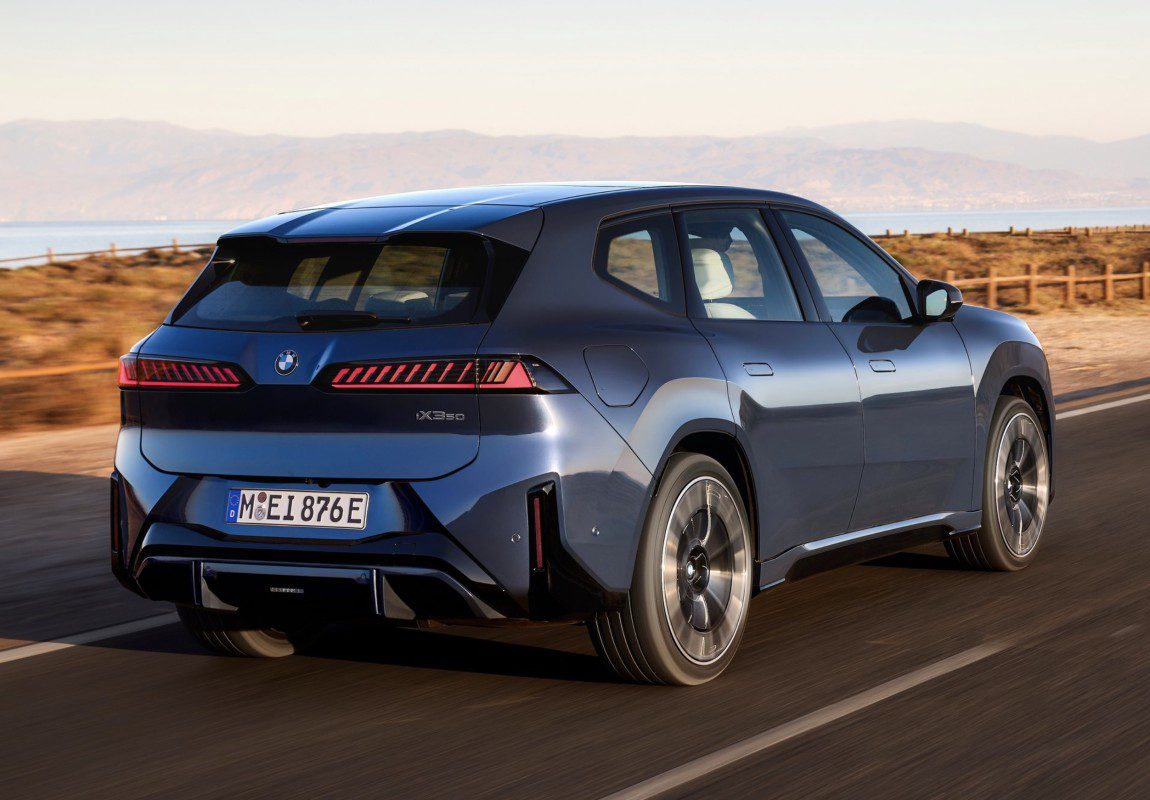
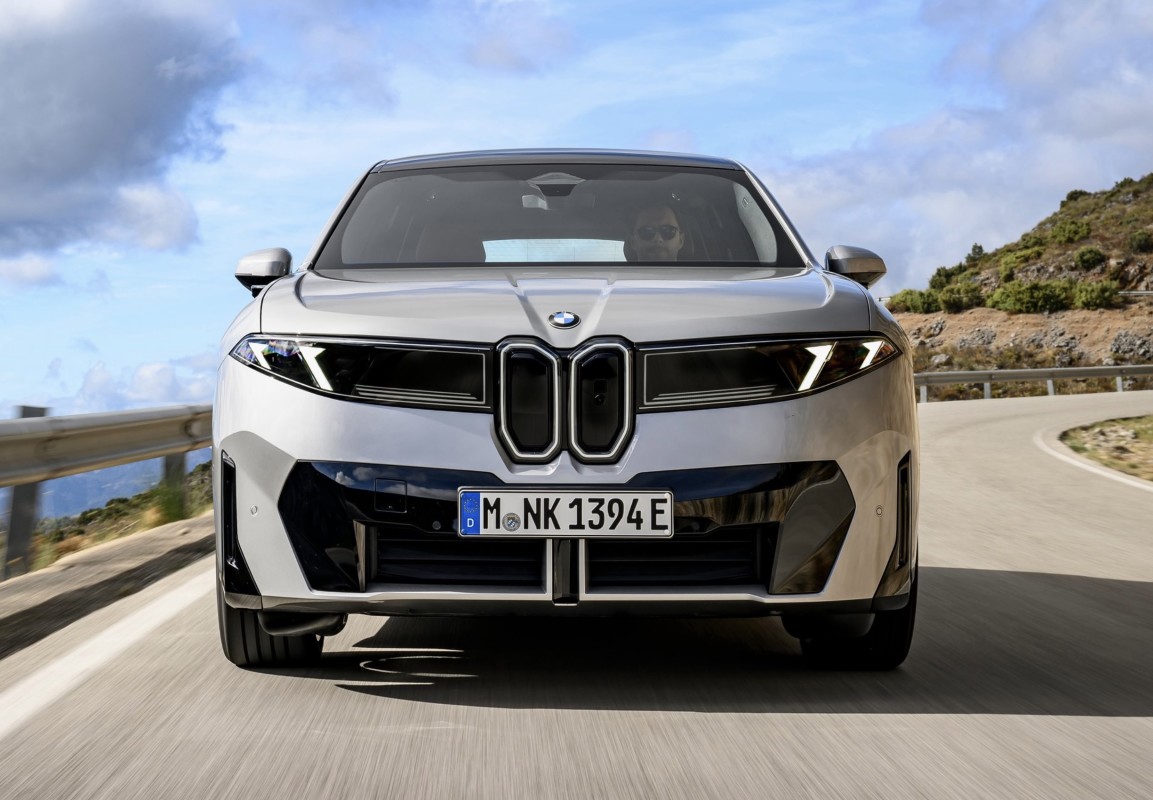
    • BMW iX3
    • Mercedes-Benz CLA
    • Nissan Leaf

    German automakers BMW and Mercedes have been showcasing remarkable efficiency advances with their iX3 crossover and CLA sedan, respectively, while Nissan gets a shout for offering electric motoring in an affordable package. Top 10 finalists that failed to make the cut include the AudiA6 e-tron/S6 e-tron and the Hyundai IONIQ 9.

    2026 World Luxury Car Top 3

    Cadillac


    View the 3 images of this gallery on the
    original article
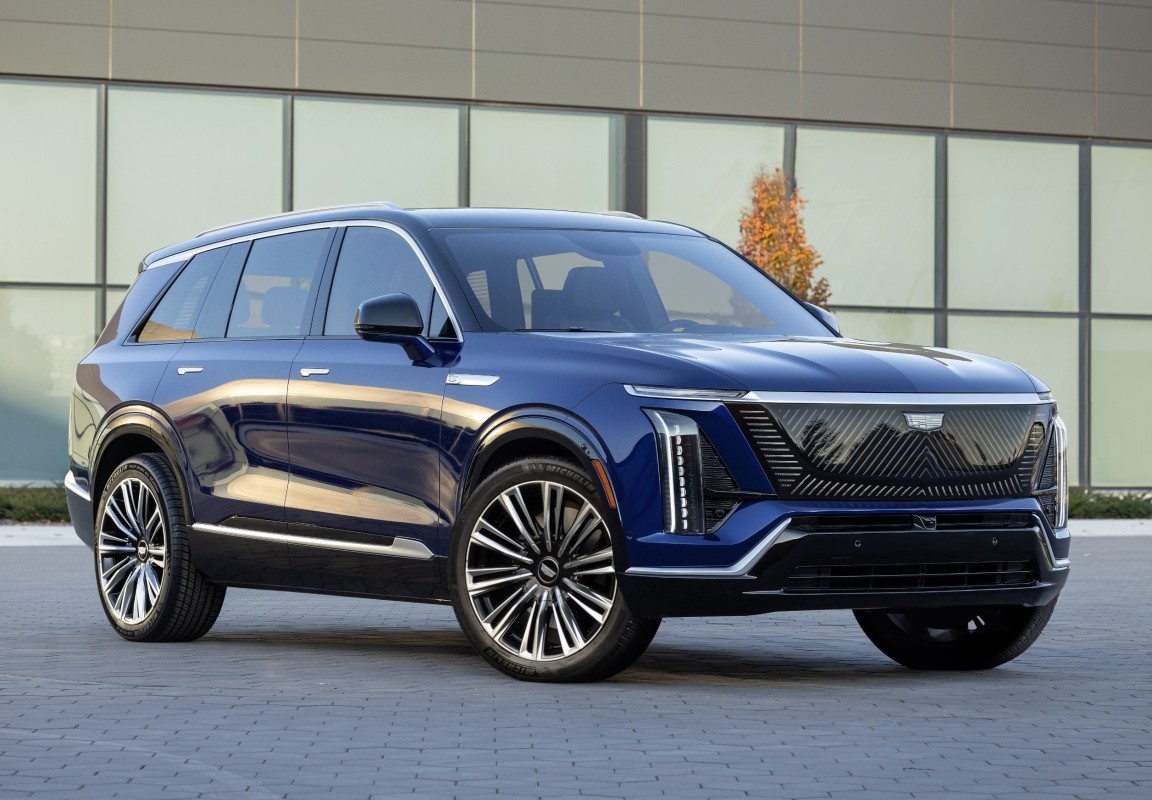
    • Cadillac Vistiq
    • Volvo ES90
    • Lucid Gravity

    Somewhat surprisingly, the Germans don’t get shout in the luxury segment, with America’s Lucid Gravity and Cadillac Vistiq sparring against each other and Sweden’s ES90. These left no space for the combustion-powered Audi A6/S6, and its EV siblings, the Audi A6 e-tron/S6 e-tron.

    2026 World Performance Car Top 3

    BMW


    View the 3 images of this gallery on the
    original article
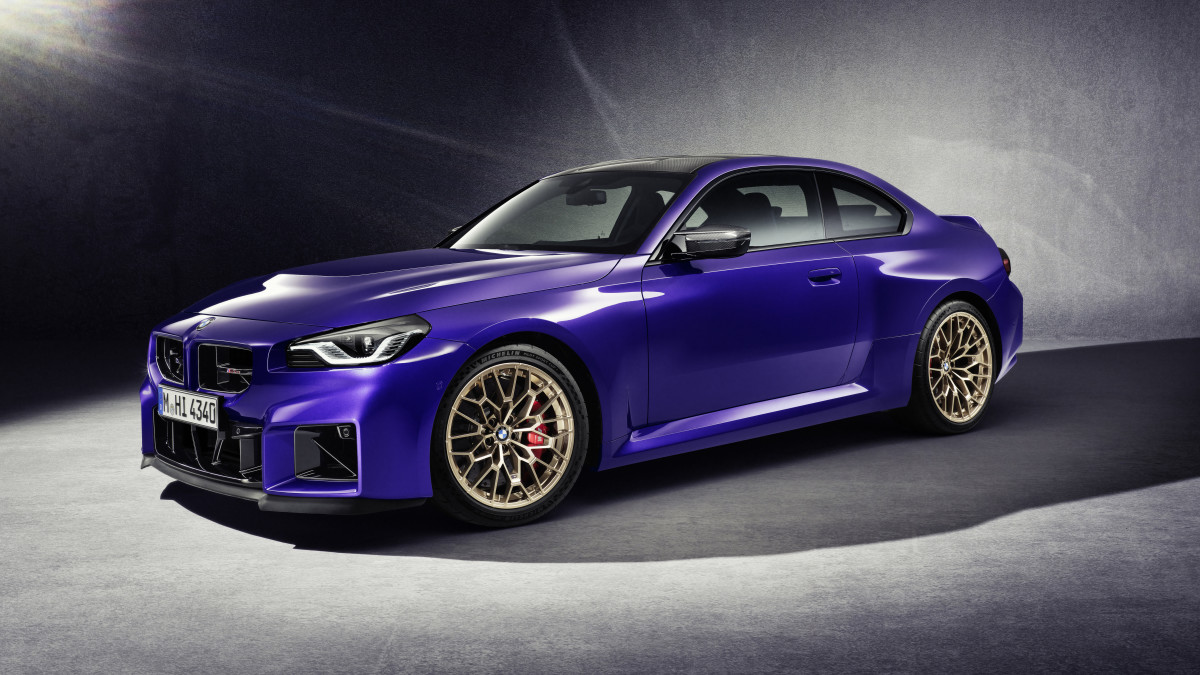
    • BMW M2 CS
    • Chevrolet Corvette E-Ray
    • Hyundai IONIQ 6 N

    Normal service is resumed in the performance car category, with BMW’s gas-only M2 CS and Chevy’s hybrid Corvette E-Ray set to battle the all-electric Hyundai IONIQ 6 N. The Defender OCTA and the Mercedes-AMG GT 63 Pro failed to make the cut.

    2026 World Urban Car Top 3

    GM China/Baojun/Wuling


    View the 4 images of this gallery on the
    original article
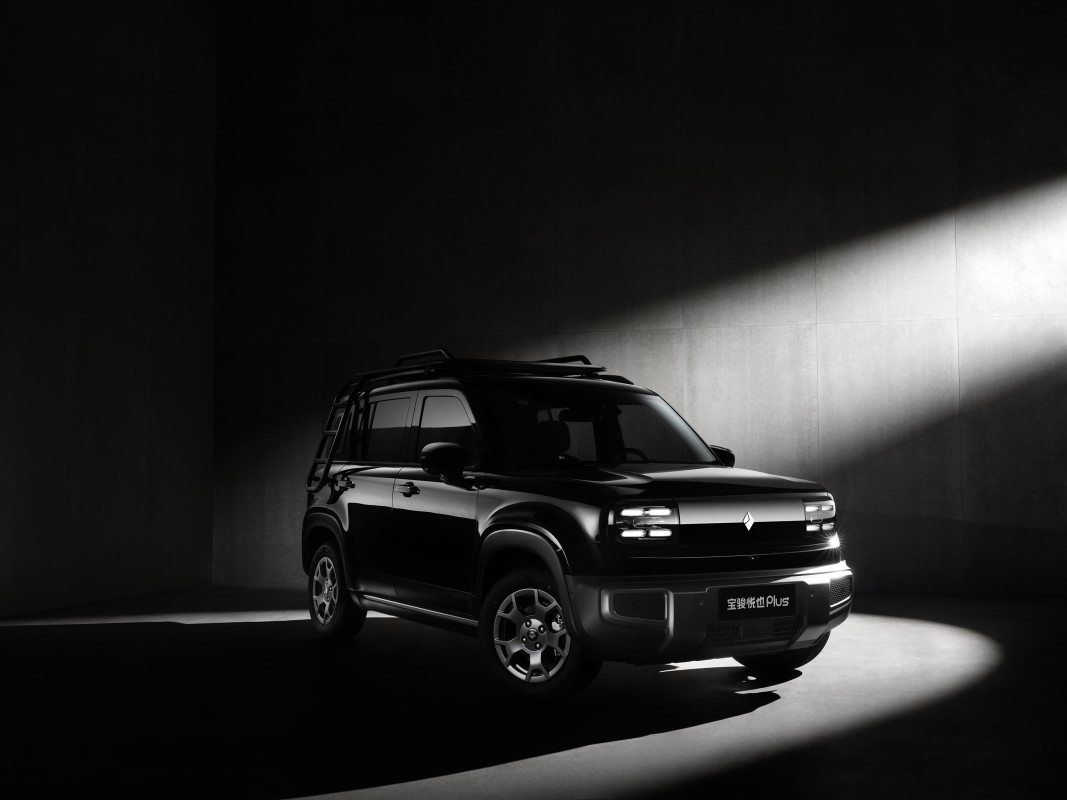
    • Baojun Yep Plus/Chevrolet Spark EUV
    • NIO Firefly EV
    • Hyundai Venue

    Chinese automakers appeal most when the budget is stretched thin, but Hyundai’s Venue is also still a good value in the eyes of jurors. The Venue is currently the cheapest Hyundai in America. Failing to make the final round are the Wuling Binguo/Ari Poly and the Alfa Romeo Junior.

    2026 World Car Design of the Year Top 3

    Kia Motors


    View the 3 images of this gallery on the
    original article
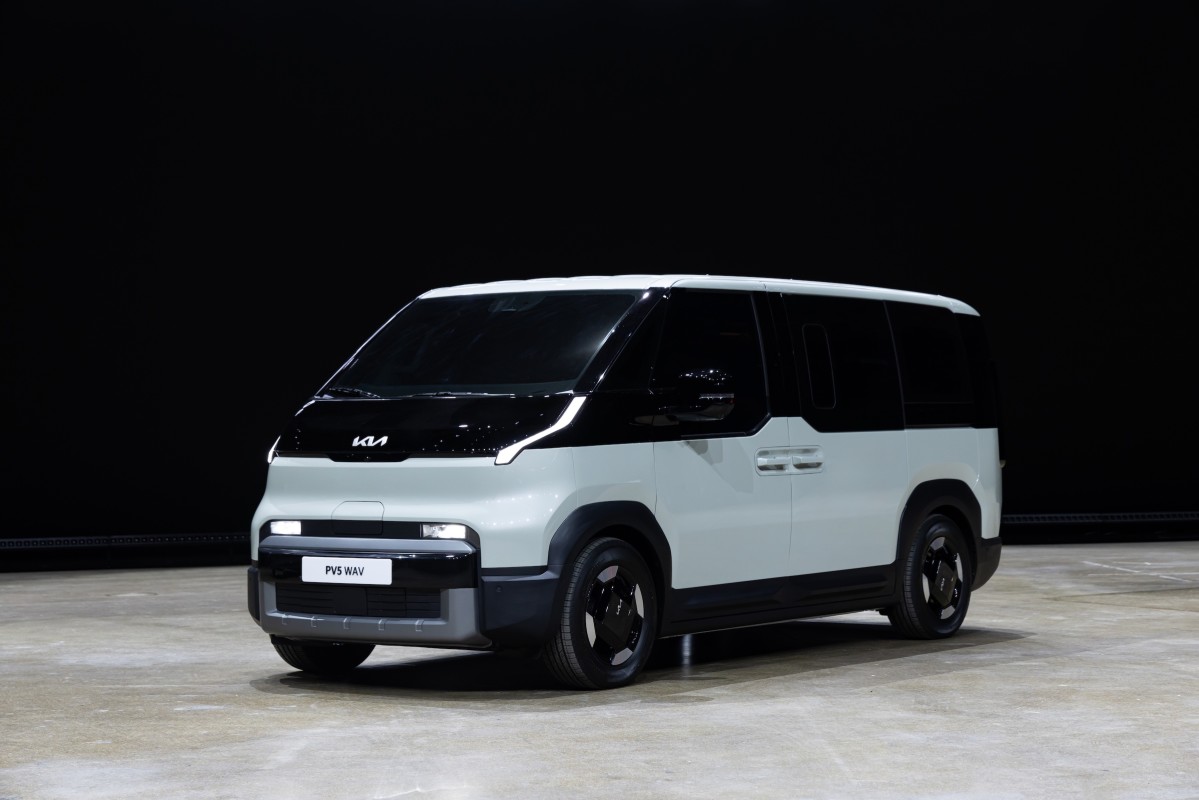
    • Kia PV5
    • Mazda 6e/EZ-6
    • Volvo ES90

    It’s hard to argue with the top three in the design category, particularly the striking Mazda 6e/EZ-6. It, along with the Kia PV5 and Volvo ES90, saw out competition from the NIO sub-brand Firefly and Lynk & Co’s 08.

    2026 World Car of the Year Top 3 and Announcement Date

    BMW


    View the 3 images of this gallery on the
    original article
    • BMW iX3
    • Hyundai Palisade
    • Nissan Leaf

    The overall World Car of the Year award for 2026 will go to either the remarkable BMW iX3, the luxe and large Hyundai Palisade, or the surprisingly affordable Nissan Leaf. The winners will be announced on April 1, 2026, at the New York International Motor Show. Do you agree with the finalists, and do you think the jurors left anything out? Let us know below.

    Source link

  • Top Automotive Innovations of the Past 100 Years – 1940s: The Automatic Transmission

    Top Automotive Innovations of the Past 100 Years – 1940s: The Automatic Transmission

    The 1940s were a tumultuous time. America was involved in World War II, and resourcefulness was at the forefront of many families’ minds. Meanwhile, technological advancements were plentiful, and the U.S. emerged as a world superpower. Despite this (or perhaps as a byproduct of this era), automotive innovation continued to blaze on throughout the decade.
     
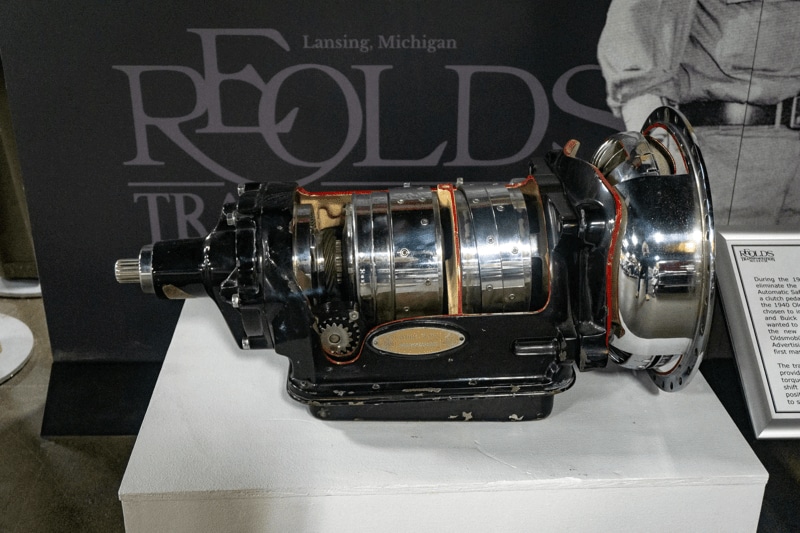
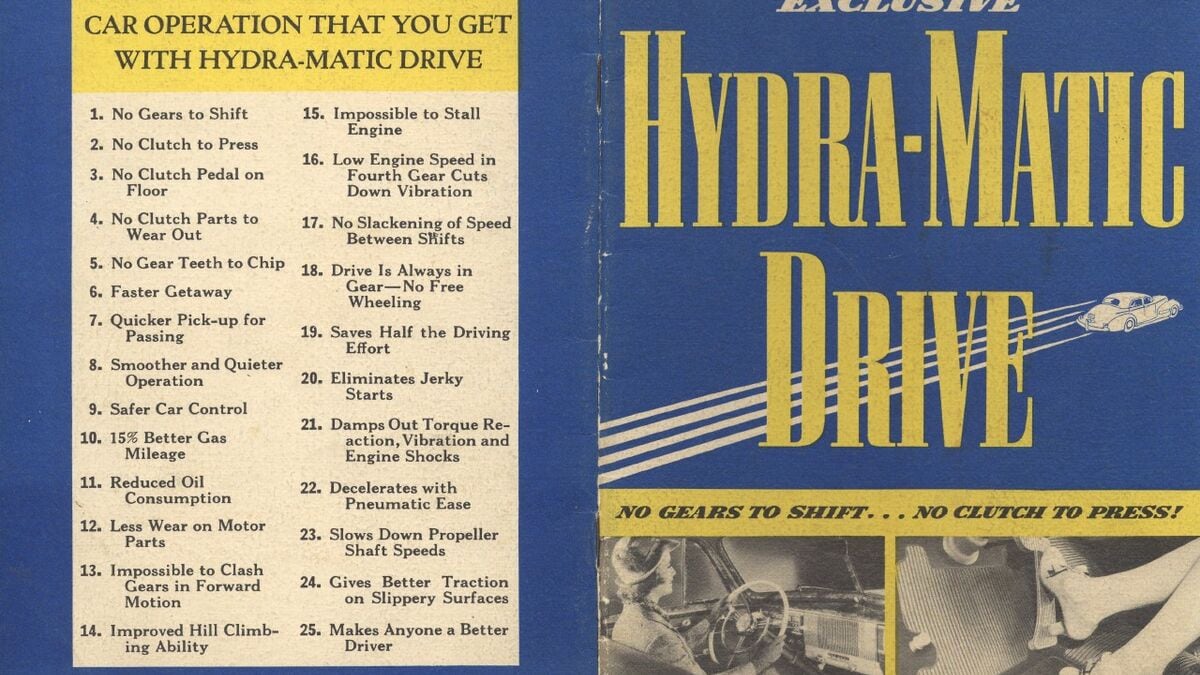
    The decade’s most important innovation arrived at the very beginning, in 1940, when Oldsmobile introduced General Motors’ Hydra-Matic Automatic Transmission.

    The First Mass-Produced Automatic Transmission

    Top Automotive Innovations of the Past 100 Years – 1940s: The Automatic TransmissionTop Automotive Innovations of the Past 100 Years – 1940s: The Automatic Transmission
    Image courtesy of Jason Fogelson

    Prior to this innovation, every vehicle on the road needed some manual involvement in shifting. Ford’s Model T used a unique two-speed planetary gearset, often called a “three-speed” at the time (two forward, one reverse) was relatively easy to use, but GM’s Hydra-Matic, which offered four forward gears, was the world’s first mass-produced, fully automatic transmission. The Hydra-Matic closely resembled today’s automatic transmissions. Other manufacturers experimented with similar systems during the era, but GM was the first to mass-produce such an option across its entire vehicle lineup.

    Top Automotive Innovations of the Past 100 Years – 1940s: The Automatic TransmissionTop Automotive Innovations of the Past 100 Years – 1940s: The Automatic Transmission
    Image courtesy of General Motors

    The effect of this technology cannot be overstated, as it opened the automobile market to many more consumers, eliminated the need for driver skill in gear shifting, reduced stalling, and reduced drivetrain strain.

    Explore automotive innovations from other decades below:

    Source link

  • The BYD Seal 07 EV official images are here

    The BYD Seal 07 EV official images are here

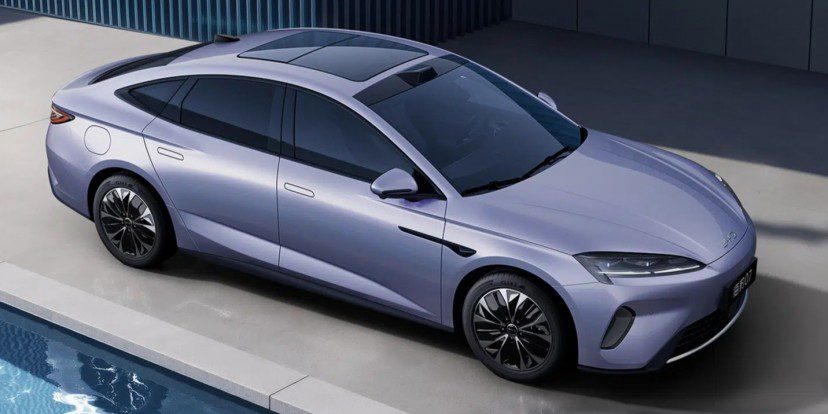
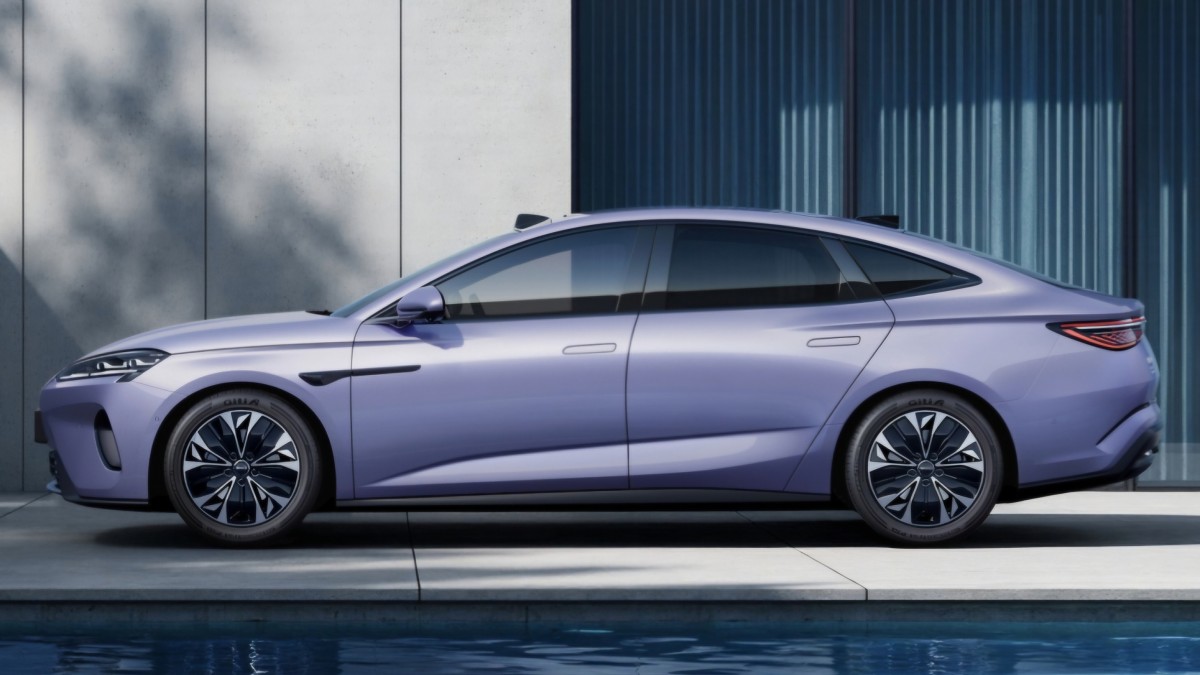
    BYD shared the first official look at its new Seal 07 EV, a fully electric version of a sedan many people already know. While it looks similar to its hybrid cousins, this model runs entirely on battery power. It is built on an entirely new e-platform 3.0 Evo.

    Because the Seal 07 EV is an electric car, it does not need a big opening in the front to cool an engine. Instead, it has a fully closed front with thin headlights giving it a modern look. On the back, a long light bar stretches from one side to the other. There is even a small piece of chrome above the lights for extra visual impact.

    2026 Seal 07 EV - source: BYD
    2026 Seal 07 EV – source: BYD

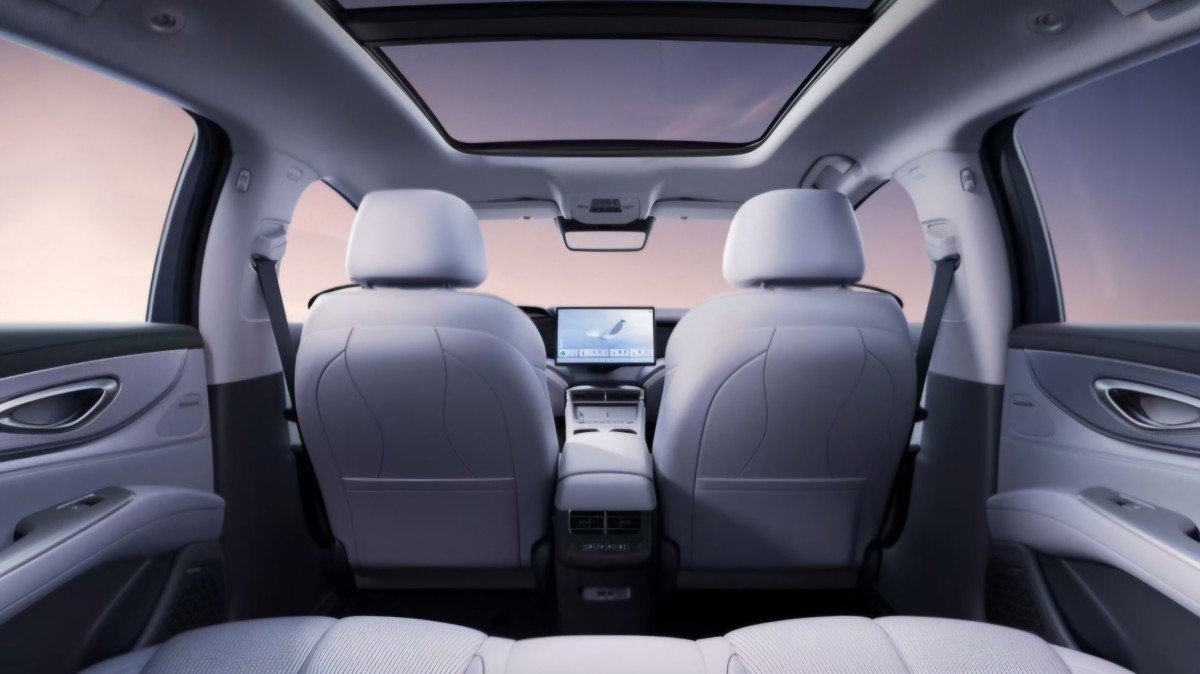
    The BYD Seal 07 EV is a large sedan – it measures 196.7 inches long, 75.2 inches wide and it stands 58.9 inches tall. The 114.2 inches wheelbase means there is a lot of legroom for the people sitting in the back seats. The car weighs a substantial 4,277 lb, but that’s pretty normal for a vehicle with a large battery.

    Surprisingly, the BYD Seal 07 EV uses a single rear-mounted motor. But that motor sends 240 kW of power to the wheels – that’s about 322 horsepower which is plenty to get the car moving quickly. The Seal 07 EV can reach a top speed of 124 mph. The motor is paired with BYD’s Blade battery with a capacity of 69.07 kWh. The battery itself is quite heavy, weighing just over 490 kg.

    2026 Seal 07 EV - source: BYD
    2026 Seal 07 EV – source: BYD

    The new BYD does not disappoint when it comes to range. According to official tests, it can travel up to 438 miles on a full charge. It is also very efficient with its energy – it only uses about 10.8 kWh of electricity to travel 62 miles.

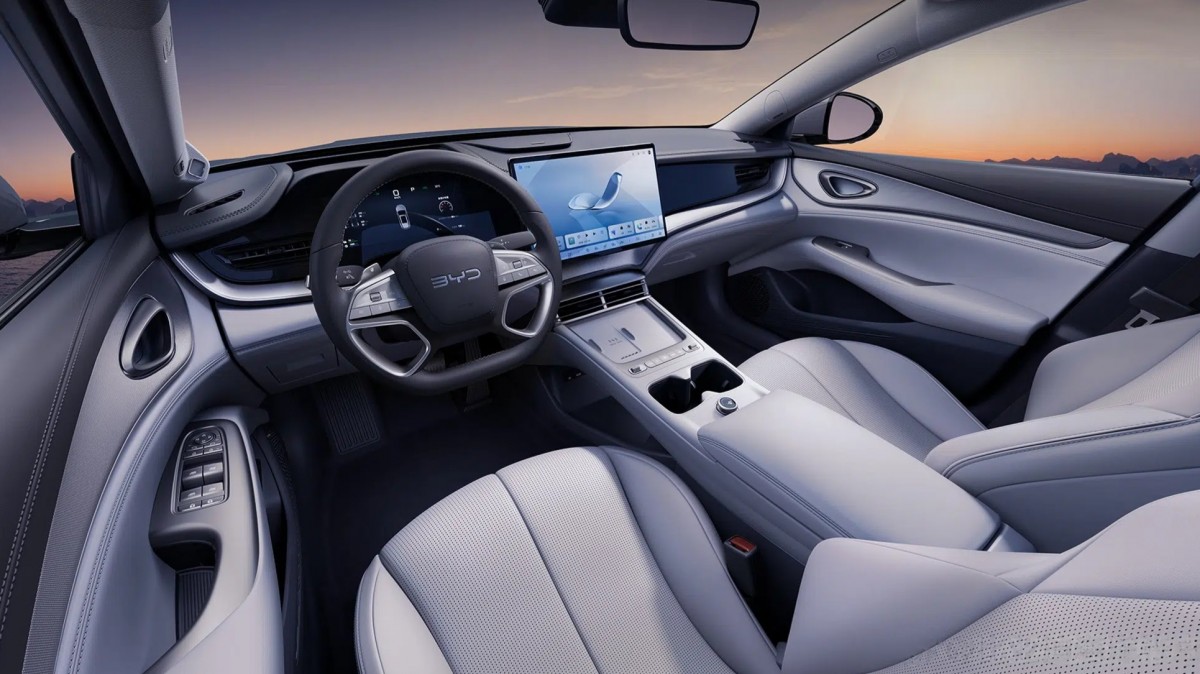
    Inside the cabin, the BYD Seal 07 EV looks like a high-tech office. The main attraction is the 15.6-inch screen that floats in the middle of the dashboard. This screen controls the music, maps, and climate. The driver also gets a small screen behind the steering wheel to show speed and battery life. Thankfully, BYD kept some physical buttons and a crystal-like knob on the center console, making it easier to change settings without looking away from the road.

    2026 Seal 07 EV - source: BYD
    2026 Seal 07 EV – source: BYD

    Technology fans will notice a small bump on the roof of the car. This is a LiDAR sensor that uses lasers to “see” the world around the car. It is an important part of the “God’s Eye” smart driving system that helps the vehicle stay in its lane, avoid crashes, and assist the driver. The Seal 07 is expected to use the new 5.0 version of that system. We should hear more about how this system works during a special event scheduled for March 5th.

    Via

    Source link