When selling your car yourself, refuse any unusual requests, such as driving the would-be buyer to another location. Often, such a request is framed to obtain money or arrange a loan to complete the sale. Instead, let the buyer make their own arrangements with the service. Then, you can ask the person to contact you when ready to conclude the sale.
Prepare the paperwork beforehand and keep the car’s title unsigned and out of sight, even if using the Private Seller Exchange service. If not using the Private Seller Exchange service, be sure the form of payment is legitimate. Stick to well-known payment options, like a cashier’s check.
Touchless payment options like Zelle, PayPal, Venmo, or CashApp may also be available, depending on vehicle cost. These online payment services allow users to send and receive funds directly and securely without exchanging bank information. However, limitations on transaction amounts may prevent using these platforms as the only payment method when buying a car.
Escrow Services
Beware of fraudulent escrow services. Private Seller Exchange handles fund transfers through a secure escrow service.
However, if selling peer-to-peer and not using the service, an escrow service holds the buyer’s payment for a fee until the seller has delivered the item purchased. Such a third-party service can protect both parties from fraud. However, scammers often set up fake escrow services. For example, they claim an affiliation with well-known companies like Kelley Blue Book and TRUSTe to create a sense of security. Kelley Blue Book, however, does not endorse any escrow services, and TRUSTe does not operate an escrow service.
Tips Before You Agree to an Escrow Service
Avoid any payment or escrow service that implies an affiliation or partnership with KBB.com.
Avoid any escrow service that claims to be operated by TRUSTe. TRUSTe doesn’t operate an escrow service.
Verify an escrow service’s legitimacy by checking with state regulators.
Research the escrow service.
Know how much the escrow service charges and which party pays the escrow fees.
Decline the transaction if the other party insists on using an escrow service you’re unsure about.
Don’t click on any link the seller provides; use a search engine to open the website in a different browser to avoid scams and fraud.
Dial the contact number listed.
Search for the company on the Better Business Bureau website.
If any escrow-related email or website implies an affiliation with Kelley Blue Book by displaying our logo or by other means, report it to KBB.com and law enforcement.
Using Private Seller Exchange
Here’s what you can expect when selling a vehicle on Kelley Blue Book’s Private Seller Exchange.
The marketplace checks IP addresses, emails, and phone numbers. It uses Stripe to verify IDs to help ensure a safe transaction with all buyers and sellers.
Buyers submit payments online, while sellers securely receive funds by one of the following methods: wire transfer, other electronic fund transfer, or credit or debit card.
The service pays off your loan, providing a seamless transfer of ownership to the buyer.
Buyers can drive the vehicle home after the test drive. Just take precautions and follow the steps provided to ensure the transaction is complete. Read below for title transfer.
PRO TIP: To complete a sale or purchase using the Private Seller Exchange, both seller and buyer must first complete and pass ID Verification. It’s best to do that before meeting to speed up the sale.
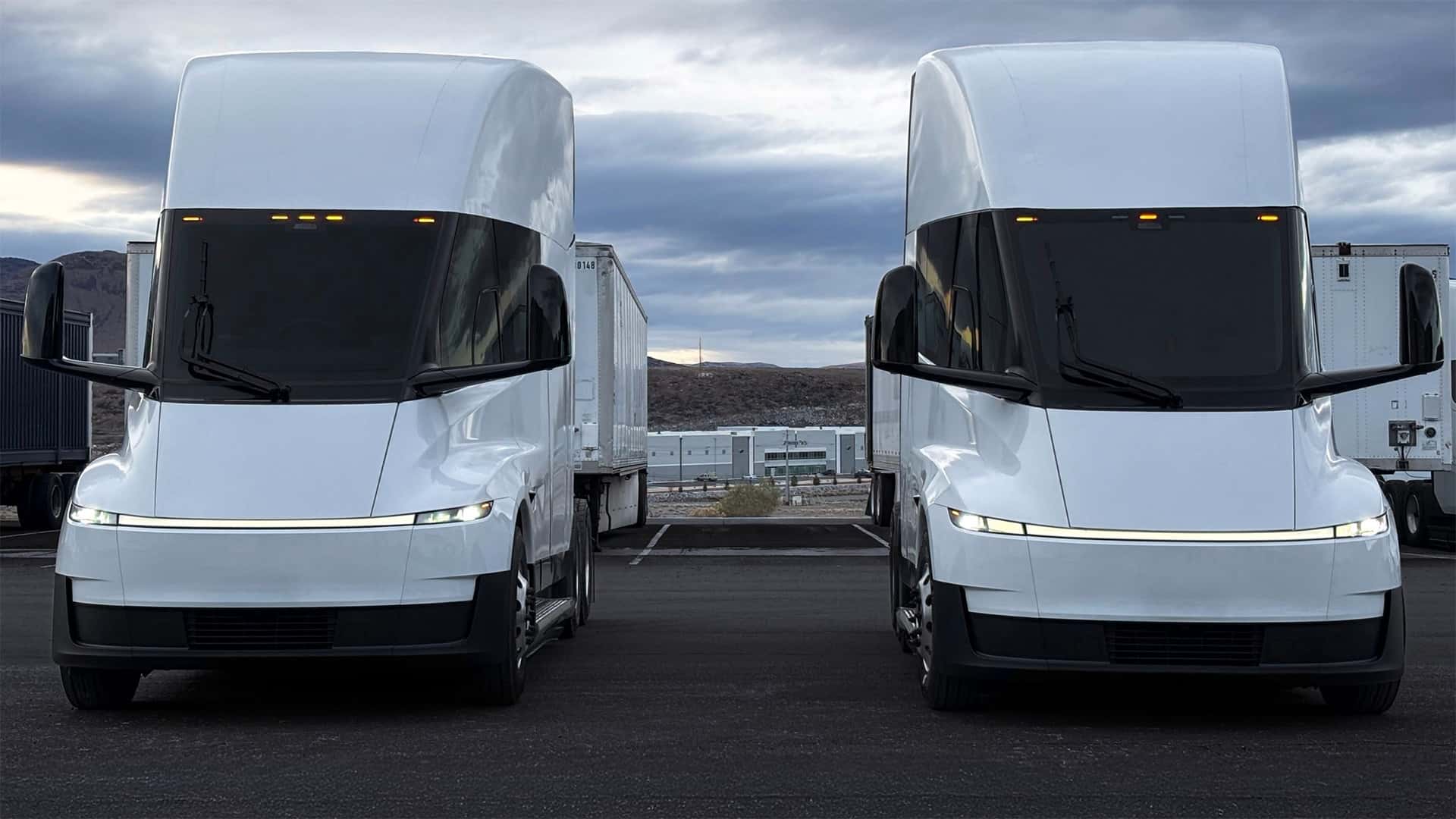
Tesla confirms it’s turning Semi charging from a tiny pilot program into a real long-haul Megacharger network.
The Megacharger map lists 64 new locations showing actual usable corridors for trucks to take.
Tesla’s Semi push is not limited to the United States; Europe is clearly in the plans too.
There are currently just two Tesla Megachargers charging Tesla Semi trucks. One near Stockton, California, and another near Reno, Nevada. But their number will increase rapidly now that Tesla has added 64 additional Megacharger locations listed as “coming soon.”
The manufacturer hasn’t provided an exact timeline for the Megacharger rollout, but its Q4 shareholder report contained a map showing 37 locations that would enter service in 2026. Previously, in April of 2025, Tesla’s Semi program boss, Dan Priestly, said at the ACT Expo that the company aimed to have 46 Megachargers online by early 2027.
Photo by: Tesla
Tesla could have added more chargers to its 2027 rollout plan or the remaining 18 locations will be built at a later date. California and Texas will have over 50% of these new Megachargers, with 18 and 17 locations, respectively, and important hubs are also coming to Washington state, Georgia and Florida, as well as the city of Chicago, which has four locations planned. The goal of the expansion is to create corridors that enable viable routes across the United States.
The news of the Megacharger network expansion comes from Jason Gies, who works for Tesla’s business development department for the Semi truck. He said in a LinkedIn post that “You can see Megachargers and coming soon sites forming a backbone across the country. Chicago is becoming a real anchor. The Southeast is filling in. Corridors are starting to connect, not just scatter pins.”
After missing the original plan to start production of the Semi in 2019, it is finally starting in 2026. Tesla has given the truck a refresh, updated its specs, and confirmed it can charge at 1.2 megawatts. In late December, Tesla published a video on X showing a live charging session of a Semi topping up from a Megacharger and reaching over 1.2 MW (1,206 kW).
The Semi will be available in Standard Range form with up to 325 miles of range, fully loaded, or in the bigger-battery Long Range model, which pushes the range to 500 miles. Tesla doesn’t state the battery sizes for either version, but they should be around 550 kW and 875 kW, respectively, and both can charge to 60% in around 30 minutes.
Tesla is also looking to establish a Megacharger network in Europe, where it plans to launch the Semi at some point in the near future. We don’t have details yet, and all we know now is that David Forer, a senior project developer for charging at Tesla, mentioned Megachargers in Europe when discussing a job listing on LinkedIn.
In an interview posted yesterday on X, Elon Musk confirmed that a European version of the Semi is also planned and it should arrive “hopefully next year.” This confirms the need for a European Megachager network, although that’s likely further in the future, and it may initially be one or two locations, just like it is right now in the U.S., before the planned expansion.
Our free daily newsletter sends the stories that really matter directly to you, every weekday.
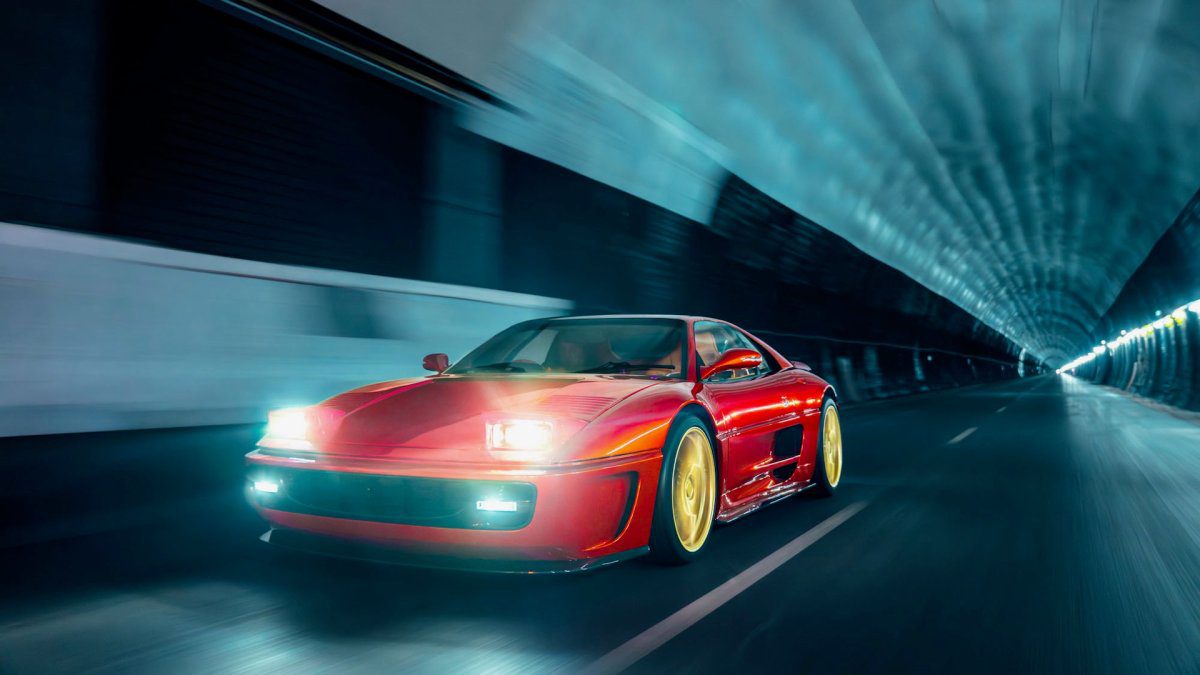
British firm Evoluto Automobili’s remastering of the Ferrari F355 is finally ready for production. The company said in a press release that it has just completed an extensive testing program to ensure the restomod delivers on all the specs promised when it was first shown in 2024. The engineers checked another important box: making the 355 by Evoluto sound epic.
Echoing off the walls of Catesby Tunnel—a former railroad tunnel in northern England converted into a testing facility—the soundtrack is pure supercar. That noise is generated by a reworked version of the F355’s original 3.5-liter V8, now making 414 horsepower (39 hp more than the factory version) and revving to 8,500 rpm. Evoluto also plans to offer a 3.7-liter version producing 474 hp and capable of revving to 9,000 rpm.
The rest of the car was similarly upgraded, with a wider track, quicker steering that’s also claimed to be more responsive throughout the full range of suspension motion, and new suspension geometry designed to work better with today’s larger wheels and tires. Suspension components, including three-way dampers with external reservoirs, are supplied by R53, which will also supply Evoluto’s sibling company, Boreham Motorworks.
These changes also required modification of the body shell, which was reinforced for good measure. Evoluto claims that 90% of the wiring harness is new as well, incorporating a new climate control system. This being an older Ferrari, those areas probably needed upgrading more urgently than the engine. This holistic approach also helped Evoluto achieve a dry weight of 2,755 pounds—a bit heavier than the original target but still light compared to many modern supercars.
355 by Evoluto – The Tunnel Run #fastcars #automotive #evoluto #shorts
When original parts were unavailable, Evoluto engineered replacements, including wheel bearings (also supposed to be lighter than the originals) and drive shafts. They’re made not only to do the job of the factory components but also last longer and make servicing less complicated, according to the company.
Everything was evaluated over 5,000 miles of testing. At least one customer car has been completed, but Evoluto plans to strip it down in March as part of its final validation process, with a full sign-off for production expected in April, followed by the start of deliveries in the fourth quarter. Evoluto said in 2024 that just 55 cars would be built, so it’s unlikely you’ll ever see one. But if you’re within a few miles of one, you’ll definitely be able to hear it.
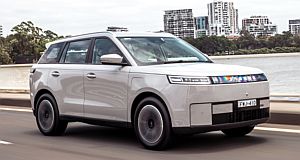
OMODA-JAECOO Australia has received over 1000 orders for its newly announced Jaecoo J5 EV following the opening of the books just last week.
The Chinese importer says the milestone reflects growing consumer demand for accessibly priced, well-equipped electric SUVs, and positions the J5 EV as one of the fastest growing new electric vehicle nameplates to enter the market this year.
“The response to the Jaecoo J5 has exceed our expectations,” said Omoda-Jaecoo chief commercial officer Roy Munoz.
“Hitting 1000 orders so quickly shows Australians are moving fast when an EV delivers the right mix of modern design, advanced technology, and outstanding value.
“We are seeing customers act early to secure their place in the queue.”
Mr Munoz says the J5 EV is built for everyday Australia, with up to 402km of driving range and a DC fast charging time of just 28 minutes.
Equipment highlights include 18-inch alloy wheels shod with Continental tyres, a powered tailgate, vehicle-to-load (V2L) functionality, remote start with climate control memory, LED exterior lighting, acoustic glass for the front doors, dual-zone climate control, synthetic leather upholstery over heated and ventilated front seats, and a 50-watt wireless device charging pad.
Infotainment features include an 8.9-inch digital instrument cluster and 13.2-inch infotainment touchscreen, the latter including eight-speaker audio, wired and wireless Apple CarPlay and Android Auto connectivity, ‘Hello Jaecoo’ voice control, and a 360-degree camera system.
Under the bonnet, the J5 utilises a single electric motor producing 155kW/288Nm and driving the front wheels. Jaecoo quotes a 0-100km/h acceleration time of 7.7 seconds while having an energy consumption figure of 143Wh per kilometre.
The model features as standard seven airbags, adaptive cruise control, autonomous emergency braking, emergency lane keeping, forward collision warning, and many more among its standard safety suite.
As elsewhere in the Jaecoo range, the J5 will be backed by the importer’s eight-year/unlimited-kilometre warranty and included high-voltage battery coverage and capped-price servicing plan.
The model is now available to order with a premium-paint inclusive driveaway price of $36,990 – but only for a limited time.
“With growing interest and limited launch allocation remaining, we encourage customers who want the J5 at launch value to act sooner rather than later,” added Mr Munoz.
From the March/April 2026 issue of Car and Driver.
Lap Time: 2:45.8
Class: LL4 | Base: $204,206 | As Tested: $222,606 Power and Weight: 532 hp • 3588 lb • 6.7 lb/hp Tires: Goodyear Eagle F1 SuperSport R F: 245/35ZR-20 (95Y) NA2 R: 315/30ZR-21 (105Y) NA2
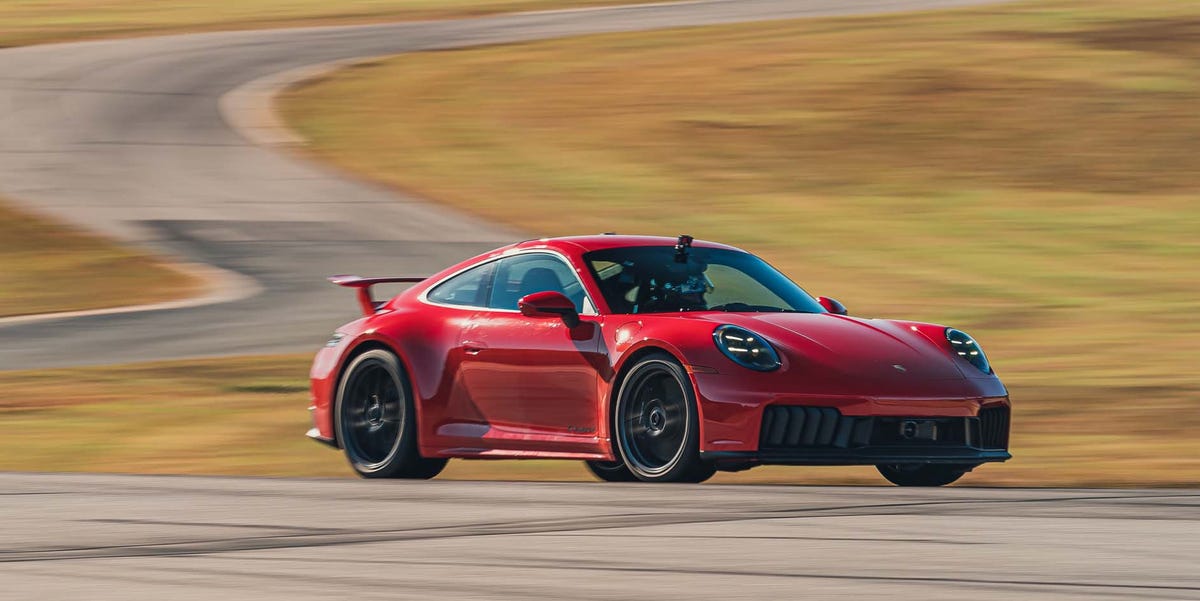
When you sell something like 20 variants of the 911 nameplate, you must master the art of differentiating them. What’s one surefire way to distinguish these pinnacle sports cars? Engines. In the case of the 911 GTS, it’s the very new 532-hp hybrid powertrain.
The GTS is the first electrified 911 we’ve lapped at VIR. A turbocharged 3.6-liter flat-six works with an electric motor in the turbo and another in the dual-clutch gearbox. On the Front Straight, the GTS peaks at 159.7 mph—3.7 mph faster than this year’s GT3 and swifter than 19 of the other 911s we’ve lapped. Only three have gone faster: two Turbo Ss and the 2018 GT2 RS.
View Photos
Michael Simari and Marc Urbano|Car and Driver
Accessing maximum thrust requires some effort. Full power from the electric motor is only available in brief periods and only when the driver pushes the Sport Response button on the steering wheel. Ideally, you tap it before a corner or near the apex to summon all the horses for the next straight. We’d prefer a button that requires less focus, since we’re pressing it seven times per lap. Despite putting the small lithium-ion battery through the ultimate stress test, it never overheated or cut power, and it used only an indicated 25 percent of its capacity.
This GTS is easy to acclimate to, as most Porsches are. The fuzz-covered steering wheel and optional carbon-fiber buckets provide a close connection between human and 911. The steering is not quite as sharp as the GT3’s but is still among the best in the business, reporting high-fidelity feedback at all times. When the rear end steps out of line midcorner, it practically gathers itself up. Sometimes this bit of rotation works to your advantage: Lift, rotate, point, accelerate, brake. Repeat.
View Photos
Michael Simari and Marc Urbano|Car and Driver
In Turn 1, the Goodyear Eagle F1 SuperSport R tires stick at 1.08 g’s, trailing this year’s GT3 on dealer-installed Michelin Pilot Sport Cup 2R rubber by just 0.03 g. So, why no Michelins on the GTS? Officially, Porsche doesn’t homologate them for the GTS. Unofficially, they will fit, and they might even help the GTS eclipse the GT3’s lap time.
Back to Lightning Lap 2026
David Beard studies and reviews automotive related things and pushes fossil-fuel and electric-powered stuff to their limits. His passion for the Ford Pinto began at his conception, which took place in a Pinto.
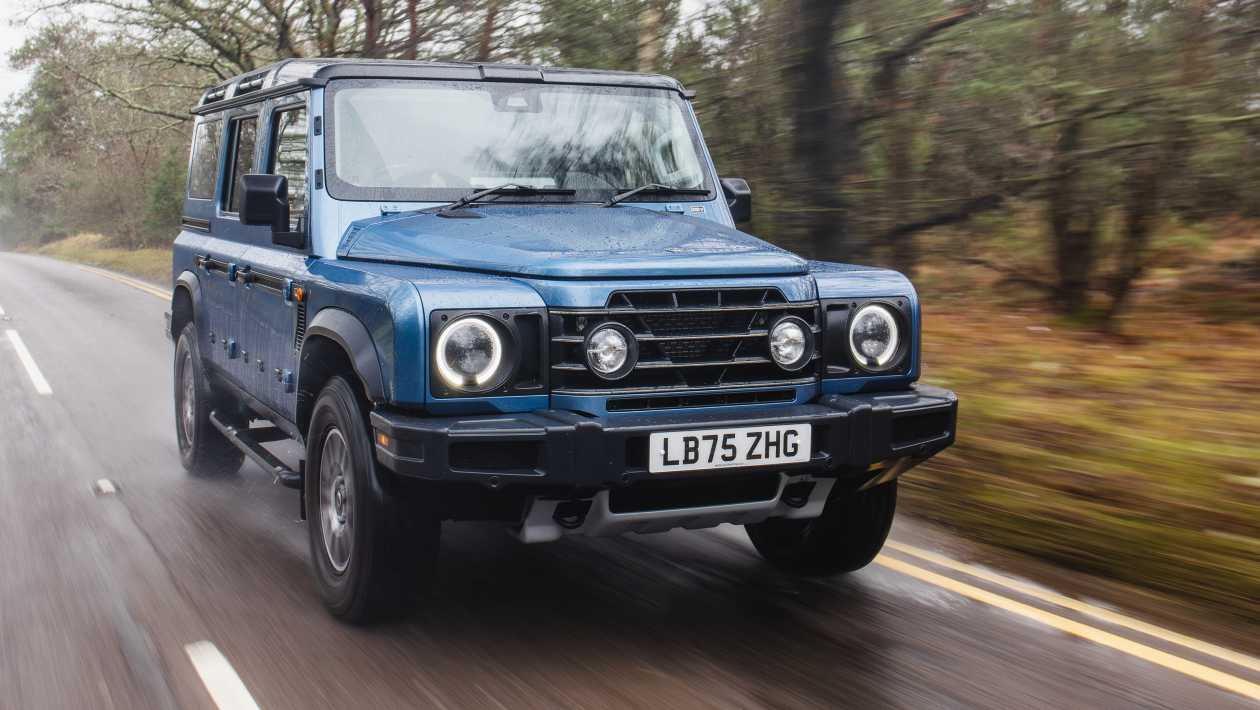
“A real highlight is the Rhino Rack on the roof. The large steel add-on makes space for a roomy iKamper two-man pop-up tent, while bolted to the side is the ‘Bat Wing’ – a huge awning that unfurls through 270 degrees around the side and rear of the car.” – Dean Gibson, senior test editor.
Advertisement – Article continues below
A long warranty and tech from proven suppliers should offer some peace of mind
Pros
Generous five-year, unlimited mileage warranty
Many components from well-established sources
Cons
No Euro NCAP rating
No Driver Power score
Ineos is still a pretty new arrival to the automotive world, but many of the Grenadier’s major components are bought in from already-established firms, so this should offer some peace of mind.
Safety kit is acceptable, although the Grenadier lacks some of the very latest tech. Automatic emergency braking is fitted as standard, along with lane-departure warning and a pre-collision system.
Best buy: Ineos Grenadier 3.0D Trialmaster
While low running costs will pretty much be a pipe dream if you’re driving around in a Grenadier, we’d still recommend opting for diesel power due to its slightly reduced thirst and superior torque. Investing the extra cash in a Trialmaster model will add a healthy list of additional kit into the mix, too.
Ineos Grenadier alternatives
The obvious rival for the Grenadier is the Land Rover Defender, as that car is the reason why the big Ineos exists. However, these two are very different in character, with the Defender’s air suspension giving it a wider breadth of ability. We think the Grenadier is better off-road, but the Land Rover is far less compromised on it.
Another rival is the Toyota Land Cruiser. As with the Defender, it can’t match the Grenadier off road, but is better on it. The retro-inspired looks are also appealing, while the cabin has a seven-seat layout.
Other options for off-road driving include the latest crop of double-cab pick-ups, such as the Ford Ranger and Volkswagen Amarok. These offer plush interiors at the top of the range, although a long wheelbase and large overhangs mean a Grenadier is still going to be more capable.
Frequently Asked Questions
A five-year, unlimited-mileage warranty demonstrates that Ineos has confidence that the Grenadier will go the distance. That cover is on a par with Hyundai, and well ahead of the coverage offered by the likes of Land Rover. There’s a two-year roadside assistance package available, too.
Service intervals are every year or 12,000 miles, whichever comes first, but Ineos recommends servicing every six months or 6,000 miles if you regularly use the Grenadier in hard off-road conditions.
So-called early adopters of the Grenadier swear by them. Owners that do plenty of off-road driving have been impressed by the car’s ability, and the brand has already built a following with green-laners.
For the ultimate in off-road capability, then the Trialmaster comes with all the kit you need, including the front and rear diff locks and all-terrain tyres. However, you can add this kit to the Fieldmaster to bring it up to spec, while option packs also allow you to upgrade the Trialmaster to Fieldmaster spec if you want to.
With a detailed description, the right keywords, and good photos, a thorough ad helps ensure you attract potential buyers who are interested in the car’s make, model, price, and features.
Here are some helpful tips on creating excellent classified car ads that sell.
Classified Car Ad Writing Tips
The best-written classified car ads we’ve found are honest and include plenty of details along with the right keywords. The writing of your ad is where you get to focus on your car’s unique selling points and remember why you bought the car in the first place. To earn a buyer’s trust and save time in the long run, be sure to include the good and the bad, including any accidents or problems.
MORE: 7 Ways to Protect Yourself When Selling a Car Privately
Facts to Include in Your Classified Car Ad
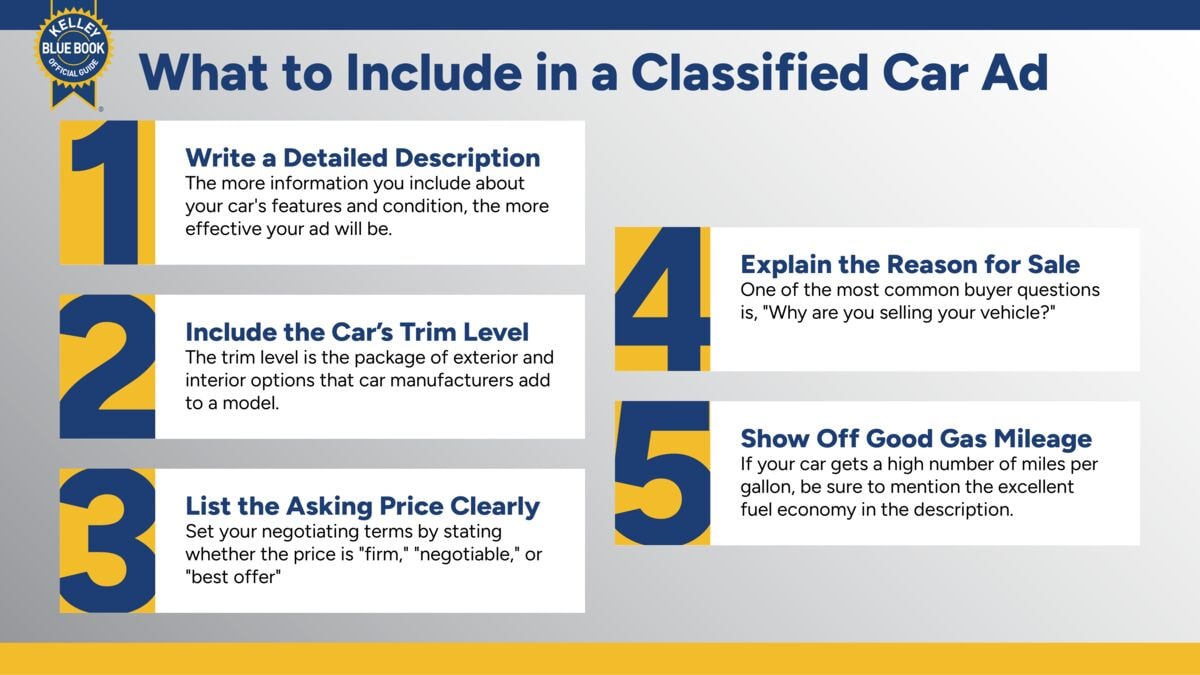
Provide a detailed description. Every car ad should begin with the basics: year, make, model, mileage, and body style (also known as “category”). 2016 Chevrolet Equinox LTZ — all-wheel drive (AWD) compact SUV — 82,000 miles — Purchased new
Include the trim level or version of your model, as it affects the value. In the example above, “LTZ” denotes the Equinox’s trim level. Higher trims often have upgraded wheels, premium upholstery, better engine performance, and specific safety features.
List the asking price. The basic specs and price are priorities. Include the Kelley Blue Book Value and your asking price, and add an explanation as to why you’re asking for more or less than the Blue Book Value. Set your negotiating terms to help target the right buyers.
Explain why you’re selling the car. Potential buyers often want to know why you’re getting rid of the car, and you can answer the question in the ad. Switching to a minivan for easy car seat access.
Show off good gas mileage. If your car gets high miles per gallon (MPG), be sure to mention the excellent fuel economy in your description. Fuel-efficient vehicles are in demand.
How to Address Modifications and Warranty Status
Highlight modifications. If you’ve added features to your car that aren’t part of its standard options, be sure to mention them in your description. A new audio system, an alarm, or specialty tires can attract buyers searching for those extras. But also remember that not all modifications add value. That custom orange paint job or the raised suspension you love might limit the number of buyers.
Include any warranty information. Include any remaining manufacturer warranty coverage, whether it is transferable, and whether you have the paperwork. Note that some manufacturers don’t offer the same warranty coverage for second owners, so be sure to check your documents. List what type of coverage your car has and for how long. For example:
Three months left on the powertrain warranty
5,000 miles remain on the bumper-to-bumper warranty
How to Write About the Condition of Your Vehicle
Provide an honest assessment of the car’s condition. It’s essential to honestly assess the condition of your vehicle when writing a classified ad. It’s best to include your car’s vehicle identification number (VIN). A VIN allows the potential buyer to run it through a vehicle history report to see if it has been totaled or flooded in the past.
Disclose issues that might need fixing. You don’t want to wait for prospective buyers to find something in an AutoCheck or Carfax vehicle history report — or in a pre-buy inspection — as it will just sour the deal and waste everyone’s time.
Mention maintenance and service records. A well-maintained vehicle is a sought-after vehicle. Give prospective buyers added peace of mind by letting them know you took good care of your car, including regular oil changes. If you kept good maintenance records, mention this, as it can back up your claim that you have cared for the vehicle.
Electric vehicle (EV) battery health. Include any battery health reports you have when selling your EV, or other helpful information about the car’s battery. Kelley Blue Book provides VIN-specific battery health scores for most electric car listings.
Sample Classified Car Ad
Below is an example of a good description for a higher-mileage car that isn’t in perfect condition but is in excellent mechanical shape:
2019 Volkswagen Golf GTI SE Hatchback Sedan 4D 63,500 miles — Selling to get a family sedan — just had first child. 33 mpg on highway, handles well, and runs like brand new. All scheduled maintenance and service at the same VW shop, including regular oil changes. Maintenance records and mechanical inspection report available. Highway miles. Ice cold A/C, heated front seats. Non-smoker. Normal wear in clean interior. Cosmetic 4-inch scratch on rear passenger door from a parking lot mishap. No frame damage. New tires 18 months ago with regular rotation. Perfect first car. Priced to sell.
MORE: How to Sell a Car Online
Important: Use Plenty of Photos
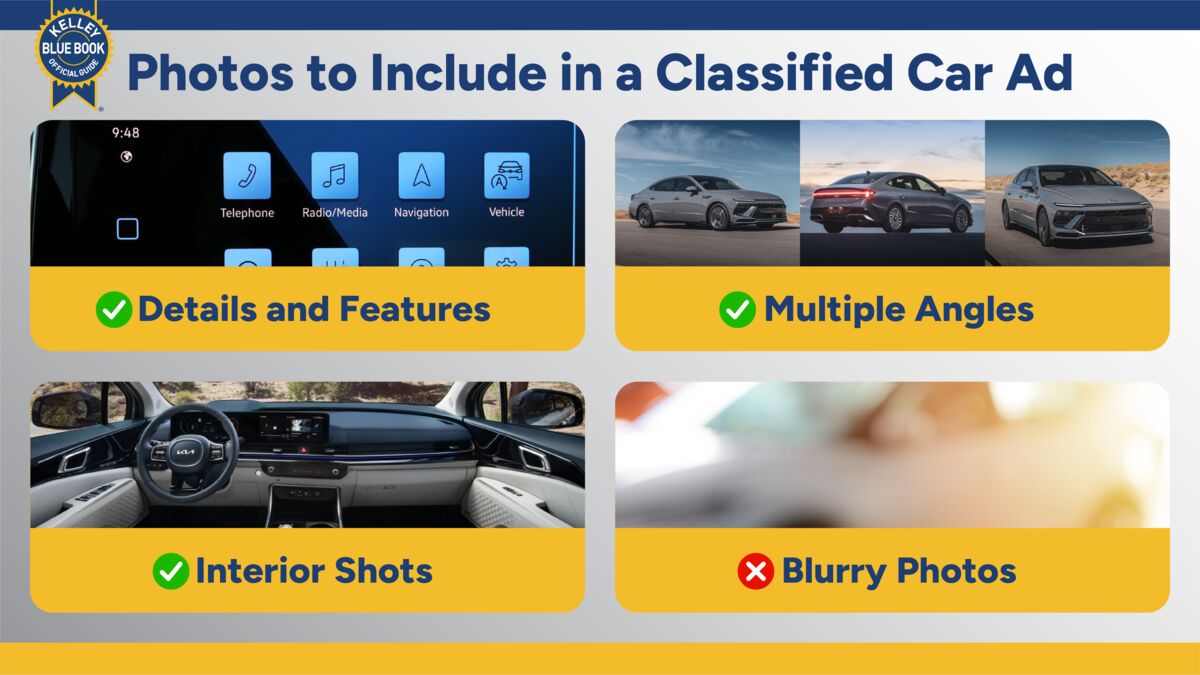
Because ads with a gallery of photos typically get a much greater response than ads with few images, it’s important to include a thorough collection of clear pictures from multiple angles. Photos help buyers become familiar with the car so they can imagine owning it. Review photo galleries on dealership listings to get a sense of the shots to include in your ad.
Don’t limit yourself to exterior shots. Interior photos, including the instrument cluster, infotainment screen, rear sets, and cargo area, are a must. Buyers want to see what it’s like to be inside your car.
Use quality photos after you’ve cleaned your vehicle inside and out. Photos taken on a cloudy day tend to work better, as there’s less glare. Avoid frustrating buyers with pictures that are blurry or lack detail. Make sure your photos are close and clear enough to show the vehicle’s condition accurately.
RELATED: How to Sell a Car: 10 Steps for Success
Avoid Common Pitfalls
Now that you know what to do when you create an ad, here’s what not to do:
Don’t list your car for two different prices in two places. If buyers see the price difference, they may become distrustful of you.
Don’t forget to post quality photos. Search engines view ads with pictures and place them high on the search engine listing.
Don’t overprice your car and expect it to sell right away.
Don’t change your price too often. Buyers will think you’re not serious or your ad isn’t legitimate. Many buyers watch ads for several days or weeks.
Don’t neglect your car’s desirable options and safety features, such as lane departure warning, backup camera, or automatic emergency braking.
Don’t list your car in multiple places if you do not have time to manage the calls or update your classified car ad.
Don’t ignore inquiries. Respond to questions from potential buyers promptly.
Place an Ad With Kelley Blue Book
When you place an ad to sell your car through Kelley Blue Book listings, it also appears on our sister site, Autotrader, as part of the Private Seller Exchange (PSX). The streamlined service is a safe process for peer-to-peer car sales. PSX is the go-between for verified buyers and sellers and secures certain aspects of the transaction, like vetting the participants, safeguarding the exchange of funds, and transferring the title.
The PSX platform also provides car shoppers with an AutoCheck vehicle history report that outlines the chain of ownership, odometer records, crash history, title status, and more. Buyers may use PSX financing options or submit their payment online via ACH, wire transfer, debit, or credit card. Sellers receive payment the same day or the next business day, depending on when the sale is final.
MORE: 7 Ways to Protect Yourself When Selling a Car Privately
Bottom Line on Good Car Classified Ads
Creating an effective classified car ad involves providing clear details like year, make, model, mileage, trim level, and a justified asking price. Include an honest description of your vehicle to highlight its selling points, such as fuel efficiency, modifications, features, warranty status, and battery health for EVs. Provide a vehicle history report and disclose any past issues, accidents, and repairs. Use plenty of clear photos that show the good parts and flaws. A well-crafted ad balances transparency with appeal, attracting buyers and boosting your chances of a quick sale.
Editor’s Note: This article has been updated since its initial publication.
Most people who drive EVs worry about a few things: how far the car can go on a full charge, how the battery works when it gets very cold outside, and how quickly it can recharge. A new research paper published in the journal Nature on February 25 shows that we might be close to solving two of those problems at once.
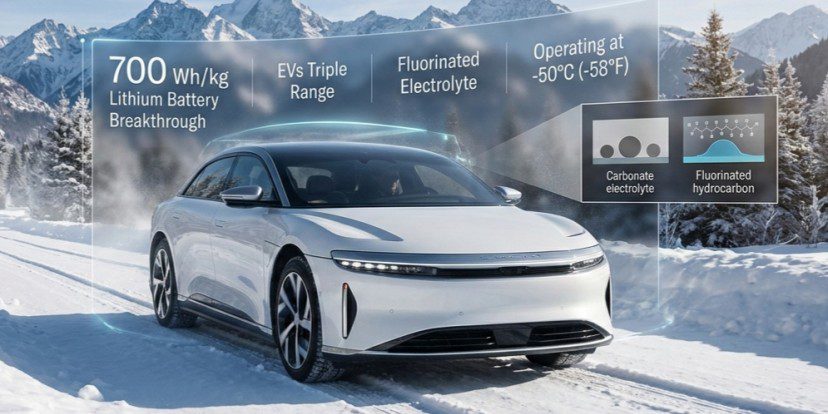
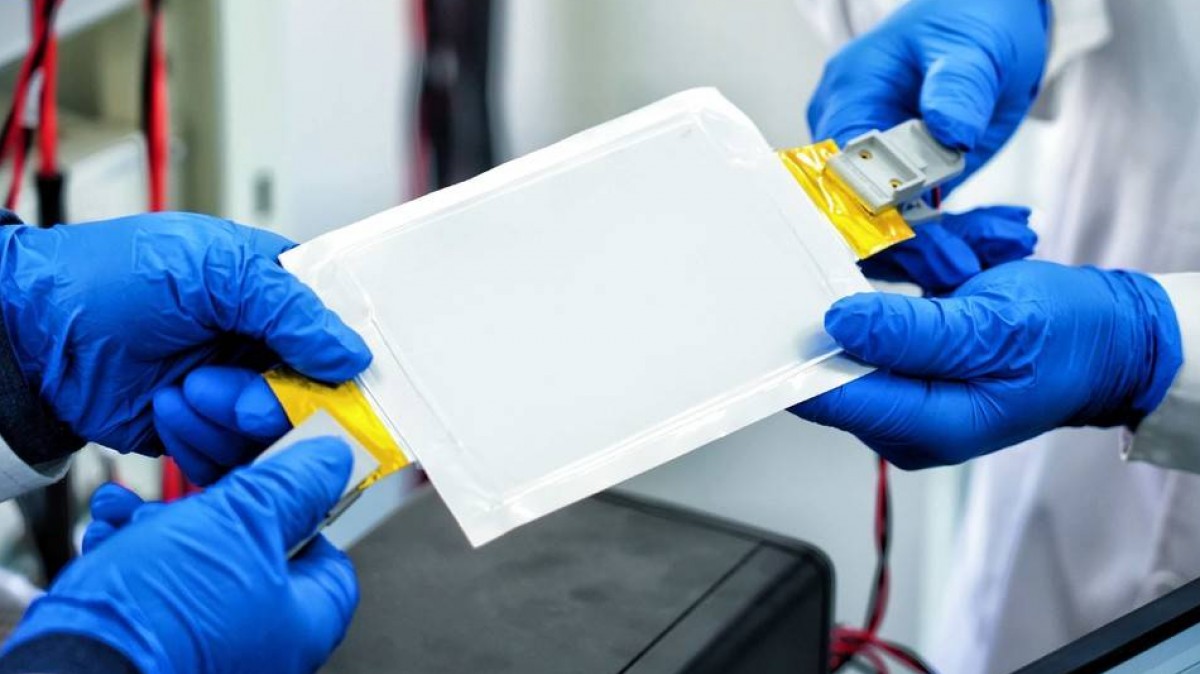
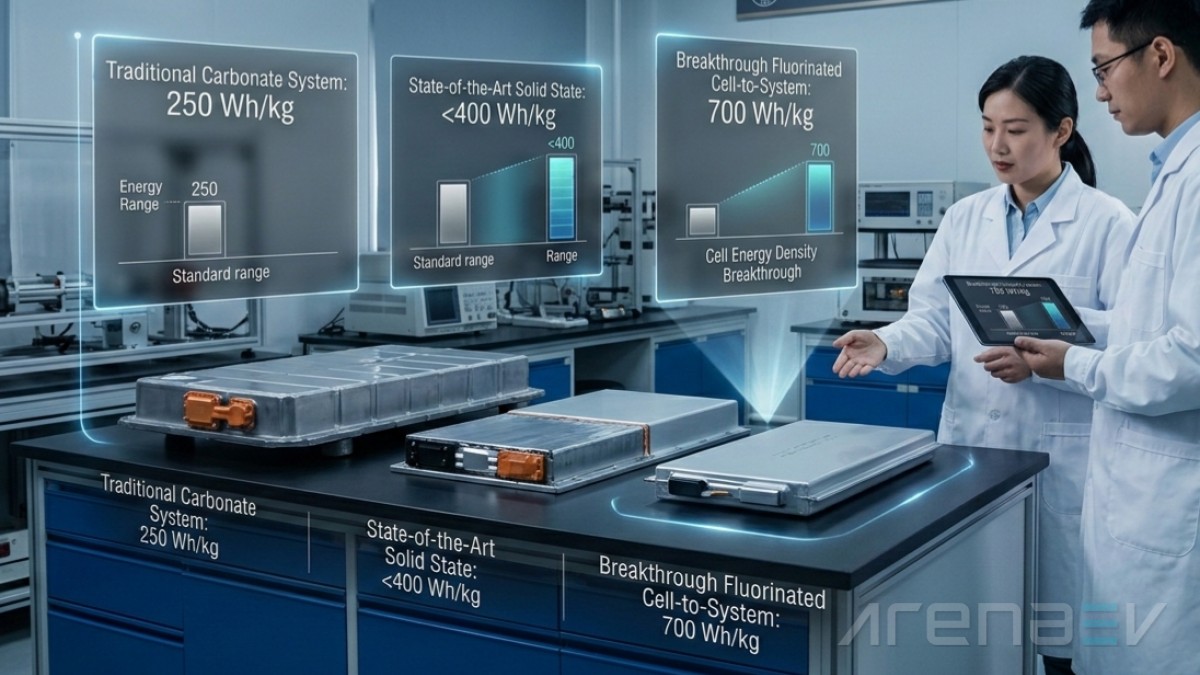
The research comes from a team led by Professor Zhao Qing and Academician Chen Jun at Nankai University, along with Li Yong from the Shanghai Institute of Space Power Sources. They found a way to make lithium batteries much more powerful. Specifically, they reached an energy density of 700 Wh/kg. The best batteries used in cars today usually top out around 250 Wh/kg to 255 Wh/kg, and solid-state batteries promise around 500 Wh/kg.
To understand why this matters, think of a battery like a fuel tank. If you have two tanks of the same weight, but one holds three times more energy, your car can drive much further without stopping. The new technology nearly triples the energy capacity compared to current standards. This means electric cars could eventually travel much longer distances without needing massive, heavy battery packs that weigh the vehicle down.
The new battery chemistry promises 700 Wh/kg density – source: Nature
The secret to this jump in power lies in the liquid inside the battery – the electrolyte. Batteries use a mix of lithium salts and carbonate solvents, which rely on oxygen atoms to help the lithium move around. This works pretty well, but it has big downsides. The liquid electrolytes are thick and do not spread easily. They also stop working well when the temperature drops, which is why many EVs lose range during winter.
The Chinese team decided to try something different. They created a new kind of liquid using fluorinated hydrocarbon solvents. Instead of using oxygen to move the lithium, they used fluorine. This change makes the liquid much “wetter,” so the battery needs less of it to function. Because the liquid is thinner and flows better, it can move energy much faster.
The new design performs incredibly well in the cold. Traditional batteries often give up when it gets freezing, but the new cells can still work at -58°F. Even at that extreme temperature, the battery keeps an energy density of nearly 400 Wh/kg. That is still higher than what most high-end EVs offer at room temperature today.
The new battery nearly triples energy density – source: ArenaEV
The team explained that they had to be very careful with how they created the new electrolyte – they had to balance the “space” inside the liquid so the lithium atoms could move freely. By switching from oxygen to fluorine, they removed the bottleneck that was holding the performance back, allowing the battery to be both lighter and stronger at the same time.
Many companies are racing to build solid-state batteries, which are often called the “holy grail” of the industry. But even those batteries usually only reach about 400 Wh/kg. The new discovery shows that “liquid” batteries can actually beat solid-state tech if the chemistry is right. If this goes from the lab to the factory, it could change how we build everything from delivery trucks to airplanes.
These batteries could power high-tech robots or even equipment used in space. For now, the 700 Wh/kg figure describes the battery cell itself, but even when these cells are packed into a full battery system, the improvement will be massive. This research proves that we haven’t reached the limit of what lithium batteries can do and throws a curveball at the solid-state promises.
After a very rocky start with Andretti Racing, General Motors is fully engaged and committed to the 2026 Formula 1 season with the Cadillac F1 team. We learned about its drivers late last year and the actual cars were first tested in late January in Barcelona using nearly an all-black livery. However, we didn’t know how the Caddy F1 team would look like when it took to the grid next month for the season-opening Australian Grand Prix. Well, on Super Bowl Sunday, the biggest sporting event here in the U.S., the team and GM revealed the real livery for this season and, well, we were expecting something flashier and colorful considering Cadillac’s history of rich factory colors.
As it is GM’s luxury brand, we expected Cadillac to come out with a look to match. The build up led many to believe this was going to be a stand-out visual presence on the grid with its reveal coming via one of the most expensive commercials a brand will ever buy.
ADVERTISEMENT – CONTINUE READING BELOW
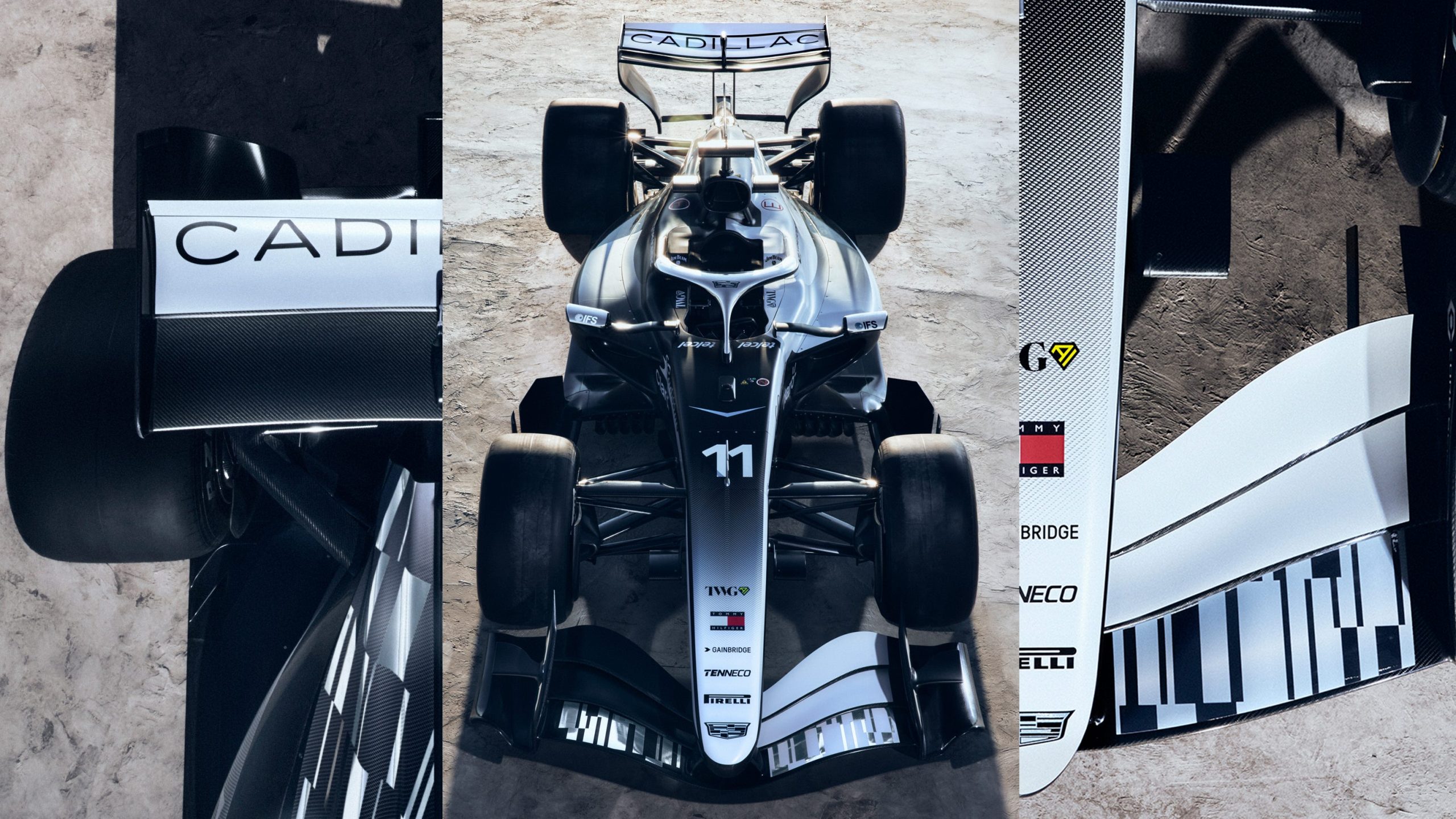
In reality, it’s not an ugly color or design, but the monochrome look of Cadillac’s F1 team leaves a lot to be desired, judging by plenty of comments on social platforms. But there are some interesting details that make this an interesting design. For one, while it is monochrome using a black, sliver, and chrome treatment, it all blends into a livery that is different between the left and right sides. The left side of the car is primarily white while the right is primarily black, and the split is done by a dotted chevron pattern on the nose with each color splitting off to their side. Cadillac is also known for it’s use of chrome on its vehicles; the 2026 F1 car is no different with its chrome halo bar, mirror caps, and endplates on both the front and rear wings. The wheels are also monochrome two-tone with a white rim and black wheel face.
At least, that’s how it appeared on Sunday night during the reveal. The first running images of the cars with the 2026 livery don’t wear any chrome. Instead, the shiny surfaces have changed to black and white colors with the wing endplates and mirror caps matching each side of the primary colors. The halo bar is also a solid white. We imagine this was a call by F1 to prevent other drivers from being distracted or blinded by sunlight shining off the chrome. The wheels, oddly, also changed from their black and white two-tone to an all-black design.
ADVERTISEMENT – CONTINUE READING BELOW
Regardless of the changes and how any one person feels about this livery, it’s still great to see a second American team on the F1 grid. It’s also an amazing time to be a Cadillac fan as the brand joins the pinnacle of motorsports.
Mate Rimac has stepped down from his role as CEO of Rimac Technology, handing over the reins of the company to Nurdin Pitarević, who has been elevated from the post of Chief Operating Officer. Rimac will continue to support the business as the President of the Rimac Group, while focusing more closely on Bugatti Rimac as CEO.
As CEO, Pitarević will lead Rimac Technology’s strategic roadmap through 2030, centered on advanced electrification technologies, AI-enabled and digitalized operations, sustainable industrial growth, and robust organizational and financial structures.
Marko Brkljačić has been appointed as the new COO. Prior to his appointment, he served as Deputy COO at Rimac Technology and held senior leadership positions at Tokić Ltd, as well as multiple strategic roles at Rimac Automobili, including Head of Strategic Projects and Chief of Staff.