Author: admin

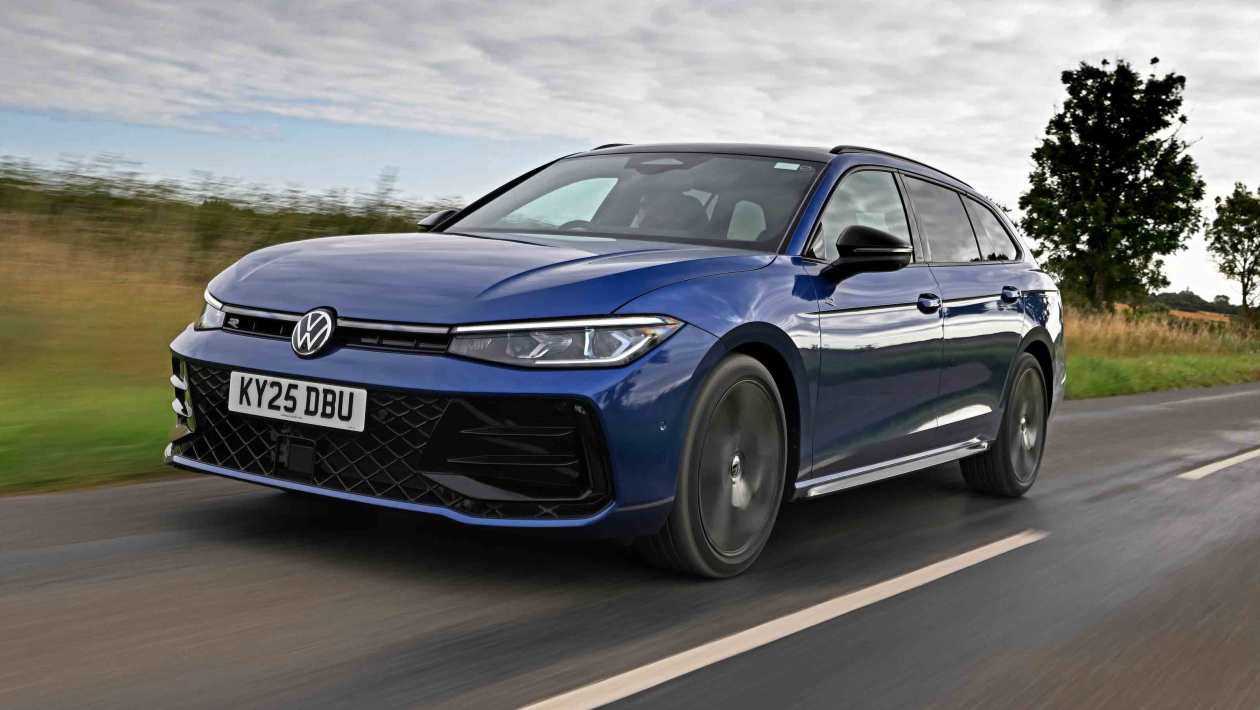
  • Volkswagen Passat review | Auto Express

    Volkswagen Passat review | Auto Express

    All models come with wireless Apple CarPlay and Android Auto smartphone  connectivity, as well as a wireless charging pad to keep your device fully charged. The standard audio system is an eight-speaker set-up with DAB radio, but for £1,420, you can upgrade to a 700-watt, 10-speaker Harman Kardon package.

    “Provided you’re in the IQ Drive section of the digital instrument cluster, you can push the ‘OK’ button on the steering wheel to bring up a small driver assist menu, where you can turn off the speed limit warning and lane keep assistance. I think that’s quite handy, because it saves you having to use the central touchscreen.” Max Adams, online reviews editor.

    Advertisement – Article continues below

    The Passat offers a masterclass in cargo and passenger carrying that many SUVs fail to match

    Pros

    • Huge boot and flat-folding rear seats
    • Wide back doors make cabin access easy
    • Low boot lip for loading bulkier items

    Cons

    • PHEV has slightly less boot space
    • The transmission tunnel limits rear foot space a little
    • No three-part folding of the rear seat, unlike some rivals

    The previous-generation Passat saloon sold in low numbers in the UK, so this time around, the ninth generation comes exclusively as an estate. If you have some sort of aversion to estates, then you could always choose the Skoda Superb instead, because it is also available as a hatchback.

    Dimensions and size

    The Passat is a large estate car at 4,916mm long, 1,849mm wide, and 1,521mm tall. That makes it over 200mm longer than a BMW 3 Series Touring, and only 32mm shy of the pricier Mercedes E-Class Estate.

    Dimensions comparison 
    Model Volkswagen Passat Estate Skoda Superb Estate BYD Seal 6 Touring
    Length 4,916mm 4,902mm 4,840mm
    Width  1,849mm 1,849mm 1,875mm
    Height 1,521mm 1,482mm 1,505mm
    Wheelbase 2,839mm 2,841mm 2,790mm
    Boot space  510-1,920 litres 510-1,920 litres 500-1,535 litres

    Seats & passenger space

    Access to the Passat’s interior is easy because the doors open wide, although an SUV will be even more straightforward, because the taller ride height places the seats at a higher position. The Passat has a wide range of wheel and seat adjustment, so getting comfortable is never an issue, and if you like a sporty driving position, the seat adjusts low. Spending a long time behind the wheel of the Passat is no hardship, courtesy of ErgoComfort seats that are designed to promote healthy backs. 

    Source link

  • Bentley Batur Convertible #4 Has 4 Unprecedented Mulliner Features
– duPont REGISTRY DriftBreath

    Bentley Batur Convertible #4 Has 4 Unprecedented Mulliner Features – duPont REGISTRY DriftBreath

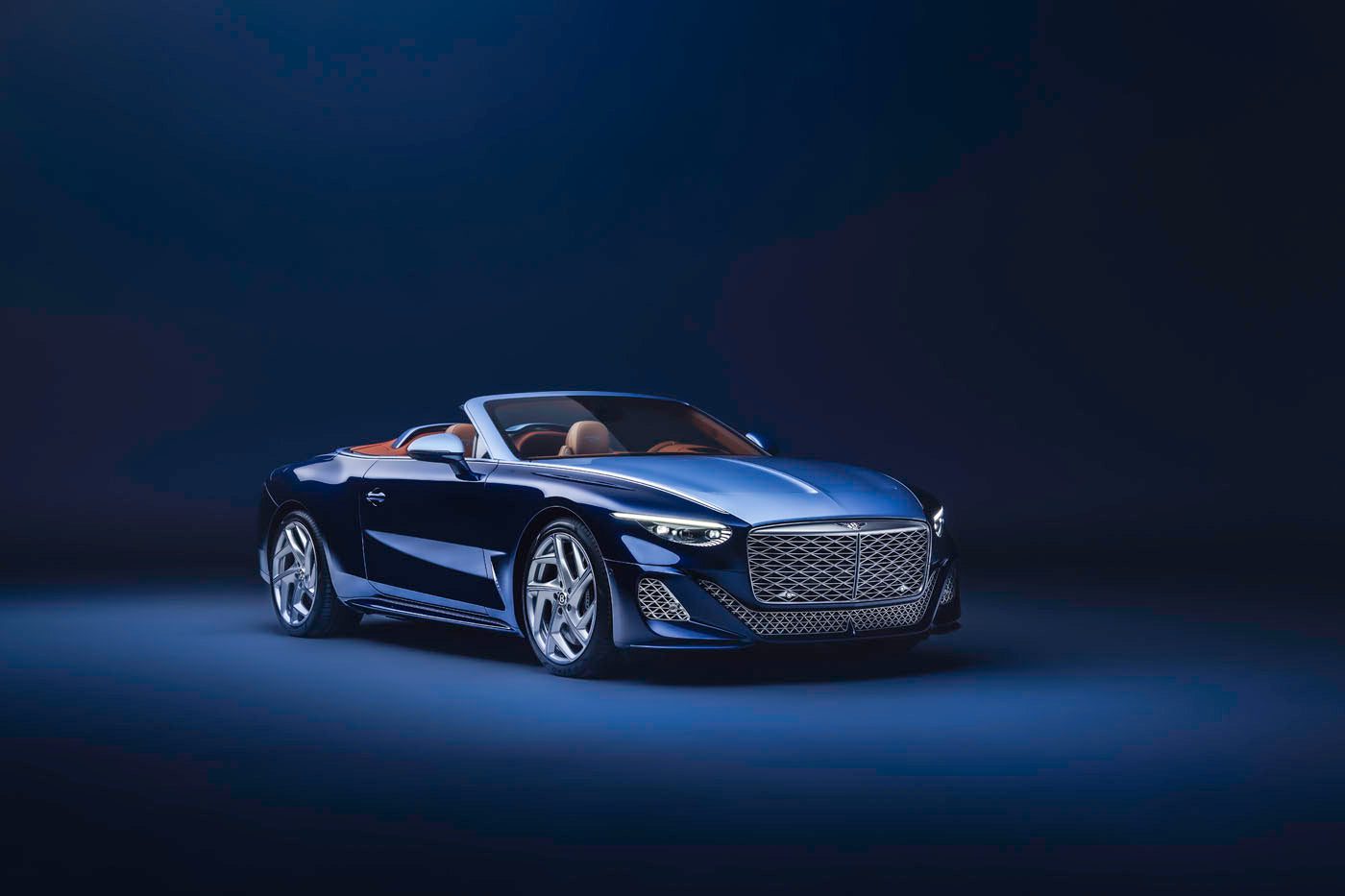
    Wrapping up over two decades of glorious W12 engines for the brand, the Bentley Batur Convertible is the proper end to an era of a unique flagship powertrain. Its twin-turbo W12 is the most powerful iteration of the engine yet, and its limited run of just 16 units globally means that the ultra-luxe masterpiece is reserved for an incredibly exclusive echelon of Bentley collectors.

    One of those collectors is Sonia Breslow, a discerning Bentley collector whose other cars include a Blower Continuation Series, a Speed Six Continuation Series, and another of Bentley’s limited-production W12 coachbuilds, the Bacalar. For each of her vehicles, Breslow pays attention to the smallest details to make a truly unique and luxurious configuration, and her Batur Convertible, the fourth example out of the 16, represents the ultimate level of craftsmanship that Bentley’s bespoke division, Mulliner, can offer.

    The car features a tri-tone design, created using colors the customer hand-picked, with a gloss silver line of just 6 millimeters in width emphasizing the “endless bonnet” design feature of the Batur Convertible, a custom ‘Breslow Blue’ for the upper portion of the vehicle, and another custom color, ‘Midnight Breslow Blue,’ on the lower half, on wing mirror accents, wheel accents, and on a bonnet pinstripe. The exterior configuration is finished with a polished titanium exhaust and bright silver grilles.

    Breslow’s Batur Convertible also features a custom welcome lamp, with the highly advanced welcome lighting technology in the Batur Convertible being used to display a handwritten script of her name on the ground. The interior contrasts with the blue exterior, using tan and caramel leathers to bring warmth to the configuration, with contrast stitching adding a touch of bespoke luxury throughout, and the outline of the Batur Volcano that served as the car’s namesake adorning the floor mats.

    A reference to early Bentleys is the engine-turned aluminum finish that completes the interior fascia, with a Bentley Rotating Display that features bespoke colored faces on its gauges. 3D-printed platinum is used in the interior, specifically in the center marker on the steering wheel, as well as in the “organ stop” vent controls. Showcasing harmony with the number four, the tri-tone color scheme, the color-matched bespoke roof color, the client-designed welcome lamp, and the 3D-printed platinum all represent four new possibilities for Mulliner. Being car number four in the sixteen-car production run, this Batur Convertible is one of the most luxurious coachbuilds to ever wear Bentley’s pair of wings.

    View All Bentley For Sale

    Image Source: Bentley Motors

    Source link

  • The Kids are not the problem, it’s the lack of clear standards

    The Kids are not the problem, it’s the lack of clear standards

    Back in 1983 a film about some young hoodlums tearing around the streets of Manly launched the career of Nicole Kidman. She played Judy, fired from her job collecting trolleys on Sydney’s northern beaches.

    She falls in with the BMX Bandits who fall afoul of the law then help the clueless cops capture the villains. The film provides a great image of 80s suburban Sydney and a snapshot of a moment of teenage freedom and rebellion on two wheels.

    Teenagers always seem to cop it when they get access to something new and exciting and build a new culture around it. Right now we are witnessing something similar with the eBike craze.

    We, the responsible adults, have, through negligence, let kids get hold of dangerous electric motorbikes and are now making them take the blame. NSW is even seizing and crushing the toys we let them have.

    I am an eBike rider, as is my wife. We are liberated from car ownership. We rent safe and legal eBikes from Lug & Carry. This is our primary mode of transport. These are eBikes as defined under Victorian law, which states that an Electric Power Assisted Bicycle (EPAC) must have a motor of no more than 250W, and the motor must cut out at 25km/h.

    Two Classes of eBike

    There are two classes of eBike: the EPAC or pedelec, where power is only applied when you turn the pedals with a throttle limited to 6km/h walk mode; and the power-assisted bicycle with a throttle all the way to 25km/h but limited to a lower power rating of 200W.

    Cross the border into NSW and the rules are different, with bikes allowed up to 500W. Rules have slowly been harmonised around the European EN15194 standard.

    500W eBikes is a problem cooked up by the federal and NSW governments, who increased the allowed power without really looking into the implications or restricting higher power outputs to heavier cargo bikes, as is common in some jurisdictions.

    I would argue that 250W is too low for some types of bikes. Heavier cargo bikes should be allowed higher-output motors to be practical. However, what is at issue here is throttles and speed. I’ve always been slightly sceptical of throttles on eBikes, full stop. Put a throttle on it and you have a motorbike.

    Speed is a problem. 25km/h for the limit of assistance is very sensible—it’s a reasonable speed to be going around town, and if you want to go faster you can push the pedals harder. Anyone who has seen teenagers or delivery riders zipping around town will have noticed many going much faster than 25km/h with no effort going into the pedals at all.

    The Real Problem: Enforcement and Standards

    It is trivial to change or remove the speed limit in software on many eBikes, and many of the eBikes being sold are overpowered. Do this and an eBike becomes an electric motorbike and falls into a completely different category, requiring a completely different set of skills and personal protective equipment.

    So how are the kids able to buy them at all? The problem is that Australian product safety laws are a messy patchwork involving many different agencies: from the ACCC, State Fair Trading Agencies, State Electrical Safety Agencies, the Electrical Equipment Safety System (EESS) managed by Electrical Regulatory Authorities Council (ERAC), Regulatory Compliance Mark Scheme managed by the Australian Communications and Media Authority, and Border Force. Noting that only four states (QLD, VIC, WA, and TAS) fully participate in the EESS.

    Manufacturers and importers, wholesalers, retailers, marketplace platforms, and delivery platforms all bear, if not legal liability, then some moral responsibility.

    For manufacturers and importers the responsibility is pretty clear: you have safety compliance responsibilities under the EESS, and under Australian Consumer Law you have a responsibility to ensure something is fit for purpose and a strict liability for safety defects.

    Similarly, wholesalers and retailers bear responsibility for ensuring the products they are passing through the supply chain are safe and fit for purpose. It’s where you get to the marketplace platforms that things get problematic.

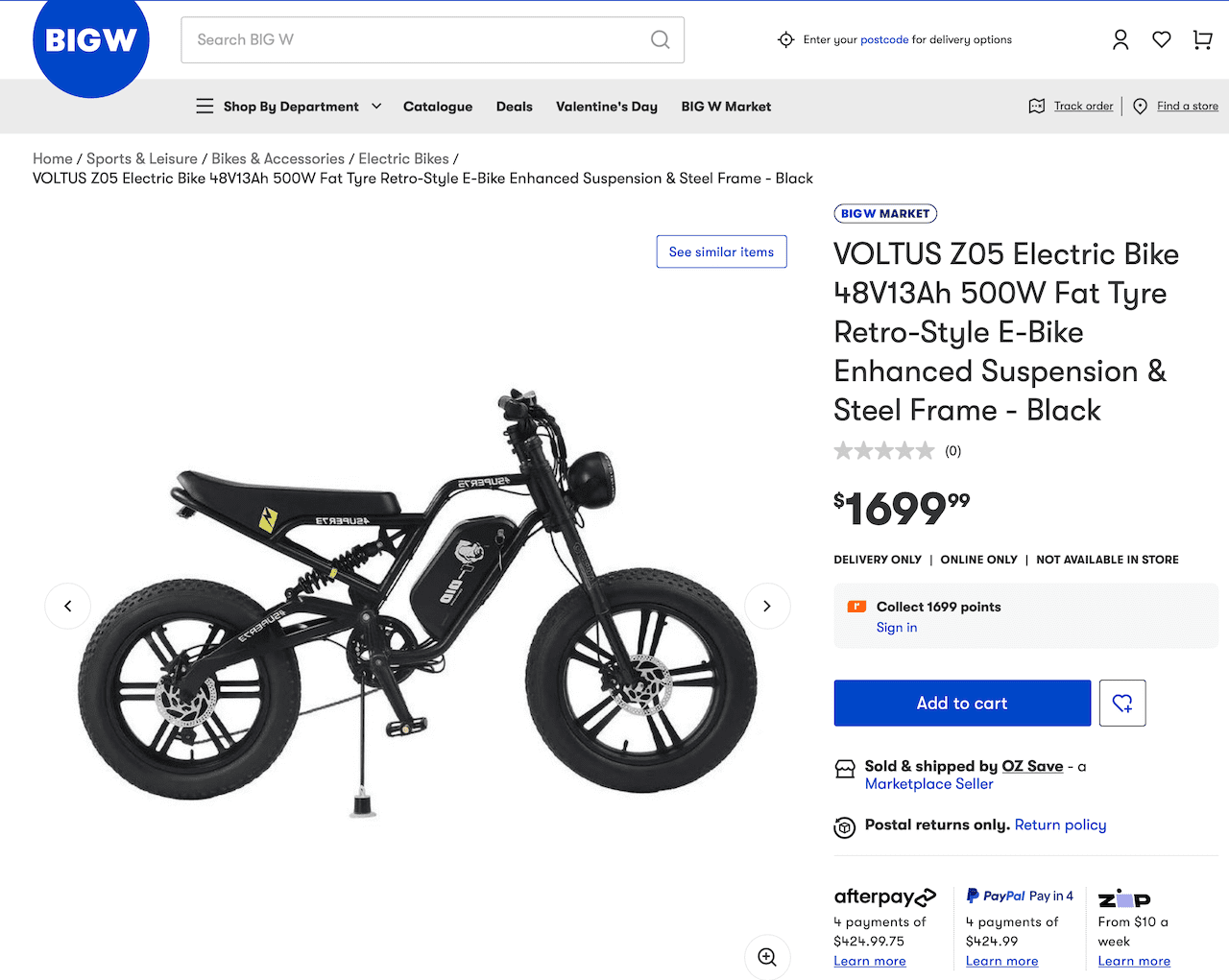
    Kogan, eBay, Amazon, AliExpress, etc. have been around for years, but now practically every shop has a marketplace, including major brands like Woolworths and Coles. A quick search of BIG W found a 500W eBike for $1,699, and there were no issues selecting it for delivery in Melbourne. There is an alarming notice on the page that states:

    ‘Important Notice: Before using this vehicle, please check the applicable local laws relating to your intended use of the vehicle on roads and road-related areas.’

    This puts the onus on the consumer to determine what is safe and what is not, what is legal and what is not. Which is also what John Graham, minister for transport, wants parents to do. On ABC RN Breakfast he put the responsibility on parents to navigate the patchwork of standards and responsibilities to determine what is a safe bike for their kids to ride.

    What We Need

    What Australia lacks is a clear standard, a clear mark, like the RCM, that determines that a personal mobility device is safe and compliant.

    There is also a good case to be made for higher-powered eBikes and cargo bikes, either through a power-to-weight regulation or through a moped or scooter-type approval that comes with some degree of lightweight licensing and training.

    Of course we need to police dangerous and illegal riding—we have laws for that already. As a cyclist I’m all in favour of much more rigorous enforcement of road safety laws.

    Kids, teenagers, young adults should have access to this technology. Personal mobility devices are liberating right now in enabling the freedom to socialise, to work, to go to school. It’s also setting people up for a life free of car dependency and the costs of an unnecessary and polluting asset, if they choose to stay free of car ownership. Cycling is habit-forming.

    Judy and friends bombing around Manly on their BMXs was a window into that freedom. The kids are alright, they just need safer toys.
    Source link

  • The Bertone Runabout Is a Rad Retro Sports Car—With Pop-Up Headlights!

    The Bertone Runabout Is a Rad Retro Sports Car—With Pop-Up Headlights!

    Among styling firms, wild-looking concept and production cars traditionally were the province of Pininfarina. But Bertone knew how to party, too. Now a decade removed from bankruptcy, the revived Italian brand is launching its second limited-edition vehicle in the Runabout. It’s a sports car that traces its roots to an original Bertone design from 1969, but made modern with pop-up headlights and Lotus underpinnings.

    The original Runabout concept was designed for the 1969 Turin Auto Show for Autobianchi, as a mid-engine barchetta using an Autobianchi A111 sedan engine and four-speed transmission. It also had nautical influences with a wedge-shaped body, two-tone paint scheme, and a rear rollover bar with the headlights mounted to it. The design proved so successful Fiat used it as the basis for the X1/9 mid-engine sports car sold under the Fiat brand from 1972 to 1982 and as a Bertone from 1982 to 1989.

    ADVERTISEMENT – CONTINUE READING BELOW

    This modern version of the Bertone Runabout is more than just a concept, however, as Bertone will produce 25 units starting at the equivalent of $464,000 (€390,000). The chassis and engine are those of the Lotus Exige but are not overhauled to create the Runabout. These all-aluminum chassis are bought as virgin pieces (in other words, never used to create a car) that the Runabout body is then bonded to along with additional extruded aluminum architecture.

    The supercharged 3.5-liter V-6 produces is sourced directly from Toyota, and it features a custom exhaust system and produces up to 475 hp. The Bertone Runabouts are then classified for road use with a fully unique VIN for each of the 25 examples to be produced.

    ADVERTISEMENT – CONTINUE READING BELOW

    While the unique headlights of the original Autobiachi Runabout don’t appear here—those are highly likely to be illegal—the modern version goes for pop-ups in the spirit of the Fiat X1/9. The Runabout can also be had as a purely open barchetta like the concept or with a targa top like the X1/9. Owners will also be able to spec their Runabout with different materials, colors, textures, and finishes.

    Inside, the two-seater’s dashboard features a decking-like look with a functional compass in the center, while the gated six-speed manual shifter features exposed mechanicals.

    ADVERTISEMENT – CONTINUE READING BELOW

    The Toyota V-6 gets its forced induction from an Eaton/Edelbrock TVS supercharger system with an integrated charge-air cooler. Just like the now-discontinued Exige, the engine is mounted transversely, here driving 19-inch forged aluminum rear wheels. (The front wheels are are 18-inchers.) Bertone estimates the Runabout will be capable of a 4.0-second 0–60-mph time and a maximum speed of 168 mph.

    ADVERTISEMENT – CONTINUE READING BELOW

    Bertone didn’t announce a timeline on when the Runabout would be produced or if any of the 25 units will be imported to the US. You can see the modern Bertone Runabout at the 2026 Retromobile auto show at the Paris Expo Porte de Versailles taking place January 29 to February 1. You’ll find it on display at the Ultimate Supercar Garage along side the Bertone GB110 and the original Autobiachi concept from 1969.

    Source link

  • Can You Trade In A Wrecked Car Or Should You Fix It?

    Can You Trade In A Wrecked Car Or Should You Fix It?

    You have come to the conclusion that it’s time to upgrade your transportation situation. It is, however, a bittersweet realization because your trade would be considered to be in bad shape on a good day. Okay, so you had a little “mishap” last year and haven’t gotten it fixed for whatever reason. But that new Acura Integra is screaming your name.

    Acura

    Founded

    March 27, 1986

    Founder

    Soichiro Honda

    Headquarters

    Torrance, CA, USA

    Owned By

    American Honda Motor Company

    Production Status

    Available

    So here is the question – should you repair body damage before trading in your car, or trade it in as is? And, can you even trade in a wrecked or damaged car at all in order to upgrade? Let’s unpack what your options are for a wrecked car.

    This article covers some key points regarding the pros and cons of trading in a wrecked vehicle versus getting a vehicle repaired before trading it in. It may not pertain to every situation, but it is a good general guideline on how the process works, and some major factors to consider during your decision process.

    Trade It In

    Convenience Can Be Costly

    We have all heard the famous “Push it, pull it, drag it in!” phrase on a dealership radio ad. The answer is yes, you can trade in your vehicle with body damage. But before you do so, there are quite a few things to take into consideration, along with some extensive research to be done. Without a doubt, there is a huge convenience factor to simply trading in your damaged vehicle, throwing the dealership the keys and driving away in your shiny new car – problem solved. Not only do you get to walk away from the dread of having to get your car repaired, but you also get to keep some money in your pocket.

    But is that the whole story? The used car market is not as hot as in the immediate post-pandemic era and, according to Car Edge, wholesale prices are down. Dealers use wholesale vehicle prices as a benchmark for vehicle trade-in values. The value of your trade will diminish at an alarming rate in relation to how badly damaged your vehicle really is on top of already low values. So, in a round about way, you are still paying, but you have saved yourself a considerable amount of time.

    How Bad Is It?

    Different types of damage will, of course, have different outcomes regarding your vehicle’s trade-in value. It is also possible that some dealerships may not accept a trade if the damage is too severe. Structural damage, for example, is one of the most severe forms that would need to be repaired. Structural damage could be anything frame or unibody related damage. A frame for a car is akin to the foundation of a home; it is the backbone of the automobile. These can not only be complicated to fix, but very expensive too – some severe jobs can reach $10,000 dollars or more. Frame repair is a massively time-consuming job that requires a large amount of labor from a specially trained technician. If a vehicle’s frame is not fixed properly, it could have major negative ramifications on safety and how well your car drives.

    Large-scale problems make the deal less enticing for a dealership. In some cases, frame damage can be the death knell for a vehicle, at least as far as an insurance company is involved. Structural damage is obviously the worst-case scenario. Less dire problems like dents and scratches, however, are far less problematic and can be remedied with a fair amount of ease and time with significantly less cost for the dealer to repair. The verdict is, if you plan on trading in your damaged vehicle, you must brace yourself for a much lower trade in value and be accepting of the circumstances.

    accident,hyundai atos,tree
    accident,hyundai atos,tree
    Image: Mike Bird / Pexels

    The Numbers Game

    It always boils down to the numbers. Is your car paid off? Can you trade in your financed car? And if so, how much is left on your loan? Trading in a vehicle that is paid off streamlines the process and saves you money in the long run. The value of your trade will likely remain the same, and your new loan amount won’t be affected by the pay-off of an existing loan. This is a big factor to consider if you still owe on your trade. Just because you may still owe money on your trade-in certainly does not mean that the dealer will give you pay-off value. Depending on what you owe, you might find yourself in what’s called a “negative equity” situation. Simply put, negative equity is when you owe more on your car than what it’s worth.

    The trade-in value on a car that is wrecked or has some cosmetic shortcomings certainly will not garner the highest and best trade in value from the dealer. At this point, if you’re in a negative equity situation, your new loan will assume the amount left over from your old loan. This creates a compounding effect of negative equity and higher loan amounts for the borrower, resulting in a higher monthly payment.

    Fix It

    Consider The Cost Of Repairs.

    To get the highest possible trade-in value, it’s best to have a vehicle that not only operates as it should with no problems, but presents well also. A major factor to consider is if your insurance will be covering the repair, or whether you decide to pay for the repairs out of pocket. If you decide to make a claim with your insurance, you will only be responsible for the deductible. However, making a claim could ultimately raise your monthly premiums.

    To make a claim or to pay out-of-pocket really depends on how big of a job it is you are looking to get done. If it’s just a small dent, or a deep scratch or two, out-of-pocket payments may be the way to go. If you need a frame horn straightened out or a major repair to maintain structural integrity, it would be wise to make a claim, as it can get awfully pricey, awfully quickly. Additionally, with auto body repair shops labor rates averaging up to $150 per hour nationally, it would be advisable to get a few different estimates from various repair facilities.

    cropped-pexels-gustavo-fring-6870310 Gustavo Fring/Pexels

    Can You Make Repairs Yourself?

    Depending on how eager or motivated you are, some repairs can be a snap. This too hinges on the magnitude of the repair. There really has never been a better time than now to attempt a minor repair yourself considering how much information is available online to help walk you through an otherwise daunting process. Many people have found success tackling small repairs with help from YouTube videos and insightful direction from very knowledgeable people on vehicle-related online forums.

    The parts aftermarket has also grown to make basic parts readily available and delivered to your doorstep – sometimes the following day. To make things even easier, there are a number of auto parts stores that offer tool rental at very reasonable rates. You may even find you want to keep your car after the repairs are all done – or, at the very least, get a better price on a trade in.

    A Final Consideration: Can You Trade In A Wrecked Car?

    The Almighty Supply And Demand

    Nothing drives automotive values up or down like supply and demand. This is where a fair amount of research should be done to see how the initial value and demand of your trade may affect the outcome of your final decision. Your decision may be heavily influenced by how the market views your vehicle, and the dealerships trade-in offer will certainly reflect market demand as well. It’s also no secret that full – size trucks and SUV’s have dominated the new and used car markets over the last ten years. In fact, the sales market share has grown from 52% in 2010 up to a staggering 75% share of new and used vehicle sales in 2024.


    Base Trim Engine

    5.0L V8 Flex-fuel (FFV)

    Base Trim Transmission

    10-Speed Automatic

    Base Trim Drivetrain

    Rear-Wheel Drive


    Some of the worst performing vehicles in recent years have been smaller sedans, crossovers and EV’s. For example, if you’re looking to trade in a Chevrolet Silverado with a crew cab and four – wheel drive, you may not have to make as many repairs as you would if you are looking to trade in a late – model Dodge Hornet, which saw less than ten – thousand units being sold in 2024. As you can see, the demand for the vehicle you plan on trading in will have a very significant effect on the value of your car in the eyes of the dealership.

    “In reality, cars that have been in accidents tend to lose market value, but there is really no way to gauge how much. … Some of the factors that affect the value are the severity of the damage, the quality of the repair, and the demand for that particular model.”

    – Richard Arca, Senior Manager of Pricing, Edmunds

    Sources: BestSellingCars, Car Edge, Cox, LaborRateHero, KBB

    Source link

  • Ferrari Luce is the first EV from Maranello; Interior revealed

    Ferrari Luce is the first EV from Maranello; Interior revealed

    Ferrari has just announced the name of its first-ever electric car. It’s called the Ferrari Luce, and it’s based on Maranello’s brand-new Elettrica EV platform.

    ‘Luce’ means ‘light source’ in Italian. It’s also a colloquial term for electricity. Ferrari has also released a few images of the car’s interior, just as we had reported on February 5th.

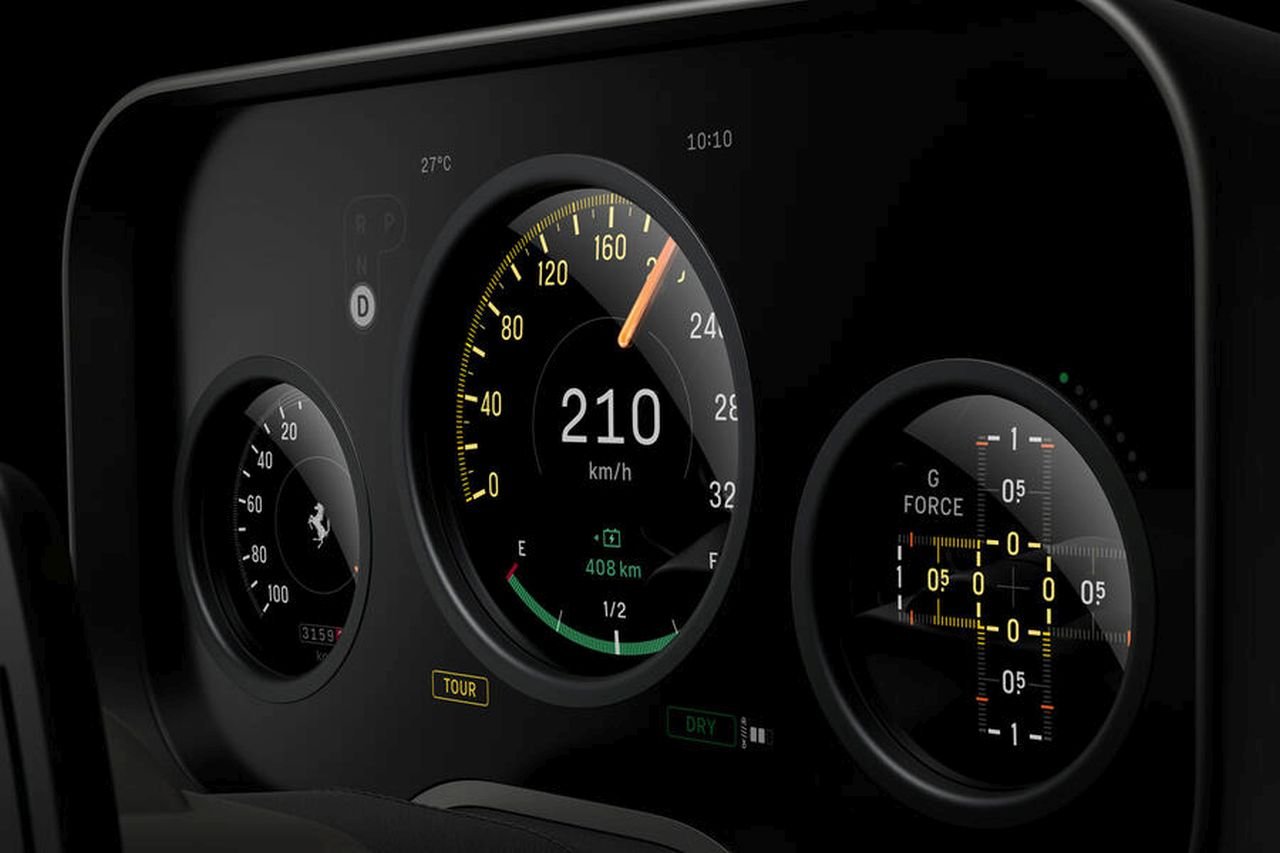
    The interior of the Ferrari Luce was designed by a company called LoveForm, whose co-founder is a former Apple guy. The cabin has a retro look, featuring a 3-spoke, flat-bottom steering wheel replete with proper physical buttons.

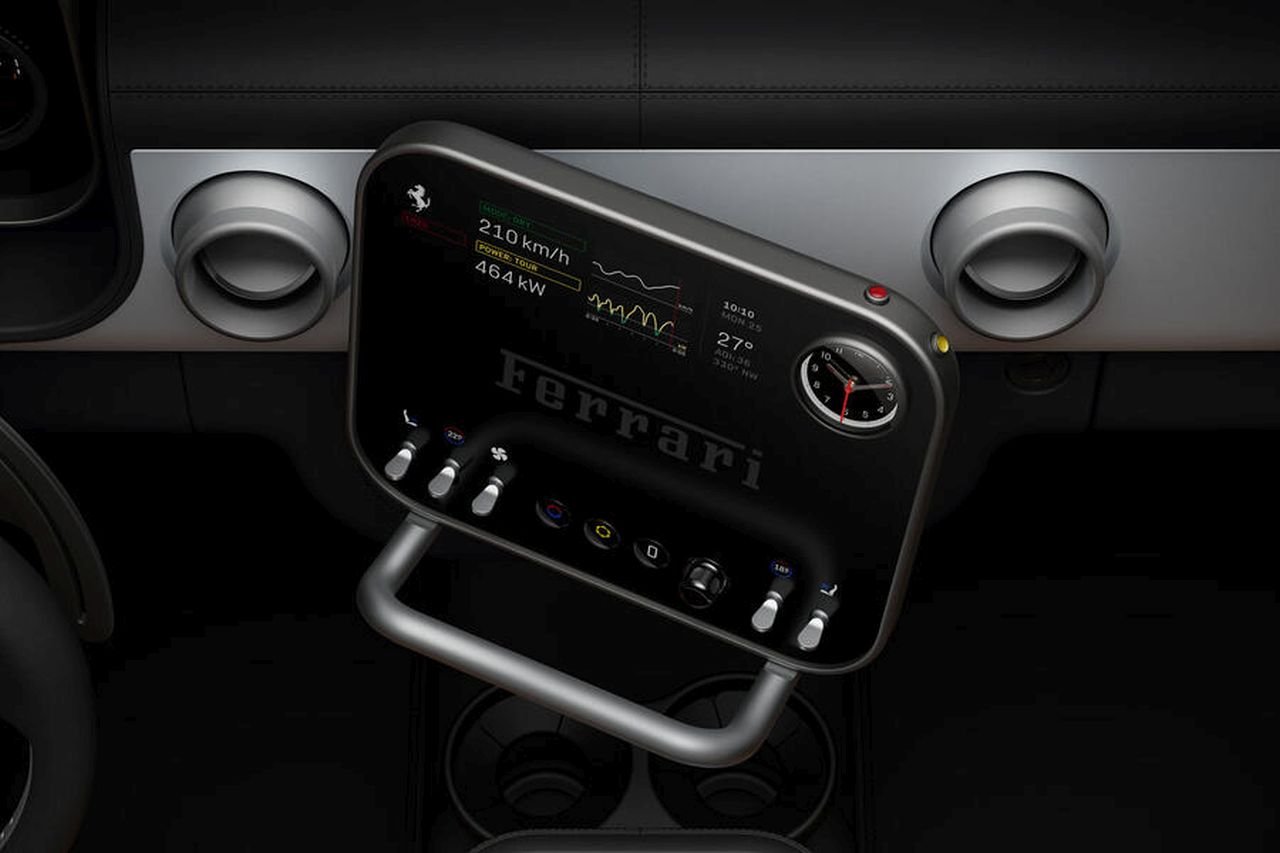
    The instrument console comprises a 12.5-inch Samsung OLED screen displaying three dials in classic Ferrari style. The central touchscreen is a 10-inch unit that’s shaped like an iPad and is angled towards the driver. Just below the screen is a sturdy grab handle.

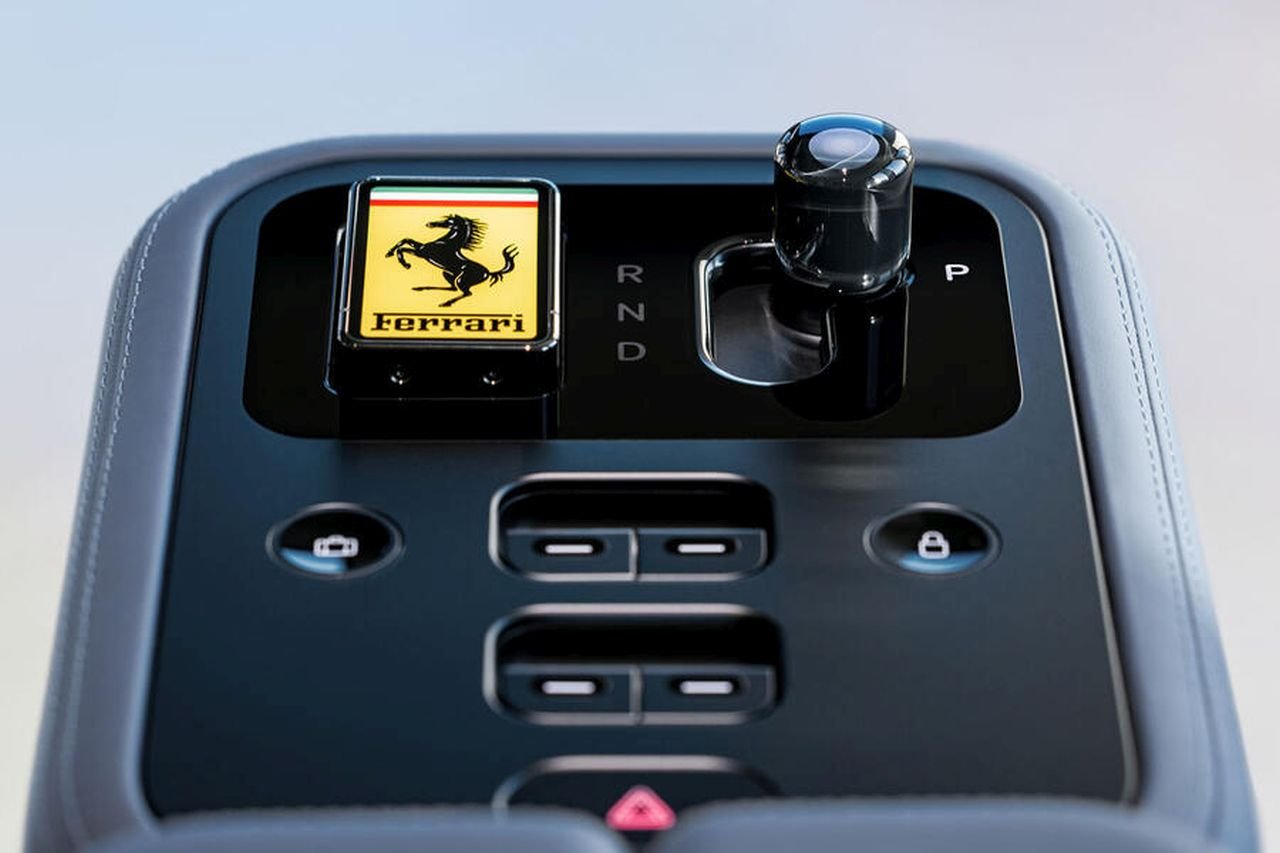
    The drive mode selector is positioned between the seats on a floating centre console, along with four power window switches.

    We quite like the retro-modern look of the Ferrari Luce’s interior. Hopefully, the exterior design won’t disappoint.

    Source: Ferrari

    Source link

  • One Of America's Cheapest EVs Just Got $10,000 Cheaper

    One Of America's Cheapest EVs Just Got $10,000 Cheaper

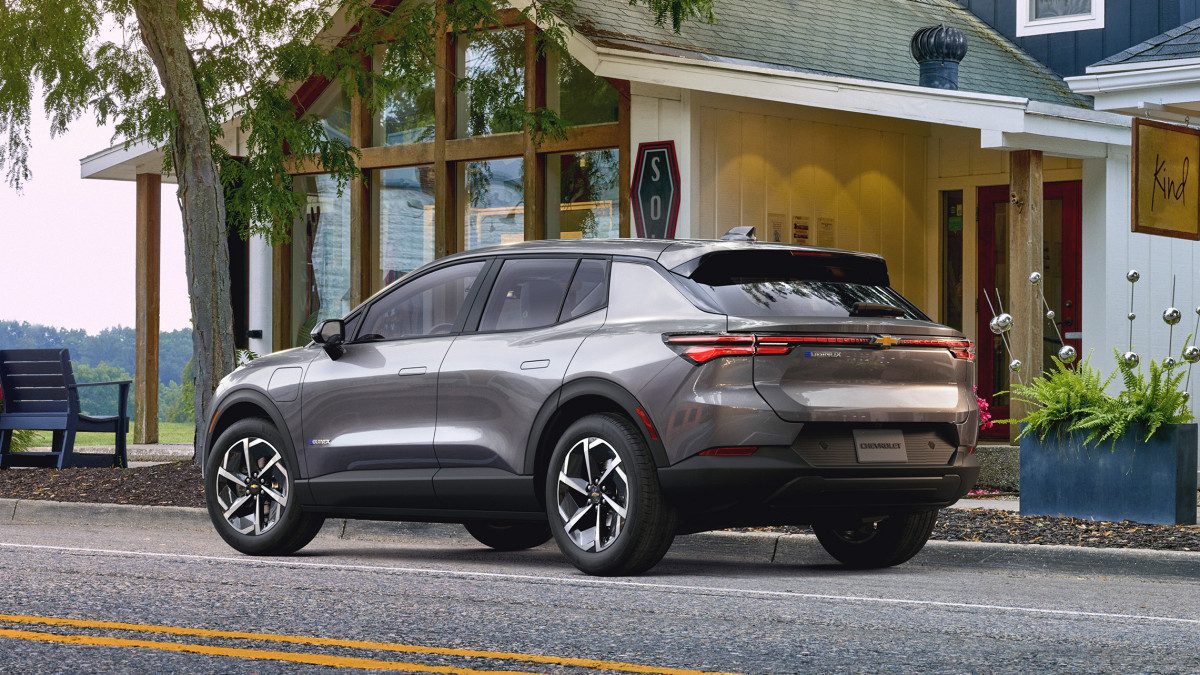
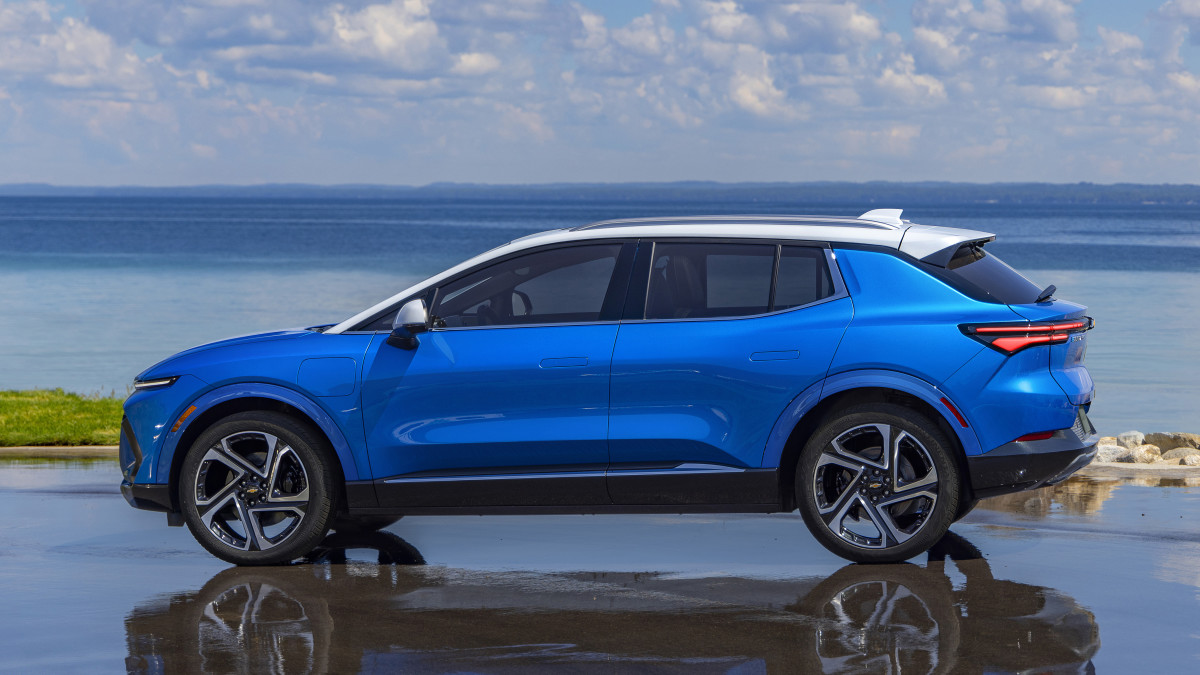
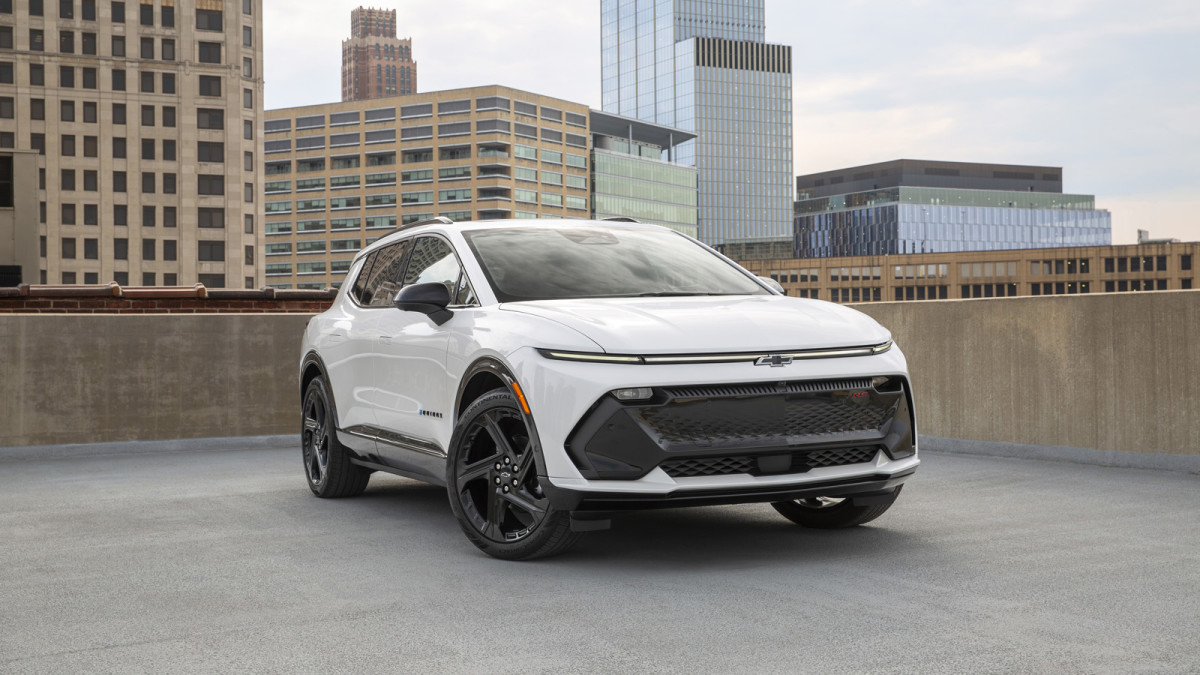
    One of the cheapest electric vehicles sold in the U.S. has become up to $10,000 cheaper, which accounts for a massive 20% discount. We’re talking about the 2026 Chevrolet Equinox EV, the compact electric SUV that is already one of America’s cheapest EVs, alongside the 2027 Chevy Bolt and the 2026 Nissan Leaf.

    As part of GM’s push to boost EV sales after the demise of the EV federal tax credit at the end of Q3 2025, the Equinox EV lineup gets discounts of up to $10,000 this month, with the highest price cut being applicable to the range-topping Equinox EV RS trim. Mind you, the LT1 and LT2 lower trims get significant discounts as well—$6,500 and $8,000, respectively.

    Base Equinox LT1 FWD Costs Bolt LT Money In February

    Chevrolet

    As a result, the base Equinox LT1 trim now has a starting MSRP of $30,295 in FWD guise or $35,595 in AWD guise (both including $1,800 destination freight charge), after the $6,500 customer cash discount is applied. That makes the Equinox LT1 FWD almost as cheap as the new 2027 Chevy Bolt LT, which starts at $28,995 (including $1,395 destination).

    At this price, getting a Equinox LT1 FWD over the Bolt LT is a no-brainer, as the former offers significantly more range—319 miles vs. 262 miles—more interior space, and better standard equipment.

    Or You Can Have The Better-Equipped LT2 From $35,595

    Chevy

    The discounts also increase the appeal of the 2026 Equinox EV LT2 mid-level trim, which is now available with a starting MRSP of $35,595 in FWD guise and $38,895 in AWD guise after the $8,000 customer cash discount is deducted.

    Compared to the base LT1 trim, LT2 adds comfort, convenience, and safety upgrades. Those include the four-camera HD Surround Vision system that offers a 360-degree view of the vehicle’s surroundings, wireless charging, power liftgate, and heated front seats/steering wheel, among other goodies. The LT2 also features higher-quality interior materials and exterior styling enhancements.

    Equinox EV RS Range-Topper Starts At $35,895 After $10,000 Discount

    As for the top-dog 2026 Equinox EV RS trim, Chevy offers $8,750 off as customer cash discount, but shoppers can qualify for an additional $1,250 in conquest cash, according to Electrek. To take advantage of the additional cash discount that brings the grand total to $10,000 off, customers must own a 2012 model year or newer non-GM vehicle or lease a 2021MY or newer non-GM vehicle.

    Assuming they qualify for both cash bonuses, buyers can land a 2026 Equinox EV RS FWD model for just $35,895 (including $1,800 destination freight charge). Or, should they prefer the dual-motor AWD variant, that one will set them back $39,195.

    Now, as with all special offers, there are some caveats. For starters, buyers must take new retail delivery of the vehicle by March 2, 2026 to get the discounts. Furthermore, as its name suggests, the customer cash discount only applies to cash purchases, not lease or special financing deals. Finally, while the 2026 Equinox EV online configurator factors in the customer cash discounts, the conquest cash bonus is not, so if you qualify for one, make sure to contact your nearest Chevy dealer.

    Source link

  • The Tesla Model 3 Can Far Exceed Its Rated Range. But There’s A Catch

    The Tesla Model 3 Can Far Exceed Its Rated Range. But There’s A Catch

    • The Tesla Model 3 long-range RWD can be very efficient if you keep the speed low.
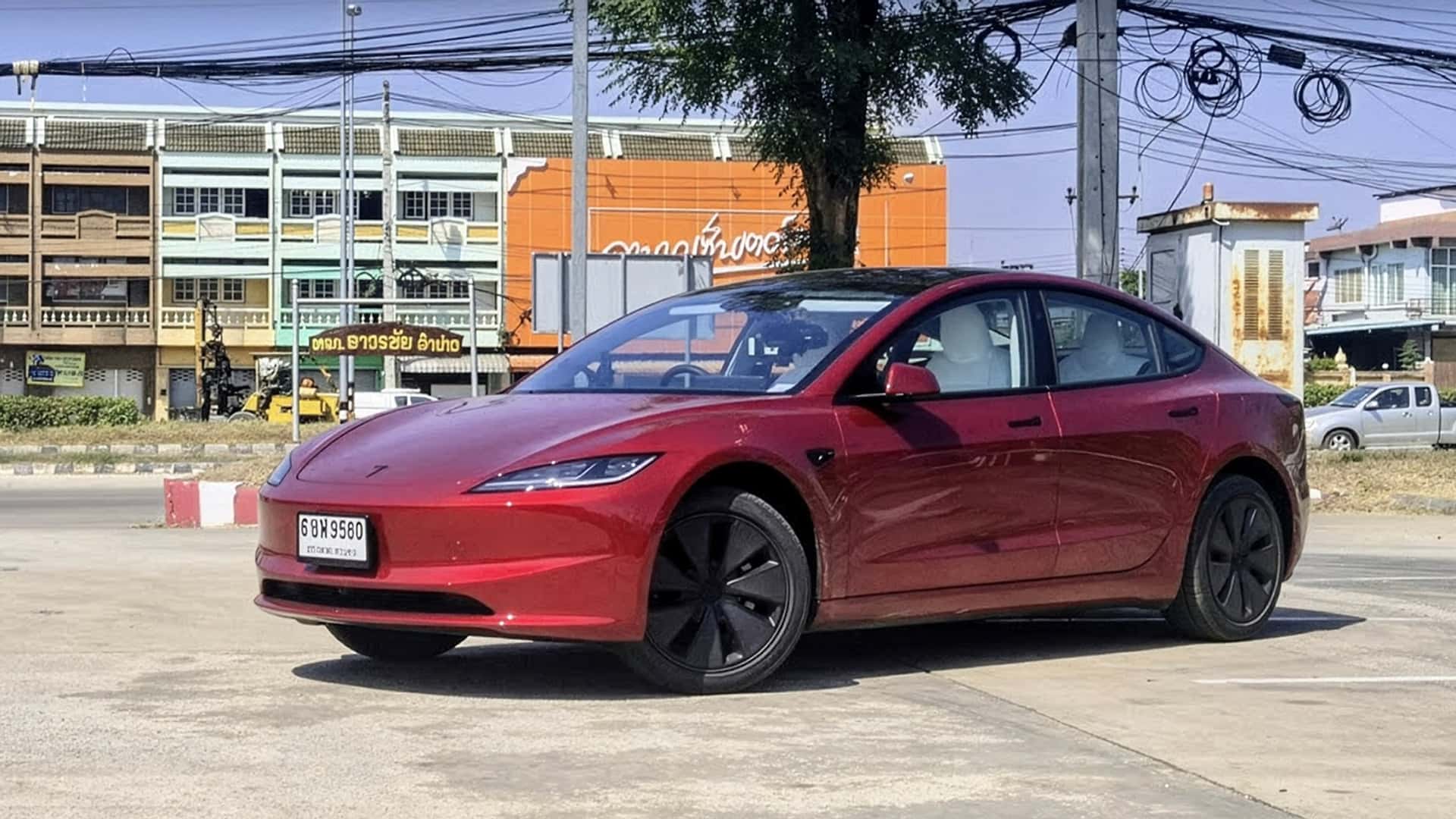
    • In this range test in Thailand, it exceeded its WLTP range by over 20%, reaching 565 miles on one charge.
    • The secret to stretching a full charge for this long is keeping the speed low and choosing the right time and conditions.

    How much range you can extract out of an electric vehicle depends on a series of factors: its battery capacity, its powertrain efficiency, its weight and its aerodynamic coefficient, as well as the outside temperature. But it’s also heavily dependent on how you drive, your speed and whatever else is draining the battery while on the move—using heating or air conditioning will visibly reduce the range, although this is less of a problem in EVs that have heat a heat pump.

    The claimed range, especially the WLTP numbers advertised here in Europe, tends to be a bit optimistic and is usually around 20% to 30% higher than the estimate for the same car sold in the United States. However, the WLTP claim isn’t out of the realm of possibilities, driving normally, and if you have patience and aren’t in a rush, you can exceed it in real-world driving conditions.

    Bjørn Nyland proved it by driving a Tesla Model 3 Long Range Rear-Wheel Drive in Thailand and easily exceeded the claimed WLTP range of 466 miles (750 kilometers) for that variant. The trick was to drive the car at a steady 49.7 mph (80 km/h) indicated, which was around 47.9 mph (77 km/h) measured by GPS.

    He set out on a loop starting in Bangkok, Thailand, which would take him back to the city at the end of the trip. However, as he neared the city on his way back, the car predicted it would still have 15% charge left in its battery, so it needed more driving to fully drain it and extract the maximum possible range.

    The outside temperature was also suitable for a long-range drive, ranging from 80°F (27°C) to 84°F (29°C), so the car didn’t have to expend much energy to keep the battery pack at its optimum temperature. The result wouldn’t have been as impressive if it was even hotter and with more traffic on the road, and taking everything into account, Bjorn specifically chose the time, place and route to get the best shot at achieving an impressive range result.

    By the end of the run, the state of charge reached 0%, and the trip meter said the car had covered 565 miles (909 km). That works out to an amazing average efficiency of 7.27 miles/kWh (8.55 kWh/100 km). Bjorn did the run on a Sunday, so the roads were not very busy, allowing him to drive long stretches of highway without slowing down and then accelerating back up to speed.

    That’s 21% more range than the WLTP estimate and over 55% more than what the same model is rated for in the United States. There are differences between the Model 3 sold in Asia (built in China) and the version of the model sold in the United States, especially when it comes to the battery pack, so the results aren’t directly comparable.

    Source link

  • GM Patents Active Aero Just for Drifting

    GM Patents Active Aero Just for Drifting

    Active aero unlocks a lot of possibilities, allowing engineers to trim drag for higher top speeds or add downforce for more confidence-inspiring cornering. A new General Motors patent filing hints at another possible use, one that can’t be expressed purely with numbers.

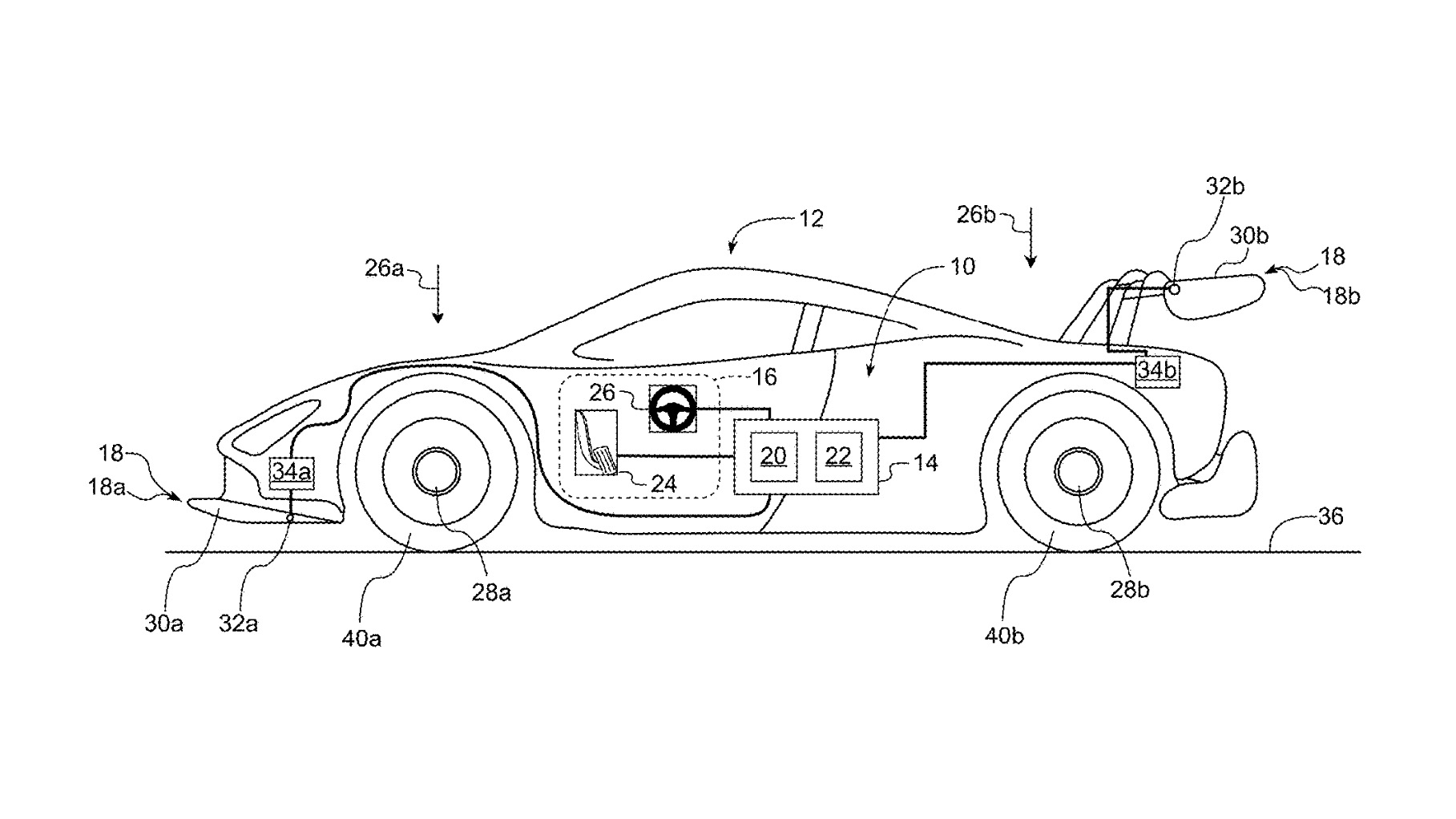
    The patent filing, which was published by the United States Patent and Trademark Office at the end of January (but originally filed by GM in 2024) is for “active downforce control for drifting maneuvers.” In other words, using a car’s active aero elements to make it easier to get sideways.

    GM active aero for drift control patent image.
    General Motors

    As described in the document, an onboard controller would determine when the driver is trying to drift (as opposed to merely losing traction and trying to recover) based on control inputs such as steering-wheel angle and accelerator-pedal position. It would then adjust the aerodynamic bias between the front and rear axles to a drift-optimal range, one that allows a controlled loss of traction that’s enough to keep a drift going.

    The hardware would be similar to other active-aero systems, consisting of movable spoilers, wings, fins, or diffusers mounted on actuators that can adjust their angles or move them relative to the airflow around the car in order to generate more or less downforce. Bleeding off some downforce makes the car a little looser and thus easier to drift. A high-downforce setup is important for achieving the fastest lap times, but a car that won’t get unstuck won’t be much good at drifting. That’s the beauty of active aero: you can have both.

    A Chevrolet Corvette ZR1 on a race track.
    Chevrolet

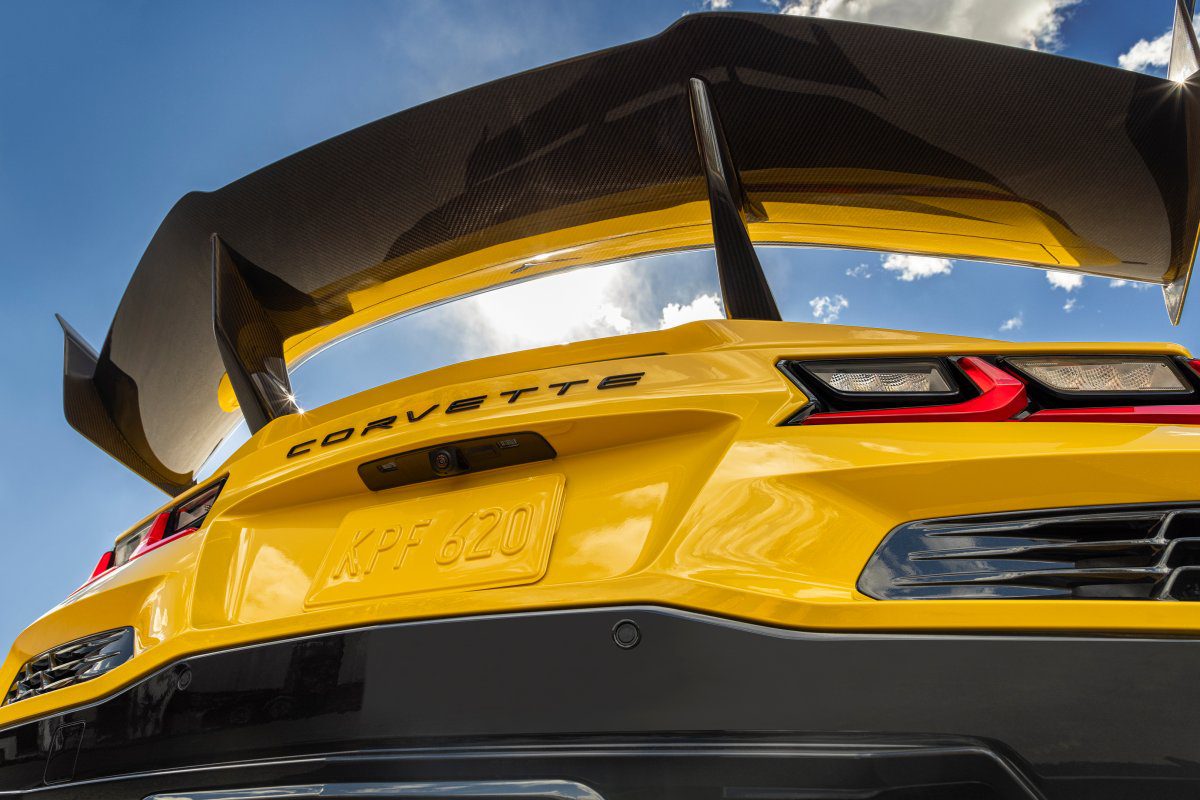
    The downside is added cost and complexity from movable aerodynamic elements compared to fixed ones. But with GM driving the Corvette further into six-figure territory, it’s clear the automaker isn’t afraid to build pricey performance cars. Another patent filing that surfaced in 2024 hinted at an active-aero system for the ‘Vette, but in this case tied to an electronic limited slip differential. That use case seemed aimed more at handling stability, but it’s possible the same hardware could be repurposed for the drift mode described here.

    Other automakers are already deploying active aero. One of the most notable recent examples is the Ford Mustang GTD, although the Corvette ZR1 and ZR1X still managed to (barely) beat the GTD around the Nürburgring without it. But while improving lap times is the typical use of active aero, using it to make drifting easier is something we haven’t seen before.

    Got a tip? Send it in: tips@thedrive.com

    Stephen has always been passionate about cars, and managed to turn that passion into a career as a freelance automotive journalist. When he’s not handling weekend coverage for The Drive, you can find him looking for a new book to read.


    Source link

  • Mercedes-Benz Places and Binghatti Reveal a Masterplanned C
– duPont REGISTRY DriftBreath

    Mercedes-Benz Places and Binghatti Reveal a Masterplanned C – duPont REGISTRY DriftBreath

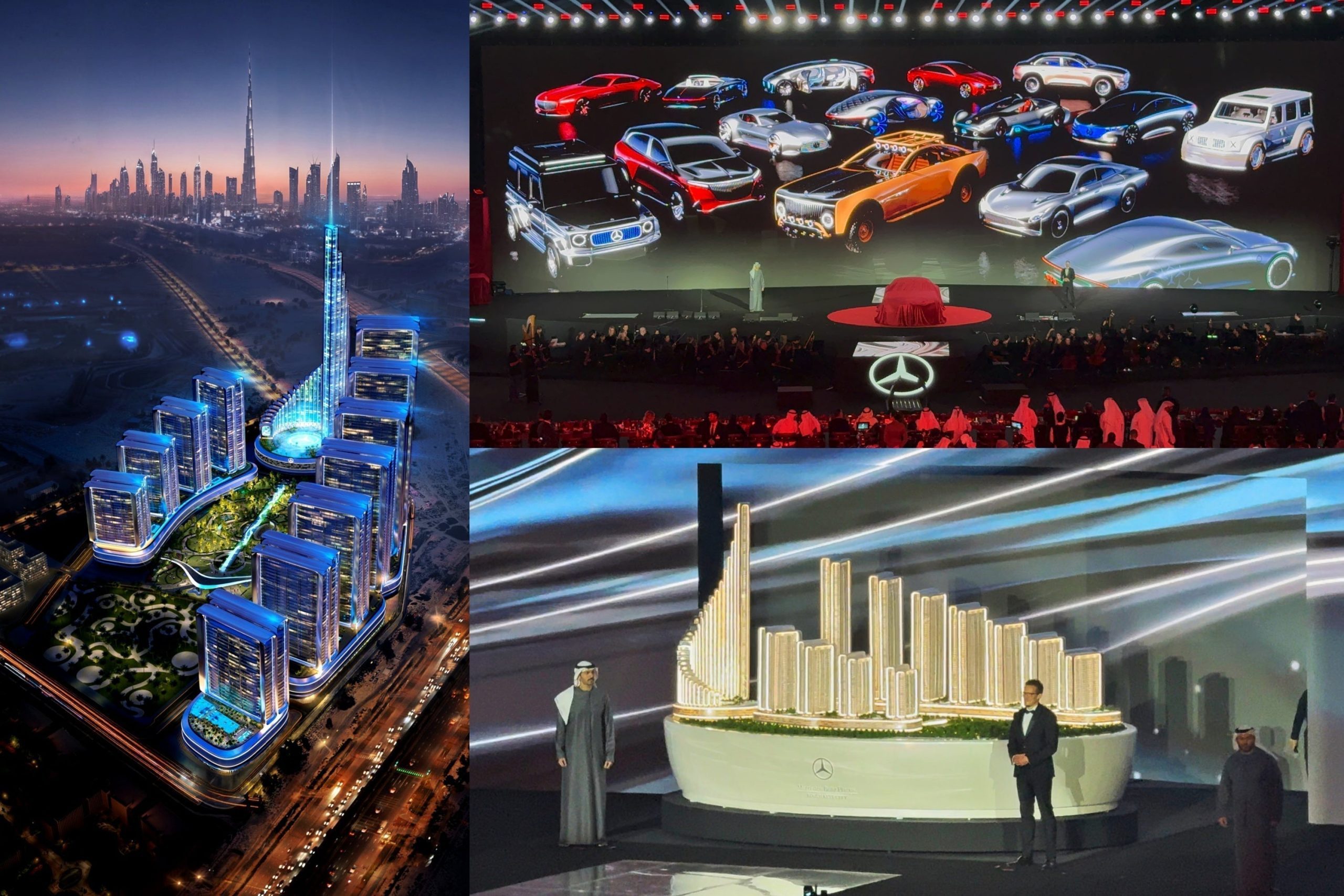
    Just over a month ago, we touched on Dubai-based Binghatti announcing Mercedes-Benz Places by Binghatti in a historic signing that took place in Stuttgart. At the latest black-tie unveiling, Binghatti, a developer who is rapidly transforming the skyline of the desert metropolis, has raised the stakes again, presenting the world’s first Mercedes-Benz-branded city. The Meydan district in Dubai, United Arab Emirates is home to more than 10,000,000 square foot. This is the second Mercedes-Benz project in Dubai, with Binghatti. However, it is the first to apply the brand’s design philosophy on a true city scale. 13,386 residences are spread across 12 towers and are anchored by a central Vision Iconic building, inspired by the Vision Iconic Concept Car first shown in October of last year.

    Studios account for 6,321 units. There are 4,963 one-bedroom homes. The number of two-bedroom homes is 1,653. Four-bedroom houses are 431 in number. There are only nine four-bedroom houses and a small number of five-bedroom houses at the top. Gargash Motors displayed a carefully curated selection of Mercedes-Benz AMG and other models just outside. The interior featured abstract art, themed grilles and the Ponton three-pointed stars from the 1980s. The red-on-black Mercedes-Benz PureSpeed open-top roadster that was also seen earlier in the season at the

    1000 Miglia Experience Opening Day,

    , attracted large crowds. The evening was hosted by Terry Crews, a star from Hollywood. Muhammad Binghatti and Shehab Gargash unveiled the Vision concept on stage. A spectacular drone show lit up the night skies, revealing the towers. The masterplan was shaped by Mercedes-Benz Sensual Purity, which translated the brand DNA into architecture. The sequential placement of the towers conveys precision and motion. Horizontal podium lines echo iconic grille. <- Gallery ->

    “With Mercedes-Benz Places, we transfer the unique DNA of our brand into holistic, customer-centric, and connected living spaces. This project is a benchmark in exclusive and integrated urban living. This year, we celebrate 140 years of our company’s history. Binghatti City marks the first time we apply it at true urban scale, an entire living environment, a city within a city, that bears our unmistakable identity.” – Axel Harries, Head of Global Service and Parts at Mercedes-Benz. Each of the 12 towers is named after a Mercedes Benz concept car. This links heritage and future vision to the built environment. Vision One-Eleven Vision Mercedes Simplex Vision Mercedes-Maybach 6 and Vision AVTR. Restraint is the main theme inside the residences. Interiors use a base of black and silver, with layers of leather and wood for warmth and comfort. Brand cues appear through both materials and detailing.The masterplan centers on a landscaped Grand Promenade that links key zones and amenities, using green corridors and elevated walkways to connect buildings with the surrounding park. Lifestyle facilities are centered around wellness, recreation and community. They include multiple pools and waterplay areas, extensive training and fitness spaces, and twelve specialized sports club. Social infrastructure ranges from event and entertainment venues to concierge-led services, while EV charging and connected mobility are fully integrated into the development.“Our collaboration with Mercedes-Benz continues to evolve beyond individual buildings into a fully integrated masterplan community. Mercedes-Benz Places | Binghatti City represents our shared ambition to redefine how branded living is experienced at scale, where design, innovation, and community come together to shape the future of urban life in Dubai.” – Muhammad Binghatti – Chairman, Binghatti Holding.

    Dubai’s wider context explains why this keeps happening here. Miami is now the city with the most branded residential developments in development. The automotive brands are driving the trend. Bugatti has already begun construction. This announcement comes just weeks after

    Binghatti completed the most expensive penthouse in the Middle East, selling for AED 550,000,000 ($150 million).

    At its Bugatti-branded Project in Business Bay. It was not about the units. It was about signaling where ultra-luxury developments are the region is heading next.

    Images: Khris Bharath, Mercedes-Benz

    Source link