Published: July 8th, 2025
Share
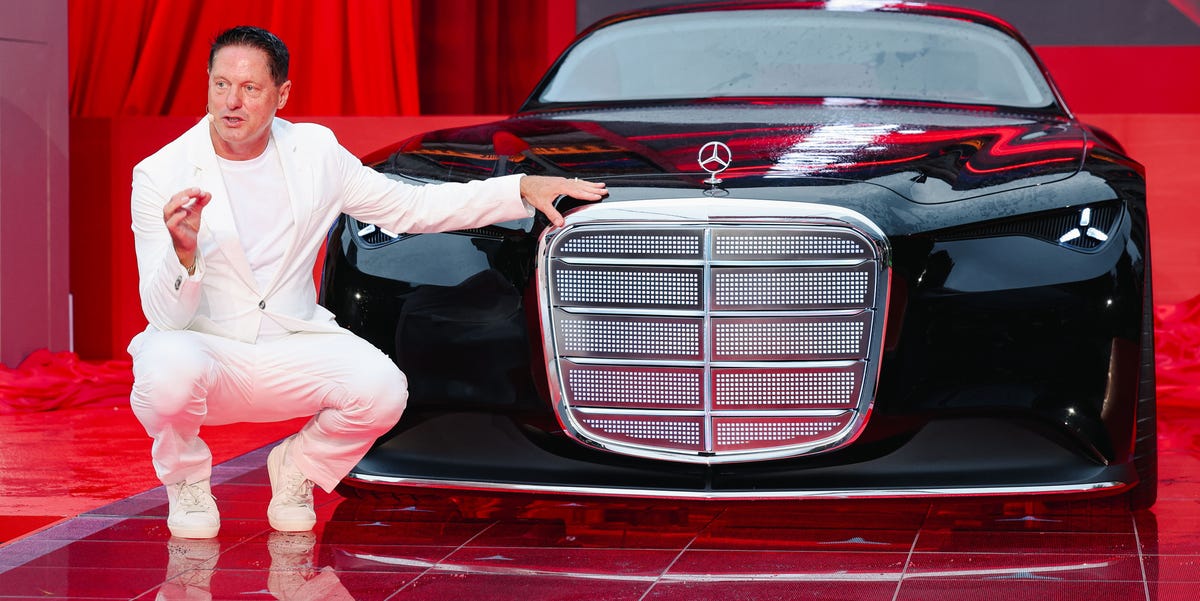
While he defends it, Wagener also concedes that the EQ is not among his picks for greatest hits. “When we started the pure electric cars, we wanted to do a purpose-built design and make them look different from combustion-engine cars, because we believed that’s what the customer was looking for. We wanted the electric cars to look futuristic, and aerodynamics was a big issue. It’s actually funny in the press that I get all the credit for the EQ as a generation, as if I were the only one deciding on these cars—like I was alone in the room, there were no board members there, no engineers, nobody [laughs].
“Coming from the F015 concept car that we presented in 2015, we wanted something that looked futuristic, new, aero, techy. That’s why we did the first generation of electric cars very differently. And I still believe they were super-progressive cars. Yes, they were not a representative three-box limousine. But they were never meant to be one. That wasn’t the spec. I think they’re very, very progressive cars.
We said that we would open the zipper into purpose electric design, and purpose combustion design. And now we close the zipper, because these days the powertrain doesn’t really matter. What matters is the brand. And therefore, in the future, it will just be a Mercedes, with the status proportion and everything you expect. For the future, I think that will be right. But at that time, I believe it was right to do a purpose-built EV design. Of course, it is a challenging segment, selling $100K electric cars. That’s another aspect.”

Click to see larger images
GEELY Auto Australia has announced the roll-out of an important over-the-air (OTA) software update for its popular EX5 electric SUV.
The OTA update – which was delivered to customers this week – provides three key enhancements Geely says will “elevate everyday usability and the overall driving experience” of its popular electric model.
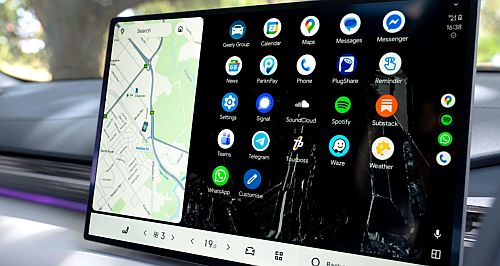
Included in the bundle is the ability for the infotainment system of the EX5 to now support Android Auto connectivity – both wired and wirelessly – alongside the ability to customise various ADAS systems to offer a choice of lower volume and less invasive audio profiles.
Additionally, the latest round of software updates further includes one-touch activation of the vehicle’s Drive Setup profile, allowing EX5 drivers to quickly select their preferred settings profile via the steering wheel shortcut button or infotainment screen swipe-down menu.
The Drive Setup profile of the Geely EX5 allows drivers to personalise the Drive Mode in which the vehicle is operated (Eco, Comfort, or Sport), the severity of Energy Regeneration offered (Low, Medium, High, or Auto), the activation of Lane Keeping and Emergency Lane Keeping Assist (On or Off), Driver Fatigue Detection (On or Off), and Speed Limit Alert (Off, Blinking Icon, or combined Blinking Icon and Sound Alert).
The update also adds Tailgate Control to the infotainment screen swipe-down menu and a notification to confirm the switching of vehicle Drive Mode.
Geely says the update can be easily performed via the vehicle’s infotainment screen and recommends that EX5 customers carryout the update when connected to their home or mobile phone’s Wi-Fi connection.
“I wish there was a way to know you’re in the good old days before you’ve actually left them.” – Andy Bernard
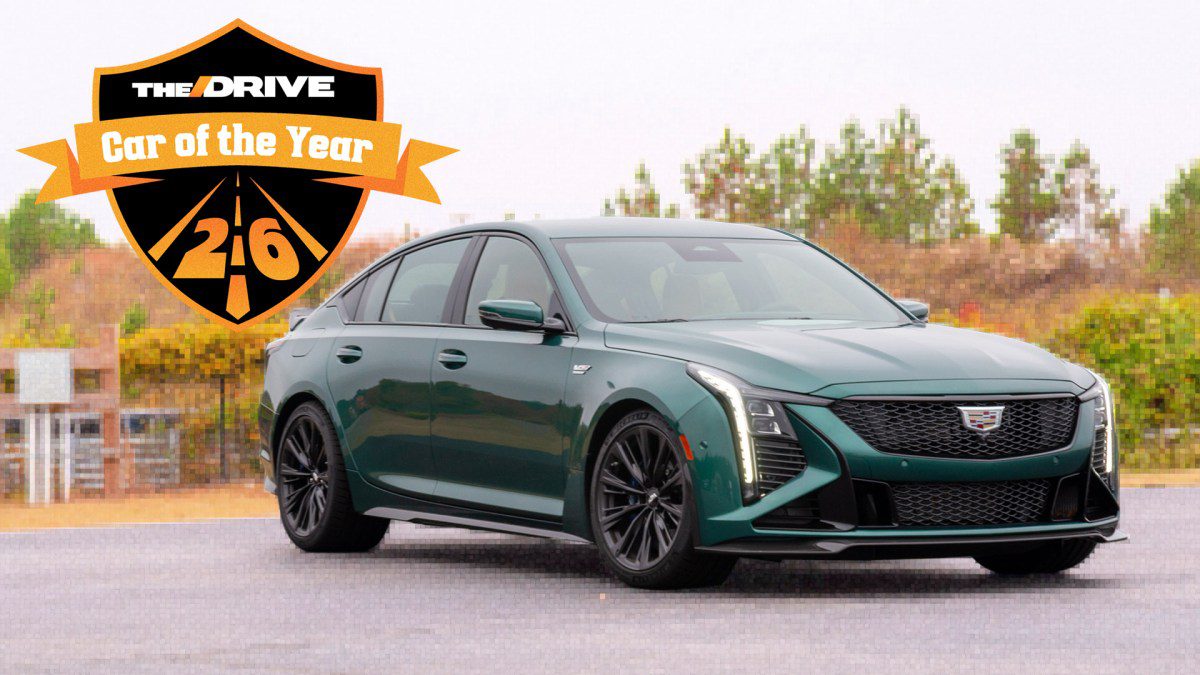
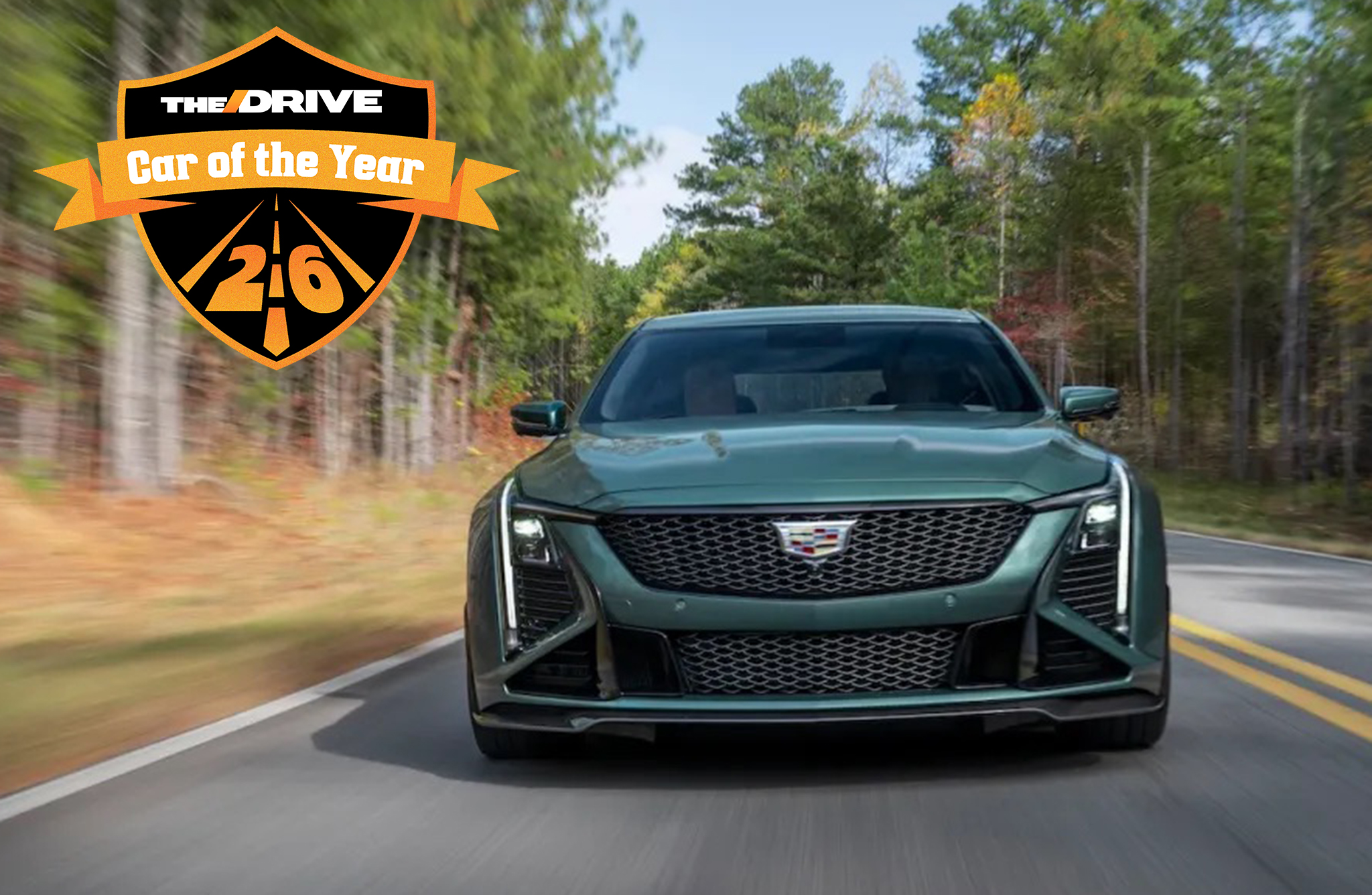
That quote from The Office series finale has lodged itself in pop culture as a perfect encapsulation of how hard it can be to appreciate the beautiful things in life right now until you’re far down the road. But apologies to Mr. Bernard: he’s wrong. There is a way to know, and it’s called driving the Cadillac CT5-V Blackwing, The Drive’s runaway winner for the 2026 Car of the Year.
By now, I don’t need to ramble on about how the auto industry is convulsing with massive and historic changes. You all live it every day. Electrification, software-defined vehicles, screens, crossovers, ugly designs, too-bright headlights, sky-high prices, death of the manual, monster-truck-sized pickups, et cetera. How could any reasonable person call this the good old days?
But that’s exactly my point. The good old days only become the good old days through the passage of time and the benefit of perspective, but the reasons you remember them that way are with us right now. So let me try to jump you 30 years into the future to the year 2056, when Chinese self-driving blobs have completely taken over American roads, 80 percent of the market is EVs or plug-in hybrids, stick shifts are actually dead, and car enthusiasts are seen more like, I don’t know, model train collectors. You pull out a dog-eared copy of Car & Driver from 2026 from a stack in your garage, gaze wistfully at a photo spread of the last rear-wheel-drive luxury sedan with a stick shift and a supercharged V8 ever made, and think Man. Those were the days.
They were, and boy, they are. Even with all the shit car people have to trudge through today, the Cadillac CT5-V Blackwing is one that makes the fight worth fighting. There is literally no other car like it left on the market: an absurdly engaging driving machine breathing a fiery 668 horsepower through eight cylinders of fury, controlled by a snickety-snick Tremec six-speed manual, all wrapped up in a classic luxury sedan form.
It is an apogee, a capstone, a monumental achievement for enthusiasts. And it’s also an end, as GM recently announced it’s going out of production this year. Grimly ironic timing given Cadillac’s new foray into F1 racing, but I digress. Knowing it’s almost over, we simply couldn’t let it slip out of our lives without first handing it our highest honor.
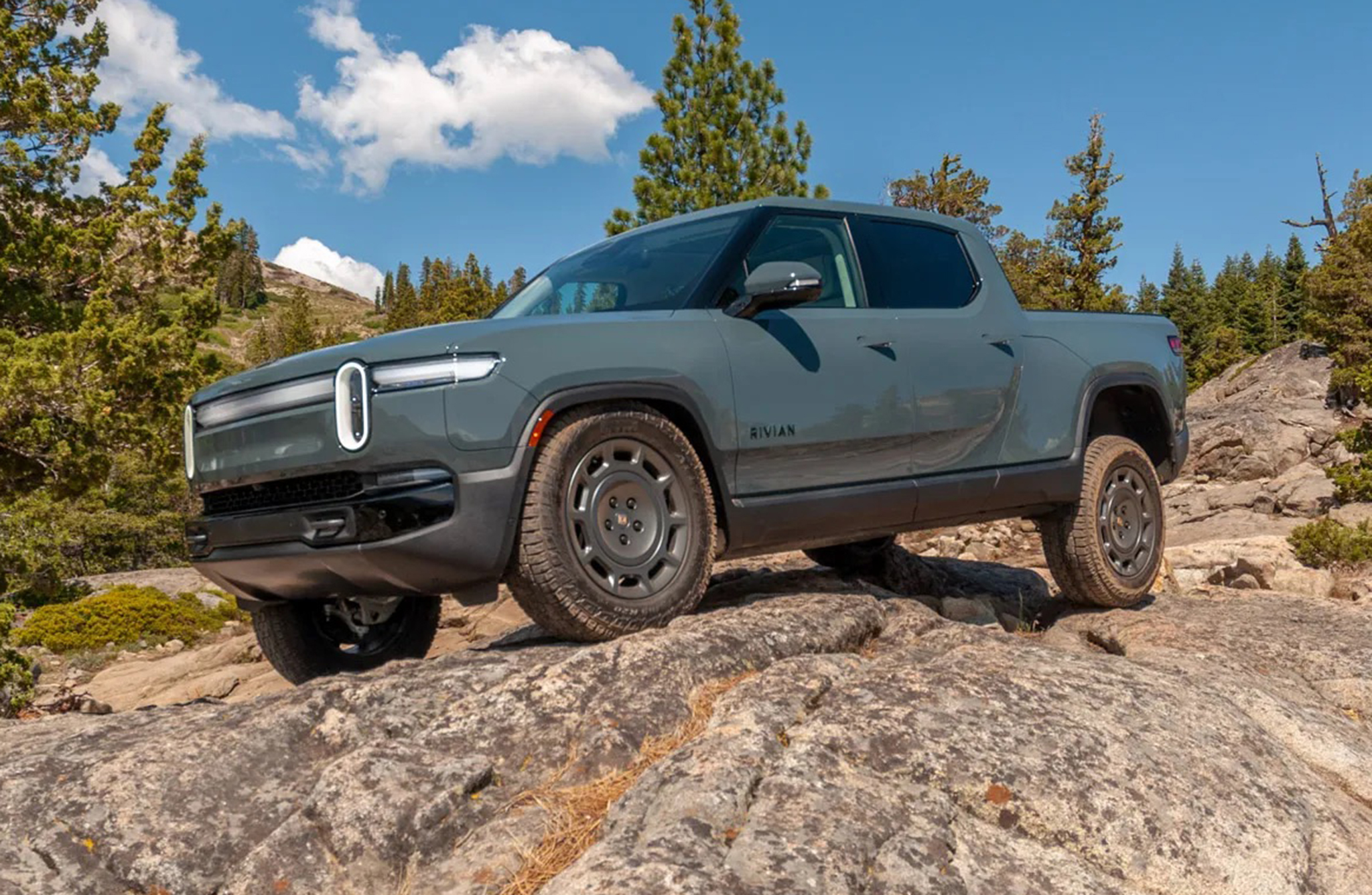
Another kind of publication—a less considered one, I’ll say—might’ve given its COTY award to the Rivian R1T Quad, also an incredible achievement that Joel just won’t shut up about. This new-generation Quad might not look all that different, but under the metal, Rivian completely upgraded it with four new oil-cooled motors that can actually stand up to off-road abuse, all-new electrical zonal architecture that allowed it to remove 1.6 miles of wiring and cut down the number of ECUs from 17 to seven, a NACS charging port, the RAD tuner for superfine powertrain adjustments, and the long-promised 360-degree Kick Turn function that can be used while in motion on tight trail turns.
Whew. That’s a lot. And so is the R1T Quad with over a thousand horsepower and over 370 miles of EPA-rated range. It’s almost too much, which is why it didn’t win The Drive Award for best EV or car of the year. But unlike every other vehicle on this list, it’ll only get better with time thanks to Rivian’s aggressive roadmap for over-the-air updates. Case in point: in December, Rivian announced the expansion of its Universal Hands-Free driving system from 150,000 miles of roads in America to 3.5 million for the Quad and other second-gen R1 trucks. (Free for now, but it’ll cost $49.99 a month or a one-time charge of $2500 starting in Q2.) And a new AI-powered voice assistant that can control just about every major feature in the vehicle is slated to roll out sometime this spring.
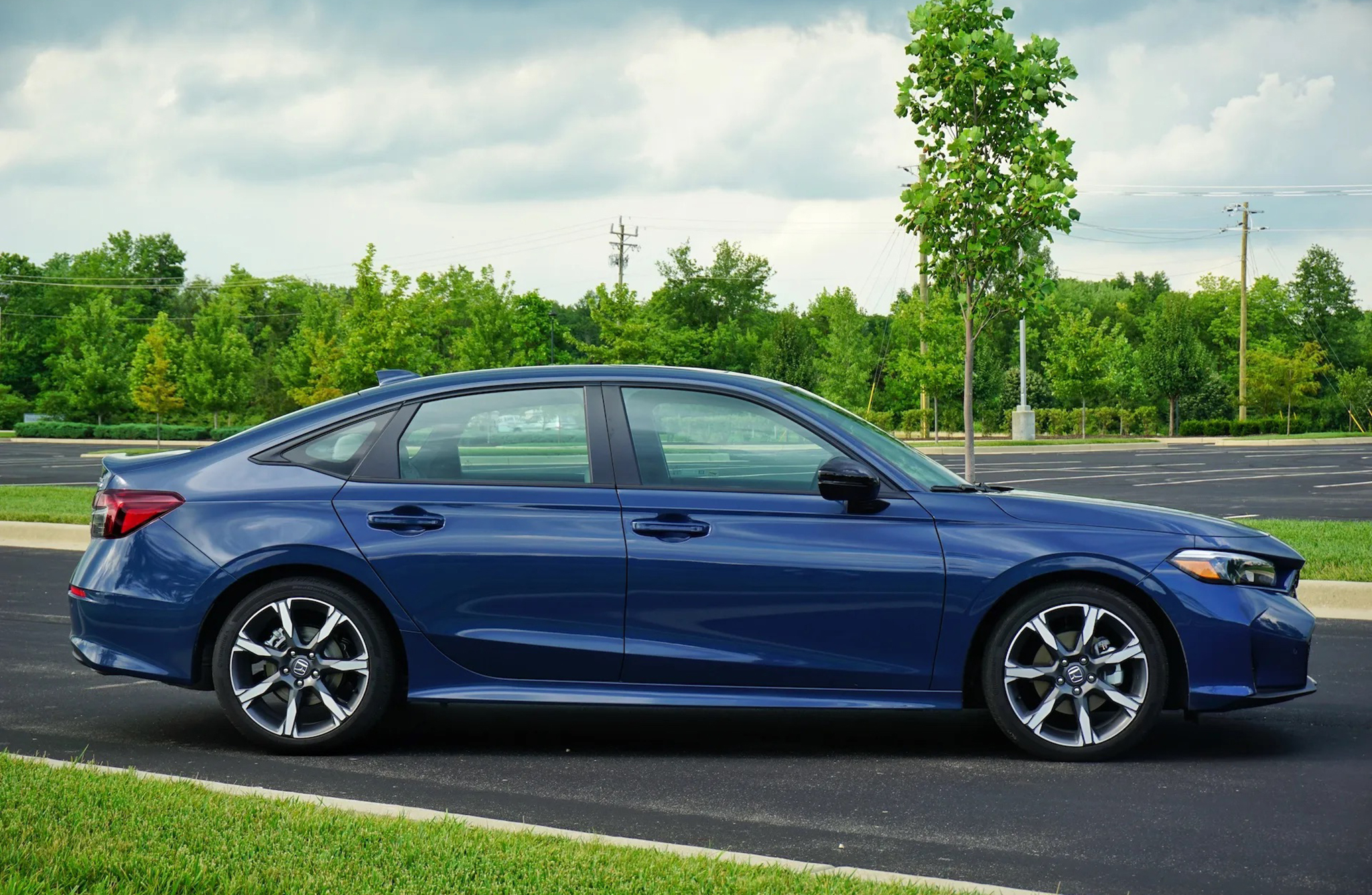
The Civic Hybrid was our car of the year last year, and you’d be well within your rights to think it deserves back-to-back wins. In another world where the Blackwing wasn’t on its final lap, it might. A 51-mpg fuel sipper in a sweet little package with a torquey powertrain that packs more punch than the Civic Si, the Civic Hybrid is a worthy pick with a starting price around $30,000
We’ve spent many pixels lauding its smart two-motor hybrid system that seamlessly trades off between gas and electric power for maximum efficiency and linear acceleration. Especially when the standard Civic has a conventional CVT, if you can afford the $5K step-up to the hybrid, there’s no reason not to if you care even the slightest bit about driving dynamics. We’ve said it before, and we’ll say it again—this should be the default answer when a normal person asks you which new car they should buy.
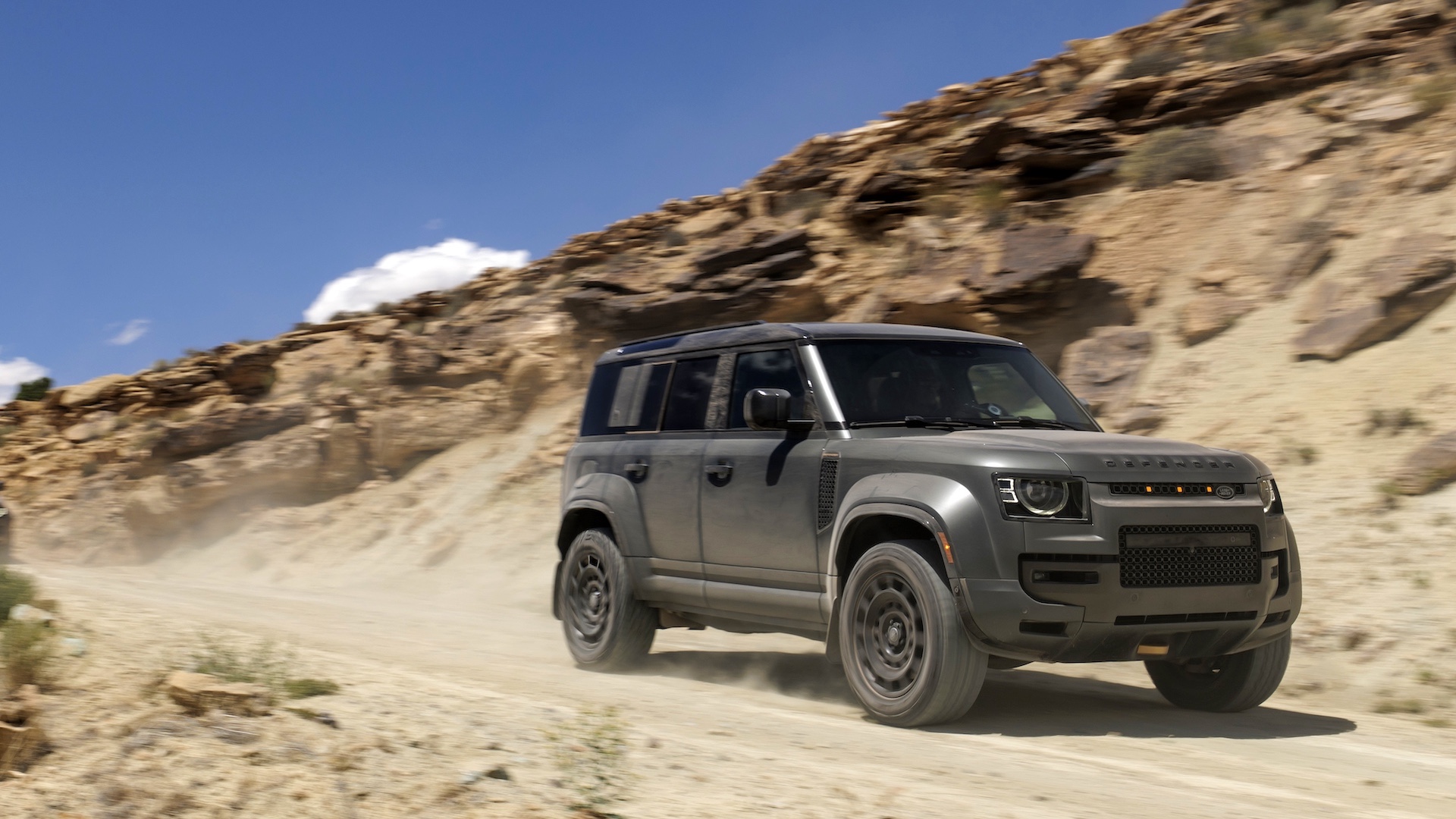
Credit where credit is due: despite Jaguar Land Rover being one of the more dysfunctional automakers right now, it summoned every bit of engineering excellence and decades of off-roading expertise it has and poured it all into the Land Rover Defender Octa and created one of the best SUVs not just of this decade, but arguably of this century.
You can spend a lot less and get something approximating its setup and performance as a super SUV in something like the Ford Bronco Raptor, sure. But this is one of those rare cases where an approximation just won’t do. The build is just that good. Land Rover took the 6D suspension system with hydraulically interlinked dampers from the Range Rover Sport SV, where it’s set up for track use, and re-engineered it to create an off-road god that can still take a high-speed corner. Throw in a twin-turbo V8 with 626 hp and 553 lb-ft of torque, over a foot of ground clearance, the ability to ford through 3.3 feet of water, and a luxury interior, and baby, you’ve got a stew goin’.
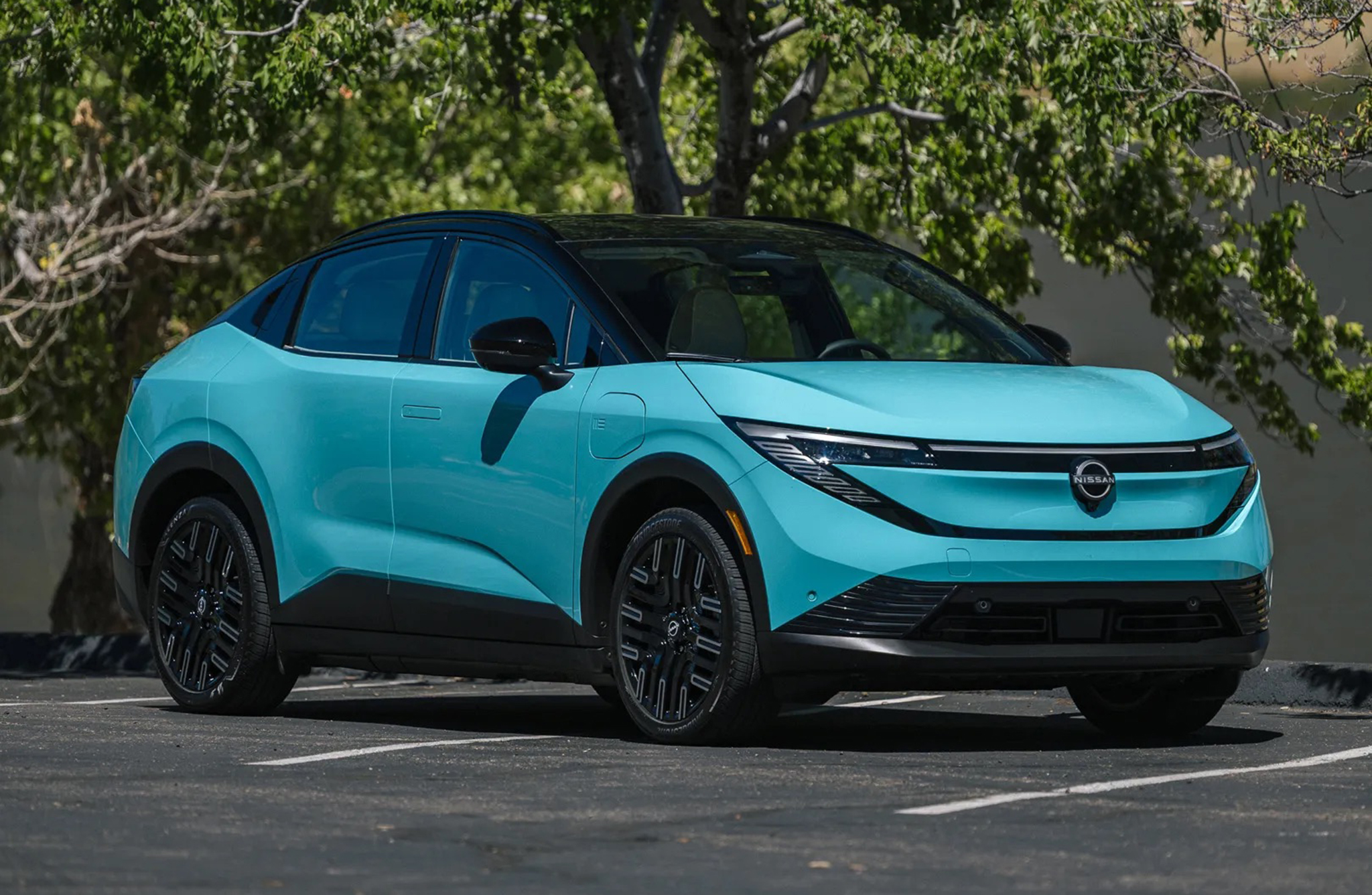
Even as automakers’ electric vehicle dreams have started to collide with the reality that people aren’t widgets and won’t be browbeat into making rational choices, every month brings more EVs with higher range, better practicality, more impressive technology, and faster charging times. But they’re all still focusing on the dwindling number of buyers in the $45,000-$80,000 range, leaving the low end of the market in the lurch.
Not so with Nissan. For a company that’s been short on cash, debating merging with rivals, and generally struggling to find its footing this decade, I’m not quite sure how it nailed the brief for a competitive $30,000 electric car with the next-gen Nissan Leaf. Especially after it squandered the early lead it had in launching the first leaf all the way back in 2010. Gone is the frumpy styling, the weak and cold-sensitive powertrain, and the embarrassingly low range, replaced by a sleek, boldly-styled crossover with NACS charging on the Tesla Supercharger network that’s genuinely fun to drive. It is exactly what the market needs right now.
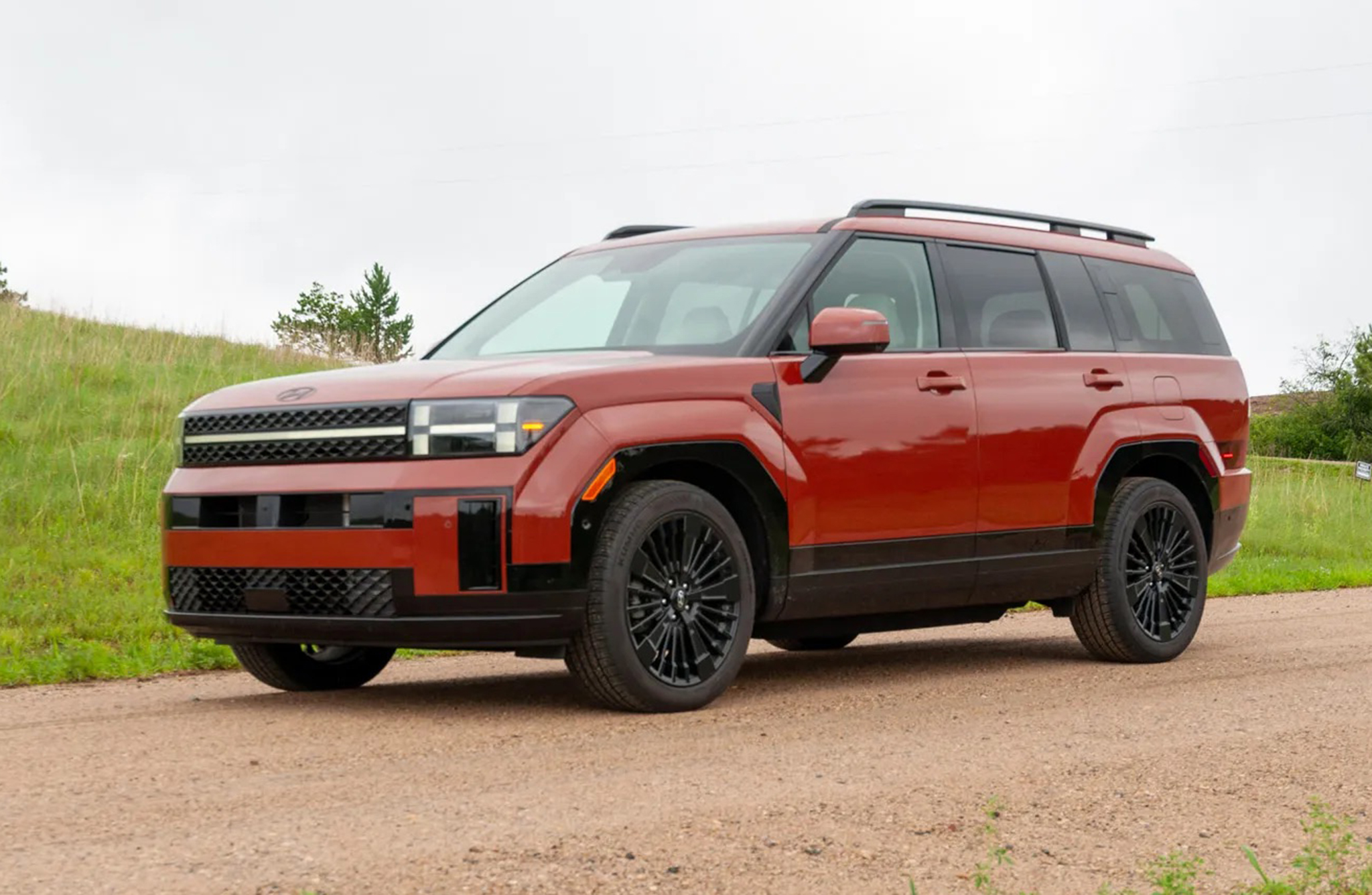
Don’t look now, but just as the Hyundai Motor Group has become the first stop for EV-curious buyers with the Ioniq 5 crossover, Ioniq 6 sedan, and Ioniq 9 SUV (not to mention the Kia counterparts) offering excellent value and nigh-unbeatable pricing, it’s also been stealing away boatloads of hybrid buyers. And it’s starting to pull away with the Hyundai Santa Fe Hybrid
Starting at $38,000 and topping out just over $50,000, it undercuts every rival in the segment without asking for a single sacrifice on your part. Three rows of seating with optional second-row captain’s chairs, loads of storage, buttons, a delightful boxy design, and a combined 34 miles per gallon all add up to the best family-friendly hybrid you can buy right now. Its 231-horsepower, 271 lb-ft hybrid system with a 1.6-liter turbo four makes it a bit slower than, say, a Toyota Grand Highlander Hybrid, but are we really going to judge crossovers like these on 0-60 times? Like the Civic Hybrid, it’s all the car most people will ever need, and then some.
For the last two years, we’ve given the top prize to two excellent and economical hybrids for the overall value they presented in the market: the Honda Civic Hybrid and the Toyota Prius. Time to swerve, hard.
Empirically, the Cadillac CT5-V Blackwing isn’t the fastest thing on four wheels. It isn’t the fanciest, the best-handling, or the best-looking. But emotionally, and as a total package, I don’t know what else to say other than it is simply the best. It’s the only car I’ve driven in this job that I desperately wanted to buy, to have in my life day in and day out, to keep for the rest of my time on this planet.
There are two ways you can look at the CT5-V Blackwing, and both amount to labeling it a true legend. One, it’s basically a Camaro ZL1 sedan—same Alpha platform, same 6.2-liter supercharged V8, same gearbox, same Magneride suspension—but with a luxurious cabin you can actually see out of, four doors, a useful trunk, and a backseat fit for people with legs. The Camaro died because it was kinda ugly and always played second fiddle to the Corvette, but by God, was it a handler. So take everything great about that car and fix the things that sucked, and you’re telling me this isn’t a winner? Come on.
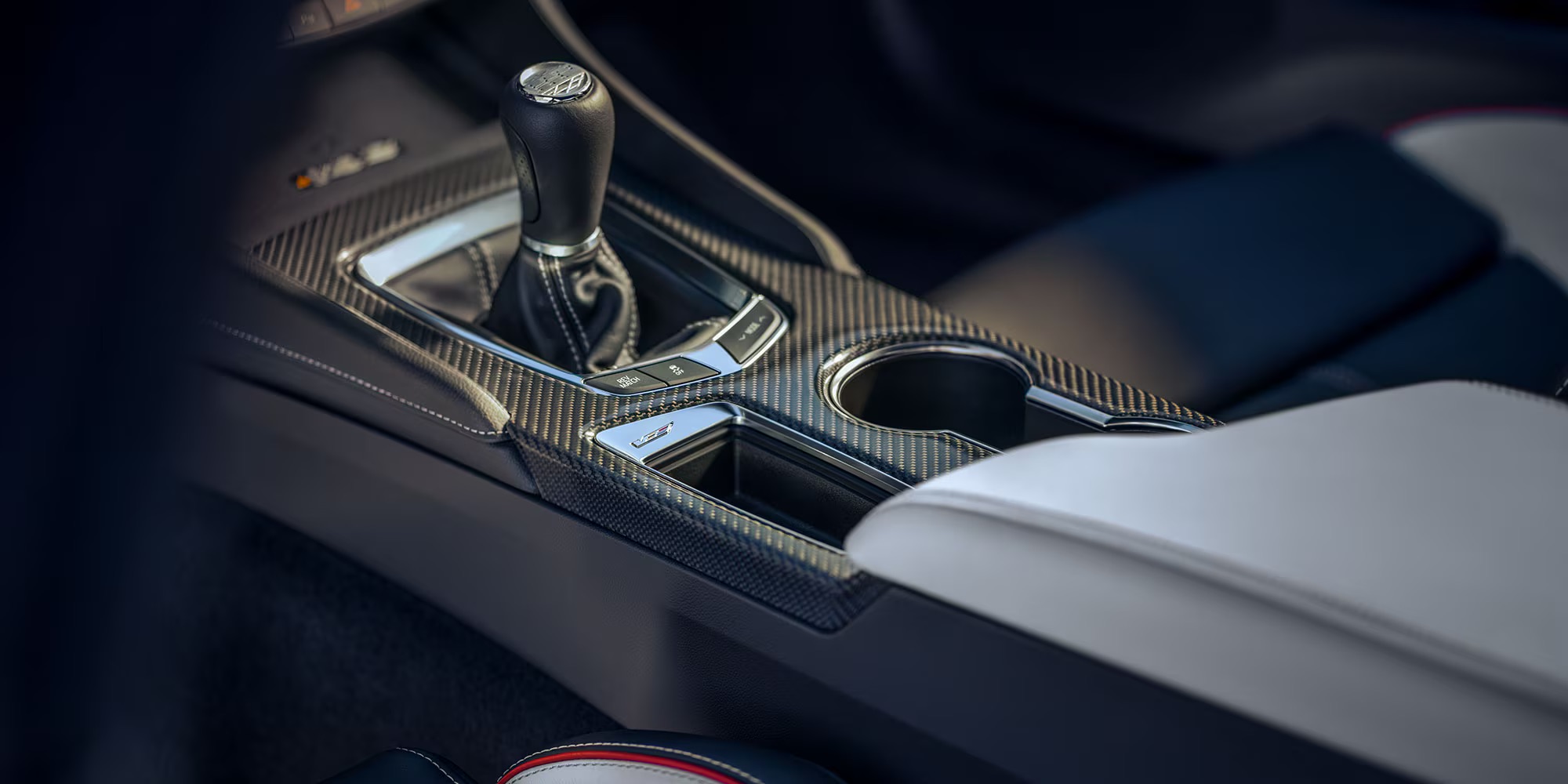
Two, the CT5-V Blackwing is the BMW E39 M5 of our time. It shares the exact same traits and characteristics that made the E39 the ultimate driving machine, adds an addictive supercharger for good measure, and subtracts the bank loans you’ll need to maintain a daily-driven 26-year-old German car. It might not look quite as timeless on the outside, and the interior has some parts bin qualities, but when you’re the one driving, who cares? One glance at the current M5, now a complicated PHEV weighing nearly 1,500 pounds more than the Blackwing, and you’ll agree that Cadillac finally did what it’s been trying to do for the entire 21st century and beat the Germans fair and square. A knockout punch is still a knockout punch, even if the other guy basically gave it up.
One more point, as if I haven’t made it perfectly clear that I’m hopelessly in love with this thing. The Cadillac isn’t a car you buy because you want to impress other people. Aside from the quad pipes and V badge on the trunk, there’s little that separates it visually from the regular CT5. Most civilians won’t see how special it is. Kids won’t flock to you at a gas station. But when someone does recognize it, and excitedly runs up to you to ask how it is, or ask you to rev it, or even race you on the highway, you’ll instantly know you’ve found a friend. It’s the kind of car that brings us weirdos together, and isn’t that what this is all about?
The good old days, indeed. Cadillac, The Drive salutes you.
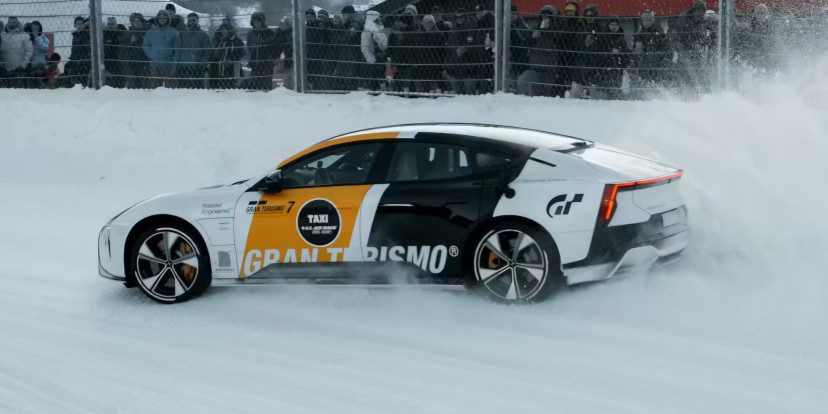
Car fans who gathered in the chilly mountains of Austria for the FAT Ice Race in Zell am See got a special treat. The race, famous for showing off fast cars on a track made entirely of ice, was chosen by Polestar for a public outing of the Polestar 5. The new flagship from the Swedish brand went out on the frozen airfield to show that electric cars can handle the cold just as well as gas cars.
The Polestar 5 is a big, luxury four-door car referred to as a Grand Tourer (GT). It is over 16 ft long, which is longer than some large SUVs. Even though it is big, it sits very low to the ground at only 4.66 ft tall. To make it strong and light, engineers used a special aluminum frame, and instead of welding pieces together, they used a super-strong glue. This makes the car stiff, which proved great for racing on slippery ice.
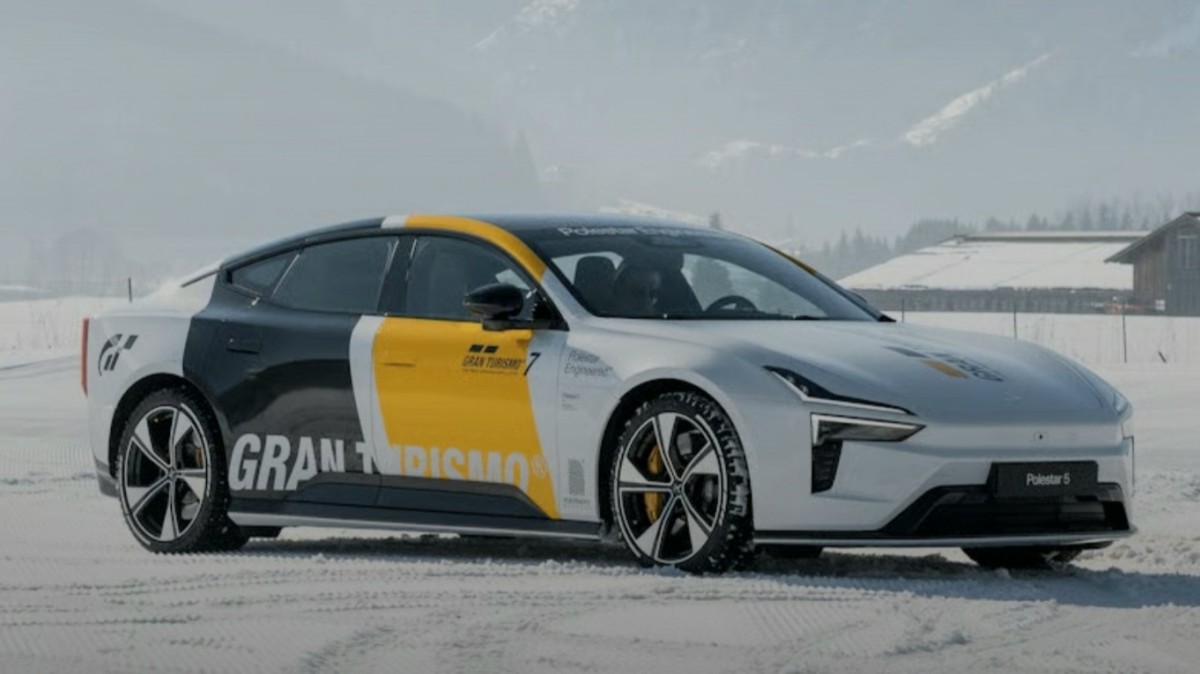
Polestar 5 – source: Polestar
At the race, Polestar brought two versions of the car. One was decorated in bright yellow and black colors that come from the racing game Gran Turismo. The creator of that game, Kazunori Yamauchi, was there to see the car in person. He even took a ride on the ice and said that EVs like this one offer a smooth ride that gas cars simply cannot match. He believes this is the start of a whole new way to enjoy driving.
The Performance model of the Polestar 5 has two electric motors that produce 650 kW of power or about 884 horsepower. Thanks to all-wheel drive, it can accelerate from 0 to 62 mph in just 3.2 seconds. On the ice track, a professional racing driver, Ted Björk, drove the car sideways through the turns, claiming it felt very stable and went exactly where he steered it.
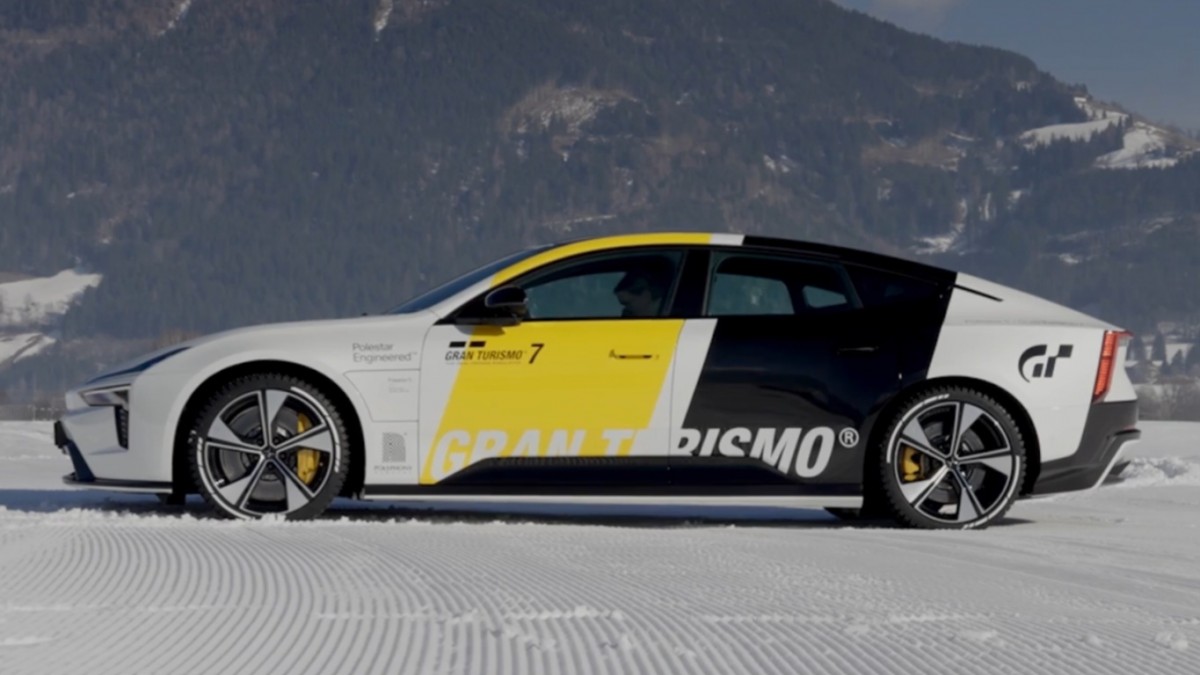
Polestar 5 – source: Polestar
Charging is another area where the Polestar 5 shines. It uses a high-tech 800V system, and if you find a very fast charger, you can fill the battery from 10% to 80% in about 22 minutes. When the battery is full, the standard Dual Motor version can travel up to 421 miles (WLTP) before needing a top-up. The faster Performance version can go about 347 miles.
One of the most unique things about the Polestar 5 is that it does not have a rear window. Instead, it uses a high-definition camera and a screen to show the driver what is behind them. This allowed the designers to give the car a very sleek, sloping roof. This idea is slowly becoming a signature for the brand after the Polestar 4 first used that design. It also has a small front trunk with 2.19 ft³ of space for charging cables or bags.
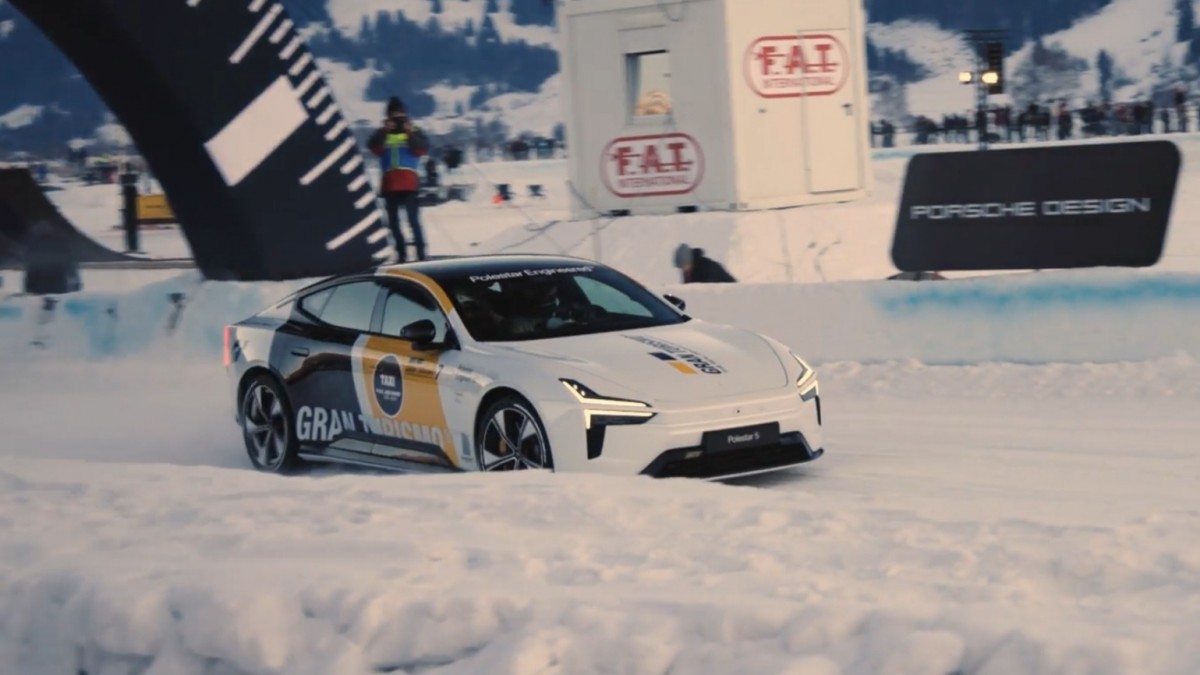
Polestar 5 – source: Polestar
Polestar 5 proved great for racing, but it is also meant for luxury. It has room for five people and a main trunk that holds 12.9 ft³, which isn’t really that large. If you fold the back seats down, that space grows to 39.8 ft³. To keep things green, the interior uses recycled materials like old fishing nets and a plant called flax.
Buying one of the new Polestar 5s requires a big piggy bank. In Europe, the price starts from around $141,000 depending on the market. Once the Polestar’s GT becomes available in the United States, we expect the price to be around $100,000 for the base model and up to $160,000 for the fastest version.
Source
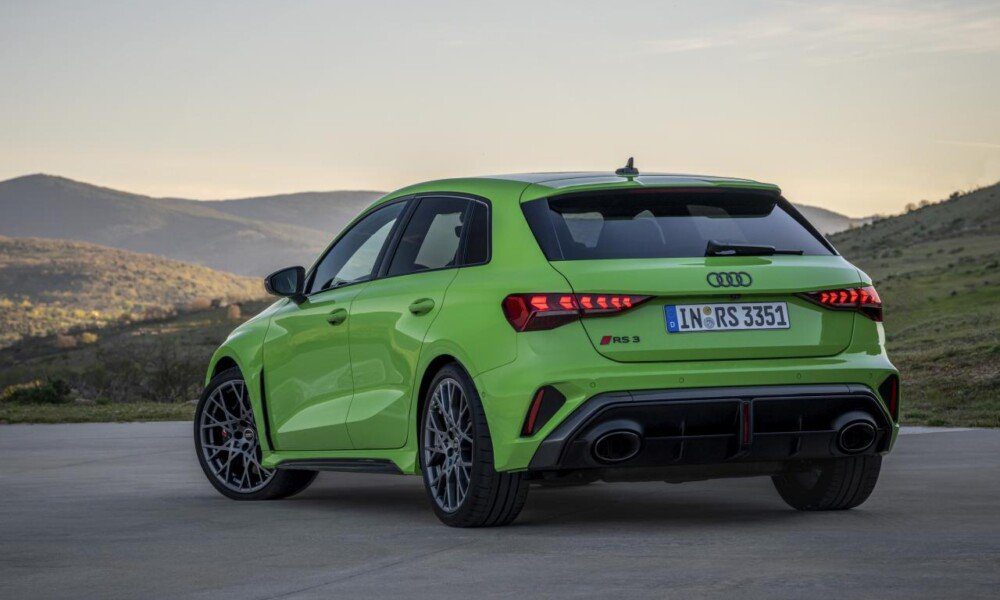
Audi is working on a new limited-edition RS3 hatchback, which will also be the last time we see the brand’s turbocharged 5-cylinder petrol engine in a production car.
We’ve been referring to the new special edition as ‘RS3 GT’. However, the latest rumours suggest that it might be called ‘RS3 Competition Limited’.
We’ve already seen prototypes of the RS3 GT testing at the Nurburgring, sporting an aggressive body kit. The car is expected to feature a revised front bumper with canards, wider fenders, a diffuser with dual exhaust tips and a roof spoiler.
In its current form, the 2.5-liter TFSI engine delivers 394 hp and 369 lb-ft of torque. This inline 5-cylinder unit is expected to be tweaked and upgraded further.

Tesla has filed two new trademark applications for the long-delayed Roadster. The filings were submitted to the United States Patent and Trademark Office on February 3, 2026. One covers a redesigned “ROADSTER” wordmark. The other shows a stylized silhouette that appears to preview the car’s updated shape.
The wordmark uses a sharp, angular font with segmented lettering, suggesting a high-performance focus. The second filing is more revealing. It features a sleek profile composed of three flowing curved lines. The application describes it as a triangle design formed by curved elements. Both filings were made on an intent-to-use basis, meaning Tesla has not yet used the logos commercially but plans to do so.

Tesla first unveiled the second-generation Roadster in November 2017. It was shown alongside the Semi truck. At the time, Elon Musk said the Roadster would launch in 2020 with a $200,000 starting price. He also claimed a top speed of more than 250 mph and extreme acceleration figures that would rival hypercars. With power figures like that, one might be concerned about the car’s safety features, but Musk reiterated that they are not a top priority for the car.
Those targets were never met. The Roadster has missed multiple timelines over the past eight years. Tesla recently stated in its earnings report that preparations for production in North America are ongoing. Musk has also said a Roadster 2 demo event will take place, but it has yet to happen.
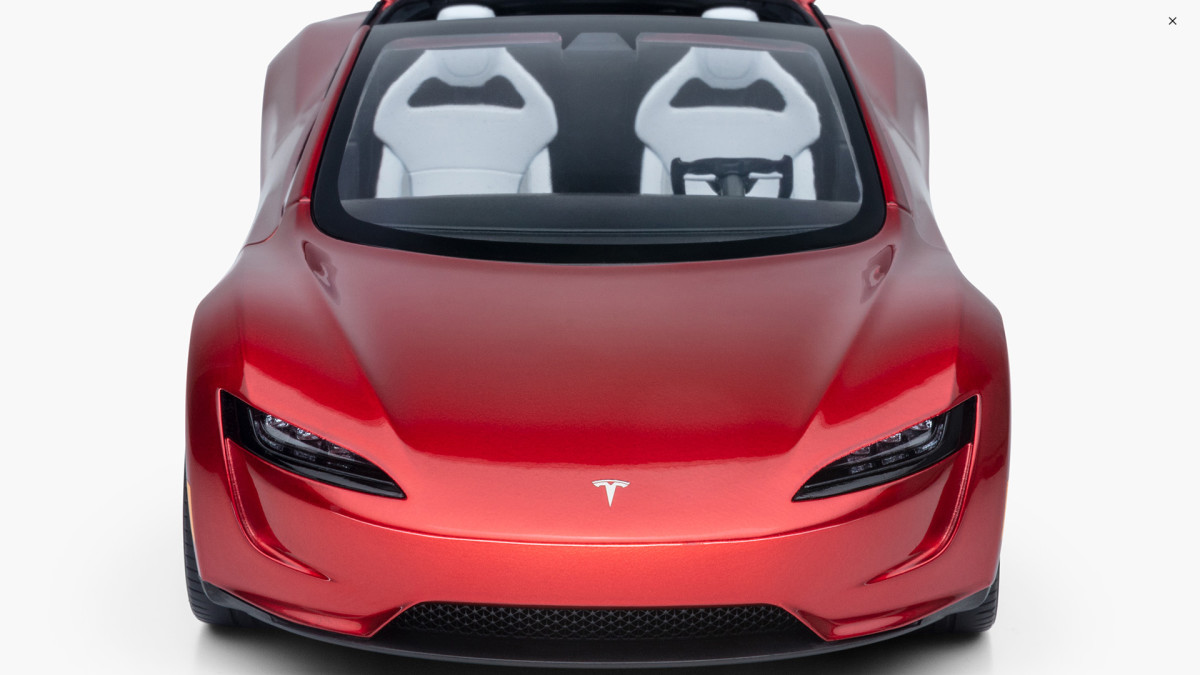
Trademark filings are a formal step in preparing a product for market. Securing the name and design helps protect branding ahead of a public debut. This suggests Tesla may be moving closer to finally revealing the updated Roadster.
However, filing paperwork does not guarantee production timing. Tesla has faced delays and branding complications in the past. The new trademarks are a concrete development. Whether they translate into an actual launch remains to be seen.
Tesla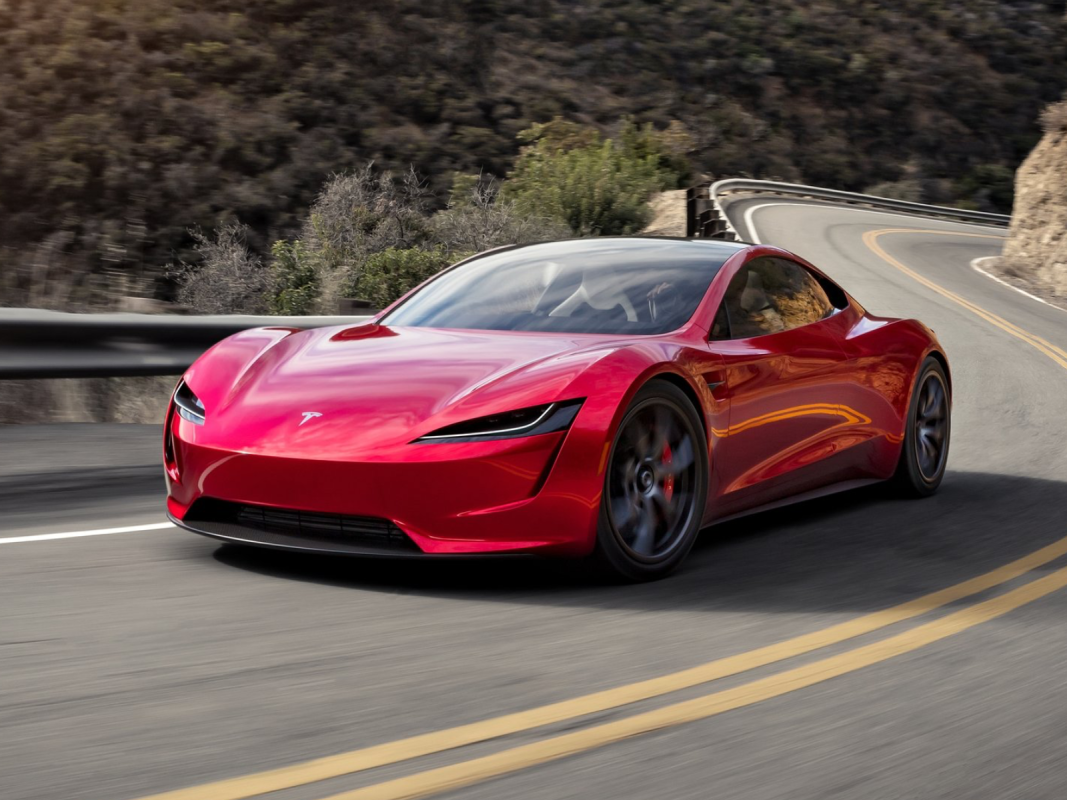
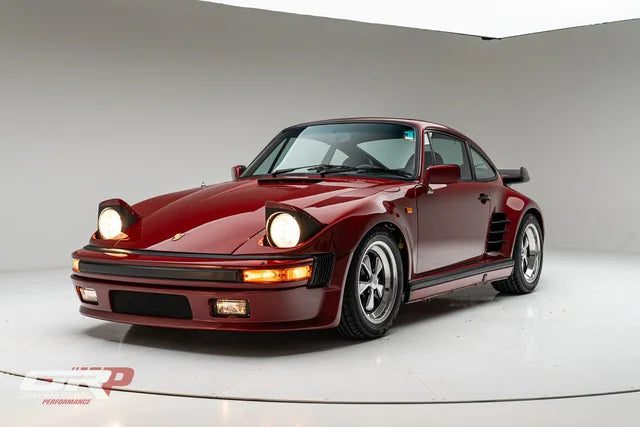
When the Porsche 911 Turbo first hit the road in the mid-1970s, it instantly made waves throughout the automotive world. Known internally as the 930, it took the classic 911 silhouette and dialed it up with a turbocharged engine that packed a punch like nothing else from Porsche at the time. That iconic whale tail spoiler was a statement piece that wasn’t just for looks, as it helped provide downforce on high-speed straights. The 911 Turbo redefined what a high-performance road car could be, combining race-bred engineering with street-ready drivability.
Over the years, each generation of the 911 Turbo has raised the bar in both performance and luxury. From the raw, boost-heavy punch of the air-cooled 930 to the modern 992 Turbo S that hits 60 mph in under 3 seconds, the Turbo badge has come to symbolize the sweet spot in the 911 range. Porsche’s ability to evolve the car with cutting-edge tech, active aerodynamics, all-wheel drive, and twin-turbo flat-sixes without losing its soul has kept the Turbo relevant for decades.
What really sets the 911 Turbo apart is how it balances brute force with timeless beauty. The widened rear arches, integrated rear spoiler, and muscular stance give it unmistakable presence without going over the top. Inside, it’s the perfect blend of high-quality materials, sleek digital displays, and that classic five-dial instrument cluster that ties the past to the present. Whether specced with two-tone leather, carbon fiber trim, or subtle aluminum finishes, the cabin always feels tailored like a designer suit built for speed.
The Porsche 911 Turbo has always represented the best of both worlds: uncompromising performance and luxury that doesn’t shout. It’s a car that’s just as at home carving up mountain passes as it is pulling up to a black-tie event. And after nearly 50 years of evolution, it remains the ultimate expression of what a Porsche road car should be.
All Porsche 911 Turbo Inventory
The Porsche 911 Turbo is seriously fast. With 0-60 mph times under 3 seconds in models like the 911 Turbo S, it’s one of the quickest street-legal sports cars out there. Thanks to its twin-turbocharged flat-six engine and all-wheel drive, the 911 Turbo delivers supercar speed with everyday usability.
The best generation of the Porsche 911 Turbo really depends on what you’re after, but many enthusiasts love the 997 Turbo for its raw feel and everyday usability. With its iconic Mezger engine, modern tech, and timeless design, it’s often seen as the sweet spot in 911 Turbo history.
The main difference between a 911 Turbo and a 911 Turbo S comes down to power and performance. The Turbo S packs more horsepower, quicker 0–60 times, and extra features like carbon-ceramic brakes and active suspension upgrades, making it the top-tier choice for those who want the ultimate Porsche 911 experience.
The 911 Turbo is definitely one of the fastest Porsches ever made, but it’s not the fastest. That title goes to the Porsche 918 Spyder.

View Listing

View Listing

View Listing

View Listing

View Listing

View Listing

View Listing

View Listing

View Listing

View Listing
Kelley Blue Book celebrates its 100th anniversary this year. As we reflect on a century of influence on the automotive landscape, it stands out that cars have had a significant effect on our culture. One place we can track this effect is in automotive advertising.
I’ve always been a media hound, and I love advertising, where art, commerce, and culture collide. I’ve selected one ad from each decade of the past century that I believe sent ripples through popular culture. See if my choices resonate with you — and if you remember other car ads that stuck with you beyond their blatant sales pitches.
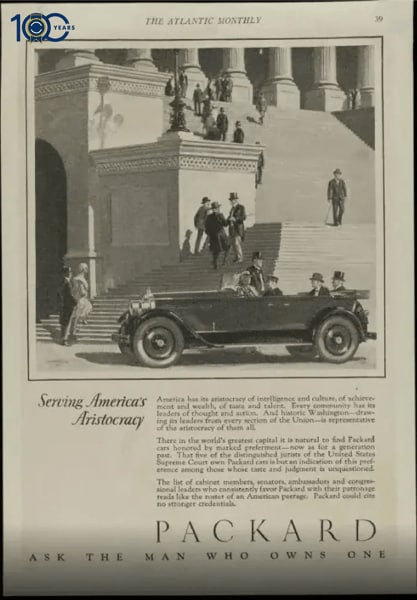
Sure, the gendered message hasn’t aged well, but this early callout for crowdsourcing encourages shoppers to seek out ratings from their peers. I’ll bet the Packard marketing department would have loved Reddit and other web communities if they had been in business today. Unfortunately, Packard built its last cars in 1956, and the luxury brand disappeared in 1958. This ad from 1926, the same year Kelley Blue Book debuted, carries the inspired motto that lasted almost as long as Packard did.
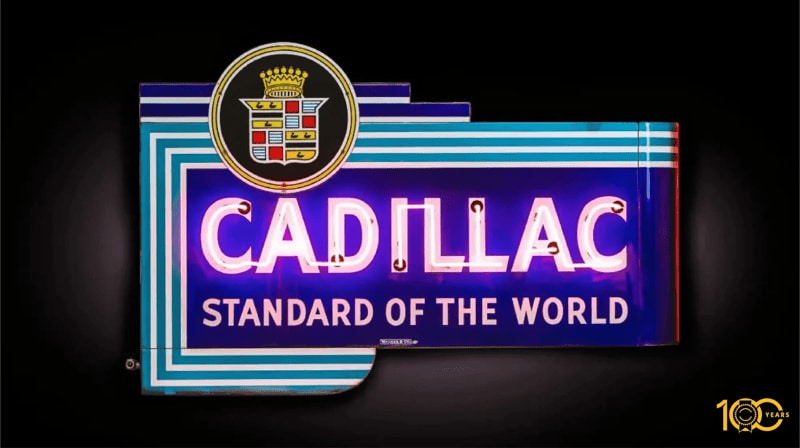
Before they had a real right to, Cadillac’s advertising department proclaimed the luxury brand was “The Standard of the World.” Remember, this was at a time when brands like Rolls-Royce, Bentley, Bugatti, and Talbot-Lago were in production. The bold branding worked for Cadillac, even spawning the claim in other industries, “It’s the Cadillac of (fill in the blank).” Who can forget when Chilli Palmer defends his Oldsmobile Silhouette in 1995’s “Get Shorty” with, “It is the Cadillac of minivans.”
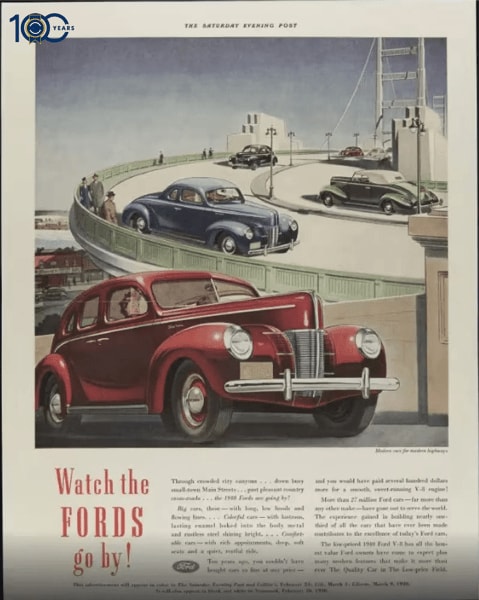
In 1940, the United States was just emerging from the Great Depression, and another World War was brewing in Europe. Ford’s savvy advertising team recognized the country’s unsettled mood and struck just the right note with the slogan, “Watch the Fords Go By.” It was a subtle nod to isolationist sentiment, while beaming with optimism and a small-town feel. A few years later, everything would change for the country, the auto industry, and the world. Ford captured a bittersweet moment.
In sharp contrast to the bittersweet 1940s, the 1950s were all about energy, growth, and movement. Television and in-theater advertising were ramping up, and Chevrolet engaged one of America’s brightest singing stars, Dinah Shore, to endorse their brand with a memorable jingle, “See the USA in Your Chevrolet.” Celebrities had appeared in print ads before, but this filmed ad made a broad impression on a wide audience. It’s an earworm, and it really makes you want to travel.
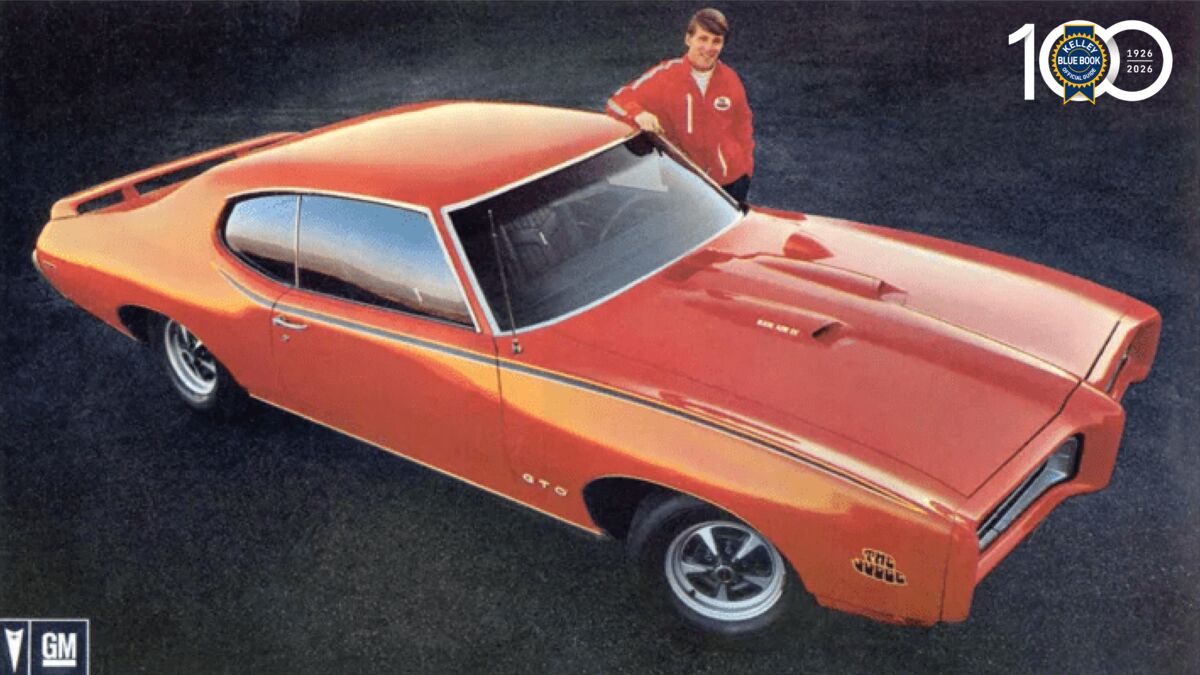
This ad is one of the few I can think of that a piece of culture inspired and reflected back and forth. The Judge was a variant of the 1969 Pontiac GTO. It used a mod logo on the front quarter panel, very late ‘60s. Very cool, and there’s a backstory.
Pigmeat Markham, a comedian, put out a single in 1968, “Here Comes the Judge.” Some musicologists say it’s the first rap single, but, as Andrew Hickey always says in his “A History of Rock Music in 500 Songs” podcast, there’s no such thing as “first” in music. Despite being on the verge of outsider art, Markham’s song caught on with the hippest television show on the planet, “Rowan & Martin’s Laugh In,” and soon, guest stars like Sammy Davis Jr. were dressing up in judge’s robes and chanting, “Here comes the judge, here comes the judge. Order in the court, ‘cause here comes the judge,” as they entered a sketch comedy scene. Pontiac took advantage of the phrase’s popularity, and a great ad campaign was born. Today, we’d probably witness squabbles over intellectual property (IP), but the 1960s were a simpler time.
Pigmeat Markham’s single, “Here Comes the Judge.”
A Pontiac television commercial for The Judge, featuring Paul Revere and the Raiders.
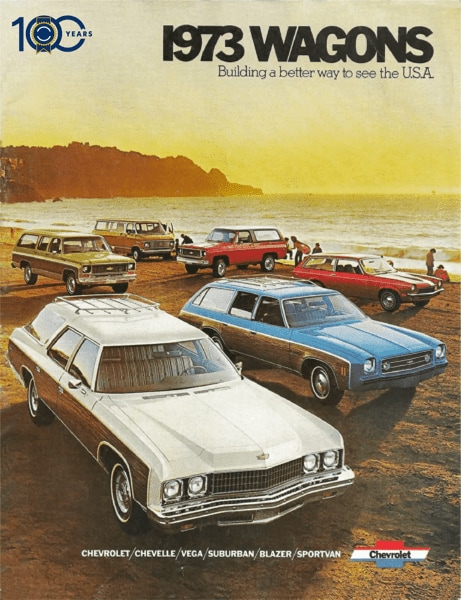
I hate the word “iconic.” It’s used so much these days that it has lost its meaning. Still, I have a hard time finding a better word for the station wagon’s stature in 1970s culture.
While today’s automakers and marketers do everything they can to avoid saying “wagon” when they describe their long-roof vehicles, in this 1973 brochure, Chevrolet leans into the term — hard. With an echo of Dinah Shore, the brochure is entitled, “1973 Wagons: Building a better way to see the U.S.A.” The company touts six wagon models from its lineup: Chevrolet, Chevelle, Vega, Suburban, Blazer, and Sportvan. Since it’s 1973, four of the six wagons wear wood-look siding. Bring back the wagon, I say!
The first imported brand to make our list, Honda, and other Japanese manufacturers gained a toehold in the U.S. in the wake of the 1973 to 1974 gas crisis. An oil embargo by the Organization of Arab Petroleum Exporting Countries (OAPEC) created nationwide gas shortages, leading to a surge in interest in fuel-efficient compact and subcompact cars. Honda was already building them and exporting its models here. The Civic debuted in the U.S. in 1973 and has been a strong seller here ever since.
In 1981, Honda introduced the slogan, “We Make It Simple” in a television ad that ends with a 7-note jingle that rang through its advertising for years thereafter. And it didn’t hurt to have the voice of Burgess Meredith (Mickey, the trainer in “Rocky”) narrating the elemental visuals.

If ever a car word became a fad, it was Fahrvergnügen. Volkswagen claimed it meant, “The pleasure of driving.” I’ve never been able to confirm that with a native German speaker. VW promoted the concept with television and print ads, and soon the stick-figure behind-the-wheel graphic was everywhere in the early 1990s, with multiple variants, parodies, and rip-offs.
A European television ad, featuring a Princess Diana lookalike and a Prince soundalike (or maybe it is Prince — I don’t know for sure), enhanced the fun of the campaign. Fahrvergnügen didn’t have much staying power, but it certainly burned bright in its moment.
The return of the Hemi V8 engine in the 2003 Dodge Ram Heavy Duty pickup truck sounded the battle cry for the new muscle-car wars. The first skirmishes took place in the 1960s and into the early 1970s, mostly confined to pony cars like the Ford Mustang, Chevrolet Camaro, and Dodge Charger. The 21st-century muscle-car wars raged among the coupes and sedans, but this time, pickup trucks and SUVs sprouted mega-horsepower engines, too. Americans seemed to have forgotten about fuel economy. They fell in love with muscle, and they went head-over-heels for big pickups.
Comedian Jon Reep launched his career with his rural-accented cry of “That thang got a Hemi?” in a series of commercials that ran from 2004 to 2007. The call from amateur imitators has taunted Hemi drivers ever since.
Sports and culture have intermingled, maybe never more than in the National Basketball Association. Blake Griffin was a rising star for the Los Angeles Clippers when he chose to leap over a 2011 Kia Optima sedan during the Slam Dunk Contest during NBA All-Star Week on Feb. 11, 2011. The stunt catapulted the young player to fame, and Kia used a slow-motion video of the event as a commercial. It was the dunk that launched a thousand Optimas — maybe more.
The acorn planted by Dinah Shore grew into a mighty oak in the 2020s, as celebrity appearances in advertising flourished across the media landscape. Even when famous faces don’t appear in ads, you’ll recognize famous voices everywhere: Bryan Cranston for Ford; Will Arnett for GMC; Matthew McConaughey for Lincoln (he shows his face, too).
Two recent ads bubble to the top for their celebrity ingredients, though.
Hyundai’s star-studded promotion of its automatic parking system, Smart Park, features stars with Boston roots. The 2020 Sonata spot, shot in and around what looks like Boston, plays on the Boston accent as Chris Evans (“Captain America”), Rachel Dratch (“Saturday Night Live”), and John Krasinski (“The Office”) holler at each other about “Smaht Pahk.” They pipe down when David Ortiz, aka Big Papi, of the Boston Red Sox, sticks his head out of an apartment window. The guitar riff from the ultimate Boston song, “Muddy Water” by the Standells, underscores Jason Bateman’s voiceover ending.
Jeep outdoes Kia with its 2020 commercial for the Jeep Gladiator. It’s a virtual sequel to the 1993 movie “Groundhog Day.” Both the film and the commercial star Bill Murray. I could stop right there, but the ad also includes Stephen Tobolowski (Ned Rierson), Brian Doyle Murray (the Mayor), and Punxsutawney Phil — a real live groundhog.
Where will car advertising and culture go next?

A new analysis of the European Union’s decision to weaken CO₂ emissions standards for cars by replacing its original 2035 zero-emissions target with a 90 per cent reduction will introduce high levels of uncertainty that could see battery electric vehicle (BEV) sales slip by as much as 50 per cent.
The European Commission, the primary executive branch of the European Union, announced in December a proposed revision to the bloc’s CO₂ emissions standards for cars and vans.
While the Commission claimed that its revisions were “ambitious” and designed to “ensure 2050 climate neutrality and strategic independence”, the fact that they no longer call for a complete phaseout of internal combustion engines mean that they are a downgrade on previous legislation under the guise of being “pragmatic policy… while providing more flexibility to manufacturers.”
In the Commission’s own words, in place of actual zero-emission policies, the new proposal maintains only “a strong market signal for zero-emission vehicles (ZEV) while giving the industry more flexibility to achieve CO2 targets.”
The revision came after intense lobbying from European automotive and fuel industries and fly in the face of evidence that the electric vehicle (EV) transition was working.
And according to a new analysis published this week by leading European advocacy group for clean transport and energy, Transport & Environment (T&E), the revisions will serve only to create huge uncertainty in the region’s EV market, potentially cutting the EV market share from 85 per cent in 2035 to as low as 50 per cent.
“It’s like hedging your bets when there’s only one horse in the race,” said Lucien Mathieu, cars director at T&E.
“The world is going electric, but the EU proposal would divert investment into other technologies that won’t deliver for the climate or the economy. The current 2035 target provides the investment certainty Europe needs to scale up EV production and compete globally.
“The proposed changes would mean keeping the combustion engine and hybrid alive and rewarding the laggards.”
The European Commission’s revisions include replacing the original zero-emissions target in 2035 with a 90 per cent reduction target, with the remaining 10 per cent supposedly being compensated through the use of locally made low-carbon steel or from the use of e-fuels and biofuels.
Specifically, that remaining 10 per cent in a carmaker’s output has to be compensated by up to 3 per cent in alternative fuels and up to 7 per cent with low-carbon steel.
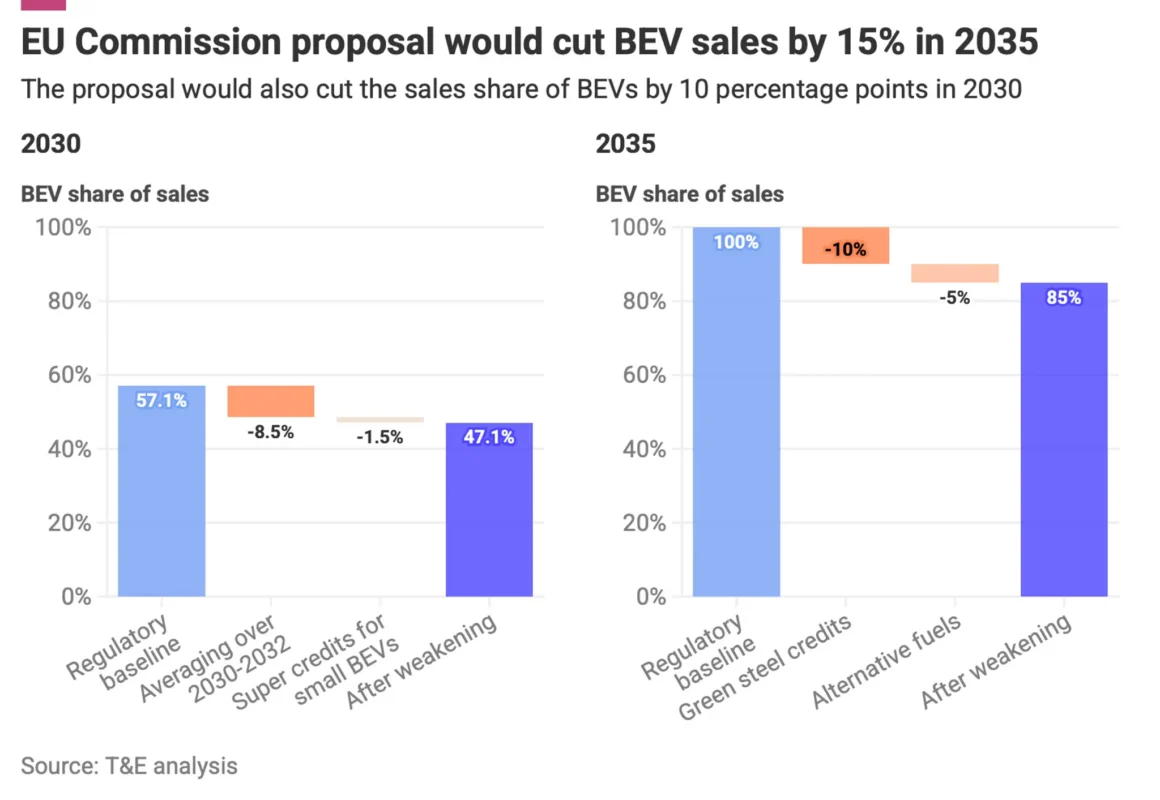
But as T&E explain, this will allow carmakers to sell any powertrain they like after 2035, including hybrids or straight-up internal combustion engine (ICE) vehicles.
Weakening the 2035 CO2 reduction target from 100 per cent to 90 per cent is expected to therefore reduce the share of BEVs by 15 per cent – from 100 percent to only 85 per cent.
However, according to T&E, scrapping a complete transition to net-zero emissions opens the door for carmakers to sell whatever they want – it would just mean they are limited in the number of cars they can sell. Depending on the sales mix, carmakers could sell anywhere from 5 per cent to 50 per cent non-BEVs by 2035, depending on their average CO2 emissions.
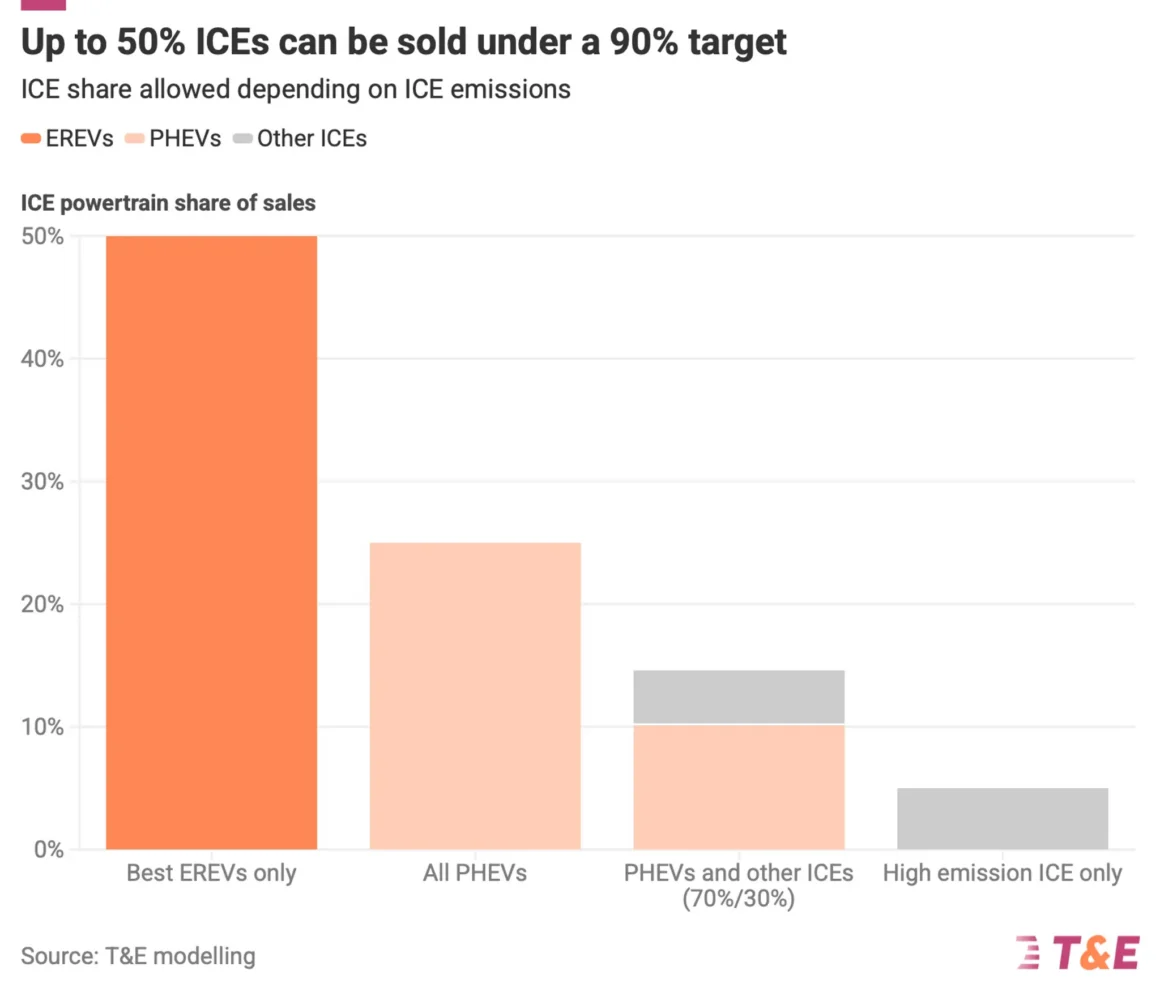
BEV sales might arguably rise to 95 per cent, but could also fall to only 50 per cent, creating huge uncertainty for carmakers and the transition in general, and undermining the certainty Europe needs to invest heavily in electrification and strengthen its competition with China.
Among the other proposals offered up by the Commission, the 2030 targets for cars and vans have also been weakened, reducing the target for vans by 10 percentage points and averaging the 2030 target for cars over a three-year period from 2030 to 2032, instead of meeting the 2030 target in 2030.
All told, T&E expects to see car emissions increase by 720 MtCO2e between 2025 and 2050, or around 10 per cent.
There is also the chance that the European Commission may further weaken its 2035 targets in the face of ongoing pressure from automakers and the fuel industry.
Any further weakening of the EU’s targets would only further slow BEV sales, potentially seeing sales in 2030 slump to a market share of only 32 per cent, instead of the 57 per cent intended under existing legislation, and 70 per cent in 2035 instead of 100 per cent.
T&E’s full analysis can be found here.
