Author: admin

  • 2026 XPeng Next P7 interior, design and performance review

    2026 XPeng Next P7 interior, design and performance review

    One thing about the electric vehicle world stands out the most – it moves fast, especially in China. Sometimes it feels like a new model is revealed every couple of hours. Some cars stay for longer, some disappear after a brief spell in the limelight, but few cars have made a splash quite like the Next P7 from XPeng.
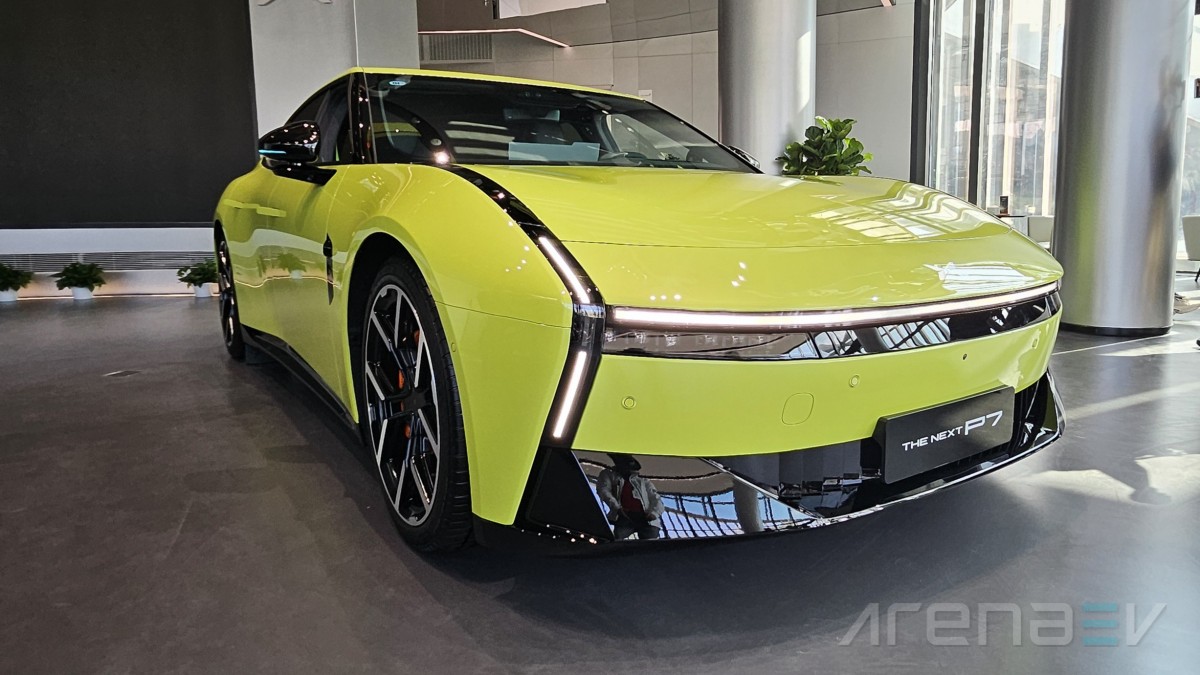
    The XPeng Next P7 redefines luxury for $30,000

    We often worry that many cars look breathtaking in official press material, but then they quickly turn into a major letdown the moment we see them in real life. Thankfully, there’s nothing to worry about here, because this new electric sedan proves that reality can beat the hype. Launched in the bustling city of Guangzhou, China, the Next P7 takes on giants like Tesla and Xiaomi, and it does so by mixing classic design with technology that feels like it was plucked straight out of the future.

    A design inspired by the classics

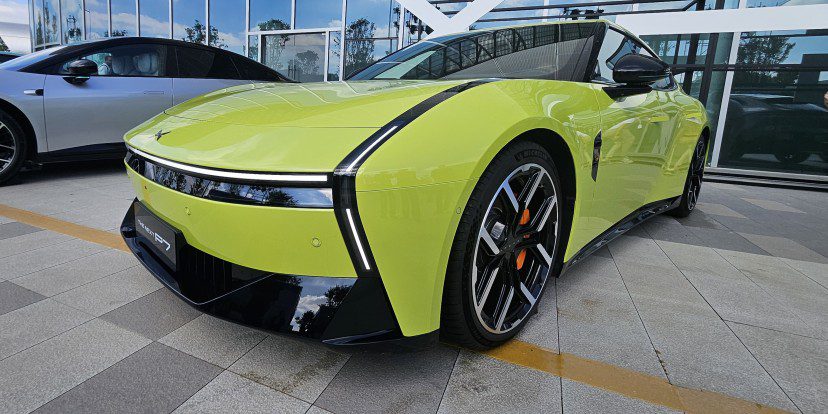
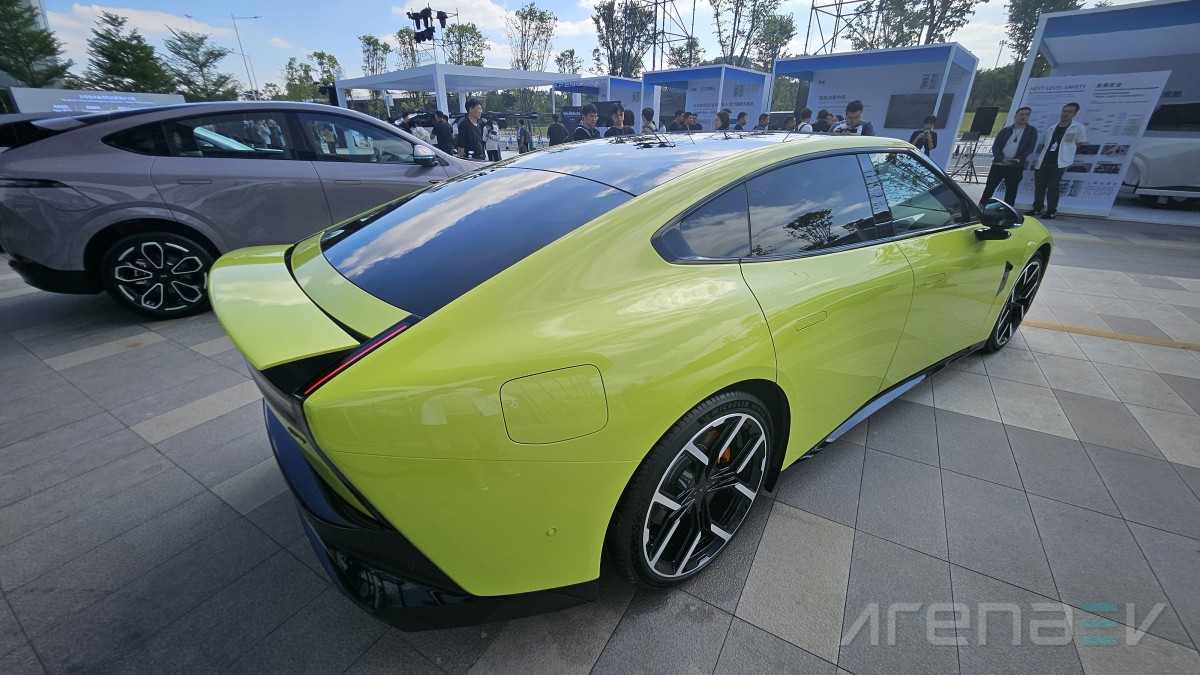
    At first glance, the Next P7 looks like a concept car that accidentally escaped a designer’s computer. It is long, wide, and sits very low to the ground. Measuring 197.5 inches in length and 77.6 inches in width, it has a commanding presence. The car is only 56.2 inches tall, giving it a sleek, missile-like shape. For a vehicle this size, its aerodynamics are world-class, boasting a drag coefficient of just 0.201 Cd.
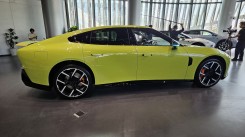
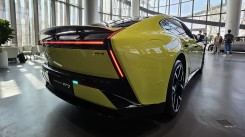


    The design is a clever “best of” list of famous cars. The front looks a bit like a classic Ferrari 365 GTB Daytona, while the back has hints of Aston Martin and Jaguar. There is even a touch of the Porsche 911 “ducktail” spoiler at the rear. Despite all these influences, the XPeng manages to look completely original. For those who want extra drama, the Wing Edition features scissor doors that lift up, much like in a Lamborghini.

    Stepping into the future

    The interior of the Next P7 continues the high-tech theme. When you sit down, you are greeted by a massive 15.6-inch center screen that actually tilts toward you whenever you use voice control – this is part of the car’s AI system. When you speak to the car, the screen turns to face you, making it feel like a helpful companion rather than just a machine. Drivers also get a massive 87-inch augmented reality head-up display that projects navigation and speed onto the road ahead.
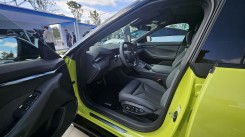
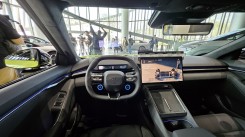
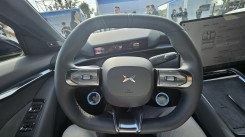


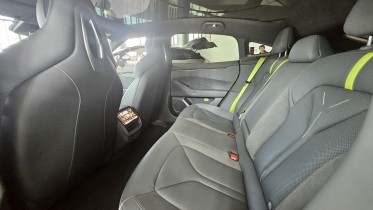
    The cabin is built with high-quality materials like Nappa leather and microfiber suede. You will not find cheap, hard plastics here. The seating position is low and stretched out, making it feel more like a sports car than a family sedan. Despite the sporty feel, there is plenty of room. The 118.4 inches wheelbase provides nearly a meter of legroom for people in the back. Passengers in the rear even have their own 8-inch screen to control the 23-speaker sound system and climate.

    Power and performance

    XPeng offers several versions of the Next P7 to suit different drivers. The base rear-wheel drive model uses a 74.9 kWh battery and a single electric motor that produces 362 horsepower. This version can travel up to 436 miles on a single charge based on the Chinese CLTC tests. The car weighs about 4,850 lb, depending on the version. It uses an advanced 800V platform, which helps it charge very quickly – it can add as much as 326 miles of range in just 10 minutes.
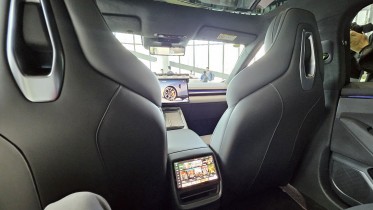


    The Ultra Long Range version benefits from a larger 94.3 kWh battery to push the range to a bladder-busting 510 miles, but it keeps the same motor as the standard RWD model. The performance version adds a second motor for a total output of nearly 600 horsepower. This version is incredibly fast, reaching 62 mph in just 3.7 seconds, and it has a top speed of 143 mph.

    Technology that talks

    One of the most unique things about the Next P7 is how you control it. Almost everything is done through voice commands. You can ask the car to change the temperature, set a map destination, or even order food. The top version uses three in-house developed Turing AI chips that give it more computing power than almost any other EV on the market today. These chips provide 2,250 TOPS of processing power, which is three times more than what you find in a Tesla.
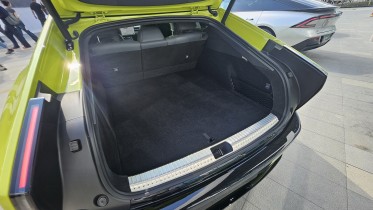
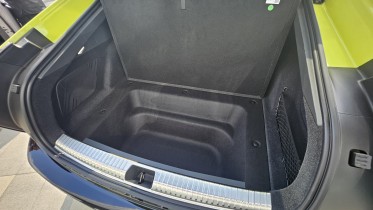


    The car also features a “Vision-Only” driving assistant. Instead of using expensive laser sensors, it uses 11 high-definition cameras to see the road. This helps the car park itself, change lanes, and even drive through busy city streets. In fact, the car can drive itself from the factory assembly line to the shipping area without a human behind the wheel.

    The price of progress

    Perhaps the most shocking part of the Next P7 is the price. In China, the car starts at roughly $30,700. Even the top-of-the-line version with scissor doors and all-wheel drive is priced competitively. When you compare this to luxury cars from Europe that cost $100,000 or more, it is clear why other car companies are paying close attention. XPeng has created a vehicle that looks, feels, and drives like a high-end supercar but at a price that many more people can afford.
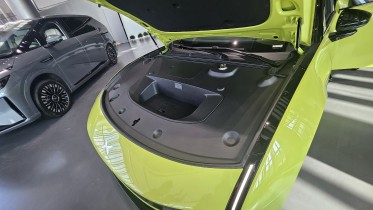


    The Next P7 combines the soul of classic car design with the brains of modern artificial intelligence, all while keeping the price grounded in reality. XPeng has already introduced its P7+ cousin to the European market, and the G6 electric SUV is available across the Old Continent as well. Does that mean the Next P7 is actually “next” in line? Let’s hope there’s enough demand for the company to consider selling it here, even if in small numbers.
    The XPeng Next P7 redefines luxury for $30,000

    Source link

  • Next-gen Audi RS5 order books may open by mid-March

    Next-gen Audi RS5 order books may open by mid-March

    The next-generation Audi RS5 is likely to debut in a couple of months. We’ve been told that customers will be able to place their orders for Audi’s new high-performance model from mid-March. First customer deliveries are expected in June.

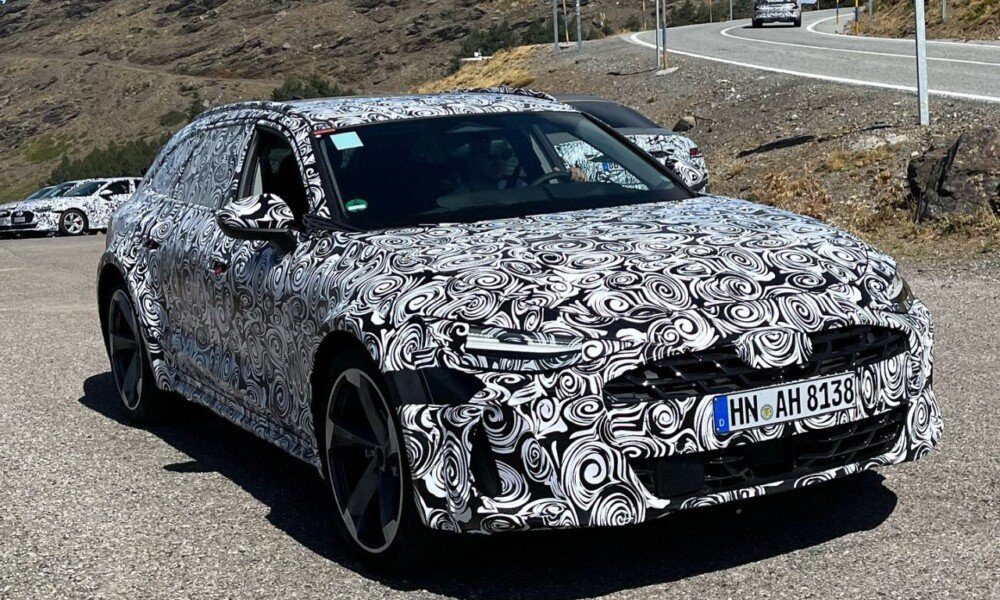
    The 2026 Audi RS5 will be offered in sedan and Avant body styles. Under the bonnet will be a plug-in hybrid powertrain, featuring a 2.9-litre twin-turbo V6 generating a combined output of 639 hp. It will be capable of accelerating from 0-62 mph in around 3.4 seconds and is expected to have an electric range of 50 miles.

    2026 Audi RS5 Sedan-Avant-spy-images-1

    The new RS5 Avant and sedan will feature a sporty body kit with the latest iteration of Audi’s Singleframe grille. Spy shots have revealed sharp-looking LED headlamps, slim LED taillights and quad exhausts.

    Image credit: @mr.grey_4k


    Source link

  • Meet the Datsun Baby, the Tiny Car Nissan Built for Kids to Drive

    Meet the Datsun Baby, the Tiny Car Nissan Built for Kids to Drive

    Kei Car Turned Theme Park Ride

    Some theme parks let us drive at an early age. Whether it’s with go-karts, pedal cars, or bumper cars, it’s a way of getting kids behind the wheel. Surely, some of you have fun memories of doing so, but there was once a time when an amusement park let children drive an actual car.

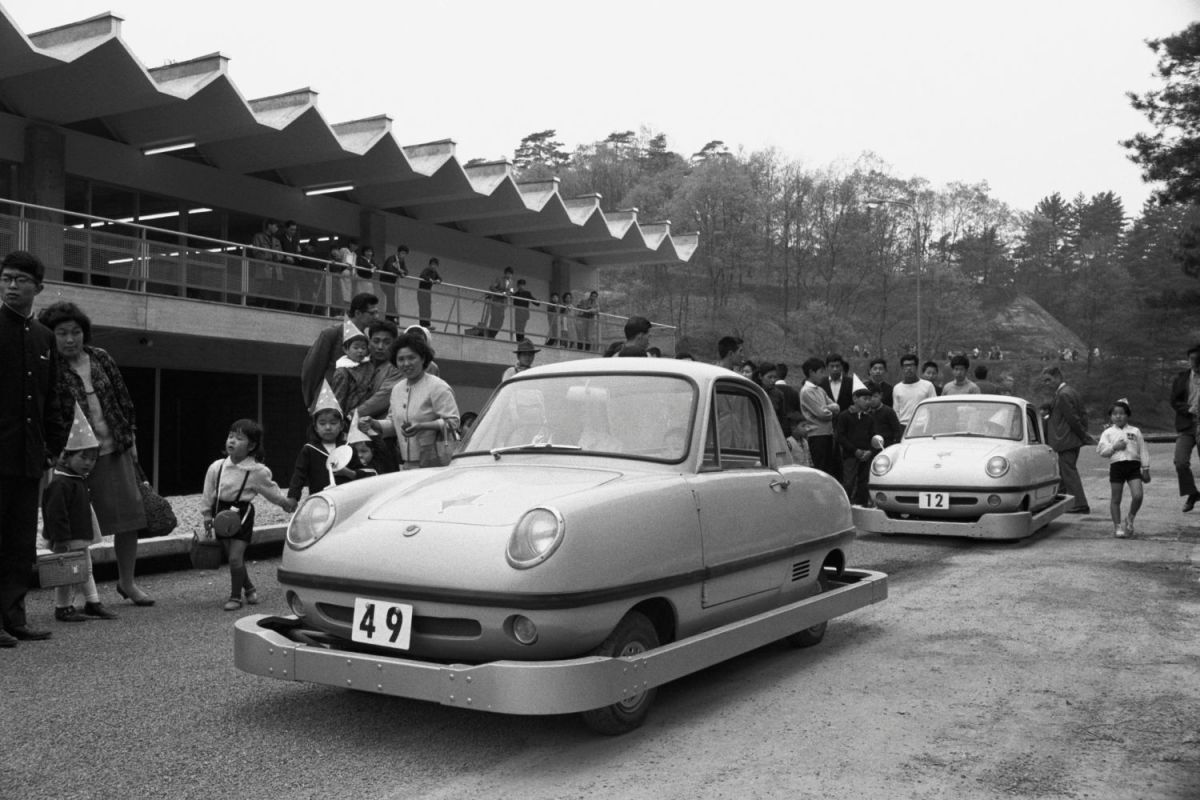
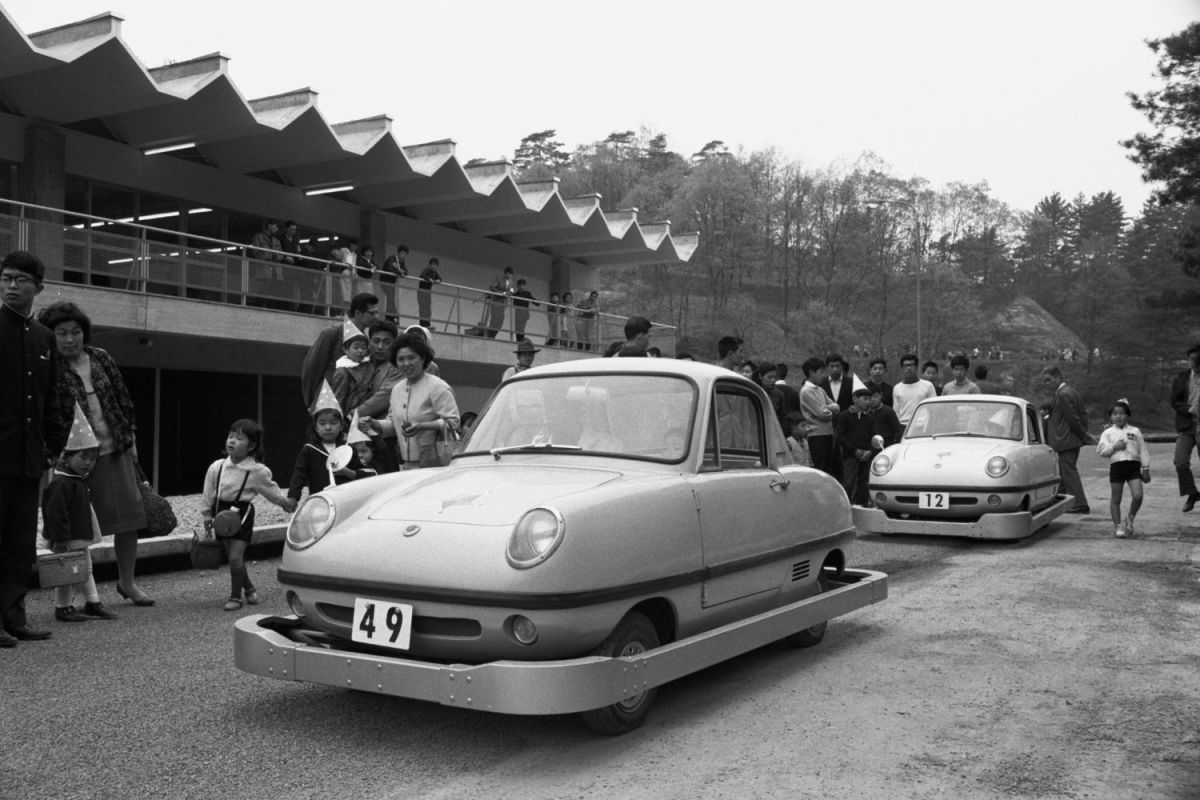
    We’ll take you back to the ’60s to the opening of the Kodomonokuni amusement park in Yokohama. Now, Yokohama is also home to Nissan, which donated 100 kei cars to the park for children and visitors.

    Nissan

    Meet the Datsun Baby

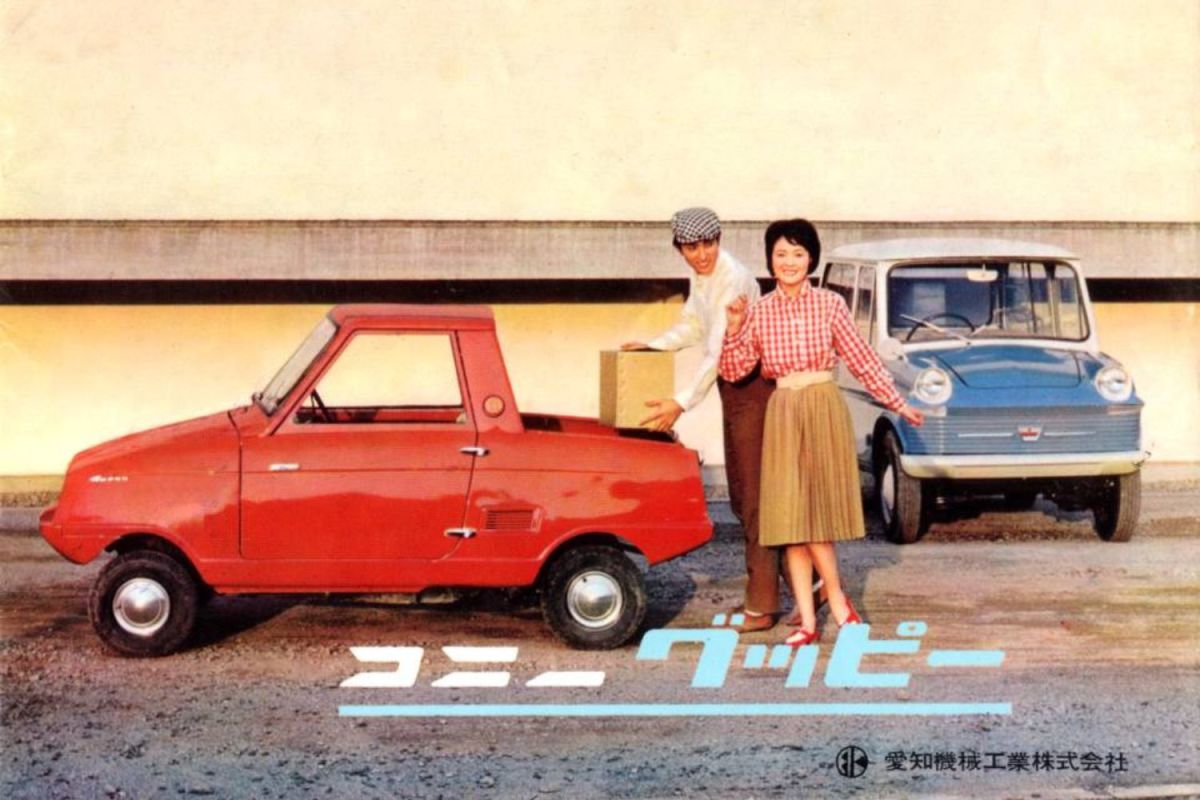
    Say hello to the Datsun Baby, and, as mentioned, 100 of these were built for the amusement park. The car was pretty clever for its era. It was mid-engined, rear-wheel drive, and even had an automatic transmission and a spring-loaded power steering system.

    It was powered by a 199cc two-stroke engine, rated at 7.4 hp and 9.7 lb-ft of torque, making the Jetour Ice Cream we drove last time around look like a hot hatch. And to ensure young speed demons won’t get into a massive accident, it had a 19 mph speed limiter. Interestingly, the car even had four-wheel independent suspension. Not even the Nissan Skyline from the same era had that.

    It followed kei car dimension regulations, too. The Baby just measured 116.5 inches long, 55.9 inches wide, and 49 inches tall. It then rode on a 65.7-inch wheelbase, or about five and a half feet.

    Nissan

    It Was Based on Another Kei Car

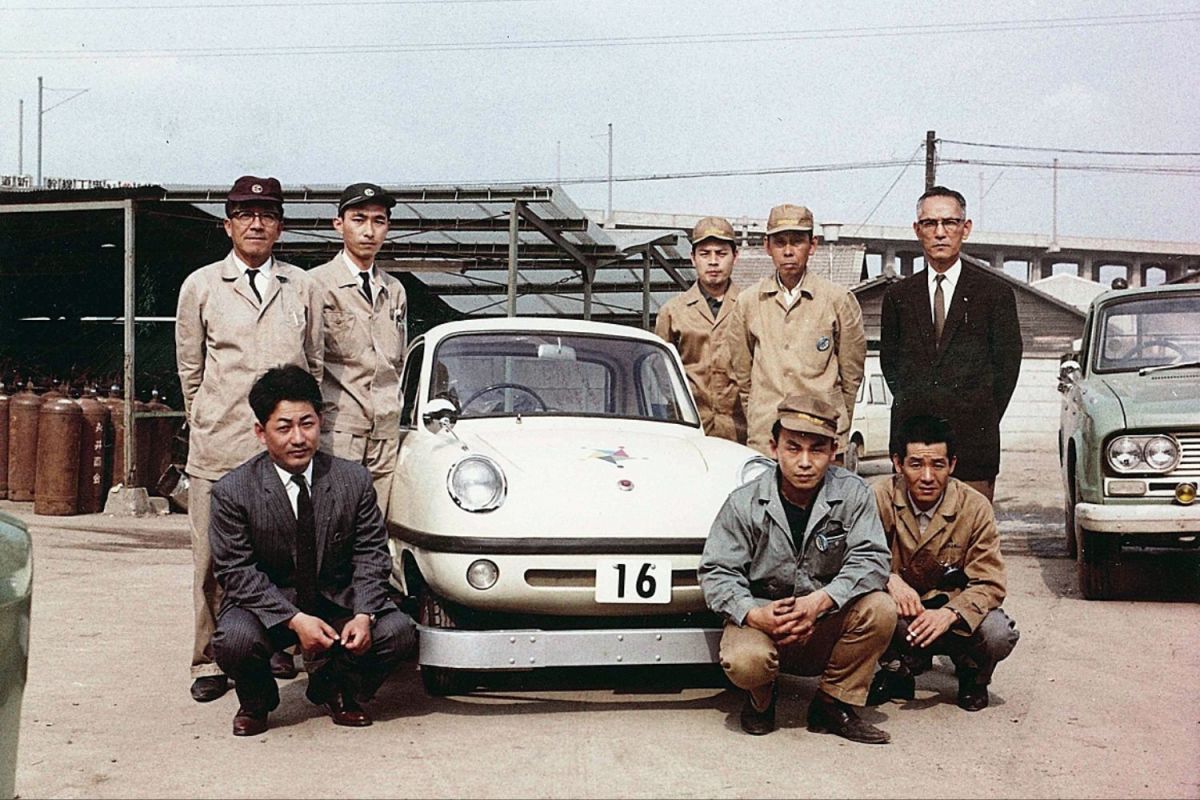
    The Datsun Baby wasn’t developed from the ground up using Nissan’s R&D department just for it to be destined for an amusement park. The reason it had those specs is that it was based on the Cony Guppy. If you’ve never heard of that car before, it’s totally understandable.

    Before being turned into a theme park ride, the Cony Guppy was manufactured by Aichi Machine Industry Co., Ltd. Prior to that, it was an aerospace company, but shifted to automobile and automobile parts manufacturing after World War 2. The Cony Guppy was Aichi’s first car, and was only made in 1961.

    Aichi was then absorbed by Nissan in 1966, and the business still remains as a parts supplier for the automaker. A little fun fact, Aichi would later develop the Nissan Sunny, which we now know today as the Nissan Sentra. But back to the Cony Guppy: Nissan used leftover production parts, redesigned the body, and built 100 Datsun Baby models from them – mostly by hand.

    Aichi Kokuki

    Its Main Purpose

    According to Nissan, the Datsun Baby was built to “provide children with knowledge about automobiles and promote road safety.” Given that the park was in the company’s backyard, one can say it was its way of supporting its home community. At the same time, it was giving back to Yokohama by providing more amusement and education to its residents.

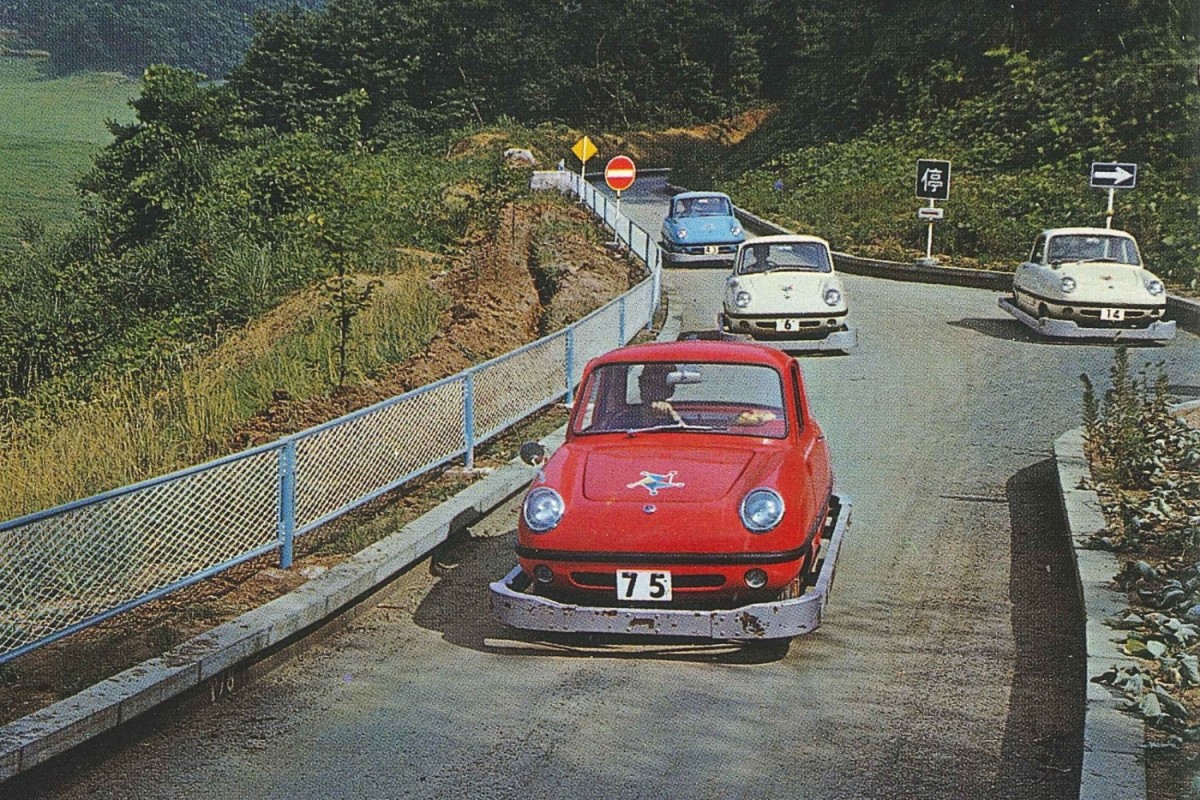
    What’s interesting here is that the cars weren’t on rails. Those who drove it actually had full control. There was a dedicated course for it, too, but we’re assuming the children would be accompanied by an adult in the vehicle at all times. Just to be extra safe, there was a brake pedal on the passenger side. If all else failed, there was the steel skirt surrounding the lower half of the car to prevent further damage.

    The ride ran from 1965 to 1973 and was a fun, immersive way to learn about cars and driving in one’s formative years. Car 100 was displayed in the park when the ride was retired and was subsequently restored by Nissan decades later to commemorate the park’s 50th anniversary. That same car is back in the company’s hands, though we’re genuinely curious whether any of the other 99 are still around.

    Nissan

    Aichi Kokuki


    View the 7 images of this gallery on the
    original article

    Source link

  • Rolex And Daytona Celebrate A Century Of Speed
– duPont REGISTRY DriftBreath

    Rolex And Daytona Celebrate A Century Of Speed – duPont REGISTRY DriftBreath

    When the green flag waves at 1:40 p.m. on Saturday, January 24, the 2026 Rolex 24 At Daytona will begin not just another chapter in endurance racing, but a moment of rare historical alignment. This year marks 100 years of the Rolex Oyster and 60 years of the Daytona endurance race’s 24-hour format – two milestones that together define the relationship between precision watchmaking and motorsport at its highest level.

    Few luxury brands can claim a bond with racing as deep, authentic, and enduring as Rolex. That connection was forged in 1933, when Sir Malcolm Campbell strapped a Rolex Oyster to his wrist while piloting Bluebird to a then-unthinkable 272 mph on Daytona Beach.

    The achievement made headlines around the world and forever linked Rolex with the pursuit of speed, endurance, and mechanical excellence. It was a moment that didn’t just validate the Oyster’s waterproof construction – it established Rolex as a watchmaker built for extreme performance.

    Nearly a century later, Daytona remains Rolex’s spiritual home in motorsport. The modern Rolex 24 At Daytona stands as one of racing’s most punishing and prestigious events, demanding absolute precision from both driver and machine over a relentless 24 hours. Time governs every decision: pitstops, fuel strategy, tire management, and driver stints, all measured down to the second beneath the ever-present Rolex clocks that reside across the circuit.

    This year’s running, the 64th edition, will feature 60 IMSA sports cars across four categories, including 11 Grand Touring Prototype (GTP) entries from five manufacturers, as the world’s leading teams converge on Florida’s most storied track. Porsche Penske Motorsport enters as the reigning powerhouse, seeking a third consecutive overall victory after claiming its 20th win last year – yet Daytona has never been a place that respects momentum.

    The race’s emotional gravity is magnified by the Rolex timepieces that await its winners. For decades, victory at Daytona has been sealed not only with a trophy but with a specially engraved Oyster Perpetual Cosmograph Daytona, one of the most coveted watches in the luxury world. The model itself was born in 1963, created specifically for professional drivers, and has since become a cornerstone of serious watch collecting.

    Few figures embody that heritage more fully than Scott Pruett and Hurley Haywood, the most successful drivers in Rolex 24 history, each with five overall wins. Pruett last stood atop the podium in 2013, earning a Daytona engraved for his achievement. He reflected on what it means to race against the clock.

    “The Rolex 24 is an iconic event, and the multiple pitstops, driver changes and challenging weather conditions are a true test of human and machine against the clock,” said Pruett. “You feel every moment of time during the race; the difference between winning and losing is often just seconds, with competition tight until the checkered flag. And at the end of it, it’s all about the Rolex watch. It’s a fantastic reward after an incredibly gruelling 24 hours.”

    For Rolex Testimonee Jenson Button, who finished third overall in 2024, Daytona remains one of motorsport’s purest tests – even in retirement from professional racing: “The Rolex 24 At Daytona is the perfect way to kick off the endurance racing season. The atmosphere is so pure, with flat-out racing for 24 hours.

    “You are pushing the limit the entire time, with speeds up to 200 mph, steep banking, strong G-forces and a short track that encourages lots of overtaking. Every component of these complex cars is maximized and there’s never a moment’s rest. I’m excited to return to Daytona next week and to witness the action as a spectator for a change.”

    Rolex’s official partnership with Daytona began in the late 1950s, and in 1992 the race itself was renamed the Rolex 24 At Daytona. Today, Rolex clocks govern endurance racing around the globe, while its watches remain a unique symbol of achievement for those who conquer time at its most unforgiving.

    As the Oyster turns 100 and Daytona celebrates six decades of 24-hour competition, the relationship between Rolex and motorsport has never felt more relevant. From Campbell’s windswept runs on Daytona Beach to the carbon-fiber GTP machines of today, Rolex has remained a constant – measuring the passage of time as human ambition continues to chase the impossible.

    Source link

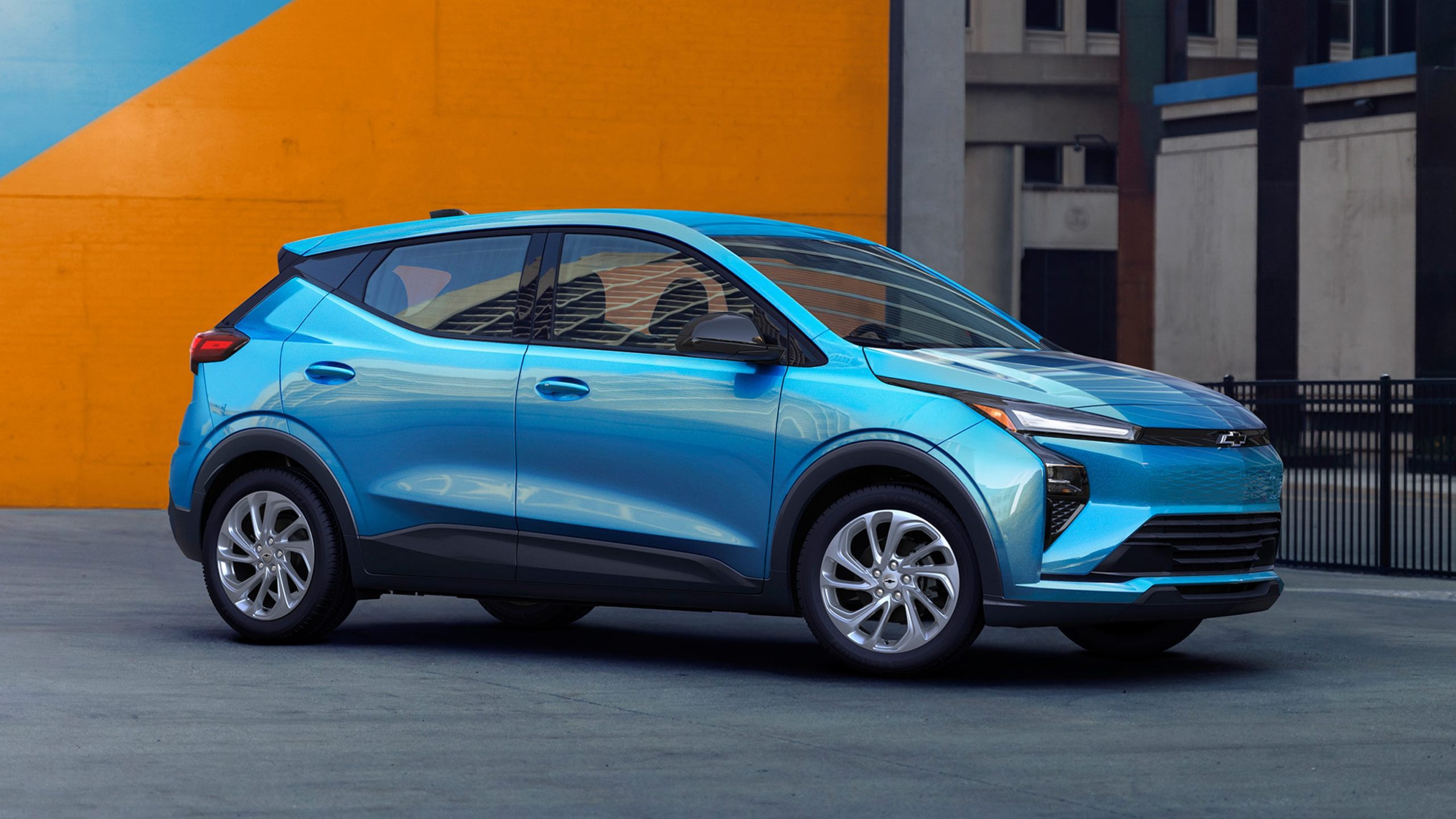
  • GM Will Kill the Chevrolet Bolt EV (Again) by 2028, Says Report

    GM Will Kill the Chevrolet Bolt EV (Again) by 2028, Says Report

    It appears the revival will be short-lived, as a report from Bloomberg states production of the Bolt will end by 2028. The Fairfax Assembly Plant in Kansas City, Kansas, where the car is assembled won’t sit idle for long, however, as those same reports state that GM will move production of the Buick Envision from China to the U.S.

    ADVERTISEMENT – CONTINUE READING BELOW

    The report further states the move is largely a response to President Trump’s tariff policy against China. The 2026 Buick Envision currently is manufactured at the SAIC-GM plant in Shanghai, a joint venture between GM and Shanghai Automotive Industry Corporation (SAIC) that produces several Chinese and global GM products. With tariff costs on the rise, Buick needed to move production of the Envision to the U.S. to keep its price in check.

    Later in 2027, GM will also move production of the Chevrolet Equinox from Mexico to the Fairfax plant. This is, once again, in response to tariff policies. Last June, GM announced it would begin shifting production from south of the border to facilities in Michigan, Tennessee, and Kansas.

    ADVERTISEMENT – CONTINUE READING BELOW

    Both moves appear to what forced the cancellation (again) of the Chevrolet Bolt. Even with the elimination of the $7,500 EV tax credit by the Trump administration, the 2027 Bolt was slated to start below $30,000—a mark under which previous few EVs fall in a world where the average transaction price for a vehicle has exceeded $50,000. The Bloomberg leaves open the possibility that the Bolt could live on if it proves to be a runaway hit, but we wouldn’t bet on it.

    ADVERTISEMENT – CONTINUE READING BELOW

    When questioned, a GM spokesperson followed up with a response that the Bolt was always going to “be a limited run model” and was brought back due to “strong customer demand.” The GM spokesperson also said that there will be a further announcement on the ramp down of the Bolt as it prepares for the production of the ICE-powered Equinox in mid-2027.

    Source link

  • GVWR Meaning: What This Key Metric Tells You About Your Car

    GVWR Meaning: What This Key Metric Tells You About Your Car

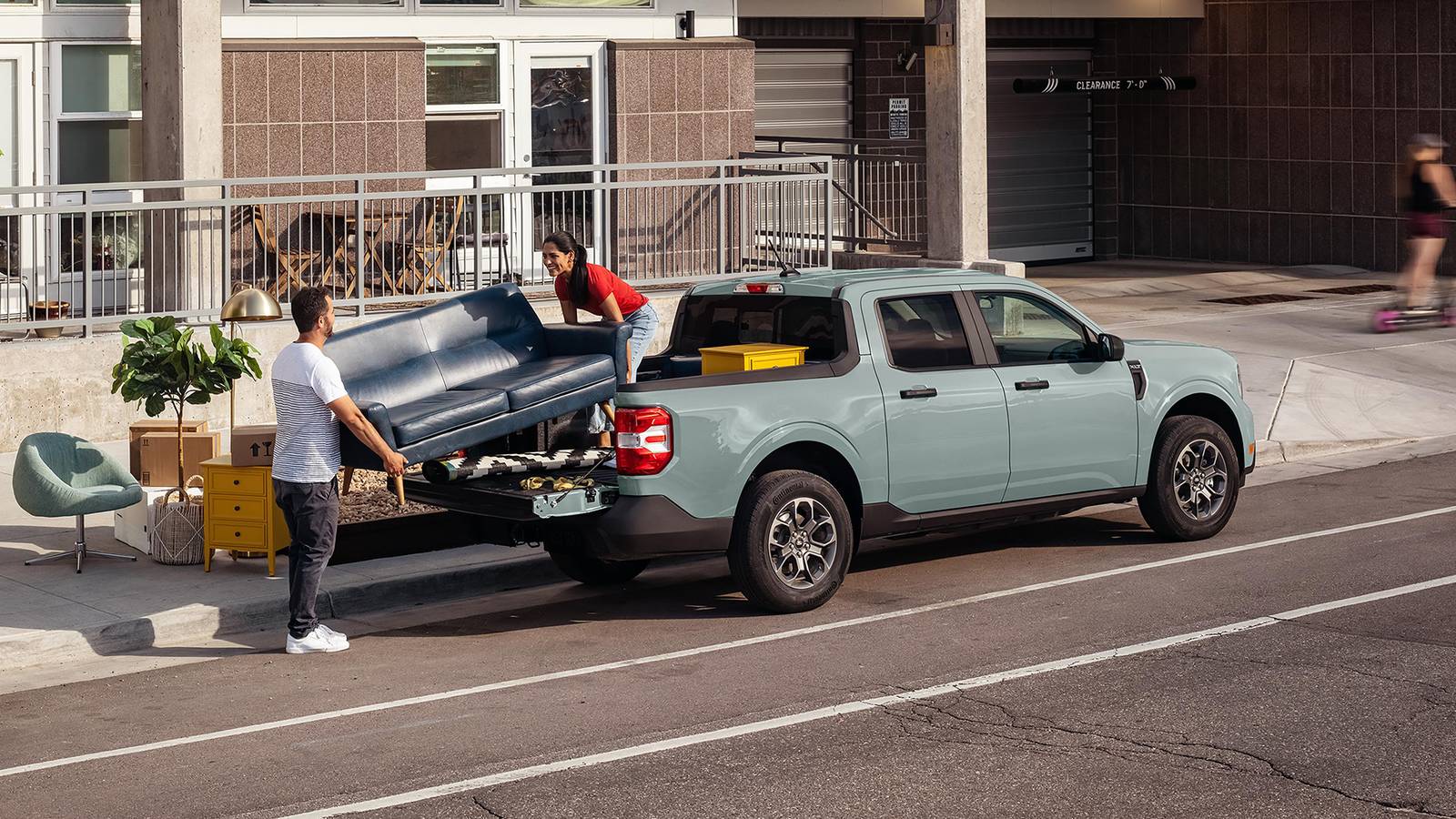
    If you’re regularly carrying lots of people or heavy loads, you’ll know exactly what gross vehicle weight rating – or GVWR – is. This one rating may affect which license and what roads you can go on. So, before buying your next pickup truck, like a Ford Maverick, make sure you know about its GVWR – because it may sway your purchasing decisions.


    Base Trim Engine

    2.5-liter hybrid inline-4

    Base Trim Transmission

    CVT

    Base Trim Drivetrain

    Front-Wheel Drive

    Base Trim Horsepower

    191 hp @ 5,600 rpm

    Base Trim Torque

    155 lb-ft (ICE only)

    Infotainment & Features

    9 /10


    In this article, we’ll be taking a look at what this metric means and why you should keep an eye out for it – as there are some legalities you should know before loading up your car to the max.

    CarBuzz recommends checking the vehicle guidebook or researching your vehicle’s maximum capacities and weights. All statistics mentioned have been sourced from the manufacturer.

    What Does GVWR Stand For?

    GVWR stands for gross vehicle weight rating. This figure refers to the maximum amount your car is allowed to weigh safely – including passengers and cargo, but crucially, it excludes the towing capacity. This varies from vehicle to vehicle.

    Firstly, it’s important to understand what we’re talking about when we say ‘curb weight’, ‘gross weight’ or ‘payload.’

    • Curb Weight: Curb weight is the weight of the vehicle when it’s ready to drive (including all fluids etc.) but without passengers or cargo
    • Payload: The maximum amount your car is designed to carry, which is passengers, fluids and all cargo. This figure doesn’t include the actual vehicle, only the extras
    • Gross Weight: The weight of the vehicle when it is fully loaded, including fluids, passengers and cargo. This is curb weight and payload added

    Let’s look at an example. The base trim 2025 Toyota Tacoma has a base curb weight of 4,145 lbs and a payload capacity of 1,460 lbs, which means that the GVWR is 5,605 lbs – as this is the weight of the car added to the maximum weight it is safely designed to carry. Toyota makes bigger beds and more powerful engines, which will increase the total gross vehicle weight rating as they’re more capable of carrying heavier loads.

    Toyota Tacoma (base SR trim): Weight Specs

    Curb Weight

    4,145 lbs

    Payload Capacity

    1,460 lbs

    Gross Vehicle Weight Rating

    5,605 lbs

    Why Do I Need To Know My Car’s GVWR?

    This is an important figure as it determines how far you can go when loading the vehicle before it becomes unsafe and restricts which roads you’re allowed to drive on. Exceeding this figure can cause extra strain on your vehicle’s components, impact the handling and cause you to be fined for carrying too much cargo. Most people will never reach the total amount their car is meant to carry – but it’s still worth knowing if you ever need to move a load or your work requires you to move heavy equipment.

    The Legalities Around GVWR

    There are a few legalities to know around this gross figure. Vehicles with a GVWR over 6,000 lbs will sometimes be restricted from entering certain roads in the US – with the most famous example being in California.

    There, many heavy vehicles are simply banned from entering residential streets, although in San Francisco, the number for EVs was changed to 8,000 lbs as they’re usually heavier. The city of Corona in California also disallows any over-6,000-lb vehicle from parking in the city for over two hours. You might be asking then, why do companies still make these behemoths?

    The reason is taxation: if a small business buys a vehicle with a GVWR of over 6,000 lbs, they can receive a Section 179, which means they are allowed to write off up to $30,500 off the purchase price.

    One more thing to know: there is a class system in the US which denotes which license and restrictions your vehicle faces. A table can be found below which denotes the classes. Most of the trucks you recognize will be in class 1, such as the Ford F-150 and Ranger. You won’t need a different license until you get up to 26,000 lbs or more, so you’ll be able to drive all light-duty and most medium-duty trucks.

    Vehicle Weights & Categories

    Category

    Weight Restriction

    Vehicles

    Light Duty (Class 1-2)

    Most pick-ups and passenger vehicles

    Medium Duty (Class 3-6)

    10,001–26,000 lbs

    Small commercial trucks

    Heavy Duty (Class 7-8)

    > 26,000 lbs

    Haulage vehicles or other large commercial vehicles

    The Dangers Of Exceeding Your Vehicle’s GVWR

    Your vehicle’s GVWR isn’t just a guideline – it’s a maximum that shouldn’t be exceeded. There are a few dangers when crossing this figure, such as:

    • Brake wear: If you’ve ever driven a heavy car, you’ll know how much more difficult it is to stop its momentum. If the vehicle is fully loaded too, the brakes will be working overtime under normal circumstances. It also increases stopping distance, which is highly unsafe.
    • Component strain: On a similar note, you’ll know if you’ve ever towed a heavy trailer, the gearbox and other engine components may struggle to get going. This increases wear on components like the gearbox, clutch or suspension.
    • Impacted handling: When there is more cargo, your vehicle’s center of gravity will be higher, which will cause a noticeable decrease in handling performance.
    • Legal issues: If you exceed the GVWR or drive on a road which is restricted, this may cause legal consequences, including fines or insurance charges.

    Curb Weight Vs GVWR

    Curb weight refers to the vehicle when it’s ready to drive, but without a driver, passengers or cargo. ‘Ready to drive’ means all operating fluids, like coolant and oil, and a full tank of fuel. This is considered the closest number to the actual weight of the vehicle.

    A gross vehicle weight refers to the car when it’s fully loaded. We’re talking all its curb weight as well as its full payload capacity. Max payload refers to the total amount of weight the car can carry, excluding the actual car itself, so the weight of all passengers and cargo. Curb weight is great for comparing cars, while the GVWR tells us how much it can weigh safely.

    Popular Trucks: Curb Weight vs GVWR

    Truck

    Curb Weight

    Gross Vehicle Weight Rating

    GMC Canyon

    4,297 lbs

    6,100 lbs

    Toyota Tacoma

    4,145 lbs

    5,605 lbs

    All models shown are based on their base trim

    GVWR Vs Towing Capacity

    As we’ve mentioned, the GVWR is how much a car can realistically weigh. This figure, however, doesn’t include the towing capacity of the vehicle.

    The tow capacity refers to how much the car can pull on a trailer. This doesn’t include just the trailer itself, but also the cargo that is loaded on it. Exceeding this figure causes similar issues to exceeding the GVWR, as it can put extra strain on your car’s suspension and transmission from the extra energy required to move it.

    While a higher GVWR can mean a higher towing capacity, the numbers don’t correspond. You’ll have to check out both numbers when considering how much to haul or load. Look below to see a comparison of some popular pick-ups and their GVWRs and towing capacities.

    Popular Trucks: Towing Capacity vs GVWR

    Truck

    Towing Capacity

    Gross Vehicle Weight Rating

    Ford Ranger

    7,500 lbs

    6,050 lbs

    Honda Ridgeline

    5,000 lbs

    6,019 lbs

    Toyota Tundra

    8,300 lbs

    7,035 lbs

    All models shown are based on their base trim

    How To Find Your Vehicle’s Gross Weight

    GMC Canyon GVWR
    A GVWR sticker on the GMC Canyon AT4X AEV Edition
    Caleb Redd/YouTube

    In most cases, the GVWR weight figure will be on the B-pillar of the vehicle, visible when the front door is open. There, you’ll also find the gross axle weight rating, but more on that later. You may also find this in the vehicle handbook. If your car doesn’t have that visible, there’s an easy way to work it out. Try taking the curb weight of the vehicle and adding it to the payload capacity. The sum of these two figures will be the GVWR that you should never exceed.

    Other Weight Figures You Should Know About

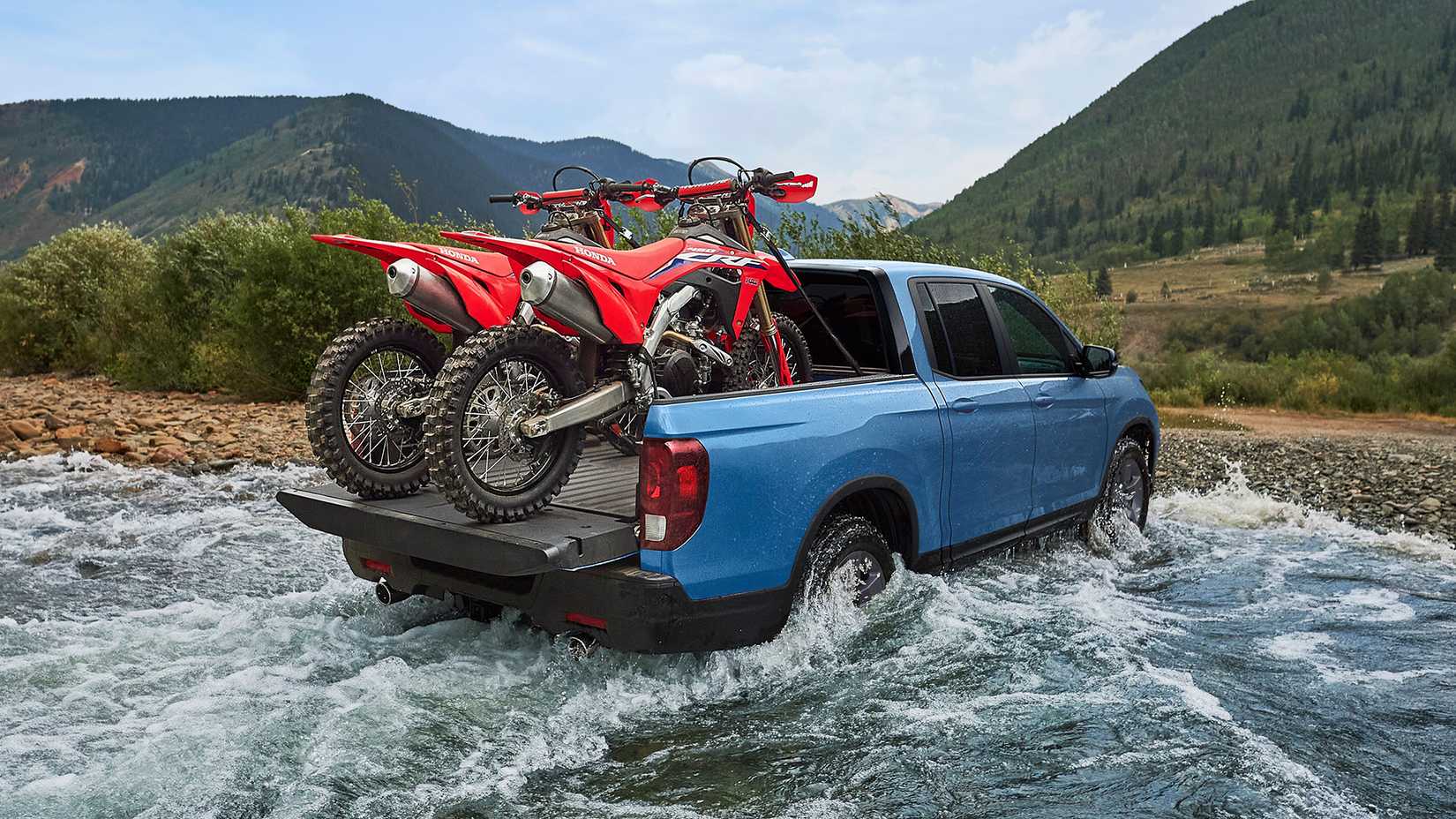
    2024 Honda Ridgeline
    2024 Honda Ridgeline exterior
    Honda

    While we’ve spoken about the payload, towing capacity, curb weight and the gross weight, here are some more that you should find out about your car:

    • Gross Axle Weight Rating: This is the total amount of weight that your car’s axles are designed to carry. In some countries and applications, this is used in conjunction with the GVWR.
    • Gross Combined Weight Rating: A combined rating takes into account the towing capacity and the gross vehicle weight. Don’t make the mistake of just adding them up – it’s not that simple to work out. Check the vehicle specifications online or in the handbook to find out how much to haul and load.
    • Tongue Weight: This is a measure of the weight that is exerted on the vehicle’s tow hitch. The tongue weight is usually about 10-15% of the total towing weight.

    Sources: Ford, Honda, Toyota, GMC

    Source link

  • Tesla FSD subscription data reveals over 1 million users

    Tesla FSD subscription data reveals over 1 million users

    Tesla has released data on its full-self-driving (FSD) supervised software for the first time, revealing over 1 million FSD users around the world.

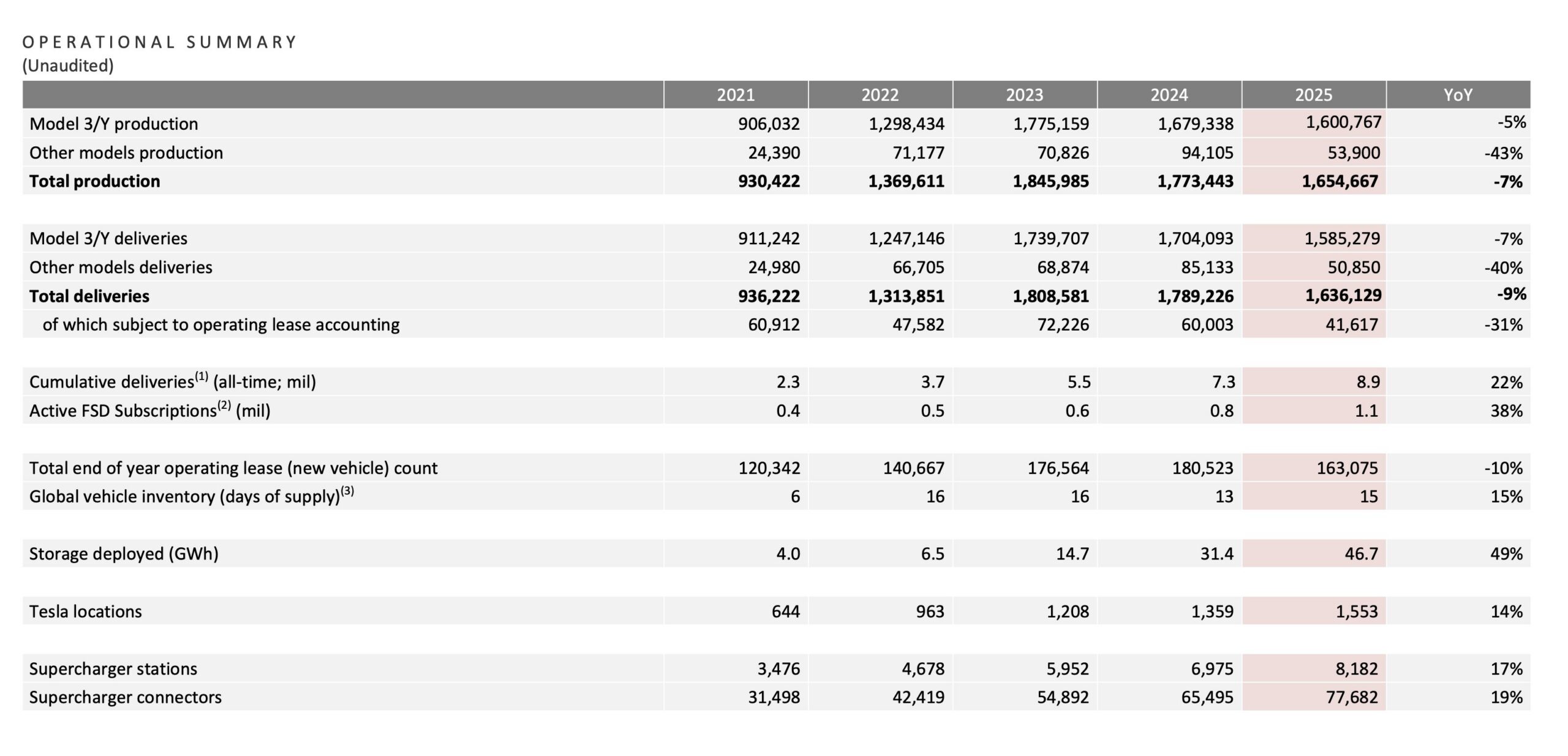
    In the deck of the company’s Q4 2025 earnings report, the company had a table listing the number of FSD subscriptions, which as of the end of 2025, stands at 1.1 million.

    That’s from a total of 8.9 million total cars the company has delivered to date, making it 12.4% of the total cars delivered having an FSD supervised subscription. 

    Since 2021, the total number of “active subscriptions”, which also include one-off purchases are:

    • 2021 – 400,000
    • 2022 – 500,000
    • 2023 – 600,000
    • 2024 – 800,000
    • 2025 – 1,100,000
    Image: Tesla

    The software has been going through iterations for a few years and has built up buyers who purchased it up front, and then those who are coming on with subscriptions.

    Earlier this month, Tesla CEO Elon Musk revealed that it will “stop selling” its Full Self Driving technology package, which commanded prices of more than $10,000 in Australia, and will be focusing on subscriptions only, to drive active user numbers even higher.

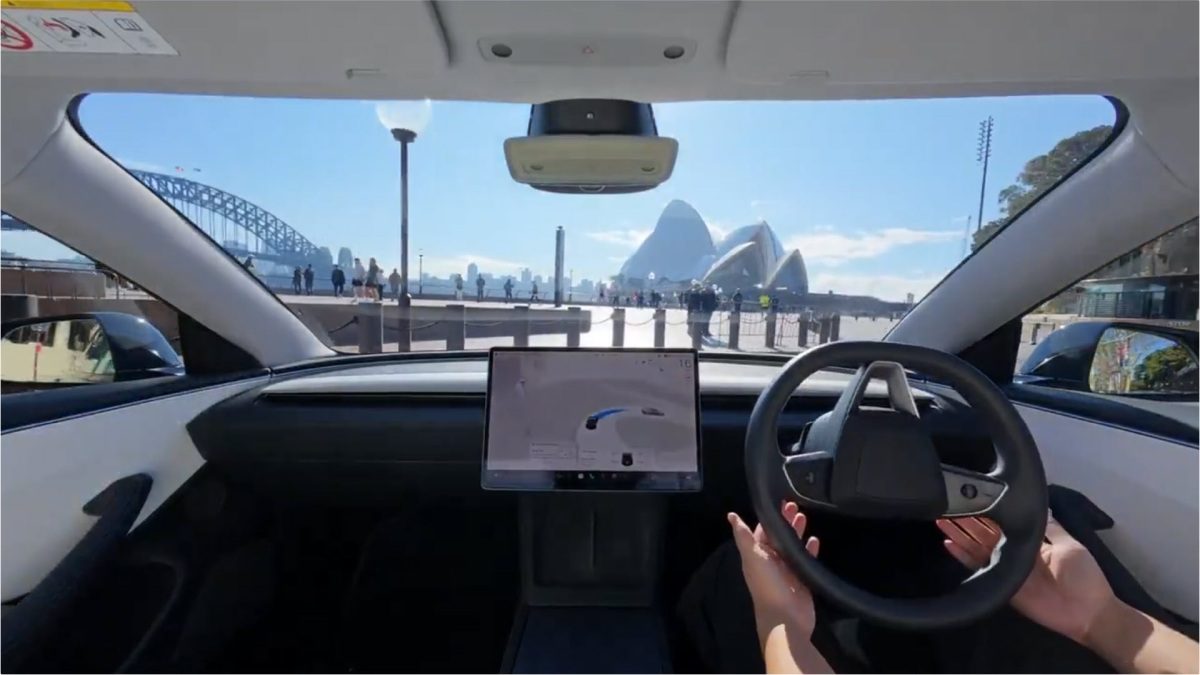
    Locally, on 18 September 2025, Tesla launched the FSD supervised software to all eligible cars in Australia and New Zealand, making them the first right-hand-drive markets in the world.

    At that time, this software was available on all new vehicles as an option with the current pricing of $10,100, as well as a monthly subscription that was launched later, which now starts at $149 per month.

    This subscription offering has helped bring thousands of current owners to try FSD Supervised for the first time, but it’s worth noting that the software isn’t currently available to older, Hardware 3-equipped cars.

    Tesla also shared usage statistics soon after launching the software locally, and within a fortnight of that launch, it reported that owners across Australia and New Zealand had already driven more than 1 million kilometres.

    This week, further expansion of the software’s availability was shared by Musk, who hinted that the system is likely to be approved in two of the biggest car markets globally, as early as next month.

    In an interview at the World Economic Forum, it was hinted that Tesla expects to get approval for FSD Supervised software in Europe as early as February and in China around about the same time.

    Those two markets will most certainly be the key to the expansion of the software and additional subscription revenue for Tesla in 2026 and in years to come.

    Source link

  • New IIHS Whiplash Crash Test Could Save Your Neck

    New IIHS Whiplash Crash Test Could Save Your Neck

    Neck strains and sprains are the most frequently reported injuries in United States auto insurance claims, so the Insurance Institute for Highway Safety (IIHS)—the nonprofit safety organization funded by the insurance industry—is introducing a more thorough test that addresses the most likely causes of these injuries.

    In addition to crash tests, the IIHS began testing seats and head restraints for whiplash prevention about 20 years ago. In fact, it discontinued the original version of the test in 2022 because automakers had improved seat designs to the point where virtually every new vehicle received a top rating, the organization explained in a press release and video. But insurance-claim data showed that whiplash injuries are still occurring, and that there was still variability between different vehicles. A new test was needed.

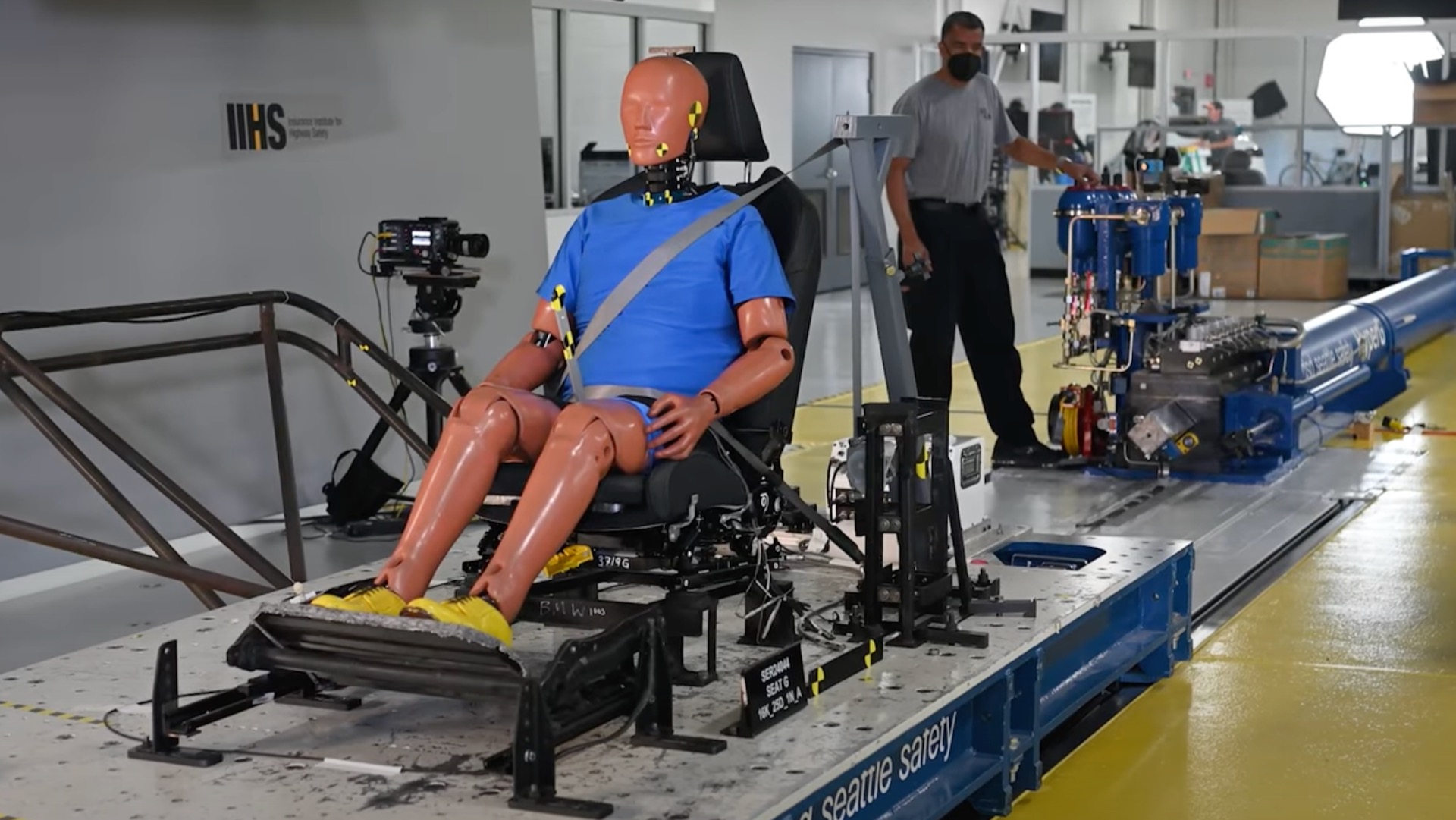
    Crash test dummy seated in sled for IIHS whiplash prevention test.
    IIHS via YouTube

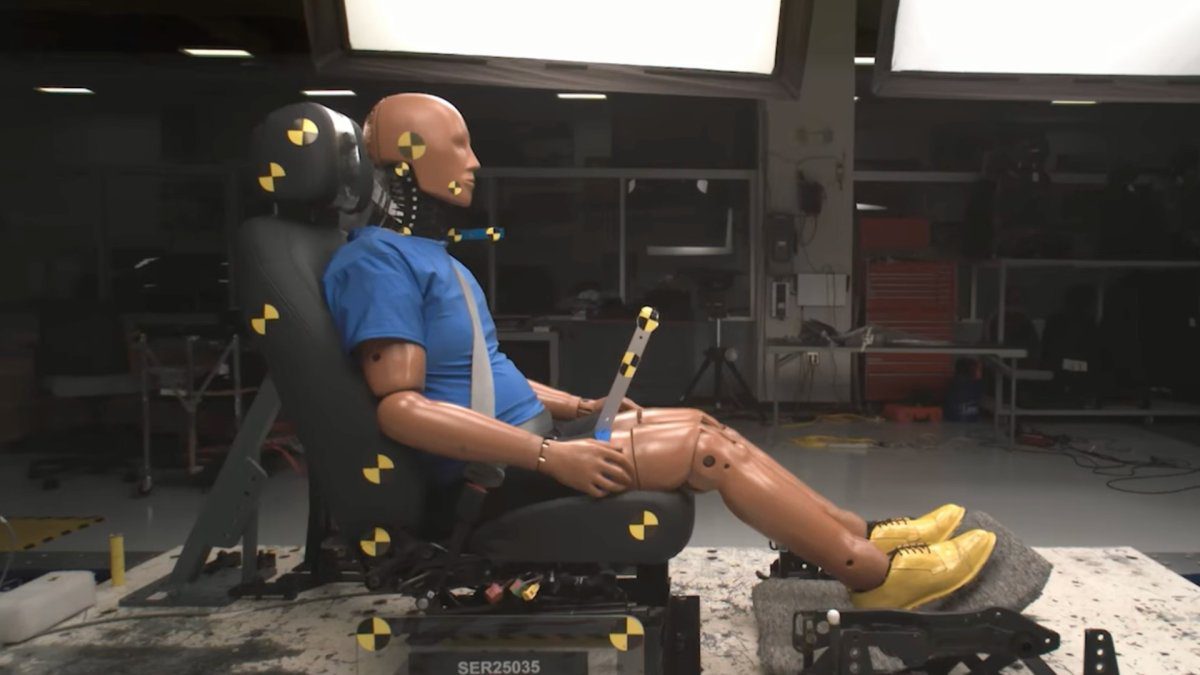
    To design that test, researchers tested seats used in 36 late-model vehicles and compared data from crash-test dummies with injury-claim data supplied by the IIHS-affiliated Highway Loss Data Institute. Some criteria from the original test were retained, including the amount of time it takes for a head restraint to contact a dummy’s head, and acceleration of the T1 vertebra, the one located where the spine joins the neck. The movement of the pelvis and measures for the tilting and bending of the head relative to the neck, were also incorporated.

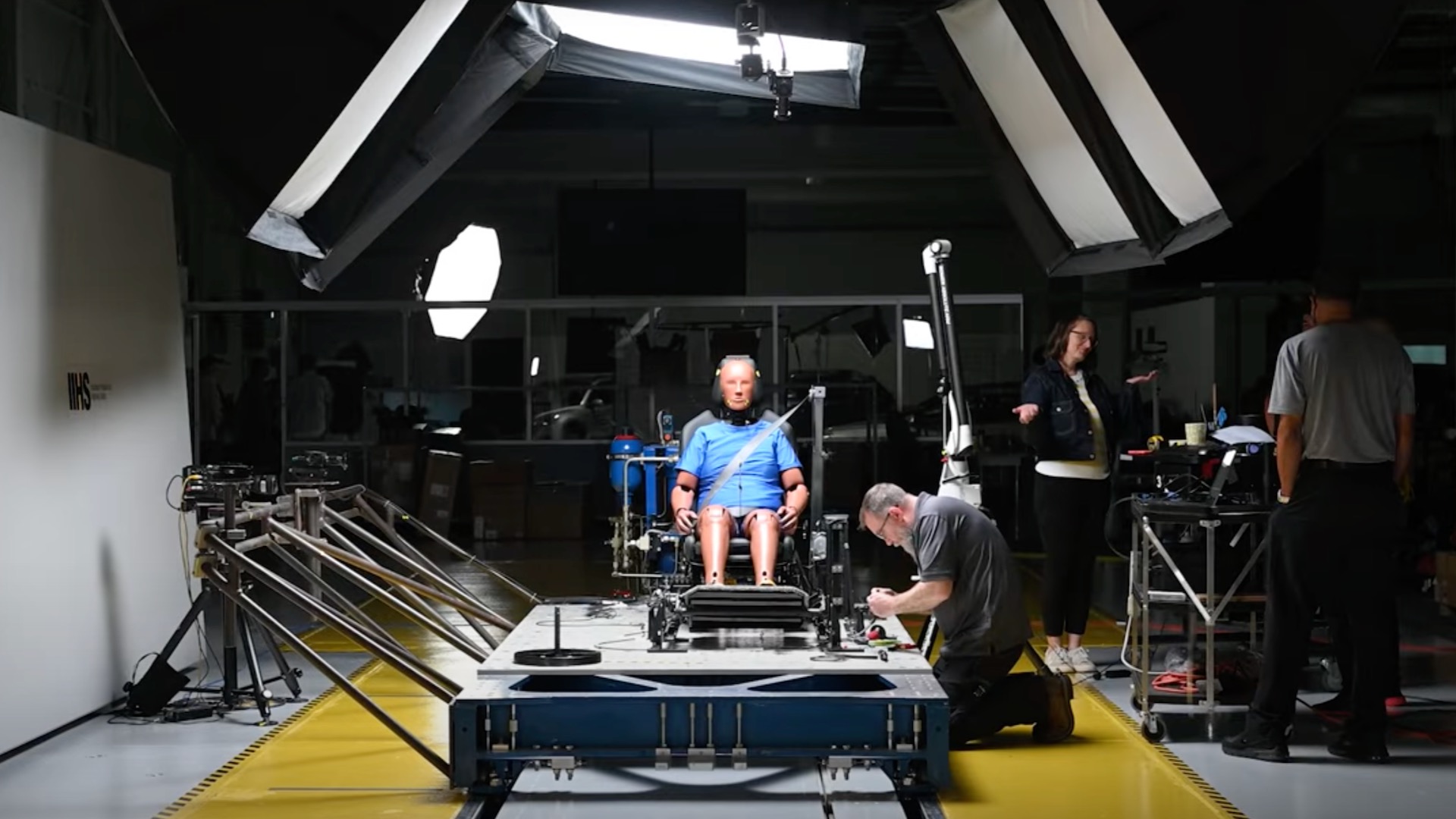
    Like the original test, the new whiplash prevention test simulates a rear impact, as insurance data show these to be the most common. The driver’s seat is mounted on a sled that delivers pulses of acceleration to a midsize male dummy with an articulated spine. The original test simulated a rear impact at 20 mph, but the new test also incorporates a simulated 30-mph impact.

    Crash test dummy seated in sled for IIHS whiplash prevention test.
    IIHS via YouTube

    For the first round of testing with this new protocol, the IIHS evaluated 18 small SUVs. The Audi Q3, Hyundai Ioniq 5, Subaru Forester, and Toyota RAV4 (the outgoing 2025 model, not the redesigned 2026 model) received the highest “Good” score. The Ford Bronco Sport, Hyundai Tucson, and Mazda CX-50 received the lowest “Poor” score, while the BMW X1 and Nissan Rogue received next-worst “Marginal” scores. Everything else was rated “Acceptable.”

    The “Good”-rated SUVs had seats that kept the dummy’s head and spine in alignment, with the spine maintaining its natural curve and the head moving a minimal amount. In the “Poor”-rated SUVs, the spine straightened and stretched, and head movement was significant. The Tucson’s head restraint pushed the chin down toward the chest, the CX-50’s let the head slide backward and upward, and the Bronco Sport’s took an abnormally long amount to time to make contact with the head.

    IIHS launches new whiplash prevention test – IIHS News


    They may seem more like headrests than a piece of safety equipment most of the time, but these results illustrate what those things on the tops of seat backs are supposed to do. Ideally, head restraints will catch the occupant’s head to keep it from whipping back in an impact. To ensure they work properly, it’s important to adjust them so that they’re as close to your head as possible.

    It’s tougher to get a top IIHS safety rating than it is to get a five-star rating from the federal National Highway Traffic Safety Administration (NHTSA) because the IIHS has the ability to treat safety as a moving target. The more rigid federal regulations can’t be as easily changed, and the IIHS has unfettered access to insurance data to guide its testing process. Automakers are often caught out by updated IIHS tests like this one, but that prods them into developing safer cars.

    Got a tip? Reach out to tips@thedrive.com

    Stephen has always been passionate about cars, and managed to turn that passion into a career as a freelance automotive journalist. When he’s not handling weekend coverage for The Drive, you can find him looking for a new book to read.


    Source link

  • Who Invented Heated Seats? and Other Automotive Technology Firsts

    Who Invented Heated Seats? and Other Automotive Technology Firsts

    Lots of cars today boast “direct injection,” so it seems commonplace, but that’s only a recent development. Getting the fuel into the cylinders of an internal-combustion engine takes some ingenuity, and it’s been a long road of “firsts” along the way between the late 19th century and the early 21st. The basic carburetor that served to blend fuel vapors with air and deliver the mixture to the intake manifold was one of the “firsts” on the 1886 car devised by Gottlieb Daimler and Wilhelm Maybach (some time before they joined forces with Karl Benz). Theirs is often regarded as the first car, and with refinements this carburetor system managed the task well enough for most cars for more than 80 years.

    Fuel injection, which allows finer control of the mixture by spraying atomized fuel, was first managed by mechanical means and was a key element for the development of compression-ignition (diesel) engines in the 1920s. There, and in World War II aviation engines, the fuel was most often injected directly into the combustion chamber, known as “direct injection.” When injection started showing up in postwar gasoline production cars, there were dozens of variations but this direct-injection form was rare. One exception was the 1955 Mercedes-Benz 300SL that, like that era’s M-B racing cars, used a Bosch-developed mechanical direct-injection system. (Some credit a 1952 Goliath with a two-stroke engine that also employed Bosch direct injection, but Goliath was selling city cars in Europe only, and most of those cars had to have their injection replaced with carburetors because they failed.) The 300SL’s “first” is often qualified as the first “production sports car” with fuel injection.

    It’s easier and cheaper to design and build injectors that don’t have to survive the hostile environment of a combustion chamber, so other pioneers in the late 1950s used systems that simply replaced the carburetor’s role in delivering fuel into the intake manifold. This generally meant a constant, though modulated, stream of fuel to mix with air drawn in through a throttle mechanism, hence “throttle-body fuel injection.” As emissions regulations and fuel efficiency became growing concerns, it became worthwhile to provide a separate injector for each cylinder, delivering a precisely metered dose of fuel only during the intake phase in that port, or “port fuel injection.” Another worthy refinement was to manage the fuel electronically. While American Motors built prototype Rambler Rebels in 1957 using a Bendix electronic system, it didn’t go into production, leaving “first” honors to Chrysler’s 1958 “Electrojector” system on that model year’s Chrysler 300D, De Soto Adventurer, Dodge D-500, and Plymouth Savoy. Only 35 buyers took the pricey option, and most had it replaced with the standard carburetor after it proved unreliable. So, perhaps the 1968 Volkswagen Type 3, which had the latest Bosch “D-Jetronic” system, could be considered the “first” successful electronic-injected car. Still, it delivered fuel to the manifold, not into the combustion chamber.

    It wasn’t until 1996 that modern gasoline direct injection with electronic management appeared on the market. Mitsubishi gets the honors, first on the four-cylinder Galant sedan and on a V-6 the next year. The advantage: improved efficiency, yielding the magic trick of making more power while also getting better fuel economy. In the first five years, Mitsubishi built one-million cars with this GDI, well ahead of the rest of the industry. That Mitsubishi has all but disappeared from the U.S. automotive market suggests, again, that getting there first isn’t always a magic bullet for sales leadership. Or maybe that the company should have brought it here earlier instead of restricting initial sales to Asia and Europe. One challenge: New technology is generally more expensive, at least initially, and the advantage to the buyer isn’t always evident. Beginning in 2004, German luxury brands Audi and BMW did a better job of selling direct injection as an advantage in the United States.

    Source link

  • Polestar 2 Reviews | Overview

    Polestar 2 Reviews | Overview

    Overview


    POLESTAR has launched its updated Polestar 2 into the local market with changes to the model range that include an upsized battery pack (now 82kWh), increased peak range (now 659km WLTP), faster charging capacity (now 205kW DC), and additional technologies that include a faster new central processing chip that offers greater HMI responsiveness.


    Priced from an unchanged $62,400 plus on-road costs, the 2026 Polestar 2 is offered again in Single and Dual Motor configurations and in Standard and Long Range formats.


    A new paint colour, Dune, joins the palette, while restyled alloy wheels, an impressive 14-speaker Bowers & Wilkins premium audio bundle, eco-friendlier MicroTech upholstery, and tinted rear glass all make their debut.


    An evolved software bundle now offered in the Polestar 2 further allows the ability for users to access apps including YouTube, Prime Video, and Google Chrome.


    The suite of updates come as Polestar Australia surpasses 6200 aggregate sales of the Polestar 2 (since 2021), and a year-on-year increase of 38.5 per cent across the model portfolio (2024 versus 2025). The Sino-Swedish electric vehicle brand has also grown its dealership presence in Australia in that period, growing to 11 locations nationally – and now with 23 service locales.


    The 2026 Polestar 2 will enter the Aussie market as a rival to players that include the BYD Seal (from $46,990), Kia EV4 (from $49,990), and Tesla Model 3 (from $54,900), albeit with a more premium tilt.


    Specifications see the Standard range Single motor (from $62,400) offered with 200kW/490Nm of output to the rear wheels with power drawn from a 70kWh lithium-ion battery.


    Running 400-volt electrical architecture, the variant offers a 10-80 per cent charge time of 26 minutes when connected to a 180kW DC fast charger. AC charging takes seven hours when paired with an 11kW supply.


    Polestar says the variant can accelerate from 0-100km/h in 6.4 seconds on its way to a top speed of 205km/h. Range is listed at 554km on the WLTP cycle.


    Moving up to the Long range Single Motor (from $66,400), we find a step up to 220kW in output but with an identical 490Nm. The rear-wheel drive variant offers a larger 82kW lithium-ion battery pack offering comparable charge times to the Standard range Single motor.


    The 0-100km/h standard is likewise covered in a comparable 6.2 seconds and top speed again capped at 205km/h. Range is listed at 659km on the WLTP cycle – making this variant the pick of the litter for those chasing the greatest distance between recharging.


    All-wheel drive versions of the Polestar 2 begin with the Long range Dual motor (from $71,400). This variant offers a total system output of 310kW/740Nm and uses the same battery as the Long range Single Motor. The added performance on tap shrinks range to a still respectable 596km and hastens the 0-100km/h time by almost two seconds (4.5s).


    Finally, for the flagship Long range Dual motor with Performance pack (from $85,080) we find a tweaked system output of 350kW (and still with 740Nm), an identical battery pack, slightly reduced range of 568km, and a 0-100km/h time of 4.2 seconds.


    Both dual motor variants have the same top speed as the rest of the Polestar 2 pack (205km/h).


    Standard inclusions across the Polestar 2 range include electrically assisted steering, two-piston front and single-piston rear brakes, a MacPherson strut and multi-link rear suspension arrangement, and wheel choices ranging from 19- to 20 inches in diameter (all with repair kit ‘spare’), depending on variant.


    The Performance Pack adds Brembo four-piston brakes up front and cross drilled rotors at the rear, as well as Ohlins adjustable dampers.


    Equipment highlights for the Polestar 2 range include a fixed glass panoramic roof, all-LED exterior lighting with Pixel LED headlights available optionally, keyless entry and start, rain-sensing wipers, a powered tailgate with kick sensor, heated front seats, semi-electric front seat adjustment dual-zone climate control, four USB-C outlets and one wireless smartphone charging pad, and 60:40 split fold rear seats.


    On the infotainment front, we find inclusions such as wired Android Auto and Apple CarPlay connectivity, a 12.3-inch driver screen, 11.2-inch infotainment touchscreen, eight-speaker sound system, FM/DAB+ radio reception, and a suite of connected services technologies.


    The Polestar 2 arrives as standard with an extensive driver assistance and safety list, highlights of which include eight airbags, adaptive cruise control, autonomous emergency braking, blind-spot monitoring, cross-traffic alert, front and rear parking sensors, lane departure and keeping assistance, road sign recognition, speed limiter function, trailer stability assist (for trailers up to 1500kg), and an available 360-degree camera system.


    A range of extra packs and accessories remain available.


    Polestar offers a five-year vehicle warranty and eight-year traction battery warranty on the Polestar 2. Roadside assistance is included for the duration of the vehicle warranty, while servicing intervals are set at two years or 30,000km (whichever comes first).


    Driving Impressions


    The Polestar 2 remains unchanged in many respects from the vehicle we sampled last in 2024. It has the same quibbles we’ve noted previously – a slightly peculiar driving position, compromised rear-seat accommodation, and slightly firm ride – but by the same token remains a joy to drive, and a stunner to look at.


    We found the ‘get-in-and-drive’ simplicity of the Polestar 2 a welcomed change to some now in the market, the human-machine interface and primary controls seeming more logical now than when we first examined the model back in 2021. It’s an indication that Polestar may have been on the right track all along…


    Our test drive through the twists and turns of the hills surrounding Healesville shows equally just how sorted the Polestar is dynamically. Yes, the electric steering is a little synthetic in its feedback, but its accurate enough once you get yourself ‘dialled in’.


    The vehicle tracks cleanly for a car weighing close to 2000kg and is rich in natural grip. Cornering is flat and predictable, requiring very little input midway. We found we could push the Polestar 2 hard into corners and accelerate out effectively, all before any indication of electronic intervention is noted.


    For those reasons, it is no surprise the Performance Pack is even sharper. The manually adjusted Ohlins dampers are keenly set to resist the inputs of a poorly kept surface while simultaneously allowing the body to move on its springs with GT-car-like comfort.


    It’s the Polestar 2’s combination of ride and handling that very few EVs can hope to match, giving the car a clear advantage over the point-and-shoot straight-line heroes in its class.


    Acceleration, of course, is as brisk as the numbers would have you believe and is wonderfully well metered through a sensibly calibrated pedal and phenomenal electronics. While we’re sure the vehicle is processing every input in magnificent detail, the result is so fluid, and so free of wasted wheelspin, that you’ll never really know it.


    Sure, there are quicker competitors in the class, but they don’t have the breadth of abilities offered in the Polestar 2. This is a car that is easy to drive smoothly – and just as easy to drive quickly. It’s a car that doesn’t fight against your commands, and that seems to enjoy a spirited run as much as we do. Perhaps EVs aren’t the end of enjoyable driving after all…


    With all of that said, we hasten to add a couple of points about the Polestar 2’s braking. Like many EVs, the brake pedal is a little wooden and lacks some of the modularity required in more complex scenarios. Using the regenerative ‘brakes’ can help to a degree, but we still feel there is more finesse to be found from the Brembo-sourced stoppers.


    We’ll be very keen to sample the updated ‘2’ in a less dynamic setting to see just how it feels as a daily driver. Time spent previously with the vehicle tells us it’s a good one that has obviously benefitted from a mid-life update, and with great credit to Polestar at no extra cost.


    Would we buy one? You betcha. Just how we’d configure it though is a question for another day – because as thrilling as the all-wheel drive Performance Pack is, there is no discounting the rear-driven Long range Single Motor. Optioned with a few extra goodies, we think it might just be the pick of the bunch.

    Source link