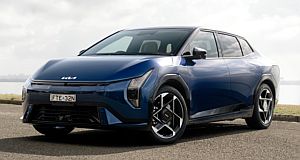
KIA Australia is standing by its decision to introduce the all-electric EV4 Down Under, seemingly ignoring tapering passenger car sales and its own sales forecasts with a vehicle the South Korean importer expects to sell just 70 units per month.
Despite the niche position, Kia says it is important to offer all Australian buyers as much of its portfolio as is possible, suggesting not every new car buyer is interested in an SUV, particularly when it comes to EV buyers.
“Not everyone wants an SUV,” said Kia Australia product planning boss Roland Rivero bluntly.
“The EV4 is about being able to offer choices to the customer. The fact it’s a sedan is one of the reasons the Tesla Model 3 sells in the numbers it does.”
Indeed, the Tesla Model 3 sells more than five times the number of units Kia Australia predicts the EV4 sedan will manage, yet will offer both it, and the EV4 hatch, before the year is out.
Mr Rivero said the EV4 sedan – which is priced from a snip under $50,000 – has the potential to sell in greater volume, but is hamstrung by its popularity in other markets, factory production volume, sourcing and allocation issues, potential costs, and a simply concern about dipping into a pond less frequented by Kia’s SUV-focused team.
Mr Rivero said EV4 is Kia’s first electric sedan – its EV6 being classed as an SUV despite its hatch appearance – and joins the Australian line-up primarily because the brand is pushing hard to grow its EV sector.
He said its introduction also brings down Kia Australia’s fleet CO2 average, allowing it to meet the new vehicle efficiency standards (NVES) regulations without incurring financial penalties.
“NVES makes the EV4 important to us,” he said.
“We want to expand the EV products to consumers and believe the sedan has a lot of appeal for buyers who may not be attracted to, or need, an SUV.
“We also know Australia is also a hatch market and we’re looking very hard at making the hatchback EV4 (made in Slovakia) work.
“But there are pressures – including competing with global economies that also want models such as the EV4.”
The EV4 is almost identical to the length of the main rivals – Tesla Model 3 and BYD Seal – but has a shorter wheelbase that, conversely, offers more cabin room than the rivals. Its boot size sits betwixt the two.
It claims a range of up to 612km (the longest range of any Kia EV) and 0-100km/h acceleration time of 7.4 seconds, all data that equates to not only its EV rivals but some ICE models.
Inside it’s all EV simplicity and clean-edge design. A flat floor with plenty of leg- and foot room front and rear, deep glass for excellent visibility (notably in the rear to appease children), and despite the short boot lid, a generous boot area enhanced by fold-down rear seats.
Tech rates highly, standard with two 12.3-inch screens (one for the driver, the other for infotainment) and a 5.0-inch climate monitor, with the car open to over-the-air (OTA) updates and Kia’s connected car navigation cockpit, which is complementary.
There is also vehicle-to-load (V2L) with plug points in the cabin and on the outside, in the charging port.
The audio (harman/kardon in the GT-Line) and infotainment system have Google connectivity (with inbuilt engine search, which will be rolled out to other Kia models) along with Apple CarPlay and Android Auto access.
Although there are touchscreen controls, Kia has steadfastly retained physical buttons – including those for HVAC (heating, ventilation and air-conditioning) functions – saying they are easier to use and therefore safer.
Safety kit is expansive, with the GT-Line topping up the inventory with extra features including surround view, blind-spot monitoring, and rear collision avoidance.
The EV4 range offers eight colours, but only Clear White is a no-cost option. The rest – Ivory Silver, Aurora Black, Shale Grey, Snow White, Honeydew, Yacht Blue, and Magma Red add $600 to the price. All interior upholsteries are Onyx Black in colour.
Kia said there is no capped-price service as such for the EV4, presenting three pre-paid options: $688 for three years, $1308 for five years, and $1929 for seven years. All are transferable.
The EV4 has a seven-year/unlimited-kilometre warranty with an eight-year/160,000km battery warranty.
Visit GoAuto again soon for our Australian launch review of the 2026 Kia EV4.
Our free daily newsletter sends the stories that really matter directly to you, every weekday.
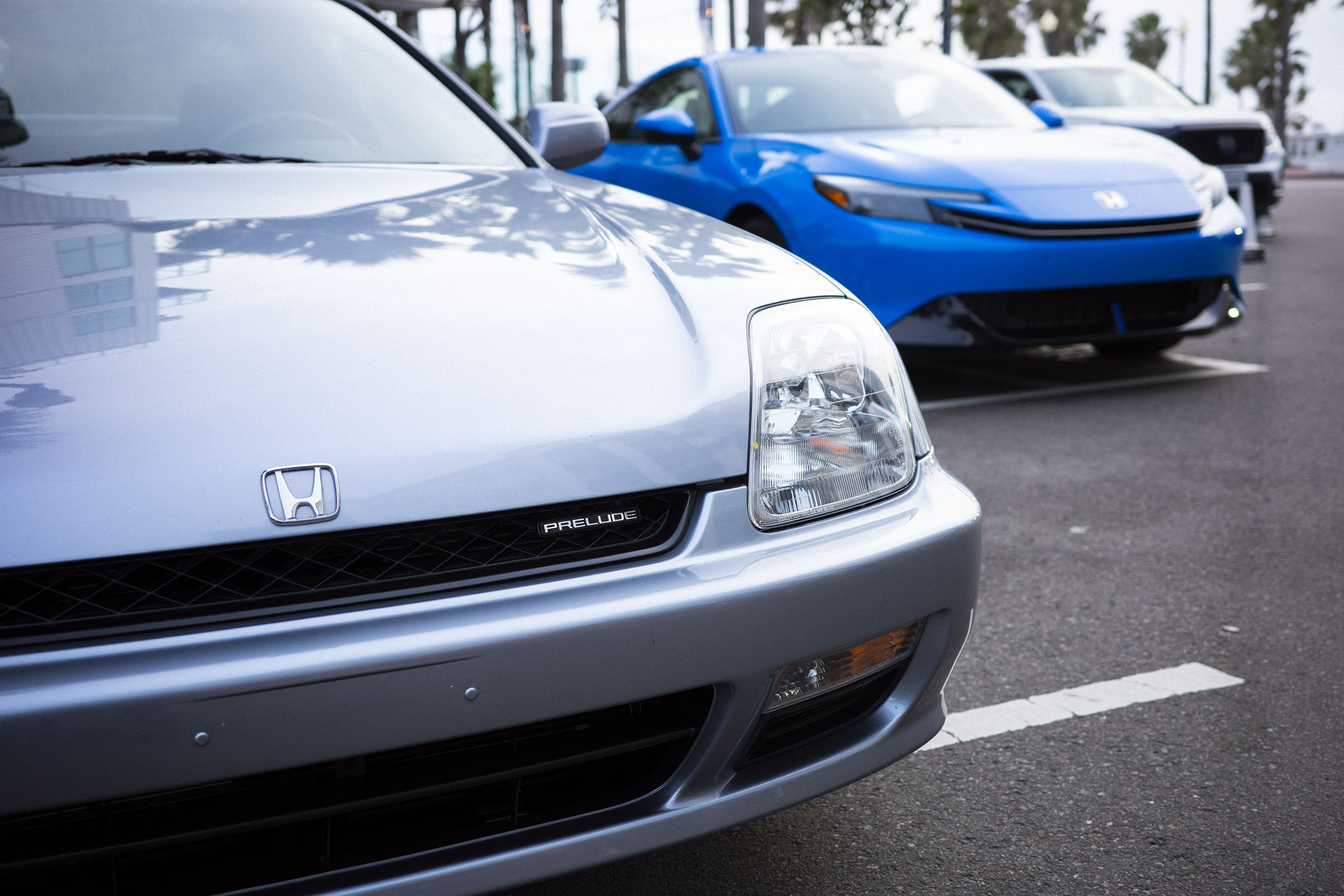
It’s said that history doesn’t necessarily repeat, but it often rhymes. I’m thinking about that adage a lot these days for various reasons, but one of them is actually the new Honda Prelude.
It’s a polarizing vehicle. On paper, it fails the value test. In person, depending on who that person is, it might still. But I enjoyed my time with the hybrid coupe last week despite its flaws, and despite the fact it’s targeting a theoretical customer with almost paradoxical priorities: the kind who wants a stylish coupe that is comfortable and handles well but isn’t quick, willing to trade straight line thrill for fuel economy.
The Prelude has always, in some form or another, eschewed the mainstream expectations of a sports coupe. It was always front-wheel drive, for starters. It was always a little heavy, owing to its status as the tech pioneer in Honda’s lineup. It was always agile, despite that heft and despite being rather softly sprung. Sometimes it had decent power, and sometimes it didn’t. But it was never the archetypal sports car. And that became clear to me, getting behind the wheel of (almost) every generation Prelude at Honda’s recent event in Southern California for the new one.
This was, frankly, the most exciting part of the journey for me. And I know it’ll be easy to twist that into some suggestion that the new car sucks, but you could send me around the world to drive a Ferrari 12Cilindri and I’d still be more stoked for a spin in something three or four decades older out of Maranello’s collection. I never get to drive really old stuff, and I’ll certainly never get to drive another Prelude that’s in comparable shape to these museum-quality examples Honda maintains here in the Golden State.
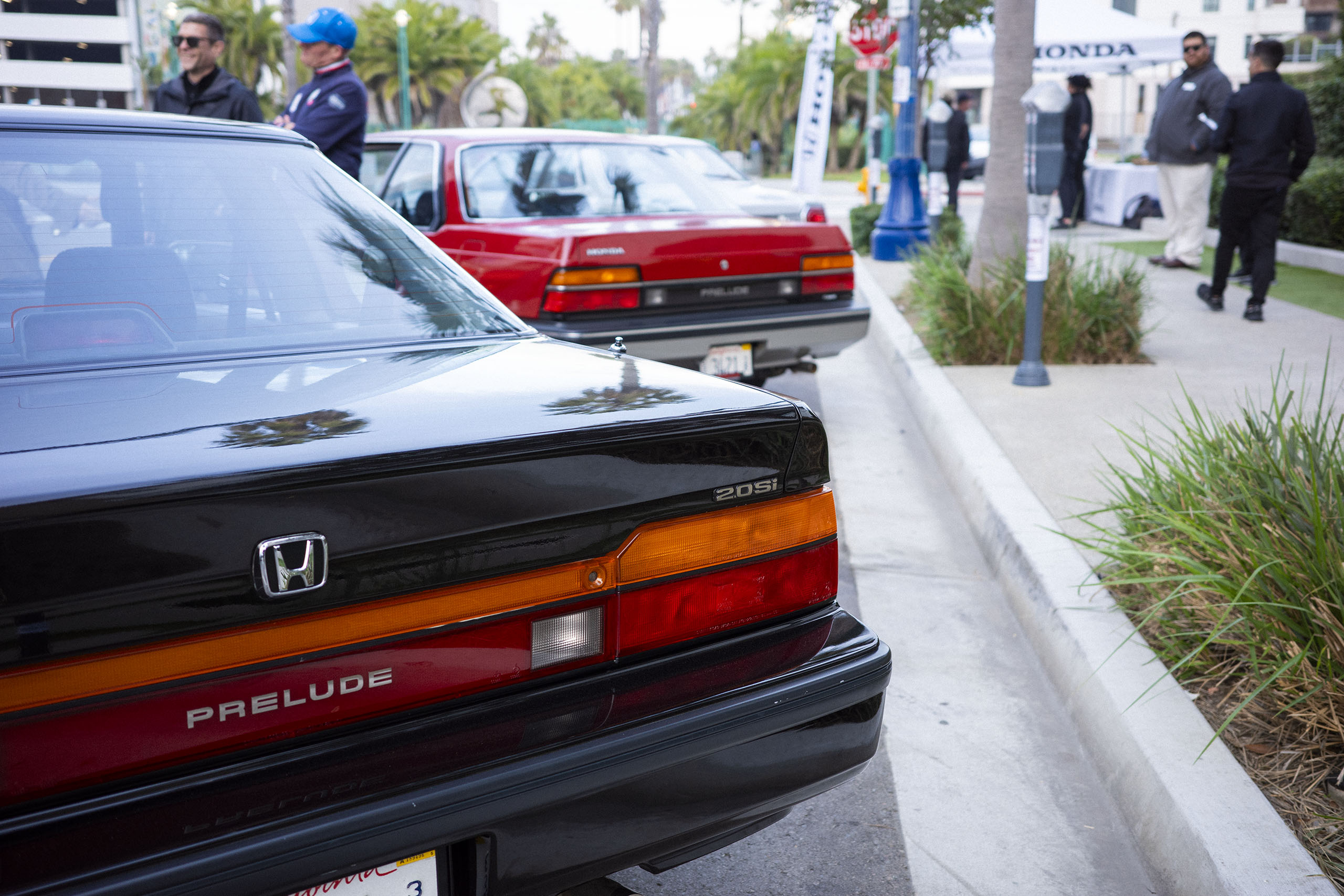
For this event, all five Preludes were parked along a street in Oceanside. And all day long, for two days, people would walk or drive by, stop, and take an interest in them, remarking on how nice they looked and asking what they were doing here.
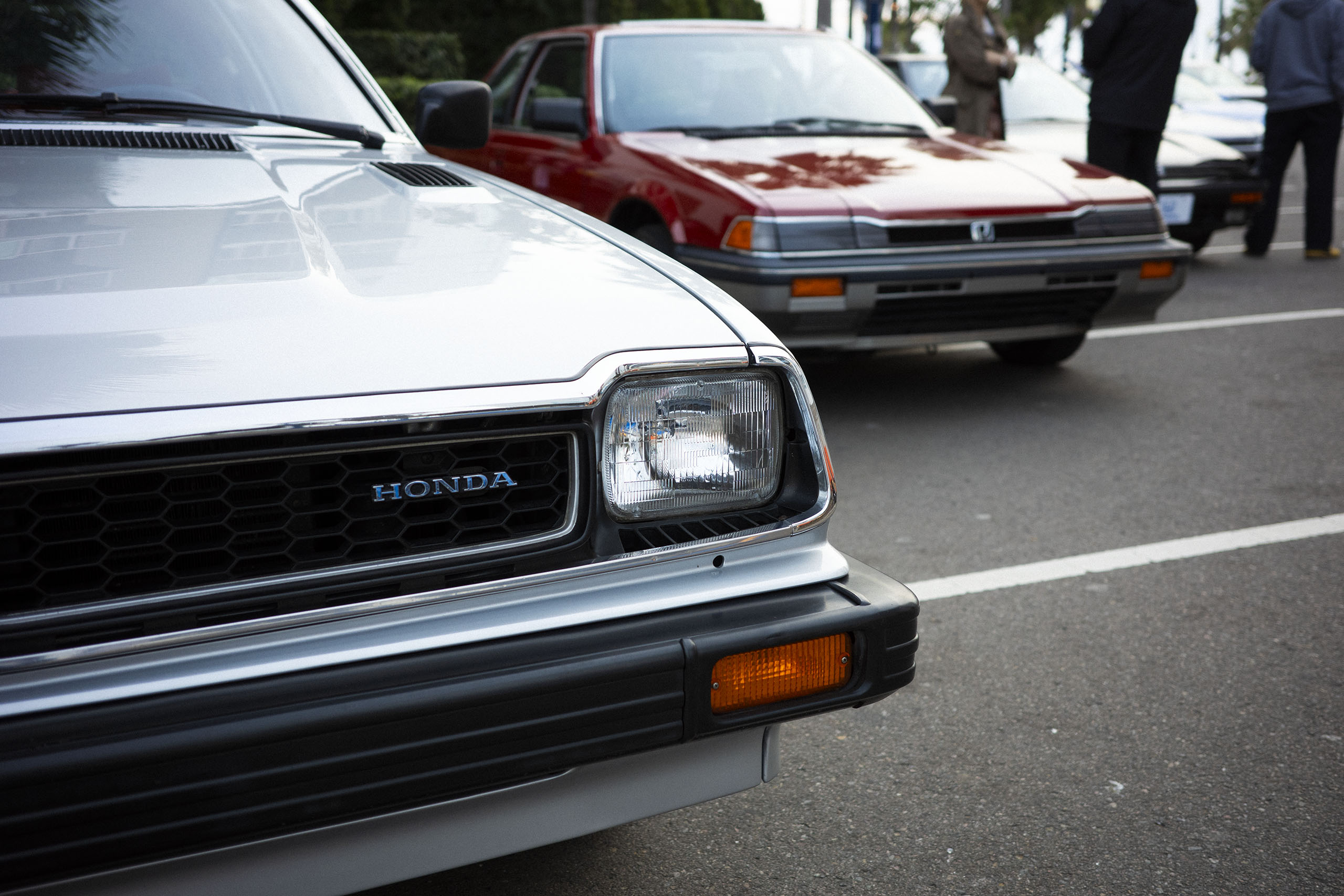
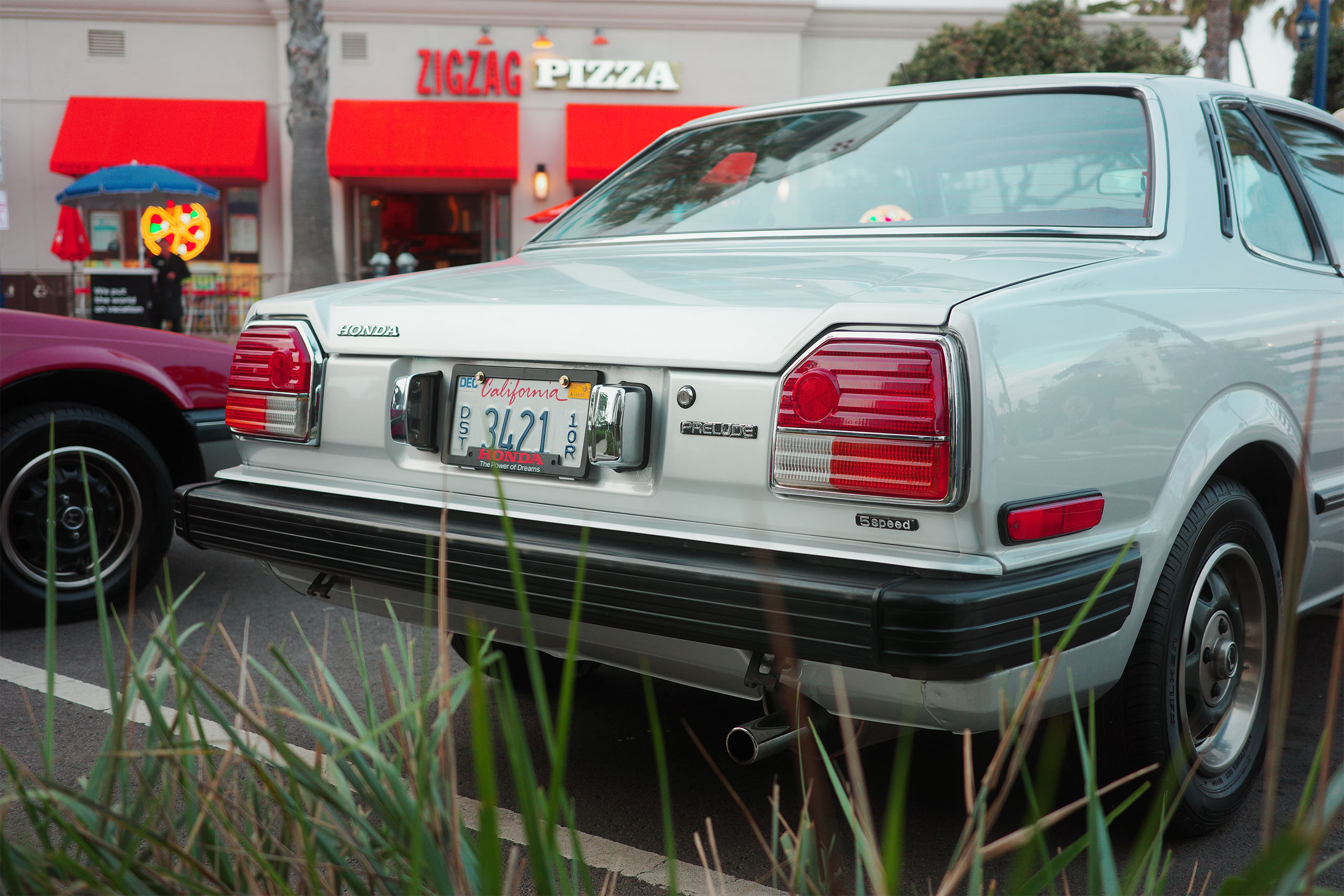
The first- and second-generation Honda Prelude. Adam Ismail
That caused me to realize that I grew up seeing these cars in regular traffic often, and I don’t anymore. It felt like the second- and third-generation coupes in particular, with their flip-up headlights, were everywhere. I’m told that my late aunt had a Prelude with such lights and four-wheel steering, which would’ve made it a third-gen.
It’s funny, because my aunt wasn’t very interested in cars. I wonder what she liked about her Prelude. I wonder if it ever put a smile on her face, when, and how. I wonder if she ever felt cool behind the wheel. The thing about these machines now is that, divorced from the context of their time, they do just look like rare artifacts, and everybody wholly appreciates them for that reason.
It’s hard not to be charmed by the quaint design of that first-gen coupe, which launched in 1979. The one in Honda’s fleet was a manual of that very vintage. It sure felt old, wheezy, and rattly, with its carbureted 1.8-liter four-cylinder generating all of 72 horsepower and 94 lb-ft of torque. It also lacked power steering, which mostly made parking a pain. But what struck me the most—and what would become a theme of all of these old Preludes—was its interior.
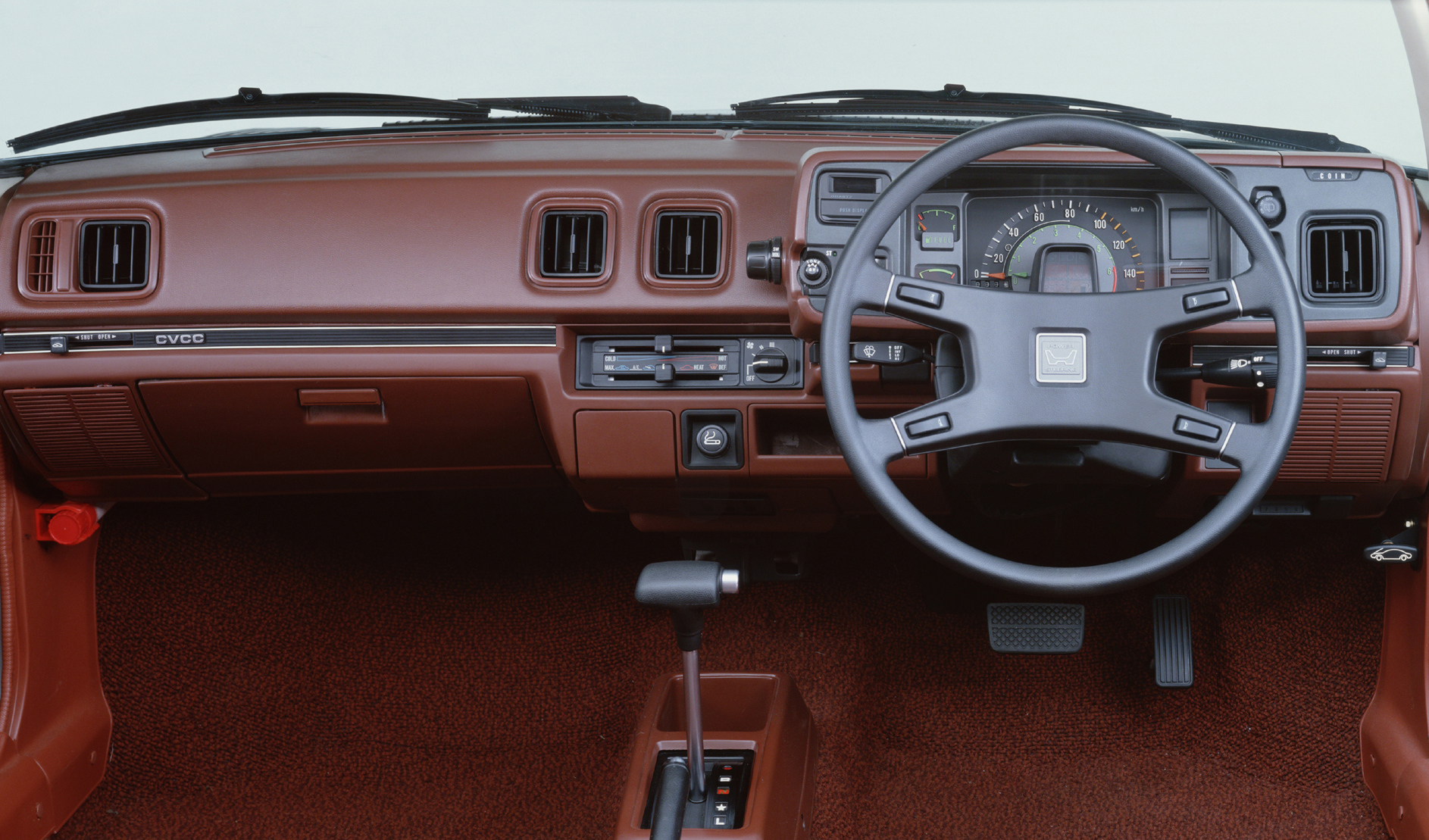
The dashboard of a pre-facelift first-gen Prelude. Adam Ismail
Later first-gens had a more conventional instrument cluster, but this early example had squarish gauges with a digital clock and radio tuner sort of dangling off the side of the binancle, rather than set in the center of the dash. On this model, the tachometer was also set inside the speedometer, with an array of various vehicle warning lights jammed further within that. It was strange and a little overwhelming, but it was, indeed, cool—in my view, cementing the Prelude’s status as a design innovator, even when those innovations didn’t stick.
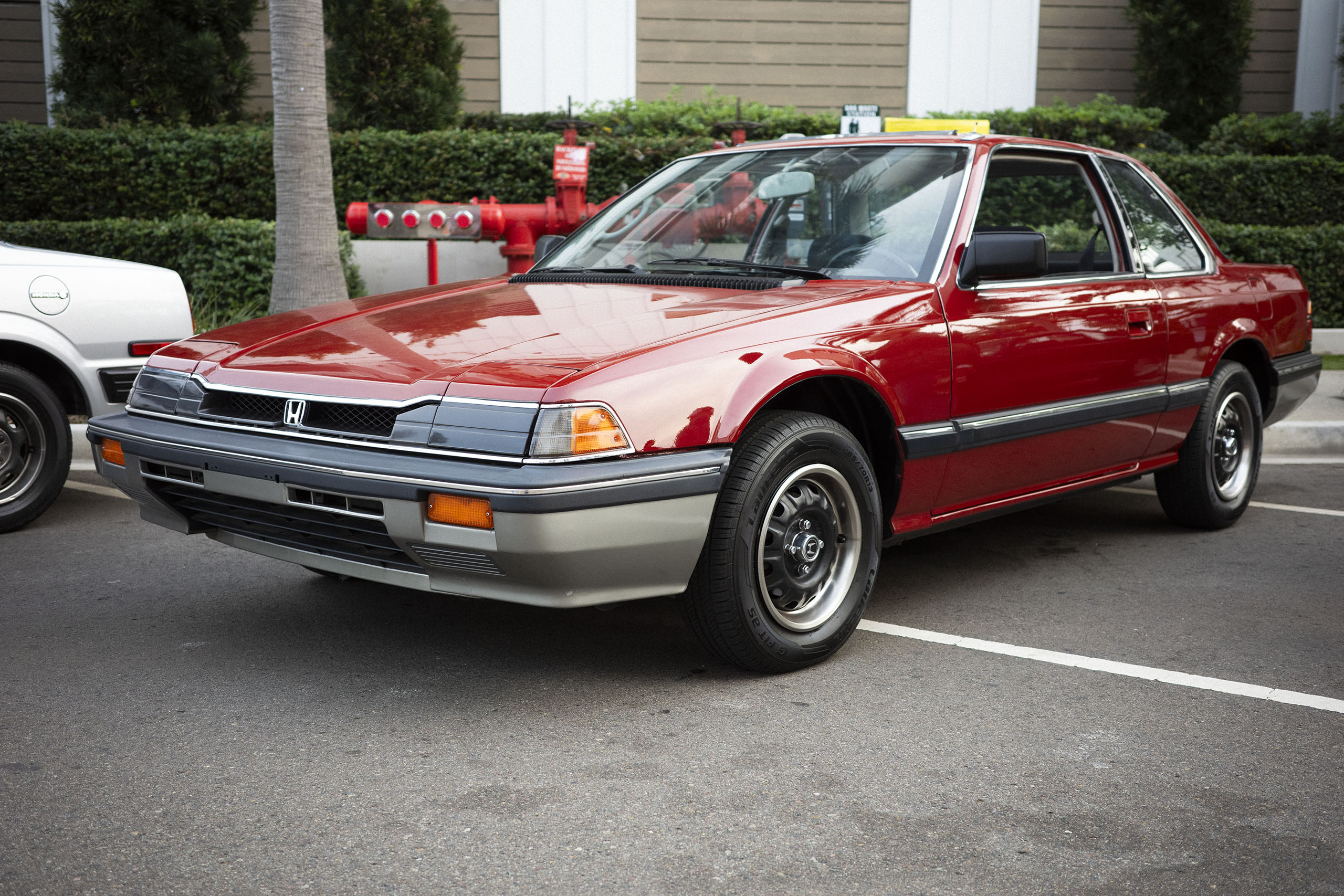
The second-gen Prelude, which lasted from 1983 to 1987, resembled a huge step forward in terms of exterior styling, but truthfully didn’t feel mechanically worlds apart from its predecessor. That’s not surprising, given that we’re only talking about a four-year gap. But it crystallized the image that I think pops into most people’s heads when they think of the Prelude: A wedge with retractable lights and a squared-off ’80s aesthetic. It was also the best-selling of the entire run, totaling approximately 337,000 units globally over five years, according to Honda.
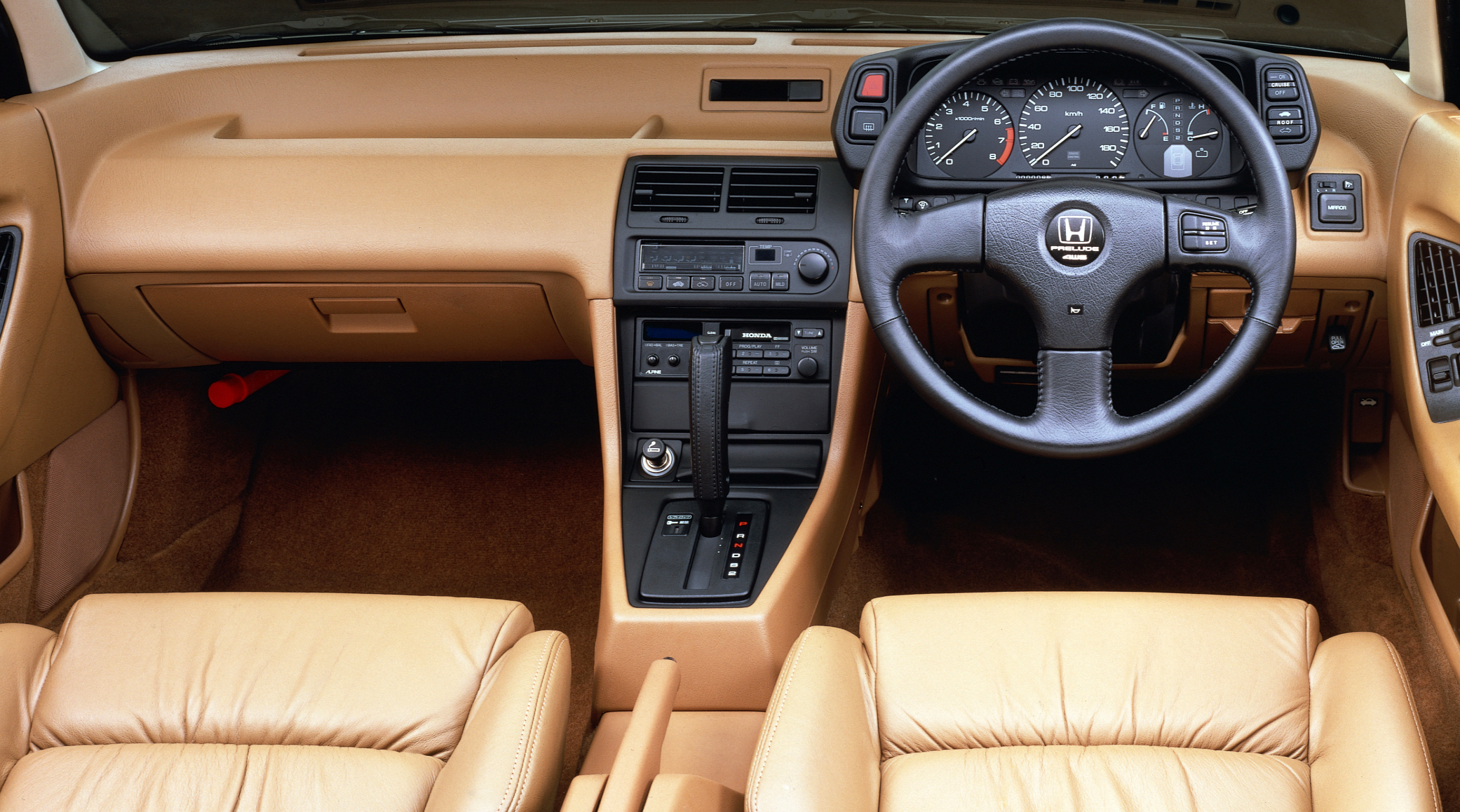
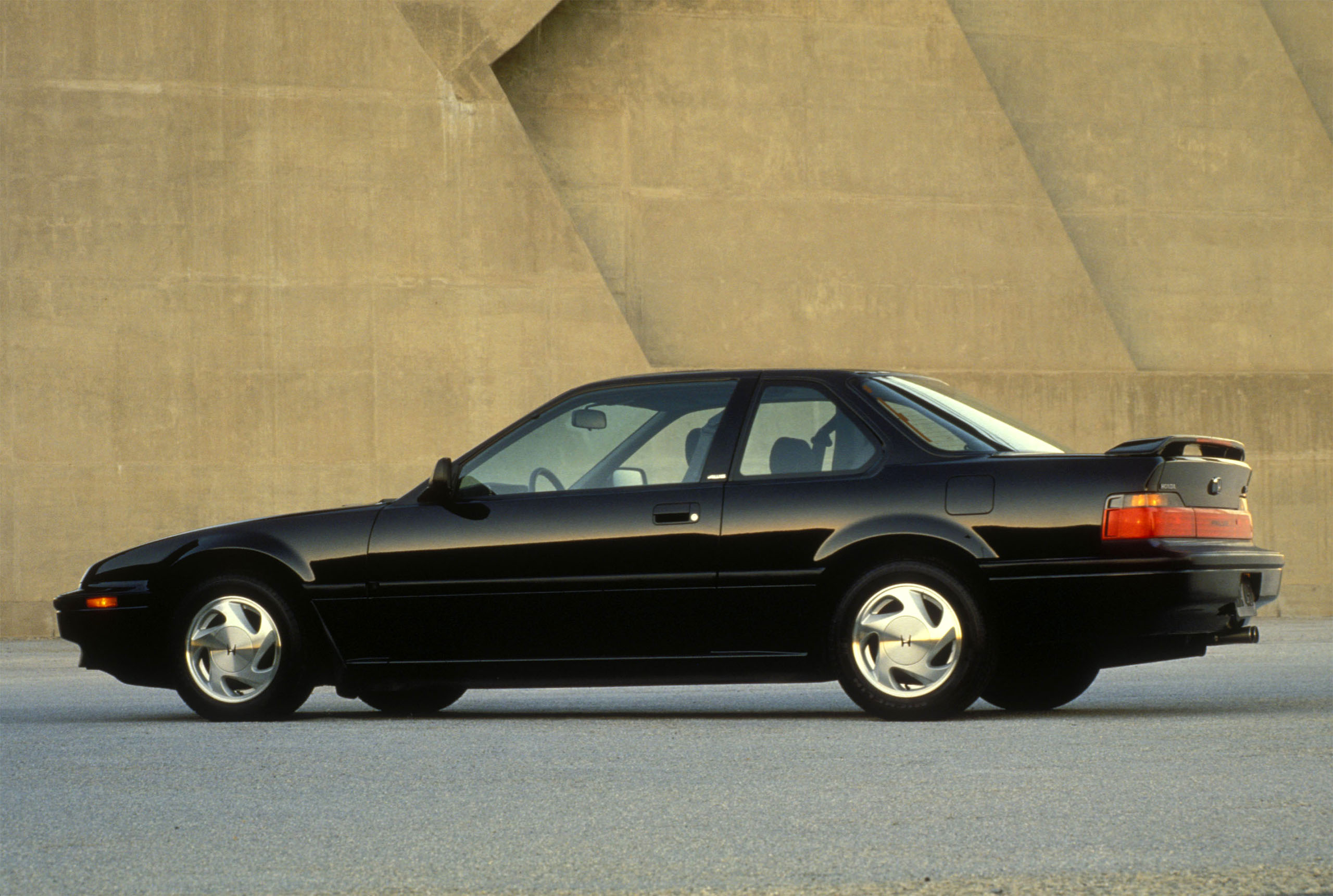
With the third-gen, however, I think we reached peak Prelude. Launching in 1988, this was the one that introduced four-wheel steering. And although it’s kind of hard to make out the difference against the prior iteration, the hood here is really low, to the point where, sitting in the driver’s seat, you almost wonder how they stuffed the engine in there. Of course I drove around with the headlights on despite the time of day, and I was amused by how big and close together the pods looked from inside the car. It also struck me how they probably made the thing very easy to park, having permanent guides on the corners of the nose.
The third-gen was peak Prelude. Honda (top), Adam Ismail (bottom)
The other thing that hit me with this ’88 example was how modern it felt. The fact that it was the only member of the group with an automatic transmission may have had something to do with that, but generally, this thing drove with the composure and no-nonsense ease of any Honda from the ’90s or 2000s.
Hell, it smelled just like the first-gen CR-V of the neighbor who picked me up from the school bus stop when I was a kid, with the same gray-toned plastics and velour seats. The power steering was definitely over-assisted at low speeds (this particular car lacked four-wheel steering, by the way), but it was engaging and full of texture on the move. Really, the only aspect that truly signified that I was piloting a nearly 40-year-old vehicle was its weak brakes. In fact, you could pretty much apply that to all of ’em.
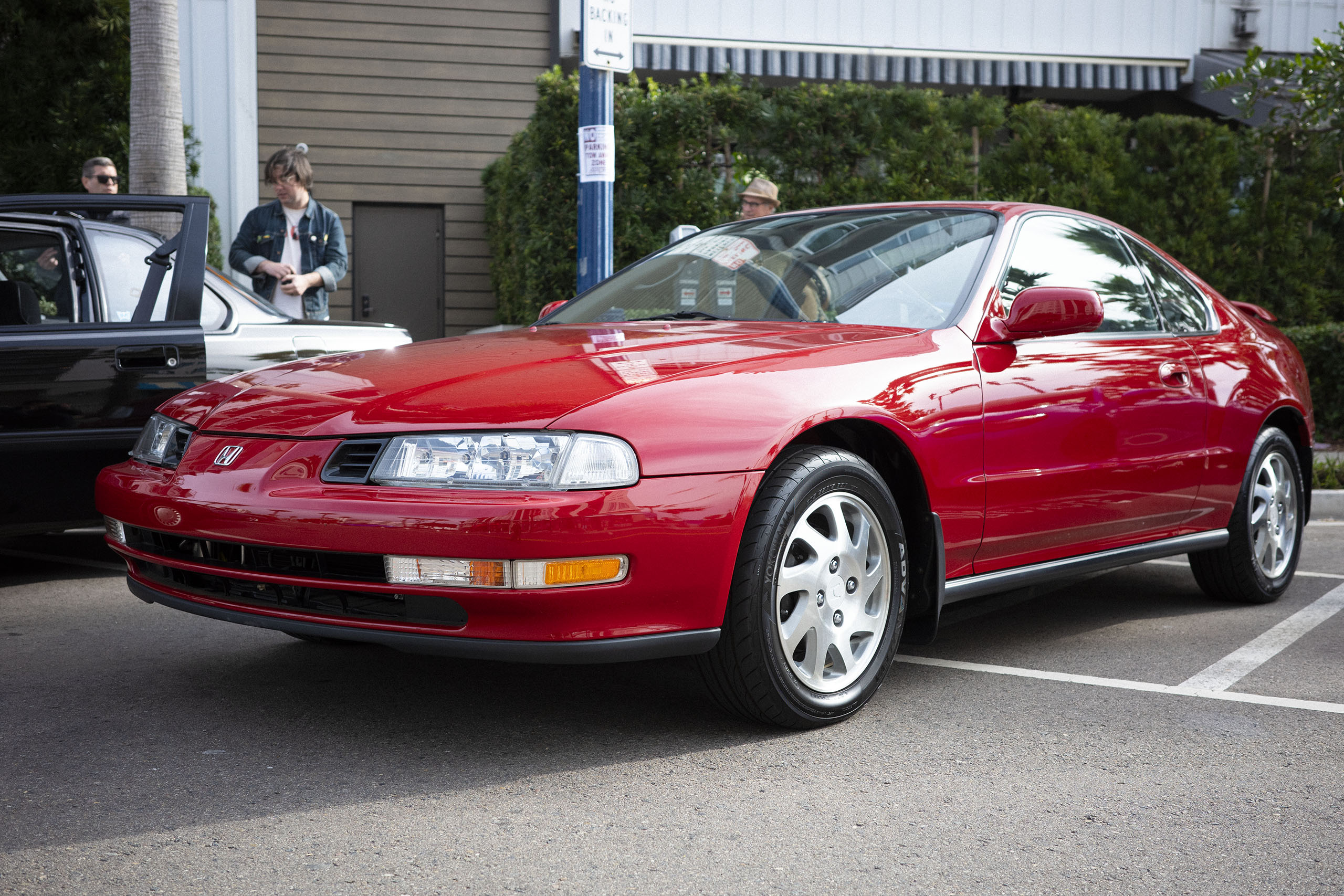
If I’m ranking these, the fourth-gen gets top honors, and it’s no contest. It was easily the most fun to drive, with perfect steering that dialed out the last gen’s initial vagueness, a great shifter for its age, and a very healthy 190 hp and 158 lb-ft from its VTEC-equipped 2.2-liter four-pot. If there’s one Prelude that bucks the personal luxury coupe theme of the lineage and feels like a proper front-wheel-drive sport compact, this is the one.
I want a fourth-gen Prelude so badly now. This one had four-wheel steering, but honestly, it didn’t feel very noticeable. Adam Ismail
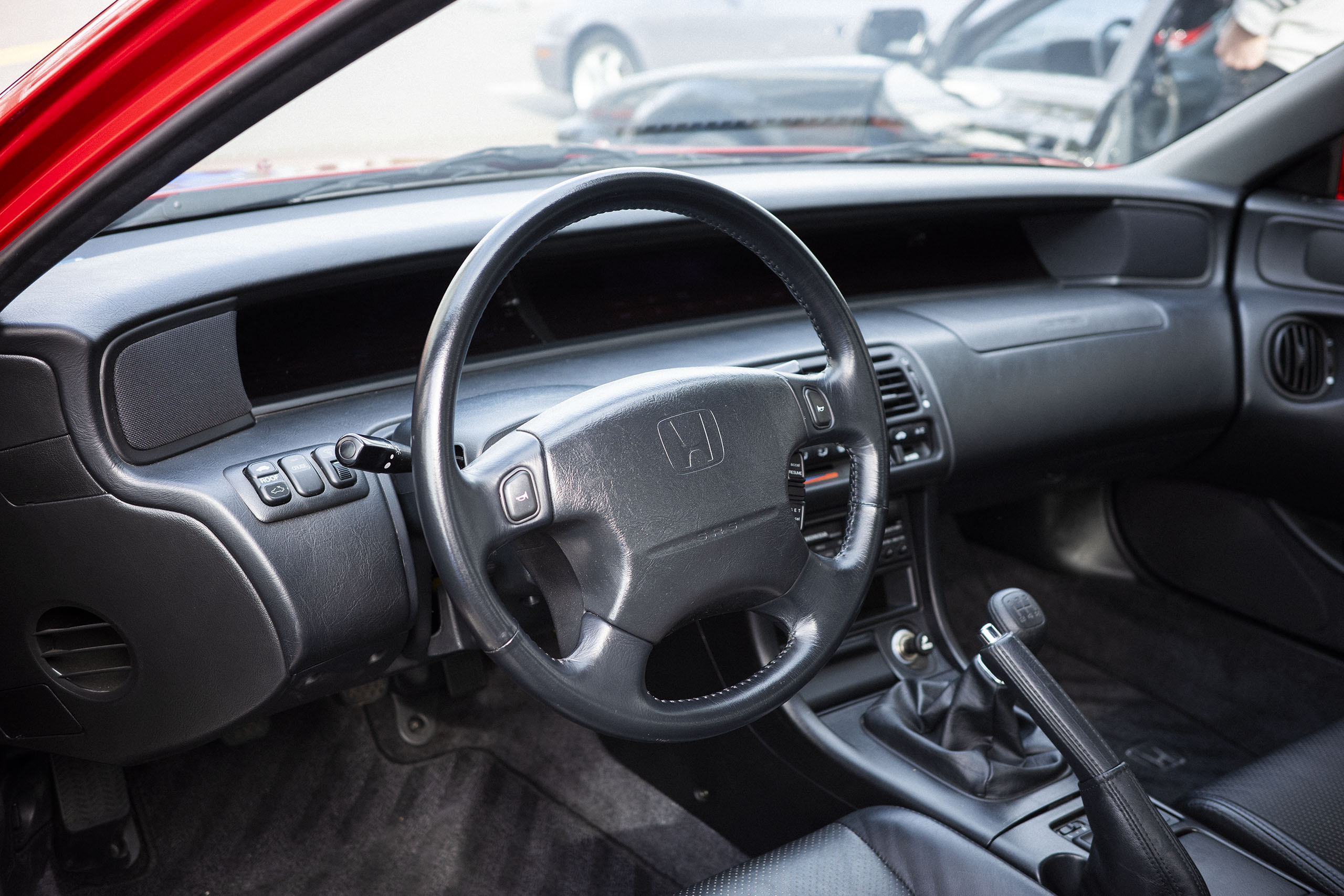
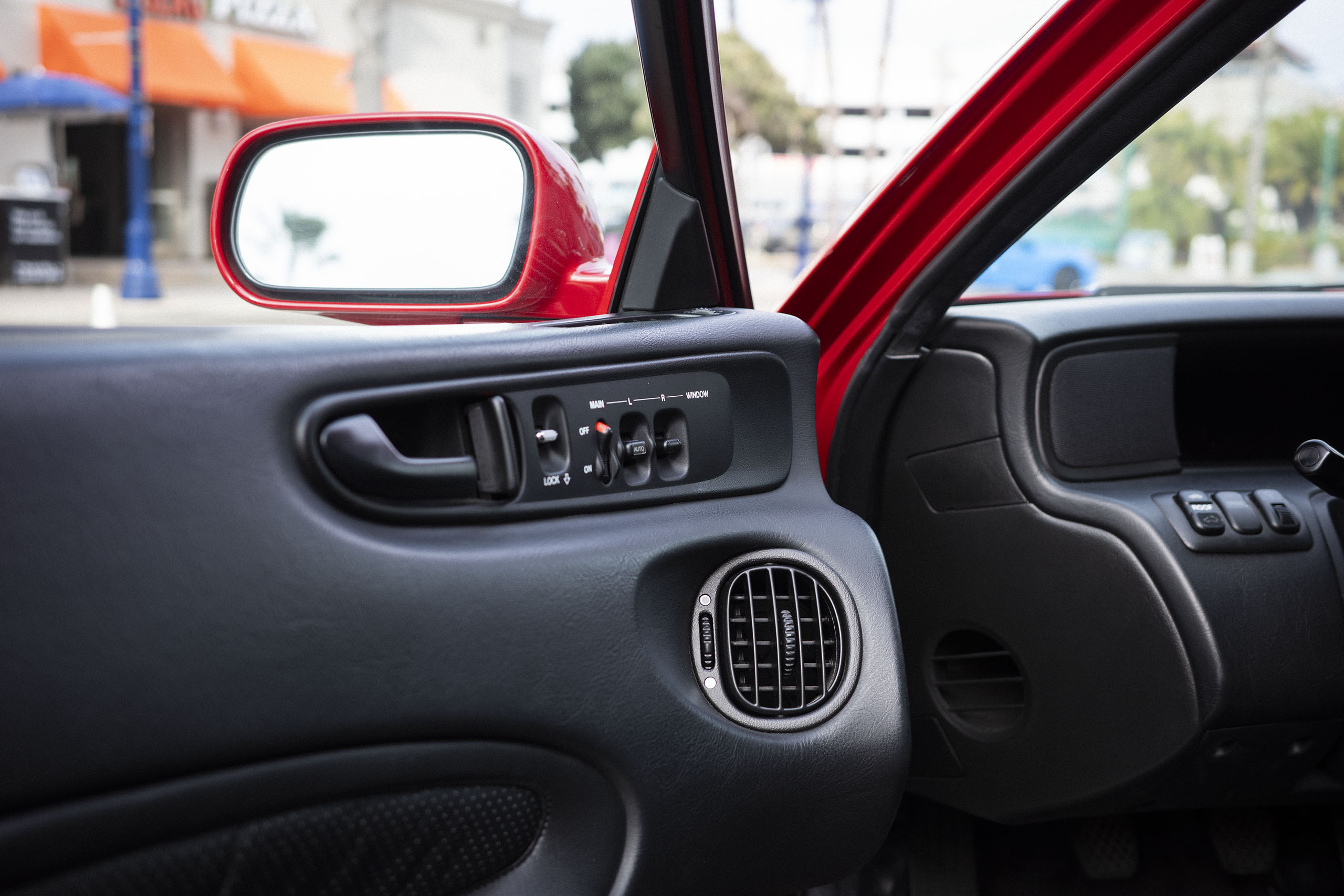
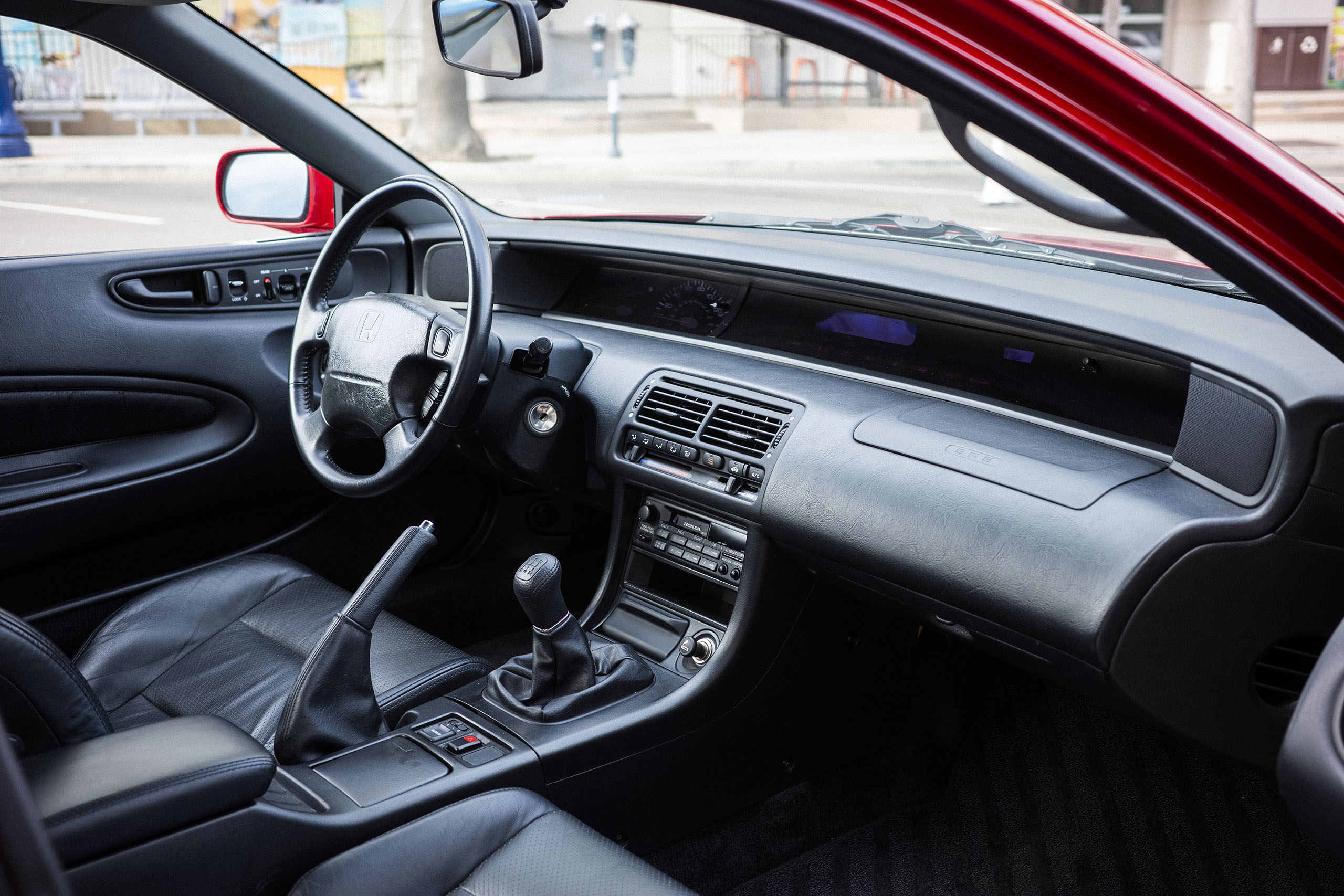
I also love how damn weird it is! To be honest, I fell for this car before I drove it, as soon as I got inside. The wraparound dash, setting the gauges and vehicle alerts behind a concave plastic screen, struck me as so novel and refreshing that I was offended when one of Honda’s curators told me that this model was panned for its interior design. No fun allowed, I guess.
The way the dash’s curve seamlessly blends into the speakers, and then into the door-mounted controls, is a far cry from the very inorganic earlier models, but just as futuristic. I adored that fourth-gen Prelude, even though it seems like the public didn’t; Honda sold just shy of 100,000 of them. And when it came time for what would be the final act for a while, it pivoted back to a more squarish and mature look, devoid of the whimsy that defined the predecessor.
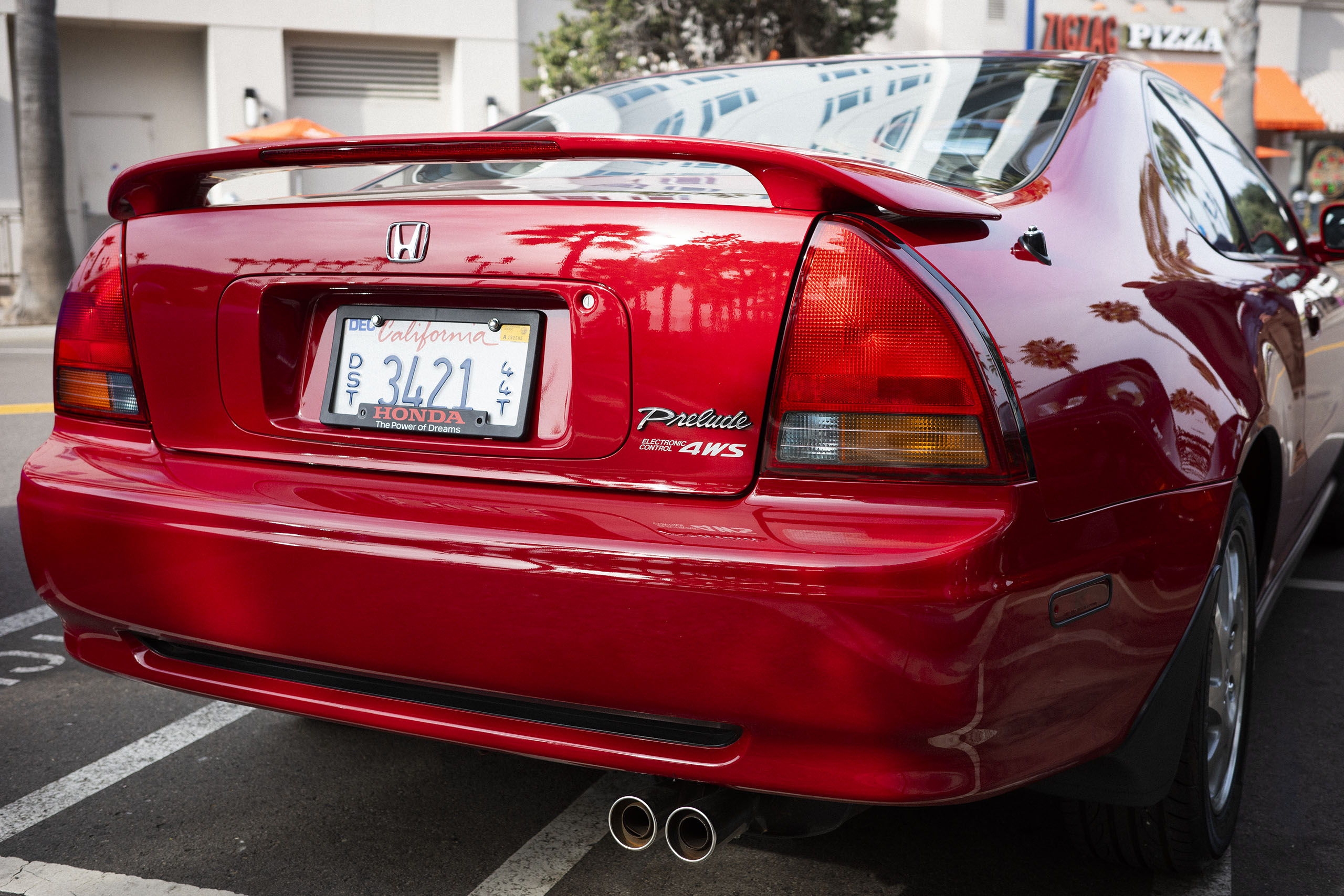
The fifth-gen Prelude lasted five years, from 1997 to 2001. This was the only one I didn’t drive, but I did ride shotgun. For this model, Honda ditched the four-wheel steering system but introduced its Super Handling tech, which routes more torque to the outer wheel when cornering. Horsepower rose to an even 200 here, while torque dipped by all of 2 lb-ft.
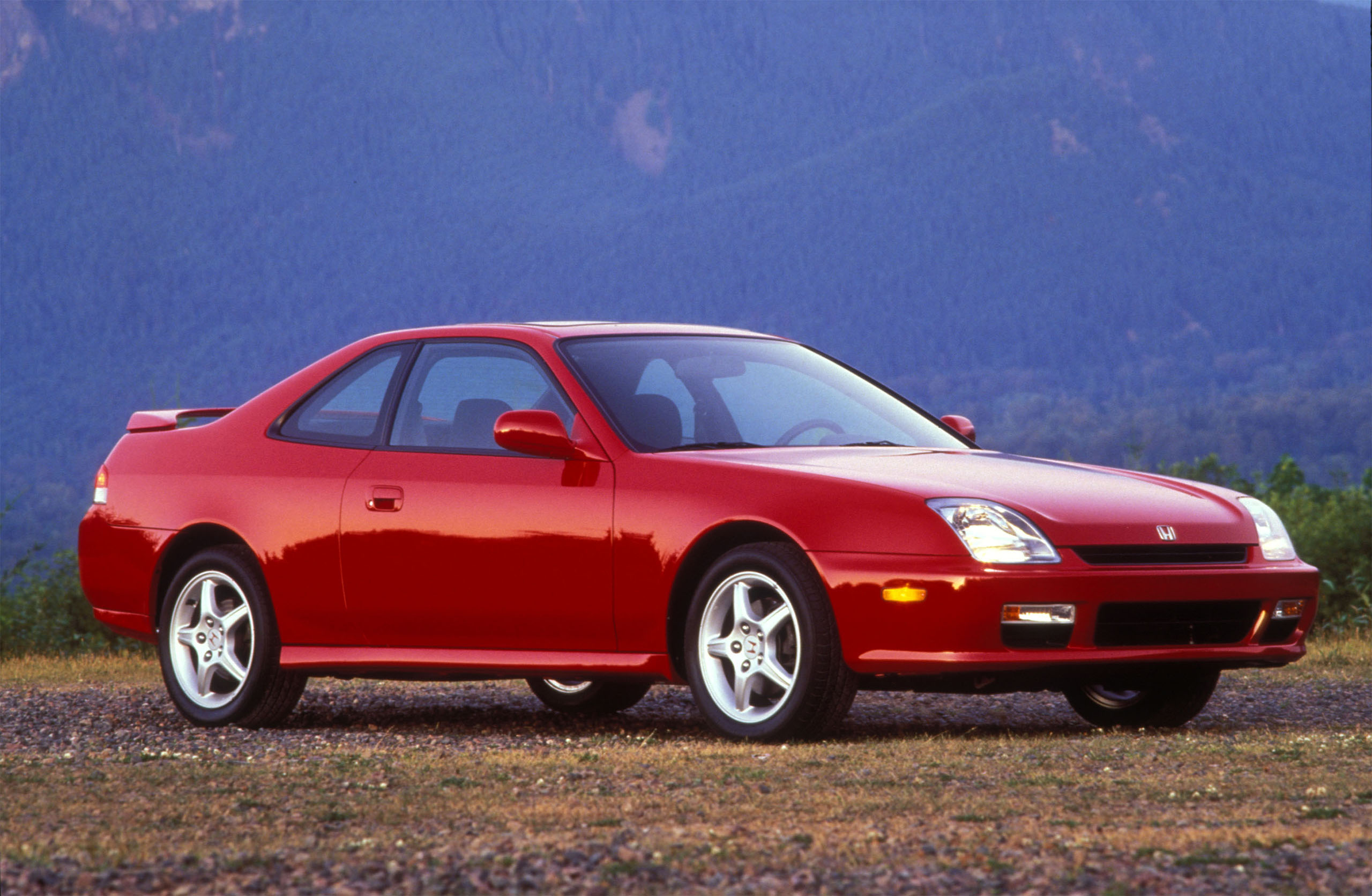
The fifth-gen Prelude is much more interesting on the outside. Honda
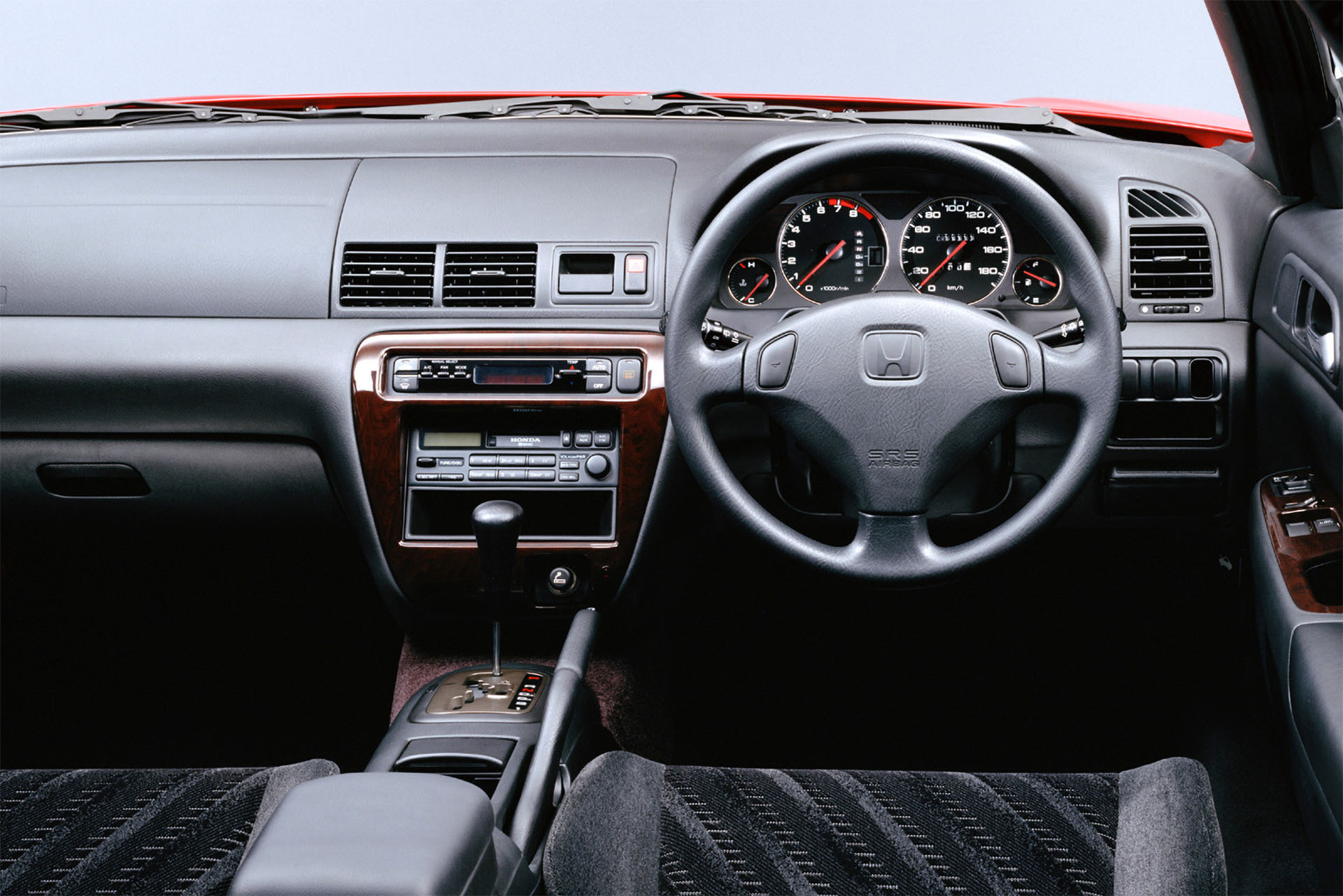
I always admired the design of this Prelude, particularly its vertical headlights and very slim, sleek rear lighting signature. It absolutely nailed the Y2K aesthetic and deserves to go down as one of Honda’s cleanest exteriors ever. I just wish that the interior wasn’t so completely unambitious by comparison. Every single Prelude before this felt like a special place to be, but nothing separates this cabin from that of any Civic or Accord of the era. The only thing it really has going for it is a rear seat fit for adults, and you definitely can’t say that about the comeback.
This Prelude sold approximately 65,000 units worldwide, and learning that didn’t surprise me. That’s not because it’s a bad car, but frankly, I think this was the moment it became clear that Honda’s heart wasn’t really in it anymore. The company had moved onto new frontiers, from the legendary S2000 to an onslaught of SUVs. Having been developed in the early ’90s, it was also the first Prelude generation born in the wake of Japan’s bubble economy collapsing.
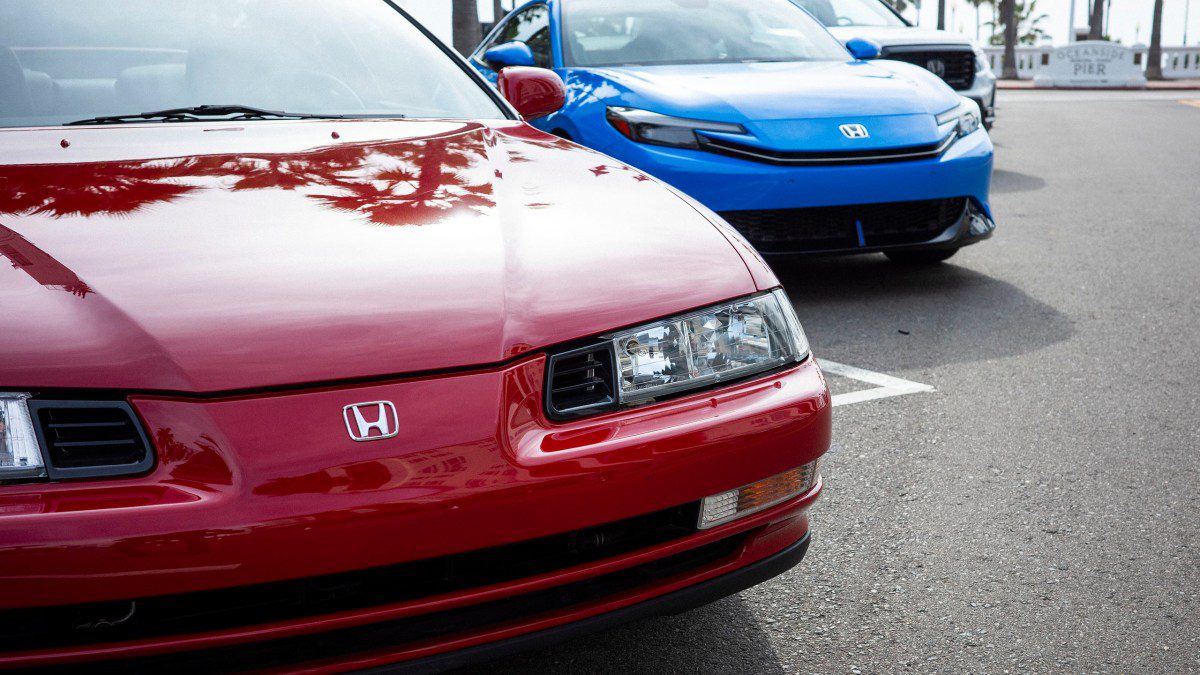
25 years apart. Adam Ismail
The internal response to the quirky and relatively poor-selling fourth-gen model seemed to be a conservative course correction. It resulted in a product that I’m sure was more widely palatable on paper, attractive to a greater number of potential buyers. But if that was the plan, it still didn’t work in Honda’s favor, so it pulled the plug.
That was the Prelude’s lineage, until very recently. I don’t know if we’ll look back on this new hybrid coupe in 20 years with a different appreciation or fondness. All the YouTube video essayists deifying the CR-Z as flawed but tragically misunderstood—will they say the same about this Prelude in 2040? Maybe, maybe not.
What I do know is that there will eventually come a time when the new Prelude outruns the media buzz, the thinkpieces, and the commenters lamenting why this car isn’t what they wanted it to be. It’ll be free from all that, because eventually, everything is. And then, maybe someday, you’ll see one and remember your aunt who drove one, and wish you could ask her what she thought about it. In that moment, that’ll be the only thing that matters.
Volvo CEO Håkan Samuelsson thinks American homes are perfectly suited to EV life.
Because many Europeans live in apartments, the charging issue is tougher to solve there.
But for Americans with home charging, EVs will win out regardless of incentives, he said.
Volvo’s CEO doesn’t quite understand why American buyers are so wary of electric vehicles. For practical reasons, Håkan Samuelsson thinks they’re a better fit for Americans than for Europeans, at least in the near-term.
“I would say the U.S. is a perfect market for electric cars, because a lot of people live in the suburbs and you have your three-car garages,” the Swedish CEO said during a briefing with reporters during a debut event for the Volvo EX60. “I mean, it’s ideal to charge at home. So I don’t understand exactly why [Americans are] so negative.”
He’s got a point: The vast majority of Americans live in single-family homes, while 46% of European Union citizens live in apartments and 19% live in shared buildings. It’s far easier to charge an EV at a single residence, where you are likely to have a dedicated parking spot and power access. Apartment-dwellers who park at the curb aren’t so lucky, which is why Europe is pushing so hard to electrify public parking spots.
Photo by: Volvo
European countries have also been more steadfast in their commitment to funding public fast-charging infrastructure, generally. Climate change is also not nearly as politically controversial there, leading the continent to adopt stricter emissions standards. While they are also rolling back their most ambitious automotive targets, the EU still wants to have a mostly carbon-free fleet by 2035.
Meanwhile, U.S. automakers are pivoting resources away from EVs and toward gas cars. Regulators have shredded the standards that once drove us towards a lower-emissions future and removed all policies designed to incentivize EV adoption. This diverging track has caused some experts—and journalists—to wonder whether the U.S. will fall far behind the EU in EV adoption. Samuelsson, for his part, doesn’t think it’ll be a problem.
“Europe and the U.S. are more similar than they look right now,” he said at the briefing. “The U.S. is more skeptical of electrification right now because the incentives have been taken away. But on the other hand, I think the electrification transformation will not be driven by incentives. It will be driven by consumers.”
Photo by: Volvo
Consumers who go electric rarely ever go back. In most cases, they find that range anxiety isn’t as real as it seems from afar, and the practical realities of EV life are better than most people expect. The cars are smoother, quieter, faster and require less maintenance. And the biggest concern—charging—eventually becomes the biggest advantage.
“Would you like to have a car that would be automatically filled up by ‘Volvo Fuel Service’ during the night? Then when you wake up in the morning, you always have a full tank,” Samuelsson said, saying you’d never have to deal with stopping to fill up at all.
Part of the trepidation may be a lack of knowledge about home charging in the U.S. in general. While home charger installations are on the rise here, it’s often a poorly understood topic for drivers who have likely spent decades going to gas stations. Many automakers have dealt with this head-on by including a home charger with the lease or purchase of an EV, or providing a discount to do so. (See our list here.) Volvo has offered this perk to EV buyers in Europe, but not the U.S.—at least, not yet. “I wouldn’t put them at the forefront of the road map, but eventually we will get there,” Volvo’s energy solutions president told Automotive News in October.
With any luck, that will be part of the EX60’s American launch. Then, perhaps more prospective EV buyers will get off the fence and enjoy a benefit to EVs that its CEO thinks highly of.
“Wouldn’t you love that? That’s basically what you can get with an electric car,” Samuelsson said. “So what’s the problem?”
One problem, of course, is actually installing that home charger. Companies like Ford offer free chargers and installation, whereas Volvo’s current “fueling service” is a bring-your-own equipment affair. In the long term, most new homes and renovated garages will have chargers installed. But if Volvo wants Americans to fall in love with home charging, it should consider providing the equipment to customers now. After all, as Samuelsson notes, they probably already have a garage.
There’s no quiet way to introduce a watch like the Jacob & Co. God of Time, but beneath the dial design and precious metal, there’s a genuinely interesting mechanical idea at work. The headline claim is simple enough: this is the fastest tourbillon ever made, completing one full rotation every four seconds. That’s roughly 15 times faster than the classic one-minute tourbillon most collectors and enthusiasts grew up studying under a loupe. Rather than treating the tourbillon as a historical milestone, Jacob & Co. uses it here as a proving ground, asking what happens when you push one of watchmaking’s oldest complications well beyond its comfort zone.
Making that kind of speed possible required a movement built specifically for the challenge. The hand-wound Caliber JCAM60 centers itself on an ultra-light titanium tourbillon carriage that weighs just 0.27 grams, reducing inertia enough to survive rapid rotations. A constant force mechanism operating at one-sixth of a second helps control delivery, keeping the tourbillon spinning consistently across a 60-hour power reserve. Interestingly, the movement itself beats at a familiar 3 Hz, which makes the four-second tourbillon feel even more out of place, in a good way.
Visually, the God of Time ties into storytelling as much as mechanics. The dial features a handcrafted, three-dimensional rose gold sculpture of Chronos, the Greek god of time, positioned as if he were holding the high-speed tourbillon in place. Set against blue aventurine, the design resembles a miniature sculpture more than a traditional watch dial. The 44.5 mm rose gold case draws inspiration from Ionic Greek temple pillars, tying the mythological theme together. Limited to 60 pieces and priced at $360,000, the God of Time is a reminder that even the most established complications can still be rethought.
Hypercars from all over Europe are back in the Alpine town of St. Moritz in Switzerland. An annual winter spectacle where some of the world’s most expensive machines drive around an ice rink.
In the past, we’ve seen a Pagani Codalunga take to the ice circuit. This year’s highlight was the Bugatti Bolide. Not one, but three of them. This is the only place where you will get to see multi-million-dollar track hypercars sliding around in the snow.
There were a few Paganis as well, including a brand-new Utopia and a classic Zonda F Roadster.
Koenigsegg boss Christian von Koenigsegg was also present. He led an entourage of cars onto the ice, comprising a couple of Jeskos, a few Ageras, a Regera, CC850 and even a CC prototype.
A typical tuneup includes an oil change, tire rotation, and inspection of components, including spark plugs, belts, hoses, and more.
Look for service centers and dealerships that provide competitive prices for tuneups, costing $500 or less for a minimal job.
Preventive maintenance is a smart way to keep your car in good working order. But on most modern vehicles, a “tuneup” isn’t a once-a-year, one-size-fits-all service anymore. Instead, maintenance is based on time and mileage intervals listed in your manufacturer’s schedule and what any inspections find.
Keep reading for information on how to tell when service is needed, what a “tuneup” typically includes today, costs, and timing.
What a “Tuneup” Is on Modern Cars
Because of electronic ignition, long-life spark plugs, and onboard diagnostics, the traditional tuneup — adjusting timing, replacing ignition components on a schedule, etc. — is mostly a thing of the past.
Today, a “tuneup” usually means one of two things.
A scheduled maintenance visit (based on mileage/time in the owner’s manual or maintenance indicators in the instrument cluster)
An inspection and replacement of wear items that affect performance, safety, or efficiency (filters, fluids, brakes, belts/hoses, tires, battery health).
Note: While many suspension and steering components are sealed, they’re not “maintenance-free forever.” They still need inspection for play, torn boots, and leaks.
Common Signs Your Car Needs Service
Your vehicle may be due for service if you notice:
Check engine light on (or flashing — don’t ignore that)
Reduced performance/rough idle
Misfires/hard starts/stalling
Worse fuel economy
Knocking/pinging
Vibrations or pulling while driving
Pro Tip: Pulling mainly during braking can be a brake issue; pulling while cruising straight can point to alignment/tires.
What a Typical Car Tuneup Service Includes
Here are services that may happen as part of a tuneup. Not every item happens on every visit. The recommended service for your vehicle depends on its mileage, age, and symptoms.
1 Oil Change
Oil canister icon
Many modern cars can go longer than the outdated 3,000- to 5,000-mile rule, especially when using synthetic oil, which is engineered to last 7,500 to 15,000 miles or more. Hard driving in severe conditions can shorten intervals. Follow the owner’s manual or the “maintenance minder” in some vehicles’ instrument cluster.
MORE: How Often Should I Change My Oil?
2 Spark Plugs
Spark plug icon
Spark plug life depends heavily on plug type and engine:
Copper plugs typically have a shorter life.
Platinum/iridium varieties often last much longer, although longevity varies widely by application and conditions.
When changing the plugs, it may be appropriate to also replace the oxygen sensor, spark plug wires, PCV valve, and fuel filter.
3 Filter Replacements
Filter icon
Dirty air filters can reduce airflow for the engine. HVAC/climate control performance is better with a clean cabin air filter. These are common inspect-and-replace items.
4 Belts and Hoses
Belt and hose icon
Accessory/serpentine belts and coolant hoses should be inspected for cracking, glazing, leaks, bulges, or softness.
Some engines use a timing belt, which requires a scheduled replacement. Others use a chain, which is often inspected rather than replaced on a schedule. Timing belt replacement intervals are in the 60,000- to 100,000-mile range, although the owner’s manual is the authority.
5 Diagnostic Scan
OBD diagnostic scan icon
When dashboard warning lights or other symptoms appear, an onboard diagnostic scan can help pinpoint problems. Modern tuneups often involve reading codes and live data instead of replacing parts on a hunch or “just because.”
6 Fluids
Fluids icon
Not all fluids are “annual,” but they’re also not “forever.” Inspect, test, and service when they’re due. Check the manual for intervals. Common examples:
Brake fluid: A common recommendation is to change every 2–3 years, or at a mileage interval specified by the manufacturer.
Engine coolant and transmission service recommendations vary widely by vehicle.
7 Battery and Charging Systems
Car battery icon
A weak battery can mimic other issues. Have a technician test the battery before winter/summer extremes.
Tires: Tire pressure monitoring system (TPMS), remaining tread, tire rotation, and balancing. Rotation is recommended at a specific interval, usually 5,000-7,500 miles, to promote even tread wear.
RELATED: Do My Tires Need to Be Replaced?
10 Wheel Alignment
Wheel alignment icon
If you notice uneven wear patterns, the steering wheel is off-center, or the car drifts on a flat road, it is worth checking the alignment.
What Does a Tuneup Cost?
Cost depends on what you mean by “tuneup”:
A very basic “tuneup-style” service can be relatively low if it’s mostly inspection and minor replacements.
A more comprehensive service (plugs, filters, fluids, more labor) can run hundreds, and in some cases $800+ depending on the vehicle and scope.
According to Kelley Blue Book data, the estimated total cost for an oil change ranges from $145 to $173.
Ask for an itemized estimate that lists parts and labor and which items are “due by schedule” vs “recommended based on inspection.” Check Kelley Blue Book’s Service Advisor to see what you should pay for common repairs and services.
How Long Does a Tuneup Take?
A light service can be quick. Other jobs, such as spark plugs in a tight engine bay, multiple filters and fluids, and tire work, can take longer.
Should I Get a Tuneup?
Yes, if you define it correctly. Consider it a form of preventive maintenance to ensure your vehicle maintains its value and remains reliable. For most newer vehicles, the best approach is:
Follow the factory maintenance schedule
Get periodic inspections to catch wear items early
Use diagnostics when symptoms appear
When you’re ready, find a repair shop that can tune up your vehicle.
Editor’s Note: We have updated this article since its initial publication. Renee Valdes contributed to the report.
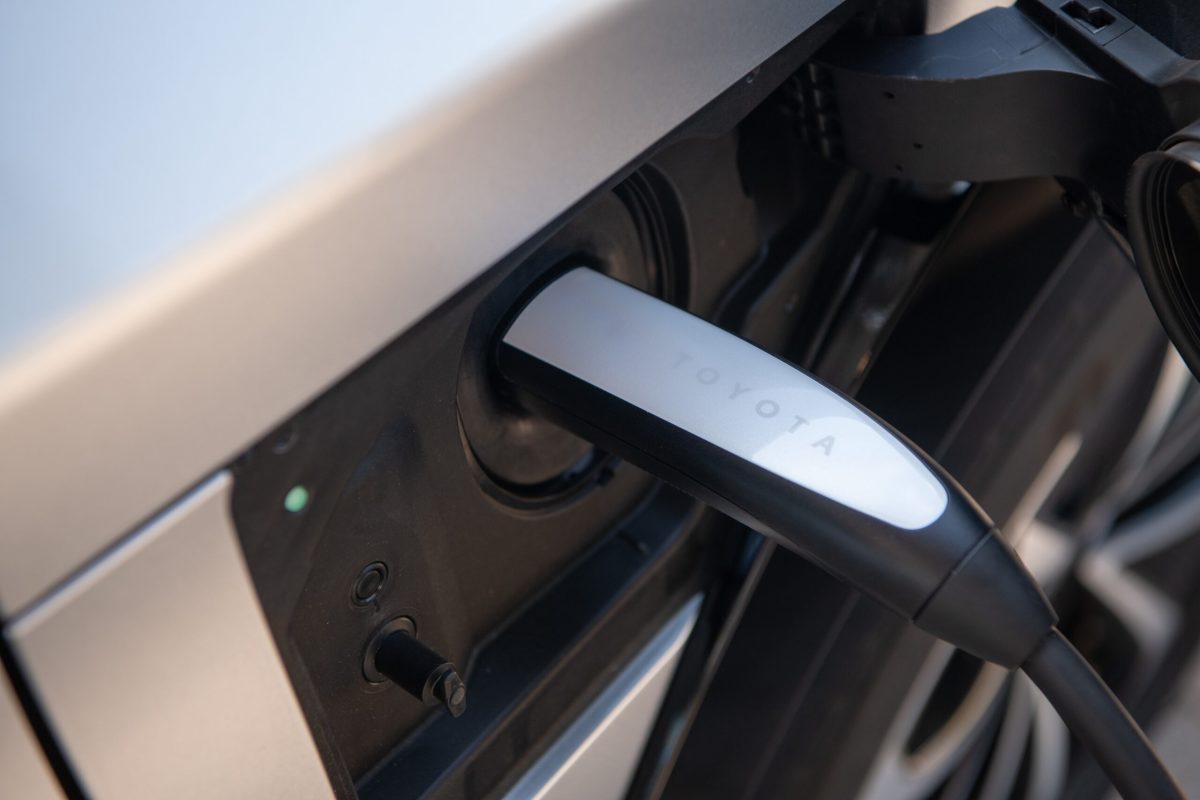
Toyota is framing its move to the North American Charging Standard as a full ownership upgrade rather than a simple connector swap. The company says the real work sits behind the port, because drivers only feel the benefit when access, payment, and reliability are handled smoothly across different charging networks.
What Changes For Drivers In 2026
Toyota says its 2026 battery electric models will come with a factory NACS inlet, starting with the 2026 Toyota bZ and the 2026 Lexus RZ. For earlier models, Toyota says 2023 through 2025 bZ4X and 2023 through 2025 Lexus RZ owners can use a CCS to NACS adapter for DC fast charging.
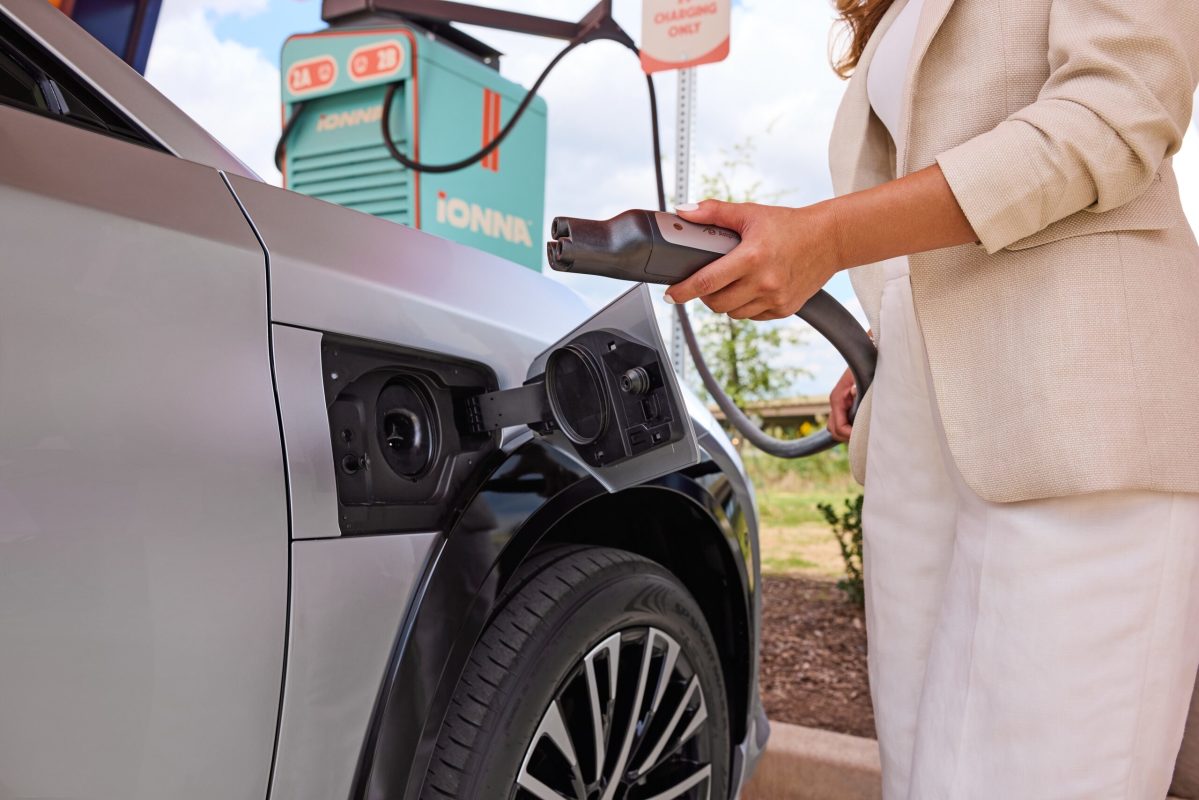
Toyota also says it is including adapters so drivers can use both CCS and NACS fast chargers, while still staying compatible with J1772 for Level 2 charging through a separate adapter, which keeps home and public charging flexible as the market remains mixed.
Toyota
View the 2 images of this gallery on the
original article
Access And Payment Are The Bigger Story
Toyota’s main claim is that NACS migration is about making charging simpler in practice, and that means more than reaching new plugs. The brand says the switch adds access to more than 27,500 Tesla Superchargers in the US, which it describes as more than doubling the number of public DC fast charging locations available to Toyota and Lexus battery electric drivers.
Toyota also emphasises app integration, because the Toyota app is meant to show compatible Supercharger sites and manage session start and payment, and Toyota says Plug and Charge support is enabled through a one time enrolment in the app on 2026 models, with Tesla described as the first supported Plug and Charge network and others planned to follow. This focus on how the driver experiences the car fits the company’s broader habit of sweating small details, even when the subject is not charging.
Toyota also says it did not want to rely on generic adapters and charging hardware, so it co developed Toyota and Lexus specific parts and created its own durability standards. The company says it tested adapters through extreme temperature exposure, repeated connection cycles, drops while frozen, muddy saltwater exposure, and real world abuse scenarios like cable trips, and it even describes an adapter surviving being run over by a roughly two ton battery electric vehicle. Toyota also highlights a patent pending interlocking mechanism on its CCS to NACS adapter, which is intended to keep the connection secure between the vehicle, adapter, and charger.
Where This Fits In Toyota’s Wider Lineup
Toyota’s NACS effort sits alongside a product strategy that still spans multiple buyer types, from mainstream sedans to enthusiast models, and that matters because charging improvements help battery electric owners without changing what most Toyota shoppers are cross shopping day to day, or payment focused decisions around cars like the Toyota GR86.
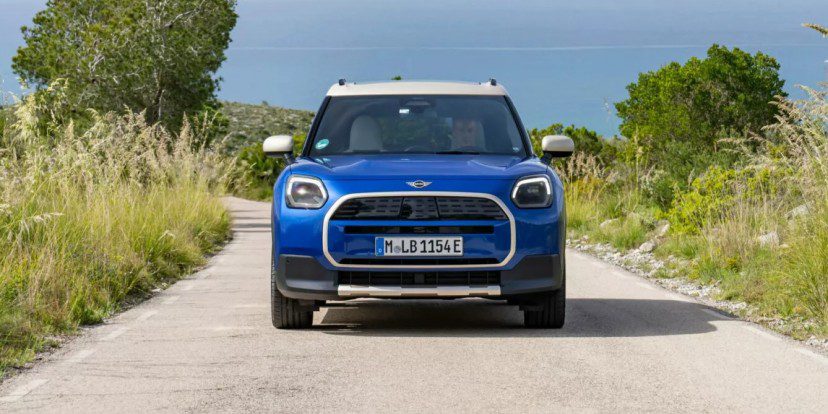
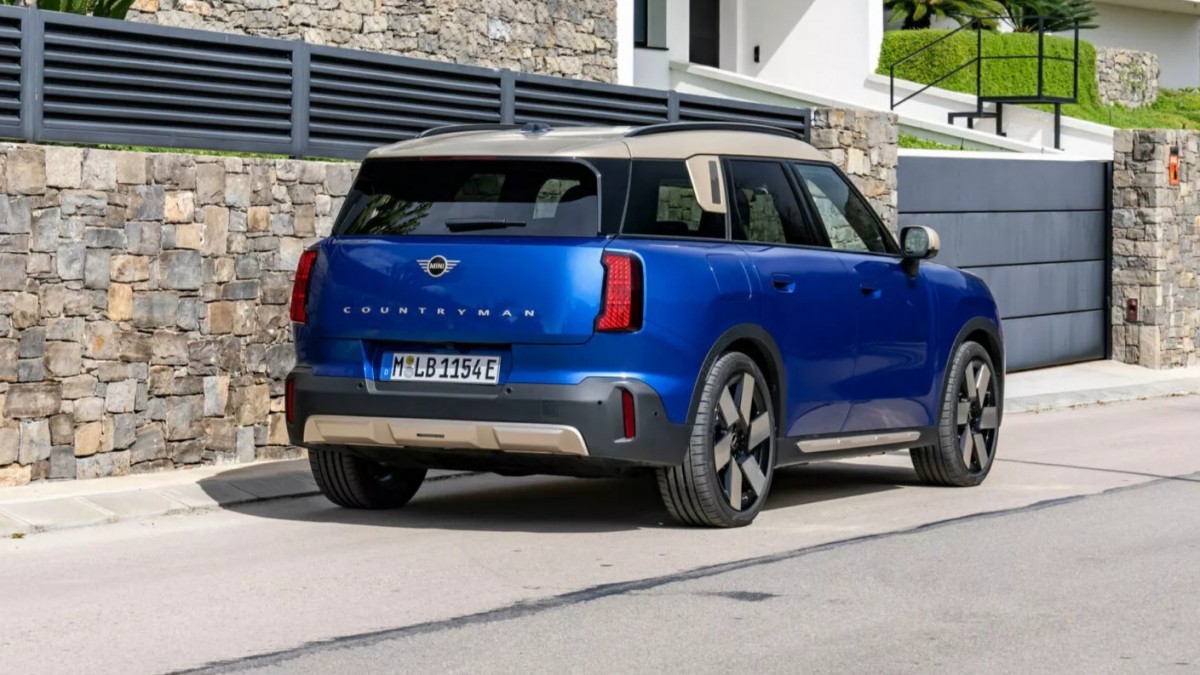
These days, if an electric car company stands still for even a year, its technology can start to look old. Mini understands this reality well. Even though the latest version of its crossover arrived not that long ago, the brand is already rolling out serious hardware updates. These changes should keep the Mini Countryman E competitive for a little bit longer.
Engineers focused on efficiency to get more distance out of a single charge. The biggest change is a revamped battery pack, which now holds 65.2 kWh of energy. This is a slight increase from the previous 64.6 kWh version. The size difference might seem small, but Mini paired it with a new silicon carbide inverter borrowed from BMW. This clever piece of electronics reduces power loss as electricity moves from the battery to the motor, making the most of every kilowatt.
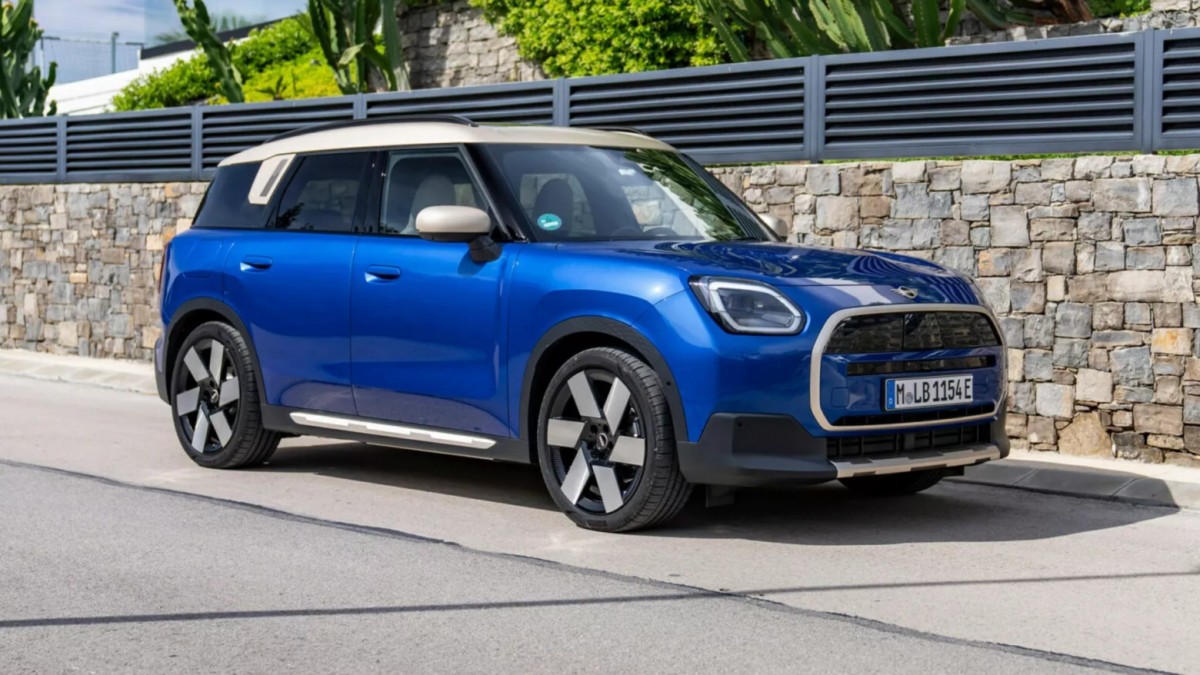
2026 Mini Countryman – source: Mini
These mechanical tweaks result in a decent jump in driving distance. Under the European WLTP testing cycle, the updated Countryman E can now travel up to 311 miles – a 39-km improvement over the older model. For drivers who use EVs for daily commutes, that extra cushion helps reduce the need to find a charging station quite so often.
The brand also looked at the physical parts of the car to find hidden gains. The company installed new wheel bearings on the front axle, specifically designed to further reduce rolling resistance, meaning the car encounters less friction as it moves down the road. It is a classic move from the automotive playbook: if you make the vehicle easier to push, the electric motors don’t have to work as hard, and the battery lasts longer.
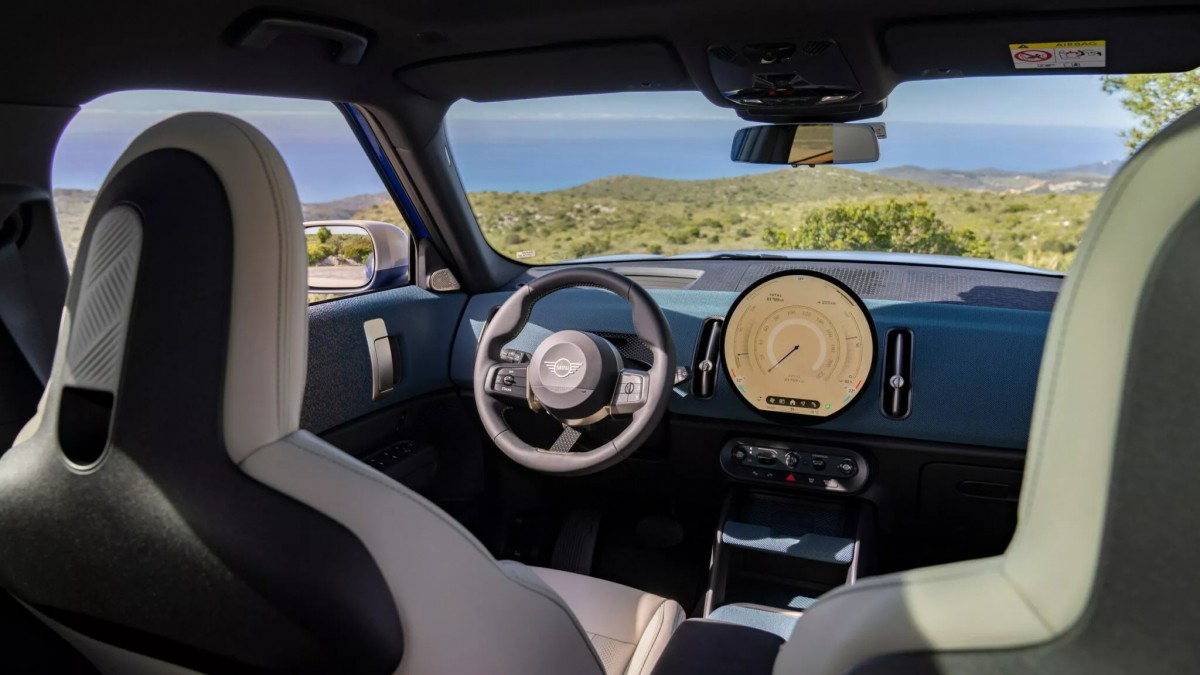
2026 Mini Countryman – source: Mini
Drivers who want more power usually choose the Countryman SE ALL4. This version uses two motors to provide all-wheel drive. It benefits from the same battery and inverter upgrades as its sibling. Its range has climbed to 290 miles – 22 miles more than before. High-performance electric cars often sacrifice distance for speed, but these updates help bridge that gap.
In the United States, the current Countryman SE ALL4 has a starting price of $45,200. This model delivers 230 kW (308 hp) and 364 lb-ft of torque. It is a quick little crossover, capable of reaching 60 mph in just 5.4 seconds. The top speed is capped at 112 mph. The European range numbers are high, but the current US version is rated by the EPA at 212 miles, though the new updates should help improve that figure a bit.
2026 Mini Countryman – source: Mini
European showrooms will receive the improved Countryman units starting this March. Mini has not given an exact date for when these updates will reach the North American market, but it usually happens shortly after the European launch.
The updated Mini Countryman shows that EVs are constantly evolving. Mini focused on better electronics and smoother mechanical parts, and managed to squeeze more life out of the battery without making the car heavier or more expensive. It is a smart way to keep a fresh model feeling new in a segment that never stops changing.
Our free daily newsletter sends the stories that really matter directly to you, every weekday.
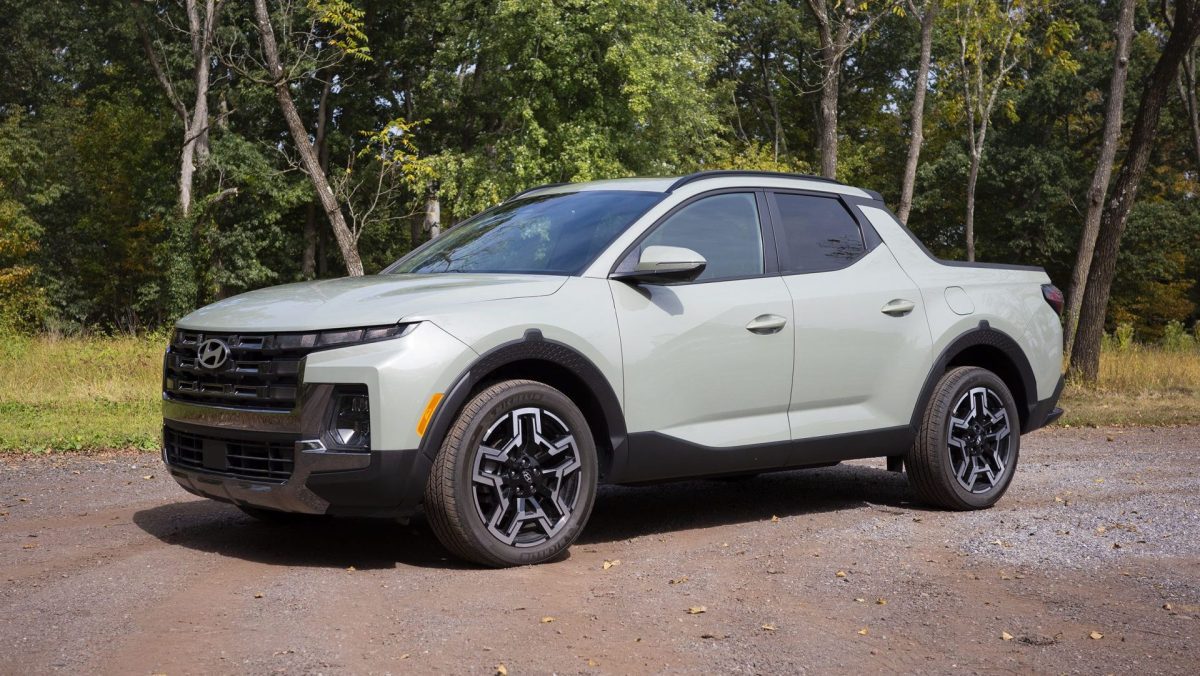
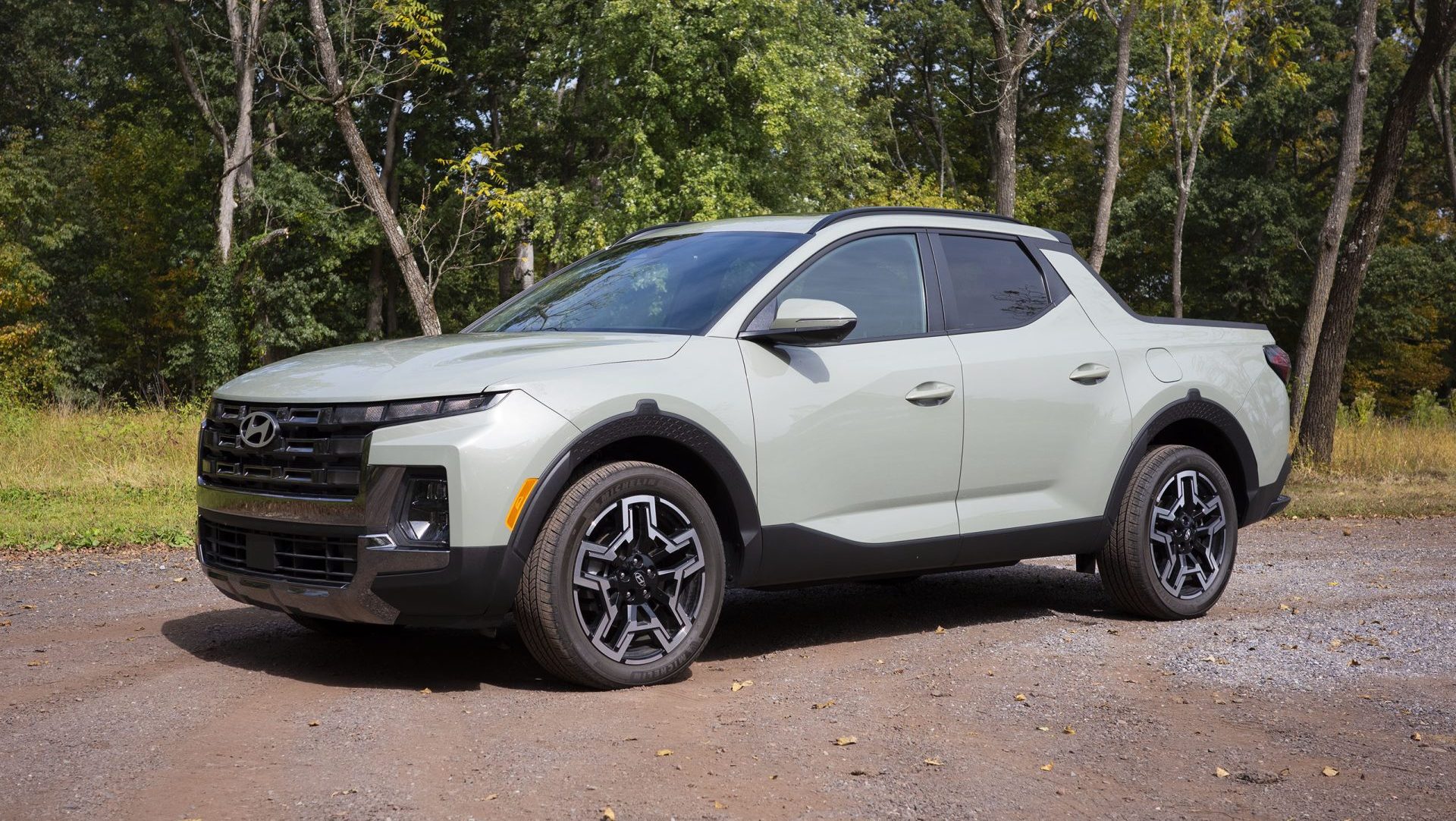
The Hyundai Santa Cruz is a cool little trucklet. We like it, other car publications like it—it’s good. But it has never come close to matching the Ford Maverick on sales, and according to a report from Automotive News, it’s about to stop trying. Sources with inside info allegedly told the outlet that Hyundai is sunsetting the Santa Cruz earlier than expected to shift focus toward a body-on-frame truck.
It’s unclear exactly when Santa Cruz production might stop, though it was originally slated to stay on sale through the first half of 2027. I had to look it up, but the Tucson-based model has been on the market for nearly five years at this point. Still, it has struggled in terms of popularity, with customers only buying 25,499 of them in 2025; compare that to 155,051 Mavericks sold over the same period.
Blaming the Santa Cruz for its subpar performance doesn’t feel right. It’s a neat, lifestyle-oriented ute that makes sense for more people than will ever admit it. Ford simply has more brand recognition when it comes to pickups, and that’s something Hyundai will continue to battle as it rolls out its larger, more traditional truck in the coming years.
Hyundai seems to be planning a full-fledged truck program, complete with off-road models. One of the brand’s North American execs told The Drive that future XRT vehicles will be “truly capable.” He insisted that they will “100%” be more capable than the soft-roaders you’ll find in Hyundai showrooms today.
Surely I’m not alone in being excited to see how Hyundai executes its plans here. Nobody expects it to knock off the established players in the 4×4 space—at least, not any time soon—but a legit four-wheeler from the manufacturer will be interesting. And given its track record for design lately, it should look pretty slick, too.
If only the Santa Cruz could live to see that day.
Got a tip or question for the author? Contact them directly: caleb@thedrive.com